


Introduction
The Melody valve, designed for implantation into the pulmonary outflow tract, can also be used to treat pathology of atrioventricular (AV) valves. There are reports and case series of its use in mitral or tricuspid position.Reference Pluchinotta, Piekarski, Milani, Kretschmar, Burch, Hakami, Meyer, Jacques, Ghez, Trezzi, Carotti, Qureshi, Michel-Behnke, Hammel, Chai, McMullan, Mettler, Ferrer, Carminati and Emani 1 – Reference Freud, Marx, Marshall, Tworetzky and Emani 5 The valve diameter is determined by the stent. An increasing gradient over the valve maybe an indication for re-intervention.Reference Pluchinotta, Piekarski, Milani, Kretschmar, Burch, Hakami, Meyer, Jacques, Ghez, Trezzi, Carotti, Qureshi, Michel-Behnke, Hammel, Chai, McMullan, Mettler, Ferrer, Carminati and Emani 1 , Reference Sullivan, Wong, Kim and Ing 2 , Reference Frigiola, Pluchinotta, Saracino, Giamberti, Arcidiacono, Piazza, Reali, Butera, Varrica and Carminati 4 , Reference Freud, Marx, Marshall, Tworetzky and Emani 5
Case report
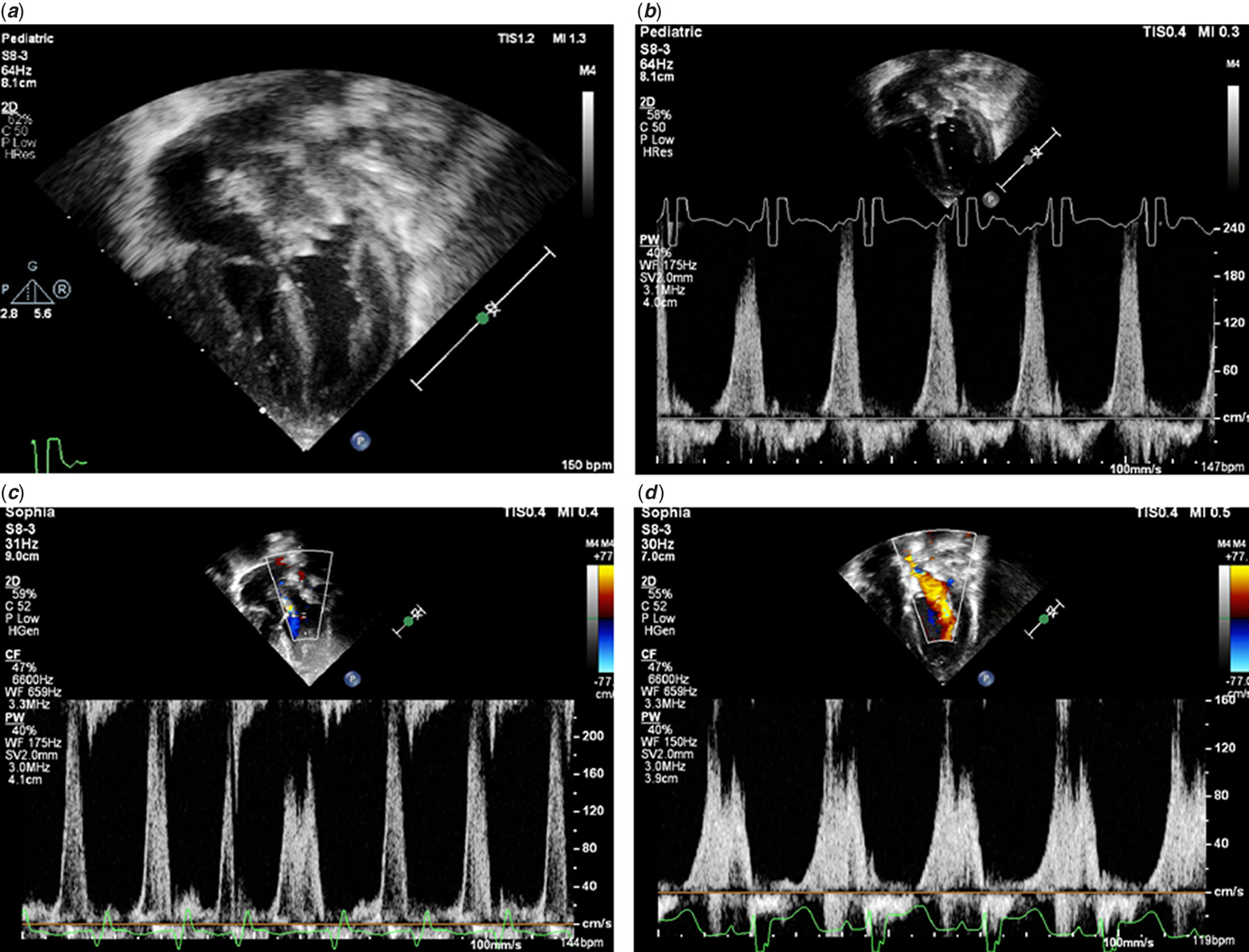
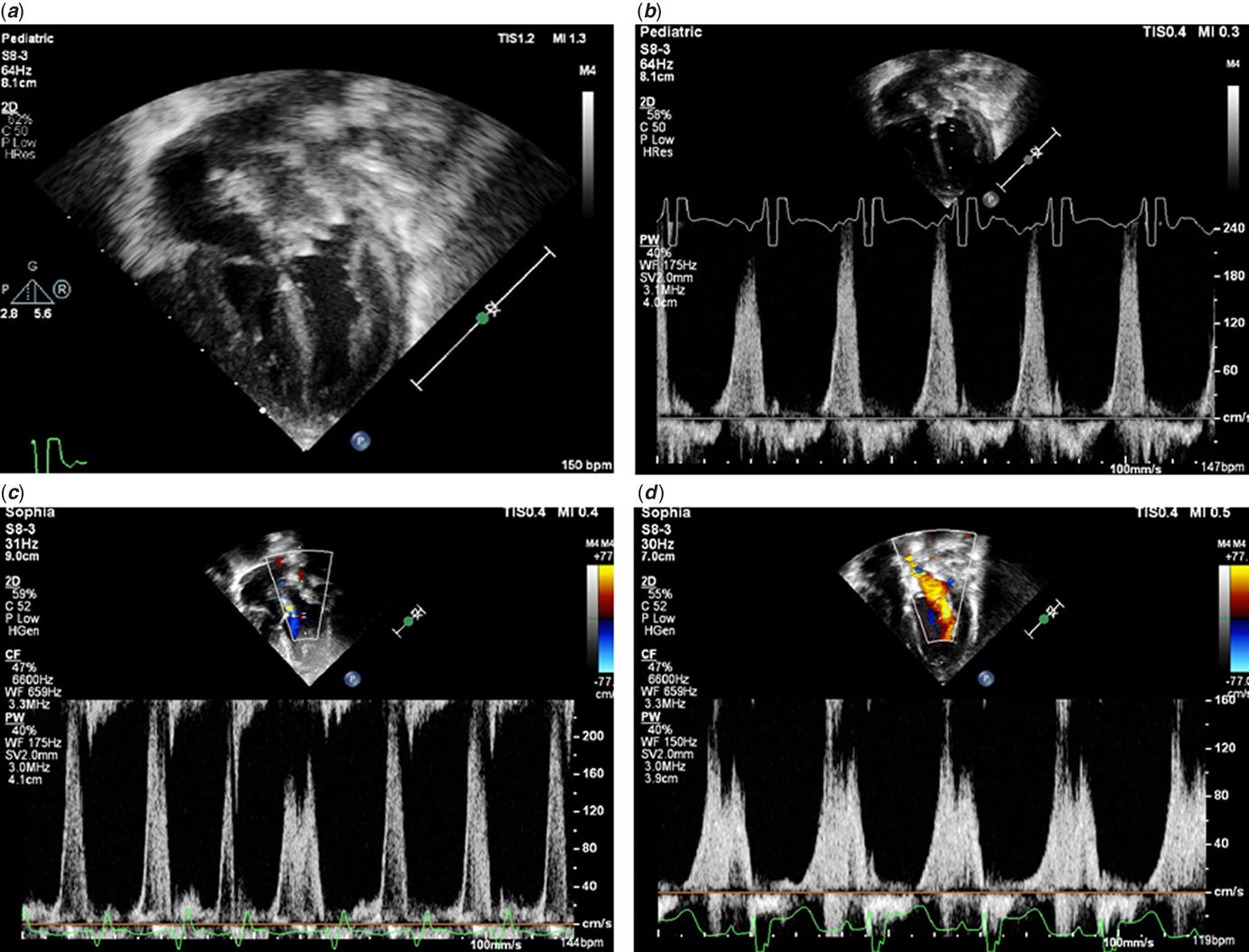
A non-syndromatic baby with AV septal defect was operated at the age of 6 weeks with a weight of 3.5 kg as she showed progressive signs of heart failure. Repair of the left AV valve was difficult due to the lack of tissue, and the child showed severe left AV valve insufficiency post-operatively. This caused pulmonary congestion, requiring mechanical ventilation and medical support, and pulmonary hypertension developed. Seven weeks after the operation, a hybrid procedure with Melody valve (Medtronic, Minneapolis, Minnesota, United States of America) implantation into left AV valve position was carried out, achieving a diameter of 12 mm. The valve was implanted in a supra-mitral position as described by Langer et alReference Langer, Solowiejczyk, Fahey, Torres, Bacha and Kalfa3 (Fig 1A). Echocardiographically, there was some paravalvular leak and a mean gradient over the valve of 5 mmHg. Over the following weeks, the mean gradient seemed to increase to 12 mmHg (Fig 1B). The child was tachycardic with a heart rate of 145–170/minute. On echocardiography, during RR-intervals following premature supraventricular beats, the gradient seemed lower (Fig 1C). The child was treated with beta blockers (esmolol titration, then propranolol), reducing the heart rate to 125–140/min. With this, she remained haemodynamically stable and the gradient achieved was 5 mmHg (Fig 1D). Due to developing left ventricular outflow tract obstruction, reoperation became necessary 6 weeks later. At the same time, the Melody diameter was increased to 14 mm with a Tyshak II balloon intra-operatively. Again, the gradient over the valve was rate dependent and propranolol was continued.
( a ) Melody valve in supravalvar left atrioventricular (AV) valve position, apical four-chamber view. ( b ) Doppler-derived gradient across the Melody valve at a heart rate of 147 bpm. ( c ) Gradient reduces during the RR-interval after premature beats. ( d ) Gradient across the Melody valve after heart rate reduction with propranolol to 119 bpm.
Financial support
This research received no specific grant from any funding agency, commercial or not-for-profit sectors.
Conflicts of Interest
None.



Comment
The stent diameter of a Melody valve in left AV valve position is fixed and does not change during the cardiac cycle. The gradient over it, as in artificial mitral valves or after percutaneous valve repair, seems dependent on heart rate, as filling of the ventricle occurs over a shorter time interval.Reference Lavall, Scheller, Werner, Buob and Mahfoud 6 Even though the valve itself in a Melody is a bovine jugular valve, the stent acts as a fixed valve annulus, comparable to mechanical valves. An increase in echocardiographic Doppler-derived gradients maybe interpreted as progressive stenosis.Reference Freud, Marx, Marshall, Tworetzky and Emani 5 It is important to compare gradients with comparable heart rates to avoid unnecessary re-interventions in these high-risk cases. Beta blockade maybe an option to achieve adequate heart rates and lower gradients without further compromising the patient.