Introduction
Right from the time family planning (FP) programmes began to be implemented in developing countries, the focus of the programmes was on women. This changed in 1994 when, for the first time, the International Conference on Population and Development (ICPD) focused on male involvement in FP and called for engaging males as contraceptive users to create gender equity in FP (Jacobstein, Reference Jacobstein2015; Ross & Hardee, Reference Ross and Hardee2017). In spite of the global commitment to promote male methods of FP, male contraceptive use remains negligible in many countries owing to the existing patriarchal norms. Besides, there is a disconnect between the commitments on choice and equity identified in the ICPD and actual programme realities (Jacobstein, Reference Jacobstein2015).
Even though male sterilization contributed only 11% to total global sterilizations (28 million vasectomies in comparison to 223 million female sterilizations), it is extensively preferred in countries and regions with greater economic development and gender equality (Jacobstein, Reference Jacobstein2015). The prevalence of male sterilization was 22% in Canada in 2002, which accounted for almost one-third of the country’s modern Contraceptive Prevalence Rate (mCPR). In the United Kingdom and South Korea, vasectomy rates range from 17% to 21%, comprising 24% to 27% of modern methods used. Spain, Switzerland, Belgium, Australia, Denmark and the USA also have a significant usage rate, with prevalence ranging from 8% to 11% (United Nations, 2018). In the USA, between 175,000 and 350,000 vasectomies are performed each year (Eisenberg & Lipshultz, Reference Eisenberg and Lipshultz2010; Jacobstein, Reference Jacobstein2015). Data from 2016 showed that 14% of Australian men of reproductive age had adopted vasectomy, which was more than one-fifth of the mCPR of the country (United Nations, 2018). These statistics are significantly different in the least developed countries, which have less than 1% of all global male sterilizations (United Nations, 2018). United Nations (UN) data from 2015 showed that the prevalence of male sterilization in Africa was 0·0%, whereas in Asia, 2.2% of men had undergone vasectomy (United Nations, 2015). Five highly populous developing countries, namely India (1.2%), Bangladesh (0.6%), Pakistan (0.3%), Indonesia (0.2%) and Nigeria (0.0%), had less than 12 per 1000 males who had had vasectomy as an FP measure (United Nations, 2015; Ross & Hardee, Reference Ross and Hardee2017).
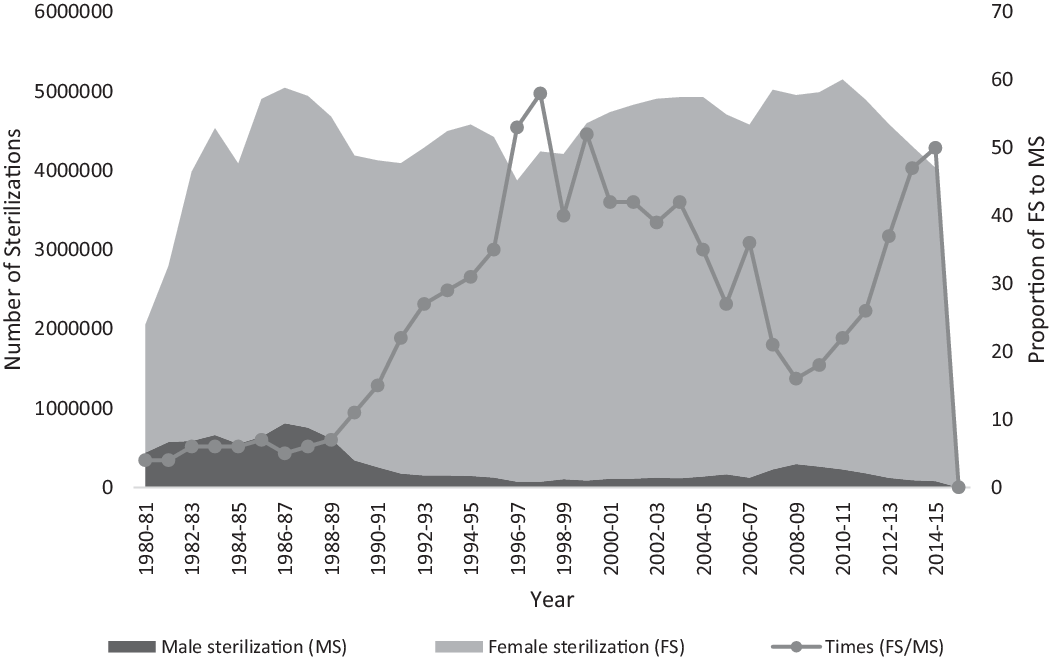
Interestingly, the 2015–16 data of the Indian Demographic Health Survey (DHS) showed that only 0.3% of male partners of married women were sterilized, contrary to the estimate of 1.2% provided in the UN 2015 report. In any case, male sterilization rates are lower in India than in developed countries and even in populous developing countries like Brazil (5.0%), China (4.4%) and Mexico (2.2%). Since the initiation of the FP programme in India in 1951 to its peak in 1977, the larger context of the campaign was to control the world population. India received the biggest chunk of international aid for its FP programme among all Asian and sub-Saharan African countries during the 1970s. Most politicians at that time believed that a lower population growth was associated with economic development of the country. The Indian government received a loan of US$66 million between 1972 and 1980 from the World Bank for carrying out sterilization. Under pressure to control the rapid population growth, the Government of India launched a mass sterilization programme aided by international organizations and developed countries (Gupte, Reference Gupte2017). However, the programme got bogged down by target-based and compulsory mass sterilization programmes in some parts of the country. The programme infamously attempted to control rapid population growth through forced sterilizations, particularly of men. Since then, the government has made all FP methods voluntary and incentivizes sterilization. Female sterilization contributes to three-quarters of India’s CPR, while male sterilization remains marginal. Data released by the Ministry of Health and Family Welfare for the period 1980–2015 showed that the share of male sterilization was very low and fluctuating. In addition, the number of female sterilizations was 50 times more than that of male sterilizations during 2014–15 and this ratio had increased rapidly during the preceding decade (Figure 1). The findings on this gap are supported by 2015–16 National Family Health Survey (NFHS) data, which showed that 36% of women adopted sterilization as compared with only 0.3% of men.
Number of male and female sterilizations conducted in India during 1980–2015.

Vasectomy is the simplest and most cost-effective method of FP but has not been so popular. According to the 2015–16 NFHS survey, about 87% of men and 84% of women of reproductive age in India are aware of male sterilization/vasectomy. However, its use is very low (International Institute for Population Sciences, 2017). After the efforts it made in the 1970s, the Indian government began to take renewed interest in enhancing the miserable vasectomy numbers for the first time in 2016. The draft National Policy for Women, released in 2016, states that ‘a gender transformative health strategy which recognizes women’s reproductive rights with shifts such as FP focus from female sterilization to male sterilization will be developed and utilized’. The Government of India conducts a ‘vasectomy fortnight’ campaign each year, starting on 21st November, to promote vasectomy in the Empowered Action Group states. India’s Sustainable Development Goal (SDG) agenda aims to achieve universal access to sexual and reproductive health services and reduce the burden of FP on females by 2030. Mission Parivar Vikas, a government programme on family welfare, aims at increasing vasectomy by 10% each year. In this context of public policy, the present study attempted to understand the trends in, pattern of and factors associated with male sterilization in India, as well as the use of other male spacing methods, to provide a comparative perspective with the use of female-specific methods.
Methods
Data
Secondary data from different rounds of the National Family Health Survey (NFHS) (1992–93, 1998–99, 2005–06 and 2015–16) were used to see the trends in male sterilization and other male spacing methods in India. The spatial pattern, socioeconomic differentials and associated factors were assessed using the fourth round of the NFHS (2015–16). The NFHS is the Indian version of DHS. It is coordinated by the International Institute for Population Sciences (IIPS) with financial support from the Ministry of Health and Family Welfare, Government of India, and technical support from the International Children’s Fund (ICF). The survey provides information on important public health indicators such as maternal and child health, fertility, FP, mortality, domestic violence and several diseases. The first three rounds of the NFHS provided state-level estimates for these indicators. The fourth round (2015–16) covered all of the 29 states and 7 union territories of India and, for the first time, provided district-level (640 Indian districts as per 2011 census) estimates for many important indicators. All the rounds of the survey used multi-stage probability proportionate sampling. The details of the sampling procedure and the data collection protocol can be found elsewhere (International Institute for Population Sciences, 2017). The NFHS 1992–93, 1998–99, 2005–06 and 2015–16 covered 88,562, 91,196, 109,041 and 601,509 households respectively and collected data from 84,678, 83,649, 93,089 and 511,377 currently married women aged 15–49 years respectively.
Outcome variables
Information on the use of FP among currently married women of reproductive age (15–49 years) was used. Although the survey respondents were women in the reproductive age group, the phrase ‘use of a contraceptive by couples’ has been used instead of ‘women’. The outcome variable was categorized into four different categories: a) non-use of contraception (reference category), b) female methods, c) male spacing methods (male condoms, withdrawal, rhythm/Standard Days Method), and d) male sterilization. Female methods included sterilization (female), intrauterine device (IUD), oral contraceptive pills, injectables and other female contraceptives. Use of male sterilization by partners/husbands was exclusively analysed, whereas for other male spacing methods of contraception, the UN series was used as a reference, as has been done previously in internationally published literature (Ross & Hardee, Reference Ross and Hardee2017). Sterilization (male), condoms, withdrawal, rhythm and Standard Days Methods (SDM), which either require a direct male-only action or male co-operation, were considered as male methods of contraception. The Standard Days Methods is a modern method of contraception that requires male cooperation. It identifies a fixed fertile period in a woman’s menstrual cycle when pregnancy is most likely to occur using CycleBeads – a visual tool which helps track this. Other methods included in the datasets which were not identified by the respondents, such as folk methods, were excluded from the analysis as their use was negligible (0.1%–0.3%). The terms ‘male sterilization’ and ‘vasectomy’ are used interchangeably in this study.
Independent variables
The socioeconomic characteristics women’s age (15–34, 35–49 years), number of living children (0, 1–2, 3 and 4+), religion of women (Hindu, Muslim, Christian, Other), caste (Scheduled Caste [SC], Scheduled Tribe [ST], Other Backward Class [OBC], Other), education of women (no formal education, primary, secondary, higher education), FP exposure through media (Yes, No), household asset based wealth quintile (poorest, poor, middle, rich, richest), place of residence (urban, rural) and geographical region (North, Central, East, Northeast, West, South) were used as independent variables in the study. The categorization of different states into regions was adopted from NFHS 2015–16 (International Institute for Population Sciences, 2017).
Statistical analysis
Bivariate and multinomial logistic regression analyses were used to find the socioeconomic factors affecting the use of male sterilization and male spacing methods in India. The analysis was conducted using the IBM SPSS 26 and GeoDa software packages.
Results
Trends in usage of male methods and male sterilization, 1992–2016
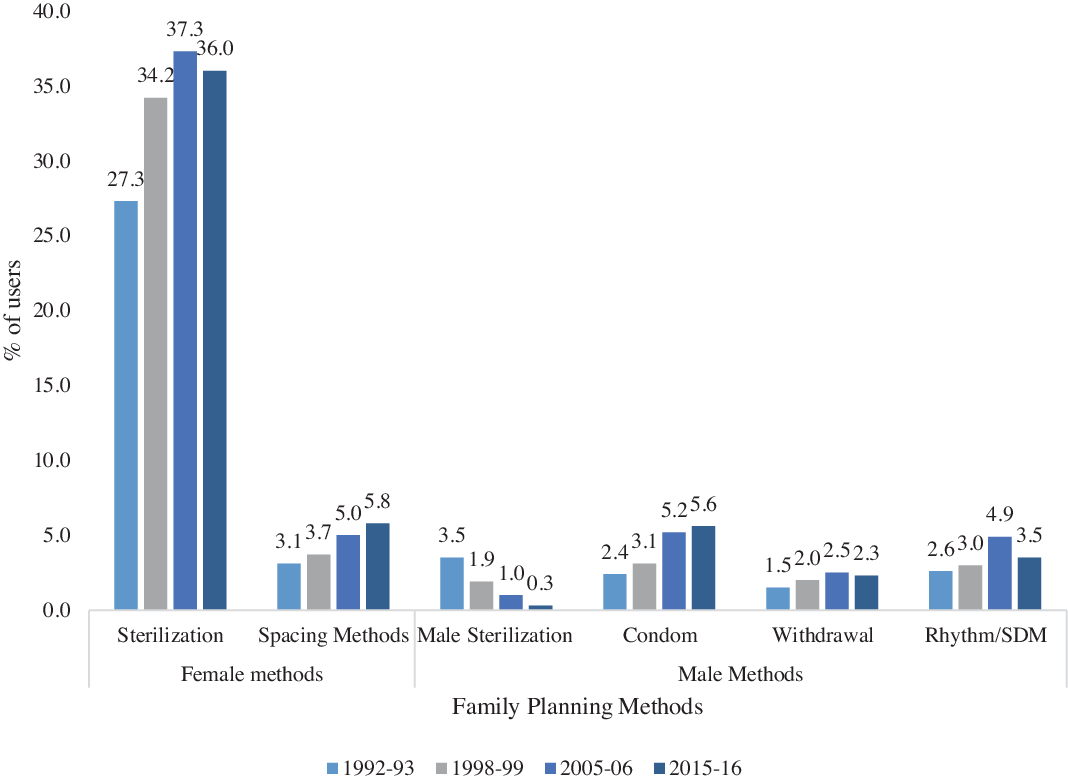
Contraceptive use in India increased from 40.7% in 1992–93 to 56.3% in 2005–06 among currently married women aged 15–49 years. However, there was a slight decline in the contraceptive prevalence rate (CPR) of around 2 percentage points (to 53.5%) during 2005–2016. Male sterilization went down from 1% to 0.3% during 2005–16. The decline in prevalence was particularly noticeable between 1992–93 (3.5%) and 2015–16 (0.3%). However, there was a dawdling but steady increase in the prevalence of male condom usage from 1992 to 2016 (Figure 2).
Trends in use of different types of contraceptive methods by couples in India, 1992–2016.

Spatial trends and pattern in use of male methods of contraception, 1992–2016
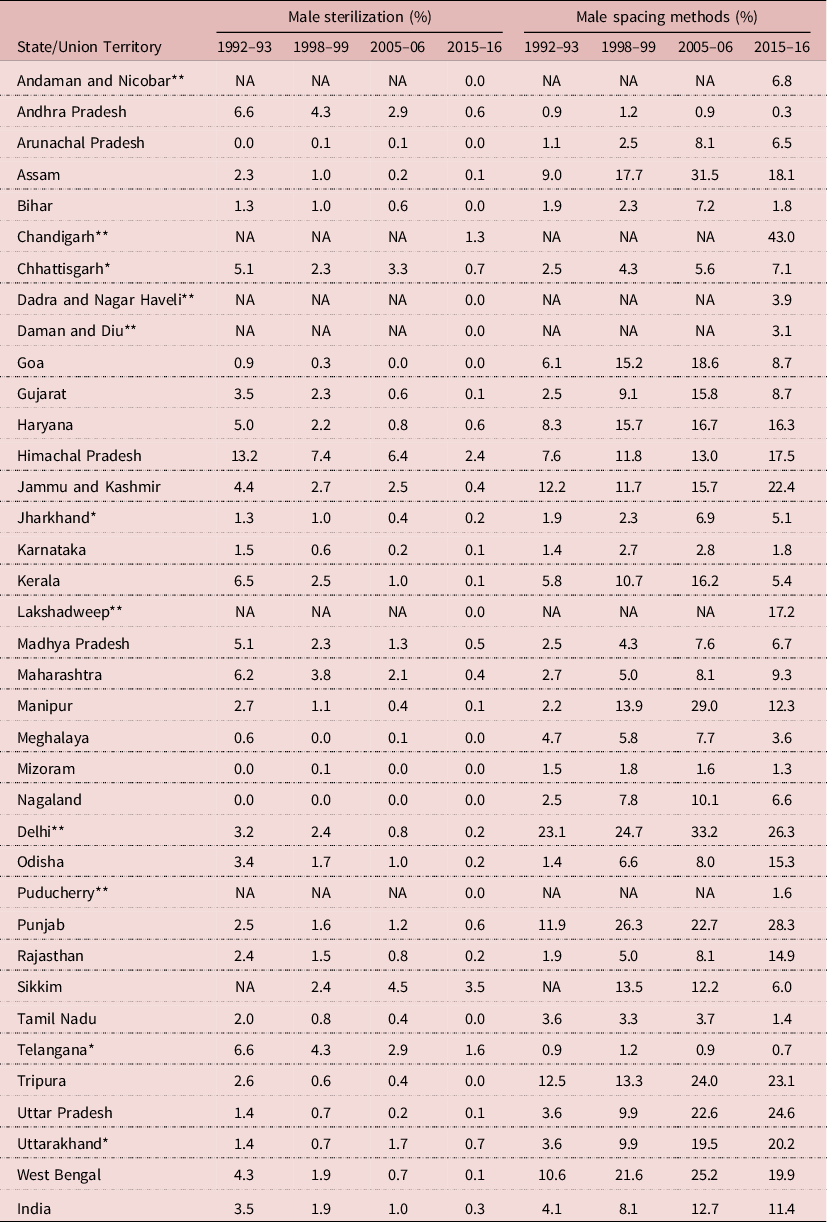
Table 1 shows the trends in the use of male contraceptive methods among women aged 15–49 years and their partners in different states of India during 1992–2016. The male sterilization rate was found to drop in almost all the states, whereas the use of male spacing methods of contraception showed a fluctuating trend, with a constant improvement in most northern states, including Rajasthan, Himachal Pradesh, Jammu & Kashmir, Uttar Pradesh and Uttarakhand. Odisha, in the eastern region, and Maharashtra, in the western region, also showed a constant increase in the use of male spacing contraception over these 24 years. Most of the southern states of India have persistently had very low use of male methods in comparison to the northern states (Table 1).
Trends in use of male family planning methods in states of India, 1992–2016

NA: data not available.
Male spacing methods include male condoms, withdrawal and rhythm/Standard Days Method (SDM).
*Newly formed states during the study period; **Union Territories (until 2016).
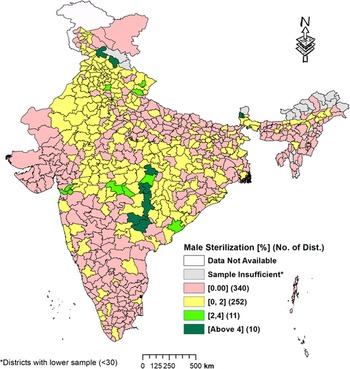
The contribution of male sterilization to the CPR of India was negligible in 1992–2016, with only three states – Himachal Pradesh (2.4%), Telangana (1.6%) and Sikkim (3.5%) – having male sterilization rates above 1% as per NFHS 2015–16. Among the union territories, only Chandigarh (1.3%) had a male sterilization rate of more than 1%. Undivided Andhra Pradesh (now Andhra Pradesh and Telangana), undivided Madhya Pradesh (now Madhya Pradesh and Chhattisgarh), Haryana, Himachal Pradesh, Kerala and Maharashtra had a more than 5% prevalence rate of male sterilization in 1992–93, which gradually declined over the period of two and half decades such that only three states had a prevalence of more than one per cent in 2015–16. Only ten districts of India had a more than 4% prevalence, while 21 districts had a more than 2% prevalence of male sterilization (see Figure 3). Among the districts, Chamba (12.7%) and Kullu (10.0%) in Himachal Pradesh; Karimnagar (4.2%) and Warangal (7.9%) in Telangana; Bhandara (8.0%), Gondiya (6.8%) and Gadchiroli (5.7%) in Maharashtra; Mandla (4.6%) in Madhya Pradesh; and South (8.3%) and West (4.5%) in Sikkim had a prevalence of more than 4%, largely owing to a high number of male sterilizations in these states.
Prevalence of male sterilization by district, India, 2015–16.

Socioeconomic differential in use of male methods of contraception, 2015–2016
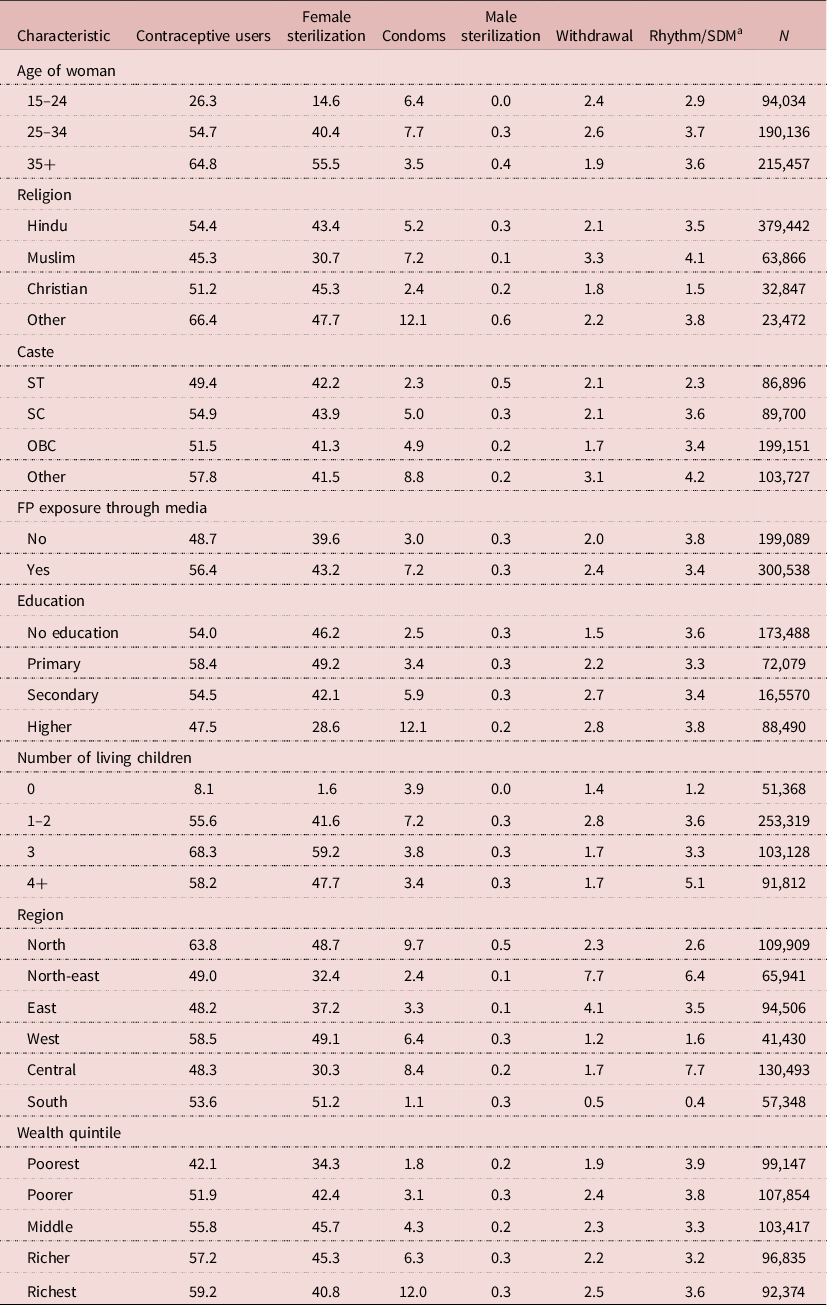
Table 2 shows the percentage of currently married couples, by their socioeconomic characteristics, using different methods of contraception in India during 2015–16. It was found that female sterilization dominated among the use of contraceptives across all socio-demographic groups. Among the male methods of contraception, the prevalence of condom use was the highest, followed by rhythm/SDM, withdrawal and male sterilization across the socioeconomic groups. Condom use was high among ‘Other’ religious (non-Hindu, non-Muslim and non-Christian) groups (12.1%) and Muslims (7.2%) in comparison to Hindus (5.2%) and Christians (2.4%). Similarly, the use of withdrawal and rhythm methods was more common among Muslims and couples belonging to ‘Other’ religious groups compared with couples practising Hindu and Christian religions. The male sterilization rates were found to be very low among all socioeconomic groups in India. The male sterilization prevalence rate was more than 0.5% among a few groups, like Scheduled Tribes, other religious groups and northern states.
Percentage of currently married women using different methods of contraception by their socioeconomic characteristics, India, 2015–16

a Requires male assistance.
Factors associated with use of male methods of contraception, 2015–16
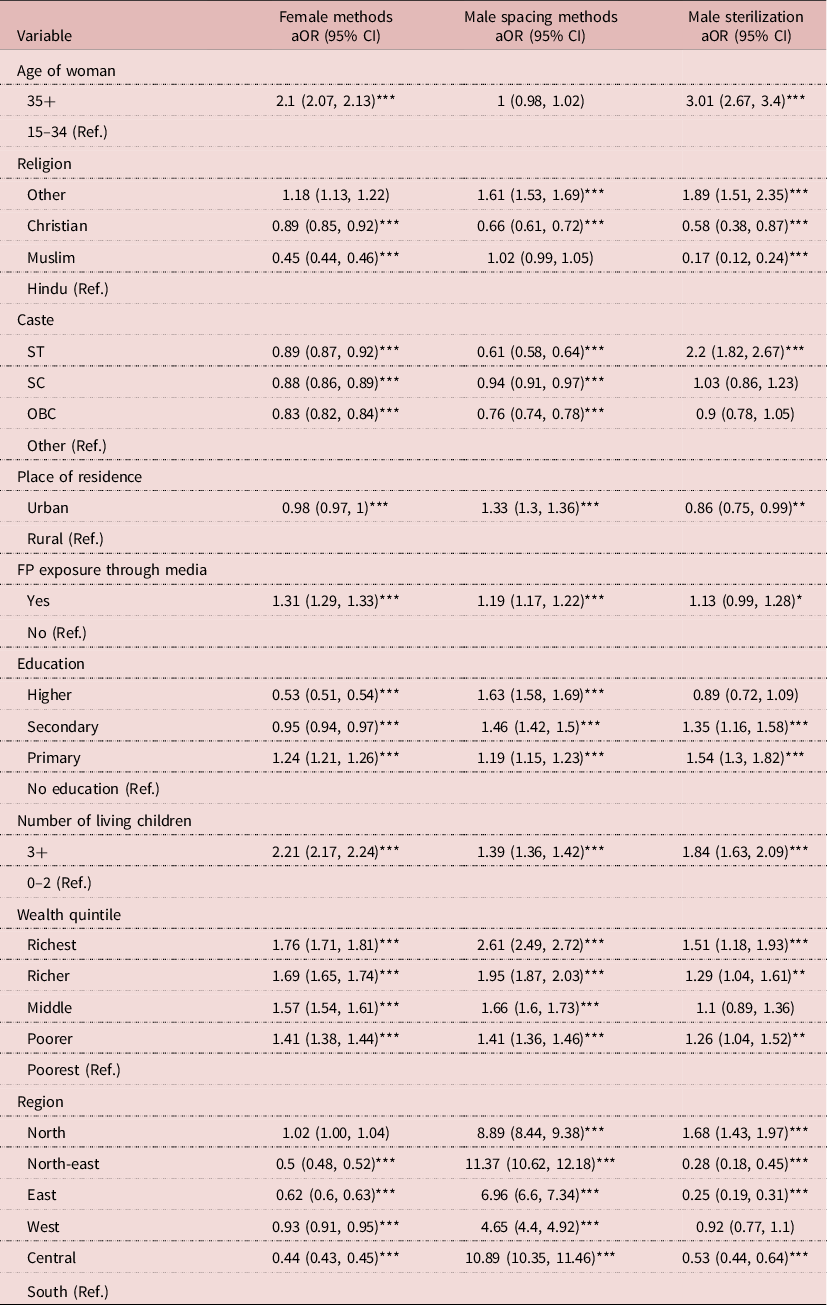
Table 3 shows the results of the multinomial logistic regression analysis of factors associated with the use of female methods, male sterilization and male spacing methods during NFHS 2015–16. The analysis indicated that among all religious groups, couples of other religious groups were significantly more likely to use male spacing methods (adjusted odds ratio [aOR]: 1.61, 95% CI: 1.53–1.69) and male sterilization (aOR: 1.89, 95% CI: 1.51–2.35) in comparison to Hindus. Christian couples, however, were less likely to use any method of contraception, including female methods (aOR: 0.89, 95% CI: 0.85–0.92), male spacing methods (aOR: 0.66, 95% CI: 0.61–0.72) and male sterilization (aOR: 0.58, 95% CI: 0.38–0.87) than Hindu couples. Muslim couples, too, were significantly less likely to use female methods (aOR: 0.45, 95% CI: 0.44–0.46) and male sterilization (aOR: 0.17, 95% CI: 0.12–0.24) than Hindu couples.
Multinomial logistic regression showing adjusted odds ratios for use of female methods, male spacing methods and male sterilization against non-use of contraception by socioeconomic characteristics, India, 2015–16

Ref.: reference category.
*p<0.10; **p<0.05; ***p<0.01.
Among the social groups, ST couples (aOR: 2.20, 95% CI: 1.82–2.35) were significantly (two times) more likely to use male sterilization than other (upper/no caste) caste group couples. This was not significant for OBCs and SCs. In comparison to other caste group couples, ST, SC and OBC couples were less likely to use both female methods (Table 3). Scheduled Tribe (aOR: 0.61, 95% CI: 0.58–0.64), SC (aOR: 0.94, 95% CI: 0.91–0.97) and OBC (aOR: 0.76, 95% CI: 0.74–0.78) couples were also significantly less likely to use male spacing methods than ‘other caste group’ couples.
Women with higher education were significantly more likely to use male spacing methods with their partners than those without education. Male partners of women with secondary (aOR: 1.35, 95% CI: 1.16–1.58) and primary (aOR: 1.54, 95% CI: 1.30–1.82) education were significantly more likely to use male sterilization than male partners of uneducated women. Women having primary, secondary and higher education were, respectively, 1.19, 1.46 and 1.63 times more likely to use male spacing methods. Women with higher levels of education were 47% less likely to use female methods in comparison to those without any formal education. Exposure to family planning through mass media was also found to have a significant effect on the use of female contraceptive methods (aOR: 1.31, 95% CI: 1.29–1.33), male spacing methods (aOR: 1.19, 95% CI: 1.17–1.22) and male sterilization (aOR: 1.13, 95% CI: 0.99–1.28).
It was observed that the household wealth of couples was directly associated with their use of all kinds of contraceptive methods. Couples belonging to the richest wealth quintile were around 2.5 times (aOR: 2.61, 95% CI: 2.49–2.72) more likely to use male spacing methods than those from the poorest group. Similarly, couples belonging to the richer, middle and poorer quintiles were also significantly more likely to use male spacing methods than those from the poorest group. Male sterilization usage was significantly more likely among the richest (aOR: 1.51, 95% CI: 1.18–1.93), richer (aOR: 1.29, 95% CI: 1.04–1.61) and poorer (aOR: 1.26, 95% CI: 1.04–1.52) groups compared with the poorest group.
Urban couples were significantly more likely to use male spacing methods (aOR: 1.33, 95% CI: 1.30–1.36) but significantly less likely to go for male sterilization (aOR: 0.86, 95% CI: 0.75–0.99) than rural couples. Among the geographical regions, it was observed that couples in the northern region were significantly more likely to use male methods of contraception, including male spacing methods (aOR: 8.89, 95% CI: 8.44–9.38) and male sterilization (aOR: 1.68, 95% CI: 1.43–1.97), compared with those from the south. Couples from the north-eastern (aOR: 11.37, 95% CI: 10.62–12.18), eastern (aOR: 6.96, 95% CI: 6.60–7.34), western (aOR: 4.65, 95% CI: 4.40–4.92) and central (aOR: 10.89, 95% CI: 10.35–11.46) regions of India were also significantly more likely to use male spacing methods compared with couples from the southern region of India. However, couples from the north-eastern (aOR: 0.28, 95% CI: 0.18–0.45), eastern (aOR: 0.25, 95% CI: 0.19–0.31) and central (aOR: 0.53, 95% CI: 0.44–0.64) regions were significantly less likely to use male sterilization in comparison to couples from the southern region. Couples from these three regions, along with those from the western region, were also significantly less likely to use female methods than couples from the southern region (see Table 3).
Discussion
India is committed to reducing the burden of family planning on females by strengthening and increasing the use of male contraception. However, this analysis revealed that there continues to be a greater burden on females across all socioeconomic groups and that trends in the use of male methods of contraception were not encouraging during the period of 1992–2016. Though the trend showed that the prevalence of use of male condoms went up, progress was marginal, with only a 0.4% increase from 2005–06 to 2015–16. Furthermore, the findings revealed that the male sterilization rate went down rapidly from 3.5% in 1992–93 to 0.3% in 2015–16. Sundari Ravindran (Reference Sundari Ravindran1993) showed that male sterilization comprised 54% of all sterilizations in the 1970s, but went down to 15% in the 1980s and has now become nearly non-existent. If no efforts are made in the national programme to revamp it, it will soon become an extinct procedure in India. Although the issue of under-use of male sterilization is unstated and under-investigated, it has been blamed on the shift in focus and lack of political will due to the controversies created by the forced sterilization policy of the government during the imposition of the State of Emergency in the 1970s (Sundari Ravindran, Reference Sundari Ravindran1993; Rao, Reference Rao2016; Gupte, Reference Gupte2017; Singh et al., Reference Singh, Singh and Singh2021).
The spatial analysis showed that the majority of districts that had a high prevalence of male sterilization – Chamba (Himachal Pradesh), Karimanagar (Telangana), Warangal (Telangana), Gondiya, (Maharashtra), Gadchiroli (Maharashtra), Mandla (Madhya Pradesh) and South and West Sikkim districts – had a high concentration of tribal population. The multivariate analysis also suggested that Scheduled Tribes were two times more likely to use male sterilization services than other caste (upper/no caste) groups. Studies in India and selected states have found high acceptability and use of male sterilization among tribes (Prusty, Reference Prusty2014; Jungari & Paswan, Reference Jungari and Paswan2020). Vasectomy among tribal groups is higher due to the intergeneration transfer of knowledge about the methods (National Institute for Research in Reproductive Health, 2012). The findings for place of residence also showed that urban couples were less likely to prefer male sterilization than rural couples, where major tribal populations are located.
It was found from the bivariate and multivariate results that male methods were more popular among couples in the northern states in comparison to the southern states of India and other regions despite the fact that women from the southern region have fewer restrictions, more autonomy and more inheritance rights than their northern counterparts (Jejeebhoy & Sathar, Reference Jejeebhoy and Sathar2001; Gupta & Yesudian, Reference Gupta and Yesudian2006). It is noteworthy to mention here that the practice of using male spacing methods was low across all the regions of India and was lowest in the southern region. Couples from the northern region, where patriarchal norms are more rigorous, were more likely to use both male spacing and limiting methods, revealing that patriarchy was not the only reason behind this decline. A study by Scott et al. (Reference Scott, Alam and Raman2011) found that the lack of intention to use vasectomy was due to its low acceptability. This may be because of a lack of proper knowledge about the procedure. Exposure to mass media plays an important role in creating awareness about family planning methods.
The present study also revealed that women who had exposure to family planning through media were more likely go for all methods of family planning. However, the odds ratio was higher for the use of female methods than male spacing methods and lowest for male sterilization. Although the Government of India has provided a ‘basket of contraceptive choices’, contraceptive use is considered to be ‘women’s business’ in India and large-scale surveys have revealed comparatively lower knowledge of male methods than female methods among both females and males in the reproductive age groups (International Institute for Population Sciences, 2017). There is a lack of data on male involvement in family planning and on counselling offered to men on family planning methods. Existing myths, misconceptions and rumours about the procedure, lack of skilled providers and strong patriarchal norms all lead to low access to vasectomy services in India (Scott et al., Reference Scott, Alam and Raman2011). Erroneous knowledge often leads to false assumptions about the physiological and psychological impact of vasectomy on men (Shattuck et al., Reference Shattuck, Perry, Packer and Quee2016). Indian studies have found that there is a belief that men who undergo vasectomy come to be controlled by their wives and become their slaves (Scott et al., Reference Scott, Alam and Raman2011). In addition, Hall et al. (Reference Hall, Stephenson and Juvekar2008) revealed that women prefer female sterilization over vasectomy because men make a greater economic contribution to the family; should something happen to the man, household economic security would become jeopardised.
Several studies from India and other countries have found that lack of trained health care providers and incorrect knowledge of no-scalpel vasectomy among community health workers are supply-side barriers to utilization of vasectomy. Two studies from Jharkhand found good knowledge regarding the eligibility for vasectomy among the population but little knowledge about surgery and the post-surgery requirements (Mehra et al., Reference Mehra, Thakur, Mahapatra, Narula and Kalita2013; Mahapatra et al., Reference Mahapatra, Narula, Kalita, Thakur and Mehra2014).
Interventional strategies to enhance vasectomy rate
Various studies in Asian and African settings have revealed that gender transformative messages, group counselling, a whole-site training approach at hospitals and maternity clinics, cascade training, motivated service providers and health staff and training of shopkeepers at medical stores and of Accredited Social Health Activists (ASHAs) for the promotion of vasectomy enhance both the knowledge and the practice of vasectomy. In Bangladesh and Ghana, the ACQUIRE (Access, Quality and Use in Reproductive Health) project used gender transformative messages like ‘Get a Permanent Smile’, which addressed the myths associated with vasectomy. The programme – through posters and television commercials with the message ‘My husband is the best’ – created a positive atmosphere in the community. An open discussion with couples, during group counselling on No Scalpel Vasectomy (NSV), enhanced knowledge about and acceptability of vasectomy among potential users in the Philippines. The ACQUIRE project in Ghana also adopted whole-site training to establish ‘male friendly’ services, in which training on providing NSV counselling and services were provided to all health workers (Bunce et al., Reference Bunce, Guest, Searing, Frajzyngier, Riwa, Kanama and Achwal2007). This resulted in the staff having greater knowledge of vasectomy and being aware of men’s health problems (Shattuck et al., Reference Shattuck, Perry, Packer and Quee2016). In Costa Rica, men with more gender equitable views were pursued for getting vasectomy done as part of their quest for emotional commitment to the well-being of their wives. By linking low fertility to being a ‘modern man’, the campaign resulted in an increase in vasectomy rates of 76% in the 3-year time period 2003–06 and by another 70% in the 3 years following that period (Pomales, Reference Pomales2013).
Cascade training is regarded as a systematic and cost-effective way of building the capacity of clinics and service providers. Under this approach, a small group of motivated service providers and health staff are identified and trained to perform vasectomy. Once trained, they work as trainers locally. This type of training has been implemented in two projects in Rwanda in which curricula and skills have been created. Furthermore, outreach visits of the vasectomy teams to remote health centres, to train other providers and to provide services, have been facilitated by district hospitals. A 5-day training helped physicians to successfully master this new occlusion technique, leading to a large number of service providers in Rwanda and thereby increasing the number of cases (Labrecque et al., Reference Labrecque, Kagabo, Shattuck, Wesson, Rushanika and Tshibanbe2013). The project Responding to the Need for Family Planning through Expanded Contraceptive Choices and Program Services (RESPOND) in Uttar Pradesh found that training shopkeepers at medical stores and ASHAs to promote NSV and distribute informational materials to potential FP clients was useful in spreading awareness (Scott et al., Reference Scott, Alam and Raman2011).
Conclusion
The findings of this study reveal that the practice of male sterilization is becoming extinct and needs greater attention in the national health and family welfare programmes of India. The method is practised only in a few geographical pockets and is confined to one social group of the country. The use of modern spacing methods among males needs to be strengthened to reduce the burden of contraceptive use on women and to achieve greater parity in the use of family planning methods between men and women. Very little is known about male counselling on family planning methods and male involvement in family planning. This gap may be filled by including additional questions in the male questionnaire of the government-sponsored National Family Health Survey (NFHS). There is a need for interventional strategies focusing on both demand- and supply-side barriers, taking a leaf out of existing literature and national programmes. Information, education and communication about male methods, community engagement, outreach through male motivators and peer educators and capacity building of health workers are key to improving the use of male methods of family planning and to achieving gender equity.
Acknowledgments
The authors thank the Director of ICMR-NIRRH for her support in the preparation of this manuscript. They are also thankful to Dr Prabhjeet Kaur, Library and Information Officer at ICMR-NIRRH, for proof-reading the manuscript. Data for all the rounds of NFHS are publicly available with no individual identifiers and are freely accessible from https://dhsprogram.com/.
Funding
The authors have not received any specific funding for this study.
Conflicts of Interest
The authors have no conflicts of interest to declare.
Ethical Approval
The data used in this research were collected by publicly available large-scale health surveys following all ethical procedures and with approval of the Ministry of Health and Family Welfare, Government of India.