


Introduction
There are an estimated 4.6 million people (8%) in England from black and minority ethnic groups (BME) (Office for National Statistics (ONS) UK Census, in 2001). There is significant and independent variation of incidence of schizophrenia and other psychoses in terms of ethnicity, with all psychoses reported to be more common in BME groups (crude incidence rate ratio, 3.6; Kirkbridge et al., Reference Kirkbride, Fearon, Morgan, Dazzan, Morgan, Tarrant, Lloyd, Holloway, Hutchinson, Leff, Mallet, Harrison, Murray and Jones2006). Literature shows rates of schizophrenia to be 2 to 14 times greater for African-Caribbean than for whites in the UK (Fearon and Morgan Reference Fearon and Morgan2006; King et al., Reference King, Nazroo, Weich, McKenzie, Bhui, Karlsen, Stansfeld, Tyrer, Blanchard, Lloyd, McManus, Sproston and Erens2005). Canter-Graae's and Selten's (Reference Cantor-Graae and Selten2005) meta analysis of 18 studies demonstrated a significant increased risk of schizophrenia in migrant groups from developing countries, with significant variation of risk by both host countries and the countries of origin.
Compared to their “native” white counterparts, patients from minority ethnic groups with schizophrenia are likely to be misunderstood and misdiagnosed and more likely to be treated with drugs and ECT rather than psychotherapy (Fernando, Reference Fernando1988). They are less likely to have their social and psychological needs addressed within the care planning process (Bhui, Reference Bhui2002) leading to dissatisfaction with services (Bhugra, Reference Bhugra1997; Bhui, Reference Bhui and Johnson1998).
The Department of Health has allocated substantial funds for Improving Access to Psychological Therapies but therapies as currently delivered are grounded in Western views of the person. Socio-demographic factors and cultural background influence perception of symptoms of mental illness and hence engagement with services. Cultural adaptations and understanding of ethnic, cultural and religious interpretations is an area that currently remains underdeveloped (Rathod, Naeem, Phiri and Kingdon, Reference Rathod, Naeem, Phiri and Kingdon2008).
A number of systematic reviews and meta-analyses (Zimmerman, Favrod, Trieu and Pomini, Reference Zimmermann, Favrod, Trieu and Pomini2005; Wykes, Steel, Everitt and Tarrier, Reference Wykes, Steel, Everitt and Tarrier2008) have concluded that cognitive behaviour therapy (CBT) is effective in treating people with schizophrenia. However, these studies were predominantly conducted with the white population and a small BME sample (e.g. Morrison et al., Reference Morrison, French, Walford, Lewis, Kilcommons, Parker and Bentall2004; Turkington, Kingdon and Turner, Reference Turkington, Kingdon and Turner2002; Lewis et al., Reference Lewis, Tarrier, Haddock, Bentall, Kinderman, Kingdon, Siddle, Drake, Everitt, Leadley, Benn, Grazebrook, Haley, Akhtar, Davies, Palmer, Faragher and Dunn2002; Trower et al., Reference Trower, Birchwood, Meaden, Byrne, Nelson and Ross2004). Where ethnicity was considered, there was insufficient information concerning outcomes and effectiveness of therapy for this group (Morrison et al., Reference Morrison, French, Walford, Lewis, Kilcommons, Parker and Bentall2004; Trower et al., Reference Trower, Birchwood, Meaden, Byrne, Nelson and Ross2004; Lewis et al., Reference Lewis, Tarrier, Haddock, Bentall, Kinderman, Kingdon, Siddle, Drake, Everitt, Leadley, Benn, Grazebrook, Haley, Akhtar, Davies, Palmer, Faragher and Dunn2002). Furthermore, there are limited data concerning any relationships between the ethnicity of the patients, their demography and the ethnic origin of the therapists.
The Insight study (Turkington et al., Reference Turkington, Kingdon and Turner2002) involved a brief insight oriented CBT intervention delivered by trained nurses to patients with schizophrenia in the community. It demonstrated improvement in overall insight and symptoms of depression at post therapy assessment and had an impact on time to hospitalization (Turkington et al., Reference Turkington, Kingdon, Rathod, Hammond, Pelton and Mehta2006). However, in this study, the African Caribbean group at three months and the Black African group at one year follow-up analysis showed higher dropout rates and significantly poorer change in insight compared to the White group (Rathod, Kingdon, Smith and Turkington, Reference Rathod, Kingdon, Smith and Turkington2005). The study reported below sought to understand why this might be the case and how CBT might be culturally adapted.
Aims and objectives of the study
The main aim of this study was to produce a culturally sensitive adaption of an existing CBT manual that is (a) well suited to the needs of patients with psychosis from the specified ethinic minority communities (Black Caribbean, Black British, African; Bangladeshi and Pakistani); and is (b) accompanied by guidance for health professionals to enable them to deliver CBT that is culturally sensitive and responsive for patients with psychosis from these communties. The following objectives sought to fulfill these aims:
1. To gain meaningful understanding concerning the way members (lay and service users) of the above minority communities typically view psychosis, its origin, and management.
2. To elicit those cultural influences, values and attitudes that shape a patient's degree of participation and response to CBT.
3. To elicit from CBT therapists and mental health practitioners (MHP) from these communities their experiences and interpretations of the way a patient's culture influences their attitude and response to CBT.
4. To identify those strategies that CBT therapists and other mental health practitioners identify as being supportive or non supportive with patients from the above ethnic communities.
5. To analyze these data to make culturally specific adaptations to the existing Kingdon and Turkington manual (Reference Kingdon and Turkington2005). This will include an accompanying good practice guide and recommendations for the training of therapists delivering CBT to patients from the ethinic communities.
Method
Study design
The study adopted an overarching qualitative methodology informed by an ethnographic approach (Richie and Lewis, Reference Richie and Lewis2003). This approach to data gathering allowed focus on understanding the perspective of people participating in the study within their cultural context (Spradley, Reference Spradley1980). Acknowledging the sensitive nature of the topics to be explored and the vulnerability of the service users, in depth face-to-face semi-structured individual or group interviews with participants were performed. In addition, focus groups (as a form of group interview) were used to clarify, explore or confirm ideas with a range of participants on a “predefined set of issues”. The principle of “emergent design” was followed when respondents raised issues that required further exploration or verification (Polit and Hungler, Reference Polit and Hungler1999; Creswell, Reference Creswell2009), These points were then tested appropriately with subsequent participants. Occasional telephone or e-mail communications with participants enabled clarification of areas of uncertainty when the data were analyzed.
Study centres
The study was conducted in two centres in the UK: Hampshire and London. Hampshire represents a mixed inner city area and a small rural population of ethnic minorities. Therefore the issues of urban and rural areas were addressed.
Study participants and rationale for their selection
BME groups are classified (Office for National Statistics, 2001) into the following categories: Asian and South Asian (Indian, Pakistani, Bangladeshi) and Chinese and the Black and Black British (African, Caribbean). The Chinese group was excluded because its numbers were insignificant in the original insight study. The Indian group was excluded after discussion within the initial study group as this might have over-extended the study. The contrasts that would be drawn out between African Caribbean and South Asian Muslim groups and with the white population led to their selection.
The research team actively recruited those who were defined as Black Caribbean, Black British, Black African and Pakistani or Bangladeshi. Ethnic membership was verified with the participants.
Group 1. Comprised African Caribbean lay people and those patients with psychosis with a need for, but without experience of CBT and those with experience of CBT. The term African Caribbean in this study is used to describe lay people or service users with African ancestry who migrated from the Caribbean isles, African group, second generation Black-British, and some from mixed race parentage. The rationale for selecting this ethnic group follows previous and current studies on ethnicity that concluded that there were disparietes in health provision (Specialist Library for Ethnic and Health, 2009), significantly higher rates of schizophrenia in the UK (Sharpley, Hutchinson, Murray and McKenzie, Reference Sharpley, Hutchinson, Murray and McKenzie2001) when compared with the general population (Pinto, Ashworth and Jones, Reference Pinto, Ashworth and Jones2008) and those in English speaking Caribbean. Moreover, this group is overrepresented in mental health settings and especially in inpatient services, with high rates accessing services through detention on the Mental Health Act sections (Lombard, Reference Lombard2008).
Group 2. Comprised South Asian Muslim participants including Pakistani and Bangladeshi lay people and those patients with a need for, but without experience of CBT and those with experience of CBT – to reflect the diversity between different groups. The choice of South Asian Muslim groups was based on inclusion of ethnic groups of similar socio economic status but with differing needs when compared to the Caribbean group in terms of language and religious background. Unlike the African Caribbean group, the South Asian Muslim group is under presented in mental health services raising debates about reasons for not using these services (Patel and Andrade, Reference Patel and Andrade2003). Although the Pakistani and Bangladeshi Muslims share Islamic religion as a common factor, there are differences with respect to their culture, language, social class or caste and philosophical beliefs (Rack, Reference Rack1992).
By exploring within four groups – Black British, Black African/African Caribbean, Pakistani, and Bangladeshi – challenges can be identified that can inform generic adaptation for culturally diverse groups (Nazroo, Reference Nazroo1997; DRE) whilst retaining the principle that the individual's cultural needs must still be taken into consideration.
Group 3. Comprised cognitive behaviour therapists with experience of working with the defined BME groups. Atlhough this was a mixed group, the majority of therapists were predominantly white (see Results section).
Group 4. Comprised mental health practitioners (MHP) with generic experience of working with the defined BME groups. This group included a mixed ethnic profile reflecting the current workforce in the healthcare services.
Sampling and recruitment
Purposive, targeted sampling was adopted to recruit the study participants who comprised service users, lay members of the respective ethnic communities, mental health practitioners and therapists. Sample size was determined pragmatically by three considerations, namely the:
1. Likely number of informants required to gather meaningful data, typically at least 6–8 per focus group (see Krueger, Reference Krueger1994; Merton, Fiske and Kendall, Reference Merton, Fiske and Kendall1990; Stewart and Shamdasani, Reference Stewart and Shamdasani1990).
2. Extent to which data were saturated and no “new information” was being generated.
3. Availability of participants from the ethnic groups concerned.
Participants received information leaflets outlining the study; the leaflets were also translated into Urdu language for the Pakistani participants.
Recruitment of participants
Recruitment of individuals with schizophrenia/schizo-affective disorder or delusional disorder was through the local mental health teams, inpatient services and lay participants were recruited from local BME communities. Patients were approached only after their consultant psychiatrist had given permission. Written informed consent was obtained from participants before the interviews were conducted.
Inclusion criteria
Inclusion criteria included the participants being:
• From a defined ethnic minority group with a diagnosis of schizophrenia/schizoaffective disorder/delusional disorder or a lay member from the ethnic minority group or MHP or CBT therapist.
• Willing to participate in the interview and have notes made and/or be tape recorded.
• Had capacity to consent and understand the interview.
Exclusion criteria
Exclusion criteria included:
• Severe illness that affected mental capacity or markedly affected their ability to participate in interview, e.g. very thought disordered or distressed by symptoms.
• Not agreeing to consent.
• Those patients who, in the opinion of the key worker/care coordinator, would become distressed by the interview.
• Patient identified that they are not of the stated ethnic group.
• Non-English speaking, because of the difficulty of conducting the interviews through interpreters.
Recruitment of lay members, therapists and mental health practitioners
Community Development Workers (CDWs) and local BME community organizations were approached to identify potential lay participants. Presentations and discussions with relevant organizations were arranged by the researcher as part of the recruitment process. The recruitment process for CBT therapists and MHPs involved approaching mental health services and local community mental health teams in Hampshire and London centres.
This study was adopted by the North London and West Hubs of the Mental Health Research Network. Their Clinical Studies Officers (CSOs) assisted with recruitment.
Ethical and governance issues
Ethics approval for the study was obtained from the Southampton Research and Ethics Committee (B) REC: 08/H0504/5. Research and Governance approval was obtained from Hampshire Partnership NHS Foundation Trust, West London Mental Health Trust and Portsmouth NHS Trust.
Data collection and analysis
Focus groups and individual interviews were conducted at a time and place convenient to the participants. Various definitions of focus groups exist, including Kitzinger's (Reference Kitzinger1995: pp. 299–302) which describe it as:
. . . a form of group interview that capitalises on communication between research participants in order to generate data. Although group interviews are often used simply as a quick and convenient way to collect data from several people simultaneously, focus groups explicitly use group interaction as part of the method.
Not withstanding their possible criticism of subjectivity and not being a replicable technique, they are the best method in this study. When compared to the mechanical nature of survey-based methods, interviews provide for emotional quality based on the personal qualities of the researcher (Kvale, Reference Kvale1996). Furthermore, focus groups offer some level of support allowing people to open up. By exploring the attitudes and needs of participants, the researcher can learn a lot by watching the dynamics of the group. Conversely, focus groups do not discriminate against illiterate people and can operate within a given cultural context.
Box 1: Summary of main themes explored through interviews and focus groups
Guide themes with health professionals
• Experiences of conducting CBT with BME communities
○ Good and negative experiences, useful tips
• Whether and how the CBT manual is used during therapy with BME patients
• Similarities and differences in BME communities
Guide themes with service users who experienced CBT
• Understanding of causes and experience of psychosis and its treatment
• Comparisons between family, friends, psychiatrist and therapists views of this mental health problem
• Actions taken by patient/family/friends prior to referral for CBT
• Experiences of referral, accessing services and therapy associated with CBT- other strategies used by patient
• Whether therapist/doctor understood their problems
• What therapies were helpful
• Whether patient would recommend CBT to another person, -reason for decision
Guide themes with service users with no experience of CBT
• Understanding of causes and experience of psychosis and its treatment
• Comparisons between family, friends and therapists views of this mental health problem
• Actions taken by patient/family/friends to seek help or manage the problem (e.g. when to go to doctor or spiritual healer etc)
• Whether therapist/doctor understood their problems
• Views on CBT (if known)
• What therapies are helpful?
Guide themes with lay BME community members
• Understanding the cause, origin and manifestation of ‘Psychosis
• Description of psychosis (typical expressions or words used)
• How the community judges is the best way to treat psychosis
• How they support the person with psychosis
• How they reacts to the person (male or female) with psychosis
• What their views are on the interventions of doctors and mental health practitioners
A total of 38 interviews or focus groups were conducted by the researcher (PP, a therapist from a BME background) between May and December 2008. All groups and interviews were audio-recorded, and transcribed. Transcripts were coded and anonymized. Access to data was limited to the researcher and the research team. Field notes were taken by the researcher noting non-verbal communication and behaviours. Focus group discussion data were analyzed according to the principles recommended by Krueger (Reference Krueger1994). The data were largely descriptive with most themes emerging in response to the interview guides. The interview guide themes are outlined in Box 1. The data were analyzed by systematic content and question analysis (Morse and Field, Reference Morse and Field1996), unlike other types of thematic content analysis that place emphasis on frequency of words and utterances (Hsieh and Shannon, Reference Hsieh and Shannon2005). Analysis involved the researcher immersing himself in data by reading the interview transcripts carefully (sometimes re-read several times) and identifying emerging themes and categories (Simons, Lathlean and Squire, Reference Simons, Lathlean and Squire2008). NVivo 8 (computer-assisted qualitative data analysis software) was used to manage and explore the qualitative data in-depth.
Triangulation of themes and concepts was undertaken to compare and contrast the data from the different participating groups. This enhanced the reliability and validity of the analysis. A sample of transcripts was independently reviewed by three other researchers to check the reliability of the interpretation, coding and interrelationship of themes. Following review of sample transcripts three independent researchers met and compared emergent themes. All three had identified similar themes and concept maps from interview data. One of the challenges that arose through transcription and analysis was the use of Patois (native language) in some of the African Caribbean interviews. Not only did the transcriber indicate areas of uncertainty in translation, non African Caribbean members of the research team had difficulty interpreting some speech and meaning. A simple example is this quote that includes an idiomatic expression similar to the English expression “round the bend”:
. . . . .And come back, and you one up in the hilltop. And you don't talk. [LAC1, interview with African Caribbean Lay member, Southampton]
The presence of African Caribbean members on the team enabled these communications to be “translated” and explained. The researcher met on a regular basis with the research team (SR, DK, MG) and also with the Steering Group who had varied expertise and experience. Expertise on qualitative methodology was provided by (MG).
Results
Final sample and data collected
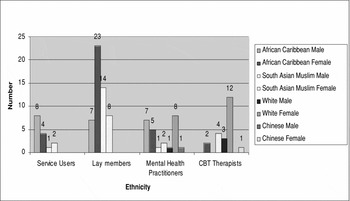
Interviews were conducted with the different groups until the data were saturated. In total, the data set comprised 114 participants as follows:
a) Twenty face-to-face individual interviews (patients = 15; lay participants = 3; mental health practitioner = 1 and CBT therapist = 1)
b) Eighteen focus groups comprising 99 participants, as follows:
a) Five focus groups with therapists (n = 21)
b) Four focus groups with mental health practitioners (n = 24)
c) Nine focus groups with Lay members: Hampshire (n = 23); London (n = 26).
Figure 1 outlines the final study sample and summarizes the data collected. Service user breakdown was as follows: Outpatients (n = 12) and inpatients (n = 3). A total of 22 therapists participated in the study, with the breakdown as follows: (n = 21) therapists attended focus groups held in Hampshire (focus groups = 2) and London (focus groups = 3); one therapist attended an individual interview. During recruitment, majority of therapists invited to take part declined stating that they had not worked with BME groups but were keen to hear about the outcome of the study. A majority of therapists were clinical psychologists (n = 18), trainee psychologist (n = 1) and CBT trained nurse therapists (n = 3). Gender breakdown in this group is shown in Figure 1 as: female (n = 18) and males (n = 4).
Final sample by type, ethnicity and gender

Findings
The findings regarding the Bangladeshi and Pakistani Muslim participants from interviews and focus groups were very similar and therefore are described together as the South Asian Muslim group. The key themes are described below:
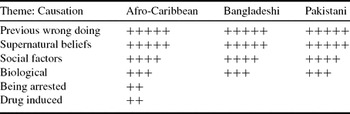
Health beliefs and attributions to psychosis. Table 1 reports the emergent themes relating to participants’ (patients and lay members) explanatory models of what causes mental illness, in particular psychosis. The themes, stated in order of strength of belief, describe the way in which the ethnic minority groups explained causes of mental illness. Three of the themes are described with quotes from participants.
Attributions of mental illness by ethnicity

1. Previous wrong-doing. This was typically described by lay participants and patients as someone “being punished” or the “sins of the family have fallen on the particular individual (who may be innocent)”. Ideas of sin, wrong doing and punishment were sometimes associated with a religious explanation of mental illness. For example,
Your past issues are now coming out and so, some people believe that when they lose their mind, their sins are being washed away. So they are becoming more pious as they suffer. Therefore, they are closer to God and actually any ill person is considered closer to God. . .. [PL11, interview with Pakistani lay member]
2. Supernatural beliefs. Patients and lay participants reported supernatural causes for illness. For example, “Jinn(s) and ghosts” in the South Asian Muslim community, evil spirits, demons, magic curses or spells by someone who is “jealous” of them. The casting of an evil eye is called Nazar lagana Footnote 1 by the South Asian Muslim participants and the Obeah Footnote 2 by the African Caribbean. In the following illustration the attribution is accorded to being possessed by the devil
. . .so and so's daughter is experiencing this and she has gone crazy you know. She is babbling, she is talking, and she is being possessed by the devil. You know people can't control her. [BL35, interview with Bangladeshi lay participant]
3. Specific African Caribbean attributions. Two themes were unique to the African Caribbean participants. One was the belief that mental illness was a consequence of being misunderstood and misinterpreted by the arresting police officers. The other belief was related to drug induced psychosis.
Being arrested by the police
Unique to many African Caribbean respondents(patients and lay participants) was the belief that mental illness could be caused by a series of events whose origins were misunderstandings with the police, which then resulted in an arrest. These next two examples illustrate misunderstandings through use of Patois and the accompanying physical expressions, particularly when someone is angry or emotional.
. . .they don't have a mental illness at all. But the police have arrested them and they have been loud and moody. Waving their hands shouting and began to speak in the Patois. Because when somebody gets angry their normal slow way of speaking English that is heard and understood goes out of the window. Especially when they feel that they are being wronged. [ACL17, Interview with African Caribbean lay participant]
The respondent then describes how the person's body language and mannerisms change as they shout, and the consequences of this change,
What are you arresting me for, what you want with me? The police officer doesn't understand your language because this person was speaking English before. But now it sounds like it is not English. Because it is Patois {respondent is waving hands in the air} or it is a mixture of French-or. . .something else. . .they are misunderstood. They are shouting. They are yelling. They are waving their hands about, they get arrested. And before you can say two words somebody has pumped them with some sort of drug . . . Because they didn't have an illness, certainly now they have got one. [ACL17, Interview with African Caribbean lay member]
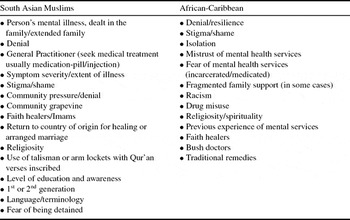
Help seeking behaviours and pathways
Through the interviews a number of themes emerged on help seeking behaviours and pathways. These are summarized in Table 2. African Caribbean participants reported a common practice of seeking help from faith healers. Fear of services, mistrust and lack of confidence in the system are other factors that were highlighted. Similar pathways exist in the South Asian Muslim communities. These are influenced by “shame” to the community, family and to the individual. In the South Asian Muslim group, maintaining “family honour” by hiding anything that would be perceived as “disgrace to the community or family” is paramount to patients who participated. People decline help from counsellors or therapists fearing that distress may be linked to the family gene, or may reveal issues that will impact not only on their family but community as a whole. Community views (e.g. gossip/rumours) from the grapevine are influential. Mental illness is thus dealt with in the family or extended family. Recommendations of remedies or advice of elders or Imams is preferred to services. This includes belief in “talisman” or arm lockets with Qur'an verses inscribed on them. The General Practitioner (GP) may be the second preference. Sometimes return to country of origin may be the chosen option.
Moderators influencing help seeking behaviours

Shame and stigma
Patients and lay participants in the study highlighted that the subject of mental illness was described as a taboo that is not talked about openly. This African Caribbean respondent highlights the impact of stigma and shame and how this is hidden by the family
. . .but don't tell me that I have lost my mind. Tell me that I have the worst communicable disease because with bush medicine I can do anything and it will get better. But when I have lost my mind the whole world is going to know about it. I can't hide it. For my mother, for my child, for my husband to have mental problems you bring disgrace on the whole family. How could you have lost your mind? So you hid them away. What's wrong with Joe? You say he has gone on a holiday or something like that. [ACL11, interview with African Caribbean lay member]
The nature of stigma associated with mental illness was reported by patients and lay participants as intense and complex, in particular within the South Asian Muslim communities that participated in this study. Its impact on the patient and family is strong and interferes with help seeking behaviours. Consequently, families and individual patients often avoid mainstream mental health services and prefer traditional, usually non-scientific pathways and interventions (Rathod, Kingdon, Phiri and Gobbi, Reference Rathod, Kingdon, Phiri and Gobbi2009).
Opinions regarding treatment and CBT
The majority of patient participants highlighted that although medication was helpful, it was probably being overused in BME patients. Side effects were identified as a contributory factor to non-concordance with treatment. High doses of medication were disliked both by patients and some therapists who felt that it made it difficult for some patients to engage in therapy as a result. Preference for talking therapy with medication was noted. However, a difference between the African Caribbean group and the South Asian Muslim group was that being prescribed medication was expected and welcomed by the latter group; for example, as one respondent pointed out:
They believe in physical ‘would take pill rather than talk to’. . . Preference of intramuscular injections rather than oral tablet. Drips are seen as effective and reinforced by medical professions and private hospitals. The colour of drip matters, the more colourful the better. . . The concept of the “drip hanging” and the person lying supine is embraced in belief that “strength is being transferred to a person”. [PL1, interview with a Pakistani lay member]
The majority of the participants in interviews and focus groups reported that CBT would be acceptable with adequate information and if culturally adapted.
I probably would like to see if I could get to the bottom of why I have developed this illness. [PAC51, Interview with African Caribbean service user participant]
The benefits of CBT perceived in BME groups are highlighted by the following statements:
She (Therapist) helped me get over my problems in my family. . . It's helped a lot and after that I get on quite well with my family after seeing her. . . I am not hearing as many voices as I used to. . . the ones that I do hear don't really bother me that much. [PAC12, interview with African Caribbean service user]
From the data gathered, African Caribbean participants prefer talking therapy first rather than being medicated.
Barriers to accessing CBT
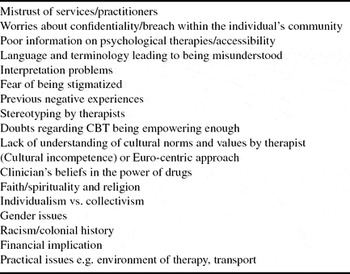
This over-arching theme in Table 3 highlights factors identified in the study as cultural barriers to therapy. The first issue related to access of CBT and difficulties with the referral process. Therapists highlighted the fact that they did not actively seek referrals and are limited by resource constraints.
Cultural barriers identified to accessing CBT

One of the barriers to accessing therapy was highlighted in the perceptions of the referrers. Some mental health practitioners who are also care coordinators admitted to being influenced by their perceptions when it comes to referring patients for therapy. The majority of therapists reported that they had limited experience working with BME patients in CBT for psychosis. The following quote illustrates this:
My experience has been that it is often difficult to establish common goals with these patients, as their expectations of therapy are often very different. They often seem unclear as to how psychological therapy can be of benefit to them. And they view psychology as an opportunity to chat about things and get things off their chest, rather than to develop skills to manage their distress and symptoms. [FGT11, interview with a white therapist]
Language and the need to work with interpreters were both identified as limitations by therapists. For example, a therapist highlighted that care co-ordinators did not refer patients for psychological therapy when their English was limited. Some therapists who had experience of working with interpreters emphasized the need for therapists to be observant and not solely rely on interpretation. Consistency in relation to using interpreters was emphasized, as well as briefing them prior to therapy session in order to clarify their role.
The majority of South Asian Muslim lay participants reported negative experiences of using interpreters, citing fear of breach of confidentiality, especially where interpreters were from their own communities. Where a family member took upon the role of interpretation, issues were raised on conflict of interest.
A common problem reported by white therapists in the study was the notion that therapy is “the same for everyone”, arguing that they would follow the same format for a BME patient as for a white patient. This is in contrast to the concept of “self and the collective” of some BME groups, in particular the South Asian Muslim groups who value the family group more than the individualist concept of the West. Therapists also expressed the belief that CBT was a collaborative individualized therapy that should be able to take into account the varying perspectives and presentations of patients from all backgrounds and therefore there was the implication that cultural adaptation was unnecessary. Contrary to this was the response from participants from BME communities that their background and models of illness were not understood. In order to effectively be collaborative and individualize, it is necessary to have an understanding of the individual's culture and context and adapt to it.
There are specific gender and race issues: for example, females may not be seen as authority figures by South Asian Muslim cultures and this can have an impact on engagement. First generation immigrants often prefer men who have such perceived authority. Second generation patients tend to be more adaptable. With some Pakistani patients there were noted to be issues about white female staff working with or visiting Pakistani male patients and vice versa. This was objected to by the family as they did not want their neighbours seeing females/males due to possible impact on arranging marriages. In some Black communities, women feel they need to be emotionally strong for the family and cannot afford to show vulnerability through admitting the need for treatment.
Validation
CBT therapists with experience in mindfulness based approaches reported that utilizing these strategies (validation, acceptance and non-judgemental approach) in therapy can strengthen the therapist-BME patient relationship, especially in situations where a patient might feel they are not being blamed or judged. A common theme by a majority of BME patients was that of being treated impersonally, as “a number”. The following typifies this:
If I'm going to tell you about myself, l want to know something about you [PAC1, Interview with African Caribbean service user]
This theme was confirmed by patients and lay participants who sought validation from therapists through demonstration that they were taking a genuine stance of treating patients as people with equal status rather than just as “mental” patients.
Racism and its effects
A consistent theme across all the groups was the perception of avoidance of discussing or addressing anything that could be considered “racist”. Because of this, patients often felt dissatisfied and/or disengaged from therapy. Some therapists reported that talking about racism in therapy was anxiety provoking. Some admitted to avoiding it for fear of political correctness or that they might say something that could easily be misinterpreted as racist. Therapists reported that they were not well prepared, that is, not trained to address racial issues in therapy. Some patients preferred talking to someone of the same colour or background about race issues as they felt they would be understood and could relate better to their experiences.
Role of religion
Religion is used as a way of coping with distress, especially in the South Asian Muslim groups. Reciting Qur'an, and wearing armbands, use of charm lockets, talisman, tavees (armlets) to ward off evil spirits with Qur'an verses is used with faith, confidence and, often, positive effect in South Asian Muslims. Therapists admitted that when confronted with religion or spirituality in therapy they felt overwhelmed and tended to avoid dealing with this. Some felt they had limited knowledge and were untrained in supporting patients with religious issues. Faiths like Islam and Christianity are often seen as complex and therapists perceived difficulties in distinguishing spiritual from psychotic belief.
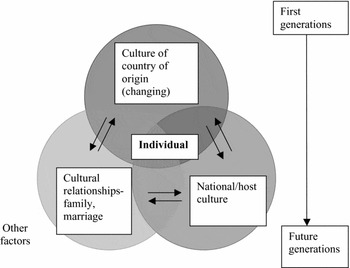
Acculturation

Discussion and conclusions
This project explored service users’ and health professionals’ views and opinions to describe understanding and beliefs around psychosis of patients from BME communities, their help seeking behaviours and, more importantly, their attitudes towards CBT. It recommends modifications to CBT so that therapy delivered is culturally adapted and hence more acceptable and effective. Despite limitations discussed below, the study produced a considerable volume of rich and relevant data that met the study aims. These data not only described and detailed the experiences of the BME patients, lay members, MHPs and therapists, but also revealed key issues in the therapeutic process. For example, the implications of therapist self-disclosure, the use of formal and informal community networks by patients and their families, cultural influences and the importance of patient behaviour in response to therapy. A strong recommendation from this study was that an understanding of cultural background by practitioners regardless of practitioner ethnicity was key to success of therapy.
The fundamental view of life in different cultures, which affects choice of lifestyle, view of illness, services and treatment and goals of therapy are important to understand as they determine whether a therapy like CBT is acceptable and suitable if adapted. Acculturation occurs due to the merging of two cultures during a period of prolonged contact. The cultural shifting process is not an abrupt event; it tends to be a gradual blending of two cultures (Garcia and Zea, Reference Garcia and Zea1997). Therapists need to assess their patient's extent of acculturation to western culture as this will have implications for the level of adaptations necessary to get a positive outcome.
Limitations of the study
Difficulty in recruiting service user participants for individual interviews was the main limitation of the study: for example, of 11 potential participants identified from an early intervention service with 35% BME service users, only one respondent of the three willing was eventually interviewed. Some Bangladeshi service users who had been identified as suitable declined the offer to take part. The majority of the London site teams reported that patients were either unwilling to take part and/or did not meet the inclusion criteria.
Therefore, whilst a substantial number of interviews and focus groups from the different communities were conducted, a limited number of South Asian Muslim patients participated. While the recommendations were drawn after data were saturated, this will be further tested through the feasibility study.
The role of the lead researcher (PP) who belonged to the same BME group as some of the participants in the study may have influenced interactions and engagement during the interviews. Some participants perceived issues of having a researcher from their own background (thereby highlighting issues of “sameness”) as a positive factor that allowed them to feel relaxed and understood when relating their life experiences, as illustrated by the extracts from individual interviews discussed earlier. Ordinarily this would raise issues of bias. In order to guard against pre-conceptions, bracketing was used to prevent bias in both data collection and interpretation (Giorgi, 1985). Regular supervision with a qualitative expert helped ensure that interpretation of themes was grounded in the transcripts. Analysis of transcripts by three members of the research team to confirm validity and authenticity of coding and reducing interpreter bias was adopted. Elliot, Fischer and Rennie (Reference Elliot, Fischer and Rennie1999) postulate that use of verbatim excerpts from original data allow the reader to assess lucidity of analysis. Consequently, the reader can decide to agree or disagree with authors’ interpretation.
Brief comparison with other work
The study results indicate that CBT can be acceptable if culturally adapted. Small pilots have been conducted in this area (Patel et al., Reference Patel, Araya, Chatterjee, Chisholm, Cohen, De Silva, Hosman, McGuire, Rojas and van Ommeren2007; Rojas et al., Reference Rojas, Fritsch, Solis, Jadresic, Castillo, González, Guajardo, Lewis, Peters and Araya2007). Evidence base for adapted CBT based therapies indicates success in low and middle income countries: for example, an adapted CBT-based intervention provided by trained community health workers was reported to have effectively treated peri-natal depression and improved infant outcomes, according to a cluster-randomized trial conducted in rural Pakistan (Rahman, Malik, Sikander, Roberts and Creed, Reference Rahman, Malik, Sikander, Roberts and Creed2008).
Literature from other cultural groups recommends the adaptation of cognitive-behavioural therapy for use with ethnic minority populations as necessary and possible (Deffenbacher, Reference Deffenbacher1988). Group CBT for Seasonal Affective Disorder (SAD) has been acceptable and found to bring about a similar degree of symptom reduction among Japanese patients with SAD as among Western patients (Chen et al., Reference Chen, Nakano, Letzugu, Ogawa, Funayama, Watanabe, Noda and Furukawa2007). Cognitive-behavioural approaches have received support for use in therapy with Hispanic patients (Casas, Reference Casas1988; Ruiz and Casas, Reference Ruiz, Casas, Pedersen, Draguns, Longer and Trimble1981).
Despite the common perception that Chinese people may not benefit from western forms of psychotherapy, CBT was partially successful in assisting a patient to understand the nature of her problem and guiding treatment to ameliorate some of her anxiety and depressive symptoms in a case report by Williams, Koong and Haarhoff (Reference Williams, Koong and Haarhoff2006). Therefore, cognitive therapy must be modified to fit the values and belief systems of the given culture, as distorted cognitions in one culture may well become functional and adaptive ones in a different culture (Chung, Reference Chung1996).
Another study in North America, where adapted CBT has been used in African American groups, has shown promising results. One such pilot study was conducted by Kohn, Oden, Munoz, Robinson and Lear (Reference Kohn, Oden, Munoz, Robinson and Leavitt2002) comparing standard group CBT with adapted CBT for African American women presenting with major depression. Methodological limitations in this pilot included a small sample and therefore its generalizability to the general African American population from low income and poor backgrounds was questionable. In Pakistani, Naeem, Ayub, Gobbi and Kingdon (in press) have adapted CBT for depression with promising results.
The findings in the study on attributions to psychosis echo McCabe and Priebe's (Reference McCabe and Priebe2004) work on perceptions of causes of mental illness. Study participants highlighted similar causes of mental illness, particularly with respect to psychosis, namely, social factors (family stresses, economic and environmental), supernatural including spiritual and previous wrong-doing. Another key finding in this study was the suggestion by some of the African-Caribbean respondents that mental illness was attributed to being arrested. McCabe and Priebe (Reference McCabe and Priebe2004) concluded that biological explanations were frequently cited by Caucasians rather than African-Caribbean and West Africans. The BME participants in this study, although acknowledging biological vulnerability as a cause for illness, strongly leaned towards and frequently cited previous wrong-doing and supernatural beliefs as causative. This is further demonstrated in the BME groups’ help seeking pathways.
Fear of services, especially fear of detention and the police by the African Caribbean population has been discussed in previous literature (Bhui, Reference Bhui2002; Sainsbury Centre for Mental Health, 2002). A recent Healthcare Commission report revealed a 23% increase in the proportion of BME in-patients (Lombard, Reference Lombard2008) in England and Wales since the 2001 census.
The findings of the study endorse previous work on communicating with patients from BME communities (Bhui and Bhugra, Reference Bhui and Bhugra2004). The authors in this paper emphasize that explanatory models represent the position from which patients may express distress. Patients’ explanatory models influence adherence to treatment, especially if family, community and some personal explanations are at variance with the illness model. CBT therapists working with patients from these communities face the same challenges and need to be aware of the cultural beliefs influencing explanatory models.
A number of findings and recommendations for CBT emerge from this study, e.g. the concept of the self and collectivist cultures versus the individualistic cultures (that view the self as independent of the group and autonomous, whereas collectivist cultures view the family of community as a unit, Owusu-Bempah, Reference Owusu-Bempah, Mason and Sawyer2002) impacting on therapy dynamics and expectations of the family endorse previous literature (e.g. Tseng, Wen-Shing, Chang and Nishjzono, Reference Tseng, Chang and Nishjzono2005; Triandis, Reference Triandis1995).
Practical implications
Based on the results of the study and other supporting literature highlighted above, CBT is an acceptable approach for the communities involved in this study. Findings have face validity and make common sense. They provide an emphasis on specific issues as being particularly important to different communities. Collaboration and individualization of therapy is reinforced as a principle, but in practice an understanding of the issues that have been raised by the communities is needed to inform therapy and optimize it. For example, when a therapist is working with an African Caribbean man, they can expect that self-disclosure may be an important issue and they might want to prepare in advance how exactly to respond to this. Similarly, for an individual from a Muslim community, ensuring that family views are elicited and responded to needs to be specifically addressed.
Specific issues required to adapt treatment based on findings on the study are being evaluated in a feasibility study in order to provide written training materials that can be incorporated into training and practice.
Implications for therapists
The study highlights important implications for therapists/professionals who work with BME patients. The onus remains on the therapist to build a relationship with the patient and to earn their trust, given that patients from BME groups may mistrust services. Trust can be viewed in two ways: involving practitioners, i.e. therapist-patient relationships and patient-healthcare institutions, such as the National Health Service relationship, which has previously been reported to be low (Thornicroft, Parkman and Ruggeri, Reference Thornicroft, Parkman, Ruggeri, Bhugra and Bahl1999).
BME groups in this study were multi-dimensional in their help seeking behaviours and pathways. It is important that practitioners acknowledge their help seeking pathways and the notion that some treatments will be parallel to their traditional non scientific approaches. Therapists may consider use of approaches with emphasis on problem solving. Where appropriate, mindfulness based approaches are recommended, including the mind and body model. In some instances therapy may need to start with behavioural and social tasks rather than cognitive models, thereby harnessing hope and preventing premature disengagement.
Difficulties with interpreters need to be acknowledged and addressed. Use of clinical supervision, preferably with a supervisor who has knowledge of the relevant culture, would be helpful.
Pre-engagement and engagement
In this section, modifications of techniques in order to engage patients from these communities are discussed. Adjustments need to be made to the extent to which the patient is aligned to their minority culture. As members of these communities often trust their elders and priests more than services, education and information regarding available methods of treatment and collaborative working with these respected members of communities may help in engaging patients early. Creating a comfortable and safe environment that promotes relaxation is crucial. The initial assessment in ethnic minority patients may need to be longer and at a pace that the patient is willing to accept. Emphasis needs to be on listening and understanding the cultural perspective. Relevant self-disclosure by the therapist can be more important in engaging with African Caribbean individuals, although this may not be the case with South Asian Muslims. Seeing patients at home or near places of worship for therapy has sometimes been more beneficial than in hospitals or mental health centres.
The transition from a consultative to a collaborative empiricism requires further adjustment as patients from the South Asian Muslim cultures often respect and trust an authoritarian and/or paternalistic attitude from their therapist. A clear agreed summary of the first session, outlining briefly the key issues and plans to deal with them, is recommended. In-between activities or homework set collaboratively following the initial and subsequent sessions to develop further understanding or test out beliefs expressed are important to endorse patients’ feeling that “something happened” and will continue to happen in therapy. Conversely, apparent agreement in session may not be reflected in behaviour later, especially where the consequences of compliance with specific actions have not been adequately explored and negotiated. Motivational interviewing, with use of social and practical help, is recommended where engagement becomes an issue.
From the outset the role of the family and extended community needs defining. Goals of therapy may require adjusting to family values when family involvement is supportive and influential, especially in the South Asian Muslim group where family involvement can be easily misinterpreted by therapists as “over-involvement or interfering” (Naeem, Phiri, Rathod and Kingdon, Reference Naeem, Phiri, Rathod, Kingdon, Mueller, Kennerley, McManus and Westbrook2010). Enlisting the support of a family member or figure of authority (with the consent of the patient) maybe beneficial in promoting engagement, in particular where the patient or family are not keen to use interpreters due to fears of breach of confidentiality.
Assessment and formulation
Assessment and formulation of psychopathology needs to take full account of cultural understanding of illness. Use of diagrams to help understand formulation has proven to be a useful tool early in the therapeutic process. The use of formulations will not be different to working with any patient; however, there is a need to bring in cultural beliefs and experiences. Therapist awareness of religious explanations for psychopathology and use of culturally appropriate metaphors is recommended. Addressing issues of religion and spirituality in CBT is fundamental for many individuals from these BME groups that use religion and spirituality as a coping strategy. Knowledge and understanding one's cultural background, religious customs and beliefs through communication with the individual, family or consulting experts could help in clarifying such issues.
Work with delusions and hallucinations
Explanations and systematization of delusions and hallucinations may be derived from or confused with cultural beliefs. For example, delusions of possession by a ghost or spirit in African-Caribbean patients can be based on a cultural belief that the ancestors’ spirits are protective of native tribes. CBT with such beliefs would need to rationalize and normalize, whilst addressing any distress that may be caused. Addressing hallucinations and delusions in this instance will require therapists’ cognisance of both the cultural and religious background of the patient involved. Validation of the distress is emphasized, with a focus on reducing it. Developing shared formulations based on a model such as Stress-Vulnerability (Zubin and Spring, Reference Zubin and Spring1977; Nuechterlein et al., Reference Nuechterlein, Dawson, Ventura, Gitlin, Subotnik, Snyder, Mintz and Bartzokis1994) has been useful in conceptualizing and explaining this. Use of mind and body models specific to a person's culture is recommended. Further strategies include:
• Setting realistic goals so that progress can be evaluated is fundamental to maintaining focus throughout therapy;
• Modifying language to address terminology and concrete and abstract thinking;
• Non-judgemental approach to voices and use of acceptance;
• Allowing patients to talk about their experiences;
• Appraisal of cognitive biases that may be culturally tuned and addressing prejudices.
Blocks in therapy
Therapists need to develop skills in handling blocks in therapy by discussing sensitively pertinent issues with patients, exploring any perceived dysfunction in therapist and patient's behaviour, and the consequences of this, especially assumptions resulting from lack of understanding of the individual's culture. Emphasizing the impact of such behaviour outside of therapy and linking it to relationships is important. Therapists should not react defensively. Validation of the patient's concerns and feelings and exploring pros and cons of behaving or thinking in a certain way based on culture can be addressed. Therapists can explore normative blocks that reflect norms of the individual's culture rather than their idiosyncrasies (Cowdrill and Keeling, Reference Cowdrill and Keeling2007). A typical example is where a patient just agrees with figures of authority but does not do what was talked about or seemingly agreed, or when moderators such as shame or guilt prevent someone from discussing their fear of dishonour, shame or incarceration.
Implications for services
Whilst the findings of this study need further evaluation, they have implications for the adaptation of clinical or public health practice in improving psychoeducation in these communities, especially regarding treatment options available. Engagement, education and collaboration with community and spiritual leaders of these communities needs further developing in order to engage patients from these communities.
A training manual to guide therapists using culturally-sensitive CBT for psychosis is being prepared. The recommendations from the project and training manual need to be evaluated and refined through a feasibility study (currently underway). If the feasibility study is successful, there will be a need for a definitive adequately powered randomized controlled trial.
Acknowledgements
We are indebted to all the participants (service users, lay members, mental health practitioners and cognitive behaviour therapists at Hampshire Partnership NHS Foundation Trust and West London Mental Health NHS Trust) without whom this project would not be possible. In addition, we would like to acknowledge Drs Dominic Glover and Charlotte Underwood for their contribution and time. We also thank Community Development Workers and Clinical Studies Officers for their support with recruitment. Finally, we thank all the members of the Steering Group for their invaluable input and guidance. The project was funded by the Delivering Race Equality Programme: Clinical Trailblazers Project and will form part of the author (PP)'s doctoral thesis.



Comments
No Comments have been published for this article.