


1. Introduction
“The West Indians in America!” began Wesley McD. Holder's 1930 report on a mass meeting at Christ Church Cathedral in Brooklyn, where His Britannic Majesty's vice-consul A.S. Ponsonby and pro-consul W.B. James addressed a crowd steeped in patriotic symbolism. “Bedecking the platform and dotting the audience,” Holder observed, “were the national flags of Great Britain and the United States of America—the Union Jack and the Stars and Stripes.” The speakers invoked dual loyalties in their remarks on “The West Indian in the British Empire” and “The West Indian in the United States of America,” but the display masked deeper anxieties. As the event's chairman acknowledged, “wittingly or unwittingly certain suspicious reflections were cast on ‘our group,’” and the gathering aimed to “clear the atmosphere,” offering West Indians a chance to understand themselves—and be better understood by others. The subtext was unmistakable: tensions between Afro-Caribbeans and African Americans were escalating. That same year, one report cataloged the charges hurled at Black immigrants—accusations of “criminal tendencies, insolence and offensive conduct, and refusal to naturalize.” Afro-Caribbeans, in turn, bristled at being derided as “monkey chasers” and mocked for their accents.Footnote 1
By the mid-1930s, tensions between African Americans and Afro-Caribbean immigrants remained raw. A 1934 New York Age headline captured the mood: “West Indians Protest Speech by Courier Editor in New York.” The outburst came from Robert L. Vann, editor of the Pittsburgh Courier, who snapped, “If you West Indians don't like how we do [things] in this country, you should go back where you came from.” He added, “We are good and tired of you,” before escalating further: “There should be a law deporting the whole lot of you, failing that, you should be run out of Harlem.” Vann, who had led a ferocious editorial crusade against Marcus Garvey a decade earlier, now directed his ire at the broader Caribbean community. A decade later, Adam Clayton Powell Jr.—Congressman and pastor of Harlem's Abyssinian Baptist Church—acknowledged that the “chasm” between Black Americans and Black immigrants had grown “so wide that they not only moved in their own circumscribed areas but it was also taboo for an individual to cross over from one group to the other.” Powell, himself no stranger to the divide, addressed it head-on when he appointed Barbados-born David Licorish as assistant minister: “I know you all don't like Licorish because he's West Indian, and he's too black.”Footnote 2
A rich body of scholarship on Afro-Caribbean identity and incorporation has grappled with the community's complex relationship to “Blackness” in the United States.Footnote 3 Some scholars argue that the sheer weight of the American racial order flattens cultural distinctions, pulling immigrants into a broader, imposed Black identity and fostering a shared racial consciousness.Footnote 4 Others point to enduring ethnic divisions, suggesting that some Afro-Caribbeans seek to distance themselves from the racial stigma historically attached to African Americans.Footnote 5 Another school of thought focuses on the role of cultural norms and values—crediting Afro-Caribbean success in education, business, and the labor market to ethnic cohesion and immigrant ambition.Footnote 6 But this narrative has been complicated by research showing long-term variability in labor market outcomes and the effects of selective migration.Footnote 7 Still others highlight the vibrancy of Afro-Caribbean civil society in the United States and the significance of transnational ties, underscoring that incorporation is rarely a one-way street.Footnote 8
Caribbean immigrants played an outsized role in New York's radical movements, but even the most committed among them struggled in local politics in Harlem.Footnote 9 W.A. Domingo, one of the era's most prominent Afro-Caribbean radicals, captured the reality bluntly in The New Negro: “Naturalized West Indians have found from experience that American negroes are reluctant to concede them the right to political leadership.”Footnote 10 That reluctance ran deep. As historian Minkah Makalani observes, the African Blood Brotherhood's organizational efforts at an “all-race” conference in 1922 buckled under the very fractures it sought to mend. Their attempt “to build a united front premised on a notion of political blackness,” he writes, “had again fallen victim to precisely the divisions that such a concept sought to efface.” Class tensions and the belief that Caribbean activists “could hardly understand the American Negro problem,” Makalani notes, “corresponded to the national differences that rendered West Indians interlopers.”Footnote 11
Still, Afro-Caribbean activists steadily climbed the ranks of Black political leadership in New York. Wesley MacDonald Holder—what sociologist Philip Kasinitz called the “Guyanese Dean of Brooklyn's black politics”—ruled Brooklyn's Black political scene from the late 1940s into the 1960s. Saint Lucian-born Hulan Jack became Manhattan Borough President in 1954. St. Thomas–born J. Raymond Jones—the Harlem Fox—rose as a pivotal power broker in New York City and national Democratic politics. What is even more striking is that their ascent did not require them to shed their immigrant identities. Their ethnic roots and transnational ties were not barriers to success; they were the foundation for it, and a catalyst for a broader reimagining of “political Blackness.”Footnote 12
The convergence of Afro-Caribbean political ascent and persistent intra-racial division in early twentieth-century New York demands explanation. It raises critical questions about when and how “political blackness” becomes viable. As Makalani puts it, the concept was meant “to identify a political basis for racial unity in a common liberation struggle,” rooted not in biology but in “historical, economic, and political” ties among people “living in diverse racial formations” yet positioned “similarly … in the racial hierarchy.”Footnote 13 Political blackness was never automatic. It was a strategy: a deliberate deployment of racial identity to claim power, recognition, and inclusion.
To explain the emergence of political blackness and the dominant role Afro-Caribbean activist in New York played in its construction, this study traces the historical development of four interrelated variables: (1) the political economy of ethnic difference; (2) the “everyday black talk”Footnote 14 through which native-born African Americans interpreted and articulated these differences; (3) the independent Afro-Caribbean public sphere; (4) the evolution of party politics and electoral competition in New York City and the United States. It shows how the interaction of these forces sustained intra-racial divisions from the turn of the twentieth century through the 1930s, and how shifts in party politics and political opportunity later fostered the emergence of a broader political blackness.
Scholars have long demonstrated how urban political economy—and the forms of stratification it produces—shapes patterns of alliance and exclusion both across and within racial groups.Footnote 15 Building on these insights, this study draws on what Cedric Robinson famously called racial capitalism to situate intra-racial ethnic conflict in early twentieth-century New York City within a broader structural context. At its core, racial capitalism directs attention to the ways race and capital are co-constitutive and interact to produce political and economic outcomes that neither can explain on its own.Footnote 16 Yet rather than assuming its operation, I investigate it empirically. Drawing on labor market data, interviews with Afro-Caribbean and native-born Black workers, accounts from white employers, occupational records, and job advertisements, I examine how the overlapping legacies of European colonialism and American racism structured opportunity, shaped migration patterns, and fueled tensions between Black immigrants and native-born African Americans.
I also explore “everyday black talk”Footnote 17 and the “frame repertoires” that emerge from these tensions. As Claire Kim argues in her powerful study of Black-Korean conflict in New York, each frame repertoire “belongs to and is rooted in the cultural beliefs of a specific fixed population,” and when “activated,” it provides movement groups with “an umbrella under which to coalesce, however precariously and briefly.”Footnote 18 This study excavates this discursive terrain through close readings of early twentieth-century urban glossaries, nonfiction texts, songs, and oral histories, revealing everyday Black talk saturated with intra-black distinctions. Among the most salient markers was the ethnic slur “monkey chaser,” which highlighted and sharpened ethnic differences within Black New York. Tracing the use of this slur across social and political contexts reveals how such everyday talk emerged from the city's political, economic, and civic organization and how it served as a “frame repertoire” through which native-born African Americans understood their place in the racial order and coalesced politically.
The historical development and organization of Black civil society have long occupied a central place in the study of African American politics and racial politics in the United States more broadly.Footnote 19 Likewise, scholars of immigration have identified immigrant civic infrastructures as critical sites of political formation, whether as mechanisms of incorporation into American political life or as institutions that sustain transnational identities and ties.Footnote 20 Building on these insights, I reconstruct the civic infrastructure of Black New York by triangulating a wide range of archival sources. In doing so, I document the emergence of a robust Black ethnic counterpublic that existed alongside—and often in tension with—both the dominant white public sphere and native-born Black civil society. Building on institutional repertoires forged in their home societies and what Lara Putnam termed the “circum-Caribbean migratory sphere,”Footnote 21 they constructed in New York City a dense network of churches, fraternal organizations, mutual aid societies, political associations, and transnational organizations.
Of course, Afro-Caribbean residents, activists, and political leaders did not remain confined to their ethnic public sphere. These institutions not only sustained connections to a broader Black diaspora but also structured migrants’ incorporation into New York City's social and political life. Accordingly, this study examines both the “public” transcripts of Afro-Caribbean politics—speeches, newspapers, and public interventions—and the “hidden” transcripts preserved in private correspondence and organizational records. Together, these sources reveal both countermobilization against global anti-blackness and local xenophobia and the everyday work of “talking black” undertaken by figures such as Marcus Garvey and by the lesser-known activists, whose organizational labor proved critical to the eventual construction of a more inclusive political blackness.
The final pillar of my framework is party politics. Political institutions interact with racial orders to constrain some identities, frames, and coalitional possibilities while creating opportunities for others.Footnote 22 Within cities, electoral systems and party organizations play a particularly important role in shaping these outcomes. Consequently, to understand the emergence of political blackness—both its timing and its substantive content—I trace the evolution of party competition in Harlem. White party leaders—and this was certainly the case with Tammany Hall—typically sought to incorporate new racial and ethnic groups only when competitive electoral conditions compelled them to do so, and on terms that did not disrupt their hold on valuable political resources.Footnote 23 Consequently, as Steven P. Erie shows, big city Irish Democratic machines offered “newcomers,” “collective benefits,” specifically progressive regulatory and social policies, and “less valuable” “divisible benefits,” such as “services such as business licenses, symbolic recognition such as nomination to minor and machine observance of ethnic holidays such as Columbus.”Footnote 24 This was no less true for native Blacks, Afro-Caribbeans, and the Democratic Party in New York City. As the Democrats became competitive in Harlem, Tammany leaders offered Blacks public policies, constituent services, symbolic recognition, and selective opportunities for advancement while carefully guarding their control over the most desirable elected offices and patronage positions. Afro-Caribbeans were pioneers in the partisan shift not simply because of their support of “collective benefits,” but because of intra-racial divisions, independent civic infrastructure, and the way Marcus Garvey encapsulated both, creating alternative recruitment networks that enabled white Democrats to recruit new Black activists and voters.
With the success of the New Deal Democratic Party, Afro-Caribbean immigrants—once sidelined by Republican African American elites but politically energized in the wake of the anti-Garvey backlash—found themselves in an advantageous political position. Facing the erosion of their political power, African American elites forged alliances with Afro-Caribbean leaders to preserve influence in the New Deal order. The emergence of political blackness, therefore, was not simply a cultural or ideological achievement. What emerges here is not a story of inevitable solidarity born from the tragic and tortured logic of the American racial order. Rather, it is a story of fracture, improvisation, and contingent coalition-building: a political history fashioned by elites and ordinary folks in which race is not simply inherited but continually constructed, contested, and redefined in the crucible of urban political life.
2. Racial capitalism, ethnic labor hierarchies, and discourses of difference
The early twentieth-century migration of Southern Blacks and Afro-Caribbean immigrants unfolded within a racially segmented labor market where racism acted less as a blanket barrier than as a sorting mechanism: rewarding perceived foreignness, penalizing native blackness, and distributing opportunity unevenly along the color line. Many Afro-Caribbeans arrived in New York only after working elsewhere in the “circum-Caribbean migratory sphere”—in Panama, Cuba, Costa Rica, Honduras, Colombia, Guatemala, and other sites of imperial labor migration.Footnote 25 They existed in host societies as “foreigners,” navigated ethnically segmented labor markets, and participated in the creation of mutual aid societies, civic organizations, labor movements, churches, and entrepreneurial ventures designed to secure opportunity and uplift their communities. Many Black immigrants, therefore, brought to the city institutional repertoires, organizational skills, and traditions of collective action forged through earlier encounters with empire, migration, labor markets, and racial hierarchy.
Drawing on labor surveys, occupational data, and job advertisements, this analysis shows that Afro-Caribbeans secured a precarious foothold in the city's economy not through cultural superiority, but through a racial capitalist logic shaped by the ideological, organizational, and human capital legacies of European colonialism, patterns of migration, and American Jim Crow. This logic produced a stratified racial order in which Afro-Caribbeans were disproportionately concentrated in relatively desirable “Black jobs,” making them at once privileged within a segregated labor market and objects of resentment among native-born African Americans. These material distinctions spilled beyond the workplace into the everyday talk of Harlem, shaping how native- and foreign-born Blacks interpreted one another and, in turn, constraining and ultimately the emergence of political blackness.
During the early twentieth century, thousands of Black migrants from the American South and the Caribbean arrived in New York City seeking economic opportunity. The city's Black population grew rapidly—from 60,666 in 1900 to 152,467 by 1920, and more than doubling again to 327,706 by 1930. The foreign-born share rose from 12.8 percent in 1910 to 24 percent in 1920 before declining to 16.7 percent by decade's end. Surveys from the period underscore the economic motivations driving this movement. Helen Augusta Tucker's 1907 study found that many Southern migrants arrived based on overly optimistic accounts from friends and relatives who “picture the wages and conditions in too glowing colors.”Footnote 26 A 1912 study of 365 Black wage-earners reported that 47.1 percent came to “find work” or earn “more money.”Footnote 27 Among West Indian respondents in Tucker's survey, most cited a desire to “better my condition,” a sentiment echoed in Garrie Ward Moore's interviews, where nearly a third gave “to better condition” as their reason for migrating.Footnote 28
For both native-born Black and Afro-Caribbean entrepreneurs, racism cut both ways: it blocked access to capital while opening market niches through segregation. By the early twentieth century, Black New York had cultivated a small but growing class of professionals and business owners serving an expanding, racially segregated consumer base.Footnote 29 In 1909, George Edmund Haynes identified 475 active firms out of 567 listed in a directory of Black enterprises. Of the 309 with detailed records, most were small-scale ventures: 50 barbershops, 36 groceries, 26 restaurants, and others in trades like tailoring, lodging, and moving services. Haynes underscored two key points: these businesses largely grew out of “domestic and personal service occupations” requiring minimal capital, and they filled racial voids—providing goods and services that white-owned establishments routinely denied to Black customers.Footnote 30
Despite frequent praise for their entrepreneurial savvy, Afro-Caribbeans were, at best, only modestly overrepresented among New York City's Black business owners. In George Edmund Haynes's 1909 sample of 330 Black entrepreneurs, 66.6 percent hailed from the American South, while 19.7 percent were born in the West Indies—a figure just slightly above their share of the Black population at the time. Even as the Afro-Caribbean population surged by 1920, this pattern held.Footnote 31 Herbert Gutman's expansive 1925 census-based sample of Black New Yorkers found that while West Indian proprietors made up nearly 30 percent of storekeepers and half of all pharmacists, they comprised just 20 percent of the total pool of entrepreneurs—roughly in line with, or even slightly below, their proportion of the city's Black population.Footnote 32
Like Black entrepreneurs, African American and Afro-Caribbean workers navigated a labor market hemmed in by racism. In Helen Augusta Tucker's 1907 study, several trained carpenters explained why they never worked in their trade. “I didn't try because I knew I couldn't get it,” two respondents admitted. Another pair echoed the same defeat: “Told I had no chance.” Others pointed directly to union exclusion: “Owing to Union,” one wrote; “Didn't try to join Union, having learned they were against colored,” said another. A painter explained that he couldn't find regular work because he was “barred on account of color.” One blacksmith recounted applying to multiple horse-shoeing shops, only to be told it “wasn't customary to employ colored men, the white men won't work with you.”Footnote 33 The sense of futility was widespread. In Forrester B. Washington's 1916 survey, the prevailing view among respondents was blunt: “the colored man hasn't a chance” in the trades.Footnote 34
While racism in the labor market and trade unions forced both native-born Blacks and Afro-Caribbean immigrants into the lowest occupational tiers, Afro-Caribbeans were disproportionately concentrated in what might be called the best of the worst jobs. In Tucker's 1907 survey of 385 Black craftsmen, 112—or nearly 30 percent—were Caribbean-born, with over half working as porters or elevator operators. Notably, none held the most grueling roles like longshoreman or street cleaner, leading Tucker to observe that when Afro-Caribbeans took unskilled work, they “do not choose the hardest and least skilled forms.”Footnote 35 The pattern held across other studies. Washington's 1916 survey of apartment workers echoed this trend: fifty-eight were Caribbean-born, compared to forty-two American-born.Footnote 36 Gutman's 1925 census-based study found similar patterns—about 72 percent of native and foreign-born Blacks held “laborer-service worker” positions—but masked key differences. Afro-Caribbeans were overrepresented in building service jobs, as well as in more desirable positions like shipping clerk, factory worker, and skilled trades, especially carpentry, tailoring, and printing.Footnote 37
Afro-Caribbeans’ relative success in New York's labor market reflected structural asymmetries, not inherent cultural advantages. Their relative standing—and the challenges facing native-born Blacks—emerged from the clash of two historical regimes: European colonialism and American Jim Crow, each shaping skills, expectations, and labor positioning. Afro-Caribbean migrants often arrived with stronger educational backgrounds and less exposure to racial exclusion in their home countries’ majority-Black labor markets.Footnote 38 The disparities were striking. In Tucker's 1907 survey, just 13 percent of American-born Black men had trade training, compared to nearly 50 percent of West Indian men.Footnote 39 Washington's 1916 study found most immigrants had schooling through ages 13–15, while Southern-born Blacks averaged only 2.5–5 years. Of the 100 men surveyed, 26 had trade training—19 were Afro-Caribbean.Footnote 40
These structural disparities hardened into cultural tropes that gave Afro-Caribbean migrants an edge in New York's racially segmented labor market. Employers came to equate West Indians with discipline, respectability, and reliability: qualities that circulated as coded language in job listings across the city. In 1909, the Brooklyn Daily Eagle ran a “help wanted” ad for housework in a “small family,” specifying: “German or West Indian preferred.”Footnote 41 A year later, another ad sought “a refined colored girl for housework,” again stating, “West Indian preferred.”Footnote 42 The bias extended beyond domestic labor. In 1918, the Eagle advertised for elevator attendants and porters: both promising “good wages,” both noting, “West Indian preferred.” A 1920 janitor position included a four-room basement apartment as part of the compensation: “West Indian preferred.”Footnote 43 By 1925, the Amsterdam News reported that an employment agency had “openings for respectable colored girls, West Indians preferred.” Employers sought West Indians for a range of roles: porter, maid, nanny, and radio serviceman.Footnote 44 Even a New York Times ad for a “steady job for an industrious man” as an elevator operator made the same call: “West Indian preferred.”Footnote 45 In the racialized economy of early twentieth-century New York, the trope of Black foreignness was not a liability for Afro-Caribbean immigrants: it was a credential.
While these sources do not fully capture the complexities of intra-racial conflict, they make clear that the labor market was a central arena of competition between Afro-Caribbean immigrants and native-born Blacks.Footnote 46 Harry Robinson's 1936 Works Progress Administration (WPA) report captured frustrations on both sides. Caribbean migrants “found that only whites could be skilled workers and professionals,” while native Blacks “were quick to resent the competition,” accusing immigrants of undercutting wages and acting superior “because of their previous social position or even their pigmentation.” The resentment was palpable. Caribbean workers, Robinson noted, were “contemptuously called ‘monkey chaser’ and other epithets.”Footnote 47
This bitterness extended beyond job markets: it shaped the language of the street. Harlem's vernacular reveals the ethnic fault lines structuring its public sphere. Period glossaries of “Harlemese” serve as more than linguistic curios; they are sociological documents that systematically chart the ideological contours of everyday talk. These texts document how Black Harlemites named race and class: “Miss Anne,” “Mister Charlie,” and “ofay” marked whiteness; “good hair” and “blue vein circle” indexed respectability politics and colorism; while “hincty,” “dicty,” and “park ape” exposed intra-Black class tensions.Footnote 48
“Monkey chaser”—along with variants like “monk” and “monkey-hip eater”—offered a grassroots grammar of ethnic difference. It appears across multiple glossaries of “Harlemese,” including Carl Van Vechten's Nigger Heaven (1926), Wallace Thurman and W. J. Rapp, “Harlemese” and “Glossary of Harlemisms,” Simon Williamson's WPA 1938 report “Some Characteristics and Samples of Negro Speech in New York,” and Zora Neale Hurston's “Harlem Slanguage” (1942). The repeated appearance of “monkey chaser” across texts by Van Vechten, Thurman, Hurston, and WPA researchers suggests that antagonism between Afro-Caribbeans and native-born Blacks was not incidental to Harlem life; it was stitched into the city's cultural fabric. Indeed, only one major compilation omits the term—Cab Calloway's Hepster's Dictionary (1939).Footnote 49
Though “monkey chaser” may have been used in jest, Thurman's glossary includes the gentler “Mon,” simply defined as “a West Indian Negro's pronunciation of ‘Man’”—a term that could have sufficed, but didn't. Literature from the era—by both Afro-Caribbean and native Black authors—confirms the slur's sting and its broader social meaning. Claude McKay's Home to Harlem captures the contempt: “as an American Negro he looked askew at foreign niggers … And West Indians were monkey-chasers.”Footnote 50 In Rudolph Fisher's Ringtail (1925), the verdict is even sharper. “There is no such thing as a harmless monkey-chaser,” one character declares. Another sneers, “I ain't got a thing for a monk to do, anyhow. Hope Marcus Garvey takes ‘em all back to Africa with him.”Footnote 51
Taken together, these economic and cultural dynamics illuminate the complex terrain Afro-Caribbeans navigated in carving out space within New York's Black social order. Their relative advantages in the labor market were not rooted in cultural exceptionalism but in structural asymmetries forged by empire, migration, and racial capitalism: systems that endowed them with marketable skills while stigmatizing their native-born counterparts. Yet these same asymmetries generated resentment, animated stereotypes, and hardened ethnic boundaries. The slur “monkey chaser” was not just a byproduct of the friendly game of the dozens; it was a discursive shorthand for deeper anxieties about status, belonging, and the meaning of Blackness itself. As Harlem's glossaries reveal, intra-racial tension was not incidental to Black urban life: it was inscribed in its speech and everyday interactions.
3. Parallel lives, transnationalism, and a fractured public sphere
Confronted by both the racism of the city's political economy and the tensions generated by intra-racial competition and ethnic pride, Black immigrants drew on organizational repertoires forged in their home societies, the legacies of empire, and the “circum-Caribbean migratory sphere” to build churches, fraternal organizations, mutual aid societies, political associations, newspapers, and recreational clubs.Footnote 52 These institutions preserved transnational ties, cultivated ethnic solidarity, and created a distinct Black immigrant counterpublic in New York City.
Leisure activities provide a simple yet revealing illustration of the distinct cultural worlds that Afro-Caribbeans and native-born Blacks often inhabited. Caribbean migrants brought cricket to New York, founding clubs across the city, but the sport failed to resonate with American-born Blacks. A 1921 New York Tribune article observed that “American born negroes regard their cricket playing blood brothers tolerantly but without enthusiasm,” preferring baseball and finding cricket's “ceremonious and leisurely forms” unimpressive.Footnote 53 Surveys confirm the divide. Benjamin Harrison Locke's 1913 study found native-born Blacks favored pool, boxing, baseball, and tennis.Footnote 54 Moore's 1913 study of Afro-Caribbeans cited “walking” and “card playing” as common pastimes.Footnote 55 Forrester B. Washington's 1916 survey echoed this split: “the American goes in for the more violent and morbid pleasures,” while “West Indians” preferred “a little walking or some innocent card playing.”Footnote 56
Religion was central to the lives of both Afro-Caribbean immigrants and native-born Blacks in New York, but they often worshipped in separate spaces. In Moore's study, over half of Afro-Caribbean respondents attended Episcopalian services, rather than the more common Baptist or Methodist churches favored by African Americans.Footnote 57 This trend held across surveys. In the 1916 study of apartment workers, most churchgoers—largely Caribbean-born—were Episcopalians.Footnote 58 Harold Cooke Phillips, using 1922 data from twenty-three Black congregations, found that churches with “many West Indians” were “the minority.”Footnote 59 A 1930 study by the Greater New York Federation of Churches confirmed the divide: while Black immigrants were present in Lutheran, Moravian, Episcopal, Wesleyan, and Catholic churches, “in almost every case the West Indian forms but a small percentage of the congregation.”Footnote 60
Fraternal associations have long been central to African American civic life, and Harlem was no exception. As Rev. Charles Douglass Martin put it in 1916, “We are lodge mad and process wild.”Footnote 61 Afro-Caribbean immigrants often joined not only mainstream Black fraternal orders—Masons, Odd Fellows, Knights of Pythias—but also formed lodges of their own, creating a parallel sphere within Harlem's fraternal landscape.Footnote 62 Inclusion, however, did not guarantee unity. George Edmund Haynes noted in 1921 that joint membership often “complicated” efforts at “unity of action” on shared goals.Footnote 63 A 1927 power struggle within Elks Lodge No. 127 made these tensions explicit. According to the New York Age, a faction ousted the lodge's leadership, accusing them of being “unfriendly toward the foreign-born members.” Backed by “the West Indian element” voting “en masse,” and aided by “a few” native-born dissenters, the insurgents “elected their own countrymen to practically every office of importance in the lodge.”Footnote 64
Afro-Caribbean immigrants also built a transnational civic infrastructure within Harlem. From the early 1900s through the mid-1930s, they formed a wide array of benevolent associations and mutual aid societies (see Table 1), offering not just support in sickness or death, but a means of fostering ethnic solidarity and sustaining ties to the Caribbean.Footnote 65 As early as 1891, the West Indian Benevolent Association declared its mission “to assist each other in sickness or death” as fellow countrymen “among strangers.”Footnote 66 The Montserrat Progressive Society, founded in 1914, sought to “unite people from the island of Montserrat” and uplift them “socially, morally, and intellectually.”Footnote 67 The British Virgin Islands Benevolent Association, formed in 1926, pledged to aid “our people” in both New York and “the homeland,” later creating a “Home Committee” that sent donations—including an X-ray machine—to hospitals back home.Footnote 68
Afro-Caribbean Civic Associations and Benevolent Societies in New York City, 1900–1939

Table 1 Long description
The table lists Afro-Caribbean civic associations and benevolent societies active in New York City during the early twentieth century. It is a directory of organization names rather than counts, dates, membership sizes, or locations within the city. Many groups are tied to specific islands or territories, including Nevis, Anguilla, Antigua, St. Kitts, St. Lucia, St. Vincent, Trinidad, Barbados, Dominica, Grenada, Montserrat, Bermuda, and the Virgin Islands. Several entries use broader regional identities such as West Indian, Caribbean, Leeward Islands, and Windward Islands, suggesting both island-based and pan–West Indian organizing. Multiple organizations reference the Virgin Islands and West Indian benevolent or friendly societies, indicating recurring themes of mutual aid and civic advocacy. Because the table provides names only, it cannot show which groups were largest, most influential, or active for the full period.
Afro-Caribbean associations in New York not only addressed local needs but also maintained strong ties to their colonial homelands—and, in many cases, to the British Empire itself. For many British Caribbean immigrants, allegiance to the crown was deeply felt. The Bermuda Benevolent Association (BBA) proudly recalled sending “resolutions of condolence” to the royal family after the deaths of Queen Victoria (1901) and King Edward VII (1910). Between 1900 and 1940, various groups cultivated relationships with British consular agencies and closely tracked island politics. In 1940, the Antigua Progressive Society was invited by the British West Indies Veterans Association to join in worship and offer “special supplication to the Almighty God for the protection of the empire against the combined forces of evil and destruction.” The society declined—not from disloyalty, but due to a scheduling conflict with their own program promoting adult education in Antigua, “in keeping with … recommendations by the Royal Commission.”Footnote 69
Royalism was only one strand of Caribbean civic life in New York. By the 1920s and 1930s, anti-colonial activism was gaining ground. Groups like the Jamaican Progressive League organized “for the specific purpose of obtaining self-government for Jamaica by constitutional means.”Footnote 70 Leaders such as Rev. Ethelred Brown, Dr. Charles Augustin Petioni, and W.A. Domingo—a Jamaican-born writer and founder of the African Blood Brotherhood—pushed Afro-Caribbean associations into the fight for independence and worked to elevate these issues among African American leaders.Footnote 71 Domingo, for instance, kept The National Association for the Advancement of Colored People (NAACP) secretary Walter White informed about “the progress of our effort to safeguard the rights of West Indians in the British territories.”Footnote 72 Whether celebrating the crown or condemning it—or, as was often the case, doing both—these organizations forged a diasporic political consciousness that linked co-ethnics in New York to the broader struggles unfolding across the Caribbean and the Atlantic.
Despite their transnational focus, Afro-Caribbean associations may have played a quiet but significant role in the broader Black freedom struggle in the United States. One way to gauge their incorporation into New York's traditional Black counterpublic is through correspondence with the NAACP between 1916 and 1940—a period when the organization served as a civic anchor for Harlem's Black professional and organizational elite. Yet the archival record shows remarkably little contact. While African American churches, fraternal groups, and clubs appear frequently in NAACP files, Afro-Caribbean associations do not. A 1931 letter from the BBA is a rare exception. After a visit from an NAACP representative, the BBA “endorsed wholeheartedly this appeal” and “urged its membership to give unstinted support and cooperation.” Though only six members formally subscribed, the BBA insisted that “a great many of our members” had already joined. Still, this brief exchange remains the only documented interaction between the NAACP and any Afro-Caribbean civic group during the period.Footnote 73
To determine whether the brief exchange between the NAACP and the BBA reflected a broader pattern of engagement, records from Afro-Caribbean associations were reviewed for evidence of contact with African American civil rights groups. In the BBA's papers, only one additional NAACP item appeared—a 1939 mass mailing addressed to “Friends” requesting petition signatures.Footnote 74 While there was some correspondence from the Negro Labor Committee and the Brotherhood of Sleeping Car Porters, these were vastly outnumbered by letters and fliers from other Afro-Caribbean organizations.Footnote 75 This trend held across archives: Afro-Caribbean associations communicated far more with one another than with civil rights organizations; labor and leftist groups initiated contact more often than traditional civil rights bodies; and outreach from the latter grew slightly in the mid-1930s, expanding more noticeably by the decade's end. Though archival silences may result from incomplete records, the surviving materials point to clear patterns. The BBA's documents are scattered and inconsistent, but the British Virgin Islands Benevolent Association's records are remarkably thorough—500 pages of handwritten minutes from 1928 to 1933. Nearly every meeting featured correspondence from fellow Caribbean groups; the NAACP is mentioned only once, on March 27, 1932: “A letter from the National Ass'n for the Advancement of Colored People asking for the cooperation of the society.”Footnote 76
Newspaper coverage from the New York Age and New York Amsterdam News corroborates the archival finding that Afro-Caribbean associations were only marginally integrated into African American civic networks. Events hosted by these groups overwhelmingly reflected a transnational focus; in the New York Age, they outnumbered domestically oriented events by more than six to one, with the Amsterdam News showing a smaller but still notable gap. Only three associations—the BBA, the Virgin Islands Civic Association, and the Virgin Islands Congressional Council—sponsored events focused on Harlem, New York, or the United States. Most groups registered no such activity. The newspapers also confirmed the timing observed in archival sources: nearly all events addressing U.S. issues occurred after 1932. As for collaboration with the NAACP, just one example surfaced—the BBA—making it the only Afro-Caribbean organization to appear in both archival and newspaper records, with its first documented partnership emerging in the mid-1930s.Footnote 77
The civic world of early twentieth-century Harlem was a fragmented terrain, shaped as much by ethnic division as by shared racial subjugation. While Afro-Caribbean immigrants and native-born African Americans lived side by side, they often moved through distinct social, religious, and institutional worlds. Afro-Caribbean New Yorkers built a robust parallel infrastructure—marked by separate churches, fraternal lodges, and mutual aid societies—anchored in diasporic obligation and colonial inheritance. While archival records and African American press coverage confirm that Afro-Caribbean associations maintained minimal ties to African American-led civil rights organizations, with only scattered engagement—primarily with the NAACP—their associations expressed both royalist fidelity and anti-colonial fervor, revealing a civic orientation that extended well beyond U.S. borders. These patterns point to a fractured public sphere, in which Afro-Caribbean and African American communities negotiated race, belonging, and solidarity on separate tracks. The Harlem that emerged was not one of seamless Black unity, but of overlapping and sometimes colliding racial critiques and civic identities.Footnote 78
4. Garveyism, gatekeeping, and the struggle to define the race
As a node in the “Black Atlantic”Footnote 79 and the “circum-Caribbean migratory sphere,” Harlem stood at the crosscurrents of multiple national and international social movements.Footnote 80 In 1920, an Federal Bureau of Investigation (FBI) agent investigating “radical activities” in Harlem was “convinced that the radical element consists almost entirely of the foreign element amongst the colored race.”Footnote 81 As the agent surmised, several Black immigrants waded Harlem's treacherous political waters, but none were as successful as Jamaican Marcus Mosiah Garvey. He insisted that racial unity was the only way “negro peoples of the world” “could alleviate the unfortunate condition in which … we find ourselves.” “[B]ecause all over the world there is an emphatic line of demarcation drawn between the interests of black and white peoples industrially, socially, and politically,” Garvey called upon Black peoples to “come together for self-protection and self-preservation.” He called upon “American and West Indian Negroes” to reclaim Africa.Footnote 82 Established in 1917,Footnote 83 Garvey's New York chapter of the Universal Negro Improvement Association (UNIA) rapidly became a force in Harlem politics. Garvey reported 5,500 members in Harlem alone,Footnote 84 and A. Philip Randolph would later call it one of the “biggest movements that ever developed among Negroes in the country.”Footnote 85
Although several excellent histories and social scientific studies have examined Marcus Garvey and the UNIA,Footnote 86 it is important to revisit these themes because it is impossible to understand the rise of Afro-Caribbean leaders within the local Democratic Party—and their role in constructing political blackness—without appreciating the profound ideological, cultural, and organizational impact of Garveyism. Nor can we fully grasp how dramatic this transformation was for both the political order of New York City and the meaning of blackness itself. Garveyism represented more than an individual. It was a critical juncture in the longer struggle over the meaning, boundaries, and possibilities of racial solidarity—what would later become political blackness—in New York City.
Once ensconced in Harlem's stratified social terrain, Garvey deftly navigated and leveraged its ethnic and class divides. His UNIA quickly became a magnet for Afro-Caribbean immigrants, who filled both its leadership ranks and its grassroots base. A study of UNIA participation between July 1918 and August 1930—tracking subscribers, speakers, officeholders, and signatories—found that 66 percent of male participants were “West Indian,” compared to 34 percent African American. Among women, the imbalance was similar: 61 percent “West Indian,” 39 percent African American.Footnote 87 One FBI agent, surveying a UNIA meeting, estimated “about five hundred Negroes from the West Indies” in attendance, noting “few if any American Negroes present.”Footnote 88 While the line between native- and foreign-born was often drawn by ear—accents, dress, demeanor—the weight of the evidence is clear: Garvey's movement was firmly rooted in Harlem's Caribbean immigrant community, sustained by a still meaningful, if smaller, segment of native-born working-class Blacks.
Several explanations help account for Garvey's popularity among Afro-Caribbean immigrants. There is, of course, “Black Moses” himself. To Harlem Renaissance writer Bruce Nugent, Garvey appeared as a “pompous black man” “armed with an unforgettable eloquence, a magnetic personality, an uncanny knowledge.”Footnote 89 Charisma undoubtedly mattered—but it alone cannot account for the pronounced ethnic imbalance in local membership. Charisma functions within organizational ecosystems, frequently led by women.Footnote 90 Biographies and oral histories of figures such as J. Raymond Jones, Hulan Jack, and Wesley MacDonald Holder suggest that Garvey's influence was amplified by the ethnic and transnational networks of the circum-Caribbean migratory sphere.Footnote 91 Thus, Garvey's magnetism was not merely personal: it was political and institutional, rooted in a diasporic infrastructure that Afro-Caribbean immigrants had already begun to build.
At its core, Garveyism derived much of its appeal from its ability to summon a capacious vision of Black peoplehood. In his vision, “blackness” was not constrained by borders or national origins; it was global, empowered, and sovereign. Audley Moore, the native-born black nationalist who would later become a central figure in Pan-Africanist politics, recalled that Garvey gave her the “knowledge of me belonging to people all over the world, the African people,” and awakened her to the “wealth of Africa,” “the diamond and the gold that the white people had confiscated for themselves.”Footnote 92
For Afro-Caribbean immigrants, Garvey's project offered something rare in early twentieth-century Harlem: a vision of black life in which they were not perpetual outsiders. Holder was drawn to the movement's “revolutionary nature,” recalling that “Negroes fighting to redeem Africa” was a “big assignment” for “West Indians.”Footnote 93 Jones resonated with “Garvey's vision of the fellowship of diverse people of African ancestry,” especially because, in his experience, “a special feeling of identification among people of African ancestry throughout the world did not yet exist.”Footnote 94 For the alienated, especially those who suffered the sting of “monkey chaser,” Garvey proffered dignity. He crafted nation-ness that, for many Black immigrants, was, at once, radically inclusive and profoundly familiar. The ceremony—titles, parades, plumes, and epaulets—bestowed honor and status on battered Black laborers and disrespected Black immigrants. He fastidiously reimagined the regalia of European royalty and the accouterment of nationhood—grandiose pomp regardless of the lowly circumstances—so that ordinary Black folk could savor the sensations of citizenship. By appropriating and recasting the iconography of European imperialism, Garvey's performance retained the majesty of the Union Jack while jettisoning its racial malice.
The appeal, however, was not only ethnic; it was deeply classed.Footnote 95 Although Garvey endorsed capitalist principles, he placed limits on private ownership, insisting that beyond a certain threshold, “all control” should be “the prerogative of the State with the concurrent authority of the people.”Footnote 96 The UNIA blended racial pride with social uplift, pledging to “administer to and assist the needy” and “reclaim the fallen.” For many raised under the Stars and Stripes, Garvey's commercial failures did little to tarnish his standing; instead, they affirmed the value of Black industry and the dignity of Black labor. Crucially, Garvey's message was pitched not to Harlem's elite but to its working poor. Wallace Thurman observed that Garvey's program was the first “designed to appeal more to the black rabble than to the intelligent negro or the philanthropic white.” “Ignoring and outraging these agencies,” he added, “he went directly to the underdog.”Footnote 97 J. Raymond Jones echoed this view, recalling that the NAACP and the Urban League “operated as middle-class organizations” that, “unlike the Garvey movement,” had “little direct emotional appeal.” Garvey built a mass movement that gave voice to those left behind by the city's labor market and marginalized by the politics of respectability.Footnote 98
Wary of Garvey's growing influence, African American political elites turned to ethnicity as a weapon of critique. Some scholars have defended this hostility. Alvin Tillery, for instance, argues that it stemmed from “the paternalistic desires of the black elite to protect masses and the broader civil rights movement from Garvey's malfeasance,” and that a “strong sense of linked fate” made them “hypersensitive to the exploitative dimensions” of the Garvey moment.Footnote 99 But while paternalism may explain the class-inflected tone of elite objections, it does not account for the ethnic edge.
This perception of alienness animated much of the period's elite discourse, surfacing not just in private sentiment but in public denunciation. From newspapers to pulpits, African American leaders broadcast a shared suspicion: that Garvey's movement was not simply misguided; it was foreign in essence and origin. In 1919, the Chicago Defender dismissed the UNIA as made up “mainly of foreigners,” insisting it did not represent the “American Race man.” Charles Spencer Smith, Bishop of the African Methodist Episcopal Church, dubbed Garvey “the Moses of a group of West Indians” living “in and around Harlem”—a “West Indian leading West Indians.” Fred Moore's New York Age echoed the sentiment in 1920, reprinting a piece from the Philadelphia Public Ledger that cast Garvey as an invader: “Into this satisfied, settled, luxury loving, civilized black city, which already possesses a profound community feeling has come an intruder, a man from the British West Indies … He is Marcus Garvey, the ‘black Moses …’”Footnote 100
While Black political elites may have had principled objections to emigration or Garvey's business ventures, they repeatedly reached for the language of “foreignness” to define—and discredit—the threat. In 1922, NAACP official and Republican Alderman George Harris castigated the UNIA head, whom he labeled a “foreigner” and “an alien and a native of Jamaica,” for designating the United States “a white man's country.” “We say again that this interloper among colored Americans damnably misrepresents them,” Harris blasted.Footnote 101 A 1922 handbill for a mass meeting organized by A. Philip Randolph and Chandler Owen blared across the top: “Marcus Garvey Must Go!!!” Beneath the headline came a barrage of rhetorical questions: “Will Negroes follow a leader who urges them to surrender all manhood rights in America?” and “Should Garvey, who is not a citizen, advise Negroes to surrender their citizenship?” At the event, Randolph vowed a “crusade to drive Garvey from communities where negroes reside.” Dr. Robert Bagnall of the NAACP accused him of preying on “poor, ignorant negroes.”Footnote 102 Even William Pickens, who once called Garvey “as brave as a Numidian lion,” eventually dismissed him as a peddler of “fantastic schemes” that were “more West Indian in their characteristics than colored American.”Footnote 103
Defenses of Black elites—like Tillery's—tend to overlook how those on the receiving end interpreted the attacks. Garvey did not idle in the face of this torrent of recriminations. He talked back. He alleged that the NAACP, “Negro politicians in Harlem,” and “brainy white men” were conspiring against the UNIA. He singled out Republican Alderman George Harris—“a Harvard graduate,” “a puny [in]significant Negro,” and “an editor of a little colored paper”—and accused him and Du Bois of stoking nativism: “Du Bois and George Harris have harped on the fact I am Jamaican and a West Indian and a foreigner,” he said, “to appeal to native loyalty of their own folks” after “every other effort to down the movement has failed.”Footnote 104 Notably, Garvey's Afro-Caribbean critics managed to dissent without embracing xenophobia. They also talked back. In fact, W.A. Domingo condemned The Messenger editors as “intolerant” and “aggressively anti–West Indian,” warning that their rhetoric made life “unsafe” and “unpleasant” for “West Indians [living] among American negroes.”Footnote 105
Garvey's rise and rejection in Harlem revealed just how precarious—and how malleable—political blackness could be. At the heart of the UNIA's project was an expansive vision of global Black solidarity, one that resonated deeply with Afro-Caribbean migrants cast as perpetual outsiders and those dismissed as “poor, ignorant negroes” within African American civil society. But as Garvey's movement grew, so did elite anxieties. African American leaders, whatever their stated concerns, wielded foreignness not merely as a descriptor but as a disqualifier, drawing hard lines around who counted as authentically Black and who could legitimately speak for the race. Garvey, for his part, turned that logic on its head, transforming diasporic identity into a source of local political power and legitimacy. The Garvey era marked a crucial inflection point, exposing the fault lines of race, class, and nation within Black political life and setting the stage for a reconfigured political order in which those once derided as “foreigners” would become architects of Black New York's political future.
5. Afro-Caribbean Democrats, party realignment, and the remaking of Black leadership
The waning of Garveyism did not close the door on Afro-Caribbean politics in Harlem; it flung it open. As the charismatic politics of empire gave way to the wheeling and dealing of urban machine politics, Black immigrants did not fade from view. Instead, they entered the political fray in new and even more consequential ways, forging coalitions, building institutions, and reshaping both the face and meaning of Black leadership. Their rise was made possible not by a sudden easing of intra-racial tensions but by the interaction of enduring ethnic cleavages and broader political transformations, including elite rivalry between Garvey and native Black middle-class leaders, the growing competitiveness of the Democratic Party in Harlem, and, eventually, the national ascendancy of the New Deal coalition.
The Democratic breakthrough in Harlem was not simply a byproduct of Roosevelt or the New Deal. It began a decade earlier, as Republicans gradually lost their monopoly over Black politics and Democratic competition intensified. Presidential returns reveal a steady erosion of Republican dominance. Democratic support climbed from just 20 percent of Harlem's presidential vote in 1920 to 26 percent in 1924 and 41 percent in 1928, while the Republican share fell from 73 percent to 60 percent and then 54 percent. By 1932, Democrats captured a majority of Harlem's presidential vote (56 percent), a lead that expanded to 76 percent in 1936 before settling at 68 percent in 1940.Footnote 106
Party registration in Harlem's Twenty-First Aldermanic District reveals an even deeper transformation. Republicans remained the dominant registration party through much of the 1920s, but their advantage steadily narrowed. In 1919, Republicans accounted for 56 percent of registered voters, compared to just 34 percent for Democrats. By 1923, the Republican advantage had shrunk to 10 percentage points (50–40 percent), and by 1929 they maintained only a modest lead, 52–42 percent. The decisive break occurred before Roosevelt's first presidential victory. In 1931, Democratic registration surged to 60 percent while Republican registration collapsed to 35 percent. Democratic registration continued climbing to 67 percent in 1933 and peaked at 72 percent in 1935, while Republican registration fell below one-quarter of the electorate. The New Deal, in other words, consolidated rather than initiated Harlem's partisan realignment.Footnote 107
These electoral trends both reflected and reinforced the growing ferment within Harlem's political life. In 1919, United Civic League (UCL) founder and NAACP official John Royall warned GOP leader Herbert Parsons of “a great unrest” among “colored Republican voters” being courted by “the Labor Party” and “the Socialists.”Footnote 108 Indeed, Harlem had become hotbed of leftist movements. Indeed, Harlem had become a hotbed of leftist politics. A. Philip Randolph spoke to the grievances of its working people. Alongside Chandler Owen, he founded The Messenger in 1917, “A Journal of Scientific Radicalism,” to ignite their class-based politics.Footnote 109 They argued that urban inequality was only “incidentally a race problem” and “fundamentally” “an economic problem,” rooted in the exploitation of Black labor by white capitalists and the efforts of white workers to protect a “too limited supply of jobs.”Footnote 110 Of course, Randolph and Owen were not the only radicals in Harlem. Leftist movements flourished there, including those of Communist, Nationalist, and hybrid varieties. Figures like Claude McKay, Wilfred A. Domingo, Cyril Briggs, and others were critical to this work.Footnote 111
But it was the strange-bedfellows alliance between Garveyism and Tammany that transformed the ethnic dynamics of Harlem politics. To be clear, the regular Democratic organization sought to maintain a segregated party structure and reserve its prime rewards for Irish co-ethnics. Even so, Tammany Hall chipped away at the Black vote by offering Harlem's working class “material assistance.”Footnote 112 Ferdinand Q. Morton—an Exeter- and Harvard-educated leader of the segregated United Colored Democracy (UCD)—was maligned for cozying up to “criminals,” “gamblers,” and “bootleggers,” but the real offense was strategic. He reached beyond Harlem's elite, organizing workers, “radicals,” and Caribbean immigrants.Footnote 113 Specifically, Morton and some white Democrats cultivated ties with key Afro-Caribbean figures like attorney James S. Watson and racketeer-turned-civic leader Casper Holstein, president of the Virgin Islands Congressional Council.Footnote 114
This approach began to yield political dividends. In 1917, Democrat John Hylan secured 28 percent of the Black vote in his mayoral run.Footnote 115 During his 1921 reelection bid, he ran as a “friend of the poor man,”Footnote 116 and the UCD circulated a leaflet “to Colored Republicans” stating that the incumbent's policies “are calculated to promote the interests of wage earning classes, to which we belong.”Footnote 117 Even the Republican New York Age conceded that “as a group” Black New Yorkers are not “insensible to the good things [affecting the their interests] that have been accomplished under the Hylan administration.”Footnote 118 He won 70.5 percent of Harlem's Nineteenth District and 74 percent of its Twenty-First District.Footnote 119
Feeling the increasing pull of the Democratic Party, native Black middle-class elites employed social sanctions to maintain support for the party of Lincoln. When Harlem voters backed Democrat Al Smith for governor in 1923, the Amsterdam News lashed out at Tammany's supposed recruits—“unthinking [Negroes],” “vice-mongers,” “gamblers,” and “bootleggers.” Still, the paper insisted, “race-loving, law-abiding citizens” remained “outside the ‘Tiger's fold.’”Footnote 120 The registration rolls told a different tale. Democrats in Harlem's Twenty-First Assembly District climbed from 34 percent of registered voters in 1919 to 45 percent in 1925. A full decade before the New Deal, Harlem was already drifting into Tammany's embrace.
Garvey and the Garvey network played a significant role in this transformation.Footnote 121 In 1921, Morton tapped Hubert Harrison—the St. Croix-born soapbox orator, journalist, and Garveyite—for a blitz of thirty speeches across the neighborhood, from cars, trucks, and at Liberty League rallies.Footnote 122 Ulysses Poston, later the managing editor of the short-lived Daily Negro Times,Footnote 123 a UNIA publication, and his protégé J. Raymond Jones, who would eventually assume leadership of Tammany Hall in 1963, organized Harlem's Five-Cent Club in support of John Hylan's mayoral candidacy. As Roi Ottley and William Weatherby note,
Through his connections to the Hylan campaign, Jones was hired as a ‘redcap’ (porter) at Pennsylvania Station, and he and his acquaintances from the UNIA became the nucleus of a group of young, large West Indians ‘new Democrats,’ who would work in politics in Harlem in opposition to the largely ‘indigenous’ United Colored Democracy.Footnote 124
This episode illuminates three central dynamics. First, it reveals the dual strategy by which white Democrats sought to incorporate Black voters—through both policy appeals and limited, personalized patronage. Second, it highlights the alternative civic infrastructure created by the Garvey movement and the ways Democratic operatives leveraged those networks to recruit activists. Third, it shows how these activists emerged as a distinctly Afro-Caribbean political force, offering an alternative to the “indigenous” Black leadership.
Garvey himself was also critical. In 1924, Republican district leaders considered a veritable who's who of African American NAACP officials, including James Weldon Johnson, Aiken A. Pope, John E. Nail, George W. Harris, and William Pickens for the party's nominee for Congress, but they settled on former Alderman, dentist Charles Roberts.Footnote 125 While the GOP appealed to party, Moore, his New York Age, and others appealed to “race pride:” “Loyalty will put Roberts over. Let me persuade every man and woman of the race in the 21st to stand up strong in support of Roberts.”Footnote 126 Garvey opposed Roberts. In addition to inviting Royal H. Weller, Roberts's white opponent, and other Democrats to address UNIA members at Liberty Hall,Footnote 127 Garvey instructed residents to ignore “a few selfish Negroes” asking them to support “the self-seeking Negro, Roberts.” He cautioned them against “playing the race game for Roberts.”Footnote 128 Roberts lost but doubted Garvey's meddling impacted the race: “It didn't hurt a bit. It rather helped my candidacy.”Footnote 129 On the other hand, Representative Weller felt so indebted to Garvey that he assisted the UNIA leader throughout his legal woes, even advocating for his release from federal prison.Footnote 130
As Tammany deepened its roots in Black Harlem, African American elites began to reassess the political potential of their Afro-Caribbean neighbors. In 1928, Ralph Bunche observed that Black Harlemites could “hold a clear balance of power” were it not for “dissensions between American and ‘foreign’ Negroes.”Footnote 131 Although “race pride” had been a consistent theme in Harlem's elections since the 1910s, African American leaders began to detach it from Republicanism and native blackness. That year, when Republican attorney E. A. Johnson ran for Congress, the Amsterdam News—once quick to dismiss Black Democrats as crooks—called on “every Negro voter, Republican or Democrat,” to back Johnson “not as the member of a party, but as the representative of a race.”Footnote 132 At a voter registration rally, Johnson urged “foreign-born Negroes” to naturalize so they might “enjoy the political benefits of this country.” The New York Age followed suit, urging “members of our group” born abroad to claim their place in Harlem's political life.Footnote 133 The tone of these appeals, however, often rankled their intended audience. In 1926, former Garveyite Edgar M. Grey mocked the hypocrisy, observing that African Americans would deride West Indians as “monkey chasers” only to ask, “why don't you West Indians become naturalized,” whenever turnout at the polls fell short.Footnote 134
Afro-Caribbean political leadership gained traction in Harlem during the interwar years. In 1920, the Negro Foreign-born Citizens Alliance, led by Barbadian insurance broker and Republican activist Cornelius Jackman, launched an “Americanization” campaign aimed at teaching Black immigrants “American ideals” and urging them to study the nation's “institutions” and “traditions.”Footnote 135 But by the late 1920s, the focus shifted. Between 1928 and 1934, groups like the West India Committee and the Negro Foreign-Born Citizens’ League emerged to promote the political incorporation of Black immigrants. The League aimed to “bring about mutual understanding between native and foreign-born Negroes,” elect Black officials, encourage citizenship, and push for “more liberal immigration laws.”Footnote 136 Founded around 1932, the Caribbean Union had a longer life and broader vision. It sought to “promote unity among the foreign-born,” while pledging support to both the “land of our adoption” and the “lands of our birth.”Footnote 137
Not all African American elites warmed to this activism or the political incorporation of Black immigrants. In 1933, Louis Lavelle—lawyer, former UCL vice-president, and long-time Harlem power broker—wrote President Roosevelt to protest the rumored appointment of Dr. Godfrey Nurse as Collector of Internal Revenue, a post traditionally held by native-born Black leaders.Footnote 138 Nurse, born in British Guiana and president of the North Harlem Medical Society, had helped integrate Harlem Hospital and was regarded as “one of the wealthiest Negroes in Harlem”—a reputation burnished by his $14,000 Belgian-imported Minerva limousine. A fixture in Harlem's West Indian circles and close ally of Democratic leader Ferdinand Q. Morton, Nurse had supported Governor Al Smith's campaign with “money as well as votes.”Footnote 139 His appointment seemed a natural reward. But Lavelle saw it as a usurpation. “That honor,” he insisted, “should have been placed upon the worthy shoulder of a native born American colored man.” He warned Roosevelt that Afro-Caribbeans, “like a certain type of lodger in one's home who does not stay for long,” were inheriting “the estate of native born American colored people.”Footnote 140
Lavelle's tirade laid bare the persistence of anti-immigrant sentiment, but the response signaled resistance to the intra-racial status quo. H.S. Boulin, head of the Negro Foreign-Born Citizens’ League, circulated Lavelle's letter among Afro-Caribbean civic leaders and talked back, denouncing him as “one of those persons who are opposed to the ‘political intrusion’ of foreign-born Negroes.” He also condemned Robert Vann and the North Harlem Community League for stoking xenophobia, urging Afro-Caribbean residents to “realize the seriousness of the situation confronting Negroes of foreign birth.” Calling the backlash a form of “Black Klu Klux Klan” politics, Boulin rallied foreign-born: “We should endeavor to expose and eliminate from public office … those who subscribe to the views expressed by Mr. Vann.” The message was clear: Afro-Caribbean Harlemites were done playing defense.Footnote 141
Afro-Caribbean engagement did not go unnoticed. In 1931, the New York Age extended “a glad hand of welcome to all our West Indian brethren in America,” urging unity in “the great struggle for proper existence and recognition.”Footnote 142 By 1934, even previously hostile voices had softened. Obie McCollum of the Amsterdam News asked to serve as a bridge between Afro-Caribbeans and native-born Blacks, admitting that while some staff had been “anti-West Indian,” those days were over. He pledged to do “all in his power” to support their cause.Footnote 143 William Pickens, too, called for unity—though one Afro-Caribbean reminded him of his starring role in “the great anti-West Indian campaign of 1922.”Footnote 144
The records of Afro-Caribbean associations show a marked shift toward political inclusion by the early 1930s. In 1933, the Chicopee Democratic Club invited the American West Indian Ladies Aid Society to a “mass meeting” on community welfare, and Harlem AldermanFootnote 145 John William Smith included the group in a memorial event for Black WWI veterans.Footnote 146 That same year, Assemblyman William T. Andrews, a former NAACP lawyer, kept the Antigua Progressive Society updated on its incorporation status and, in 1934, reached out to the Ladies Aid Society to promote his candidacy.Footnote 147 While Democrats had long courted Afro-Caribbean activists, these overtures—beginning in 1933—signaled a new level of political engagement and recognition. Interestingly, like white Democrats, these entreaties focused on constituent services and symbolic acts.
By the mid-1930s, Harlem's media landscape was also shifting, and Afro-Caribbean leaders gained a foothold in it. After a 1935 strike and bankruptcy nearly shuttered the Amsterdam News, a group led by doctors C.B. Powell and P.M.H. Savory bought the struggling paper. Powell, a Virginia-born Howard-trained physician, fit the mold of Harlem's Black professional elite.Footnote 148 Savory, by contrast, was an immigrant from British Guiana, educated at McGill, and active in the West India Committee of America. As co-owners of one of Harlem's most influential newspapers, they joined the political establishment—and Savory's ascent gave Afro-Caribbean activists a powerful ally in the press.Footnote 149 As one editor later put it, “There are ways … in which a newspaperman can repay a friend.”Footnote 150
The decline of Republican dominance and the rise of Afro-Caribbean organizing opened new political doors, and James S. Watson stepped through. Born in Jamaica, Watson immigrated in 1905, naturalized in 1913, and built a reputation as a prominent attorney and as a member of groups such as the Jamaican Benevolent Association and the West Indian Protective Society.Footnote 151 Active in Democratic circles, he nearly secured an endorsement from the Harlem Lawyers Association in 1927. But old loyalties and new tensions flared. One member balked at backing a Democrat and accused “the West Indian element” of rigging the process. Watson withdrew, caught between partisan rancor and ethnic resentment.Footnote 152
Watson's prospects brightened in 1930, when the creation of a new Municipal Court District in Harlem paved the way for two Black judgeships—a long-sought goal of Harlem's political class.Footnote 153 Democrats nominated Watson and Alabama-born attorney Charles E. Toney; Republicans tapped stalwarts Francis E. Rivers and John Clifford. Despite strong GOP contenders, a group of prominent African Americans formed the Non-Partisan Committee for the Election of Toney and Watson. Led by figures like Lilian Bagnall and Aiken A. Pope, the committee urged “colored voters” to “put their race above their party,” hailing Tammany Hall for advancing Black civic rights. Their pamphlet declared New York “the finest spot in the world for the Negro” and insisted that “no intelligent colored voter … should … give his support to the Republican Party.” The final pitch was blunt: “No man can serve two masters. The Negro voter … must choose between his race and the Republican Party.” Watson won.Footnote 154
In 1934, John Royall—who had warned of “great unrest” among Black Republicans as early as 1919—founded the Harlem Political Union. Its goal: to “stop the political exploitation of Harlem” and enforce a new “Monroe Doctrine”—“Harlem for the Harlemites.” The group convened a “Harlem General Assembly” to debate local issues and mobilize around matters like reapportionment. Backed by old-guard figures like Royall, George W. Harris, E.A. Johnson, and Louis Lavelle, the Union drew support from a patchwork of organizations—from the NAACP and Caribbean Union to the Harlem Republican Club and the Beavers Democratic Club. But the effort fizzled. Harlem's new political era wouldn't be ushered in by the old guard; it would be shaped by Herbert Bruce and the rise of Afro-Caribbean Democrats.Footnote 155
Born in Barbados and raised in Harlem from age 12, Herbert Bruce spent the 1920s working as a bellman in Bermuda and a redcap at Penn Station. By 1931, he had opened the Monterey luncheonette in Harlem. A chance visit to a meeting of the Beavers Democratic Club in 1933 led to his political debut: after learning the club was about to be “put out on the sidewalk” for unpaid rent, Bruce covered the bill and became its treasurer. The next year, he led a coup against longtime leader Henri Shields, accusing him of having “sold out” to Tammany. Bruce then challenged white machine leaders for control of Harlem's Twenty-First Assembly District—and won.Footnote 156
Bruce's rise was hailed as a watershed for Black political leadership. Adam Clayton Powell Jr. proclaimed that the Beavers Democratic Club under Bruce marked “the only true effort to bring Negro Leadership to Harlem.” Fred D. Dickens praised him for enhancing “the integrity and prestige of our group,” while Conrad A. Johnson, Harlem's last Republican Alderman and a fellow Barbadian, called it an “honor which has never been conferred on [anyone] of our race in the history of the United States.” Even the Pittsburgh Courier, which had lambasted West Indians a year earlier, acknowledged the shift, noting that “Harlem Negroes, with a flair of West Indian choler, are demanding the leadership in the 21st District.”Footnote 157
This emerging intra-racial alliance did not stop opponents from weaponizing “foreignness.” In 1939, Bruce's rivals distributed a leaflet featuring a monkey in a bellman's uniform—one of his old jobs—under the caption “No Monkey Business!” (see Figure 1). They also circulated a forged letter from a fictitious “Caribbean Committee for the Election of Herbert Bruce,” claiming Bruce would “take care of his own first,” while reluctantly hiring “a few American born Negroes.” The New York Age, once itself accused of nativism, denounced the letter as a fraud designed “to stir up native voters against the foreign-born group,” and called the tactic “the worst kind of politics.”Footnote 158
Anti–Herbert Bruce Campaign Leaflet.

That same year, Afro-Caribbean Democrats helped forge an intra-racial alliance to end white control in Harlem politics. Backed by Bruce and Judge Watson, former Garveyite and Democratic operative Raymond Jones challenged Irish leadership in the Nineteenth Assembly District. With funding from P.M.H. Savory and Amsterdam News publisher C.B. Powell, they launched the Dahoga Democratic Club—naming Powell president, Savory treasurer, and realtor Fred Dickens secretary. A broader coalition soon followed, led by Virginia-born businessman Oscar Godfrey, determined to “rid Harlem of white leadership.” As the Atlanta Daily World reported, “Harlemites Supporting Race Man.”Footnote 159
While some rivals sought to exploit ethnic differences, Harlem's political establishment rallied to affirm Jones's racial legitimacy. Jones met the attacks head-on: “In these United States of America and all over the white world, a black man is a Negro and no further questions asked … It does not matter” if he was born in “Georgia, Boston, Trinidad … or the Virgin Islands where I was born.” The Amsterdam News not only defended Jones but expanded his base, prompting rivals to complain, according to the New York Age, that the paper “will not publish their news items.” Instead, it printed a steady stream of endorsements from Harlem's Black elite—activists like Wilhelmina Adams and Iolanthe E. Sidney, physicians Thomas H. Walters and Gerald A. Spencer, and clergy like Rev. John W. Saunders. Harlem's Omega Psi Phi chapter insisted, “Negro leadership in the district is essential to Negro progress,” and Bishop R. C. Lawson put it plainly: “I am for Negro leadership and I am supporting Mr. J. Raymond Jones.”Footnote 160
In the end, it was not to be. After the Board of Elections disqualified his petitions, Jones withdrew from the race. But the “Harlem Fox,” as he would later be known, had arrived—and he would remain a political force for the next three decades. Nor was he an outlier. Nearly 20 years after Harlem's Black elite had cast out Marcus Garvey, Afro-Caribbean leaders—including former UNIA members—had secured influential posts within the city's Black political establishment. Afro-Caribbean incorporation into New York's political order and leadership of the evolving project of political blackness was complete.
6. Conclusion
By 1940, Philip Kasinitz observes, “the realization that race was the central problem” had fostered a growing sense of common struggle among native-born Blacks and Afro-Caribbean migrants. Writing that same year, Claude McKay—whose Home to Harlem (1928) vividly chronicled the ethnic tensions of an earlier era—offered a similar assessment. Although “there is a sharp struggle for place and elbow room between the educated West Indians and native-born Negroes,” and while “the natives call West Indians ‘monkey-chasers’ and the West Indians call them ‘coons,’” they nevertheless “work together, play together, marry one another and share equally the joys and sorrows of the group.” This transformation was neither accidental nor inevitable. It was the product of the political development of Black New York, as changing institutions, partisan competition, and collective struggle gradually expanded the boundaries of political Blackness.
Shared subjugation certainly seeded the conditions for expansive Black identification. Marcus Garvey tapped into this possibility with messianic flair. Despite the inclusivity of this racial project, Garvey became—owing both to his own actions and to the efforts of African American middle-class elites—a touchstone for, and symbol of, intra-racial conflict. Still, some have argued that anti-Garvey sentiment coexisted with a broader spirit of intra-racial bonhomie. For example, Tillery and Chresfield's analysis of early twentieth-century Black newspapers finds that 58 percent of coverage framed Afro-Caribbean immigrants as part of the larger Black community, often as a “model minority.”Footnote 161 But these surface-level affinities obscure more than they reveal. First, static coding schemes—flattening two decades of data into a single analytical framework—cannot adequately account for the evolution of intra-racial Black politics. Second, by privileging the thoughts of African American elites, Tillery and Chresfield missed the degree of “talking black” occurring in the Afro-Caribbean counterpublic.
Sources matter. Like Tillery and Chresfield, this study draws on sources generated within the traditional African American counterpublic and the broader public sphere—including African American newspapers and Harlem slang glossaries—to measure the relative incorporation of native-born Blacks and Afro-Caribbeans into the labor market, identify dominant patterns in native-born Black discourse about immigrant communities, and trace how these economic and discursive dynamics shaped local politics, particularly Harlem's partisan transformation. But pairing these materials with the records of Afro-Caribbean civic and fraternal organizations, as well as the papers of local Black leaders, such as Herbert Bruce and James Watson, reveals a more contested political landscape. These sources recover a vibrant Afro-Caribbean counterpublic in which migrants organized privately and publicly talked back to the racial and ethnic hierarchies taking shape in Harlem and beyond.
From this perspective, native-born elite paternalism appeared to Afro-Caribbean activists as xenophobia. They referred to “the great anti-West Indian campaign of 1922” not as an effort at racial uplift but as an organized assault on their place within Black New York. As their incorporation into local politics advanced, they remained equally clear-eyed about the resistance they encountered, describing opposition to the “‘political intrusion’ of foreign-born Negroes” and likening native-born efforts to block their political advancement to “Black Klu Klux Klan” politics. Recovering these voices not only complicates prevailing accounts of intra-racial politics; it also reveals the political agency through which Afro-Caribbean migrants contested exclusion and helped reshape racial conceptions and the local political order.
Time also matters. The relationship between native and foreign-born Blacks evolved not because of demographic shifts or the racial order but because of political realignment. The Great Depression and the collapse of Republican power and patronage opened space for new coalitions. By the 1920s, Democrats began courting Afro-Caribbean activists and tailoring their appeals to Harlem's Black working class. Threatened by these shifts, Harlem's Republican elite recycled old nativist tropes. According to their scripts, only “criminals” and “unthinking Negroes” backed Tammany; respectable Blacks voted Republican. Garvey, never one to toe the GOP line, urged his followers to abandon what he saw as the empty “race game” of Republican loyalty.
These struggles were not simply contests over votes or party labels. They were contests over the definition of blackness itself: who counted as authentically black, what political commitments that identity entailed, and which institutions possessed the authority to enforce them. Ismail White and Chryl Laird's theory of “racialized social constraint” provides a useful framework for understanding these dynamics. They define it as “a process of enforcing the norms of black political behavior” through “well-defined, racially specific social rewards and penalties” that compels compliance with group expectations. As they argue, “even in the presence of individual incentives to do otherwise,” the clarity of Black political norms and the social consequences attached to compliance and defection place significant constraints on African American political behavior.Footnote 162 Social consequences range from informal disapproval to epithets such as “Uncle Tom” or “sellout,” which can impose meaningful social costs on those who deviate from accepted political norms. Equally important, these sanctions are transmitted through the institutions and social networks of Black civil society, which serve as the organizational conduits through which racialized political expectations are communicated and reinforced.Footnote 163
The intra-racial politics and partisan realignment of early twentieth-century Harlem both build on and complicate this framework in three ways. First, as White and Laird's theory predicts, Black Republicans employed social sanctions, including epithets, to reinforce the norm of Black Republicanism. They characterized those who supported Tammany as “unthinking [Negroes],” “vice-mongers,” “gamblers,” and “bootleggers,” while insisting that “race-loving, law-abiding citizens” remained “outside the ‘Tiger's fold.’” Second, contrary to their analysis, conceptions of blackness were never fixed; they were fundamentally contested. Moreover, the organizational “conduits” through which social sanctions operated varied across competing Black counterpublics.
Third, the construction of blackness and the emergence of what White and Laird call “black political unity”—and its eventual connection to the Democratic Party—were propelled by the collapse of meaningful cross-party competition. As Black Republican elites confronted the rise of the Democratic Party, they increasingly sought to expand the boundaries of blackness to include former Garveyites who had been excluded during the anti-West Indian campaigns of the early 1920s. In doing so, they deployed many of the same mechanisms of social sanction and political mobilization identified by White and Laird, but toward a different end: the construction of a broader and more politically useful racial coalition. They joined nonpartisan coalitions, embraced Afro-Caribbean leadership, and broadened the meaning of “Negro Leadership.” Many who had led the “great anti-West Indian campaign of 1922” now shared stages and platforms with the very figures they once maligned. Newspapers that once trafficked in anti-West Indian suspicion now celebrated “West Indian choler” and insisted that “colored voters” choose between race and the Republican Party.
Again, this turn was anything but inevitable. It emerged from a changing political landscape shaped by local partisan competition, national policy regimes, and the tireless efforts of those once cast as outsiders. Afro-Caribbean migrants did not enter Black politics on the strength of cultural affinity or charismatic appeal alone. Their ascent unsettles tidy narratives of either seamless solidarity or permanent fracture. It demonstrates that political blackness is neither fixed nor sentimental. Rather, it is forged—again and again—in the heat of social and political conflict, through the demands of particular historical moments, the organizational and imaginative labor of people long denied power, and the collision of multiple Black counterpublics stretching across the United States, the Caribbean, and the wider Black Atlantic. By the 1930s, that labor had paid off. Political blackness, once bounded by respectability, nativism, and Republicanism, had been redrawn to include Afro-Caribbean migrants and attached to the Democratic Party. Harlem's story thus offers a broader lesson. Black unity is not the residue of shared oppression, segregation, or even racial identity itself. It is the contingent and contested product of political struggle, continually negotiated, reconstructed, and remade.
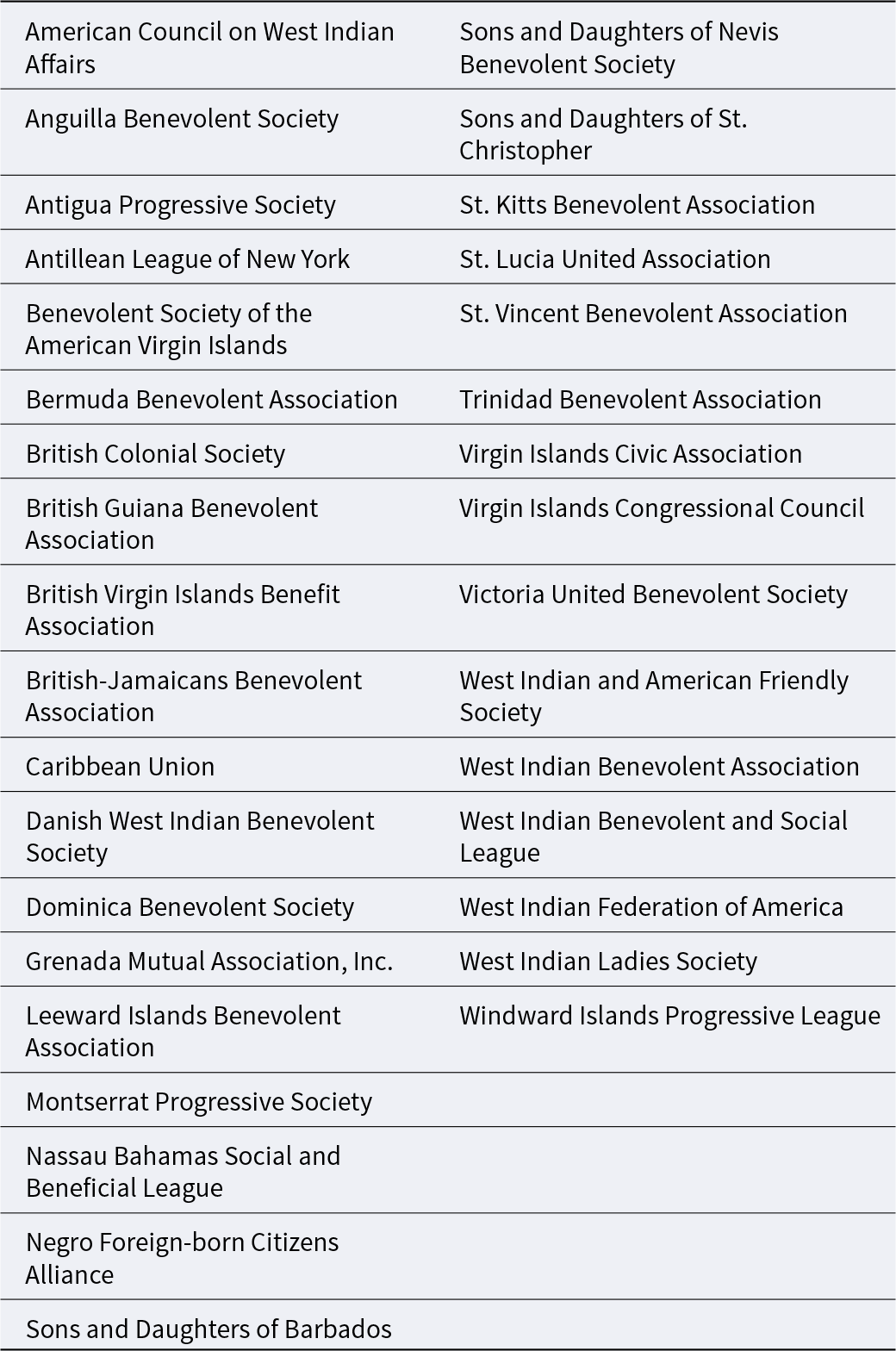
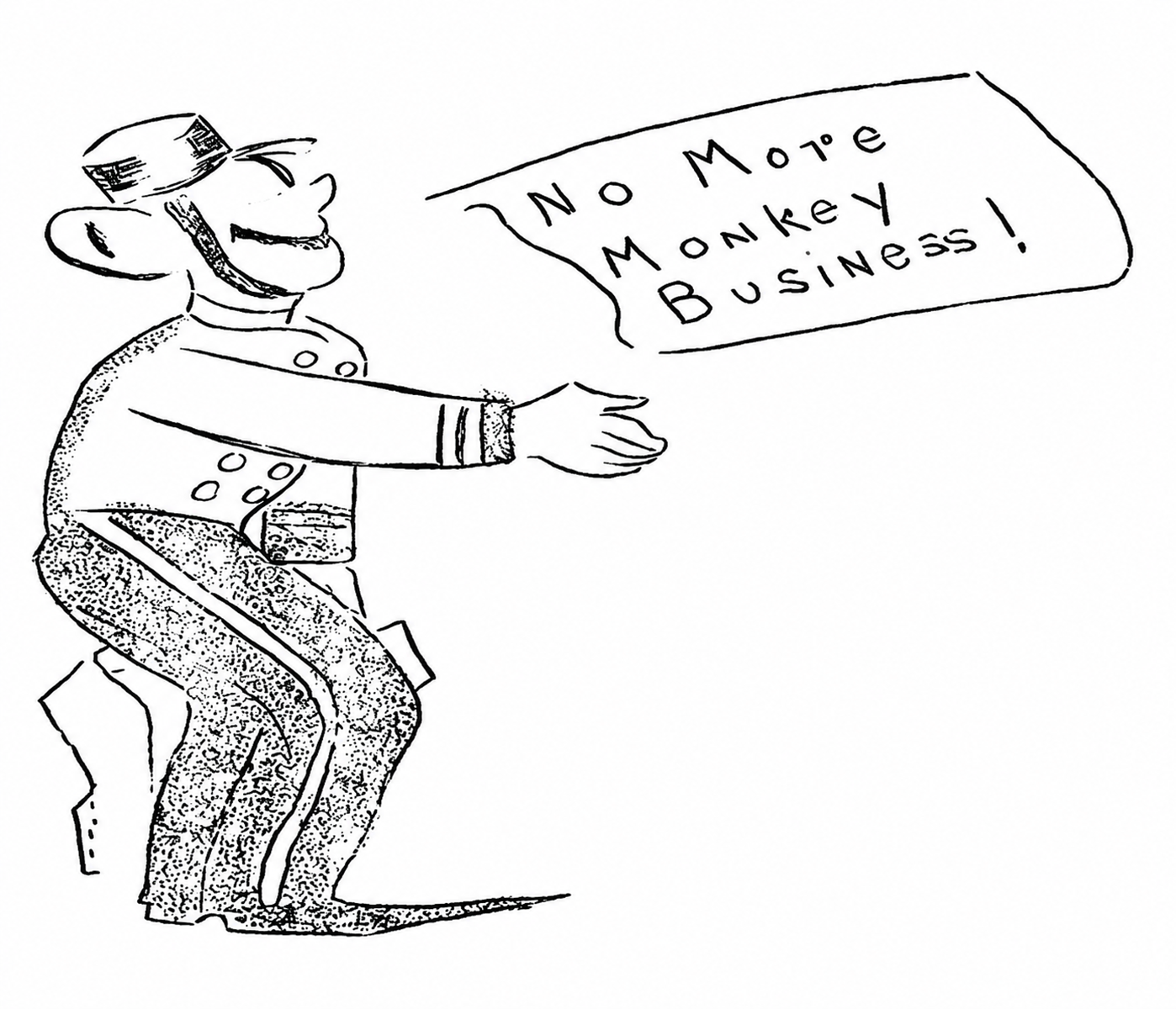

 Open access

