


Introduction
Polychaetes are dominant components of marine macrobenthos (Grassle & Maciolek, Reference Grassle and Maciolek1992; Ward & Hutchings, Reference Ward and Hutchings1996), can withstand a wide range of environmental parameters and succeed in colonizing a great variety of habitats (Díaz-Castañeda & Reish, Reference Díaz-Castañeda, Reish and Shain2009). Despite their dominance and contribution to marine ecosystem processes, the ecology of several genera still needs closer examination to establish relationships among genetic divergence, speciation and the influences of individual size variation on population dynamics (Occhioni et al., Reference Occhioni, Brasil and de Araújo2009).
Although numerous studies have been done on the identification, abundance and distribution of several polychaete species, in some cases very little attention has been drawn to their biometry (Hamdy et al., Reference Hamdy, Dorgham, El-Rashidy and Atta2014). Morphometric parameters and body-size relationships are essential to establish growth patterns and characterize population structure, as well as recruitment. Overall morphological, ecological, genetic and reproductive attributes contribute to species characterization, while examination of morphometric parameters is fundamental to studies of individual size, population dynamics and interpopulation variation (Rice et al., Reference Rice, Karl and Rice2008; Garraffoni et al., Reference Garraffoni, Yokoyama and Amaral2010; Pardo et al., Reference Pardo, Teixeira and Amaral2010; Hamdy et al., Reference Hamdy, Dorgham, El-Rashidy and Atta2014). This is especially true for cosmopolitan species which are widely distributed, at least occurring in both major ocean basins (i.e. Pacific and Atlantic) (Hutchings & Kupriyanova, Reference Hutchings and Kupriyanova2018). In particular, cosmopolitan marine species with high dispersal capabilities and gene flow tend to be highly subdivided, as revealed by morphological, life-history or genetic studies in which multiple cryptic species are often present (Maltagliati et al., Reference Maltagliati, Peru, Casu, Rossi, Lardicci, Curini-Galletti and Castelli2000; Martin et al., Reference Martin, Britayev, San Martin and Gil2003; Rice et al., Reference Rice, Karl and Rice2008; Barroso et al., Reference Barroso, Klautau, Solé-Cava and Paiva2010; Borda et al., Reference Borda, Kudenov, Chevaldonné, Blake, Desbruyères, Fabri, Hourdez, Pleijel, Shank, Wilson and Schulze2013). Within this context, study of the geographic subdivision of species and the estimation of gene flow between them provide important steps leading to deep insights into questions concerning species level population ecology (Grosberg & Cunningham, Reference Grosberg, Cunningham, Bertness, Gaines and Hay2001).
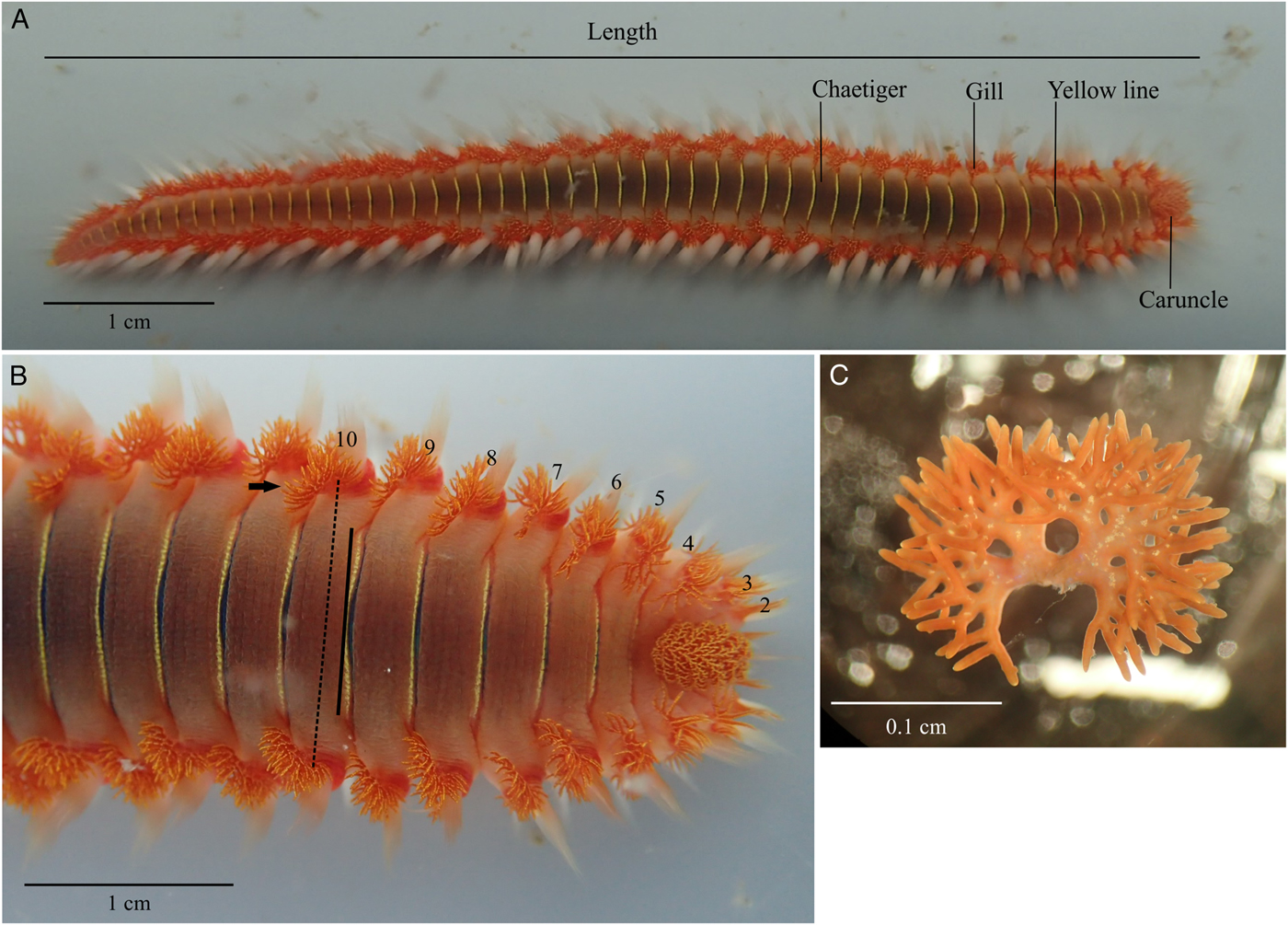
The amphinomid polychaete Hermodice carunculata (Pallas 1766) (Figure 1A, B) is widespread throughout the Atlantic Ocean and the Mediterranean and Red Seas (Fishelson, Reference Fishelson1971; Ahrens et al., Reference Ahrens, Borda, Barroso, Paiva, Campbell, Wolf, Nugues, Rouse and Schulze2013). It is commonly known as the ‘bearded fireworm’, due to tufts of white, sharp and venomous chaetae, which cause a painful burning sensation on contact (Schulze et al., Reference Schulze, Grimes and Rudek2017). Recently, its among-population differentiation was investigated to assess the potential presence of cryptic species. Yáñez-Rivera & Salazar-Vallejo (Reference Yáñez-Rivera and Salazar-Vallejo2011) allometrically compared numerous morphological characters of different populations and proposed the existence of two species, one distributed in the Caribbean and West Atlantic (H. carunculata sensu stricto) and one in the East Atlantic, including the Mediterranean Sea (H. nigrolineata). The difference between these two species ultimately rested on the number of branchial ramifications (or ‘branchial filaments’, Figure 1C) and the shape of the anal lobe.
Hermodice carunculata Pallas, 1766: (A) dorsal view of a fireworm and main morphological features of the species; (B) morphological and morphometric traits measured at chaetiger 10: branchial filaments (black arrow), width as length of the yellow line (black line), width as distance between notopodia (dashed line); (C) anterior dorsal view of the medial branchia of the left gill at chaetiger 10 with distended branchial filaments in distilled water.
The existence of two Hermodice species was not supported by subsequent genetic analyses employing sequences of the COI and 16S rDNA mitochondrial regions (Ahrens et al., Reference Ahrens, Borda, Barroso, Paiva, Campbell, Wolf, Nugues, Rouse and Schulze2013). In particular, genetic analyses highlighted the occurrence of a clade with only Mediterranean specimens (a small sample collected from Malta and Crete) and a larger clade containing specimens from the Atlantic Ocean plus some from Malta and Crete (Ahrens et al., Reference Ahrens, Borda, Barroso, Paiva, Campbell, Wolf, Nugues, Rouse and Schulze2013). However, the average inter-clade genetic distance was much lower than those observed between cryptic species, including those detected in the amphinomid Eurythoe complanata (Barroso et al., Reference Barroso, Klautau, Solé-Cava and Paiva2010). On the other hand, the occurrence of a significant difference in the number of branchial filaments between Atlantic and Mediterranean populations of H. carunculata was confirmed. This difference was mainly attributed to the higher concentration of dissolved oxygen in Mediterranean seawater (Ahrens et al., Reference Ahrens, Borda, Barroso, Paiva, Campbell, Wolf, Nugues, Rouse and Schulze2013).
Recently, increasing numbers of fireworms have been reported along South Italian coasts, that may potentially impact the structure and functioning of benthic communities. Hermodice carunculata may display an opportunistic feeding habit, as well as extremely efficient predatory strategies on several marine invertebrates, including keystone species (Simonini et al., Reference Simonini, Righi, Maletti, Fai and Prevedelli2017, Reference Simonini, Maletti, Righi, Fai and Prevedelli2018). This means that Mediterranean fireworms may persist following radical changes in prey community composition (Simonini et al., Reference Simonini, Maletti, Righi, Fai and Prevedelli2018), and retain their invasive potential as reported for other amphinomids (Cosentino & Giacobbe, Reference Cosentino and Giacobbe2011; Arias et al., Reference Arias, Barroso, Anadón and Paiva2013).
In the framework of ongoing environmental changes, seawater warming could favour the poleward expansion of thermophilic species such as H. carunculata (Schulze et al., Reference Schulze, Grimes and Rudek2017). This expansion may contribute to the ‘meridionalization’ of the northern Mediterranean (Coll et al., Reference Coll, Piroddi, Steenbeek, Kaschner, Lasram, Aguzzi, Ballesteros, Bianchi, Corbera, Dailianis, Danovaro, Estrada, Froglia, Galil, Gasol, Gertwagen, Gil, Guilhaumon, Kesner-Reyes, Kitsos, Koukouras, Lampadariou, Laxamana, López-Fé de la Cuadra, Lotze, Martin, Mouillot, Oro, Raicevich, Rius-Barile, Saiz-Salinas, San Vicente, Somot, Templado, Turon, Vafidis, Villanueva and Voultsiadou2010) and lead to rises in species density where fireworms already exist. However, no such population has yet been characterized and the use of allometric variations has never been considered in an attempt to elucidate the current status of this species in the Mediterranean. To date, the only genetic and morphological data available derive from the few specimens from Malta and Crete that were analysed by Ahrens et al. (Reference Ahrens, Borda, Barroso, Paiva, Campbell, Wolf, Nugues, Rouse and Schulze2013), where the total number of chaetigers and the number of dorsal branchial filaments at chaetiger 10 were the only traits examined. Otherwise, such data for Italian coastal fireworms have relied on estimates of body length based on underwater observations or digital images. Most of the specimens reported are 20–30 cm in length (Simonini et al., Reference Simonini, Righi, Maletti, Fai and Prevedelli2017). The lack of any other biometric information represents a major source of uncertainty in the characterization of Mediterranean fireworm populations and their dynamics.
In this study, we investigated a peripheral population of H. carunculata from the Salento Peninsula (Ionian Sea, Central Mediterranean). The indexed literature did not report fireworms on these hard bottom environments until 2001 (Corriero et al., Reference Corriero, Gherardi, Giangrande, Longo, Mercurio, Musco and Marzano2004), while they have recently become extremely common (Simonini et al., Reference Simonini, Righi, Maletti, Fai and Prevedelli2017). The specimens collected were studied using morphological/allometric traits and molecular markers to characterize this Ionian population, verify the presence of morphological differences between Atlantic and Mediterranean specimens and infer possible population size changes.
Materials and methods
Sampling
Fireworms were collected in summer 2016 at Porto Cesareo (40°16′N 17°54′E Apulian coast, Italy), about 800 and 1200 km from Malta and Crete, respectively. Specimens of H. carunculata were collected by scuba divers in infralittoral rocky habitats at 0.5–18 m depth. After collection, the fireworms were transported to the Laboratory of Ecology at the University of Modena and Reggio Emilia (Italy) and kept for 3–7 days in an aquarium system under controlled conditions (temperature: 24–25°C; photoperiod: 16 h light/8 h dark; salinity: 32–36; total volume: 600 l).
Species morphology and morphometric data
Hermodice carunculata can reach 30–60 cm in length. The homonomous body may include up to about 130 chaetigers (Figure 1A). Segments are each highlighted by a dorsal transverse yellow intersegmental line (hereafter referred to as ‘yellow line’; Figure 1A, B). Dorsal parapodia (notopodia) bear tufts of gills and urticating chaetae. Branchiae may vary in colour from orange to red or brown. Two pairs of branchiae are present. Each arises from a separate base on either side of a notofascicle. The medial branchia is largest, its enlarged common base (trunk) displays an inner segmental pair of large dichotomous medial trunk-like branches (Figure 1C) (Marsden, Reference Marsden1966; Barroso & Paiva, Reference Barroso and Paiva2007; Yáñez-Rivera & Salazar-Vallejo, Reference Yáñez-Rivera and Salazar-Vallejo2011).
The morphometric data related to body length, width, weight and total number of chaetigers were analysed to characterize the population from Porto Cesareo. The medial branchia at chaetiger 10 was employed to assess relationships between the number of branchial filaments at chaetiger 10 and the total number of chaetigers. This information was compared with those available in the literature (Ahrens et al., Reference Ahrens, Borda, Barroso, Paiva, Campbell, Wolf, Nugues, Rouse and Schulze2013) to investigate morphological differences between Atlantic and Mediterranean specimens.
Specimens were anaesthetized in 7% MgCl2 until they did not respond to mechanical stimulation and photographed using a digital underwater camera (Olympus Tough TG-4). The fresh weight was recorded using a scale (±0.01 g Acculab ATL) after blotting each fireworm for 1 min on absorbent paper (Nesto et al., Reference Nesto, Simonini, Prevedelli and Da Ros2018). Then, the gills at chaetiger 10 of each individual were removed using tweezers and scissors under a stereomicroscope. The medial branchia of the left gill was immersed in distilled water to favour its swelling and distension and to assess the number of branchial filaments at chaetiger 10 (thereafter ‘BF10’) (Figure 1C).
The body length (hereafter ‘length’), weight, width and the total number of chaetigers (hereafter ‘chaetigers’) were derived from pictures using the software ImageJ (Rasband, Reference Rasband1997–2018). In particular, the width was estimated both as the dorsal distance between the left and right notopodia and the length of the yellow line. The width descriptors were measured at chaetiger 10 (Figure 1B).
The analyses of the relationships among pairs of morphological and allometric variables were performed on log-transformed data (Garraffoni et al., Reference Garraffoni, Yokoyama and Amaral2010; Pardo et al., Reference Pardo, Teixeira and Amaral2010). First, the Pearson correlation (r) was calculated among all the pairs of variables considered (Supplementary Figure S1). Then a regression analysis was performed on the most relevant traits. A strong correlation was found between the dorsal distance between the notopodia and the length of the yellow line (r = 0.91; P < 0.001). Thus, the length of the yellow line was used as descriptor of H. carunculata width. The body length was correlated with the weight (r = 0.96; P < 0.001), the chaetigers (r = 0.90; P < 0.001) and the width (r = 0.76; P < 0.001). A smaller r value was found between chaetigers and BF10 (r = 0.58; P < 0.001) (Supplementary Figure S1). The following subset of relationships was investigated using power regression analyses: length vs weight, length vs width, length vs chaetigers, width vs weight, chaetigers vs BF10. In addition, the estimation of the coefficient of determination R 2, the statistical significance of the regressions, was evaluated using t tests (α = 0.05).
The dataset containing the morphological and morphometric information on fireworms collected at Porto Cesareo was integrated with the information published by Ahrens et al. (Reference Ahrens, Borda, Barroso, Paiva, Campbell, Wolf, Nugues, Rouse and Schulze2013) on H. carunculata from Malta-Crete (19 specimens) and Western Atlantic (33 specimens). First, the number of chaetigers in the three groups was compared by means of one-way ANOVA. Then, an ANCOVA was applied to compare the relationship between the number of chaetigers and BF10 among the groups. Data analyses were performed using the statistic software PAST (Hammer et al., Reference Hammer, Harper and Ryan2001) and PRIMER (Clarke & Gorley, Reference Clarke and Gorley2006).
Molecular analyses
The branchiae of chaetiger 10 not used for biometry were employed for molecular analyses. Two mitochondrial molecular markers (sequences of COI and 16S rDNA) were used to classify the Ionian fireworm population into the clades identified by Ahrens et al. (Reference Ahrens, Borda, Barroso, Paiva, Campbell, Wolf, Nugues, Rouse and Schulze2013), and assess possible population size changes. The gills are simple to collect and morphologically well-separated from the fireworm gut, reducing the risk of microbial contamination. They were stored at −80°C after collection.
The molecular analyses on frozen gill samples were performed at the Marine Phylogeography Laboratory of the University of Pisa (Italy). The DNA extraction was carried out using the GenElute™ Mammalian Genomic DNA Miniprep Kit distributed by Sigma-Aldrich, following the manufacturer's instructions. The mitochondrial regions 16S and COI were amplified using the primers: (i) COI- LCO1490 (5′-GGTCAACAAATCATAAAGATATTGG-3′) and HCO2198 (5′-TAAACTTCAGGGTGACCAAAAAATCA-3′) (Folmer et al., Reference Folmer, Hoeh, Black and Vrijenhoek1994) and COID (5′-TCTGGGTGTCCRAARAAYCARAA-3′) (Kojima et al., Reference Kojima, Segawa, Hashimoto and Ohta1997); (ii) 16S- 16SA (5′-CGCCTGTTTATCAAAAACAT-3′) and 16SB (5′-CTCCGGTTTGAACTCAGATCA-3′) (Xiong & Kocher, Reference Xiong and Kocher1991).
PCR amplifications were carried out in 20 µl solutions including a buffer to obtain a final concentration of 1 × 3.5 mM of MgCl2, 0.2 mM of each dNTP, 0.2 µM of each primer, 1 U of DreamTaq DNA polymerase (Thermo Scientific) and ~2.5 ng of template DNA. A negative control was included for each reaction. For both 16S and COI, the PCR profile was set as follows: initial denaturing step at 94°C for 4 min; 40 cycles of denaturing at 94°C for 3 s; annealing at 40°C for 30 s; extending at 65°C for 2 min.
To evaluate the presence of PCR products, 5 µl of amplified material was electrophoresed on 1.2% agarose gel with a constant potential difference of 100 V and using TAE 1× (1 mM EDTA, 40 mM Tris-acetate) as a buffer. After 10 min in TAE containing ethidium bromide (10 mg ml−1), the products of the amplifications were visualized using an ultraviolet light trans-illuminator and photographed. PCR products were precipitated with sodium acetate and absolute ethanol and delivered to GATC Biotech (Konstanz, Germany) for sequencing.
The quality of the sequences from each gene was checked using Chromas v. 2.6.2 (Technelysium Pty Ltd) and compared with sequences available in GenBank (Benson et al., Reference Benson, Cavanaugh, Clark, Karsch-Mizrachi, Lipman, Ostell and Sayers2012). The sequences were aligned by using ClustalX 2.1 (Larkin et al., Reference Larkin, Blackshields, Brown, Chenna, McGettigan, McWilliam, Valentin, Wallace, Wilm, Lopez, Higgins and Thompson2007) with those by Ahrens et al. (Reference Ahrens, Borda, Barroso, Paiva, Campbell, Wolf, Nugues, Rouse and Schulze2013). The final alignment was edited in BioEdit v. 7.2.5 (Hall, Reference Hall1999). All the sequences obtained in this work were submitted to GenBank (accession numbers in Appendix).
The best substitution model for our sequence dataset was chosen using the program jModelTest 2.1.6 (Darriba et al., Reference Darriba, Taboada, Doallo and Posada2012), based on the Bayesian Information Criterion. The haplotype diversity (h) and nucleotide diversity (π) were calculated with DnaSP 5.10 (Rozas et al., Reference Rozas, Sánchez-DelBarrio, Messeguer and Rozas2003). These estimators were calculated on both the 16S and on the COI sequences from Porto Cesareo, and on the sequences downloaded from GenBank (Ahrens et al., Reference Ahrens, Borda, Barroso, Paiva, Campbell, Wolf, Nugues, Rouse and Schulze2013).
We used 168 sequences of 397 bp for 16S and 137 sequences of 639 bp for COI. These sequences included specimens from Porto Cesareo and those downloaded from GenBank (Ahrens et al., Reference Ahrens, Borda, Barroso, Paiva, Campbell, Wolf, Nugues, Rouse and Schulze2013; Supplementary Table S2). Analyses on 16S, COI and the concatenated marker sequences were performed using MrBayes 3.2 (Huelsenbeck & Ronquist, Reference Huelsenbeck and Ronquist2001). The Bayesian consensus phylogenetic trees were obtained from two replicate runs with a total of three Markov chains per run for 8 × 10⁶ generations. Three replicate runs were carried out with a total of four Markov chains per run for 2 × 10⁷ generations. In all instances, the chains were sampled every 200 generations and the initial 25% was discarded as a burn-in phase. The convergence of the Bayesian analyses was checked using the standard deviation of split frequencies, which should reach a value <0.01 at the end of the analysis (Ronquist et al., Reference Ronquist, Teslenko, Van Der Mark, Ayres, Darling, Höhna, Larget, Liu, Suchard and Huelsenbeck2012).
The demographic history of the population from Porto Cesareo was inferred by mismatch distribution analysis, as implemented in Arlequin v. 3.5.1.2 (Excoffier et al., Reference Excoffier, Laval and Schneider2005). The fit of our data with both Rogers & Harpending's (Reference Rogers and Harpending1992) model of sudden population expansion and Excoffier's (Reference Excoffier2004) model of spatial expansion was assessed using Schneider & Excoffier's (Reference Schneider and Excoffier1999) approach, using the sum of squared deviations (SSDs) between the expected and observed mismatch distribution. In addition, Harpending's (Reference Harpending1994) raggedness statistic (r), Fu's (Reference Fu1997) F S, and Ramos-Onsins & Rozas's (Reference Ramos-Onsins and Rozas2002) R 2 were computed using DnaSP (Rozas et al., Reference Rozas, Sánchez-DelBarrio, Messeguer and Rozas2003) in order to assess for past population expansions and tested using coalescent simulations with 10,000 replicates.
Results
Allometric traits and number of branchial filaments
A total of 106 specimens of H. carunculata from Porto Cesareo was analysed. The weight ranged from 0.46 to 45.58 g (11.83 ± 8.96 g, mean ± SD). The length ranged from 3.28 to 28.41 cm (15.81 ± 5.26 cm) and the width from 0.24 to 0.95 cm (0.58 ± 0.16 cm) (Supplementary table S3). About 70% of the specimens was 10–20 cm in length and 0.4–0.7 cm in width. The gills presented from 11 to 86 filaments (37.3 ± 16.8). All the individuals featured from 37 to 128 chaetigers (81.1 ± 15.7) (Table 1). This chaetiger range was comparable with the specimens from Malta-Crete and the Atlantic Ocean (Table 1). However, one-way ANOVA revealed significant differences between the fireworms from Porto Cesareo, Malta-Crete and the Atlantic Ocean (F = 14.16, P < 0.001). The differences were particularly pronounced between the Porto Cesareo and Malta-Crete populations (Tukey's Post Hoc tests, Q = 7.33 and 4.77 respectively; P < 0.001).
Hermodice carunculata from Porto Cesareo. Total number of chaetigers and number of branchial filaments at chatiger 10 measured in individuals from Porto Cesareo compared with those reported by Ahrens et al. (Reference Ahrens, Borda, Barroso, Paiva, Campbell, Wolf, Nugues, Rouse and Schulze2013)

BF10, branchial filaments at chatiger 10; N, number; SD, standard deviation; Min, minimum; Max, maximum. *Data from Ahrens et al. (2013).
The relationships between weight and length, weight and width, and length and chaetigers were fitted by a power regression (Figure 2). The regression analyses revealed strong relationships between almost all the traits examined. Length was a good proxy for weight (R 2 = 0.92, t = 33.69; P < 0.001) and chaetigers (R 2 = 0.82, t = 21.67; P < 0.001) (Figure 2A, C). High coefficients of determination were calculated for width/weight (R 2 = 0.70, t = 15.43; P < 0.001) and length/width relationships (R 2 = 0.58, t = 12.00; P < 0.001) (Figure 2B, D). The power regression between the BF10 and the chaetigers yielded the lowest R 2 (R 2 = 0.33, t = 7.22; P < 0.001) (Figure 2E).
Plot of power regression curves and allometric equations between: (A) length and weight; (B) width and weight; (C) width and length; (D) chaetigers and number of branchial filaments at chaetiger 10 (BF10); (E) chaetigers and length.

The slopes of the regression curves between BF10 and chaetigers were not significantly different among groups (F = 0.79; P > 0.46). The intercepts were significantly different, indicating that, for each group, a fireworm with a given number of chaetigers presented a different BF10. In particular, branchial ramifications were reduced in the fireworms from Malta and Crete (MC) and higher in those from the Atlantic Ocean (AO), while the Porto Cesareo (PC) specimens exhibited intermediate values (ANCOVA, Origin: F = 59.26, P < 0.001; pair-wise tests: t PC−MC = 4.55, P < 0.001; t PC−AO = 7.95, P < 0.001; t MC−AO = 10.52, P < 0.001).
Molecular and phylogenetic analyses
A total of 28 specimens of H. carunculata from Porto Cesareo was analysed for 16S and 11 of them for both COI and 16S. The best fitting nucleotide substitution model was GTR + G (Tavarè, Reference Tavaré1986) for both 16S and COI. The haplotype diversity and nucleotide diversity were higher for COI (h = 0.945 ± 0.066; π = 0.0165 ± 0.0030) than for 16S (h = 0.680 ± 0.100; π = 0.0035 ± 0.0009) (Table 1). The estimates of genetic variability obtained for the Porto Cesareo population were consistent with those reported for Ahrens et al.'s (Reference Ahrens, Borda, Barroso, Paiva, Campbell, Wolf, Nugues, Rouse and Schulze2013) populations (Table 2). An exception was represented by the 16S haplotype diversity, which exhibited a lower value, consistent with the Ahrens et al. (Reference Ahrens, Borda, Barroso, Paiva, Campbell, Wolf, Nugues, Rouse and Schulze2013) population from Crete (Table 2). The phylogenetic analyses on 16S, COI and concatenated sequences provided trees that consistently showed two main clades (Figure 3). In particular, the phylogenetic tree from concatenated dataset (1125 bp for 126 individuals) showed the presence of a well-supported clade (Clade I; posterior probability PP = 1) including the majority of the Mediterranean specimens (18/24) and a larger clade (Clade II; PP = 1) with all the Atlantic specimens and some from the Mediterranean (Figure 3A). Of note, most of the specimens from Porto Cesareo clustered in Clade I and to a lesser extent (i.e. PC11, PC28, PC81) with the Atlantic specimens in Clade II (Figure 3A). A similar pattern was observed for the specimens from Malta and Crete analysed by Ahrens et al. (Reference Ahrens, Borda, Barroso, Paiva, Campbell, Wolf, Nugues, Rouse and Schulze2013). The existence of the two clades was further supported by single-marker phylogenetic reconstructions (Figure 3B, C).
(A) Bayesian tree obtained from the concatenated 16S and COI sequences of specimens from Porto Cesareo (PC, branches coloured in red), and those collected by Ahrens et al. (Reference Ahrens, Borda, Barroso, Paiva, Campbell, Wolf, Nugues, Rouse and Schulze2013) in Malta-Crete (MA and CR, branches coloured in blue) and in the Atlantic Ocean (for Atlantic local abbreviations used in the tree, refer to Supplementary Table S2). Branch support values (Bayesian inference) are displayed for high supported clades (P > 0.9). Clade I represents a distinct lineage containing only H. carunculata individuals from the Mediterranean. Clade II results as a larger separate lineage mainly constituted by Atlantic individuals and some from the Mediterranean (both from Porto Cesareo, Malta and Crete); 16S (B) and COI (C) Bayesian unrooted trees constructed on separated 16S and COI sequences (Porto Cesareo specimens are coloured in red, Malta and Crete in blue).

Hermodice carunculata. Estimates of 16S and COI genetic variability (± SD) in the populations from Porto Cesareo (in bold) and those analysed by Ahrens et al. (Reference Ahrens, Borda, Barroso, Paiva, Campbell, Wolf, Nugues, Rouse and Schulze2013). Only population datasets with N > 10 were considered, with the exception of Malta

N, sample size; Nh, number of haplotypes; h, haplotype diversity; π, nucleotide diversity.
The mismatch distributions of 16S and COI sequences did not deviate significantly from the curves expected from the models of both demographic and spatial expansion of populations (Figure 4; Table 3). This result was corroborated by the significance of r, F S and R 2 indices for both molecular markers (Table 3).
Frequency distributions of the number of pairwise nucleotide differences (mismatch) between (A) 16S and (B) COI sequences. The solid and dashed lines represent the theoretical distributions under the assumptions of Rogers & Harpending's (Reference Rogers and Harpending1992) model of sudden expansion and Excoffier's (Reference Excoffier2004) model of spatial expansion, respectively. In the graph of the COI sequences (B) the curves of the two theoretical models are overlapped.

Hermodice carunculata from Porto Cesareo. Parameters of population expansion for the two mitochondrial regions. Parameter significances were obtained through a permutation test with 10,000 replicates

SSD1 and SSD2, sum of squared deviations for sudden demographic and spatial expansion, respectively; r, raggedness index; F S and R 2: tests for demographic expansions. Probability is indicated as *P < 0.05, ***P < 0.001 by permutation test.
Discussion
Morphometric traits have been employed to characterize some polychaete species belonging to different families such as eunicids (Fauchald, Reference Fauchald1992; Costa-Paiva & Paiva, Reference Costa-Paiva and Paiva2007), nereidids (Omena & Amaral, Reference Omena and Amaral2001; Coutinho et al., Reference Coutinho, Paiva and Santos2015) and amphinomids (Barroso et al., Reference Barroso, Klautau, Solé-Cava and Paiva2010; Yáñez-Rivera & Brown, Reference Yáñez-Rivera and Brown2015). The evaluation of worm morphology and size is fundamental in studies of population ecology, taxonomy, growth and secondary production, where total length, weight, appendages and length at chaetiger 10 are among the most reliable parameters to clarify several aspects of polychaete biology (Omena & Amaral, Reference Omena and Amaral2001; Coutinho et al., Reference Coutinho, Paiva and Santos2015; Nesto et al., Reference Nesto, Simonini, Prevedelli and Da Ros2018). However, little is known about the reproductive biology and population dynamics of H. carunculata and no studies have yet analysed the interpopulation variations based on morphometric variables. Our results indicated the existence of close relationships between the allometric traits examined (Figure 2). Of note, body length, number of chaetigers and the yellow line are strongly related with each other and could be considered reliable descriptors of fireworm size. In particular, body length, the most easily measurable trait, is useful to investigate fireworm population structure and productivity, given its relationship with fireworm weight. In addition, the yellow line length can be used as a proxy for potential size in fragmented or regenerating fireworms, or in images showing only the anterior portion of the body. This situation is quite common when large fireworms are photographed in rocky habitats with many crevices (Simonini et al., Reference Simonini, Righi, Maletti, Fai and Prevedelli2017).
Allometric relationships of polychaetes are often fitted by power curves (e.g. Nesto et al., Reference Nesto, Simonini, Prevedelli and Da Ros2018) and generally growth in body size occurs by increasing the total numbers of chaetigers (Omena & Amaral, Reference Omena and Amaral2001; Costa-Paiva & Paiva, Reference Costa-Paiva and Paiva2007). In H. carunculata, the results of the regression analysis pointed out that increases in length and numbers of chaetigers corresponded to similar changes in weight and width, indicating that individuals elongate until they attain medium-sized bodies, after which biomass increases predominantly occur through an enlargement of existing segments. This pattern of growth was also observed in nereidids and eunicids (Omena & Amaral, Reference Omena and Amaral2001; Costa-Paiva & Paiva, Reference Costa-Paiva and Paiva2007).
Ahrens et al.'s (Reference Ahrens, Borda, Barroso, Paiva, Campbell, Wolf, Nugues, Rouse and Schulze2013) analyses on the relationship between the total number of chaetigers and the number of branchial filaments at chaetiger 10 highlighted significant differences in intercepts between fireworms collected from the Atlantic Ocean and the Mediterranean. Their study included specimens collected from different sites, including some separated by large distances, but interpopulation differentiations were not considered, perhaps because of the scant number of specimens available for each site. For instance, in the case of Malta and Crete, morphological data were available for only 5 and 14 specimens, respectively. However, our analysis included large numbers of fireworms from Porto Cesareo, which allowed us to highlight a higher degree of branchial ramification compared with other Mediterranean populations. We therefore conclude that the number of branchial filaments is best considered a plastic trait that varies relative to local environmental conditions or other unknown factors (e.g. fireworm reproductive status, ‘health’). Ahrens et al. (Reference Ahrens, Borda, Barroso, Paiva, Campbell, Wolf, Nugues, Rouse and Schulze2013) suggested that branchial filament abundance may be related to oxygen saturation in the environment. Increased gill surface area allows higher oxygen uptake and may occur as an adaptation to enhance oxygen acquisition (Decelle et al., Reference Decelle, Andersen and Hourdez2010). Similar variations in respiratory structures in response to hypoxic conditions have been observed in other families of polychaetes (e.g. Spionidae, Cossuridae and Paraonidae; Lamont & Gage, Reference Lamont and Gage2000), shrimps and crabs (Decelle et al., Reference Decelle, Andersen and Hourdez2010). However, experimental studies are necessary to clarify the occurrence of a direct relationship between fireworm branchial filament abundance and seawater oxygenation.
Peripheral populations may exhibit lower estimates of genetic diversity as a consequence of smaller effective population sizes and isolation (reviewed in Eckert et al., Reference Eckert, Samis and Lougheed2008). The peripheral population of H. carunculata from Porto Cesareo represents an exception to this statement, since the values of genetic variability estimated were high, especially for COI (Table 2). The ‘rostraria’ seems to be the representative larva of Amphinomida, although confirmation that it actually is remains pending on the successful lab culture and description of its life cycle. This planktotrophic larva is characterized by a high potential for dispersal (Kudenov, Reference Kudenov1974; Schulze et al., Reference Schulze, Grimes and Rudek2017) that may account for the high degree of connectivity between the peripheral Porto Cesareo population and the other Ionian populations. Larval dispersal ability is a key factor in moulding the genetic structure of marine invertebrates with long planktonic larval stages and often leads to a significant degree of genetic homogeneity, even among distant populations (Grosberg & Cunningham, Reference Grosberg, Cunningham, Bertness, Gaines and Hay2001). Indeed, genetic divergence among populations of high-dispersing species may be set by restrictions to connectivity and gene flow, due to physical, ecological or ethological barriers (Palumbi, Reference Palumbi1994; Swearer et al., Reference Swearer, Caselle, Lea and Warner1999; Luttikhuizen et al., Reference Luttikhuizen, Drent, Van Delden and Piersma2003; Taylor & Hellberg, Reference Taylor and Hellberg2003; Maltagliati et al., Reference Maltagliati, Casu and Castelli2004; Kesäniemi et al., Reference Kesäniemi, Geuverink and Knott2012). Our phylogenetic analyses corroborated the lack of a genetic separation between the Mediterranean and Atlantic populations. Porto Cesareo, Malta and Crete are mainly characterized by a Mediterranean private lineage (Clade I) and to a lesser extent by other lineages occurring in the Atlantic (Clade II) (Figure 3). These results are consistent with the hypothesis of high connectivity existing between the Atlantic and the Mediterranean (Ahrens et al., Reference Ahrens, Borda, Barroso, Paiva, Campbell, Wolf, Nugues, Rouse and Schulze2013). Gene flow may be due to the unidirectional dispersal of larvae (and/or juvenile/adult oceanic rafting) through the Strait of Gibraltar since multiple human-mediated passive transport (for instance via ballast water) seems unlikely due to the absence of clade I individuals outside the Mediterranean (see Ahrens et al., Reference Ahrens, Borda, Barroso, Paiva, Campbell, Wolf, Nugues, Rouse and Schulze2013). Even the presumed introduction of clade II individuals in the Mediterranean due to the aquarium trade is improbable. While both the dumping of Caribbean live rocks or aquarium animals by recreational aquarists has occurred at multiple locations and times, more than 95% of European imports are from the Indo-Pacific (Fiji, Sri Lanka and Indonesia; Leal et al., Reference Leal, Vaz, Puga, Rocha, Brown, Rosa and Calado2016), where H. carunculata has not yet been reported.
Our molecular-based demographic history analyses on the Porto Cesareo population were consistent with a recent past demographic and/or spatial expansion in Apulia. In particular, the surface circulation dynamic in the Mediterranean basin and the surmised high dispersal capacity of H. carunculata larvae suggest that a spatial expansion of populations from the south-eastern Adriatic and Ionian Sea has occurred (Hamad et al., Reference Hamad, Millot and Taupier-Letage2005; Belmonte et al., Reference Belmonte, Costantini, Moscatello, Denitto and Shkurtaj2006; Poulain et al., Reference Poulain, Bussani, Gerin, Jungwirth, Mauri, Menna and Notarstefano2013; Mikac, Reference Mikac2015). Seawater warming and the constant gene flow could favour fireworms' northward spreading and density increases in their native ranges. This scenario would corroborate the recent rise in H. carunculata in the central Mediterranean as a first step towards future population expansions.
Considering fireworms' invasive potential and their predatory and opportunistic feeding habits, a detailed reconstruction of their distribution on a fine scale in the central Mediterranean is strictly necessary. Integration of the historical records of H. carunculata with its recent occurrence will allow us to identify and characterize the potentially expanding populations. Analysis of these populations could provide deeper knowledge on their present and future responses to climate change and effects on benthic assemblages.
Supplementary material
The supplementary material for this article can be found at https://doi.org/10.1017/S002531541900064X.
Acknowledgements
The authors are thankful to the anonymous reviewers for their valuable and helpful comments which improved the quality of the manuscript. Thanks to Dr Katie Henry for English language revision.
Financial support
This research was supported by a grant from the Modena and Reggio Emilia University (FAR 2014).
Appendix
GenBank accession numbers (16S and COI) for H. carunculata specimens from Porto Cesareo.



