Introduction
Integrated Pest Management (IPM) utilizes all suitable techniques in the socioeconomic, environment and population dynamics context of farming systems in a compatible manner to maintain pest population levels below those causing economic injury (Dent, Reference Dent1995, p. 1).
According to Williamson (Reference Williamson2003), African farmers often use credit to buy inputs such as seeds, fertilizers and synthetic pesticides at high costs, making them dependent on good yields to break even and manage their debts. In this situation, many may get caught in the pesticide treadmill where they do not dare to reduce the use of synthetic pesticides for fear of yield loss. The use of synthetic pesticides among the vegetable producers in urban and peri-urban Cotonou, Benin, and many other West African countries has been increasing to the extent that certain insect pests have developed resistance to the pesticides (Atcha-Ahowé et al., Reference Atcha-Ahowé, James, Godonou, Boulga, Agbotse, Kone, Kogo, Salawu, Glitho, Clarendon and Youdeowei2009). Additional negative effects are increasing insecticide resistance in insect vectors due to the leakage of insecticides to mosquito breeding sites (Akogbeto et al., Reference Akogbeto, Djouaka and Noukpo2008), to the extent that insecticide resistance in Anopheles mosquitoes is threatening the success of malaria control programmes (Djouaka et al., Reference Djouaka, Bakare, Coulibaly, Akogbeto, Ranson, Hemingway and Strode2005). Volatilization seems to have a substantial influence on the dispersal of pesticide compounds in tropical conditions, suggesting that toxic compounds may be dispersed to even remote areas via atmospheric deposition (Rosendahl et al., Reference Rosendahl, Laabs, Atcha-Ahowe, James and Amelung2009). In 2003, the International Institute of Tropical Agriculture (IITA) initiated the project ‘Healthy Vegetables through Participatory Integrated Pest Management (IPM) in Peri-urban Gardens of Benin’ (hereafter referred to as the project) to enhance farmers' efforts to produce quality vegetables through informed decisions on the choice and use of IPM options (James et al., Reference James, Godonou, Atcha, Baimey, Adango, Boulga and Goudegnon2006).
The recognition that fixed, scientific recommendations are not sufficient to enable farmers to cope with a dynamic society and environment has led to a paradigm shift from top–down approaches towards approaches putting the farmers and their knowledge in the centre (Nyborg et al., Reference Nyborg, Berg and Aune2007). One learning method focusing on the farmers' own development is the farmer field school (FFS), which was used in the project. FFS is based on four principles: production of a healthy crop, conservation of natural enemies, performance of regular field observations and belief on the expertise of farmers in their own fields (Pontius et al., Reference Pontius, Dilts, Bartlett, Pontius, Dilts and Bartlett2000). FFS is based on the idea that ‘Learning is the process whereby knowledge is created through the transformation of experience’ (Kolb, Reference Kolb1984, p. 38). Experiential learning is a process whereby we, based on the experience of a phenomenon, reflect and allocate meaning to that experience and develop knowledge from it. By experiencing the interactions of the agro-ecosystems and developing their analytical skills, farmers would be empowered to realize which factors are within their own control (Fleischer et al., Reference Fleischer, Jungbluth, Waibel and Zadoks1999).
IPM-FFS have been used for decades in Asia, and positive social changes (Pontius et al., Reference Pontius, Dilts, Bartlett, Pontius, Dilts and Bartlett2000) have been documented along with human and environmental health effects (e.g. Rola et al., Reference Rola, Quizon and Jamias2001; Erbaugh et al., Reference Erbaugh, Donnermeyer, Kibwika and Kyamanywa2002; Godtland et al., Reference Godtland, Sadoulet, Janvry, Murgai and Ortiz2004; Praneetvatakul and Waibel, Reference Praneetvatakul and Waibel2006). Governments, researchers and farmers in Africa are adapting FFS to African cultures and production systems. The project was unique as it was the first time that a vegetable FFS was conducted by IITA in West Africa. In the project, two sessions of FFS were conducted for the trainer of trainers (ToT; James et al., Reference James, Godonou, Atcha, Baimey, Adango, Boulga and Goudegnon2006). The first session of ToT was from August to October 2003, and the crops covered were Solanum macrocarpon L. (Solanaceae) (a variety of the African eggplant, locally known as gboma) and Daucus carota L. sativus Hayek (Apiaceae) (carrot). The second session of ToT was from December 2003 to April 2004, and the crops covered were Lactuca sativa L. (Asteraceae) (lettuce) and Brassica oleracea L. capitata L. (Brassicaceae) (cabbage). To scale out the knowledge created in the ToT sessions, each ToT participant was to arrange horizontal sharing of knowledge and skills gained during the ToT sessions.
The major limiting factors of vegetable production in the urban and peri-urban areas of Benin are soil infertility, pests, weak irrigation infrastructure and poorly developed vegetable enterprises (James et al., Reference James, Godonou, Atcha, Baimey, Adango, Boulga and Goudegnon2006). Towards improved vegetable pest management, the IITA vegetable project found a strain of the entomopathogenic fungus Beauveria bassiana (Balsamo) Vuillemin (Deuteromycotina: Hyphomycetes) (isolate Bba5653) to be effective against the diamondback moth Plutella xylostella L., the most devastating pest of cabbage (Godonou et al., Reference Godonou, James, Atcha-Ahowé, Clarendon and Youdeowei2009a, Reference Godonou, James, Atcha-Ahowé, Vodouché, Kooyman, Ahanchedé and Korieb). The microbial control agent is environmentally friendly and harmless to humans. The product was part of the IPM options promoted through FFS training by the project as one alternative to synthetic pesticides. Additional non-chemical control options that were promoted included botanical nematicides (Loumedjinon et al., Reference Loumedjinon, Baimey, James, Clarendon and Youdeowei2009).
FFS training by the IITA vegetable IPM project created interfaces where the knowledge of the vegetable producers was challenged by the knowledge of other producers and scientists. Most of the vegetable producers believed that all arthropods in their fields would damage their crops, and therefore the project focused on distinguishing harmful insects from harmless and beneficial insects (e.g. Cotesia plutellae (Kurdjumov) (Hymenoptera: Braconidae), a parasitoid of P. xylostella, and the predator Exochomus troberti Mulsant (Coleoptera: Coccinellidae); James et al., Reference James, Godonou, Atcha, Baimey, Adango, Boulga and Goudegnon2006). During the training, the participants were therefore exposed to IPM, beneficial organisms, plant health, agro-ecosystems and the concept of quality vegetables. Agro-ecosystem analysis (AESA) was used in the project to assist participants to base their decisions on whether to apply synthetic pesticides on several criteria connected to observing the development of the plants, pests and diseases in vegetable plots. Vegetable producers were expected to change inappropriate IPM practices as a result of the training offered by the project.
This paper reports research findings on activities to evaluate the extent to which the IPM-FFS training influenced the participants in the project regarding their knowledge and use of IPM options including pesticides, as well as their awareness of health hazards of synthetic pesticides and their handling practices of synthetic pesticides. Knowledge created through the interactions between the vegetable producers' and the scientists' ‘life worlds’, defined as a person's life (or lived) experience, background and values which influence how the person sees the world (Schutz, Reference Schutz and Natanson1962), is explored. According to Long (Reference Long2001), knowledge is a cognitive and social construction constantly made by the experiences and discontinuities that emerge in the intersection between different actors' life worlds. It is a product of dialogue and negotiation, and includes transformation rather than transfer of meaning (Long, Reference Long2001).
Methods of data collection
Study sites
The research was conducted in urban and peri-urban areas of Cotonou between October 2006 and January 2007. Cotonou is in the humid forest zone (James et al., Reference James, Godonou, Atcha, Baimey, Adango, Boulga and Goudegnon2006) with two rainy seasons, March–July and September–November, and two dry seasons, December–March and August–September. The annual rainfall in 2006 was 1327 mm, and the temperature and relative humidity fluctuated between 23 and 28 °C and 69 and 90%, respectively (BBC, 2006). The soil in the studied gardens is sandy (95% sand), with a low organic matter content (3.7–4.5 kg organic matter/m2 of soil) and a low water holding capacity (Weller, Reference Weller2002). All vegetable producers in Benin were members of Féderation des Unions de Producteur, the national federation of farmer organizations, which had been created by the Government of Benin on request from European non-governmental organizations (NGOs).
Benin has regulations about packaging, labelling, transport, storage, usage and disposal of synthetic pesticides on the market (law 1991/004), and the national plant protection service (Service de la Protection des Végétaux, SPV) is in charge of the quality control of synthetic pesticides and authorization of salesmen. The Centre d'Action Regional pour le Developpement Rural (CADER) is in charge of the control of the use of synthetic pesticides, and the Brigade Phytosanitaire was a group of vegetable producers trained by CADER to be ‘pesticide police’ and to aid CADER. The Brigade Phytosanitaire had no legal power, and formally stopped operating when CADER closed down.
In this study, three vegetable gardens where vegetable IPM-FFS had been conducted (Houeyiho, Office National D'Edition de Presse et D'Imprimerie (ONEPI), Gbegamey) were compared with three vegetable gardens in Godomey where no FFS had been held (control group). All the study gardens were in the Department of Littoral. The gardens where FFS had been held were selected on the basis of accessibility (short travel distance from Cotonou), that the gardens were still in use as vegetable gardens and that at least some of the crops focused on in the project were cultivated there (carrot, lettuce, cabbage and gboma). The control sites comprised the only vegetable gardens in Cotonou, which had not participated in the project.
All the respondents produced vegetables for the market, and nearly all the land area in the gardens studied was used for vegetable production, while the respondents lived in other parts of or outside Cotonou. Each vegetable producer had his/her defined cropping area, consisting of several beds, with an average size of 7.2 m2 each (James et al., Reference James, Godonou, Atcha, Baimey, Adango, Boulga and Goudegnon2006). The farmers used manual tools and irrigated vegetable plots manually with water taken from open water holes often by hired labour (Zossou, Reference Zossou2004). None of the vegetable producers owned the land they cultivated or had formal contracts with the landowner, so their situation was very insecure (Zossou, Reference Zossou2004).
During the vegetable IPM-FFS, IPM options within the categories ‘chemical, biological, mechanical and cultural’ were taught. To distinguish how the different vegetable producers understood the concept of IPM, the number of IPM techniques (chemical, biological, mechanical and cultural) in which they mentioned IPM tools when answering the open-ended question, ‘What does IPM mean?’ was counted. It was also noticed whether the respondents only listed IPM options or explained a holistic approach using AESA. When IPM tools were mentioned within only one IPM approach, they were considered as having a narrow understanding of the concept of IPM. When IPM tools were mentioned within all the four IPM approaches, their understanding of the concept of IPM was considered broad. While the ‘concept of IPM’ was based on how the respondents described IPM, the respondents' ‘knowledge of IPM’ was evaluated by the number of IPM techniques (chemical, biological, mechanical and cultural) in which they mentioned IPM tools as response to various questions during the interview.
AESA was used in the IPM-FFS training to assist the farmers to take management decisions based on the conditions of their fields. The farmers observe the biotic and abiotic factors, analyse how these impact their crops and thereafter take proper management decisions based on the analysis (Pontius et al., Reference Pontius, Dilts, Bartlett, Pontius, Dilts and Bartlett2000). To perform a sound AESA, it is important that the farmers have a good understanding of ecosystem interactions such as pest–predator relationships and the existence of beneficial insects. Insect zoos (enclosed pot with a plant, a pest and/or a beneficial insect) are often used to visualize the pest–predator relationships (Pontius et al., Reference Pontius, Dilts, Bartlett, Pontius, Dilts and Bartlett2000).
Sampling and data analysis
At the start of the interviews, a transect walk was done in all the vegetable gardens to get preliminary information about the area. Convenience sampling of the snowball type was used (Bryman, Reference Bryman2004), and those interviewed were the most available people in the gardens. Among these, the sample of producers was selected on the basis of gender, age, education, and economic and social status. The list of respondents was checked by the leadership of the community-based farmers union in Cotonou (Union Communale des Producteurs, UCP) to ensure that all socioeconomic categories were represented. From the IPM-FFS project area, 15 ToT participants, 9 FFS participants and 19 non-participants were selected. Twelve control respondents were selected from the area where no IPM-FFS had been conducted. Fifty-four semi-structured interviews with open-ended questions were carried out with the vegetable producers. The interviews focused on knowledge and use of IPM options, awareness of health hazards of synthetic pesticides, handling practices of synthetic pesticides, and knowledge and use of protection gear.
Focus group interviews were held with the producers in the ToT, FFS and non-participant groups to collect data on synthetic and botanical pesticides, the IPM-FFS training and the production environment in the vegetable gardens. Female and male producers were interviewed separately for open discussions. Key informant interviews were held with an ambulant salesman of agro-chemical inputs; two elderly, experienced vegetable producers; and various NGO staff and government employees, as well as with project stakeholders from an NGO specialized in the promotion of biological agriculture (Organisation Béninoise pour la Promotion de l'Agriculture Biologique), SPV, the national institute of agricultural research in Benin (Institute National de Recherche Agricole du Bénin), IITA in Benin and the UCP. Data were collected on pesticides (rules, regulations and sales) and on the IPM-FFS training (structure and curriculum). Triangulation and follow-up questions were used within the interviews to capture the real view of the respondents. An interpreter was used for all the interviews with the vegetable producers such that the interviews were held in the common local language ‘Fon’ (spoken by most of the interviewed vegetable producers) or French.
As far as possible, the double difference model, which compares the differences in change over time between two populations, was used. The change in behaviour within the ToT and FFS groups was compared with the change in behaviour of the non-participants and control groups. This change in behaviour creates a bias towards the trained group as they have prior knowledge before the training. To assess producers' understanding of beneficial insects, a modified version of Mangan and Mangan's (Reference Mangan and Mangan1998) model was used. The questions ‘If you had the possibility would you like to kill all the insects in your field?’ and ‘Are there any insects that might be beneficial to have in your field (if yes give an example)?’ were asked at different points during the interview. If the respondent did not want to kill all insects and could give examples of beneficial insects, she/he would be grouped as having a ‘good concept’ of beneficial insects. The data were analysed using SPSS and Excel.
Results and Discussion
Knowledge about IPM and plant health
All the ToT respondents, 56% of the FFS respondents and only 16% of the non-participants were familiar with the term IPM. The ToT respondents had a broader understanding of the concept of IPM, but in general, most of the vegetable producers who were familiar with IPM had a narrow understanding of the concept of IPM (Fig. 1). All the producers understood IPM as a separate management tool, and while most of them associated IPM with chemical control, the ToT and FFS respondents were more concerned about reducing the use of synthetic pesticides and using botanicals (such as neem, papaya, pepper, orange and cassava epidermis). ‘Knowledge of IPM’ was based on the IPM tools that were reported by the respondents during the interview. All the respondents had a broader ‘knowledge of IPM’ than ‘concept of IPM’, which indicates that even though many vegetable producers were not familiar with the scientific term ‘IPM’, they knew about various pest management methods. Only ToT respondents knew about pest management methods within all the four IPM approaches, and had the broadest knowledge about IPM. A much larger proportion of the ToT respondents than the other respondents knew about tools within biological and cultural controls, such as beneficial insects, B. bassiana and crop rotation.
Broadness of the ‘concept of IPM’ and ‘knowledge of IPM’

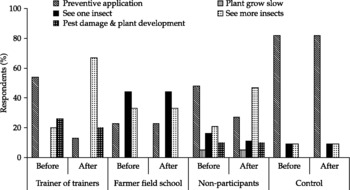
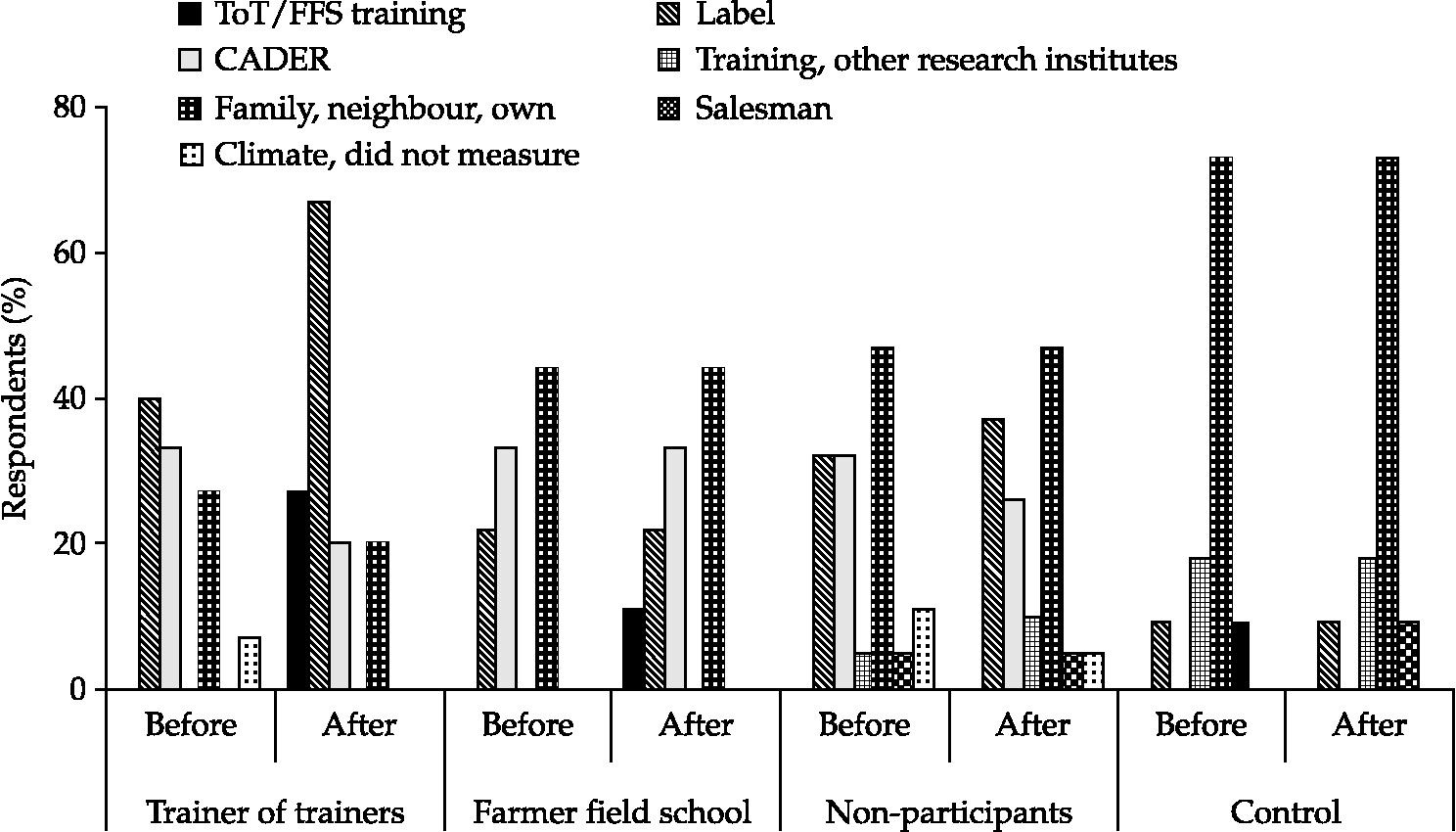
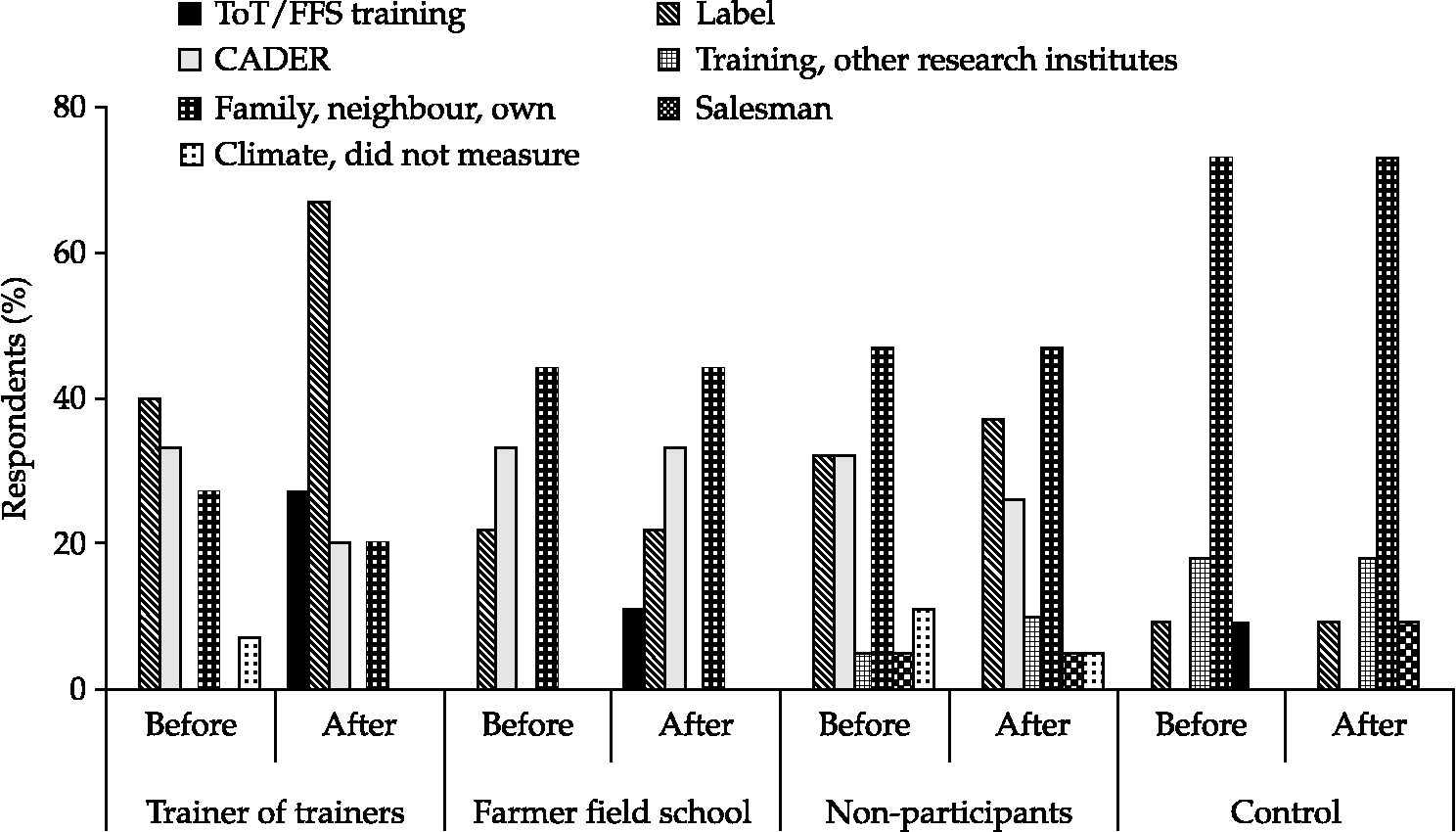
A larger proportion of the ToT respondents (60%) had a good concept of beneficial insects than the FFS (22%), control (18%) and non-participant respondents (none). As the ToT participants were only shown pictures of the beneficial and harmful insects, but did not have any insect zoo, they lacked the experience of visually understanding pest–natural enemy relationships. As a consequence, many did not transform the information into reliable knowledge. In terms of AESA activities, the largest improvements in observing pests and crop interactions were among the ToT respondents (Fig. 2), who shifted from using preventive application to applications based on frequent observations of changes in crop, pest and natural enemy developments. Sixty-seven per cent of the FFS respondents said that the project had reinforced their knowledge to observe pests and crops. Nevertheless, only one ToT respondent used agro-ecosystem analysis and based the management decisions on a holistic analysis of the field; the rest of the respondents based their decisions on subjective assessment of increasing pest densities. Among the producers with a good understanding of beneficial insects, only 8% used calendar application. The rate of calendar application was higher when the producers did not have a good understanding of beneficial insects, and it indicates that having a good understanding of beneficial insects may reduce the calendar application or vice versa. Figure 3 displays the respondents' decision criteria for quantity and concentration of synthetic pesticides used before and after the ToT/FFS training. The largest change was among the ToT respondents (33%), who shifted from consulting family and neighbours and not measuring at all, to reading the label and using information from the ToT/FFS training.
Decision criteria used by vegetable producers to apply synthetic pesticides before and after the ToT/FFS training

Decision criteria for quantity and concentration of synthetic pesticides used before and after the ToT/FFS training
All the respondents produced for the market and wanted to grow good quality vegetables to get higher prices. A facilitator in the project said that good quality vegetables were both nice looking and healthy, grown with reduced synthetic pesticides. While the majority of the ToT respondents defined good quality vegetables as vegetables where no/less synthetic pesticides had been used, the other respondent groups emphasized that the vegetables should look nice. Also, all the ToT and FFS respondents were familiar with the term ‘plant health’, but it seems to be a well-known term in the area, as 79% of the non-participants and 82% of the control group were also familiar with it. How the respondents understood plant health, however, differed. While the majority of the FFS (89%), non-participant (68%) and control respondents (63%) emphasized the use of synthetic pesticides to get healthy plants, the ToT respondents placed more importance on botanically and biologically based pesticides. The ToT and FFS respondents were more aware of the importance of applying organic matter before sowing. However, the use of compost seemed to be dependent on the availability and price, as 82% of the respondents in Houeyiho used it, but nearly none of the respondents from the other areas used it. Seed quality is important for plant health, and one way to ensure that one is using good quality seeds is to perform germination tests. Only ToT respondents (67%) knew how to use germination testing to check the seed quality, and even though all but one of them claimed to use it, no beds where germination testing was performed were observed during the period of this study. During the project, the optimal number of rows of gboma seedlings per bed (7.2 m2) was found to be five. This planting distance was used by all the respondents in Houeyiho, but by virtually none in the other surveyed gardens. In Houeyiho, the beds had less weeds and garbage, and the soil was better due to the use of organic matter and fertilizers. In general, the crops of the ToT and FFS respondents in Houeyiho and ONEPI looked much healthier than the crops in Godomey and the control gardens. This was partly an effect of the project and also because there were more research institutes and NGOs involving the vegetable producers in Houeyiho and ONEPI in research and technology-sharing projects.
The experiments in the project consisted of giving two beds different treatments and comparing the results. None of the respondents in the project experimented in this way as a result of the training. Forty-seven per cent of the ToT respondents and 22% of the FFS respondents, however, experimented in other ways after the ToT/FFS training, meaning that they tried out methods taught in the project such as the dose of synthetic pesticides, botanical pesticides, observing their fields, and organic and chemical fertilizers. The most common reasons for not experimenting were lack of time and land constraints.
The respondents used 32 different types of synthetic pesticides, and the most common were Maneb (fungicide), Topsin (fungicide), Decis (insecticide used to combat caterpillars and thrips), Furadan (insecticide used against caterpillars, scale insects/aphids and field crickets), Rugby (nematicide), Cotalm P. (insecticide used against caterpillars, scale insects/aphids and mites) and Kinikini (insecticide). Around half of the respondents used synthetic pesticides, which were highly or moderately hazardous, and this posed serious health concerns for the producers, consumers and the environment (Fig. 4). Two respondents were using endosulfan, which is prohibited in Benin, and 14 used synthetic pesticides without labels. ToT respondents were more often applying the correct pesticides against targeted pests than the other respondents. On the other hand, a large proportion of the control (82%), ToT (80%), FFS (44%) and non-participant respondents (42%) used cocktails of synthetic pesticides. No difference was found between the trained and non-trained respondents regarding their use of synthetic pesticides with contact or systemic properties, broad-spectrum contra target-specific ones, or whether the pesticides were approved for use in vegetables or cotton.
Respondents' use of synthetic pesticides within different toxicity classes (Ia, extremely hazardous; Ib, highly hazardous; II, moderately hazardous; III, slightly hazardous (WHO, 2005))

No difference regarding pre-harvest interval between the respondents participating in the project and the control group was found. Most of the respondents were very much aware of the recommended pre-harvest interval, and the majority of them left a pre-harvest interval of 14–15 days or more for leafy vegetables and of 70–90 days for carrot, which corresponds to the prescriptions for most of the synthetic pesticides they used. Information about pre-harvest interval on the pesticide packages was often lacking, and in some cases, the recommended pre-harvest interval was so short that it may be questioned whether it would be sufficient.
The project recommended the vegetable producers to follow the prescriptions from the manufacturer, but the majority of the producers sometimes or always bought synthetic pesticides in non-original packages and thus did not know what they were using. One reason for not buying the original packages of synthetic pesticides was that they were expensive or unavailable. Even if the vegetable producers bought synthetic pesticides in the original packages, the labels were often in foreign languages and some respondents might be illiterate.
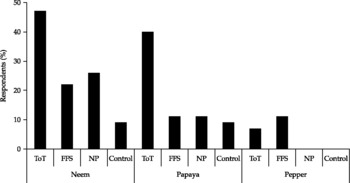
The project emphasized the use of botanical pesticides as an alternative to synthetic pesticides. Forty-seven per cent of the ToT respondents, 26% of the non-participants, 22% of the FFS respondents and 9% of the control respondents said that they used neem (Fig. 5), but during the time of this survey, no vegetable producers were observed preparing botanicals. The reason for not using neem extract was the time-consuming and labour-intensive preparation as one needs large quantities of leaves or fruits. If they could buy neem extract commercially, many may use it because they had experience with it and appreciated that it was not harmful to the environment or to the individuals who applied it.
Use of neem, papaya and pepper as pest control measures. NP, non-participants.

In the project, knowledge about biological control was introduced. B. bassiana was used to control diamondback moth, and the vegetable producers could request it from IITA. Twenty-one per cent of the interviewed vegetable producers cultivated cabbage, and of these, 43% had heard about B. bassiana. All the ToT respondents, but only 14% of the non-participants who produced cabbage, reported that they had heard about B. bassiana. Only 38% of the ToT respondents had requested and got B. bassiana. Many of the vegetable producers were pleased with B. bassiana because it saved them money and labour. As B. bassiana was still undergoing toxicity tests and was not yet registered in Benin, there was confusion among the respondents on the criteria to get B. bassiana. The producers perceived the larvae of the diamondback moth as so dangerous that they felt insecure having to rely on IITA staff to treat their cabbage. There was a great interest among the vegetable producers to use B. bassiana. At the time, B. bassiana was given for free, but if the product is commercialized, the question remaining is whether the price will be competitive with respect to synthetic pesticides so that the producers could afford it. Increasing evidence of resistance in the diamondback moth may force producers to use alternatives or to abandon cabbage as a crop.
Drying the beds to fight field crickets, especially for carrot, was emphasized in the ToT/FFS training, and three ToT respondents, one FFS respondent and one non-participant respondent used the method. Crop rotation is traditional knowledge, and many producers became more aware of its importance because of the ToT/FFS training. All the producers used crop rotation, but while the majority of the ToT respondents used it to combat nematodes and diseases, most of the other respondents used it to prevent soil impoverishment. The crop rotation cycles varied from a few months up to 1 year. Even if some vegetable producers were not able to explain in scientific terms what was happening in their crops, they improved their practices based on experience. All the ToT respondents, 94% of the non-participants, 78% of the FFS respondents and 73% of the control respondents practiced intercropping. The main reasons given for intercropping were economic gains and land shortage. Most of the respondents chose the planting time for economic motives by considering market prices, and plant health issues did not influence their timing for growing the crops.
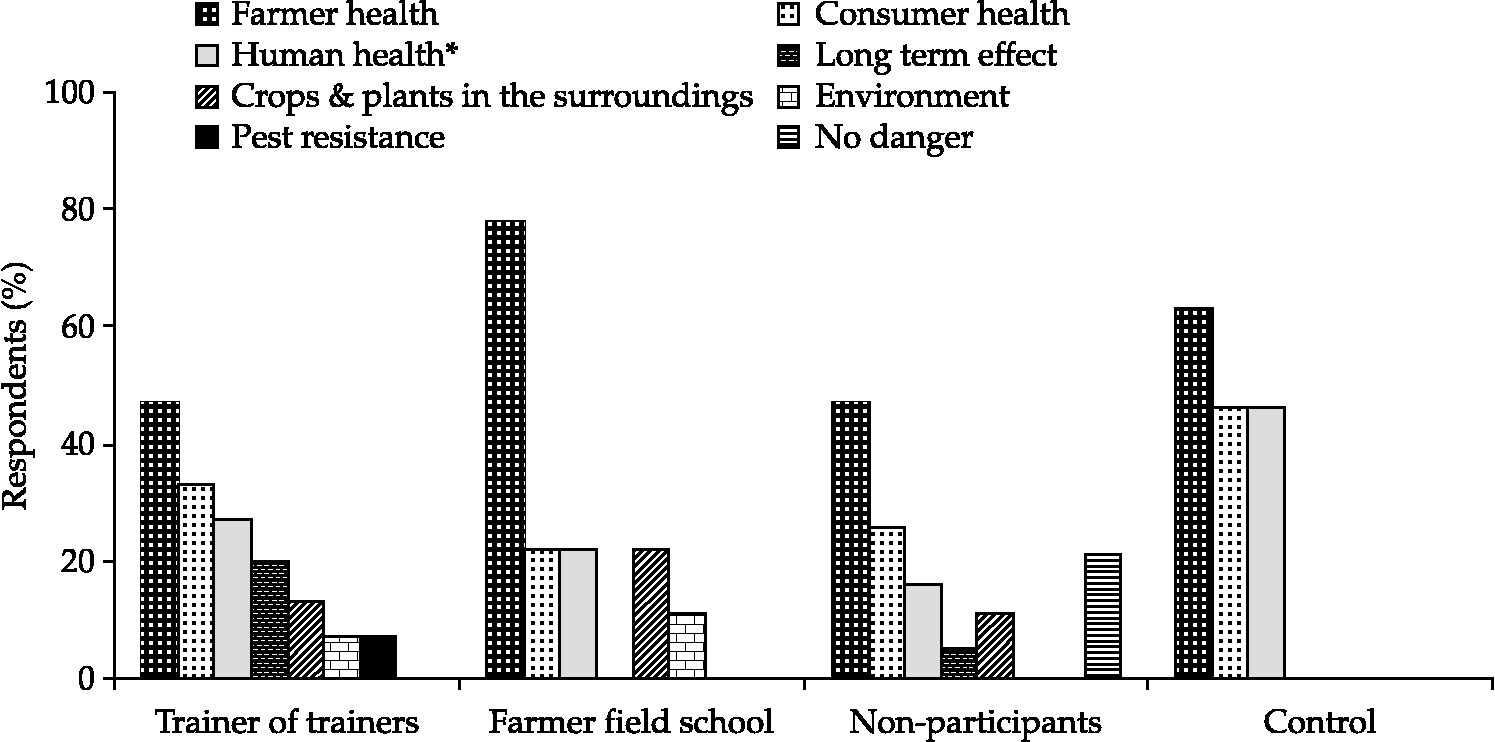
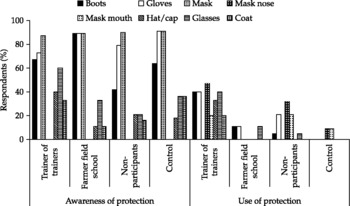
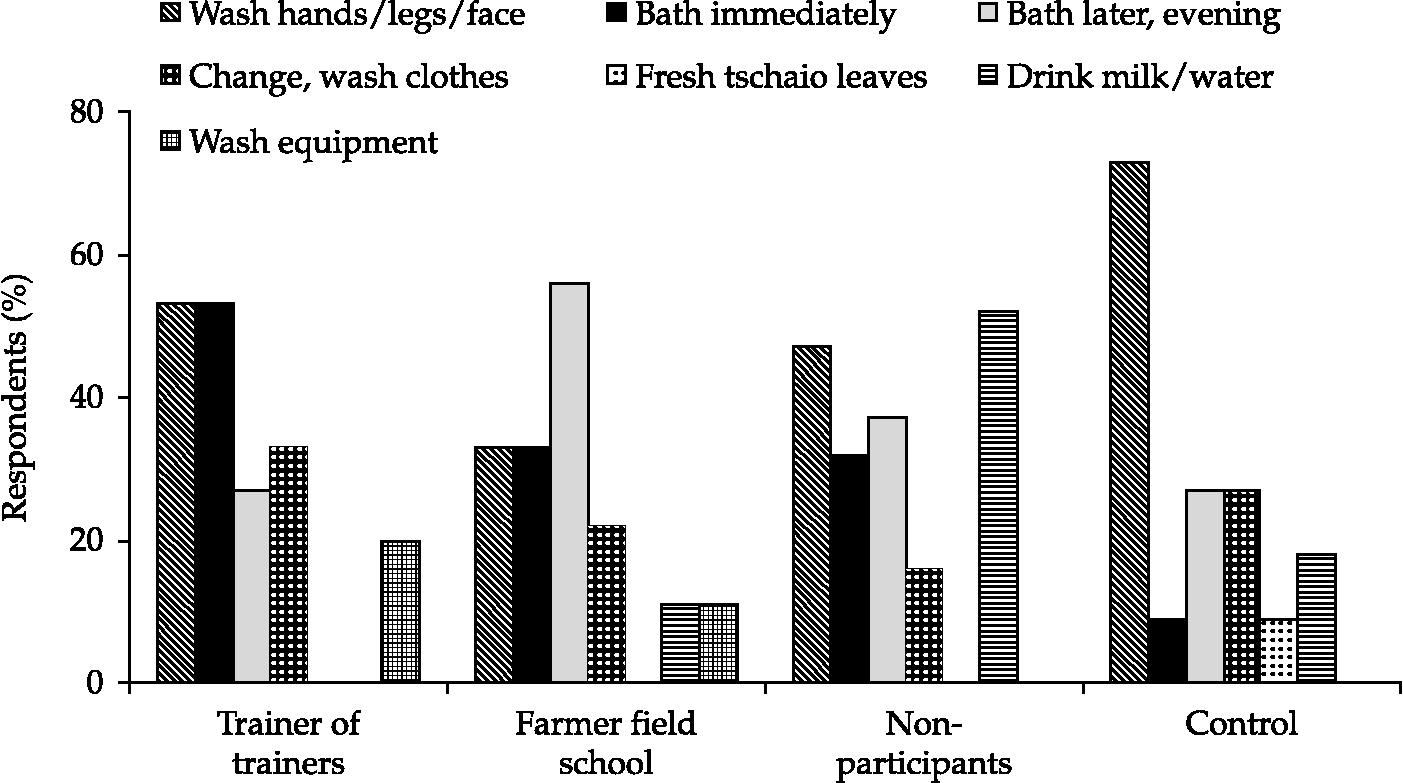
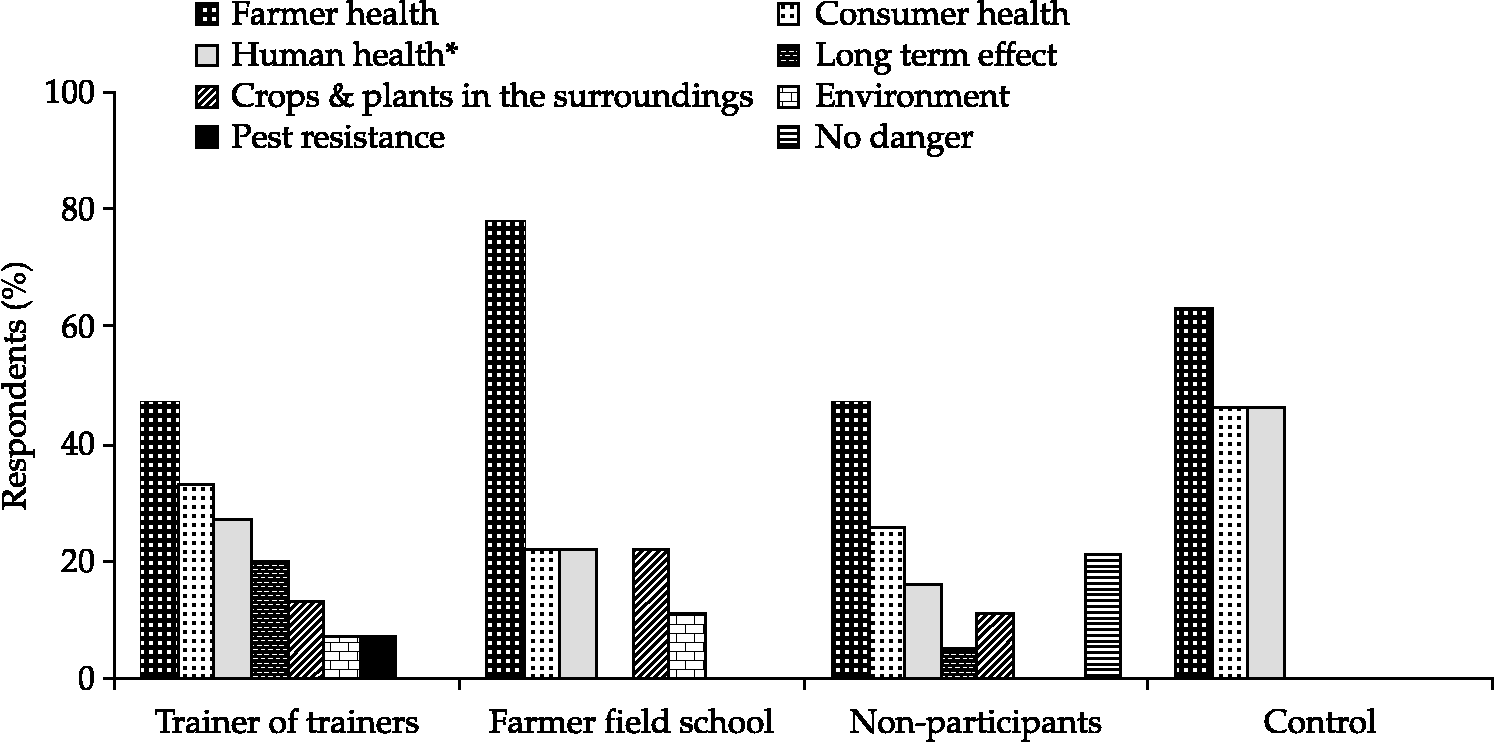
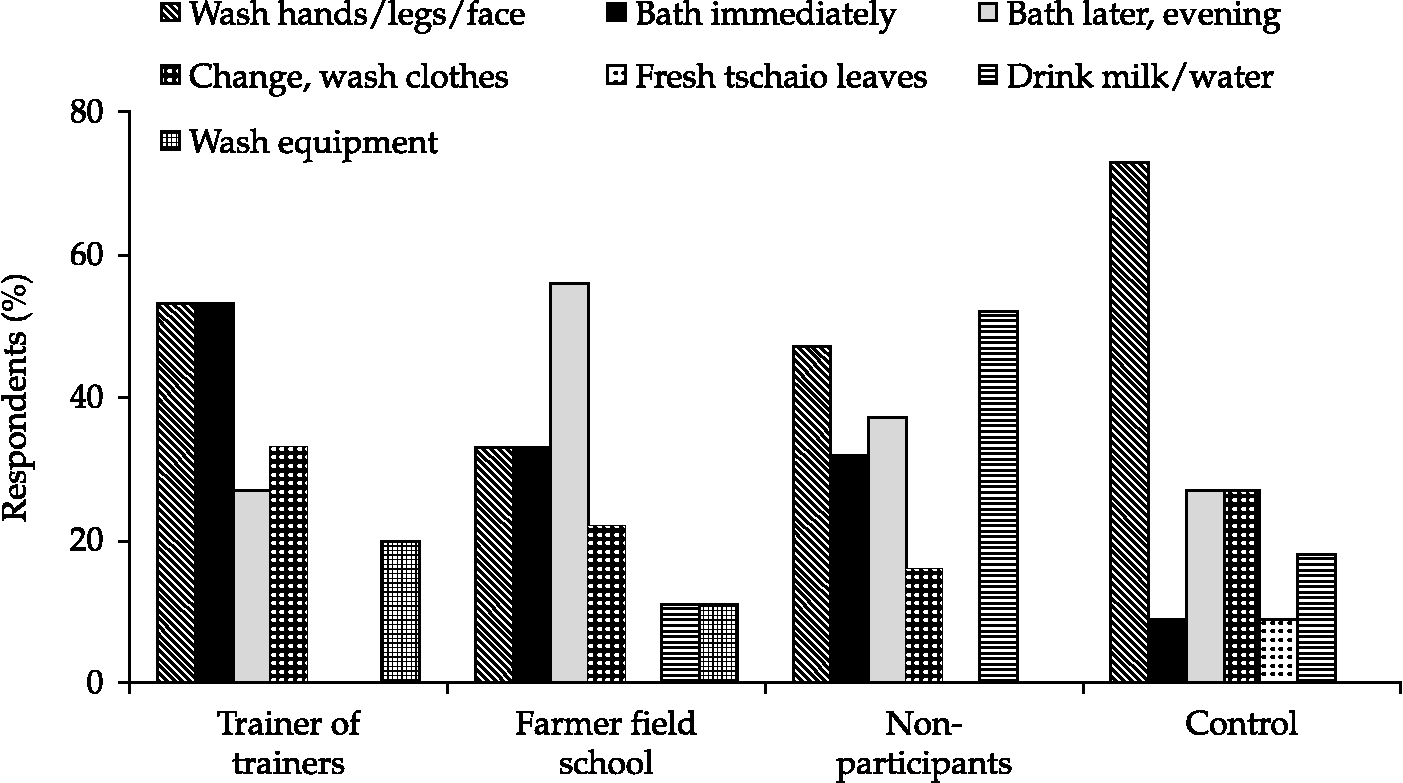
Awareness of the various negative effects of synthetic pesticides was quite high among the respondents (Fig. 6), and the most known effect was farmers' health hazards. An explanation for this is that producers themselves easily perceive these effects. The control group, however, had a more limited view of the negative effects of synthetic pesticides, and only mentioned human, consumer and farmer health, but not environmental and long-term effects. The respondents had an overall high awareness about protection, such as masks, gloves and boots, while spraying synthetic pesticides (Fig. 7), but the proportion of respondents actually using such equipment was low. Among the control respondents, 46% were wearing only shorts and T-shirts while spraying synthetic pesticides. The most used protection devices were mask for the nose and mask for the mouth, which were mainly used by the ToT respondents and non-participants. The only type of mask observed during the survey was a mask covering both the nose and the mouth. The mask was made of a plastic material so it was stiff and did not touch the nose or the mouth when getting wet. The proportion of people using gloves, boots, glasses and coats was largest for the ToT respondents, but virtually none of the respondents could show their protection gear. The most common reason for not using any protection device was expense, and some producers would use it if it were cheaper. Another common reason for not using proper protection in the tropics is the heat. To take a bath was the most common post-spray activity among the producers (Fig. 8), and while most of the ToT respondents took a bath, the control respondents were more likely to only wash their hands, legs and face. Only among the ToT respondents, the proportion of people bathing immediately after pesticide application was larger than the proportion bathing in the evening.
Producers' awareness about negative effects of synthetic pesticides. *‘Human health’ was not specified and may include farmers, workers in the fields, consumers, etc,
Awareness of and use of protection during application of synthetic pesticides

Post-spraying activities
Most of the vegetable producers stored their synthetic pesticides buried in the vegetable field or hid it in the bushes nearby. Only the ToT respondents from ONEPI stored synthetic pesticides in a storage room, which could be locked, because they had a common storage room in the garden. Twenty per cent of the ToT respondents stored the synthetic pesticides at home. They stored it in a separate room that could be locked, mostly because of theft in the gardens. Among the respondents who bought original pesticide packages, all the FFS and control respondents, 62% of the non-participants and 22% of the ToT respondents sometimes stored the synthetic pesticides in empty soft drink bottles. When using pesticide bottles without labels or storing it in soft drink bottles, other people in the household may use the content in the belief that it is something else.
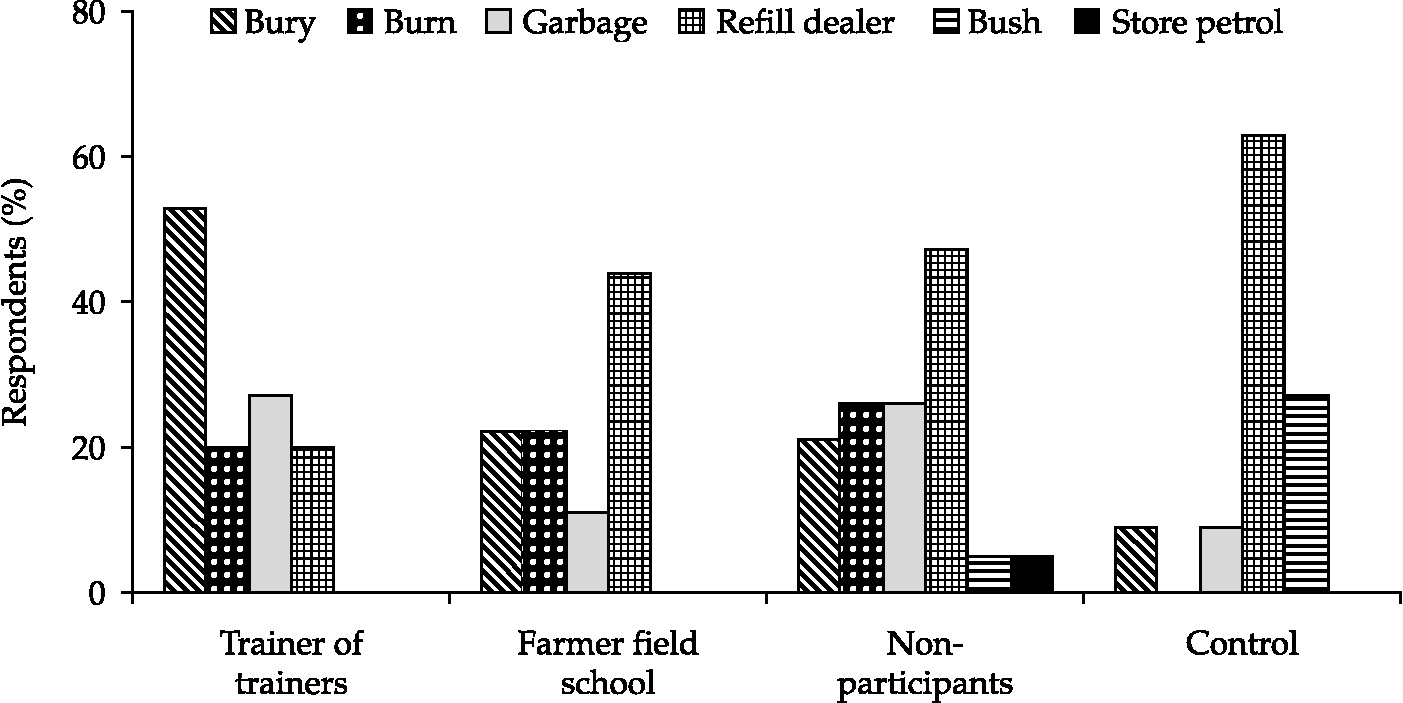
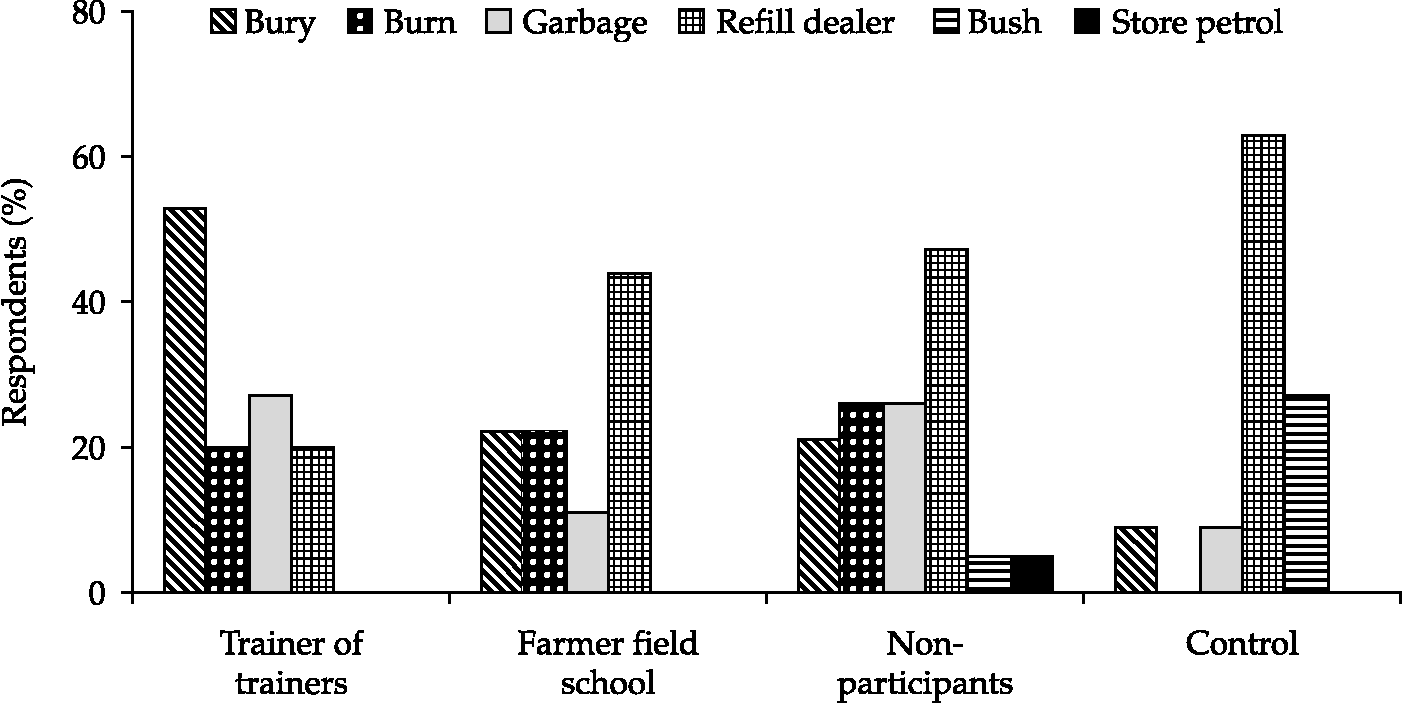
Most of the control (63%), non-participant (47%) and FFS respondents (44%) refilled the empty pesticide bottles from the salesman (Fig. 9), while the majority of the ToT respondents (53%) buried them. Many threw the pesticide cans in the garbage or bushes where pesticide may leach out in the ground or accidents may happen if children find them. When refilling the pesticide bottles, these risks may be reduced, but the bottles may not have the original content and all information about toxicity, doses, precautions and storage will be missing.
Handling of empty pesticide cans
The most common way to apply pesticides was to use a spray sack, which was used by all non-participants, and 93% of the ToT, 89% of the FFS and 64% of the control respondents. The rest of the respondents used a water can, apart from 27% of the control respondents, who mixed the synthetic pesticides with water in a bowl and used a bunch of grass to ‘paint’ the vegetables.
To scale out IPM knowledge and practices, the ToT participants were expected to carry out FFS sessions on all the four vegetables in the project. However, the FFS respondents' general complaints were that (1) the FFS sessions were often not conducted in both seasons and did not include all the four crops in the project and (2) the quality of the training was lower than that of the ToT sessions. The FFS sessions started the same season as the ToT sessions, thus not allowing the ToT respondents time to develop their facilitation skills in IPM before commencing as trainers. Initially, the project only had IPM plots, but had no plots where the farmers' existing practice was demonstrated, which indicated a poor emphasis of the project on the vegetable producers' own experimentation and knowledge-creating processes.
Conclusion
Due to the project, the ToT participants gained knowledge about IPM. This is reflected in their good concepts of beneficial insects, improved knowledge about plant health and pest management tools, improved ability to take management decisions based on pest occurrence in the field and increased experimentation with knowledge gained from the project. Increased knowledge and awareness about IPM may be one of the reasons for the participants' change in attitude towards synthetic pesticides. Some claimed to have adopted biological IPM tools such as botanical (neem extract) and biological (B. bassiana) pesticides. Still, the participants had not changed their practices significantly regarding the use of synthetic pesticides and cocktails, and most of the producers did not apply correct pesticides to the target pests. The FFS participants had gained considerably less knowledge than the ToT participants, which may be due to less intensive FFS sessions led by trainers with less developed facilitating skills.
Experiential learning reflects and allocates meaning to that experience and develops knowledge from it. There were several examples of this issue in the project area, where vegetable producers, who did not know scientific terms such as IPM or nematodes, had nevertheless learned IPM practices based on experience. In the project, however, access to information about beneficial insects was mainly through theory. They did not, therefore, experience what ‘beneficial insect’ meant in practice, and thus they did not transform this information into meaningful knowledge. The practical use of concepts such as ‘IPM’ and ‘agro-ecosystem’ requires an understanding of complex interactions, which takes time to develop. Lack of monitoring of activities in their own fields is one reason why very few participants had a holistic and good understanding of those concepts. While it remains important to bring in scientific information to improve the vegetable producers' understanding, this information should be built on the participants' local knowledge to make sense to them and to be relevant.
The results show that the surveyed participants in the project did not adopt a complete package of IPM tools and concepts, but rather experimented with the new information and thereafter adapted parts of what they learned into their production systems. Mancini (Reference Mancini2006) found a strong correlation between knowledge level and the reduction in pesticide use among Indian farmers attending cotton IPM-FFS. Also, other studies show that farmers with a good understanding of how the field ecosystem works perform better crop management than those who get discrete and simplified instructions on how to manage pests (Mangan and Mangan, Reference Mangan and Mangan1998; Price, Reference Price2001). However, in Benin, even the project participants with a good understanding of beneficial insects used superfluous pesticides, which might kill the beneficial insects. This shows that it requires more than a good understanding to change usual practices. Profitability is found to be the driving force in many of the vegetable producers' practices. There are many factors in the vegetable producers' environment hindering them in using IPM and using synthetic pesticides more safely. These include a lack of ecological knowledge, lack of access to product information, little availability of the right products and their relatively high cost. Many participants, however, wished to produce good quality vegetables with safer use of synthetic pesticides. The limited access to land and the wish to make higher profits, however, were strong driving forces and led some vegetable producers to unsafe practices, such as not respecting the harvest interval and using forbidden synthetic pesticides.
Also, normative considerations influence the vegetable producers' practices. As the laws on pesticide use are not enforced in Benin, these have limited impact on people's behaviour, but as seen from the survey, the awareness rising from various NGO and research institutions has changed the vegetable producers' attitudes towards respecting the pre-harvest interval. Even more awareness rising is needed to change the producers' attitude towards synthetic pesticides and make dangerous practices unacceptable. Maybe even the analysis of pesticide residues of products from individual beds to personalize the information could be an input that is an asset for producers to fully understand the problem of residues in the products.
The results indicate possible trade-offs between health and economic effects, with the latter weighing more heavily. The awareness of pesticide hazards and proper protection gear was generally high, and many producers had felt the negative effects of synthetic pesticides on their health. Still, most producers did not use protection gear due to expense. The project did not have any impact on the safety in storage and handling of pesticides as the practices were rather influenced by what was more convenient for the vegetable producers.
This study shows that there is a need to focus more on the vegetable producers' own knowledge creation by emphasizing on experiential learning, as well as to enable the producers to realize their role as potential knowledge generators (Simpson and Owens, Reference Simpson and Owens2002). This is in line with other studies emphasizing the importance of establishing a dynamic process where the participants take control over the experimentation (Braun et al., Reference Braun, Herrera, Rosset, Teurings and Vedeld2004) and on developing a ‘learning style’ (Pretty, Reference Pretty1995) that enables ‘exploration, evaluation and adaptation of technological alternatives’ (Lee, 2005: p. Reference Lee1332). Post-IPM-FFS activities would probably allow the participants in the Cotonou vegetable IPM-FFS to develop their ideas and concepts about IPM and agro-ecosystems as they practice these in their fields. There were many competent and knowledgeable vegetable producers in the studied areas who were concerned about the dangerous use of pesticides. In a follow-up of the IPM-FFS activities, these people could be the driving forces of promoting and implementing IPM in their communities.
The general results from this study in Benin are in line with other reports (Maumbe et al., Reference Maumbe, Bernstein, Northon, Maredia, Dakouo and Mota-Sanchez2003; Mancini, Reference Mancini2006), concluding that for IPM to succeed as a proper and reliable plant protection strategy, not only is there a need to consider the educational component involving individual farmers or groups of farmers, but it is also necessary for all the stakeholders involved (farmers, extension, scientists, policy makers and NGOs) to understand the complex nature of IPM. In addition to the educational component, all other factors, such as the need for group versus individual action, farmer's indigenous knowledge, farmer's resource endowments, and last but not least the macroeconomic determinants, do play a significant role in establishing whether IPM can succeed or not.
Acknowledgements
The authors thank the vegetable producers in and around Cotonou, Benin, especially Edgard Deguenon, Albert Hagnilo and Amoussou Benoît who made the survey possible. The authors also thank the staff at IITA-Benin, especially Braima James, Ignace Godonou, Cyprien Atcha-Ahowe, Brice Gbaguidi, Sounkoura Adetonah and Razack Adeoti; Soniia David at IITA-Ghana and Nicoline de Hahn; friends in the MNRSA programme and the librarians at UMB; and Yacouba Bouraima, Benjamin Fayomi, Simplice Vodouhe, Joseph Gabin Dégbey and Sikirou Rachidatou for interesting and informative discussions.