


Introduction
People diagnosed with schizophrenia experience disability in their daily lives that far exceed mental functions and refer to many activities and participation domains as well as environmental factors. Consequently, interventions that support the real-world functioning of people with schizophrenia need to be developed (Nowak et al., Reference Nowak, Sabariego, Świtaj and Anczewska2016).
The recovery approach offers a valuable basis for developing interventions. It recognizes the needs of people experiencing mental health problems by going beyond symptomatic reduction and encouraging self-determination and engagement in life pursuits. Along with its growing importance, cultural differences in the values fundamental to the concept of recovery should be considered since the primary aim of recovery-oriented care is to provide people with serious mental illness with a range of effective and culturally relevant interventions (Nowak et al., Reference Nowak, Sabariego, Świtaj and Anczewska2016).
Cognitive behavioural therapy (CBT) is a treatment of choice for psychosis, but few recovery-focused, cognitive behavioural interventions are available for schizophrenia as shown in a study by Nowak et al. (Reference Nowak, Waszkiewicz, Świtaj, Sokół-Szawłowska and Anczewska2017). An evaluation of whether a CBT intervention targeting personal recovery can also support people diagnosed with schizophrenia in overcoming disabilities experienced in daily life is required as this could provide a more comprehensive strategy for the recovery of people with schizophrenia.
In response to those needs, a recovery-oriented workshop combining the existing evidence-based approaches, such as CBT, with the desired aspects of recovery identified by Polish service users diagnosed with schizophrenia was developed. However, the implications of the workshop's implementation in clinical practice are universal as the intervention targeted a wide range of recovery domains, referring not only to the subjective or existential aspects but also to the clinical, physical, or social domains as described in the Nowak et al. (Reference Nowak, Waszkiewicz, Świtaj, Sokół-Szawłowska and Anczewska2017) study.
The objective of this pilot trial is to evaluate the workshop feasibility, acceptability and potential effectiveness over time in terms of personal recovery and psychosocial functioning as primary outcomes, and psychopathology and health-related behaviours as secondary outcomes. It also assesses whether personal recovery predicts psychosocial functioning of service users with schizophrenia.
Method
Participants
Participants were recruited in clinics of the Institute of Psychiatry and Neurology in Warsaw (Poland). The programme enrolled 46 individuals diagnosed with schizophrenia (ICD-10) (age range 19–61 years, mean = 32.89, SD = 9.00). Four groups were carried out between November 2015 and May 2016 (two groups of 10, and two groups of 13 participants). Ethical approval for the study was granted by the Bioethics Committee at the Institute of Psychiatry and Neurology in Warsaw. Each participant provided written, informed consent. Demographic characteristics of participants are given in Table S2 in the supplementary material.
Measures
Feasibility and acceptability
Feasibility and acceptability were assessed by registering attendance at the workshop, completion rates, feedback at the conclusion of each module, and standardized satisfaction ratings collected using the Client Satisfaction Questionnaire (CSQ-8) at the end of the workshop (Larsen et al., Reference Larsen, Attkisson, Hargreaves and Nguyen1979).
Primary outcomes
Recovery and recovery domains were measured with the short version of the Recovery Assessment Scale-Revised (RAS-R; Corrigan et al., Reference Corrigan, Salzer, Ralph, Sangster and Keck2004). Psychosocial functioning was operationalized with the PARADISE 24 metric, named psychosocial difficulties (PSDs) in this scale (Cieza et al., Reference Cieza, Sabariego, Anczewska, Ballert, Bickenbach and Cabello2015).
Secondary outcomes
The severity of psychopathological symptoms was measured with the Brief Psychiatric Rating Scale (BPRS; Overall and Gorham, Reference Overall and Gorham1988), whereas health-related behaviours were operationalized with the total score on the Inventory of Health Behaviors (Inwentarz Zachowań Zdrowotnych; Juczyński, Reference Juczyński and Juczyński2012).
Intervention
Development of the recovery-oriented cognitive behavioural workshop
Prior to developing the workshop, a systematic literature review and a focus group study were performed. Results of the systematic review by Nowak et al. (Reference Nowak, Sabariego, Świtaj and Anczewska2016) indicated a need to develop more recovery-oriented CBT interventions, which can foster personal recovery and address the disabilities of people diagnosed with schizophrenia. To make the workshop meaningful for Polish service users, themes derived from the focus group study carried out by Nowak et al. (Reference Nowak, Waszkiewicz, Świtaj, Sokół-Szawłowska and Anczewska2017) guided the development of the workshop's content. Seven modules were formulated and manualized, applying a wide variety of traditional and ‘third wave’ CBT techniques. Feedback on the workshop's content and structure was sought from experts in the recovery approach and in CBT therapy.
Content of the recovery-oriented cognitive behavioural workshop
As psychological recovery was the most widely identified theme in the focus group study, module 1 focused on the concept of recovery with exercises eliciting personal meanings of recovery and the process of recovery. Module 2 considered strengthening a positive sense of self by expanding participants’ knowledge regarding identity change due to appearance of illness and building on personal resources and capacities. Module 3 revolved around establishing personally meaningful recovery goals that were linked to personal values as well as identification of difficulties preventing progress towards the valued direction and fostering motivation to overcome them. The content of further modules referred to more objective recovery-related domains that emerged in the focus group, with modules 4 and 5 fostering the self-management of mental and physical health, and modules 6 and 7 enhancing interpersonal relationships. Each module ended with planning for small, achievable goals. Two weeks after the workshop ended, an optional online booster session was offered to participants. Content of the workshop is given in Table S1 in the supplementary material.
Each module was delivered as a 2 h session with a 15 minute coffee break. Group sessions were held twice weekly, and were led by the first author and a co-educator who had lived experience with mental illness and was recruited from the Foundation efkropka, an organization that aims at changing the stigma and self-stigma of mental illness. A recovery workbook was developed and distributed to participants; sessions were guided by PowerPoint presentations.
Data analyses
All data were checked for consistency, followed by descriptive statistics to characterize the study population and describe recovery, psychosocial functioning, psychopathology, and health-related behaviours at each assessment point. Multi-level models for change were run to determine the impact of the workshop on the variability and change over time of the primary outcomes (i.e. recovery and psychosocial functioning) and secondary outcomes (i.e. psychopathology and health-related behaviours). In addition, it was assessed whether recovery predicted psychosocial functioning. Analyses were performed on participants who answered the questionnaires during at least one assessment with the MIXED procedure of the Statistical Package for the Social Sciences (SPSS) version 23.
Results
Feasibility and acceptability
Considering the 46 individuals who consented to participate in the study, 63, 19.6, 6.5, 2.2, 6.5 and 2.2% attended seven, six, five, four, two and one module, respectively. Drop-out after the first or second module occurred due to university exams (n = 1), unexpected early discharge (n = 2), resigning after the first module (n = 1), or unknown reasons (n = 1). Thirty-seven participants were assessed at post-intervention (80.4%) and 20 at follow-up a month later (43.5%). The total score on CSQ-8 was 26 (SD 3.54), thereby indicating that participants were satisfied with the workshop. Furthermore, mean ratings were greater than 3 for each item on that scale. Participants’ common feedback revealed that the workshop was thought to be positive and interesting, with group and role play exercises frequently perceived as being the most helpful.
Primary outcomes
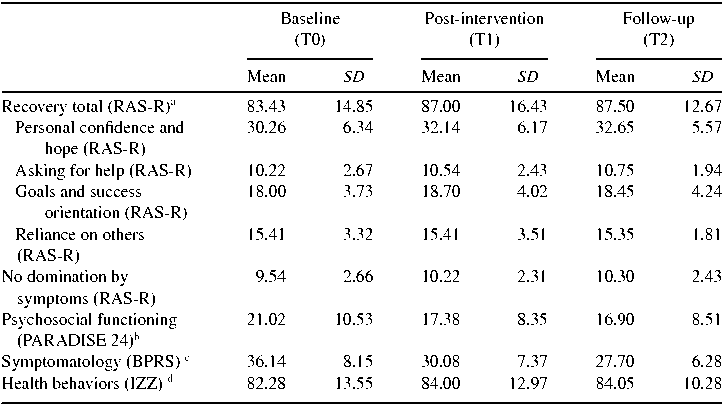
Table 1 shows mean scores and SD for each dependent variable.
Mean scores and SD at each assessment point

RAS-R, Recovery Assessment Scale-Revised; PARADISE 24, Psychosocial fActors Relevant to brAin DISorders in Europe; BPRS, Brief Psychiatric Rating Scale; IZZ, Inventory of Health Behavior. aPossible scores range from 5 to 120, with higher values indicating better recovery. bPossible raw scores range from 0 to 48, with higher values indicating more extreme PSDs. cPossible scores range from 18 to 126 points, with higher values indicating more severe symptoms. dPossible raw scores range from 24 to 120 points, with higher values indicating greater intensity of health-related behaviours.
For recovery total, time was not a significant predictor in the individual growth model. However, there was a significant improvement over time in terms of RAS-R's personal confidence and hope [F (1,65.54) = 4.075, p < .048] and no domination by symptoms [F (1,60.19) = 4.027, p < .049]. A significant change over time also occurred in terms of psychosocial difficulties [F (1,35.89) = 7.616, p < .009]. Increased personal recovery predicted a decrease in psychosocial difficulties [F (1,74.27) = 9.246, p < .003].
Secondary outcomes
A significant decrease in symptomatology emerged over time [F (1,57.60) = 18.68, p < .001], although time was not a significant predictor in the individual growth model for health-related behaviours.
Discussion
A culturally adapted, recovery-oriented, cognitive behavioural workshop was developed for people diagnosed with schizophrenia that aimed to facilitate personal recovery and process of overcoming disabilities experienced in daily life. The workshop feasibility, acceptability and potential effectiveness were evaluated. It was also assessed whether recovery predicted psychosocial functioning.
Participants were satisfied with the workshop, as supported by good retention rates in workshop attendance and participation in the post-test assessments. A drop in attendance at follow-up a month after the intervention occurred, which stemmed mostly from geographical distance of residence following discharge from the hospital, as mental health services provision is not regionalized in Poland. That factor needs to be accommodated in the design of future studies.
Individual growth models indicated no significant change over time in total recovery. However, participants improved over time regarding personal confidence and hope, and feeling less dominated by symptoms. This marks an encouraging finding as hope is central to recovery; people need hope for themselves and their futures to gather the resources necessary for overcoming the challenges of psychiatric disabilities (Onken et al., Reference Onken, Craig, Ridgway, Ralph and Cook2007). Nevertheless, other recovery-related domains such as goals and success orientation, reliance on others, and asking for help did not improve over time, which could suggest that goals were not fully self-determined and that improvements in relationships might take longer to realize.
Participants improved over time in terms of psychosocial functioning, which suggests that personal recovery might be a useful approach to not only embracing personal recovery, but also supporting real-world functioning of people diagnosed with schizophrenia. Furthermore, secondary outcome analyses showed that participants improved over time regarding the severity of psychopathological symptoms. However, future studies should evaluate whether that change occurred due to improved illness self-management.
Results regarding workshop effectiveness are consistent with those of other recovery-focused CBT interventions, which have shown improvements in functioning and psychopathology (Grant et al., Reference Grant, Huh, Perivoliotis, Stolar and Beck2012; Johns et al., Reference Johns, Oliver, Khondoker, Byrne, Jolley and Wykes2016). However, these results also build on current literature by clarifying the direction of causality between personal and functional recovery, as it has been reported that such a relationship was unclear (Tse et al., Reference Tse, Davidson, Chung, Ng and Yu2014).
A limitation of the study was its uncontrolled design, meaning that conclusions about observed changes might not be attributable to the workshop. A longer follow-up might have also showed different outcome results over time. However, as a pilot study, its initial results indicate the value of investing resources in a larger evaluation. Self-reports used might have been sensitive to social desirability, recall bias and demand effects, but as recovery is a rather subjective phenomenon, the choice to use them was deliberate.
Overall, the workshop was positively received and offered potential benefits for incrementing participants’ confidence and hope, reducing feelings of being dominated by symptoms, improving psychosocial functioning, and reducing psychopathology. Furthermore, personal recovery predicted decreased psychosocial difficulties. Therefore, the workshop shows potential in terms of both improving personal recovery as well as real-life functioning of people diagnosed with schizophrenia. Running of a pilot randomized controlled trial employing a longer follow-up is recommended.
Acknowledgements:
The authors wish to thank all participants in the study, co-educators, colleagues who helped with recruitment, and especially Joanna Krzyżanowska-Zbucka, MD for her engagement and support with the running of the workshop. We also would like to thank Professor Larry Davidson, Dr Joseph Olivier and Dr Agnieszka Popiel for their insightful feedback on the workshop manual.
Conflicts of interest: The authors report no conflicts of interest. The authors alone are responsible for the content and writing of this article.
Ethical statements: The study was approved by the Bioethics Committee at the Institute of Psychiatry and Neurology in Warsaw (Poland) and was conducted in compliance with the Declaration of Helsinki. In addition, the authors abided by the Ethical Principles of Psychologists and Code of Conduct as set out by the American Psychological Association (APA).
Funding: The research leading to these results received funding from the People Programme (Marie Curie Actions) of the European Union's Seventh Framework Programme FP7/2007–2013 under REA grant agreement number 316795.
Supplementary material
To view supplementary material for this article, please visit https://doi.org/10.1017/S1352465818000607




Comments
No Comments have been published for this article.