















1 Introduction
This paper is devoted to the treatment of Lie-type derivations of Banach-spacenest algebras. Let
 $\mathcal {R}$
be a commutative ring with identity and
 $\mathcal {A}$
be an associative
 $\mathcal {R}$
-algebra. Let
 $\mathcal {M}$
be an
 $(\mathcal {A}, \mathcal {A})$
-bimodule and
 $\mathcal {Z}_{\mathcal {A}}(\mathcal {M})$
be the center of
 $\mathcal {M}$
relative to
 $\mathcal {A}$
, where
 $\mathcal {Z}_{\mathcal {A}}(\mathcal {M}):=\{m\in \mathcal {M}: a\cdot m=m\cdot a\ \ \text {for all}\ \ a\in \mathcal {A}\}$
. We write
 $\mathcal {Z(A)}$
to denote
 $\mathcal {Z}_{\mathcal {A}}(\mathcal {A})$
. An
 $\mathcal {R}$
-linear mapping
 $d: \mathcal {A} \longrightarrow \mathcal {M}$
is called an (associative) derivation if
 $d(xy)=d(x)y+x d(y)$
holds true for all
 $x, y\in \mathcal {A}$
. Let us denote the Lie (respectively, Jordan) product of arbitrary elements
 $x, y\in \mathcal {A}$
by
 $[x, y]=xy-yx$
(respectively
 $x\circ y=xy+yx$
). A Lie derivation (respectively, Lie triple derivation) is a linear mapping
 $L: \mathcal {A} \longrightarrow \mathcal {M}$
that satisfies the derivation rule according to the Lie product, that is,
 $$ \begin{align*}\begin{aligned} L([x, y])&=[L(x), y]+[x, L(y)] \\ (\text{respectively}, \ L([[x, y],z])&=[[L(x), y],z]+[[x, L(y)],z]+[[x,y],L(z)]) \end{aligned} \end{align*} $$
for all
 $x,y,z\in \mathcal {A}$
. Recall that an
 $\mathcal {R}$
-linear mapping
 $\delta : \mathcal {A} \longrightarrow \mathcal {M}$
is a Jordan derivation if
 $\delta (x\circ y)=\delta (x)\circ y+x\circ \delta (y)$
holds true for all
 $x, y\in \mathcal {A}$
. Clearly, every derivation is a Lie derivation as well as a Jordan derivation, and every Lie derivation is a Lie triple derivation. However, the converse statements are not true in general. It should be remarked that every Jordan derivation is also a Lie triple derivation, because
 $[[x, y], z]=x\circ (y\circ z)-y\circ (x\circ z)$
for all
 $x, y, z\in \mathcal {A}$
. Consequently, the class of Lie triple derivations includes both classes of Jordan derivations and Lie derivations.
Prompted by the definitions of Lie derivations and Lie triple derivations, one naturally expects to extend them in a more general way. Suppose that
 $n\geq 2$
is a fixed positive integer. Define a sequence of polynomials
 $$ \begin{align*}\begin{aligned} p_1(x_1)&=x_1,\\ p_2(x_1,x_2)&=[p_1(x_1),x_2]=[x_1,x_2],\\ p_3(x_1,x_2,x_3)&=[p_2(x_1,x_2),x_3]=[[x_1,x_2],x_3],\\ p_4(x_1,x_2,x_3,x_4)&=[p_3(x_1,x_2,x_3),x_4]=[[[x_1,x_2],x_3],x_4],\\ &\ldots\ldots,\\ p_n(x_1,x_2,\ldots,x_n)&=[p_{n-1}(x_1,x_2,\ldots,x_{n-1}),x_n]\\ &=\underbrace{[[\ldots [[}_{n-1}x_1, x_2], x_3], \ldots, x_{n-1}], x_n]. \end{aligned} \end{align*} $$
The polynomial
 $p_n(x_1,x_2,\ldots ,x_n)$
is said to be an
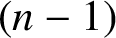
 $(n-1)\,$
th commutator (
 $n\geq 2$
). A Lie n-derivation is an
 $\mathcal {R}$
-linear mapping
 $L: \mathcal {A} \longrightarrow \mathcal {M}$
that satisfies the rule
 $$ \begin{align*}L(p_n(x_1,x_2,\ldots,x_n))=\sum_{k=1}^n p_n(x_1,\ldots,x_{k-1}, L(x_k),x_{k+1},\ldots,x_n) \end{align*} $$
for all
 $x_1,x_2,\ldots ,x_n\in \mathcal {A}$
. Lie n-derivations were introduced by Abdullaev [Reference Abdullaev1], where the form of Lie n-derivations of a certain von Neumann algebra (or of its skew-adjoint part) is described. According to the definition, each Lie derivation is a Lie
 $2$
-derivation and each Lie triple derivation is a Lie
 $3$
-derivation. Fošner et al. [Reference Fošner, Wei and Xiao11] showed that every Lie n-derivation from
 $\mathcal {A}$
into
 $\mathcal {M}$
is a Lie
 $(n+k(n-1))$
-derivation for each
 $k\in \Bbb {N}_0$
. Lie
 $2$
-derivations, Lie
 $3$
-derivations, and Lie n-derivations are collectively referred to as Lie-type derivations. Moreover, if
 $D\colon \mathcal {A}\longrightarrow \mathcal {M}$
is an associative derivation and
 $H\colon \mathcal {A}\longrightarrow \mathcal {Z}_{\mathcal {A}}(\mathcal {M})$
is a linear mapping vanishing on each
 $(n-1)\,$
th commutator
 $p_n(A_1, A_2, \ldots , A_n)$
for all
 $A_1, A_2, \ldots , A_n\in \mathcal {A}$
, then the mapping
 $L=D+H$
is a Lie-type derivation that we say is of standard form. Lie-type derivations and their standard decomposition problems in different backgrounds have been extensively studied, see [Reference Forrest and Marcoux10, Reference Fošner, Wei and Xiao11, Reference Lu19, Reference Mathieu and Villena21, Reference Qi25, Reference Qi and Hou27, Reference Sun and Ma32].
Nest algebras of operators on Hilbert space were introduced in 1965–1966 by Ringrose [Reference Ringrose29, Reference Ringrose30], generalizing the set of all
 $n\times n$
matrices to infinite dimension. There has been much interest in studying structure theory and various linear mappings of (Hilbert-) Banach-space nest algebras, culminating in the elegant monograph by Davidson [Reference Davidson7]. It was Marcoux and Sourour who initiated the study of Lie-type mappings on nest algebras in [Reference Marcoux and Sourour20]. They extended the analysis of Lie automorphisms of nonselfadjoint operator algebras to the infinite dimensional setting by characterizing Lie isomorphisms of nest algebras. Let
 $\mathcal {H}$
be a complex separable Hilbert space. Let
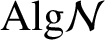
 $\text {Alg}\mathcal {N}$
and
 $\text {Alg}\mathcal {M}$
be the nest algebras associated with nests
 $\mathcal {N}$
and
 $\mathcal {M}$
, respectively (defined after Lemma 2.2 below). A linear mapping
 $\Phi \colon \text {Alg}\mathcal {N}\longrightarrow \text {Alg}\mathcal {M}$
is a Lie isomorphism if and only if
 $\Phi (A)=\Psi (A)+h(A)$
for all
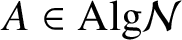
 $A\in \text {Alg}\mathcal {N}$
, where
 $\Psi $
is an isomorphism or the negative of an anti-isomorphism and h maps
 $\text {Alg}\mathcal {N}$
into the center of
 $\text {Alg}\mathcal {M}$
vanishing on all commutators. In the spirit of Marcoux and Sourour’s work, Wang and Lu [Reference Wang and Lu33] and Qi et al. [Reference Qi, Hou and Deng28] independently obtained similar results for Banach-space nest algebras. In another direction, Christensen [Reference Christensen6] proved that every derivation on a nest algebra is continuous and implemented. Spivack [Reference Spivack31] extended the notion of nest algebras to sets of operators on Banach spaces and proved that every continuous derivation on such a nest algebra is implemented by a bounded operator. Lu [Reference Lu19] and Zhang et al. [Reference Zhang, Wu and Cao37] independently investigated Lie triple derivations of Hilbert-space nest algebras and observed that every Lie triple derivation has the standard form. Sun and Ma [Reference Sun and Ma32] generalized this result to Banach-space nest algebras using a series of complicated computations. Donsig et al. [Reference Donsig, Forrest and Marcoux8] studied derivations of seminest algebras and established a close tie between derivations and cohomology theory of seminest algebras.
In this paper, we characterize all Lie-type derivations of Banach-space nest algebras. It turns out that every Lie-type derivation of Banach-space nest algebras is of standard form. It seems to us that this is the ultimate version of this line of characterization theorems in the nest algebra setting. Our main Theorem 3.1 is not only a generalization of the aforementioned results, but also our approach is quite different from that of existing works. For instance, Sun and Ma [Reference Sun and Ma32] derived their results by a computational process. Our approach is more conceptual. This can be seen by the combinatorial applications of two crucial tools—rank-one operators and the Hahn–Banach theorem.
The framework of this paper is as follows. Section 2 states some basic and necessary facts about nest algebras. The key question of the current work is to describe the decomposition forms of Lie-type derivations on nest algebras, which takes place in Section 3. Its proof is realized by a systematic analysis for several different cases. In Section 4, we propose some potential topics for future research.
2 Preliminaries
Let
 $\mathcal {X, Y}$
be complex Banach spaces. Let us denote by
 $\mathcal {B(X,Y)}$
and
 $\text {Hom}(\mathcal {X},\mathcal {Y})$
the Banach space of all bounded linear operators from
 $\mathcal {X}$
to
 $\mathcal {Y}$
and the linear space of all linear operators from
 $\mathcal {X}$
to
 $\mathcal {Y}$
, respectively. We write
 $\mathcal {B(X)}:=\mathcal {B(X,X)}$
for the algebra of all bounded linear operators from
 $\mathcal {X}$
to itself;
 $\mathcal {B(X)}$
has an identity, namely the identity operator I. The topological dual space
 $\mathcal {X}^*$
of
 $\mathcal {X}$
is defined to be
 $\mathcal {X}^*:=\mathcal {B}(\mathcal {X},\mathbb {C})$
, that is, the Banach space of all bounded linear functionals on
 $\mathcal {X}$
. For arbitrary elements
 $x\in \mathcal {X}$
and
 $f\in \mathcal {X}^*$
, one can define a rank-one operator
 $x\otimes f$
by
 $(x\otimes f)(y)=f(y)x\; (\text {for all } y\in \mathcal {X})$
. Here,
 $x\otimes f$
is an element of
 $\mathcal {B(X)}$
and has the property
 $\|x\otimes f\|=\|x\|\,\|f\|$
. For any
 $T\in \mathcal {B(X,Y)}$
, its adjoint operator
 $T^*$
is defined by
 $T^*f(x)=f(Tx)\; (\text {for all } f\in Y^*, x\in \mathcal {X})$
. Then
 $*\colon \mathcal {B(X,Y)}\to \mathcal {B}(\mathcal {Y}^*, \mathcal {X}^*)$
is an isometric embedding. For an arbitrary subset
 $\mathcal {N}\subseteq \mathcal {X}$
, we denote by
 $\mathcal {N}^\bot :=\{f\in \mathcal {X}^*\mid f(x)=0,\text { for all } x\in \mathcal {N}\}$
the annihilator of
 $\mathcal {N}$
. For a subspace
 $\mathcal {V}\subseteq \mathcal {X}$
, the codimension
 $\text {codim}\, \mathcal {V}$
of
 $\mathcal {V}$
in
 $\mathcal {X}$
is defined as the dimension
 $\dim \mathcal {X/V}$
of the quotient space
 $\mathcal {X/V}$
. Let us demonstrate two elementary results concerning dimension and codimension.
Lemma 2.1. Let
 $\mathcal {X}$
be a normed space and
 $\mathcal {V}$
be a closed subspace of
 $\mathcal {X}$
. If
 $\text {codim}\, {\mathcal {V}>1}$
, then for each
 $x\in \mathcal {X}$
there exists
 $f\in \mathcal {X}^*\setminus \{0\}$
such that
 $\mathcal {V}+\text {span}\,\{x\}\subseteq \ker f$
.
Proof. For an arbitrary
 $x\in \mathcal {X}$
, set
 $\mathcal {W}=\mathcal {V}+\text {span}\,\{x\}$
. Then
 $\mathcal {W}$
is closed, by the closedness of
 $\mathcal {V}$
. In addition,
 $\text {codim}\, \mathcal {V}>1$
implies that
 $\text {codim}\, \mathcal {W}\geq 1$
, namely
 $\dim \mathcal {X/W}\geq 1$
. By the Hahn–Banach theorem, we know that there is
 $\widetilde f\in (\mathcal {X/W})^*\setminus \{0\}$
. Since
 $\mathcal {W}$
is closed, the quotient mapping
 $\theta \colon \mathcal {X}\longrightarrow \mathcal {X/W}, x\longmapsto x+\mathcal {W}$
is continuous by [Reference Kadison and Ringrose14, Theorem 1.5.8]. Let us write
 $f=\widetilde f\circ \theta $
. Then
 $f\in \mathcal {W}^\bot $
and f is nonvanishing.
Lemma 2.2. Let
 $\mathcal {X}$
be a linear space over the complex field
 $\mathbb {C}$
. Suppose that
 $\mathcal {V}$
and
 $\mathcal {W}$
are subspaces of
 $\mathcal {X}$
with
 $\text {codim}\, \mathcal {V}=\text {codim}\, \mathcal {W}<\infty $
. If
 $\mathcal {V}\subseteq \mathcal {W}$
, then
 $\mathcal {V}=\mathcal {W}$
.
Proof. In view of the fact
 $\mathcal {X/W}\cong (\mathcal {X/V})/(\mathcal {W/V})$
,
 $$ \begin{align*} \infty>\dim \mathcal{W/V}=\text{codim}\, \mathcal{V}-\text{codim}\, \mathcal{W}=0, \end{align*} $$
which entails
 $\mathcal {W}=\mathcal {V}$
.
Let
 $\mathcal {X}$
be a complex Banach space. Let
 $\mathit {\Lambda }$
be an index set. A nest is a family
 $\mathcal {N}=\{N_\lambda \}_{\lambda \in \mathit {\Lambda }}$
of closed subspaces of
 $\mathcal {X}$
satisfying the following conditions:
-
(1)
 $\{0\}, \mathcal {X}\in \mathcal {N}$
;
-
(2)
$(\mathcal {N}, \subseteq )$
is a totally ordered set; -
(3) if
$\{N_\lambda \}_{\lambda \in \mathit {\Lambda }}\subseteq \mathcal {N}$
, then
$\bigcap _{\lambda \in \mathit {\Lambda }}N_\lambda \in \mathcal {N}$
; -
(4) if
$\{N_\lambda \}_{\lambda \in \mathit {\Lambda }}\subseteq \mathcal {N}$
, then the norm closure of the linear span of
$\bigcup _{\unicode{x3bb} \in \mathit {\Lambda }} N_\lambda $
also lies in
$\mathcal {N}$
.


If
 $\mathcal {N}=\{\{0\}, \mathcal {X}\}$
, then
 $\mathcal {N}$
is called a trivial nest. As usual, we set
 $\bigwedge _{\unicode{x3bb} \in \Lambda }N_{\unicode{x3bb} }:=\bigcap _{\unicode{x3bb} \in \mathit {\Lambda }}N_{\unicode{x3bb} }$
,
 $\bigvee _{\unicode{x3bb} \in \mathit {\Lambda }}N_{\unicode{x3bb} }:=\overline {\text {span}\,\bigcup _{\unicode{x3bb} \in \mathit {\Lambda }}N_{\unicode{x3bb} }}$
.
The nest algebra associated with the nest
 $\mathcal {N}$
, denoted by
 $\text {Alg}\mathcal {N}$
, is the weakly closed operator algebra consisting of all operators that leave each element of
 $\mathcal {N}$
invariant, that is,
 $$ \begin{align*}\text{Alg}\mathcal{N}=\{T\in \mathcal{B(X)}\ | \ TN\subseteq N \ \text{for all}\ N\in \mathcal{N}\}. \end{align*} $$
It should be remarked that every finite dimensional nest algebra is isomorphic to a real or complex block upper triangular matrix algebra. If
 $\mathcal {N}$
is trivial, then
 $\text {Alg}\mathcal {N}=\mathcal {B(X)}$
, which is a prime algebra over the real or complex field
 $\mathbb {C}$
. In this paper, we only consider nontrivial nest algebras.
Let us recall some basic facts about triangular algebras which help us to understand the structure of nest algebras. We see below that certain nest algebras can be considered as triangular algebras. Let
 $\mathcal {A}$
and
 $\mathcal {B}$
be unital algebras over a commutative ring
 $\mathcal {R}$
, and let
 $\mathcal {M}$
be a unital
 $(\mathcal {A}, \mathcal {B})$
-bimodule, which is faithful as a left
 $\mathcal {A}$
-module and also as a right
 $\mathcal {B}$
-module. Recall that a left
 $\mathcal {A}$
-module
 $\mathcal {M}$
is faithful if
 $a\mathcal {M}=0$
implies that
 $a=0$
. The
 $\mathcal {R}$
-algebra
 $$ \begin{align*}\text{Tri}(\mathcal{A}, \mathcal{M}, \mathcal{B})=\left[ \begin{array}[c]{@{}ll@{}} \mathcal{A} & \mathcal{M}\\ O & \mathcal{B}\\ \end{array} \right]=\left\{\, \left[ \begin{array}[c]{cc} a & m\\ O & b\\ \end{array} \right]\bigg| \, a\in \mathcal{A}, m\in \mathcal{M}, b\in \mathcal{B} \, \right\} \end{align*} $$
under the usual matrix operations is called a triangular algebra. We refer the reader to [Reference Li and Wei16, Reference Xiao and Wei34] for classical examples and important properties of triangular algebras.
Let
 $\mathcal {N}$
be a nest on a complex Banach space
 $\mathcal {X}$
, such that there exists
 $N\in \mathcal {N}$
complemented in
 $\mathcal {X}$
, and
 $\text {Alg}\mathcal {N}$
be the nest algebra associated with
 $\mathcal {N}$
. Then
 $\text {Alg}\mathcal {N}$
is a triangular algebra over
 $\Bbb {C}$
. Indeed, since
 $N\in \mathcal {N}$
is complemented in
 $\mathcal {X}$
, there is a bounded idempotent operator P with range N. It is easy to check that
 $P\in \text {Alg}\mathcal {N}$
. Let us denote
 $M=(I-P)(\mathcal {X})$
, and let
 $\mathcal {A}=P\text {Alg}\mathcal {N}|_N, \mathcal {M}=P\text {Alg}\mathcal {N}|_M$
and also
 $\mathcal {B}=(I-P)\text {Alg}\mathcal {N}|_M$
. Then
 $_{\mathcal {A}}\mathcal {M}_{\mathcal {B}}$
is faithful as a left
 $\mathcal {A}$
-module and a right
 $\mathcal {B}$
-module. We therefore say that
 $$ \begin{align*} \text{Alg}\mathcal{N}=\left[ \begin{array}[c]{@{}ll@{}} \mathcal{A} & \mathcal{M}\\ O & \mathcal{B}\\ \end{array}\right]. \end{align*} $$
Recall that an associative
 $\mathcal {R}$
-algebra
 $\mathcal {A}$
is said to be central if the center
 $\mathcal {Z}(\mathcal {A})$
of
 $\mathcal {A}$
is exactly
 $\mathcal {R}$
. Note that
 $\text {Alg}\mathcal {N}$
is a central algebra over its center
 $\mathcal {Z}(\text {Alg}\mathcal {N})=\Bbb {C}I$
.
In particular, if
 $\mathcal {X}$
is a Hilbert space, then every nontrivial nest algebra is a triangular algebra. Indeed, if
 $N\in \mathcal {N}\backslash \{\{0\}, \mathcal {X}\}$
and E is the orthogonal projection onto N, then
 $\mathcal {N}_1=E(\mathcal {N})$
and
 $\mathcal {N}_2=(I-E)(\mathcal {N})$
are nests of N and
 $N^{\perp }$
, respectively. Moreover,
 $\text {Alg}\mathcal {N}_1=E(\text {Alg}\mathcal {N}) E, \text {Alg}\mathcal {N}_2=(I-E)\text {Alg}\mathcal {N}(I-E)$
are nest algebras and
 $$ \begin{align*}\text{Alg}\mathcal{N}=\left[ \begin{array}[c]{@{}ll@{}} \text{Alg}\mathcal{N}_1 & E(\text{Alg}\mathcal{N})(I-E)\\ O & \text{Alg}\mathcal{N}_2\\ \end{array} \right]. \end{align*} $$
However, it is not always the case for a nest
 $\mathcal {N}$
on a general Banach space
 $\mathcal {X}$
, since
 $N\in \mathcal {N}$
need not be complemented. We refer the reader to [Reference Davidson7] for the theory of nest algebras.
For a Banach space
 $\mathcal {X}$
, if
 $\mathcal {N}$
is a nontrivial nest on
 $\mathcal {X}$
, then there exist an
 $N\in \mathcal {N}\setminus \{\{0\}, \mathcal {X}\}$
and a nonvanishing
 $f\in N^{\bot}$
, where the annihilator of a (closed) subspace N is defined as
 $$ \begin{align*} N^\bot=\{f\in\mathcal X^*\mid f(N)=0\}. \end{align*} $$
For, by the Hahn–Banach theorem, we get a nonvanishing
 $\widetilde f\in(\mathcal X/N)^*$
. Since N is a closed subspace, the quotient mapping
 $\theta$
is continuous. It suffices to take
 $f=\widetilde f\circ \theta $
. We therefore have
 $\mathcal {X}/\ker f\cong \mathbb {C}$
. By the fact
 $\dim \ker f\geq 1$
, we know that the dimension of
 $\mathcal {X}$
is no less than
 $2$
. For an arbitrary
 $N\in \mathcal {N}$
, one can define
 $$ \begin{align*} N_-:=\bigvee\{M\in\mathcal{N}\mid M\subsetneqq N\}\;(N\neq\{0\}),\ N_+:=\bigwedge\{M\in\mathcal{N}\mid N\subsetneqq M\}\;(N\neq \mathcal{X}), \end{align*} $$
and we set
 $\{0\}_-:=\{0\}$
,
 $\mathcal {X}_+:=\mathcal {X}$
.
Lemma 2.3 [Reference Lambrou15, Lemma 2.1].
Let
 $\mathcal{N}$
be a nest on a Banach space
 $\mathcal X$
. The following statements are equivalent.
-
(1)
$x\otimes f\in\mathrm{Alg}\mathcal{N}$
. -
(2) There exists
$N\in\mathcal{N}$
such that
$x\in N$
and
$f\in N_-^\bot:=(N_-)^\bot$
. -
(3) There exists
$N\in\mathcal{N}$
such that
$x\in N_+$ and $f\in N^\bot$
.


Let
 $\mathcal {A}$
be an associative algebra over the complex field
 $\mathbb {C}$
,
 $\mathcal {M}$
be an
 $(\mathcal {A}, \mathcal {A})$
-bimodule, and
 $\mathcal {Z}_{\mathcal {A}}(\mathcal {M})$
be the center of
 $\mathcal {M}$
relative to
 $\mathcal {A}$
.
Proposition 2.4 [Reference Fošner, Wei and Xiao11, Proposition 1.1].
Let
 $L\colon \mathcal {A}\longrightarrow \mathcal {M}$
be a Lie n-derivation. Then L is also a Lie
 $n+k(n-1)$
-derivation for each
 $k\in \mathbb {N}$
. In particular, if L is a derivation, then L is also a Lie n-derivation.
Proposition 2.5. Let
 $D\colon \mathcal {A}\longrightarrow \mathcal {M}$
be a derivation and
 $H\colon \mathcal {A}\longrightarrow \mathcal {Z}_{\mathcal {A}}(\mathcal {M})$
be a linear mapping. Then
 $D+H$
is a Lie n-derivation if and only if H is a linear mapping vanishing on each
 $(n-1)\,$
th commutator
 $p_n(A_1,\ldots ,A_n)$
for all
 $A_1, A_2, \ldots , A_n\in \mathcal {A}$
.
Proof. The sufficiency is straightforward and we only prove the necessity. If
 $L=D+H$
is a Lie n-derivation, then
 $H=L-D$
is a linear mapping. It follows from Proposition 2.4 that
 $$ \begin{align*} L(p_n(A_1,\ldots,A_n))&=\sum_{i=1}^np_n(A_1,\ldots,\mathop{L(A_i)} _{\substack{\uparrow\\ i\,\text{th}}},\ldots,A_n)\\ &=\sum_{i=1}^np_n(A_1,\ldots,\mathop{D(A_i)} _{\substack{\uparrow\\ i\,\text{th}}},\ldots,A_n)\\ &=D(p_n(A_1,\ldots,A_n)) \end{align*} $$
for all
 $A_1,\ldots ,A_n\in \mathcal {A}$
. Hence,
 $H(p_n(A_1,\ldots ,A_n))=0$
.
The following lemma is a generalization of [Reference Halmos12, Problem 230].
Lemma 2.6. Let
 $A,B\in \mathcal {B(X)}$
,
 $\unicode{x3bb} \in \mathbb {C}$
. If
 $[A,B]=\unicode{x3bb} I$
, then
 $\unicode{x3bb} =0$
.
Proof. Since
 $[A,B]=\unicode{x3bb} I$
,
 $$ \begin{align*} A^2B-BA^2&=A^2B-ABA+ABA-BA^2\\ &=A(AB-BA)+(AB-BA)A=2\unicode{x3bb} A. \end{align*} $$
A direct induction on n shows that
 $A^nB-BA^n=n\unicode{x3bb} A^{n-1}$
. If the nilpotence index of A is
 $n\in \mathbb {N}$
, then
 $\unicode{x3bb} =0$
. If A is not nilpotent, then
 $(\text{for all } n\in\mathbb{N})$
 $$ \begin{align*} n\|A^{n-1}\|\,|\unicode{x3bb}|\leqslant2\|A\|\,\|B\|\,\|A^{n-1}\|. \end{align*} $$
Thus
 $n|\unicode{x3bb} |\leqslant 2\|A\|\,\|B\|$
, which implies that
 $\unicode{x3bb} =0$
.
Remark 2.7. From Lemma 2.6, we conclude that if
 $n\geqslant 2$
,
 $A_1,\ldots , A_n\in \mathcal {B(X)}$
and
 $p_n(A_1,\ldots ,A_n)\in \mathbb {C}I$
, then
 $p_n(A_1,\ldots ,A_n)=0$
.
Let
 $\mathcal {X}$
be a Banach space,
 $\mathcal {N}$
be a nest on
 $\mathcal {X}$
, and
 $\text {Alg}\mathcal {N}$
be the nest algebra associated with
 $\mathcal {N}$
. Then
 $\mathcal {B(X)}$
can be considered as an
 $(\text {Alg}\mathcal {N}, \text {Alg}\mathcal {N})$
-bimodule.
Lemma 2.8 [Reference Sun and Ma32, Lemma 2.3].
-
(1) If
$\{0\}\neq N\in \mathcal {N}$
and
$T\in \mathcal {B(X)}$
satisfy
$TA=AT$
(on N) for all
$A\in \text {Alg}\mathcal {N}$
, then there exists
$\unicode{x3bb} \in \mathbb {C}$
such that
$T=\unicode{x3bb} I$
on N. -
(2)
$\mathcal {Z}_{\text {Alg}\mathcal {N}}(\mathcal {B(X)})=\mathbb {C}I$
.


Given a Lie n-derivation
 $L\colon \text {Alg}\mathcal {N}\longrightarrow B(\mathcal X)$
, let us apply L to
 $p_n(I,A_2,\ldots ,A_n)=0$
for arbitrary
 $A_2,\ldots ,A_n\in \text {Alg}\mathcal {N}$
. This results in
 $$ \begin{align*} 0=L(p_n(I,A_2,\ldots,A_n))=p_n(L(I),A_2,\ldots,A_n). \end{align*} $$
Then by Lemma 2.8 we deduce that
 $p_{n-1}(L(I),A_2,\ldots ,A_{n-1})\in \mathbb C I$
. By invoking Lemma 2.6, we observe that
 $$ \begin{align*} p_{n-1}(L(I),A_2,\ldots,A_{n-1})=0. \end{align*} $$
By induction on the number
 $n-1$
, we eventually arrive at
 $[L(I),A_2]=0$
. Thus
 $L(I)=\unicode{x3bb} I$
for some
 $\unicode{x3bb} \in \mathbb C$
. Hence, we have the following lemma.
Lemma 2.9. Let
 $\mathcal {N}$
be a nest on a Banach space X and
 $L\colon \text {Alg}\mathcal {N}\longrightarrow \mathcal {B(X)}$
be a Lie n-derivation. Then
 $L(I)=\unicode{x3bb} I$
for some
 $\unicode{x3bb} \in \mathbb {C}$
.
3 Lie-type derivations of nest algebras
Let us first state our main theorem.
Theorem 3.1. Let
 $\mathcal {X}$
be a Banach space,
 $\mathcal {N}$
be a nontrivial nest on
 $\mathcal {X}$
, and
 $\text {Alg}\mathcal {N}$
be the nest algebra associated with
 $\mathcal {N}$
. Then every Lie-type derivation from
 $\text {Alg}\mathcal {N}$
into
 $\mathcal {B(X)}$
is of standard form.
More precisely,
 $L\colon \text {Alg}\mathcal {N}\longrightarrow \mathcal {B(X)}$
is a Lie n-derivation if and only if there exist a derivation
 $D\colon \text {Alg}\mathcal {N}\longrightarrow \mathcal {B(X)}$
and a linear mapping
 $H\colon \text {Alg}\mathcal {N}\longrightarrow \mathbb {C}I$
vanishing on each
 $(n-1)\,$
th commutator on
 $\text {Alg}\mathcal {N}$
such that
 $L=D+H$
. In particular, if L is continuous, then D and H are continuous as well.
As a matter of fact, we investigate more general cases, that is, on certain subalgebras of
 $\text {Alg}\mathcal {N}$
. For reading convenience, we have to introduce some notation. Let
 $\mathcal {N}$
be a nontrivial nest on a Banach space
 $\mathcal {X}$
and
 $\mathcal {A}$
be a subalgebra of
 $\text {Alg}\mathcal {N}$
. Define
 $$ \begin{align*}\mathcal{X}(\mathcal{A}):=\{x\in \mathcal{X}\mid\text{ there exists } f\in \mathcal{X}^*\setminus\{0\}, \textrm{ such that } x\otimes f\in\mathcal{A}\}, \end{align*} $$
and
 $$ \begin{align*}\mathcal{X}^{\bot}_-(\mathcal{A}):=\{f\in \mathcal{X}^{\bot}_-\mid\text{ there exists } x\in \mathcal{X}\setminus\{0\}, \textrm{ such that } x\otimes f\in\mathcal{A}\}. \end{align*} $$
We put forward the following conditions.
-
(1)
$\mathcal {X}^\bot _-(\mathcal {A})\neq \{0\}$
is a linear space. -
(2) For each
$f\in \mathcal {X}^\bot _-(\mathcal {A})$
, there exists
$y\in \mathcal {X}\setminus \mathcal {X}_-$
such that
$y\otimes f\in \mathcal {A}$
. -
(3) The set of all rank-one operators in
$\mathcal {A}$
contains
$\{x\otimes f\mid x\in \mathcal {X}(\mathcal {A}),f\in \mathcal {X}^\bot _-(\mathcal {A})\}$
. -
(4) For each
$f_1,f_2\in \mathcal {X}^\bot _-(\mathcal {A})$
,
$\dim \mathcal {X}(\mathcal {A})\cap \ker f_i>1\,(i=1,2)$
and we have that
$\mathcal {X}(\mathcal {A})\cap \ker f_1\cap \ker f_2\neq \{0\}$
. -
(5)
$\mathcal {X}(\mathcal {A})=\mathcal {X}$
. -
(6) For any
$A\in \mathcal {A}$
, if
$x\in \mathcal {X}(\mathcal {A})$
and
$f\in \mathcal {X}^\bot _-(\mathcal {A})$
, then
$Ax\in \mathcal {X}(\mathcal {A})$
and
$A^*f\in \mathcal {X}^\bot _-(\mathcal {A})$
.


It is not difficult to see that not all subalgebras satisfy the above conditions, while there are certain subalgebras satisfying all these conditions (for example,
 $\text {Alg}\mathcal {N}$
itself). Condition 3 implies that
 $\mathcal {X}(\mathcal {A})$
and
 $\mathcal {X}^\bot _-(\mathcal {A})$
are normed linear spaces, which inherit the norm of
 $\mathcal {X}$
and that of
 $\mathcal {X}^*$
, respectively. Condition 4 implies that the dimension of
 $\mathcal {X}$
is greater than two. We address the standard form question of Lie-type derivations of a subalgebra
 $\mathcal {A}$
satisfying some of these conditions in the following subsections.
By Proposition 2.5 and Lemma 2.8, the sufficiency of Theorem 3.1 is clear. We prove its necessity by a systematic analysis of several different cases.
3.1 The case of dim
$\mathcal {X}^\bot _-=1$

In this case, one can modify the condition of Lemma 2.8 slightly as follows.
Lemma 3.2. Let
 $\mathcal {N}$
be a nest on a Banach space
 $\mathcal {X}$
with
 $\dim \mathcal {X}^\bot _-=1$
. If
 $\mathcal {A}$
is a subalgebra of
 $\text {Alg}\mathcal {N}$
satisfying Conditions 1 and 5, then
 $\mathcal {Z}_{\mathcal {A}}(\mathcal {B(X)})=\mathbb {C}I$
.
Proof. Since
 $\dim \mathcal {X}^\bot _-=1$
we know that
 $\mathcal {X}_-\subsetneqq \mathcal {X}$
. Condition 1 implies that
 $\mathcal {X}^\bot _-=\mathcal {X}^\bot _-(\mathcal {A})$
. For any
 $y\in \mathcal {X}\setminus \mathcal {X}_-$
, by the Hahn–Banach theorem (pick
 $\widetilde f\in (\mathcal {X}/\mathcal {X}_-)^*$
such that
 $\widetilde f(y+\mathcal {X}_-)=1$
, and let
 $f=\widetilde f\circ \theta $
, where
 $\theta $
is the quotient mapping), it follows that there exists
 $f\in \mathcal {X}^\bot _-$
such that
 $f(y)=1$
. Since
 $\dim \mathcal {X}^\bot _-(\mathcal {A})=1$
and
 $\mathcal {X}(\mathcal {A})=\mathcal {X}$
, we get
 $x\otimes f\in \mathcal {A} \ (\text {for all } x\in \mathcal {X})$
. Thus, for any
 $A\in \mathcal {Z_A}(\mathcal {B(X)})$
, we have
 $A(x\otimes f)y=(x\otimes f)Ay$
. That is,
 $Ax=f(Ay)x$
. Because x is arbitrary, we conclude that
 $A\in \mathbb {C}I$
.
Theorem 3.3. Let
 $\mathcal {N}$
be a nontrivial nest of a Banach space
 $\mathcal {X}$
with
 $\dim \mathcal {X}^\bot _-=1$
. Suppose that
 $\mathcal {A}$
is a subalgebra of
 $\text {Alg}\mathcal {N}$
satisfying Conditions 1 and 2,
 $\mathcal {X}_-\subseteq \mathcal {X}(\mathcal {A})$
, and
 $I\in \mathcal {A}$
. Then each Lie-type derivation from
 $\text {Alg}\mathcal {N}$
into
 $\mathcal {B(X)}$
is of standard form. Precisely speaking, for any Lie n-derivation
 $L\colon \mathcal {A}\longrightarrow \mathcal {B(X)}$
, there exists a derivation
 $D\colon \mathcal {A}\longrightarrow \mathcal {B(X)}$
and a linear mapping
 $H\colon \mathcal {A}\longrightarrow \mathbb {C}I$
vanishing on all
 $(n-1)\,$
th commutators of
 $\mathcal {A}$
such that
 $L=D+H$
. Moreover, if L is continuous, then D and H are continuous.
Remark 3.4. The conditions that the subalgebra
 $\mathcal {A}$
satisfies amount to saying Condition 1, Condition 5, and
 $I\in \mathcal {A}$
.
Proof. By the assumption
 $\dim \mathcal {X}^\bot _-=1$
and Condition 1, it follows that
 $\mathcal {X}^\bot _-=\mathcal {X}^\bot _-(\mathcal {A})$
. If
 $\text {codim}\, \mathcal {X}_->1$
, then there are linearly independent elements
 $x_1+\mathcal {X}_-$
and
 $x_2+\mathcal {X}_-$
in
 $\mathcal {X}/\mathcal {X}_-$
. By a proof analogous to that of Lemma 2.1, one can construct
 $f_1,f_2\in \mathcal {X}^\bot _-$
satisfying
 $f_i(x_j)=\delta _{ij}$
, where
 $\delta _{ij}$
is the Kronecker delta. Then
 $f_1, f_2$
are linearly independent, which contradicts that
 $\dim \mathcal {X}^\bot _-=1$
. Hence,
 ${\text {codim}\, \mathcal {X}_-=1}$
. Based on this fact,
 $\ker f=\mathcal {X}_-$
for any
 $f\in \mathcal {X}^\bot _-\setminus \{0\}$
. Fixing a certain
 $f_0\in \mathcal {X}^\bot _-(\mathcal {A})\setminus \{0\}=\mathcal {X}^\bot _-\setminus \{0\}$
, by Condition 2 there exists
 $y\in \mathcal {X}\setminus \mathcal {X}^-$
such that
 $y\otimes f_0\in \mathcal {A}$
. Denote
 $M=\text {span}\,\{y\}$
, and then
 $\mathcal {X}=\mathcal {X}_-\oplus M$
. Indeed, since
 $\sigma \colon M\longrightarrow \mathcal {X}/\mathcal {X}_-$
,
 $y\longmapsto y+\mathcal {X}_-$
is an isomorphism and
 $\sigma _f\colon \mathcal {X}/\mathcal {X}_-\longrightarrow \mathbb {C}$
,
 $y+\mathcal {X}_-\longmapsto f(y)$
is also an isomorphism for any
 $f\in \mathcal {X}^\bot _-\setminus \{0\}$
(via the fundamental theorem of homomorphisms), so we have
 $\sigma_f \circ \sigma: M \to \mathbb{C}$
is an isomorphism. Let
 $x\in \mathcal {X}$
and
 $f\in \mathcal {X}^\bot _-\setminus \{0\}$
. Then there exists
 $y\in M$
such that
 $f(y)=\sigma _f\circ \sigma (y)=f(x)$
. Hence
 $x-y\in \ker f=\mathcal {X}_-$
; whereupon
 $\mathcal {X}\subseteq \mathcal {X}_-+M$
.
Choose
 $x_0\in M$
such that
 $f_0(x_0)=1$
, define
 $P=x_0\otimes f_0\in \mathcal {A}$
and put
 $Q=I-P$
. Then P and Q are idempotents satisfying
 $PQ=QP=0$
,
 $P\mathcal {X}=M$
, and
 $Q\mathcal {X}=\mathcal {X}_-$
. We get the Peirce decomposition
 $$ \begin{align*} \mathcal {B(X)}=P\mathcal {B(X)}P\oplus P\mathcal {B(X)}Q\oplus Q\mathcal {B(X)}P\oplus Q\mathcal {B(X)}Q. \end{align*} $$
For any
 $A\in \mathcal {A}$
, since
 $\dim \mathcal {X}^\bot _-=1$
and
 $A^*f_0\in \mathcal {X}^\bot _-=\mathcal {X}^\bot _-(\mathcal {A})$
, there exists
 $\unicode{x3bb} _A\in \mathbb {C}$
such that
 $A^*f_0=\unicode{x3bb} _Af_0$
. Then

Thus
 $\mathcal {A}=\mathcal {A}_{11}\oplus \mathcal {A}_{21}\oplus \mathcal {A}_{22}$
, where
 $\mathcal {A}_{11}=P\mathcal {A} P$
,
 $\mathcal {A}_{21}=Q\mathcal {A} P$
,
 $\mathcal {A}_{22}=Q\mathcal {A} Q$
.
Assertion. There is a derivation
 $D\colon \mathcal {A}\longrightarrow \mathcal {B(X)}$
such that the Lie n-derivation
 $\widetilde L=L-D$
satisfies the following conditions: if
 $A\in \mathcal {A}_{ii}\,(i=1,2)$
, then
 $\widetilde L(A)-H_{ii}(A)I\in \mathcal {B}_{ii}$
, where
 $H_{ii}\colon \mathcal {A}_{ii}\longrightarrow \mathbb {C}$
is a linear mapping, and
 $\mathcal {B}_{11}=P\mathcal {B(X)}P$
,
 $\mathcal {B}_{22}=Q\mathcal {B(X)}Q$
; if
 $A\in \mathcal {A}_{21}$
, then
 $\widetilde L(A)\in \mathcal {B}_{21}:=Q\mathcal {B(X)}P$
.
We divide the proof of the assertion into two cases.
Case 1: n is odd. For an arbitrary
 $A\in \mathcal {A}_{21}$
, we have
 $AQ=0$
and
 $QA=A$
. A direct computation shows that
 $$ \begin{align} L(A)&=L(p_n(A,Q,\ldots,Q))\nonumber\\[-6pt] &=p_n(L(A),Q,\ldots,Q)+\sum_{i=2}^{n-1}p_n(A,\ldots,Q,\mathop{L(Q)} _{\substack{\uparrow\\[-3pt] i\,\text{th}}},Q, \ldots,Q)\nonumber\\[-3pt] &\quad+p_n(A,\underbrace{Q,\ldots,Q}_{n-2}, L(Q))\nonumber\\[-3pt] &=QL(A)P+PL(A)Q-(n-2)(AL(Q)-AL(Q)Q-QL(Q)A)\nonumber\\[-3pt] &\quad-AL(Q)+L(Q)A. \end{align} $$
Premultiply (respectively, postmultiply) the relation (3-1) by Q (respectively P) to get
 $$ \begin{align*} QL(Q)A=AL(Q)P. \end{align*} $$
For any
 $x\in \mathcal {X}_-$
, since
 $\mathcal {X}_-\subseteq \mathcal {X}(\mathcal {A})$
and
 $\mathcal {X}^\bot _-(\mathcal {A})=\mathcal {X}^\bot _-$
is one-dimensional, we see that
 $A_0=x\otimes f_0\in \mathcal {A}$
. Obviously,
 $A_0=QA_0P\in \mathcal {A}_{21}$
. So
 $$ \begin{align} QL(Q)A_0=A_0L(Q)P=(x\otimes f_0)L(Q)(x_0\otimes f_0)=f_0(L(Q)x_0)(x\otimes f_0). \end{align} $$
Taking into account the action of (3-2) on
 $x_0$
, we have
 $$ \begin{align*}QL(Q)x=f_0(L(Q)x_0)x. \end{align*} $$
Since
 $x\in \mathcal {X}_-$
is arbitrary,
 $$ \begin{align} QL(Q)Q=f_0(L(Q)x_0)Q. \end{align} $$
A direct verification gives
 $$ \begin{align} PL(Q)P=(x_0\otimes f_0)L(Q)P=f_0(L(Q)x_0)P. \end{align} $$
Combining (3-3) with (3-4), we obtain
 $$ \begin{align*}QL(Q)Q+PL(Q)P=f_0(L(Q)x_0)I. \end{align*} $$
Write
 $T=PL(Q)Q-QL(Q)P$
, and define
 $D_T(\diamond )=[T,\diamond ]$
. Then
 $D_T$
is a (continuous) derivation of
 $\mathcal {A}$
satisfying the condition
 $$ \begin{align*} L(Q)=D_T(Q)+f_0(L(Q)x_0)I. \end{align*} $$
Put
 $\widetilde L=L-D_T$
. Then
 $\widetilde L$
is a Lie n-derivation on
 $\mathcal {A}$
and
 $\widetilde L(Q)=f_0(L(Q)x_0)I$
. A straightforward calculation yields that
 $$ \begin{align*} \widetilde L(A)&=\widetilde L(p_n(A,Q,\ldots,Q))\\ &=p_n(\widetilde L(A),Q,\ldots, Q)+p_n(A,Q,\ldots,Q,\widetilde L(Q))\\ &=Q\widetilde L(A)P+P\widetilde L(A)Q. \end{align*} $$
For any
 $A'\in \mathcal {A}_{21}$
and
 $B\in \mathcal {A}$
,
 $$ \begin{align*} 0&=\widetilde L(p_n(A,A',B,\ldots,B))\\ &=p_n(\widetilde L(A),A',B,\ldots,B)+p_n(A,\widetilde L(A'),B,\ldots,B)\\ &=p_{n-1}([\widetilde L(A),A']+[A,\widetilde L(A')], B,\ldots,B). \end{align*} $$
By Lemma 2.6, Lemma 3.2 and a recursive computation, we eventually arrive at
 $[\widetilde L(A), A']+[A,\widetilde L(A')]=\unicode{x3bb} I$
, where
 $\unicode{x3bb} \in \mathbb {C}$
. Thus
 $$ \begin{align*} [Q\widetilde L(A)P+P\widetilde L(A)Q,A']&=[\widetilde L(A),A']\\ &=\unicode{x3bb} I-[A,\widetilde L(A')]\\ &=\unicode{x3bb} I-p_n(-A,Q,\ldots, Q,\widetilde L(A'))\\ &=\unicode{x3bb} I-\widetilde L(p_n(-A,Q,\ldots,Q,A'))+p_n(\widetilde L(-A),Q,\ldots,Q,A')\\ &=\unicode{x3bb} I-\widetilde L(p_2(A,A'))+p_3(Q,\widetilde L(A),A')\\ &=\unicode{x3bb} I+p_3(Q,\widetilde L(A),A')\\ &=\unicode{x3bb} I+p_3(Q,Q\widetilde L(A)P+P\widetilde L(A)Q,A')\\ &=\unicode{x3bb} I+[Q\widetilde L(A)P-P\widetilde L(A)Q,A']. \end{align*} $$
We therefore have
 $[P\widetilde L(A)Q, A']\kern1pt{=}\kern1pt\tfrac 12\unicode{x3bb} I$
. By Lemma 2.6, it follows that
 ${[P\widetilde L(A)Q, A']\kern1pt{=}\kern1pt 0}$
. Premultiply it by P to get
 $P\widetilde L(A)QA'=0$
. In particular,
 $P\widetilde L(A)QA_0=0$
. Applying the equality to
 $x_0$
, we obtain
 $P\widetilde L(A)Qx=0$
. Note that
 $QM=\{0\}$
, and thus
 $P\widetilde L(A)Q=0$
. Hence
 $\widetilde L(A)=Q\widetilde L(A)P\in \mathcal {B}_{21}$
.
For an arbitrary
 $A\in \mathcal {A}_{22}$
,
 $$ \begin{align*} 0=\widetilde L(p_n(A,Q,\ldots,Q))=p_n(\widetilde L(A),Q,\ldots,Q)=Q\widetilde L(A)P+P\widetilde L(A)Q. \end{align*} $$
So
 $0=Q\widetilde L(A)P=P\widetilde L(A)Q$
. This gives that
 $\widetilde L(A)=Q\widetilde L(A)Q+P\widetilde L(A)P$
. For any
 $B\in \mathcal {A}_{11}$
and
 $A'\in \mathcal {A}$
, we get
 $$ \begin{align*} 0=\widetilde L(p_n(A,B,A',\ldots,A'))=p_{n-1}([\widetilde L(A),B]+[A,\widetilde L(B)],A',\ldots,A'). \end{align*} $$
Applying Lemma 2.6 and Lemma 3.2 and using a recursive computation, we conclude that
 $[\widetilde L(A),B]+[A,\widetilde L(B)]=\mu I$
, where
 $\mu \in \mathbb {C}$
. Since
 $B\in \mathcal {A}_{11}$
, we see that
 $[\widetilde L(A),B]=[P\widetilde L(A)P,B]$
. Thus we obtain
 $$ \begin{align*} [P\widetilde L(A)P,B]=P([P\widetilde L(A)P,B]+[A,\widetilde L(B)])P=\mu P. \end{align*} $$
Looking at the above equation as an operator equation over
 $P\mathcal {X}=M$
and exploiting Lemma 2.6, we see that
 $\mu =0$
. In particular, we take
 $B=x\otimes f_0\in \mathcal {A}_{11}$
, where
 $x\in M$
. Considering the action of
 $[P\widetilde L(A)P,x\otimes f_0]=0$
on
 $x_0$
,
 $$ \begin{align*} P\widetilde L(A)P=H_{22}(A)P, \end{align*} $$
where
 $H_{22}(A)=f_0(P\widetilde L(A)x_0)I\in \mathbb {C}I$
. The preceding equality shows the linearity and boundedness (if L is bounded) of
 $H_{22}(A)$
for all
 $A\in \mathcal {A}_{22}$
. Moreover, we have
 $$ \begin{align*} \widetilde L(A)-H_{22}(A)&=Q\widetilde L(A)Q+P\widetilde L(A)P-H_{22}(A)(P+Q)\\ &=Q\widetilde L(A)Q-H_{22}(A)Q\in\mathcal{B}_{22}. \end{align*} $$
In an analogous manner, one can prove that, for any
 $A\in \mathcal {A}_{11}$
, there exists a (bounded if L is bounded) linear operator
 $H_{11}\colon \mathcal {A}_{11}\to \mathbb {C}I$
such that
 $\widetilde L(A)-H_{11}(A)\in \mathcal {B}_{11}$
.
Case 2: n is even. For an arbitrary
 $A\in \mathcal {A}_{21}$
, a direct calculation shows that
 $$ \begin{align} -L(A)&=L(p_n(A,Q,\ldots,Q))\nonumber\\ &=p_n(L(A),Q,\ldots,Q)+\sum_{i=2}^{n-1}p_n(A,\ldots,Q,\mathop{L(Q)} _{\substack{\uparrow\\ i\,\text{th}}},Q, \ldots,Q)\nonumber\\ &\quad+p_n(A,\underbrace{Q,\ldots,Q}_{n-2}, L(Q))\nonumber\\ &=p_2(L(A),Q)-(n-2)p_3(A,L(Q),Q)+[A,L(Q)]\nonumber\\ &=L(A)Q-QL(A)-(n-2)(AL(Q)Q-AL(Q)+QL(Q)A)\nonumber\\ &\quad+AL(Q)-L(Q)A. \end{align} $$
Premultiply (3.1) by Q and postmultiply (3.1) by P to obtain
 $$ \begin{align*} QL(Q)A=AL(Q)P. \end{align*} $$
Adopting the same discussion as in Case 1 gives
 $$ \begin{align*} L(Q)=[T,Q]=f_0(L(Q)x_0)I. \end{align*} $$
Let us write
 $D_T(\diamond )=[T, \diamond ]$
and
 $\widetilde L=L-D_T$
. Then
 $\widetilde L(Q)=f_0(L(Q)x_0)I$
. Thus
 $$ \begin{align*} -\widetilde L(A)&=\widetilde L(p_n(A,Q\ldots,Q))\\ &=p_n(\widetilde L(A),Q,\ldots,Q)\\ &=p_2(\widetilde L(A),Q)\\ &=\widetilde L(A)Q-Q\widetilde L(A)\\ &=P\widetilde L(A)Q-Q\widetilde L(A)P. \end{align*} $$
So
 $\widetilde L(A)=Q\widetilde L(A)P-P\widetilde L(A)Q$
. For any
 $A'\in \mathcal {A}_{21}$
and
 $B\in \mathcal {A}$
, a straightforward computation results in
 $$ \begin{align*} 0&=\widetilde L(p_n(A,A',B,\ldots,B))\\ &=p_n(\widetilde L(A),A',B,\ldots,B)+p_n(A,\widetilde L(A'),B,\ldots,B)\\ &=p_{n-1}([\widetilde L(A),A']+[A,\widetilde L(A')],B,\ldots,B). \end{align*} $$
By Lemma 2.6, Lemma 3.2 together with a recursive computation, we obtain
 $$ \begin{align} [\widetilde L(A),A']+[A,\widetilde L(A')]=\unicode{x3bb} I, \end{align} $$
where
 $\unicode{x3bb} \in \mathbb {C}$
. Hence
 $$ \begin{align*} [\widetilde L(A),A']&=[Q\widetilde L(A)P-P\widetilde L(A)Q,A']\\ &=\unicode{x3bb} I-[A,\widetilde L(A')]\\ &=\unicode{x3bb} I-[p_{n-1}(A,Q,\ldots,Q),\widetilde L(A')]\\ &=\unicode{x3bb} I-\widetilde L(p_n(A,Q,\ldots,Q,A'))+p_n(\widetilde L(A),Q,\ldots,Q,A')\\ &=\unicode{x3bb} I-p_2(A,A')+[p_3(\widetilde L(A),Q,Q),A']\\ &=\unicode{x3bb} I+[-P\widetilde L(A)Q+Q\widetilde L(A)P,A']. \end{align*} $$
This forces
 $\unicode{x3bb} =0$
. It follows from the relation (3-6) that
 $$ \begin{align} -P\widetilde L(A)A'+A'\widetilde L(A)Q+A\widetilde L(A')-\widetilde L(A')A=0. \end{align} $$
Postmultiply the relation (3-7) by Q to produce
 $(\widetilde L(A)A'+\widetilde L(A')A)Q=0$
. Premultiply the relation (3-7) by P obtain
 $P(\widetilde L(A)A'+\widetilde L(A')A)=0$
. Put
 $S=\widetilde L(A)A'+\widetilde L(A')A$
. Then
 $$ \begin{align*} SQ=0,\;PS=0. \end{align*} $$
On the other hand, since
 $\widetilde L(A')=Q\widetilde L(A')P-P\widetilde L(A')Q$
, by (3-6) we see that
 $$ \begin{align*} -P\widetilde L(A)A'+A'\widetilde L(A)Q-A\widetilde L(A')Q+P\widetilde L(A')A=0. \end{align*} $$
Thus
 $$ \begin{align*} \mathcal{B}_{11}\ni P(-\widetilde L(A)A'+\widetilde L(A')A)P=Q(A\widetilde L(A')-A'\widetilde L(A))Q\in\mathcal{B}_{22}. \end{align*} $$
Therefore,
 $P\widetilde L(A)A'=P\widetilde L(A')A$
and
 $A\widetilde L(A')Q=A'\widetilde L(A)Q$
. Applying the fact
 $PS=0$
yields that
 $P\widetilde L(A)A'=0$
. In particular, for
 $A'=x\otimes f_0\in \mathcal {A}_{21}$
, where
 $x\in \mathcal {X}_-$
, the relation
 $$ \begin{align*} 0=P\widetilde L(A)A'=P\widetilde L(A)Q(x\otimes f_0) \end{align*} $$
holds true. Considering its action on
 $x_0$
, we observe that
 $P\widetilde L(A)Qx=0$
. Since
 $QM=0$
, we get
 $P\widetilde L(A)Q=0$
and hence
 $\widetilde L(A)=Q\widetilde L(A)P\in \mathcal {B}_{21}$
.
For an arbitrary
 $A\in \mathcal {A}_{22}$
, a direct calculation gives rise to
 $$ \begin{align*}\begin{aligned} 0&=\widetilde L(p_n(A,Q,\ldots,Q))\\ &=p_n(\widetilde L(A),Q,\ldots,Q)\\ &=p_2(\widetilde L(A),Q)\\ &=P\widetilde L(A)Q-Q\widetilde L(A)P. \end{aligned} \end{align*} $$
This implies that
 $Q\widetilde L(A)P=P\widetilde L(A)Q=0$
. Thus
 $\widetilde L(A)=Q\widetilde L(A)Q+P\widetilde L(A)P$
. The remainder of the deduction and discussion for
 $A\in \mathcal {A}_{11}$
are identical with the counterparts of Case 1, and so we do not repeat it here. This completes the proof of the assertion.
We now return to the proof of Theorem 3.3. For an arbitrary
 $A=A_1+A_2+A_3\in \mathcal {A}=\mathcal {A}_{11}\oplus \mathcal {A}_{21}\oplus \mathcal {A}_{22}$
, we establish a mapping
 $$ \begin{align*}\begin{aligned} H\colon\mathcal{A}&\longrightarrow \mathbb{C}I\\ A&\longmapsto (H_{11}(A_1)+H_{22}(A_3))I. \end{aligned} \end{align*} $$
The linearity of
 $H_{ii}\,(i=1,2)$
implies that H is linear. If L is continuous, by the properties of direct products, it is not difficult to verify the continuity of H. Define a mapping
 $\widetilde D\colon \mathcal {A}\to \mathcal {B(X)}$
via the relation
 $\widetilde D=\widetilde L-H$
. Then
 $\widetilde D$
is a linear mapping such that
 $\widetilde D(A_1)\in \mathcal {B}_{11}$
,
 $\widetilde D(A_2)\in \mathcal {B}_{21}$
, and
 $\widetilde D(A_3)\in \mathcal {B}_{22}$
.
We next demonstrate that
 $\widetilde D$
is a derivation. Since
 $$ \begin{align*} \mathcal{A}_{21}\ni A_3A_2=[A_3,A_2]=[[A_2,Q],A_3]=(-1)^{n-1}p_n(A_2,Q,\ldots,Q,A_3), \end{align*} $$
we see that
 $$ \begin{align*} \widetilde D(A_3A_2)&=\widetilde L(A_3A_2)\\ &=(-1)^{n-1}(p_n(\widetilde L(A_2),Q,\ldots,Q,A_3)+p_n(A_2,Q,\ldots,Q,\widetilde L(A_3)))\\ &=p_2(A_3,\widetilde L(A_2))+p_2(\widetilde L(A_3),A_2)\\ &=p_2(A_3,\widetilde D(A_2))+p_2(\widetilde D(A_3),A_2)\\ &=A_3\widetilde D(A_2)+\widetilde D(A_3)A_2. \end{align*} $$
For an arbitrary
 $A_3'\in \mathcal {A}_{22}$
, it follows that
 $$ \begin{align} \widetilde D(A_3A_3'A_2)=\widetilde D((A_3A_3')A_2)=\widetilde D(A_3A_3')A_2+A_3A_3'\widetilde D(A_2). \end{align} $$
On the other hand,
 $$ \begin{align} \widetilde D(A_3A_3'A_2)=\widetilde D(A_3(A_3'A_2))=\widetilde D(A_3)A_3'A_2+A_3\widetilde D(A_3')A_2+A_3A_3'\widetilde D(A_2). \end{align} $$
Comparing (3-8) with (3-9) yields
 $$ \begin{align} \widetilde D(A_3A_3')A_2=(\widetilde D(A_3)A_3'+A_3\widetilde D(A_3'))A_2. \end{align} $$
In particular, we take
 $A_2=x\otimes f_0$
, where
 $x\in \mathcal {X}_-$
. Using (3-10) to act on
 $x_0$
, we obtain
 $$ \begin{align*} \widetilde D(A_3A_3')x=(\widetilde D(A_3)A_3'+A_3\widetilde D(A_3'))x. \end{align*} $$
In view of the fact
 $QM=\{0\}$
, we know that
 $$ \begin{align*} \widetilde D(A_3A_3')=\widetilde D(A_3)A_3'+A_3\widetilde D(A_3'). \end{align*} $$
For the treatment of
 $$ \begin{align*} \mathcal{A}_{21}\ni A_2A_1=[A_2,A_1]=(-1)^np_n(A_2,Q,\ldots,Q,A_1), \end{align*} $$
the discussion is parallel to that for
 $A_3A_2$
above, and for
 $A_1A_1'$
(where
 $A_1'\in \mathcal {A}_{11}$
), the process is totally analogous to the above discussion of
 $A_3A_3'$
. We therefore omit them here.
For any elements
 $A=A_1+A_2+A_3$
,
 $B=B_1+B_2+B_3\in \mathcal {A}=\mathcal {A}_{11}\oplus \mathcal {A}_{21}\oplus \mathcal {A}_{22}$
, we eventually get
 $$ \begin{align*}\begin{aligned} \widetilde D(AB)&=\widetilde D(A_1B_1+A_2B_1+A_3B_2+A_3B_3)\\ &=\widetilde D(A)B+A\widetilde D(B). \end{aligned} \end{align*} $$
This shows that
 $\widetilde D$
is a derivation. Let
 $D=\widetilde D+D_T$
(where
 $D_T$
is the derivation established in the previous assertion). Then D is a (continuous whenever L is continuous) derivation, and L has the following decomposition:
 $$ \begin{align*} L=\widetilde L+D_T=\widetilde D+H+D_T=D+H. \end{align*} $$
By Proposition 2.5, we conclude that
 $H\colon \mathcal {A}\longrightarrow \mathbb {C}I$
vanishes on each
 $(n-1)\,$
th commutator on
 $\mathcal {A}$
.
In particular, if
 $\mathcal {X}$
is a two-dimensional Banach space, then a consequence of Theorem 3.3 is the following result.
Corollary 3.5. Suppose that
 $\dim \mathcal {X}=2$
and that
 $\mathcal {N}=\{\{0\},N, \mathcal {X}\}$
is a nontrivial nest on
 $\mathcal {X}$
. Then each Lie-type derivation from
 $\text {Alg}\mathcal {N}$
into
 $\mathcal {B(X)}$
is of standard form. Precisely speaking, for any Lie n-derivation
 $L\colon \text {Alg}\mathcal {N}\longrightarrow \mathcal {B(X)}$
, there exists a derivation
 $D\colon \text {Alg}\mathcal {N}\longrightarrow \mathcal {B(X)}$
and a linear mapping
 $H\colon \text {Alg}\mathcal {N}\longrightarrow \mathbb {C}I$
vanishing on all
 $(n-1)\,$
th commutators of
 $\text {Alg}\mathcal {N}$
such that
 $L=D+H$
. Moreover, if L is continuous, then D and H are both continuous.
3.2 The case of dim
$\mathcal {X}^\bot _->1$

Lemma 3.6. Let
 $\mathcal {X}$
be a Banach space with
 $\dim \mathcal {X}>2$
,
 $\mathcal {X}_-\subsetneqq \mathcal {X}$
and
 $\mathcal {N}$
a nontrivial nest on
 $\mathcal {X}$
. If a subalgebra
 $\mathcal {A}\subseteq \text {Alg}\mathcal {N}$
satisfies Conditions 1–4, and
 $L\colon \mathcal {A}\longrightarrow \mathcal {B(X)}$
is a Lie n-derivation, then there is a bilinear mapping
 $h\colon \mathcal {X}(\mathcal {A})\times \mathcal {X}^\bot _-(\mathcal {A})\longrightarrow \mathbb {C}$
such that
 $$ \begin{align*} (L(x\otimes f)-h(x,f)I)(\mathcal{X}(\mathcal{A})\cap\ker f)\subseteq\mathbb{C}x \quad \text{for all } x\in \mathcal{X}(\mathcal{A}) \quad\text{for all } f\in\mathcal{X}^\bot_-(\mathcal{A}), \end{align*} $$
where
 $$ \begin{align*} h(x,f)=\left\{ \begin{array}{@{}ll} 0& \;\text{if}\,x\in\ker f,\\ \dfrac{1}{f(x)}f(L(x\otimes f)x)&\;\text{otherwise}. \end{array}\right. \end{align*} $$
In particular, for
 $x\in \mathcal {X}(\mathcal {A})\cap \ker f$
, we have
 $L(x\otimes f)\ker f\subseteq \mathbb {C} x$
. If L is continuous and
 $\mathcal {A}$
satisfies Condition 5, then h is also continuous.
Proof. The case of
 $f=0$
is trivial. Suppose that
 $f\in \mathcal {X}^\bot _-(\mathcal {A})\setminus \{0\}$
. If
 $x\in \ker f$
, by Condition 2, there exists
 $y\in \mathcal {X}\setminus \mathcal {X}_-$
such that
 $f(y)=1$
and
 $y\otimes f\in \mathcal {A}$
. Since
 $\dim \mathcal X>2$
, one has
 $\dim \ker f>1$
and thus can find
 $x'\in \ker f$
linearly independent from x. Put
 $y'=y+x'$
. Then
 $y'\in \mathcal {X}(\mathcal {A})$
and
 $y, y', x$
are linearly independent. Indeed, suppose that
 $ax+by+cy'=0$
for some
 $a,b,c\in \mathbb C$
. Applying f to this equation yields
 $b+c=0$
. We therefore have
 $$ \begin{align*} 0=ax+by+cy'=ax+(b+c)y+cx'=ax+cx'. \end{align*} $$
The linear independence of
 $x,x '$
gives that
 $a=c=0$
. Hence
 $b=0$
as well. For any
 $z\in \ker f$
, a direct computation shows that
 $$ \begin{align*} L(x\,\otimes\, f)z&=L(p_n(x\otimes f,y\otimes f,\ldots,y\otimes f))z\\ &=p_n(L(x\otimes f),y\otimes f,\ldots,y\otimes f)z+p_n(x\otimes f,y\otimes f,\ldots,y\otimes f,L(y\otimes f))z\\ &\quad+\sum_{i=2}^{n-1}p_n(x\otimes f,y\otimes f,\ldots,y\otimes f,\mathop{L(y\otimes f)}_{\substack{\uparrow\\ i\,\text{th}}},y\otimes f,\ldots,y\otimes f)z\\ &=(-1)^{n-1}(y\otimes f)L(x\otimes f)z+p_2(x\otimes f,L(y\otimes f))z+0\\ &=(-1)^{n-1}f(L(x\otimes f)z)y+f(L(y\otimes f)z)x. \end{align*} $$
In an analogous manner, we also have
 $$ \begin{align*} L(x\otimes f)z=(-1)^{n-1}f(L(x\otimes f)z)y'+f(L(y'\otimes f)z)x. \end{align*} $$
The linear independence of
 $y,y',x$
implies that
 $f(L(x\otimes f)z)=0$
. We therefore have
 $L(x\otimes f)z\in \mathbb {C} x$
.
If
 $x\notin \ker f$
, for an arbitrary
 $z\in \mathcal {X}(\mathcal {A})\cap \ker f$
, it follows that
 $$ \begin{align} \notag f(x)^{n-1}L(z\otimes f)&=L(p_n(z\otimes f,x\otimes f,\ldots,x\otimes f))\\ &=\sum_{i=1}^{n}p_n(z\otimes f,x\otimes f,\ldots,\mathop{L(x\otimes f)}_{\substack{\uparrow\\ i\,\text{th}}},\ldots,x\otimes f). \end{align} $$
By a direct verification,
 $$ \begin{align*} p_n(z\otimes f,x\otimes f,\ldots,&\mathop{L(x\otimes f)}_{\substack{\uparrow\\ i\,\text{th}}},\ldots,x\otimes f)\\ &=f(x)^{i-2}p_{n-(i-2)}(z\otimes f,L(x\otimes f),x\otimes f,\ldots,x\otimes f)\;(i>1) \end{align*} $$
and
 $$ \begin{align*}p_n(z\otimes f,x\otimes f,\ldots,x\otimes f,L(x\otimes f))=f(x)^{n-2}p_2(z\otimes f,L(x\otimes f)). \end{align*} $$
For an arbitrary
 $A_1\in \mathcal {B(X)}$
, one can define
 $A_i:=p_i(A_1,x\otimes f,\ldots ,x\otimes f)\;(i\in \mathbb {N})$
. By an induction on i, it follows that
 $$ \begin{align} p_2(A_{k},x\otimes f)x=f(x)^{k}A_1x-\sum_{i=2}^{k}f(x)^{k-i}f(A_ix)x\quad\text{for all } k\in\mathbb{N}. \end{align} $$
Considering the action of (3-11) on x and using (3-12), we obtain

where
 $\unicode{x3bb} _1,\unicode{x3bb} _2\in \mathbb {C}$
. Simplifying the equality above, we get

This implies that
 $(L(x\otimes f)-h(x,f)I)z\in \mathbb {C} x$
.
We next show that
 $h(x,f)$
is bilinear. Consider
 $f\in \mathcal {X}^\bot _-(\mathcal {A})$
,
 $x,y\in \mathcal {X}(\mathcal {A})$
and
 $a,b\in \mathbb {C}$
. If
 $x,y\in \ker f$
, then this case is trivial. If
 $x\in \ker f$
while
 $y\notin \ker f$
, by Condition 4 we can choose
 $z\in \mathcal {X}(\mathcal {A})\cap \ker f$
such that
 $x,y,z$
are linearly independent. Considering the actions of
 $L(x\otimes f)$
,
 $L(y\otimes f)$
and
 $L((ax+by)\otimes f)$
on z, the linearity of L entails
 $$ \begin{align*}(h(ax+by,f)-bh(y,f))z\in\mathbb{C} x+\mathbb{C} y. \end{align*} $$
Thus
 $h(ax+by,f)=bh(y,f)$
. If
 $x,y\notin \ker f$
, and
 $x,y$
are linearly dependent, then we can find
 $z\in \mathcal {X}(\mathcal {A})\cap \ker f$
such that
 $z,x$
are linearly independent. Taking into account the actions of
 $L(x\otimes f)$
,
 $L(y\otimes f)$
,
 $L((ax+by)\otimes f)$
on z, the linearity of L gives
 $$ \begin{align*}(h(ax+by,f)-ah(x,f)-bh(y,f))z\in\mathbb{C} x. \end{align*} $$
Hence
 $h(ax+by,f)=ah(x,f)+bh(y,f)$
. If
 $x,y\notin \ker f$
are linearly independent, by Condition 4 we can pick
 $z^\prime \in \mathcal {X}(\mathcal {A})\cap \ker f$
such that the two elements
 $z^\prime $
and
 $z:=y-({f(y)}/{f(x)})x\in \mathcal {X}(\mathcal {A})\cap \ker f$
are linearly independent. It is not difficult to see the linear independence of
 $x,y,z'$
follows from the linear independence of
 $x,z,z'$
. Using
 $L(x\otimes f)$
,
 $L(y\otimes f)$
, and
 $L((ax+by)\otimes f)$
to act on
 $z'$
, the linearity of L implies that
 $$ \begin{align*} (h(ax+by,f)-ah(x,f)-bh(y,f))z'\in\mathbb{C} x+\mathbb{C} y. \end{align*} $$
Therefore
 $h(ax+by,f)=ah(x,f)+bh(y,f)$
. In any case,
 $h(x,f)$
is linear with respect to x.
To see the linearity of
 $h(x, f)$
with regard to f, let us fix
 $x \in \mathcal{X}_{-} ^{\bot}(\mathcal{A})$
and take arbitrary
 $f_1,f_2\in \mathcal {X}^\bot _-(\mathcal {A})$
and
 $a,b\in \mathbb {C}$
, if
 $x\in \ker f_1\cap \ker f_2$
, then the case is trivial; if
 $x\notin \ker f_1\cap \ker f_2$
, by Condition 4 there exists
 $z\in \mathcal {X}(\mathcal {A})\cap \ker f_1\cap \ker f_2$
such that
 $z, x$
are linearly independent. Considering the actions of
 $L(x\otimes f_1)$
,
 $L(x\otimes f_2)$
, and
 $L(x\otimes (af_1+bf_2))$
on z, the linearity of L yields
 $$ \begin{align*} (h(x,af_1+bf_2)-ah(x,f_1)-bh(x,f_2))z\in\mathbb{C} x. \end{align*} $$
Hence
 $h(x,af_1+bf_2)=ah(x,f_1)+bh(x,f_2)$
. In any case,
 $h(x,f)$
is linear with respect to f.
Finally, we prove that if
 $\mathcal {X}=\mathcal {X}(\mathcal {A})$
and L is continuous, then
 $h(x,f)$
is continuous for x. Fixing
 $f\in \mathcal {X}^\bot _-(\mathcal {A})$
and
 $x_0\in \mathcal {X}(\mathcal {A})\setminus \ker f$
, for an arbitrary sequence
 $\{x_m\}\subseteq \mathcal {X}$
satisfying
 $x_m\longrightarrow x_0$
, there exists
 $M\in \mathbb {N}$
such that for any
 $m\geqslant M$
,
 $x_m\notin \ker f$
(by continuity of f). Then for the sequence
 $\{x_m\}_{m=M}^\infty $
, we have
 $$ \begin{align*} h(x_m,f)=\frac{1}{f(x_m)}f(L(x_m\otimes f)x_m)\longrightarrow \frac{1}{f(x_0)}f(L(x_0\otimes f)x_0)=h(x_0,f). \end{align*} $$
Thus
 $h(x,f)$
is continuous at
 $x_0$
for a fixed
 $f\in \mathcal {X}^\bot _-(\mathcal {A})$
. Since
 $\mathcal {X}(\mathcal {A})=\mathcal {X}$
is a linear space, the linear functional
 $h_f(x):=h(x,f)$
is continuous. Hence,
 $h(x,f)$
is continuous in x.
Suppose that
 $\mathcal {A}$
is a subalgebra of
 $\text {Alg}\mathcal {N}$
satisfying Conditions 1–5 and that
 $L\colon \mathcal {A}\longrightarrow \mathcal {B(X)}$
is a Lie n-derivation. For an arbitrary
 $f\in \mathcal {X}^\bot _-(\mathcal {A})\setminus \{0\}$
, let us denote
 $$ \begin{align*}\mathcal{I}(f)=\{y\in \mathcal{X}(\mathcal{A})\mid f(y)=1\}\neq\varnothing. \end{align*} $$
For any
 $y\in \mathcal {I}(f)$
, one can define a mapping
 $\Phi _{f,y}\colon \mathcal {X}(\mathcal {A})\longrightarrow \mathcal {X}$
as follows:
 $$ \begin{align} \Phi_{f,y}x:=(L(x\otimes f)-h(x,f)I)y \quad\text{for all } x\in \mathcal{X}(\mathcal{A}). \end{align} $$
Linearity of L and bilinearity of h imply that
 $\Phi _{af,y}=\Phi _{f,ay}\;(ay\in \mathcal {I}(f),\,a\in \mathbb {C}\setminus \{0\})$
. According to Lemma 3.6, for any
 $x\in \mathcal X(\mathcal A)\setminus \{0\}$
, the relation
 $$ \begin{align*} (L(x\otimes f)-h(x,f)I)z=\varphi_{x,f}(z)x \end{align*} $$
determines a mapping
 $\varphi _{x,f}\colon \mathcal {X}(\mathcal {A})\cap \ker f\longrightarrow \mathbb {C}$
. Obviously,
 $\Phi _{f,y}$
and
 $\varphi _{x,f}$
are both linear, and
 $\varphi _{x,f}$
is continuous. By Lemma 3.6 we know that if L is continuous, then
 $\Phi _{f,y}$
is also continuous. For a given
 $y\in \mathcal {I}(f)$
, it is easy to see that there exists a continuous linear extension
 $\varphi _{x,f,y}\colon \mathcal {X}(\mathcal {A})\longrightarrow \mathbb {C}$
of
 $\varphi _{x,f}$
satisfying the condition
 $\varphi _{x,f,y}(y)=0$
. Indeed, by the Hahn–Banach theorem, one can construct a continuous linear extension
 $\varphi \colon \mathcal {X}(\mathcal {A})\longrightarrow \mathbb {C}$
of
 $\varphi _{x,f}$
. It is sufficient for us to take
 $\varphi _{x,f,y}=\varphi -\varphi (y)f$
.
Lemma 3.7. For any
 $x\in X(\mathcal {A})$
,
 $f\in \mathcal {X}^\bot _-(\mathcal {A})$
, and
 $y\in \mathcal {I}(f)$
, we have
 $$ \begin{align*} L(x\otimes f)=\Phi_{f,y}x\otimes f+x\otimes\varphi_{x,f,y}+h(x,f)I. \end{align*} $$
Proof. For any
 $z\in \mathcal {X}(\mathcal {A})=\mathcal {X}$
, we have
 $z'=z-f(z)y\in \mathcal {X}(\mathcal {A})\cap \ker f$
. Thus,
 $$ \begin{align*} (L(x\otimes f)-h(x,f)I)z&=(L(x\otimes f)-h(x,f)I)(f(z)y+z')\\ &=f(z)\Phi_{f,y}x+\varphi_{x,f,y}(z')x\\ &=f(z)\Phi_{f,y}x+\varphi_{x,f,y}(z)x\\ &=(\Phi_{f,y}x\otimes f+x\otimes \varphi_{x,f,y})z.\\[-35pt] \end{align*} $$
Lemma 3.8.
 $\varphi _{x,f}$
is unrelated to the choice of x. Hence we write
 $\varphi _f$
for
 $\varphi _{x,f}$
, and write
 $\varphi _{f,y}$
for
 $\varphi _{x,f,y}$
.
Proof. Let us take
 $f\in \mathcal {X}^\bot _-(\mathcal {A})\setminus \{0\}$
and
 $y\in \mathcal {I}(f)$
. For linearly independent
 $x_1,x_2\in \mathcal {X}\setminus \{0\}$
, we can choose an arbitrary
 $z\in \ker f$
. By Lemma 3.7, it follows that
 $$ \begin{align*} f(z)\Phi_{f,y}(x_1+x_2)+&\varphi_{x_1+x_2,f,y}(z)(x_1+x_2)\\ &=((L(x_1+x_2)\otimes f)-h(x_1+x_2,f)I)z\\ &=(L(x_1\otimes f)-h(x_1,f)I+L(x_2\otimes f)-h(x_2,f)I)z\\ &=f(z)\Phi_{f,y}(x_1)+\varphi_{x_1,f,y}(z)x_1+f(z)\Phi_{f,y}(x_2)+\varphi_{x_2,f,y}(z)x_2, \end{align*} $$
from which we get (note that
 $\varphi _{x,f,y}$
is an extension of
 $\varphi _{x,f}$
)
 $$ \begin{align*} (\varphi_{x_1+x_2,f}(z)-\varphi_{x_1,f}(z))x_1=(\varphi_{x_2,f}(z)-\varphi_{x_1+x_2,f}(z))x_2. \end{align*} $$
We therefore have
 $\varphi _{x_1,f}=\varphi _{x_1+x_2,f}=\varphi _{x_2,f}$
. Since
 $\dim \mathcal {X}^\bot _->1$
, we see that
 $\dim \mathcal {X}>1$
. For linearly dependent
 $x_1, x_2\in \mathcal X \setminus \{0\}$
, we can pick
 $x_3$
such that
 $x_3$
and
 $x_1$
are linearly independent. In view of the previous proof, we conclude that
 $\varphi _{x_1,f}=\varphi _{x_3,f}=\varphi _{x_2,f}$
.
Lemma 3.9. For any
 $f_1,\,f_2\in \mathcal {X}^\bot _-(\mathcal {A})\setminus \{0\}$
and
 $y_j\in \mathcal {I}(f_j)\;(\kern1.5pt j=1,2)$
, we have
 $$ \begin{align*} \Phi_{f_1,y_1}-\Phi_{f_2,y_2}\in\mathbb{C}I. \end{align*} $$
Proof. If
 $f_1$
and
 $f_2$
are linearly independent, then by [Reference Kadison and Ringrose14, Proposition 1.1.1],
 $\ker f_1$
and
 $\ker f_2$
do not contain each other. Thus there are
 $x_1,\,x_2\in \mathcal {X}=\mathcal {X}(\mathcal {A})$
such that
 $f_i(x_j)=\delta _{ij}$
, where
 $\delta _{ij}$
is the Kronecker delta. For any
 $x\in \mathcal {X}$
, it follows that
 $$ \begin{align} &\Phi_{f_1,y_1}x\otimes f_1+x\otimes \varphi_{f_1,y_1}+\Phi_{f_2,y_2}x\otimes f_2+x\otimes\varphi_{f_2,y_2}\nonumber\\ &\quad=L(x\otimes (f_1+f_2))-h(x,f_1+f_2)I\nonumber\\ &\quad=\Phi_{f_1+f_2,y'}x\otimes(f_1+f_2)+x\otimes\varphi_{f_1+f_2,y'}, \end{align} $$
where
 $y'\in \mathcal {I}(f_1+f_2)$
. Applying (3-14) to
 $x_1-x_2$
yields
 $$ \begin{align*} (\Phi_{f_1,y_1}-\Phi_{f_2,y_2})x=(\varphi_{f_1+f_2,y'}(x_1-x_2)-\varphi_{f_1,y_1}(x_1-x_2)-\varphi_{f_2,y_2}(x_1-x_2))x. \end{align*} $$
If
 $f_1$
and
 $f_2$
are linearly dependent, then we can assume
 $f_1=af_2$
and
 $a\neq 0$
. It is easy to see that
 $ay_1\in \mathcal {I}(f_2)$
. We now arrive at
 $$ \begin{align*} \Phi_{f_1,y_1}=\Phi_{af_2,y_1}=\Phi_{f_2,ay_1}. \end{align*} $$
For any
 $y, y'\in \mathcal {I}(f_2)$
, then
 $y-y'\in \mathcal {X}(\mathcal {A})\cap \ker f_2$
. For any
 $x\in \mathcal {X}(\mathcal {A})$
, we by Lemma 3.8 get
 $$ \begin{align*} (\Phi_{f_2,y}-\Phi_{f_2,y'})x=(L(x\otimes f_2)-h(x,f_2)I)(y-y')=\varphi_{f_2}(y-y') x. \end{align*} $$
Let us put
 $y=ay_1$
,
 $y'=y_2$
. Then we obtain
 $\Phi _{f_1,y_1}-\Phi _{f_2,y_2}\in \mathbb {C}I$
.
Lemma 3.10. For any
 $f\in \mathcal {X}^\bot _-(\mathcal {A})$
,
 $y\in \mathcal {I}(f)$
, we have
 $f\circ \Phi _{f,y}+\varphi _{f,y}=0$
.
Proof. For any
 $z\in \ker f$
, it follows from (3-13) that
 $$ \begin{align*}f(\Phi_{f,y}z)=f(L(z\otimes f)y)\, \, \text{and}\, \, \varphi_{f,y}(z)=\varphi_{y,f,y}(z)=f(L(y\otimes f)z). \end{align*} $$
By invoking Lemma 3.6, we have
 $$ \begin{align*} h(y+z,f)&=f(L(y+z)\otimes f)(y+z))\\ &=f(L(y\otimes f)y)+f(\Phi_{f,y}z)+\varphi_{f,y}(z)+0\\ &=h(y,f)+f(\Phi_{f,y}z)+\varphi_{f,y}(z)+0. \end{align*} $$
Thus
 $f(\Phi _{f,y}z)+\varphi _{f,y}(z)=h(z,f)=0$
. Relations
 $f(\Phi _{f,y}y)=f(L(y\otimes f)y)-h(y,f)=0$
,
 $\varphi _{f,y}(y)=0$
and
 $\ker f+\mathcal {I}(f)= X$
give the proof.
We now state our main result of this subsection.
Theorem 3.11. Let
 $\mathcal {X}$
be a Banach space with
 $\dim \mathcal {X}>2$
and
 $\mathcal {N}$
be a nontrivial nest on
 $\mathcal {X}$
. Suppose that
 $\mathcal {A}$
is a subalgebra of
 $\text {Alg}\mathcal {N}$
satisfying Conditions 1–6 and
 $\dim \mathcal {X}^\bot _-(\mathcal {A})>1$
. Then each Lie-type derivation is of standard form. More precisely, for any Lie n-derivation
 $L\colon \mathcal {A}\longrightarrow \mathcal {B(X)}$
, there exists a derivation
 $D\colon \mathcal {A}\longrightarrow \mathcal {B(X)}$
and a linear mapping
 $H\colon \mathcal {A}\longrightarrow \mathbb {C}I$
vanishing on all
 $(n-1)$
commutators on
 $\mathcal {A}$
such that
 $L=D+H$
. In particular, if L is continuous, then D and H are continuous as well.
Proof. For any
 $x\in \mathcal {X}\setminus \{0\}$
, by Lemma 2.1 we know that there exists
 $f\in \mathcal {X}^\bot _-(\mathcal {A})\setminus \{0\}$
such that
 $f(x)=0$
. For a fixed
 $y\in \mathcal {I}(f)$
, let us define a mapping
 $D(\diamond )=[\,\Phi_{f,y}, \diamond \,]\colon \mathcal {A}\longrightarrow \text { Hom}(\mathcal {X}, \mathcal {X})$
. In view of Lemma 3.9, we can say that D is a linear operator which is unrelated to the choice of
 $f,y$
(with D bounded and
 $D\colon \mathcal {A}\longrightarrow \mathcal {B(X)}$
, if L is continuous). Let us first consider the case
 $n>2$
. Using Lemma 3.7 together with straightforward computation shows that for all
 $A\in \mathcal {A}$
 $$ \begin{align} &L(p_n(A,x\otimes f,y\otimes f,\ldots,y\otimes f))\notag\\ \notag&\quad=L(p_{n-1}(Ax\otimes f-x\otimes A^*f,y\otimes f,\ldots,y\otimes f))\\ \notag&\quad=L(Ax\otimes f-f(Ay)x\otimes f-f(Ax)y\otimes f)\\ \notag&\quad=\Phi_{f,y} Ax\otimes f+Ax\otimes\varphi_{f,y}+h(Ax,f)I-f(Ay)(\Phi_{f,y} x\otimes f+x\otimes\varphi_{f,y})\\ &\qquad-f(Ax)(\Phi_{f,y} y\otimes f+y\otimes\varphi_{f,y}+h(y,f)I). \end{align} $$
On the other hand, we have
 $$ \begin{align} &L(p_n(A,x\otimes f,y\otimes f,\ldots,y\otimes f))\nonumber\\ &\quad=p_n(L(A),x\otimes f,y\otimes f,\ldots,y\otimes f)+p_n(A,L(x\otimes f),y\otimes f,\ldots,y\otimes f)\notag\\ &\qquad+\sum_{j=3}^np_n(A,x\otimes f,\ldots,\mathop{L(y\otimes f)}_{\substack{\uparrow\\ j\,\text{th}}},\ldots,y\otimes f). \end{align} $$
We calculate the terms of (3-16) in turn with the help of Lemma 3.10. Let us see the first term in (3-16):
 $$ \begin{align*} p_n(L(A),x\otimes f,y\otimes f,\ldots, y\otimes f)&=p_{n-1}(L(A)x\otimes f-x\otimes L(A)^*f,y\otimes f,\ldots,y\otimes f)\\ &=L(A)x\otimes f-f(L(A)y)x\otimes f-f(L(A)x)y\otimes f. \end{align*} $$
The second term in (3-16) is
 $$ \begin{align*} &p_n(A,L(x\otimes f),y\otimes f,\ldots,y\otimes f)\\ &\quad =p_n(A,\Phi_{f,y} x\otimes f,y\otimes f,\ldots,y\otimes f)+p_n(A,x\otimes\varphi_{f,y},y\otimes f,\ldots,y\otimes f)\\ &\quad =\left\{\begin{array}{@{}ll} A\Phi_{f,y} x\otimes f-f(Ay)\Phi_{f,y} x\otimes f-f(A\Phi_{f,y} x)y\otimes f&\\ +f(\Phi_{f,y}x)y\otimes A^*f-\varphi_{f,y}(Ay)x\otimes f-f(Ax)y\otimes\varphi_{f,y},&\;(n \text{ is odd})\\ & \\ A\Phi_{f,y} x\otimes f-f(Ay)\Phi_{f,y} x\otimes f-f(A\Phi_{f,y} x)y\otimes f&\\ +2f(Ay)f(\Phi_{f,y}x)y\otimes f-f(\Phi_{f,y}x)y\otimes A^*f&\\ -\varphi_{f,y}(Ay)x\otimes f+f(Ax)y\otimes\varphi_{f,y},&\;(n \text{ is even}). \end{array}\right. \end{align*} $$
The remaining terms in
 $\sum $
(for the case of
 $3\leq j\leq n$
) of (3-16) are
 $$ \begin{align*} &p_n(A,x\otimes f,\ldots,\mathop{L(y\otimes f)}_{\substack{\uparrow\\ j\,\text{th}}},\ldots,y\otimes f)\\ &\quad=p_n(A,x\otimes f,\ldots,\mathop{\Phi_{f,y} y\otimes f} _{\substack{\uparrow\\ j\,\text{th}}},\ldots,y\otimes f)+p_n(A,x\otimes f,\ldots,\mathop{y\otimes\varphi_{f,y}} _{\substack{\uparrow\\ j\,\text{th}}},\ldots,y\otimes f)\\ &\quad=\left\{\begin{array}{@{}ll} -f(A\Phi_{f,y} y)x\otimes f-f(Ax)\Phi_{f,y} y\otimes f+Ax\otimes\varphi_{f,y}\\ -f(Ay)x\otimes\varphi_{f,y}-\varphi_{f,y}(Ax)y\otimes f+\varphi_{f,y}(x)y\otimes A^*f, &n=3,\\ & \\ \left\{\begin{array}{@{}ll} j=3,\;&-f(A\Phi_{f,y} y)x\otimes f-f(Ax)\Phi_{f,y} y\otimes f\\ &+\varphi_{f,y}(x)f(Ay)y\otimes f-f(Ax)y\otimes \varphi_{f,y}\\ &-\varphi_{f,y}y\otimes A^*f,\\ 3<j<n,\;& 0, \end{array}\right. &n>3,\;n \text{ is odd},\\ & \\ \left\{\begin{array}{@{}ll} j=3,\;&-f(A\Phi_{f,y} y)x\otimes f-f(Ax)\Phi_{f,y} y\otimes f\\ &-\varphi_{f,y}(x)f(Ay)y\otimes f+f(Ax)y\otimes \varphi_{f,y}\\ &+\varphi_{f,y}(x)y\otimes A^*f,\\ 3<j<n,\;& 0, \end{array}\right. &n>3,\;n \text{ is even},\\ & \\ Ax\otimes\varphi_{f,y}-f(Ay)x\otimes \varphi_{f,y}-f(Ax)y\otimes \varphi_{f,y}\\ -\varphi_{f,y}(Ax)y\otimes f+f(Ay)\varphi_{f,y}(x)y\otimes f. &n>3,\;j=n, \end{array}\right. \end{align*} $$
Combining (3-15) with (3-16) and considering their actions on x gives
 $$ \begin{align*} h(Ax,f)x-f(Ax)h(y,f)x\in\mathbb{C} y. \end{align*} $$
Thus
 $h(Ax,f)-f(Ax)h(y,f)=0$
.
For n odd with
 $n>3$
, using the relations (3-15) and (3-16) to act on y, we arrive at
 $$ \begin{align*} (L(A)&+A\Phi_{f,y}-\Phi_{f,y}A)x-f(L(A)y)x-f(L(A)x)y-f(A\Phi_{f,y}x)y \\[-2pt] &+f(\Phi_{f,y}x)f(Ay)y-\varphi_{f,y}(Ay)x+\varphi_{f,y}(x)f(Ay)y-\varphi_{f,y}(x)f(Ay)y\\[-2pt] &-\varphi_{f,y}(Ax)y+f(Ay)\varphi_{f,y}(x)y=0. \end{align*} $$
For n even with
 $n>3$
, from the actions of (3-15) and (3-16) on y,
 $$ \begin{align*} (L(A)&+A\Phi_{f,y}-\Phi_{f,y}A)x-f(L(A)y)x-f(L(A)x)y-f(A\Phi_{f,y}x)y\\[-2pt] &+2f(Ay)f(\Phi_{f,y}x)y-f(\Phi_{f,y}x)f(Ay)y-\varphi_{f,y}(Ay)x-\varphi_{f,y}(x)f(Ay)y\\[-2pt] &+\varphi_{f,y}(x)f(Ay)y-\varphi_{f,y}(Ax)y+f(Ay)\varphi_{f,y}(x)y=0. \end{align*} $$
For the case of
 $n=3$
, adopting an analogous calculation we see that
 $$ \begin{align*} (L(A)&+A\Phi_{f,y}-\Phi_{f,y}A)x-f(L(A)y)x-f(L(A)x)y-f(A\Phi_{f,y}x)y\\[-2pt] &+f(\Phi_{f,y}x)f(Ay)y-\varphi_{f,y}(Ay)x-f(A\Phi_{f,y}y)x-\varphi_{f,y}(Ax)y\\[-2pt] &+\varphi_{f,y}(x)f(Ay)y=0. \end{align*} $$
Therefore, for
 $n\geqslant 3$
, there exist
 $a_{A,f,y},\;b_{A,f,y}\in \mathbb {C}$
such that
 $$ \begin{align} (L(A)+A\Phi_{f,y}-\Phi_{f,y}A)x+a_{A,f,y}x+b_{A,f,y}y=0. \end{align} $$
Since
 $\dim \mathcal {X}>2$
, we can say that
 $\dim \ker f>1$
. Thus there exists
 $z\in \ker f$
such that
 $z,x$
are linearly independent. Then
 $x,\;y,\;y+z$
are linearly independent. Indeed, if
 $ax+by+c(y+z)=0$
(
 $a,b,c\in \mathbb {C}$
), then
 $ax+(b+c)y+cz=0$
. Now
 $y\notin \ker f$
, and hence
 $b+c=0$
. Since
 $x, z$
are linearly independent, it follows that
 $a=b=c=0$
. Note that
 $y+z\in \mathcal {I}(f)$
. Repeating the above argument gives
 $$ \begin{align} (L(A)+A\Phi_{f,y+z}-\Phi_{f,y+z}A)x+a_{A,f,y+z}x+b_{A,f,y+z}(y+z)=0. \end{align} $$
Note that
 $D(A)=[\Phi _{f,y},A]=[\Phi _{f,y+z},A]$
. By (3-17) and (3-18), we conclude that
 $$ \begin{align*}(a_{A,f,y}-a_{A,f,y+z})x+b_{A,f,y}y-b_{A,f,y+z}(y+z)=0, \end{align*} $$
which entails
 $b_{A,f,y}=0$
. It follows from (3-17) that
 $(L(A)-D(A))x\in \ker f$
. For an arbitrary
 $y'\in \mathcal {I}(f)$
, applying f to
 $$ \begin{align*} (L(A)+A\Phi_{f,y'}-\Phi_{f,y'}A)x+a_{A,f,y'}x+b_{A,f,y'}y'=0 \end{align*} $$
yields
 $b_{A,f,y'}=0$
. So
 $(L(A)-D(A))x=-a_{A,f,y'}x$
. The arbitrariness of
 $y'$
implies that
 $a_{A,f,y}$
is unrelated to the choice of
 $y\in \mathcal {I}(f)$
. Let us denote it by
 $a_{A,f}$
. Similarly, changing
 $f\in \mathcal {X}^\bot _-(\mathcal {A})\setminus \{0\}$
satisfying the condition
 $f(x)=0$
, we see that
 $a_{A,f}$
is merely related to the choice of x. Thus we may write
 $H_x(A):=-a_{A,f}$
. Therefore,
 $\text{for all } x\in \mathcal{X}$
,
 $$ \begin{align} L(A)x=D(A)x+H_x(A)x. \end{align} $$
For the case of
 $n=2$
, if
 $A^*f\neq 0$
, fixing
 $y'\in \mathcal {I}(A^*f)$
, by Lemma 3.9 we see that
 $\Phi _{A^*f,y'}-\Phi _{f,y}=cI$
. Let us put
 $\psi _{A^*f}=\varphi _{f,y}+cf$
. We calculate
 $$ \begin{align*} L(p_2(A,x\otimes f))&=L(Ax\otimes f-x\otimes A^*f)\nonumber\\ &=\Phi_{f,y} Ax\otimes f+Ax\otimes\varphi_{f,y}+h(Ax,f)I\nonumber\\ &\quad-\Phi_{f,y} x\otimes A^*f-x\otimes\psi_{A^*f}-h(x,A^*f)I \end{align*} $$
and
 $$ \begin{align*} L(p_2(A,x\otimes f))&=p_2(L(A),x\otimes f)+p_2(A,L(x\otimes f))\\ &=L(A)x\otimes f-x\otimes L(A)^*f+A\Phi_{f,y} x\otimes f\\ &\quad+Ax\otimes\varphi_{f,y}-\Phi_{f,y} x\otimes A^*f-x\otimes A^*\varphi_{f,y}. \end{align*} $$
Thus we arrive at
 $$ \begin{align} (L(A)+A\Phi_{f,y}-\Phi_{f,y} A)x\otimes f&=x\otimes L(A)^*f+x\otimes A^*\varphi_{f,y}+h(Ax,f)I\nonumber\\ &\quad-x\otimes \psi_{A^*f}-h(x,A^*f)I. \end{align} $$
In an analogous manner, we also have (writing
 $y_1=y$
,
 $y_2=y+x$
)
 $$ \begin{align} (L(A)+A\Phi_{f,y}-\Phi_{f,y} A)y_i\otimes f&=y_i\otimes L(A)^*f+y_i\otimes A^*\varphi_{f,y}+h(Ay_i,f)I\nonumber\\ &\quad-y_i\otimes \psi_{A^*f}-h(y_i,A^*f)I. \end{align} $$
If
 $A^*f=0$
, by a similar argument, we obtain (3-20) and (3-21) if we substitute
 $0$
for
 $\psi _{A^*f}$
and
 $h(\diamond ,A^*f)$
. Applying (3-20) to y yields
 $$ \begin{align} (L(A)+A\Phi_{f,y}-\Phi_{f,y} A)x&=(f(L(A)y)+\varphi_{f,y}(Ay)-\psi_{A^*f}(y)) x\nonumber\\ &\quad+(h(Ax,f)-h(x,A^*f))y. \end{align} $$
Applying (3-21) to x gives
 $$ \begin{align*} 0=(f(L(A)x)+\varphi_{f,y}(Ax)-\psi_{A^*f}(x))y_i+(h(Ay_i,f)-h(y_i,A^*f))x. \end{align*} $$
It is not difficult to see that x and
 $y_i\ (i=1,2)$
are linearly independent. So
 $h(Ay_1,f)-h(y_1,A^*f)=0$
and
 $h(Ay_2,f)-h(y_2,A^*f)=0$
. Their subtraction gives
 $h(Ax,f)-h(x,A^*f)=0$
. By (3-22),
 $f(L(A)y)+\varphi _{f,y}(Ay)-\psi _{A^*f}(y)=-a_{A,f}$
depends only on the choice of x and A; let us denote it by
 $H_x(A)$
. Therefore, for the case of
 $n=2$
, the relation (3-19) still holds true for any
 $x\in \mathcal {X}$
. That is,
 $$ \begin{align*}\begin{aligned} L(A)x=[\Phi_{f, y}, A]x+H_x(A)x \quad\text{for all } x\in \mathcal{X}. \end{aligned} \end{align*} $$
Finally, for
 $x_j\in \mathcal {X}\setminus \{0\} \ (\kern1.5pt j=1,2)$
and
 $f_j\in \mathcal {X}^\bot _-(\mathcal {A})\setminus \{0\}$
satisfying the condition
 $f_j(x_j)=0$
(by Lemma 2.1 there are such
 $f_j$
), since the codimension of
 $\ker f_1\cap \ker f_2$
is no more than
 $2$
, there is
 $z\in (\ker f_1\cap \ker f_2)\setminus \{0\}$
. According to the preceding discussion, we obtain that
 $H_{x_1}(A)=-a_{A,f_1}=H_z(A)=-a_{A,f_2}=H_{x_2}(A)$
. This shows that
 $H_x(A)$
is unrelated to the choice of x. One can establish a mapping
 $H\colon \mathcal {A}\longrightarrow \mathbb {C}I$
by
 $H(A)x:=H_x(A)x\;(\text {for all } x\in \mathcal {X})$
. In light of (3-19), we know that H is linear (and continuous if L is continuous). Then by (3-19) again, one can see
 $D=L-H$
, which implies
 $D\colon \mathcal {A}\longrightarrow \mathcal {B(X)}$
. It follows from Proposition 2.5 that H vanishes on all
 $(n-1)$
commutators on
 $\mathcal {A}$
. Thus
 $L=D+H$
is the desired standard form.
We observe that if
 $\mathcal {A}=\text {Alg}\ \mathcal {N}$
, then
 $\mathcal {X}^\bot _{-}(\mathcal {A})=\mathcal {X}^\bot_{-}$
, and hence we can use Theorem 3.11 to address the case of
 $\text {dim}\mathcal {X}^\bot _{-}>1$
, as follows.
Corollary 3.12. Let
 $\mathcal {X}$
be a Banach space with
 $\dim \mathcal {X}>2$
and
 $\mathcal {N}$
be a nontrivial nest on
 $\mathcal {X}$
. If
 $\mathcal {X}_-\subsetneqq \mathcal {X}$
, then each Lie-type derivation on
 $\text {Alg}\mathcal {N}$
is of standard form. That is, for any Lie n-derivation
 $L\colon \text {Alg}\mathcal {N} \longrightarrow \mathcal {B(X)}$
, there exists a derivation
 $D\colon \text {Alg}\mathcal {N}\longrightarrow \mathcal {B(X)}$
and a linear mapping
 $H\colon \text {Alg}\mathcal {N}\longrightarrow \mathbb {C}I$
vanishing on all
 $(n-1)$
commutators on
 $\text {Alg}\mathcal {N}$
such that
 $L=D+H$
. In particular, if L is continuous, then D and H are continuous as well.
Proof. Note that if
 $\mathcal {A}=\text {Alg}\mathcal {N}$
, then
 $\mathcal {X}^\bot _-(\mathcal {A})=\mathcal {X}^\bot _-$
. If
 $\text {codim}\, \mathcal {X}_->1$
, then by the Hahn–Banach theorem one can construct
 $x_1,x_2\in \mathcal X\setminus \mathcal X_-$
and
 $f_1,f_2\in \mathcal {X}^\bot _-$
such that
 $f_i(x_j)=\delta _{ij}$
, where
 $\delta _{ij}$
is the Kronecker delta. Thus
 $f_1$
and
 $f_2$
are linearly independent, which entails
 $\dim \mathcal {X}^\bot _->1$
. Then by Theorem 3.11 and Lemma 2.8, we immediately get the conclusion.
If
 $\text {codim}\,\mathcal {X}_-=1$
, we see that
 $\text {codim}\,\ker f=1$
and
 $\mathcal X_-\subseteq \ker f$
for any
 $f\in \mathcal {X}^\bot _-\setminus \{0\}$
. By Lemma 2.2, it follows that
 $\mathcal {X}_-=\ker f$
. Taking into account [Reference Kadison and Ringrose14, Proposition 1.1.1], we get
 $\dim \mathcal {X}^\bot _-=1$
. In view of Theorem 3.3, we complete the proof.
Let
 $\mathcal {X}$
be a normed space with a nest
 $\mathcal {N}$
. We denote the null element of
 $\mathcal {X}^*$
by
 $\mathbf 0$
. Define
 $\mathcal {N}^*:=\{N^\bot \mid N\in \mathcal {N}\}$
. It is not difficult to verify that
 $\mathcal {N}^*$
is a nest of
 $\mathcal {X}^*$
. We see that the condition
 $\mathcal {X}_-\subsetneqq \mathcal {X}$
is dual with
 $\{\mathbf 0\}\subsetneqq \{\mathbf 0\}_+$
in the following sense.
Proposition 3.13. Let
 $\mathcal {N}$
be a nest on a normed space
 $\mathcal {X}$
. Then
 $\mathcal {X}_-\subsetneqq \mathcal {X}$
if and only if
 $\{\mathbf 0\}\subsetneqq \{\mathbf 0\}_+$
.
Proof. It follows from the assumption
 $\mathcal {X}_-\subsetneqq \mathcal {X}$
that
 $\{\mathbf 0\}=\mathcal {X}^\bot \subsetneqq \mathcal {X}^\bot _-$
, in which the strict inclusion relation is given by the Hahn–Banach theorem. For any
 $f\in \mathcal {X}^*$
, we have
 $$ \begin{align*}\begin{aligned} f\in\mathcal{X}^\bot_- & \Leftrightarrow\text{ for all } x\in N\subsetneqq \mathcal{X},\,f(x)=0\\ & \Leftrightarrow\text{ for all } N\subsetneqq \mathcal{X},\, N\subseteq\ker f\\ &\Leftrightarrow\text{ for all } N\subsetneqq \mathcal{X},\,f\in N^\bot\\ &\Leftrightarrow f\in\{\mathbf 0\}_+. \end{aligned} \end{align*} $$
Thus
 $\mathcal {X}^\bot _-=\{\mathbf 0\}_+$
, and so
 $\{\mathbf 0\}\subsetneqq \{\mathbf 0\}_+$
.
Conversely,
 $f\in \{\mathbf 0\}_+\setminus \{\mathbf 0\}$
; then for any
 $x\in N\subsetneqq \mathcal {X}$
, we have
 $f(x)=0$
. The continuity of f implies that
 $f(\bigvee _{N\subsetneqq \mathcal {X}}N)=\{0\}$
. Since
 $f\neq 0$
, we get
 $f(\mathcal {X})\neq \{0\}$
. Therefore
 $\mathcal {X}_-\subsetneqq \mathcal {X}$
.
Remark 3.14. In an analogous manner, one can show that
 $\mathcal {X}^*_-\subsetneqq \mathcal {X}^*$
if
 $\{0\}\subsetneqq \{0\}_+$
. Indeed, for an arbitrary
 $f\in \mathcal {X}^*_-=(\bigvee _{N^\bot \subsetneqq \mathcal {X}^*}N^\bot )$
, we know that
 $f=\lim \nolimits _{n\to \infty }f_n$
holds true, where
 $f_n\in \bigcup _{N^\bot \subsetneqq \mathcal {X}^*}N^\bot $
. It follows that
 $f\in (\bigwedge _{N\neq \{0\}}N)^\bot $
. Thus, we obtain
 $\mathcal {X}^*_-\subseteq \{0\}_+^{\bot }\subsetneqq \ \{0\}^\bot =\mathcal {X}^*$
.
For a nest
 $\mathcal {N}$
on a Banach space
 $\mathcal {X}$
, we define
 $(\text {Alg}\mathcal {N})^*=\{A^*\mid A\in \text {Alg}\mathcal {N}\}$
. It is easy to verify that
 $(\text {Alg}\mathcal {N})^*$
is a subalgebra of
 $\text {Alg}\mathcal {N}^*$
. Since
 $*\colon \mathcal {B(X)}\longrightarrow \mathcal {B}(\mathcal {X}^*)$
is an isometry, the completeness of
 $\text {Alg}\mathcal {N}$
entails that
 $(\text {Alg}\mathcal {N})^*$
is complete. Thus
 $(\text {Alg}\mathcal {N})^*$
is a closed subalgebra of
 $\text {Alg}\mathcal {N}^*$
.
Lemma 3.15. If
 $L\colon \text {Alg}\mathcal {N}\longrightarrow \mathcal {B(X)}$
is a Lie n-derivation, then the mapping
 $$ \begin{align*} L^*\colon(\text{Alg}\mathcal{N})^*&\longrightarrow \mathcal{B(X}^*)\\ A^*&\longmapsto L(A)^* \end{align*} $$
is a Lie n-derivation on
 $(\text {Alg}\mathcal {N})^*$
. If L is continuous, then
 $L^*$
is continuous.
Proof. The linearity of
 $L^*$
is straightforward. If L is continuous, since the Banach adjoint
 $*$
is continuous, the continuity of
 $L^*$
follows. For arbitrary elements
 $A_1,\ldots ,A_n\in \text {Alg}\mathcal {N}$
, we have
 $$ \begin{align*} L^*(p_n(A_1^*,\ldots,A_n^*))&=(-1)^{n-1}L^*(p_n(A_1,\ldots,A_n)^*)\\ &=(-1)^{n-1}L(p_n(A_1,\ldots,A_n))^*\\ &=(-1)^{n-1}\bigg(\sum_{i=1}^np_n(A_1,\ldots,L(A_i),\ldots,A_n)\bigg)^*\\ &=(-1)^{n-1}\sum_{i=1}^np_n(A_1,\ldots,L(A_i),\ldots,A_n)^*\\ &=\sum_{i=1}^np_n(A_1^*,\ldots,L^*(A_i^*),\ldots,A_n^*). \end{align*} $$
This shows that
 $L^*$
is a Lie n-derivation.
Note that
 $(x\otimes f)^*=f\otimes x^{**}\;(x\in \mathcal {X}, f\in \mathcal {X}^*)$
, from which it is easy to see that if
 $\dim \mathcal {X}>2$
and
 $\{0\}\subsetneqq \{0\}_+$
, then
 $\mathcal {A}:=(\text {Alg}\mathcal {N})^*$
, as a subalgebra of
 $\text {Alg}\mathcal {N}^*$
, satisfies Conditions 1–6. Indeed,
 $(\mathcal {X}^*)^\bot _-(\mathcal {A})=\{x^{**}\mid x\in \{0\}_+\}$
is a linear space, and hence
 $\mathcal {A}$
satisfies Condition 1. Applying Remark 3.14 gives Condition 2. By invoking Lemma 2.3, we conclude that Condition 5 holds true: indeed, for any
 $f\in \mathcal {X}^*$
, pick
 $x\in \{0\}_+\setminus \{0\}$
and we see that
 $(x\otimes f)^*\in \mathcal {A}$
. Other conditions are easily verified.
Corollary 3.16. Let
 $\mathcal {X}$
be a Banach space with
 $\dim \mathcal {X}>2$
and
 $\mathcal {N}$
be a nontrivial nest on
 $\mathcal {X}$
. If
 $\{0\}\subsetneqq \{0\}_+$
, then each Lie-type derivation on
 $\text {Alg}\mathcal {N}$
is of standard form. More precisely, for any Lie n-derivation
 $L\colon \text {Alg}\mathcal {N}\longrightarrow \mathcal {B(X)}$
, there exist a derivation
 $D\colon \text { Alg}\mathcal {N}\longrightarrow \mathcal {B(X)}$
and a linear mapping
 $H\colon \text {Alg}\mathcal {N}\longrightarrow \mathbb {C}I$
vanishing on all
 $(n-1)$
commutators on
 $\text {Alg}\mathcal {N}$
such that
 $L=D+H$
. In particular, if L is continuous, then D and H are continuous as well.
Proof. Let us write
 $\mathcal {A}=(\text {Alg}\mathcal {N})^*$
. As is demonstrated above, we know that
 $\dim ((\mathcal {X}^*)^\bot _-(\mathcal {A}))\geqslant 1$
. It follows from Theorem 3.3 and Theorem 3.11 that the Lie n-derivation
 $L^*$
has the standard form, that is, there is a derivation
 $D'\colon \mathcal {A}\longrightarrow \mathcal {B}(\mathcal {X}^*)$
and linear mapping
 $H'\colon \mathcal {A}\longrightarrow \mathbb {C}I^*$
vanishing on all
 $(n-1)\,$
th commutators on
 $(\text {Alg}\mathcal {N})^*$
such that
 $L^*=D'+H^\prime $
(by Lemma 3.15,
 $D^\prime $
and
 $H^\prime $
are continuous if L is continuous). Let us define
 $H(A)^*:=H'(A^*)$
. It is easy to check that
 $H\colon \text {Alg}\mathcal {N}\longrightarrow \mathbb {C}I$
is a linear mapping (continuous whenever L is continuous). For any
 $A,B\in \text {Alg}\mathcal {N}$
, we get
 $$ \begin{align*} ((L-H)(AB))^*&=(L^*-H')(B^*A^*)\\ &=D'(B^*A^*)=D'(B^*)A^*+B^*D'(A^*)\\ &=((L-H)(B))^*A^*+B^*((L-H)(A))^*\\ &=((L-H)(A)B+A(L-H)(B))^*. \end{align*} $$
Since
 $*$
is isometric, we know that
 $$ \begin{align*}(L-H)(AB)=(L-H)(A)B+A(L-H)(B). \end{align*} $$
Thus
 $D=L-H$
is a derivation (and is continuous if L is continuous).
3.3 The case of dim
$\mathcal {X}^\bot _-=0$

By Theorem 3.3, Corollary 3.5, Theorem 3.11, Corollary 3.12, and Corollary 3.16, it suffices to consider the case of
-
(1)
$\dim \mathcal {X}>2$
,
$\mathcal {X}_-=\mathcal {X}$
and
$\{0\}=\{0\}_+$
.


Then there is a net
 $\{N_{\unicode{x3bb} }\}_{\unicode{x3bb} \in \mathit {\Lambda }}\subseteq \mathcal {N}$
satisfying
 $\bigvee _{\unicode{x3bb} \in \mathit {\Lambda }}N_{\unicode{x3bb} }=\mathcal {X}$
(for example, take
 $\mathit {\Lambda }=\mathcal {N}$
,
 $N_{\unicode{x3bb} }=\unicode{x3bb} \in \mathcal {N}$
).
Lemma 3.17. Let
 $\mathcal {X}$
be a normed space and
 $\mathcal {N}$
be a nontrivial nest of
 $\mathcal {X}$
satisfying Condition 1. Then the following statements are true.
-
(i) For any
$N\in \mathcal {N}\setminus \{\{0\}, \mathcal {X}\}$
, we have
$\dim N=\infty $
,
$\text {codim}\, N=\infty $
. -
(ii) For any
$N\in \mathcal {N}\setminus \{\{0\}, \mathcal {X}\}$
and
$f\in \ \mathcal {X}^*$
, we have
$\dim N\cap \ker f=\infty $
. -
(iii) For any net
$\{N_{\unicode{x3bb} }\}_{\unicode{x3bb} \in \mathit {\Lambda }}\subseteq \mathcal {N}$
satisfying
$\bigvee _{\unicode{x3bb} \in \mathit {\Lambda }}N_{\unicode{x3bb} }=\mathcal {X}$
and
$f\in \mathcal {X}^*\setminus \{0\}$
, there exists
$\alpha \in \mathit {\Lambda }$
such that
$N_\alpha \not \subseteq \ker f$
.


Proof. (i) Suppose that
 $N_0\in \mathcal {N}\setminus \{\{0\}, \mathcal {X}\}$
is of finite dimension. By the fact
 $\{0\}=\{0\}_+=\bigwedge \{N\in \mathcal {N}\mid \{0\}\subsetneqq N\}$
and the total-ordering of
 $\mathcal {N}$
, it follows that there exists
 $m\in \mathbb {N}$
and
 $N_1,\ldots ,N_m\in \mathcal {N}\setminus \{\{0\}\}$
with
 $N_j\subseteq N_0$
, such that
 $\{0\}=\bigwedge _{j=0}^n N_j$
, while
 $\dim \bigwedge _{j=0}^n N_j\geqslant 1$
, which is a contradiction.
Suppose that
 $N_0\in \mathcal {N}{\setminus} \{\{0\}, \mathcal {X}\}$
has finite codimension. Then
 $\{N\in \mathcal {N}\mid N_0\subsetneqq N\subsetneqq \mathcal {X}\}$
is a finite set. Indeed, for
 $N_0\subsetneqq N$
, since
 $\mathcal {X}/N\cong (\mathcal {X}/N_0)/(N/N_0)$
, there are at most
 $\dim \mathcal {X}/N_0=\text {codim}\, N_0<\infty $
possible choices for
 $\dim \mathcal {X}/N$
. Moreover, since
 $\mathcal {N}$
is totally ordered, we see that there are at most codim
 $N_0$
choices for
 $\mathcal {X}/N$
. Let us now write
 $\{N\in \mathcal {N}\mid N_0\subsetneqq N\subsetneqq \mathcal {X}\}=\{N_j\}_{j=0}^m$
, which is an increasing sequence under the inclusion relation. Then
 $$ \begin{align*}\mathcal{X}_-=\overline{\text{span}\,\bigcup\{N\in\mathcal{N}\mid N\subsetneqq \mathcal{X}\}}=\overline{\text{span}\,\bigcup_{j=0}^mN_j}=N_m\subsetneqq \mathcal{X}, \end{align*} $$
which contradicts that
 $\mathcal {X}_-=\mathcal {X}$
.
(ii) If
 $N\subseteq \ker f$
, then by (1) we have
 $\dim N\cap \ker f=\dim N=\infty $
. If
 $N\not \subseteq \ker f$
, then there exists
 $y\in N$
such that
 $f(y)=1$
. Thus for any
 $x\in N$
,
 $x-f(x)y\in \ker f$
; that is,
 $(I-y\otimes f)\mathcal {X}\subseteq \ker f$
. Therefore
 $(I-y\otimes f)N\subseteq N\cap \ker f$
, where
 $(I-y\otimes f)N$
is an infinite-dimensional subspace. Henceforth we get
 $\dim N\cap \ker f=\infty $
.
(iii) If
 $N_{\unicode{x3bb} }\subseteq \ker f$
holds for every
 $\unicode{x3bb} \in \mathit {\Lambda }$
, then
 $\bigvee _{\unicode{x3bb} \in \mathit {\Lambda }}N_{\unicode{x3bb} }=\mathcal {X}$
. This implies that
 $\ker f=\mathcal {X}$
, which is a contradiction.
Without loss of generality, we next assume that
 $\{N_{\unicode{x3bb} }\}_{\unicode{x3bb} \in \mathit {\Lambda }}\subseteq \mathcal {N}\setminus \{\{0\}, \mathcal {X}\}$
is a net satisfying
 $\bigvee _{\unicode{x3bb} \in \mathit {\Lambda }}N_{\unicode{x3bb} }=\mathcal {X}$
. For
 $f\in \mathcal {X}^*\setminus \{0\}$
, put
 $\mathcal {I}(f):=\{y\in \mathcal {X}\mid f(y)=1\}\neq \varnothing $
.
Lemma 3.18. Let
 $\mathcal {X}$
be a Banach space and
 $\mathcal {N}$
be a nontrivial nest satisfying Condition 1. If
 $L\colon \text {Alg}\mathcal {N}\longrightarrow \mathcal {B(X)}$
is a Lie n-derivation, then, for any
 $\unicode{x3bb} \in \mathit {\Lambda }$
, there exists a bilinear functional
 $h_{\unicode{x3bb} }\colon N_{\unicode{x3bb} }\times (N_{\unicode{x3bb} })_-^\bot \longrightarrow \mathbb {C}$
such that
 $\text{for all } x\in N_{\unicode{x3bb}}\ \text{for all } f\in (N_{\unicode{x3bb}})_-^\bot$
 $$ \begin{align*}(L(x\otimes f)-h_{\unicode{x3bb}}(x,f)I)(N_{\unicode{x3bb}}\cap\ker f)\subseteq\mathbb{C} x. \end{align*} $$
In particular, if L is continuous, then
 $h_{\unicode{x3bb} }(x,f)$
is continuous for x.
Proof. For any
 $x\in N_{\unicode{x3bb} }$
and
 $f\in (N_{\unicode{x3bb} })_-^\bot $
, by Lemma 3.17 we know that
 $\dim (N_{\unicode{x3bb} })_-^\bot =\infty $
. Then there exists
 $f_1\in (N_{\unicode{x3bb} })_-^\bot $
such that
 $f_1, f$
are linearly independent. By [Reference Kadison and Ringrose14, Proposition 1.1.1], there exists
 $y_1\in \mathcal {X}$
such that
 $f(y_1)=0$
and
 $f_1(y_1)=1$
. For any
 $A\in \text {Alg}\mathcal {N}$
and
 $z\in N_{\unicode{x3bb} }\cap \ker f$
, if
 $n>2$
, it follows that
 $$ \begin{align*} 0&=L(p_n(x\otimes f,z\otimes f_1,A,\ldots,A))\\ &=p_n(L(x\otimes f),z\otimes f_1,A,\ldots,A)+p_n(x\otimes f,L(z\otimes f_1),A,\ldots,A)\\ &=p_{n-1}([L(x\otimes f),z\otimes f_1]+[x\otimes f,L(z\otimes f_1)],A\,\ldots,A). \end{align*} $$
By invoking Lemma 2.6 and Lemma 2.8 we deduce that
 $$ \begin{align*}[L(x\otimes f),z\otimes f_1]+[x\otimes f,L(z\otimes f_1)]=cI, \end{align*} $$
where
 $c\in \mathbb {C}$
. Since I is of infinite rank, we have
 $c=0$
. Thus
 $$ \begin{align} [L(x\otimes f),z\otimes f_1]+[x\otimes f,L(z\otimes f_1)]=0. \end{align} $$
If
 $n=2$
, (3-23) can be obtained by expanding
 $0=L(p_2(x\otimes f,z\otimes f_1))$
. Considering the action of (3-23) on
 $y_1$
,
 $$ \begin{align*} L(x\otimes f)z=f_1(L(x\otimes f)y_1)z-f(L(z\otimes f_1)y_1)x. \end{align*} $$
We next demonstrate that the equality
 $f_1(L(x\otimes f)y_1)=f_2(L(x\otimes f)y_2)$
holds true, where
 $f_j\in (N_{\unicode{x3bb} })_-^\bot $
is linearly independent of f and
 $y_j\in \mathcal {I}(f)\cap \ker f_j \ (\kern1.5pt j=1,2)$
. By the preceding discussion,
 $$ \begin{align} L(x\otimes f)z=f_j(L(x\otimes f)y_j)z-f(L(z\otimes f_j)y_j)x\quad(\kern1.5pt j=1,2). \end{align} $$
Since
 $N_{\unicode{x3bb} }\cap \ker f$
is of infinite dimension, we can take
 $z'\in N_{\unicode{x3bb} }\cap \ker f$
such that
 $z', x$
are linearly independent. Similarly,
 $$ \begin{align} L(x\otimes f)z'=f_j(L(x\otimes f)y_j)z'-f(L(z'\otimes f_j)y_j)x\quad(\kern1.5pt j=1,2). \end{align} $$
Then by linear independence, the two equalities (3-24) and (3-25) imply
 $f_1(L(x\otimes f)y_1)= f_2(L(x\otimes f)y_2)$
. Let us define
 $h_{\unicode{x3bb} }(x,f)=f_1(L(x\otimes f)y_1)$
, which is well defined by the above deduction. It is clear that
 $h_{\unicode{x3bb} }(x,f)$
is continuous for
 $x\in N_{\unicode{x3bb} }$
if L is continuous.
Let us show the bilinearity of
 $h_{\unicode{x3bb} }$
. In view of the above construction, linearity of
 $h_{\unicode{x3bb} }(x,f)$
with respect to x is straightforward to check. For any
 $f_1,f_2\in (N_{\unicode{x3bb} })_-^\bot $
, if
 $f_1$
and
 $f_2$
are linearly dependent, the result is trivial; if
 $f_1$
and
 $f_2$
are linearly independent, it follows from the fact
 $\dim (N_{\unicode{x3bb} })_-^\bot =\infty $
that there exists
 $f_{12}\in (N_{\unicode{x3bb} })_-^\bot $
such that
 $f_{12},f_1,f_2$
are linearly independent. By [Reference Kadison and Ringrose14, Proposition 1.1.1],
 $\ker f_1\cap \ker f_2\not \subseteq \ker f_{12}$
. Then there exists
 $y_{12}\in \mathcal {I}(f_{12})\cap \ker f_1\cap \ker f_2$
, and so
 $$ \begin{align*} h_{\unicode{x3bb}}(x,f_1+f_2)&=f_{12}(L(x\otimes(f_1+f_2))y_{12})\\ &=f_{12}(L(x\otimes f_1)y_{12})+f_{12}(L(x\otimes f)y_{12})\\ &=h_{\unicode{x3bb}}(x,f_1)+h_{\unicode{x3bb}}(x,f_2). \end{align*} $$
That is,
 $h_{\unicode{x3bb} }(x,f)$
is linear with regard to f as well.
For an arbitrary
 $f\in (N_{\unicode{x3bb} })_-^\bot \setminus \{0\}$
and
 $y\in \mathcal {I}(f)$
, using a similar discussion as in Section 3.2, one can define a (bounded if L is continuous) linear operator
 $\Phi _{\unicode{x3bb} ,f,y}\colon N_{\unicode{x3bb} }\longrightarrow \mathcal {X}$
by
 $$ \begin{align*} \Phi_{\unicode{x3bb},f,y}x:=(L(x\otimes f)-h_{\unicode{x3bb}}(x,f)I)y \quad\text{for all } x\in N_{\unicode{x3bb}}. \end{align*} $$
For any
 $z\in N_{\unicode{x3bb} }\cap \ker f$
,
 $$ \begin{align*} (L(x\otimes f)-h_{\unicode{x3bb}}(x,f))z=\varphi_{\unicode{x3bb},x,f}(z)x \end{align*} $$
determines a bounded linear functional
 $\varphi _{\unicode{x3bb} ,x,f}\colon N_{\unicode{x3bb} }\cap \ker f\longrightarrow \mathbb {C}$
. Adopting the same strategy as in Section 3.2, we can find a continuous extension
 $\varphi _{\unicode{x3bb} ,x,f,y}\colon \mathcal {X}\longrightarrow \mathbb {C}$
of
 $\varphi _{\unicode{x3bb} ,x,f}$
such that
 $\varphi _{\unicode{x3bb} ,x,f,y}(y)=0$
.
Lemma 3.19. Let
 $\mathcal {X}$
be a Banach space and
 $\mathcal {N}$
a nontrivial nest on
 $\mathcal {X}$
satisfying Condition 1.
-
(i) For any
$\unicode{x3bb} \in \mathit {\Lambda }$
,
$x\in N_{\unicode{x3bb} }$
and
$f\in (N_{\unicode{x3bb} })_-^\bot $
, we have
$$ \begin{align*}L(x\otimes f)=\Phi_{\unicode{x3bb},f,y}x\otimes f+x\otimes \varphi_{\unicode{x3bb},x,f,y}+h_{\unicode{x3bb}}(x,f)I \quad\text{for all } y\in\mathcal{I}(f). \end{align*} $$
-
(ii)
$\varphi _{\unicode{x3bb} ,x,f}$
is independent of the choice of
$x\in N_{\unicode{x3bb} }$
, and thus we may write
$\varphi _{\unicode{x3bb} }$
for
$\varphi _{\unicode{x3bb} ,x}$
, and write
$\varphi _{\unicode{x3bb} ,f,y}$
for
$\varphi _{\unicode{x3bb} ,x,f,y}$
. -
(iii) For any
$f_j\in (N_{\unicode{x3bb} })_-^\bot \setminus \{0\}$
and any
$y_j\in \mathcal {I}(f_j) \ (\kern1.5pt j=1,2)$
, we have
$\Phi _{\unicode{x3bb} ,f_1,y_1}-\Phi _{\unicode{x3bb} ,f_2,y_2}\in \mathbb {C}I|_{N_{\unicode{x3bb} }}$
.


The proof of this lemma is parallel to the proofs of Lemma 3.7, Lemma 3.8, and Lemma 3.9, and hence we do not repeat them here.
Lemma 3.20. Let
 $\mathcal {X}$
be a Banach space and
 $\mathcal {N}$
be a nontrivial nest on
 $\mathcal {X}$
satisfying Condition 1. If
 $L\colon \text {Alg}\mathcal {N}\longrightarrow \mathcal {B(X)}$
is a Lie n-derivation, then for any
 $A\in \text {Alg}\mathcal {N}$
and
 $\unicode{x3bb} \in \mathit {\Lambda }$
, the equality
 $L(A)|_{N_{\unicode{x3bb} }}=D_{\unicode{x3bb} }(A)+H_{\unicode{x3bb} }(A)$
holds true, where
 $D_{\unicode{x3bb} }\colon \text {Alg}\mathcal {N}\longrightarrow \mathcal {B}(N_{\unicode{x3bb} }, \mathcal {X})$
is a derivation given by
 $D_{\unicode{x3bb} }(A)x=\Phi _{\unicode{x3bb} ,f,y}Ax-A\Phi _{\unicode{x3bb} ,f,y}x\,(\text {for all } f\in N_{\unicode{x3bb} }^\bot \setminus \{0\}, \text { for all } y\in \mathcal {I}(f), \text { for all } x\in N_{\unicode{x3bb} })$
, and
 $H_{\unicode{x3bb} }\colon \text {Alg}\mathcal {N}\longrightarrow \mathbb {C}I|_{N_{\unicode{x3bb} }}$
is a linear mapping. Moreover, if L is continuous, then
 $D_{\unicode{x3bb} }$
and
 $H_{\unicode{x3bb} }$
are continuous.
Remark 3.21. For any
 $B\in \mathcal {B}(N_{\unicode{x3bb} }, \mathcal {X})$
(or
 $\text {Hom}(N_{\unicode{x3bb} }, \mathcal {X})$
) and
 $A\in \text {Alg}\mathcal {N}$
, let us define
 $BA\in \mathcal {B}(N_{\unicode{x3bb} }, \mathcal {X})$
(or
 $\text {Hom}(N_{\unicode{x3bb} }, \mathcal {X})$
) by
 $BAx=B(Ax)\,(\text {for all } x\in N_{\unicode{x3bb} })$
. Then
 $\mathcal {B}(N_{\unicode{x3bb} }, \mathcal {X})$
(or
 $\text {Hom}(N_{\unicode{x3bb} }, \mathcal {X})$
) becomes an
 $(\text {Alg}\mathcal {N},\text {Alg}\mathcal {N})$
-bimodule. For any
 $f_j\in N^\bot _{\unicode{x3bb} }\setminus \{0\}$
and
 $y_j\in \mathcal {I}(F_j)$
, Lemma 3.19 guarantees that
 $[\Phi _{\unicode{x3bb} ,f_1,y_1},A]=[\Phi _{\unicode{x3bb} ,f_2,y_2},A]$
for all
 $A\in \text {Alg}\mathcal {N}$
. Thus
 $D_{\unicode{x3bb} }\colon \text {Alg}\mathcal {N}\longrightarrow \text {Hom}(N_{\unicode{x3bb} }, \mathcal {X})$
is well defined. In what follows, we prove that
 $D_\lambda\ \text{maps}\ \text{Alg} \mathcal{N}\ \text{into}\ \mathcal{B}(N_\lambda, \mathcal{X})$
.
Proof. The case of
 $n=3$
is given in [Reference Sun and Ma32]. It is sufficient for us to handle the cases of
 $n>3$
and
 $n=2$
. Let us first deal with the case of
 $n>3$
. For an arbitrary
 $f\in N_{\unicode{x3bb} }^\bot \setminus \{0\}$
, it follows from Lemma 3.17 that there exists
 $\alpha \in \mathit {\Lambda }$
such that
 $N_\alpha \not \subseteq \ker f$
. Hence, there exists
 $y\in \mathcal {I}(f)\cap N_\alpha $
. The fact that
 $\mathcal {N}$
is totally ordered implies that
 $N_{\unicode{x3bb} }\subseteq N_\alpha $
. Then, for an arbitrary
 $g\in N_\alpha ^\bot \setminus \{0\}$
, f and g are linearly independent. By [Reference Kadison and Ringrose14, Proposition 1.1.1], we know that there exists
 $z\in \mathcal {I}(g)\cap \ker f$
.
Given
 $f'\in N_{\unicode{x3bb} }^\bot \setminus \{0\}$
and
 $y'\in \mathcal {I}(f)$
, by Lemma 3.19,
 $\Phi _{\unicode{x3bb} ,f,y}-\Phi _{\unicode{x3bb} ,f',y'}=c_{\unicode{x3bb} ,f',y'}I|_{N_{\unicode{x3bb} }}$
, and we define
 $\psi _{\unicode{x3bb} ,f'}:=\varphi _{\unicode{x3bb} ,f,y}+c_{\unicode{x3bb} ,f',y'}I$
, where
 $c_{\unicode{x3bb} ,f',y'}=0$
if
 $f'=f$
,
 $y'=y$
. Then by Lemma 3.19, we get
 $$ \begin{align} L(x\otimes f')=\Phi_{\unicode{x3bb},f,y} x\otimes f'+x\otimes \psi_{\unicode{x3bb},f'}+h_{\unicode{x3bb}}(x,f')I. \end{align} $$
With the above notation, for arbitrary
 $x\in N_{\unicode{x3bb} }$
, direct computation shows that
 $$ \begin{align} &L(p_n(A,x\otimes f,y\otimes f,\ldots,y\otimes f,y\otimes g))\nonumber\\ \notag&\quad=L(p_{n-1}(Ax\otimes f-x\otimes A^*f,y\otimes f,\ldots,y\otimes f,y\otimes g))\\ \notag&\quad=L(Ax\otimes g-f(Ay)x\otimes g)\\ \notag&\quad=\Phi_{\unicode{x3bb},f,y} Ax\otimes g+Ax\otimes\psi_{\unicode{x3bb},g}+h_{\unicode{x3bb}}(Ax,g)I-f(Ay)\Phi_{\unicode{x3bb},f,y} x\otimes g\\ &\qquad-f(Ay)x\otimes \psi_{\unicode{x3bb},g}-f(Ay)h_{\unicode{x3bb}}(x,g)I. \end{align} $$
On the other hand, we have
 $$ \begin{align} &L(p_n(A,x\otimes f,y\otimes f,\ldots,y\otimes f,y\otimes g))\nonumber\\ \notag&\quad=p_n(L(A),x\otimes f,y\otimes f,\ldots,y\otimes f,y\otimes g)\\ \notag&\qquad+p_n(A,L(x\otimes f),y\otimes f,\ldots,y\otimes f,y\otimes g)\\ \notag&\qquad+\sum_{j=3}^{n-1}p_n(A, x\otimes f,\ldots,\mathop{L(y_j\otimes f)}_{\substack{\uparrow\\ j\,\text{th}}},\ldots,y\otimes g)\\ &\qquad+p_n(A,x\otimes f,y\otimes f,\ldots,y\otimes f,L(y\otimes g)). \end{align} $$
Let us calculate each term on the right side of (3-28). The first and second terms on the right side of (3-28) are
 $$ \begin{align*} &p_n(L(A),x\otimes f,y\otimes f,\ldots,y\otimes f,y\otimes g)\\ &\quad=L(A)x\otimes g-f(L(A)y)x\otimes g-f(L(A)x)y\otimes g-g(L(A)x)y\otimes f \end{align*} $$
and
 $$ \begin{align*} &p_n(A,L(x\otimes f),y\otimes f,\ldots,y\otimes f,y\otimes g)\\ &\quad=A\Phi_{\unicode{x3bb},f,y} x\otimes g-f(Ay)\Phi_{\unicode{x3bb},f,y} x\otimes g-f(A\Phi_{\unicode{x3bb},f,y} x)y\otimes g+f(\Phi_{\unicode{x3bb},f,y} x)f(Ay)y\otimes g\\ &\qquad-g(A\Phi_{\unicode{x3bb},f,y} x)y\otimes f+f(Ay)g(\Phi_{\unicode{x3bb},f,y} x)y\otimes f-\varphi_{\unicode{x3bb},f,y}(Ay)x\otimes g. \end{align*} $$
The terms in
 $\sum $
for
 $3\leqslant j\leqslant n-1$
are
 $$ \begin{align*} &p_n(A,x\otimes f,\ldots,\mathop{L(y\otimes f)}_{\substack{\uparrow\\ j\,\text{th}}},\ldots,y\otimes g)\\ &\quad=\left\{ \begin{array}{@{}ll} f(\Phi_{\unicode{x3bb},f,y} y)Ax\otimes g-f(\Phi_{\unicode{x3bb},f,y} y)f(Ay)x\otimes g-\varphi_{\unicode{x3bb},f,y}(Ax)y\otimes g\\ +\varphi_{\unicode{x3bb},f,y}(x)f(Ay)y\otimes g & j=n-1, \\ & \\ f(\Phi_{\unicode{x3bb},f,y} y)Ax\otimes g-f(\Phi_{\unicode{x3bb},f,y} y)f(Ay)x\otimes g & 3<j<n-1, \\ & \\ \left\{ \begin{array}{@{}ll} n=4,&f(\Phi_{\unicode{x3bb},f,y} y)Ax\otimes g-f(A\Phi_{\unicode{x3bb},f,y} y)x\otimes g\\ &-\varphi_{\unicode{x3bb},f,y}(Ax)y\otimes g+\varphi_{\unicode{x3bb},f,y}(x)f(Ay)y\otimes g\\ & \\ n>4,&\left\{ \begin{array}{@{}ll} n\text{ is odd},&f(\Phi_{\unicode{x3bb},f,y} y)Ax\otimes g\\ &-f(A\Phi_{\unicode{x3bb},f,y} y)x\otimes g\\ & \\ n\text{ is even},&2\varphi_{\unicode{x3bb},f,y}(x)f(Ay)y\otimes g\\ &+f(\Phi_{\unicode{x3bb},f,y} y)Ax\otimes g\\ &-f(A\Phi_{\unicode{x3bb},f,y} y)x\otimes g \end{array}\right. \end{array}\right. & j=3, \end{array}\right. \end{align*} $$
The last term is
 $$ \begin{align*} &p_n(A,x\otimes f,y\otimes f,\ldots,y\otimes f,L(y\otimes g))\\ &\quad=p_n(A,x\otimes f,y\otimes f,\ldots,y\otimes f,\Phi_{\unicode{x3bb},f,y} y\otimes g+y\otimes \psi_{\lg})\\ &\quad=p_2(Ax\otimes f-f(Ay)x\otimes f-f(Ax)y\otimes f,\Phi_{\unicode{x3bb},f,y} y\otimes g+y\otimes \psi_{\unicode{x3bb},g})\\ &\quad=f(\Phi_{\unicode{x3bb},f,y} y)Ax\otimes g-f(\Phi_{\unicode{x3bb},f,y} y)f(Ay)x\otimes g-f(Ax)f(\Phi_{\unicode{x3bb},f,y} y)y\otimes g+Ax\otimes \psi_{\unicode{x3bb},g}\\ &\qquad-f(Ay)x\otimes \psi_{\unicode{x3bb},g}-\psi_{\unicode{x3bb},g}(Ax)y\otimes f+f(Ay)\psi_{\unicode{x3bb},g}(x)y\otimes f. \end{align*} $$
Comparing (3-27) with (3-28), noticing that I is of infinite rank, we deduce that
 $h_{\unicode{x3bb} }(Ax,g)-f(Ay)h_{\unicode{x3bb} }(x,g)=0$
. Combining (3-27) with (3-28) and considering their actions to z yields
 $$ \begin{align} 0&=L(A)x+A\Phi_{\unicode{x3bb},f,y} x-\Phi_{\unicode{x3bb},f,y} Ax-f(L(A)y)x-f(L(A)x)y\notag\\ \notag&\quad-f(A\Phi_{\unicode{x3bb},f,y} x)y+f(\Phi_{\unicode{x3bb},f,y} x)f(Ay)y+f(\Phi_{\unicode{x3bb},f,y} y)Ax-f(\Phi_{\unicode{x3bb},f,y} y)f(Ay)x\\ \notag&\quad-f(Ax)f(\Phi_{\unicode{x3bb},f,y} y)y+(n-4)(f(\Phi_{\unicode{x3bb},f,y} y)Ax-f(\Phi_{\unicode{x3bb},f,y} y)f(Ay)x)\\ \notag&\quad+f(\Phi_{\unicode{x3bb},f,y} y)Ax-f(\Phi_{\unicode{x3bb},f,y} y)f(Ay)x+\varphi_{\unicode{x3bb},f,y}(x)f(Ay)y-\varphi_{\unicode{x3bb},f,y}(Ax)y\\ &\quad+\chi_{(4,\infty)}(n)\cdot\left\{ \begin{array}{@{}ll} f(\Phi_{\unicode{x3bb},f,y} y)Ax-f(A\Phi_{\unicode{x3bb},f,y} y)x & n\text{ is odd}, \\ 2\varphi_{\unicode{x3bb},f,y}(x)f(Ay)y+f(\Phi_{\unicode{x3bb},f,y} y)Ax-f(A\Phi_{\unicode{x3bb},f,y} y)x & n\text{ is even}, \end{array},\right. \end{align} $$
where
 $\chi _{(4,\infty )}(n)= 1\ \text{or}\ 0,\ \text{according as}\ n >4\ \text{or}\ n \leq 4$
. Note that the subspace
 $$ \begin{align*} V_x:=\text {span}\,\{(L(A)+A\Phi _{\unicode{x3bb} ,f,y}-\Phi _{\unicode{x3bb} ,f,y}A)x,Ax,x\}=\text {span}\,\{(L(A)-D_{\unicode{x3bb} }(A))x,Ax,x\} \end{align*} $$
is independent of the choice of
 $f, y$
. Its dimension is no larger than three. Since
 $y+N_\alpha \cap \ker f$
is a coset of an infinite-dimensional subspace, we claim that
 $y+N_\alpha \cap \ker f\not \subseteq V_x$
. Pick
 $y_x\in (y+N_\alpha \cap \ker f)\setminus V_x$
. Then
 $y_x\in \mathcal {I}(f)$
. Hence, (3-29) holds true for
 $y_x$
and
 $\Phi _{\unicode{x3bb} ,f,y_x}$
. The fact that
 $y_x\notin V_x$
implies that the coefficient of
 $y_x$
in (3-29) is
 $0$
when we substitute
 $y_x$
for y. We therefore have
 $$ \begin{align*} (L(A)-[\Phi_{\unicode{x3bb},f,y},A])x=(L(A)-[\Phi_{\unicode{x3bb},f,y_x},A])x\in\text{span}\,\{Ax,x\}\subseteq N_{\unicode{x3bb}}. \end{align*} $$
It follows from
 $y\notin N_{\unicode{x3bb} }$
that the coefficient of y in (3-29) is
 $0$
(otherwise
 $y\in \text {span}\,\{(L(A)-[\Phi _{\unicode{x3bb} ,f,y},A])x,Ax,x\} \ \subseteq N_{\unicode{x3bb} }$
, which is a contradiction). Considering the coefficients of
 $Ax$
and x in (3-29), we see that
 $$ \begin{align*} (L(A)-D_{\unicode{x3bb}}(A))x=(L(A)-[\Phi_{\unicode{x3bb},f,y},A])x=c_{\unicode{x3bb}} Ax+H_{\unicode{x3bb}}(A)x, \end{align*} $$
where
 $c_{\unicode{x3bb} }\in \mathbb {C}$
merely depends on
 $\lambda, f$
and y, and not on x, and
 $H_\lambda(A) \in \mathbb{C}I$
depends only on
 $\lambda,a,f$
and y, and not on x.
Let us next show that
 $c_{\unicode{x3bb} }=0$
. Suppose that
 $c_{\unicode{x3bb} }\neq 0$
. For any
 $A_1,\ldots ,A_n\in \text {Alg}\mathcal {N}$
and an arbitrary
 $x\in N_{\unicode{x3bb} }$
, by the above discussion,
 $$ \begin{align*} &D_{\unicode{x3bb}}(p_n(A_1,\ldots,A_n))x+c_{\unicode{x3bb}} p_n(A_1,\ldots,A_n)x+H_{\unicode{x3bb}}(p_n(A_1,\ldots,A_n))x\\[-2pt] &\quad=L(p_n(A_1,\ldots,A_n))x\\[-2pt] &\quad=\sum_{j=1}^np_n(A_1,\ldots,D_{\unicode{x3bb}}(A_j)+c_{\unicode{x3bb}} A_j,\ldots,A_n)x\\[-2pt] &\quad=D_{\unicode{x3bb}}(p_n(A_1,\ldots,A_n))x+n\cdot c_{\unicode{x3bb}} p_n(A_1,\ldots,A_n)x. \end{align*} $$
Here, the last equality is due to the fact that
 $D_{\unicode{x3bb} }$
is a derivation and so a Lie n-derivation (Proposition 2.4). This shows that
 $$ \begin{align*} (n-1)\cdot c_{\unicode{x3bb}} p_n(A_1,\ldots,A_n)x=H_{\unicode{x3bb}}(p_n(A_1,\ldots,A_n))x. \end{align*} $$
Restricting the above equation to
 $N_{\unicode{x3bb} }$
, by Lemma 2.6,
 $$ \begin{align*} \frac{1}{(n-1)c_{\unicode{x3bb}}}H_{\unicode{x3bb}}(p_n(A_1,\ldots,A_n))=0. \end{align*} $$
That is,
 $p_n(A_1,\ldots ,A_n)|_{N_{\unicode{x3bb} }}=0$
, which is absurd. In fact, for an arbitrary
 $N\in \mathcal {N}\setminus \{\{0\}\}$
satisfying
 $N\subsetneqq N_{\unicode{x3bb} }$
and
 $v\in N_{\unicode{x3bb} }\setminus N$
, one can define a bounded linear functional
 $\widetilde w_0$
on the subspace
 $\text {span}\,\{v+N\}$
of
 $\mathcal {X}/N$
by
 $\widetilde w_0(av+N):=a$
. By the Hahn–Banach theorem, we get an extension
 $\widetilde w\in (\mathcal {X}/N)^*$
. Let
 $w=\widetilde w\circ \theta $
, where
 $\theta \colon \mathcal {X}\longrightarrow \mathcal {X}/N$
is the quotient mapping. Then
 $w\in N^\bot $
and
 $w(v)=1$
. For any
 $u\in N\setminus \{0\}$
, we have
 $u\otimes w=p_n(u\otimes w,v\otimes w,\ldots , v\otimes w)=0$
, while
 $u\otimes w(v)=u\neq 0$
, which is a contradiction.
Let us now consider the case of
 $n=2$
. For any
 $f\in N_{\unicode{x3bb} }^\bot \setminus \{0\}$
,
 $y\in \mathcal {I}(f)$
and an arbitrary
 $x\in N_{\unicode{x3bb} }$
,
 $$ \begin{align} L(p_2(A,x\otimes f))&=L(Ax\otimes f-x\otimes A^*f)\nonumber\\ &=\Phi_{\unicode{x3bb},f,y}Ax\otimes f+Ax\otimes \varphi_{\unicode{x3bb},f,y}+h_{\unicode{x3bb}}(Ax,f)I\nonumber\\ &\quad-\Phi_{\unicode{x3bb},f,y}x\otimes A^*f-x\otimes\psi_{\unicode{x3bb},A^*f}-h_{\unicode{x3bb}}(x,A^*f)I \end{align} $$
and
 $$ \begin{align} L(p_2(A,x\otimes f))&=p_2(L(A),x\otimes f)+p_2(A,L(x\otimes f))\nonumber\\ &=L(A)x\otimes f-x\otimes L(A)^*f+A\Phi_{\unicode{x3bb},f,y}x\otimes f+Ax\otimes \varphi_{\unicode{x3bb},f,y}\nonumber\\ &\quad-\Phi_{\unicode{x3bb},f,y}x\otimes A^*f-x\otimes A^*\varphi_{\unicode{x3bb},f,y}. \end{align} $$
Combining (3-30) with (3-31) gives
 $$ \begin{align} (L(A)+A\Phi_{\unicode{x3bb},f,y}-\Phi_{\unicode{x3bb},f,y}A)x\otimes f&=x\otimes L(A)^*f+x\otimes A^*\varphi_{\unicode{x3bb},f,y}\notag\\ &\quad+h_{\unicode{x3bb}}(Ax,f)I-x\otimes \psi_{\unicode{x3bb},A^*f}-h_{\unicode{x3bb}}(x,A^*f)I. \end{align} $$
Since I is of infinite rank,
 $$ \begin{align*} h_{\unicode{x3bb}}(Ax,f)-h_{\unicode{x3bb}}(x,A^*f)=0. \end{align*} $$
Considering the action of (3-32) on y, we finish the proof of this case.
Finally (from the equality
 $L(\cdot )|_{N_{\unicode{x3bb} }}{{\kern-0.9pt}={\kern-0.9pt}}D_{\unicode{x3bb} }(\cdot ){{\kern-0.9pt}+{\kern-0.9pt}}H_{\unicode{x3bb} }(\cdot )),\,D_{\unicode{x3bb} }(\cdot ){{\kern-0.9pt}={\kern-0.9pt}}L(\cdot )|_{N_{\unicode{x3bb} }}{{\kern-0.9pt}-{\kern-0.9pt}}H_{\unicode{x3bb} }(\cdot )\colon \text {Alg} \mathcal {N}\longrightarrow \mathcal {B}(N_{\unicode{x3bb} },\mathcal {X})$
. If L is continuous, then
 $\Phi _{\unicode{x3bb} ,f,y}$
is continuous and hence
 $D_{\unicode{x3bb} }$
is bounded. By the relation
 $L(\cdot )|_{N_{\unicode{x3bb} }}=D_{\unicode{x3bb} }(\cdot )+H_{\unicode{x3bb} }(\cdot )$
, we get the continuity of
 $H_{\unicode{x3bb} }$
.
Theorem 3.22. Let
 $\mathcal {X}$
be a Banach space with
 $\dim \mathcal {X}^\bot _-=0$
and
 $\mathcal {N}$
be a nontrivial nest on
 $\mathcal {X}$
. Then each Lie-type derivation on
 $\text {Alg}\mathcal {N}$
is of standard form. More precisely, for any Lie n-derivation
 $L\colon \text { Alg}\mathcal {N}\longrightarrow \mathcal {B(X)}$
, there exists a derivation
 $D\colon \text {Alg}\mathcal {N}\longrightarrow \mathcal {B(X)}$
and a linear mapping
 $H\colon \text {Alg}\mathcal {N}\longrightarrow \mathbb {C}I$
vanishing on all
 $(n-1)$
commutators on
 $\text {Alg}\mathcal {N}$
such that
 $L=D+H$
. In particular, if L is continuous, then D and H are continuous as well.
Proof. As we mention at the beginning of this subsection, it suffices to consider the case of
 $\dim X>2$
,
 $\mathcal {X}_-=\mathcal {X}$
, and
 $\{0\}=\{0\}_+$
. For arbitrary
 $\alpha ,\beta \in \mathit {\Lambda }$
, suppose that
 $N_\alpha \subseteq N_\beta $
. For any
 $x\in N_\alpha $
, fixing
 $f\in N_\beta ^\bot \setminus \{0\}$
and
 $y\in \mathcal {I}(f)$
, then by (3-26), we know that the equality
 $$ \begin{align} (\Phi_{\alpha,f_1,y_1}-\Phi_{\beta,f_2,y_2})x\otimes f=x\otimes(\psi_{\beta,f_2}-\psi_{\alpha,f_1})+(h_\beta(x,f)-h_\alpha(x,f))I \end{align} $$
holds for all
 $f_1\in N_\alpha ^\bot $
,
 $f_2\in N_\beta ^\bot $
, and
 $y_j\in \mathcal {I}(f_j)$
. Note that I has infinite rank, and thus
 $h_\beta (x,f)-h_\alpha (x,f)=0$
. By the action of (3-33) on y,
 $\Phi _{\alpha ,f_1,y_1}-\Phi _{\beta ,f_2,y_2}|_{N_\alpha }\in \mathbb {C}I|_{N_\alpha }$
. By Lemma 3.20, we conclude that for all
 $A\in\text{Alg}\mathcal{N}$
 $$ \begin{align*} 0=[\Phi_{\alpha,f_1,y_1}-\Phi_{\beta,f_2,y_2}|_{N_\alpha},A]x=(H_\beta(A)-H_\alpha(A))x. \end{align*} $$
Hence
 $H_\alpha (A)=H_\beta (A)|_{N_\alpha }$
. For each
 $\unicode{x3bb} \in \mathit {\Lambda }$
, let us write
 $\widetilde H_{\unicode{x3bb} }(A)I|_{N_{\unicode{x3bb} }}=H_{\unicode{x3bb} }(A)$
. By Lemma 3.20, it follows that
 $\widetilde H_{\unicode{x3bb} }\colon \text {Alg}\mathcal {N}\longrightarrow \mathbb {C}I$
is a (continuous, if L is continuous) linear functional and
 $\widetilde H_\alpha (A)=\widetilde H_\beta (A)$
. Define
 $H(A):=\widetilde H_{\unicode{x3bb} }(A)I$
for some
 $\unicode{x3bb} \in \mathit {\Lambda }$
and write
 $D:=L-H$
. Thus
 $H\colon \text {Alg}\mathcal {N}\longrightarrow \mathbb {C}I$
is a (bounded, if L is continuous) linear operator. For any
 $A,B\in \text {Alg}\mathcal {N}$
and
 $x\in \bigcup _{\unicode{x3bb} \in \mathit {\Lambda }}N_{\unicode{x3bb} }$
, there is a
 $\unicode{x3bb} \in \mathit {\Lambda }$
such that
 $x\in N_{\unicode{x3bb} }$
. By invoking Lemma 3.20 again it follows that
 $$ \begin{align*} D(AB)x&=(L-H)(AB)x\\ &=D_{\unicode{x3bb}}(AB)x\\ &=D_{\unicode{x3bb}}(A)Bx+AD_{\unicode{x3bb}}(B)x\\ &=(L(A)-\widetilde H_{\unicode{x3bb}}(A)I|_{N_{\unicode{x3bb}}})Bx+A(L(B)-\widetilde H_{\unicode{x3bb}}(B)I|_{N_{\unicode{x3bb}}})x\\ &=(L(A)-\widetilde H_{\unicode{x3bb}}(A)I)Bx+A(L(B)-\widetilde H_{\unicode{x3bb}}(B)I)x\\ &=(D(A)B+AD(B))x. \end{align*} $$
Taking into account the fact
 $\mathcal {X}=\overline {\text {span}\,\bigcup _{\unicode{x3bb} \in \mathit {\Lambda }}N_{\unicode{x3bb} }}=\overline {\bigcup _{\unicode{x3bb} \in \mathit {\Lambda }}N_{\unicode{x3bb} }}$
(since
 $\mathcal {N}$
is totally ordered,
 $\bigcup _{\unicode{x3bb} \in \mathit {\Lambda }}N_{\unicode{x3bb} }$
is a linear space), we know that
 $D\colon \text {Alg}\mathcal {N}\longrightarrow \mathcal {B(X)}$
is a (continuous, if L is continuous) derivation. By invoking Proposition 2.4, we see that H vanishes on all
 $(n-1)\,$
th commutators on
 $\text {Alg}\mathcal {N}$
.
Remark 3.23. We would like to point out that the main results in [Reference Lu19, Reference Sun and Ma32, Reference Zhang, Wu and Cao37] are direct consequences of our main Theorem 3.1.
4 Related topics for future research
Although the main purpose of the current article is to study Lie-type derivations of nest algebras on Banach spaces, some related maps to Lie-type derivations are also of great interest, such as generalized Lie-type derivations, biderivations, Lie-type biderivations, and Jordan-type biderivations. These mappings have been intensively studied for triangular algebras and generalized matrix algebras, see [Reference Benkovič3, Reference Du and Wang9, Reference Li and Wei16, Reference Xiao and Wei34]. On the other hand, if
 $\mathcal {N}$
is a nest on a complex Banach space
 $\mathcal {X}$
such that there exists
 $N\in \mathcal {N}$
complemented in
 $\mathcal {X}$
and
 $\text {Alg}\mathcal {N}$
is the nest algebra associated with
 $\mathcal {N}$
, then
 $\text {Alg}\mathcal {N}$
is a triangular algebra over
 $\Bbb {C}$
(see Section 2). In particular, if
 $\mathcal {X}$
is a Hilbert space, then every nontrivial nest algebra is a triangular algebra as well (see Section 2). It is evident that the existing results on commuting mappings, centralizing mappings, biderivations, Lie biderivations, and Jordan biderivations of triangular algebras still hold true for the abovementioned two kinds of nest algebra
 $\text {Alg}\mathcal {N}$
. It is natural to consider whether we are able to extend these results to much more general nest algebras apart from the ad hoc nest algebras. In this section, we present several potential research topics.
4.1 Generalized Lie-type derivations
Let
 $\mathcal {R}$
be a commutative ring with identity,
 $\mathcal {A}$
be an unital associative algebra over
 $\mathcal {R}$
, and
 $\mathcal {M}$
be an
 $(\mathcal {A}, \mathcal {A})$
-bimodule. One can further develop the definition of Lie-type derivations in the following manner. An
 $\mathcal {R}$
-linear mapping
 $G_L: \mathcal {A} \longrightarrow \mathcal {M}$
is called a generalized Lie n-derivation if there exists a Lie n-derivation L such that
 $$ \begin{align*}\begin{aligned} G_L(p_n(x_1,x_2,\ldots,x_n))&=p_n(G_L(x_1),x_2,\ldots,x_n)\\ &\quad+\sum_{k=2}^np_n(x_1,\ldots,x_{k-1}, L(x_k),x_{k+1},\ldots,x_n) \end{aligned} \end{align*} $$
for all
 $x_1,x_2,\ldots ,x_n\in \mathcal {A}$
. We say that L is an associated Lie n-derivation of
 $G_L$
. According to the definition, each generalized Lie derivation is a generalized Lie
 $2$
-derivation and each generalized Lie triple derivation is a generalized Lie
 $3$
-derivation. It is straightforward to check that every generalized Lie n-derivation from
 $\mathcal {A}$
into
 $\mathcal {M}$
is a generalized Lie
 $(n+k(n-1))$
-derivation for each
 $k\in \Bbb {N}_0$
. Generalized Lie
 $2$
-derivations, generalized Lie
 $3$
-derivations, and generalized Lie n-derivations are collectively referred to as generalized Lie-type derivations. It was Qi and Hou who initiated the study of generalized Lie-type derivations in [Reference Qi and Hou27]. Let
 $\mathcal {X}$
be an infinite dimensional Banach space over the real or complex field
 $\Bbb {F}$
. Let
 $\mathcal {N}$
be a nest on
 $\mathcal {X}$
that contains a nontrivial element complemented in
 $\mathcal {X}$
. Assume that
 $G_L: \text {Alg}\mathcal {N}\longrightarrow \text {Alg}\mathcal {N}$
is an additive generalized Lie derivation. Then there exist
 $T, S\in \text {Alg}\mathcal {N}$
and an additive functional
 $h: \text {Alg}\mathcal {N} \longrightarrow \Bbb {F}$
vanishing on each commutator such that
 $G_L(A) = AT+SA+h(A)I $
for all
 $A\in \text {Alg}\mathcal {N}$
.
Removing the condition of linearity in this definition produces the corresponding nonlinear generalized Lie-type derivations. Lin [Reference Lin18] characterized the structure of nonlinear generalized Lie-type derivations of certain nest algebras. Let
 $\mathcal {N}$
be a nontrivial nest on a complex Banach space
 $\mathcal {X}$
such that there exists
 $N\in \mathcal {N}$
complemented in
 $\mathcal {X}$
, and let
 $\text {Alg}\mathcal {N}$
be the associated nest algebra. Then for every nonlinear generalized Lie n-derivation
 $G_L : \text {Alg}\mathcal {N} \longrightarrow \text {Alg}\mathcal {N}$
, we have the decomposition
 $G_L=\delta +\tau $
, where
 $\delta : \text {Alg}\mathcal {N} \longrightarrow \text {Alg}\mathcal {N}$
is a generalized inner derivation, and
 $\tau : \text {Alg}\mathcal {N} \longrightarrow \Bbb {F}I$
is a mapping vanishing on each
 $(n-1)\,$
th commutator
 $p_n(x_1,x_2,\ldots ,x_n)$
. Precisely speaking, there exist
 $T, S\in \text {Alg}\mathcal {N}$
such that
 $G_L(A)=AT+ST+\tau (A)$
for all
 $A\in \text {Alg}\mathcal {N}$
. Let
 $\mathcal {N}$
be a nontrivial nest on a complex Hilbert space
 $\mathcal {X}$
and
 $\text {Alg}\mathcal {N}$
be the associated nest algebra. Then for every nonlinear generalized Lie n-derivation
 $G_L: \text {Alg}\mathcal {N} \longrightarrow \text {Alg}\mathcal {N}$
, we have a similar decomposition
 $G_L=\delta +\tau $
, where
 $\delta : \text {Alg}\mathcal {N} \longrightarrow \text {Alg}\mathcal {N}$
is a generalized inner derivation, and
 $\tau : \text {Alg}\mathcal {N} \longrightarrow \Bbb {F}I$
is a mapping vanishing on each
 $(n-1)\,$
th commutator
 $p_n(x_1,x_2,\ldots ,x_n)$
.
Question 4.1. Let
 $\mathcal {X}$
be a Banach space,
 $\mathcal {N}$
be a nontrivial nest on
 $\mathcal {X}$
and
 $\text {Alg}\mathcal {N}$
be the nest algebra associated with
 $\mathcal {N}$
. Let
 $G_L: \text {Alg}\mathcal {N}\longrightarrow \mathcal {B(X)}$
be a (nonlinear) generalized Lie-type derivation with associated Lie-type derivation L. What can be said about the structure of
 $G_L$
?
4.2 Biderivations
Let
 $\mathcal {R}$
be a commutative ring with identity and let
 $\mathcal {A}$
be an associative algebra over
 $\mathcal {R}$
. An
 $\mathcal {R}$
-linear mapping
 $d: \mathcal {A}\longrightarrow \mathcal {A}$
of the form
 $a\longmapsto ab-ba $
for some
 $b\in \mathcal {A}$
, is said to be an inner derivation. An
 $\mathcal {R}$
-bilinear mapping
 $\varphi : \mathcal {A}\times \mathcal {A}\longrightarrow \mathcal {A}$
is a biderivation if it is a derivation with respect to both components, that is,
 $$ \begin{align*}\varphi(xz, y)=\varphi(x,y)z+x\varphi(z,y)\quad\text{and}\quad\varphi(x,yz)=\varphi(x,y)z+y\varphi(x,z) \end{align*} $$
for all
 $x,y, z\in \mathcal {A}$
. If the algebra
 $\mathcal {A}$
is noncommutative, then the mapping
 $\varphi (x, y)=\lambda [x, y]$
(for all
 $x,y\in \mathcal {A}$
and some
 $\lambda \in \mathcal {Z(A)}$
) is called an inner biderivation. An
 $\mathcal {R}$
-bilinear mapping
 $\varphi : \mathcal {A}\times \mathcal {A}\longrightarrow \mathcal {A}$
is said to be an extremal biderivation if it is of the form
 $\varphi (x,y)=[x,[y, a]]$
for all
 $x, y\in \mathcal {A}$
and some
 $a\in \mathcal {A}, a\notin \mathcal {Z(A)}$
. An
 $\mathcal {R}$
-bilinear mapping
 $\varphi : \mathcal {A}\times \mathcal {A}\longrightarrow \mathcal {A}$
is a Lie biderivation if it is a Lie derivation with respect to both components, meaning that
 $$ \begin{align*}\varphi([x,z],y)=[\varphi(x,y),z]+[x,\varphi(z,y)]\, \, ~\text{and}\, \, \varphi(x,[y,z])=[\varphi(x,y),z]+[y,\varphi(x,z)] \end{align*} $$
for all
 $x,y, z\in \mathcal {A}$
. It is clear that each biderivation on
 $\mathcal {A}$
is a Lie biderivation, but the converse statement is in general not true. Let us see a practicable example. Suppose that
 $\mathfrak {k}: \mathcal {A}\longrightarrow \mathcal {A}$
is a commuting mapping of
 $\mathcal {A}$
, that is,
 $[\mathfrak {k}(a), a]=0$
for all
 $a\in \mathcal {A}$
. Let us establish a mapping
 $\varphi : \mathcal {A}\times \mathcal {A}\longrightarrow \mathcal {A}$
defined by
 $\varphi (x,y)=[\mathfrak {k}(a), b]$
for all
 $a, b \in \mathcal {A}$
. It is straightforward to verify that the bilinear mapping
 $\varphi $
is a Lie biderivation of
 $\mathcal {A}$
. Benkovič in [Reference Benkovič3] characterized biderivations of Hilbert-space nest algebras. He proved that if
 $\mathcal {N}$
is a nest of a Hilbert space
 $\mathcal {X}$
with
 $\text {dim}\mathcal {X}\geq 3$
. Then each biderivation
 $\varphi $
of nest algebra
 $\text {Alg}\mathcal {N}$
is the sum of an extremal biderivation and an inner biderivation. Qi [Reference Qi24] studied additive biderivations on certain Banach-space nest algebras. Let
 $\mathcal {N}$
be a nest on a Banach space
 $\mathcal {X}$
. If there exists a nontrivial element
 $N\in \mathcal {N}$
that is complemented in
 $\mathcal {X}$
and
 $\text {dim}N\neq 1$
, then every additive biderivation from
 $\text {Alg}\mathcal {N}$
into itself is an inner biderivation. By invoking this result, Qi described the structure of centralizing maps. Let
 $\mathcal {N}$
be a nest on a Banach space
 $\mathcal {X}$
over the real or complex number field
 $\Bbb {F}$
. Suppose that
 $\mathfrak {k}: \text {Alg}\mathcal {N}\longrightarrow \text {Alg}\mathcal {N}$
is a centralizing additive mapping (that is,
 $[\Phi (A), A]\in \Bbb {F}I, \text { for all } A\in \text {Alg}\mathcal {N}$
). If there exists a nontrivial element
 $N\in \mathcal {N}$
which is complemented in X and
 $\text {dim} N\neq 1$
, then
 $\mathfrak {k}(A)=\lambda A+\mathfrak {h}(A)I$
for all
 $A\in \text {Alg}\mathcal {N}$
, where
 $\lambda \in \Bbb {F}$
and
 $\mathfrak {h}: \text {Alg}\mathcal {N} \longrightarrow \Bbb {F}$
is an additive mapping.
Question 4.2. Let
 $\mathcal {X}$
be a Banach space,
 $\mathcal {N}$
be a nontrivial nest on
 $\mathcal {X}$
, and
 $\text {Alg}\mathcal {N}$
be the nest algebra associated with
 $\mathcal {N}$
. Let
 $\varphi : \text {Alg}\mathcal {N}\times \text {Alg}\mathcal {N}\longrightarrow \text {Alg}\mathcal {N}$
be a biderivation. What can we say about the structure of
 $\varphi $
?
4.3 Lie-type biderivations
Let
 $\mathcal {R}$
be a commutative ring with identity and
 $\mathcal {A}$
be an associative
 $\mathcal {R}$
-algebra. Mimicking the definitions of Lie biderivations and Lie-type derivations in our sense, we are able to propose the definition of arbitrary Lie-type biderivations on
 $\mathcal {A}$
. Let
 $p_n(x_1,x_2,\ldots ,x_n)$
be the
 $(n-1)\,$
th commutator (
 $n\geq 2$
). An
 $\mathcal {R}$
-bilinear mapping
 $\varphi : \mathcal {A}\times \mathcal {A}\longrightarrow \mathcal {A}$
is called a Lie n-biderivation if it is a Lie n-derivation with respect to both components; that is,
 $$ \begin{align*}\varphi(p_n(x_1,x_2,\dots,x_n), y)=\sum_{i=1}^n p_n(x_1,\dots,x_{i-1}, \varphi(x_i, y),x_{i+1},\dots,x_n) \end{align*} $$
and
 $$ \begin{align*}\varphi(x, p_n(y_1, y_2,\dots, y_n))=\sum_{i=1}^n p_n(y_1,\dots, y_{i-1}, \varphi(x, y_i), y_{i+1},\dots, y_n) \end{align*} $$
for all
 $x_1,x_2,\ldots,x_n,y\in\mathcal A$
and
 $x,y_1,y_2,\ldots,y_n\in\mathcal A$
. It is clear that biderivations and inner biderivations are specific examples of Lie biderivations. However the converse statement is in general not true. By definition, a Lie biderivation is a Lie
 $2$
-biderivation and a Lie triple biderivation is a Lie
 $3$
-biderivation. It is straightforward to check that every Lie n-biderivation on
 $\mathcal {A}$
is a Lie
 $(n+k(n-1))$
-biderivation for all
 $k\in \Bbb {N}_0$
. Lie
 $2$
-biderivations, Lie
 $3$
-biderivations, and Lie n-biderivations are collectively referred to as Lie-type biderivations. Those Lie-type biderivations that do not necessarily satisfy the bilinear condition are said to be nonlinear Lie-type biderivations. Let us see the concrete construction on Lie triple biderivations. An
 $\mathcal {R}$
-bilinear mapping
 $\varphi : \mathcal {A}\times \mathcal {A}\longrightarrow \mathcal {A}$
is a Lie triple biderivation if it is a Lie triple derivation with respect to both components, which means that
 $$ \begin{align*}\varphi([w, [x, z]],y)=[\varphi(w, y), [x, z]]+[w, [\varphi(x,y), z]]+[w, [x,\varphi(z,y)]] \end{align*} $$
and
 $$ \begin{align*}\varphi(x,[[y, z], w])=[[\varphi(x,y), z], w]+[[y,\varphi(x,z)], w]+[[y, z], \varphi(x, w)] \end{align*} $$
for all
 $x,y, z, w\in \mathcal {A}$
. In [Reference Liang, Ren and Wei17], Liang, Ren, and Wei considered Lie biderivations of Hilbert-space nest algebras. They showed that if
 $\mathcal {N}$
is a nest of a Hilbert space
 $\mathcal {X}$
with
 $\text {dim}\mathcal {X}\geq 3$
, then each Lie biderivation
 $\varphi $
of the nest algebra
 $\text {Alg}\mathcal {N}$
is the sum of an extremal biderivation, an inner biderivation, and a central mapping. In view of this result and Theorem 3.1, we offer the following question.
Question 4.3. Let
 $\mathcal {X}$
be a Banach space,
 $\mathcal {N}$
be a nontrivial nest on
 $\mathcal {X}$
, and
 $\text {Alg}\mathcal {N}$
be the nest algebra associated with
 $\mathcal {N}$
. Let
 $\varphi : \text {Alg}\mathcal {N}\times \text {Alg}\mathcal {N} \longrightarrow \text {Alg}\mathcal {N}$
be a (nonlinear) Lie-n biderivation. What can be said about the structure of
 $\varphi $
?
4.4 Jordan-type biderivations
Let
 $\mathcal {R}$
be a commutative ring with identity and
 $\mathcal {A}$
be an associative
 $\mathcal {R}$
-algebra. Denote by
 $x\circ y=xy+yx$
the Jordan product of elements
 $x, y\in \mathcal {A}$
. An
 $\mathcal {R}$
-linear mapping
 $d: \mathcal {A}\longrightarrow \mathcal {A}$
is called a Jordan derivation if
 $d(x\circ y)=d(x)\circ y+x\circ d(y)$
holds for all
 $x, y\in \mathcal {A}$
, or, equivalently in the case that the characteristic of
 $\mathcal {R}$
is not 2, if
 $d(x^2)=d(x)x+xd(x)$
holds for all
 $x\in \mathcal {A}$
; it is called a Jordan triple derivation if
 $d(x\circ y \circ z)=d(x)\circ y \circ z+x\circ d(y) \circ z+x\circ y\circ d(z)$
holds for all
 $x, y, z\in \mathcal {A}$
, where
 $x\circ y \circ z=(x \circ y) \circ z$
.
We can develop the consideration of Jordan derivations and Jordan triple derivations in a unified way. Suppose that
 $n\geq 2$
is a fixed positive integer. Define a sequence of polynomials
 $$ \begin{align*}\begin{aligned} q_1(x_1)&=x_1,\\ q_2(x_1,x_2)&=x_1 \circ x_2=x_1x_2+x_2x_1,\\ q_3(x_1,x_2,x_3)&=(q_2(x_1,x_2)) \circ x_3=(x_1 \circ x_2) \circ x_3,\\ q_4(x_1,x_2,x_3,x_4)&=(q_3(x_1,x_2,x_3)) \circ x_4=((x_1 \circ x_2) \circ x_3) \circ x_4,\\ \ldots &\ldots,\\ q_n(x_1,x_2,\ldots,x_n)&=(q_{n-1}(x_1,x_2,\ldots,x_{n-1})) \circ x_n\\ &=\underbrace{(\ldots ((}_{n-2}x_1 \circ x_2)\circ x_3)\circ \cdots \circ x_{n-1}) \circ x_n. \end{aligned} \end{align*} $$
The polynomial
 $q_n(x_1,x_2,\ldots ,x_n)=(q_{n-1}(x_1, x_2,\ldots x_{n-1}))\circ x_n$
for
 $n\geq 2$
is called the Jordan n-product of
 $x_1, x_2, \ldots , x_n$
. Accordingly, a Jordan n-derivation is an
 $\mathcal {R}$
-linear mapping
 $\varphi : \mathcal {A} \longrightarrow \mathcal {A}$
satisfying the condition
 $$ \begin{align*}\varphi(q_n(x_1, x_2,\ldots, x_n))=\sum_{i=1}^n q_n(x_1,\ldots, x_{i-1}, \varphi(x_k), x_{i+1},\ldots, x_n) \end{align*} $$
for all
 $x_1, x_2,\ldots , x_n\in \mathcal {A}$
. By the definition, it is clear that every Jordan derivation is a Jordan 2-derivation and each Jordan triple derivation is a Jordan 3-derivation. Jordan
 $2$
-derivations, Jordan
 $3$
-derivations, and Jordan n-derivations are collectively referred to as Jordan-type derivations. One can easily check that each Jordan derivation on
 $\mathcal {A}$
is a Jordan triple derivation. However, we do not know whether the converse statement is true. An important formula
 $[[x, y], z]=x\circ (y\circ z)-y \circ (x\circ z)$
shows that every Jordan derivation is also a Lie triple derivation. Therefore, studying Lie triple derivations enables us to treat both important classes of Jordan derivations and Lie derivations simultaneously.
An
 $\mathcal {R}$
-bilinear mapping
 $\varphi : \mathcal {A}\times \mathcal {A}\longrightarrow \mathcal {A}$
is a Jordan biderivation if it is a Jordan derivation with respect to both components, which means that
 $$ \begin{align*}\varphi(x\circ y, z)=\varphi(x, z)\circ y+x\circ \varphi(y, z)\quad\text{and}\quad\varphi(x, y\circ z)=\varphi(x,y)\circ z+y\circ \varphi(x, z) \end{align*} $$
for all
 $x, y, z\in \mathcal {A}$
. Generally speaking, an
 $\mathcal {R}$
-bilinear mapping
 $\varphi : \mathcal {A}\times \mathcal {A}\longrightarrow \mathcal {A}$
is called a Jordan n-biderivation if it is a Jordan n-derivation with respect to both components, which means that for all
 $x_1,x_2,\dots ,x_n\in \mathcal {A}$
 $$ \begin{align*}\varphi(q_n(x_1,x_2,\dots,x_n), y)=\sum_{i=1}^n q_n(x_1,\dots,x_{i-1}, \varphi(x_i, y),x_{i+1},\dots,x_n) \end{align*} $$
and
 $$ \begin{align*}\varphi(x, q_n(y_1, y_2,\dots, y_n))=\sum_{i=1}^n q_n(y_1,\dots, y_{i-1}, \varphi(x, y_i), y_{i+1},\dots, y_n). \end{align*} $$
It is clear that biderivations and inner biderivations are specific examples of Jordan biderivations. By definition, a Jordan biderivation is a Jordan 2-biderivation and a Jordan triple biderivation is a Jordan 3-biderivation. Jordan 2-biderivations, Jordan 3-biderivations, and Jordan n-biderivations are collectively referred to as Jordan-type biderivations. It is straightforward to check that every Jordan biderivation on
 $\mathcal {A}$
is a Lie triple biderivation. Those Jordan-type biderivations that do not necessarily satisfy the bilinear condition are said to be nonlinear Jordan-type biderivations. Let us see the intuitional and concrete construction on Lie triple biderivations. A mapping
 $\varphi : \mathcal {A}\times \mathcal {A}\longrightarrow \mathcal {A}$
is a nonlinear Jordan triple biderivation if it is a Lie triple derivation with respect to both components, which means that
 $$ \begin{align*}\varphi(w\circ x \circ z, y)=\varphi(w, y)\circ x\circ z+w\circ \varphi(x,y)\circ z+w\circ x\circ \varphi(z,y) \end{align*} $$
and
 $$ \begin{align*}\varphi(x, y\circ z\circ w)=\varphi(x,y)\circ z\circ w+y\circ\varphi(x,z)\circ w+y\circ z\circ \varphi(x, w) \end{align*} $$
holds true for all
 $x,y, z, w\in \mathcal {A}$
.
Qi and her students [Reference Qi, Guo and Zhang26] described nonlinear Jordan n-derivations on nest algebras. Let
 $\mathcal {N}$
be a nest on a Banach space X over the real or complex field
 $\Bbb {F}$
and let
 $\text {Alg} \mathcal {N}$
be the associated nest algebra. If there exists a nontrivial element in
 $\mathcal {N}$
that is complemented in X, then a mapping
 $\delta : \text {Alg} \mathcal {N}\longrightarrow \text {Alg} \mathcal {N}$
is a nonlinear Jordan n-derivation if and only if
 $\delta $
is an additive derivation. In particular, if X is an infinite dimensional Banach space, then a mapping
 $\delta : \text {Alg} \mathcal {N}\longrightarrow \text {Alg} \mathcal {N}$
is a nonlinear Jordan n-derivation if and only if
 $\delta $
is an inner derivation. In light of these results, we can state the following two consequences. Every Jordan biderivation on a Hilbert-space nest algebra is an inner biderivation [Reference Liang, Ren and Wei17]. Let
 $\mathcal {N}$
be a nest on a Banach space X over the real or complex field
 $\Bbb {F}$
and let
 $\text {Alg} \mathcal {N}$
be the associated nest algebra. If there exists a nontrivial element in
 $\mathcal {N}$
that is complemented in X, then a mapping
 $\delta : \text {Alg} \mathcal {N}\longrightarrow \text {Alg} \mathcal {N}$
is a nonlinear Jordan n-biderivation if and only if it is an additive biderivation. In particular, if X is an infinite-dimensional Banach space, then a mapping
 $\delta : \text {Alg} \mathcal {N}\longrightarrow \text {Alg} \mathcal {N}$
is a nonlinear Jordan n-biderivation if and only if it is an inner biderivation [Reference Liang, Ren and Wei17].
Nevertheless, the structure question for (nonlinear) Jordan-type biderivations on Banach-space nest algebras remains open.
Question 4.4. Let
 $\mathcal {X}$
be a Banach space,
 $\mathcal {N}$
be a nontrivial nest on
 $\mathcal {X}$
and
 $\text {Alg}\mathcal {N}$
be the nest algebra associated with
 $\mathcal {N}$
. Let
 $\varphi : \text {Alg}\mathcal {N}\times \text {Alg}\mathcal {N} \longrightarrow \text {Alg}\mathcal {N}$
be a (nonlinear) Jordan-n biderivation. What can we say about the structure of
 $\varphi $
?
Acknowledgements
To Professor Shanli Sun, we express our warmest gratitude for his encouragement. We would like to thank the anonymous referees for their many helpful suggestions.
This work is part of the second author’s undergraduate thesis at the Beijing Institute of Technology (BIT), where the collaboration between the authors began. The second author expresses his deep appreciation to his parents for their love and support.



