The golden age of French science under the Napoleonic regime ended with the decline of wealthy and powerful patrons such as Claude-Louis Berthollet and Pierre-Simon Laplace. Following the restoration of the Orléans monarchy in 1830, personal patronage morphed into a form of sponsorship as influence was channelled through formal career structures in the Université de France, the integrated French system of secondary and higher education. No longer cultural sages but state functionaries, science professors catered primarily to the career aspirations of the bourgeoisie, who looked to the Université to supply them with the requisite educational qualifications. Members of a corps universitaire, much like the other great corps d’état, they undertook various formal roles as teachers, examiners, inspectors and public lecturers, and in a more loosely defined capacity as an intellectual resource for regional agricultural and industrial needs.Footnote 1
Individuals in key positions within the corps exerted an inordinate influence upon their fields owing to tight personal connections among the elite and well-defined pathways governing the promotion or movement of personnel. Two such individuals during the nineteenth century were Joseph Charles d'Almeida and Pierre Augustin Bertin-Mourot (or ‘Bertin’, as he was usually known). Neglected figures in the history of science, neither of them made a major discovery nor invented a novel theory. Their historical significance derives instead from their substantial contributions to the social organization, teaching and communication of la physique, or French experimental physics, and to fostering, in different ways, a new generation of research-oriented physiciens.Footnote 2 In part one of this paper, I chart d'Almeida and Bertin's careers within the corps and describe how these contributions were shaped by the ways in which they fulfilled or transformed their professional and cultural roles, in relation to the shifting, sometimes tumultuous, political milieu of mid- to late nineteenth-century France.
From the standpoint of French history, the changes to the socio-institutional basis of French experimental physics revealed by d'Almeida and Bertin's entwined careers could be readily articulated in terms of the diversification of the routine functions and politico-cultural role of the corps. Even after their rise to prominence during the 1870s under the Third Republic, scientists in the Université still answered to a state bureaucracy that determined the nature of their duties and the criteria for recruitment and promotion.Footnote 3 Of wider relevance to the history of science, however, is the comparative international context: during the mid- to late nineteenth century, all the major European powers confronted issues relating to the institutional provision for scientific research and education; state funding for science; and its political, economic and cultural roles. This context is more readily served by recasting the evolution of the corps in terms of the emergence of a discipline of French experimental physics during the transition from the Second Empire (1852–1870) to the Third Republic (1870–1940).Footnote 4
The literature on the genealogy and sociology of disciplines conceives of a discipline as a unique form of socio-institutional organization geared towards the production, curation and dissemination of a distinct field of knowledge or enquiry.Footnote 5 In this paper I concentrate on the social processes and institutional mechanisms that stabilized French experimental physics as a field; in its sequel I turn to the epistemological and methodological basis of that field.Footnote 6 Of fundamental importance within the institutional structure of the corps were disciplinary regimes of teaching and inspection and the diversification of the traditional pedagogical role of the Ecole normale supérieure, which, from around 1860, began to offer a career pathway for aspiring scientific researchers. D'Almeida's founding of the Société française de physique and the Journal de physique in a wave of patriotism and scientism following the French defeat in the Franco-Prussian War marked the emergence of canonical disciplinary forms. In integrating these elements into a coherent account of the rise of the discipline through d'Almeida and Bertin's careers, I exclude neither the shared scientific and cultural values presupposed by a long-standing tradition of disciplinary historiography, nor the hierarchical relations of power favoured among Foucauldian constructivists.Footnote 7
Building an academic career during the mid-century
Unlike its institutional counterparts in Britain or Germany, the Université consisted of a nationally integrated system of secondary and higher education, as well as an inspectorate recruited from its most senior personnel. Until towards the end of the nineteenth century, the only major structural reform took place during the 1800s under Napoleon I. The central Parisian administration consisted of a Council of Public Instruction, to which senior members of the corps were appointed. From 1832 it reported to a minister of public instruction. While retaining full oversight, the ministry devolved regional administrative responsibilities to rectors, each of whom managed an académie. (The geographical area of each académie encompassed a number of France's eighty-six départments; after 1854 there were eighteen of them.)Footnote 8 Within the académies were facultés of Science, Medicine, Pharmacy, ‘Letters’ (Lettres), and Law, each of which was headed by a dean. The number and distribution of each type of faculté were complicated by various changes during the nineteenth century (as was the number of académies); suffice to say that there was never more than one faculté of each type per académie, and that many académies lacked one faculté or more. Not until 1896 were the regional facultés consolidated into local universities.Footnote 9
Accidents of biography notwithstanding, successful academic careers in this regimented structure in mid-nineteenth-century France consisted of variations upon a theme. Prospective universitaires had to ingratiate themselves with the ministerial administration and attract Parisian sponsors who could best further their prospects within the bureaucratic channels and institutional structure of the Université, all the while battling for high placement in concours or competitive examinations. D'Almeida and Bertin's early career paths reveal that it took a blend of institutional support, sponsorship, ministerial indulgence, talent, hard work and personal sacrifice to gain access to the necessary qualifications for a top-flight educational career and then to capitalize on a substantial initial career opportunity.
The concours for entrance to the Ecole normale supérieure and for the qualification of agrégation were paramount. After a few decades’ instability under the Napoleonic regime, the Ecole normale had established itself as the elite training ground for educators destined for the upper reaches of the Université. The influential contacts normaliens encountered upon entry, and could readily make (either at that time or for the future), could be as significant as the institutional advantages they received. They dominated the agrégation, an advanced teaching degree that placed its holders, known as agrégés, on a fast track to the most desirable and senior posts in secondary education. Through the Ecole normale (see below) it could also open up an opportunity to study for a doctorate, which by the 1850s had become essential for a career in higher education. As d'Almeida's case illustrates, success in the agrégation could still be achieved independently of the Ecole normale, but not without the institutional support of a Parisian lycée or collège. These schools offered special preparatory classes for the concours – nominally an open national competition – and so in practice acted as feeders for the Ecole normale (and the Ecole polytechnique).
Born the son of an independently wealthy Portuguese living in Paris, d'Almeida began his studies at the Pension de Reusse (probably a private boarding school), where students were taught the syllabus of the Parisian Lycée Saint-Louis, but completed his secondary education at the Collège royal de Henri IV.Footnote 10 His aspirations towards the Ecole polytechnique, which normally prepared students for careers in the military or engineering, were characteristic of upper-class families with wealth or privilege.Footnote 11 A serious illness and, for reasons unknown, estrangement from his family (which apparently left him with an ‘unspeakable bitterness’ during his youth) forced him to change track.Footnote 12 With the support of the collège he resolved to devote himself to a career in education.Footnote 13
With this objective in mind, he supported himself on a modest salary of six hundred francs and remained at the collège from 1843 as préparateur to Pierre Blanchet (1795–1863), the professor of physics, in order to study for the licence – the basic teaching certification – in physical sciences. As préparateur, he was responsible for maintaining the recently installed physics cabinet, preparing classroom demonstrations in physics and chemistry, and occasionally covering for a professor's absence. The following year he became a naturalized French citizen, which enabled him to hold a teaching post in the Université.Footnote 14
A brief episode that took place between November 1844 and February 1845 testifies to the power of the central administration to oversee formal career structures and the value of committed sponsors. To put himself forward as a candidate for the agrégation and to exempt himself from conscription (a consequence of his naturalization), d'Almeida needed to be a maître d’études – a form of teaching assistant with responsibility for discipline – rather than a préparateur. Blanchet and the school's principal recognized his personal qualities and academic merit and petitioned the Ministry of Public Instruction on his behalf. (Blanchet, furthermore, had just been promoted to maître de conférences in physics at the Ecole normale, the school's equivalent of a chair.)Footnote 15 The ministerial administration, whilst favourably disposed towards d'Almeida's appointment, insisted upon waiting for new legislation then in the pipeline, which was designed to improve the competency of the maîtres and to make the positions less prone to abuse from those seeking to avoid military service. The principal reiterated the request soon after this legislation came into force, stressing the imminence of the draft. In accordance with the new rules, the reply from the ministry instructed him to convene a three-man committee to give d'Almeida a written and an oral examination. A committee was duly organized and d'Almeida and his colleagues waited anxiously for the ministry to approve its composition. The ministry went silent. With the draft just over a week away, the principal wrote once more to stress the urgency of the situation. It is unclear whether the examination went ahead with a response, but ultimately d'Almeida became a maître d’études just in time.Footnote 16
The demands of the agrégation were formidable. Candidates needed to assimilate an extensive body of fact-based knowledge and to reproduce it clearly and precisely, both orally and on paper. The awardees were ranked and their numbers regulated according to available openings in secondary education. Towards the end of 1846, d'Almeida requested a sabbatical, with the principal's support, supposedly on account of overwork whilst studying for the licence in mathematical sciences (the first of several such absences during his career owing ostensibly to weakened health or ‘fatigue’).Footnote 17 This gave him the whole of 1847 to prepare undistracted for the agrégation during his recuperation. He returned to the collège (which had become the Lycée Corneille) on 9 February 1848 to cover classes in physics. Two weeks later, revolution broke out.Footnote 18
The revolutions that swept Europe that year had similar causes. The French middle (petite bourgeoisie) and working classes, frustrated by their lack of political representation and suffering from the ill effects of the Industrial Revolution, rose up against the landowners (notables) and monarchical rule. Political repression in the midst of an economic crisis provoked an armed rebellion, which, through the abdication and exile of the Orléanist king Louis-Philippe (1773–1850), brought the July Monarchy (1830–1848) to an end. In November, after much political turmoil and further bloodshed, a new constitution affirmed a democratic republic, the separation of legislative and executive powers and universal male suffrage.
The same ideology abolished slavery in the occupied French colonies and incorporated them into metropolitan France by governing them through the same structures of governance. This affected d'Almeida through the founding of the Lycée d'Alger in Algeria (Alger was one of three newly created départments). The ministry sought to staff it with personnel whose qualifications befitted its political importance and so called upon d'Almeida, who had successfully gained the agrégation in September – the fifth of five awardees.Footnote 19 His request to stay on as Blanchet's préparateur for another year – with the intention of carrying out research for a doctorate – was denied, and he was immediately dispatched overseas as professor in physical sciences.Footnote 20
In Algeria, d'Almeida taught only a handful of students at any one time. An inspection report recognized the unusual circumstances and weaknesses of his students. For example, one of Polish origin, ‘probably the most intelligent’, found difficulty expressing himself in French.Footnote 21 D'Almeida nonetheless engaged enthusiastically with his new role and, by adjusting to their level, succeeded in keeping his students interested. His good relations with his colleagues and his comprehensive, clear and precise instruction gradually earned him recognition as one of the best professors in the Académie d’Algers.Footnote 22
In 1851, an opportunity to pursue doctoral research presented itself through d'Almeida's close friend and younger peer at the Collège royal Henri IV, Marcelin Berthelot, who had been made préparateur or laboratory assistant to the chemist Antoine-Jérome Balard (1802–1876). Balard had added a chair at the Collège de France to his positions at the Ecole normale and the Sorbonne in a common French practice known as cumul, which was facilitated by close concentration of elite educational institutions in the Latin Quarter in Paris. In an instance of the benefits of tight personal networks, Berthelot managed to negotiate laboratory access for d'Almeida. This time, in August 1851, the ministry granted him leave for the 1851–1852 academic year on the strength of his record in Algeria.Footnote 23
By then, the republican ideals of the revolution had fragmented in favour of class interests. Elections in May 1849 had returned a majority alliance of conservative Catholics and monarchists to the National Assembly, which styled itself as the Parti de l'ordre (‘party of order’). The party enacted insidious measures designed to roll back the working-class vote, the freedom of the press and political activity among liberal republicans. It regarded the Université as a source of republican, anti-clerical and socialist sentiment, and moved to dilute its administrative authority by promoting Catholic influence over education, breaking the state monopoly through the Falloux Law, passed in March 1850. The Council of Public Instruction was effectively taken over by outside interests, and many teachers whose political views were considered exceptionable were dismissed from their posts.Footnote 24
D'Almeida returned to France just in time to be caught up in a further turn towards authoritarianism deliberately set in motion by the president of the republic, Napoleon's nephew, Louis-Napoleon. A veteran of two attempted coups against the July Monarchy, prison and exile, Louis-Napoleon had no intention of relinquishing power once his fixed term of four years expired. Having failed to secure the parliamentary majority needed to amend the Constitution, on 2 December 1851 – the anniversary of Napoleon's coronation and his famous victory at Austerlitz in 1805 – Louis-Napoleon dissolved the National Assembly and mobilized the army in a coup d’état. By Christmas, the army had suppressed all rebellion and rounded up his political opponents, most of whom were subsequently deported. One year exactly after the coup, the authoritarian republic became the Second French Empire by popular mandate, and Louis-Napoleon adopted the title Napoleon III, empereur des français.
Like many in the Université, Berthelot and d'Almeida were committed liberal republicans: Berthelot, in fact, would go on to become a senator-for-life under the Third Republic (and a celebrated chemist). D'Almeida's political activities following the coup remain obscure, but it is clear that he agitated for the liberal republican cause. At d'Almeida's funeral, J.-A.-Adélaïde de Gasté (1811–1893), député and président de l'Association amicale des anciens élèves du Lycée Henri IV (of which d'Almeida was one of the founders), proudly called him ‘an active, dyed-in-the-wool Republican, a vigilant Republican, an ardent patriot’, and paid tribute, on behalf of d'Almeida's former colleagues, to ‘the energy that he spent after the December coup’. Even if it was not overturned, de Gasté continued, ‘he did all he could to make it happen’. De Gasté had lost out himself, having been sacked as ingénieur de la marine in 1852 for protesting against the coup d’état.Footnote 25 When d'Almeida returned to teaching at his alma mater around October 1852, it was as an adjoint or untenured professor. Rechristened the Lycée Napoléon, it brought him within easy walking distance of Balard's laboratory. Whatever his initial intentions for the doctorate, d'Almeida remained at the lycée until shortly before his retirement.
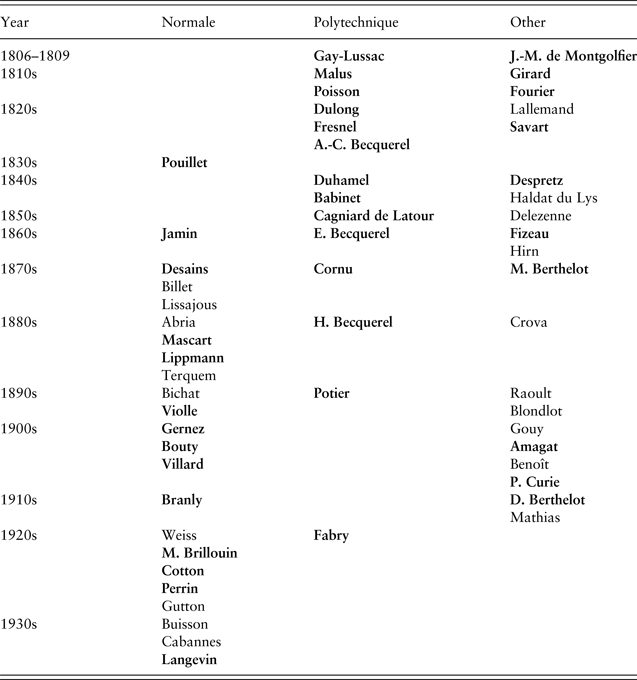
Bertin's social background and geographical origin made him more likely to aspire to a career in the Université than d'Almeida (see note 11). His father was a soldier who had retired to Besançon in the Franche-Comté, a region in the east of France bordering Switzerland, following the French defeat at Waterloo. According to Louis Pasteur (EN 1843), Bertin's friend, biographer and fellow Franche-Comtois, for his countrymen work brought ‘honour, dignity … and a germ of ambition’ that was usually directed towards the Université.Footnote 26 Bertin had reportedly set his sights upon the Ecole normale from a young age. He took the professor of physics at the Sorbonne and director of the Conservatoire royal des arts et métiers, Claude Pouillet (EN 1811), as a role model. Pouillet gained fame amongst the Franche-Comtois for becoming, in 1837, the first normalien to be elected to the Académie des sciences (see Table 1), and would later help Bertin's career on its way by facilitating his appointment to a physics professorship.Footnote 27
Educational background of chairholders in physics in the provinces. Normalien hegemony was challenged around the year 1900 through competition for recently established chairs of industrial physics

Sources: relevant volumes of the Annuaire du Ministère de l'instruction publique et des beaux-arts, France: Ministère de l'instruction publique; ‘Liste des élèves de l'Ecole normale’, in Le centenaire de l'Ecole normale: 1795–1895, Paris: Hachette, 1895, pp. 669–690.
Bertin obtained the bachelier-ès-lettres and bachelier-ès-sciences school-leaving certificates at the local Collège royal de Besançon. The youngest of three brothers, he knew that his family could not afford to pay to send him to a Parisian lycée to study for the licence, so Bertin took on employment: first as a private tutor, and then, from January 1839, as régent de mathématiques at the Collège de Luxeuil, again in the Franche-Comté.Footnote 28 After almost two years he had cobbled together a sufficient sum of money to move to Paris, in order to take the highest level of preparatory class for the concours for the Ecole normale – mathématiques spéciales – at the Lycée Louis-le-Grand.Footnote 29 Bertin requested a year's sabbatical from the Ministry of Public Instruction. Luxeuil, he explained, was ‘too isolated, too far from all scientific resources [secours]’, and at the collège he found himself ‘too busy with professorial duties’.Footnote 30
A brilliant student, Bertin's efforts paid off. He was admitted to the Ecole normale in 1841 at the head of the admissions list. At the school he struck up a lasting friendship with Pasteur, with healthy repercussions for his future career. There was nowhere better to prepare for the concours for the agrégation, in which, in 1844, Bertin again ranked first. He returned to teaching at the Collège royal d'Orléans, but when three positions of agrégé-préparateur were created at the Normale in 1846, one for each professor of physics, chemistry and natural history, he became the agrégé-préparateur in physics alongside Pasteur, who became the agrégé-préparateur in chemistry. Like d'Almeida, Bertin had among his duties the management of laboratory exercises and maintenance of the physics teaching apparatus. The positions were designed, however, to enable recent normalien graduates who had performed best in the agrégation to carry out doctoral research using the school's resources, reflecting the increasing status of the latter qualification for a career in higher education.Footnote 31
Freed from teaching responsibilities, Bertin further developed his experimental skills by working with Henri Victor Regnault (1810–1878) in his laboratory at the Collège de France. Several years previously, Regnault had been commissioned by the Ministry of Public Works to acquire experimental data relating to the functioning and efficiency of steam engines. This work came to dominate his scientific life, which focused accordingly on phenomena relating to the compression and expansion of gases and their specific heats. The care and precision of his measurements earned him a reputation as the most formidable experimental physicist in mid-nineteenth-century Europe.Footnote 32 Regnault's laboratory was of the few places where students, if they could gain access, were able, under his direct guidance, to both witness and experience physical (as opposed to chemical) manipulation at the research frontier.Footnote 33
The subject chosen by Bertin for the primary doctoral thesis (candidates could also prepare a shorter ‘secondary’ thesis), the rotatory properties presented by transparent bodies under the influence of magnetism, was the source of much experimental activity following Michael Faraday's discovery of magneto-optical rotation in 1845. Bertin gained plaudits in France for demonstrating that certain liquids composed of metallic compounds also possessed significant optical rotary power. He was awarded a doctorate in 1847, the year after his appointment as agrégé-préparateur – an exceptionally short period of time (see ‘Louis Pasteur and the rise of science at the Ecole normale’ below).Footnote 34
Now qualified for a career in higher education, Bertin's normalien sponsors sought to find him a suitable position. The death of the incumbent professor of physics at Grenoble generated an opening, which Bertin might have learned about through the director of the Ecole normale, Paul-François Dubois (1840–1850), who sat on the Council of Public Instruction. In August 1847 he wrote awkwardly to the minister of public instruction requesting a probationary assignment as chargé de cours (literally ‘responsible for classes’) in ‘a faculté of sciences, and in particular the one in Grenoble, if there be an opening’.Footnote 35
The minister, Narcisse-Achille de Salvandy, had invited Pouillet to suggest a candidate for the vacant chair, but whilst he was penning a recommendation in favour of Bertin, Pouillet was informed by several of his fellow members of the council that someone else had been provisionally assigned to it. Undeterred, Pouillet campaigned aggressively for Bertin. His letter lauded Bertin's capabilities in teaching and research and unabashedly named him the most promising recent graduate of the Normale. The provisional assignment, Pouillet insisted, ought not to stand in the way of Bertin's appointment. The minister replied apologetically that, on the basis of Pouillet's testimony, he ‘would not have hesitated’ to offer Bertin an important post if one were available, but that he had already kept the temporary appointee on for another year.Footnote 36
Forced to wait for another opening, Bertin remained as agrégé-préparateur during 1847–1848 amidst the troubled formation of the Second Republic. From March 1848, with Dubois's backing, he added teaching in physics to his duties as suppléant (a substitute teacher) to Blanchet, who had been called to the general inspectorate (see ‘D'Almeida and inspection under the Second Empire’ below).Footnote 37 Blanchet, wrote Dubois to the minister, had already envisaged Bertin for a suppléance on account of concerns about his own health. This temporary arrangement was enough to see Bertin through to October when a vacancy in the Strasbourg science faculté opened up owing to the retirement of the physics chairholder, Antoine Fargeaud (EN 1811). After a short period as chargé de cours, the faculté awarded him the chair of physics in May 1849 (the month that brought the Parti de l'ordre to power).Footnote 38
The main function of the regional science facultés was examining for the baccalauréat – still the standard French secondary-school leaving qualification – and offering public lecture courses. The number of provincial licence students in the sciences tended to be small, only a handful per year on average per académie, and doctoral students were even rarer. At Strasbourg, Bertin's instruction, like that of most provincial science facultés, was probably relatively elementary, and throughout his appointment he attracted a modest audience of fifty or more people. Bertin was nonetheless very content. Coming across as likeable and kind, he regarded his colleagues as his friends and maintained good relations with his superiors. His accession to dean of the faculté in November 1865, despite never pushing for promotion, provides an indicator of his standing in the ministry under the Second Empire.Footnote 39 In contrast, d'Almeida, as we shall now see, would find his career progression constantly checked despite determined lobbying on his behalf.
D'Almeida and inspection under the Second Empire
With a spate of uprisings still fresh in the memory, political and intellectual conformity became paramount to Louis-Napoleon upon his seizure of power. Even more so than under the July Monarchy, the Second Empire (1852–1870) treated the Université as an institutional means of ensuring social harmony, satisfying the cultural needs of the bourgeoisie, and responding to the demands of industrialization. With these aims in mind, successive ministers of public instruction undertook educational reforms to curricula, administrative structures and qualifications. Whilst some provincial professors of science marketed themselves as local resources for manufacturing, commerce, industry or agriculture, they remained subject to these national priorities. In the words of Robert Fox, ‘the desire for orderliness and discipline in the academic world remained a constant characteristic’. Even the elite Parisian institutions of research, such as the Collège de France and the Muséum d'histoire naturelle, faced ministerial sanction whenever they attracted unfavourable public attention.Footnote 40
The most routine and powerful means of ensuring proper conduct and regulating teaching practice within the corps were inspection and reporting, whose role in maintaining a standard body of knowledge has scarcely been acknowledged in disciplinary historiography, despite the Foucauldian emphasis upon inspection, examination or surveillance.Footnote 41 Foucault's followers took advantage of the ambiguity implicit in the multiple meanings of ‘discipline’ to stress the constitutive role of disciplined forms of training and pedagogy, for example laboratory instruction, structured examination and classroom exercises, in the fashioning of a discipline.Footnote 42 This perspective can be extended to the disciplinary regimen faced by the professors themselves, who were subjected to regular inspections by either the principal of their school (for secondary education) or the dean of their faculté (for higher education), by the rector and the inspector of the regional académie, and finally by the elite ‘general’ inspectorate. Each inspecteur d'académie was supposed to visit the schools under his jurisdiction several times during a year, and roughly every two years the general inspectorate would embark upon a tour of the provinces, producing extensive, more stringent evaluations for the Ministry of Public Education. In secondary education, normaliens dominated this senior body: of the twenty-four new appointments in science between the beginning of the Second Empire in 1852 and the end of the Third Republic in 1914, twenty were normaliens.Footnote 43
Inspectors were granted considerable agency to impose orthodoxy over the instruction in secondary schools. They assessed professors in terms of the clarity and organization of their teaching, their personality and presence in the classroom, and their ability to maintain the interest and enthusiasm of the students (which the level of memorization required for state examinations rendered a challenge). Inspectors praised professors who spoke fluently and expressed themselves precisely, and criticized those who lacked charm, spoke dryly or failed to group facts systematically. A professor's relationship with his superiors, and his manner and performance in the classroom during inspection, could affect his career advancement significantly; inspectors approved transfers of personnel within secondary education and made recommendations for posts in provincial facultés.Footnote 44 These decisions, however, rested ultimately with the Ministry of Public Instruction, and here d'Almeida's political noncompliance – manifested in ‘the firmness of his liberal opinions … expressed fairly openly during difficult times’ – retarded his career during the 1850s and 1860s.Footnote 45
At the Lycée Napoléon, d'Almeida taught mostly physics and some chemistry as part of the programmes in philosophie or mathématiques élémentaires for the baccalauréat, and for preparatory classes for the concours of admission to the Ecole normale or Ecole polytechnique.Footnote 46 These classes raised lycée teaching to an advanced level well beyond what was required for the baccalauréat. From a teacher's perspective, this could make a position in a Parisian lycée more attractive and intellectually stimulating than one in a provincial faculté, and as a result career moves in that direction were very rare.
Although he debuted reasonably well, inspection reports on d'Almeida recorded that his teaching suffered during the time when he was finishing off his doctoral research on the decomposition of salts dissolved in water by the battery. It became less methodical and precise, and his lecturing degenerated. The general inspector, Roch Roustan (EN 1820), attributed the hesitation and slowness of d'Almeida's delivery, which he found wearisome and monotonous, to insufficient familiarity with the material. The Ministry of Public Instruction subsequently denied d'Almeida's plea for promotion to chair professor after he gained a doctorate.Footnote 47
From then on, d'Almeida prioritized his teaching, whilst balancing his duties with a little personal research, which he reportedly pursued twice a week at the lycée. With his performance reinvigorated, he led his students to perform remarkably well in the concours générale – a prize competition between the Parisian lycées – by stretching them to the limit of their capabilities.Footnote 48 By the late 1850s, d'Almeida was considered by school inspectors and his superiors to be an excellent professor of physics and one of the most capable in the lycée. They praised his enthusiasm; the guidance he gave to students; and the precision, clarity and elegance of his delivery, though they found it lacking warmth. D'Almeida's students likewise trusted and respected him.Footnote 49 But despite repeated recommendations for one of the next vacant Parisian chairs of physics, it took until the end of 1860 for him to become chair professor, in the third or lowest salary class.
Core instruction in the program of mathématiques élémentaires consisted of two classes in each of physics and chemistry of up to two hours per week. During the first half hour, d'Almeida briefly questioned the students and provided feedback on their written work. He gave an additional hour-long combined conférence in physics and chemistry (which in some years was given by the chemistry professor). The conférence took its name from its interactive pedagogy, which consisted of question and answering, exercises and problems. D'Almeida brought physics to life through numerous carefully prepared experimental demonstrations, and the compositions (short essays on physical topics) he set were judged well chosen and carefully corrected. Students of the programme in mathématiques spéciales spent the same amount of time on physics, but now faced two weekly conférences with a special focus on recent scientific developments and applications. They performed weekly three-hour experiments during the second semester and were subjected to continual assessment through individual weekly examinations of half an hour. D'Almeida conducted these with remarkable talent, training his students to provide an exact exposition of some aspect of physics, and to respond to questions clearly and precisely. Hence the students faced a similarly robust disciplinary regimen to the professors.
The remaining steps up the career ladder for d'Almeida were progression through the ranks of professor from the third to the first class; then promotion to the secondary-school inspectorate, normally first as inspecteur d'académie; and finally appointment to the general inspectorate, the pinnacle of a career in secondary education. From the earliest days of educational reform in the Napoleonic era, the senior Université administration recognized that the promotion and control of textbook production was fundamental to ensuring state political control over education. Career advancement could be furthered by publishing a ministerially approved textbook for candidates for the baccalauréat-ès-sciences. Leading publishers like Louis Hachette (EN 1819) were keen to exploit the social and professional prestige associated with normalien teaching, and so normaliens dominated the market. Hachette maintained close relations with the French Université, normalien graduates and the educational administration, and inspectors received copies of his publications regularly.Footnote 50
D'Almeida collaborated with Augustin Boutan (EN 1840), professor of physics at the Lycée St Louis, to co-author a single-volume cours de physique. First published in 1862, a second edition published at the end of 1863 was added to the ministerial list of textbooks approved for use in secondary schools.Footnote 51 It went through five editions, the last of which was published in 1884, four years after d'Almeida's death. Boutan's career subsequently surged forward. In 1863, he advanced in the professorial ranks from second to first class; in 1865, he was made principal of the Lycée St Louis; and in 1868, he became inspector for the Paris académie.Footnote 52
Further progression for d'Almeida, however, demanded unwavering persistence from his advocates. The publication of the second edition of the Cours coincided with an uptick in political fortunes for the corps – the appointment of Victor Duruy, a graduate of the letters section of the Ecole normale and a respected historian, as minister of public instruction (1863–1869). Having alienated his conservative, Catholic allies through, among other things, a free-trade agreement with Britain in 1860, the emperor had sought to rebalance his political support with a turn to the left. Duruy's appointment was one of several measures designed to mollify his increasingly popular liberal opponents, who had begun to present a united front. During this ‘liberal’ phase of the Second Empire, Duruy aimed to restore the cultivation of knowledge to the official functions of the professoriate, and hence initiated a series of measures to reverse the authoritarian intellectual legacy of his immediate predecessors. These included refocusing the scientific agrégation away from breadth of learning and towards the latest developments in the various fields. Thus the needs of scholarship, whether through research or up-to-date teaching, became part of the reward system for a career in the Université.Footnote 53
Inspection reports on d'Almeida from this time read essentially as briefs for his promotion and therefore emphasize heavily his fulfilment of Duruy's new vision for scholarship in the Université. To make their case, reporters praised the Cours and probably exaggerated the standing of d'Almeida's personal research. A supporter within the inspectorate, Simon-Nicolas Petit, described it as ‘a very good treatise in elementary physics, right up to date with the [latest] science, and [offering] real benefit for teaching’.Footnote 54 According to Joseph Bertrand, d'Almeida's judgement in updating his teaching to account for the latest scientific developments ‘was second to none’. The third edition of the Cours (1867), for instance, described the latest electrical apparatus, including the scientific principles and experiments behind the transatlantic telegraph cable laid the previous year. (This paper's sequel describes the changes to successive editions of the Cours in more detail.)Footnote 55 When Bertin's predecessor at the Ecole normale, Emile Verdet (see ‘Bertin's monopoly over French experimental physics’ below), evaluated d'Almeida in 1864, he recommended him for promotion directly to first class, citing the success of his students, the quality of his treatise and the reputation of his research in experimental physics. Verdet succeeded in gaining d'Almeida promotion to the second class, where he remained, again despite further endorsements, for the remainder of the Second Empire.Footnote 56
The most obvious snub to d'Almeida's career, however, was the withholding of the chevalier of the Legion of Honour, normally a routine reward for long-standing service in a lycée; in 1868 Petit commented that most of d'Almeida's peers had already received it. In the course of an aggressive campaign for d'Almeida's promotion and recognition during the late 1860s, for three consecutive years Petit produced remarkably detailed reports of his teaching in physics, down to the level of individual students’ performance. But this effort had failed to make any difference, so in his next inspection report for 1870 he included a testimonial from Balard, who had been made a general inspector of higher education in 1867, to add further weight to an unqualified endorsement of d'Almeida. A frustrated Petit insisted bluntly to the ministry – to no avail – that ‘no one else deserves this honour more than he does. It would be cheered with approval in the Université’.Footnote 57
Louis Pasteur and the rise of science at the Ecole normale
Throughout the nineteenth century and much of the twentieth, graduates of two grandes écoles, the Ecole polytechnique and the Ecole normale, dominated physics in France. Without the scientific training and subsequent career stability these schools offered – whether in the military, engineering or education – it was rare to achieve a leading reputation in physical research. A contemporary of d'Almeida and Bertin's who did succeed, Léon Foucault (1819–1868), came from a family with sufficient wealth to at least partly finance experimental work carried out in a private laboratory. Possessing remarkable mechanical skill and ingenuity, from the mid-1840s he made his name through decisive experiments on the wave nature of light and his eponymous pendulum, which provided a striking demonstration of the Earth's rotation. Despite these achievements, he struggled to satisfy the requirements for the doctoral degree at the Sorbonne, and only found formal employment in science when the position of associate physicien (physicien-adjoint) was created for him at the Paris Observatory in 1855. Foucault had initially pursued a career in medicine, and between 1845 and 1862 worked as a scientific journalist for the respected political review the Journal des débats.Footnote 58 Well aware of this unusual background, Foucault cast himself as ‘only an amateur’ who came, he confessed, ‘from neither the Ecole polytechnique nor the Ecole normale’.Footnote 59
At the beginning of the nineteenth century, polytechniciens and their teachers held the field exclusively. Their enduring achievements in the mathematization of areas of physical enquiry – Poisson's electrostatics and magnetism, Ampère's electromagnetism, Fourier's theory of heat flow and, of course, Fresnel's wave theory of light, to name only the best known – contributed to making the first quarter of the nineteenth century one of the most prolific periods in the development of scientific knowledge. By the mid-nineteenth century, however, the influence of the Polytechnique was waning, and, although it continued to produce some of France's most distinguished opticiens – such as Alfred Cornu, Charles Fabry and Alfred Pérot – these French achievements were largely consolidated elsewhere, notably in Britain.Footnote 60
In France, the Ecole normale replaced the Polytechnique as the de facto breeding ground for first-rank research scientists. Craig Zwerling has described how its rise was associated with the diversification of its role from the training of elite secondary-school teachers to preparing students for a research-based academic career.Footnote 61 Reforms along these lines were driven by the school's administrator and director of scientific studies, Louis Pasteur. The transformation occurred over the decade following his appointment in 1857, during which time the proportion of normalien scientists following a research-oriented career shot from 24 per cent between 1840 and 1856 to 72 per cent.Footnote 62 Pasteur aimed to provide normalien scientists with an opportunity to carry out research at the school after graduation, and subsequently to place them in chairs at provincial facultés of science, which the authoritarian administration had sought to award to senior lycée teachers.
Around the mid-nineteenth century, the Ecole normale was the most prestigious place to study lettres or literature in France, but in science it had to compete directly for students with the Ecole polytechnique. Like d'Almeida and Bertin, they typically came from one of several elite Parisian institutions of secondary education such as the Lycées St Louis, Louis-le-Grand, Napoleon or Charlemagne, and the Collèges Stanislas and Rollin, which routinely sent students to the grandes écoles. The concours were almost identical, so most of the applicants took the same preparatory classes. Pasteur secured many of the best students through his aggressive recruitment policy. He wrote to normalien teachers, many of whom gave these classes, to stress to them the importance of recruiting good students for the future of the school, and frequently intervened personally when students were accepted at both schools.
Pasteur was able to lure them away from the Polytechnique by revitalizing the junior research positions of agrégé-préparateur. Their holders typically took seven or eight years to finish their doctorates and consequently only eight normaliens (which included himself and Bertin) had held the positions since their inception. He increased the number from three to five and limited the maximum tenure to three years. The number of years between matriculating and gaining the position of agrégé-préparateur in experimental physics consequently fell from approximately nine prior to 1858 to just five between 1860 and 1880. This greatly decreased the time many former students spent teaching in lycées before gaining a good opportunity to pursue original research towards a doctorate.
The success of Pasteur's initiatives contributed decisively to the establishment of a new academic career path and to normalien dominance of scientific research and institutions within the Université. By the time of Bertin's appointment in 1867, the Ecole normale had replaced the Ecole polytechnique as the principal training ground for elite scientific researchers.Footnote 63 The pattern of election to the physics section of the Académie des sciences, shown in Table 2, illustrates this trend. Given that members would most likely have accomplished noteworthy work over at least the decade prior to their election, this suggests that normaliens physiciens were in the ascendancy from roughly the 1860s onwards. This trend gathered pace during the 1870s and 1880s and culminated in overwhelming normalien dominance into the 1930s.
Resident members (bold) and French corresponding members (plain) of the physics section of the Académie des sciences between 1806 and the 1930s by educational background. ‘Non-resident’ members – a category created in 1913 – have been omitted because they did not belong to sections. Additional notes: (a) Lippmann, Bichat, Bouty, Villard, Branly and M. Brillouin were taught by Bertin; Mascart, Violle and Gernez were taught by Verdet. (b) Although they did not attend the Ecole polytechnique, Fourier, Savart, Despretz, Fizeau and Amagat had some form of connection to it. (c) Léon Foucault does not appear in the table because he was elected to the section of mechanics, in 1865. (d) The vast majority of French correspondents occupied chairs of physics in provincial facultés; none of them were polytechniciens.

Sources: ‘Liste des élèves de l'Ecole normale entrés à l'Institut’, in Le centenaire de l'Ecole normale, op. cit., pp. 693–694; Institut de France. Index biographique de l'Académie des sciences. Du 22 décembre 1666 au 1er octobre 1978, 4th edn, Paris: Gauthier-Villars, 1979.
Pasteur's reforms took place within the context of a broader rise in the social status and political fortunes of normalien scientists, associated first with the liberalization of the Second Empire and then the transition the Third Republic, in the midst of a shift in European power away from France and towards Prussia. Under Duruy's ministry, universitaires became increasingly alarmed by the rise of German universities as centres of research, which stoked fears of their marginality to European intellectual life. Concerned, too, to redress the decline in social status that had resulted from the political repression of the 1850s, the most eminent among them began to campaign for more institutional autonomy, academic freedom and better working conditions. At the heart of these demands lay the desire to make research an official function of the corps. Clamouring for change, the reformers juxtaposed the backwardness and inflexibility of the singular Université with the self-determination of thriving German universities. As we have already seen, Duruy's ministry was sympathetic to their concerns, and he sent young academics abroad to investigate and study at foreign institutions of higher education. Nearly all reporters judged French science and French facilities inferior to their foreign counterparts. Comparisons were made with Britain, Italy and Russia, but German developments carried the most serious economic and political implications. Duruy had commissioned Charles Adolphe Wurtz (1817–1884), dean of the Paris Faculté of Medicine and member of the Académie des sciences, to write a series of reports on German scientific laboratories. Wurtz had concentrated mostly on chemistry, physiology, anatomy and pathology at several key German cities. Drawing on the information gathered by Wurtz and other reporters, Duruy labelled German laboratories ‘menacing’ to French science and responded in July 1868 with the creation of the Ecole pratique des hautes études (EPHE), an umbrella organization of existing laboratories and research facilities through which additional funding could be channelled.Footnote 64
Prussian plans to further unify the German states, and French fears of a loss of European influence should this come about, led to a French declaration of war in July 1870. The advancing French forces were soon repulsed by the superior training, leadership, organization and equipment of the Germany Army. Louis-Napoleon's capture and surrender at the Battle of Sedan on 1 September 1870 precipitated in the immediate collapse of the Second Empire, but the war continued throughout the winter under a republican Government of National Defence, led by Parisian representatives within the National Assembly. It was eventually brought to a close by the Prussian siege of Paris – which left Parisians starving and freezing – and the defeat of several makeshift provincial armies. The Treaty of Versailles signed on 26 February 1871 imposed harsh reparations upon France, and resulted in the Prussian annexation of practically all of Alsace and some of Lorraine. Further bloodshed would ensue before political order returned, as working-class and left-wing radicals took control of Paris and formed a rival government to the Catholic–monarchist majority recently elected with mostly provincial support. The short-lived Paris Commune was brutally put down by the French Army, with atrocities on both sides, at the end of May 1871 during the semaine sanglante (‘bloody week’).
These events propelled existing concerns about German science and education to the forefront of patriotic sentiment and public attention. Science was swept up in a wave of revanchism: just prior to the conflict, scientific research had consisted of ‘peaceful struggles in which countries compete with each other without being enemies’, according to Wurtz.Footnote 65 Afterwards, the scientist had become a soldier, continuing the war on an alternative field of battle, exchanging rifles for scientific instruments. In this climate of rampant nationalism, science became associated with France's survival and the country's politico-cultural rehabilitation. Contributors to the highbrow Revue des cours scientifiques insisted that mobilization should be continued in the laboratory. Taking ‘science’ as a byword for all the perceived material and characterological advantages possessed by the Germans, they blamed the inferiority of French science for the defeat and argued that the revitalization of French scientific education and research was a patriotic duty associated with the extraction of revenge.Footnote 66 For academic reformers in the sciences, this meant supporting research as an official function of the professoriate, and lecturing to serious students rather than entertaining the public through eloquence, erudition and showy demonstrations.
The convoluted political legacy of the Franco-Prussian War and the Commune threatened the stability of the Third Republic that emerged in the aftermath was far from assured; biding their time, parliamentary monarchists sought to use it as a stepping stone to restoration (as they had earlier sought to subvert Louis-Napoleon's presidency of the Second Republic). Republicans looked to science to underwrite their liberal and secular ideals and to diffuse them via the expansion and improvement of public education. The spread of scientific principles into all forms of knowledge, they thought, would heal class divisions and guard against political extremism. It was growing public faith in republicanism as a means of securing social order, however, that gradually eroded the monarchist majority in the National Assembly and ensured the political stability of the Third Republic. Following gains in the elections of 1877, republicans funded a rapid expansion in resources, personnel and students in all the sciences in France. Academics in higher education especially benefited, in terms of public status, career prospects and material resources, from the policies of successive administrations. (Catholic scientists, whilst not excluded outright from the scientific establishment, found themselves embattled and, if working within a Catholic university, underfunded.) As the elite of the Université, these socio-cultural and political aspirations for educational reform transported normaliens from the margins to the centre of political life from the late 1870s onwards, and, to a lesser extent, throughout the remainder of the Third Republic.Footnote 67
Through the EPHE, junior research positions or laboratory assistantships were created at the Paris Faculté of Science, the Muséum d'histoire naturelle, and the Collège de France. The graduates of a reinvigorated Ecole normale were best placed to exploit the new opportunities, as well as Foucault's former position at the Paris Observatory, because, although not a research qualification, a high placement in the agrégation was clearly associated with these positions.Footnote 68 Those able and fortunate enough to gain one generally continued to advance rapidly through the academic hierarchy, and their career mobility was improved even further in 1878 by the creation of mid-level positions of maître de conférences in the facultés. (Outside the Ecole normale, these were equivalent to lectureships rather than chairs.) The smooth flow of normalien graduates through the academic ranks would ensure their dominance over French experimental physics for decades to come.
Bertin's monopoly over French experimental physics teaching
The significance of Bertin's monopoly over physics teaching at the Ecole normale from his appointment in 1867 until his death in 1884 (at which point an additional maître de conférences in physics was created) should now be easy to grasp. As Andrew Warwick's account of Edward Routh's remarkable success in the training of Cambridge mathematical physicists during the mid- to late nineteenth century has shown, a well-placed teacher can have an enormous impact on a generation of future practitioners, and, in the case of William Hopkins, a generation of future teachers. The ‘problem-solving’ experience provided by the Cambridge Tripos framed wranglers’ assimilation of the latest research, provided them with techniques for novel investigations and suggested a form for their published solutions. In short, in their subsequent careers in mathematical physics they sought to ‘reduce the physical world to Tripos-like problems’. The influence that Bertin could exert on future physics teachers and research physiciens, in an integrated system of secondary and higher education, combined that of Routh and Hopkins.Footnote 69
Devoted to his students and prodigiously talented, throughout his career Bertin received superlative praise for his teaching. At the Collège royal d'Orléans his qualities immediately became apparent.Footnote 70 Inspections at Strasbourg recorded that he taught and questioned students with ‘method, sagacity and talent’ and expressed himself ‘clearly, effortlessly, elegantly, precisely and engagingly’.Footnote 71 Seeking to promote Bertin in the ranks of the Legion of Honour in 1882, the director of the Ecole normale, Numa Denis Fustel de Coulanges (1880–1883; EN 1850), assured the minister of public instruction that ‘no conférence is carried out better, nor more appealing to the students, nor more fruitful than his’.Footnote 72
By the early 1860s, the rector of the Strasbourg académie considered Bertin the most distinguished intellect in the faculté (owing to the ‘variety, extent and precision’ of his knowledge) and openly resigned himself to losing his ‘model professor’ to Paris.Footnote 73 Bertin nonetheless had to be prised away from Strasbourg. His contentment was not unusual among provincial science faculté professors who could tolerate the high degree of administrative oversight and give up any yearnings for the intellectual life and research facilities of the capital in exchange for the freedom that came from relatively few official duties. Overtures were surely extended to Bertin by Pasteur, but in the end he reportedly gave in to Regnault's attractive offer of taking over his courses in experimental physics at the Collège de France (and possibly the promise of appointment to vice principal at the Ecole normale, which maintained his salary at the same level as dean).Footnote 74
Despite bringing to the Ecole normale a formidable reputation as a pedagogue, Bertin had to contend with the long shadow cast by his predecessor, Emile Verdet (1824–1866). This was made all the more difficult by the circumstances of his appointment, namely Verdet's premature death at the age of forty-two. Verdet was highly regarded internationally for his thorough, quantitative experimental research into magneto-optical rotation – the same phenomenon that Bertin had investigated in his doctorate – but in France he was especially prized as a prolific teacher and communicator of physics. He reportedly impressed the examiners for the agrégation so much that they created a special designation, agrégé hors ligne (‘beyond rank’ is a liberal translation), to recognize his achievement. Several years before his death, Verdet held posts – in a spectacular instance of cumul – simultaneously at the Ecole normale, the Ecole polytechnique and the Sorbonne.Footnote 75 His passing therefore caused an unexpected shifting of personnel within the upper echelon of French physics, with obvious ramifications for its future development. As we shall see in the sequel to this paper, there was a marked division in interest in foreign theoretical work between Verdet and Bertin's students. Despite institutional constraints, the maître de conférences at the Ecole normale could nonetheless impart significant personal pedagogical preferences.
Instruction in the science section focused principally on mathematics, physics and chemistry, with minor places on the curriculum allocated to botany, geology, zoology and mineralogy. Students followed the curricula for the licences in mathematical and physical sciences concurrently: mathematics and chemistry in the first year, mechanics and physics in the second. They then chose whether to study for the agrégation in physics or mathematics.Footnote 76 Bertin gave two hour-and-a-half conférences per week to the second-year licence students, during which, as well as receiving instruction and taking notes, they would present their compositions, give written and oral reports on those of others, and engage in questioning and discussion. In the third year, students opting for physical sciences would receive one conférence for the agrégation, as well as a second that aimed specifically to perfect ‘the physical notions acquired the previous year and focus on the details of apparatus or experimental precautions as physiciens’.Footnote 77
Students would also undertake practical exercises. Unlike those attending the German physics seminars, such as Neumann's at Königsberg or Weber and Kohlrausch's at Göttingen, normaliens probably spent most of their time repeating demonstration experiments rather than carrying out laboratory measurements.Footnote 78 Their supervision was probably entrusted to the agrégé-préparateur.Footnote 79 Since normaliens were training to be French secondary-school teachers, they were expected to master the form of practical physics pedagogy most appropriate to that setting. Exact measurement had already formed part of the secondary-school curriculum in Prussia by the end of the 1850s, and physical laboratories began to arrive in these schools a decade later.Footnote 80 In contrast, as I explore in this paper's sequel, the description of apparatus and the qualitative principles of their operation, for instance, remained a principal feature of French physics education.
A former student and later Bertin's successor, Marcel Brillouin, suggested that the attraction of a teaching career to Bertin was having a fair number of capable pupils over which he could exercise a personal influence.Footnote 81 Students could attend lectures at the Sorbonne or elsewhere, but Brillouin recalled how he discouraged study in the third year outside the agrégation syllabus and the Ecole normale:
Some third-year pupils went to the external lectures in mathematical physics of [Charles] Briot at the Sorbonne, Joseph Bertrand or Maurice Lévy at the Collège de France, or especially [Eleuthère] Mascart's in general physics, also at the Collège de France. But as Bertin, very conscious of the agrégation, did not overly push them, many students failed to take advantage of similar lectures.Footnote 82
Instead, normaliens studying for the agrégation opted for further practical work in the Laboratoire d'enseignement de physique, or physics teaching laboratory, at the Sorbonne, which opened in January 1869. Its director was the normalien Pierre Desains (EN 1835). Funded by the EPHE, it aimed to provide practical instruction mainly to non-normaliens coming to Paris to study for the licence. Almost immediately it became oversubscribed, in part by foreign students and third-year normaliens, who took advantage of the open-admission policy in order to enhance their existing practical knowledge and skills.Footnote 83 Generally speaking, therefore, in the cases where they were exposed to instruction in experimental physics other than Bertin's own, normalien physics students did not stray beyond the limits of the teaching qualifications in the Université.
Associating himself with Pasteur's reforms, Bertin nonetheless recognized his mission as supplying ‘the Université with young professors, who will honour it through their scientific investigations as well as their teaching’.Footnote 84 In addition to his research-oriented conférence during the third year, Bertin was responsible for two important unofficial enterprises that promoted research in experimental physics among his charges: the informal weekly meetings at the Ecole normale of some of Paris's most distinguished physiciens, and a review of foreign research in physics for the Annales de physique et de chimie, which Verdet had initiated in 1852. The meetings took place at the Ecole normale's physics laboratory. With the assistance of the agrégé-préparateur in physics, he would either show his chosen guests, who included third-year normaliens, ‘some neat experiments in crystalline optics, or put at their disposal the resources of the physics cabinet, in order to repeat some new experiment recently conducted abroad’.Footnote 85
These experiments became the subject matter for his reviews, which consisted of analyses of selected foreign papers.Footnote 86 Although he only credited Eleuthère Mascart (see below) and Eugène Maillot in print, both of whom worked with him on the three volumes of the Annales between 1868 and 1869, other pupils benefited from this form of exposure to cutting-edge foreign research. During the early 1870s, Bertin gave Gabriel Lippmann (EN 1868), a future professor at the Sorbonne and Nobel Prize-winner in physics in 1908, the task of translating and reviewing ‘a large number’ of German and English papers. This prompted experiments on electrical phenomena that the young man had not previously encountered.Footnote 87
Altogether, Bertin's cultivation of a research outlook (if not quite a research culture) amongst his students, combined with his exam-oriented focus on the agrégation, combined to leave a characteristic imprint on the approach to research of a new generation of normaliens physiciens. Brillouin, speaking from experience, recognized his enduring hold over his former students:
Bertin … has been the dominant influence over our thinking. Even for those who had already encountered a truly distinguished intellect at their lycée, or were subsequently exposed to other influences that complemented his, or whose originality became more readily apparent at a later stage, Bertin's influence, in terms of precepts and examples, is readily apparent.Footnote 88
To be sure, Brillouin was hardly a neutral observer. Reflecting on French weaknesses in theoretical physics fifty years after the foundation of the Société française de physique, he laid a fair share of the blame at Bertin's door.Footnote 89 Stripped of hyperbole, however, his arguments were not without foundation. Although Bertin did not seek narrowly to turn his students into passive transmitters of a received body of knowledge, he was obsessed with the ‘university mould’, which, in Pasteur's opinion, blinded him to untutored potential.Footnote 90 Form and content were inextricable for Bertin: he aimed to instil in his pupils the same habits of order, clarity and method for which, as entrance examiner, he had selected them.
Thanks to Pasteur's renovation of the positions of agrégé-préparateur and the new ones created through the EPHE, many of Bertin's pupils progressed to solid or distinguished research careers in experimental physics. Beneficiaries included the Sorbonne physiciens Edmond Bouty (EN 1866), Gabriel Lippmann (EN 1868), Louis Mouton (EN 1869, agrégé-préparateur 1874–1876) and Henri Pellat (EN 1870), and the provincial physics chairholders Ernest Bichat (EN 1866, agrégé-préparateur 1871–1874), Oscar-Auguste Garbe (EN 1872, agrégé-préparateur 1876–1880), Louis-Alphonse Hurion (EN 1870), Jules Macé de Lépinay (EN 1872) and J. Pionchon (EN 1879, agrégé-préparateur 1883–1886).Footnote 91 A number of them published in the Journal de physique (see below) early in their career, including Bouty, Bichat, Lippmann and Mouton.Footnote 92
Bertin's own prospects under the Third Republic, however, did not turn out as favourably as those of his students. He continued to undertake physical research throughout his career, mostly on his favoured topics of optical rotation in liquids and the behaviour of polarized light in crystals, but also on induction and magnetism. Annual reports on Bertin's teaching from the mid-1850s to the mid-1860s had tipped him for recognition by the scholarly community, but, lacking self-assurance, he never campaigned for recognition. According to Pasteur, Bertin's modesty and sardonic philosophy of life bordered on self-deprecation. He eventually put himself forward as a candidate for election to the Académie des sciences in 1878.Footnote 93 In a report on Bertin's candidacy, the distinguished physicien Hippolyte Fizeau praised his research in glowing terms, but he received no votes. The académiciens elected the mineralogist Alexis Damour instead.Footnote 94
Pasteur was convinced that Bertin's genuine, homespun character and lack of pretension prevented him from receiving the recognition among his peers that his friends – who included Pouillet, Regnault and the celebrated chemist Jean-Baptiste Dumas – felt he merited. Bertin's larger-than-life personality made him an outsider to the Parisian elite, as Pasteur recounted in an obituary for the Association des anciens élèves de l'Ecole normale supérieure:
He slipped into informal behaviour right from the instant you first met him and could never stop himself from coming out with some sort of witticism. His Gallic humour unsettled people with its unexpected flights of fancy, and anyone quick to judge took offence at his exuberant bonhomie on account of their somewhat austere social conventions.Footnote 95
The school's director, Francisque Bouillier (1867–1871; EN 1834), likewise considered Bertin too laid back in his behaviour and manners.Footnote 96 Upon encountering Bertin for the first time, normaliens and their parents were often taken aback by his quirky overfamiliarity. According to Brillouin, ‘to listen to him you'd have thought that he only had one true passion – whist’.Footnote 97
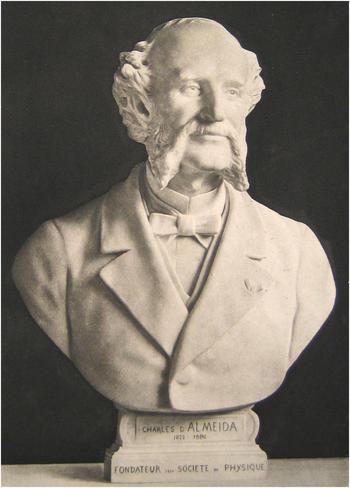
Under the Second Empire, Bertin had achieved career advancement by steering clear of political controversy and by focusing on teaching and examining. He seems to have fully internalized the state values of the Université during that time. Bertin's tendency, however, to keep his head down placed him on the periphery of physiciens’ collective response in the aftermath of the Franco-Prussian War, which brought to the fore a renewed sense of national identity and shared purpose. His decision to remain at the school during the war, when it became a makeshift hospital, was indicative of his preference for the security of his own backyard.Footnote 98 Although Bertin became the first vice president of the newly founded Société française de physique (see below) and then president the following year (a transition mandated by the statutes), after that his role in the society diminished. Ineligible for immediate re-election to the governing council (of twelve members resident in Paris and twelve non-resident members), he went on to serve a three-year term between 1876 and 1878. Normally capable of shrugging off disappointments or keeping them to himself, in 1883 Bertin kicked up a fuss when an inscription on a bust of d'Almeida literally set his colleague in stone as its founder.Footnote 99 The note subsequently inserted in the society's bulletin to the effect that meetings hosted by Bertin at the Ecole normale ‘prompted the idea and demonstrated the possibility’ of creating the society surely failed to grant him the recognition he felt due.Footnote 100 He died the following year. Fittingly, his final accolade, promotion in the ranks of the Legion of Honour, was orchestrated by his colleagues at the Ecole normale – Bouiller and Pasteur – and granted by the state administration that he had served faithfully all his life.Footnote 101
D'Almeida and the creation of the Société française de physique
Unlike Bertin, outwardly d'Almeida was socially adventurous and displayed clear leadership qualities and a sense of initiative. Accepted as one of the French scientific elite, in 1869 he had travelled to Egypt with a group of leading French scientists that included Balard and Berthelot to witness the inauguration of the (French-financed) Suez Canal. Numerous travels helped d'Almeida to develop a wide knowledge and erudition. A seasoned networker, he became acquainted with eminent professors during many visits to leading European centres of learning. D'Almeida travelled all over Austria and Germany, and stayed in Vienna, Leipzig and Berlin before continuing to Sweden and Norway. He even spent six months between 1862 and 1863 in America, where he reportedly witnessed the Civil War at first hand, met generals and other prominent figures and visited the camps and fortresses of the North and South.Footnote 102
D'Almeida's heroics during the Franco-Prussian War enhanced his status within the French academic community. A member of the scientific defence commission set up during the siege of Paris and chaired by Berthelot, he was at the forefront of efforts to use microscopic photographs as means of correspondence. He subsequently travelled to the provinces in an air balloon to establish telegraphic contact with Paris by using the Seine as a conductor. This mission was particularly important because the Prussians had cut off communications with the National Assembly, which had relocated to Bordeaux.Footnote 103 A republican sympathizer during the Second Empire (see ‘Building an academic career during the mid-century’ above), d'Almeida found particular favour under the new regime. In February 1872, upon hearing that decorations would be awarded to state servants for contributions to the war effort, d'Almeida's superiors petitioned the Ministry of Public Instruction to make him, finally, a chevalier (knight) of the Legion of Honour. The principal of the Lycée Corneille (soon to be the Lycée Henri IV) noted that this would be welcomed by ‘all lycée professors and public opinion’.Footnote 104 The request was passed to the Ministry of War, and d'Almeida was honoured later that year.Footnote 105 D'Almeida's merit was now ‘known to everyone’.Footnote 106 To keep hold of him for as long as possible, the Lycée Henri IV granted him ‘all the benefits he deserves’.Footnote 107 D'Almeida effectively retired from teaching in October 1876 when, worn out, he took leave for a year on practically full pay. He became involved with school inspection and subsequently decided not to return to teaching. When he was overlooked for a vacant inspection position in 1879, d'Almeida took it badly, so the Ministry of Public Instruction named him general inspector hors cadre (literally, ‘outside the framework’).Footnote 108
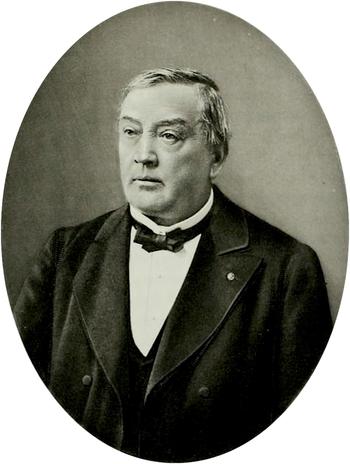
Pierre Augustin Bertin-Mourot (1818–1884).

Photograph of the bust of d'Almeida by the sculptor Eugène Guillaume that triggered Bertin's protests. During its unveiling, Mascart, in his role as chair of the fundraising committee, praised the reproduction of d'Almeida's ‘dignified refinement, his warm and benevolent gaze, with a fidelity that has surpassed all hopes’.

As we learned in ‘Louis Pasteur and the rise of science at the Ecole normale’, defeat by the Prussians and the coming to power of the Third Republic resulted in the creation of heightened ideological roles for science in French society. A sense of collective patriotic duty rendered Bertin's semi-private gatherings at the Ecole normale out of step with the times. Disagreements about ‘what should be taught to young people, what it is worth giving prominence to in scientific reviews and journals, and what is most important to discuss during meetings’ could no longer be kept quiet, Brillouin later surmised.Footnote 109 Deeply affected by the disastrous outcome of the war, d'Almeida took republican scientism seriously. No doubt aware of the autonomy and status enjoyed by German professors while he had laboured for many years under a dictatorial ministry, he viewed the freedom to shape the field of physics according to the needs of scholarship as a contribution to the ‘intellectual forces’ of the nation. D'Almeida consequently wasted no time in coordinating the founding of the Société française de physique (1873) and the Journal de physique théorique et appliquée (1872). This consolidated the emergence of a discipline of French experimental physics out of the possibilities opened up by the renewed emphasis on scholarship within the Université, the creation of the EPHE, and the politico-cultural importance of science under the Third Republic.
In contrast to the personal ownership Bertin assumed over his meetings and reviews, the journal and society publicly emphasized solidarity, inclusiveness and disinterested collaboration that would strengthen the nation's ‘moral forces’.Footnote 110 The society placed no limitations on membership, and in the first volume of the journal d'Almeida addressed himself to ‘industrialists, engineers, soldiers, doctors and others who cannot, without depriving themselves, neglect a science that guides their work’. They ‘should not forget’, he continued, ‘that the most illustrious physiciens came from their ranks’.Footnote 111 In the spirit of collaboration, d'Almeida also reached out to his fellow professors, ‘especially isolated ones who, lacking the resources that libraries ought to provide them, complain of not being able to develop their knowledge and not knowing where to direct their efforts’.Footnote 112 As Mascart recalled, d'Almeida worked hard to forge a national community through shared intellectual and material resources:
He [d'Almeida] was especially concerned to make [the society] helpful to remote members and independent workers who lacked the resources of large laboratories and well-stocked libraries; it was with this idea in mind that he organized the loan of research instruments and the mobile library that spreads awareness of foreign publications.Footnote 113
The society's members included mathematicians, chemists, engineers, astronomers and doctors, but nonetheless remained dominated by universitaires. During the 1880s, for example, over 70 per cent of its members held posts in either secondary or higher education, and out of its first nine presidents, only Edouard Ernest Blavier, a senior telegraphic engineer, obviously represented professional practice outside the Université. Contributions to meetings showcased universitaires’ specific aptitude for experimental demonstration in the lecture theatre and classroom at the expense of physical theory. The statutes reinforced this orientation: the society would ‘put before its members the latest and most interesting experiments’.Footnote 114 It also served a predominantly Parisian constituency. Unlike the British Association for the Advancement of Science and the Association française pour l'avancement des sciences, the society's meetings were always held in the capital, although on occasions when non-resident members were drawn to Paris, it planned to allocate ‘one or several meetings to the replication of the key experiments made over the course of the year’.Footnote 115 This turned into an annual exhibition during the Easter holidays at which, according to Bouty, provincial members could witness or examine all the experiments and apparatus presented before the society during the previous year.Footnote 116
The origins of the society lay with a close-knit group of normaliens and polytechniciens who formerly attended semi-private gatherings hosted by Bertin at the Ecole normale. At one of these sessions, held on 26 December 1872, a commission comprising leading figures from secondary and higher education was nominated to determine its organization: d'Almeida; Mascart (1837–1908, EN 1858), Regnault's successor at the Collège de France; Alfred Cornu (1841–1902), professor of physics at the Ecole polytechnique; Désiré Gernez (1834–1910, EN 1855), professor of physics at the Lycée Louis-le-Grand; and Jules-Antoine Lissajous (1822–1880; EN 1841), professor of physics at the Lycée St-Louis.Footnote 117 The pattern of appointments to the society's administration suggests that d'Almeida and his colleagues on the commission retained much of their influence: during the society's first decade, Mascart, Cornu and Gernez were the only members to hold successively the offices of both vice secretary/secretary and vice president/president. (Lissajous was unable to take up the presidency in 1875 when he left Paris to become the rector of the Académie de Besançon.)Footnote 118 These figures were also among the most prolific contributors to the Journal de physique théorique et appliquée during the 1870s (as sole editor d'Almeida himself seldom contributed his own work). Its initial success depended partly on d'Almeida's recruitment of like-minded ‘collaborators’, the vast majority of whom also joined the society near its beginning (the inaugural meeting was held on 17 January 1873). Its first volume, published in mid-March 1872, pre-dated the society by almost a year.Footnote 119
D'Almeida took charge of the society through his election as general secretary, which made him responsible for the scientific programme for the meetings (assisted by the secretary and vice secretary, initially Cornu and Mascart respectively). Unlike the president, the general secretary could be re-elected every two years, which enabled d'Almeida, with the support of his peers, to retain the post in perpetuity until his death in 1880. At the end of 1875, when d'Almeida was re-elected, the outgoing president (Sorbonne physics professor Jules Jamin, EN 1838) paid testament to his devotion and hard work: ‘It's to him that the society owes its beginnings, it's he who takes care of its daily existence, and it's through him that day by day the society expands its sphere of influence and spreads its beneficial effects’. Everyone, apparently, recognized d'Almeida's worth.Footnote 120
Conclusion
The decline of scientific patronage during the Restoration and the changing public role of the savant brought French science firmly under state control. This paper has charted this shift in governance by examining career making in physics in the French Université through a comparative biography of two of the most influential mid-nineteenth-century physiciens, Charles d'Almeida and Pierre Bertin. Three major themes emerge from this comparison: the regimented and highly structured nature of teaching practice and career making in the corps; normalien dominance of French experimental physics from the mid-nineteenth century; and the politico-cultural, institutional and pedagogical factors that fostered the emergence of a discipline from the corps universitaire.
By the mid-1840s, an elite scientific career in the corps required the accumulation of formal qualifications, mostly for teaching, and the backing of sponsors who could channel influence through the Ministry of Public Instruction. Epitomized by the role of the inspectorate in enforcing a uniform pedagogy, the Université possessed intricate institutional apparatus for maintaining discipline over all aspects of the acquisition and transmission of knowledge. As state servants, universitaires were expected to profess orthodox political views, if they professed any at all. Bertin's conformity contrasted with d'Almeida's outspoken republicanism, and so during the Second Empire his career flourished whereas d'Almeida's stagnated. The close association between their subsequent reversal of institutional favour and the changing of regimes from the Second Empire to the Third Republic serves as a powerful reminder that the corps ultimately answered to state interests.
The best training and networking could be acquired in Parisian lycées and then at the Ecole normale supérieure. During the later, more liberal stage of the Second Empire in the 1860s, concerns about France's political, economic and cultural position within Europe, stoked by academic reformers, led the ministry to encourage the production of new knowledge within the Université. Meanwhile, as director of scientific studies at the Ecole normale, Louis Pasteur had already embarked upon a mission to diversify its traditional role in the training of pedagogical elites by opening up a new career path in scientific research. As the only professor of physics at the school, this confluence of political and institutional factors inadvertently turned Bertin into the principal source of the norms, aims and methods of a generation of future research physiciens. Under the Third Republic, which introduced normaliens to the levers of power, their dominance over French research in physics was cemented by the continued expansion of the institutional and material provision for science. Normaliens filled the physics section of the Académie des sciences for decades afterwards.
The historical evolution from corps to discipline that began with the emergence of an institutionalized research ethos within the corps was consolidated by the founding of the Société française de physique and the Journal de physique théorique et appliquée: that is, a specialist society and journal for the curation of physical knowledge. Buoyed by republican scientism, d'Almeida worked strenuously to build a national community of technically proficient physiciens and practitioners of physics in the wake of the Franco-Prussian War. His small circle of Parisian universitaires took control of the society's governance, recruited other practitioners of physics to their cause and published frequently in the journal. They thereby assumed leadership of the emerging discipline, despite the wide variety of professions, and the national network of physics practitioners, to which members of the society and contributors to the journal belonged.
The present work affords the historiographic insight that understanding discipline formation in its political and cultural context requires thinking in terms of both shared values and, in a Foucauldian vein, institutional power structures. If we take into account the full socio-institutional organization of ‘a discipline’ in the meaning of the term, a rich range of macrosocial factors comes into play, including in this case the role of corporate lobbying, the ideology of republican scientism and patriotism following defeat in the Franco-Prussian War. On the other hand, by the Second Empire developed disciplinary regimes within the corps meant that universitaires were already responsible for curating and transmitting a distinct field of French experimental physics – or a ‘discipline’, in a narrow epistemic sense. This conceptual insight will enable me in this paper's sequel to take d'Almeida and Bertin's textbooks, lectures and reviews as representative of the distinctive epistemic and methodological characteristics of French experimental physics during the mid- to late nineteenth century, which remained heavily marked by the original pedagogical mission of the corps.Footnote 121