Introduction
When exposed to heat stress, broilers maintain their body temperature via thermoregulatory responses that negatively impact growth performance and metabolism, resulting then in important economic losses (Renaudeau et al., Reference RENAUDEAU, COLLIN, YAHAV, DE BASILIO, GOURDINE and COLLIER2012). In addition, it has been strongly suggested that the negative effects of heat stress will increase in the coming decades due to temperature rises associated with global warming. Broiler chickens have been genetically selected to improve growth and muscle deposition and are considered to be more susceptible to high temperatures, in relation to older or native breeds, because of their greater metabolic heat production (Brossi et al., Reference BROSSI, CONTRERAS-CASTILLO, AMAZONAS and MENTEN2009).
Among the strategies used to attenuate the negative effects of heat stress in broiler production systems, different approaches including the use of air conditioning, ventilation and evaporative cooling systems, management of drinking water, vitamin and mineral supplementation and variation of the dietary electrolyte balance have been employed (Borges et al., Reference BORGES, MAIORKA and SILVA2003; Gamba et al., Reference GAMBA, RODRIGUES, GARCIA NETO, PERRI, FARIA JÚNIOR and PINTO2015). The use of low heat increment diets through the reduction of dietary crude protein content and inclusion of fat is one of the nutritional strategies most studied and utilised under commercial/practical conditions (Silva et al., Reference SILVA, ABREU, LOPES, LEAL, ALMENDRA, SILVA and COSTA2014). During heat stress, a reduction in the circulating levels of vitamins and minerals is observed, which may be associated with low feed intake and high water consumption by the broilers. Furthermore, the antioxidant capacity in heat-stressed broilers is reduced in association with the decreases in glutathione peroxidase, superoxide dismutase and catalase synthesis (Altan et al., 2003). In contrast, positive effects of dietary mineral and vitamin supplementation under heat stress conditions have been reported (Borges et al., Reference BORGES, MAIORKA and SILVA2003; Khan et al., Reference KHAN, NAZ, NIKOUSEFAT, SELVAGGI, LAUDADIO and TUFARELLI2012) and are able to reduce cellular oxidation reactions (Silva et al., Reference SILVA, NASCIMENTO, PENHA-SILVA, FERNANDES, VILELA and SOUTO2015).
Research has supported the use of Cr supplementation as a nutritional strategy to improve growth performance (Ghazi et al., Reference GHAZI, HABIBIAN and MOEINI2012), nutrient metabolism (Sahin et al., Reference SAHIN, SAHIN and KÜÇÜK2003; Jahanian and Rasouli, Reference JAHANIAN and RASOULI2015), immune responses (Oba et al., Reference OBA, LOPES, BOIAGO, SILVA, MONTASSIER and SOUZA2012), antioxidant function and stress response (Ghazi et al., Reference GHAZI, HABIBIAN and MOEINI2012; Khan et al., Reference KHAN, NAZ and DHAMA2014) in broiler chickens exposed to heat stress. The objective of this review is therefore to present chromium as a strategy for mitigating the negative effects of heat stress in livestock production systems.
Biological functions of chromium
Chromium is a trace mineral present in small amounts in raw ingredients commonly used in broiler diets, such as grains and oilseeds (Anderson et al., Reference ANDERSON, BRYDEN and POLANSKY1992). It is a metal element found in the oxidation states (2-, 0, 2+, 3+, 6+), but trivalent (3+) is the most stable form. In this state, it is recognised as an essential trace element required for the metabolism of carbohydrates, proteins and lipids (Vincent, Reference VINCENT2000a).
Different factors affect Cr absorption (Sirirat et al., Reference SIRIRAT, LU, HUNG, CHEN and LIEN2012), however it is well accepted that organic sources are more available and better absorbed than inorganic sources (Lukaski Reference LUKASKI1999; Zha et al., Reference ZHA, ZENG, CHU, MAO and LUO2009). Inorganic sources of Cr show lower availability (1 to 3%) (Hossain et al., Reference HOSSAIN, BARRETO and SILVA1998) than organic sources (15 to 30%) (Oba et al., Reference OBA, LOPES, BOIAGO, SILVA, MONTASSIER and SOUZA2012). The higher availability of organic Cr sources can be explained by its chelation within live yeasts, amino acids or other compounds. Organic Cr is usually found as Cr-L-methionine, Cr- histidinate, Cr-picolinate, Cr-nicotinic acid complex, and Cr-yeast (Sahin et al., Reference SAHIN, AKDEMIR, TUZCU, HAYRLI, SMITH and SAHIN2010; Reference SAHIN, HAYRLI, ORHAN, TUZCU, AKDEMIR, KOMOROWSKI and SAHIN2017). Although Cr absorption mechanisms are not yet well understood, it is hypothesised that Cr absorption occurs in the first portion of the jejunum and in combination with the chelated elements (Khan et al., Reference KHAN, NAZ and DHAMA2014). Chen et al. (Reference CHEN, TSAI and DUER1973) reported a small amount of Cr absorbed in the ileum and duodenum of rats.
The absorption and excretion of Cr is inversely proportional to the level of supplementation in the diet (Anderson et al., Reference ANDERSON, BRYDEN and POLANSKY1992), and its excretion occurs almost exclusively through the urinary system (Pechova and Pavlata, Reference PECHOVA and PAVLATA2007). According to Hunt and Stoecker (Reference HUNT and STOECKER1996), Cr absorption is increased in the presence of amino acids, ascorbic acid and high carbohydrate diets; while phytate, due to binding, decreases Cr concentrations in the blood and tissues. Chen et al. (Reference CHEN, TSAI and DUER1973) reported that chromium oxalate showed high Cr absorption in rats. However, its absorption decreased in the presence of phytic acid. Furthermore, Cr can compete with other minerals (e.g., zinc and iron) for the same absorption sites, which influences its absorption in the gut. In the bloodstream, Cr primarily circulates bound to transferrin (Vincent, Reference VINCENT2010; Eze et al., Reference EZE, OKWOR, ANIKE, KAZEEM and MAJIYAGBE2014); however, some studies have reported that Cr can also be transported by albumin (Borguet et al., Reference BORGUET, CORNELIS and LAMEIRE1990).
The function and recycling of transferrin is dependent on insulin that stimulates the translocation of transferrin receptors from the vesicles towards the membrane of insulin responsive cells (Kandror, Reference KANDROR1999). An increase in the number of membrane receptors, saturated with transferrin-Cr, stimulates endocytosis and subsequent release of the metal ion into the acidic pH of the newly formed vesicles (Vincent, Reference VINCENT2000b). Vincent (Reference VINCENT2000a; Reference VINCENT2010) described the mechanism of increased insulin sensitivity caused by the low-molecular weight Cr-binding-substance (LMWCr). The LMWCr is composed of glycine, cysteine, glutamate and aspartate with the carboxylates comprising more than half of the total amino acid residues (Yamamoto et al., Reference YAMAMOTO, WADA and ONO1987; Davis and Vincent Reference DAVIS and VINCENT1997a). Davis and Vincent (Reference DAVIS and VINCENT1997b) evaluated the effects of various minerals (V, Cr, Mn, Fe, Co, Ni, Cu, Zn and Mo) on the activation of rat adipocyte membrane protein kinase activity using fragments of gastrin as substrate associated with apoLMWCr in the presence of insulin. They identified that only Cr was able to stimulate the insulin dependent protein kinase and concluded that this stimulus is directly dependent on the concentration of Cr.
Chromodulin is a saturated oligopeptide that enhances the effects of insulin by stimulating protein tyrosine kinase dependent on insulin (Vincent, Reference VINCENT2000a). This occurs without changing the insulin concentration, suggesting that chromodulin plays an intrinsic role in insulin function and regulation (Vincent, Reference VINCENT2000b). According to Davis et al. (Reference DAVIS, SUMRALL and VINCENT1996) insulin action on adipocytes occurs by activation of the phosphotyrosine phosphatase in cell membranes, which diversifies the action of Cr in animal metabolism. Moreover, this cascade of intracellular signals increases glucose uptake, and up regulates mRNA levels of the insulin receptor glucose transporter type 4 (GLUT4), glycogen synthase and uncoupling protein-3 in skeletal muscle cells (Davis et al., Reference DAVIS, SUMRALL and VINCENT1996). Consequently, an increase in insulin sensitivity with consequent increased uptake of glucose and amino acids is observed. It is believed that Cr acts jointly with the LMWCr stimulating insulin sensitivity (Vincent Reference VINCENT2000a; Reference VINCENT2000b), however this is only consensus in studies involving rats and humans; because glucose metabolism in broilers is different from mammals, with glucose concentration becoming high and insulin level low (Brooks et al., Reference BROOKS, GRIMES, LLOYD, KRAFKA, LAMPTEY and SPEARS2016). White et al. (Reference WHITE, RALL and WEBER1991) and Wang et al. (Reference WANG, TSAI and WANG1994) state that birds only have GLUT-1, 2, 3 and 8. However, Sahin et al. (Reference SAHIN, HAYRLI, ORHAN, TUZCU, AKDEMIR, KOMOROWSKI and SAHIN2017) identified GLUT-4 expression in the liver of broilers raised on heat stress with dietary Cr supplementation in the diet. Thus, the need for trials to clearly elucidate the biological mechanisms of action of Cr in poultry.
Metabolism of carbohydrates in animals is increased under heat stress conditions (Rhoads et al., Reference RHOADS, BAUMGARD, SUAGEE and SANDERS2013) it there may be greater circulating insulin in the postprandial period as a consequence of a greater contribution of circulating blood glucose. Based on this reasoning, Toghyani et al. (Reference TOGHYANI, SHIVAZAD, GHEISARI and ZARKESH2006) and Sahin et al. (Reference SAHIN, AKDEMIR, TUZCU, HAYRLI, SMITH and SAHIN2010) stated that this is the cause for the improvement of performance of broiler chickens raised under heat stress conditions. In agreement, Cupo and Donaldson (Reference CUPO and DONALDSON1987) reported a 16% increase in glucose utilisation in broilers receiving 20 ppm Cr-chloride, which resulted in increased cell sensitivity to insulin and consequently greater glucose uptake in the muscle and adipose tissues. The increase in anabolism, associated with greater glucose uptake, increases serum concentrations of growth hormone and associated factors such as insulin growth factor-1, increasing the synthesis of proteins (Mohammed et al., Reference MOHAMMED, EL-SAYED, ABD EL-RAZIK, ALI and ABD EL-AZIZ2014). Hazelwood (Reference HAZELWOOD1986) argued that the importance of insulin in the metabolism of broiler chickens is questionable and does not work in the same way as in mammals, and therefore evidence of its direct effect on lipid metabolism should be viewed with caution.
According to Jackson et al. (Reference JACKSON, POWELL, JOHNSTON, SHELTON, BIDNER, VALDEZ and SOURTHERN2008) supplementation with 0.80 mg/kg of Cr-propionate in broiler diets increased feed efficiency from 15-42 days of age due to the increased glucose use by the liver and the skeletal musculature. Increased insulin sensitivity and greater glucose metabolism in response to Cr supplementation decreased gluconeogenesis in the liver, conserving amino acids for growth and protein deposition (Souza et al., Reference SOUZA, MURAKAMI, FERNANDES, GUERRA and MARTINS2010). Cr supplementation in the form of Cr-proprionate (0.43-0.45 mg/kg) to broiler diets increased insulin activity and optimised the use of glucose, resulting in lower serum concentrations of non-esterified fatty acids by reducing lipolysis (Brooks et al., Reference BROOKS, GRIMES, LLOYD, KRAFKA, LAMPTEY and SPEARS2016). According to Gursoy (Reference GURSOY2000), the supplementation of organic Cr in broiler diets improved feed efficiency and carcass quality while reducing the fat content. This fact was further observed by Dębski et al. (2004), who reported an improvement in weight of breast meat when 0.20 mg/kg Cr-yeast was added to the broiler diet.
Dietary chromium supplementation as a strategy to mitigate the effects of heat stress in broilers
Heat stress provokes negative effects on growth performance, immune system activity and nutrient absorption of broiler chickens (Rimold et al., Reference RIMOLD, LASAGNA, SARTI, MARELLI, COZZI, BERNARDINI and TEROVA2015). Khan et al. (Reference KHAN, NAZ and DHAMA2014) reported that the use of Cr causes physiological changes such as the relative decrease in corticosterone concentrations, greater immune function and attenuation of oxidative stress in broilers reared under heat stress.
According to Bahrami et al. (Reference BAHRAMI, MOEINI, GHAZI and TARGHIBI2012), supplementation with 1.20 mg/kg of Cr as Cr-methionine in the diets of heat-stressed broilers (33°C) decreased serum concentrations of corticosterone. They reported that supplementation with 1.20 mg/kg Cr-methionine increased the antibody response when broilers were challenged with Newcastle disease. Corticosterone has a suppressive effect on broiler chickens and decreases insulin sensitivity, directly affecting nutrient metabolism (Zhao et al., Reference ZHAO, LIN, JIAO and SONG2009). In this sense, the reduction in concentration of corticosteroids caused by Cr supplementation is the main cause of the greater immune response in broilers under heat stress (Siegel, Reference SIEGEL1995). According to Mirfendereski and Jahanian (Reference MIRFENDERESKI and JAHANIAN2015) cortisol impairs the function of lymphocytes and decreases the proliferation of leukocytes. Increasing amounts of pro-inflammatory cytokines decreases antibody titres and lymphoid organs, and enhances the synthesis of corticosterone in heat-stressed broilers (Ogle et al., Reference OGLE, VALENTE, GUO, LI, OGLE and ALEXANDER1997).
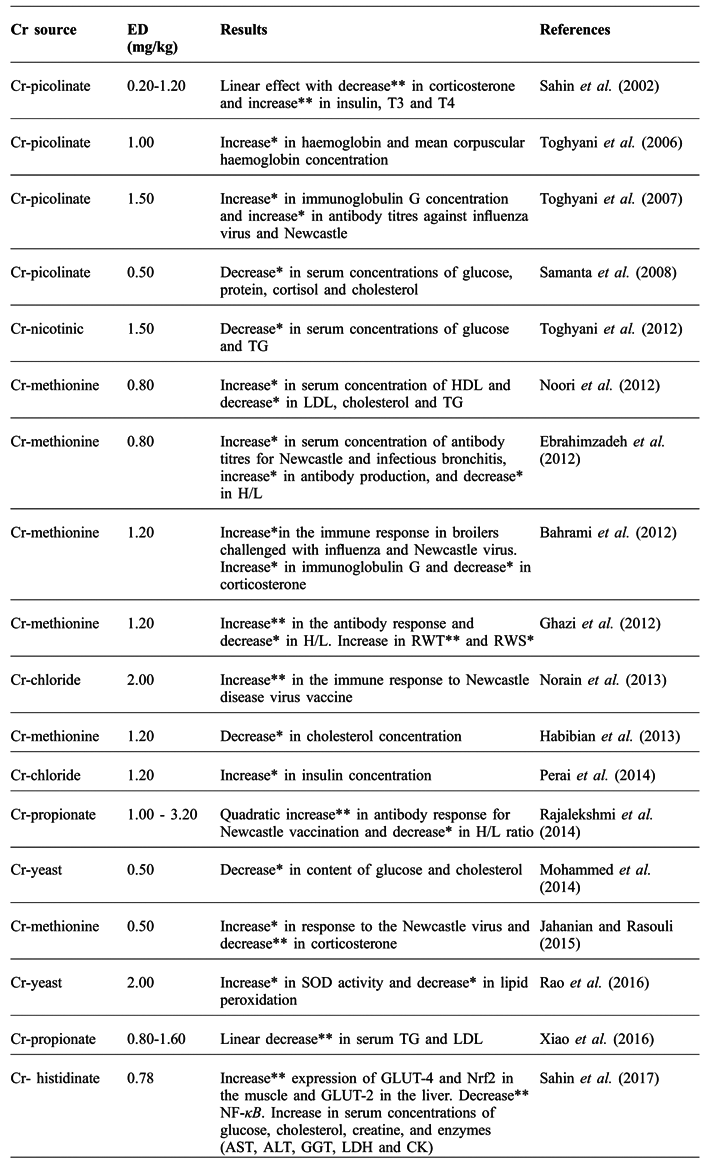
According to Calefi et al. (Reference CALEFI, QUINTEIRO-FILHO, FERREIRA and PALERMO-NETO2017) there is a direct connection (neuroimmunomodulation) between the central nervous system, endocrine and immune system that, through stressors such as heat, share efferent responses through various substances such as hormones, neurotransmitters, neuropeptides, cytokines and growth. Based on this, Sahin et al. (Reference SAHIN, HAYRLI, ORHAN, TUZCU, AKDEMIR, KOMOROWSKI and SAHIN2017) found that supplementation with 0.78 mg/kg of Cr as Cr-histidine for broilers reared under heat stress influenced the expression of growth factors considered as biomarkers of oxidative stress, with increase in hepatic Nrf2 expression and reduction on NF-κB expression in the breast muscle. Nrf2 is involved in the transcription of several genes that condition oxidative enzymes. NF-κB is linked to the transcription of genes involved in the coding of stress-related cellular responses (cytokines and free radicals). This indicates that the physiological mechanisms of the reaction of broilers to heat stress are multifactorial and have direct consequences on immunity and later performance. Table 1 summarises the effects of Cr supplementation on physiological parameters and immune function in heat-stressed broilers.
Effects of Cr supplementation on physiological parameters and immune function in heat-stressed broilers.

Abbreviations used: ED, effective doses; T3, triiodothyroxine; T4, thyroxine; H/L, heterophil/lymphocyte ratio; RWT, relative weight of thymus; RWS, relative weight of spleen; SOD, superoxide dismutase; GLUT-2, glucose transponder 2; GLUT-4, glucose transponder 4; Nrf2, nuclear factor erythroid 2-related factor 2; NF-κB, nuclear factor kappa B; AST, aspartate aminotransferase; ALT, alanine aminotransferase; GGT, γ-glutamyl transferase; LDH, lactate dehydrogenase; CK, creatine kinase. *, (P<0.05); **, (P<0.01)
Sahin et al. (Reference SAHIN, SAHIN and KÜÇÜK2003) reported an increase in T3 and T4 concentrations, a decrease in lipid peroxidation and improved carcass characteristics of heat-stressed broilers (32°C) fed 0.40 mg/kg of Cr as Cr-picolinate with or without inclusion of 250 mg/kg of vitamin C to the diet. Vitamin C has been reported to decrease production and increase degradation of plasma glucocorticoids in broilers reared under cyclic heat stress (30°C) (Mahmoud et al., Reference MAHMOUD, EDENS, EISEN and HAVENSTEIN2004). Due to its antioxidant action, supplementation with 0.40 mg/kg Cr-propionate increased humoral immunity in broilers reared in high ambient temperatures (Eze et al., Reference EZE, OKWOR, ANIKE, KAZEEM and MAJIYAGBE2014). In addition, Cao et al. (Reference CAO, LI, LU and ZHAO2004) reported that supplementation with 0.20 to 0.40 mg/kg Cr-chloride in broiler diets stimulated production of antibodies against Newcastle disease (Cao et al., Reference CAO, LI, LU and ZHAO2004). This mechanism of action is still poorly understood; however, mRNA expression was increased through interferon-gamma synthesis in broilers supplemented with Cr (Bhagat et al., Reference BHAGAT, AHMED, TYAGI, SAXENA and SAXENA2008). Ghazi et al. (Reference GHAZI, HABIBIAN and MOEINI2012) observed that supplementation with 1.20 mg/kg Cr-methionine for broilers under cyclic heat stress (37°C) induced a two-fold reduction in the heterophil/lymphocyte ratio.
Heat stress induces oxidative stress and cellular damage (unfolding, aggregation, and apoptosis) (Rhoads et al., Reference RHOADS, BAUMGARD, SUAGEE and SANDERS2013). According to Sahin et al. (Reference SAHIN, SAHIN, KÜÇÜK, HAYRLI and PRASAD2009), the production of heat shock proteins (HSPs) and reactive oxygen species (ROS) indicates a physiological response of the organism to prevent heat-induced damage. Supplementation with 0.80 mg/kg Cr-histidinate increased cellular function and decreased oxidative stress by 27.2 and 55.6% respectively in the expression of HSPs in Japanese quails reared under cyclic heat stress (34°C) compared the control group (22°C) (Akdemir et al., Reference AKDEMIR, SAHIN, ORHAN, TUZCU, SAHIN and HAYIRLI2015). The decrease in expression of HSPs is associated with lower production of ROS, which attenuates the deleterious effects caused by heat stress. From currently available literature, there are no studies with broilers evaluating HSP expression due to Cr supplementation in broilers diets.
Past studies reported that LMWCr and cromodulin act as Cr carriers (Vincent Reference VINCENT2000b; Vincent, Reference VINCENT2010), which mobilise this mineral towards deficient proteins and enhancing cell membrane fluidity (Evans and Bowman, Reference EVANS and BOWMAN1992). Therefore, insulin metabolism influences the peroxidation of lipids, and Cr, as an insulin cofactor, acts as a secondary antioxidant (Króliczewska et al., Reference KRÓLICZEWSKA, ZAWADSKI, DOBRZANSKI and KACZMAREK-OLIWA2004). Consequently, broilers exposed to high temperatures may present greater immune response and lower meat deterioration by reducing the formation of peroxides.
Supplementation with 0.50 mg/kg Cr-yeast in the diet of broilers decreased serum levels of total cholesterol, LDL, triglycerides and glucose, and increased HDL levels in association with greater body weights, weight gain and feed efficiency (Króliczewska et al., Reference KRÓLICZEWSKA, ZAWADSKI, DOBRZANSKI and KACZMAREK-OLIWA2004). Xiao et al. (Reference XIAO, AO, ZHOU, SPEARS, LIN and HUANG2016) evaluated different levels Cr-propionate (0.20, 0.40, 0.80, 1.60 mg/kg) in the diets for broiler chickens raised under heat stress (35°C) from 21 to 42 days of age and reported a linear decrease in serum levels of triglyceride and LDL. Souza et al. (Reference SOUZA, MURAKAMI, FERNANDES, GUERRA and MARTINS2010) suggested this probably occurred because Cr acts to inhibit the enzyme hydroxymethyl-CoA reductase responsible for the synthesis cholesterol. In agreement, Souza et al. (Reference SOUZA, MURAKAMI, FERNANDES, GUERRA and MARTINS2010) reported a 6.53% reduction in total cholesterol in breast meat from broilers supplemented with Cr-picolinate.
Growth performance
Heat stress decreases feed intake and increases water consumption. Oliveira et al. (Reference OLIVEIRA, DONZELE, ABREU, FERREIRA, VAZ and CELLA2006) observed a 31% lower feed intake in heat-stressed broilers (32°C) compared to those housed in thermoneutral conditions (25°C). Bruno et al. (Reference BRUNO, MAIORKA, MACARI, FURLAN and GIVISIEZ2011) observed a 28% increase in water intake in broilers reared in a hot environment (34°C) compared to those in thermoneutral (25°C) conditions. According to Sands and Smith (Reference SANDS and SMITH1999), supplementation with 0.40 mg/kg Cr-picolinate increased weight gain and feed conversion ratio in broilers independent of their environment. Rajalekshmi et al. (Reference RAJALEKSHMI, SUGUMAR, CHIRAKKAL and RAMARAO2014) reported positive effects of Cr-propionate supplementation on growth performance in heat-stressed broilers. According to Jahanian and Rasouli (Reference JAHANIAN and RASOULI2015), heat stress increases Cr urinary excretion, resulting in marginal deficiency. Therefore, Cr supplementation is highly recommended when growing broilers are exposed to heat stress.
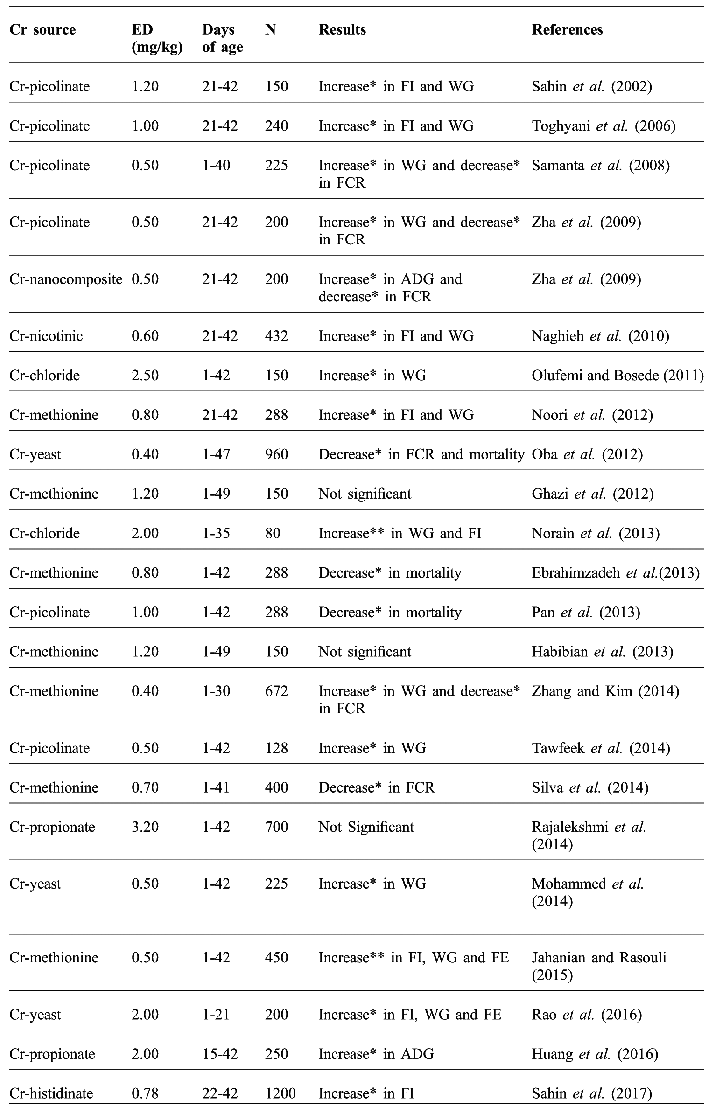
According to Oba et al. (Reference OBA, LOPES, BOIAGO, SILVA, MONTASSIER and SOUZA2012), supplementation with 0.40 to 1.20 mg/kg Cr-yeast increased the feed conversion ratio and immune response by increasing haemaglutination values in broilers reared under heat stress (32°C). Toghyani et al. (Reference TOGHYANI, TOGHYANI, SHIVAZAD, GHEISARI and BAHADORAN2012) reported 4% greater feed efficiency in broilers exposed to high ambient temperatures (33°C) fed diets supplemented with 1.50 mg/kg Cr-nicotinic compared to those fed diets without Cr supplementation. Heat stress induced an increase in corticosterone, impaired growth performance, increased water intake and induced disturbances in the osmolarity and pH of the digestive tract (Puvadolpirod and Thaxton, Reference PUVADOLPIROD and THAXTON2000). Samanta et al. (Reference SAMANTA, HALDAR, BAHADUR and GHOSH2008) evaluated supplementation with 0.50 and 1.00 mg/kg of Cr as Cr-picolinate in broilers exposed to high temperatures (35°C) and reported greater feed efficiency with 0.50 mg/kg of Cr as Cr supplementation. Table 2 summarises the effects of Cr supplementation on growth performance in heat-stressed broilers.
Effects of Cr supplementation on growth performance in heat-stressed broilers.
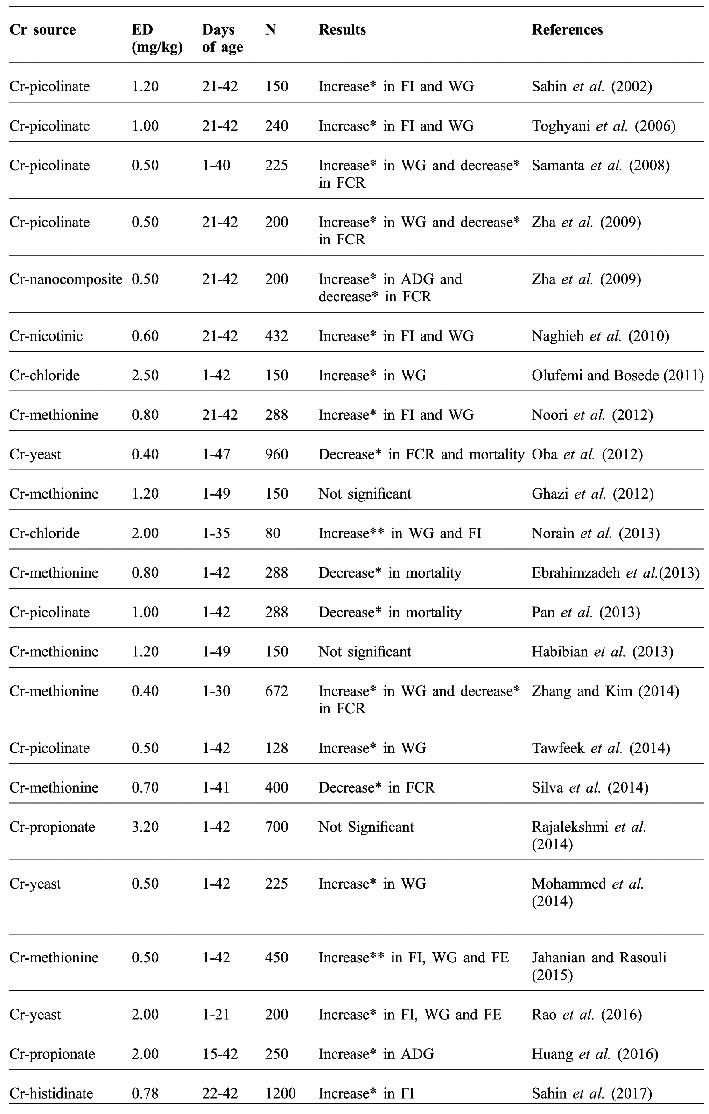
Abbreviations used: ED, effective doses; n, number of birds; FI, feed intake; WG, weight gain; FCR, feed conversion ratio; ADG, average daily gain; FE, feed efficiency; *, (P<0.05); **, (P<0.01)
Carcass characteristics
Heat stress negatively affects carcass characteristics since it increases the production of free radicals, lipid peroxidation, protein and vitamin denaturation, exudate production and muscle glycogen consumption, thereby compromising meat quality (Song and King, Reference SONG and KING2015). Zhang et al. (Reference ZHANG, JIA, ZUO, ZHANG, LEI, REN and FENG2012) observed that broilers reared under cyclic heat stress had increased activity of pyruvate kinase with higher lactic acid content, reducing meat pH which accelerates meat glycolysis, and can result in decreased meat quality. Altan et al. (2003) reported changes in antioxidant capacity in broilers exposed to acute heat stress (38°C) in association with changes in catalase and glutathione peroxidase concentrations.
Habibian et al. (Reference HABIBIAN, GHAZI and MOEINI2013) evaluated different levels (0.60 and 1.20 mg of Cr per kg) and sources (Cr-chloride and Cr-methionine) of dietary Cr in broilers exposed to cyclic heat stress. They observed that those consuming diets supplemented with 1.20 mg/kg of Cr as Cr-methionine had higher breast yields. Zha et al. (Reference ZHA, ZENG, CHU, MAO and LUO2009) using three sources of Cr (Cr-chloride, Cr-picolinate, Cr-nanocomposite) at 0.50 mg of Cr per kg of feed reported an increase in carcass yield irrespective of the Cr source in broilers reared under heat stress conditions (35°C). In addition, protein concentration in the breast of broiler chickens fed diets containing Cr-nanocomposite was higher than those of the control group.
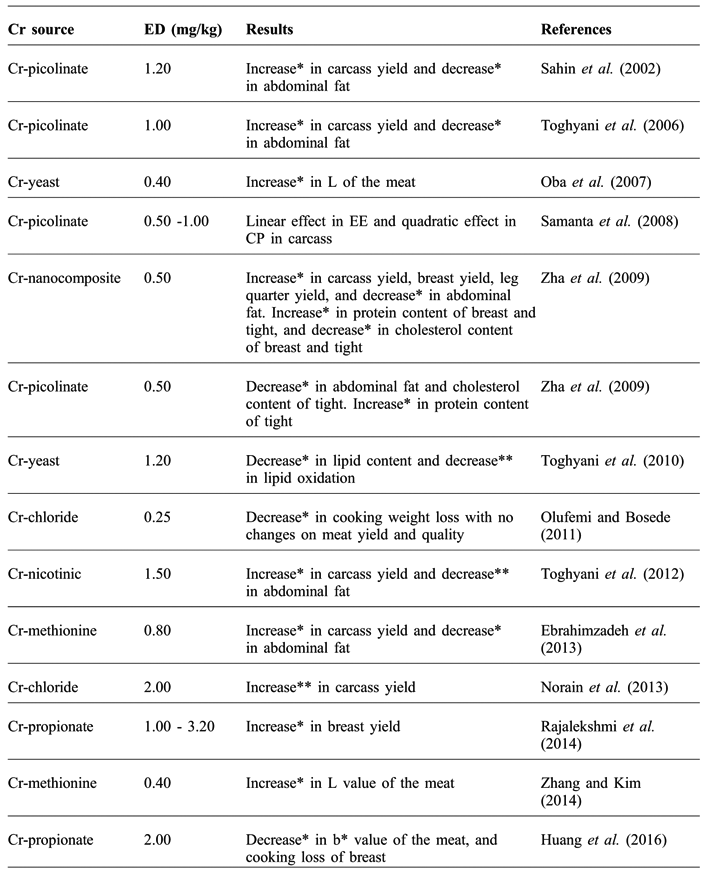
There is evidence that Cr supplementation can reduce skeletal muscle weight loss in stress situations and enhance mRNA expression of myosin and actin (Pan et al., Reference PAN, WU, DAI, ZHANG, YUE and QI2013; Rao et al., Reference RAO, RAJU, PANDA, POONAM, MURTHY and SUNDER2012). Additionally, Cr supplementation inhibits the production of tumour necrosis factor (TNF-alpha) (Jain and Kannan, Reference JAIN and KANNAN2001) which can inhibit lipogenesis in adipocytes due to decreases in levels of lipoprotein lipase (LPL), glucose transporter type 4 (GLUT-4) and acetyl-coenzyme A synthetase (Sethi and Hotamisligil, Reference SETHI and HOTAMISLIGIL1999). Consequently, there is a reduction in fat content and an increase in protein deposition in the carcass of broilers. Huang et al. (Reference HUANG, YANG, XIAO, LLOYD and LIN2016) observed reduced abdominal fat content in broilers fed diets with Cr supplementation and submitted to a temperature of 33°C. Cr supplementation can also decrease cholesterol levels in the meat (Navidshad et al., Reference NAVIDSHAD, PIRSARAEI and CHASHNIDEL2010; Javed et al., Reference JAVED, ELLAHI, ABBAS, YASMIN and MAZHAR2010; Lin et al., Reference LIN, HUANG, LI, CHENG and LIEN2014). Moeini et al. (Reference MOEINI, BAHRAMI, GHAZI and TARGHIBI2011) reported high protein concentration and low cholesterol content in the skeletal muscle of broilers reared at 33°C and supplemented with 1.20 mg/kg of Cr as Cr-methionine in the feed. Table 3 summarises the effects of Cr supplementation on carcass characteristics in heat-stressed broilers.
Effects of Cr supplementation on carcass characteristics in heat-stressed broilers.

Abbreviations used: ED, effective doses; L, lightness; EE, ether extract; CP, crude protein; b*, yellow intensity; *, (P<0.05); **, (P<0.01)
Despite the numerous advantages of Cr supplementation in heat-stressed broiler chickens, some authors have reported no significant effects (Anandhi et al., Reference ANANDHI, MATHIVANAN, VISWANATHAN and MOHAN2006; Vaz et al., Reference VAZ, OLIVEIRA, DONZELE, ALBINO, OLIVEIRA and SILVA2009; Ghanbari et al., Reference GHANBARI, EBRAHIMNEZHAD, ESHRATKHAH and NAZERADI2012). According to Huang et al. (Reference HUANG, YANG, XIAO, LLOYD and LIN2016) the discrepancy among studies may be explained by differences in type of sources, Cr concentration, different basal diets and experimental treatments. Standardised methodologies in future work would be useful in making data more directly comparable.
One factor that must be taken into account when using Cr as a supplement in the diets of broiler chickens is the concentration of this metal in the meat of the animals. The determination of metals in foods is of utmost importance for the safety of consumers as it provides toxicological information necessary for the safety of the products. Ribeiro et al. (Reference RIBEIRO, ROQUE, VIEIRA and CALDAS2011) conducted an experiment to detect the presence of Cr in chicken meat samples by spectrophotometry and did not detect traces of Cr (III), Cr (IV) and Cr (VI). Islam et al. (Reference ISLAM, KABIR, SARKER, SIKDER, ISLAM, AKTHER and HOSSAIN2016) evaluated the concentration of Cr in chicken meat samples from different farms in Bangladesh and found a high concentration in meat. Debski et al. (Reference DEBSKI, ZALEWSKI, GRALAK and KOSLA2004) found concentrations of 40 to 52 µg Cr/kg of moist tissue in meat from animals fed diets supplemented with 0.2 mg Cr/kg. According to EFSA (European Food Safety Authority) Panel on Dietetic Products, Nutrition and Allergies (2014), these values are within recommended daily intake range for adult men and women of 30-100 µg/day. However, they are in excess for infants less than one year of age (20-40 µg/day). In this sense, it is necessary to develop studies that evaluate the concentration of Cr and other heavy metals in foods of animal origin destined for human consumption, since toxicity presents extreme health risks.
Conclusions
When exposed to heat stress conditions, broilers maintain homeostasis and thermoregulation through physiological and metabolic adjustments that can have a negative effect on growth performance. Feed intake is reduced and consequently growth rates decline. Changes in nutrient utilisation and partitioning, as well as metabolic and immune function have also been reported. There is a positive relationship between dietary Cr supplementation and growth performance, physiological and immune functions when broilers are exposed to heat stress conditions. Chromium supplementation has been associated with increased growth rate, immune function and antioxidant capacity while decreasing lipid peroxidation, cholesterol and fat content in heat-stressed broilers. Therefore, dietary supplementation with Cr may be recommended as a nutritional strategy to modulate the negative effects of heat stress in broilers.
Acknowledgements
The authors thank the Federal University of Viçosa, CAPES, Cnpq, FAPEMIG and Zinpro Corporation.