The deepening of the capitalist transformation in China from the 1990s onwards contributed to several waves of protests. The first of these waves was driven by laid-off workers. Reform of the state-owned enterprises (SOEs) led to nearly 60 million workers being laid off between 1995 and 2002, sparking tens of thousands of protests each year.Footnote 1 These protests, often involving large numbers of workers, sometimes escalated into violent confrontations between workers and security forces.Footnote 2 The large-scale layoffs ended around 2003. After that, research interest in the activism of laid-off workers quickly declined even though the issues of compensation and re-employment of these workers were far from settled.
As attention to laid-off workers’ activism waned, another wave of protests – this time over loss of land and property – took centre stage, most prominently in Chinese urban and peri-urban areas. The reforms of the 1990s incentivized local governments to expropriate rural and urban land for urban expansion or redevelopment. This has resulted in a “land revenue regime,” a system of accumulation under which local governments increase revenue and stimulate economic growth through land acquisition and urban (re-)development.Footnote 3 Specifically, local governments take land from villagers and urban dwellers for below market rate and then auction it off to urban developers and large companies for a much higher price. This type of profitable land transaction has filled up local coffers and fuelled the growth of upstream and downstream industries, including mineral extraction, construction, infrastructural investment (in roads, power grids, water pipelines, telecommunications, etc.), property services and financial services. Forceful and sometimes violent land expropriations and inadequate compensation led to land-lost villagers and displaced urban dwellers launching tens of thousands of protest actions each year in the 2000s.Footnote 4
While the land revenue regime has been widely regarded as being the trigger behind the wave of protests over land and property dispossession, this paper draws attention to a paradox in China's Rustbelt: the rise in land revenues also helped to resolve the drawn-out protests of laid-off workers.Footnote 5 The focus on this paradox challenges two widely accepted assumptions in the literature. One is that the protests by laid-off workers had diminished after the early 2000s to the extent that they were no longer a source of social tension. This paper instead shows that laid-off workers continued to wage their struggles long after work relations with former enterprises were terminated or suspended. Our research demonstrates that laid-off workers’ activism was far more resilient than previously thought and sheds new light on assessing the future of social unrest in China. The other assumption is related to the recent literature on how the Chinese state is able to mute protests by tactically offering economic concessions to protesters.Footnote 6 Ching Kwan Lee and Yonghong Zhang call it “bargained authoritarianism” and suggest that the strategy depoliticizes social protests and reduces negotiations to an economic matter rather than a political one.Footnote 7 This paper shows that the success of bargained authoritarianism is dependent on the fiscal capacity of the local government and the conditions of the local economy. While megacities and coastal regions can use economic resources to control social unrest, the Rustbelt was initially incapable of using such a strategy to suppress laid-off workers’ protests. Only in the recent decade were these protests finally settled thanks to rising revenues from land expropriation.
Our data are drawn mainly from field research in the city of Anshan 鞍山市, Liaoning province, in 2017 to 2021. We conducted interviews with SOE workers and managers, officials, developers and land-lost peasants. We also performed ethnographic observations and collected local statistics and documents. Additionally, we gathered data on five other cities to assess how typical the experience of Anshan has been in the Rustbelt region. Built off the back of the giant SOE, Anshan Iron and Steel Corporation (Angang 鞍钢), Anshan was known as “the capital of iron and steel” in China before the 1990s. During the SOE reforms, more than 200,000 workers were laid off in the city.Footnote 8 The laid-off workers’ protests in Anshan, and the Rustbelt at large, were a subject of much scholarly research,Footnote 9 but the attention drifted after the early 2000s, even though laid-off workers there continued to wage protests and launch petitions for at least another decade. This paper zooms in on the drawn-out protests by workers in two former SOE enterprises in the city: a shopping centre (baihuo shangdian 百货商店) and a boiler plant (guolu zhizaochang 锅炉制造厂), while analysing city-wide trends and developments and comparing Anshan with other Rustbelt cities. We examine the causes and processes of the drawn-out protests and their final settlement via rising land revenues in the early 2010s. We will also discuss the implications of the city's crumbling land revenue regime in recent years.
Land Revenue, Protests and Bargained Authoritarianism
The emergence of the land revenue regime is linked to two reforms launched in China in the 1990s. The first, the fiscal reform in 1994, cut local governments’ share in tax revenues from 70 to 40 per cent.Footnote 10 This motivated local governments to seek revenue from the expropriation and redevelopment of land.Footnote 11 The move towards land expropriation was further strengthened by the urban housing reform in 1998, which stimulated demand for land. Housing reform phased out the policy of housing being allocated under the work unit system and established an urban housing market instead. It also mandated the privatization of public housing so that these assets could be tradable on the market.
The land revenue regime generates enormous revenues and profits. Nationwide, the revenue from land sales accounted for more than 50 per cent of all local revenue between 2004 and 2015, and real estate development has been one of the fastest-growing sectors.Footnote 12 However, the land revenue regime also triggered a wave of protests. In the 2000s, it was estimated that land expropriations caused at least 20,000 “mass incidents” each year.Footnote 13 Local governments, driven by their insatiable appetite for revenue and economic growth, deployed officials, police, security guards, thugs and even paramilitary groups to forcefully remove villagers and urban dwellers from land and to-be-demolished houses. The violent clashes between security forces and resistant villagers and dwellers often led to the injuries and even deaths of the latter – in some incidents, desperate villagers committed suicide in public by setting themselves alight or by jumping off the building.Footnote 14
The protests, violence, public suicides and widespread impoverishment after land expropriation caused public outcry and seriously undermined the legitimacy of the communist regime. From 2006 onwards, the central government repeatedly urged local governments to increase the compensation offered to land-lost villagers and displaced urban dwellers.Footnote 15 However, owing to resistance by local governments, the centre has never explicitly prohibited forceful dispossession, and the central effort to scale back land expropriation has also proved ineffective to date.Footnote 16 Nevertheless, pressure from the centre to prevent extreme incidences did force local governments to negotiate and increase compensation, a change which came in parallel with the intensification of the measures to “maintain stability” (weiwen 维稳). Against this background, local governments employed both economic and coercive means to suppress social unrest, most notably protests by displaced villagers and urban dwellers.Footnote 17
Lee and Zhang employ the term “bargained authoritarianism” to capture this protest–control system, which comprises three tactics: protest bargaining, legal-bureaucratic absorption, and patron-clientelism.Footnote 18 All three tactics involve bargaining that is conditional on “the state's readiness to make material concessions to the populace.”Footnote 19 They argue that the process of bargaining turns structural and political issues into economic negotiations, thus depoliticizing social unrest and preserving the authoritarian regime. A popular term to describe this economic solution is “buying stability” (huaqian mai wending 花钱买稳定).Footnote 20 The literature is critical of the depoliticized nature of bargained authoritarianism, or buying stability, but it acknowledges the effectiveness of such a strategy in absorbing social unrest, at least in the short term. A crucial condition for the strategy to work is the availability of fiscal resources. Lee and Zhang base their analysis on case studies in Beijing and Shenzhen, two megacities with abundant fiscal resources, where the revenue from land there is among the highest in China owing to skyrocketing property prices. It is likely, as they suggest, that “protest bargaining … may backfire if the Chinese regime ever finds itself in a fiscal crisis and can no longer buy stability expediently.”Footnote 21 Other scholars also indicate that the outcomes of protest control may vary in different fiscal situations.Footnote 22 However, there has been little investigation into how a local government would confront social protests, and how the outcome of protest control would be different, in a situation of fiscal shortages. Under the land revenue regime, local governments are usually able to increase revenue and find the resources to practise bargained authoritarianism. This study, taking a relatively long-term perspective, examines the protests and protest control in Anshan before, during and after the rise of the land revenue regime. The case study offers an opportunity to unveil the temporal variation of protest control in a city where the government has been struggling with the problem of fiscal deficits.
SOE Reforms, Bargained Authoritarianism and Drawn-out Protests in Anshan
Anshan municipality sits at the heart of China's Rustbelt. With 1.5 million urban residents at the end of 2019, Anshan is the third-largest city in Liaoning province but is only a medium-sized city in China.Footnote 23 Anshan was renowned for its critical role in the development of heavy industry, particularly the steel industry, in socialist China (1949–1978). The initial development of the steel industry in the city dates to the period of Japanese occupation (1932–1945). Following the civil war, the Chinese Communist Party built Anshan up into the foremost steel city in the country in the 1950s and 1960s. This led to the establishment of thousands of SOEs, serving or extending the pillar industry of steel production. By 1990, there were 2,790 SOEs in the city employing 545,000 workers, or 64 per cent of the labour force.
The transition to a capitalist economy in the 1990s struck a heavy blow to SOEs, particularly those in the Rustbelt where these enterprises were concentrated. On the one hand, many SOEs were struggling to make a profit under the work unit system as they had to cover various welfare expenses for workers and retirees while facing increasing competition from private and foreign enterprises. On the other hand, the Chinese state had grown hostile towards public ownership and regarded it as a major obstacle to further development of the economy. From 1994 to 1997, the state successively put forward a series of policies to reform the SOEs. Between 1997 and 2003, radical SOE reforms were implemented nationwide, laying off nearly 60 million urban workers. In Anshan, half of the 545,000 SOE workers were laid off.
Bargained authoritarianism and its limits
Under public ownership and socialist ideology, many SOE workers regarded themselves as the rightful owners of their enterprise.Footnote 24 The special relations between workers and SOEs, which Joel Andreas calls “industrial citizenship,” were also recognized by the state, and the primary purpose of the SOE reforms was to sever these relations.Footnote 25 The means to the severance was “buying out years of service” (maiduan gongling 买断工龄), which entailed negotiations between local government, the SOE and workers to find a deal to end the special employment relations. The “buying out” policy fits with bargained authoritarianism, as conceptualized by Lee and Zhang. First, the enactment of the policy was a top-down, authoritarian process in which the workers had little participation. In Anshan, and the Rustbelt at large, laid-off workers were offered a severance package, which included a one-time compensation and social insurance payment, a minimum living allowance for two years and re-employment services.Footnote 26 The one-time compensation was calculated according to the worker's length of employment: each year of service was worth about one month's basic salary (300–700 yuan in Anshan), and the minimum living allowance was set at 195 yuan per month in the city. Second, workers had to agree to the severance package before the deal could be signed. Local officials used all manner of tactics to force workers to sign the deal, just as local governments similarly coerced peasants to accept the expropriation of their land.Footnote 27
There is, however, a crucial difference in the bargaining used for land expropriation and the laying off of SOE workers. While land-lost peasants or dispossessed urban dwellers could negotiate for higher amounts of compensation, particularly in coastal regions and large cities, there was very little basis upon which laid-off workers could bargain or receive a satisfactory severance deal. This is because, unlike land expropriations under the land revenue regime, the SOE reforms did not bring any revenue to the local governments in an economically stagnant Rustbelt. Anshan and the other Rustbelt cities were unable to provide even a basic severance package for laid-off workers owing both to a sluggish local economy and the large numbers of laid-off workers. The payment for the basic severance package in Liaoning province between 1997 and 2003 was based on a “three one-third” system – that is, one third was paid by the SOE, one third by local government and one third by the central government.
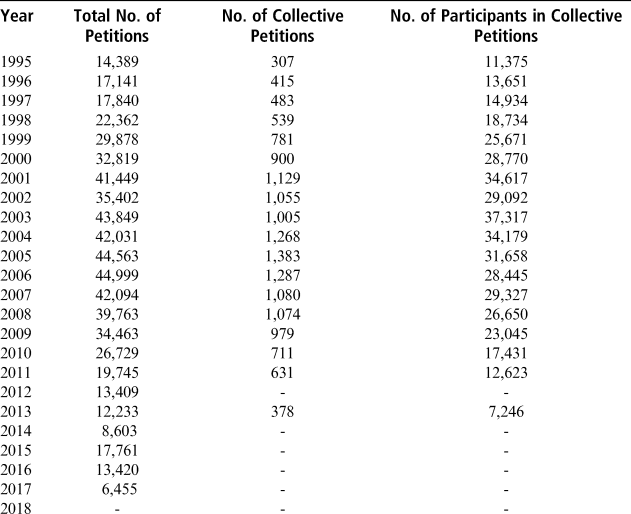
Many SOEs in the Rustbelt had been operating with huge debts and could not even afford to pay one-third of the severance package. The Blue industrial boiler factory in Anshan was such an example.Footnote 28 The factory was established in 1958 and expanded to a large factory in the 1990s, hiring about 800 workers and supporting 500 retirees. The boiler factory had difficulty in turning a profit in the 1990s, and the problem got worse over the decade, to the extent that the factory had to owe its workers wages. When the local government ordered the layoff of workers in 2000, the factory was unable to contribute its one-third share of the severance package. The severance payment for each year of employment was just 366 yuan. A worker who worked for 20 years would only receive 7,320 yuan. Faced with such a paltry offer, hardly any workers wanted to be laid off. There were intense protests against the reforms in the period between 1999 and 2003, as has been documented by past studies.Footnote 29 In Anshan, the number of collective petitions increased from 307 in 1995 to 1,005 in 2003, and the number of workers filing petitions grew from 11,375 to 37,317.
Workers in the boiler factory also organized dozens of protests. However, as the factory was running a deficit, maintaining work relations with the enterprise was also not a good option. The manager of the factory eventually convinced the workers to accept the severance package. By 2003, all workers in the factory had signed the agreement. They received only two-thirds of their severance payment from the government as the factory was unable to pay its share. The factory's share was added to the debt owed to the workers by the factory for unpaid wages.
Not all SOE workers accepted the severance packages offered. In the case of the Anshan Flower shopping centre, most workers refused to sign the deal. Established in 1957, the shopping centre was one of the largest in the city, employing 1,800 workers in the 1990s. Owing to mismanagement and competition from private enterprises, the shopping centre was running a deficit in the late 1990s. Between 2000 and 2003, the local government tried to convince the workers to accept a severance deal; only 394 workers agreed while 1,100 workers refused. The main reason for not accepting the deal was social insurance premiums. Signing the agreement meant that the enterprise or the state would no longer be responsible for pension and medical insurance premiums, the two expenses that concerned workers most. Take Mr Gu as an example.Footnote 30 Gu had been working for the shopping centre as a procurement agent for 15 years by the time the reform was implemented. If he accepted the deal, he would have received just 7,500 yuan in compensation. However, the shopping centre owed him wages, transportation fees and medical expenses totalling more than 5,000 yuan. He had also bought 9,000 yuan's worth of shares in the shopping centre as a requirement of the earlier shareholding reform. More importantly, according to our interview, he would have had to contribute his own social insurance premiums for at least 15 years following his severance. Mr Gu's decision for rejecting the deal was echoed by Ms Peng, who worked as a retail salesperson for the shopping centre. She remarked:
We would have only received a few thousand yuan after the severance, but the insurance premiums were increasing by the year. After the severance, all insurance premiums must be borne by ourselves because you become a “social person.” The severance compensation would only cover a few years’ worth of insurance premiums. So, I decided not to take the buy-out [of my work relations], and none of my colleagues accepted the buy-out offer.Footnote 31
The workers who refused the severance deal believed that they would be able to maintain their work ties with the local state and press their demands upon it. Ms Shen, who was also working for the centre as a retail salesperson, told us, “The state (guojia 国家) will take care of us one day. Keeping relations with the enterprise was to keep relations with the Party and government.”Footnote 32
Drawn-out protests
The completion of the SOE reform in 2003 did not mark the end of workers’ relations with the enterprise or with the state, nor did it end workers’ activism. Former SOE workers continued to demand that the local state cover SOE debts owed to the workers as well as social insurance premiums and housing allowance. In the case of the boiler factory, the debts and unpaid expenses amounted to a total of 12 million yuan, but the value of the factory's assets including land and machinery was estimated at about 10 million yuan in 2003. The local state could not repay the debts owed to the workers even if it sold the factory's assets, nor could it allocate a budget to meet workers’ demands owing to its own limited fiscal resources. The tactics of bargained authoritarianism, which seemed to work in some cases of protests over land dispossession, did not work in the case of laid-off workers’ protests in the Rustbelt because the local state did not have adequate fiscal resources.
Mr Xiao, the former manager of the boiler factory and a skilled technician, decided to keep the factory running after 2003. He invested his personal savings and converted the debts (12 million yuan) into shares. The factory had then become a joint stock company, with the former workers holding shares in the factory. Business, however, remained sluggish. Mr Xiao re-hired about 280 former workers and paid them with piece rates. Over the next five years, the factory failed to make enough profit to pay off the debts. The former workers, who had been bought out in the SOE reform, continued to petition the municipal government for unpaid wages and medical expenses. These actions took place every year, individually or in groups. According to Mr Xiao, such petitions put pressure on the local government, forcing it not to forget the workers’ demands.Footnote 33 The workers’ activism persisted until 2009 when the local state reached a deal with the workers, which we discuss below.
The former workers of the shopping centre staged more intense protest actions than their counterparts from the boiler factory. Following the failed severance negotiations, the shopping centre sold 49 per cent of its shares to a private commercial company. The private company agreed to pay workers a basic monthly allowance for two years and promised to re-hire the former workers after the end of the allowance period. However, these promises were not honoured. The workers received only five months’ allowance payments and had to compete with others for jobs at the private company. Very few former workers were offered jobs. Feeling betrayed, the workers organized dozens of protests from 2003 to 2009, often with hundreds of participants, to press the municipal government to resolve four major issues. First was the failure of the private company to honour its promises on re-employment and monthly allowances; second, the shopping centre still owed workers large sums in wage arrears, heating subsidies and transportation expenses; third, the shopping centre had not paid workers’ social insurance premiums, particularly pension and medical insurance premiums, thus the workers would not be eligible to receive a pension after retirement; and fourth, many retirees were unable to get their medical expenses reimbursed owing to insufficient amounts in their medical insurance accounts.
Mr Chen Feng, who had worked as a security guard for the shopping centre before the SOE reform, described how the workers organized these protests:
Each time, hundreds of workers blocked the road and government buildings with banners, which read, “Meet the mayor” and “We need to eat [for survival].” The municipal office for petitions and the bureau of commerce could not meet our demands, so we besieged the government's building until the armed police came. They first confiscated our banners, and then dragged the male workers into police vans. I got caught, too. Two policemen took us away from the building, let us out one by one in remote places and left us to get ourselves home.Footnote 34
The municipal government, however, was unable to meet the protestors’ demands as the shopping centre owed a large sum in debts. To break the stalemate, the workers sent a delegation to Beijing in 2009 to petition the central government via the National Bureau of Letters and Visits. The petition was accepted and the workers’ demands were deemed to be rightful. The national bureau even sent a letter to the government of Anshan to urge it to settle the issue. After that, the government convened several meetings with the workers, but these did not yield any meaningful outcomes for the workers. Following the failure of the Beijing petition to resolve their grievances, the workers resumed the protests. Between 2010 and 2014, the protests intensified as an increasing number of workers reached or came closer to retirement age and still had no pension.Footnote 35 The workers also wanted medical care to be covered as it is an increasing expense with the onset of old age. According to our interviews, the shopping centre workers launched more than 100 protests or collective petitions between 2003 and 2014 – at least ten protests or collective petitions a year on average. The resilience of these drawn-out protests far exceeded what the scholarship on Chinese workers’ protests has documented.
The protracted protests by the workers of the boiler factory and the shopping centre represented the general trend of SOE workers’ activism in the city. Based on petition data from the Anshan Bureau of Letters and Visits, Table 1 shows the trends for total petitions, collective petitions and participants in collective petitions between 1995 and 2018. The number of collective petitions, which is probably the most relevant indicator of workers’ protests, did not decrease after 2003 and hovered around 1,000 collective petitions every year from 2004 to 2009. The number of participants in these collective petitions was never lower than 23,000 in this period. The bureau's data indicate that approximately 60 per cent of these petitions were related to the SOE reforms. The number of collective petitions started to fall after 2010 but remained high in the early 2010s, given that Anshan is a medium-sized city. In 2013, there were 378 collective petitions involving 7,246 participants.
Petitions in Anshan, 1995–2018

Sources:
Anshan Yearbooks, 1996–2019.
Note:
The cells are left blank where data are unavailable.
After 2014, more than ten years after the end of the radical SOE reforms, the protests by former SOE workers in Anshan finally reduced to an insignificant scale. The decade-long drawn-out protests demonstrate the resilience of SOE workers’ activism and the limits to bargained authoritarianism in the Rustbelt. Why did the activism of former SOE workers start to decline after 2009 and fade away after 2014? The next section examines Anshan's urban redevelopment and the role of the land revenue regime in placating the protestors.
Urban Redevelopment and the Paradox of Land Revenue
The land revenue regime took shape in coastal regions and large cities after the 1998 urban housing reform, accelerating the pace of urban expansion. In the early 2000s, the local economies in Anshan and much of the Rustbelt were, however, still in the throes of the SOE reforms. Influenced by the hype of land revenue in coastal regions, the Anshan government promoted the slogan of “developing the city like a business” (jingying chengshi 经营城市) in 2001 and reiterated it every year thereafter. Nevertheless, the focus of the government was still on the SOE reforms, which absorbed nearly all of its energy and resources.
The turning point came in 2004 after the central government launched an initiative to revitalize the old industrial base of the north-east (zhenxing dongbei laogongye jidi 振兴东北老工业基地).Footnote 36 The initiative permitted the Rustbelt governments favourable policies on taxation, infrastructural investment and land use. In 2004, Anshan drew up a blueprint to redevelop the urban areas where former SOEs were concentrated and convert them into upscale commercial and residential districts. In tandem with this plan was the policy to relocate factories to new industrial zones, which were to be built on rural land expropriated from peasants by the government. Thus, the land revenue regime in Anshan was characterized by two parallel processes: the urban redevelopment of former industrial areas into commercial and residential districts, and the expropriation of rural land for the creation of new industrial zones and factory relocation. The land revenue regime in Anshan, and China at large, depended on one crucial condition: peasants accepting low compensation for their land. In the early 2000s, the compensation for farmland expropriation was 10 to 15 years of the annual grain crop yield from the land – that is, peasants could only receive a maximum of 15,000 yuan for one mu of farmland.Footnote 37 The land, however, could be sold on to a developer for about 1.3 million yuan on average, more than 84 times the compensation. Although Anshan increased the average compensation it offered to 50,000 yuan per mu in 2010 in response to peasants’ protests, the revenue gained from land sales still far exceeded the compensation paid to peasants.Footnote 38
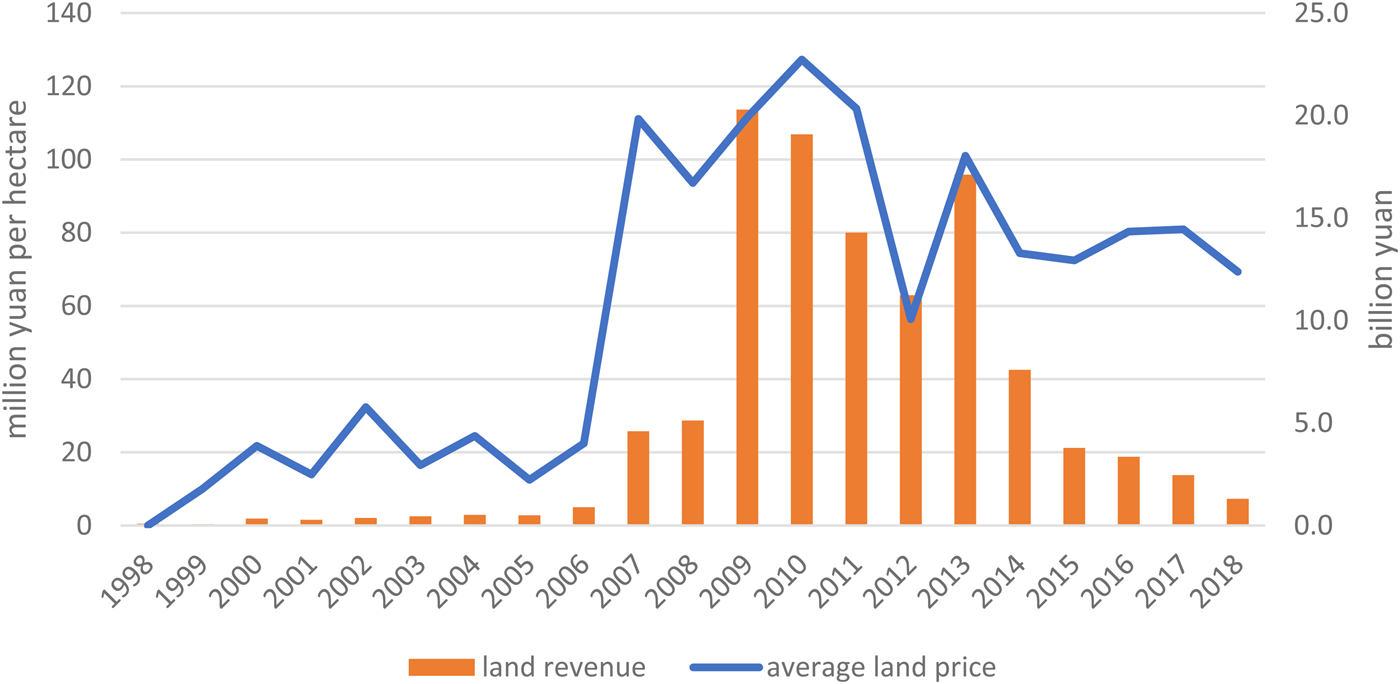
In addition to compensation, local governments must invest large sums in property demolition and clearance, infrastructure, factory buildings and public services such as utility supplies and telecommunications. Consequently, Anshan's fixed capital investment jumped to 21.7 billion yuan in 2004, nearly twice the average annual investment between 1998 and 2002. The investment continued to grow rapidly thereafter, reaching 70 billion yuan in 2008. The sources of investment mainly came from central funds and bank loans, as the projects of urban redevelopment and new industrial zones were approved and supported by the province and the State Council. The fixed capital investments and urban redevelopment plan began to push up land prices as well as the prices of urban real estate. Between 2003 and 2006, the average price of urban land in Anshan fluctuated at around 19 million yuan per hectare. In 2007, the price shot up to 111 million yuan, nearly five times that of the 2006 figure (Figure 1), signalling the take-off of the land revenue regime in the city. In 2009, the revenue from land sales grew to 22.3 billion yuan, accounting for 62 per cent of all local revenue, which was up from 14 per cent in 2006.
Average Land Price and Land Revenue in Anshan, 1998–2018
Sources:
Anshan Statistical Yearbooks, 1998–2019.

The take-off of the land revenue regime in Anshan also boosted land prices in old industrial districts where the former SOEs were located. Many former SOEs could not repay their debts in the early 2000s because the market value of their assets, including the land, was too low. The boiler factory's assets – including land – were valued at 10 million yuan, but its debts totalled 12 million yuan. By 2007, with skyrocketing land prices, the valuation of the factory's assets had increased six-fold to 70 million yuan, which was more than enough to repay all debts if the land was sold. Excited by the take-off of the land revenue regime, the municipal government saw an opportunity to solve the “remaining problems of the SOE reforms” (guoqi gaige yiliu wenti 国企改革遗留问题), particularly the continuing protests by the workers. According to the municipal government's annual work reports between 2007 and 2014, the government had purposefully taken over and “activated” (jihuo 激活) the land assets of SOEs and used the revenue from land redevelopment to meet former SOE workers’ demands. As shown in Table 1, such a strategy contributed to the decline in the number of workers’ protests. The number of collective petitions started to decline notably after 2007 and, by 2013, had dropped to 378, down from 1,278 in 2006 (Table 1). The boiler factory and the shopping centre cases also show how the local government used land revenues to resolve the protracted protests.
In 2008, the government ordered the boiler factory to shut down and planned to redevelop the land it sat on. The government paid 14 million yuan to the former workers to cover the factory's unpaid wages, external debts and compensation payments. The factory closed in 2009, and the land was auctioned off to an automobile service company in 2012. According to the former manager of the factory, the government not only met the workers’ demands but also harvested a handsome revenue by taking back and then selling the factory's land assets. Settling the shopping centre workers’ demands was a more delicate matter. First, the land revenue regime was still in its nascent phase at the end of the 2000s, and the government had to continue pumping funds and bank loans into urban redevelopment and rural land expropriation. Second, the shopping centre owed workers and other parties a much larger sum of debts than did the boiler factory. Most former workers had not signed the severance agreement and demanded that the shopping centre pay for social insurance premiums and other arrears. Third, the shopping centre was under the control of a private commercial company, which had acquired 49 per cent of its shares. The owner of the company was a powerful person with political connections. Any settlement with workers had to be negotiated with the company, which was not interested in settling with the former SOE workers.
The land revenue regime remained strong after 2007. It was further fuelled by the post-crisis fiscal policy as the central government pumped 4 trillion yuan into the economy.Footnote 39 The central government issued another document to support the revitalization of the north-east industrial base in 2009. In Anshan, the land revenue continued to grow. By 2011, the price of urban land had grown to 11.4 million yuan per hectare, and the revenue from land sales averaged 16.4 billion yuan a year between 2009 and 2013. Encouraged by this promising trend and pressurized by the protests, the municipal government decided to settle the case of the shopping centre. The sudden death of the private company's owner in 2013 also gave the government an opportunity to take on the company. In 2014, the government threatened to take back the shopping centre's land if the company did not repay all of the debts it owed to the workers. After several rounds of negotiation, the private company agreed to pay 57 million yuan.
In 2014, after more than a decade of protests, the former workers of the shopping centre were invited by the government to reach an agreement. The 57 million yuan from the private company would all go towards paying off the shopping centre's debts and the former workers’ social insurance premiums, unpaid wages and other arrears. The offer came as a relief and surprise to the workers. More than a decade of protests had finally paid off, with the government agreeing to nearly all the workers’ demands, including full social insurance premiums paid up to the year 2013. Mr Gu, the procurement agent from the shopping centre, received about 50,000 yuan. Although he had to pay his social premiums for five years until his retirement in 2018, he would receive a monthly pension of 2,000 yuan thereafter.
Our research in Anshan shows differences in resistance by former SOE workers. While the boiler factor workers agreed to the severance deal offered, their counterparts in the shopping centre mostly declined it. This led to a more protracted struggle by the shopping centre workers. The outcome of the protests also favoured the shopping centre workers as they successfully pressed the government to cover social insurance premiums up to 2013; the boiler factory workers only recovered unpaid wages, severance compensation and unreimbursed expenses. A primary reason for the difference might be that the boiler factory's economic situation was much worse than that of the shopping centre at the time of the reform, as the factory already owed its workers many years of outstanding wage arrears. Thus, the workers of the factory were under greater livelihood pressures than their shopping centre counterparts to accept the deal. In retrospect, the former manager of the factory told us that he and his co-workers regretted signing the severance deal as this forfeited their right to demand social insurance premiums. This indicates that the leadership and the strength of workers’ resistance might have also played a role in determining the outcome; however, a detailed analysis of workers’ varying protest strategies and outcomes is beyond the scope of this paper.
We collected data on workers’ protests and urban development in five other cities in the Rustbelt for comparison: Shenyang and Fushun 抚顺市 in Liaoning province, Jilin 吉林市 and Liaoyuan 辽源市 in Jilin province, and Hegang 鹤岗市 in Heilongjiang, all industrial cities with large numbers of laid-off workers.Footnote 40 In terms of population, both Shenyang and Jilin are larger than Anshan, Fushun and Liaoyuan are comparable, and Hegang is relatively smaller. The data showed that all of the cities had common experiences with respect to workers’ unrest and urban development; yet there were notable variations in their trajectories and outcomes. Shenyang, the capital city of Liaoning, started urban redevelopment and land expropriation in 2002, owing to its better economic situation and strong support from the central government. The land revenue regime in the city started to take off in as early as 2004. The protest wave in the city continued after 2003, with 200,000–300,000 workers participating in protests and petitions in 2004–2007. After 2008, however, the number of participants in protests and petitions plummeted to just tens of thousands. Media reports show that the city was able to establish a large fund to meet the demands of protesting workers, with billions of yuan paid to laid-off workers.Footnote 41 The trajectories of Fushun, Jilin and Liaoyuan were very similar to that of Anshan. All three cities witnessed large numbers of laid-off workers’ protests and petitions between 2003 and 2008, and the number began to decline after 2008 (but at a slower pace than in Shenyang), as the city governments were able to use revenue from land sales to meet workers’ demands. After 2014, workers’ protests and petitions were reduced to insignificant numbers. The comparable trajectories of Anshan and these cities should be attributed to their parallel experiences in the SOE reforms and the rise of the land revenue regime. In Hegang, however, the revenue from land sales – less than 200 million yuan for most years after 2006 – has never been sufficient to meet the demands of laid-off workers. The number of protests and petitions remained high for a much longer period. In 2013, for example, the number of collective petitions filed by the city's workers in Beijing increased five times from the previous year. The intensity of worker unrest in the city drew the attention of The New York Times in 2015 following another large-scale layoff.Footnote 42 The woes of the city have continued to the present day, with a sluggish economy and a collapsed urban housing market. In short, the survey of Anshan and five other cities in the Rustbelt shows that local governments depend greatly on land revenue to assuage laid-off workers’ unrest, with Anshan representing the general trend for the region.
The land revenue regime in Anshan and other Rustbelt cities thus presents a paradox for studies of social unrest. On the one hand, the expropriation of rural land and the redevelopment of urban districts have contributed to waves of protests in China as peasants and urban dwellers battle unfair land and property dispossession. On the other hand, the regime has generated enormous local revenue from land expropriation with which the local state can make some concessions to peasants and urban dwellers, thus mitigating and even muting social resistance. In the case of Anshan, the appreciation in land value under the land revenue regime has given the local government much needed resources to resolve the issues of drawn-out protests by former SOE workers. This paradoxical role of the land revenue regime has often escaped the attention of students of land protests in China who focus on either the triggering effect of land dispossession or the effectiveness of bargained authoritarianism.
Unravelling of the Land Revenue Regime: Lessons from Anshan
The land revenue regime, however, must go along with industrial and commercial development. Pumping financial resources including public funds and bank credits into urban fixed assets can lift land prices and stimulate upstream and downstream industries in the short term, but the effect will taper off if industrial and commercial sectors stagnate. This is because the land revenue regime in a city depends on the demand for urban properties, much of which derives from the growing income of the local workforce. The local state in China may keep the land revenue regime afloat by further investing in fixed assets or relying on external resources, such as migrants’ remittances and investments from outside, but these are not sustainable in the long term.
Anshan failed to secure strong growth in its industrial and commercial sectors and the city's land revenue regime lost its momentum soon after it took off. The bar chart in Figure 1 shows that the revenue from land sales reached another peak of 17.1 billion yuan in 2013 but started to plummet in 2014. In 2018, land revenue amounted to only 1.3 billion yuan, which was on a par with pre-2007 levels. Meanwhile, the average land price had declined from 101 million to 69 million yuan per hectare, a less dramatic fall than that for land revenue because the government tightened the supply of land in response to low market demand. Despite the unravelling of the land revenue regime, the Anshan government was still planning a new round of fixed capital investment in the hope of a revival; however, this plan has since been shelved owing to the high risks and lack of central support.
The unravelling of the land revenue regime has created or exacerbated an array of social and economic problems. The first is mounting government debts. Although accurate information was difficult to access, interviews with officials revealed the enormity of the local debt. According to Mr Lin, a senior official, the government planned to use revenue from land sales to repay bank loans; however, the sharp decline in land sales after 2013 disrupted this plan and consequently the local government budget was running a serious deficit.Footnote 43 Second, the unravelling has led developers to abandon many unfinished real estate projects, a phenomenon known as “rotten-tail buildings” (lanweilou 烂尾楼). We found dozens of such buildings during our field research in the city, all of which add up to an enormous waste of resources. Third, during the period of large-scale land expropriation, peasants resisted land dispossession and demanded more compensation. Many held on to their land and houses, becoming “nail households” (dingzihu 钉子户). As the land revenue regime crumbled, the government and developers had little incentive to negotiate with these households, leaving them in limbo. Furthermore, the fall of the land revenue regime in Anshan has contributed, directly or indirectly, to other problems such as large swathes of empty and unsold flats, a sluggish economy, a shrinking local labour market and widening inequalities between those who gained from the real estate boom and those did not. Together, these problems could trigger serious social and economic crises in future.
While Anshan may not represent the situation nationwide, the city's inability to keep the land revenue regime afloat appears to be a common situation throughout the Rustbelt cities as well as in some small or medium-sized cities in inland China. In four other cities where the land revenue regime took off – Shenyang, Jilin, Fushun and Liaoyuan – the revenue from land sales fell considerably around 2015 and after; Anshan's experience was replicated in Fushun where land revenue plummeted after 2014. Media reports and Chinese-language scholarship also reveal that the Rustbelt has been struggling with declining prices in urban real estate, mounting local debts, dwindling populations owing to out-migration, and low demand for urban land.Footnote 44 In small and medium-sized cities in inland regions, the land revenue regime has also stagnated and is at risk of unravelling. These cities’ revenue regimes have been shored up by the local state's heavy fixed capital investment and migrants’ remittances. However, without strong industrial and commercial development, the land revenue regimes in these cities must depend on bank loans or financial resources from outside, neither of which is likely to be sustainable. In large cities and coastal regions, local governments have been competing to prolong the land revenue regime. Owing to large industrial and commercial sectors and strong fiscal capacity, the local governments can still maintain and even expand the regime, at least in the short term.Footnote 45 The economic slowdown in recent years has further motivated these governments to shore up the regime by pumping credit into fixed assets. Between 2015 and 2020, land revenues increased from 3.7 trillion yuan to 8.4 trillion yuan nationwide, mainly down to land sales in these regions and cities.Footnote 46
The uneven development of the land revenue regime in China, particularly its unravelling in the Rustbelt, also points to the limits of bargained authoritarianism. While previous studies show that local governments have been able to make selective concessions to the demands of the dispossessed, that research was mainly based on findings in places where the land revenue regime was expanding.Footnote 47 Our research reveals spatial and temporal variations: not all places can keep the regime afloat. The unravelling of the regime would undermine the economic foundation of bargained authoritarianism.Footnote 48 In Anshan, since the land revenue regime unravelled in 2014, the government must once again grapple with the problem of finding the resources to contain social unrest, which in future would be triggered by the depreciation in the value of urban properties and the various livelihood issues that come with a sluggish economy.
Conclusion
This article examined the drawn-out protests of laid-off workers in Anshan after the end of the SOE reforms. By revealing the resilience of laid-off workers’ activism and the paradoxical effects of the land revenue regime, the article contributes to the scholarship on social unrest and land dispossession in China in four respects.
First, our research shows that laid-off workers’ activism was far more resilient than previously revealed in the literature. Even after the end of large-scale layoffs in Anshan in 2003, the protests of laid-off workers persisted for at least another decade, and only with the growing revenue obtained from land sales in the early 2010s could the government finally settle and meet the key demands of the protesters. Second, the land revenue regime, which was commonly regarded as a trigger of social protests in China, has also helped to resolve social unrest, as it increases the fiscal capacity of local government to make concessions to protesters. Third, bargained authoritarianism, or the strategy of buying stability, has its limits as it is conditioned on whether the local state has sufficient resources to negotiate with protesters and meet their demands. For more than a decade, the Anshan government was unable to contain laid-off workers’ protests because it could not meet their key demands owing to a lack of fiscal resources.
Finally, the crumbling of the land revenue regime in Anshan in recent years has implications for assessing social unrest in China in the future. The collapse of the regime in a slow-growing economy means that local governments lose a key condition to practise bargained authoritarianism, leading to protracted social unrest. The disintegration of the land revenue regime has so far not become a nationwide problem. However, with the spread of its decline in the Rustbelt and inland regions, which has been accelerating since 2021, we could witness an increasing trend in struggles becoming more protracted in the future. Furthermore, if the economy continues to slow or even declines to the extent that coastal regions and large cities are not able to maintain their land revenue regimes, we may witness a nationwide eruption of long, drawn-out protests.
Acknowledgements
The authors thank Jun Borras, Changquan Jiao, Ching Kwan Lee, Jingping Liu and Kerri Heng for helpful comments. The research for this article is supported by the School of Social Sciences, Nanyang Technological University (Graduate student research fund) and Singapore Ministry of Education (AcRF Tier 1 Grant, RG44/20).
Conflicts of interest
None.
Biographical notes
Xingyan CHEN is a PhD candidate in the Sociology Programme at the School of Social Sciences, Nanyang Technological University in Singapore. His research interests include China's land issues, social protests and rural–urban relations.
Shaohua ZHAN is an associate professor of sociology at the School of Social Sciences, Nanyang Technological University. He is the author of The Land Question in China: Agrarian Capitalism, Industrious Revolution, and East Asian Development (Routledge, 2019) and China and Global Food Security (Cambridge University Press, forthcoming). His recent publications on land politics in China include “From South Africa to China: land, migrant labor and the semi-proletarian thesis revisited” (The Journal of Peasant Studies) and “The land question in 21st-century China: four camps and five scenarios” (New Left Review).