The novel coronavirus disease (COVID-19) was first identified in Wuhan, China, in 2019. On January 20, 2020, the National Health Commission of China confirmed human-to-human transmission of COVID-19 and infections among medical staff. 1 Before the announcement, limited attention was given to COVID-19; Reference Zhu, Fu and Grepin2 however, concerns and panic arose significantly among the public after the announcement. Reference Wu, Zhang and Liu3 Masks and hand hygiene were encouraged in response to the pandemic. Reference Pascarella, Strumia and Piliego4 Furthermore, many countries have implemented travel restrictions and asked citizens to stay at home because avoiding contact with others seemed to be the most effective way to control the rapid transmission of the virus. Reference Fang, Wang and Yang5,Reference Aliakbar Kabiri, Zhou, Sun and Zhang6
Under these circumstances, traditional offline health care services faced significant challenges. Face-to-face service was difficult to provide because of government-enforced policies (such as lockdown) and pandemic-related individual motivations such as fear of infection. Reference Chudasama, Gillies and Zaccardi7,Reference Guarino, Cossiga and Fiorentino8 Conversely, medical care is in higher demand because people tend to care more about their physical health and mental health during community-wide disasters. Reference Zhong, Huang and Liu9,Reference Niu, Wang and Hu10 To cope with this crisis, the Chinese Government issued several mandates to encourage Internet hospitals to provide timely medical services for the public during the pandemic. Reference Li, Liu and Xu11–13
Several telemedicine services have been established to address health needs in China during the COVID-19 pandemic, including COVID-19 diagnoses, Reference Li, Liu and Xu11,Reference Gong, Xu and Cai12 psychological counseling, Reference Liu, Yang and Zhang14 online prescription services, Reference Ding, She and Chen15 and general teleconsultation (such as that provided by Hao Dai Fu: haodf.com, Ding Xiang Yi Sheng: dxy.com, and Chun Yu Yi Sheng: chunyuyisheng.com). In-person care provided by some medical institutions in the United States also transitioned to telehealthcare (through video or telephone) due to the COVID-19 pandemic. Reference Sinha, Kern and Gingras16–Reference Mann, Chen and Chunara18 However, few studies assessed the effect of COVID-19 on online health services.
This study aimed to investigate how telemedicine service was affected by the onset of the COVID-19 pandemic in China, which is recognized as the announcement of human-to-human transmission on January 20, 2020. Using the difference-in-differences (DID) estimation strategy and data from haodf.com, an online health platform, this study investigated the effect of the announcement on telemedicine services from two perspectives, demand and supply. For demand, this study determined the change in the number of telemedicine services used by various patients. For supply, this study analyzed how the number of active online physicians was affected by the announcement. This study also evaluated the heterogeneous effect of the announcement on different specialties.
Methods
Data
This study focused on one of the most popular online health platforms in China, haodf.com. Since 2006, haodf.com has provided professional medical services online for more than 58 million patients. According to the official website, haodf.com had approximately 610 000 physicians from 9917 hospitals at the end of 2019. Among these, approximately 230 000 physicians registered on the website to provide timely online medical services. Telemedicine service was chosen as the context of this research due to its impact on health care.
The platform provides various medical services, which primarily include telemedicine (online picture and text consultations), telephone consultations, video consultations, family doctor consultations, and private doctor consultations. Patients can leave comments after the service. After selecting a telemedicine service, patients can browse lists of physicians according to disease conditions or preferred hospitals. They can then decide which physician to consult with based on detailed information on the physician’s personal website, including the physician’s clinical titles, specialties, patient votes and reviews, and the number of previous online consultations. Patients can only begin treatment after registration, and their personal information, such as name, gender, address, and phone number, is not revealed to other users.
This study developed a Python crawling program to download public telemedicine data from different specialties. For each consultation, this study extracted physician-related information (name, hospital, specialty area) and date of consultation. The consultation data set was extracted for the period from January 1, 2020, to February 16, 2020, which covers 24 days before and 22 days after the Chinese New Year on January 25, 2020. In addition, to avoid the influence of the Chinese New Year, data from all online consultations for the period from January 12, 2019, to February 27, 2019, matched on the lunar calendar, were collected.
This study computed the daily number of telemedicine use in all specialties and the daily number of telemedicine use from individual specialties. This study then calculated the number of physicians consulted each day and defined it as the daily number of active online physicians.
Empirical Model
To examine the causal impact of the announcement of human-to-human transmission on telemedicine services in China, this study applied a DID method using 2019 data as the control group and 2020 data as the treatment group, which is a common method used in COVID-19 studies. Reference Fang, Wang and Yang5,Reference Tanaka and Okamoto19 Specifically, this study compared the difference in the number of telemedicine use or active online physicians before and after the announcement in 2020 with the difference in the corresponding period in 2019 (Supplement Figure 1). The model is specified as follows:
 $$Ln( {{N_{i,t}}} ) = \alpha + \beta *Trea{t_i}*Afte{r_t} + Trea{t_i} + Dat{e_t} + {\varepsilon _{i,t}}$$
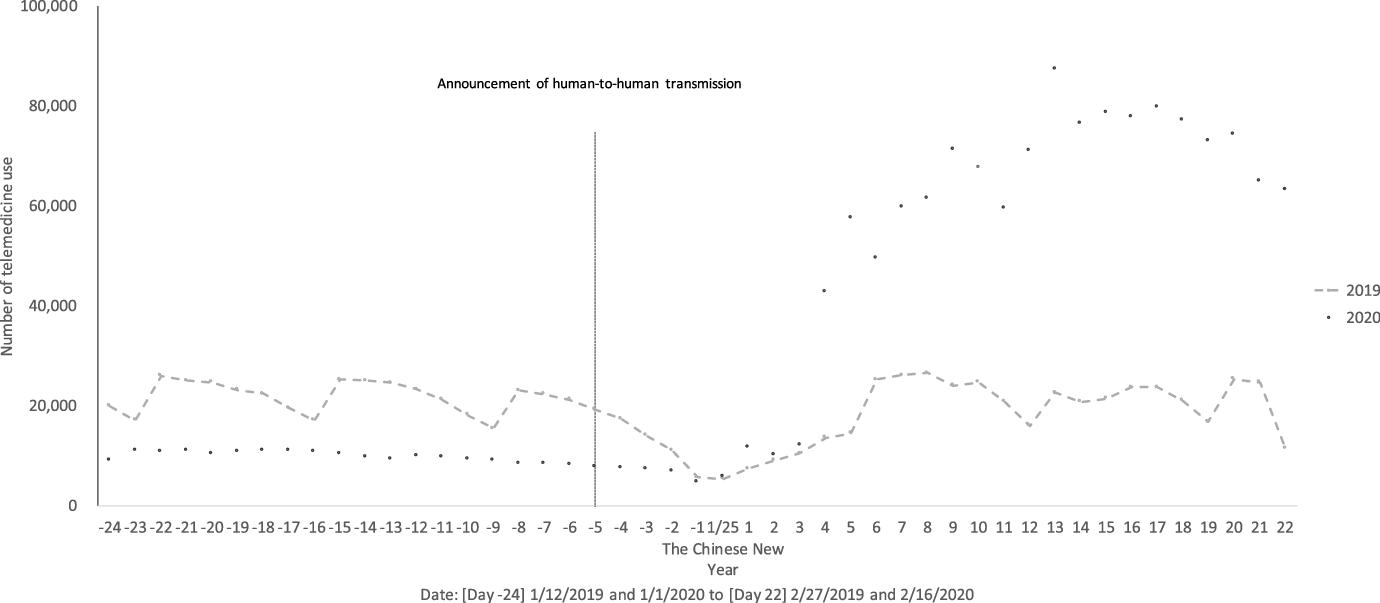
The daily number of telemedicine use during the same lunar calendar periods in 2019 and 2020 from 24 days before the Chinese New Year to 22 days after the Chinese New Year on January 25, 2020. The study periods were from January 1, 2020, to February 16, 2020, and from January 12, 2019, to February 27, 2019 (matched by the lunar calendar). The x-axis shows the number of days before the Chinese New Year and after the Chinese New Year, based on the 2020 solar calendar.

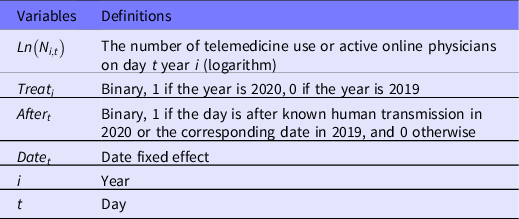
Table 1 illustrates the definition of each variable in model (1). Here,
 $i$
denotes the year and
 $t$
denotes the day. The dependent variable
 $Ln\left( {{N_{i,t}}} \right)$
represents the logarithmic number of telemedicine use or active online physicians for the year
 $i$
on day
 $t$
. The dummy variable
 $Trea{t_i}$
equals 1 if the year is 2020 and 0 if the year is 2019, which suggests that the control data are the year 2019. The dummy variable
 $Afte{r_t}$
equals 1 for the period from January 20, 2020, to February 16, 2020, and the same lunar calendar period from January 31, 2019, to February 27, 2019, and 0 for the period from January 1, 2020, to January 19, 2020, and the same lunar calendar period from January 12, 2019, to January 30, 2019.
 $Dat{e_t}$
is the date fixed effect, which includes a set of time dummies to control for shocks that are common to treatment and control in a given day, such as the Chinese New Year and the Lantern Festival. The
 ${\varepsilon _{i,t}}$
is the error term. Our coefficient of interest is
 $\beta $
, which can be used to estimate the difference in the number of telemedicine use or active online physicians between the treatment year 2020 and the control year 2019 before and after the announcement of human-to-human transmission. Then analysis was repeated using equation (1) for each specialty separately.
Definitions of variables

Test for Parallel Trends
The assumption for the DID estimation is that before the announcement of human-to-human transmission, the telemedicine use and active online physicians in 2019 and 2020 would show parallel trends, indicating the difference between the treatment year and the control year is constant over time. This study tested this assumption by using the same method in He et al.’s study, Reference He, Pan and Tanaka20 which also helped capture the changes in the effect over time:
 $${\rm{Ln}}\left( {{N_{i,t}}} \right) = \alpha + \mathop \sum \nolimits_k {\beta ^k}*Trea{t_i}*Afte{r_{t,k}} + Trea{t_i} + Dat{e_t} + {\varepsilon _{i,t}}$$
where
 $Afte{r_{t,k}}\;$
are a set of dummy variables and
 ${\rm{k}} \in \left\{ { - 3, - 2, - 1,0,1,2,3} \right\}$
indicates the relative
 $k$
th week of the announcement of human-to-human transmission. The benchmark period is 1 week before the announcement so that the coefficient
 ${\beta ^k}$
can be used to measure the difference in the difference in telemedicine use or active online physicians in 2019 and 2020 in period
 $k$
and the difference of 1 week before the announcement. If the preannouncement trends are parallel,
 ${\beta ^k}$
would be statistically insignificant when
 ${\rm{k\;}} \lt - 1$
.
Results
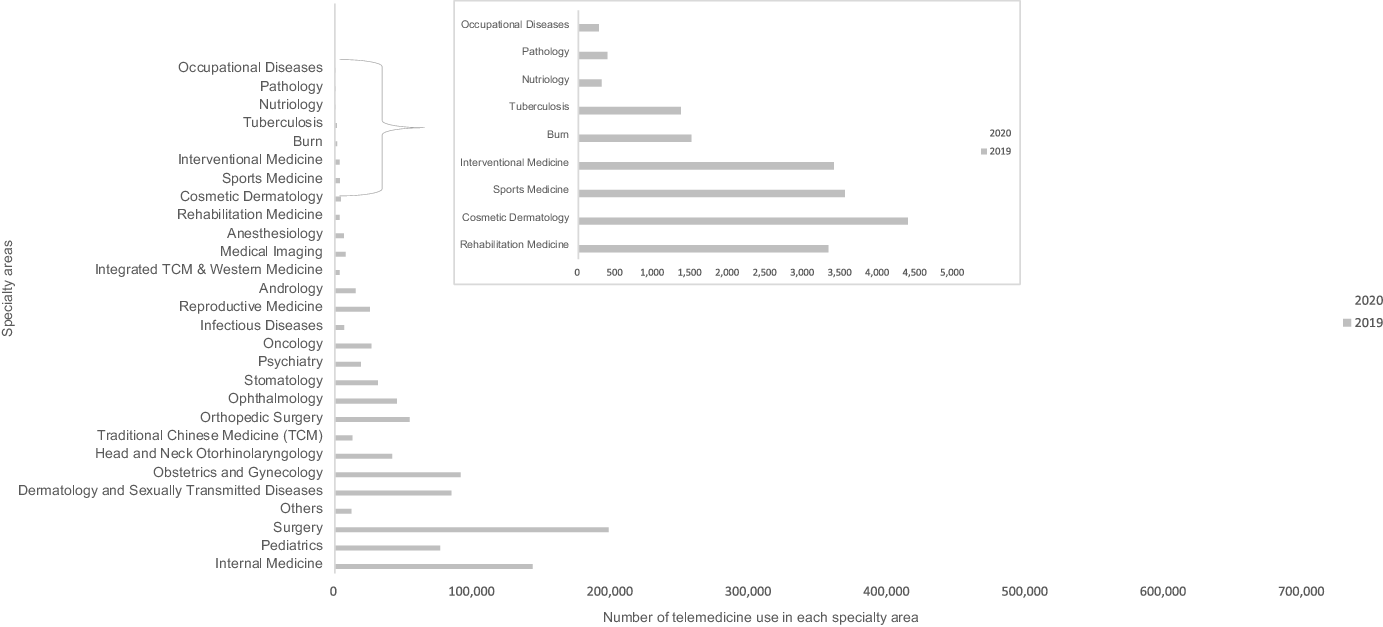
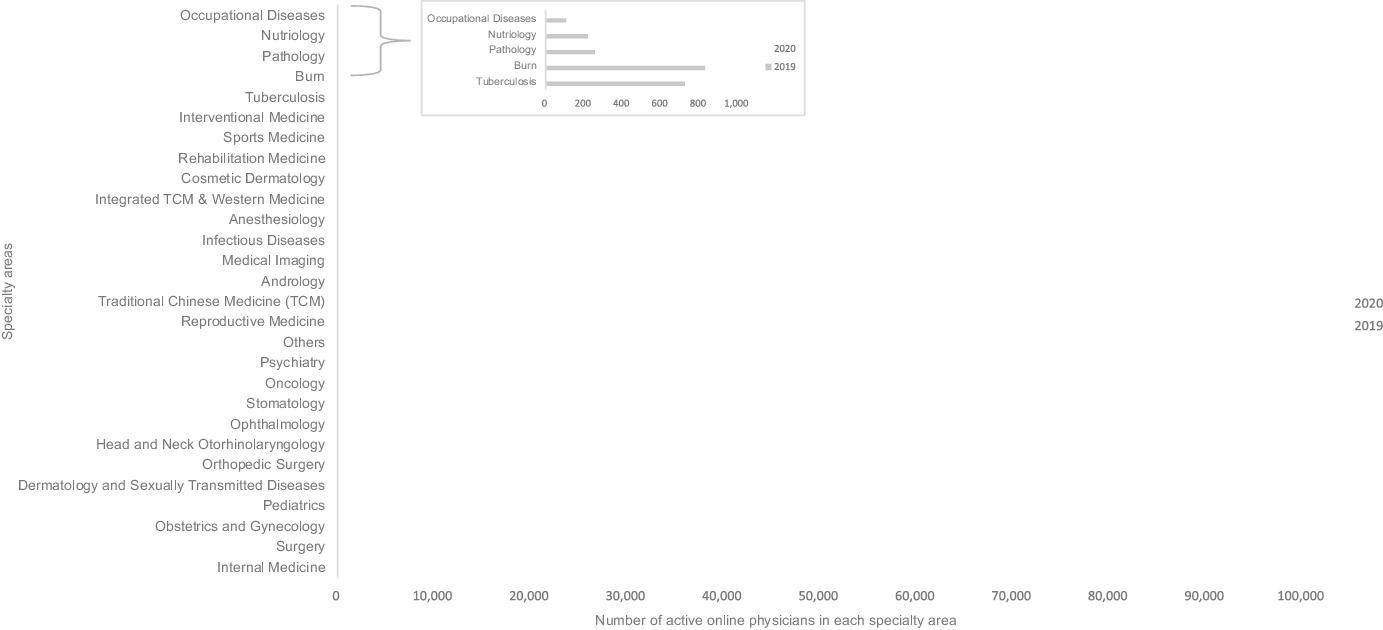
After removing the duplicated and unqualified data (consultation sets visible to the physician only), this study obtained data on 2 473 734 telemedicine use. Figure 1 shows the daily number of telemedicine use during the same lunar calendar periods in 2019 and 2020. Internal medicine has the highest consultation percentage at 43% among all specialties in 2020 (Figure 2). Compared with the same period in 2019, telemedicine use in 2020 had increased in 12 specialties, including traditional Chinese medicine (TCM); integrated TCM and Western medicine; infectious diseases; pediatrics; internal medicine; psychiatry; obstetrics and gynecology; rehabilitation medicine; dermatology and sexually transmitted diseases; head and neck otorhinolaryngology; and nutriology.
The number of telemedicine use in each specialty during the study periods in 2019 and 2020. The study periods were from January 1, 2020, to February 16, 2020, and from January 12, 2019, to February 27, 2019 (matched by the lunar calendar).

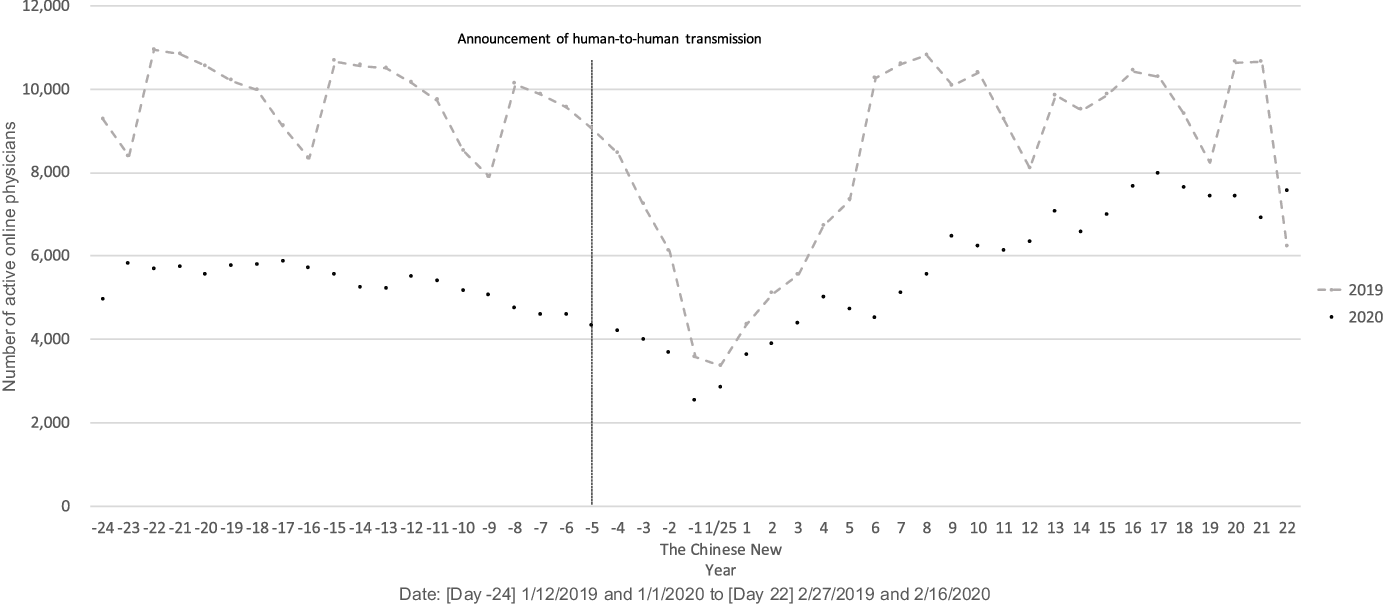
Figure 3 plots the daily number of active online physicians during the study periods. Although the daily number of active online physicians was generally fewer in 2020, it increased at a faster rate after the announcement of human-to-human transmission. In line with the number of telemedicine use in 2020, physicians practicing internal medicine accounted for the largest proportion of total active online physicians (Figure 4).
The daily number of active online physicians during the study periods in 2019 and 2020, from 24 days before to 22 days after the Chinese New Year on January 25, 2020. The study periods were from January 1, 2020, to February 16, 2020, and from January 12, 2019, to February 27, 2019 (matched by the lunar calendar). The x-axis shows the number of days before the Chinese New Year and after the Chinese New Year, based on the 2020 solar calendar.

The number of active online physicians in each specialty during the study periods in 2019 and 2020. The study periods were from January 1, 2020, to February 16, 2020, and from January 12, 2019, to February 27, 2019 (matched by the lunar calendar).

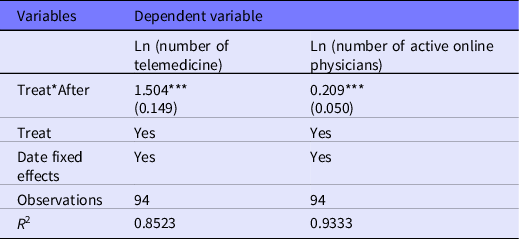
Table 2 shows the DID estimates for the number of telemedicine use and the number of active online physicians, using the model (1). The coefficients are significantly positive, which show that the announcement of human-to-human transmission significantly increased telemedicine use by 349.9%
 $\left( { = \exp \left( {1.504} \right) - 1} \right)$
relative to the same period in 2019, and increased the number of active online physicians by 23.2%
 $\left( { = \exp \left( {0.209} \right) - 1} \right)$
relative to the same period in 2019.
Impact of the announcement of human-to-human transmission on the number of telemedicine use and active online physicians

Note: The dependent variables are the logarithm number of telemedicine use (left column) and the logarithm number of active online physicians (right column).
Robust standard errors are shown in parentheses.
*P < 0.1; **P < 0.05; ***P < 0.01.
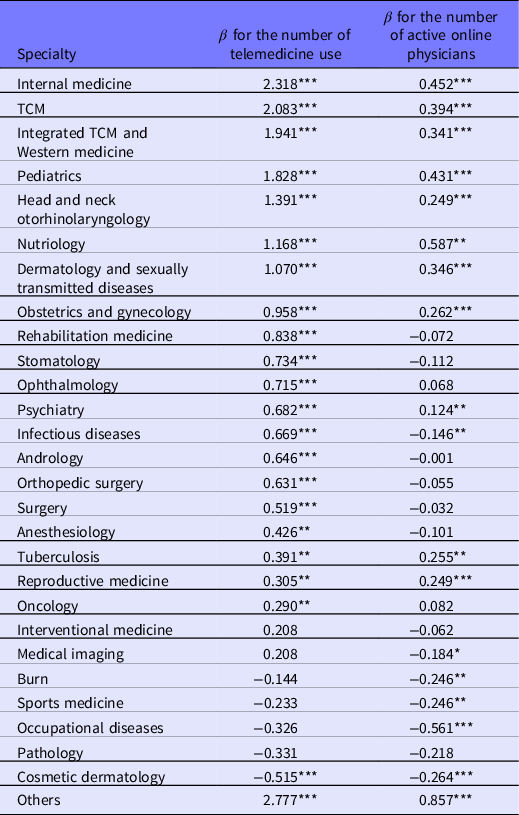
Table 3 reports the coefficients of
 $Trea{t_i}*Afte{r_t}$
in each specialty for the number of telemedicine use and the number of active online physicians. This study found that the announcement of human-to-human transmission had different impacts across specialties for both outcomes. For the number of telemedicine, the effect was positive in internal medicine; TCM; integrated TCM and Western medicine; pediatrics; head and neck otorhinolaryngology; nutriology; dermatology and sexually transmitted diseases; obstetrics and gynecology; rehabilitation medicine; infectious diseases; stomatology; ophthalmology; psychiatry; andrology; orthopedic surgery; surgery; anesthesiology; tuberculosis; reproductive medicine; oncology; and others. The number of teleconsultations for cosmetic dermatology was negatively impacted by the announcement of human-to-human transmission, and the consultations from the rest of the specialties did not differ between 2020 and 2019.
Impact of the announcement of human-to-human transmission on the number of telemedicine use and the number of active online physicians in each specialty

Note: Estimated coefficients
 ${\rm{\beta }}$
are indicated for interaction term
 $Trea{t_i}*Afte{r_t}$
in equation (1) for each specialty.
*P < 0.1; **P < 0.05; ***P < 0.01.
Similarly, the announcement increased the number of active online physicians from internal medicine, TCM, integrated TCM and Western medicine, pediatrics, head and neck otorhinolaryngology, nutriology, dermatology and sexually transmitted diseases, obstetrics and gynecology, psychiatry, tuberculosis, reproductive medicine, and others. However, in specialties for which telemedicine use increased significantly, such as rehabilitation medicine and stomatology, the number of active online physicians did not differ and even decreased in infectious diseases. The number of active online physicians also decreased in medical imaging, burn, sports medicine, occupational diseases, and cosmetic dermatology.
The results of the parallel trends tests showed that no preannouncement differences occurred in the telemedicine trend and active online physicians trend between 2019 and 2020 (Supplement Figure 2). The estimated coefficients
 ${\beta ^k}$
were all statistically insignificant when
 ${\rm{k\;}} \lt - 1$
, which supported the parallel trends assumption. The positive effect on telemedicine use was significant during the week of the announcement of human-to-human transmission and became stronger over time during the study period after the announcement
 $\left( {{\rm{k}} 0} \right)$
. However, for active online physicians, the positive effect only became significant 2 weeks after the announcement, indicating that the number of active online physicians increased 2 weeks later (
 ${\rm{k}} 2)$
. This may be due to the increased offline pandemic-related workload experienced by physicians at the initial stage of the announcement.
Reference Wang, Yan and Zhou21
Discussion
This study quantified the influence of the announcement of human-to-human transmission on an online health care platform in China. This study found that, after the announcement on January 20, 2020, there was a significant increase in the use of telemedicine services on haodf.com compared with the same period in 2019. Specifically, the top 5 teleconsultation specialties were internal medicine, TCM, integrated TCM and Western medicine, pediatrics, and head and neck otorhinolaryngology. In addition, this study observed that the announcement also led to an increase in active physicians on this online health care platform.
For the impact on telemedicine use, there are several possible mechanisms. First, before the announcement of human-to-human transmission on January 20, 2020, the coronavirus was believed to be controllable, and there were no effective measures taken to prevent the spread of the virus. Reference Fang, Wang and Yang5 However, the increased risk of this novel virus after the announcement gained the attention of the Chinese Government and the public. The lockdown policy was imposed on Wuhan, China, on January 23, 2020, and travel restrictions were subsequently imposed in other cities. Reference Kraemer, Yang and Gutierrez22 Social gathering was also discouraged. Reference Chen, Yang and Yang23 Although such policies effectively curbed the spread of the virus, they also inhibited in-person doctor visits. Thus, telemedicine services have become more essential than previously because they can provide timely services regardless of logistical restrictions.
Second, due to the spread of the novel coronavirus, the demand for medical services increased. Reduced availability of offline medical resources could only be used by limited numbers of patients with symptoms related to COVID-19. Reference Li, Liu and Mason24 Patients with common diseases found it hard to get treatment offline. In addition, the novelty of the virus and the overwhelming news coverage of COVID-19 caused public panic. Reference Laato, Islam, Islam and Whelan25 People were also worried about being infected by patients with undetected COVID-19 due to the lack of testing equipment. Reference Shangguan, Wang and Sun26 Online consultation became the most efficient approach to meeting patients’ medical needs under these circumstances.
This study also showed that several specialties were most likely to be consulted after the announcement of human-to-human transmission. The primary symptoms of COVID-19 are fever, fatigue, and cough, sometimes accompanied by a runny nose, nasal congestion, and other upper respiratory tract symptoms. Reference Pascarella, Strumia and Piliego4,27 Patients with any of these symptoms were anxious to determine whether they had been infected. Because internal medicine included respiratory medicine on haodf.com, consultations in this specialty accounted for the largest number of consultations among all specialties. Traditional Chinese medicine is widely used in China in treating viral and bacterial infections. Reference Yang, Islam and Wang28,Reference Zhao, Li and Zhou29 In severe acute respiratory syndrome and the Middle East respiratory syndrome coronavirus outbreaks, TCM was used as a supplementary treatment resulting in significant patient improvement. Reference Ren, Zhang and Wang30 Several meta-analyses showed that TCM integrated with Western medicine had better effects against COVID-19, such as reducing clinical deterioration compared with using Western medicine alone in clinical cure. Reference Liu, Gao and Yuan31,Reference Wang, Xu and Zhang32 Because no specific anti-virus drugs or vaccines were available at the onset of the pandemic, TCM was used to ameliorate COVID-19-related symptoms. Reference Yang, Islam and Wang28 Traditional Chinese medicine was also included in the diagnosis and treatment plan for COVID-19 issued on January 22, 2020. 27,Reference Zhang, Yu and Zhou33 Thus, many people chose to consult physicians of TCM for treatment.
The increase in the number of active physicians attributed to the announcement shows that physicians from haodf.com actively responded to the unprecedented medical demands during the pandemic. The novelty of the virus and the scarcity of medical resources during the initial outbreak caught physicians unprepared, and, thus, the number of active physicians did not increase immediately. With the growing knowledge about disease control and the improvement in medical resource management, Reference Pan, Liu and Wang34 physicians could better allocate their time to cope with the high volume of consultations.
There were studies reporting the changes in the use of telemedicine during the initial phase of the COVID-19 pandemic. Internet consultations increased in 2 hospitals in China after promoting telehealth platforms in response to the pandemic. Reference Li, Liu and Xu11,Reference Li, Liu and Mason24 Similarly, post-COVID-19 video/telephone visits increased significantly after the implementation of video/telephone consultation services in the United States in March 2020. Reference Sinha, Kern and Gingras16,Reference Baum, Kaboli and Schwartz17,Reference Lonergan, Washington Iii and Branagan35,Reference Gilson, Umscheid and Laiteerapong36 This study also indicated a significant increase in telemedicine use during COVID-19. This study adds to this body of literature by quantifying the relative change in telemedicine services due to COVID-19 from the perspectives of both patients and physicians. Compared with the previous studies that mainly evaluate telemedicine use in 1 hospital/medical institution, this studied platform includes hospitals nationwide and 28 medical specialties. In addition to considering the pre-COVID-19 period in 2020, which was included in other studies, this study used telemedicine services provided in 2019 as the control year and applied the DID method to compare the number of telemedicine use and the number of active online physicians. Moreover, this study evaluated the telemedicine service during the pandemic by specialty.
Our findings have several practical implications. First, the increased telemedicine use indicated that telemedicine service had become an important approach to satisfying people’s medical needs during COVID-19. The government should further encourage the use of telemedicine to cope with the COVID-19 situation and other public health care emergencies. Second, telemedicine use increased significantly during the week of the announcement of human-to-human transmission, whereas the number of active online physicians increased only 2 weeks after the announcement. This may suggest the lack of online physicians and lower service quality. The platform should design an effective mechanism to attract physicians to provide online services as early as possible. Third, the heterogeneous effect indicated that several specialties were most likely to be affected during the pandemic, so the platform should pay more attention to encouraging the participation of online physicians from these specialties.
Limitations
Several limitations should be acknowledged. First, the telemedicine data were collected from a single website. Although it is one of the most popular online health platforms in China, the website can only serve a limited number of patients. Second, the online consultation process was anonymous, and, thus, this study could not collect detailed information about patient gender, age, and address for additional analysis. Third, this study did not analyze the unstructured data of patient-to-physician interactions, such as the consultation text.
Conclusions
In conclusion, this study has shown that the use of telemedicine and the number of active online physicians increased by 349.9% and 23.2%, respectively, after the announcement of human-to-human transmission of COVID-19. Specifically, telemedicine usage increased immediately after the announcement, whereas active online physicians only increased significantly 2 weeks after the announcement. Online activities of most specialties (including internal medicine, TCM, integrated TCM and Western medicine, pediatrics, etc) increased, except where providers must conduct in-person testing and provide bedside therapies (eg, cosmetic dermatology, pathology, occupational diseases, sports medicine). Therefore, telemedicine could be leveraged to meet the patient demand for most health issues during the pandemic, and telemedicine services should be well supported by institutions and governments when facing a public health crisis.
Supplementary material
To view supplementary material for this article, please visit https://doi.org/10.1017/dmp.2022.278.
Author contributions
All authors contributed to the study conception and design. Mairehaba Maimaitiming: conceptualization, data curation, formal analysis, investigation, methodology, software, visualization, and writing – original draft; Yongjian Zhu: conceptualization, validation, and writing – original draft; Jingui Xie: funding acquisition, supervision, writing – reviewing and editing; Zhichao Zheng: funding acquisition, supervision, writing – reviewing and editing.
Consent to participate
The website indicates that the telemedicine contents are available online after anonymization. Patients can set the consultation content only visible to the physician if they do not want to display the information on the platform.
Funding statement
This work was supported by the National Natural Science Foundation of China (grant numbers 71921001, 71771202) and by the Ministry of Education, Singapore, under its Academic Research Fund (AcRF) Tier 2 (grant number MOE2019-T2-1-185). The funder has no involvement in conducting or preparing the article.
Conflict(s) of interest
None.
Ethical standards
The telemedicine data from the website haodf.com are displayed after anonymization. The website indicates that patients’ personal information is collected and used in accordance with the network security law of the People’s Republic of China, Information Security Technology – Personal Information Security Specification (GB/T 35273-2017), and other relevant laws, regulations, and technical specifications.