


Introduction
The US political system offers voters two increasingly polarised options, yet many do not fit neatly into either camp. Despite rising affective polarisation, about one in five Americans hold cross-cutting policy preferences (Fowler et al. Reference Fowler, Hill, Lewis, Tausanovitch, Vavreck and Warshaw2023; see also Broockman and Lauderdale Reference Broockman and Lauderdale2025). How do voters reconcile competing pressures in a system that demands binary choices? While existing research tells us a great deal about what cross-pressured voters do – whether they participate (Eveland Jr and Hively Reference Eveland and Hively2009; Mutz Reference Mutz2002), abstain (Endres and Panagopoulos Reference Endres and Panagopoulos2019), or defect (Dassonneville Reference Dassonneville2022; Gidron Reference Gidron2022; Webb and Bale Reference Webb and Bale2014) – we know much less about how they reach those decisions. This gap matters because the process of decision making shapes the quality of democratic participation (Lau and Redlawsk Reference Lau, Redlawsk, Huddy, Sears, Levy and Jerit2023). If voters resolve cross-pressures by focusing on limited cues or collapsing competing considerations, their choices may not fully represent their broader preferences.
I examine this question through the lens of religious cross-pressures, focusing on Catholic and Muslim Americans. Religion remains one of the most enduring and influential social forces in American life, shaping moral values, social affiliations, and political attitudes (Castle and Stepp Reference Castle and Stepp2021; Goren and Chapp Reference Goren and Chapp2017; Leege and Kellstedt Reference Leege and Kellstedt2016; McKenzie and Rouse Reference McKenzie and Rouse2013; Perry Reference Perry2022). While early scholarship on cross-pressures acknowledged religion as one of several competing social influences alongside class and race (Berelson et al. Reference Berelson, Lazarsfeld and McPhee1954; Lazarsfeld et al. Reference Lazarsfeld, Berelson and Gaudet1944), it largely treated it as a stable source of political alignment. These accounts did not examine religion itself as a site of internal value conflict.
Recent research extends this line of inquiry, demonstrating that religion can, in itself, generate contradictory political cues. Catholic teachings, for instance, promote both economic justice and moral conservatism, creating tension for adherents seeking political representation (Antkowiak et al. Reference Antkowiak, Allen and Layman2021; Gayte et al. Reference Gayte, Chelini-Pont and Rozell2022). Similar dynamics have recently been reported among Muslim Americans who share political attitudes with both the Democratic and Republican parties (Mohamed and Kallo Reference Mohamed and Kallo2025). Their political engagement during the Trump era reflected this tension, taking forms that resist easy categorisation within conventional left–right frameworks (Yukich Reference Yukich2018).
Building on these studies, I theorise that Catholic and Muslim voters in the United States are particularly likely to experience what I term structural cross-pressures – tensions arising from the structural mismatch between partisan cleavages and the doctrines embedded in these traditions. Unlike cross-pressures rooted in competing group memberships (Berelson et al. Reference Berelson, Lazarsfeld and McPhee1954) or social networks (Mutz Reference Mutz2002), structural cross-pressures emerge from value conflicts within a single identity. When religious world-views span the liberal–conservative divide, neither major party consistently represents the full spectrum of these voters’ preferences. This misalignment, I argue, renders voting more cognitively taxing, increasing both the difficulty of the decision and the time it takes to make it.
Drawing on cognitive dissonance theory (Festinger Reference Festinger1957) and models of political decision making (Lau and Redlawsk Reference Lau, Redlawsk, Huddy, Sears, Levy and Jerit2023), I develop hypotheses around three alternative decision strategies that voters adopt in response to structural cross-pressures: a deliberative strategy, in which they seek out more information to reconcile competing demands; a simplification strategy, in which they reduce information search and prioritise an overriding issue; or a withdrawal strategy, in which they opt out of voting altogether.
Studying choice behaviour under cross-pressures requires designs that trace decision making in real time (Payne et al. Reference Payne, Bettman and Johnson1993). While standard survey instruments capture vote intentions or outcomes, they offer limited insight into the underlying decision strategies of voters. Measured after the fact, responses risk reflecting post-hoc rationalisations rather than the actual strategies employed (Lau and Redlawsk Reference Lau and Redlawsk2006, Reference Lau, Redlawsk, Huddy, Sears, Levy and Jerit2023 Reference Lau and Redlawsk). To address this, I fielded a novel ‘dynamic’ choice experiment (August–October 2024) that allows participants to control information flow during candidate evaluations, choosing at each step whether to view additional information, cast a vote, or abstain. Catholic (n = 700) and Muslim (n = 700) participants were randomly assigned to a treatment priming them to consider tensions between their religious teachings and party platforms. All participants then completed the candidate choice tasks, with attributes systematically varied across key moral and social issues.
The results show that religious cross-pressures significantly affect electoral decision making. Primed Catholics reported greater decision difficulty, took longer to decide, and exhibited increased single-issue voting around moral concerns. Muslims reported the highest baseline levels of perceived cross-pressures across all religious groups, likely creating a soft ceiling effect that rendered the experimental prime ineffective. Nevertheless, their decision patterns are broadly similar to those of treated Catholics: higher perceived cross-pressures predicted greater difficulty, reduced information search, and increased single-issue voting among Muslims.
Contrary to previous work linking cross-pressures to disengagement (Berelson et al. Reference Berelson, Lazarsfeld and McPhee1954; Endres and Panagopoulos Reference Endres and Panagopoulos2019; Eveland Jr and Hively Reference Eveland and Hively2009; Lazarsfeld et al. Reference Lazarsfeld, Berelson and Gaudet1944; McClurg Reference McClurg2006; Mutz Reference Mutz2002), I find no evidence of increased decision avoidance in this context. Instead, religiously cross-pressured voters maintain engagement by simplifying their choices, selecting candidates who best address their most salient concern. Observational analyses comparing untreated Catholics and Muslims to other religious groups provide additional support for this finding.
This study contributes to research on political behaviour and identity by advancing a structural account of religious cross-pressures in which faith traditions embed competing cues within a single identity. Empirically, while some studies suggest such voters should be more ‘thoughtful’ decision makers (for example, Arceneaux and Vander Wielen Reference Arceneaux and Vander Wielen2017; Lavine et al. Reference Lavine, Johnston and Steenbergen2012), I find that they instead resort to simplification strategies. This renders them especially sensitive to short-term political developments as the salient religious value can shift with context (for example, abortion after Dobbs, immigration during the 2017 travel-ban order), contributing to electoral volatility (see Dassonneville Reference Dassonneville2022; Dentler Reference Dentler2025). These results suggest that while cross-pressured voters remain engaged, they fall short of the deliberative ideal often celebrated in the literature – a pattern that echoes recent critiques of partisan ambivalence as a ‘democratic virtue’ (Robison Reference Robison2021).
This study also contributes experimental evidence on the political decision making of Muslim Americans, a rapidly growing yet under-examined minority group. Facing cross-pressures tied to faith, racialisation, and immigrant status, Muslims represent a critical case for understanding how value conflicts shape electoral behaviour in ways that dominant models may overlook. Notably, examining Muslims alongside Catholics provides insights on how group context conditions the resolution of religious cross-pressures. Single-issue voting is most evident around moral issues for Catholics, but appears to be tied to social justice concerns among Muslims. In this respect, the Muslim pattern bears some resemblance to earlier periods of Catholic political development, when questions of economic inclusion were more politically salient (Gayte et al. Reference Gayte, Chelini-Pont and Rozell2022). While exploratory, this pattern is consistent with accounts linking group status and socio-economic positioning to the structuring of political preferences (Shayo Reference Shayo2009; Tajfel and Turner Reference Tajfel, Turner, Worchel and Austin1986), and with evidence that group position conditions how religion influences political behaviour (Edgell and Tranby Reference Edgell and Tranby2007; O’Brien and Abdelhadi Reference O’Brien and Abdelhadi2020).
Religious Cross-Pressures and Political Behaviour
A large body of literature documents the profound impact of religious identity on policy preferences, such as immigration (Nteta and Wallsten Reference Nteta and Wallsten2012), environmental concerns (Guth et al. Reference Guth, Green, Kellstedt and Smidt1995), abortion rights (Jelen Reference Jelen2003), social services (McKenzie and Rouse Reference McKenzie and Rouse2013), and same-sex marriage (Olson et al. Reference Olson, Cadge and Harrison2006). In most traditions, this influence is structurally channelled in ideologically consistent ways. Evangelical Protestant and Mormon institutions, for example, socialise adherents towards uniformly conservative positions across a broad set of issues (Campbell et al. Reference Campbell, Green and Monson2014; Castle Reference Castle2019). Similarly, traditions such as Judaism, atheism, and agnosticism tend to align with liberal stances on both social and economic dimensions (Campbell et al. Reference Campbell, Layman and Green2020; Wald Reference Wald2019).
While occasional deviations occur, particularly around immigration or climate change, such efforts remain fragmented and lack the organisational capacity or sustained electoral leverage necessary to realign broader partisan coalitions (Braunstein et al. Reference Braunstein, Fuist and Williams2019; Gasaway Reference Gasaway2014). Experimental evidence likewise suggests that evangelical attitudes can shift in response to identity-based messages (Adida et al. Reference Adida, Cottiero, Falabella, Gotti, Ijaz, Phillips and Seese2023; DeMora et al. Reference DeMora, Merolla, Newman and Zechmeister2021), though these effects are often limited in scope. For example, DeMora et al. (Reference DeMora, Merolla, Newman and Zechmeister2024) find that a religious values frame increased white evangelical Republicans’ warmth towards refugees, especially among those who most strongly identified as evangelical. However, the same frame did not alter their support for providing government resources to refugees. Similarly, Margolis (Reference Margolis2018) shows that while religious elite cues can move evangelicals’ immigration attitudes, these shifts do not consistently translate into political action. More broadly, such framing effects are unlikely to endure in competitive information environments without reinforcement (Lecheler and De Vreese Reference Lecheler and De Vreese2016).
Other religious groups encounter dilemmas that pit their faith commitments against the partisan choices available to them. Catholicism and Islam exemplify this phenomenon. As the ensuing discussion will demonstrate, their teachings endorse, on the one hand, conservative positions on abortion and sexuality, and, on the other, progressive imperatives concerning poverty, immigration, environmental stewardship, and racial justice (Antkowiak et al. Reference Antkowiak, Allen and Layman2021; Barreto and Bozonelos Reference Barreto and Bozonelos2009; Formicola Reference Formicola2009; Jalalzai Reference Jalalzai2009; Sammon Reference Sammon, Heyer, Rozell and Genovese2008). I refer to this phenomenon as structural religious cross-pressures: tensions that emerge from the structural incongruity between partisan cleavages and the doctrinal and social positioning of certain religious groups. For Muslims, these doctrinal tensions are compounded by their socio-political positioning as a marginalised minority group (Ayers and Hofstetter Reference Ayers and Hofstetter2008; Peek Reference Peek2011; Sediqe Reference Sediqe2020) – a theme I unpack further in the next section.
Importantly, not all Catholics or Muslims feel conflicted, nor are cross-pressures unique to these religious groups. However, the conflicts examined here differ from those faced by partisan ‘defectors’ within otherwise aligned traditions (Allen Reference Allen2024). They are structural in the sense that the tension is rooted in the tradition’s own normative framework, not by its adherents’ partisan positioning. A voter who endeavours to fully follow the teachings of Catholicism or Islam is structurally positioned to encounter competing ideological demands within the American two-party system, because the doctrine itself pulls in both directions. This distinguishes the present account from classic work on cross-pressures, which locate the source of tension in competing group memberships (Berelson et al. Reference Berelson, Lazarsfeld and McPhee1954) or heterogeneous social networks (Mutz Reference Mutz2002). Here, the tension is internal to the religion itself. As Antkowiak et al. (Reference Antkowiak, Allen and Layman2021, p. 233) observe in the case of Catholics, ‘the Church clashes with itself – it takes both sides’.
Catholic Cross-Pressures
American Catholics have long been portrayed as a cross-pressured or swing constituency (Davison and Krassa Reference Davison and Krassa2011; Reference FormicolaDionne Jr Reference Dionne and Steinfels2004; Formicola Reference Formicola2009; Gayte et al. Reference Gayte, Chelini-Pont and Rozell2018; Mockabee Reference Mockabee and Wilson2007). Scholars have traced this phenomenon to the Church’s social teachings which emphasise both personal morality and social justice, principles that each major party only partially reflects (Antkowiak et al. Reference Antkowiak, Allen and Layman2021; Byrnes Reference Byrnes2014; Cochran and Cochran Reference Cochran and Cochran2008; Gayte et al. Reference Gayte, Chelini-Pont and Rozell2018). For example, in the 2020 US presidential election, bishops described abortion as a ‘pre-eminent priority’, yet also urged Catholics not to ignore threats to human dignity such as racism, poverty, environmental degradation, and the death penalty (USCCB 2020). In 2024, Pope Francis remarked that both candidates were ‘against life’: one ‘kills children’, while the other ‘throws away the migrants’ (White Reference White2024). Parish-level messages often mirror this tension, with priests emphasising both moral conservatism and structural injustice, creating competing imperatives for religiously motivated voters (Smith Reference Smith2008).
Once a reliably Democratic group due to their immigrant backgrounds and working-class roots (Berelson et al. Reference Berelson, Lazarsfeld and McPhee1954), Catholics now split their vote almost evenly between the two major parties (Kellstedt and Guth Reference Kellstedt and Guth2013; Pew Research Center 2024; Sammon Reference Sammon, Heyer, Rozell and Genovese2008; Streb and Frederick Reference Streb, Frederick, Heyer, Rozell and Genovese2008). This shift reflects broader demographic and historical changes. Cultural conflicts in the 1970s, especially over abortion, and rising socio-economic status pushed many white Catholics rightward (Gayte et al. Reference Gayte, Chelini-Pont and Rozell2022; Layman Reference Layman2001), with approximately 60 per cent supporting Trump in 2024 (Smith Reference Smith2024). Many have reconciled the tension between faith and partisanship by prioritising the Church’s moral teachings, particularly on abortion, while giving less weight to its positions on social welfare issues (Antkowiak et al. Reference Antkowiak, Allen and Layman2021; Feingold and Guth Reference Feingold and Guth2023).
Latino Catholics, by contrast, remain more politically heterogeneous. Although a (declining) majority lean Democratic (Pew Research Center 2024), partisan loyalties vary substantially by national origin, generation, and region (Feingold and Guth Reference Feingold and Guth2023). At the same time, higher religiosity and greater deference to Church authority make segments of this group particularly susceptible to structural cross-pressures (Antkowiak et al. Reference Antkowiak, Allen and Layman2021), and many pair conservative moral views with liberal social justice positions (Campbell et al. Reference Campbell, Layman and Green2021 Reference Campbell, Layman and Green; Pantoja et al. Reference Pantoja, Barreto, Anderson, Heyer, Rozell and Genovese2008; Richomme Reference Richomme, Gayte, Chelini-Pont and Rozell2018). Over time, however, socio-economic mobility may gradually tip the balance towards moral issues, as observed among white Catholics (Gayte et al. Reference Gayte, Chelini-Pont and Rozell2022).
In short, Catholics remain divided in their partisan attachments. Unlike evangelical Protestants, who benefit from robust political organisation and clear partisan alignment (Campbell et al. Reference Campbell, Green and Monson2014; Castle Reference Castle2019; Wuthnow and Evans Reference Wuthnow and Evans2002), Catholics lack a cohesive political identity (Antkowiak et al. Reference Antkowiak, Allen and Layman2021; Campbell et al. Reference Campbell, Green and Layman2011; McDermott Reference McDermott2007). Catholic candidates are not reliably associated with either party, and many lay Catholics report minimal reliance on clergy for political guidance (Wald et al. Reference Wald, Kellstedt and Leege2016). As Feingold and Guth (Reference Feingold and Guth2023, p. 348) observe (revising Dionne Jr’s (Reference Dionne and Steinfels2004) oft-cited claim), ‘there are many kinds of Catholic votes and they are all important’.
This fragmentation, however, should not obscure the role Catholicism continues to play in shaping political behaviour – at least for those who take its teachings seriously. Antkowiak et al. (Reference Antkowiak, Allen and Layman2021) refer to this subgroup as ‘Seamless Garment Catholics’, a small (approximately 9 per cent) but electorally consequential segment whose preferences mirror Church doctrine across moral and social issues. For these voters, who pray regularly and attend Mass weekly, cross-pressures are acutely felt as the Church’s teachings pull them in directions not neatly captured by partisan platforms. This underscores the need to distinguish between Catholic identity in name and Catholicism as an active structuring force in political decision making.
Importantly, Catholic issue attitudes explain a share of the Catholic vote that is not accounted for by partisanship alone (Davison and Krassa Reference Davison and Krassa2011; Kellstedt and Guth Reference Kellstedt and Guth2013). Given that Catholics remain one of the largest religious denominations in the United States, it takes only ‘enough’ religiously attentive voters to tip the balance in competitive elections (Cochran and Cochran Reference Cochran and Cochran2008). As Gayte et al. (Reference Gayte, Chelini-Pont and Rozell2022, p. 9) note, ‘as long as a significant-sized and activated minority of Catholics is persuadable in elections based on religious beliefs, then the Catholic swing vote phenomenon remains a potent force’.
Muslim Cross-Pressures
Muslim Americans constitute a relatively new and growing demographic in the United States. Their population is currently estimated at 4.45 million and is projected to rise substantially, making Islam the second-largest religious group in the country by 2040 (Mohamed Reference Mohamed2018) and positioning Muslims as an increasingly influential voting bloc, particularly in swing states. This growing political presence has drawn scholarly attention to a central question: does Islam uniquely shape the political preferences of Muslim Americans? Despite considerable internal diversity, Muslim Americans often exhibit convergent political preferences and behaviours, rooted in both doctrinal teachings and shared experiences of discrimination.
First, Islamic doctrine places normative emphasis on the unity of the ummah, encouraging believers to subordinate tribal and ethnic allegiances to a shared religious identity (Khan Reference Khan, Haddad and Esposito1998). In practice, many Muslim Americans tend to reject narrow sectarian labels and prefer to identify simply as ‘Muslim’ (Bukhari and Nyang Reference Bukhari and Nyang2004; Nyang and Bukhari Reference Nyang and Bukhari2001; Pew Research Center 2007 Reference Nyang and Bukhari). The result is what some scholars describe as a ‘transcendent political identity’ that spans racial, ethnic, and national cleavages (Ali Reference Ali2011; Nyang Reference Nyang and Haddad1991; Peek Reference Peek2005).
Second, repeated experiences of marginalisation have increased political awareness and reinforced group consciousness among Muslim Americans (Ayers and Hofstetter Reference Ayers and Hofstetter2008; Peek Reference Peek2011). Many internalised these conditions through ‘stigma consciousness’, which reinforced perceptions of linked fate and group attachment (Jamal Reference Jamal2005; Ocampo et al. Reference Ocampo, Dana and Barreto2018; Sediqe Reference Sediqe and Harris2019a, Reference Sediqe2020 Reference Jamal Reference Sediqe and Harris), mirroring patterns observed among other racialised minorities (Masuoka Reference Masuoka2006; Sanchez Reference Sanchez2008). Trump-era policies that marginalised Muslims deepened this sense of exclusion (Calfano et al. Reference Calfano, Lajevardi and Michelson2019), further contributing to the development of a strong Muslim American identity, marked by group solidarity and strategic participation in US institutions (for example, Calfano and Lajevardi Reference Calfano and Lajevardi2019; Cury Reference Cury2021; Lajevardi Reference Lajevardi2020).
This emergent identity has important political consequences. Islam, like other major faith traditions, predicts greater civic and political participation (Choi et al. Reference Choi, Gasim and Patterson2011; Chouhoud et al. Reference Chouhoud, Dana and Barreto2019; Jamal Reference Jamal2005; Read Reference Read2015; Schoettmer Reference Schoettmer2015) and perceptions of discrimination act as a strong mobilising force for this group (Oskooii Reference Oskooii2015). However, despite its mobilising effects, the impact of the Muslim identity on partisan alignment remains less straightforward. Many choose not to identify with any party, with 49 per cent identifying as Independent or ‘something else’, representing the highest share of unaffiliated individuals among all religious groups in the United States (Pew Research Center 2024). Even among those who report a partisan leaning, the Democratic advantage has narrowed considerably (Mohamed and Kallo Reference Mohamed and Kallo2025). Indeed, this Democratic advantage is itself historically recent – prior to 9/11, Muslim Americans leaned Republican, before shifting overwhelmingly towards the Democratic Party in the aftermath of the War on Terror (Ayers Reference Ayers2007; Barreto and Bozonelos Reference Barreto and Bozonelos2009).
These patterns are partly rooted in a broader misalignment between Islamic teachings and existing partisan platforms, and the ‘inadequacies of the typical conservative/progressive dichotomy’ in characterising Muslim participation (Yukich Reference Yukich2018, p. 222). Like Catholicism, Islam embeds a set of moral and social commitments that simultaneously align, and conflict with, both major parties. Teachings on sexuality and gender, as defined in the Qur’an and Sunna, promote conservative moral standards, such as restrictions on premarital sex, homosexuality, and women’s sexual autonomy (Dhami and Sheikh Reference Dhami and Sheikh2000; Dialmy Reference Dialmy2010; Siraj Reference Siraj, Taylor and Snowdon2014), which may drive some Muslim Americans towards the Republican Party (Mohamed and Kallo Reference Mohamed and Kallo2025). Yet this alignment has been undermined by Republican Islamophobia and exclusionary policies, especially post-9/11 and during the Trump era (Calfano et al. Reference Calfano, Lajevardi and Michelson2019).
Democrats, meanwhile, have attracted substantial Muslim support through commitments to civil rights and religious freedom (Ocampo et al. Reference Ocampo, Dana and Barreto2018), but their progressive stance on cultural issues often clashes with Islamic teachings. For instance, in 2023, over 200 Muslim scholars and leaders signed the Navigating Differences statement which affirms Islam’s positions on gender and sexuality amid growing concern over LGBTQ+ content in schools (see Evans Reference Evans2023). This reflects a broader anxiety within segments of the community that sacred values risk being eroded under the banner of identity politics, threatening the ability to transmit Islamic morality to future generations. In this view, the Democratic platform’s growing emphasis on progressive cultural norms is seen as a potential long-term challenge to core Islamic family values (Walid Reference Walid2020).
Muslims must also contend with the United States’ posture towards Muslim-majority countries. Foreign policy is a salient domain for many (Emgage, Muslim Public Affairs Council, and Change Research 2021), especially through the lens of ummah consciousness – a sense of moral obligation towards Muslims worldwide (Akram Reference Akram2007; Sediqe Reference Sediqe2019b). While these commitments align more closely with the Democratic agenda, both parties have pursued policies that alienate Muslim Americans (Beydoun Reference Beydoun2024). Most recently, the Biden administration’s approach to Middle East conflicts saw Democratic support among Arab American voters fall by 42 percentage points (Arab American Institute 2023). A similar pattern played out when support for George W. Bush among devout Muslims dropped sharply after 9/11 (Ayers Reference Ayers2007).
In the 2024 presidential election, the Muslim vote split across three candidates, with 50 per cent voting for Harris, 31 per cent for Trump, and 12 per cent for Stein (Selod et al. Reference Selod, Mogahed, Ikramullah and Baker2025). Support for Stein was unprecedented and appears to have been driven by foreign policy considerations rather than a broader alignment with the Green Party platform. Prior to the election, the American Muslim Election Task Force (2024) had urged voters to support whichever candidate backed a permanent ceasefire in Gaza. Consistent with this, 78 per cent of Muslim third-party voters cited the war in Gaza as their top policy priority (Selod et al. Reference Selod, Mogahed, Ikramullah and Baker2025).
While the divided aggregate vote does not by itself imply ambivalence at the individual level, as the case of Catholics illustrates (Antkowiak et al. Reference Antkowiak, Allen and Layman2021), the pattern observed here suggests conditional partisan commitments that shift in response to salient political considerations. Depending on the political context, Muslim Americans have shown a willingness to reassess their alignments in light of short-term political developments – a tendency well-documented among cross-pressured, or ‘unconstrained’ voters (for example, Dassonneville Reference Dassonneville2022).
Empirical Illustration: Mapping Moral and Social Orientations
To further motivate the case selection, I draw on nationally representative data from the Pew Research Center’s 2023–24 Religious Landscape Study (n = 36,908) to situate major US religious groups within a two-dimensional ideological space (Pew Research Center 2025). Figure 1 plots each group’s standardised mean scores on two indices: moral conservatism (abortion, same-sex marriage, transgender rights) and social progressivism (immigration, welfare, environment) (see Appendix A for additional details on the analysis).
Moral–social positioning of key religious groups (Pew Research Center 2023–24 Religious Landscape Study).

The data indicate that Muslims occupy the most cross-pressured position, combining moral conservatism (+0.68 standard deviation) with social progressivism (+0.75 standard deviation). Catholics cluster near the midpoint (−0.06, −0.46 standard deviation), indicating they are neither uniformly conservative nor liberal. Evangelicals (+1.55, −1.41 standard deviation) and Jews (−0.88, +0.72 standard deviation) anchor opposite poles; mainline Protestants (−0.21, −0.48 standard deviation) are relatively moderate; and the unaffiliated (−1.07, +0.88 standard deviation) are most consistently liberal.
Appendix A provides the corresponding analysis by age, race, and gender. Across all subgroups, Muslims remain firmly within the same ideological quadrant, pairing strong moral conservatism with social progressivism. The only exception is older Muslims (55+), who show slightly lower social progressivism. Catholics, by contrast, exhibit greater internal variation in how they balance the Church’s moral and social teachings. As shown in Figures A1–A3, these differences shift Catholic subgroups slightly across ideological quadrants but leave the group overall near the centre. This contrasts with Evangelicals, Jews, and the unaffiliated, whose subgroups vary in intensity but not direction, remaining within a single ideological quadrant. In the absence of competing moral and social imperatives within Catholic teaching, Catholic variation would likely resemble these ideologically coherent groups – showing only small, monotonic shifts along a single dimension. Instead, the observed pattern suggests systematic selection among competing doctrinal strands (Antkowiak et al. Reference Antkowiak, Allen and Layman2021), with subgroups’ social positions likely shaping which elements (moral conservatism or social justice) are more important.
Coping with Religious Cross-Pressures
The preceding literature review suggests that adherents of Catholicism and Islam are uniquely positioned to experience structural cross-pressures. How are such tensions resolved in the act of voting? A natural starting point to this question is cognitive dissonance theory (Festinger Reference Festinger1957), which has long informed influential research in political behaviour (for example, Acharya et al. Reference Acharya, Blackwell and Sen2018; Antkowiak et al. Reference Antkowiak, Allen and Layman2021; Mullainathan and Washington Reference Mullainathan and Washington2009; Sperlich Reference Sperlich1971). This framework suggests that individuals experience psychological discomfort when holding conflicting beliefs or identities. By opting for either a Democratic or Republican candidate, cross-pressured voters are forced to act in a way that contradicts some of their attitudes. To reduce this dissonance, they adopt coping strategies – some more deliberative, others more avoidant – that shape how they evaluate political information and arrive at a choice.
Building on this framework and the broader literature on political decision making, I examine how religious cross-pressures shape voters’ decision strategies. I first test the widely held yet unverified assumption that such cross-pressures make voting more difficult. I then investigate how Catholic and Muslim voters cope with these tensions, focusing on three strategies that map onto classic responses in dissonance theory: resolving dissonance through increased information search, minimising it through issue prioritisation, and escaping it through decision avoidance.
Patterns of information search are particularly central here as they signal whether voters adopt a compensatory strategy – systematically engaging with candidates and issues – or a non-compensatory strategy, simplifying decisions through cognitive shortcuts (Lau Reference Lau, Lodge and McGraw1995; Payne et al. Reference Payne, Bettman and Johnson1993; Lau and Redlawsk Reference Lau, Redlawsk, Huddy, Sears, Levy and Jerit2023). In this sense, information seeking and issue prioritisation represent ‘two sides of the same coin’ – the former reflects a more effortful attempt to reconcile competing influences through deliberation, while the latter reduces cognitive strain by elevating one or two decisive issues above all others.
Decision Difficulty
Cross-pressured voters, who face conflicting cues from their various affiliations, have long been recognised as less predictable and more electorally volatile. Early research provided seminal evidence: Lazarsfeld et al. (Reference Lazarsfeld, Berelson and Gaudet1944) showed that cross-pressured citizens often postponed their vote choice until the final days of the campaign, while Berelson et al. (Reference Berelson, Lazarsfeld and McPhee1954) documented elevated rates of electoral drop-out among this group. Recent studies extend these insights, demonstrating that individuals with conflicting group memberships are more likely to change parties across elections and delay their decisions deep into campaigns (Dassonneville Reference Dassonneville2022; He Reference He2016).
The mechanism underlying these behaviours is well-understood. When partisan and social identities align, partisanship provides a strong directional cue, reinforcing loyalty and stability (Mason Reference Mason2016, Reference Mason2018 Reference Mason). By contrast, weakly aligned voters lack the partisan shortcuts that typically reduce cognitive burden (Lau et al. Reference Lau, Andersen and Redlawsk2008; Robison Reference Robison2021), leaving them ‘unconstrained’ in their political choices (Dassonneville Reference Dassonneville2022). Consequently, cross-pressures disrupt the efficiency of partisan reasoning, producing greater volatility, later decision making, and, in some cases, withdrawal from participation.
This body of literature collectively supports the argument that cross-pressures increase decision difficulty. However, while cross-pressures are consistently linked to behavioural outcomes suggestive of decision strain, no studies directly measure decision difficulty. In most cases, the relationship is inferred from observed behaviours that may have alternative explanations. Voters might delay choices for strategic reasons, defect in response to new information, or engage in ticket-splitting as tactical voting, none of which necessarily reflects difficulty in making a decision. Hence, I test the hypothesis that religious cross-pressures cause increased decision difficulty for voters.
H1: Religious cross-pressures cause an increase in decision difficulty.
Information Search
One way cross-pressured voters may cope with indecision is by seeking out additional information. Partisan identity typically serves as a cognitive shortcut that steers information processing towards preferred conclusions, reducing the need for extensive deliberation (Taber and Lodge Reference Taber and Lodge2006). When partisan cues prove insufficient or unreliable, voters may compensate with more systematic information gathering (Basinger and Lavine Reference Basinger and Lavine2005; Chaiken et al. Reference Chaiken, Liberman, Eagly, Uleman and Bargh1989). This logic aligns with Information Utility Theory, which posits that individuals seek information primarily as a means to reduce inconsistencies that cloud their understanding (Atkin Reference Atkin and Clarke1973; Brashers Reference Brashers2001). Applied to religious cross-pressures, one might expect a devout Catholic or Muslim torn between party appeals to respond with increased information search, for instance by seeking guidance from religious authorities and interest groups.
Empirical work on partisan ambivalence lends support to this expectation. Voters who experience conflict between their partisan identities and their evaluations of their party’s performance are less likely to engage in partisan-directional reasoning. The dissonance they experience weakens the motivational basis for bias, leading to more systematic processing of political information (Basinger and Lavine Reference Basinger and Lavine2005; Lavine et al. Reference Lavine, Johnston and Steenbergen2012). In the broader decision-making literature, this represents a shift from heuristic (non-compensatory) to systematic (compensatory) processing, which entails a greater willingness to acquire and evaluate information before reaching a decision (Lau Reference Lau, Lodge and McGraw1995; Lau and Redlawsk Reference Lau, Redlawsk, Huddy, Sears, Levy and Jerit2023). Accordingly, I expect the following.
H2a: Religious cross-pressures cause an increase in information search.
Prioritisation
Alternatively, cross-pressures may be resolved by prioritising one issue or value dimension above all others, or engaging in single-issue voting. This strategy addresses cognitive dissonance by attaching greater importance to one element in a pair of dissonant cognitions and making it more salient in the decision-making process. In practice, a religious voter might decide that either social justice or moral traditionalism is the non-negotiable criterion for their vote, simplifying the decision by aligning it more closely with their most deeply held values.
This non-compensatory approach to voting, conceptualised as ‘fast and frugal’ (Gigerenzer and Goldstein Reference Gigerenzer and Goldstein1996; Lau and Redlawsk Reference Lau and Redlawsk2006), contrasts with more comprehensive evaluative strategies resulting from higher information search (for example, proximity voting). Instead of systematically weighing all the stances of competing parties, single-issue voters throw their support behind the party they believe best addresses their most pressing concern. In this sense, prioritisation occupies a middle ground between issue-based voting (weighing all policy positions) and partisan voting (following the party line) (Green Reference Green2007; Petrocik Reference Petrocik1996).
For religious voters, prioritisation can effectively reconcile competing doctrinal commitments. For instance, research by Jelen (Reference Jelen2003) and Smith (Reference Smith2008) highlights how the varied political tendencies among Catholic priests can be traced back to which elements of the Catholic doctrine they prioritise. Catholics in the general populace who focus on social welfare issues are more inclined to support Democratic candidates, while those who care more about moral issues like abortion lean Republican (Antkowiak et al. Reference Antkowiak, Allen and Layman2021). Cross-pressured voters may thus resolve tension not by integrating all relevant considerations, but by narrowing the evaluative frame to a single overriding issue dimension.
H2b: Religious cross-pressures cause an increase in single-issue voting.
Notably, there are reasons to expect that Catholics and Muslims may anchor this strategy on different issue dimensions. As discussed in the preceding section, Catholics are a long-established and socio-economically assimilated group, whereas Muslims remain a newer and more stigmatised minority (Peek Reference Peek2011; Sediqe Reference Sediqe2020). Experiences of group-level discrimination heighten the salience of collective concerns, potentially orienting Muslim prioritisation towards issues of social justice and inclusion (Chouhoud et al. Reference Chouhoud, Dana and Barreto2019; Jamal Reference Jamal2005; Lajevardi Reference Lajevardi2020; O’Brien and Abdelhadi Reference O’Brien and Abdelhadi2020; Oskooii Reference Oskooii2015).
Catholics, by contrast, have achieved broader socio-economic and political incorporation, and are thus less constrained by group-protective concerns, leaving greater room for the moral-doctrinal dimension to structure political reasoning. This expectation aligns with models of linked fate (Dawson Reference Dawson1994) and with social identity theory, which posits that lower-status groups are more likely to adopt a ‘social change’ mindset (Tajfel and Turner Reference Tajfel, Turner, Worchel and Austin1986). The Catholic case itself offers a historical illustration of this pattern, with redistributive priorities giving way to moral and cultural conservatism as socio-economic integration deepened (Gayte et al. Reference Gayte, Chelini-Pont and Rozell2022; Greeley Reference Greeley1990; Layman Reference Layman2001; Mockabee Reference Mockabee and Wilson2007).
Decision Avoidance
Finally, cross-pressured voters may resolve dissonance by opting out of voting altogether. Avoiding a decision is a well-known strategy to reduce dissonance when every choice feels objectionable (Anderson Reference Anderson2003). By abstaining, the individual escapes the immediate need to side with one set of values over the other, thus sidestepping the psychological discomfort of ‘betraying’ an identity or belief.
This is supported by early research showing that cross-pressured individuals, due to mismatched party loyalties or social identities, exhibit lower voter turnout (Berelson et al. Reference Berelson, Lazarsfeld and McPhee1954). Formal models similarly suggest that abstention can be a rational response to ambivalence (Ghirardato and Katz Reference Ghirardato and Katz2006). Rather than committing to one candidate under uncertain information, voters may abstain as a way of ‘hedging’ against the risk of choosing incorrectly. This logic also resonates with earlier economic voting models (Downs Reference Downs1957).
While political cross-pressures have been linked to avoidance (Brader et al. Reference Brader, Tucker and Therriault2014; McClurg Reference McClurg2006; Mutz Reference Mutz2002), the empirical record is far from uniform. Some studies find no significant relationship between cross-pressures and turnout (Nilson Reference Nilson2002), nor between exposure to cross-cutting information and participation (Matthes and Marquart Reference Matthes and Marquart2015). Earlier research suggests that electoral context conditions whether cross-pressured voters withdraw (Pool et al. Reference Pool, Abelson and Popkin1965). The participatory consequences of cross-pressures also appear sensitive to the structure of individuals’ belief systems. For example, Americans combining conservative cultural and liberal economic preferences are less likely to vote than those with ideologically consistent positions, whereas this pattern does not hold for those with liberal cultural and conservative economic views (Carmines et al. Reference Carmines, Ensley, Wagner, Sniderman and Highton2011; Hussey Reference Hussey2012).
From these observations, it remains unclear whether religious cross-pressures contribute to decision avoidance among voters. Therefore, given the mixed evidence in the literature, I pose the following question.
RQ: Do religious cross-pressures cause an increase in decision avoidance?
Before turning to the empirical design, it is useful to clarify an additional implication of the theoretical framework. While the derived hypotheses concern the causal effect of structural cross-pressures on electoral decision strategies, the argument also carries a comparative expectation. Because structural cross-pressures stem from doctrinal commitments that map imperfectly onto the two-party system, perceived conflict should be more strongly associated with Catholic and Muslim identification than with traditions whose teachings align more clearly with a single party. Accordingly, cross-pressured decision strategies, if they emerge, should be more prevalent among Catholics and Muslims, conditional on meaningful adherence to doctrinal commitments. The empirical strategy will therefore complement the causal test of cross-pressure salience with baseline comparisons of decision strategies across untreated Muslims, Catholics, and other religious groups.
Research Design
In this section, I describe the data collection process, including sample composition and timing. I then introduce the dynamic choice experiment, which allows respondents to control how much information they view when evaluating candidates. Finally, I detail how the dependent variables are measured and linked to the core hypotheses. The pre-analysis plan is presented in Appendix B.
Data Collection
I recruited a US sample of Muslim (n = 700) and Catholic (n = 700) participants on Prolific, supplemented by 449 respondents reporting other or no religious affiliation to enable comparisons in decision-making patterns across groups. Data collection ran from 4–6 August 2024 for non-Muslims and continued until 21 October for Muslims, reflecting the smaller available pool on the platform. A pilot study with 300 Catholic participants was conducted in June 2024 to refine the design and questionnaire. Participants were compensated in accordance with Prolific’s fair-rate guidelines; ethical approval and consent procedures are described in the Ethical Standards section.
The average completion time was 6.9 minutes. As a data-quality safeguard, respondents whose completion times exceeded three standard deviations above the mean were excluded; including these cases (n = 2 Muslims) does not substantively affect the results (Table A11). Only two respondents were excluded for failing two pre-treatment attention checks, consistent with Prolific’s well-documented low inattention rates and high data quality relative to other online platforms (Douglas et al. Reference Douglas, Ewell and Brauer2023; Peer et al. Reference Peer, Rothschild, Gordon, Evernden and Damer2022). Attention check failure rates for similar items typically range from 0 per cent to approximately 2 per cent (Douglas et al. Reference Douglas, Ewell and Brauer2023).
Experimental Design
To examine the decision-making processes of religiously cross-pressured voters, I employ a dynamic choice experiment. In this design, respondents can choose how much information to view about political candidates, with the flexibility to opt out, request additional details, or cast their vote based on the information available. This design has some conceptual similarity to Redlawsk and Lau’s (Reference Redlawsk and Lau2009) Dynamic Process Tracing Environment (DPTE)Footnote 1 as both allow participants to control how much information they access to study decision strategies. Refer to Appendix C for the full questionnaire.
The survey unfolds in three different stages as follows:
-
1. Baseline demographic and political information is collected using validated measures adapted from the American National Election Studies where possible. Participants also respond to an item measuring decision uncertainty, drawn from Turner et al.ʼs (Reference Turner, Rim, Betz and Nygren2012) Maximization Inventory.Footnote 2 They are then asked to identify the issue they consider most important from a list that mirrors the attributes used in the choice task. This step enables later identification of single-issue voting (H2b).
-
2. Approximately half of each subsample (Catholic and Muslim) is randomly assigned to a ‘cross-pressure prime’ meant to activate respondents’ awareness of the tensions inherent between their religious convictions and the political choices available. The prime simply outlines areas where Islamic or Catholic teachings intersect with positions held by both major parties. This treatment draws on a commonly used ambivalence prime in the literature (Lavine et al. Reference Lavine, Johnston and Steenbergen2012) which focuses on internal conflicts or mixed feelings towards candidates (for example, simultaneously liking and disliking a candidate). The cross-pressure prime, however, is tailored to highlight the external sources of conflict between religious teachings and partisan platforms.
-
3. All participants are presented with hypothetical choice sets featuring two candidates. Only one attribute is presented randomly to start, after which respondents have the option to (a) view additional information about both candidates, (b) make a choice between the two, or (c) opt out of selecting a candidate altogether.
Candidate profiles vary along moral and social issues that are salient among the religious groups under study – as described in the preceding theoretical discussion. For moral issues, I include the candidates’ positions on abortion and LGBTQ+ rights. Social issues include the candidates’ stances on immigration, social welfare, and environmental protection. I also include a military spending attribute given its relevance during the study period, which coincided with escalating conflict in the Middle East and increased attention to defence and foreign policy. As noted above, Muslim Americans tend to view US foreign policy through the lens of ummah consciousness, a sense of moral obligation towards the global Muslim community, making military engagement abroad an important concern for this constituency.
Candidates are ideologically consistent to reduce participant burden. For a liberal candidate, attribute levels are randomised between ‘supports’ and ‘neutral’ for abortion, LGBTQ+, welfare, and environment, and between ‘opposes’ and ‘neutral’ for restrictive immigration and higher military spending. For a conservative candidate, the pattern is reversed. The neutral condition is set to appear one-third of the time to reduce task difficulty and does not appear for both candidates simultaneously per individual attribute. For example, candidates cannot both have a neutral stance towards abortion legalisation. Still, one might be concerned that the neutral level introduces noise or systematically affects results. Sensitivity analyses comparing results across varying levels of neutral exposure provide no evidence of this (Table A15).
Participants were presented with a total of six tasks, ensuring that the initial attribute in each task is unique. Beyond the first attribute, the order of attributes is systematically varied in a balanced way. Candidate order is also counterbalanced such that, in three tasks, Candidate A is liberal, and in three tasks, Candidate A is conservative, with the same counterbalance applied to Candidate B. This design prevents participants from inferring the positions on remaining issues based on candidate order. The sequence of tasks is also randomised across participants to control for order effects.
Figure 2 shows an example of how the choice task unfolds when the participant chooses to view more information. If the participant makes a choice or opts out, they will be presented with a new set of profiles. While this experiment resembles a conjoint task, the constraints on attribute randomisation deviate from standard conjoint analysis methods (Hainmueller et al. Reference Hainmueller, Hopkins and Yamamoto2014). This approach is intentional and aligns with the study’s objectives, which is to observe the decision-making process under cross-pressure, rather than to isolate the effects of individual attributes on choice. Given this departure from standard randomisation procedures, I do not estimate average marginal component effects (AMCEs) of specific attributes, nor is that the primary objective of this experiment.
Example of dynamic choice task sequence.

Measurement of Effects
Decision Difficulty is operationalised as (1) task completion time and (2) subjective difficulty rated post-task on a 10-point scale (1 = Low; 10 = High). Both measures are dichotomised: duration is split at the median, and subjective difficulty is recoded as low (1–5 = 0) or high (6–10 = 1). I test whether the probability of reporting high difficulty (on either measure) differs between the primed and control groups. A significant increase among treated participants would support H1. Robustness checks treating both variables as continuous are also reported.
Information Search is coded as 1 if participants requested additional attributes during the task and 0 otherwise. If a participant keeps requesting more information until they find the candidates’ stance on their most important issue and then votes, this is coded as 0 (not information seeking), as the behaviour reflects prioritisation rather than a broad search for information. I examine whether the treated group is more likely to request information compared to the control group to test H2a.
Prioritisation is coded as 1 if a participant votes as soon as they see their pre-identified ‘most important issue’, and 0 if they see their most important issue and do not vote. An increase in the probability of prioritisation under treatment would suggest that religious cross-pressures encourage single-issue voting (H2b). As an exploratory analysis, I also assess prioritisation based on issue type, distinguishing between those who prioritise moral issues and social issues.
Decision Avoidance is coded as 1 if a participant opted out of making a decision during the task and 0 otherwise. A higher opt-out rate under treatment would suggest that religious cross-pressures increase decision avoidance, addressing the research question (RQ).
As a pre-registered exploratory analysis, I also draw on the full sample (including non-Catholics/Muslims, n = 449) to examine whether similar behavioural patterns emerge across religious groups absent the treatment. To the extent that the experimental manipulation captures structural cross-pressures, naturally occurring variation in that construct (being Catholic/Muslim vs. other traditions) should produce convergent behavioural patterns. Following the experimental analyses, I compare the influence of religiosity in predicting perceived cross-pressures across groups, and test whether the decision strategies identified experimentally are more prevalent among untreated Catholics and Muslims compared to other groups.
Results
Before presenting the experimental results, I evaluate the effectiveness of the treatment in priming perceived cross-pressures. Respondents rated their agreement with the statement ‘My religious teachings push me towards Democratic views on some issues and Republican views on others’ on a 5-point Likert scale, measured after the choice tasks. Successful priming should produce higher agreement in the treatment group than the control (Hauser et al. Reference Hauser, Ellsworth and Gonzalez2018).
I find that the treatment was successful among Catholics, increasing perceived cross-pressures by 0.18 points on a 5-point scale (p < 0.05) (Table A2), equivalent to approximately 0.15 standard deviations. While modest, this effect is consistent with other identity and messaging manipulations in political behaviour research (for example, Coppock et al. Reference Coppock, Hill and Vavreck2020; DeMora et al. Reference DeMora, Merolla, Newman and Zechmeister2024; Levendusky Reference Levendusky2018; Shariff et al. Reference Shariff, Willard, Andersen and Norenzayan2016). Among Muslims, the effect of the prime on perceived cross-pressures is positive but statistically insignificant.
A plausible explanation for this null result is a soft ceiling effect. In the control condition, nearly half of Muslim respondents (47.2 per cent) already agreed that their religious teachings pull them towards opposing parties, compared to 30.4 per cent of Catholics. Several factors may contribute to this asymmetry. First, higher baseline religiosity among Muslims in the sample (71.2 per cent vs. 43.7 per cent reporting religion as very or extremely important) likely makes doctrinal commitments more personally relevant, increasing the likelihood that cross-pressures are felt (see Antkowiak et al. Reference Antkowiak, Allen and Layman2021). Second, the relatively recent incorporation of Muslims into US partisan politics may leave cross-pressures less resolved through stable party attachments. Unlike Catholics, whose partisan loyalties are more firmly established, Muslims may lack the entrenched partisan routines that allow voters to compartmentalise the tension between faith and partisanship.
Regardless of the precise mechanism, the elevated baseline level of cross-pressures likely limited the ability of the prime to shift perceptions further. The treatment increased agreement by roughly 10 percentage points among Catholics but by only 5 points among Muslims. Although Muslims were not literally at the top of the scale (only 11 per cent strongly agreed at baseline), their already high and compressed distribution plausibly constrained the treatment’s ability to generate larger observable effects. Similar results are observed when using a different measure of perceived cross-pressures (see Table A2).
Based on these findings, the subsequent experimental analysis will focus primarily on Catholics. For Muslims, I will report the intention-to-treat (ITT) effects and conduct an internal analysis, repurposing the manipulation check to test the association between perceived cross-pressures and decision making. Internal analyses offer a useful alternative when experimental manipulations do not work as intended. In such cases, manipulation checks can be used as a correlational approach to assess the plausibility of the hypothesised relationship (Hauser et al. Reference Hauser, Ellsworth and Gonzalez2018).
Catholics
Figure 3 presents the average marginal effects (AME) of the cross-pressure prime on each outcome with 95 per cent confidence intervals; Table A3 reports the corresponding logistic regression coefficients. The upper panel shows effects on decision difficulty (subjective difficulty and duration); the lower panel shows decision strategies (prioritisation, avoidance, and information seeking). AMEs represent the difference in predicted probability between treatment and control groups. Standard errors are clustered by respondent, and all models control for age, race, partisanship, 2020 vote choice, ideology, decision uncertainty, and religiosity.
The influence of cross-pressures on decision making (Catholics).
Note: AMEs with 95 per cent CIs from logistic regressions estimating the effect of the cross-pressure prime on Catholics’ decision making (see Table A3). The dashed line at zero indicates the null; positive values reflect higher likelihood under treatment. Standard errors clustered by respondent.

Consistent with the hypothesis that religious cross-pressures increase decision difficulty (H1), the cross-pressure prime caused an 8.27 percentage point increase, on average, in the probability of reporting high difficulty while voting (AME = 0.08, p < 0.05). Treated participants also took significantly longer to make decisions compared to the control group (AME = 0.04, p < 0.05). When modelled continuously, the treatment effect on decision difficulty is positive but insignificant, consistent with a threshold effect – the prime shifts respondents from low to high difficulty levels without altering the overall mean (see Table A10 and Figure A4).
While the cross-pressure prime increases decision difficulty, it does not lead participants to actively seek out information. In fact, there is some evidence that the treatment reduces information search (AME = − 0.04, p < 0.1). The effect of the treatment on prioritisation is positive but statistically insignificant (AME = 0.06, p = 0.15). However, subgroup analyses suggest that the effect on prioritisation is strong among Catholics who prioritise moral issues, including abortion and LGBTQ+ rights (AME = 0.16, p < 0.05; see Table A3), and insignificant among those who prioritise social issues (AME = 0.03, p > 0.1).
To examine potential heterogeneity in treatment effects, I estimate models that include interactions between the treatment and respondents’ age, gender, race, ideology, and partisanship (see Table A9). Overall, there is little evidence of differential effects. The only exception is age, which positively moderates the treatment effect on decision difficulty (Treatment×Age: β̂ = 0.027, p < 0.05), suggesting that cross-pressures may be more cognitively taxing for older respondents.
Muslims
The treatment designed to heighten cross-pressures was ineffective among Muslim respondents. A plausible explanation for this is the relatively high baseline level of cross-pressures already experienced by Muslims, leaving little room for the treatment to create additional variance in the independent variable. Table A4 presents the ITT estimates, which capture the effect of treatment assignment regardless of whether respondents internalised the prime. Since the treatment did not significantly influence perceived cross-pressures, it is unlikely to affect any downstream decision-making outcomes. Consistent with the null manipulation effect, the ITT analysis shows no significant effects on any decision-making outcome.
In light of this, I conduct an internal analysis, repurposing the manipulation check to examine the correlation between self-reported cross-pressures and decision-making outcomes. In particular, I regress each of the dependent variables on perceived cross-pressures, controlling for the covariates mentioned in the Catholics results section. ‘Perceived cross-pressures’ is measured by asking respondents the extent to which their religious teachings push them towards Democratic views on some issues and Republican views on others on a 5-point Likert scale. Figure 4 shows the AME of perceived cross-pressures on each decision-making outcome, and Table A5 reports the corresponding coefficients from the logistic regressions.
The association between perceived cross-pressures and decision making (Muslims).
Note: AMEs with 95 per cent CIs from logistic regressions estimating the association between perceived religious cross-pressures and Muslim participants’ decision making (see Table A5). The dashed line at zero indicates the null; positive values reflect higher likelihood under stronger perceived cross-pressures. Standard errors clustered by respondent.

Perceived cross-pressures among Muslims are positively and significantly correlated with decision difficulty. In particular, a one-unit increase in perceived cross-pressures on a 5-point scale is associated with a 6.5 percentage point increase in the probability of reporting high decision difficulty (AME = 0.065, p < 0.001). The relationship remains statistically significant when modelled with the continuous difficulty measure (Table A10).
Cross-pressures are also associated with a significant increase in prioritisation among Muslims (AME = 0.04, p < 0.05), and a marginal decrease in information seeking (AME = − 0.02, p < 0.1). Notably, the prioritisation effect is driven exclusively by those who value social rather than moral issues (AME = 0.04, p < 0.05), in contrast to the pattern observed among Catholics. Decision avoidance is not significantly associated with perceived cross-pressures, consistent with the Catholic experimental results. Results for both Muslims and Catholics are robust to the inclusion of task fixed effects, and effects do not vary significantly across tasks (Tables A12–A14), indicating that no single choice set is driving the results.
Group Comparisons
In this section, I examine whether the decision strategies identified are observable outside the experimental manipulation. The experimental analyses indicated that making structural cross-pressures salient increased perceived conflict among Catholics, raised decision difficulty, and, in some cases, increased reliance on issue prioritisation. Among Muslims, higher perceived cross-pressures were similarly associated with greater difficulty and increased reliance on issue prioritisation. If doctrinal tensions are structurally embedded within Catholicism and Islam, these patterns should be more prevalent among members of these traditions – particularly those for whom religion is important – even in the absence of priming.
To test this, I compare the behaviour of untreated Catholics and Muslims to those identifying with other religions (hereafter ‘Others’).Footnote 3 First, I examine whether the association between religiosity and perceived cross-pressures differs across religious groups. If structural cross-pressures are doctrinally embedded, then greater religious commitment should be more strongly associated with perceived conflict among Catholics and Muslims than among members of traditions whose teachings align more consistently with one party.
I regress perceived cross-pressures on an indicator of religiosity (very/extremely religious = 1; not/moderately religious = 0), estimating models separately by religious affiliation. Figure 5 presents the coefficient on religiosity from each group-specific model. The results show that religiosity significantly predicts higher perceived cross-pressures among both Catholics and Muslims, but not among Others.
The influence of religiosity on perceived cross-pressures (by religious group).
Note: OLS estimates with 95 per cent CIs show the effect of high religiosity on perceived cross-pressures among Muslim, Catholic, and other participants (see Table A6). Cross-pressures are measured on a 5-point scale of perceived conflict between religious and partisan views. Models control for demographics and political factors. Standard errors clustered by respondent.

Next, I examine whether religious group membership predicts the same decision strategies as in the experimental and internal analyses. I regress measures of decision difficulty, prioritisation, avoidance, and information seeking on an indicator of religious identity, controlling for religiosity. Figure 6 presents average marginal effects representing the difference in predicted probability of each outcome for Catholics or Muslims relative to Others. The left-hand panel reports estimates for the full sample; the right-hand panel restricts the analysis to participants who rate religion as very or extremely important in their lives, among whom the structural account predicts stronger effects. The full regression output is reported in Table A7 (full sample) and Table A8 (religious subsample).
Differences in decision making between religious groups (Baseline: Others).
Note: AMEs with 95 per cent CIs from logistic regressions estimating the effect of religious affiliation on decision making (see Table A7). The reference group is respondents from other religions (non-Catholics/Muslims). The left panel shows results for all participants; the right panel for those reporting high religiosity. The dashed line at zero indicates the null; positive values reflect higher likelihood relative to the reference group. Standard errors clustered by respondent.

Figure 6. Long description
The image contains two sets of graphs comparing decision-making differences between religious groups. Each set includes two panels: one for the full sample and one for the very/extremely religious sample. The graphs are scatter plots with error bars, showing average marginal effects (AME) with 95 percent confidence intervals from logistic regressions. The x-axis represents AME values ranging from -0.2 to 0.2, and the y-axis lists different decision-making aspects: subjective difficulty, duration, prioritization, avoidance, and information seeking. The dashed line at zero indicates the null; positive values reflect a higher likelihood relative to the reference group. The graphs use different symbols to represent Catholic and Muslim groups. In the full sample, Catholics and Muslims show varying patterns in subjective difficulty, duration, prioritization, avoidance, and information seeking. In the very/extremely religious sample, similar variations are observed, with some differences in the magnitude and direction of the effects. The graphs highlight how religious affiliation influences decision-making processes, with notable differences between the full sample and the very/extremely religious sample.
I find that Muslims are significantly more likely than ‘Others’ to engage in prioritisation (AME = 0.13, p < 0.01) and less likely to seek additional information (AME = − 0.09, p < 0.01), aligning with the internal analysis. Catholics, on average, do not exhibit distinct strategies. This difference likely reflects the higher baseline salience of cross-pressures among Muslims, who report substantially greater perceived conflict even without priming. For Catholics, cross-pressures appear to require either explicit priming or deep religious commitment (Antkowiak et al. Reference Antkowiak, Allen and Layman2021) to shape decision making. In fact, religious Catholics behave similarly to both primed Catholics and Muslims, with evidence of increased prioritisation (AME = 0.13, p = 0.05) and reduced information search (AME = − 0.09, p < 0.05).
Decision difficulty and duration do not differ across groups. This raises the question of why behavioural markers of cross-pressured decision making would emerge without corresponding group-level differences in decision difficulty. One plausible explanation draws on the distinction between ‘objective’ and ‘subjective’ ambivalence. Individuals can hold conflicting evaluative commitments (objective ambivalence) without consciously experiencing conflict (subjective ambivalence), and the correlation between the two has been found to be weak (Newby-Clark et al. Reference Newby-Clark, McGregor and Zanna2002; Nordgren et al. Reference Nordgren, van Harreveld and van der Pligt2006).
For Catholic and Muslim voters, cross-pressures may not rise to the level of felt difficulty unless the conflict is made salient. In observational settings, voters may resolve these pressures through habitual simplifying strategies, thereby reducing psychological discomfort without eliminating the (objective) underlying conflict. Therefore, the null findings on decision difficulty do not undermine the presence of cross-pressures; rather, they suggest that these pressures may operate ‘below the surface’. The experiment makes both religious and political identities salient at the same time, triggering the kind of internal confrontation that observational contexts might not strongly provoke.
Discussion
Research in political behaviour has renewed attention to the cross-pressured voter (Dassonneville Reference Dassonneville2022; Fowler et al. Reference Fowler, Hill, Lewis, Tausanovitch, Vavreck and Warshaw2023; Gidron Reference Gidron2022; Hertel-Fernandez Reference Hertel-Fernandez2025). These voters often sit at the electoral tipping point: less predictable, more open to persuasion, and more likely to weigh competing values across issues and identities. Because they are not firmly anchored to one party, understanding their decision making is crucial to explaining electoral volatility, turnout variation, and why certain campaign strategies succeed where others fail. How do these voters reconcile competing pressures in a political landscape where party platforms offer increasingly distinct positions?
To address this question, I focus on religious cross-pressures. Departing from classic conceptualisations that centre on conflicts between groups or networks (Berelson et al. Reference Berelson, Lazarsfeld and McPhee1954; Lazarsfeld et al. Reference Lazarsfeld, Berelson and Gaudet1944; Mutz Reference Mutz2002), I theorise that certain religious traditions – Catholicism and Islam – embed internally contradictory cues, creating what I term structural cross-pressures. In both groups, higher religiosity strongly predicts perceived conflict between religious teachings and political choices, a pattern not observed among other religious traditions. Drawing on cognitive dissonance theory (Festinger Reference Festinger1957) and models of political decision making (Lau and Redlawsk Reference Lau, Redlawsk, Huddy, Sears, Levy and Jerit2023), I hypothesise that voters manage these pressures by seeking more information, prioritising a single issue, or opting out of voting altogether. To test this, I introduce a novel approach – the dynamic choice experiment – which offers respondents control over the flow of political information.
My findings diverge from earlier work that links cross-pressures to reduced participation (Berelson et al. Reference Berelson, Lazarsfeld and McPhee1954; Endres and Panagopoulos Reference Endres and Panagopoulos2019; Eveland Jr and Hively Reference Eveland and Hively2009; Lazarsfeld et al. Reference Lazarsfeld, Berelson and Gaudet1944; McClurg Reference McClurg2006; Mutz Reference Mutz2002). Instead of opting out, religiously cross-pressured voters appear to sustain engagement by simplifying their choices. When cross-pressures are salient, Catholic voters report greater decision difficulty, take longer to decide, and rely on single-issue voting if they prioritise moral issues. Similarly, among Muslims, perceived cross-pressures are associated with increased difficulty, reduced information search, and issue prioritisation. Group comparisons further reinforce this argument: Muslims and religious Catholics are significantly more likely than respondents from other religious groups to rely on single-issue voting and significantly less likely to seek additional information. These patterns are broadly consistent with non-compensatory processing, in which voters are less likely to trade off across issues, and instead simplify the choice to whichever candidate checks the one indispensable box (Lau and Redlawsk Reference Lau, Redlawsk, Huddy, Sears, Levy and Jerit2023).
The content of this ‘indispensable box’, however, need not be the same for both groups. While this study was not designed to isolate issue priorities directly, subgroup analyses suggest this strategy appears primarily among Catholics who prioritise moral issues and among Muslims who prioritise social issues. One explanation is that issue prioritisation is conditioned by group status. For racialised minorities like Muslim Americans, experiences of discrimination foster linked fate and a collective welfare orientation that direct political reasoning towards group concerns (Dawson Reference Dawson1994; Lajevardi Reference Lajevardi2020; O’Brien and Abdelhadi Reference O’Brien and Abdelhadi2020; Oskooii Reference Oskooii2015). Catholics, no longer subject to comparable group-level threat, may be more likely to anchor cross-pressure resolution on the moral-doctrinal dimension – a pattern consistent with their historical trajectory of socio-economic incorporation and declining redistributive attachments (Gayte et al. Reference Gayte, Chelini-Pont and Rozell2022; Greeley Reference Greeley1990; Layman Reference Layman2001; Mockabee Reference Mockabee and Wilson2007). It is possible that, as Muslims become more fully incorporated into the political mainstream, moral (social) issues grow more (less) central to their decisions.
This study also speaks to a long-standing debate over whether ambivalence improves or undermines democratic participation. An influential tradition holds that ambivalence promotes deliberation and information seeking while reducing reliance on partisan heuristics (Basinger and Lavine Reference Basinger and Lavine2005; Knobloch-Westerwick and Meng Reference Knobloch-Westerwick and Meng2009; Lavine et al. Reference Lavine, Johnston and Steenbergen2012; McGraw and Bartels Reference McGraw, Bartels, Craig and Martinez2005). My findings qualify this optimistic account. While cross-pressures may generate psychological discomfort and thereby create the motivation to resolve internal conflict, this does not guarantee the presence of the cognitive, informational, or institutional conditions necessary for informed deliberation. As Robison (Reference Robison2021) shows, ambivalent partisans are less likely to vote ‘correctly’, suggesting that internal conflict can undermine rather than enhance decision quality.
From a representation standpoint, this can distort the translation of citizen preferences into electoral mandates. A devout Catholic, for example, might support a candidate solely on the basis of abortion policy, notwithstanding disagreement on other dimensions. To the extent that cross-pressured voters rely on single-issue voting, elected officials may receive skewed signals about issue priorities. Policy positions that are deal-breakers for cross-pressured groups may carry disproportionate weight in election outcomes, encouraging parties to double down on wedge issues (Hillygus and Shields Reference Hillygus and Shields2008), potentially amplifying polarisation on those fronts. On the other hand, one could argue that by streamlining decisions, cross-pressured voters at least remain participatory (rather than exiting the electorate entirely).
The findings should be interpreted in light of some limitations. First, although Catholic and Islamic teachings combine conservative moral positions with liberal social welfare commitments, most adherents do not personally adopt this full combination of views. As Antkowiak et al. (Reference Antkowiak, Allen and Layman2021) show, fewer than 10 per cent of American Catholics exhibit the ‘seamless garment’ profile that mirrors Church teaching. Because respondents vary in whether they personally hold cross-cutting views, the treatment is likely to land differently across individuals.
For those with consistent preferences, the prime may activate latent doctrinal tensions that may otherwise remain ‘dormant’, increasing perceived conflict and influencing decision strategies. If so, even ideologically sorted voters may be susceptible to structural cross-pressures, consistent with evidence that religious frames can shift attitudes among otherwise aligned groups (Adida et al. Reference Adida, Cottiero, Falabella, Gotti, Ijaz, Phillips and Seese2023; DeMora et al. Reference DeMora, Merolla, Newman and Zechmeister2021, Reference DeMora, Merolla, Newman and Zechmeister2024). For respondents who already hold cross-cutting preferences, these tensions may be chronically salient, rendering the prime less consequential. Distinguishing between these mechanisms would require pre-treatment measures of policy preferences, which were not included here to avoid inadvertently priming the control group on issue conflict; I leave this distinction to future work.
Second, while this study focuses on three primary decision strategies, cross-pressured voters may employ alternative mechanisms to reduce dissonance. For instance, they may base voting decisions on non-policy factors such as candidate traits, effectively sidestepping the issue dimensions on which they are conflicted. They may also engage in projection, perceiving their chosen candidate’s positions as closer to their own than they actually are (Antkowiak et al. Reference Antkowiak, Allen and Layman2021; Brians and Greene Reference Brians and Greene2004). Although such strategies are beyond the scope of the present analysis, they remain consequential avenues for understanding how cross-pressures shape political behaviour. Future work may extend the experimental design employed here, or adapt similar causal frameworks, to test these alternative responses.
Finally, while the dynamic experiment offers novel insight into how voters navigate competing pressures in real time, it remains a hypothetical scenario. The design necessarily abstracts from the full set of considerations that shape real-world electoral decisions. As with all experimental approaches, this entails a trade-off between internal and external validity (see, however, Hainmueller et al. Reference Hainmueller, Hangartner and Yamamoto2015). Real-world elections unfold in richer informational environments, where candidate characteristics, macroeconomic conditions, and policy developments may interact with or attenuate cross-pressure dynamics. Whether the patterns documented here generalise to real electoral contexts featuring a more complex set of competing considerations remains an important question for future research.
That said, several features of the study increase confidence in the generalisability of the findings. The patterns are broadly consistent across two religious groups with distinct theological traditions and socio-political positioning. Analyses comparing Muslim and Catholic voters in the control group to other religious groups produce substantively similar patterns to those observed in the experimental analysis. The findings also align with prior observational evidence that cross-pressured voters decide later in campaigns (Dassonneville Reference Dassonneville2022; He Reference He2016) and resort to prioritisation strategies (Antkowiak et al. Reference Antkowiak, Allen and Layman2021).
Supplementary material
The supplementary material for this article can be found at https://doi.org/10.1017/S0007123426101720.
Data availability statement
Replication data for this article can be found at https://doi.org/10.7910/DVN/PGL0OZ.
Acknowledgements
I thank the three anonymous reviewers for their thoughtful and constructive feedback. I am also grateful to Maria Grasso, Sofia Collignon, Richard Lau, Georgios Melios, Matthew Barnfield, and Victor Araujo Silva for helpful comments and guidance on this project. Versions of this article were presented at the 2026 Political Studies Association Annual Conference, the London Experimental Seminar Series in Political Science, the 2025 Elections, Public Opinion and Parties Annual Conference, and the Queen Mary University of London Centre for Governance and Democracy Work in Progress Seminar. I am grateful for valuable feedback from participants at these events. All remaining errors are my own.
Financial support
This work was supported by the Economic and Social Research Council (grant number ES/R010242/2). The funder had no role in the design, execution, analysis, and interpretation of data, or writing of the study.
Competing interests
The author declares none.
Ethical standards
This study received prior approval from the author’s institutional ethics review board (Queen Mary University of London Ethics Review, reference QME23.0121). All participants were adults (18+) and provided informed consent. Responses were anonymised, and no identifying information was collected.


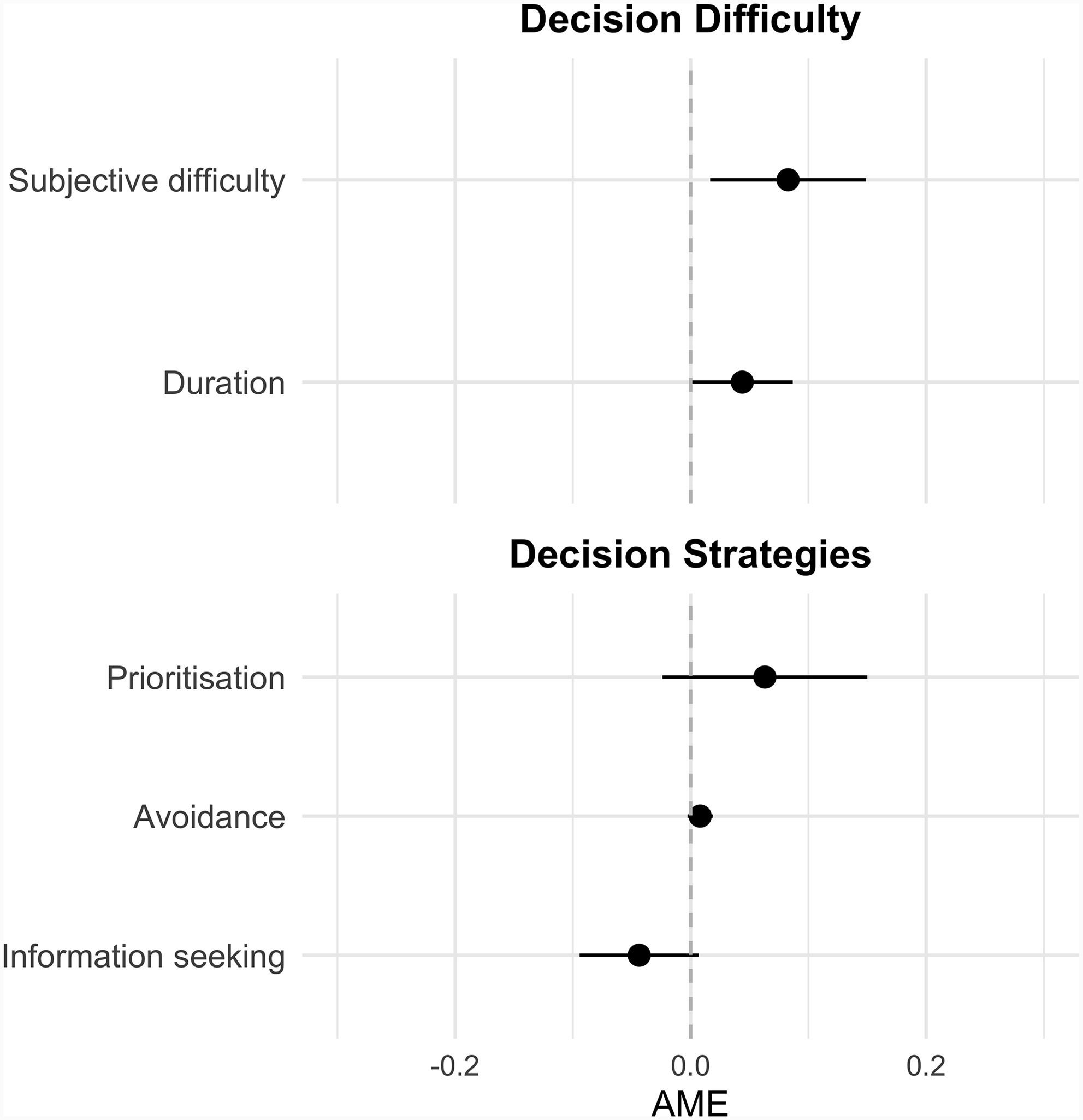
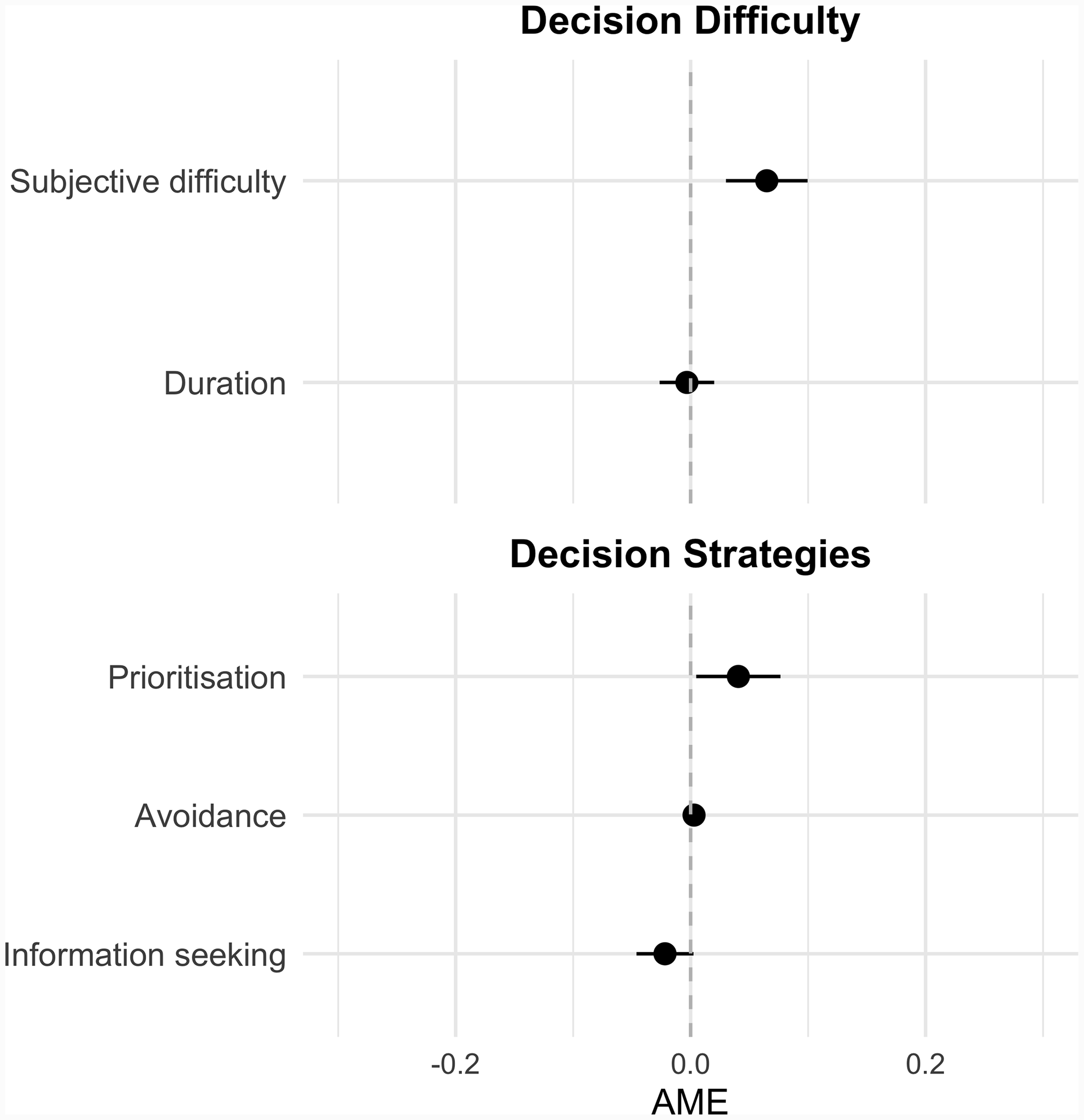
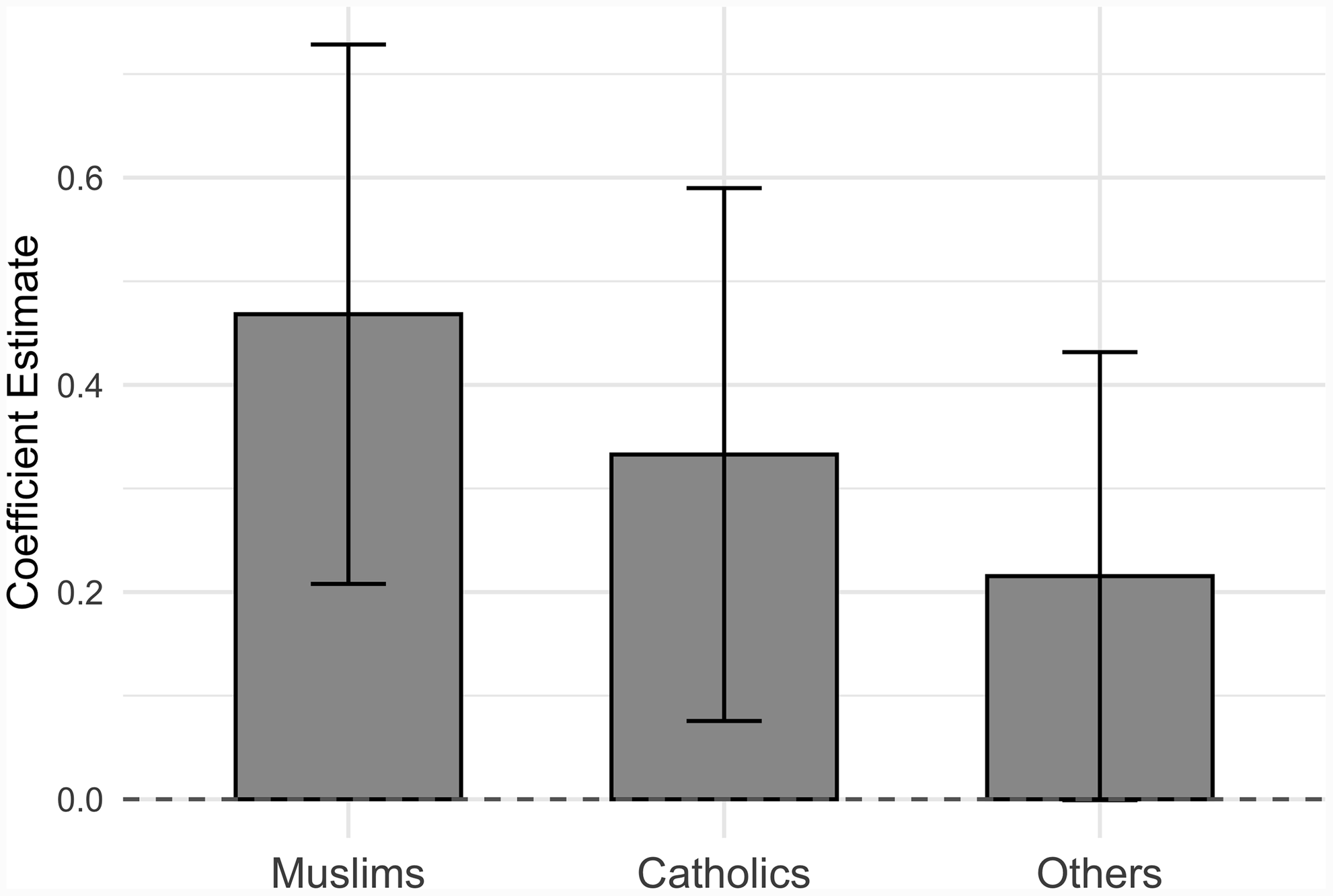
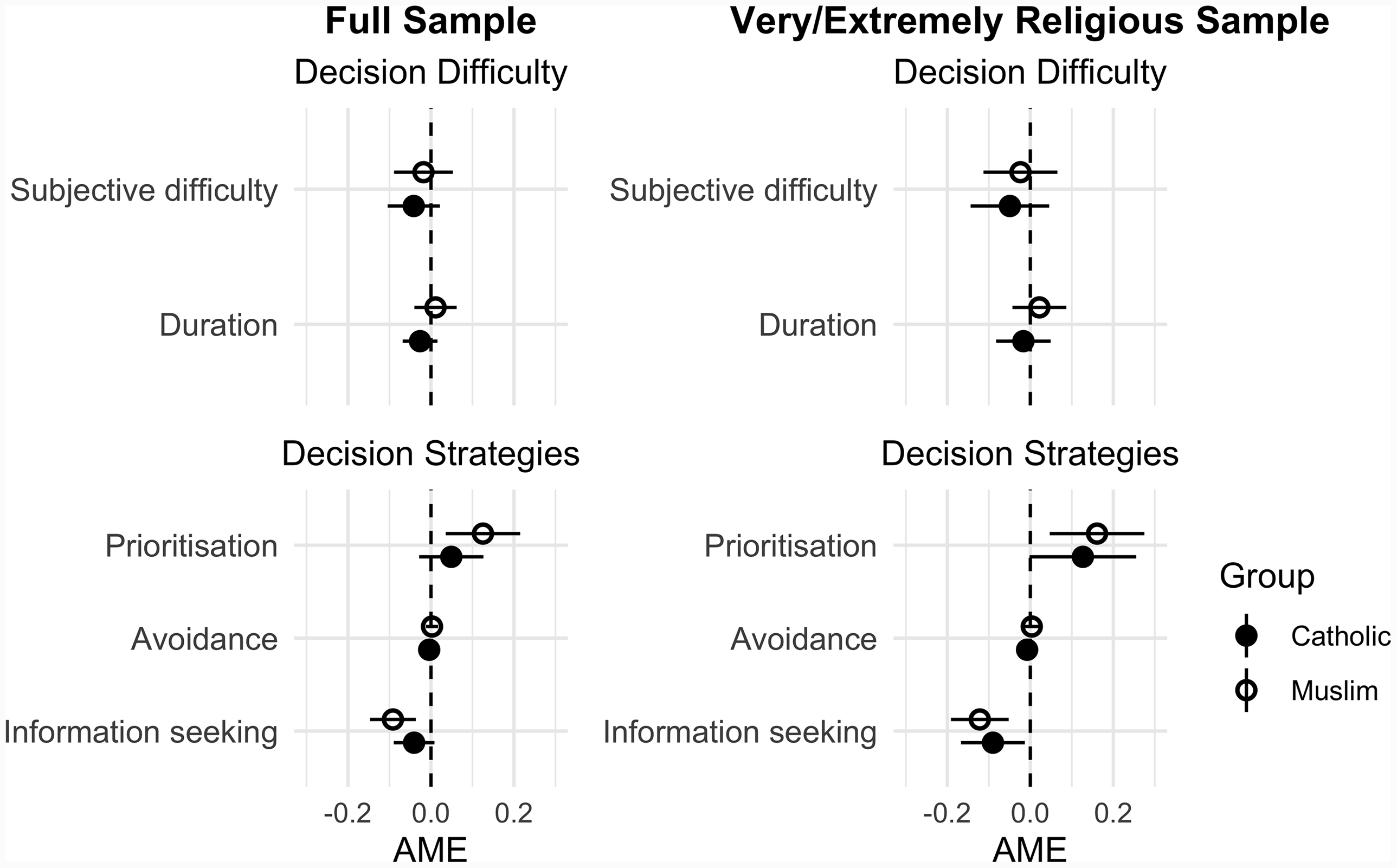


 Open access

