Reindeer lichens from the genus Cladonia and snow lichens from the genus Stereocaulon are components of spruce lichen woodland, which is one of the most extensive ecosystems in Eastern Canada (Payette & Delwaide Reference Payette and Delwaide2018). Unlike reindeer lichens, Stereocaulon species have a mutualistic association with cyanobacteria, mainly from the genus Stigonema, which are located in cephalodia (Huss-Danell Reference Huss-Danell1977, Reference Huss-Danell1979; Kershaw Reference Kershaw1978; Kytöviita & Crittenden Reference Kytöviita and Crittenden2002; Lavoie et al. Reference Lavoie, Renaudin, McMullin, Gagnon, Roy, Beaulieu, Bellenger and Villarreal2020). In Canada, acetylene reduction assays on Stereocaulon cyanobacteria have demonstrated their critical contribution to the nitrogen (N) budget (Crittenden & Kershaw Reference Crittenden and Kershaw1978; Kershaw Reference Kershaw1978). Cyanobacteria use the nitrogenase enzymatic complex to reduce atmospheric N2 into bioavailable ammonium. Thus, understanding the biology and efficacy of the nitrogenase, which reduces atmospheric N2 into bioavailable ammonium, is crucial to obtaining a clearer picture of nutrient flow in boreal forests.
Nitrogenase comes in three main isoforms, characterized by different metal cofactors in their active site (Eady & Leigh Reference Eady and Leigh1994): molybdenum (Mo)-nitrogenase, present in all N2 fixers, and at least two ‘complementary nitrogenases’ in which vanadium (V) or iron (Fe) replace Mo in the cofactor (V- and Fe-nitrogenase) (Eady Reference Eady1996). Recent studies on species of Nostoc associated with Peltigera revealed that V-nitrogenase is present and provides 15–50% of N fixed by these cyanolichens in boreal forests (Darnajoux et al. Reference Darnajoux, Magain, Renaudin, Lutzoni, Bellenger and Zhang2019). However, whether V-nitrogenase is present in other boreal or arctic cyanolichens remains unknown. Evaluating the presence of V-nitrogenase in other cyanolichens is essential to establish whether this trait is ubiquitous or limited to a small number of cyanobacterial clades.
The contribution of V-nitrogenase to N2 fixation is strongly controlled by Mo availability. Darnajoux et al. (Reference Darnajoux, Magain, Renaudin, Lutzoni, Bellenger and Zhang2019) reported that, in Peltigera species, V accumulation in cephalodia is controlled by Mo availability and identified a Mo threshold of ~250 pbb (ngMo⋅gthallus−1) below which V-nitrogenase also contributes to N2 fixation (Darnajoux et al. Reference Darnajoux, Zhang, McRose, Miadlikowska, Lutzoni, Kraepiel and Bellenger2017, Reference Darnajoux, Magain, Renaudin, Lutzoni, Bellenger and Zhang2019). Another potentially important environmental factor affecting V-nitrogenase contribution to N2 fixation is temperature. In vitro studies showed that the regulation of V-nitrogenase genes by Mo disappears at temperatures below 15 °C and at these lower temperatures V-nitrogenase, which is less efficient than its Mo-based counterpart at high temperatures (> ~20 °C), achieves similar or even higher activity to that of Mo-nitrogenase (Miller & Eady Reference Miller and Eady1988; Walmsley & Kennedy Reference Walmsley and Kennedy1991). This suggests that V-nitrogenase could significantly contribute to N2 fixation in cold and Mo-poor habitats, such as the boreal forest (Bellenger et al. Reference Bellenger, Darnajoux, Zhang and Kraepiel2020). Indeed, Darnajoux et al. (Reference Darnajoux, Magain, Renaudin, Lutzoni, Bellenger and Zhang2019) reported an increasing contribution of V-nitrogenase to N2 fixation with latitude in Peltigera species in Eastern Canada, which was primarily attributed to increased Mo stress but could also reflect decrease in average temperature (Darnajoux et al. Reference Darnajoux, Magain, Renaudin, Lutzoni, Bellenger and Zhang2019).
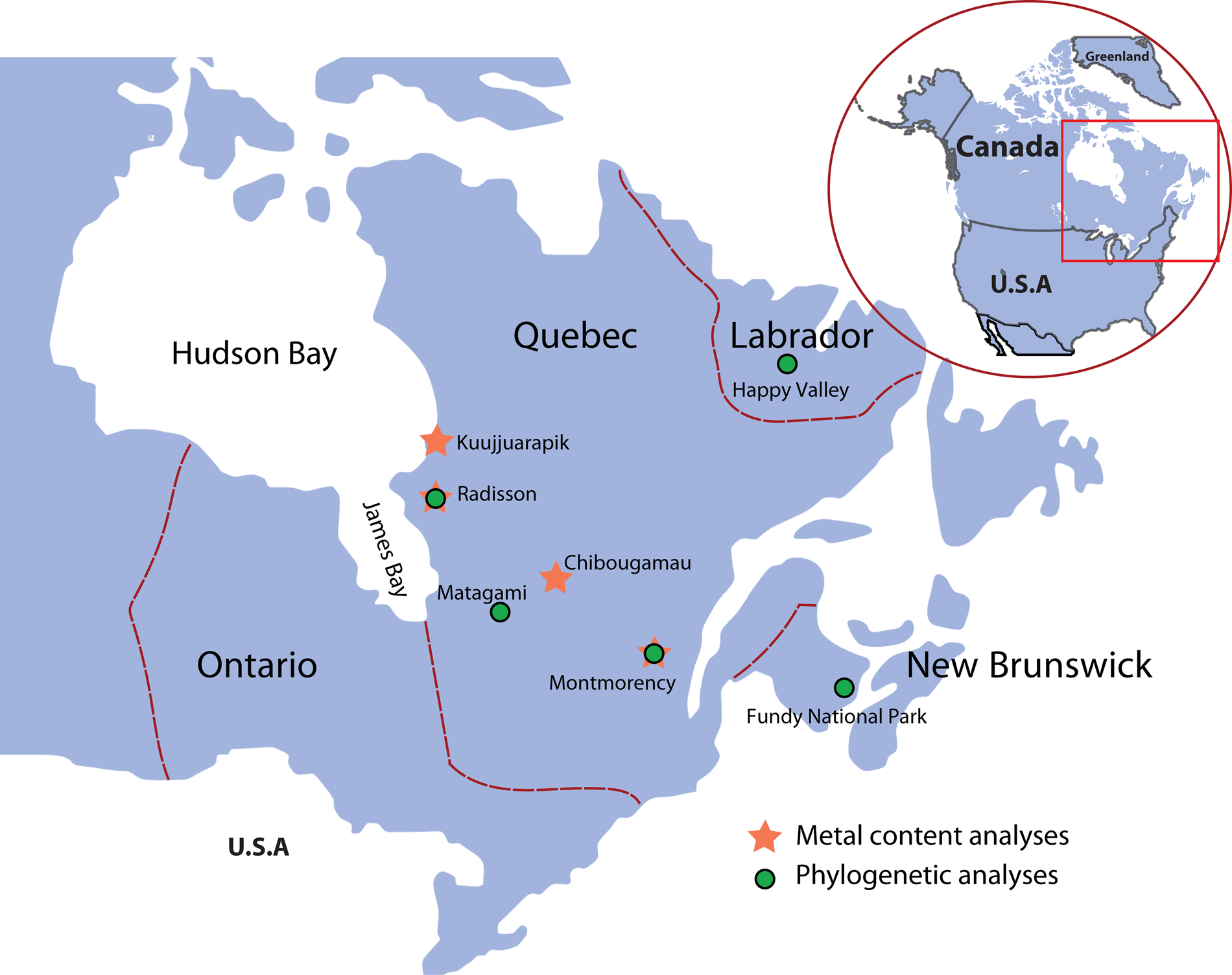
The main objective of this study was to determine the presence of the complementary V-nitrogenase in Stigonema, from several Stereocaulon accessions in a latitudinal gradient in Eastern Canada (Fig. 1), using phylogenetic analyses. Additionally, using metal analyses (i.e. Mo and V) we also evaluated if V accumulation by Stereocaulon is indicative of a potential use of this metal to cope with Mo limitation of N2 fixation as observed with Peltigera species. Sequence analyses targeting the vnfD region confirmed the presence of V-nitrogenase in Nostoc strains associated with Peltigera collected both in North America and Northern Europe (Hodkinson et al. Reference Hodkinson, Allen, Forrest, Goffinet, Sérusiaux, Andrésson, Miao, Bellenger and Lutzoni2014; Darnajoux et al. Reference Darnajoux, Zhang, McRose, Miadlikowska, Lutzoni, Kraepiel and Bellenger2017), and here we report similar findings in Stigonema for the first time. Metal analyses (i.e. Mo and V) of Stigonema-containing cephalodia confirmed that V accumulation in Stereocaulon responds to Mo availability, strongly suggesting that V-nitrogenase is used by Stereocaulon, at least in part, to cope with Mo limitation as observed in Peltigera (Darnajoux et al. Reference Darnajoux, Zhang, McRose, Miadlikowska, Lutzoni, Kraepiel and Bellenger2017, Reference Darnajoux, Magain, Renaudin, Lutzoni, Bellenger and Zhang2019).
Map of eastern North America showing collection points of Stereocaulon samples. Sites with samples used for the metal analyses (i.e. molybdenum and vanadium) of Stigonema-containing cephalodia, are indicated by stars; those sites sampled for phylogenetic analyses of Stigonema are indicated by filled circles. Note that sampling for both analyses is undertaken at some sites. In colour online.

Material and Methods
A molecular marker to test the presence of the alternative V-nitrogenase
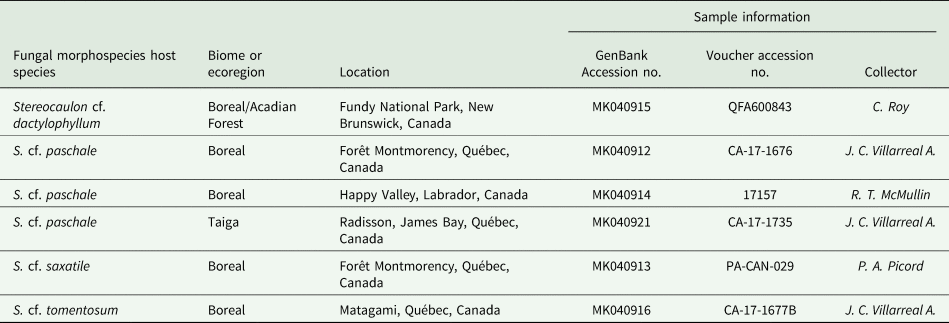
To determine the presence of the alternative V-nitrogenase and the phylogenetic affinities of the cyanobionts found in Stereocaulon, six specimens representing four morphospecies from the boreal biome were used (S. cf. dactylophyllum, S. cf. paschale, S. cf. saxatile, S. cf. tomentosum) (Fig. 1, Table 1). Accessions were sampled from New Brunswick (Fundy National Park), southern Québec (Forêt Montmorency-Charlevoix, hereafter referred to as ‘Montmorency’) and the Québec boreal zone (Happy Valley in Labrador, Matagami, Radisson at James Bay) (shown as filled circles in Fig. 1). The samples for the phylogenetic analyses differ from those of the metal analyses (see below), except those from the Montmorency Forest and Radisson (Table 1). Sanger sequencing was performed with new primers designed using Geneious 9.0.5 (Biomatters Ltd), targeting the coding region of the vanadium cluster (vnf), specifically the vnfDG region (Hodkinson et al. Reference Hodkinson, Allen, Forrest, Goffinet, Sérusiaux, Andrésson, Miao, Bellenger and Lutzoni2014). Cyanobiont DNA was extracted using the Qiagen DNeasy Plant Kit (Qiagen, Hilden, Germany). The vnfDG region was amplified by PCR using the new primers: VN 60F (forward), CGTTGT CCGAGAGAGGATGC; VN 807R (reverse), CGCAATCCTTCTTTGGCATAGT. Each 25 μl PCR reaction included 25 μg BSA, 0.626 U Taq DNA polymerase (Qiagen, Hilden, Germany), 1.5 mM MgCl2, dNTPs (0.2 mM each), 0.5 μM forward and reverse primers and 1× PCR buffer, with 1 μl of DNA template. The thermocycler temperature profile for the locus vnfDG was an annealing temperature set at 56 °C and a 95 °C denaturation temperature for 5 min, followed by 35 cycles at 95 °C for 45 s, 56 °C for 30 s and 72 °C for 1 min 30 s, with a final extension of 72 °C for 10 min. Sequencing was carried by the Genomic Analysis Platform of the Institut de biologie integrative et des systems, Université Laval.
Specimens of Stereocaulon used in the present study, including area of collection, voucher information and GenBank Accession numbers for sequences of the vnfDG region from associated cyanobacteria.

We analyzed a total of 24 accessions, including our six newly sequenced cyanobiont samples. The dataset used was obtained from Hodkinson et al. (Reference Hodkinson, Allen, Forrest, Goffinet, Sérusiaux, Andrésson, Miao, Bellenger and Lutzoni2014) and includes 15 sequences from the vnfD-like region across Archaea, Bacteroidetes (Chlorobi), Proteobacteria, Firmicutes and Cyanobacteria, with four Nostoc sequences associated with Peltigera species. The outgroup sequences were three accessions of the anfD (Fe-nitrogenase) region from Clostridium pasteurianum, Chloroherpeton thalassium and Rhodobacter capsulatum (Hodkinson et al. Reference Hodkinson, Allen, Forrest, Goffinet, Sérusiaux, Andrésson, Miao, Bellenger and Lutzoni2014). We used Geneious 9.0.5 (Biomatters Ltd) to align the nucleotide sequences, with manual verification of the resulting alignment. Sequences have been deposited in GenBank (Table 1) and the alignment is available upon request.
Phylogenetic analyses
The vnfDG coding region was analyzed under the maximum likelihood (ML) criterion using the GTR-CAT model approximation implemented in RAxML (Stamatakis Reference Stamatakis2014) with 500 bootstrap replicates (MLB). Basic statistics on the dataset were retrieved using PAUP* (Swofford Reference Swofford2002) (Table 2). Bayesian analyses of the genomic region were conducted in MrBayes 3.2 (Ronquist et al. Reference Ronquist, Teslenko, Van Der Mark, Ayres, Darling, Höhna, Larget, Liu, Suchard and Huelsenbeck2012), using the default two runs and four chains, with default priors on most parameters and a model chosen by MrModeltest (Nylander Reference Nylander2004). To assess burn-in and convergence, we compared bipartitions across the two runs and stationarity in the chain using Tracer (Rambaut et al. Reference Rambaut, Drummond, Xie, Baele and Suchard2018). Convergence was achieved in MrBayes after 2 million generations, with trees sampled every 10 000th generation for a total length of 20 000 000 generations; 25% of each run were discarded and the runs were pooled. All analyses were carried out on the CIPRES platform (Miller et al. Reference Miller, Pfeiffer and Schwartz2010).
Basic statistics and informative sites for the vnfDG locus analyzed using the GTR + Γ model chosen by MrModeltest (Nylander Reference Nylander2004).

Element analyses: molybdenum, vanadium and phosphorus
Samples of Stereocaulon paschale were collected from the southern Québec black spruce forest (Montmorency, n = 3), the northern Québec boreal forest (Chibougamau, n = 2 and Radisson, n = 4) and the forest tundra (Kuujjuarapik, Hudson Bay, n = 3) (shown as stars in Fig. 1). Sampling was carried out at least 20 m from roads and buildings to avoid the influence of human activities. To determine Mo, V and phosphorus (P) concentrations in cephalodia, these structures were dissected under a stereomicroscope using needles and forceps. The cephalodia were macroscopically free of large visible fragments of the main fungal host, however, fungal hyphae are intrinsically part of the structure, along with bacteria. Therefore, it is possible that some epiphytic bacteria (even cyanobacteria) were included in the cephalodia dissected out from the pseudopodetia. The samples were oven dried (50 °C for 48 h) and weighed. Samples were digested for 4 h in 1 ml of nitric acid (trace metal grade, Fisher Scientific) mixed with 0.2 ml of hydrogen peroxide (trace metal grade, Sigma-Aldrich) using a heating block digestion system (DigiPREP Jr, SCP Sciences) as previously described (Darnajoux et al. Reference Darnajoux, Constantin, Miadlikowska, Lutzoni and Bellenger2014). Mo, V and P levels in the cephalodia were determined by inductively coupled mass spectrometry (ICP-MS, X-series II, Thermo Fisher Scientific) using the XSeries PlasmaLab 2.6 software. Results are presented as Mo:P and V:P (mol:mol) ratios and as element concentration in cephalodium in ppb (ngelement. g−1dry weight). Statistical analyses were performed using R v. 3.4.3 (R Core Team 2017). Data normality was tested using the Shapiro test. The nonparametric Kruskal-Wallis test followed by the post hoc Dunn test, were used to test for significant differences (α < 0.05) among the Mo:P and V:P ratios at the different collecting sites.
Results and Discussion
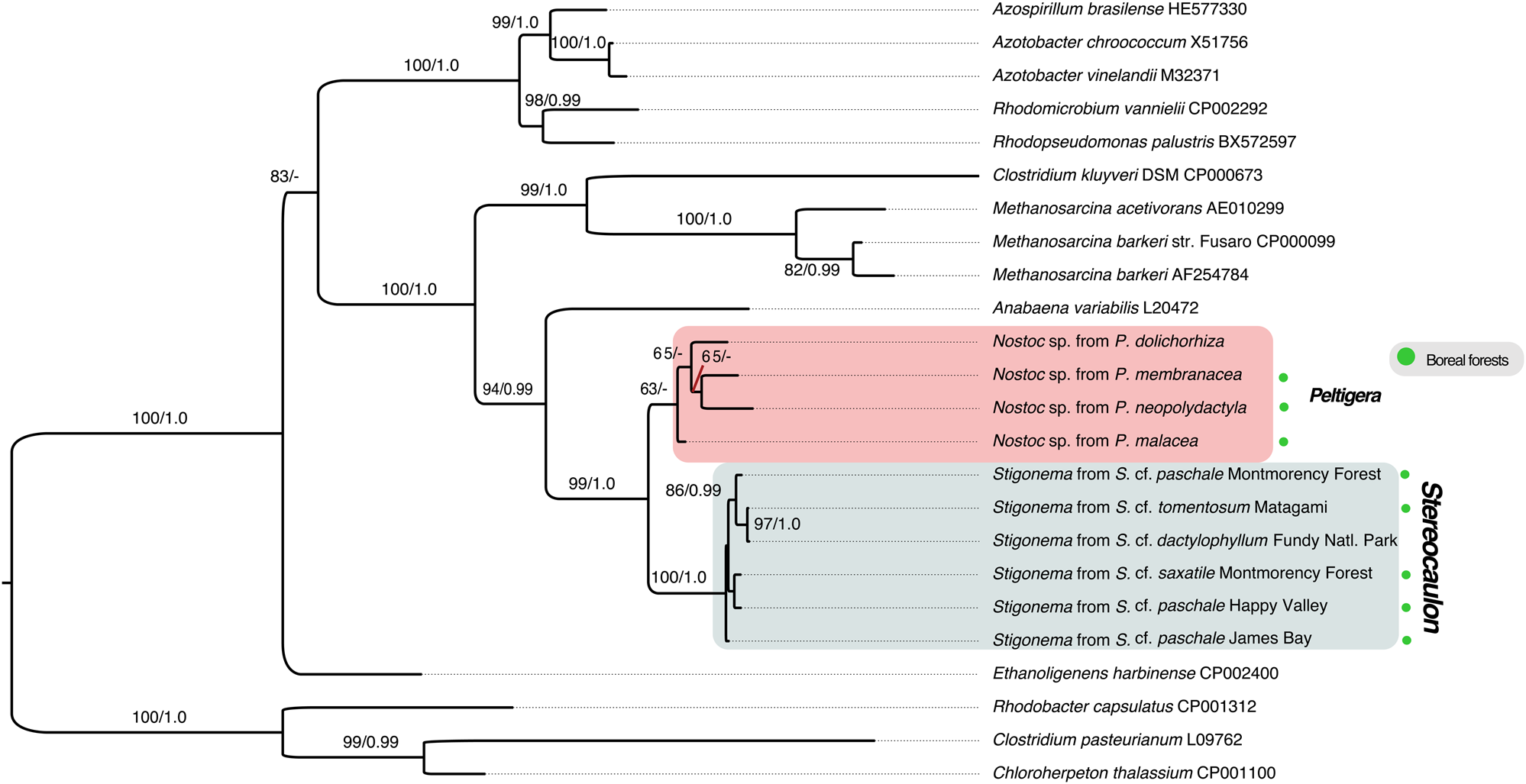
In this study, we confirm the presence of the alternative vanadium nitrogenase in Stigonema, as our newly designed primers successfully amplified a portion of the vnfDG region (Hodkinson et al. Reference Hodkinson, Allen, Forrest, Goffinet, Sérusiaux, Andrésson, Miao, Bellenger and Lutzoni2014). This suggests that cyanobionts associated with Stereocaulon, an important component of temperate, boreal and tundra ecosystems (Crittenden & Kershaw Reference Crittenden and Kershaw1978; Kershaw Reference Kershaw1978), are able to use both nitrogenases (Mo- and V- nitrogenases). Recent molecular analyses have shown an extremely low genetic diversity in Stigonema across temperate, boreal and tundra biomes (Lavoie et al. Reference Lavoie, Renaudin, McMullin, Gagnon, Roy, Beaulieu, Bellenger and Villarreal2020), without mycobiont specificity. The vnfDG sequences from Stigonema form a monophyletic group (Fig. 2) sister to Nostoc from Peltigera species (P. malacea, P. membranacea, P. neopolydactyla). Although reported in Peltigera species (Hodkinson et al. Reference Hodkinson, Allen, Forrest, Goffinet, Sérusiaux, Andrésson, Miao, Bellenger and Lutzoni2014), the complementary V-nitrogenase is not ubiquitous across the bacterial and archaeal world (Harwood Reference Harwood2020). In Peltigera, it contributes significantly to N2 fixation by allowing species to cope with Mo limitation (Darnajoux et al. Reference Darnajoux, Magain, Renaudin, Lutzoni, Bellenger and Zhang2019). The presence and activity of V-nitrogenase in other cyanolichen genera remains to be determined. The presence of the alternative V-nitrogenase in Stigonema associated with Stereocaulon, although not entirely surprising, is a major finding because Stereocaulon is widespread in boreal forests. Estimates from Peltigera species suggests that V-nitrogenase provides 15–50% of fixed N by Peltigera in boreal forests (Darnajoux et al. Reference Darnajoux, Magain, Renaudin, Lutzoni, Bellenger and Zhang2019). Stereocaulon species are more locally abundant than Peltigera in boreal forests and, therefore, we expect the contribution by Stigonema to the fixed N budget to be much higher, with a considerable input from V-nitrogenase.
Majority-rule consensus tree (MJR) of the vnfDG region (including the vnf-like regions), displaying the posterior probabilities (PP) and maximum likelihood bootstrap (MLB) values from each clade indicated above the branches (MLB/PP). The analyses included six samples from the present study representing several species of Stigonema associated with Stereocaulon (see Table 1), as well as selected bacterial and archaeal strains, and cyanobionts associated with four species of Peltigera (Hodkinson et al. Reference Hodkinson, Allen, Forrest, Goffinet, Sérusiaux, Andrésson, Miao, Bellenger and Lutzoni2014). The outgroup sequences were three accessions of the anfD (Fe-nitrogenase) region from Clostridium pasteurianum, Chloroherpeton thalassium and Rhodobacter capsulatum (Hodkinson et al. Reference Hodkinson, Allen, Forrest, Goffinet, Sérusiaux, Andrésson, Miao, Bellenger and Lutzoni2014). In colour online.

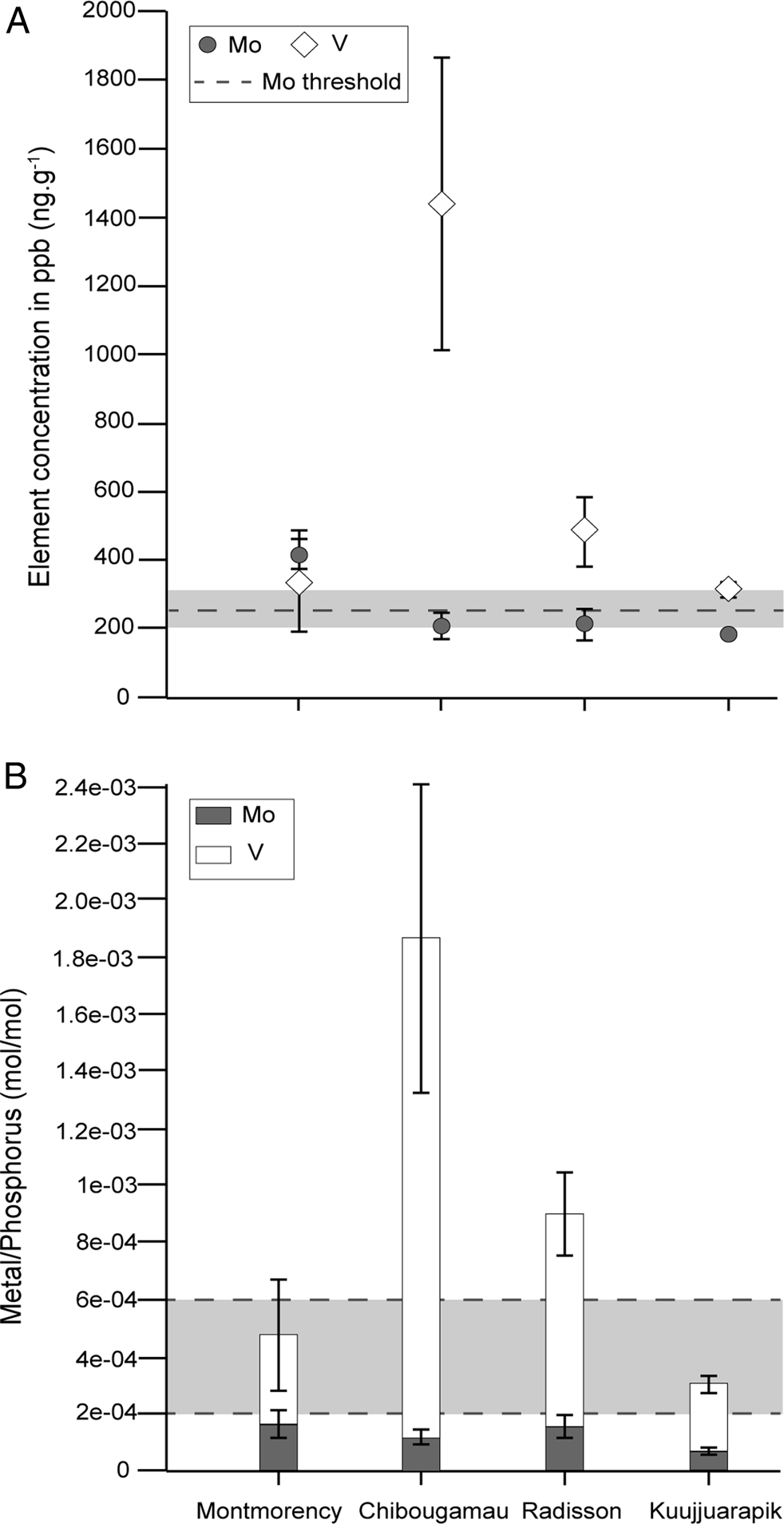
Mo and V content as well as ratios (Mo:P and V:P) in cephalodia suggest not only that genes coding for V-nitrogenase are present in the genome of Stigonema, but that both Mo and V contribute to N2 fixation by Stereocaulon species. Mo concentration in cephalodia ranged from 182 to 412 ppb (ngelement. g−1dry weight) (Fig. 3A). Samples collected in the most southern site (Montmorency, near Québec City) had significantly higher Mo concentrations (412 ± 42 ppb) than other sites located in less densely populated areas (Chibougamau, Radisson and Kuujjuarapik: 209 ± 37 ppb, 210 ± 46 pbb and 182 ± 6 ppb, respectively). This trend in Mo content in Stereocaulon is consistent with atmospheric metal deposition measured using Peltigera species in this region (Darnajoux et al. Reference Darnajoux, Lutzoni, Miadlikowska and Bellenger2015). Darnajoux et al. (Reference Darnajoux, Lutzoni, Miadlikowska and Bellenger2015) reported a sharp decrease in atmospheric metal deposition with latitude. Metal depositions above the 48th parallel (slightly below the Chibougamau site) were low and comparable to deposition in remote area such as the Himalayas, Greenland and Antarctica. Mo:P ratios in cephalodia were similar among sites and maintained within a narrow range (0.76 × 10⁻⁴ to 1.76 × 10⁻⁴ molMo.molP−1; Fig. 3B). These ratios were close to, but below, the minimal cellular Mo requirement (between 2–6 × 10⁻⁴ molMo molP−1; grey area in Fig. 3B) for N2 fixation reported in cyanobacteria and other cyanolichens (Darnajoux et al. Reference Darnajoux, Constantin, Miadlikowska, Lutzoni and Bellenger2014).
Molybdenum (Mo) and vanadium (V) content in cephalodia of Stereocaulon in four different areas ranging from southern Québec (e.g. Montmorency, 47°N, 71°W) and northern Québec (Chibougamau (49°N, 74°W), Radisson (53°N, 77°W) and Kuujjuarapik (55°N, 77°W)). A, molybdenum (grey circles) and vanadium (white diamonds) concentrations in ppb. The dashed grey line represents the average value and the grey shaded area represents the molybdenum threshold (250 ± 50 ppb) for the contribution of V-nitrogenase to N2 fixation reported in Peltigera species by Darnajoux et al. (Reference Darnajoux, Magain, Renaudin, Lutzoni, Bellenger and Zhang2019). B, molybdenum:phosphorous (grey bars) and vanadium:phosphorus (white bars) ratios (mol:mol). The grey shaded area represents the minimum Mo:P and V:P ratio for N2 fixation reported in cyanobacteria and cyanolichen species (Darnajoux et al. Reference Darnajoux, Constantin, Miadlikowska, Lutzoni and Bellenger2014). Error bars in parts A and B represent standard errors.

The consistency of Mo:P ratios in samples collected along the 1000 km latitudinal gradient, characterized by a sharp latitudinal drop in metal deposition (between the site below and the sites above the 48th parallel; Darnajoux et al. Reference Darnajoux, Lutzoni, Miadlikowska and Bellenger2015), reflects a tight homeostatic control of Mo accumulation in Stereocaulon, a phenomenon common among N2 fixers. However, data suggest that there might not be enough Mo accumulated in cephalodia to fully support N2 fixation, especially at the most northern site (Kuujjuarapik) where cephalodial Mo concentrations are particularly low (0.76 ± 0.04 × 10⁻⁴ molMo molP−1; Fig. 3B). It appears that V can be used to cope with Mo limitation in N2 fixers possessing the alternative V-nitrogenase. In Peltigera species, V accumulation in response to Mo availability and independent of atmospheric sources, has been shown to be a strong indicator of V use for N2 fixation to cope with Mo limitation (Darnajoux et al. Reference Darnajoux, Zhang, McRose, Miadlikowska, Lutzoni, Kraepiel and Bellenger2017).
In our study, V concentrations ranged from 313 to 1434 ppb (ngelement. g−1dry weight) with no clear latitudinal pattern, suggesting that atmospheric deposition is not the primary driver of V accumulation in Stereocaulon. The highest V concentrations were found at Chibougamau and Radisson (1434 ± 425 ppb and 482 ± 104 ppb, respectively), while concentrations at Montmorency (the southernmost site) and Kuujjuarapik (the northernmost site) were low and comparable (337 ± 145 ppb and 313 ± 21 ppb, respectively) (Fig. 3A). V:P ratios in cephalodia of Stereocaulon specimens also varied significantly (by up to 7-fold, from 2.45 × 10⁻⁴ to 1.73 × 10⁻³) among sites (Fig. 3B). These patterns in cephalodia V concentrations and V:P ratios along the latitudinal gradient are unlikely to be explained by passive accumulation, which would reflect deposition and thus result in lower V concentrations in Chibougamau, Radisson and Kuujjuarapik (sites above the 48th parallel, where atmospheric metal deposition is low) than in Montmorency (Darnajoux et al. Reference Darnajoux, Lutzoni, Miadlikowska and Bellenger2015). This suggests a biological control over V accumulation in cephalodia, possibly in response to Mo stress (i.e. Mo limitation of N2 fixation) as reported in Peltigera species (Darnajoux et al. Reference Darnajoux, Constantin, Miadlikowska, Lutzoni and Bellenger2014, Reference Darnajoux, Zhang, McRose, Miadlikowska, Lutzoni, Kraepiel and Bellenger2017, Reference Darnajoux, Magain, Renaudin, Lutzoni, Bellenger and Zhang2019). The minimum V cellular requirement for N2 fixation reported for cyanobacteria is similar to the Mo cellular requirement (2–6 × 10⁻⁴ molV molP−1; Darnajoux et al. Reference Darnajoux, Constantin, Miadlikowska, Lutzoni and Bellenger2014). Thus, in all our sites, there was enough V in cephalodia to support N2 fixation with the V-nitrogenase alone.
Since V can be toxic at high concentrations, this large accumulation of V in cephalodia probably reflects a role in N2 fixation. Indeed, one of the best-known biological functions of V in terrestrial ecosystems is N2 fixation (see also Rehder Reference Rehder2013). Considering the strong similarities in V and Mo homeostasis among Stereocaulon species (this study) and Peltigera species (Darnajoux et al. Reference Darnajoux, Constantin, Miadlikowska, Lutzoni and Bellenger2014, Reference Darnajoux, Zhang, McRose, Miadlikowska, Lutzoni, Kraepiel and Bellenger2017, Reference Darnajoux, Magain, Renaudin, Lutzoni, Bellenger and Zhang2019), we hypothesize that the higher concentration of V in cephalodia of Stereocaulon with low Mo content (below 250 ppb) reflects a higher physiological V demand to cope with Mo limitation of N2 fixation. The decrease in V content with latitude within sites located above the 48th parallel (Chibougamau, Radisson and Kuujjuarapik) probably reflects the decrease in V availability (atmospheric deposition) with latitude reported in this area (Darnajoux et al. Reference Darnajoux, Lutzoni, Miadlikowska and Bellenger2015). Further research is required to confirm V-nitrogenase activity and fully characterize the spatiotemporal contribution of V-nitrogenase to N2 fixation by Stereocaulon. Nonetheless, our study provides evidence of the presence of a complementary nitrogenase in Stigonema associated with the lichen Stereocaulon and gives a new dimension to studies on nitrogen cycling in temperate, boreal and tundra ecosystems.
Acknowledgements
We thank Camille Lavoie and Adriel Sierra for their help in the laboratory, T. McMullin for providing specimens and the Villarreal Lab for discussions on cyanobacterial symbiosis.
Author ORCIDs
Juan Carlos Villarreal A., 0000-0002-0770-1446; Marie Renaudin, 0000-0001-6907-2596; Jean-Phillipe Bellenger, 0000-0001-6842-4561.