INTRODUCTION
The residents of Tlajinga 33 (33:S3W1), an apartment compound located along the southern edge of Teotihuacan, have been some of the most extensively studied individuals recovered at this ancient city, both paleodemographically and paleopathologically (Storey Reference Storey1992). More recent excavations at adjacent Tlajinga Compounds 17 (17:S3E1) and 18 (18:S3E1) now allow us to directly compare residential life at Tlajinga across several of these multi-family housing complexes. Understanding the broader community, rather than a single apartment compound, helps determine if the lifestyles led in Tlajinga 33 were common across the southern district of Teotihuacan or were unique within the city.
The focus of this study is to describe the paleodemographic and paleopathological findings identified from the newly excavated human burials and cached human bone from Compounds 17 and 18 and compare these individuals to the burials of Tlajinga 33 (Storey Reference Storey1992). In addition, stable isotope analysis of carbon (δ13C) and nitrogen (δ15N) is examined to explore the dietary practices between compounds. Combining both the pathological evidence and the information from stable isotopes, we test the hypothesis that individuals across Tlajinga lived similar lives, both in their susceptibility to disease and by the foods they consumed. Finally, we report high-precision accelerated mass spectrometry radiocarbon (AMS 14C) dates of burials from all three compounds. These 14C dates are the first from this district providing further refinement of chronological occupation at Tlajinga.
It is important to note here that we compare the skeletons from the three Tlajinga Teotihuacan compounds by their mortuary characteristics to infer individual socioeconomic status. While the chronological periods are determined by the AMS radiocarbon dating in tandem with the previously established ceramic chronology (Cowgill Reference Cowgill2015; Rattray Reference Rattray1992), formulating social status differences can be challenging, especially for a complex society such as Teotihuacan. First, there are variations in neighborhoods. Some neighborhoods are more prestigious and more centrally located, for instance, closer to important public and ceremonial buildings. Also relevant is the proximity of a residence to neighborhood administrative/ritual centers (Manzanilla Reference Manzanilla, Arnauld, Manzanilla and Smith2012). The wealth and power hierarchy can also be visible across the city by the varied size and differential construction materials of residences, although Teotihuacan has neighborhoods of mixed wealth. For Teotihuacan, many apartment compounds may have had similar outer walls, but the inside plans were variable and tailored to reflect the needs and the wealth of residents. Thus, Teotihuacan internal compound structure varied from spacious rooms with murals to small, cramped quarters. Excavated compounds can, therefore, be ranked in status by the quality of construction and the spaciousness of their interiors, reflecting the hierarchy of the city. Second, there is variation in social status within a residence. Differences in achieved positions of the inhabitants often drive this second set of distinctions, which are influenced by age, sex, and personal abilities. Perhaps these variations had importance only within the apartment compounds, with the highest statuses reserved for the leaders who represented their residence at the neighborhood level. Therefore, these differences may be considered heterarchical (Crumley Reference Crumley1995).
Two types of archaeological evidence can be used to study status differences. One set of essential markers requires the variable prestige of interment locations within a residence (the pre-Columbian Mesoamerican pattern involves burial within and around the apartment compound). The other is the mortuary treatment for an individual, which includes grave construction type and grave offerings. Such treatment is often an indicator of the importance of the person during life, in addition to reflecting the mourners’ perception of that individual, although there can be exceptions that are not strictly determined by the social status of the deceased (Rakita et al. Reference Rakita, Buikstra, Beck and Williams2005).
For Tlajinga, the location of burial and mortuary treatment of individuals does indicate slight social status differences across this community. At this time, however, differences in status in Compounds 17 and 18 may not be as clearly reflected as in Tlajinga 33 (Storey Reference Storey1992), given that this is a preliminary analysis of paleopathological indicators and stable isotopes. Regarding status difference, it must also be noted that Tlajinga is considered a modest neighborhood relative to the entire city of Teotihuacan (Carballo et al. Reference Carballo, Hirth, Sariñana, Buckley, Ramón and Kennett2019). Therefore, when we speak of “higher” and “lower” status individuals at Tlajinga, we are not designating between two classes of people on opposite ends of the wealth spectrum. Rather, we are identifying those individuals with evidence of slightly more wealth, or “higher status,” compared to those with little to no evidence of wealth, or “lower status.”
THE TLAJINGA DISTRICT
The Tlajinga neighborhood is in the southern part of Teotihuacan, almost akin to a suburb, and contained the southern entrance of the Street of the Dead. The compounds in Tlajinga are more dispersed, straying from the organized grid pattern of blocks and streets familiar to the more central residential complexes of the city. At Tlajinga, ceramic production was the focus of production during the later phases of the city's occupation (Cowgill Reference Cowgill2015). Excavations at three apartment compounds in Tlajinga suggest this district was a craft production community, probably organized at the neighborhood level (Carballo et al. Reference Carballo, Hirth, Sariñana, Buckley, Ramón and Kennett2019; Storey Reference Storey1992).
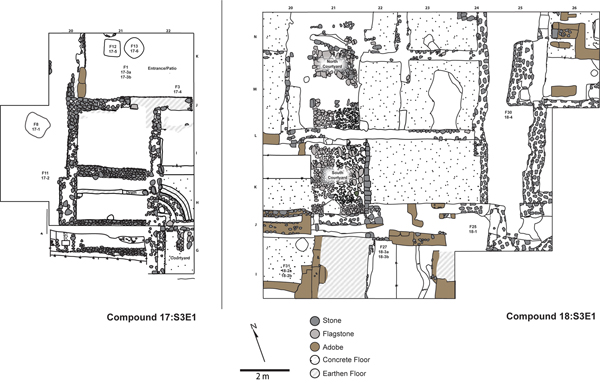
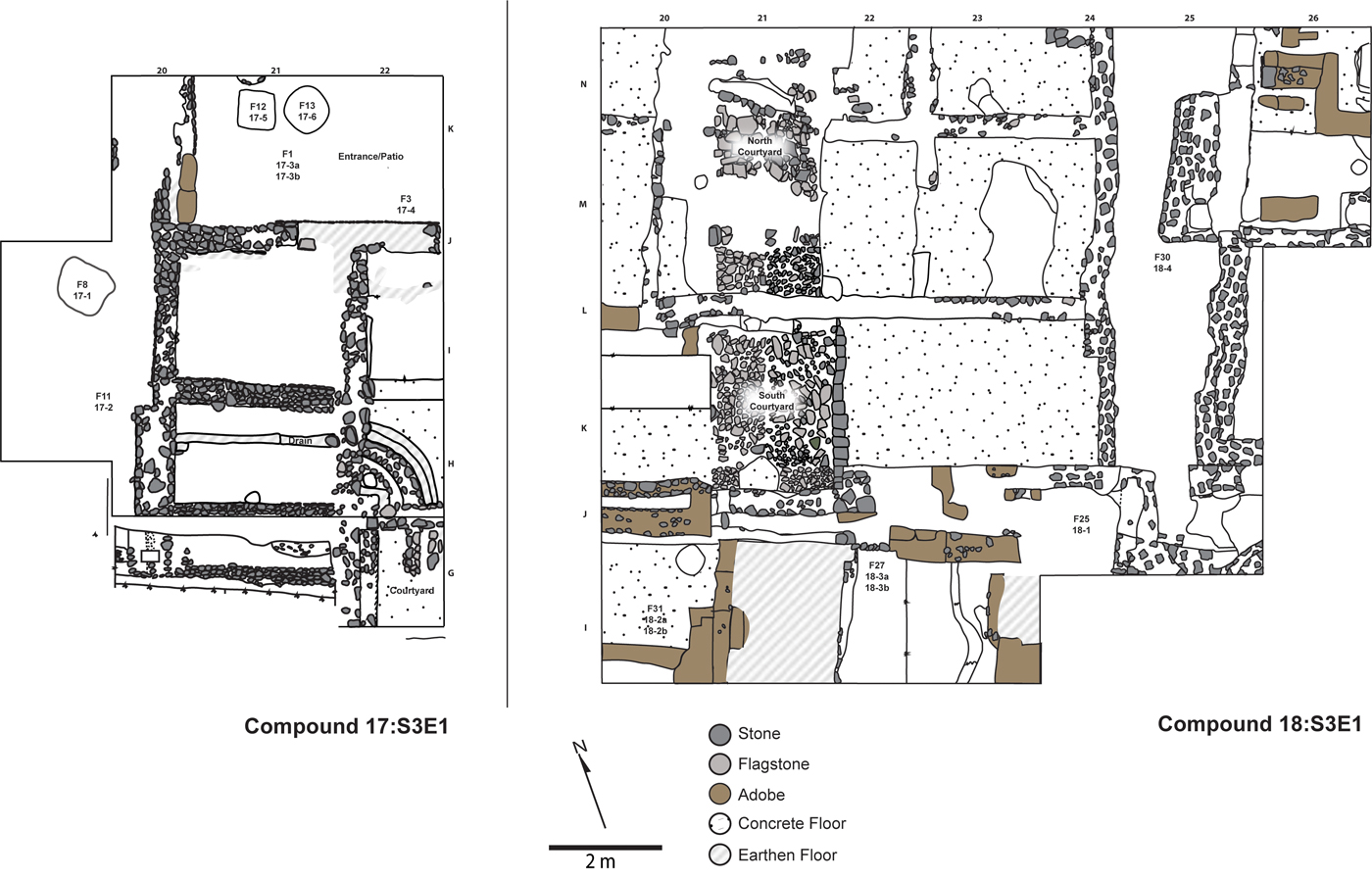
The most recent excavations at Compounds 17 (17:S3E1) and 18 (18:S3E1) are located along the Street of the Dead (Figure 1). Tlajinga 17 was identified by Spence (Reference Spence1981) based on evidence from the Teotihuacan Mapping Project (TMP; Millon et al. Reference Millon, Drewitt and Cowgill1973) as a residence of obsidian workers, an identification supported by excavations (Carballo et al. Reference Carballo, Hirth, Sariñana, Buckley, Ramón and Kennett2019; Hirth et al. Reference Hirth, Carballo, Dennison, Carr, Imfeld and Dyrdahl2019). In contrast, Compound 18 was not initially associated with any craft specialization, but excavation has revealed evidence of production here as well (Widmer Reference Widmer2019).
Location of the burials excavated in Compound 17 (17:S3E1) and Compound 18 (18:S3E1). Map courtesy of David M. Carballo.
Tlajinga 33 (33:S3W1) was a short distance to the west of Tlajinga 17 and 18 amid several other compounds (Carballo et al. Reference Carballo, Hirth, Sariñana, Buckley, Ramón and Kennett2019:Figure 1). It was the focus of extensive excavations in 1979–1980 and not chosen for any particular characteristics, except that it was accessible and permission was granted from local authorities. As identified during the TMP, specialized ceramic production of San Martin Orange wares during the later Xolalpan phases of occupation was present in Tlajinga. It was expected that Tlajinga 33 would provide evidence of similar forms of production. It appears, however, that these residents specialized in lapidary work during the first 100–150 years of the compound's existence. This conclusion is viable given that Tlajinga 33 was founded earlier than Compounds 17 and 18 (see radiocarbon section, below), thereby housing several generations of lapidary artisans before specialized craft production became more popular. Production at Tlajinga 33 included both exotic and common materials such as shell, greenstone, slate, and travertine (Widmer Reference Widmer1991). Multiple family members at Tlajinga probably carried out the production of Teotihuacan crafts, and it is likely that similar multi-craft production occurred in many compounds (Manzanilla Reference Manzanilla, Manzanilla and Chapdelaine2009).
Evidence suggests residents of Compounds 17 and 18 may have been wealthier than the residents of Tlajinga 33 (Carballo et al. Reference Carballo, Hirth, Sariñana, Buckley, Ramón and Kennett2019; Widmer Reference Widmer2019). With that being said, it is important to keep in mind that the Tlajinga district was one of modest means in the overall socioeconomic organization of Teotihuacan (Carballo et al. Reference Carballo, Hirth, Sariñana, Buckley, Ramón and Kennett2019). Human burials provide crucial evidence about what it was like to live in a particular place in the past. Previous work in historical and skeletal populations has already indicated that population density bore a cost in increased morbidity (an episode of poor health or disease) and mortality (e.g., Steckel and Rose Reference Steckel and Rose2002). There is also research on historical and contemporary populations that demonstrate how socioeconomic status affects health, with the poor being impacted by heightened morbidity and mortality (Goodman Reference Goodman, Goodman and Leatherman1998). Thus, it is expected that the preindustrial cities of central Mexico will also reveal the effects of density and socioeconomic status. As common-status residents in an urban environment, the Tlajinga skeletons should have indicators of morbidity preserved on the bones.
The Burials of Compounds 17 and 18 (S3E1)
Preliminary analysis of the human skeletons from the Tlajinga Teotihuacan Project (PATT) has been conducted. Each skeleton, and some of the human bone from general proveniences, was inventoried and observations were made on indicators of sex, age, health, and nonmetric traits. Measures of available skeletal elements and teeth were taken. Human bone collagen was sampled for AMS radiocarbon dating and for carbon and nitrogen stable isotope analyses to examine potential differences in social status and origin based on dietary consumption patterns. Detailed observations were made of these samples and are discussed below.
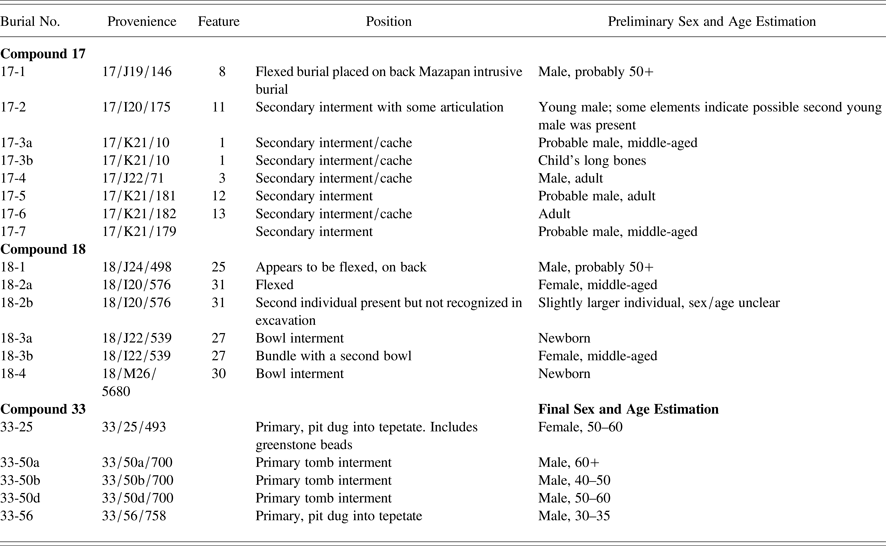
Several patterns are evident from this preliminary analysis. The excavations in two compounds along the southern Street of the Dead (Compounds 17 and 18) have yielded few primary interments, i.e., individuals found in proper articulated position and undisturbed since initial burial. So far, secondary interments, individuals whose skeletons have been manipulated in some way before final placement, have dominated. As in the Tlajinga 33 excavation, there are both formal burials and deposits of human remains that appear more expedient or perhaps intended as caches/offerings in places within the compound. Table 1 provides descriptions of the contexts defined as burials.
Descriptions of the burials from Tlajinga Compounds 17 and 18. Burials discussed in detail for Tlajinga 33 are also included.

In Compound 17, the obsidian workshop, all eight individuals identified from skeletal remains were located in the northern courtyard/entranceway and the platform to the west (Figure 1). In the courtyard, three features contained human bone, but in atypical contexts more similar to caches than interments. As in Tlajinga 33, all were given burial numbers (Table 1). Burial 17-3, Feature 1, contained two different individuals under a cache of obsidian cores. Individual 17-3a was a partial pelvis of a middle-aged male, while 17-3b was the long bones of a child, aged approximately 5 to 7 years old. Why these two individuals would be part of this cache is unknown. Burial 17-4, Feature 3 consisted of just one isolated, partial male mandible with no teeth, found in front of an entrance to a room. In a depression in the bedrock, Burial 17-5, Feature 12 was a pile or bundle of fragmentary skeletal elements with skull, torso, and long bones represented. This deposit was a young male in his 20s, and most like many secondary interments in Tlajinga 33, which were thought to be reburials of disturbed primary burials (Storey Reference Storey1992). Burial 17-6, Feature 13 was a small pile of foot bones and a couple of fragments of hand bones from an adult, also in a depression in the bedrock near Feature 12 but definitely a different individual. Burial 17-7 was not designated as an interment in the excavation, but there were enough skeletal elements to indicate a probable secondary interment of a middle-aged adult, probably male.
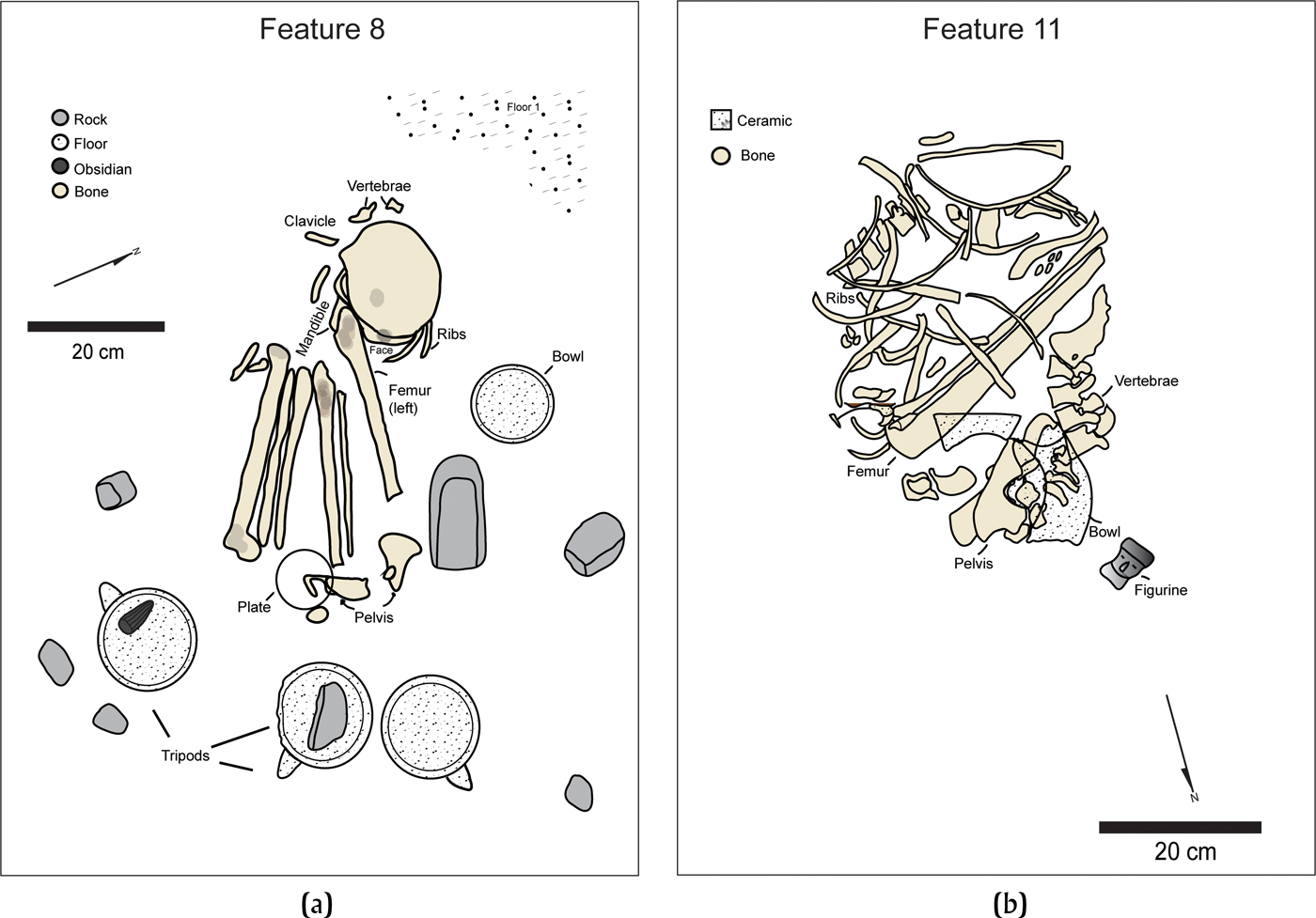
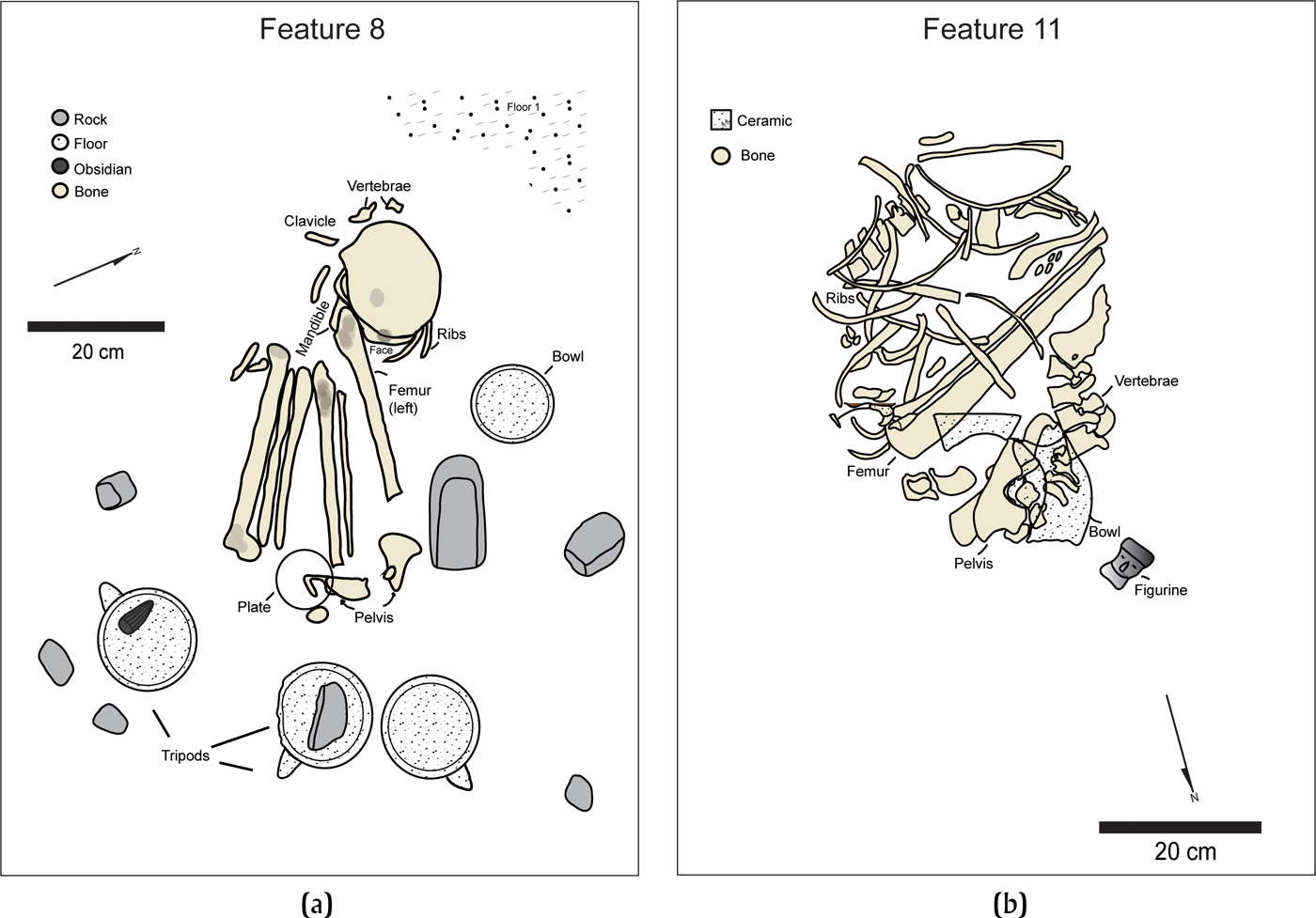
In the western platform, the two burials appear to be more typical mortuary contexts (Figure 2). Burial 17-1, Feature 8 was a primary interment of an older male accompanied by five Mazapan ceramics, representing an intrusive burial from a later period after the compound was abandoned (Figure 2a). The date of this burial suggests the compound was memorialized for some time after political collapse (Carballo et al. Reference Carballo, Hirth, Sariñana, Buckley, Ramón and Kennett2019). Burial 17-2, Feature 11 is a probable loosely bundled secondary interment of a young male in his early 20s, accompanied by pieces of a cajete and a figurine (Figure 2b). There is some articulation, especially of vertebra, but there are also what appears to be elements of a second individual. Cutmarks are visible on Burial 17-2, although none are on the vertebra or long bones, which would indicate deliberate disarticulation of an articulated skeleton. The cutmarks could be evidence of defleshing for a partially skeletonized body. Burial 17-2 was just above the bedrock and was the earliest Tlamimilolpa context at this compound (Table 2). It seems like a probable dedicatory interment for the platform, possibly of a reburied resident.
Burial illustrations from Compound 17, Features (a) 8 and (b) 11. Illustrations courtesy of David M. Carballo.
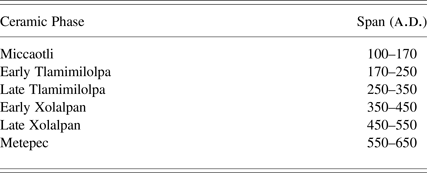
Teotihuacan ceramic phases (after Cowgill Reference Cowgill2015:Table 1.2).

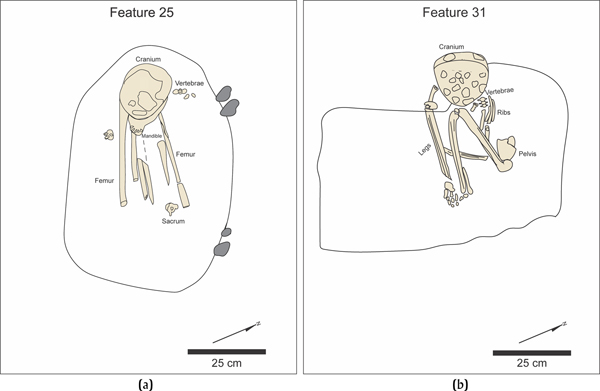
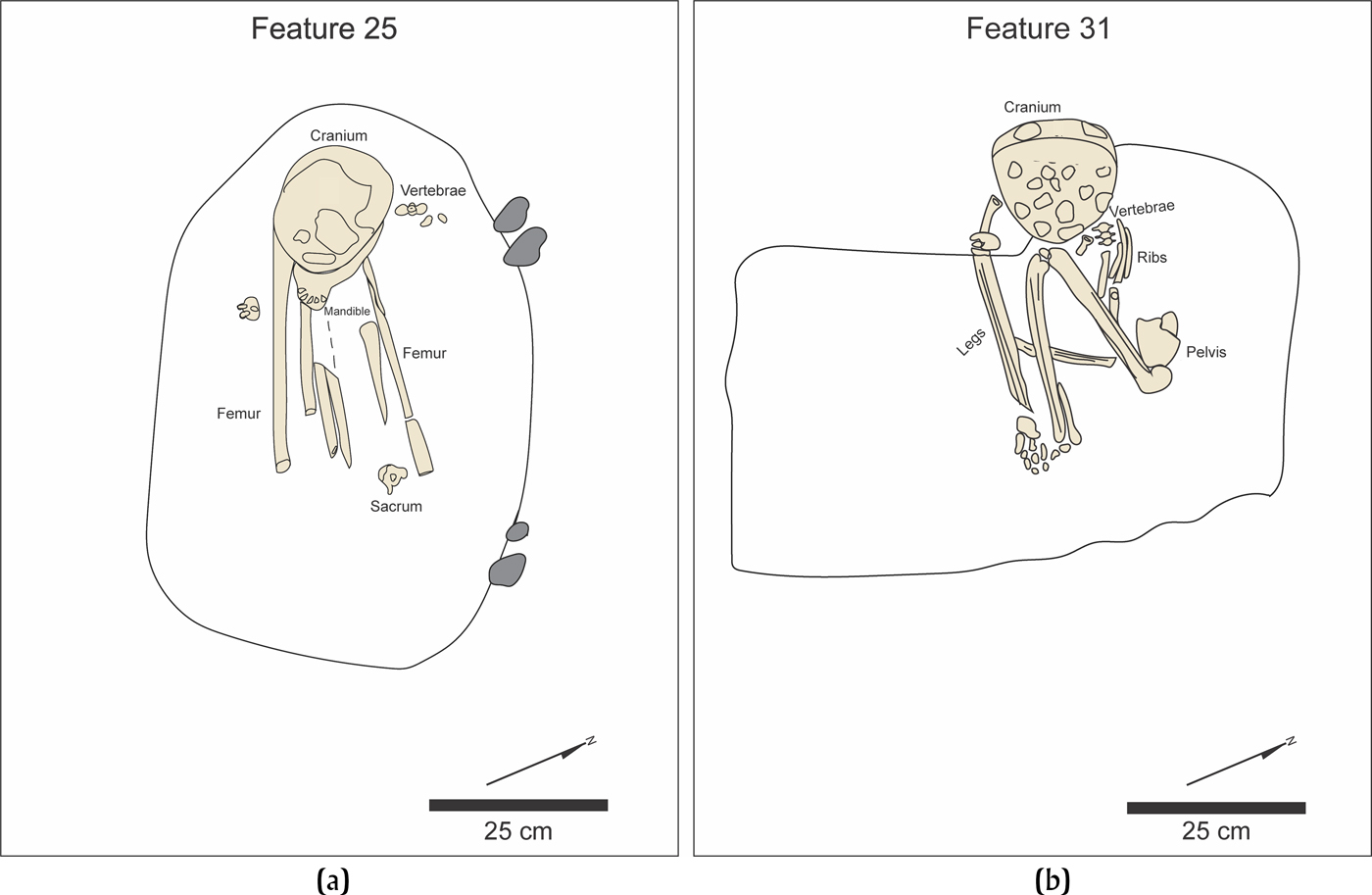
Excavations at Compound 18 were in the center of the complex, and the six burials found here were in rooms around the courtyards (Figure 1). The burials in this compound were typical of residential burials at Teotihuacan. Burial 18-1, Feature 25 (Figure 3a) was a poorly preserved flexed interment of an older male, and Burial 18-2a, Feature 31 (Figure 3b) was a flexed interment of a middle-aged female. No grave goods were found in either interment. In Feature 31, there were also elements of a second adult of indeterminate sex, Burial 18-2b, which was a secondary interment and was not recognized during the excavation. Two newborns were excavated in bowls, Burial 18-3a, Feature 27 and 18-4, Feature 30. Obsidian blades, common in Tlajinga 33, also accompanied both of these burials. Burial 18-3b was a secondary bundle of a middle-aged female with another bowl next to it.
Burial illustrations from Compound 18, Features (a) 25 and (b) 31. Illustrations courtesy of David M. Carballo.
The interments from Compounds 17 and 18 are quite variable. Newborns buried in bowls was the custom in Teotihuacan, as is the flexed position for primary adult interments. Teotihuacan compounds excavated outside of Tlajinga 17 and 18 have mostly primary interments, so the preponderance of secondary interments is distinctive about the PATT sample so far. Additionally, there is a preponderance of males (six) to females (two), and two newborns. One child was part of an enigmatic cache. Compared to Tlajinga 33, these burials are accompanied by few offerings and have simple earthen graves.
Tlajinga 33 (33:S3W1)
Founded during the Early Tlamimilolpa period (probably between a.d. 200–250), Tlajinga 33 was a modest compound in the area just west of the central Avenue of the Dead. The Tlajinga 33 compound was erected from modest building materials, such as adobe walls, cobblestones (in one of the main courtyards), and earthen floors. By Xolapan times, the compound had stuccoed walls and plastered floors. Most of these walls, however, were comprised of only a few stone courses at the base, and the rest were adobe. The compound was abandoned in the Early Metepec (ca. a.d. 550). Most individuals buried here were accompanied by very few offerings, typically zero to two at the most. They were interred in earthen pits, often within the apartments. A few individuals had up to 42 items and were buried in pits at least partially dug into the underlying bedrock. Locations for these more wealthy graves varied from under altars in the main courtyard, under activity areas, and in apartments. These latter individuals are considered to have higher status within the compound, while the earthen pit individuals with two or fewer grave offerings comprised the lower status group. By its peripheral location, modest building materials, irregular layout, and generally modest burial offerings, Tlajinga 33 appears to be a residence of lower status artisans within the city.
An estimated total of 206 skeletal individuals was recovered from the Tlajinga excavation, but most were represented by only a few skeletal elements. Only 63 individuals in primary and secondary interments could be associated with a particular social status. The rest were recovered from middens and were probably interments disturbed during compound renovations whose original mortuary treatment is unknown. Therefore, the number of burials available for each age that can be scored for health indicators is small. It was possible, however, to determine that mortality, especially of infants and children, was high and that paleopathological indicators of significant morbidity were common among the Tlajinga 33 residents (Storey Reference Storey1992).
HEALTH INDICATORS
Skeletons can provide information on health and well-being through paleopathological indicators of morbidity, but these are limited to chronic or severe stress episodes from illness, trauma, and/or malnutrition that the individual must survive to be preserved on the bone (Wood et al. Reference Wood, Milner, Harpending, Weiss, Cohen, Eisenberg, Hutchinson, Jankauskas, Česnys, Anne Katzenberg, Lukacs, McGrath, Roth, Ubelaker and Wilkinson1992). These stressors were very common in the Tlajinga 33 skeletons and provided original evidence of the challenges of preindustrial urban environments (Storey Reference Storey1992). Most common to Tlajinga 33 were enamel defects, or dents in the enamel called hypoplasia. Hypoplasia is an indicator of severe stress that cause growth arrest and manifests as thinner than normal enamel laid down during dental development. Thus, enamel hypoplasia is a marker of childhood stress that is permanent once formed. Practically all individuals at Tlajinga 33 had these markers, especially adults. Also common on the surface of bones from Tlajinga 33 were periosteal reactions that can occur in both adults and juveniles. Because there are many possible causes from trauma and disease, these reactions are indicators of non-specific infections. Therefore, it is generally not possible to diagnose what might have caused a particular case of infection.
Rarer at Tlajinga 33 was evidence for porotic hyperostosis, spongy-looking bone on the outer surface of the cranium. Only 15 percent of crania that could be scored had evidence of this indicator. Porotic hyperostosis is evidence for anemia, but for many years it was considered to be caused by iron-deficiency. A few years ago, however, Walker and colleagues (Reference Walker, Bathhurst, Richman, Gjerdrum and Andrushko2009) demonstrated that the marrow expansion, which underlies porotic hyperostosis, is not likely to be caused by iron deficiency. This is because marrow expansion can only occur if there are sufficient iron stores to support the production of blood. Thus, it is now postulated that porotic hyperostosis is more likely caused by vitamin B12 deficiency. Vitamin B12 is necessary for humans, and only available from animal sources, and so the diet at Tlajinga 33 must have been sufficient to protect almost all individuals from this deficiency (Widmer and Storey Reference Widmer and Storey2017). A recent comparison of some of the Tlajinga 33 skeletons with a sample from La Ventilla, a more centrally located district within Teotihuacan, found that Tlajinga 33 had a higher prevalence of paleopathological indicators except for porotic hyperostosis (Storey et al. Reference Storey, Morfin, Fernandez, Klaus, Harvey and Cohen2017). Individuals from La Ventilla were of higher status than Tlajinga, which support they hypothesis that the Tlajinga district was of overall modest status relative to the entire city.
Skeletons from Compounds 17 and 18 were also scored for these three indicators for comparison, although many of the skeletons are only partial secondary interments. The later Mazapan Burial 17-1 was excluded from this analysis. Out of four individuals who could be scored, only one had a hypoplasia, suggesting these individuals were less susceptible to stress during periods of development. This is the most dramatic difference, but it is a small sample. Two out of three had healed porotic hyperostosis, and five out of eight had periosteal reactions, including the child. Thus, there is evidence of common morbidity in these two compounds as well.
BIOGEOCHEMICAL ANALYSIS
Besides the identification of paleopathological markers of morbidity on the newly recovered Tlajinga skeletons, a primary objective of this project was to conduct stable carbon and nitrogen isotope analyses on human bone collagen from all three Tlajinga compounds. We implemented stable isotope analysis for three reasons. First, to compare individual dietary consumption patterns across Tlajinga to test the “similar lives across compounds” hypothesis. Second, to test for status-related differences between individuals based on patterns of food consumption. And third, to assess changes in diet over time.
Stable carbon (δ13C) and nitrogen (δ15N) isotope analyses of human bone collagen are widely used to reconstruct individual dietary consumption patterns (Ambrose and Krigbaum Reference Ambrose and Krigbaum2003; DeNiro and Epstein Reference DeNiro and Epstein1978, Reference DeNiro and Epstein1981; DeNiro and Schoeninger Reference DeNiro and Schoeninger1983; Hedges and Reynard Reference Hedges and Reynard2007; Hedges et al. Reference Hedges, Stevens, Koch and Leng2006; O'Leary Reference O'Leary1988; Schoeninger and DeNiro Reference Schoeninger and DeNiro1984). Here, the assumption is that chemical signatures in plant and animal species are incorporated into skeletal tissues when directly consumed by humans. Furthermore, the animals humans incorporate into their diet also eat a broad range of plant species and this can affect the δ13C value in human remains (DeNiro and Epstein Reference DeNiro and Epstein1978). The carbon isotope ratios of these foods are absorbed into human bone collagen with a shift of around 5‰ (Ambrose and Norr Reference Ambrose, Norr, Lambert and Grupe1993). Broad plant types fall into three categories defined by different photosynthetic pathways including C4, C3, and CAM (Crassulacean acid metabolism) plants. Maize (Zea mays) is an agricultural staple across Mesoamerica and one of the most regularly consumed C4 plants. Baseline samples of C4 plants in the Teotihuacan region suggest a range of −11.5‰ to −15.1‰ (Morales Puente et al. Reference Morales Puente, Alvarado, Manzanilla, Otero and Manzanilla2012; Nado et al. Reference Nado, Zolotova and Knudson2017). Metabolic fractionation for human consumers produces δ13C ratios for bone collagen of −7.0 ± 1.0‰ and results in expected C4 signatures as high as −6‰ to −7‰. These results are demonstrated in past dietary studies of residential compounds at Teotihuacan (Casar et al. Reference Casar, Morales, Manzanilla, Cienfuegos and Otero2017; Morales Puente et al. Reference Morales Puente, Alvarado, Manzanilla, Otero and Manzanilla2012; White et al. Reference White, Spence, Longstaffe and Law2004a, Reference White, Storey, Longstaffe and Spence2004b). Amaranth is another C4 plant natural to the Teotihuacan region, but it remains unclear if cultivation occurred as a food plant in prehistoric times (McClung de Tapia and Martínez-Yrizar Reference McClung de Tapia and Martínez-Yrizar2017). C3 plants common to Mesoamerica mostly include wild species of plants, trees, nuts, fruits, and vegetable cultigens. Stable carbon isotope ratios in the human consumer range from −20.0 ± 1.0‰ for a diet composed primarily of C3 plants (DeNiro and Epstein Reference DeNiro and Epstein1978). CAM plants represent the third photosynthetic pathway. While C4 and C3 plants are bimodal (O'Leary Reference O'Leary1988), CAM plants have more flexible photosynthetic processes that tend to overlap with ratios of C3 and C4 plants (Bender Reference Bender1971; Bender et al. Reference Bender, Rouhani, Vines and Black1973). The baseline for CAM plants in the Teotihuacan valley is approximately −11.9‰ to −15.8‰ and consists mainly of the nopal cactus (Opuntia ficus-indica) and maguey (Agave Americana; Lounejeva Baturina et al. Reference Lounejeva Baturina, Puente, Cabadas Báez, Alvarado, Sedov, Gómez and Rebolledo2006; Morales Puente et al. Reference Morales Puente, Alvarado, Manzanilla, Otero and Manzanilla2012).
In contrast, nitrogen isotopes in human bone collagen are introduced in the process of protein digestion, increasing incrementally by 3–5‰ between trophic levels (Hedges and Reynard Reference Hedges and Reynard2007). Nitrogen isotopes can also be used to identify if an individual diet consisted of more terrestrial or marine-based resources since marine vertebrates have higher δ 15N values relative to terrestrial vertebrates (DeNiro and Epstein Reference DeNiro and Epstein1981). Keeping in mind that environmental and climatic factors can impact values (Warinner et al. Reference Warinner, Garcia and Tuross2013; Zanden and Rasmussen Reference Zanden, Vander and Rasmussen2001), the following δ15N ranges have been identified by DeNiro and Epstein (Reference DeNiro and Epstein1981): ~3–9‰ for primarily vegetarian diets; and 9–12‰ for meat consumption derived from terrestrial herbivores.
For the residents of the Tlajinga district, we hypothesize individual diets will be similar between the three compounds, with evidence of abundant C4 plant intake combined with signals of terrestrial animal protein consumption. This hypothesis is based on past studies of diet at Teotihuacan (Casar et al. Reference Casar, Morales, Manzanilla, Cienfuegos and Otero2017; Nado et al. Reference Nado, Zolotova and Knudson2017; White et al. Reference White, Storey, Longstaffe and Spence2004b).
After completing the reconstruction of individual diets in a skeletal sample, it is hypothesized that similarities or differences within and between groups of people can be identified, such as socioeconomic status. At Tlajinga, identifying differences based on group dietary behavior is possibly an important role for stable isotope analysis given only the slight differences in burial location and mortuary treatment discussed above. Ambrose and colleagues (Reference Ambrose and Krigbaum2003) successfully demonstrated differences in social rank based on the distinct diets of individuals at Cahokia Mound 72 located in the Mississippi River Valley. Similar to our study, socioeconomic status at Cahokia Mound 72 was evaluated based on burial treatment (Ambrose et al. Reference Ambrose, Buikstra and Krueger2003:217). δ15N ratios of bone collagen identified that higher status members of Cahokia consumed more animal protein than lower status individuals. In contrast, δ13C ratios of bone collagen indicated that higher status Cahokians consumed 10 percent less maize than lower status individuals. Maize, a C4 photosynthetic pathway plant low in protein and some essential amino acids, was a staple crop in both the Cahokia region and in central Mexico. Therefore, we expect lower status individuals to be more reliant on a maize-based diet, while higher status individuals will demonstrate isotopic evidence of greater access to animal proteins.
Another objective of the biogeochemical analysis on the Tlajinga skeletons was high-resolution AMS 14C dating (Kennett et al. Reference Kennett, Culleton, Dexter, Mensing and Thomas2014, Reference Kennett, Plog, George, Culleton, Watson, Skoglund, Rohland, Mallick, Stewardson, Kistler, LeBlanc, Whiteley, Reich and Perry2017). In doing so, we wanted to create a more precise chronology of residential occupation at the Tlajinga district. The use of relative ceramic chronological phases has been the standard for understanding compound occupation at Tlajinga up until this point (Rattray Reference Rattray2001). The ceramic chronology at Teotihuacan has been revised several times over the last 50 years, most recently by Cowgill (Reference Cowgill2015:Table 1.2), who we follow in this study (Table 2). Combining ceramic chronology with AMS 14C dates from human remains and other organic materials (e.g., wood charcoal), provides a powerful tool to better understand the timing of events in prehistory by cross-examining relative estimates of time with absolute dates. Here, we also combine 14C dates and stable isotope analysis to test for changes in diet over time across all three residential compounds included in this study.
MATERIALS AND METHODS
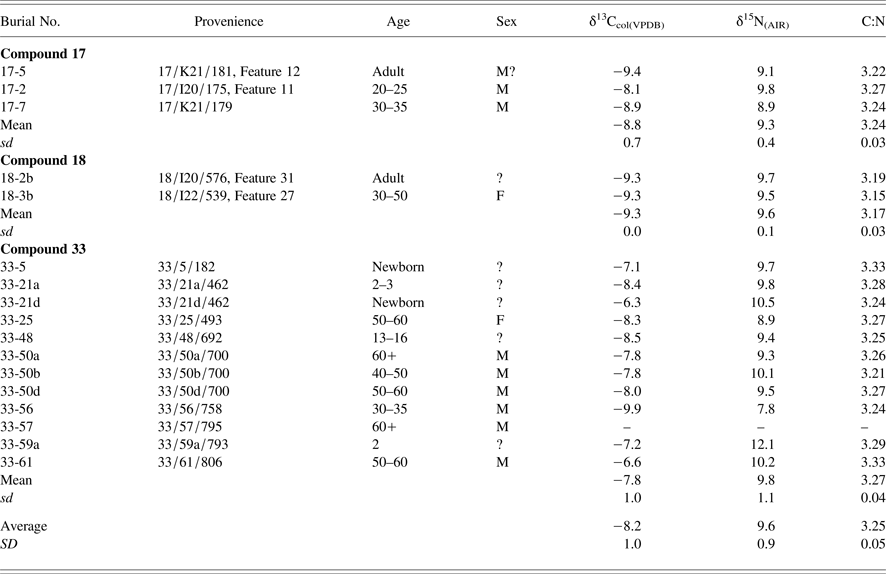
Selected materials for this study included fragments of long bone or rib samples from individuals at Compound 17 (n = 4), Compound 18 (n = 5), and Compound 33 (n = 16) for a total of 25 individuals processed for biogeochemical analysis. Bone collagen from 17 of the 25 individuals was successfully analyzed for stable carbon (δ13C) and nitrogen (δ15N) isotopes and AMS radiocarbon dating (14C). Results are reported in Tables 3 and 4. Adult individuals were targeted for sampling based on the overall preservation of the skeletal material as well as the burial context. We also sampled three neonate individuals for isotopic analysis, with two individuals yielding data.
All bone collagen samples were prepared for δ13C and δ15N measurement and AMS 14C dating at the Human Paleoecology and Isotope Geochemistry Laboratory at The Pennsylvania State University (Kennett et al. Reference Kennett, Plog, George, Culleton, Watson, Skoglund, Rohland, Mallick, Stewardson, Kistler, LeBlanc, Whiteley, Reich and Perry2017). Inner and outer surfaces of all bone fragments were manually cleaned using a sterilized X-ACTO blade to remove surface contamination and trabecular bone. The bone was then cut into small pieces, yielding 1000 mg of material. Bone samples were demineralized for 48−72 hours in 0.5 N HCl at 5 °C, then neutralized through multiple rinses of Nanopure (18 MΩ) water. Following the revised Longin method (Brown et al. Reference Brown, Early Nelson, Vogel and Southon1988), the remaining collagen was gelatinized in one to two mL of 0.01 N HCl at 60 °C for 10 hours and lyophilized for 24–48 hours. Samples were then weighed to determine the percent crude gelatin yield. Samples with a total yield greater than three percent were purified by ultrafiltration (Brown et al. Reference Brown, Early Nelson, Vogel and Southon1988; Kennett et al. Reference Kennett, Plog, George, Culleton, Watson, Skoglund, Rohland, Mallick, Stewardson, Kistler, LeBlanc, Whiteley, Reich and Perry2017). For poorly preserved samples with a total collagen yield of 1–3 percent, the gelatinized solution was processed using XAD-2 resin (styrene-divinylbenzene) chromatography, which retains polar molecules, such as contaminating humic and fulvic acids (Lohse et al. Reference Lohse, Madsen, Culleton and Kennett2014; Stafford Reference Stafford, Brendel and Duhamel1988, Reference Stafford, Edgar Hare, Currie, Timothy Jull and Donahue1991).
Stable carbon and nitrogen isotopic data for all three Tlajinga compounds.

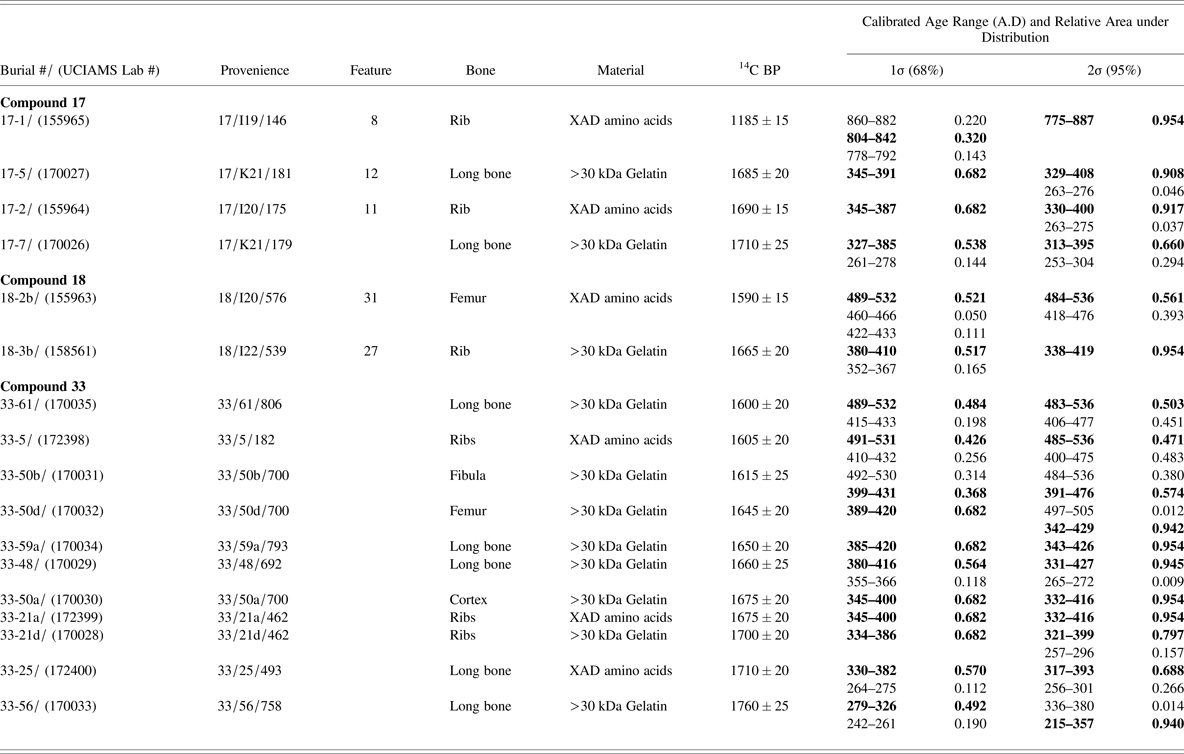
Calibrated accelerator mass spectrometry radiocarbon (AMS 14C) dates for the burials from all three Tlajinga compounds. Additional radiocarbon dates can be found in Carballo et al. (Reference Carballo, Hirth, Sariñana, Buckley, Ramón and Kennett2019:Table 1).

Bolded text highlights the highest probability of the range of calibrated radiocarbon dates for each sample.
Carbon and nitrogen concentrations and stable isotope ratios were first measured at the Yale Analytical and Stable Isotope Center (YASIC) with a Costech elemental analyzer (ECS 4010) and Thermo DeltaPlus analyzer. Sample quality was evaluated by percent crude gelatin yield, percent carbon, percent nitrogen, and carbon-to-nitrogen ratios before AMS 14C dating. C/N ratios for all samples fell between 3.1 and 3.4, indicating good collagen preservation (DeNiro Reference DeNiro1985; van Klinken Reference van Klinken1999) and are reported in Table 3. Radiocarbon samples were combusted for three hours at 900 °C in vacuum-sealed quartz tubes with CuO wire and Ag wire to produce sample CO2. CO2 samples were then sent to KCCAMS (W.M. Keck Carbon Cycle Accelerator Mass Spectrometer Facility at the University of California-Irvine) and reduced to graphite (Santos et al. Reference Santos, Southon, Druffel-Rodriguez, Griffin and Mazon2004). Further details of the procedures used for measurement can be found in Carballo et al. (Reference Carballo, Hirth, Sariñana, Buckley, Ramón and Kennett2019). Dates were then calibrated with OxCal v.4.2.4 (Bronk Ramsey Reference Bronk Ramsey2013) using the IntCal13 Northern Hemisphere curve (Reimer et al. Reference Reimer, Bard, Bayliss, Warren Buck, Blackwell, Ramsey, Buck, Cheng, Edwards, Friedrich, Grootes, Guilderson, Haflidason, Hajdas, Hatté, Heaton, Hoffman, Hogg, Hughen, Felix Kaiser, Kromer, Manning, Niu, Reimer, Richards, Marian Scott, Southon, Staff, Turney and Plicht2013). Results are reported in Table 4 and are discussed below.
RESULTS AND DISCUSSION
Paleodiet and Social Status across Compounds
Results presented in Table 3 include the findings of the δ13C and δ15N analyses. Similar to recent dietary studies conducted at Teotihuacan (Casar et al. Reference Casar, Morales, Manzanilla, Cienfuegos and Otero2017; Nado et al. Reference Nado, Zolotova and Knudson2017), the results support our hypothesis that there was a high dependency on C4 or CAM plant resources in addition to animal protein sources that may also have consumed C4 or CAM-based foods. The mean δ13C value of all three compounds combined is −8.2‰ (± 1.0‰, range −6.3‰ to −9.9‰, n = 16) indicating a diet heavy in maize (and possibly amaranth) consumption. Mean δ15N value across all three compounds is 9.6‰ (± 0.9‰, range 7.8‰ to 12.1‰, n = 16) suggesting that the majority of protein consumed at this district came from terrestrial animal species, rather than from marine resources that have δ15N ratios often near 14 ‰ to 15 ‰ (DeNiro Reference DeNiro1987; Schoeninger et al. Reference Schoeninger, DeNiro and Tauber1983.)
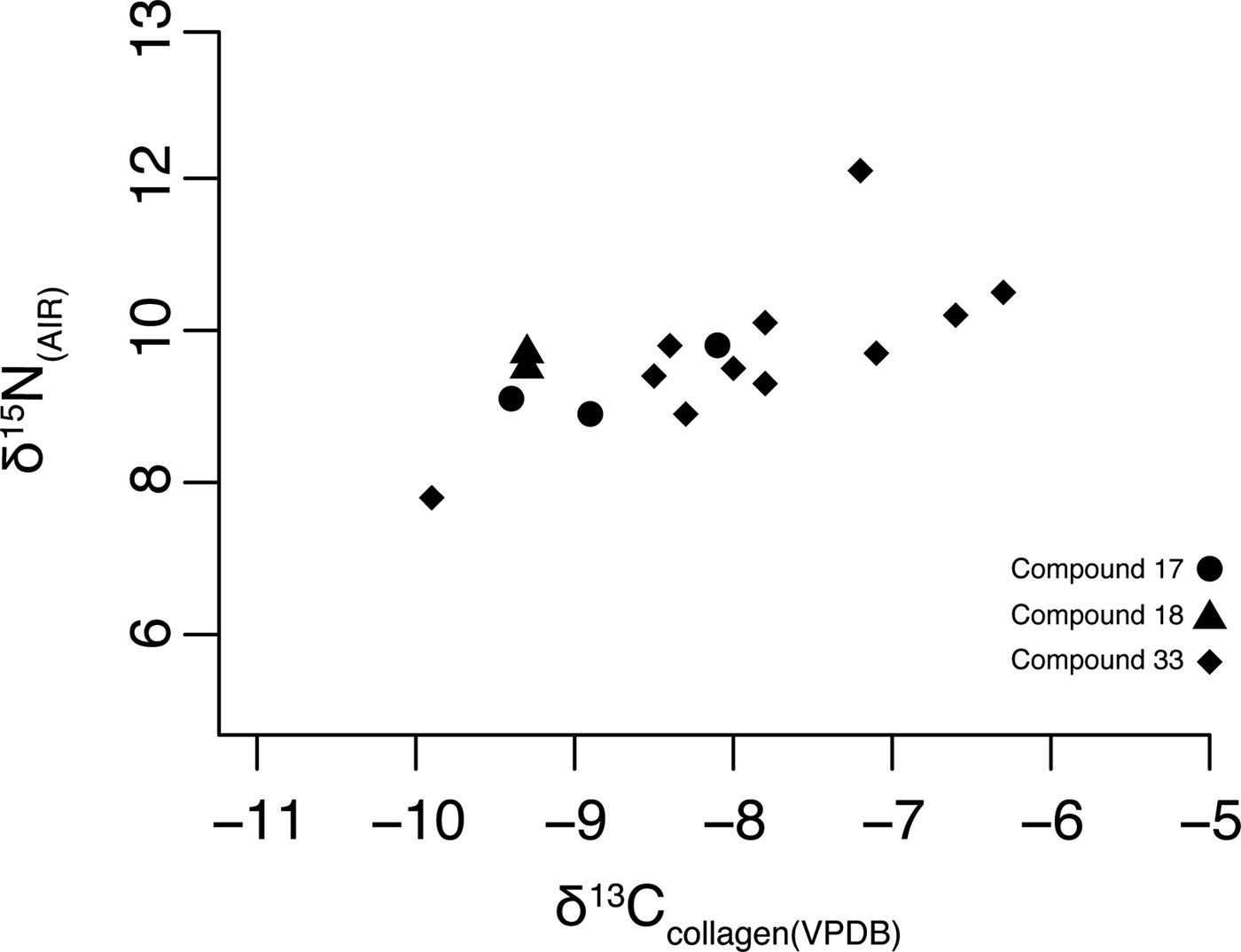
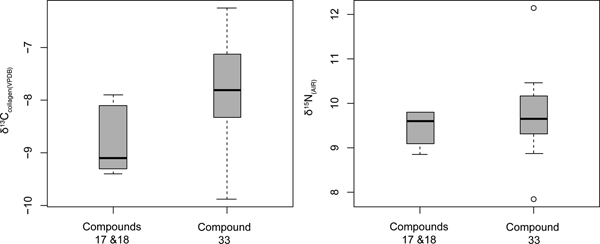
To better understand dietary patterns across Tlajinga, data from Compounds 17 and 18 were grouped due to a small sample size (n = 5) and compared to data derived from Tlajinga 33. Figure 4 displays the distribution of δ13C and δ15N across Tlajinga by individual compound. Stable carbon isotope ratios for Tlajinga 33 have a wider range (−6.3‰ to −9.9‰) than ratios from Compounds 17 and 18 (−8.1‰ to −9.4‰). Additionally, there is a significant difference in the mean δ13C value for individuals from Tlajinga 33 (−7.8‰, n = 11) than in the mean δ13C value from Compounds 17 and 18 (−9.0‰, n = 5), (Student's t-test, separate variance, t = −2.20, sd = 0.9, df = 15, p = 0.04). Figure 5 displays these differences in mean δ13C values. While the δ13C ratios delineate that members of all three compounds ate isotopically similar C4 photosynthetic pathways foods, these results suggest that Compounds 17 and 18 supplemented their diets with CAM and/or C3 plant resources depleted in δ13C. Therefore, Tlajinga 33 was perhaps more dependent on maize than Compounds 17 and 18, leading us to reject our hypothesis that individuals in all three compounds had similar diets.
The distribution of δ13C and δ15N values across all three Tlajinga compounds. Image by Buckley.

Box plots comparing mean δ13C and δ15N values between Tlajinga 33 and Compounds 17 and 18. Images by Buckley.

Future analysis should incorporate δ13C ratios from bone apatite for comparison with δ13C ratios in bone collagen. A bivariate analysis would help distinguish the isotope composition of C4 or C3 plants consumed from the C4 or C3-fed animal species incorporated into the human diet (Ambrose and Norr Reference Ambrose, Norr, Lambert and Grupe1993; Tieszen and Fagre Reference Tieszen and Fagre1993). Combining these analyses with δ15N allows us to observe trophic effects as well as differentiate between marine and terrestrial protein sources (Froehle et al. Reference Froehle, Kellner and Schoeninger2012).
Stable nitrogen isotope ratios are not significantly different between compounds, (Student's t-test, separate variance, t = −0.06, sd = 0.9, df = 15, p = 0.54; see Figure 5). Tlajinga 33 has a mean δ15N value of 9.6‰ (n = 11), which is only slightly higher than Compounds 17 and 18 (9.4‰, n = 5). This result suggests that individuals across all three compounds consumed relatively similar quantities of terrestrial, animal-derived proteins. In Tlajinga 33, the paleopathological analysis indicates a lack of porotic hyperostosis and anemia. Protein and vitamin B12 resources were likely to be sufficient, if not abundant, for Tlajinga 33 residents. With that being said, people probably consumed foods such as turkey eggs and rodents, rather than what is often considered sources of meat protein (Widmer and Storey Reference Widmer and Storey2017). People living in all Tlajinga compounds likely shared this diet.
Regarding the identification of dietary differences between individuals of higher and lower status within Tlajinga, findings result in no significant deviations between the two groups. Following the criteria acknowledged above for identifying social inequality through mortuary analysis, five individuals (Burials 33-25, 33-50a, 33-50b, 33-50d, and 33-56) were classified at Tlajinga 33 as “higher status” individuals. The context and mortuary treatment of these five burials are described in detail in the following section and are also found in Table 1. All other adult burials analyzed for stable isotope analysis within the three Tlajinga compounds (n = 12) are considered to be of “lower status.”
We tested the mean δ13C and δ15N values from the five higher status individuals against all other adult individuals from Tlajinga 33 (n = 12). Lower status individuals have a mean δ13C value (−8.1‰) only slightly enriched over the mean for those of higher status (−8.4‰). There is not a significant difference in mean stable carbon ratios between status groups (Student's t-test, separate variance, t = 0.50, sd = 1.03, df = 15, p = 0.62). Similarly, the mean δ15N value for lower status individuals (9.9‰) was also slightly enriched over that of higher status individuals (9.1‰) and, again, was not statistically significant (Student's t-test, separate variance, t = −1.71, sd = 0.83, df = 15, p = 0.11). Comparable to results from a previous study of diet at Tlajinga (White et al. Reference White, Storey, Longstaffe and Spence2004b) and across Teotihuacan (Casar et al. Reference Casar, Morales, Manzanilla, Cienfuegos and Otero2017), it appears that diet cannot be used as a proxy for distinguishing social status among individuals at this district. Therefore, we reject our original hypothesis that higher status individuals at Tlajinga consumed more terrestrial animal protein while lower status individuals relied more heavily on C4 plants such as maize.
Compound Occupation and Change Over Time
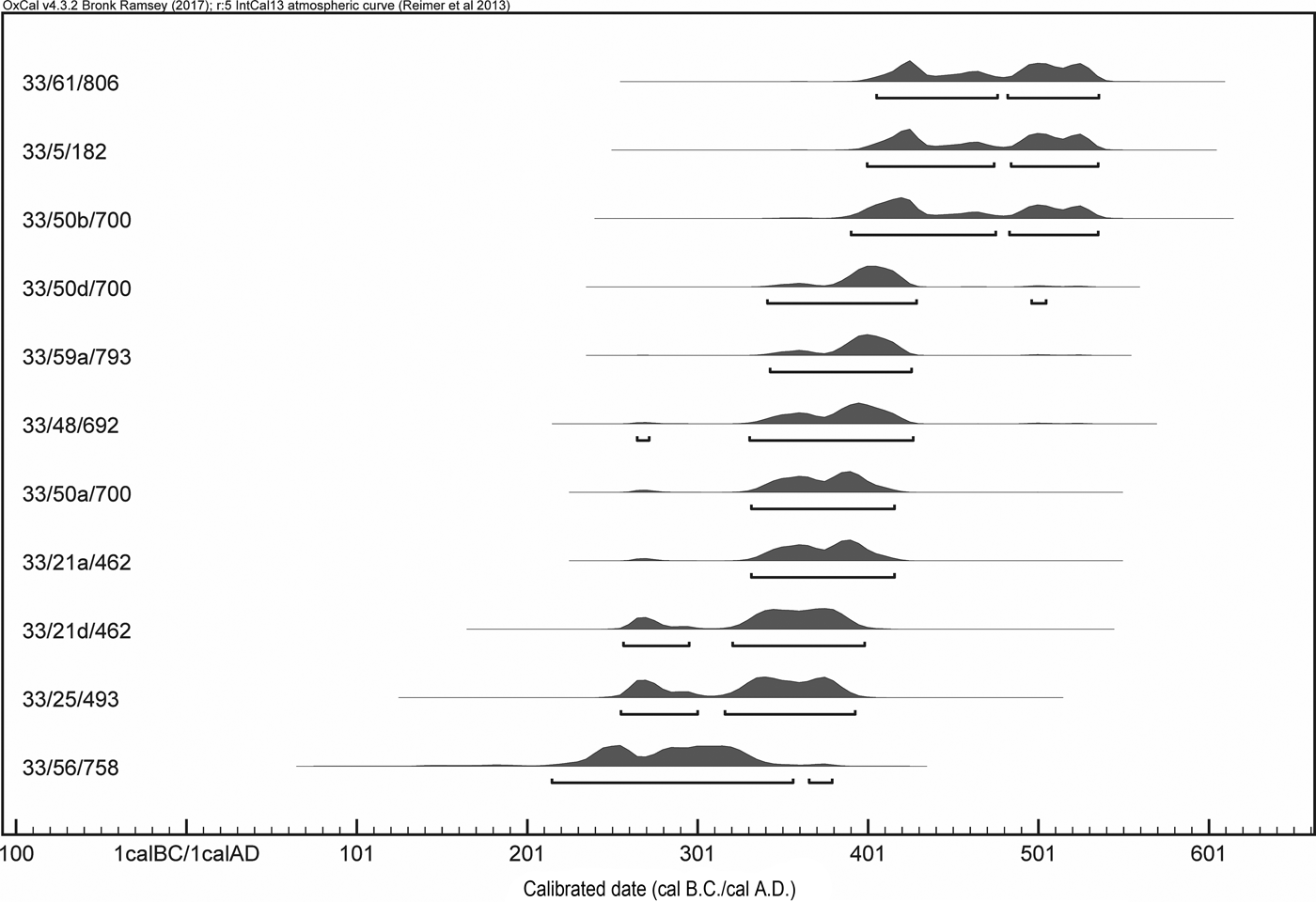
The 2-sigma range of 14C dates from all human burials (n = 16) from these three compounds suggests occupation at the Tlajinga district between cal a.d. 215–536 (Table 4). These data exclude an outlier, the intrusive Mazapan burial from Compound 17 (Figure 2a). We also dated charcoal and other organic material from Compounds 17 and 18 (n = 22; see Carballo et al. Reference Carballo, Hirth, Sariñana, Buckley, Ramón and Kennett2019: Table 1). Combining both sets of 14C dates (n = 38) extends the range of occupation to span between cal a.d. 136–599.
The span of occupation at Tlajinga 33 was initially estimated to be 450–500 years long and restricted to the Classic period (Storey Reference Storey1992). Cowgill (Reference Cowgill2015) later suggested that occupation in the eastern part of the Tlajinga district spanned the Early Tlamimilolpa to the Late Xolalpan phases (a.d. 170–550), approximately 400 years. Our new 14C dates support Cowgill's hypothesis that site occupation lasted about four centuries. But when combined with the ceramic evidence from Compounds 17 and 18, data indicate that site occupation was less compartmentalized into distinct phases as may have been originally thought. As reported by Carballo and colleagues (Reference Carballo, Hirth, Sariñana, Buckley, Ramón and Kennett2019), ceramic evidence from both the earlier Miccaotli phase (a.d. 100–170) and the later Metepec phase (a.d. 550–650) designate site occupation and abandonment during transitional stages and perhaps compression of the ceramic chronology on both ends. Continued ceramic analysis and additional chronological work are required to understand the occupation of the entire site more completely.
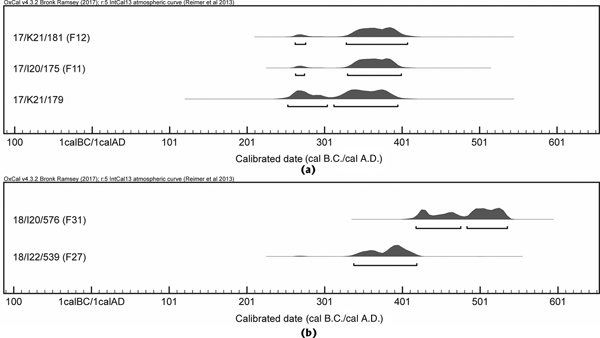
Looking at each of the compounds individually, a slight difference in the commencement of occupation becomes apparent. Figures 6 and 7 report the 14C dates of the individual human burials from each compound. Because the sample size of the 14C dates from the burials is small (n = 3, Compound 17; n = 2, Compound 18), we will continue to use the additional 14C dates from Carballo et al. (Reference Carballo, Hirth, Sariñana, Buckley, Ramón and Kennett2019:Table 1) to discuss individual compound chronologies.
Two-sigma calibrated accelerator mass spectrometry radiocarbon (AMS 14C) dates of the burials from Tlajinga 33. Image by Buckley.

Two-sigma calibrated accelerator mass spectrometry radiocarbon (AMS 14C) dates of the burials from Compounds (a) 17 and (b) 18. Images by Buckley.

The earliest 14C date from Compound 17 comes from a burnt wood deposit found above the terminal bedrock surface. This deposit has a 2-sigma range of cal a.d. 136–326. The earliest date from Compound 18 comes from a black clay layer located at a greater depth than any of the organic material sampled from Compound 17. Interestingly, all Compound 18 samples date to a later time than the earliest sample from Compound 17 (cal a.d. 211–336). Although we cannot rely on the 14C dates from only the human burials, reflected in these data is a similar pattern of occupation as seen above, i.e., a later beginning for Compound 18 (Figure 7). Whereas we only have 14C dates from human burials at Tlajinga 33 (n = 11), it is difficult to compare this residential compound to the data from Compounds 17 and 18. Based on the available data, Tlajinga 33 does include the earliest burial among all three of the compounds (cal a.d. 215–358). These human remains were deposited slightly prior to the earliest burial from Compound 17 (cal a.d. 253–395) and strikingly earlier than Compound 18 (cal a.d. 338–419). In the future, a Bayesian chronology for the site will be established to further understand the residential history of the Tlajinga compounds.
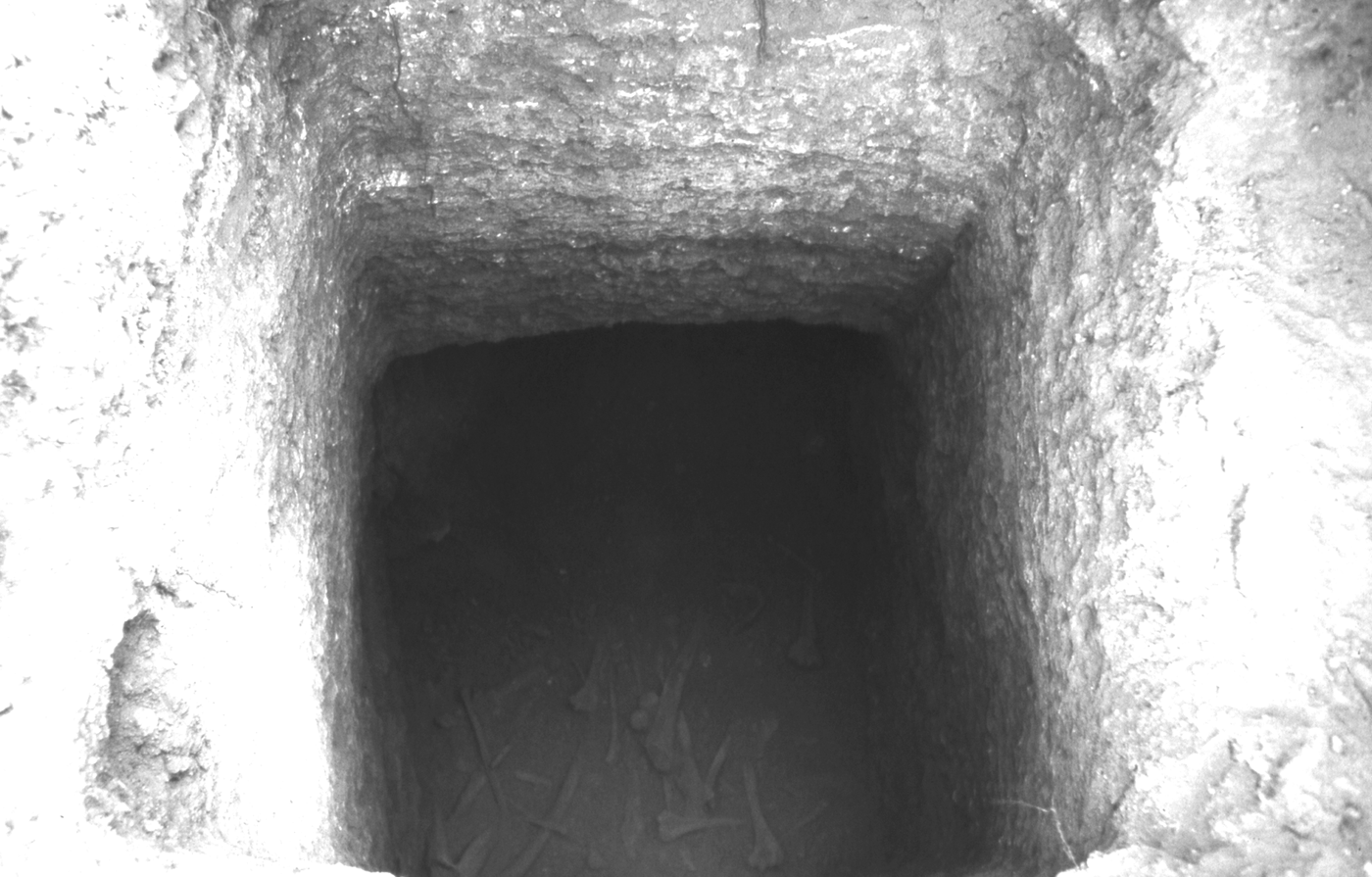
What our high-resolution AMS 14C dates from the Tlajinga 33 burials do provide us with is evidence for understanding the phase of occupation for individual residents at this compound, particularly those interred in groups. Burials 33-50a, 33-50b, and 33-50d were three of five individuals deposited in an elaborate, L-shaped shaft tomb found directly west of an altar within the Xolalpan principal courtyard (Figure 8). This shaft tomb was dug two meters into bedrock and is the most extensive and carefully cut grave across the Tlajinga district. Similar to features found in Compound 18, this tomb was raided around the time of abandonment leaving the skeletal material intermixed. Evidence also suggests that the looters removed some of the skeletal material and part of the offering. This pattern of raiding is common at Tlajinga and the hypothesized objective of confiscating objects from a burial was to transfer mementos to a new place of residence.
The L-shaped shaft tomb containing Burials 33-50a–33-50e, clearly mixed at the bottom. Photograph by Buckley.

Burial 33-50a and Burial 33-50d were both elder males over the age of 50, and 33-50b was a middle-aged male over the age of 40. The other two individuals deposited inside the same tomb consisted of a middle-aged male and middle-aged female. Offerings, although only partially reconstructed, suggest all of these individuals were interred during the Late Xolalpan phase (a.d. 450–550). Burials 33-50a, 33-50b, and 33-50d were all processed for radiocarbon dating. Results are as follows. Burial 33-50b appears to date to the Late Xolalpan or slightly later with a 2-sigma date of cal a.d. 391–536. In contrast, Burials 33-50a (a.d. 332–416) and 33-50d (a.d. 342–429) were more likely deposited earlier, from the Early Xolalpan or the transition to the Late Xolalpan. Given these new data, it would appear that the shaft tomb was possibly in use for close to a century, or at the least several generations, as senior individuals of apparently high-status were deposited into its confines. Given the extensive nature of the tomb structure, its location in a principal courtyard, and the relative richness of the grave goods, this interment was probably a resting place for compound leaders.
Burial 33–56 was an adult male, around 30 years of age, placed in a rectangular pit cut nearly 60 centimeters into bedrock and under the stone pavement of the Early Tlamimilolpa principal courtyard (see Storey Reference Storey1992:Figure 3-5). Compared to other graves at Tlajinga 33, and the Tlajinga district in general, Burial 33–56 consisted of some of the richest grave goods recovered. Offerings included three seashells, 27 bowls, other ceramics, a florero, an obsidian blade, and a serpentine bead. Additionally, a stone pavement that was covered by stucco capped the burial pit. The purpose of this elaborate concealment was so that the surface of the pit would be flush with the pavement that enclosed the rest of the courtyard. Ceramic analysis place the internment of Burial 33–56 in the Early Tlamimilolpa phase, making it one of the two earliest burials recovered at Tlajinga.
Burial 33–56 has a 2-sigma date of cal a.d. 215–357. While these data do suggest deposition during the Tlamimilolpa phase, they also indicate that this individual was more likely to have lived during the later years of the Early Tlamimilolpa or the transition from the Early to the Late Tlamimilolpa, rather than the first years of the Early Tlamimilolpa. Additionally, this individual may have been an early compound leader (Widmer and Storey Reference Widmer, Storey and Charlotte Arnauld2012). The most elaborate, and earlier, interment of potential compound founder defined by archaeological context (Storey and Widmer Reference Storey, Widmer, Stodder and Palkovich2012), is Burial 33–57. Unfortunately, bone collagen from Burial 33–57 was not well preserved and therefore was not successfully dated. But, we have to keep in mind that site occupation possibly began during the Miccaotli–Early Tlamimilolpa transition (Carballo et al. Reference Carballo, Hirth, Sariñana, Buckley, Ramón and Kennett2019), 50 to 100 years prior to the identification of the individual interred here. There was a small midden deposit with Miccaotli phase ceramics at Tlajinga 33, but there was no architecture associated with it, not even adobe, as is common at Teotihuacan. Therefore, earlier burials may still be excavated in the future.
Finally, combining AMS 14C dates with the stable isotope data, we are better able to understand shifts in diet over time. All individuals analyzed were divided into three phases (Tlamimilolpa, Early Xolalpan, and Late Xolalpan) based on AMS 14C dates reported in Table 4 and from ceramic evidence (Carballo et al. Reference Carballo, Hirth, Sariñana, Buckley, Ramón and Kennett2019; Ratrray Reference Rattray1992). Mean carbon isotope values were similar across the phases (Tlamimilolpa = −8.2‰, n = 3; Early Xolalpan = −8.3‰, n = 8; Late Xolalpan = −7.9‰, n = 5) and were not significantly different over time (one-way ANOVA, F (2,13) = 0.202, p = 0.497). Variations in mean stable nitrogen values (Tlamimilolpa = 9.1‰, n = 3; Early Xolalpan = 9.7‰, n = 8; Late Xolalpan = 9.8‰, n = 5) were not significant over the three phases as well (one-way ANOVA, F (2,13) = 0.739, p = 0.819). Therefore, there is no evidence of dietary shifts over time within the Tlajinga district of Teotihuacan.
CONCLUSION
The Tlajinga district is a distinctive part of the Classic-period city of Teotihuacan, notable for its location at the southern entrance to the city and evidence of craft specialization. Recent excavations in two compounds by the Street of the Dead have added nine residential burials to allow comparison with the more extensive sample from Tlajinga 33, a compound in the interior of the district. In this study, we tested the hypothesis that individuals across all three compounds lived similar lives by comparing mortuary context, health indicators, stable isotopes, and AMS 14C dates. Compound 18 has interments that resemble those of Tlajinga 33 and other excavated apartment compounds from Teotihuacan. Compound 17 burials are more fragmentary than the other two. Here, interments are secondary in context and perhaps intended for ritualistic and commemoration purposes rather than for burying residents. Health indicators suggest that Compounds 17 and 18 had morbidity patterns similar to Tlajinga 33, but also that residents closer to the Street of the Dead were perhaps less susceptible to stressors during periods of juvenile growth.
Carbon and nitrogen isotopes begin to paint a broad picture of dietary consumption patterns at Tlajinga. Although we cannot differentiate social status for individuals based on diet, results do indicate a significant difference in the types of plant-based foods consumed between compounds. Data suggest that maize and other C4 plants were staples of the Tlajinga diet, but individuals in Compounds 17 and 18 supplemented their diet with CAM and C3 food products. It is possible that individuals in Compounds 17 and 18 were able to afford or had access to a greater variety of foods than those residing at Tlajinga 33, although nitrogen isotopes suggest similar sources of terrestrial animal protein. Further investigation into socioeconomic status at Compounds 17 and 18 will help us to continue to understand compound differences at Tlajinga.
Finally, the inclusion of AMS 14C dating along with stable isotopes has led to a better understanding of residential living at the Tlajinga district, although this investigation is ongoing. Radiocarbon dates from all three compounds suggest that site occupation may be more condensed than the original estimate of 450–500 years, or that settlement and abandonment of Tlajinga occurred during transitional periods (Miccaotli–Early Tlamimilolpa, Late Xolalpan–Metepec). Between compounds, both the 14C dates from human burials and the 14C dates from other organic materials (wood and charcoal) indicate that occupation began slightly earlier at Compound 17 than at Compound 18, but Tlajinga 33 has the earliest human burial date. At Tlajinga 33, 14C dates suggest that several generations of suspected compound leaders were interred into one group burial located within the L-shaped shaft tomb. Additionally, the earliest compound leader (Burial 33–56) may have come from a slightly later phase than previously estimated, during the latter years of the Early Tlamimilolpa or the transition from the Early to Late Tlamimilolpa.
RESUMEN
El distrito de Tlajinga es una parte distintiva de la ciudad de período Clásico de Teotihuacan, notable por su ubicación en la entrada sur del ciudad y la evidencia de la especialización artesanal. La excavación reciente en dos conjuntos cerca de la Calzada de los Muertos,17 y 18, ha agregado algunos entierros residenciales que permite la comparación con la muestra más grande de Tlajinga 33, un conjunto en el interior del distrito. El conjunto 18 tiene enterramientos que se asemejan a los de Tlajinga 33 y otros excavados de Teotihuacan, mientras que los del 17 son enterramientos más fragmentarios y secundarios. Los isótopos de carbono y nitrógeno empiezan a pintar un cuadro amplio de los patrones de consumo dietético en Tlajinga. Aunque el estatus social no puede diferenciarse para los individuos basados en la dieta, los resultados indican una diferencia significativa en los tipos de alimentos a base de plantas consumidos entre los conjuntos. Los datos sugieren que el maíz y otras plantas C4 eran alimentos básicos de la dieta de Tlajinga, pero los individuos de los conjuntos 17 y 18 suplementaron su dieta con productos alimenticios CAM y / o C3. Por último, las fechas de radiocarbono de los tres conjuntos sugieren que la ocupación puede ser ligeramente más condensada que la estimación original de 400 años, o que el asentamiento y abandono de Tlajinga ocurrieron durante los períodos de transición (Miccaotli - Tlamimilolpa Temprano, Xolalpan Tarde - Metepec). En Tlajinga 33, las fechas del 14C sugieren que los entierros grupales, en particular la tumba de tiro, se utilizaron para enterrar a los líderes del conjunto durante varias generaciones.
ACKNOWLEDGMENTS
This material is based upon work supported by the National Science Foundation under Grant No. BCS-13212447 and BCS-1321232 (biogeochemical analysis). We are thankful for this financial assistance and for David Carballo and Ken Hirth allowing us to explore this type of research at Tlajinga and for the countless hours of work David Carballo and Daniela Hernández Sariñana undertook preparing the compound and burial images. Thanks to both of them for allowing us to use these wonderful illustrations. We also thank Brendan Culleton for assisting with AMS radiocarbon dates and stable isotope analysis. The Tlajinga 33 excavation and preliminary analysis were supported by the National Science Foundation (BNS 80-05825, BNS 80-05754, and BNS 82-04862). All osteological observations and paleopathological research was conducted by Rebecca Storey. AMS 14C dating and stable isotope analysis was conducted by Gina M. Buckley.