Introduction
Natural pigments, clays, and bio-hybrids have a potential role in the field of green synthesis. For example, natural colorants are preferred to synthetic colorants in the food industry, because the latter have been linked with adverse health effects. Natural pigments are extracted from plants or synthesized by microbial fermentation from bacteria, yeast, fungi, and algae (Mapari et al., Reference Mapari, Hansen, Meyer and Thrane2008). The pigments produced by microbial fermentation can be achieved quantitatively with high yields. In fact, the fermentation process can be generated from renewable resources and become a source of long-lasting natural pigments. A major obstacle to the widespread use of natural colorants in the food industry, however, is their low stability compared with synthetic colorants (Dufossé et al., Reference Dufossé, Fouillaud, Caro, Mapari and Sutthiwong2014).
One of the most important natural pigments is betalains, found in most families of the Centroesperms order, especially the family Cactaceae (cactus) of which Opuntia, or the ‘prickly pear’, is one of the best known members (Yizhong et al., Reference Yizhong, Sun and Corke2001a; Yizhong et al., Reference Yizhong, Sun and Corke2001b). Using Opuntia as a source of betalains is viable because this genus requires minimal land and water resources to grow.
The chemical structure of betalain pigments is derived from betalamic acid (C9H9NO5) and depends on the components joined to it and on the presence of yellow-orange betaxanthins (C18H18N2O6–2) and red-violet betacyanins (C24H26N2O13) (Plattelli and Minale, Reference Plattelli and Minale1964). The most-studied betalains are found in red beets (Beta vulgaris). The main betalains are betanin and isobetanin. Betalain stability is affected by temperature, pH, oxygen, light, and aqueous activity (Reynoso et al., Reference Reynoso, Garcia, Morales and Gonzalez de Mejia1997; Yizhong et al., Reference Yizhong, Sun and Corke1998; Yizhong et al., Reference Yizhong, Sun and Corke2001a; Yizhong et al., Reference Yizhong, Sun and Corke2001b).
Natural pigments are bio-organic compounds and can be used in green synthesis. Clays are materials that play an important role in green chemistry. Clays have long been the subject of extensive research in chemistry, geology, and mining, and more recently, these materials have attracted the attention of condensed-matter physicists and materials scientists. Consequently, the literature on clays is abundant in both the older areas of interest (Barrer and MacLeod, Reference Barrer and MacLeod1954; Barrer and MacLeod, Reference Barrer and MacLeod1955; Guégan et al., Reference Guégan, Veron, Le Forestier, Ogawa and Cadars2017; Guégan, Reference Guégan2019), and more recently in pharmaceutical and cosmetic applications (Joshi et al., Reference Joshi, Kevadiya, Patel, Bajaj and Jasra2009; Chen et al., Reference Chen, Zhou, Liu and Liang2010; Carretero and Pozo, Reference Carretero and Pozo2009; Carretero and Pozo, Reference Carretero and Pozo2010; Ngomo et al., Reference Ngomo, Sieliechi, Tchatchueng, Kamga, Tabacaru, Dinica and Praisler2014; Pusch, Reference Pusch2014). The properties of clay minerals, such as large specific surface area, chemical stability, variable swelling, the presence of reactive functional groups, and surface charge, make them ideal adsorbents for a wide range of environmental pollutants (Karakaya et al., Reference Karakaya, Karakaya, Sarioğlan and Koral2010; Srinivasan, Reference Srinivasan2011; Abdel-Motelib et al., Reference Abdel-Motelib, Abdel Kader, Ragab and Mosalamy2011; Silva-Valenzuela et al., Reference Silva-Valenzuela, Matos, Shah, Carvalho, Sayeg and Valenzuela Diaz2013; Churchman et al., Reference Churchman, Gates, Theng and Yuan2013). The advantages of clay minerals as adsorbents are their natural widespread occurrence, generally non-toxic character, ease of extraction, and important surface properties. Most of the external and internal surfaces of clay minerals are hydrophilic and polar, resulting in strong affinities with low- and high-molecular weight substances, mainly cations. Their anion adsorption capacity is low, however, being <5 mol kg–1 for smectites (Borchardt, Reference Borchardt, Dixon and Weed1989) and <2 mol kg–1 for kaolinites (Dixon et al., Reference Dixon, Schulze and White2002). Despite the fact that clay minerals have a hydrophilic surface, their large specific surface area and small pore volume allow adsorption of a certain amount of non-ionic substances (He et al., Reference He, Ma, Zhu, Frost, Theng and Bergaya2014). Recent studies have shown that the synergy of organic and inorganic compounds in hybrid materials can form new materials with improved properties (Sanchez del Río et al., Reference Sanchez del Río, Martinetto, Reyes-Valerio, Dooryhée and Suarez2006; Fournier et al., Reference Fournier, DeViguerie, Balme, Janot, Walter and Jaber2016; Zhang et al., Reference Zhang, Zhang and Wang2016; Chen et al., Reference Chen, Zhang, Zhuang and Jiang2019). The interaction of dye molecules with clay minerals is the key parameter for preparing inorganic–organic hybrid solids that are more stable than the dyes consisting of single molecules (Kausar et al., Reference Kausar, Iqbal, Javed, Zill-iHuma, Bhatti and Nouren2018; Ngulube et al., Reference Ngulube, Gumbo, Masindi and Maity2017).
The main objective of this research was to develop a green method for synthesis of colored hybrids by intercalating an organic molecule in the form of red-purple pigment derived from Tunisian prickly pear fruit into purified clay from the southwestern desert of Tunisia. The hypothesis was that such a synthesis of colored hybids could be achieved through a solid-state reaction.
Materials and methods
Plant
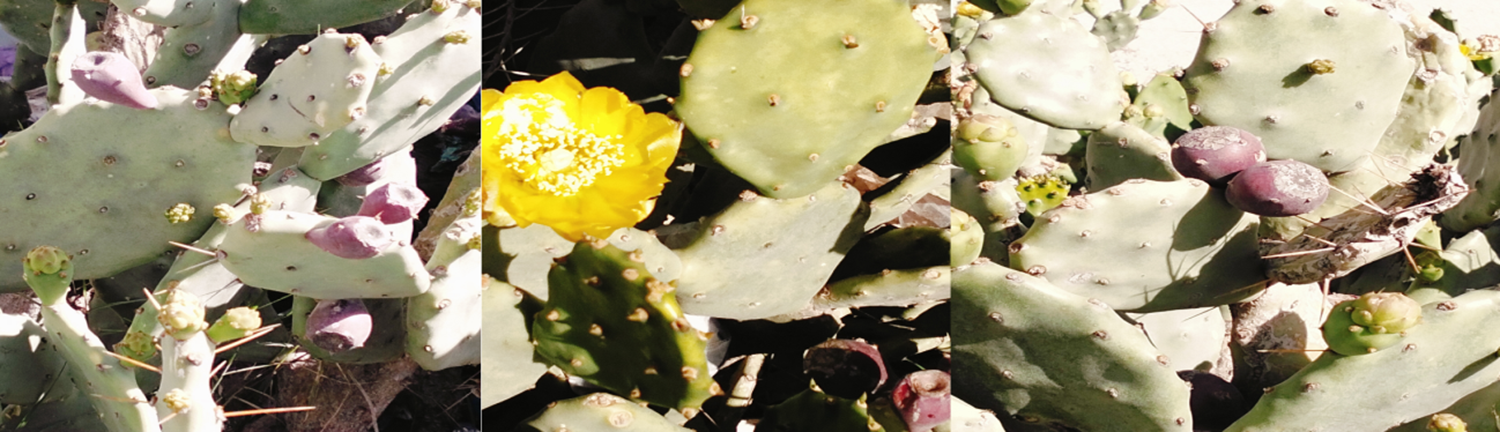
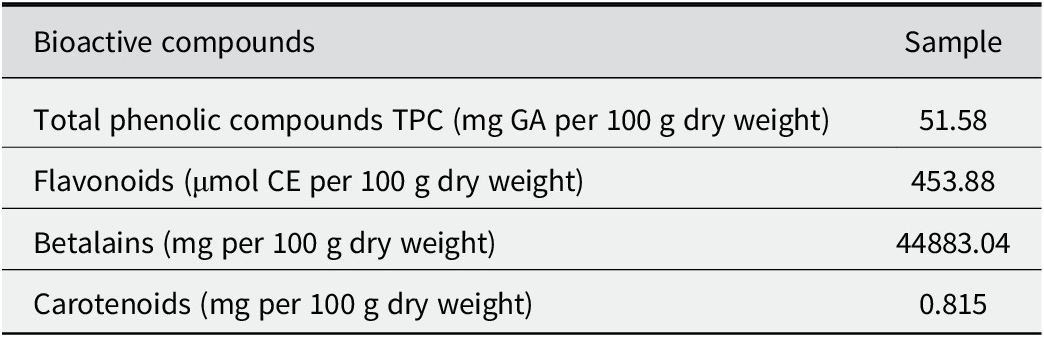
The fruit of the Tunisian red prickly pear (Opuntia) is always purple when mature (Fig. 1). It is 4–6 cm long and contains 60–180 seeds. The fruit for the present study was collected from Borj Cédria, Tunisia in March 2021. The fruit was wiped on the grass to remove the thorns, washed, peeled, dissected, and finally left to dry at room temperature. The most important inorganic species in Opuntia (Table 1) are aluminum (Al), iron (Fe), zinc (Zn), magnesium (Mg), and copper (Cu). Interestingly, the quantity of Mg is elevated at 62.61 mg kg–1 dry weight compared with other minerals. The bioactive compounds such as total phenolic compounds, flavonoids, carotenoids and betalains are classified per 100 g of dried sample (Table 2). Betalains are water-soluble, nitrogen-containing pigments made up of two structural groups: yellow-orange betaxanthins and red-purple betacyanins. These are the molecules responsible for the color of the fruit and comprise ~44.883 g per 100 g of sample, which explains the intense red-violet color of the pulp of the studied fruit.
Tunisian red prickly pear plant (Borj Cédria, Tunisia).

Mineral content of Tunisian red prickly pear (mg kg–1 dry weight)

Bioactive compounds extracted from the red prickly pear fruit

Purified clay
The Na+-exchanged clay (Sme-Na) used in the present study was obtained from El Fahs (northeast Tunisia). The preparation of the sample was discussed by Amraoui et al. (Reference Amraoui, Gamoudi, Baenas, Periago Caston and Srasra2022). For experiments, the <2 μm size fraction was separated by sedimentation in deionized water and was stirred for 24 h with NaCl (1 M). This purification greatly decreased the associated impurities. The clay is rich in smectite with a small amount of kaolinite (Reynolds and Hower, Reference Reynolds and Hower1970). The cation exchange capacity (CEC) and BET specific surface area of the sample are 80.0 cmol kg–1 and 94.9 m2 g–1, respectively (Gammoudi et al., Reference Gammoudi, Frini-Srasra and Srasra2012).
Extraction of betalains
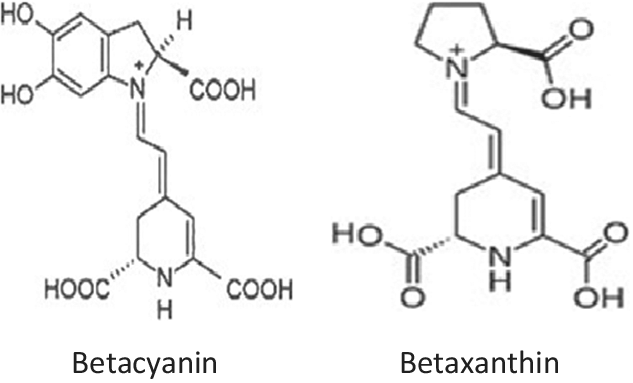
Betalains are N-heterocyclic water-soluble pigments, which exhibit red-purple or yellow colors depending on the pigment structure (Delgado-Vargas and Paredes-Lopez, Reference Delgado-Vargas and Paredes-Lopez2002). These pigments are present in many fruits, vegetables, and flowers (e.g. prickly pear, red beetroot, aizoaceae). Betalains consist of the central nitrogen structure (Fig. 2) of betalamic acid. The most important molecules responsible for colors in red prickly pear are betacyanins derived from betalamic acid with cyclo-dopa molecules and betaxanthins which are obtained through a reaction between betalamic acid and amino acid. The two molecules are soluble in water to a varying extent (betacyanin or betanine 75–95% and betaxanthin or vulgaxanthin ~95%) (Cai et al., Reference Cai, Sun and Corke2005).
Chemical structure of molecules responsible for colors.

To extract betalains, 500 mL of distilled water and 25 g of dried prickly pears were placed in a planetary ball mill (RETSCH PM 100), and ground for 10 min at 100 rpm. The entire betalain contents of the fruit extracts from Opuntia spp. was determined according to Moßhammer et al. (Reference Moßhammer, Maier, Stintzing and Carle2006). The proportions of betaxanthin and betacyanin in the extract were identified spectrophotometrically at 480 and 535 nm, respectively (Singh et al., Reference Singh, Ganesapillali and Gnanasundaram2017; Kushwaha et al., Reference Kushwaha, Kumar, Vyas and Kaur2018). UV-visible absorption spectra were obtained using a Perkin Elmer spectrophotometer (model Lambda 20). Nelson’s equations (1, 2, and 3) were used to determine the proportion of betalains:
 $$ \%\hskip0.4em \mathrm{B}\mathrm{e}\mathrm{t}\mathrm{a}\mathrm{x}\mathrm{a}\mathrm{n}\mathrm{t}\mathrm{h}\mathrm{i}\mathrm{n}=\frac{{\mathrm{Abs}}_{\mathrm{betaxanthin}}\times {\mathrm{MW}}_{\mathrm{betaxanthin}}\times \mathrm{D}\mathrm{F}\times 100}{\unicode{x025B}_{\mathrm{betaxantin}}\times L} $$
 $$ \%\hskip0.4em \mathrm{B}\mathrm{e}\mathrm{t}\mathrm{a}\mathrm{c}\mathrm{y}\mathrm{a}\mathrm{n}\mathrm{i}\mathrm{n}=\frac{{\mathrm{Abs}}_{\mathrm{betacynin}}\times {\mathrm{MW}}_{\mathrm{betacyanin}}\times \mathrm{D}\mathrm{F}\times 100}{\unicode{x025B}_{\mathrm{betacynin}}\times L} $$
 $$ \mathrm{a}\mathrm{n}\mathrm{d}\hskip0.4em \mathrm{T}\mathrm{B}\mathrm{C}=\%\hskip0.4em \mathrm{B}\mathrm{e}\mathrm{t}\mathrm{a}\mathrm{c}\mathrm{y}\mathrm{a}\mathrm{n}\mathrm{i}\mathrm{n}+\%\hskip0.4em \mathrm{B}\mathrm{e}\mathrm{t}\mathrm{a}\mathrm{x}\mathrm{a}\mathrm{n}\mathrm{t}\mathrm{h}\mathrm{i}\mathrm{n} $$
where DF is the dilution factor of the samples, Abs is the absorbance (for betacyanin at 535 nm and for betaxanthin at 480 nm), MW is the molecular weight (betaxanthin = 308 g mol–1 and betacyanin = 550 g mol–1), Ɛ is the molar extinction coefficient (betaxanthin = 48.000 L mol−1 cm−1, betacyanin = 60.000 L mol−1 cm−1), L is the path length (1 cm) of the cuvette, and TBC is total betalain content (%).
Synthesized hybrids
The bio-hybrids synthesized were obtained using two natural compounds: a purified clay from El Fahs, Tunisia, and an organic compound in the form of pigment derived from Tunisian red prickly pear. The synthesis was performed by solid–liquid reaction. The solid compound was a precise amount of the purified clay and the liquid part was an extract of the betalains using distilled water as the extraction bio-solvent; 50 mL of extracted solution was mixed with 1 g of clay and stirred for six different time intervals (30, 60, 120, 240, 360, and 1440 min). The dispersions were allowed for 2 h. The colored hybrids were washed with distilled water and dried at 40°C. The samples were denoted S1 (30 min) to S6 (1440 min).
Methods of characterizing the synthesized hybrids
Fourier-transform infrared (FT-IR) spectra were obtained using a Perkin Elmer FT-IR spectrometer (model 783) equipped with a smart endurance, single-bounce diamond ATR cell. Spectra over the 4000 to 400 cm−1 range were collected by the co-addition of 64 scans with a resolution of 4 cm−1 and a mirror velocity of 0.6329 cm s−1. KBr pellets were prepared by mixing the dried colored clay with KBr at 5 wt.% concentration.
X-ray diffraction (XRD) patterns of the sample were recorded in the range 5– 20°2θ at a scanning speed of 2°2θ min–1, using a Panalytical XPert HighScore Plus diffractometer with monochromated CuKα1 radiation (30 mA and 40 kV).
Differential scanning calorimetry (DSC) analysis of the samples was performed using a DSC Q10 analyzer from Setaram, Inc. Approximately 10 mg of clay was placed in aluminum sample boats and heated from 25 to 600°C at a heating rate of 10°C min−1 in air. The particle-size distribution (PSD) of the natural and purified samples was determined by laser diffraction (Microtrac S3500 analyser).
Photoluminescence (PL) properties were investigated using a Perkin Elmer LS55 fluorescence spectrometer with excitation wavelength of 350 nm.
Results and Discussion
Characterization of hybrids
FT-IR
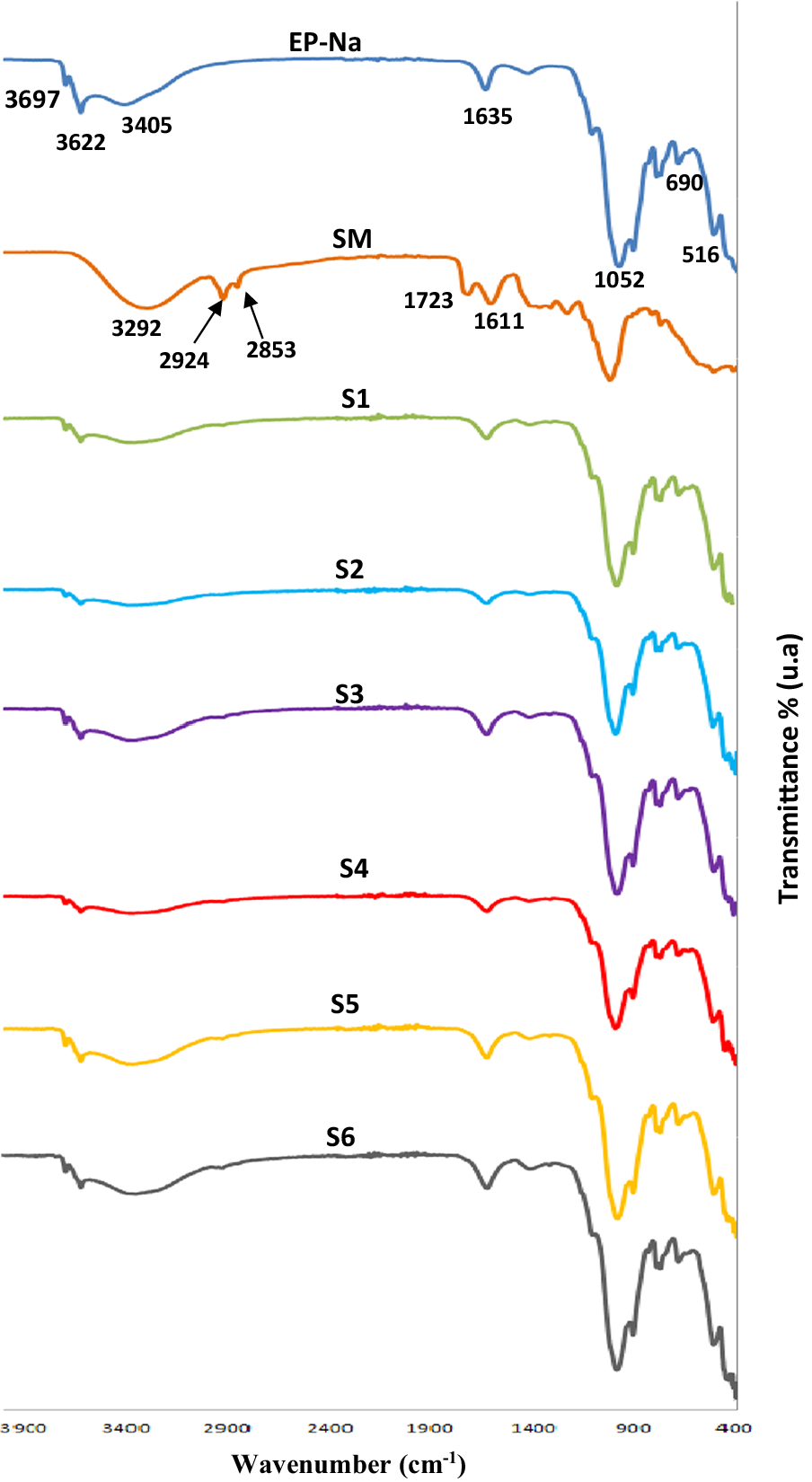
To confirm the presence of colored molecules from the dye–clay interaction, FT-IR spectra of the clay were collected before and after the adsorption of betalains in the 400–4000 cm–1 range (Fig. 3). Spectra of the clay (Sme-Na), betalains (SM), and several synthesized hybrids (S1–S6) revealed a band at 516 cm–1 attributed to Si–O–Al stretching in the clay. The band at 690 cm–1 corresponded to an Al–O–Si in-plane vibration, and at 3622 cm–1 and 3697 cm–1 to Al–OH–Al stretching due to the presence of a small amount of kaolinite. The bands at 3405 and 1635 cm–1 were due to H–O–H stretching and bending modes of adsorbed water. The asymmetric stretching mode of Si–O–Si in the original clay and hybrids was suggested by the absorption bands at 1052 cm−1 (Srasra et al., Reference Srasra, Bergaya and Fripiat1994; Salahandish et al., Reference Salahandish, Ghaffarinejad and Norouzbeigi2016).
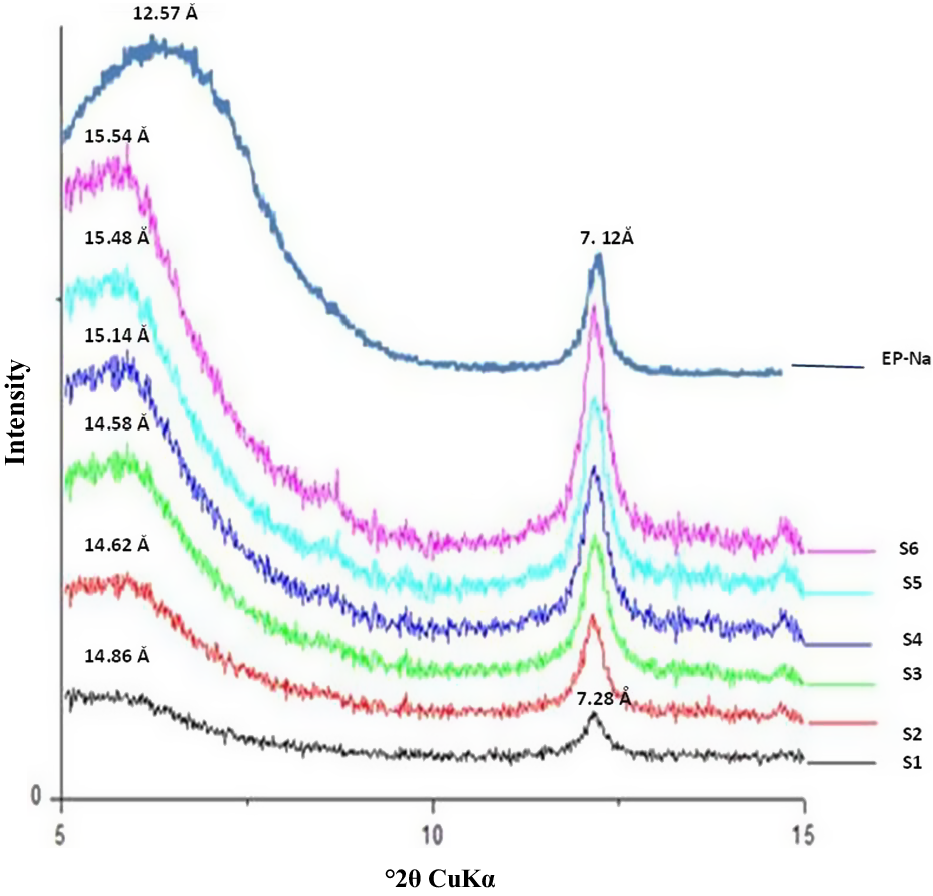
X-ray diffraction patterns of clay and synthesized hybrids.

In the betalain spectra, the intense band at 3292 cm–1 was attributed to amide NH (Kolev et al., Reference Kolev, Ivanova and Zareva2007). Bands characteristic of methylene (–CH2) groups were registered between 2924 and 2853 cm–1 (Uyen et al., Reference Uyen, Trung, Phung, Uyen, Thanh and Tan2022). Characteristic modes corresponding to the presence of a C=N aromatic ring appeared at ~1723 cm–1 due to the meta-disubstituted benzene of betalains. The band at 1611 cm–1 is indicative of COO– and amide vibrations (Kolev et al., Reference Kolev, Ivanova and Zareva2007).
A comparison of the spectra of the purified clay, betalains, and intercalated clay showed that the absorbance bands from the various samples appeared at approximately similar wavenumbers; however, their intensities and widths exhibited distinct differences. The presence of Al–OH–Al stretching vibration at 3623 and 3697 cm–1 in spectra of colored hybrid samples indicated clearly that the structure of smectite was not affected by dye intercalation. The shift in the position and intensity of H–O–H bending from 3405 to 3315–3352 cm–1 indicated that the adsorption of betalains took place in the interlayer space of the clay (Graycyelle et al., Reference Graycyelle, Francisco, Guanzheng, Sebastien, Jean-Marc, Maria and Maguy2021; Silva et al., Reference Silva, Lima, Silva, Fonseca and Jaber2020).
Moving from colored hybrids, characteristic bands at 981 cm–1, 1635 cm–1, and a broad band at 3405 cm–1 attributed to H–O–H stretching with increasing intensity were observed. These bands were attributed to the betalains adsorbed at times varying from 60 min to 24 h.
XRD analysis
Smectites have a remarkable ability to accommodate molecules in the interlayer space. The XRD traces of synthesized hybrids and the original purified clay (Fig. 4) showed that the original clay consisted mainly of Na-smectite (001 peak at 12.6 Å) and minor kaolinite (peak at 7.12 Å) in accordance with Gamoudi and Srasra (Reference Gamoudi and Srasra2018).
FT-IR spectra of purified clay, betalains, and betalain-intercalated clay.

The XRD traces of the original clay and the synthesized hybrids showed that variations in the intensity of the kaolinite peak were limited after adsorption of the betalains. This indicates that the structure of the kaolinite was preserved (Favero et al., Reference Favero, Parisotto-Peterle, Weiss-Angeli, Brandalise, Gomes, Bergmann and Santos2016) and underlines the non-interactive role of the kaolinite. In contrast, the position of the 001 basal reflection of smectite shifted from 12.6 to 15.54 Å with increasing intensity of the hybrid peaks, suggesting the successful intercalation of betalains in the smectite interlayer, probably via an exchange reaction.
Differential scanning calorimetry analysis
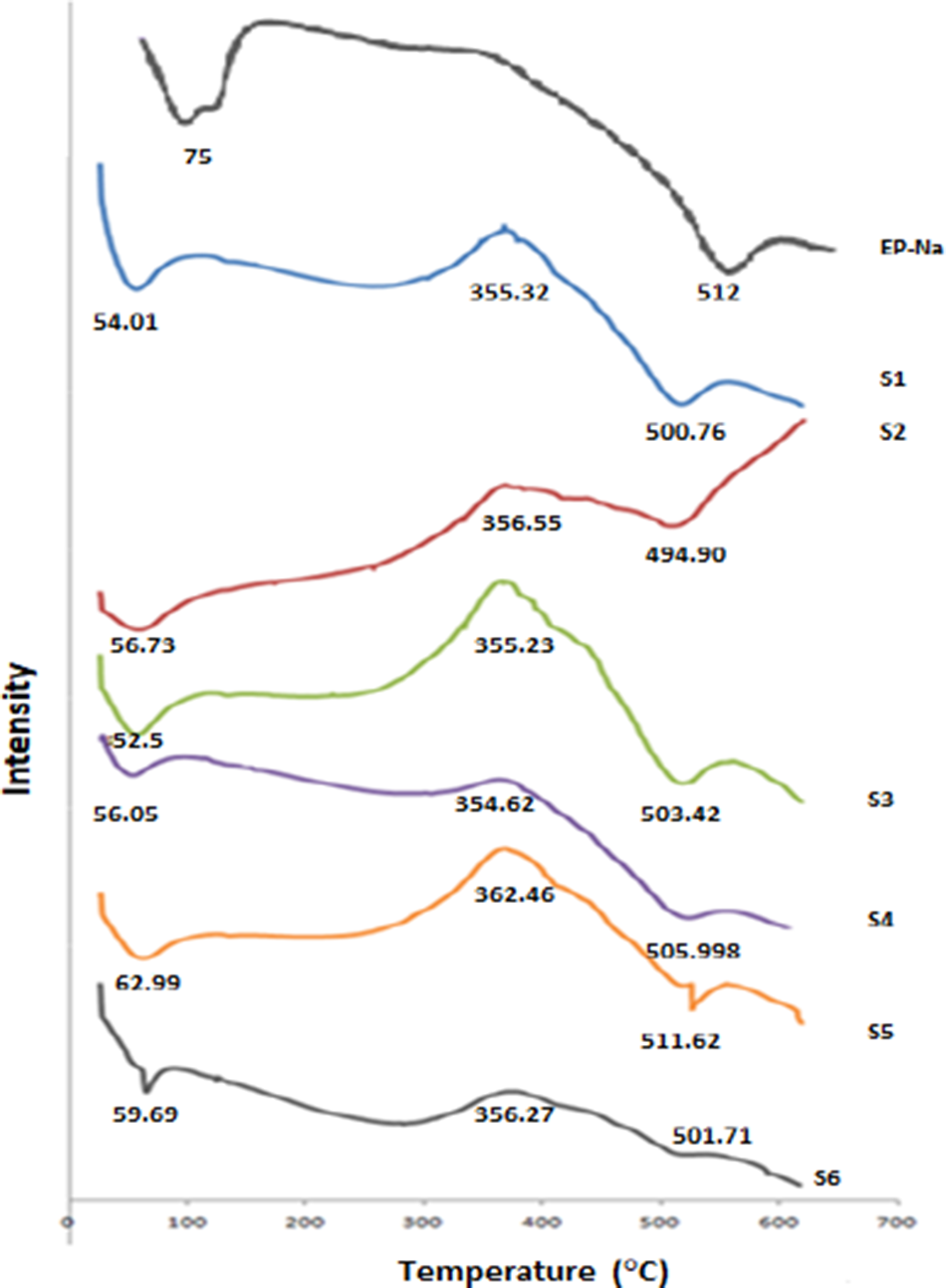
The DSC diagrams of the colored hybrids (Fig. 5) indicated the presence of two endothermic events in the original clay. The first endotherm at 75°C reflected the dehydration of the sample and the second endotherm at 512°C, corresponded to the dehydroxylation of the clay layers (Gamoudi and Srasra, Reference Gamoudi and Srasra2018). The DSC curves of the hybrid clays displayed three thermal events which had different intensities (Fig. 5). The first event was between 52.5 and 63.0°C, which is consistent with dehydration brought on by the removal of water adsorbed in the clay interlayer. The second event occurred in the temperature range 354.6–362.4°C and is attributed to the prickly pear organic molecules breaking down into betalains, carboxylic acids, and phenol derivatives. The third endothermic event, between 494.9 and 511.6°C, is attributed to the dehydroxylation of the samples.
Differential scanning calorimetry curves of synthesized hybrids.

Particle-size distribution
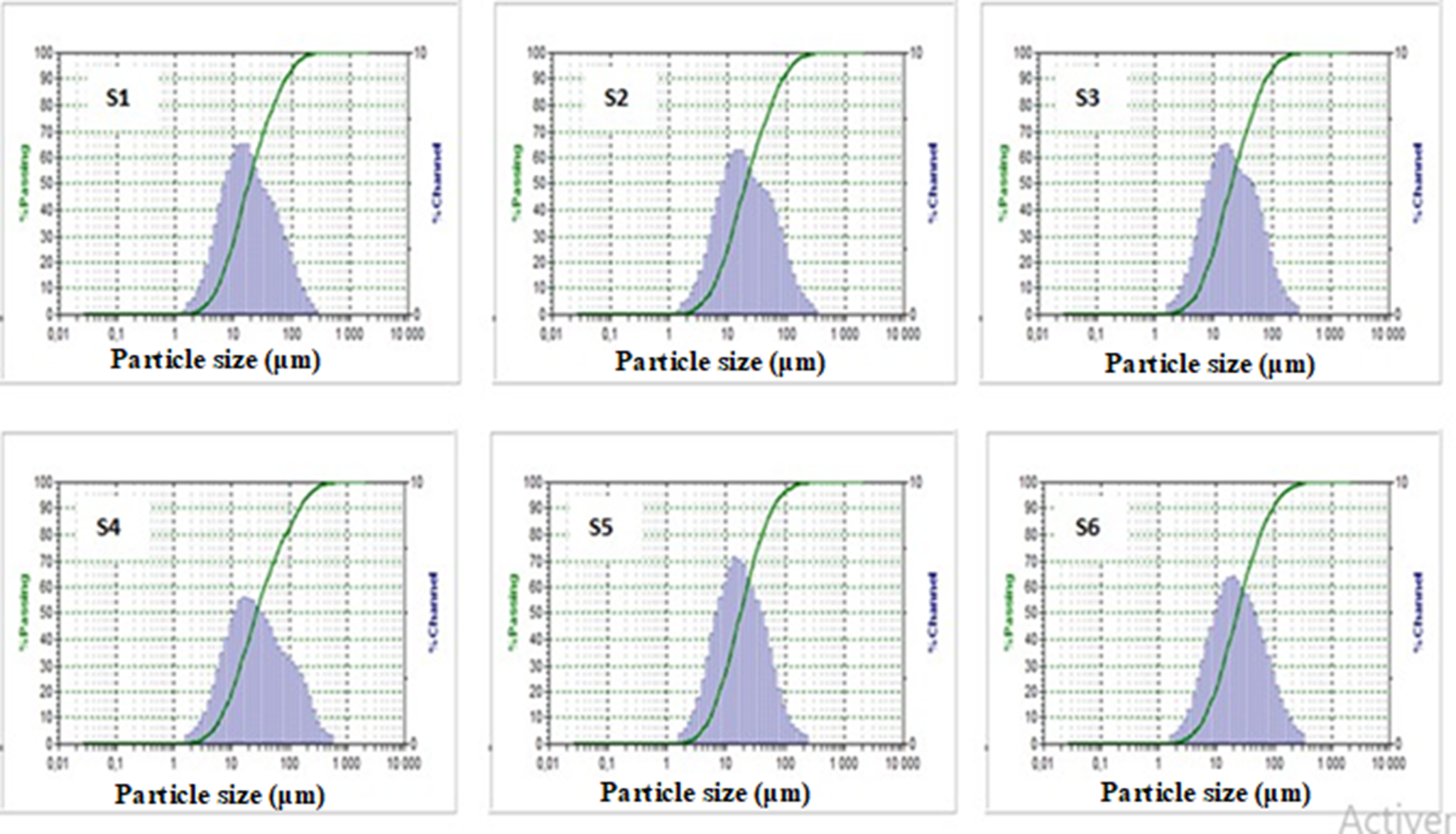
Particle-size analysis (Fig. 6) yielded a Gaussian distribution with a maximum size of ~10–12 μm for all samples. This indicates that the particle size was unchanged regardless of the time of contact between the clay and pigment. The amount of betalains present in the clay does not affect the texture, suggesting that colored organoclay can be synthesized and used in a variety of applications (Gandía-Herrero et al., Reference Gandía-Herrero, Escribano and García2010), e.g. in cosmetic applications, as the finer powders adhere to the skin more easily and provide better softness.
Granulometry curves of betalain-intercalated clay.

Fluorescence
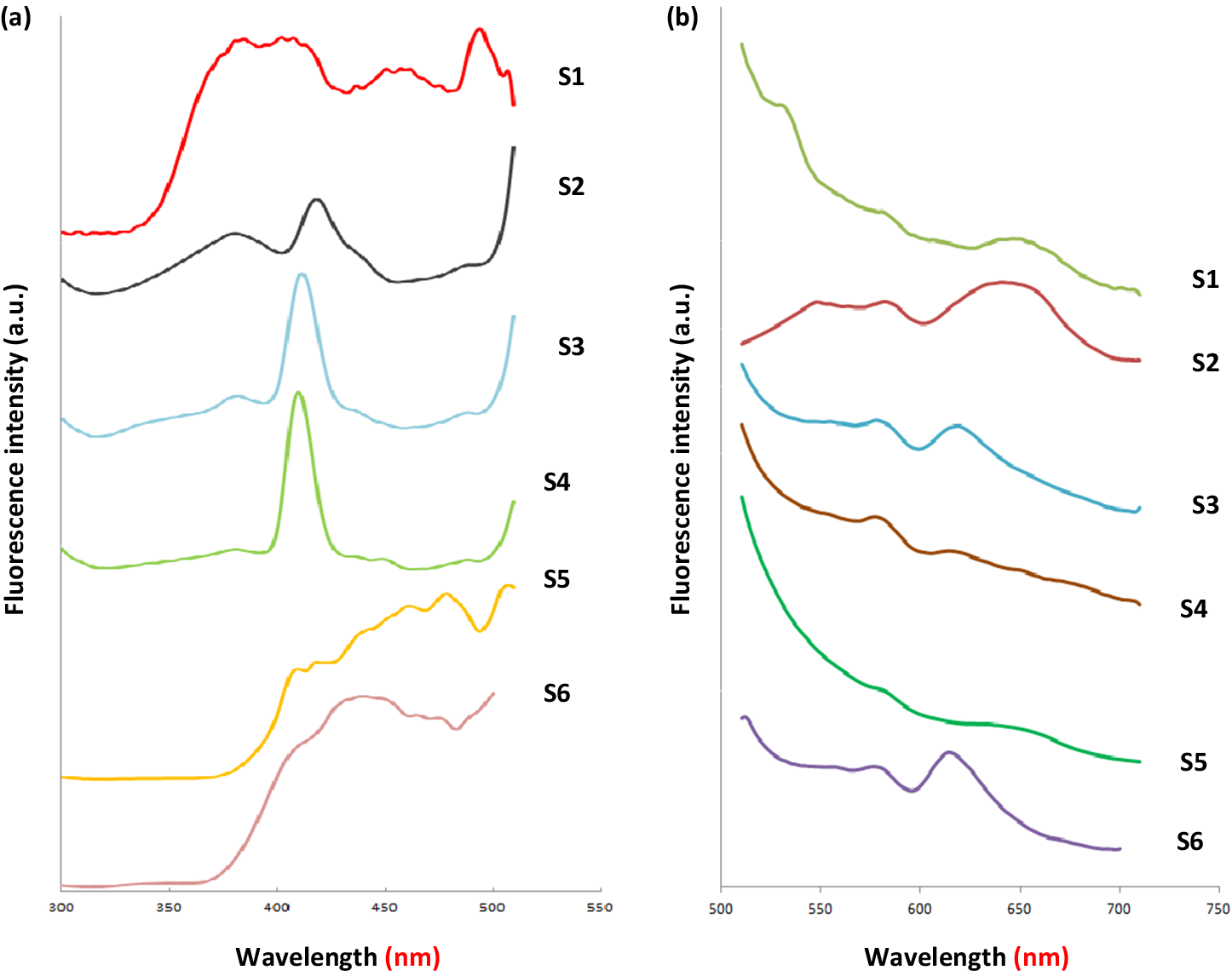
The fluorescence emission and excitation curves of the intercalated clay (Fig. 7) contained peaks characteristic of betacyanines, the molecules responsible for red-purple colors, and betaxanthin, the molecules responsible for the orange-yellow colors. The maximum excitation wavelengths in betacyanins occurred nominally between 521 and 529 nm and emission spectra were centered at 570–575 nm (Guerrero-Rubio et al., Reference Guerrero-Rubio, Escribano, Garcıa-Carmona and Gandıa-Herrero2020). In the synthesized hybrids, the excitation of betacyanin was shifted to lower wavelengths, 476 and 403 nm, whereas the emission occurred between 570 and 578 nm. For the betaxanthin, the maximum fluorescence emission was at λem = 550 nm (Wendel et al., Reference Wendel, Szot, Starzak, Tuwalska, Prukal, Pedzinski, Sikorski, Wybranie and Burdzinski2015) and the excitation absorption energy occurred at λex = 483 nm, similar to that obtained in pure indicaxanthin aqueous solutions (Melechalil et al., Reference Melechalil, Arakawa, Hirade, Kuttassery, Shimada, Ishida and Takagi2023). For the synthesized hybrids, λex was also shifted to lower wavelengths (403–486 nm) and λem shifted to higher wavelengths (613–642 nm). The observed shifts were attributed to the intercalation of betalains in the clay, which diminished absorbance in any field. The dissimilarity of the curves can be explained by the different positions (vertical or horizontal orientations) of organic molecules intercalated into the clay interlayer space.
(a) Fluorescence excitation spectra, and (b) emission spectra of mixed dyes.

Intercalation of betalains in the clay
Quantification of betalains
The betalains content was determined using equations (1)–(3). The extraction of betalains from red prickly pear is effected by bi-distilled water as solvent. The results obtained are presented in milligrams of dried fruit per liter of water. The concentration of the molecules responsible for the red-purple color was ~14.31 mg L–1, whereas the concentration of molecules that create the yellow-orange color was 5.46 mg L–1. The total betalain concentration expressed as the sum of betacyanin and betaxanthin is 19.78 mg L–1. The betalain extract contain to retain 72% of betaxanthin (yellow-orange) and 28% of betacyanin (red-purple). The high ratio of betacynin explains the predominance of red-violet color in the extract solution (Zin et al., Reference Zin, Marki and Banvolgyi2020).
Effect of contact time
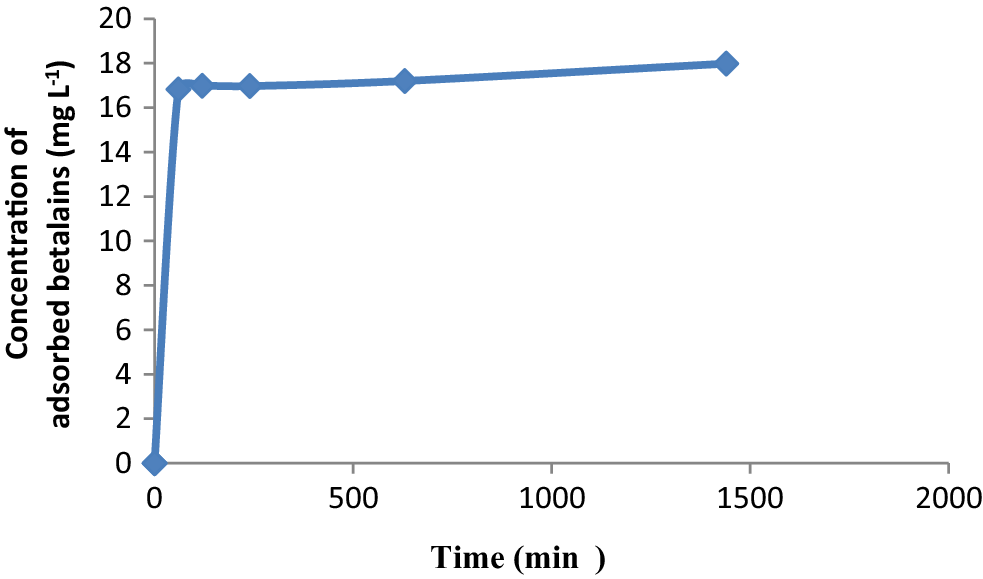
To study the importance of the stirring time of the clay with the betalain extracts, 200 mg of purified clay was added to 10 mL of extracted solution, and the mixtures were stirred for varying periods of time (60–1440 min). After centrifuging the resultant solution for 10 min at 3000 rpm, the supernatants were separated and subjected to UV visible light at 480 and 535 nm. The values obtained were subtracted from the original betalain concentration in the extract solution, 19.78 mg L–1 (Fig. 8). It follows that 16.82 mg L–1 of betalains were adsorbed on the clay over the first 60 min. After 24 h, the value was 17.98 mg L–1.
Effect of contact time on betalain intercalation.

Effect of initial betalain concentration
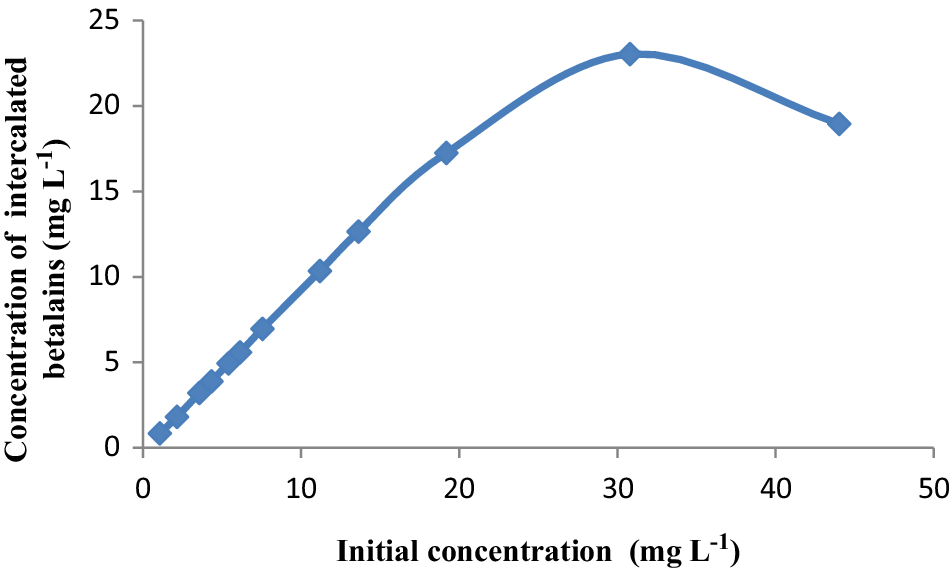
The adsorption curves of betalains on the clay (Fig. 9) were constructed by varying the initial concentration in the extract solution from 1.00 to 44.00 mg L–1 using distilled water for extraction and for dilution. The quantity of adsorbed betalains increased with increasing extract concentration, with a maximum of 23.00 mg L–1 for an initial concentration of 30.80 mg L–1. This increase is because the initial concentration acts as a driving force to overcome the mass transfer resistance for betalain transport and foster the interaction between the clay and betalain molecules.
Effect of initial concentration on betalain intercalation.

Smectites have a large swelling potential and cation exchange capacity, which makes them suitable for incorporation of large molecules such as betacyanins and betaxanthin. The reaction between clays and organic molecules involves adsorption on the external surface of the clay and intercalation into the interlayer space either by adsorption or ion exchange. Intercalation was indicated by the increase in the d 001 spacing from 12.6 to 15.5 Å (Fig. 4). For the smectite, organic molecules displaced water molecules from the interlayer. These interlayer solvates can, therefore, be prepared by reacting air-dried smectites with organic liquids (Lagaly, Reference Lagaly1984).
Implications of the present work
The absorption of a natural pigment to smectite yielded a composite that combined the strong anti-oxidant and anti-inflammatory properties of betalains with the excellent absorptive and structural characteristics of smectite. A hybrid with enhanced functionalities was, therefore, produced.
The clayey beds in the Tunisian territories are abundant natural resources. For a developing and low-income country like Tunisia, exploiting such a resource is important for strengthening the economy. The establishment of clay industries offers several advantages, e.g. job opportunities, especially in the areas where clay deposits are found. It also boosts related industrial activities such as cosmetics, pharmaceuticals, and ceramics which, in turn, lead to the expansion of the domestic industries and reduce reliance on foreign imports. Tunisia ranks highly among the countries with a role in the global clay market; this has had a notable effect on the export capacity and trade profile of the country.
The clay-betalain composites are an interesting hybrid material with significant properties that are applied to amplify certain environmental applications such as water and wastewater treatment owing to the enhanced adsorptive potential of the clay, as well as the ability of betalains to degrade organic matter. Also, because betalains are not stable, mixing with clay improves their stability and renders them suitable for use in cosmetics and the food industry as natural dyes.
The problem with synthetic materials is the negative environmental trace they leave after use, which is not the case with clay-betalain hybrids because they are both biodegradable and naturally produced. They are, therefore, considered to be renewable resources. Besides, these hybrids are perfect, environmentally safe, substitutes for hazardous chemicals and other synthetic materials.
Clay-betalain hybrids are prepared using the simple experimental method (batch method), bidistilled water as solvent and at ambient temperature. This preparation process is considered to be a green method. Introducing clay-betalain hybrids to a range of industries and production processes, especially in the cosmetic and pharmaceutical industries, is crucial for reducing their environmental impact.
Conclusions
A natural Tunisian clay consisting of smectite with a minor amount of non-reactive kaolinite was used to obtain colored hybrids with a fine particle size. The conservation of the clay characteristics improves the suitability of the clay for use in pharmaceutical and cosmetics applications. The synthesis of bio-hybrids by solid–liquid reaction proved that the proposed organic–inorganic reaction was by means of cation exchange adsorption at the surface of the clay. The products obtained should be useful in industrial applications as environmentally friendly materials that do not present hazards to human health.