Introduction
In accordance with global trends, China has experienced both rapid population ageing and high-speed progress of information and communications technology (ICT) in the past decade. The share of the older people population aged 60 or above (the most used cut-off point for population ageing in China) increased from 10 per cent in 2000 to about 18 per cent in 2018, with an absolute size of 249 million. Meanwhile, the number of internet users grew from 100 million in 2005 to over 829 million by the end of 2018, accounting for 59.6 per cent of China's total population (China Internet Network Information Center (CNNIC), 2019). ‘Surfing the internet’, a new concept just a decade ago, has today become a regular part of daily life. While over half of Chinese citizens use the internet, there are tremendous gaps among sub-populations: for instance, only 209 million rural people use the internet, accounting for 27 per cent of rural residents (CNNIC, 2018), and among all of the internet users in China, only 5.2 per cent are older people (iiMedia Research, 2018). Although the national report by CNNIC does not detail internet use by gender among older people, it is likely that the user rate among older females, especially in rural communities, may be much lower than 5.2 per cent given the compound negative impact on their capital endowment of being older, female and rural dwellers.
Being excluded from the internet will further isolate older people, who are already more vulnerable than younger people, from social progress in general, and ICT development in particular. Among other consequences, they may lose control over their financial resources and independence, having to rely on their children or other people to manage their money or conduct transactions. More importantly, in this era of ICT, they could encounter new types of inequality and poverty. Western studies have found that the digital divide gradually transforms into digital inequality (DiMaggio and Hargittai, Reference DiMaggio and Hargittai2001). Being unable to surf the internet or excluded from the digital world reflects low skills and (especially) the perceived usefulness that enables and sustains meaningful ICT usage and leads to low levels of autonomy and control over finance (Cimpoieru, Reference Cimpoieru2011).
Conversely, competency in using ICT services is not only conducive to successful participation in a changing society but also provides opportunities to improve activity and health levels in later life (Yang, Reference Yang2019). Studies in the West have suggested that internet use among older people (e.g. Anderson and Perrin, Reference Anderson and Perrin2017), as a new way of intelligent older-age support (or smart senior care), is positively associated with health and psychological wellbeing (e.g. White et al., Reference White, McConnell, Clipp, Branch, Sloane, Pieper and Box2002; Boz and Karatas, Reference Boz and Karatas2015; Khalaila and Vitman-Schorr, Reference Khalaila and Vitman-Schorr2018). Digital inclusion provides convenient ways for people to meet their various needs: to pay bills, book a taxi and order takeout (Shapira et al., Reference Shapira, Barak and Gal2007); to access needed support when facing difficulties (Iancu and Iancu, Reference Iancu and Iancu2017); to maintain and expand their communication space (Baker et al., Reference Baker, Waycott, Pedell, Hoang and Ozanne2016); to keep contact with distant family members and friends (Sum et al., Reference Sum, Mathews, Hughes and Campbell2008; Phillips et al., Reference Phillips, Ajrouch and Hillcoat-Nallétamby2010; Baker et al., Reference Baker, Waycott, Pedell, Hoang and Ozanne2016); to be comforted psychologically (Khalaila and Vitman-Schorr, Reference Khalaila and Vitman-Schorr2018); to reduce their sense of loneliness (Pénard and Mayol, Reference Pénard and Mayol2015); and to enhance life satisfaction (Lelkes, Reference Lelkes2012) and life quality (Boz and Karatas, Reference Boz and Karatas2015).
Smart senior care has also become a ‘hot topic’ in China in recent years (Pan, Reference Pan2010; Jia et al., Reference Jia, Wang and Liu2014; Wong et al., Reference Wong, Yeung, Ho, Tse and Lam2014; Zuo, Reference Zuo2014; Hong et al., Reference Hong, Zhou, Fang and Leiyu2017; Yang, Reference Yang2019). Various studies have focused on the role of ICT in helping China to cope with the rapid pace of population ageing, relevant policy formulation and platform building of ICTs, mostly from the perspective of health management, health evaluation and health care. All of the research conducted so far has tended to treat older people as passive recipients of new technology, and little attention has been paid to the issue of how to engage older people in the use of new products and services. Subsequently, some very basic knowledge and understanding of the digital exclusion of older people remain absent from Chinese academia and society. This includes the extent of digital exclusion among older adults; whether there are gender differences among older adults; whether there is any interaction between gender and hukou (China's household registration system); and how capital endowment may mediate or moderate the relationship between gender and digital exclusion. Limited understanding of the current situation and important determinants of digital exclusion impedes the progress of the digital inclusion of older people and better serving their everyday needs, thus increasing their vulnerability.
This work attempts to highlight the relationship between gender and new digital technologies among older people. Using data from a national survey conducted in 2016, it aims to address the above knowledge gaps. First, it elucidates the latest status, characteristics and determinants of digital exclusion among older people from the perspective of gender inequality. Second, it investigates how digital exclusion is influenced by the interaction of gender and hukou, and determines whether rural female older people are the most disadvantaged. Third, it explores how older people's capital endowment may mediate or moderate the relationship between gender and digital exclusion. Finally, policy implications for improving the digital inclusion of older people will be proposed based on empirical findings.
Background of population ageing and ICT development in China
China's older population is characterised by its rapid growth, large size and regional disparity, and the rapid pace of population ageing is in discordance with the level of China's socio-economic development. China is the only country with an older population exceeding 100 million, regardless of whether older is defined as being aged at least 60 or 65. There are tremendous gender and urban–rural disparities in the size and percentage of older people, and female older people outnumber their male counterparts, and rural areas have a higher proportion of older people than urban areas due to adult children migrating from the countryside to cities. Regardless of the variability, the large size of and rapid increase in the population of older people present tremendous demands on and challenges for public support. They also necessitate innovative methods of support for older people in the context of substantially weakened informal care capacity.
The progress and development of ICT are providing new ways to meet the demands of older people. The scale of internet use in China continues to grow steadily. The number of internet users increased by 5.6 million in 2018, representing a 3.8 per cent increase from the end of 2017. However, these figures should not disguise the substantial variability across age and urban–rural areas in using digital products. Regarding age, while the internet continues to penetrate the population of older people, only about 5.2 per cent of people aged 60 or above use the internet, and the gender ratio of Chinese internet users was 52.6 per cent male to 47.4 per cent female in 2017 (CNNIC, 2018). Compared to the relatively small gender gap in internet use, the CNNIC (2019) report demonstrates that there is great variability in the general population between urban and rural areas, by age and by gender. While increasing over time, rural internet users (numbering 222 million) accounted for only 26.78 per cent of China's total internet user population, in sharp contrast to the 607 million urban internet users accounting for the other 73.22 per cent.
Western studies have found that older people are the fastest growing sub-population of internet users (Fischer et al., Reference Fischer, Davida, Crotty, Dierks and Safran2014). In the United States of America (USA), about 40 per cent of older people owned smartphones in 2016, which is more than double online adults ages percentage in 2013 (Anderson and Perrin, Reference Anderson and Perrin2017). Over 62 per cent of 65 or older use Facebook, according to Pew Research's (2016) Social Media Update, and two-thirds of older adults owned smartphones in 2018, as the AARP's (Kakulla, Reference Kakulla2019) Tech and 50+ Survey Report demonstrated. Using smartphones, PCs, laptops and other digital devices, seniors can keep in contact and communicate with others via email, text message and instant messaging, as well as access a great variety of information through the internet, which in turn benefits their health, daily life and psychological wellbeing.
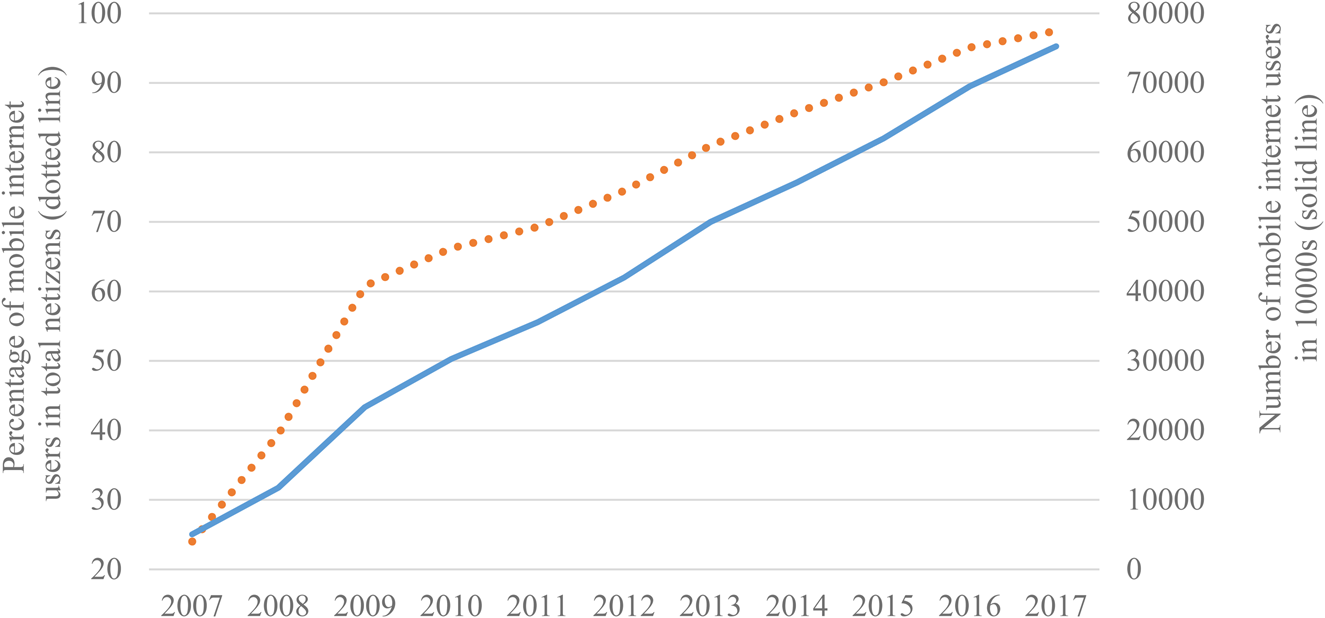
While internet users in China also use various digital products to surf the internet, at the end of December 2018, 98.6 per cent of all netizens mainly use their mobile phones to access the internet. Figure 1 illustrates the changing trend of the absolute number and percentage of mobile internet users among total netizens in the past ten years. It is clear that with the growth of the size of internet users, the growth of mobile internet users is even faster, suggesting that the rapid growth in internet users in China is mostly attributable to mobile internet users.
Trend of mobile internet use, China, 2007–2017.
Source: China Internet Network Information Center (2018; created from figure 22).

The same is true for older internet users. For historical (e.g. lower education level) and structural (e.g. lower income) reasons, the proportion of Chinese older people using the internet is much lower, as mentioned above, but among senior internet users, 95.6 per cent use a smartphone to access the internet (People's Network, 2018), which is equivalent to the national average of the total population. These data suggest that similar to the general population, smartphone ownership is very important for older internet users, and it has become the most important way in which they are connected with the outside world and prevented from being digitally excluded. Conversely, not using or not being able to use digital products, particularly smartphones, in the later lifestages may generate or further exacerbate existing social inequalities between male and female older people, as well as between rural and urban older people.
Conceptual link between gender and digital exclusion
Digital exclusion has been found to be linked closely to socio-demographics, health status and financial resources, as well as technological skills, access and attitudes of individuals (Pan, Reference Pan2010; Golant, Reference Golant2017). Among the various determinants, capital endowment might be particularly important. In the USA, a person's capital endowment influences their likelihood of using a smartphone, subscribing to home broadband services and using the internet. Age is negatively, but education level and household income are positively, related to all three aspects (Anderson and Perrin, Reference Anderson and Perrin2017). Unlike social capital, whose relationship to internet use might be non-recursive, human capital (especially formal education, and physical health such as medical conditions or disabilities) and financial capital are exogenous to digital exclusion, but the capital endowment of older people is endogenous to gender and urban–rural hukou, factors on which this work focuses.
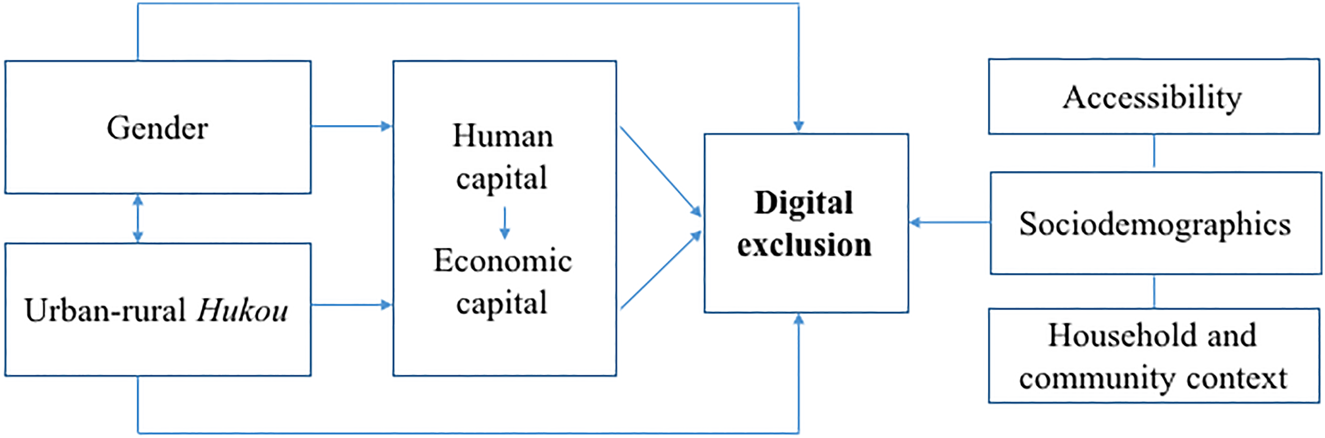
The use of smart electronics requires knowledge, competence and monetary investment. Among all of the multivariate forces, we focus on gender, its interaction with the hukou system, which reflects China's dual social structure, and the consequent capital endowment. Figure 2 depicts the conceptual framework of the relationship between gender, hukou, capital endowment and digital exclusion. We argue that gender and hukou affect digital exclusion, both directly and indirectly, through capital endowment.
Gender–hukou, capital endowment and digital exclusion.

With regard to gender, in China, as in many other countries and regions, there are economic, social and cultural obstacles for women accessing, using and benefiting from ICT: the phenomenon of the gender digital divide, whereby women, particularly older women, have less access to ICT than men. Women's access to and benefits from ICTs are constrained in different ways. Some constraints affect both women and men's access to digital devices equally, including poor infrastructure in technology, connection costs, computer literacy and language skills. These overall constraints in physical accessibility to the internet, however, are exacerbated in many cases by gender-based determinants that particularly disadvantage women in various ways. The long history of patriarchy, characterised by the norms of female inferiority, and men working outside while women manage the household, has subordinated women under the dominant male culture. Despite the vigorous promotion of all aspects of gender equality since the establishment of the People's Republic of China, female older people remain much more vulnerable. The current generation of older people was born before the late 1950s, and from the lifecourse perspective, the accumulative disadvantages in all aspects over their lifetime neither allow them to have the necessary resources required for stable and independent living nor equip them with the capacity and desire to use electronic devices. This led to the formation of the first hypothesis:
• Hypothesis 1: Female older people are more likely to be digitally excluded than their male counterparts.
This might be particularly true for rural female older people as for the digital divide, to some extent, living in a rural area might be even more of a disadvantage than being female. The rural–urban dual hukou institution, as the most fundamental force for social stratification in China, was officially adopted in the 1950s for resource distribution. It has shaped and reshaped China's dual social and economic structure in the past 70 years, determined which parts of the population can obtain resources, and defined family and individual's access to resources. When the rural–urban disparity overlaps with gender and older ages, rural female older people may have the least capacity and access to ICT among all segments of the Chinese population. Hence, controlling for other factors:
• Hypothesis 2: Gender and the hukou system interactively affect the digital divide with rural female older people being more likely than any other combination of hukou type and gender to be excluded.
Gender may also be linked to the digital divide through capital endowment by stratifying the acquisition and accumulation of human capital and economic capital for rural and urban residents, and male and female older people. A traditional Chinese norm associates female virtue with the absence of scholastic knowledge, significantly undermining gender equality in access to formal education, and female older people often have lower levels of education. Human capital determines individuals’ skills and ability to use the internet and affects their desire, motivation and capacity to learn to use smart electronics. Skills and competence have become prerequisites for accessing most of the information available on the internet, and educational barriers prevent many older adults, especially older women, from accessing the internet. As human capital accumulated in early lifestages largely shapes individuals’ access to labour market participation, cumulative disadvantages in early life education lead to insecurity in later life, particularly with income and other monetary resources (e.g. social security). This leads to women being economically dependent on men. Therefore, besides their limited education, another important barrier for older women accessing digital devices, particularly for rural older women, is their financially disadvantageous position that has developed from the unequal division of paid and unpaid work. The persistence of the gender gap in wages and occupations throughout life limits the affordability of digital technology for low-income women, hence:
• Hypothesis 3: Gender may affect digital exclusion through capital endowment, such that better capital endowment is associated with a lower risk of digital exclusion.
Data and methods
This paper draws on data from the 2016 China Longitudinal Ageing Social Survey (CLASS), conducted by the Renmin University of China, to explore gender inequality and the possible triple vulnerability of rural female older people to digital exclusion. As a longitudinal survey, the CLASS was first conducted in 2014 and followed up in 2016. As the 2014 survey did not collect data on digital information, this paper only uses data from the 2016 survey.
A stratified multi-stage probabilistic sampling method was adopted to extract samples in the 2016 survey, which was conducted in 462 villages and urban communities in 134 county-level administrative units. About 25 older people were interviewed in each community, giving a total of 11,494 respondents aged from 60 to 96 years old. Excluding cases with missing values for variables used in this analysis (mostly concerning education), this study's final sample comprises 8,927 respondents.
Dependent variable
The CLASS asks older adults several internet-related questions concerning whether they use a smartphone (i.e. an intelligent mobile phone or smart cellphone), about their internet access and use frequency, and the purpose of this use. This study narrows digital exclusion to whether or not the respondent uses a smartphone, coded dichotomously (1 = yes, 0 = no). This can be a good measure of digital exclusion because, as reported earlier, people with a smartphone are more likely to not only use mobile and other smart devices but also access the internet. This, in turn, provides more convenient contact with the digital world and support from their communities. Conversely, individuals who do not use smartphones have greatly constrained access to online and offline activity spaces. In addition, as older people are less mobile and more frugal than younger generations (and thus, less likely to pay to use the internet), using a smartphone reflects an older adult's manifested desire to learn new things, as well as some ability to master new electronics, and provides insights into the micro-environment of internet coverage at home.
Key predictors and control variables
This study focuses on gender inequality in later life and the possible triple vulnerability to the digital exclusion of rural female older people in digital exclusion, focusing on the endowment of human and economic capital. As such, the following seven key predictors are identified to test the possible effect of gender–hukou and capital endowment on using a smartphone.
(1) Gender
Gender is coded 1 for female respondents and 0 for male respondents.
(2) Hukou type
Hukou type is coded 1 for respondents with a rural hukou and 0 for respondents with an urban hukou.
(3) Composite measure of gender and hukou type
The composite measure of gender and hukou type has four categories: urban male, urban female, rural male and rural female. This measure, as the full interaction term of gender and hukou, is essentially the same as the independent measure of gender, hukou and a two-way interaction between them. It is a superior way to gauge the main and interactive effect of gender and hukou because it simultaneously provides coefficients for three out of the four categories formed by gender and hukou (and another category is used as the reference group), and it will not average out the possible opposite effect of different categories on the outcome variable.
(4, 5) Human capital
Schultz (Reference Schultz1961) first put forward the concept of human capital investment in 1960. Since then, Becker (Reference Becker1964, Reference Becker2007) has made a detailed explanation of the concept of human capital, believed that human capital is closely related to the future income of individuals, and defined human capital as knowledge, skills, talents, time, health and life expectancy. Given data availability, we use two important human capital indicators, namely formal education and self-reported physical health, to explore the effect of human capital on digital divide. Education level is stratified into four categories: no education, primary school, middle school, and high school or above. Health status also comprises four categories: very good, good, so so and not so good (including poor health status).
(6, 7) Economic capital
Two variables are used to gauge their relationship to digital exclusion using smartphone yields costs. While income is the most important financial capital, its credibility has always been a big concern, especially for rural older people; also, while the survey asked for the respondents’ income, there are too many missing values to be used. Preliminary findings (not shown here) indicate that most of the missing cases are associated with rural respondents, particularly among the oldest old. Given these caveats, this paper utilises the number of houses or apartments owned by the respondents (0, 1, 2 or more) and whether they have an old-age pension (1 = yes, 0 = no) to measure economic capital. Owning a house or apartment and having an old-age pension are the most important and stable guarantees for old-age life economically and increases their monetary capacity to use a smartphone.
To explore the net relationship between the key predictors and dependent variable, we control for respondents’ socio-demographics (age, marital status, working status, past/present occupation (depending on whether currently working), and expectation of old-age support from sons (i.e. how much the respondents expect old-age support from their sons); household context (generations living in the same household, whether their home has a shower facility and internet coverage); and community context (location of residence). While unfortunately there are no other community variables (e.g. the number of public facilities, the average/median income of the community) that may be associated with the digital divide and community heterogeneity available in the data, the location of community, to some extent, determines the accessibility to internet use.
Analytical strategies
We first establish the status and characteristics of smartphone use among older people. Regression models are then applied to explore the net association with or independent effect of key predictors on digital exclusion. As the dependent variable is dichotomous, with 1 meaning the respondent is digitally excluded, a binary logistic regression is appropriate.
However, as the survey was conducted using the stratified multi-stage probabilistic sampling method, with the community as the primary sampling unit, the data are hierarchically structured with older people nested in their communities. Further, because communities may differ in technological infrastructure, those from the same community or village share more similarities than respondents from different communities. This clustering feature violates the two most important assumptions of the conventional regression model (i.e. independence among respondents and random error terms), which could downwardly bias the model results. The multi-level modelling technique is designed to deal with such a data structure: it corrects the possibly biased parameter estimates by accounting for clustering, and is, thus, a more suitable approach for this analysis.
We first fit an empty model, a kind of model with no covariate, to determine if the nested feature of the data is indeed a source of variation in the dependent variable. If so, random intercept models with covariates will then be sequentially utilised. Sampling units (i.e. communities and villages) will be treated as the upper-level unit where individual older people, treated as the lower-level unit, are nested. The empty model is written as Equation (1):
 $$y_{ij} = \gamma _{00} + \delta _{0j} + e_{ij}{\rm \;}$$
where yij denotes the outcome of individual i in community j; γ 00 is the general intercept or average mean of all communities; δ 0j is the random variable at the community level, representing the distance from a specific community to the general mean of all communities; and eij is the random variable at the individual level, representing the distance from individual i to community j where the individual nests.
Then a random intercept model is fitted, which is written as Equation (2):
 $$y_{ij} = \gamma _{00} + \gamma _{01}G_{1j} + \gamma _{10}x_{1ij} + \delta _{0j} + e_{ij}$$
Equation (2) has several new elements: G 1j denotes the community characteristics with the coefficients of γ 01; and x 1ij denotes the characteristics of respondents with coefficients of γ 10.
Analytic findings
Univariate and bivariate analysis
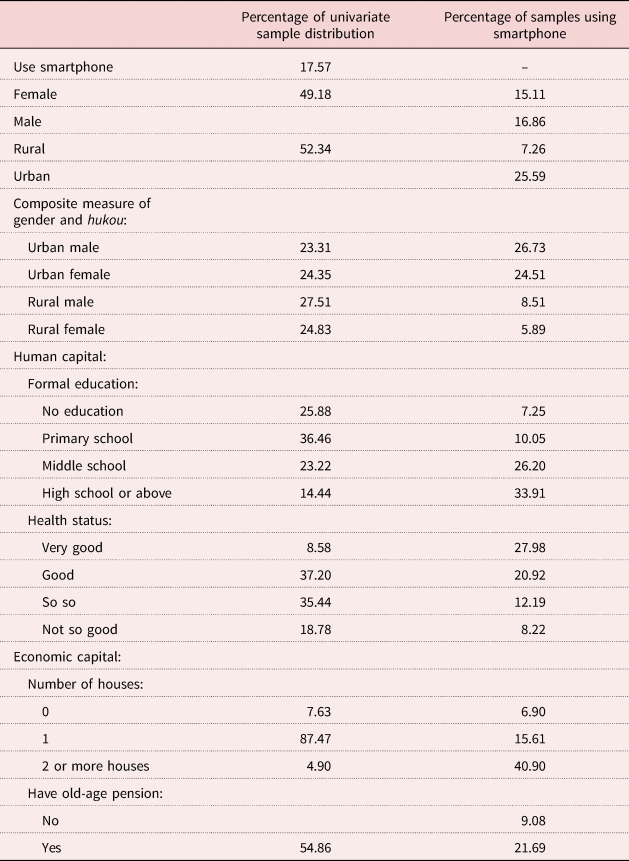
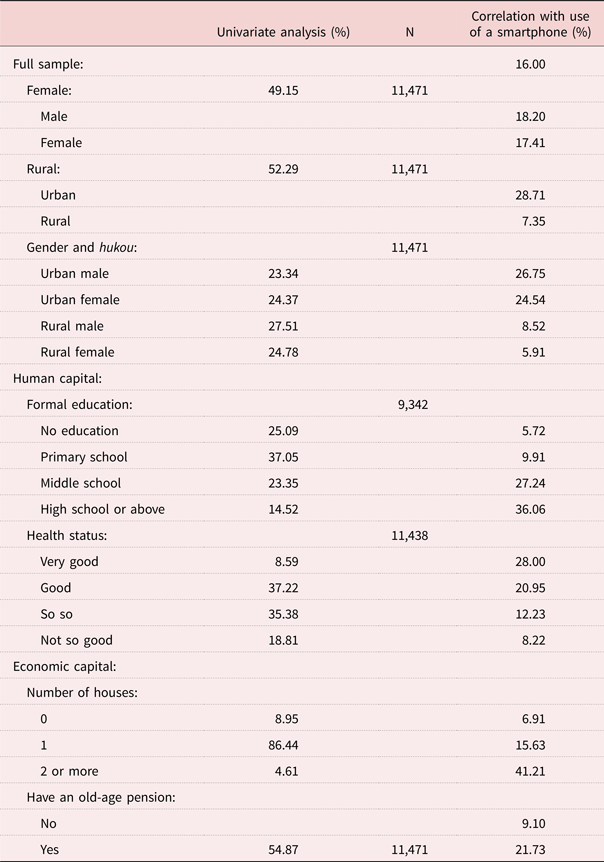
We first describe the sample distribution for the response variable and key predictors (column 2 of Table 1) and then analyse the correlation between the status of smartphone use with respondents’ gender, hukou status and capital endowment (column 3 of Table 1). Among all of the respondents, about 17.6 per cent of older people use a smartphone. About 49 per cent of the sample are females and 52 per cent have a rural hukou. The respondents vary substantially with respect to capital endowment, as illustrated in column 2 of Table 1.
Distribution of dependent variable, key predictors and their correlations

Note: N = 8,927.
Source: 2016 China Longitudinal Ageing Social Survey.
When it comes to the correlations between the outcome variable and the key predictors, it was found that older men (16.86%) and older women (15.11%) do not differ much, whereas there is a large gap in the proportions of urban dwellers (25.59%) and rural dwellers (7.26%) who use a smartphone. Hence, the hukou divide is more salient than the gender gap in smartphone usage. Regarding the composite measure of gender and hukou, rural female older people have the lowest rate of smartphone usage, lower than not only their male counterparts but also their urban female peers. Without considering the other variables, the bivariate associations between the dependent variable and key predictors are statistically highly significant.
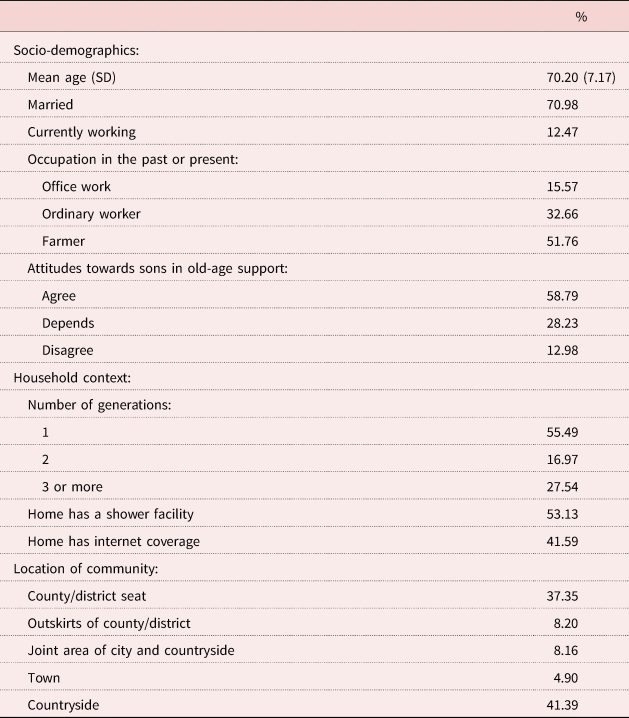
The characteristics of the respondents also vary substantially with respect to control variables, as illustrated in Table 2. The average age of the respondents is about 70 years old; and about 70 per cent of them live with a spouse. The respondents also differ greatly in terms of working status, past and present occupations, attitudes towards son's role in old-age support, as well as household contexts. This suggests that the samples have sufficient variations for further analysis.
Univariate distribution of control variables

Notes: N = 8,927. SD: standard deviation.
Source: 2016 China Longitudinal Ageing Social Survey.
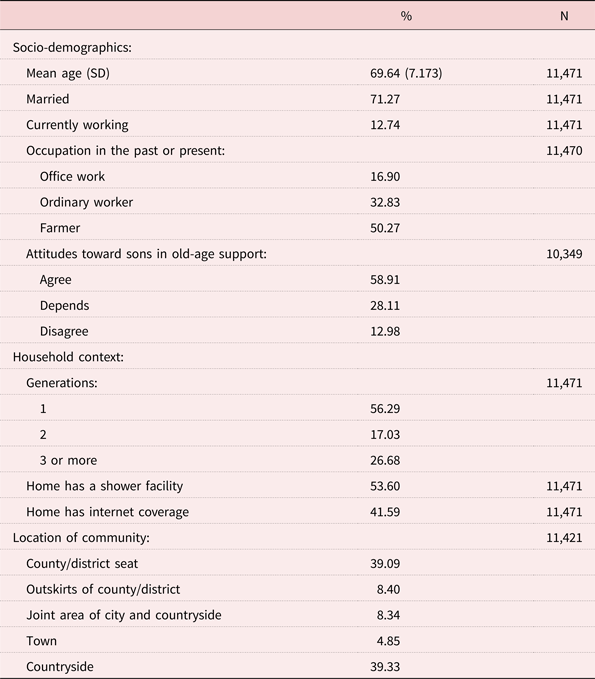
As over 20 per cent of the cases were eliminated from the analysis, we also present univariate descriptive statistics of each variable with all valid cases for comparison (see Table A1 and Table A2 in the Appendix). As we can see, the missing cases are largely associated with level of education and attitudes towards their son's role in old-age support.
Multi-level modelling results
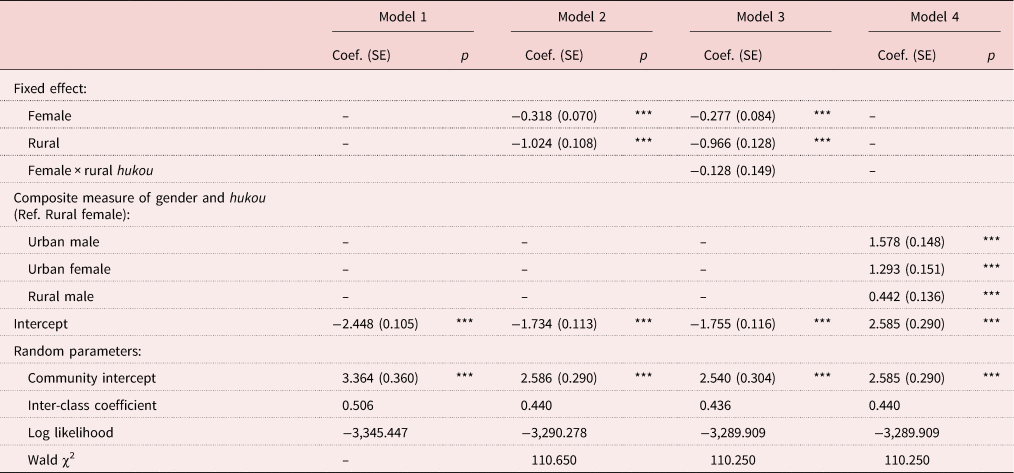
Table 3 reports the results for four models: a baseline (empty) model (Model 1), and three partial models with only gender and hukou type, measured independently (Model 2) without interaction term and with interaction term (Model 3), and compositely (Model 4). The highly significant community random parameter estimate in Model 1 confirms that the community is a significant source of variations in smartphone usage among older people. Also, the value of the interclass correlation coefficient illustrates that a good proportion of variance of smartphone use can be attributed to between-community characteristics, which provide further support that multi-level models are more appropriate for the data structure.
Multi-level random intercept logistic model results of using a smartphone (baseline and partial models)

Notes: N individuals = 8,927. N groups (communities) = 455. Coef.: coefficient. SD: standard error. Ref.: reference group.
Source: 2016 China Longitudinal Ageing Social Survey.
Significance level: *** p < 0.001.
Controlling for urban–rural hukou type, gender inequality in the digital world is clear. Model 2 adds gender and hukou into the equation. While hukou is found to be much more important in predicting smartphone use than gender, gender is also highly significantly associated with the dependent variable. By adding the two-way interaction term of gender and hukou, it is evident that the main effect of gender and hukou, while attenuated in size, remains highly significant. While the interactive term of gender and hukou is not statistically meaningful, rural female older people are less likely to use a smartphone than any other combination of hukou type and gender. Model 4 applies the composite measure of gender and hukou in order to capture their main effect and interactive effect on smartphone use simultaneously, and we found that rural female older people are most excluded from the digital world.
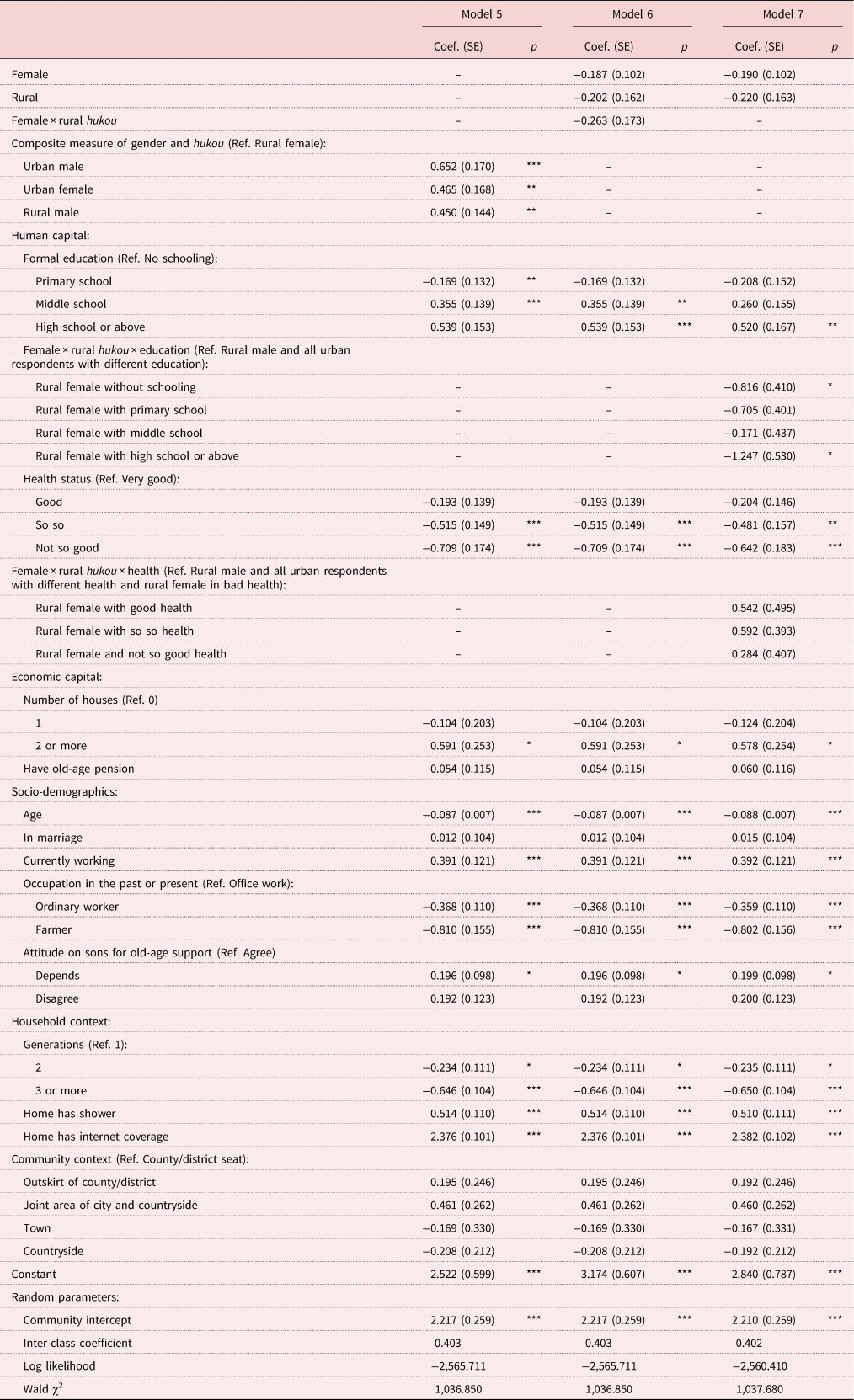
These four models do not take into account the possible confounding effect of other factors on the relationship between gender and the digital divide. Next, we fit three full models to examine if gender affects smartphone use independently, interactively with hukou institution, and mediated or moderated by capital endowment. Variables in these three models are the same except for (a) the different ways of specifying gender and hukou, and (b) with or without interactions between gender, hukou, education or health status. Their findings, which allow us to test the hypotheses proposed above, are presented in Table 4.
Multi-level random intercept logistic model results of using a smartphone (full models)

Notes: N individuals = 8,927. N groups (communities) = 455. Coef.: coefficient. Ref.: reference group.
Source: 2016 China Longitudinal Ageing Social Survey.
Significance levels: * p < 0.05, ** p < 0.01, *** p < 0.001.
Prior to fitting Model 5, we fit a full model (results not shown here) including all variables but without the interaction term of gender and hukou, and find that both the coefficients of gender (coef. = −0.273, standard error (SE) = 0.088) and hukou (coef. = −0.327, SE = 0.1404) are highly significant, supporting Hypothesis 1. Model 5 uses the fully interactive term, i.e. the composite measure of gender and hukou. As shown, the addition of all of the control variables greatly attenuates the size of the coefficients of the four combinations of gender and hukou compared to those in Model 4. However, controlling for capital endowment, socio-demographic characteristics, household and community contexts, the pattern detected in the previous model remains, and gender and hukou still significantly affect the response variable. Rural female elders not only significantly differ from urban respondents but also from rural male respondents in smartphone use, and they are the most digitally excluded compared to any other combination of hukou type and gender, providing evidence to support Hypothesis 2. Also, both a between-gender and a within-gender gap among female respondents is detected, because rural female elders also significantly differ from urban females in digital divide, further strengthening the hukou effect. Moreover, when using different categories of the composite measure of gender and hukou as reference group, no difference between rural and urban males is found, but urban females (coef. = −0.188, SE = 0.102) marginally differ from urban males, implying a gender effect. Clearly, there is less variation among male respondents than among female respondents, and both gender and hukou matter for digital divide.
Model 6 is the same as Model 5, but it specifies gender and hukou separately, together with their interactive term. While the coefficients for gender and hukou in these two models look different, they are essentially identical. Although among the three coefficients of gender and hukou, only gender bears a marginally significant relationship to digital divide, female, rural and rural female older people are less likely to use a smartphone than their male, urban, as well as urban male and female, and rural male counterparts, respectively. Since the reference group in the interaction term of gender and hukou combines all urban respondents and rural males, and since urban females have a marginally significantly lower risk of smartphone use than urban males, the combination may average out the effect of interaction term on the outcome variable.
To test Hypothesis 3, we fit Model 7, which adds three-way interactions of gender and rural with (a) education, and (b) health status based on Model 6. The addition of new interaction terms does not change much of the main effect of relevant variables on the response variable, and better human capital endowment remains related to a higher likelihood of smartphone use. When it comes to the interaction terms, compared with rural male and all urban respondents, rural female elders without schooling are significantly less likely to use a smartphone, but rural female elders with high school or higher education are significantly more likely to use a smartphone. This finding suggests that gender and hukou do make a difference in digital divide, but their relationship to digital divide is largely mediated and moderated by education or digital literacy associated with education. The gaps across the four sub-populations are bigger with level of education, reflecting a mediating effect, but the size of change varies across the four groups, suggesting a moderate effect.
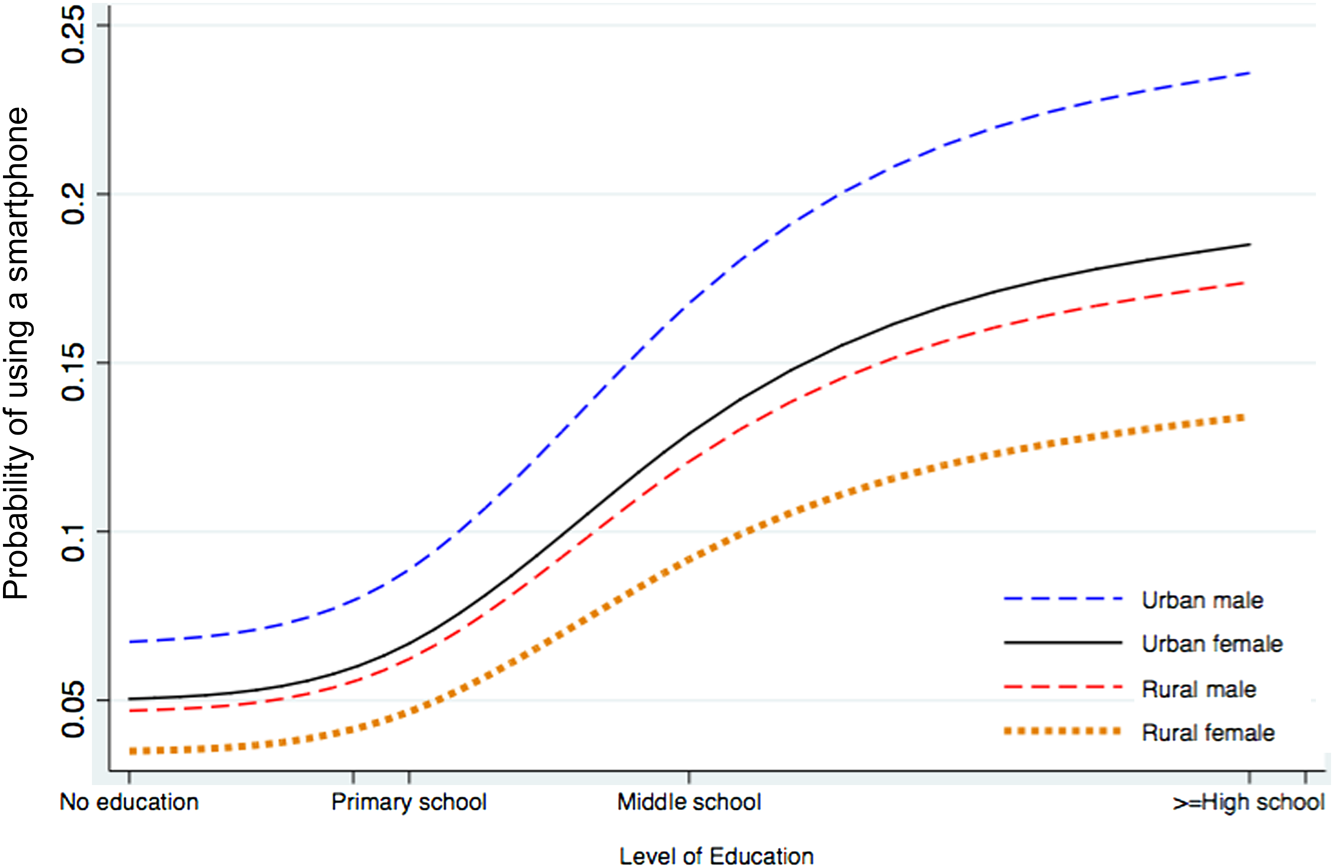
Such a pattern is also clearly illustrated in the simulated risk of using a smartphone by the level of education for the four sub-populations based on gender–hukou.Footnote 1 The hypothetical person has the following characteristics: has a middle school education, relatively good health, one apartment or house, and an old-age pension; is an average age, married and a paid ordinary worker; has a relatively strong expectation of support from a son; and lives in a two-generation household, with a shower facility and internet access at home, in the outskirts of a county/prefecture.
As Figure 3 illustrates, the gender–hukou gap of the digital divide is not only mediated but also moderated by level of education. The basic pattern is that, as education level rises, the gender–hukou gap becomes more salient, suggesting an interaction in relation to the dependent variable. While better-educated older people are more likely to use smartphones compared to lowly educated older people, the gap in using a smartphone is much smaller among those with no education than among those educated to high school level or above in all four groups. Specifically, the gender gap becomes much bigger between urban males and females, as well as between rural males and females, respectively, and similarly, the hukou gap also gets larger between urban and rural males, as well as between urban and rural females, as education gets better. This implies that gender and hukou do not uniformly affect the dependent variable; rather, their effect is largely conditioned on level of education.
Predicted probability of using a smartphone by gender–hukou and education.

The pattern emerging from Figure 3 also implies that digital exclusion mostly manifests among those whose level of education is the lowest. Their small variation in smartphone use among the four groups does not suggest a low digital exclusion; rather, it simply mirrors the fact that they, as a whole, are the most excluded in the digital world. At the bottom line, they are the ones who are least likely to use a smartphone. Having acknowledged that, however, the greater variability and diversification in the likelihood of using a smartphone among older people who are better educated and have a better health status may reflect that the gender–rural stratification with regard to the digital divide is more likely to be observed among those who have the capacity to use a smartphone.
Summary and discussion
Focusing on smartphone use from the perspective of gender–hukou stratification, our analysis of the most recent nationally representative data yields the following conclusions regarding the relationship between gender and digital exclusion. First, digital exclusion is particularly acute among older people: while about 60 per cent of the Chinese population use the internet, and the proportion of the general population with a smartphone is even higher, less than 18 per cent of the surveyed older people use a smartphone, although 41.6 per cent have internet access at home. Furthermore, the findings may have a downwardly biased digital exclusion because using a smartphone does not necessarily entail frequent use by an older person. The CLASS data demonstrated that less than 10 per cent of older people regularly surf the internet, with most still relying heavily on television for entertainment, the source of daily news and information about the outside world: more than 90 per cent of their information comes mainly from television and less than 5 per cent from the internet (results not reported here).
Second, there is indeed a gender digital divide with females benefiting less from technological progress, and gender affects the digital divide both independently and through the moderation and mediation of capital endowment. The basic conditions for digital exclusion vary to a smaller extent between males and females, and substantially between urban areas and the countryside, and across human capital and economic capital endowment, among others. The gender gap is more salient when other things are equal; that is, when controlling for other factors, female older people are more disadvantaged compared to their male counterparts. Generally, while the geographic differences between urban and rural areas are greater than gender differences in the models without considering other factors, the gender differences become wider, while geographic differences are attenuated when other things are equal. The proportion of urban older people using a smartphone is significantly higher than that of rural older people, possibly due to the differences in internet penetration between urban and rural areas, the importance of the internet in daily life, and variations in education and financial resources between urban and rural older people. Indeed, greater human capital and better economic security are positively associated with the dependent variable, possibly by motivating older people to learn new technology and enabling them to access the internet. However, controlling for capital endowment and other factors does not totally remove the effect of gender on the dependent variable.
Finally, rural female older people are the most digitally excluded group. Their education endowment, and economic and financial security are the lowest, greatly limiting their demand for smartphones and social networks, as well as their capacity to use the internet. Indeed, the majority of rural older women still live a relatively closed and traditional life in the digital era.
Policy implications
Our findings have profound policy implications. Bridging or closing the gender gap in the digital divide would benefit not only older women but also their communities and the broader economy. While China is already vigorously promoting new ways to support older people, which is termed intellectual old-age support or smart senior care, most relevant products and practices tend to target older people with health problems, especially those demanding long-term care. Health is, of course, the most important concern of older people, but the majority of older people are still able to care for themselves and are active. What this implies is that focusing only on the health of older people is not sufficient for providing support for older people; enhancing their capacity to use the internet to increase their social participation and enrich their daily lives is equally important.
How, then, can the digital gender gap be actively closed or at least narrowed in the future? The practice of intelligent old-age support should extend beyond medical devices to emphasise expanding older peoples’ accessibility to smart electronic products and nurturing older peoples’ abilities to use these products, including smartphones and digital tablets. The extent of intelligent old-age support should be not limited to constructing a community-level information platform, or limited to developing intelligent technology and other hardware products; rather, it must solve the ‘last mile’ problem of intelligent old-age support. This means mobilising older peoples’ desire to access smart products and cultivating their ability to use intelligent electronics, helping them to become familiar with and correctly and skilfully operate intelligent products, both in emergencies and in their daily lives.
Achieving these aims necessitates community-level training and intervention programmes, which will equip older people with the necessary skills, regardless of their education level. It is also important to increase free internet coverage for senior citizens, given that they are less willing to pay to use the internet. Meanwhile, in the context of the rapid development of population ageing, promoting gender equality in the early lifestages, including equal access to the labour market and, thus, economic and financial independence, is equally urgent. Only when women become more economically independent can the stereotypical portrayal of women in the established media be broken, and broader gender equality in the social, economic and political dimensions of later life be catalysed. Although ICT cannot replace many traditional means of supporting older people, women's equal and meaningful participation in the digital society can provide new ways to cope with population ageing and, in particular, promote the wellbeing of older women, which will further facilitate a just, inclusive and rights-based information society.
Limitations
There are limitations that should be taken into account. First, we use listwise deletion for cases with missing values and, consequently, over 20 per cent of the cases were dropped. As mentioned above, the education and attitude towards sons in old-age support, particularly the former, have many missing cases, which may pose problems for the representativeness of the sample, as the missing cases may be associated with certain characteristics, such as those who have the lowest level of education. Another caveat is related to the lack of contextual variables in the data. As we have seen from the models, community context is an important source of variability in the outcome variable. However, as the CLASS does not provide community-level data, we are unable to incorporate more appropriate contextual variables (e.g. average income) in the analysis, although the locations of the communities can, to some extent, capture the contextual effect on smartphone use. Additionally, hukou type may not reflect the actual place of residence. The respondents with a rural hukou might live in urban areas, which might influence economic capital and smartphone usage. This is an important point as China has been experiencing a large-scale labour migration. Unfortunately, the survey does not include a question on the respondents’ migration status. While we believe that this should not pose a problem for older people, who, unlike younger people, do not migrate very much, the lack of information on migration status remains a caveat of this work.
Conclusion
Technological advancement, the growth of the internet and lifestyle changes are inducing increasing numbers of people to access the internet for various reasons, such as searching for entertainment, executing monetary transactions, ordering takeout, and so on. These activities can expand social networks or means of external communication and interaction, and help to improve mental health and social adaptation. As older people are more likely to stay at home in old age than go to a nursing home, access to the internet and smart equipment offers older people more convenient access to public services and enhances subjective wellbeing. Using a smartphone appears to be a prerequisite for these benefits because about 97 per cent of internet users access the internet via a smartphone.
This work provides valuable insights into digital exclusion among (rural) older women. With the progress of science and technology, digital inclusion has become ever-more important in daily life. Family structure in China has been largely reshaped in size and living arrangements by both the restrictive fertility policy and large-scale geographic mobility of adult children away from their parents, thus greatly reducing face-to-face contact between older people and their families (e.g. Yang and He, Reference Yang and He2014; Yang, Reference Yang2017). However, the quality of life of older people and their wellbeing need not deteriorate, and their social networks can be strengthened with the development of modern technology. As an important way for older people to adapt to changes in the family and society, digital inclusion is somewhat inherent in the concept of intelligent old-age support. As China shares similar trends to the international community in both population ageing and ICT progress, findings on the digital exclusion or inclusion of older people emerging from this analysis may have implications for different social, cultural and economic contexts.
Financial support
This work is supported by the Key Projects of Philosophy and Social Sciences Research of Chinese Ministry of Education (Grant No. 19JZD021), Foundation for Humanities and Social Science Key Program of Ministry of Education of China (Grant No. 16JJD840012), and the Important Project of Philosophy and Social Sciences Research of Beijing Municipality (Grant No. 19JDSRA002).
Ethical standards
No ethical approval was required.
Appendix
Univariate and bivariate analyses of key predictors with all valid cases

Univariate analyses of control variables with all valid cases