INTRODUCTION
Sponges inhabit numerous marine ecosystems from polar seas to temperate and tropical waters and also thrive over a large depth range (van Soest, Reference Van Soest1993; Fromont, Reference Fromont1999; Diaz & Rützler, Reference Diaz and Rützler2001; Zea, Reference Zea2002; Bell & Smith, Reference Bell and Smith2004; de Voogd et al., Reference de Voogd, Becking, Hoeksema, Noor and Van Soest2004; McClintock et al., Reference Mcclintock, Amsler, Baker and Van Soest2005; Wulff, Reference Wulff2006). Sponges have demonstrated an impressive ability to adapt and survive in marginal habitats (McClintock et al., Reference Mcclintock, Amsler, Baker and Van Soest2005; Roberts et al., Reference Roberts, Davis and Cummins2006; Yahel et al., Reference Yahel, Whitney, Reiswig, Eerkes-Medrano and Leys2007; Lesser et al., Reference Lesser, Slattery and Leichter2009; Olson & Kellogg, Reference Olson and Kellogg2010). The ecological roles and biotechnological potential of marine sponges have been broadly reported in the past few decades. As benthic filter feeders, sponges play important and versatile roles including reef degraders and builders, links in bentho-pelagic nutrient coupling (Lesser, Reference Lesser2006), and chemical and physical media for sympatric organisms (Pawlik et al., Reference Pawlik, Chanas, Toonen and Fenical1995; Huang et al., Reference Huang, Mcclintock, Amsler and Huang2008). A global assessment of sponge biodiversity was recently facilitated by the advent of the World Porifera Database (WPD) (van Soest et al., Reference Van Soest, Boury-Esnault, Vacelet, Dohrmann, Erpenbeck, De Voogd, Santodomingo, Vanhoorne, Kelly and Hooper2015) which provides a single unified classification, the Systema Porifera (SP) (Hooper & van Soest, Reference Hooper and Van Soest2002). Specific areas with high sponge diversity (>201 species) such as the Mediterranean, north-eastern Atlantic, Caribbean, southern India, eastern Australia and subtropical Japan are at least partially due to the intensity of collection in these area (van Soest et al., Reference Van Soest, Boury-Esnault, Hooper, Rützler, de Voogd, Alvarez de Glasby, Hajdu, Pisera, Manconi, Schoenberg, Janussen, Tabachnick, Klautau, Picton, Kelly, Vacelet, Dohrmann, Díaz and Cárdensa2012). The low numbers of recorded species from other areas such as Taiwan (61 species) can be attributed to the low level of sampling intensity. The number of taxonomic and biodiversity studies of marine sponges in the vicinity of Taiwan has substantially increased in the last few decades, including South Korea (Kang et al., Reference Kang, Lee and Sim2013; Shim & Sim, Reference Shim and Sim2013), Singapore (Lim et al., Reference Lim, De Voogd and Tan2009; Lim et al., Reference Lim, De Voogd and Tan2012), Japan (Hoshino, Reference Hoshino1980; Khodakovskaya, Reference Khodakovskaya2005) and Indonesia (Bell & Smith, Reference Bell and Smith2004; Becking et al., Reference Becking, Cleary, de Voogd, Renema, de Beer, Van Soest and Hoeksema2006; Cleary & de Voogd, Reference Cleary and De Voogd2007; de Voogd & Cleary, Reference de Voogd and Cleary2008; de Voogd, Reference de Voogd2012). In Taiwan, however, much remains to be done to document the Taiwanese sponge fauna.
Taiwan is located at the centre of the Philippine–Japan island arc and lies within the Tropic of Cancer. Southern fringing coral reefs and northern rocky shore habitats dominate the coastline, except for western Taiwan. Marine climate in the winter (November to February) is significantly influenced by the combination of the north-eastern monsoon and Chinese Coastal Current (CCC), Kuroshio Current (KC) and South China Sea Current (SCSC). Tropical typhoons occasionally provoke regional disturbances in summer between July and October. Annual variation of mean sea surface temperature and salinity ranges from 21 to 28°C and 33.9 to 34.6 0/00, respectively (Jan et al., Reference Jan, Tseng and Dietrich2010; and references therein). The first scientifically documented sponge specimen in Taiwan can be traced back to the late 19th century when the species, Theonella swinhoei, was first described; its holotype is presently preserved in the British Museum (Gray, Reference Gray1868). Three newly described sponge species, Chalinula amoyensis, Chondrocladia (Chondrocladia) arenifera and Echinodictyum axinelloides, and one new record species, Lissodendoryx (Lissodendoryx) ternatensis, from the Taiwan Strait were first documented in the early 20th century (Brøndsted, Reference Brøndsted1929). There has, however, been a marked dearth of information on the ecology and distribution of sponges in Taiwan since then. The majority of sponge studies in Taiwan have focused on the natural products sequestered in marine sponges for medical and pharmaceutical applications (Lin, Reference Lin1995; Lo, Reference Lo1999; Chen, Reference Chen2000; Huang, Reference Huang2002; Liao, Reference Liao2003; Jhou, Reference Jhou2004; Su et al., Reference Su, Tseng, Lu, Liu, Chou and Sung2011). However, little was done to identify the sponges. The majority of the studied sponge specimens were only identified to the genus level. Other studies have focused on the ecology and reproduction of the intertidal bath sponge, Spongia ceylonensis (Chung et al., Reference Chung, Huang, Lee and Liu2010), Cinachyrella australiensis (Chen, Reference Chen1988; Huang, Reference Huang1996; Chen et al., Reference Chen, Chen and Chang1997; Lu, Reference Lu2003) and on the symbiotic microbial community associated with the Cyanobacteriosponge, Terpios hoshinota, which caused the ‘black disease’ of reef-building corals at Green Island, Taiwan (Liao et al., Reference Liao, Tang, Hsu, Wen, Wu, Chen, Wang, Meng, Twan, Dai, Soong and Chen2007). In 2007, a preliminary survey on the sponge assemblages in southern Taiwan, including Green Island and Kenting, was conducted as part of a sponge taxonomy workshop and the results were published as a checklist with 65 sponge species (Shao et al., Reference Shao, Peng and Wu2008). The first morphological taxonomic study and preliminary survey on the biodiversity of sponges in a specific region in Taiwan included 28 sponge species belonging to seven orders, including 11 species that are newly recorded species for Taiwan (Li, Reference Li2013).
The objectives of the present study were to: (1) investigate the biodiversity and distribution of sponges in the Penghu Archipelago; (2) compare sponge assemblages in different locations of the Penghu Archipelago; (3) estimate the potential species richness of the subtidal sponge fauna in the Penghu Archipelago, Taiwan.
MATERIALS AND METHODS
Study area
The Pescadores, also known as the Penghu Islands, is an archipelago off the western coast of Taiwan in the Taiwan Strait. The archipelago consists of approximately 90 small islands and islets covering an area of 128 square kilometres. With the exception of the most western islet, HuaYu, which consists of andesite, the islands mainly consist of oceanic basalt that resulted from the slow eruption and discharge of magma from submarine volcanic crevasses 8–16 million years ago (Chen & Liu, Reference Chen and Liu1996 and references therein). Tropical fringing reefs have formed extensively around most parts of the islands. The hydrology around the islands is unique. There are three major currents, the cold, southward CCC, a branch of warm, northward KC and the SCSC (Jan et al., Reference Jan, Tseng and Dietrich2010; Tzeng et al., Reference Tzeng, Lan and Chan2012). The anfractuous coastline of Penghu, the largest island, and the convergence of three different currents (CCC, KC and SCSC) results in a complex hydrological condition, which also influences seawater temperature, salinity, turbidity, dynamics and habitat stability.
Sponge collection and taxonomy
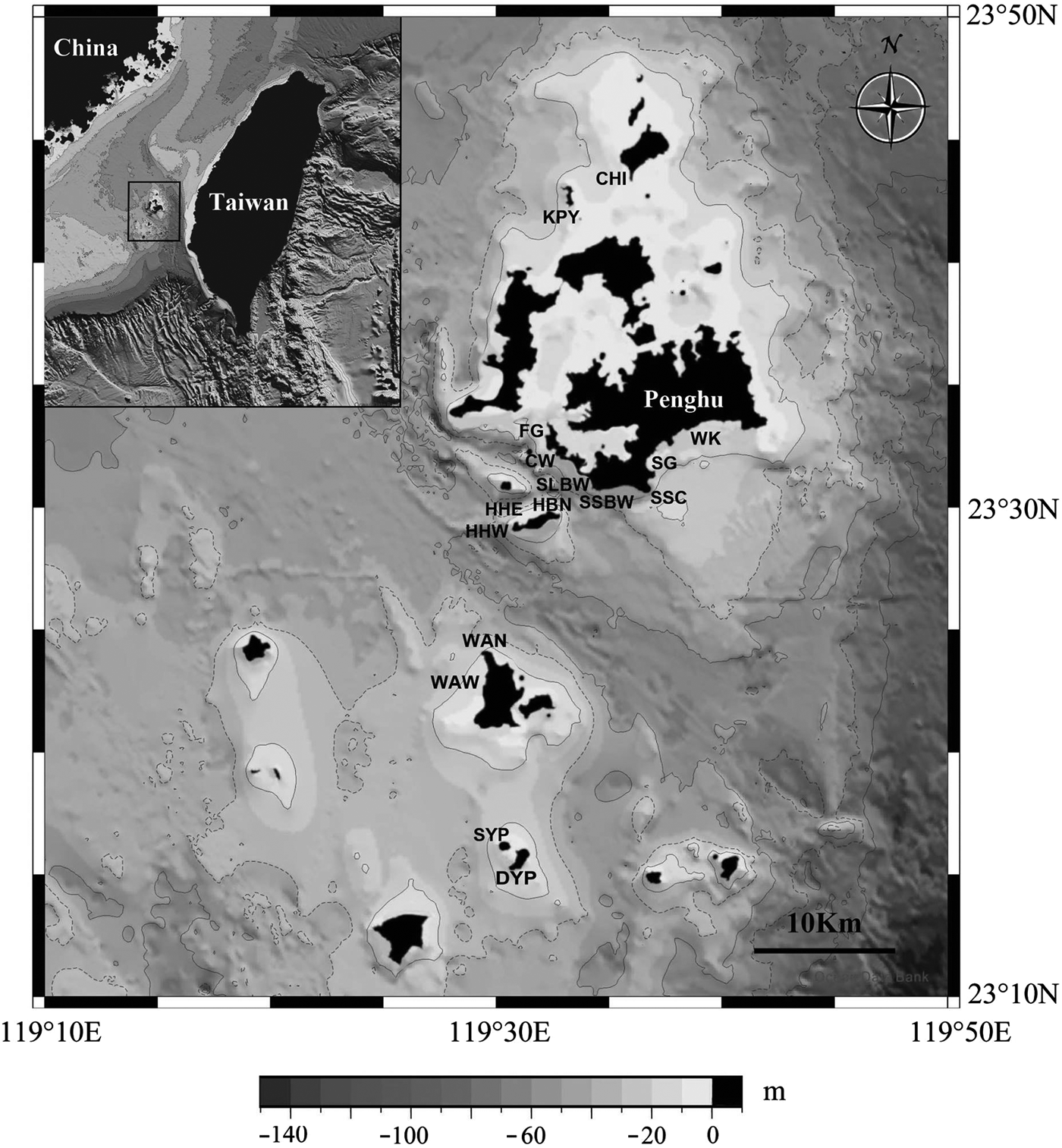
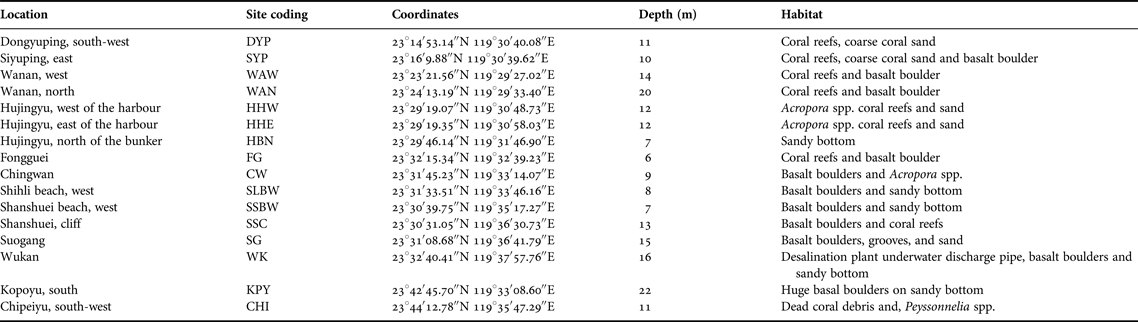
Subtidal sponges were sampled during 60-min dives using the Roving Diver Technique (Munro, Reference Munro, Eleftheriou and Mcintyre2005) from 16 sites off the coast of the Penghu Archipelago (Fig. 1 and Table 1). Sponges (cryptic and boring specimens were excluded) were collected using scuba diving between July 2009 and July 2012, photographed in situ, and brought back to the laboratory for further identification based on the keys provided in Systema Porifera (Hooper & van Soest, Reference Hooper and Van Soest2002) and the World Porifera Database (van Soest et al., Reference Van Soest, Boury-Esnault, Vacelet, Dohrmann, Erpenbeck, De Voogd, Santodomingo, Vanhoorne, Kelly and Hooper2015). Identifications were made to the lowest taxonomic level possible. Sponge vouchers are incorporated in the sponge collection of Naturalis Biodiversity Center, Leiden, the Netherlands.
Sampling locations of subtidal sponges off the Penghu Archipelago, Taiwan. Sixteen sampling sites across islands are indicated by site abbreviations given in Table 1.

Localities visited during the course of the present study in the Penghu Archipelago, Taiwan from 2009–2012.
Statistical analysis
Species number (S), richness (d) and biodiversity index (H′) of sponge assemblage data (presence/absence) were obtained from each sampling site using PRIMER-E (Plymouth Marine Laboratory, Plymouth, UK) (Clarke & Warwick, Reference Clarke and Warwick2001a). Zero and outlier data from ChiPeiYu (CPY) and Hujing Bunker North (HBN) were excluded in the following analyses. We included diversity measures that take into account the relationships between species following a Linnaean classification, average taxonomic distinctness (AvTD, Δ+) and variation in taxonomic distinctness (VarTD, Λ+) were calculated. These analyses are an indicative measure of the taxonomic distance of an assemblage and the relatedness of its constituent species based on presence/absence data (Clarke & Warwick, Reference Clarke and Warwick2001b). Sponge similarity among sites was compared by first transforming the presence/absence matrix into a triangular similarity matrix based on the Bray–Curtis similarity index (Clarke & Warwick, Reference Clarke and Warwick2001a). Variation in similarity was subsequently visually compared using non-metric multidimensional scaling (NMDS). The stress coefficient of Kruskal was used to test the ordination significance (McCune & Grace, Reference Mccune and Grace2002). Species richness in the Penghu Archipelago was estimated using EstimateS with different models (Standard, Uniques, Chao 2 and Jack 1) (Colwell, Reference Colwell2013).
RESULTS
Sponge distribution, biodiversity and taxonomic distinctness
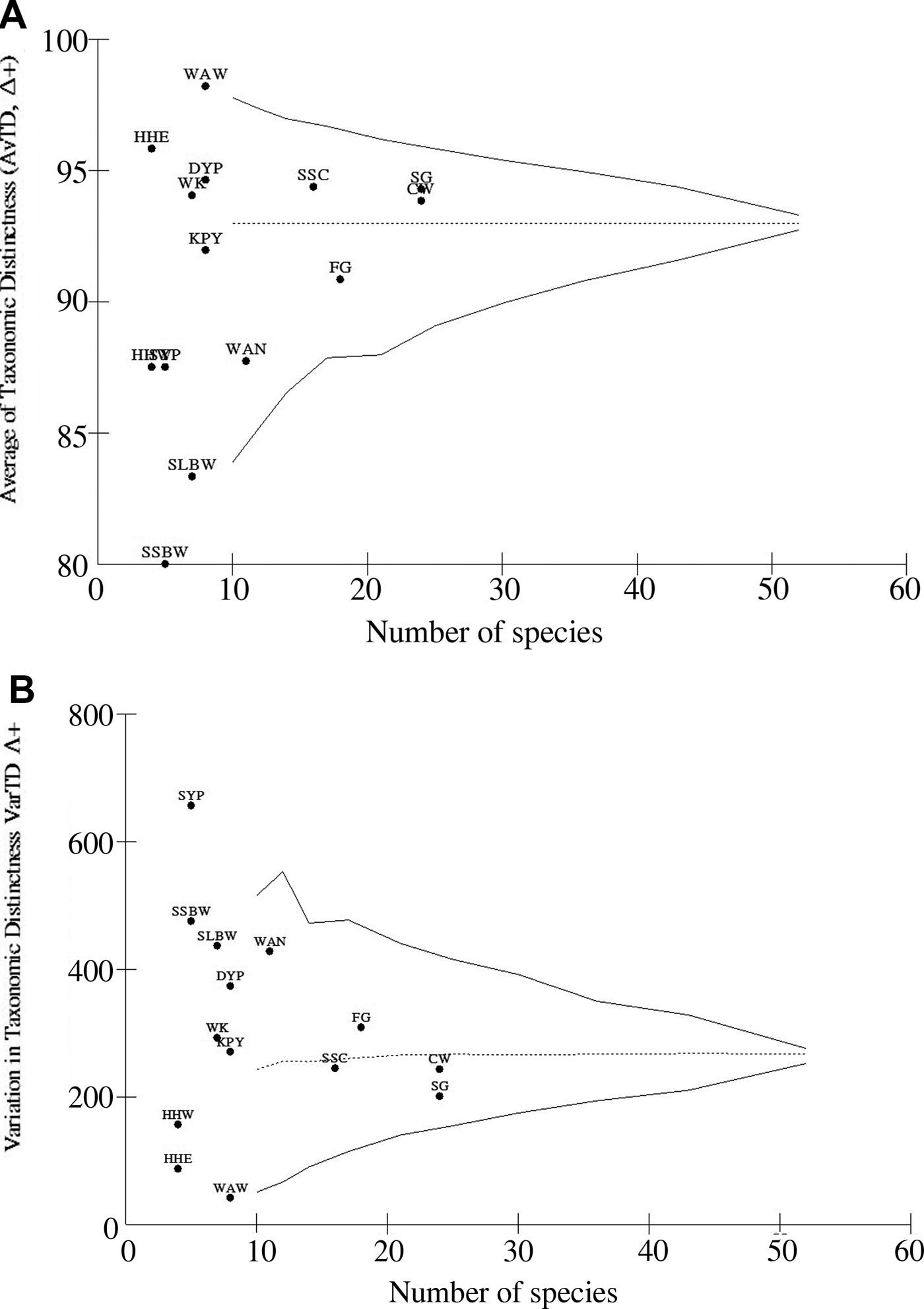
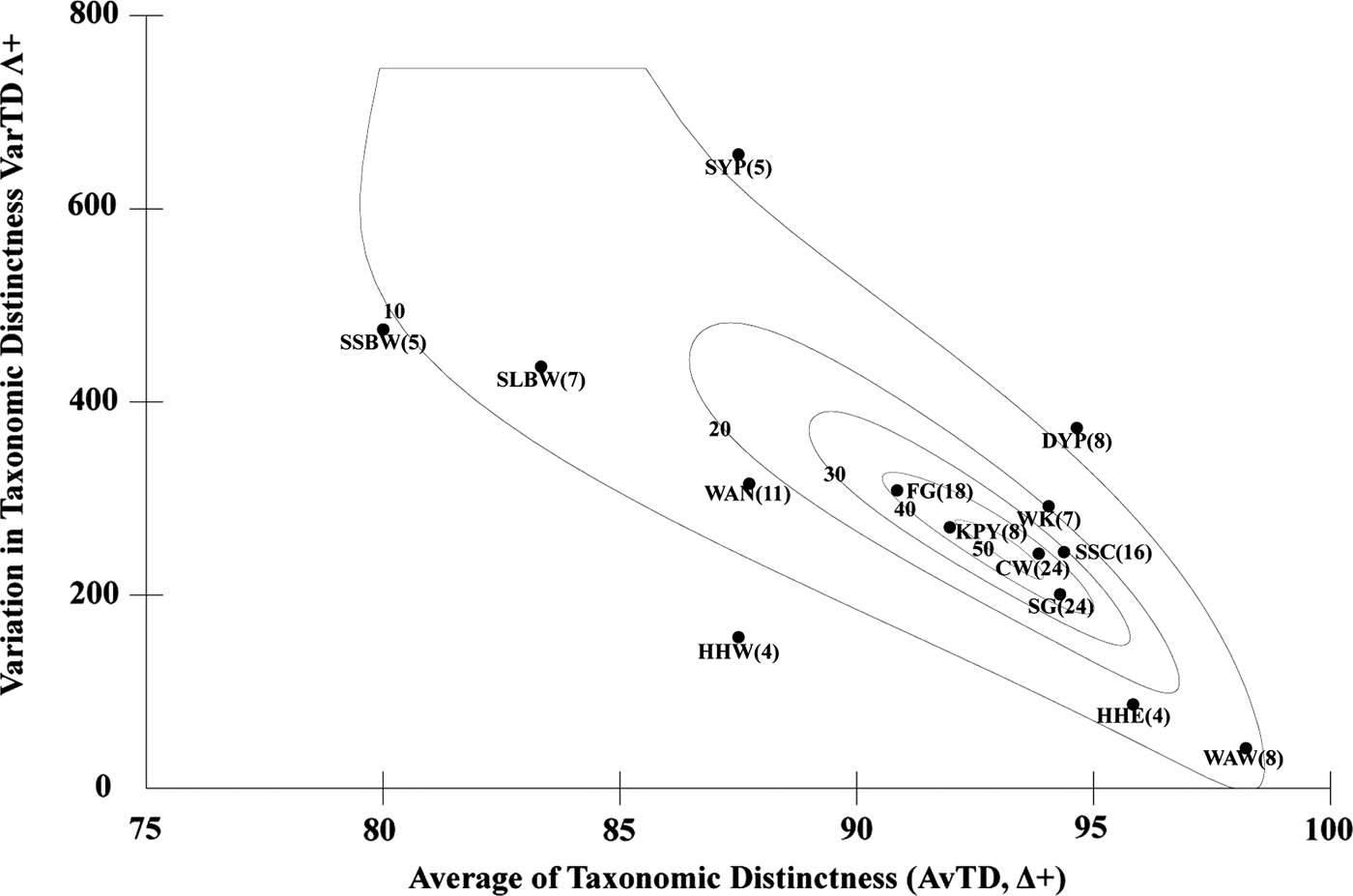
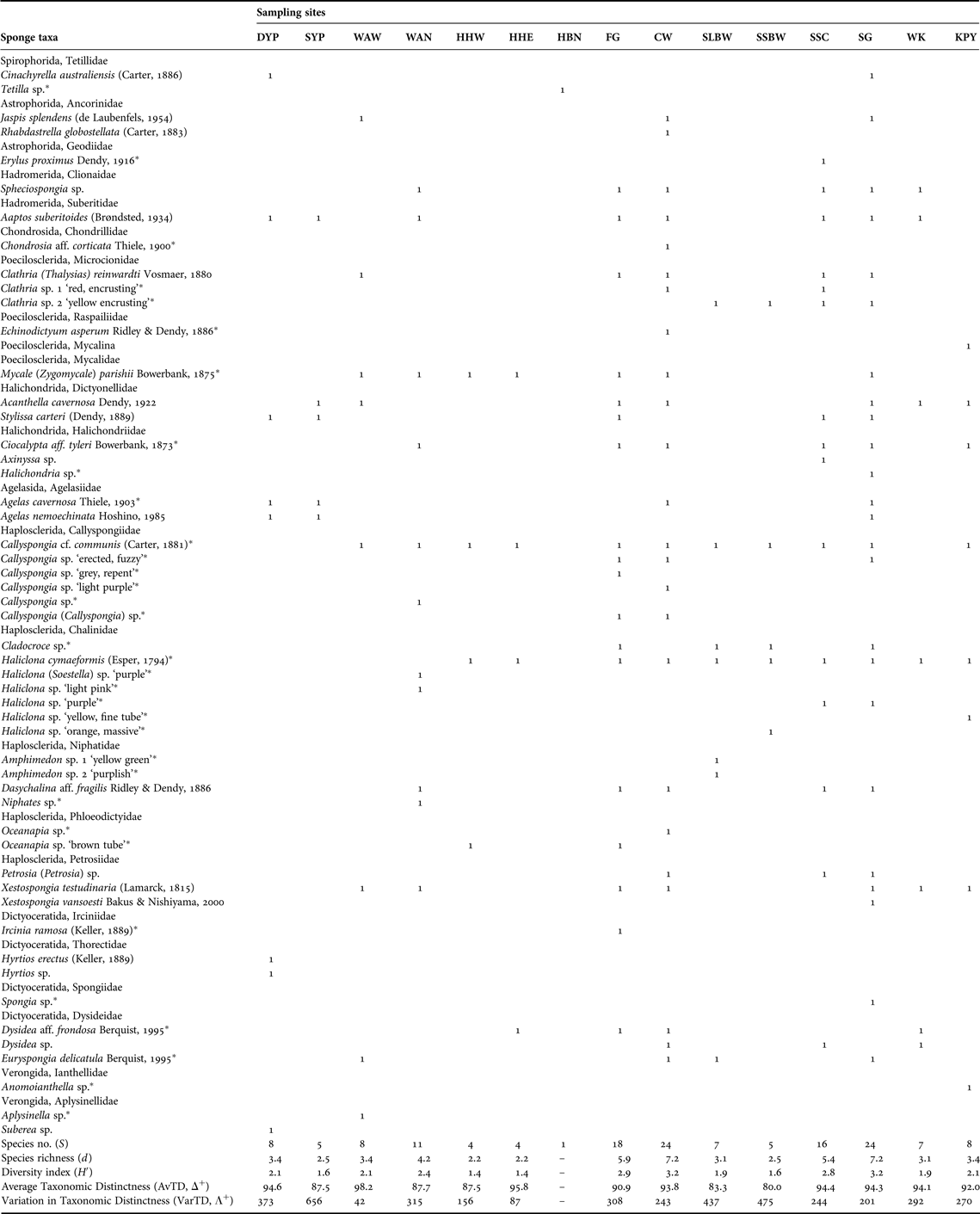
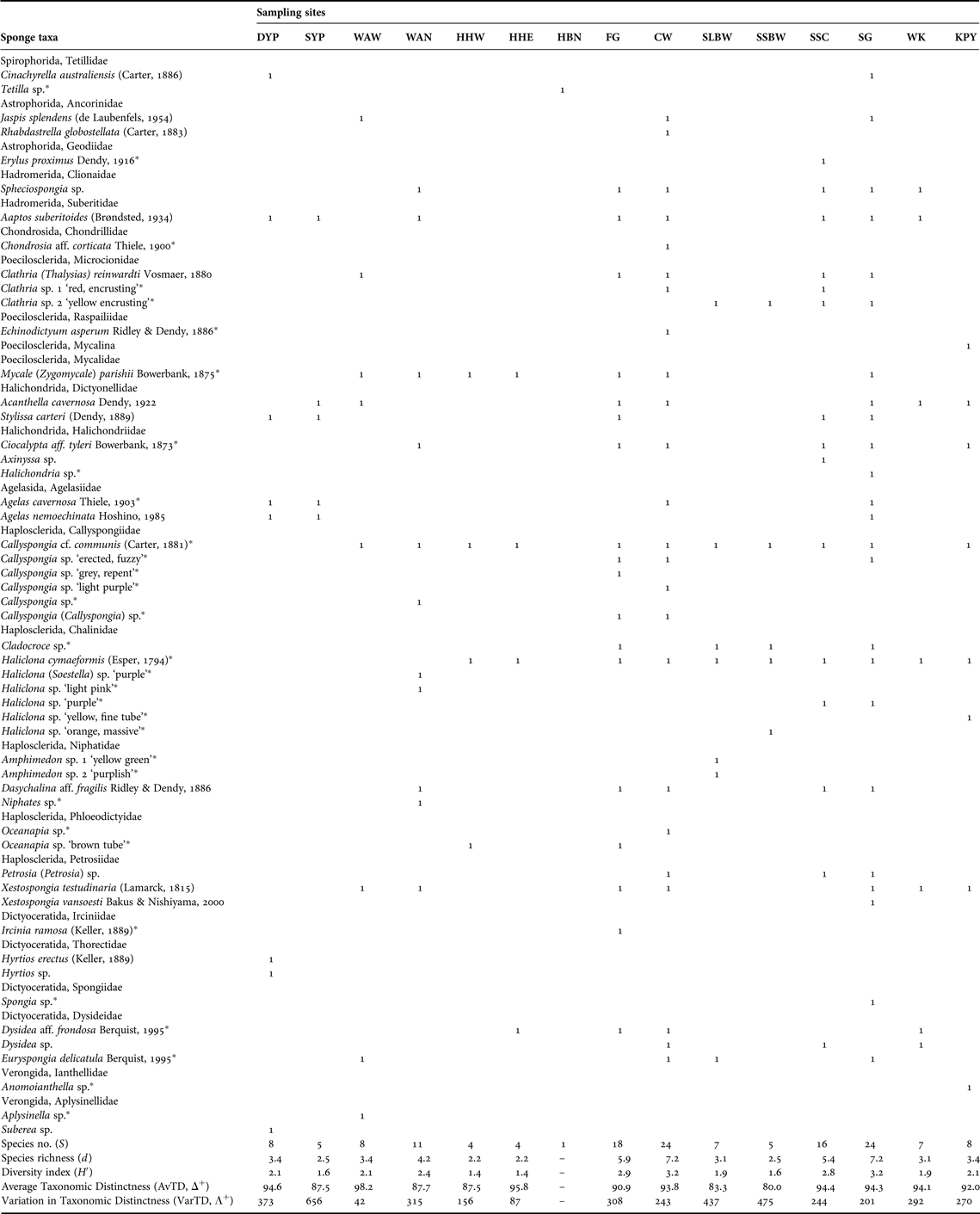
Fifty-three subtidal sponge species belonging to 10 orders, 24 families and 34 genera were identified during this study (Table 2). The number of sponge species (S) was the highest in Chingwan and Suogang (24) and lowest in Hujing bunker north (1) (Table 2). The most widely distributed sponge species was Callyspongia (Euplacella) cf. communis (Carter, 1881) (11 sites) followed by Haliclona (Gellius) cymaeformis (Esper, 1794) (10 sites) and Aaptos suberitoides (Brøndsted, 1934) (8 sites). Agelas nemoechinata Hoshinota, 1985 was the most abundant species in both Dongyuping (DYP) and Siyuping (SYP). Only one sponge species, Tetilla sp., growing in sandy sediment was observed in Hujing bunker north. Surprisingly, no sponges were observed in Chipeiyu. Average taxonomic distinctness among sites varied markedly (Table 2, Fig. 2A). The average taxonomic distinctness value was highest in Wanan west (WAW, 98.21) and lowest in Sanshuie beach west (SSBW, 80.00). The AvTD values of seven sites were under the simulated average and those of most sites; only Shili beach west (SLBW) and SSBW fell below the 95% simulated range. Variation in taxonomic distinctness among sites also differed markedly (Table 2, Fig. 2B). VarTD was highest in Siyuping (SYP, 656.3) and lowest in Wanan west (WAW, 41.5). VarTD values of eight sites were higher than the simulated average. Two-dimensional plots of 95% probability ellipses from the simulated distribution (for sampling subsets M = 10–50), with observed values of the AvTD and VarTD pairs superimposed within probability ellipses (Fig. 3), show that all faunas lie within the M = 10 simulation envelope, except for SSBW, SYP, DYP and Hujing harbour west (HHW). The observed values of AvTD and VarTD for these 14 sites were quite strongly negatively linear-related with a product-moment correlation coefficient of r = −0.67 (P = 0.009) (Fig. 3).
Probability funnels (95% confidence interval) of (A) average taxonomic distinctness (AvTD, Δ+) and (B) variation in taxonomic distinctness (VarTD, Λ+) values. The central dotted line indicates the mean while solid lines constitute the 95% limits of the simulated values of 1000 random selections from the master list of 53 species for each sub-list (M = 10–50). The solid dots represent the AvTD and VarTD values for each sampling site plotted against the number of species. (Site abbreviations given in Table 1.)
Scatter plot of average taxonomic distinctness (AvTD, Δ+) and variation in taxonomic distinctness (VarTD, Λ+) values for each sites (zero and outliers excluded). Solid ellipses indicate the 95% probabilities of simulated data from each sublist (M = 10–50). Number of species in each site is shown between parentheses. (Site abbreviations given in Table 1.)
Records (presence/absence) of sponge species collected in the Penghu Archipelago, Taiwan at 15 localities from 2009–2012. Asterisks (*) indicate new record species in the present study and Taiwan area.
Comparison of sponge assemblages in different locations
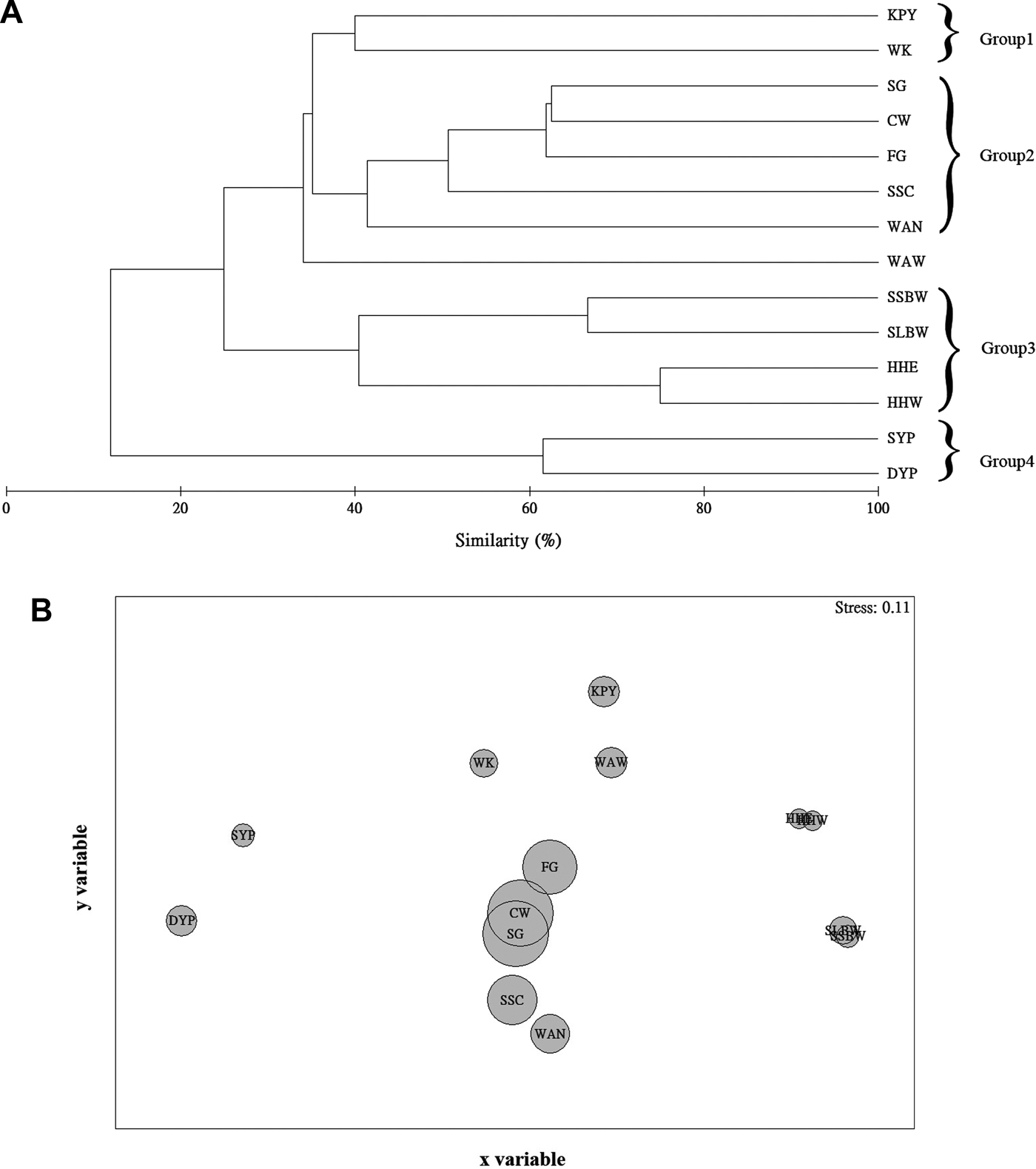
Results of the Bray–Curtis cluster analysis revealed high similarities of sponge assemblages collected from islands and locations close to one other (Fig. 4A). The sponge assemblages of the southernmost sampling sites, Dongyuping (DYP) and Siyuping (SYP), were similar (>60%), but dissimilar from those of the northern sites (<20%). Sponge assemblages of Hujing harbour east (HHE) and west (HHW) had the highest similarity (75%). Fongguie (FG), Cingwan (CW) and Suogang (SG), located along the southern coastline of the Penghu Island and within 10 km of one another, were also similar (>60%). Four groups with similarity >40% were distinguished based on the presence/absence data matrix of sponge assemblages from different sites: (Group 1) the northernmost site Kopoyu (KPY) and Wukan (WK); (Group 2) FG, CW, SG, Sanshuie cliff (SSC) and Wanan north (WAN); (Group 3) all sampling sites in Hujingyu (HHE and HHW), Shili beach west (SLBW) and Sanshuie beach west (SSBW) and (Group 4) the southernmost islands (DYP and SYP). Variation in similarity among different sites and groups were also revealed in MDS plot (Fig. 4B; stress = 0.11).
(A) Bray–Curtis cluster analysis dendrogram generated from presence/absence data of subtidal sponge species collected from 14 sampling sites (zero and outliers excluded). The per cent similarity between sites is shown. (B) NMDS ordination analysis of 14 sampling sites based on sub-tidal sponge species collected. The NMDS analysis was conducted using presence/absence data and presented as a 2-dimensional scatter plot using x and y variables (Stress = 0.11). Area of shaded circles indicates species richness (d). (Site abbreviations given in Table 1.)
Estimation of sponge biodiversity
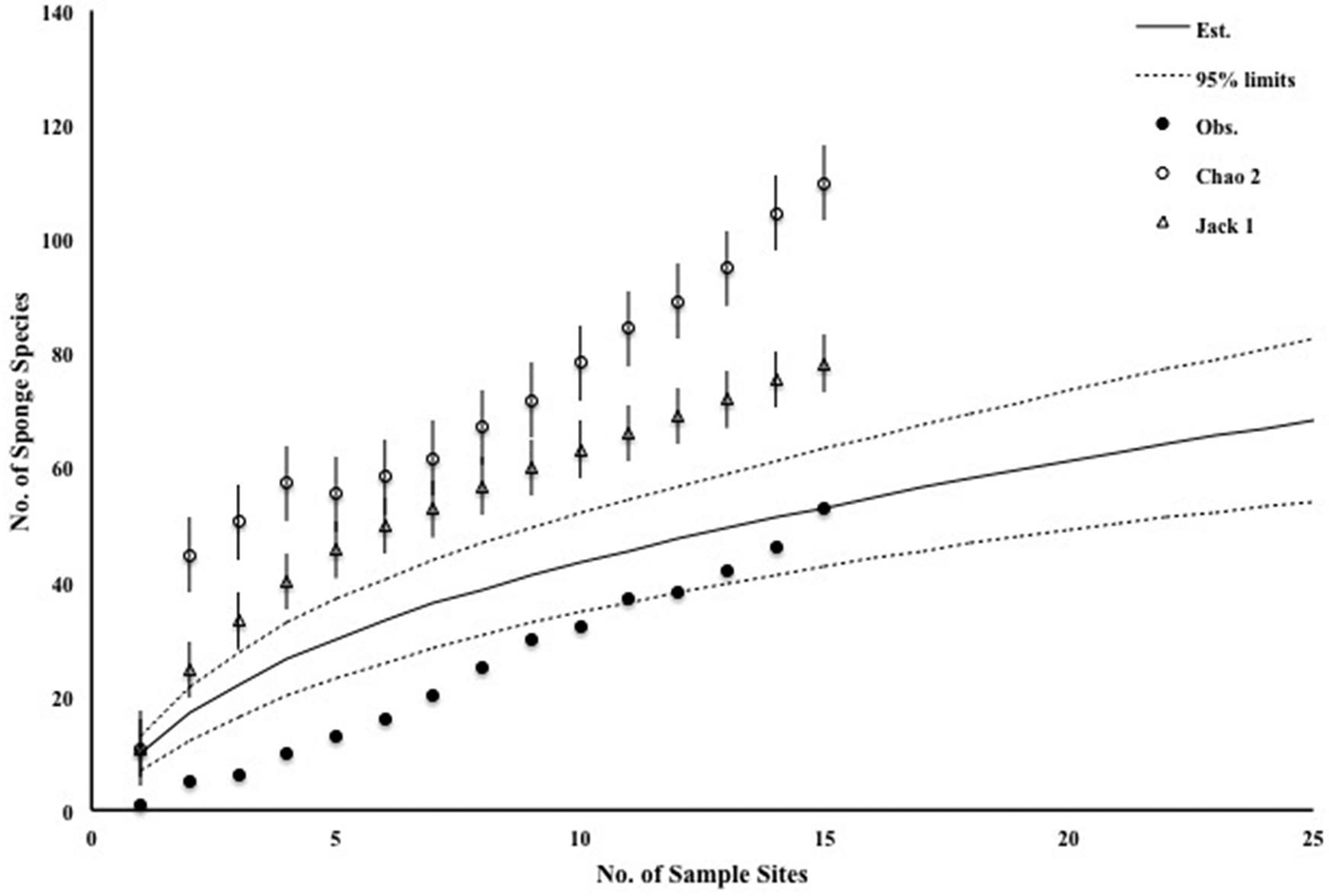
The results of the observed and estimated accumulative number of subtidal sponge species as a function of sampling sites is shown in Fig. 5. The total number of sponge species recorded in the present study was 53 after surveying 16 different sites across a range of 60 km. The standard rarefaction estimate appeared to reach an asymptote at 105 species with a sampling effort of more than 100 sites. Estimations of Chao 2 and Jack 1 models reached 110 and 78 species, respectively.
Observed sample-based species richness (solid dots) of subtidal sponge species collected from 15 different sampling sites and estimated species richness based on the standard rarefaction curves (solid line), Chao 2 (ϒ), and Jack 1 (ρ) formulas. Dotted lines indicate the upper and lower 95% confidence interval of the standard rarefaction estimation.
DISCUSSION
Sponge distribution, biodiversity and taxonomic distinctness
Studies of sponge taxonomy and biodiversity in Taiwan have been largely neglected over the past decades. This is the first study on the distribution and biodiversity of sponge in the Penghu Islands, Taiwan. In the present study 16 different sites were surveyed within an area of approximately 150 km2. Three sponges, Callyspongia (Euplacella) cf. communis (Carter, 1881), Haliclona (Gellius) cymaeformis (Esper, 1794) and Aaptos suberitoides (Brøndsted, 1934), were the most commonly found species (present at 11, 10 and 8 of 16 sites, respectively). The global distribution pattern of C. communis was mainly in the Indo-Pacific Ocean including Australia, New Zealand and Singapore (van Soest et al., Reference Van Soest, Boury-Esnault, Vacelet, Dohrmann, Erpenbeck, De Voogd, Santodomingo, Vanhoorne, Kelly and Hooper2015); however, the studies about the natural history of C. communis are scarce. In contrast, the anti-fouling activity, symbiotic microorganisms and the function of secondary metabolites of H cymaeformis and A suberitoides have been studied (Pile et al., Reference Pile, Grant, Hinde and Borowitzka2003; Dobretsov et al., Reference Dobretsov, Dahms and Qian2005a, Reference Dobretsov, Dahms, Tsoi and Qianb; Tsukamoto et al., Reference Tsukamoto, Yamanokuchi, Yoshitomi, Sato, Ikeda, Rotinsulu, Mangindaan, de Voogd, van Soest and Yokosawa2010). The undescribed Tetilla sp. was only observed during the summer in HuJing Bunker North, where the substrate is a sandy bottom. The Indo-Pacific giant barrel sponges, Xestospongia testudinaria (Lamarck, 1815), were found in relatively high population densities in both Fongguie (7.6 sponges 100 m−2) and Chingwan (3.3 sponges 100 m−2) (Huang et al., unpublished data). The coral-killing cyanobacteriosponge, Terpios hoshinota, was not observed in the Penghu Islands. This sponge species was very abundant at Green Island (eastern Taiwan), where there are occasional outbreaks (Wang et al., Reference Wang, Hirose, Hsu, Chen, Meng and Chen2012). Among the 53 sponge species recorded in the present study, 34 species (>60%) were newly recorded species, which is substantially higher than previous studies of sponge biodiversity (Bell & Barnes, Reference Bell and Barnes2000; van Soest et al., Reference Van Soest, Cleary, De Kluijver, Lavaleye, Maier and Van Duyl2007; de Voogd & Cleary, Reference de Voogd and Cleary2008). The AvTD of half of the analysed sampling sites fell below the mean estimated value, which is likely due to low sampling effort and habitat heterogeneity. The habitats of Shihli beach west (SLBW) and Shanshuei beach west (SSBW) were similar with sandy bottom and scattered cobbles and boulders eroded from the adjacent basalt columns. The highest AvTD value, but with the lowest VarTD, of WAW resulted from eight collected species representing eight different orders, respectively. The AvTD value of SSBW was the lowest because four of the five collected species were in the same order, Haplosclerida, and three of them were in the same family, Chalinidae. Most VarTDs of sampling sites were above the estimated mean; the VarTD of Siyuping (SYP) was even higher than the upper 95% limit. These results were likely due to the fact that there were several different orders represented only by a single species, but also with some species-rich genera (Clarke & Warwick, Reference Clarke and Warwick2001b).
Sponge assemblages in different sampling locations
Numerous sponge species have been shown to have a limited dispersal ability (Zea, Reference Zea2002). Although few cosmopolitan sponge species have been studied, molecular evidence has tended to show that some of these ‘cosmopolitan’ species were in fact cryptic species complexes (Lazoski et al., Reference Lazoski, Solé-Cava, Boury-Esnault, Klautau and Russo2001; Xavier et al., Reference Xavier, Rachello-Dolmen, Parra-Velandia, Schönberg, Breeuwer and Van Soest2010; Swierts et al., Reference Swierts, Peijnenburg, Christiaan de Leeuw, Cleary, Hörnlein, Setiawan, Wörheide, Erpenbeck and de Voogd2013). Our results showed that sponge assemblages recorded from different locations within a <60 km range were significantly dissimilar. Substrates, hydrological conditions, predation, nutrition supplement, salinity and seawater temperature, and anthropological activities have been shown to influence sponge distributions (van Soest, Reference Van Soest1993; Wulff, Reference Wulff2001; Bell & Smith, Reference Bell and Smith2004; de Voogd et al., Reference de Voogd, Becking, Hoeksema, Noor and Van Soest2004; Roberts et al., Reference Roberts, Davis and Cummins2006). The hydrological conditions near Penghu Islands are also significantly influenced by the cold China Coastal Current (CCC), a warm branch of the Kuroshio Current (KC) and the South China Sea Current (SCSC) (Jan et al., Reference Jan, Wang, Chern and Chao2002; Hu et al., Reference Hu, Kawamura, Li, Hong and Jiang2010; Tzeng et al., Reference Tzeng, Lan and Chan2012). Oceanic current patterns in the vicinity of Taiwan were shown to influence the geographic distribution of fiddler crabs (Shih, Reference Shih2012), corals (Chen & Shashank, Reference Chen and Shashank2009) and intertidal barnacles (Chan & Lee, Reference Chan, Lee and Stevens2012). In addition to this, the combination of currents responsible for seawater surface temperature (SST) fluctuations to the north and south of the Penghu islands varies considerably across seasons (Jan et al., Reference Jan, Wang, Chern and Chao2002; Qiu et al., Reference Qiu, Chen, Guo and Jing2011). Due to the combination of the north-eastern monsoon and CCC, SST around the northern islands of the Penghu Archipelago can drop to 11°C and cause catastrophic mortality of coral reef fishes during the winter (Hsieh et al., Reference Hsieh, Hsien, Tsai, Su, Jeng and Chen2008). Many studies have focused on the effects of seawater warming on sponges (Webster et al., Reference Webster, Cobb and Negri2008; Massaro, Reference Massaro2009; Duckworth & Peterson, Reference Duckworth and Peterson2012; Duckworth et al., Reference Duckworth, West, Vansach, Stubler and Hardt2012; Kelmo et al., Reference Kelmo, Bell and Attrill2013), but little is known about the effect of cold SST on the growth, reproduction and distribution of sponges (Maldonado & Young, Reference Maldonado and Young1998). Abnormally low SST could adversely affect sponge species survival, particularly for those species sensitive to temperature fluctuations and thus structure sponge assemblages. Current directions and flooding also change dramatically during the diurnal cycle. The neritic tidal current switches directions south-northward in the vicinity of the southern Penghu Islands (Wang, Reference Wang2012) and east-westward along the coastline of the southern mainland Penghu Island (per. obs.). Although efficient swimming larvae with some cue response (phototaxis and/or chemotaxis) can effectively act against hydrodynamic forces in determining small-scale (<40 m) patterns of dispersal, the dispersal capability of sponge larvae is still restricted when compared with that of other invertebrate larvae. Small-scale random factors related to larval dispersal and settlement in the Caribbean have been shown to be crucial to unexplained heterogeneity among sponge communities (Zea, Reference Zea, Van Soest, Van Kempen and Braekman1993, Reference Zea2002). Among the four groups of sponge assemblage, Groups 1, 2 and 3 belong to the northern system in which the mean annual SST is slightly lower than the southern system (Group 4). Moreover, the period where SST is lower than 18°C is considerably longer in the north than in the south. The dissimilarity between sponge assemblages in the north and south is to be expected due to the differences in temperature. Sponge species that are able to survive low SST survive in the north. The dissimilarity between Groups 2 and 3 is likely due to differences in the substrates (Table 1). The sponge assemblages of five locations in Group 2 with high similarity (>40%) is likely due to the homogeneity of hydrological and substrate features.
Estimation of sponge biodiversity and conservation implications
Based on our results, the estimated number of sponge species in the Penghu Islands was 113; however, only 53 species were recorded in the present study. Sponges with an excavating or thin (<3 mm) encrusting morphology or cryptic features were not included. Hence, our results suggest that the potential biodiversity of sponges of the Penghu Archipelago is likely to be substantially higher than expected, which would make this area a potential ‘hotspot’ of sponge faunal diversity. The Penghu Archipelago is not as densely populated (<60 000 residents) as many islands in Indonesia. With the exception of the larger islands, the majority of islands/islets are unpopulated; however, intense tourism and marine recreational activities in the summer may adversely affect environmental conditions. In addition to this, there is widespread marine cage culture of commercially important fish species, e.g. amberjack (Seriola dumerili), cobia (Rachycentron canadum) and red seabream (Pagrus major), in the Penghu Archipelago, particularly in the inner bay of Magongwan (not included in the present study). Studies suggest that marine cage farming has led to chronic nutrient enrichment in the surrounding waters, which may have accounted for the deterioration of suitable habitats for coral reef organisms (Chen & Hsu, Reference Chen and Hsu2006; Huang et al., Reference Huang, Hsieh, Huang, Meng, Chen, Keshavmurthy, Nozawa and Chen2011). Recently (October 2014), the Four Islands of Southern Penghu, including Dongyuping, Siyuping, Dongjiyu and Sijiyu (the latter two were not included in the present study), and proximate islets, have been proposed for implementation of the South Penghu Marine National Park. The establishment of a baseline of marine biodiversity including the sponge fauna is essential for future conservation policymaking and park management. For protecting the local sponge biodiversity from decline, the assessment of the capacity and environmental impact of various tourism activities, regulation of neritic fishing behaviour (both sport and commercial), and long-term monitoring of biotic and abiotic factors should be considered.
ACKNOWLEDGEMENTS
The authors would like to thank Y. Su, C.-C. Huang, P.-T. Wu, J.-C. Liang and K. Liao for their assistance with the fieldwork; Ocean Data Bank of the Ministry of Science and Technology, Taiwan for providing bathymetric maps; and K. Liao and F.-L. Kuo for refining maps.
FINANCIAL SUPPORT
This study was supported by a research grant awarded to Y.M.H. by the Ministry of Science and Technology, Taiwan (NSC 100-2621-B-346-001) and the Temminck Fellowship from Naturalis Biodiversity Center, the Netherlands.