





Introduction
Although rates of hospital-acquired infections are declining nationally, 1 in 31 patients continues to acquire infections that are potentially preventable through evidence-based interventions. 1 Although national reports indicate improvement in other infection types, surgical site infection (SSI) rates are unchanged. 1,Reference Magill, O’Leary and Janelle2 Approximately 1%–3% of surgical patients develop an SSI; each case can incur on average $28,219 additional healthcare costs and for every 1,000 SSIs, there are 26 excess deaths. Reference Calderwood, Anderson and Bratzler3,4
SSIs result from a multitude of factors, including both hospital and host factors. Reference Tarabay, Nix and Doline5 Patient level characteristics such as age, sex, and race have been extensively studied as predictors of surgical outcomes. Reference Diaz, Hyer, Barmash, Azap, Paredes and Pawlik6 Yet, current literature shows discrepant risk of SSI when comparing race or insurance status alone. Reference Tarabay, Nix and Doline5,Reference Enumah, Canner and Alejo7–Reference Welter, Grosh and Jose10 Studies focusing only on individual determinants of health may miss critical structural factors, as neighborhoods expose residents to advantages and disadvantages that cannot be captured by individual-level variables alone. For SSIs, neighborhood-level social vulnerability may influence risk through multiple pathways: disadvantaged neighborhoods have poor housing quality and overcrowding that may compromise wound care; limited access to pharmacies and transportation may reduce adherence to postoperative instructions; and chronic neighborhood stressors can dysregulate immune function and impair wound healing. Reference Ribeiro, Amaro, Lisi and Fraga11–Reference Diaz, O’Reggio, Norman, Thumma, Dimick and Ibrahim14 Understanding these effects could help identify high-risk patients and inform targeted perioperative interventions.
Markers of more comprehensive measures of social vulnerability have previously been associated with surgical outcomes, including severity of disease presentation, need for emergent surgery, postoperative mortality, and long term survival. Reference Yap, Laverde and Thompson15–Reference Carmichael, Dyas and Bronsert17 Neighborhood metrics such as Area Deprivation Index (ADI) and Social Vulnerability Index (SVI) measure differences in employment, income, education, household characteristics, and housing/transportation by census block group. Reference Wiemken, Wright and Johnston18 Prior studies utilizing these metrics to assess postoperative outcomes have found higher risk of HAI and other complications for patients in higher quartiles, but these studies utilized composite outcomes, Medicare patients only, or county level SVI data, all of which may not accurately reflect true risk. Reference Diaz, Hyer, Barmash, Azap, Paredes and Pawlik6,Reference Wiemken, Wright and Johnston18,Reference Lagazzi, Proaño-Zamudio and Argandykov19 More recently, geocoded data using National Surgical Quality Improvement Program data found high SVI to be associated with multiple adverse outcomes, even after risk adjustment for medical comorbidities. Reference Dyas, Carmichael and Bronsert16 Similarly, Dewitt et al identified patients in the highest SVI were associated with increased SSI risk according to the National Healthcare Safety Network (NHSN) criteria. Reference Diaz, Hyer, Barmash, Azap, Paredes and Pawlik6
We aim to evaluate the association between social vulnerability and SSI utilizing NHSN data over a five-year period across seven surgical procedures performed at a large tertiary referral center in the Deep South, a subregion of the Southern United States with high social vulnerability. Reference Reif, Geonnotti and Whetten20 To our knowledge, this is the largest study evaluating the association between NHSN SSI outcomes and SVI tertiles in the Deep South. We hypothesize that patients with higher SVI are more likely to have SSI.
Methods
Study design and population
The data for this retrospective cohort study are derived from patients having a procedure performed at a large, urban, academic quaternary referral medical center from 2019 through 2024. Patients were identified by infection preventionists using criteria set forth by the NHSN applicable during each surveillance year and were included if they had a coronary bypass graft, colon surgery, craniotomy, spinal fusion, hip prosthesis, knee prosthesis, or abdominal hysterectomy. 21 Infection preventionists determined SSI by definitions provided by NHSN.
Variable definitions
For each patient, data was collected on demographics, comorbidity, and surgical encounter characteristics. Demographics included age, race, sex, ethnicity, body mass index (BMI), and distance (in miles) from the center of residential ZIP code to the procedural hospital. Comorbidities were determined using the Charlson Comorbidity Index and billed ICD-10 diagnosis codes for the encounter. Encounter information included type (i.e., inpatient, outpatient), insurance type, and length of stay. Procedure-related characteristics included procedure type, American Society of Anesthesiologists (ASA) score, whether the procedure was a trauma or emergency, procedure duration, wound type as defined by NHSN, and whether there was a primary closure of the surgical wound.
The main exposure of interest was SVI percentile based on ZIP code tabulation area (ZCTA) of residence. The SVI uses data the U.S. Census Bureau’s American Community Survey to measure the relative social vulnerability of communities and includes 16 sociodemographic variables grouped into four themes: socioeconomic status, household characteristics, racial and ethnic minority status, and housing type and transportation. Each ZCTA is standardized to a score of 0 to 1 with higher values denoting higher vulnerability; in addition, an overall score for the combined themes is provided. 22 For the current study, the main exposure was tertile of the overall SVI, defining the categories as low (0–0.33), medium (0.34–0.67), or high (0.68–1.00) SVI. For purposes of secondary analysis, the same tertile cutoffs were created for each of the four themes. The main outcome of interest was SSI, defined as primary superficial incisional, primary deep incisional, or organ space. Three separate outcome variables were created based on increasing severity: any SSI, combined deep incisional or organ space, and organ space alone. SSIs were additionally categorized by whether the NHSN’s SSI surveillance was 30 days (i.e., colon surgery, abdominal hysterectomy) or 90 days (i.e., coronary artery bypass graft, craniotomy, spinal fusion, hip prosthesis, and knee prothesis).
Statistical analysis
Demographics, comorbidities, and surgical encounter characteristics were compared among SVI groups using a χ2 and analysis of variance for categorical and continuous variables, respectively. A Cox proportional hazards model stratified NHSN surveillance duration, allowing separate baseline hazards for 30-day and 90-day surveillance procedures, was used to estimate hazard ratios (HRs) and associated 95% confidence intervals (CIs) for the association between SVI tertile and SSI risk. The proportional hazards assumption was assessed using tests of interactions of SVI and time, and the tests suggested proportionality for the Any SSI (P = .7880), Deep/Organ space (P = .7839), and Organ Space models (P = .5870). For adjusted models, candidate variables considered for multivariable modeling included all demographics, comorbidity, and procedure data used in the bivariate analysis of SVI tertile with the characteristics. A best subset methodology using the Akaike Information Criterion (AIC) was used to determine factors included in adjusted models. The final adjusted model, chosen based on having the lowest AIC score, included trauma injury; procedure duration; sex; race; ethnicity; distance to the hospital from residence; inpatient encounter; commercial insurance; and Charlson comorbidities, including congestive heart failure, chronic obstructive pulmonary disease, diabetes, mild liver disease, and peptic ulcers. In secondary analyses, the same models were used for the SSI severity outcomes and the four theme-specific SSI tertiles. A Forest plot was created to provide HRs by SVI theme and SSI outcome. All analyses were performed using SAS v9.4 (Cary, NC) and using a 5% alpha level to determine statistical significance.
Results
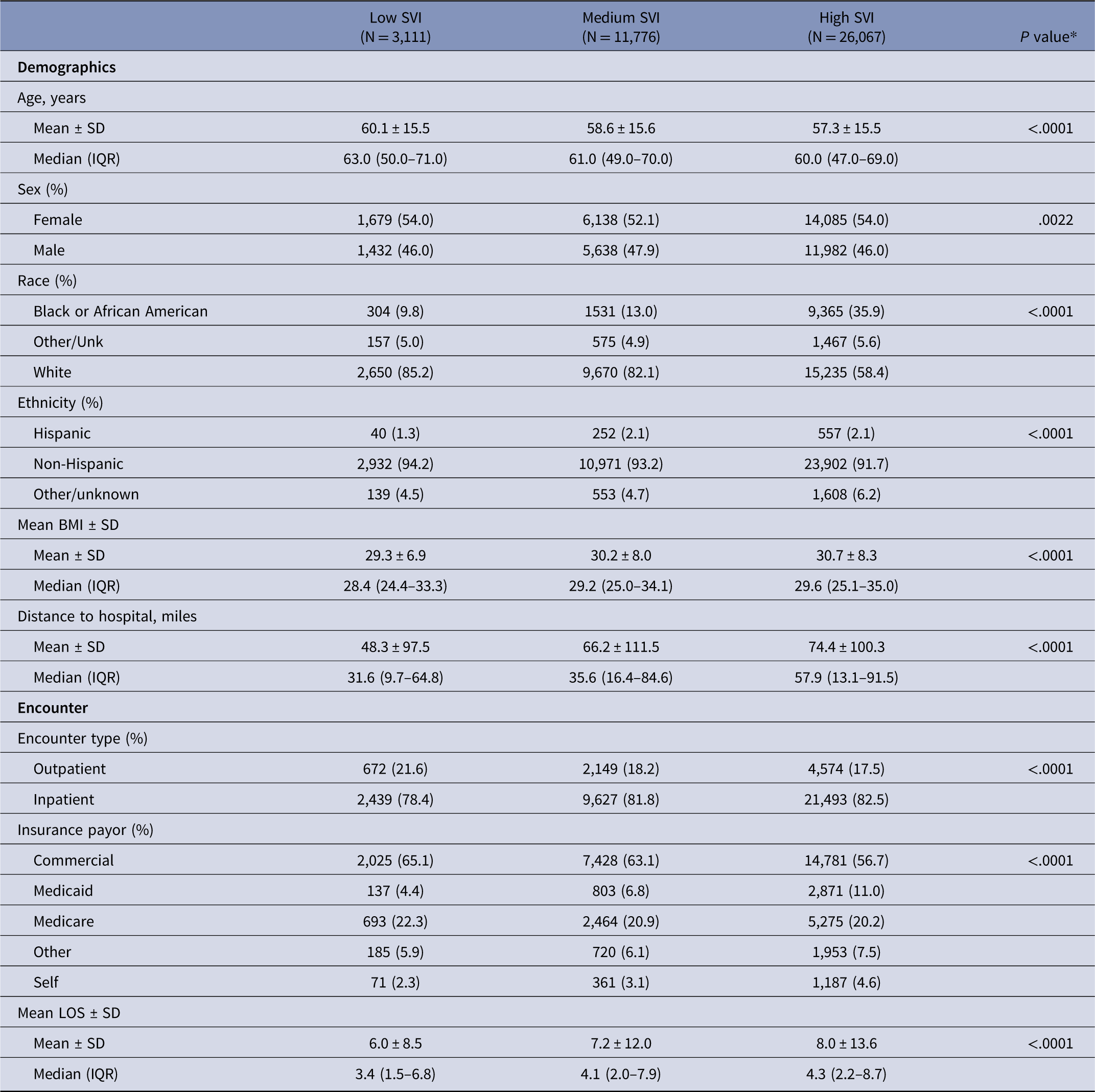
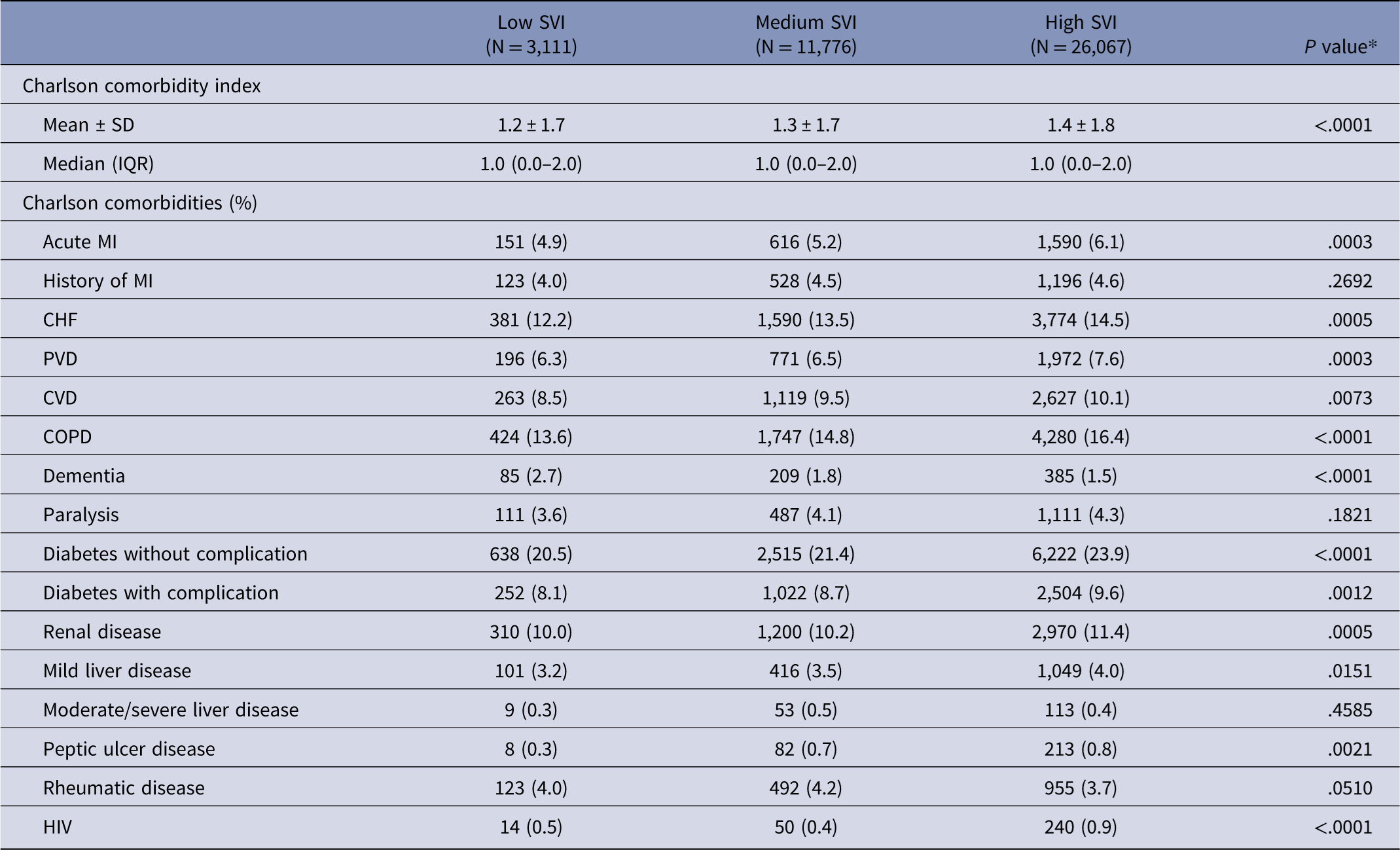
A total of 40,954 surgical encounters were included; of these, n = 3,111 (7.6%) reside in low SVI ZCTAs, n = 11,776 (28.8%) in medium SVI ZCTAs, and n = 26,067 (63.6%) in high SVI ZCTAs (Table 1). Patients residing in high SVI ZCTAs were more likely to be younger (mean 57.3 years, P < .001), Black (35.9%, P < .001), and with higher BMI (mean 31.3, P = .0268). Distance to the hospital increased across tertiles, with high-SVI patients living 25 miles farther from the hospital on average compared to low-SVI patients (74.4 miles vs 48.3 miles, P < .001). Higher SVI patients were also more likely to have either Medicaid or be self-pay (11% and 4.6%, respectively, P < .0001), be admitted during their initial surgical procedure (82.5%, P < .0001), and had a longer length of stay (mean 8.0 days, P < .0001). Regarding comorbidities, patients in higher SVI ZCTAs had a higher Charlson Comorbidity Index (mean 1.4, P < .0001) with higher prevalence of cardiac disease, COPD, diabetes, renal disease, liver disease, peptic ulcer, and HIV (Table 2).
Comparison of patient demographics and encounter-level characteristics by overall Social Vulnerability Index (SVI) category tertile

Table 1. Long description
Detailed table comparing patient demographics and encounter characteristics across Social Vulnerability Index (SVI) tertiles: Low SVI (N=3,111), Medium SVI (N=11,776), and High SVI (N=26,067), with associated p-values. Table includes patient demographics, encounter type, and insurance.
* Estimated from chi-square and ANOVA for categorical and continuous variables, respectively.
Comparison of Charlson comorbidities by overall Social Vulnerability Index (SVI) category tertile

Table 2. Long description
Detailed table comparing charlson comorbidity index and the separated comorbidities across Social Vulnerability Index (SVI) tertiles: Low SVI (N=3,111), Medium SVI (N=11,776), and High SVI (N=26,067), with associated p-values.
* Estimated from chi-square and ANOVA for categorical and continuous variables, respectively.
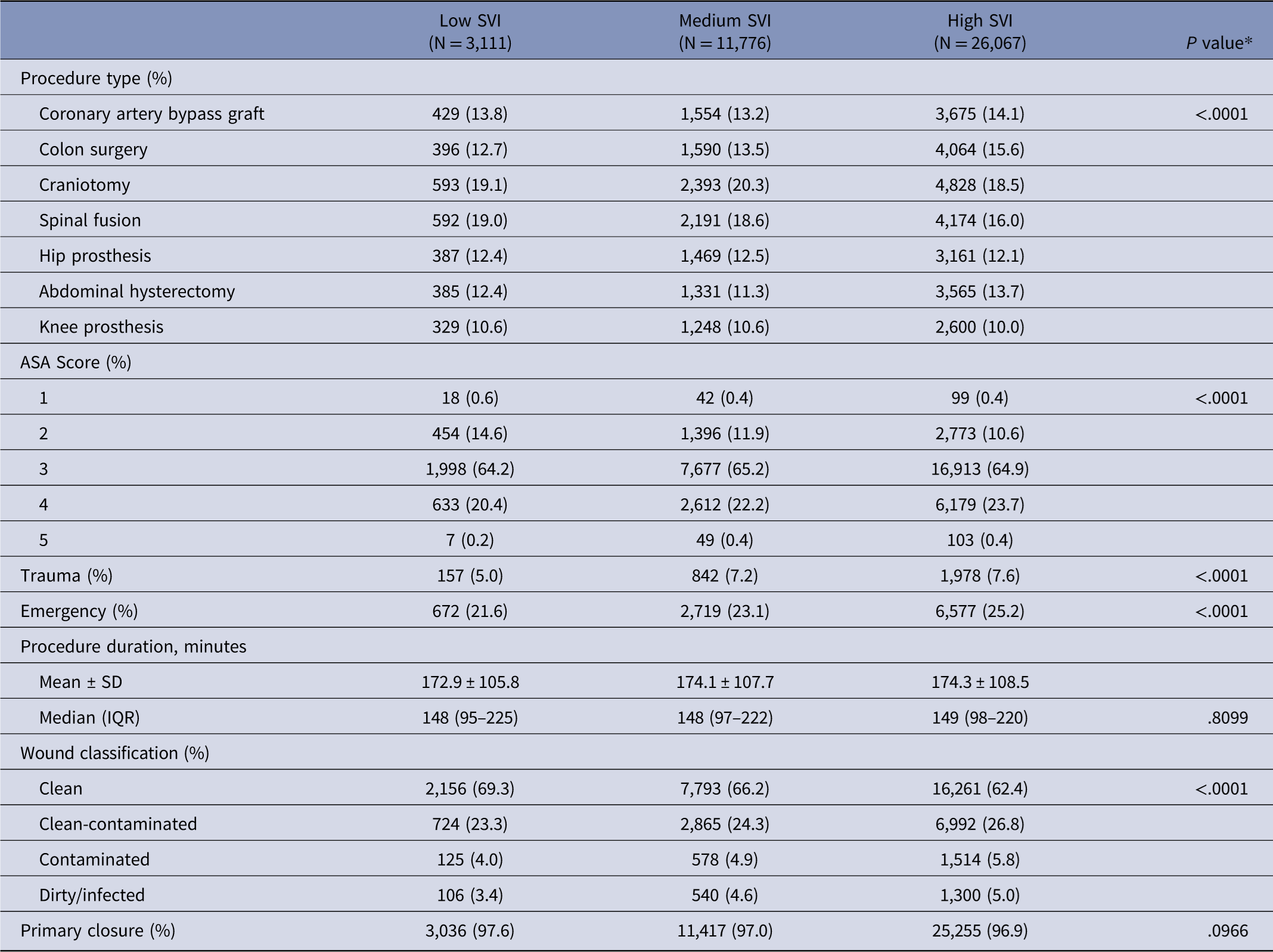
Patients from high-SVI ZCTAs were more likely to have colon surgery and abdominal hysterectomy and less likely to have a craniotomy and spinal fusion (P < .0001) (Table 3). The patients were additionally more likely to have a higher ASA score (P < .0001), have a trauma (7.6%, P < .0001) or emergency procedure (P < .001), and have a contaminated or dirty/infected wound. There was no difference in procedure duration or primary closure.
Comparison of surgical procedure characteristics by overall Social Vulnerability Index (SVI) category tertile

Table 3. Long description
Detailed table comparing procedure type, ASA score, wound classification and closure type by social vulnerability index tertiles
* Estimated from chi-square and ANOVA for categorical and continuous variables, respectively.
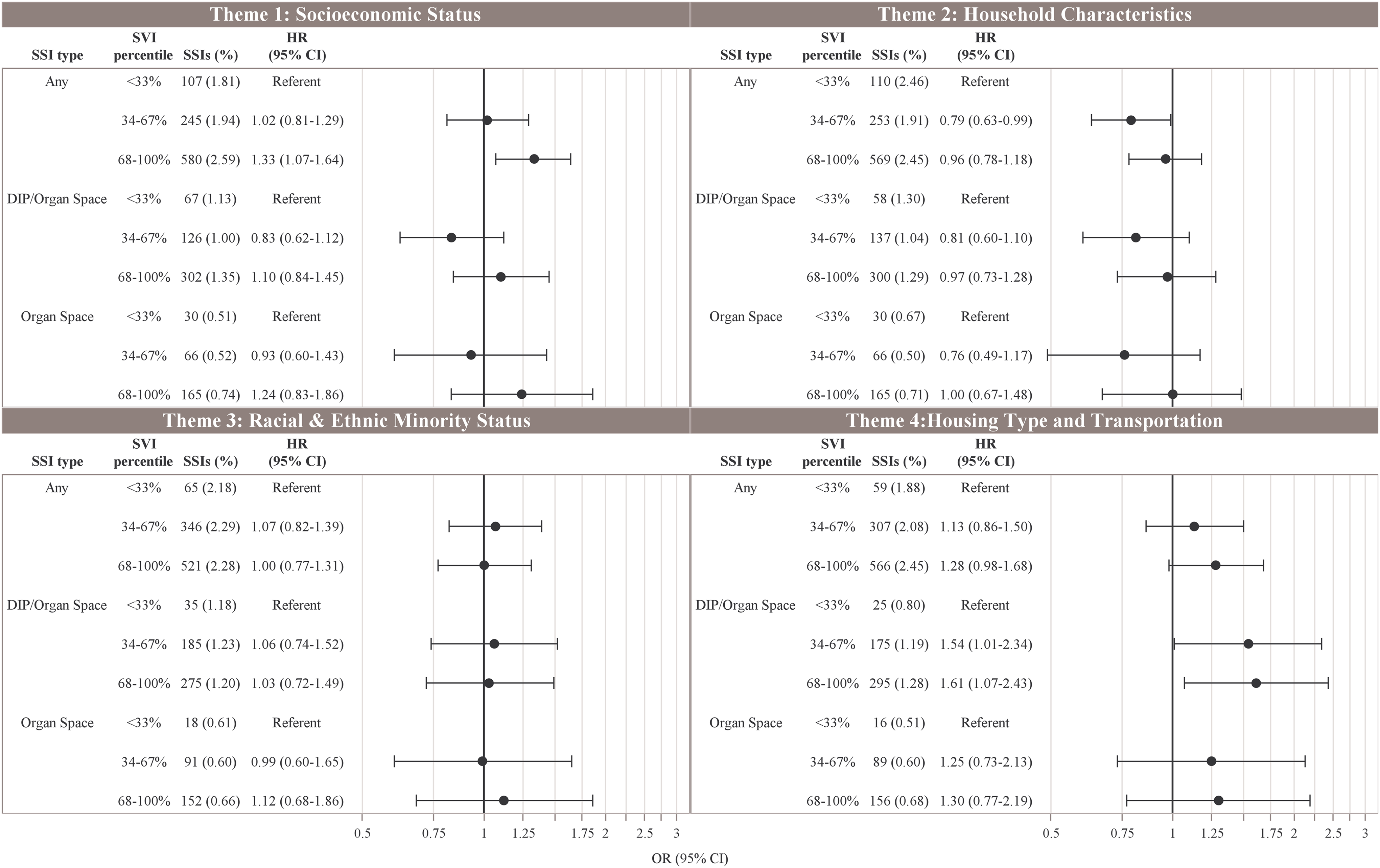
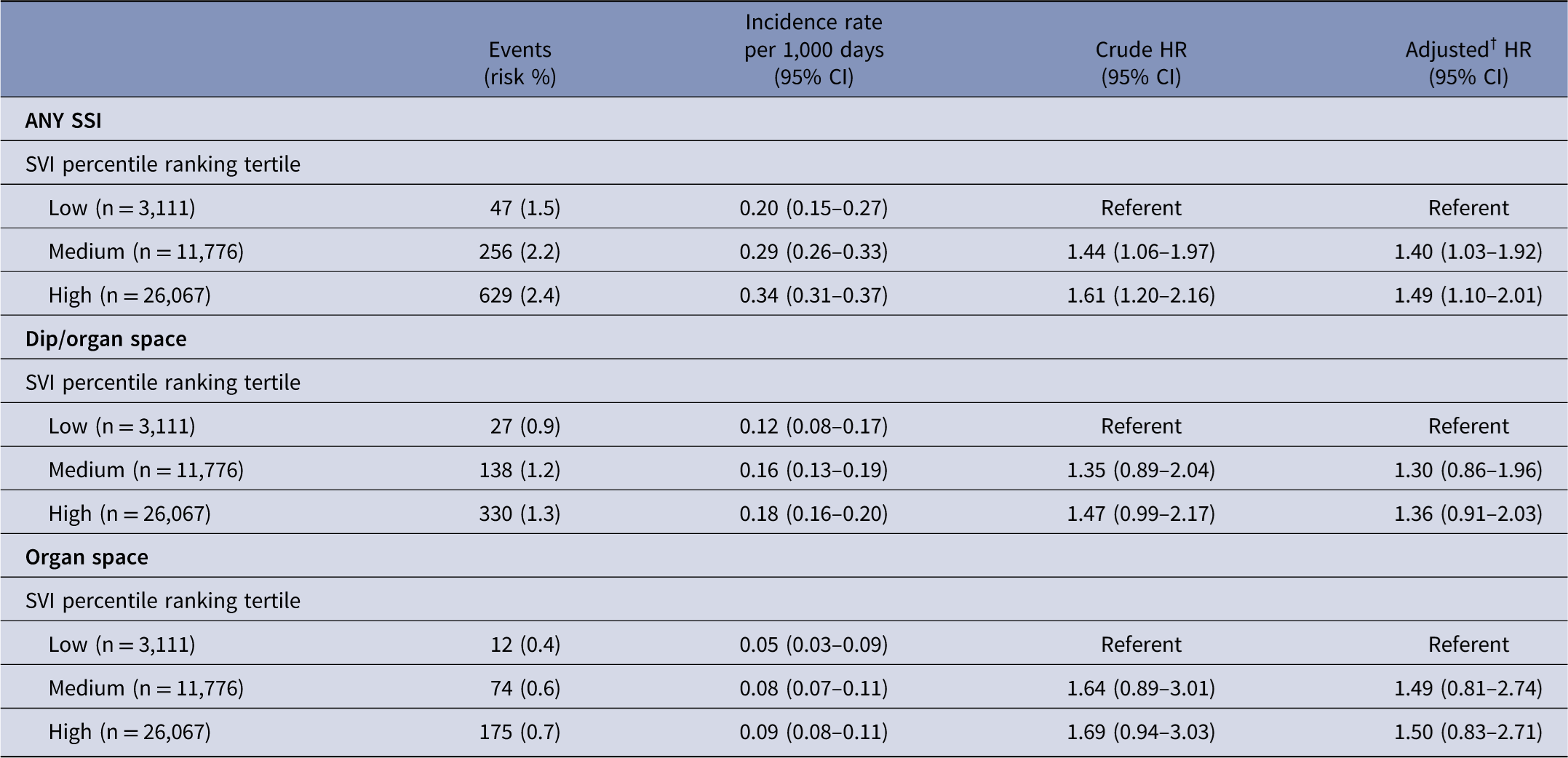
The risk of any severity SSI was 1.5% (n = 47/3,111), 2.2% (n = 256/11,776), and 2.4% (n = 629/26,067) for low-, medium-, and high-SVI patients, respectively (Table 4). In crude analyses, compared to low-SVI patients, the hazard of SSI was 44% higher for medium-SVI patients (HR 1.44, 95% CI 1.06–1.97) and 61% higher for high-SVI patients (HR 1.61, 95% CI 1.20–2.16). In adjusted models, these associations were similar to each other and remained significant (medium SVI HR 1.40, 95% CI 1.03–1.92; high-SVI HR 1.49, 95% CI 1.10–2.01). Associations were similarly increased for deep incisional/organ space and for organ space SSI alone; however, no statistically significant association was observed. By SVI theme, most observed associations by SVI tertile were not significant (Figure 1). Of note, the high tertile of SVI socioeconomic status theme was associated with a 33% higher risk of any SSI (HR 1.33, 95% CI 1.07–1.64), and the housing type and transportation SVI theme was associated with a 54% higher risk of deep incisional/organ space SSI for medium-SVI patients (HR 1.54, 95% CI 1.01–2.34) and high-SVI patients (HR 1.61, 95% CI 1.07–2.43). A significantly reduced risk of any SSI was observed for the household resident characteristics theme for medium-SVI patients (HR 0.79, 95% CI 0.63–0.99).
Forest plots of adjusted hazard ratios (HRs) and associated 95% confidence intervals (CIs) for the association between surgical site infection (SSI) and Social Vulnerability Index (SVI) thematic percentile by infection type.

Figure 1. Long description
Graphical representation of forest plots showing association between surgical site infection and social vulnerability index. Subfigures are labeled by theme and illustrate statistical analysis for SSI
Risk, incidence rate, and crude and adjusted hazard ratios * (HRs) and associated 95% confidence intervals (CIs) for the association between surgical site infection (SSI) and overall Social Vulnerability Index (SVI) category tertile by infection type

Table 4. Long description
A table comparing the risk, incidence rate, and hazard ratios for surgical site infections by social vulnerability index tertiles. The table has 12 rows and 5 columns. Column headers are Events (risk percent), Incidence rate per 1,000 days (95 percent CI), Crude HR (95 percent CI), and Adjusted HR (95 percent CI). Row labels include ANY SSI, Dip/organ space, and Organ space, each with SVI percentile ranking tertile subcategories: Low, Medium, and High. Row 1: ANY SSI, Low (n = 3,111), 47 (1.5), 0.20 (0.15-0.27), Referent, Referent. Row 2: ANY SSI, Medium (n = 11,776), 256 (2.2), 0.29 (0.26-0.33), 1.44 (1.06-1.97), 1.40 (1.03-1.92). Row 3: ANY SSI, High (n = 26,067), 629 (2.4), 0.34 (0.31-0.37), 1.61 (1.20-2.16), 1.49 (1.10-2.01). Row 4: Dip/organ space, Low (n = 3,111), 27 (0.9), 0.12 (0.08-0.17), Referent, Referent. Row 5: Dip/organ space, Medium (n = 11,776), 138 (1.2), 0.16 (0.13-0.19), 1.35 (0.89-2.04), 1.30 (0.86-1.96). Row 6: Dip/organ space, High (n = 26,067), 330 (1.3), 0.18 (0.16-0.20), 1.47 (0.99-2.17), 1.36 (0.91-2.03). Row 7: Organ space, Low (n = 3,111), 12 (0.4), 0.05 (0.03-0.09), Referent, Referent. Row 8: Organ space, Medium (n = 11,776), 74 (0.6), 0.08 (0.07-0.11), 1.64 (0.89-3.01), 1.49 (0.81-2.74). Row 9: Organ space, High (n = 26,067), 175 (0.7), 0.09 (0.08-0.11), 1.69 (0.94-3.03), 1.50 (0.83-2.71).
* Estimated from a Cox proportional hazards regression stratified by SSI surveillance duration (colon surgery and hysterectomy, 30 days; coronary bypass graft, craniotomy, spinal fusion, hip prosthesis, knee prosthesis: 90 days).
† Adjusted for trauma injury, procedure duration, sex, race, ethnicity, distance to the hospital from residence, inpatient encounter, commercial insurance, CHF, COPD, diabetes, mild liver disease, and peptic ulcer disease.
Discussion
In this single center study of nearly 41,000 patients who underwent select surgeries at an academic quaternary referral center in the Deep South, a high SVI is associated with a 50% increased risk of SSI. This association was present but not significant for more severe SSIs (i.e., deep incisional or organ space) and for patients with higher socioeconomic status theme as well as vulnerability of housing and transportation theme. To our knowledge, this is the largest study to examine the relationship between NHSN-defined SSIs and SVI across multiple procedure types. The increased risk of SSI remained after statistical adjustment with an increasing association gradient from low to high SVI. There is similar risk when categorized by depth of infection, although not statistically significant, likely due to low overall numbers.
The findings of this study affirm the significant association between SVI and SSI, and our results extend prior published work. DeWitt et al reported similar odds of SSI in the highest SVI quartile, with the strongest associations in colon surgery and spinal fusion. Reference Dewitt, Reinke and Inman23 In exploratory analyses incorporating an interaction between procedure type and SVI tertile in the current models, we similarly observed stronger, although not statistically significant, associations for colon procedures (HR 1.68, 95% CI 0.78–3.61) and spinal fusion (HR 1.62, 95% CI 0.79–3.34). The largest effect estimate occurred among abdominal hysterectomy procedures (HR 3.93, 95% CI 0.54–28.55), though the number of SSIs among hysterectomy procedures was relatively few, resulting in wide confidence limits. Other studies have associated higher SVI with adverse postoperative outcomes, including morbidity, mortality, and infectious complications across smaller or demographically different populations, although findings specific to infection have varied and methodological differences limit direct comparison with our results. Reference Diaz, O’Reggio, Norman, Thumma, Dimick and Ibrahim14,Reference Dyas, Carmichael and Bronsert16,Reference Carmichael, Dyas and Bronsert17,Reference Rahman, Shaw and Mehaidli24 Our findings add more direct evidence that social vulnerability is associated with SSI across diverse surgical populations.
Patients in the high-SVI tertile were younger, had more medical comorbidities, and more likely to identify as Black, which is consistent to other surgical populations. Reference Diaz, Hyer, Barmash, Azap, Paredes and Pawlik6,Reference Dyas, Carmichael and Bronsert16 High-SVI patients were more likely to live farther from the hospital and have Medicaid or self-pay status than low-SVI patients. Medicaid beneficiaries are disproportionately concentrated in high SVI areas and are less likely to have a primary care visit. Reference Herring, Park, Luo, Vichare, Erikson and Pittman25 If access to healthcare for primary care is minimal in patients with high-SVI, follow up after complex surgical procedure is likely also underutilized. Interestingly, we observed more trauma and emergent surgical procedures in high SVI tertile. These findings are consistent with other studies that have highlighted socially vulnerable communities experience higher trauma incidence and more emergent procedures. Reference Hey, Alty and Uribe Leitz26–Reference Carmichael, Moore, Steward and Velopulos29 This data suggests that area-level vulnerability is tightly linked to access to care, timely care, and perioperative risk profiles. The persistence of an SVI-SSI association even after adjustment suggests additional unmeasured social and structural factors, such as barriers to transportation, home environment, and health literacy, among others.
Although ADI has been associated with adverse postoperative outcomes, it differs conceptually and methodologically from SVI; findings based on the two measures should not be considered interchangeable. Reference Sun, Gross and Hamo30–Reference Morenz, Liao, Au and Hayes34 We selected SVI because its theme-level structure can identify specific dimensions of community vulnerability that may inform interventions. Reference Rahman, Shaw and Mehaidli24,Reference Morenz, Liao, Au and Hayes34 In our study, the socioeconomic status and vulnerability of housing type and transportation themes are most strongly associated with SSI (Figure 1), suggesting potential contributions from factors such as poverty, lack of insurance coverage, crowded housing, and inadequate transportation. The limited prior literature examining SSI by SVI theme has produced variable findings. Rahman et al identified the strongest association in the themes of socioeconomic status and race/ethnic minority status, whereas Dewitt et al identified increased SSI risk with socioeconomic status and household characteristics. Reference Dewitt, Reinke and Inman23,Reference Rahman, Shaw and Mehaidli24 These subthemes differences highlight the unique community needs that may be associated with SSI and targets for intervention, yet interestingly, socioeconomic status remains as one of the strongest associations with poor surgical outcomes. Reference Paro, Hyer, Diaz, Tsilimigras and Pawlik13
Our cohort identified the theme of housing type and transportation as significant in the risk of deep incisional and organ space SSI. Within this theme, we hypothesize that lack of vehicle and transportation access plays a role in the development of SSI. Patients in the high SVI tertile lived 25 miles farther away compared to medium and low SVI populations. In a large cohort of 15,000 patients from 66 countries, the use of telemedicine to assess surgical wounds postdischarge was a feasible method to accurately identify SSI and optimize timing to present for follow up. 35,Reference Zhu, Williamson and Lin36 Furthermore, mobile health technology is emerging as a tool to improve healthcare delivery, bridging patient care from the health system to medically underserved communities. Reference McLean, Sgrò and Brown37,Reference Lesher, Gavrilova, Ruggiero and Evans38 Almost all Americans (96%) own a cellphone, but only 81% own smartphones; further, broadband internet penetrance varies across rural and urban settings, which may limit use of a smartphone intervention in this patient population. Reference Lesher, Gavrilova, Ruggiero and Evans38 Use of patient engagement with smartphone technology differs significantly by sex, race, and insurance status and should be carefully assessed if implemented as an intervention to improve SSI. Reference Theiss, Wood and Shao39 The race/ethnicity theme was not significantly associated with SSI, which is similar to findings by DeWitt et al. Reference Dewitt, Reinke and Inman23
The results of the current research have multiple direct implications that can be addressed to effect appropriate prevention of SSIs during pre- and postsurgical care. Prevention efforts such as comprehensive preoperative assessments, tailored postoperative care, and patient education are pivotal in preventing SSI. Reference Tarabay, Nix and Doline5 Routine healthcare questionnaires may identify unmet needs for physicians to refer patients for social assistance. Reference Berkowitz, Hulberg and Hong41 Further, tapping into community based resources such as weekly meals have been shown to reduce ED visits and inpatient admissions and may play a role in optimizing nutrition prior to surgery. Reference Berkowitz, Terranova and Hill42 The theme of socioeconomic status includes living below the poverty level, unemployment, housing cost burden, education, and health insurance. Low health literacy, a surrogate of education, is associated with increased postoperative complications, including SSIs. Reference Theiss, Wood and McLeod43–Reference Qin, Jin, Min, Wang and Shen45 Utilizing SVI to identify high risk patients can optimize individualized education for SSI prevention.
Our study has several key strengths, including the large study population across seven procedure types at a large academic medical center in the Deep South. To our knowledge, this is the largest study evaluating NHSN SSI outcomes stratified by both census-tract SVI tertiles as well as SVI theme-specific associations. Further, the use of the NHSN to determine SSI status minimizes potential biases due to outcome misclassification that would occur if center-level data were the only source of outcomes. Additionally, the Deep South in the United States represents a critical, understudied region regarding highly vulnerable populations, particularly due to concentrated racial health disparities, poverty, and structural barriers. Studying this population is crucial in bridging a critical gap between known SSI risks and addressing specific, intertwined social and structural barriers to care and SSI in the Deep South.
Our study has a few main limitations. First, this is a retrospective study from a single medical center; thus, our findings may not be generalizable outside of the region. We opted to use SVI in our study, which has inherent limitations and is subject to residual confounding and difficulty in teasing out differences in themes (i.e. housing vs transportation as an association). Related to the use of SVI, the use of ZCTA-level measures may result in misclassification of true SVI status if a more granular measurement level was used; however, there is no reason to suspect the misclassification is related to SSI or SVI status such that observed associations are likely underestimates of the true association. Second, though we used a longer period of five years, the range included the COVID year of 2020 in which surgical volume was decreased; however, exclusion of procedures performed in 2020 did not appreciably alter the point estimates of the associations, and statistical inferences were similar. Third, although we included a heterogenous cohort of patients undergoing different surgical procedures, our results may not correlate to other types of operations outside of these procedures. The lack of significant associations observed for more severe SSIs may be a result of the overall low incidence of severe SSIs, which potentially decreased statistical power. Finally, though models included multiple potential confounders as covariates, the observed associations may still be biased by residual confounding.
Conclusion
In conclusion, high SVI is associated with SSI across a broad surgical population. SVI can identify unique characteristics of a community and provides a strong framework for intervention to reduce poor surgical outcomes. More data is needed in using SVI as a method for prioritizing interventions.
Acknowledgements
The authors would like to acknowledge the UAB Center for Outcomes and Effectiveness Research and Education for supporting this research and the UAB Department of Infection Prevention for their dedication in preventing hospital-acquired infections.
Author contribution
MEF: conceptualization, methodology, validation, writing. RLG: data curation, formal analysis, validation, visualization, writing. REM: conceptualization, methodology, visualization, review and editing. REM: validation, reviewing and editing. MMD: validation, reviewing and editing. SI: data curation, reviewing and editing. CLJ: data curation, reviewing and editing. AGH: conceptualization, investigation, validations, reviewing and editing. RAL: conceptualization, methodology, validation, writing, reviewing and editing.
Financial support
This research was funding through internal grant opportunity through the UAB Center for Outcomes and Effectiveness Research and Education.

 Open access

