Introduction
The world population is aging. Globally, the number of older people aged 60 years and above is projected to grow by 56% from 901 million in 2015 to more than 1.4 billion in 2030 (United Nations Department of Economic and Social Affairs, 2009). In New Zealand people who are 65 years and older have nearly doubled since 1981 and by 2038, there will be an estimated 1,285,800 older people (Statistics New Zealand, 2013). With an ageing population, the demand for interventions to prevent and treat the medical co-morbidities and functional decline associated with old age will increase significantly (United Nations Department of Economic and Social Affairs, 2009).
International research has found the size of older population in prisons is growing faster than other age groups (United Nations Office on Drugs and Crime, 2009). For example, in the United Kingdom (UK), the sentenced older prison population (age 60+ years) grew by 216% between 1990 and 2000. In Japan, the number of older prisoners (age 65+ years) has increased by 160% between 2000 and 2006 (United Nations Office on Drugs and Crime, 2009). Older prisoners have higher rates of psychiatric morbidities than both younger prisoners and older people living in the community (Baillargeon et al., Reference Baillargeon, Black, Pulvino and Dunn2000; Fazel et al., Reference Fazel, Hope, O'donnell and Jacoby2001a). Fazel et al. found that 85% of older prisoners have at least one chronic illness, the most common being psychiatric, cardiovascular, musculoskeletal or respiratory (Fazel et al., Reference Fazel, Hope, O'Donnell, Piper and Jacoby2001b). Higher rates of hypertension, diabetes, and emphysema and a history of myocardial infarct or stroke were also found among older prisoners (age 60+ years) when compared with prisoners aged 50–59 years (Colsher et al., Reference Colsher, Wallace, Loeffelholz and Sales1992).
In another study, Fazel et al. found 9% of the forensic psychiatric evaluations in those aged 65 years and above (n=103) had dementia, while 31% had psychotic illness and 9% had depressive and anxiety disorders (Fazel and Grann, 2002). It has been suggested that the breaking down of traditional family and community ties has led the older people turning toward crime due to poverty and isolation (Onishi, Reference Onishi2007). Yorston noted that older people are often perceived as having very low risk of committing serious violence and this may have led to the lack of research and service development by forensic psychiatrists (Yorston, Reference Yorston1999).
Lewis et al. raised the issue of challenges faced by forensic hospitals and correctional facilities because of the complexity of medical problems posed by older offenders. For example, there was a high prevalence of neurological disorders in their sample (25.3% with a past head injury with loss of consciousness, 12.1% with history of seizures and 13.1% with a history of cerebrovascular accident), which they reported may have implications for capacity to understand and participate in decision-making processes related to their legal charges, medical care, and placement (Lewis et al., Reference Lewis, Fields and Rainey2006).
Nielssen et al. investigated homicides in psychiatric hospitals in Australia and New Zealand between 1985 and 2010. One of the three identified categories of homicide was homicides in which the victims were vulnerable and elderly cases with chronic illness, specifically dementia, or intellectual disability and co-morbid psychotic illness (Nielssen and Large, 2012).
Previous studies have identified three main categories of older prisoners: (i) young offenders who were sentenced to long prison terms and have grown old in prison; (ii) habitual offenders who have been in and out of prison throughout their lives; and (iii) offenders who have only ever been convicted of a crime later in life and their crimes are usually serious (United Nations Office on Drugs and Crime, 2009). The third group of older prisoners has been reported to experience the most severe adjustment problems in prison and are more vulnerable to victimization.
Many offenders imprisoned for the first time in later life are sex offenders (United Nations Office on Drugs and Crime, 2009). A Swedish study found the proportion of sexual offences was markedly higher in older offenders (age 60+ years) than those under 60 years old (26% vs. 12%) (Fazel and Grann., 2002). According to the State of Florida Correctional Medical Authority, over one third (34%) of new receptions aged 65 years and older were for sexual offences (State of Florida Correctional Medical Authority, 2005). A UK study found sexual offences were the most common offences, including 56% of older offenders (age 65+ years) (Curtice et al., Reference Curtice, Parker, Schembri Wismayer and Tomison2003). Data from the Home Office in England and Wales revealed that in older men (age 60+ years), sexual offence was the largest offence category accounting for 22% (Fazel and Jacoby, 2002).
Despite the increase in older prison population and a significant proportion of older prisoners who committed sexual offences, the characteristics of first time older sex offenders are not well described in the literature. The aim of this study is to systematically review the literature on first time older sex offenders and identify socio-demographic and clinical factors that are associated with this group. Identifying these factors can improve our current understanding and may help meet the clinical needs of first time older sex offenders.
Methods
Search strategy
The following databases: MEDLINE (dating from the 1940s), PsycINFO (from 1800s), and EMBASE (from 1980s) were searched from their inception dates to October 2015. The following Medical Subject Headings (MeSH) were used: “sexual crime,” “sex* crime,” “sexual deviation,” “sex* abuse,” “sex offen*,” “child abuse,” “child sexual abuse,” “sexual behavior,” “pedophilia,” “rapist*,” “sexual violence,” “sex* criminal,” “sexual,” “rape*,” “statutory rape,” were combined with MeSH terms relating to offender characteristics, such as “offender*,” “sex* offende,” “characteristic*,” “population characteristic,” “demograph*,” “demography,” and “criminals.” The search was limited to older people, therefore MeSH terms of “aged sexual offender,” “aging,” “aged,” “elderly,” “elderly sex offender,” “elderly care” were included.
Selection criteria
We included peer-reviewed papers that provided data on first time sexual offending and offenders aged 65 years and above. The age criterion of 65+ years was used because it is the age commonly used in international literature related to older people (Curtice et al., Reference Curtice, Parker, Schembri Wismayer and Tomison2003, Onishi Reference Onishi2007). It is also the cut-off age used in Old Age Psychiatry services in New Zealand. We excluded papers that did not provide separate analysis for offenders with and without previous sexual offending; and separate analysis of younger and older sex offenders. Books, opinion pieces, and non-English language papers were also excluded.
Study selection and data extraction
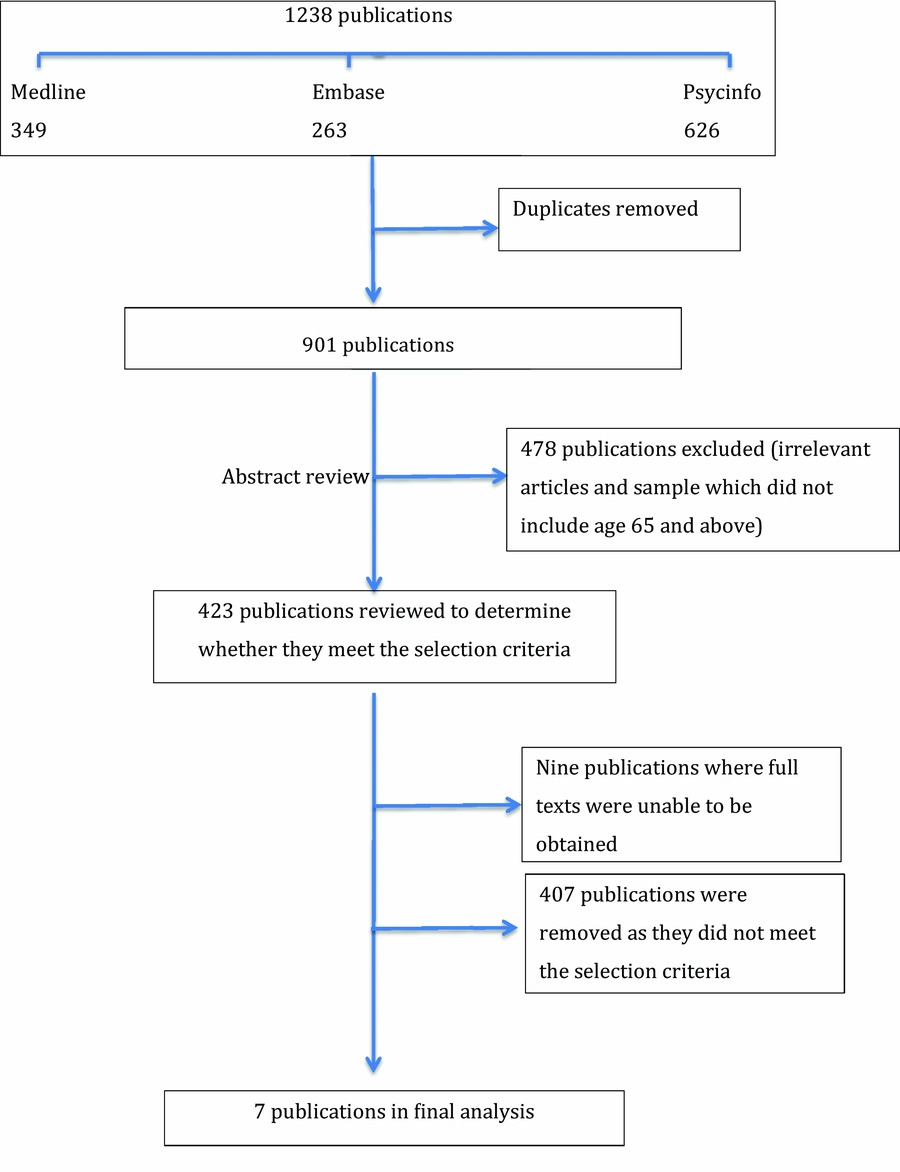
Figure 1 shows the outcomes of the database search and study selection. The database search, removal of duplicates, and irrelevant papers and assessment against the selection criteria were performed by one author with the assistance of an experienced university librarian. A total of 1238 publications were identified by the search strategy. The full texts of nine publications were not obtainable despite efforts by the library and emailing the authors. The final sample included seven studies; data were extracted and evaluated by two researchers (JC and ST) independently. The seven studies were grouped into research studies and case reports based on the number of cases. Studies with fewer than five cases were categorized as case reports (Abu-Zidan et al., Reference Abu-Zidan, Abbas and Hefny2012).
Outcomes of study selection and data extraction.

The extracted data were grouped into study and offender characteristics. Study characteristics included authors, year, location, setting, study period, study aims, sample size, inclusion criteria, and limitations. Offender characteristics included age, sex, marital status, socioeconomic status, education, ethnicity, cognitive assessment, physical disorder, psychiatric diagnosis, substance use disorder, index sexual offences, and previous non-sexual offences.
Results
Characteristics of included studies
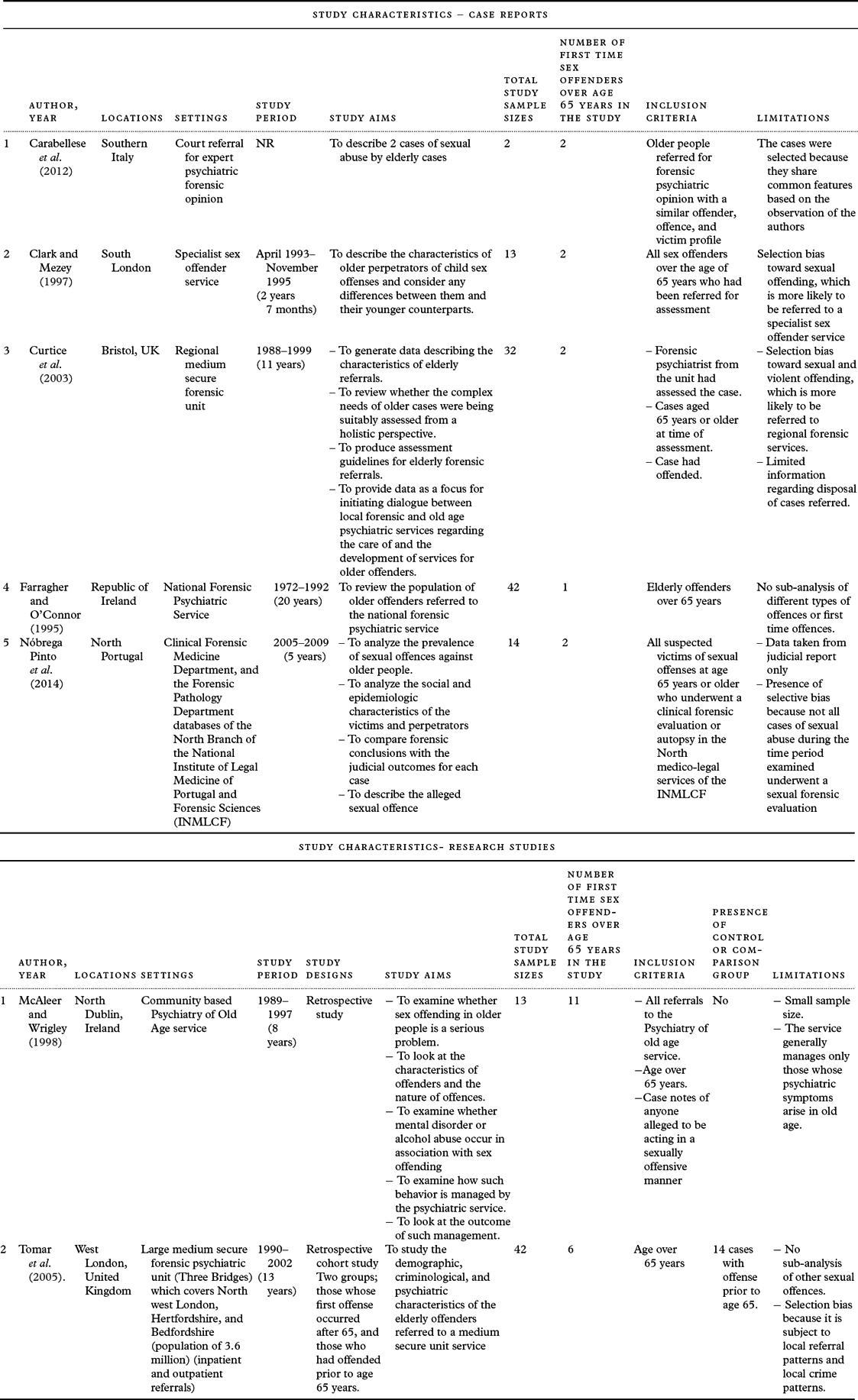
Table 1 shows the characteristics of the included studies. There were five case studies with a sample size of first time older sex offenders of one or two cases each. All case reports were from Europe (Italy, Portugal, Ireland, and the United Kingdom). The setting consisted of court referral for expert psychiatric forensic opinion, specialist sex offender service, and regional or national forensic psychiatric services. The majority of the case reports sought to describe the characteristics of older sex offenders.
Study characteristics

NR = Not reported.
Both research studies were retrospective. The Irish study was conducted in a community-based old age psychiatry service over eight years. It reviewed all referrals to the service of cases aged over 65 years who were alleged to be acting in a sexually offensive manner. The aim was to examine the characteristics of offenders, the nature of offences, whether mental disorder or alcohol abuse occurred in association with sex offending, how such behavior was managed by the psychiatric service, and the outcome. There were 11 first time alleged sexual offenders, but no control or comparison group. It was not specifically reported whether police records were checked for a past history of offending but two cases were reported to have been cautioned by police. This suggests the rest of the cases might have no previous caution or convictions. (McAleer and Wrigley, 1998).
The UK study was conducted in a large medium–secure forensic psychiatric unit over 13 years. Demographic, criminological, and psychiatric characteristics were studied. Two groups of offenders (those whose first offence occurred after age 65 years and those prior to age 65 years) were reviewed. A total of 14 and 28 offenders in the age 65+ and age <65 years group were included, respectively. Sexual and violent offences accounted for 47% and 36% of offences, respectively. There were 6 first time sex offenders older than 65 years and the comparison group consisted of 14 sex offenders younger than 65 years. The accuracy of past offending histories would likely be higher because the study was based in a forensic medium secure hospital setting (Tomar et al., Reference Tomar, Treasaden and Shah2005).
Characteristics of offenders
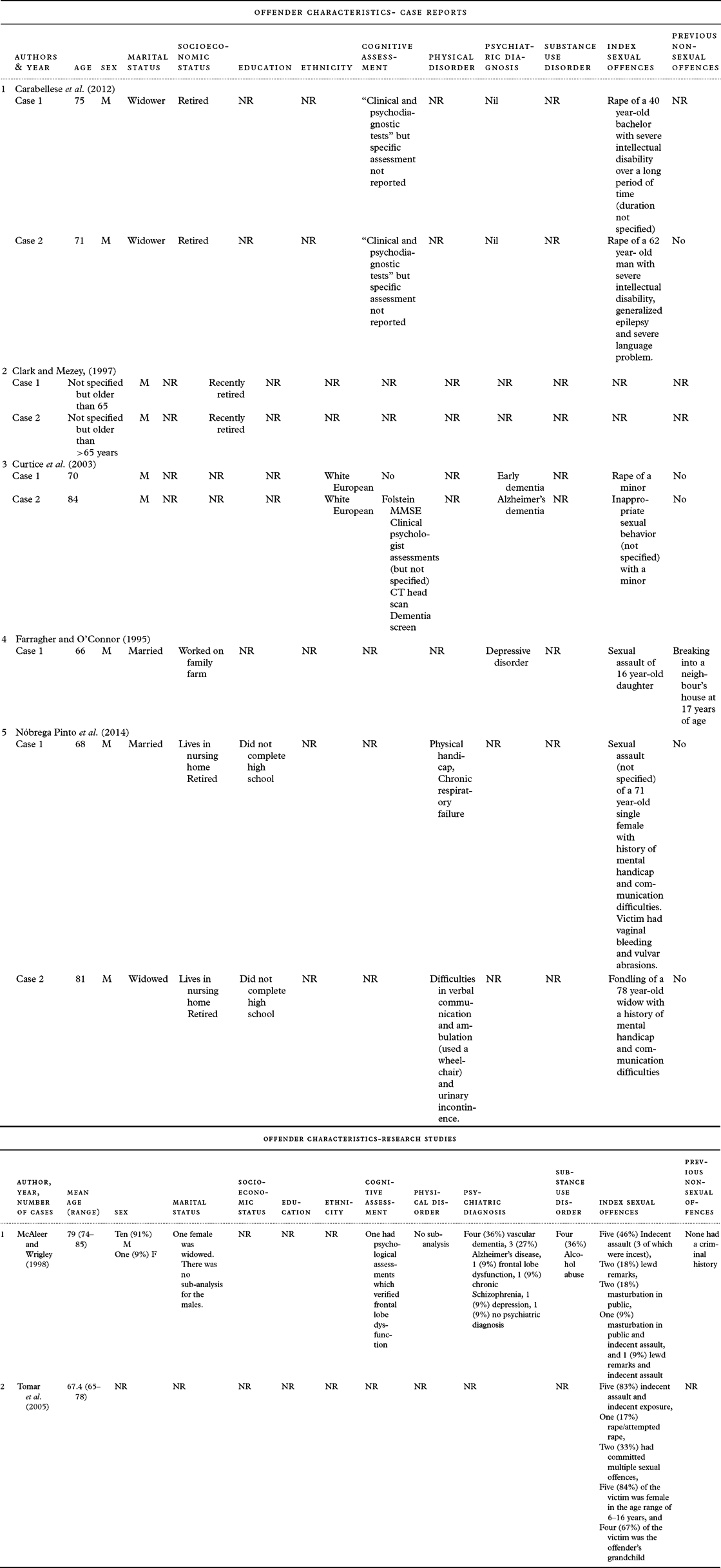
The characteristics of offenders are shown in Table 2. Nine cases were reported in the five case reports. The two research studies included 17 offenders.
Offender characteristics

NR = Not reported; M = male; F = female.
Ages in the case reports ranged from 66 to 84, and all were male. The mean age in the Irish study was 79.9, and the majority (91%) were male. The mean age in the UK study was 67.4 but there was no sub-analysis of offenders’ genders.
Marital status was only reported in five case reports; two were married and three were widowed. Marital status was not reported in the research studies.
Regarding employment in the case reports, six offenders were retired, and one offender worked on a family farm. The employment status of two cases was not reported. There were no reports of socioeconomic status in the research studies.
Three of the nine offenders in the case reports, and one of the 17 offenders in the research studies had some form of cognitive assessment completed but details were not elaborated.
Physical disorder was reported in two of the nine cases. One offender had a physical handicap and chronic respiratory failure and the other had difficulties in verbal communication, ambulation (used a wheelchair), and urinary incontinence. There was no report on physical disorders in the research studies.
As for psychiatric diagnosis in the case reports, two had dementia, one had depression, two had no mental diseases, and no information was available in four cases. In the Irish study, psychiatric diagnoses included four (36%) Vascular dementia, three (27%) Alzheimer's disease, one (9%) frontal lobe dysfunction, one (9%) chronic schizophrenia, one (9%) depression, and one with no psychiatric diagnosis. The UK study had no sub-analysis of psychiatric disorders for the sex offenders.
Only the Irish study reported on substance disorders, and alcohol abuse was found in four (36%) of the first time older sex offenders.
The index sexual offences for the case reports included three rapes: two victims were adult males with severe intellectual disability, and one victim was a minor. There were also two sexual assaults and the victims included a teenage daughter and an elderly woman with a history of mental handicap and communication difficulties. Other offences included inappropriate sexual behavior (not specified) with a minor, and fondling of an elderly widow (with a history of mental handicap and communication difficulties). Two cases did not report the nature of offence.
The index sexual offences for the Irish study were five (46%) Indecent Assault (three of which were incest), two (18%) Lewd Remarks, two (18%) Masturbation in Public, one (9%) Masturbation in Public and Indecent Assault, and one (9%) Lewd Remarks and Indecent Assault. The definition of sexual offending in the Irish study was wide, ranging from lewd remarks to incest. Lewd remarks in an offender with neurocognitive or psychiatric disorder is unlikely to be considered a sex offender in a forensic service.
The UK study reported five (83%) Indecent Assault and Indecent Exposure, and one (17%) rape/attempted rape. One third (33%) of this group had committed multiple sexual offences. The majority (84%) of the victims were female in the age range of 6–16 years, and two-thirds (67%) of the victims were the offender's grandchild.
There were two types of elderly offenders identified: (i) those who had offended at length but were not previously detected, and (ii) those who had higher proportion of neurocognitive disorder. For example, in the case report from Carabellese et al., both offenders were males in their 70s, widowed and had adult children, retired and had no mental disorder (Carabellese et al., Reference Carabellese, Candelli, Vinci, Tamma and Catanesi2012). They had committed rape for over about a year and their victims were adult men with severe intellectual disability and language difficulties. Curtice et al. reported that all the sexual offences in their study were multiple, had involved minors, and were recent offending rather than historical allegations (Curtice et al., Reference Curtice, Parker, Schembri Wismayer and Tomison2003). In the Irish study, ten offences were repeated on a number of occasions, one (incest) of which continued to offend until referral.
Five of the nine case reports had no previous non-sexual offences; one had a history of breaking into a neighbor's house at 17 years of age; and the previous offence types in the other three cases were not reported. None of the offenders in the Irish study had previous non-sexual offences. There were no data regarding previous non-sexual offences in the UK study.
Discussion
To the best of our knowledge, this is the first systematic review of first time sex offenders aged 65 years and above. We have identified a small number of studies (two research studies and five case reports) finding that clinical and sociodemographic data were not routinely reported. This has limited our analysis and interpretation of the data on the common characteristics of first time older sex offenders. Nevertheless, we found dementia/neurocognitive disorder was the most common diagnosis.
Despite this, cognitive or dementia assessment was not routinely performed or reported in the studies included in this review.
A second major finding is that the victims of first time older sex offenders are often vulnerable individuals such as minors (including grandchildren), people with intellectual disability, and older people.
According to our review, two types of elderly offenders were identified: (1) offenders who had offended repeatedly but were not detected until later stages in their lives; and (2) offenders with higher proportion of neurocognitive disorder. In our clinical experience, we have encountered both of these: the first type of offenders who had sexually offended historically but were only detected at later stages of their lives, and those with dementia.
Dementia in the forensic/prison setting
According to the World Alzheimer Report 2016, it was estimated that there were 46.8 million people worldwide living with dementia in 2015. This number will reach 131.5 million in 2050 (Prince et al., Reference Prince, Comas-Herrera, Knapp, Guerchet and Karagiannidou2016). According to the Alzheimer's Association, the prevalence of dementia in the general population of the United States (US) is estimated to increase from 1.7% in 2009 to 1.9% in 2030 and 2.6% in 2050. Wilson and Barboza used these rates as a baseline for correctional populations and estimated that the numbers of inmates with dementia may rise to 127,130 in 2050 in the US (Wilson and Barboza, Reference Wilson and Barboza2010).
An Israeli study of first time offenders aged 65 years and above reported a 25% dementia rate (Barak et al., Reference Barak, Perry and Elizur1995). Despite the increase of older prisoners with dementia, prisons are not well resourced to provide geriatric and dementia care. For example, the 2000 Bureau of Justice Statistics Survey of State and Federal Correctional Facilities in the US found only 4% (n=38) of state institutions provided any type of geriatric specific healthcare services: 2% had segregated geriatric units, 1% offered services in geriatric care facilities, and 1% had mixed (younger–older) unit models (Thivierge and Thompson, Reference Thivierge-Rikard and Thompson2007).
There is often no comprehensive screening policy for older prisoners and cognition issues are likely to be unrecognized, or early symptoms of dementia may be mistaken for mild depression (Moll Reference Moll2013).
Historically, purposes of prison have included punishment and deterrence. These concerns may overshadow concerns for the quality of life, personal safety and well-being of people with dementia in prison (Maschi et al., Reference Maschi, Kwak, Ko and Morrissey2012). The majority of prisons lack special geriatric or dementia services, which often leads to conditions of neglect, pain, and suffering for older prisoners (Stojkovic, Reference Stojkovic2007). Older prisoners with dementia are at an increased vulnerability of victimization by other prisoners or they may become the aggressor resulting in institutional charges (Dawes, Reference Dawes2009).
Dementia, sexually disinhibited behavior, and sexual offences
Sexually disinhibited behavior is not uncommon in people with dementia, and indeed constitutes one of the behavioral and psychological symptoms of dementia. The prevalence of sexually disinhibited behavior in people with dementia is between 2% and 17% (Series and Dégano, 2005). Alagiakrishnan et al. conducted a retrospective cross-sectional study in various geriatric psychiatry settings to determine the prevalence, aetiology and treatment profile of abnormal sexual behaviors in people with dementia. They found that cognitively impaired older people (age 65+ years) with sexually inappropriate behavior was seen in both community dwelling cases with dementia, as well as in nursing home cases (Alagiakrishnan et al., Reference Alagiakrishnan2005). In long-term care facilities, most sexual aggression against older people was perpetrated by residents with inappropriate hypersexual behavior caused by dementia (Rosen et al., Reference Rosen, Lachs and Pillemer2010).
The interface of old age and forensic psychiatry
All except one study in this review was conducted in a forensic setting. This could explain the lack of cognitive or dementia assessment because forensic psychiatrists may not be well trained in these assessments compared to old age psychiatrists. At the same time, old age psychiatrists may face challenges working in a forensic setting (e.g. risk assessment and management of older prisoners who are about to be released into the community or old age psychiatric hospital).
A few implications in the interface between old age and forensic psychiatry are considered. First, these concern the issues of fitness to stand trial, insanity defense, and disposition options for older offenders who have committed serious offences such as rape or murder. Frierson et al. compared older defendants (aged 65+ years) who were found competent with those who were incompetent to stand trial. The prevalence of dementia was 19% in the competent to stand trial group and 90% in the incompetent group. They also found alcohol-induced dementia was the most common dementia subtype in the incompetent group (Frierson et al., Reference Frierson, Shea and Shea2002). Second, in the presence of severe dementia, the appropriate placement in a dementia unit is restricted by the legal status of the offenders. As a result, the majority are placed in a forensic hospital or remains in prison, rather than other clinically appropriate placements.
Therefore, better collaboration between forensic and old age psychiatric services is required. More routine cognitive or dementia assessments, and better risk assessments among older sex offenders in the community, hospital, and prison settings would improve the detection, management and ultimately meet the needs of older sex offenders.
Limitations
All of the case reports and research studies identified in this systematic review were from Europe. This may limit the generalizability of findings to other countries. We could not access nine papers which were potentially relevant despite repeated attempts made to obtain them. However, four of these papers were published before 1990 and may not be relevant for our contemporary understanding of older sex offenders. We included only English papers and there could be existing relevant non-English literature. A lower cut-off age of 60 years may increase the number of relevant studies included in our review. Older prisoners often have age-related physical and mental health needs at a younger age than the older people living in the community. However, to promote a better interface of old age and forensic psychiatry, we have chosen a cut-off age of 65 years because it is typically used as the entry age for old age services in developed countries, and specific mental health outcome measures for the 65+ years population (e.g. the Health of the Nation Outcome Scales for Elderly People (HoNOS65+) have been developed (Burns et al., Reference Burns1999). We also acknowledge that other cut-off ages, such as 70 years and ageless services have been proposed (Warner, Reference Warner2014).
Six of the seven settings were based in tertiary forensic services. All the referrals were for psychiatric opinions which highlighted a likely presence of psychiatric disorders. The Irish study was conducted in a community old age psychiatric service where people with psychiatric and neurocognitive disorders were likely to be over-represented. Future studies including samples of older offenders from general courts or remand prisons may address this methodological issue.
One of our findings is that the victims of first time older sex offenders are often vulnerable individuals. It is not uncommon for vulnerable victims such as victims of child sexual abuse to wait for a long time before reporting the offence, such that the offender is older at the point where charges are pressed. In our review, the offences were reported by others (Carabellese et al., Reference Carabellese, Candelli, Vinci, Tamma and Catanesi2012) and raised following a positive syphilis test (McAleer and Wrigley, 1998).
Though our review sought to carefully exclude all those with a known history of sexual offending, there is no way to know whether this was indeed the first time that they had sexually victimized another person, or whether it was merely the first time they had been caught; the first time you get a speeding ticket is unlikely to be the first time you were ever speeding.
Conclusion
This systematic review has highlighted that research into older sex offenders is quite limited. Although older people are more commonly the victims of aggression and antisocial behavior than the perpetrators (Yorston, Reference Yorston1999), a minority of older people commit crimes, including serious sexual offences. Considering the rapidly growing population of older prisoners and that sexual offending is relatively common in older offenders, more research is urgently required. Future research should also examine first time offending by older people versus repeated or persistent older offenders because of the different nature and severity of the offences, and the frequent presence of neurocognitive disorders. There should also be some international consensus on the cut-off age when studying the older offender population. Finally, better dialogue and collaboration between old age and forensic psychiatrists would bridge the gap of the dichotomous conceptualization of offending in older people and their clinical care.
Conflict of interest
None.
Description of authors’ roles
All authors contributed to the design of this systematic review. J. Chua and an experienced university librarian conducted the database search, removal of duplicates and irrelevant papers. J. Chua conducted the assessment against the selection criteria. J. Chua and S. Taylor reviewed and extracted data from the final sample of seven studies. J. Chua drafted the manuscript. G. Cheung and S. H. Friedman reviewed the manuscript and were the supervisors of the scholarly project.