Introduction
CHD refers to anomalies in the structure and function of the heart and blood vessels present at birth. The condition arises from various factors that disrupt normal embryonic development of cardiac and vascular tissues or from early embryonic cessation, resulting in severe clinical ramifications, and it usually leads to miscarriage, stillbirth, neonatal mortality, as well as disabilities in children, adolescents, and adults. Reference Kelleher, McMahon and James1,Reference Rohit and Rajan2 With the changes in modern medical model, there has been a significant transformation in the spectrum of human diseases and mortality. Birth defects have gradually emerged as the primary cause of neonatal mortality in China, with CHD accounting for nearly one-third of the major birth defect conditions, making it the most prevalent heart disease. Reference Briggs and Fraser3 CHD has emerged as a major public health concern affecting children’s physical and psychological health and population survival quality, imposing substantial economic and psychological burdens on both society and families.
Heart failure refers to the pathological condition where the pumping capacity of the heart (or the ability of the myocardial systolic/diastolic capacity) is diminished, leading to a relative or absolute insufficiency in cardiac output, thereby failing to meet the metabolic demands of the body’s tissues. Reference Kerstein, Klepper, Finnan and Mills4 Heart failure is the most common complication of CHD, characterised by high morbidity and mortality, and early recognition and treatment is of positive significance in improving the prognosis of paediatric patients with CHD complicated by heart failure. Reference Selamet Tierney5,Reference Ryan, Jones and Allen6 The assessment and diagnosis of the condition of paediatric patients with CHD combined with heart failure often rely on clinical data and cardiac ultrasound. The former possesses strong subjectivity, whereas the latter overly relies on instrumentation, testing techniques, and the level of cooperation from the paediatric patients. Consequently, the pursuit of more sensitive, accurate, and stable quantified biological treatments can contribute to laying the groundwork for improving the condition of paediatric patients with CHD complicated by heart failure. Reference Massey, Weinerman and Naim7,Reference Ghaemmaghami, Khajali, Dalili, Fotovati, Moradian and Sheikhfathollahi8
In recent years, a study Reference Dahlawi, Milnes and Swallow9 has pointed out that the basic mechanism of heart failure is the destruction of cardiomyocytes and cardiac remodelling, and a variety of hormones and cytokines are involved in this process. N-terminal pro-brain natriuretic peptide is mainly cleaved from B-type brain natriuretic peptide precursor released into the circulation, which is often used to reflect cardiac function, and is also commonly used in the clinic to determine heart failure. Reference Taylor and Habre10 Adrenomedullin is a vasoactive peptide that regulates cardiac and vascular activities. Existing research confirms that adrenomedullin is involved in the progression of myocardial infarction and hypertension, and cardiac troponin I serves as a widely utilised biomarker for highly sensitive detection of myocardial infarction in clinical settings. Reference Newland, Law and Albers11 Currently, there is limited research regarding the application of N-terminal pro-brain natriuretic peptide, adrenomedullin, and cardiac troponin I in the diagnosis and differentiation of CHD complicated by heart failure. This study was implemented to explore the application value of the aforementioned serum biomarkers in paediatric CHD patients combined with heart failure through a comparative analysis.
Materials and methods
Study design and patient screening
The research was permitted by the Ethics Committee of Ganzhou People’s Hospital (No. 2023PHE112). A retrospective study was implemented based on the electronic medical record system. The research period was set from January 2022 to October 2023, and cases were screened according to the following inclusion criteria.
Inclusion criteria for paediatric patients in the Case Group: (1) confirmation of CHD through surgical procedures and cardiac ultrasound; (2) adherence to the diagnostic criteria for CHD outlined by the Ministry of Health; Reference Billotte, Deken and Joriot12 (3) compliance with the diagnostic guidelines for pediatric heart failure as specified in Recommendations for Diagnosis and Treatment of Heart Failure in Children; 13 (4) availability of baseline data regarding age, body weight, sex, and type of CHD; and (5) patients whose serological indicators of N-terminal pro-brain natriuretic peptide, adrenomedullin, and cardiac troponin I levels, and cardiac function indicator of left ventricular ejection fraction were measured upon admission.
Inclusion criteria for paediatric patients in the Control Group: (1) confirmation of CHD through surgical procedures and cardiac ultrasound; (2) compliant with the diagnostic criteria for CHD among the birth defects outlined by the Ministry of Health in China Maternal and Child Health Surveillance Manual; (3) availability of baseline data regarding age, body weight, sex, and type of CHD; and (4) patients whose serological indicators of N-terminal pro-brain natriuretic peptide, adrenomedullin, and cardiac troponin I levels and cardiac function indicator of left ventricular ejection fraction were measured upon admission.
Exclusion criteria for both groups: (1) concurrent hereditary metabolic disorders; (2) concurrent severe infections; and (3) concurrent visceral organ lesions or deformities.
Bases on the above criteria, 152 paediatric patients were selected. Based on their clinical symptoms (i.e., the presence or absence of heart failure), patients were categorised as the Case Group (n = 91, CHD complicated with heart failure) and the Control Group (n = 61, CHD without heart failure).
Data collection
The baseline clinical data of eligible paediatric patients, including sex, age, body weight, and type of CHD were collected, the levels of N-terminal pro-brain natriuretic peptide, adrenomedullin, and cardiac troponin I were assessed upon admission through laboratory testing, and left ventricular ejection fraction level for cardiac function was evaluated upon admission.
To evaluate the impact of different comorbidities on biomarker levels in paediatric patients, subgroup analyses were performed based on clinical records. Patients were categorised according to the presence or absence of specific conditions: atrial fibrillation (defined as rapid and irregular atrial electrical activity on electrocardiogram), obesity (body mass index ≥23 kg/m2), diabetes mellitus (fasting blood glucose ≥126 mg/dL and haemoglobin A1c ≥6.5%), and chronic kidney disease (estimated glomerular filtration rate <60 mL/min/1.73 m2 for at least three months). Biomarker levels were then compared across the different subgroups.
Quality control
All patient data were exported from the hospital’s information system and entered by two persons to ensure data authenticity.
Outcome measurement
The desired outcomes include that paediatric patients in the Case Group exhibit higher serum markers N-terminal pro-brain natriuretic peptide, adrenomedullin, and cardiac troponin I levels, and lower left ventricular ejection fraction compared with the Control Group. Furthermore, the serum markers and left ventricular ejection fraction level are subject to change according to cardiac function grading. Moreover, the serum markers N-terminal pro-brain natriuretic peptide, adrenomedullin, and cardiac troponin I demonstrate a certain diagnostic efficacy for CHD complicated by heart failure.
Statistical analysis
Excel 2021 was used for data input of the study, and IBM SPSS Statistics 21.0 was used for statistical processing of the data. The continuous data such as age and body weight were validated to meet a normal distribution, and they were represented as mean ± standard deviation (mean ± standard deviation) and analysed utilising the t-test for differences between groups. Categorical data such as sex were represented as rates and analysed utilising the chi-square test. P < 0.05 was regarded as statistical significance.
Results
Comparison of baseline data between the two groups
The demographic data of patients in both groups, including sex, age, body weight, and type of CHD, were collected and compared, demonstrating no statistically significant differences between groups (P > 0.05), suggesting good comparability, as shown in Table 1.
Comparison of baseline data between the case and control groups (
 $\overline{x}\pm s$
)/[n (%)]

Note: CHD = congenital heart disease; PDA = patent ductus arteriosus; ASD = atrial septal defect; VSD = ventricular septal defect; NT-proBNP = N-terminal pro-brain natriuretic peptide; ADM = adrenomedullin; cTnI = cardiac troponin I.
Comparison of serum markers between the two groups
The Case group showed markedly higher serum levels of N-terminal pro-brain natriuretic peptide, adrenomedullin, and cardiac troponin I compared with the Control Group (P < 0.05) (Figure 1).
Differences in serum markers of pediatric patients in the case and control groups. The serum levels of NT-proBNP, ADM, and cTnI of pediatric patients in the case group were significantly higher than those in the control group (P < 0.05), with * representing statistically significant differences between the two groups. Note: NT-proBNP = N-terminal pro-brain natriuretic peptide = ADM = adrenomedullin; cTnI = cardiac troponin I.

Comparison of serum markers among different subgroups of the case group
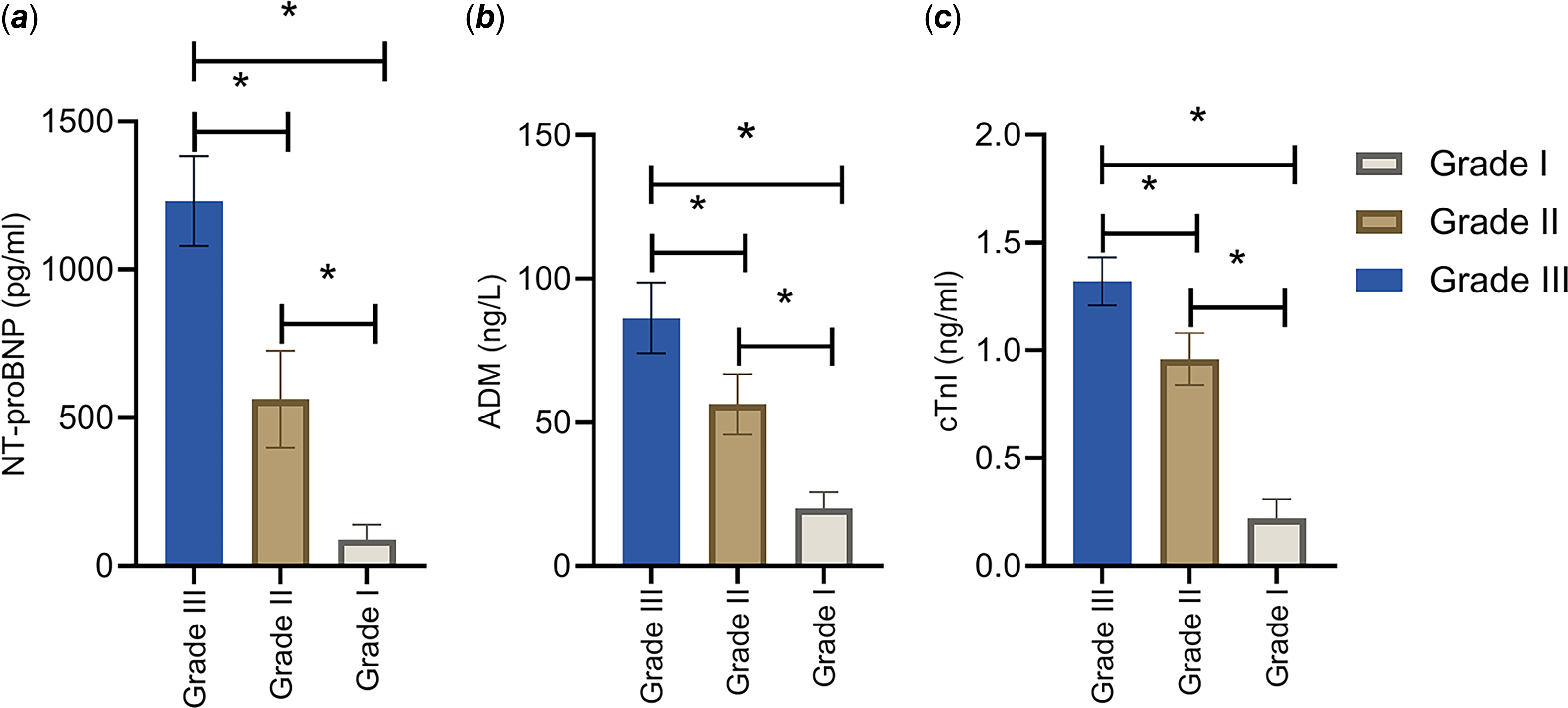
The Case Group was categorised into subgroups according to the grade of cardiac function, which was based on New York Heart Association Classification. The serum levels of N-terminal pro-brain natriuretic peptide, adrenomedullin, and cardiac troponin I in paediatric patients at grade III of cardiac function were significantly elevated compared to those at grade II, and the aforementioned levels in patients at grade II were elevated than those at grade I (P < 0.05) (Figure 2).
Differences in serum markers of pediatric patients in different subgroups of the case group. The serum levels of NT-proBNP, ADM, and cTnI in pediatric patients at grade III of cardiac function were significantly elevated compared to those at grade II, and the aforementioned levels in grade II patients were higher than those in grade I patients (P < 0.05), with * representing statistically significant differences among the groups. Note: NT-proBNP = N-terminal pro-brain natriuretic peptide; ADM = adrenomedullin; cTnI = cardiac troponin I.

Comparison of left ventricular ejection fraction level between the two groups
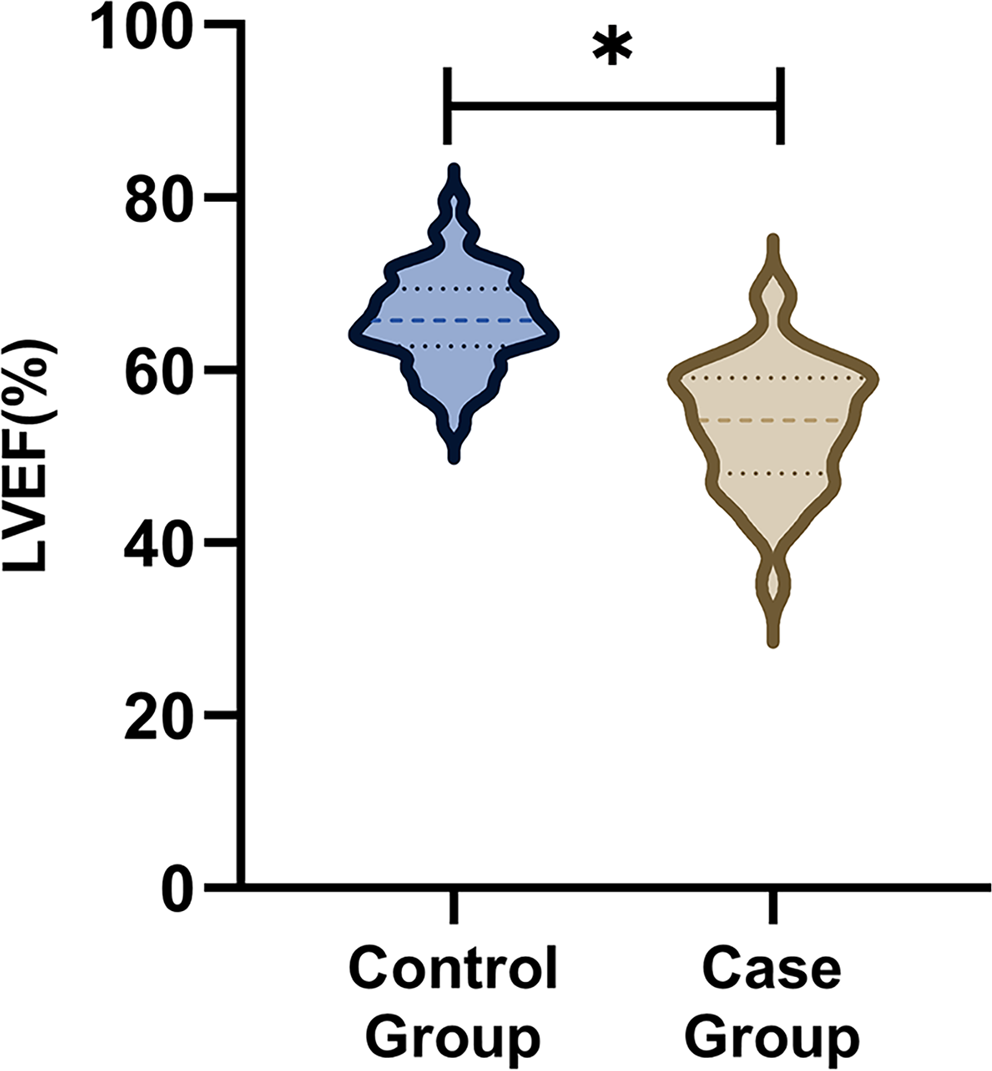
The average left ventricular ejection fraction in the Case Group was (54.23 ± 5.62)%, markedly lower than that in the Control Group (59.95 ± 6.02)% (P < 0.05) (Figure 3).
Differences in LVEF level of pediatric patients in the case and control groups. pediatric patients in the case group showed significantly lower average LVEF level compared with pediatric patients in the control group (P < 0.05), with * representing statistically significant differences between groups. Note: LVEF = left ventricular ejection fraction.

Correlation analysis of left ventricular ejection fraction and serum markers in the case group
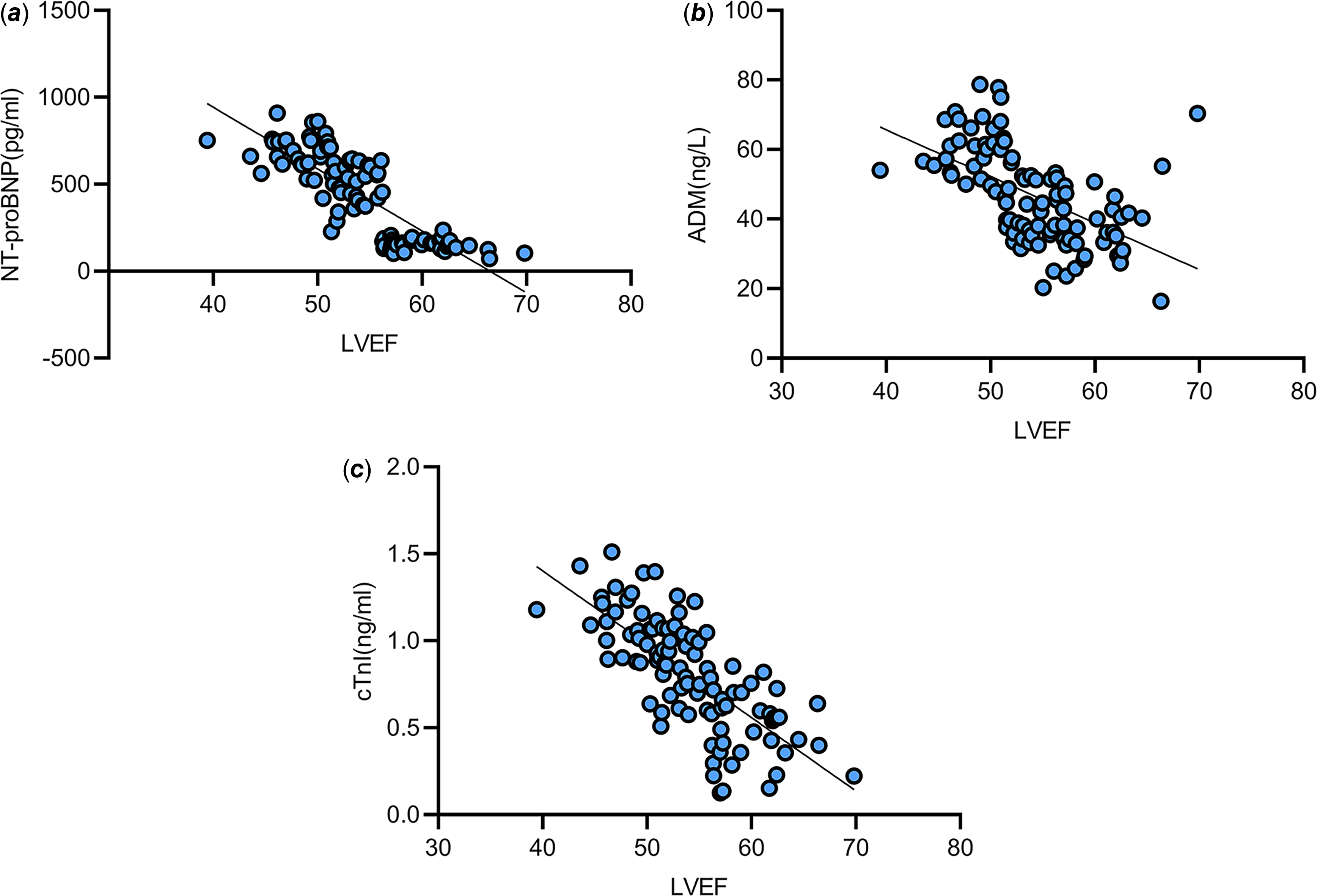
The Pearson correlation analysis showed that the left ventricular ejection fraction levels in the Case Group were significantly negatively correlated with the levels of N-terminal pro-brain natriuretic peptide, adrenomedullin, and cardiac troponin I (r = −0.6807, r = −0.3013, r = −0.5412, P < 0.0001) (Table 2, Figure 4).
Correlation analysis of LVEF and serum markers of pediatric patients in the case group. The LVEF levels of pediatric patients in the case group were significantly negatively correlated with the levels of (a) NT-proBNP, (b) ADM, and (c) cTnI (r = −0.6807, r = −0.3013, r = −0.5412, P < 0.0001). Note: LVEF = eft ventricular ejection fraction; NT-proBNP = N-terminal pro-brain natriuretic peptide; ADM = adrenomedullin; cTnI = cardiac troponin I.

Correlation analysis of LVEF and serum markers of pediatric patients in the case group

Note: LVEF = left ventricular ejection fraction; NT-proBNP = N-terminal pro-brain natriuretic peptide; ADM = adrenomedullin; cTnI = cardiac troponin I.
Assessment of the predictive value of serum markers for heart failure in paediatric patients with CHD
Receiver operating characteristic curve was plotted, and the calculation showed that the predictive area under the curves of serum levels of N-terminal pro-brain natriuretic peptide, adrenomedullin, and cardiac troponin I for heart failure in paediatric patients with CHD were 0.8048 (95% CI = 0.7391–0.8705, P < 0.0001), 0.8742 (95% CI = 0.8209–0.9275, P < 0.0001), and 0.8884 (95% CI = 0.8384–0.9385, P < 0.0001), respectively (Table 3, Figure 5).
Assessment of the predictive value of serum markers for heart failure in pediatric patients with CHD. The predictive AUCs of serum levels of NT-proBNP, ADM, and cTnI for heart failure in pediatric patients with CHD were 0.8048, 0.8742, and 0.8884, respectively. Note: CHD = congenital heart disease; AUC = area under the curve; NT-proBNP = N-terminal pro-brain natriuretic peptide; ADM = adrenomedullin; cTnI = cardiac troponin I.

Assessment of the predictive value of serum markers for heart failure in pediatric patients with CHD

Note: CHD = congenital heart disease; NT-proBNP = N-terminal pro-brain natriuretic peptide; ADM = adrenomedullin; cTnI = cardiac troponin I; AUC = area under the curve; SE = standard error; 95% CI = 95% confidence interval.
Impact of comorbidities on biomarker levels
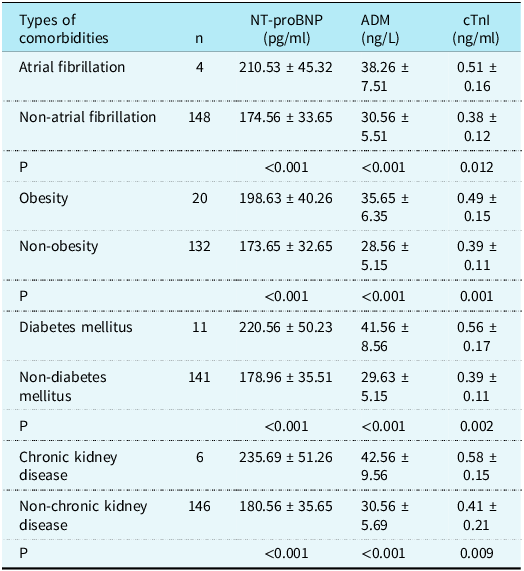
Subgroup analyses were conducted based on the presence of atrial fibrillation, obesity, diabetes mellitus, and chronic kidney disease. The results indicated that paediatric patients with atrial fibrillation, obesity, diabetes mellitus, or chronic kidney disease showed significantly higher levels of N-terminal pro-brain natriuretic peptide, adrenomedullin, and cardiac troponin I compared to those without these comorbidities (P < 0.05, Table 4).
Impact of comorbidities on biomarker levels

Note: NT-proBNP = N-terminal pro-brain natriuretic peptide; ADM = adrenomedullin; cTnI = cardiac troponin I.
Discussion
CHD arises from defects in the development of the fetal heart in the maternal womb, resulting in abnormalities due to partial developmental arrest, and atrial septal defect, and ventricular septal defect are the prevalent types of CHD. Reference Das, Frank and Ivy14 Data from the World Health Organization reveal that about 1.5 million children worldwide are born with CHD each year. Reference Newman15 Overseas reports on the incidence of CHD are mainly based on extensive collaborative multicenter perinatal studies combined with registry data to further follow-up children suspected of having CHD, so as to understand the incidence of CHD. The report Reference Shibata, Kondo and Fukushima16 indicates that CHD is the most prevalent form of cardiac defect in children, although statistics vary, with the incidence of CHD ranging from 4 − 8% in full-term and live-born newborns. The survey conducted by the American Heart Association indicates that at least 0.8‰ of live births are affected by CHD. Reference Pesonen, Liuba and Aburawi17 CHD commonly precipitates heart failure, which is a significant factor in paediatric mortality, and co-occurrence of heart failure exacerbates the mortality rate in paediatric patients with CHD. Thus, early assessment of the condition is of great significance for ameliorating the prognosis of paediatric patients with CHD complicated by heart failure. Reference Rakusiewicz, Kanigowska, Hautz and Ziółkowska18
In this study, a retrospective analysis was carried out to explore the application value of serum markers N-terminal pro-brain natriuretic peptide, adrenomedullin, and cardiac troponin I in CHD patients with heart failure. The results showed that in comparison to paediatric patients with simple CHD, those with concurrent CHD and heart failure exhibited significantly elevated serum levels of N-terminal pro-brain natriuretic peptide, adrenomedullin, and cardiac troponin I. The authors of this research contend that brain natriuretic peptide is synthesised and secreted by ventricular myocardial cells, possessing neurohormonal peptide activity in regulating the renin-angiotensin-aldosterone system. A clinical study Reference Pieske, Wachter and Shah19 has indicated that upon entering the systemic circulation, the B-type brain natriuretic peptide precursor splits into brain natriuretic peptide and N-terminal pro-brain natriuretic peptide at a ratio of 1:1. In comparison to brain natriuretic peptide, N-terminal pro-brain natriuretic peptide exhibits a longer half-life and greater stability, and it has been confirmed to present early abnormal elevation levels in heart failure patients, hence serving as one of the early biomarkers for heart failure and myocardial injury in clinical practice. This study found that serum N-terminal pro-brain natriuretic peptide levels were significantly higher in paediatric patients with CHD complicated by heart failure compared to those with simple CHD. A comparison across different cardiac function classifications revealed a gradual increase in N-terminal pro-brain natriuretic peptide levels with worsening disease severity. These findings are consistent with previous studies. Reference Senni, Lopez-Sendon and Cohen-Solal20 Moreover, earlier research has indicated a positive correlation between N-terminal pro-brain natriuretic peptide levels and cardiac function classifications in paediatric patients with CHD and heart failure. Reference Voors, Kremer and Geven21 Our results further support a close association between N-terminal pro-brain natriuretic peptide levels and the severity of heart failure in paediatric CHD patients.
The correlation between adrenomedullin levels and the severity of heart failure in patients with CHD was analysed in this study, and the findings revealed elevated serum levels of adrenomedullin in paediatric patients with CHD complicated by heart failure compared to those with simple CHD. Adrenomedullin is an active peptide isolated from pheochromocytoma tissue by Japanese scholars Kitamura et al. in 1993. This factor exhibits various biological activities, primarily synthesised and secreted by adrenal glands, lungs, heart, and vascular smooth muscle tissues of the body. Existing evidence Reference Nishikimi and Nakagawa22 confirms that the serum adrenomedullin levels in paediatric heart failure patients, such as concomitant hypertension and myocardial infarction, are significantly elevated, and the level of elevation is positively correlated with the severity of heart failure in these children, which is consistent with the findings of this research. The data from this study indicate that as the changes in the cardiac function indicators of children with CHD complicated by heart failure, their serum adrenomedullin levels also undergo alterations. The authors of this research contend that the occurrence of this phenomenon may be attributed to the relative increase in blood volume in children with heart failure, which mechanically stimulates the atria, leading to hypoxic conditions in surrounding tissues, consequently resulting in elevated levels of fluid factors such as angiotensin II and adrenomedullin. A previous study Reference Meijers, Bayes-Genis and Mebazaa23 has demonstrated that adrenomedullin exerts significant vasodilatory effects, effectively dilating the aorta, pulmonary artery, coronary arteries, and peripheral resistance vessels. This vasodilation helps reduce vascular resistance in both systemic and pulmonary circulations, thereby alleviating cardiac preload and afterload. In addition to reducing cardiac load, adrenomedullin improves haemodynamics by increasing renal blood volume and enhancing tubular filtration rate, which promotes natriuresis and diuresis. These physiological effects are beneficial in alleviating symptoms in patients with heart failure. A study investigating the effects of exogenous adrenomedullin intervention Reference Egerstedt, Czuba and Bronton24 further confirmed these findings. It demonstrated that administration of exogenous adrenomedullin effectively reduced arterial and pulmonary artery pressures while increasing the cardiac index. These results support our findings and suggest that adrenomedullin may play a significant role in vascular regulation and diuresis in the treatment of heart failure.
Regarding the correlation between cardiac troponin I levels and the condition of heart failure, the results of this study revealed that concurrent heart failure led to an elevation in serum cardiac troponin I levels. Cardiac troponin I is often regarded as one of the markers for myocardial injury in clinical practice, possessing high diagnostic sensitivity and specificity. Reference Xie, Zhan and Wu25 Under physiological conditions, only a small fraction of cardiac troponin I is present in the cytoplasm, with the majority existing in the form of structural proteins within myofibrils. In heart failure symptoms, cardiomyocytes are in an ischaemic and hypoxic state, leading to the generation of numerous inflammatory cells and inflammatory factors as well as the increase in myocardial membrane permeability, resulting in the release of a significant amount of cardiac troponin I into the bloodstream, consequently causing elevated serum cardiac troponin I levels.
Finally, this study explored the diagnostic efficacy of serum markers N-terminal pro-brain natriuretic peptide, adrenomedullin, and cardiac troponin I in CHD combined with heart failure by plotting receiver operating characteristic curves. The results indicated a definite diagnostic efficacy of the above-mentioned markers in CHD combined with heart failure, consistent with findings from other studies. In a study concerning children with severe pneumonia and those with severe pneumonia complicated by heart failure, Reference Gürgöze, van Vark and Baart26 it revealed that serum N-terminal pro-brain natriuretic peptide and cardiac troponin I exhibited commendable diagnostic efficacy for severe pneumonia and concurrent heart failure, with respective area under the curve values of 0.862 and 0.716 (P < 0.05). The authors of this research analysed that although traditional cardiac ultrasound is capable of differential diagnosis of heart failure, it is generally more effective in paediatric patients with myocardial remodelling and less effective in children without cardiac structural changes in the early stages of heart failure, whereas serological markers exhibit high sensitivity and specificity, enabling early identification of incipient lesions in heart failure, specifically damage to cardiomyocytes, which provides novel insights and initiatives for early heart failure in children with CHD.
Finally, our study further analysed the impact of comorbidities such as atrial fibrillation, obesity, diabetes mellitus, and chronic kidney disease on the levels of biomarkers N-terminal pro-brain natriuretic peptide, adrenomedullin, and cardiac troponin I. The results showed that paediatric patients with CHD, and these comorbidities exhibited generally higher biomarker levels compared to those without such comorbidities. These findings suggest that comorbidities may exacerbate the pathophysiological processes of heart failure and potentially influence the assessment of cardiac function as well as the diagnostic value of these biomarkers. We propose that the underlying mechanisms may be as follows: atrial fibrillation is associated with increased cardiac load and may influence the release of N-terminal pro-brain natriuretic peptide and cardiac troponin I by accelerating myocardial injury; obesity and diabetes mellitus exacerbate cardiac burden through metabolic disturbances and chronic inflammatory responses, thereby affecting adrenomedullin and other biomarker levels; chronic kidney disease may impact these biomarkers by causing disturbances in water and electrolyte metabolism and accumulation of endogenous toxins. These findings highlight the important role of comorbidities in the diagnosis and management of heart failure in paediatric patients with CHD. They indicate that the potential influence of comorbid conditions on biomarker levels should not be overlooked during clinical evaluation. This sensitivity analysis further validates the diagnostic value of N-terminal pro-brain natriuretic peptide, adrenomedullin, and cardiac troponin I in paediatric patients with CHD complicated by heart failure.
The serum levels of N-terminal pro-brain natriuretic peptide, adrenomedullin, and cardiac troponin I are markedly elevated in paediatric CHD patients combined with heart failure compared to those with simple CHD, and the aforementioned serological indicators exhibit a notable negative correlation with left ventricular ejection fraction in paediatric patients with CHD and heart failure. The serum markers N-terminal pro-brain natriuretic peptide, adrenomedullin, and cardiac troponin I have a certain diagnostic value in determining concurrent heart failure in paediatric patients with CHD. The innovation of this study lies in validating the applicability value of serological indicators for paediatric patients with CHD and concurrent heart failure through data analysis, while also providing insights and initiatives for early identification of heart failure in paediatric patients with CHD. However, this research also has some shortcomings, including small sample size, single source, and lack of follow-up data. Multicentre research with larger sample sizes and comprehensive follow-up data would contribute to further substantiating the diagnostic and prognostic value of serum biomarkers N-terminal pro-brain natriuretic peptide, adrenomedullin, and cardiac troponin I in the context of heart failure complicating CHD.
Acknowledgements
None.
Financial support
This research received no specific grant from any funding agency, commercial, or not-for-profit sectors.
Competing interests
The authors declare none.
Ethical standards
The research was permitted by the Ethics Committee of Ganzhou People’s Hospital (No. 2023PHE112).