Introduction
Marfan syndrome (MFS) is an autosomal dominant disorder of fibrillin-1 gene mutations, with the involvement of cardiovascular, skeletal, and ocular systems (Reference Caadas, Vilacosta, Bruna and Fuster1). MFS patients are also found to be susceptible to schizophrenia and other psychiatric conditions (Reference Van Den Bossche, Van Wallendael, Strazisar, Sabbe and Del-Favero2–Reference Hofman, Bernhardt and Pyeritz7). Here, we report an MFS patient presenting with mental dysfunction because of bilateral cerebral infarction, which is a neurovascular complication of MFS.
Case presentation
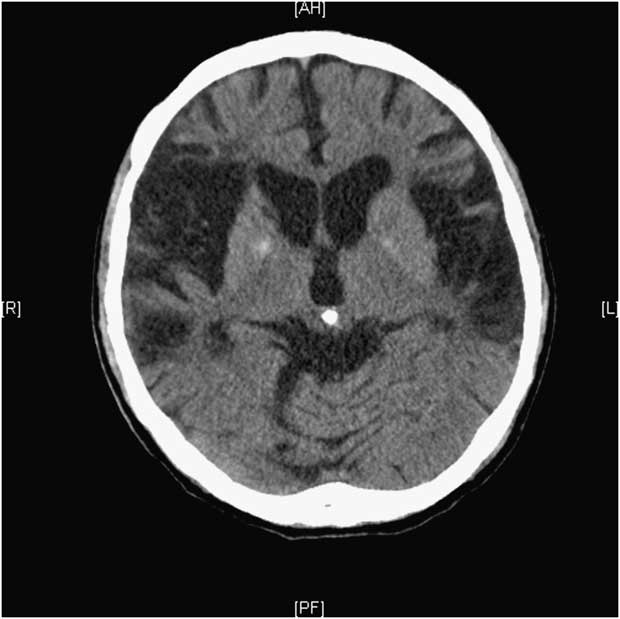
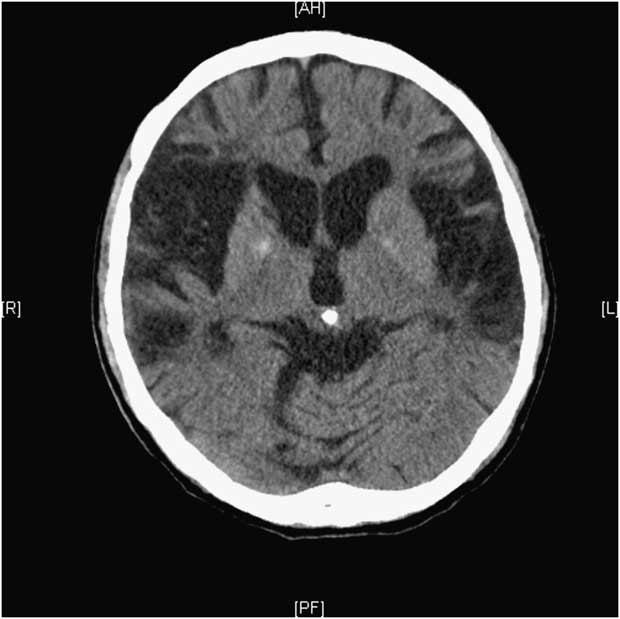
Mr. L, a 40-year-old Taiwanese man, was brought to our psychiatric outpatient clinic by his colleague with chief problems of incoherent and irrelevant speech, deteriorating job function, and impaired social function since 1 month. He had been employed as a blue-collar worker in a human resources company since the past 1 year without obvious problems. He was divorced and lived alone, but details of his past and family history were unavailable because of his poor communication ability and lack of information. He was 175 cm in height and 70 kg in weight, with a body mass index of 23 kg/m2, and had clear consciousness and an unkempt appearance. No apparent physical or neurological deficits were noted at the time of interview. Mental status examination revealed a blunt facial expression with indifferent and apathetic affect. He was found to have echolalia and irrelevant and incoherent speech. In addition, impaired cognitive functions including memory, orientation, and judgement were detected. Psychomotor retardation, social withdrawal, and lack of interpersonal interaction were also observed, which were different from his premorbid condition. Neither self-talking nor bizarre behaviour was noted, nor were delusion and hallucination. Impaired social function and self-care ability were present. He received several second-generation antipsychotics such as paliperidone 6 mg/day, olanzapine 20 mg/day, or long-acting injectable risperidone 37.5 mg every 2 weeks, at the outpatient clinic under the impression of non-specific psychotic disorders. However, no improvement was noted after being treated for 4 months. Hence, he was admitted to a psychiatric ward for further evaluation and management. During hospitalisation, his vital signs were within normal limits (WNL). Cross-switch to aripiprazole 20 mg/day was prescribed. He was found to be a hepatitis B surface antigen carrier and had a normal serum lipid profile, except lower high-density lipoprotein-cholesterol (HDL-C) of 36 mg/dl. Laboratory workup, including haemogram, liver function, renal function, electrolytes, fasting glucose, thyroid function, rapid plasma reagin testing for syphilis, human immunodeficiency virus testing, and urinalysis, was WNL. Electroencephalography (EEG) study showed abnormal mild intermittent generalised slow waves over the bilateral hemisphere. Notably, computed tomography (CT) scan of the brain revealed age-inappropriate brain atrophy with prominent widening of the sulcal space of the bilateral hemisphere and cerebellar fissure, and large brain tissue malacic change in the bilateral frontal operculum area without the involvement of supraventricular white matter. No recent haemorrhage or infarction was noted, and the vertebrobasilar arteries and Willis circle were patent (Fig. 1). Routine chest X-ray examination revealed that he had a post-operation sternotomy with metallic wire fixation and normal heart size. Echocardiography study showed dilation of left ventricle, compatible with aortic regurgitation status post operation and trivial aortic regurgitation. CT scan of the chest showed type A aortic dissection status post operation of graft interposition and cardiomegaly but without evidence of intraventricular thrombus formation. At that time, the patient's true identity was discovered by our social worker, as he had changed his identity number before, and his old medical records were retrieved and reviewed. According to his medical records, he was a high school graduate and worked as a labourer. His father had hypertension and mother had suffered from stroke. He had no family history of mental disorders and MFS. He smoked one pack of cigarettes, drank beer up to 5 U, and chewed 20 betel nuts/day. He was diagnosed with MFS at the age of 33 during previous hospitalisation with the chief problem of syncope. He was found to have aortic aneurysm and dissection type A, severe aortic regurgitation, and New York Heart Association Class III congestive heart failure. He received surgical repair by Bentall operation with resection of the ascending aorta and aortic valve, interposition with the woven graft and the MIRA valve, and right and left coronary artery bypass. He was discharged under stable general condition with digoxin 0.125 mg/day, warfarin 5 mg/day, furosemide 20 mg/day, and losartan 25 mg/day. He could perform laborious work and had mild dyspnoea only after walking a long distance. However, he was lost to follow-up soon. At the age of 35, he had one episode of right hemisphere large middle cerebral artery infarction with presentation of left hemiparesis and dysarthria. An investigation into an incidence of stroke at a young age, including analysis of homocysteine, erythrocyte sedimentation rate, rheumatic factor, protein C, protein S, C3, C4, antithrombin III, fibrinogen, and serum lipids, revealed WNL. Echocardiography revealed dilation and diffuse hypokinesis of the left ventricle but no vegetation or thrombus. CT scan of the chest revealed atherosclerosis but no aortic dissection. EEG showed no evidence of cerebral cortical dysfunction. Carotid Doppler ultrasonography showed no atheromatous lesion and normal vascular flows, except suspected right vertebral artery hypoplasia. His neurologic deficits improved with treatment and he could resume work. However, he was soon lost to follow-up again. At the age of 37, he presented at the emergency room after deliberately inflicting self-harm by cutting his wrist following a quarrel with his ex-wife. He was diagnosed with adjustment disorder by a consultant psychiatrist. His last outpatient follow-up was at the age of 38. After rediscovering his diagnosis of MFS, consultations with other medical specialities were requested. Neurological consultation revealed that he had global aphasia suspected to be related to a previous brain stroke with left superior temporal and inferior frontal lesion. No other focal neurological deficits were noted. Ophthalmological consultation revealed bilateral lens subluxation. Warfarin and carvedilol were resumed as suggested by the consultant cardiovascular surgeon and cardiologist. Nonetheless, he could understand verbal commands and perform activities of daily living (ADL) and write down his responses to questions, despite grammar errors such as pronoun reversals and simple sentence structure. Aripiprazole was discontinued after workup. However, he presented with unusual behaviours such as walking around all day, increased drinking of water, inappropriate laughing, hoarding objects, and impaired cognition as manifested in aspects of understanding, communication, and performance of ADL. After recommencing aripiprazole 2.5 mg/day, his condition returned to the previous level. We attempted to titrate aripiprazole to a higher dose. However, he presented with acute truncal dystonia. Hence, we tapered aripiprazole to 2.5 mg/day and added anticholinergics. Dystonia improved soon and anticholinergics were discontinued. He showed good tolerance towards aripiprazole, except for initial insomnia, which was managed with clonazepam 0.5 mg before bedtime. Owing to poor family support, he stayed in our psychiatric ward for 1 year. The follow-up EEG and CT scan of the brain were stationary. He was finally discharged to a half-way house, where he could perform simple tasks under supervision, and was followed up at our psychiatric and cardiovascular clinic. He showed modest improvement in social and affect aspects.
Representative computed tomography scan of the patient's brain revealed large encephalomalacia change of bilateral insula and operculum areas. Prominent sulci and cisterns suggest cortical atrophy. Mild ventriculomegaly and calcification in arterial wall suggest intracranial atherosclerosis.
Discussion
Several studies have indicated that psychiatric symptoms might be part of the clinical profiles of MFS (Reference Van Den Bossche, Van Wallendael, Strazisar, Sabbe and Del-Favero2–Reference Hofman, Bernhardt and Pyeritz7); however, their relationship and underlying pathogenesis are not easily clarified. Our patient had a history of adjustment disorder and presented with psychiatric symptoms such as disorganised behaviours and inappropriate affect. In a survey of 174 adults with MFS, 44% were found to have significant symptomatology of depression, which might be associated with psychosocial adjustment problems rather than with the biological consequence of MFS (Reference Peters, Kong, Horne, Francomano and Biesecker8). In contrast, as co-occurrence of schizophrenia and MFS has been reported in several cases (Reference Van Den Bossche, Van Wallendael, Strazisar, Sabbe and Del-Favero2–Reference Mercuro, Carpiniello and Ruscazio5), some researchers thought they might share some common aetiological pathways. However, a genetic linkage study reported no linkage between the fibrillin-1 gene locus and schizophrenia (Reference Kalsi, Mankoo and Brynjolfsson9). In a recent study, Van Den Bossche et al. (Reference Van Den Bossche, Van Wallendael, Strazisar, Sabbe and Del-Favero2) reported a 22-year-old woman who was first diagnosed with schizophrenia of paranoid subtype due to her psychiatric symptoms. She was also diagnosed with MFS during hospitalisation with the identification of a mutation in the fibrillin-1 gene and other Marfan traits. The authors proposed that the fibrillin-1 gene mutation may lead to hyperactivation of transforming growth factor-β and that would increase the susceptibility to schizophrenia and other psychiatric disorders, although coincidence cannot be excluded (Reference Van Den Bossche, Van Wallendael, Strazisar, Sabbe and Del-Favero2). In our case report, the patient did not have an obvious appearance of MFS at the time of the interview. He was not suspected to have MFS until his old medical records were found. During hospitalisation, CT scan of the brain revealed that he had large bilateral cerebral infarction. MFS patients are at risk for ischaemic stroke of the brain. Schievink et al. (Reference Schievink, Michels and Piepgras10) reported that arterial dissections and intracranial aneurysms cause the majority of neurovascular symptoms in MFS. Kingwell and Boutouyrie (Reference Kingwell and Boutouyrie11) reported that mutations of the fibrillin-1 gene may result in abnormalities in the assembly of elastic fibre and lead to arterial stiffness. In a retrospective, hospital-based study on MFS patients seen during an 8-year period, Wityk et al. (Reference Wityk, Zanferrari and Oppenheimer12) reported that 18 out of 513 patients (3.5%) had neurovascular complications, including transient ischaemic attack, cerebral infarction, spinal cord infarction, subdural haematoma, and spinal subarachnoid haemorrhage. Moreover, a cardioembolic source can be identified in 12 out of 13 patients with cerebral ischaemia, including prosthetic heart valve, mitral valve prolapse, and atrial fibrillation. The authors reported that having prosthetic heart valves, atrial fibrillation, and undergoing anticoagulant therapy were risk factors for MFS patients with neurovascular events (Reference Wityk, Zanferrari and Oppenheimer12). According to their findings, our patient was at risk for neurovascular complications as he received aortic valve replacement and anticoagulant therapy. Additional risk factors of stroke in our patient included cigarette smoking, alcohol consumption, family history of stroke, lower level of HDL-C, and atherosclerosis. Hence, his mental dysfunction is likely to be attributed to the bilateral cerebral infarction. On the other hand, he had deteriorated heart function, and cerebral hypoperfusion secondary to heart failure may also be contributory to mental dysfunction. His difficulty in psychosocial adjustment and poor support system may hinder adherence and follow-up and perpetuate an unhealthy lifestyle, putting him at particularly high risk for recurrent stroke. Taken together, the cerebral infarction of our patient can be considered as a neurovascular complication associated with MFS.
Modest improvement in our patient may be explained by resumption of medical treatment, response to aripiprazole, and occupational rehabilitation. Response to aripiprazole other than other antipsychotics is intriguing. Aripiprazole is a partial agonist of D2, 5-HT1A, and 5-HT2C receptors, and antagonises 5-HT2A and 5-HT7 receptors (Reference Lawler, Prioleau and Lewis13–Reference Zhang, Kowal, Nawoschik, Lou and Dunlop16). Its D2 partial agonist and 5-HT2A antagonist improve psychotic symptoms with low liability of extrapyramidal syndrome (EPS) (Reference Burris, Molski and Xu14,Reference Potkin, Saha and Kujawa17). 5-HT1A agonist confers anxiolytic and antidepressant effects (Reference Katzman18). The 5-HT1A agonism may also be correlated with preserved cognition in large vessel infarction (Reference Elliott, Ballard, Kalaria, Perry, Hortobgyi and Francis19) and may be neuroprotective against global cerebral ischaemia (Reference Salazar-Colocho, Del Ro and Frechilla20). The 5-HT7 receptor function is implicated in various brain disorders such as anxiety, depression, schizophrenia, epilepsy, and migraine (Reference Leopoldo, Lacivita, Berardi, Perrone and Hedlund21), and both inactivation and blockade of the 5-HT7 receptor reduce stereotypic behaviour in an animal model (Reference Hedlund and Sutcliffe22), which may be relevant in this case.
Conclusion
Our case report has the following implications: (1) impaired mental function with psychiatric manifestations but lack of obvious local neurological deficits can be seen in MFS patients suffering from ischaemic stroke; (2) MFS patients have a high risk for ischaemic stroke of the brain; however, the risk can be reduced and even prevented if both patients and clinicians have increased awareness; (3) psychosocial intervention should be implemented to improve adherence in MFS patients; (4) organic brain syndrome should also be considered as a psychiatric condition associated with MFS.
Acknowledgements
The authors would like to thank the reviewers for their valuable comments.
Competing interests: The authors declare that they have no competing interests.
Authors’ contributions: C.-P. Lee, C.-Y. Liu, and C.-H. Chen wrote the manuscript. C.-L. Chu was the primary visiting staff. C.-P. Lee was the principal investigator of this study. All authors read and approved the final manuscript.