Introduction
Colonization with a helminth was first shown to resolve hay fever 40 years ago (Turton, Reference Turton1976). Strong support for the potential of helminth therapy to treat a wide range of immune-related conditions has subsequently been gleaned from biological and immunological considerations (Rook, Reference Rook2009; Parker et al., Reference Parker, Perkins, Harker and Muehlenbein2012; Parker & Ollerton, Reference Parker and Ollerton2013), numerous studies in experimental animal models (Elliott et al., Reference Elliott, Setiawan, Metwali, Blum, Urban and Weinstock2004; Imai & Fujita, Reference Imai and Fujita2004; Wohlleben et al., Reference Wohlleben, Trujillo, Müller, Ritze, Grunewald, Tatsch and Erb2004; Williamson et al., Reference Williamson, McKenney, Holzknecht, Belliveau, Rawls, Poulton, Parker and Bilbo2016) and two prospective studies in humans (Summers et al., Reference Summers, Elliott, Urban, Thompson and Weinstock2005b; Correale & Farez, Reference Correale and Farez2007). Based on this wide range of evidence, it is clear that helminth therapy (known as ‘helminthic therapy’ to most self-treaters, helminth providers and to many scientists) has the potential to deal with underlying causes of inflammation in Western society, and may offer benefits not achievable with pharmaceutical intervention. Despite this remarkably encouraging background, progress in the field of helminth therapy has been exceedingly slow since that first successful clinical trial using helminth therapy was published more than 10 years ago (Summers et al., Reference Summers, Elliott, Urban, Thompson and Weinstock2005a). No helminths are currently FDA-approved for use in humans, and few clinical trials are being conducted (Tilp et al., Reference Tilp, Kapur, Loging and Erb2013; Cheng et al., Reference Cheng, Jaint, Thomas, Wilson and Parker2015).
Although standard medical practice has not yet embraced helminth therapy, helminths are naturally occurring organisms, and thousands of individuals have experimented with helminth therapy as a matter of personal choice when addressing a wide range of health concerns (Flowers & Hopkins, Reference Flowers and Hopkins2013; Lukes et al., Reference Lukes, Kuchta, Scholz and Pomajbikova2014; Cheng et al., Reference Cheng, Jaint, Thomas, Wilson and Parker2015). The information obtained from these individuals is valuable as a tool for understanding the potential for helminth therapy and even as a potential starting point for clinical trials (Flowers & Hopkins, Reference Flowers and Hopkins2013). With this in mind, an initial study was conducted to evaluate the practices and outcomes of self-treatment with helminths (Cheng et al., Reference Cheng, Jaint, Thomas, Wilson and Parker2015). This initial study involved assessment of surveys from self-treaters, interviews with providers and distributors of helminths, and compilation of publically available information regarding self-treatment with helminths.
Although a wide range of species (Lukes et al., Reference Lukes, Kuchta, Scholz and Pomajbikova2014) may be considered for helminth therapy (or protozoal therapy as an alternative), current use of helminths is limited to four species. Two organisms, porcine whipworm eggs (generally known as Trichuris suis ova, TSO) and rat tapeworm cysticercoids (Hymenolepis diminuta cysticercoids; HDC), which do not colonize humans and thus must be introduced on a regular basis, are currently the most widely used for therapy. In addition, two other organisms that are able to colonize humans, a human hookworm larva (Necator americanus; NA) and human whipworm eggs (generally known as Trichuris trichiura ova; TTO), are also currently in use. Each helminth has its niche among self-treaters, with effectiveness versus adverse side-effects being primary considerations. However, other factors that affect the choice of helminth include loyalty to suppliers, the particular disease in question, ease of production, financial cost and availability.
The initial study of practices in self-treatment produced a considerable amount of information, including the doses, common use, popularity, benefits and adverse side-effects of the four helminths mentioned above. Although informative, the results were limited by the lack of medical training of most of the survey respondents and individuals posting their observations in the public domain. In contrast, physician-reported outcomes of the results from self-treatment with helminths potentially contain a much greater level of detail, as can be seen in the study of a patient self-treating with the human whipworm (Broadhurst et al., Reference Broadhurst, Leung, Kashyap, McCune, Mahadevan, McKerrow and Loke2010).
In the present study, physicians whose patients self-treat with helminths were interviewed to obtain more detailed accounts of the effects of helminth therapy. In addition, the surveys we obtained previously were assessed by a board-certified psychiatrist, and this ‘evaluation of patient reported outcomes’ is presented. Further, John Turton, the scientist who published the first case of helminth therapy (Turton, Reference Turton1976), was interviewed and his experience described, with his permission. Finally, additional information from helminth suppliers concerning use and effects of helmithic therapy was obtained and is incorporated into this study.
Methods
Study design
Studies were approved by the Duke Institutional Review Board. At no time was any protected health information gathered, and no personally identifying information was collected, ensuring anonymity of the participants. The only exception was the interview with Turton, who had published his experience with self-treatment in the peer-reviewed literature (Turton, Reference Turton1976; Ogilvie et al., Reference Ogilvie, Bartlett, Godfrey, Turton, Worms and Yeates1978) and who provided written permission for inclusion of the interview content in this manuscript. Although no personally identifying information was kept, the progress of some of the anonymous survey participants could be evaluated over time. This was accomplished by connecting non-identifying information (age in years only, gender and/or medical condition) obtained in the initial survey with subsequent non-identifying information that was obtained by follow-up surveys or by discussions with helminth providers. However, at no time were helminth providers made aware of information in specific surveys or whether specific clients had or had not completed surveys.
During the initial study (Cheng et al., Reference Cheng, Jaint, Thomas, Wilson and Parker2015), the overall approach used to evaluate current practice and outcomes in self-treatment with helminths was threefold. First, individuals producing, selling and/or distributing helminths (‘providers’) for self-treatment with helminth therapy were interviewed. Second, surveys (entitled ‘a survey of self-treatment with helminths: practices and outcomes’) were distributed through social media websites and via helminth providers for individuals self-treating with helminths. Finally, publically available information regarding self-treatment with helminths from a wide range of sources, including books, articles, films and social media websites, was compiled and evaluated. As previously described (Cheng et al., Reference Cheng, Jaint, Thomas, Wilson and Parker2015), the multiple methodologies facilitated acquisition of more diverse information than would have been obtainable with a single method alone, and allowed triangulation between methods to strengthen conclusions regarding some aspects of the practice of self-treatment with helminths. Two of these three approaches (interviews with providers and acquisition of surveys from self-treaters) were used in the present study, and updates of the previously published information are provided. However, an update of the publically available information is not possible without repeating the entire study, and was not considered useful given the limited amount of time between the initial study and the present.
Interviews with physicians
In addition to the approaches mentioned above, the present study incorporated interviews with physicians (all board-certified MDs) who see patients who self-treat with helminths. Physicians' names were suggested by individuals who were knowledgeable regarding current practices in self-treatment with helminths (e.g. helminth providers or operators of social media sites for helminth therapy) or, in some cases, the physicians contacted one of the authors (W.P.) directly. Physicians working for companies that provide helminths were not included in this part of the study, and in cases where physicians work as a team, only one of the physicians was contacted.
In total, seven physicians from seven independent, private practices were contacted. One did not respond, one indicated that he/she had insufficient experience to be helpful, and five were interviewed. The five physicians who were interviewed had practised medicine for an average of 25.8 years (standard deviation 16.7 years). During each interview, the following topics were addressed: number of patients using helminths, type of diseases treated, benefits, adverse side-effects, any cases of particular interest (both in terms of positive effects and adverse side-effects), and any other issues the physician wished to discuss.
No personal identifying information was recorded during interviews with physicians, ensuring that the interviewees remained anonymous. Interviews were conducted by phone or by E-mail, depending on each physician's preference. In either case, the responses from the interviewees were recorded by one of the authors (W.P.) by hand, and voice recordings or copies of E-mails were not kept, again to ensure anonymity of the interviewees.
Interview with John Turton regarding the first published use of helminth therapy
John Turton, whose publications of his own experience describe the first reported case of helminth therapy (Turton, Reference Turton1976; Ogilvie et al., Reference Ogilvie, Bartlett, Godfrey, Turton, Worms and Yeates1978), was interviewed. His responses are included in this study, with his permission.
Results
John Turton's experience and earlier work
In 1976, Turton reported alleviation of hay fever in the first known case of successful helminth therapy (Turton, Reference Turton1976). Turton had been suffering from life-long hay fever and had taken repeated courses of antihistamines. His expectation was that self-treating with human hookworm (NA) might lead to prevention or treatment of allergic disease by deliberately inducing IgE hyporesponsiveness. The dose used was at least fivefold higher than the maximum dose of about 50 helminths considered beneficial by current self-treaters (Cheng et al., Reference Cheng, Jaint, Thomas, Wilson and Parker2015). Turton self-treated with four doses of 250 NA each in a 27-month period, with 5 months between the first and second self-treatments, and 4 months apart for the rest of the treatments (Ogilvie et al., Reference Ogilvie, Bartlett, Godfrey, Turton, Worms and Yeates1978). Adverse side-effects were reported (Ogilvie et al., Reference Ogilvie, Bartlett, Godfrey, Turton, Worms and Yeates1978). During the first exposure, severe gastrointestinal (GI) symptoms developed from approximately day 25 of the first infection and lasted until about the 60th to 70th day. Symptoms included abdominal pain, nausea and diarrhoea, in which faecal output increased by 310%. Diarrhoea also continued through the fourth to seventh week following infection. The second exposure resulted in less severe GI symptoms, and no GI symptoms were noted during the third and fourth exposures. In addition to adverse GI effects that were reported, Turton also experienced (personal communication to W.P.) substantial adverse side-effects that affected his skin. Intense itching, pruritus and pain were noted at the site of dermal penetration following the first exposure. The symptoms increased in severity with each subsequent exposure, eventually leading to cutaneous larval migrans with pus formation. Turton utilized ‘a balanced diet’ and supplements of vitamins and iron to maintain adequate nutrition while colonized with NA (personal communication to W.P.).
Before Turton's experience in the mid-1970s, numerous other scientists had exposed themselves and their colleagues to a wide range of potentially pathogenic helminths and protozoans (Lukes et al., Reference Lukes, Kuchta, Scholz and Pomajbikova2014). Although these numerous published experiences were not ‘self-treatment’ in the sense that no disease was being treated, and although they might no longer be publishable since they do not meet current guidelines designed to protect research subjects, they do provide insight into the potential side-effects of controlled exposure to helminths (Lukes et al., Reference Lukes, Kuchta, Scholz and Pomajbikova2014). As one example, P.A.J. Ball at the Nuffield Institute of Comparative Medicine self-colonized using third-stage NA larvae (Ball & Bartlett, Reference Ball and Bartlett1969). Between 1965 and 1968, Ball self-infected with NA nine times, using numbers that are sixfold or more higher than those used by individuals currently self-treating (Cheng et al., Reference Cheng, Jaint, Thomas, Wilson and Parker2015): 300 larvae the first time, 100 larvae the second and third times, and 25 larvae in subsequent infections. Skin eruption occurred and continued for about 3 weeks after the first and second exposures. However, the skin eruption persisted for only 1 week after the rest of the exposures (Ball & Bartlett, Reference Ball and Bartlett1969). In addition, severe GI symptoms, including abdominal pain, nausea and diarrhoea, occurred during the first exposure. The symptoms gradually decreased until their complete disappearance after the third exposure.
Physician #1 (MD#1): TSO, HDCs and autism
The use of helminths, particularly TSO, has been previously proposed to be a potential treatment for patients who have autism (Siniscalco & Antonucci, Reference Siniscalco and Antonucci2013). MD#1 is a paediatric psychiatrist and treats about 70 individuals with autism who use, or have used, TSO. Importantly, these individuals are described as having ‘inflammation-associated autism’, or autism with concurrent allergic, digestive and/or autoimmune conditions. Patients administered TSO every 2 weeks, and the dosage depended on the individual. The maximum dosage was 1250 ova, and children who weighed between 30 and 50 pounds usually started treatment with 500 ova as a first dose, followed by 800 ova 2 weeks later. If effective, that dose was maintained. If that dose was found to be ineffective, then patients tried 1250 ova every 10 days, which was sometimes effective. MD#1 reported that all but two of approximately 70 individuals with inflammation-associated autism who were treated with TSO noticed improvement in issues that ranged from concurrent allergies to neuropsychiatric issues, including mood disorders and obsessive–compulsive disorder (OCD) behaviours. Among these approximately 70 individuals, two discontinued therapy due to a ‘significant hyperactivity’ that was associated with TSO treatment. MD#1 indicated that it was possible to ‘ride out’ the hyperactivity, but the parents in these two cases elected not to do this. For the remaining (approximately 68) individuals, approximately 30% found the treatment highly effective, 40% found it moderately effective and 30% found it mildly effective. These estimates do not include the two patients who did not maintain the therapy.
MD#1 states that clinical test results demonstrated unequivocally that improvement associated with TSO usage by patients with autism did occur. Clinical tests included tests for stool quality, bowel movement, sleeping quality and allergies. In addition, MD#1 indicates that neuropsychiatric improvement was evaluated in a blinded fashion (the evaluators did not know that the patients were self-treating with helminths) by a range of individuals, including teachers and therapists. MD#1 is convinced that the placebo effect is not a ‘major consideration’ in the improvement, although it was noted that no double blind or placebo studies have been performed.
Although MD#1 has very limited experience with patients using HDCs (rat tapeworm cysticercoids), one example case with HDCs was described. A 4-year-old boy who had symptoms of delayed speech and passive–aggressive behaviour associated with chronic gut inflammation and dysbiosis was treated with nystatin (an anti-fungal agent) and probiotics for a year. Afterward, symptoms were relieved by 2,3-dimercapto-1-propanesulphonic acid (DMPS) chelation (a method of removing heavy metals, the use of which is controversial in patients with autism) and nystatin until they deteriorated after discontinuing treatment. When the patient began treatment with ten HDCs, great improvements in neuropsychiatric function were observed, including better temper, more concentration and better speech.
Physician #2 (MD#2): HDCs and general paediatric practice, including autism
MD#2 is a paediatrician who treats approximately 200 patients who use, or have used, HDCs. Patients of MD#2 have access to helminths from Biome Restoration (HDCBR), and they also have access to a fresh source of HDCs (not purified and stabilized with antibiotics) that is produced locally (HDCfresh). MD#2 reports that the HDCfresh are approximately five times the cost of HDCBR, so some financial incentive exists to use the HDCBR when possible. However, MD#2 estimates that HDCBR is about one-third less effective than HDCfresh. The patients of MD#2 typically use an initial dose of 5–10 HDCBR or 1–2 HDCfresh. A maintenance dose of 30 or 60 HDCBR or 20 HDCfresh every 3 weeks is used. MD#2 reports that a number of patients with autism stopped experiencing positive reactions after 1 year of treatment with HDCBR. When these patients switched to HDCfresh, the positive reaction was seen again. In addition, 30–35% of patients with autism who had few positive reactions with HDCBR had more positive reactions with HDCfresh.
Among MD#2's 200 patients who use HDCs, approximately 60% of them have autism, 30% have PANDAS (paediatric autoimmune neuropsychiatric disorders associated with streptococcal infections) and the remaining 10% have a variety of other conditions, including inflammatory bowel disease (IBD), Down's syndrome or chronic allergies. Up to 70% of all patients treated with HDCs were judged by the physician to have positive reactions that improved issues with behaviour, cognition, inflammation or allergies. In addition, MD#2 indicated that the most improvement was observed in three primary areas: anxiety, OCD behaviour and tics. Approximately 80% of patients with PANDAS (or autism with PANDAS) responded positively to HDCs. These patients showed improvements with issues of diarrhoea and infections. In contrast, only about 60% of patients with autism showed improvement. Patients with autism who did show improvement exhibited better cognition and behaviour, including better awareness and speech, less confusion and hyperactivity, and better concentration.
With HDC self-treatment, 6–7 patients out of 8 or 9 patients with IBD showed ‘dramatic improvement’ after exposure to HDCs, although the patients were also guided toward a balanced diet, which may have contributed to improvement. Two of the 8 or 9 patients with IBD did not have any response to exposure to HDCs. Parents intending to treat neuropsychiatric symptoms associated with autism were often surprised by improvements in allergies. In addition, MD#2 estimates that about 50 families expressed that ‘the kid has never been healthier and has not had as many infections’ after HDC treatment. However, MD#2 cautions that this decrease in infection could simply be due, in part, to age-associated changes.
Rashes that resembled ringworm were observed in three out of the approximately 200 patients following exposure to HDCBR. These rashes were apparently due to antibiotics in the preparation, since no reaction was observed toward HDCfresh or to antibiotic-free HDCBR in the same patients. In addition, some individuals with autism showed a temporary increase in hyperactivity and anxiety following exposure to HDCs. However, this side-effect was generally only noted when patients first started taking HDCs or when they increased their exposure. This problem was largely averted by using lower initial doses of HDCs and by treating symptoms with antihistamines and ibuprofen before HDC treatment. MD#2 indicated that the effectiveness of ibuprofen in the treatment of anxiety, agitation, hyperactivity and sleep disturbance in these cases is an indicator that inflammation underlies the symptoms.
MD#2 found that five out of the approximately 200 individuals were found to be colonized with HDs. Three out of the five colonizations were found during testing of the stool for unrelated issues, and were not associated with any reported adverse side-effects. According to MD#2, many patients are never tested for colonization, so more individuals may be colonized. Two paediatric patients experienced severe gastrointestinal distress (cramps) following treatment, similar to that often observed with the human hookworm. These two patients were found to be colonized by HD, the helminths were removed using praziquantel, and the symptoms resolved.
Some particularly compelling anecdotes were described by MD#2. This included treatment of MD#2's own child, who recovered from colitis after 3 months of treatment with TSO (not HDCs). One child with autism experienced many psychological issues, such as anxiety, OCD and antisocial behaviour that appeared to be triggered by a severe sinus infection. All behavioural issues completely resolved after one dose of HDCFresh. Another case involved a child with autism, anxiety and UC (ulcerative colitis). Both UC and weight level improved after treatment with HDCs.
Physician #3 (MD#3): HDCs with family practice, including autoimmune disease and autism
MD#3 is a family physician who treats approximately 250 patients who self-treat with commercially available HDCs (HDCBR). The maximum dose of HDCs used by MD#3's patients is 30 per month. Among all patients who were informed of the effects of HDCs by MD#3, only two individuals declined to try the treatment. MD#3 describes the vast majority of patients as having an open mind concerning the treatment prior to self-treatment and a very positive view of the treatment after self-treatment. MD#3 reported that patients trying HDCs fell into a variety of categories, including those with autoimmunity, allergies, PANDAS, tics (Tourettes) and autism with neuroinflammation. Among MD#3's patients trying HDCs, 70% have autism, 20% have allergies and 10% have other issues. Among the patients with autism, a majority have autism associated with immune dysfunction.
The results of helminth therapy among MD#3's patients were varied. Patients with allergies had the lowest response rate, with about 20% responding positively. On the other hand, 40–50% of patients with autism associated with inflammatory issues and autoimmune disease responded well. Patients with PANDAS responded the best on average, with 70–80% of them showing improvements following helminth therapy. In particular, patients with PANDAS and OCD or other behavioural issues, including agitation and aggression, responded well. MD#3 noted that patients with PANDAS and OCD received a wide range of treatments, including changes in diet and supplementation to relieve any vitamin deficiencies, so improvements associated with use of helminth therapy could be dependent on other therapies or interventions administered concomitantly.
MD#3 indicated that treatment with HDCs resulted in a ‘remarkable improvement’ of autoimmune and inflammatory disease. Patients with encephalitis, in particular, demonstrated notable improvements. Three specific examples of interest were described. One male patient with orbital inflammatory disease and type-1 diabetes experienced some improvements in the first year of treatment, but during the second year of treatment the symptoms of his illnesses completely resolved. In the second example, a patient with Crohn's colitis was symptom free after 3 months. Finally, a teenager with a delusional disorder experienced a remarkable positive response and the disorder was completely eliminated.
Two out of approximately 250 individuals reported an adverse side-effect of gas pains. Between these two individuals, one experienced severe gas pains and another one, the physician him/herself, had gas pain and light constipation. Furthermore, it was noted that lack of freshness of the helminths or a relatively low dose (20 organisms maximum) may be related to the lack of effectiveness in some of the patients with severe allergies.
Physician #4 (MD#4): HDCs and TSOs and paediatrician practice, including autoimmune disease, autism and mental illness
MD#4 is a paediatrician with approximately 210 patients spanning a large age range who have self-treated with helminths. Two types of helminths, TSO and HDC, have been used by MD#4's patients. MD#4 described TSO as ‘prohibitively expensive’ and it was used by approximately 100 patients. The cost of the therapy can exceed US$10,000/year, depending on the dose. The remaining approximately 110 patients all self-treated with HDCs. The patients of MD#4 have access to freshly produced HDCs (HDCfresh) from a local supplier as well as to commercially available HDCs (HDCBR). MD#4's patients treating with TSO used an initial dose of 125 and a maximum maintenance dose of 500 every 2 weeks. Patients using HDCs used an initial dose of 5 for children, 10 for adult males and 20 for adult females, with a maximum maintenance dose of 40 HDCfresh every 3–4 weeks. The dose was reduced if a negative response was observed. MD#4 was unable to compare the effects of HDCfresh with HDCBR, but was able to compare HDCs with TSO. HDCs and TSO had very similar effects, according to MD#4, with the primary difference being that the effects of HDCs were seen more rapidly (after a few days) than were the effects of TSO, which took longer to become apparent in some cases.
MD#4 views treatment with helminths as ‘safe, easy and dealing with underlying mechanisms (of immune inflammation)’. MD#4 stated that all chronic illnesses should be responsive to treatment with helminths, quoting Yehuda Shoenfeld: ‘all chronic disease is autoimmune unless proven otherwise’. Among 200 patients treated by MD#4 who use helminths, about 42% had autism, about 32% had ‘complex chronic illness associated with autoimmunity’, about 12% had simple diagnostic illnesses (including alopecia, Hashimoto's disease and allergies), and the other approximately 13% had ‘miscellaneous issues’.
MD#4 reported that about 40% of patients had no response to HDCs, about 50% of patients experienced definite improvement, and 10% had equivocal improvement. MD#4 indicated that patients received a number of additional interventions, including alteration in diet and behaviour modifications. Nevertheless, MD#4 indicated that patients were usually at a stable point before trying helminths, so the effect of the helminths could be ascertained with some degree of reliability.
Patients with autism who responded positively to self-treatment with helminths experienced cognitive and behavioural improvement. Speech patterns were improved, with enhanced abilities with words and sentences being observed. Some patients also saw development of a sense of humour and irony. According to MD#4, parents ‘often’ used the word ‘miracle’ to describe the improvement.
A few specific cases were described by MD#4. A young girl with alopecia and an elderly woman with a skin condition experienced remarkable improvement. In addition, a male with Hashimoto's thyroiditis experienced a notable positive response that was confirmed by a blood test.
MD#4 had spent considerable time in a failed effort trying to determine or predict those patients who would show a ‘spectacular effect’ from helminth therapy, and those who had no response at all. MD#4's view is that the response to helminths is unpredictable.
MD#4 described a transient increase in hyperactivity (without physical pain) as a side-effect of self-treatment with helminths, which was observed in about 25% of patients with autism. This was tolerated until it disappeared. Some GI symptoms, involving mild discomfort, were also observed. MD#4 viewed this discomfort potentially as a sign that the immune system was ‘waking up’, and not necessarily a problem.
Physician #5 (MD#5): HDCs and neuropsychiatric issues
MD#5 is a psychiatrist who has about 20 patients who self-treated with commercially available HDCs for at least 3 months. A dose of 30 HDCs every 3 weeks was used by MD#5's patients. MD#5 indicated that, although the patients did improve, it was impossible to know whether the improvement was due to helminths or due to a number of other interventions that were put into place, including psychotherapy and alterations in diet. The only exception was one patient with depression that was completely resolved after 3–4 doses of HDCs. In that case, the patient was non-compliant with all interventions except for the helminth therapy. In addition, one out of 20 patients experienced acute vomiting and nausea during the treatment with HDC, although this patient had similar symptoms before self-treating with helminths.
MD#5 reported interesting laboratory results from the analysis of stool samples from two patients, one adult female and one 6-year-old child, before and after self-treatment with helminths. Both patients saw decreases in inflammatory markers in their stool. A 40-fold decrease in lactoferrin, a fivefold decrease in lysozyme and a 40-fold decrease in IgA were observed in the stool of the adult following self-treatment with helminths. Similarly, a twofold decrease in lactoferrin, a threefold decrease in lysozyme and an eightfold decrease in IgA were observed in the faeces of the child following self-treatment with helminths. MD#5 also observed temporary viral-like illnesses in two paediatric patients following self-treatment with helminths, and hypothesized that perhaps the immune system was ‘waking up’ following self-treatment and combating latent viral infections. However, MD#5 pointed out that putative relationships between the illnesses and the self-treatment with helminths is speculative.
Willingness to try helminth therapy
The relative number of individuals willing to try helminth therapy is of considerable interest. Each physician provided an estimate of the number of individuals willing to try helminths, and the answer varied depending on the physician in question. MD#1 indicated that 95% of parents with autistic children were willing to give their child TSO, but financial considerations, which prevented use of the therapy, were important for many people. MD#2 indicated that about 50% of parents of children with autism decided to utilize HDCs for their child's treatment, whereas most parents would not give HDCs to their child for allergies alone. According to MD#2, many reasons were given by parents who decided not to give HDCs to their child, including the ‘ick factor’ (disgust), fear of helminths and negative information found on the Internet. MD#2 indicated that most reasons for not using helminths were not founded on rational thought or were misguided by stories of more risky helminths, such as the human hookworm. On the other hand, MD#2 noted that a second opinion from another MD would sometimes dissuade parents from acquiring helminths for their child. MD#3 and MD#4 both reported that more than 99% of individuals in their respective practices were willing to try self-treatment with helminths.
Physician analysis of survey results: treatment of neuropsychiatric disorders using HDCs
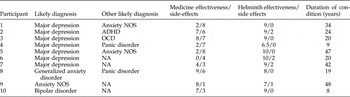
Results of surveys from individuals self-treating with helminths have been reported previously (Cheng et al., Reference Cheng, Jaint, Thomas, Wilson and Parker2015). Of interest was the observation that several individuals reported effective treatment of neuropsychiatric disorders with HDCs. In that previous study, survivor bias was largely ruled out as a confounding factor since most participants obtained their helminths from a single, non-commercial supplier that reported a 100% response rate to the survey. However, self-diagnosis, particularly with neuropsychiatric disorders, may be unreliable. With this in mind, the surveys involving treatment of neuropsychiatric disorders with HDCs were evaluated by a board-certified psychiatrist (co-author R.A.M.), and a likely diagnosis of the participant's conditions were provided (table 1). The results did indeed suggest that self-reported diagnoses were not reliable. For example, although five participants reported bipolar disorder (Cheng et al., Reference Cheng, Jaint, Thomas, Wilson and Parker2015), only one of the participants was judged to have bipolar disorder by the physician. Major depression was the most common assessment made by the physician, with 7 out of 10 of the respondents likely having major depression (table 1).
Helminth therapy and neuropsychiatric disorders. Responses were collected from participants of a previous study (Cheng et al., Reference Cheng, Jaint, Thomas, Wilson and Parker2015) who rated the effectiveness and the side-effects of treatment by medical professionals and of self-treatment with cysticercoids of Hymenolepis diminuta (HDCs). Scores are on an 11-point scale from 0 to 10, with 0 being no effectiveness or side-effects, and 10 being complete effectiveness or most severe side-effects. NOS, not otherwise specified; ADHD, attention deficit hyperactivity disorder; OCD, obsessive–compulsive disorder; NA, not applicable, only one diagnosis.

The excellent responsiveness of the neuropsychiatric conditions to helminth therapy was encouraging, especially in the face of the lengthy duration of disease reported by the participants (average = 27.1 years). In two cases (#1 and #6), the duration of neuropsychiatric condition as reported in the survey may have included the duration of inflammatory conditions (e.g. allergies) other than the neuropsychiatric conditions listed. In both of these cases, the durations of the neuropsychiatric conditions were corroborated (ascertained) by interview with the helminth supplier without compromising the anonymity of the participants, as described in the Methods. Although the reported benefits of helminthic therapy for neuropsychiatric conditions were excellent (average 8.65 on a scale of 0–10), participants #4, #8 and #9 were judged to be ‘undertreated’ based on the low numbers of helminths used and the incomplete effectiveness they reported. This was corroborated by the supplier. For example, an increase in dose from 20 HDCs/month (the numbers used at the time the initial survey was taken) to 45 HDCs /2 weeks resulted in complete effectiveness of treatment (without side-effects) for participant #4.
Selection bias favouring surveys from those having problems with helminth therapy
Our previous study using the self-treatment survey (Cheng et al., Reference Cheng, Jaint, Thomas, Wilson and Parker2015) was greatly aided by a non-commercial supplier of helminths who was able to muster a 100% response rate among individuals receiving helminths from the supplier at no cost. Since that original study, MD#4 agreed to help obtain more data, asked approximately 70 patients to fill out the survey and was very optimistic that they would do so. Of those patients contacted by MD#4, 68 were described by the physician as having positive experiences with HDCs, with the remaining two having ‘difficulties’. Interestingly, one of the two patients with difficulties completed the survey, whereas none of the 68 patients who were relatively more satisfied with their treatment (based on their physician's report) completed the survey. This observation may reflect a potential bias among survey participants paying for their therapy, suggesting that the ones who are not satisfied may be the most interested in advancing the science by completing the survey. Unfortunately, this potential selection bias may preclude further collection of reliable data through the survey unless another non-commercial supplier providing helminths free of charge is willing to participate. At the same time, this problem points strongly toward the need for funded, controlled studies to evaluate the effectiveness of helminth therapy.
Changing popularity of various helminths based on interviews with providers
We previously reported (Cheng et al., Reference Cheng, Jaint, Thomas, Wilson and Parker2015) a wealth of information obtained from helminth providers, including uses, dosage, costs, effectiveness, side-effects and popularity of the four helminths currently in use. Although much of the information obtained was from commercial suppliers with vested interests in the success of their products, the information was corroborated by other sources, including commercial competitors with opposing interests. When data were last tabulated in early 2015 (Cheng et al., Reference Cheng, Jaint, Thomas, Wilson and Parker2015), the most popular helminth in use by self-treaters was the porcine whipworm (low pH formulation of TSO, with about 4000 users), followed by the human hookworm (NA, about 900 users), the human whipworm (TTO, 600 users), and finally the rat tapeworm (HDC, 500 users). However, the use of HDCs has risen rapidly within a single year, from about 500 users in January of 2015 to about 700 in April, and to about 1200 in December, making it probably the second most popular helminth in use as of the end of 2015. Although the use of HDCs is currently on track to eventually surpass the use of TSO and become the most widely used helminth by self-treaters, a producer of TSO notes that production of the organisms under regulations for supplements (rather than for drugs) could reduce the price of TSO by fivefold or more. Work toward that dramatic cost reduction is currently in progress, and, if fruitful, could lead to a rapid and unpredictable expansion of the market for TSO (low pH formulation). Further, the FDA does not currently approve the shipping of HDCs into the USA, a factor that could make the organisms, which have limited stability following isolation (Cheng et al., Reference Cheng, Jaint, Thomas, Wilson and Parker2015), difficult to obtain for what is currently the largest market for helminths.
Discussion
The previous socio-medical study evaluating practices and outcomes of individuals self-treating with helminths focused on reports provided by self-treaters and by providers or distributors of helminths. This study, in contrast, contains substantial feedback from physicians who have patients who self-treat with helminths. Of the five physicians surveyed, three saw primarily self-treating patients with autism. A fourth reported that about 40% of his/her self-treating patients had autism. The fifth physician saw no patients with autism, but saw fewer self-treating patients than any of the other physicians. Thus, the large majority (57%) of the patients described by physicians in this report had autism. This observation may be accounted for by at least two factors. First, parents of patients with autism are very prone to seek alternative medical treatments (Levy & Hyman, Reference Levy and Hyman2003; Levy et al., Reference Levy, Mandell, Merhar, Ittenbach and Pinto-Martin2003; Harrington et al., Reference Harrington, Patrick, Edwards and Brand2006; Hanson et al., Reference Hanson, Kalish, Bunce, Curtis, McDaniel, Ware and Petry2007; Perrin et al., Reference Perrin, Coury, Hyman, Cole, Reynolds and Clemons2012; Akins et al., Reference Akins, Krakowiak, Angkustsiri, Hertz-Picciotto and Hansen2014). Second, parents of patients with autism are relatively likely to maintain supervision of their child by a physician, despite using alternative treatments such as helminth therapy. This contrasts with many neurotypical, adult self-treaters, who are likely to try self-treatment without the knowledge of a physician.
Helminth therapy has previously been suggested as a potential treatment for autism (Siniscalco & Antonucci, Reference Siniscalco and Antonucci2013). However, it should be pointed out that the physicians interviewed in this present study did not report that helminth therapy affected the dysfunctions in comprehension of social interactions that are the hallmark of autism spectrum disorders (ASDs). In other words, helminth therapy did not effectively treat ASDs, per se. Rather, physicians indicated that a variety of inflammation-related conditions co-associated with ASDs, such as allergy and digestive problems, were treated. A summary of the overall degree of benefit or harm of helminth therapy for patients with autism is shown in table 2. With the exception of MD#1, all physicians reported that about 40–60% of patients with autism benefited from their self-treatment. In contrast, MD#1 described almost all patients as benefiting. However, MD#1 divided the results of helminth therapy into highly (30% of patients), moderately (40% of patients) and mildly (30% of patients) effective. Thus, it is possible that MD#1's observations were consistent with those of the other physicians. Of note is the fact that MD#3 did observe a lower percentage of positive response (40% of patients) to self-treatment than did the other physicians. However, the patients of MD#3 used lower levels of therapy with HDCs than did the patients of other physicians, had no access to HDCfresh, and may have included some individuals without inflammatory conditions. These factors potentially account for the lower positive response rate reported by MD#3.
The overall effects of self-treatment with helminths on patients with autism.

aHelminths used were ova from Trichuris suis (TSO) and cysticercoids from Hymenolepis diminuta (HDC).
bSignificant hyperactivity.
cColonization with severe gastric pain eliminated with anti-helminth drugs, observed in two patients, both with severe disease (mostly non-verbal) and under the age of 8 years.
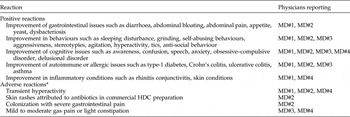
A summary of the specific effects of the helminth therapy is shown in table 3. Co-associated conditions that were effectively treated by helminth therapy in some patients included neuropsychiatric disorders such as irritability, depression, anxiety, inattention, tics and obsessive–compulsive behaviours. Our previous study (Cheng et al., Reference Cheng, Jaint, Thomas, Wilson and Parker2015) suggested that these same neuropsychiatric disorders were effectively treated by helminth therapy in adult neurotypical individuals (individuals without ASDs). Thus, the present work, in conjunction with the previous study, provides strong support for the view that helminth therapy may treat a wide range of neuropsychiatric disorders in paediatric and adult patients with and without ASDs.
Specific effects of self-treatment with helminth therapy on patients with autism.

*Although all physicians reported adverse reactions, these reactions were seldom judged to outweigh the benefits of therapy (see table 2).
Changes in communication skills were observed in some patients with ASDs, which was attributed to a decrease in inflammation associated with the helminth therapy that potentially ‘allowed the brain to function better’. However, all physicians treating patients with autism noted that patient selection was important. Only those patients who had substantial inflammation-associated symptoms, including co-associated neuropsychiatric disorders, allergies and problems with digestion, were thought to benefit strongly from helminth therapy. This was yet another indication that helminth therapy did not treat ASDs, per se, but that it affected co-associated inflammatory conditions in some patients.
Three physicians independently reported a temporary increase in hyperactivity in a fraction of their patients with ASDs shortly after taking helminths. Further, almost 1% (3 out of approximately 400) paediatric patients experienced severe cramps associated with HDC colonization and had to have the helminths removed. These side-effects were not found in our previous study using interviews with providers and patient-reported outcomes (Cheng et al., Reference Cheng, Jaint, Thomas, Wilson and Parker2015). The new observations reflect both an increase in use of HDCs in the paediatric population as well as greater awareness of details from the physicians. Thus, this study provides a greater level of detail regarding the effects of self-treatment with helminth therapy than previously obtained, in large part due to the observations made by the physicians participating in this study.
The possibility of placebo effects was discussed with each physician participating in this study. All physicians indicated that they thought that the primary effects they observed were not due to placebo effects. At the same time, they all acknowledged that some of the effects may be due to a placebo effect. MD#2, for example, noted that the effect was better when the parents were positive about the therapy, and MD#3 noted that he/she was confident in the conclusions regarding the real effects of the helminths but that their observations were not ‘rigorous’. In our previous study utilizing patient-reported outcomes (Cheng et al., Reference Cheng, Jaint, Thomas, Wilson and Parker2015), there were several indications that the primary effects of self-treatment with helminths were not due to placebo effects. Foremost among these was the literal surprise when helminths were used with intent to treat allergies but were found unexpectedly to affect neuropsychiatric conditions. Another factor suggesting that the effects observed in the previous study were not due to a placebo effect was that self-treaters could tell when a helminth was unexpectedly mis-formulated and not working. One additional factor, among others, was the decades-long duration of chronic disease in many of the participants in the previous study, suggesting that ‘regression to the mean’ was not an important caveat. In the present study involving many paediatric patients, there are fewer indicators that the placebo effect was not important in the physician's observations. Still, the observations of MD#2 that (a) the formulation of HDC was important in the outcome, and that (b) patients treating for behavioural issues were surprised to see effects on allergic conditions, are both indicators that not all of the effects observed in this study were due to a placebo effect. In addition, the observations made in this study are consistent with the previous study (Cheng et al., Reference Cheng, Jaint, Thomas, Wilson and Parker2015), with both studies pointing toward the idea that helminth therapy is an effective treatment for a variety of neuropsychiatric disorders.
Should FDA-approved, randomized, blinded, placebo-controlled studies eventually demonstrate helminth therapy to be an effective anti-inflammatory treatment affecting a broad spectrum of disease, it is expected that commercialization and effective marketing schemes will rapidly make helminth therapy a staple of modern medicine and perhaps make biome enrichment a critical component of preventative medicine. However, at present, the negative reputation of helminths as parasites and the lack of FDA-approved helminths for medical use point to the idea that self-treatment with helminths as it currently exists will not likely become widespread. This study tends to contradict that view, with a large fraction of patients (or parents of paediatric patients) willing to try self-treatment with helminths. However, it should be pointed out that the majority of patients described in this study had autism, and these patients (or their parents) may be especially prone to try alternative therapies (Levy & Hyman, Reference Levy and Hyman2003; Levy et al., Reference Levy, Mandell, Merhar, Ittenbach and Pinto-Martin2003; Harrington et al., Reference Harrington, Patrick, Edwards and Brand2006; Hanson et al., Reference Hanson, Kalish, Bunce, Curtis, McDaniel, Ware and Petry2007; Perrin et al., Reference Perrin, Coury, Hyman, Cole, Reynolds and Clemons2012; Akins et al., Reference Akins, Krakowiak, Angkustsiri, Hertz-Picciotto and Hansen2014). Further, the patients described in this study had sought out physicians who were accepting of alternative therapies, and therefore these patients may be more prone than typical patients to accept helminth therapy. Nevertheless, MD#4, who had one of the highest rates of patient acceptance of helminth therapy, stated that it was not the physician's opinion that mattered much in the decision-making process, but rather it was the opinion of other parents whose autistic children had tried the therapy and experienced positive outcomes.
One encouraging observation made in this study is that, according to physicians' reports, patients did not rely strictly on helminth therapy to reduce inflammation. Rather, patients took a more holistic approach, switching diets to reduce inflammation (less fat and processed sugars and more fibre), and monitoring other important health issues, such as vitamin D levels. Based on our current understanding of immune dysfunction in Western society (Parker & Ollerton, Reference Parker and Ollerton2013), it is indeed expected that such interventions should work synergistically with helminth therapy to enhance immune function. Indeed, MD#5 noted that helminths did not seem to be ‘carrying the weight’ of treating neuropsychiatric disorders in his/her adult patients except for one patient who was not compliant on any issues except for that of helminth therapy. This situation contrasts strongly with that of our previous study, which collected reports from adults who utilized helminth therapy largely in the absence of any physician's supervision (Cheng et al., Reference Cheng, Jaint, Thomas, Wilson and Parker2015). These individuals took a much less holistic approach, generally ignoring dietary issues. This difference in behaviour between the patients in this study and the participants in the previous study might be attributed, in some part, to differences in the degree of supervision by a physician. However, the patient population in the present study is largely paediatric and thus strongly influenced by parental choices, potentially explaining differences between this study and the previous study.
Helminths have a substantially negative reputation as parasites, and indeed many anecdotes are available that point toward the detrimental nature of some helminths. However, the largest randomized trial performed in human history to date (Awasthi et al., Reference Awasthi, Peto, Read, Richards, Pande and Bundy2013) addressed the question of the ‘toxicity’ of helminths in a quantitative way. Covering approximately 5 million human life years, the trial evaluated the effect of de-worming on the mortality and weight of children in northern India. In the study, deworming effectively reduced the number of the more common roundworms, but did not address the less common flatworms that were present in approximately 5% of the population. Despite the reputation of helminths, de-worming did not affect body weight, and no statistically significant effect on childhood mortality was observed. This observation might suggest that helminths, in general, are well adapted to their hosts, despite some specific cases in which helminths are indeed deleterious to their hosts. Indeed, as pointed out by Falcone & Prichard (Reference Falcone and Pritchard2005):
Assuming that this [currently under investigation] therapeutic use [of helminths] delivers the expected benefits, it could lead researchers to rethink whether these organisms might not rightfully claim a new status as healers rather than pathogens, or even symbionts rather than parasites, provided that dosage is carefully regulated.
These observations point toward starting points for clinical trials, and provide further support for the potential importance of helminths for therapeutic use.
Acknowledgements
The authors wish to thank Zoie E. Holzknecht, Robert A. Holzknecht, Rasika Rao and Stephen J. Heiny for careful proofreading of the manuscript.