INTRODUCTION
The Magelonidae is a comparatively small family of polychaetes comprising ~70 known species (Mortimer & Mackie, Reference Mortimer, Mackie, Maciolek and Blake2009) in two genera: Magelona Müller, Reference Müller1858 and Octomagelona Aguirrezabalaga et al., Reference Aguirrezabalaga, Ceberio and Fiege2001. Magelonids are characterized by possessing a slender body, divided into two distinct regions; a thoracic region of eight (Octomagelona) or nine chaetigers (Magelona) carrying capillary chaetae (those of the ninth may be specialized) and an abdomen of many (carrying hooded hooks). They possess a dorso-ventrally flattened head, spatulate in shape, giving rise to the group's common name, the shovelhead worms, and a pair of papillated palps, arising ventrolaterally from the base of the prostomium. Adult Magelona are generally long and thin, less than 1 mm wide, however, more robust, stout species such as Magelona alleni Wilson, Reference Wilson1958, Magelona cincta Ehlers, Reference Ehlers1908 and Magelona symmetrica Mortimer & Mackie, Reference Mortimer and Mackie2006 can attain greater widths. Magelonids may reach 150 mm in length, although average lengths for most species are unknown, due to their fragility upon collection. Magelonids are described as good burrowers in muds and sands (Fauchald & Jumars, Reference Fauchald and Jumars1979; Abd-Elnaby, Reference Abd-Elnaby2008), using their flattened prostomia and eversible ‘probosces’ (see Mortimer et al., Reference Mortimer, Cassà, Martin and Gil2012 regarding terminology) to move through the sediment, although differences in burrowing activity have been highlighted (Mortimer & Mackie, Reference Mortimer and Mackie2014). They are generally found at depths of less than 100 m (Rouse, Reference Rouse, Rouse and Pleijel2001), however, several species are known from deeper waters (1000 to over 4000 m, see Hartman, Reference Hartman1971; Aguirrezabalaga et al., Reference Aguirrezabalaga, Ceberio and Fiege2001). Tube building has not been recorded for most species (Jumars et al., Reference Jumars, Kelly and Lindsay2015); however, distinct tubes are known for species such as M. alleni, M. cincta (Mortimer & Mackie, Reference Mortimer, Mackie, Maciolek and Blake2009), Magelona cf. falcifera Mortimer & Mackie, Reference Mortimer, Mackie, Sigvaldadóttir, Mackie, Helgason, Reish, Svavarsson, Steingrímsson and Gudmundsson2003 and M. symmetrica (Mortimer et al., Reference Mortimer, Cassà, Martin and Gil2012). Fauchald & Jumars (Reference Fauchald and Jumars1979) considered magelonids as motile surface deposit-feeders, primarily based on the observations of McMahon & Jones (Reference McMahon and Jones1967) and Jones (Reference Jones1968). However, suspension feeding and variability between feeding modes have additionally been suggested (Mortimer & Mackie, Reference Mortimer and Mackie2014), with Jumars et al. (Reference Jumars, Kelly and Lindsay2015) implying a greater tendency towards carnivory and subsurface feeding.
The Magelonidae from the Persian Gulf, the Gulfs of Aden and Oman, and the Red Sea were reviewed by Mortimer (Reference Mortimer2010) and Mortimer et al. (Reference Mortimer, Cassà, Martin and Gil2012), highlighting 11 confirmed species within the region: Magelona cornuta Wesenberg-Lund, Reference Wesenberg-Lund1949 (re-described by Mortimer & Mackie, Reference Mortimer, Mackie, Maciolek and Blake2009); Magelona pulchella Mohammad, Reference Mohammad1970; Magelona obockensis Gravier, Reference Gravier1905; Magelona crenulifrons Gallardo, Reference Gallardo1968; Magelona montera Mortimer et al., Reference Mortimer, Cassà, Martin and Gil2012; Magelona sinbadi Mortimer et al., Reference Mortimer, Cassà, Martin and Gil2012; Magelona cf. agoensis Kitamori, Reference Kitamori1967; Magelona conversa Mortimer & Mackie, Reference Mortimer, Mackie, Sigvaldadóttir, Mackie, Helgason, Reish, Svavarsson, Steingrímsson and Gudmundsson2003; M. cf. falcifera; M. symmetrica and Magelona cf. cincta. Of the 11 species reviewed, only one species was originally described from the Gulf of Oman: M. cornuta, collected just west (20 miles E by N of Ras Jagin, from clay sediments and in shallow water, 12 m) of the study area under investigation here (Chabahar Bay). Wehe & Fiege (Reference Wehe and Fiege2002) provided an annotated checklist of all of the polychaete species recorded from seas surrounding the Arabian Peninsula, providing a bibliography of important studies on the polychaete fauna of the Arabian region. The only magelonid record within this checklist relating to the Gulf of Oman is that of M. cornuta. Further studies investigating the polychaetes of the area covered Chabahar Bay (Exiri, Reference Exiri1996; Nikouyan, Reference Nikouyan1998; Miri et al., Reference Miri, Bagheri Nabavi, Dost Shenas, Safahieh and Loghmani2012; Shakouri et al., Reference Shakouri, Gilan Attaran and Askari Nasab2014), Gulf of Oman (Attaran Fariman, Reference Attaran Fariman2001; Soleimani Rad et al., Reference Soleimani Rad, Kamrani, Keshavar and Wazir Zada2011; and Zareii, Reference Zareii2002: the latter covering the Govater and Tang estuaries) and the Persian Gulf (Shakouri et al., Reference Shakouri, Savari, Nabavi and Yavari2001).
The present paper is part of a larger study looking at the polychaete species of Chabahar Bay. Mortimer et al. (Reference Mortimer, Cassà, Martin and Gil2012) stated that M. cf. agoensis was likely to be new to science, however with the absence of the holotype of M. agoensis for re-description and comparison, and without more complete material it was not described as so at the time. However, further material of this species has now been found, both complete and ovigerous specimens, and is herein described as M. fauchaldi sp. nov. The validity of M. pulchella is also discussed in light of its apparent closeness to M. crenulifrons. The magelonid fauna of Chabahar Bay and the known distributions of each species are provided.
MATERIALS AND METHODS
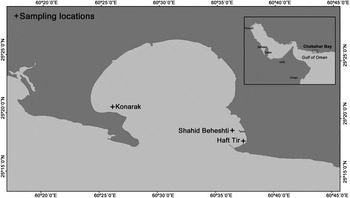
Samples were collected between June 2013 and March 2014 from Chabahar Bay, south-eastern Iran using a Van Veen grab (250 cm2). Sampling took place at three stations perpendicular to the Iranian coastline, one station positioned to the west of the bay and two to the east (Figure 1), with a depth range of 2–10 metres. Three replicates were taken at each station and one litre of sediment from each was taken for analysis of sediment granulometry. In the laboratory each sample was sieved and washed through a 0.5 mm sieve and the retained fraction fixed in 3% formalin, mostly stained with Rose Bengal. Specimens were subsequently preserved in 80% alcohol with 2% propylene glycol as detailed by Mackie & Oliver (Reference Mackie, Oliver and Hall1996). Specimens were examined, identified under compound (Nikon; Eclipse E100 and Leica DM2000) and stereomicroscopes (Olympus SZX10 and Leica MZ9.5) and recorded. A photograph of each specimen was also taken down the microscope for future reference. The majority of specimens were subsequently utilized for biomass measurements using the ash-free dry weight method (Anastasios & Alasdair, Reference Anastasios and Alasdair2005). However, several specimens (recorded below) were saved for further taxonomic investigation. Images of the latter specimens were acquired using a Canon 70D DSLR camera attached to a Leica Z6 macroscope. Individual source images were then stacked using HeliconFocus v6.22 (HeliconSoft Ltd) extended depth of field software, with calibrated scale bars added using Syncroscopy Automontage v.5.4. Specimens for scanning electron microscopy (SEM) were transferred in an alcohol series through to 100% ethanol for critical point drying (Quorum K850 critical point dryer). They were then sputter coated with gold (Agar auto sputter coater, 40 mA for 120 seconds) before imaging using a Jeol Neoscope JCM-5000 SEM. One posteriorly incomplete specimen of M. fauchaldi sp. nov. was cut transversely into four pieces (thorax and three abdominal pieces of ~10 chaetigers) and placed into a Fisherbrand FB11010 ultrasonic bath/cleaner to remove the hoods of the hooded hooks before observation under SEM, as detailed in Nishino & Ohwada (Reference Nishino and Ohwada1991). Due to the small size of this species smaller intervals for sonication were tested, starting at 5-second intervals and working towards 30 seconds. After each sonication, the fragments were viewed under the microscope to see if the hoods had broken. If the hoods were still intact, the fragment was placed into the bath once again and the interval for sonication increased by a further 5 seconds, until the hoods broke. One fragment was sonicated for 35 seconds but this was fractionally too long for this size of specimen and caused the integrity of the specimen to lessen. After sonication the fragments were prepared for SEM as above. Specimens have been deposited at the National Museum Wales, Cardiff (NMW). Specimens are recorded as: Anterior fragments (af) or Complete specimens (C). Specimens of M. fauchaldi sp. nov. as detailed by Mortimer et al. (Reference Mortimer, Cassà, Martin and Gil2012, as M. cf. agoensis) were previously deposited at the Museo Nacional de Ciencias Naturales, Madrid (MNCN) and at the Museu Nacional de História Natural e da Ciência, Lisboa (MB).
Map of the investigated area, with sampling site localities (base map provided by the Ports and Maritime Organization, Iran).

RESULTS AND DISCUSSION
SYSTEMATICS
Family Magelonidae Cunningham & Ramage, Reference Cunningham and Ramage1888
Genus Magelona F. Müller, Reference Müller1858; emended Fiege et al. (Reference Fiege, Licher and Mackie2000)
Magelona fauchaldi sp. nov.
(Figures 2–5)
Magelona cf. agoensis – Mortimer et al. (Reference Mortimer, Cassà, Martin and Gil2012: figures 3, 4 & 13G)
Not Magelona agoensis Kitamori, Reference Kitamori1967
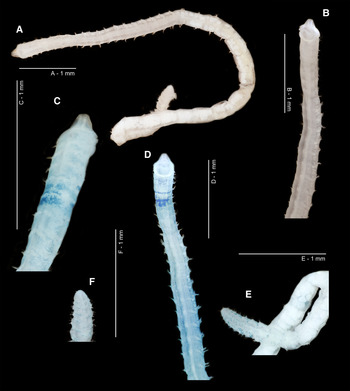
Magelona fauchaldi sp. nov. holotype (NMW.Z.2015.012.0002a): (A) entire specimen (dorsal view); (B) anterior region (ventral view); (C) anterior region (dorsal view); (D) anterior region (ventral view); (E) posterior region (dorsal view) showing eggs; (F) posterior region (ventral view). (C–F) showing methyl green staining patterns.

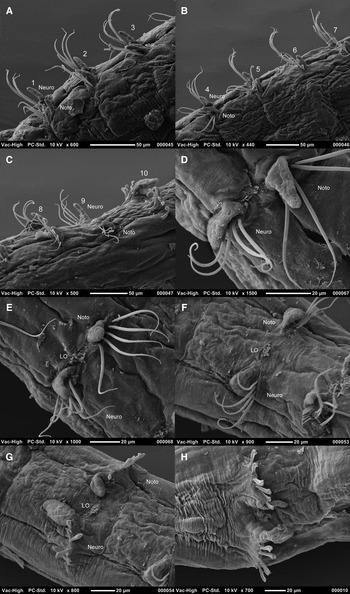
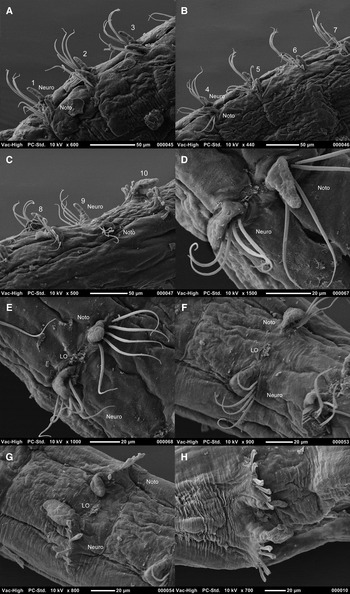
Magelona fauchaldi sp. nov. paratypes (A–G: NMW.Z.2015.012.0002b; H: NMW.Z.2015.012.0002c): (A) right-hand parapodia of chaetigers 1–3 (dorsal view); (B) right-hand parapodia of chaetigers 4–7 (dorsal view); (C) right-hand parapodia of chaetigers 8–10 (dorsal view); (D) right-hand parapodia of chaetiger 4 (lateral view); (E) right-hand parapodia of chaetiger 7 (lateral view); (F) right-hand parapodia of chaetiger 9 (lateral view); (G) parapodia of chaetiger 10 (ventro-lateral view); (H) parapodia of chaetiger 18 (lateral view). Noto, Notopodia; Neuro, Neuropodia; LO, Lateral organs.
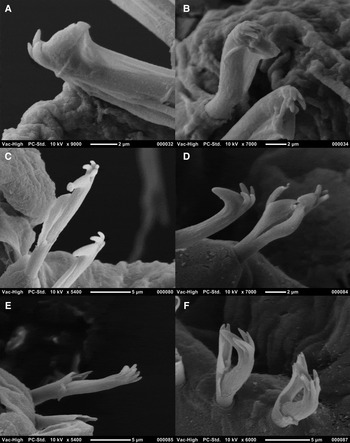
Magelona fauchaldi sp. nov. paratypes (A–B: NMW.Z.2015.012.0002d, hoods partially broken; C–F: NMW.Z.2015.012.0002e after sonication, hoods broken/removed): (A) quadridentate hooded hook (lateral view); (B) pentadentate hooded hooks (lateral and oblique views); (C–D) quadridentate and pentadentate hooded hooks (oblique/frontal views); (E) hexodont hooded hook (rear oblique view); (F) pentadentate hooded hooks (lateral view).

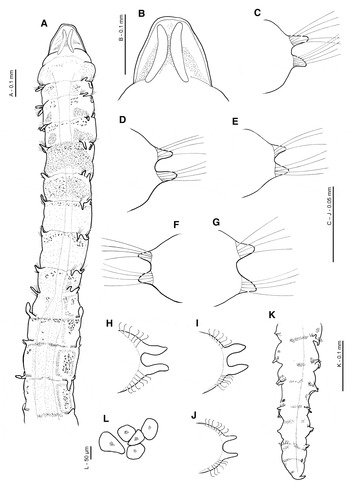
Magelona fauchaldi sp. nov. holotpye (NMW.Z.2015.012.0002a): (A) anterior region (dorsal view); (B) prostomium (dorsal view); (C–J) parapodia of chaetigers 2, 4, 7, 8, 9, 12, 18 and 31 respectively (lateral view); (K) posterior region (dorsal view); (L) oocytes.

TYPE MATERIAL
Holotype: Chabahar Bay, South-eastern Iran – Shahid Beheshti docks (25.312932°N 60.603720°E), very fine sand, 8 m (NMW.Z.2015.012.0002a), collected by Esmaeil Dehani (ED), 06/03/2014.
Paratypes: Chabahar Bay, South-eastern Iran – Hafte Tir docks (25.295681°N 60.623847°E), very fine sand, 1.5 m (NMW.Z.2015.012.0001; 2 af), collected by ED, 06/03/2014; Shahid Beheshti docks (25.312932°N 60.603720°E), very fine sand, 8 m (NMW.Z.2015.012.0002; 10 c, 13 af), collected by ED, 06/03/2014. Persian Gulf, Iran – Station B1–15A (27°42.901′N 52°10.643′E), very muddy sand, 15 m (NMW.Z.2010.037.0002; 4 af), collected by CREOCEAN, Van Veen, August 2005; Station B4–15 (27°41.969′N 52°11.541′E), shelly sand with low mud, 15 m (NMW.Z.2010.037.0003, grab A, 1 af; NMW.Z.2010.037.0004, grab B, 1 af), collected by CREOCEAN, Van Veen, August 2005; Station B4–20C (27°41.908′N 52°11.497′E), shelly muddy sand, 20 m (NMW.Z.2010.037.0005; 1 af; dissected and slide mounted), collected by CREOCEAN, Van Veen, August 2005; Station E20(1) (27°41.352′N 52°13.317′E), sandy mud, 20 m (NMW.Z.2010.037.0006; 1 af), collected by CREOCEAN, Van Veen, February 2006.
Additional material (previously observed, as M. cf. agoensis): Persian Gulf, Iran – Station B1–10 (27°42.982′N 52°10.722′E), muddy sand, 10 m (MB29–000188, grab B, 2 af; MNCN.16.01/13228, grab C, 1 af), collected by CREOCEAN, Van Veen, August 2005; Station B2–10C (27°42.730′N 52°11.061′E), muddy sand, 10 m (MNCN.16.01/13229; 1 af), collected by CREOCEAN, Van Veen, August 2005; Station B3–10 (27°42.415′N 52°11.359′E), shelly muddy sand, 10 m (MNCN.16.01/13230, grab B, 1 af; MB29–000187, grab C, 1 af), collected by CREOCEAN, Van Veen, August 2005.
DESCRIPTION
A small slender and short species; thorax gently tapering towards but of similar width to abdomen (Figures 2A & 5A). No marked constriction between thorax and abdomen, chaetiger 9 marginally narrower, but of similar width and thickness to surrounding chaetigers (Figure 3C). Dimensions of holotype (NMW.Z.2015.012.0002a; ovigerous female): prostomium 0.2 mm long, 0.2 mm wide; thorax 1.25 mm long (including prostomium), 0.3 mm wide; abdomen 0.3 mm wide; total length 9.25 mm for 47 chaetigers. Other complete specimens: 3.8–10.25 mm for 36–43 chaetigers. Widest specimen: thorax 0.3 mm and abdomen, 0.45 mm wide, although specimen more contracted than others.
Prostomium length similar to width (L: W ratio 1), sub-hexagonal, anterior margin smooth and straight to marginally rounded (Figures 2A, D & 5B), without prostomial horns. Two pairs of longitudinal dorsal muscular ridges; outer pair shorter and more indistinct, triangular and abutting inners for entire length. Inner pair slightly separated, although in close proximity for majority of length, diverging at distal prostomial margin. No other obvious prostomial ornamentation. Proboscis fully everted in six specimens, partially everted in nine specimens. Heart-shaped when fully everted, oval when partially everted; very lightly ridged. Palps retained on 15 specimens (eight specimens with both), long, slender; reaching ~chaetiger 20–25. Non-papillated region long, reaching ~chaetigers 4–6. Papillae digitiform, of similar lengths; one row of papillae either side of an inconspicuous groove for length of palp.
Achaetous region behind prostomium ~ twice the size of chaetiger 1. Chaetigers 1–8 similar (Figures 3A–E & 5C–F); parapodia biramous, notopodia with low indistinct prechaetal lamellae. Superior dorsal prechaetal processes (DML) and ventral neuropodial lobes (VNL) absent. Postchaetal lamellae lanceolate to triangular, and of about equal size along thorax; neuropodial lamellae slightly larger than notopodial lamellae on posterior thoracic chaetigers.
Parapodia of chaetiger 9 (Figures 3C, 3F, 5G) with low prechaetal lamellae, confluent with lanceolate to triangular postchaetal lamellae that are marginally broader than on preceding chaetigers, and marginally broader in the neuropodia than notopodia. All thoracic chaetae bilimbate simple capillaries (Figures 3A–F).
Abdominal chaetigers with lanceolate to triangular lateral lamellae of about equal size in both rami (Figures 3C, G–H & 5H–J), with slight basal constrictions (some variation in lamellar shape). No processes (DML and VML) observed at inner margins of chaetal rows. No postchaetal extension of the lateral lamellae behind chaetal rows, hooks emerging from definite ridge (Figures 3G–H & 5H–J). Posteriorly, lateral lamellae reducing to small digitiform lamellae (Figures 3F & 5J) of roughly equal size in each rami. Medial segments often relatively long, ~ one and a half, to three times the width. Lateral organs visible between rami of parapodia along body (Figures 3E–H).
Abdominal hooded hooks predominately either quadridentate, with three secondary teeth surmounting main fang; two lower, and one on the back of, and in between the other two, and pentadentate hooks, with two small teeth directly above the two lower teeth (Figures 4A–D, F). Secondary teeth separated significantly from main fang, as has been reported for other species such as M. crenulifrons (Mortimer & Mackie, Reference Mortimer, Mackie, Maciolek and Blake2009: 190) and in contrast to those seen in species such as M. mirabilis (Fiege et al., Reference Fiege, Licher and Mackie2000: figure 3C). An occasional hexodont hook observed (Figure 4E). Hooks in two groups, with main fangs vis-à-vis (Figures 3H & 5). Approximately 6–10 hooks per rami, with roughly equal numbers in each group (often 3/3, sometimes 3/4 or 4/5), hooks reducing to four per ramus in posterior chaetigers (at ~10 chaetigers from pygidium). No pouches observed. Pygidium small and rounded, anus ventral, only one digitiform lateral anal cirri observed on holotype (Figure 2E–F & 5K), however two observed on other specimens. Several specimens, including holotype full of eggs (Figure 5L), visible from the mid-body region to the posterior, ~50 µm in diameter (Figures 2A, E).
COLOUR
No live animals observed; preserved colour uniformly white in alcohol (Figures 2A–B). Distinct methyl green staining pattern, darkest initially between chaetigers 4–9. Staining of dorsal surface between chaetigers 1–4 does not meet medially, thus giving the appearance of small-paired triangular areas, although stain dissipates quickly from this region. Transverse white speckled areas present on chaetigers 1–8, virtually transverse bands, although not meeting medially. Those of the latter two chaetigers slightly arched (Figure 2C). Ventral surface with a light speckled stain from chaetigers 1–9 and a transverse band of staining, present on chaetigers 4–5. However, ventral staining darkest between chaetigers 5–6 with white speckled patches present between chaetigers 4–9, almost as transverse bands. Slight speckled stain present on dorsal and ventral sides of the prostomium, interparapodially in abdomen and in the posterior last 10 chaetigers (Figures 2E & 5K). After a period of time, much of the stain dissipates, however, it remains longest on mid thoracic chaetigers (Figures 2C–D).
HABITAT
Known from muddy sand, sandy mud and very fine sand, depth ranging from 1.5–20 m.
DISTRIBUTION
Chabahar Bay, Gulf of Oman (present study), Persian Gulf (Mortimer et al., Reference Mortimer, Cassà, Martin and Gil2012).
ETYMOLOGY
The new species is named in honour of the late Dr Kristian Fauchald, a notable and well-regarded member of the polychaete community, whose influence and contributions to the knowledge and understanding of polychaetes will be long lasting. Additionally for the support and advice he provided the second author of this paper on her work with magelonid polychaetes.
REMARKS
Mortimer et al. (Reference Mortimer, Cassà, Martin and Gil2012) described a species of magelonid polychaete from Iran with polydentate abdominal hooded hooks, stating that it was most closely aligned with M. agoensis from Japan. Whilst at that time it was believed to represent a new species, it was not described as so, due to the absence of the holotype of M. agoensis for comparison, and in the absence of more/complete material in order to assess whether perceived differences were due to disparities in size of material. The type material of M. agoensis being somewhat larger, than the material recorded in Mortimer et al. (Reference Mortimer, Cassà, Martin and Gil2012). Although the type material of M. agoensis still cannot be located, new material of M. cf. agoensis found as part of the current study from the Gulf of Oman (containing both complete and ovigerous specimens) has provided an opportunity to revisit this species. The new material being of a similar size to that observed by Mortimer et al. (Reference Mortimer, Cassà, Martin and Gil2012) and much smaller than the type of M. agoensis (the incomplete holotype measures 20 mm long for 38 chaetigers, and 0.9 mm wide). With the addition of this extra material the authors are now confident that these specimens represent a new species, and is herein described as Magelona fauchaldi sp. nov.
Apart from size variation, M. fauchaldi sp. nov. additionally differs from M. agoensis in possessing thoracic postchaetal lamellae that are marginally broader and longer in the neuropodia than the notopodia, and abdominal hooded hooks in two groups, vis-à-vis rather than in a single unidirectional facing group (assessed from the original description). Based on the presence of ovigerous specimens, the authors are satisfied that the differences observed are significant enough to differentiate the two species and that M. fauchaldi sp. nov. is not a species which attains a large size (similar to Magelona minuta Eliason, Reference Eliason1962, the holotype of which has a similar thoracic width, see Fiege et al., Reference Fiege, Licher and Mackie2000).
The new species also differs from the only two other known magelonid species that possess polydentate abdominal hooks: Magelona polydentata Jones, Reference Jones1963 from the Bahamas, and an undescribed species (Magelona sp. I of Uebelacker & Jones, Reference Uebelacker, Jones, Uebelacker and Johnson1984) from the northern Gulf of Mexico, in size (the posteriorly incomplete holotype of M. polydentata is 38 mm for 78 chaetigers, whilst the incomplete specimens of M. sp. I were recorded as 26+ mm long) and in the dentition of the abdominal hooded hooks. Magelona polydentata is recorded as possessing predominately pentadentate hooks with hexodont hooks that are not uncommon. Whilst quadridentate hooks are also recorded as present for M. polydentata they do not predominate. This situation differs from the new species, in which both quadridentate and pentadentate hooded hooks predominate. Whilst hexodont hooks are present, they are extremely sporadic. Although the dentition of hooded hooks in Magelona sp. I is similar to the new species, Magelona sp. I additionally possesses tridentate hooded hooks (which predominate in some specimens), not observed for the new species. Magelona fauchaldi sp. nov. further differs from M. sp. I in not possessing small dorsal and ventral abdominal processes on the inner margins of chaetal rows (DML and VML) and oblique dorsal slits on some thoracic chaetigers.
Magelona crenulifrons Gallardo, Reference Gallardo1968
(Figure 6)
Magelona crenulifrons Gallardo, Reference Gallardo1968
Magelona crenulifrons Mortimer & Mackie (Reference Mortimer, Mackie, Maciolek and Blake2009); Mortimer et al. (Reference Mortimer, Cassà, Martin and Gil2012)
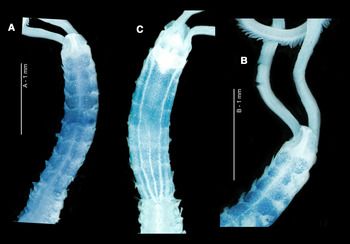
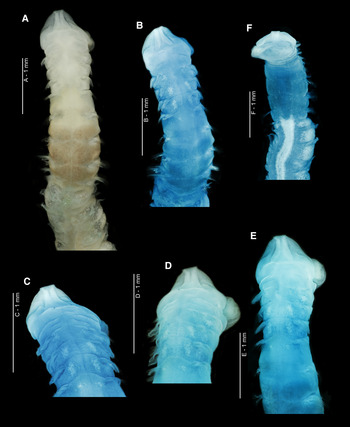
Magelona crenulifrons Gallardo, Reference Gallardo1968 (NMW.Z.2015.012.0003): (A) anterior region (dorsal view); (B) prostomium and first four chaetigers (dorsal view); (C) anterior region (ventral view). (A–C) stained with methyl green.

MATERIAL EXAMINED
Chabahar Bay, South-eastern Iran – Konarak Stone Piers (25.346465°N 60.426847°E), very fine sand, 6 m (NMW.Z.2015.012.0003; 1 af), collected by ED, 06/03/2014.
DESCRIPTION
A moderate specimen, abdomen marginally wider than thorax. Dimensions: Prostomium 0.45 mm long, 0.4 mm wide; thorax 2.25 mm long (including prostomium), 0.5 mm wide (at ~ chaetiger 5); abdomen 0.65 mm wide; total length 4.6 mm for 23 chaetigers.
Prostomium roughly as wide as long (L: W ratio 1.1), triangular, with distinct prostomial horns, anterior margin smooth, rounded triangular. Two pairs of distinct longitudinal dorsal muscular ridges, inner pair abutting for majority of length, diverging distally into corners of prostomial horns. Outer pair abutting inners for entire length (Figures 6A–B), with weak prostomial markings either sides of ridges. Proboscis not everted. Both palps retained, long and thin, arising ventrolaterally from base of prostomium, highly curled but ~7.5 mm in length (longer than length of body). Non-papillated basal region long (~1.0 mm) reaching ~ chaetiger 5. Papillae long, short only at extreme proximal end, with two rows of papillae proximally and one row medially and distally, either side of inconspicuous ventral groove.
Achaetous region behind prostomium, roughly one and a half times the size of chaetiger 1. Buccal region tri-lobed, large upper lip above two smaller lips (Figure 6C), conspicuous. Chaetigers 1–8 similar; parapodia biramous; notopodia with low triangular prechaetal lamellae confluent with rounded lanceolate postchaetal lamellae of similar size throughout thorax, often terminating in pointed tips. Cirriform prechaetal superior processes (DML) of similar size present on all thoracic chaetigers, except chaetiger 9. Neuropodia of chaetigers 1–8 with ventral digitiform processes (VNL) underneath chaetal bundle, decreasing in size by chaetiger 6. Small postchaetal expansion, becoming well-developed and triangular on chaetigers 7 and 8.
Chaetiger 9: shorter and slightly narrower than preceding chaetigers. Notopodial prechaetal lamellae low, confluent with rounded auricular lamellae, smaller than on preceding chaetigers. No superior processes (DML) observed. Neuropodia with triangular postchaetal lamellae confluent with low prechaetal ridges and small ventral prechaetal processes. Chaetae of all thoracic chaetigers simple bilimbate winged capillaries.
Abdominal chaetigers with broad, spatulate lateral lamellae, of about equal size in both rami, basally constricted, tips often pointed. Lateral lamellae extend behind chaetal rows, apexes of which are triangular. Triangular processes (DML and VML) present at inner margins of chaetal rows, relatively long in anterior abdomen.
Abdominal chaetae bidentate hooded hooks of similar size, but with an odd smaller hook observed towards the base of the lamella in some rami. Hooks in two groups, main fangs vis-à-vis, ~8 hooks per rami in anterior abdomen, in roughly two equal groups. No pouches observed (pouches have been previously reported to start on ~ chaetiger 25, see Mortimer & Mackie, Reference Mortimer, Mackie, Maciolek and Blake2009).
COLOUR
Preserved colour uniformly white in alcohol, glandular areas noticeable interparapodially in abdomen. Distinct methyl green staining pattern, with heavy staining over entire thorax, except around the bases of the parapodia and along the mid dorsal line (Figures 6A, B). Dorsal staining heaviest between chaetigers 1–5. Ventrally, longitudinal white stripes present: one on the mid-ventral line from chaetigers 5–9, one on either side, running from the proboscidial region to chaetiger 9 where they meet with the mid-ventral line, and lastly a further two outer stripes running from chaetigers 6–9. Ventral staining darkest between chaetigers 1–6 (Figure 6C). Light green speckling on both the dorsal and ventral surfaces of the prostomium and as longitudinal stripes on many of the palpal papillae. Light staining present interparapodially in the abdomen and along the mid-ventral line. A very faint white V-shape is present around chaetiger 5, with the base of the V on the margin between the darker and lighter staining.
HABITAT
This species has been recorded in: very fine sand in 6 m of water (present study); fine silt to coarse sand, 9–74.5 m (Mortimer & Mackie, Reference Mortimer, Mackie, Maciolek and Blake2009); fine muddy sand to coarse sand, with a shelly component, 10–20 m (Mortimer et al., Reference Mortimer, Cassà, Martin and Gil2012); 10–30 m (Hylleberg & Nateewathana, Reference Hylleberg, Nateewathana, Petersen and Kirkegaard1991; Nateewathana & Hylleberg, Reference Nateewathana, Hylleberg, Petersen and Kirkegaard1991); mud to sandy mud in 6–48 m (Gallardo, Reference Gallardo1968); soft mud and sandy mud with coral rubble in 54–71 m (Al-Hakin & Glasby, Reference Al-Hakin and Glasby2004).
DISTRIBUTION
Chabahar Bay, Gulf of Oman (present study); Persian Gulf, Iran, Qatar (Mortimer & Mackie, Reference Mortimer, Mackie, Maciolek and Blake2009; Mortimer et al., Reference Mortimer, Cassà, Martin and Gil2012), Thailand (Nateewathana & Hylleberg, Reference Nateewathana, Hylleberg, Petersen and Kirkegaard1991; Hylleberg & Nateewathana, Reference Hylleberg, Nateewathana, Petersen and Kirkegaard1991), Vietnam (Gallardo, Reference Gallardo1968), Natuna Islands, South China Sea (Al-Hakin & Glasby, Reference Al-Hakin and Glasby2004) and Hong Kong (Shin, Reference Shin and Morton1998, Reference Shin and Morton2003; Mortimer & Mackie, Reference Mortimer, Mackie, Maciolek and Blake2009).
REMARKS
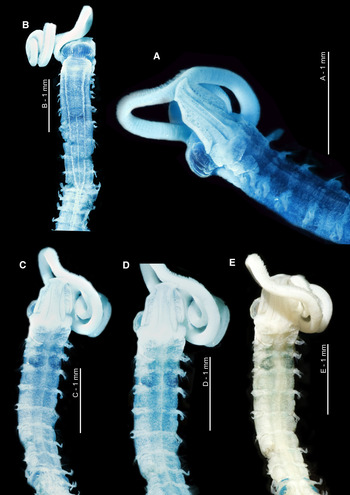
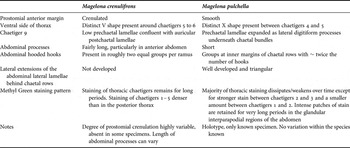
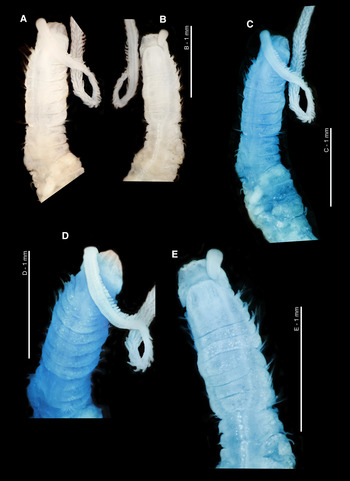
Due to the lack of crenulation on the anterior margin of this specimen, it was originally identified as M. pulchella, a species originally described from Kuwait. Both M. pulchella and M. crenulifrons are known to occur in the Persian Gulf and both species share many similarities, particularly in the nature of the lateral lamellae. However, on closer examination of this specimen, the features were more closely aligned with that of M. crenulifrons as re-described by Mortimer & Mackie (Reference Mortimer, Mackie, Maciolek and Blake2009) than the former species. Although crenulations are present on all paratype material and Hong Kong specimens of M. crenulifrons as observed by the aforementioned authors, Mortimer et al. (Reference Mortimer, Cassà, Martin and Gil2012) later described a few specimens from the Persian Gulf without crenulations. The degree of crenulation was shown to be highly variable with several specimens possessing anterior margins that appeared almost smooth with minute crenulations, whilst others were highly crenulated. Due to the similarity between these two species it was deemed necessary to re-examine the holotype of M. pulchella to verify the differences previously noted between the two species (see Table 1). A distinct X shape is present on the ventral side of the thorax of the holotype of M. pulchella between chaetigers 4 and 5 (Figure 7B), whilst in M. crenulifrons an unstained V-shaped pattern is present, generally between chaetigers 5 and 6. The notopodia of chaetiger 9 shows some variation, with the prechaetal lamellae expanded as lateral digitiform processes underneath the chaetal bundles in M. pulchella, whilst in M. crenulifrons the low prechaetal lamellae are confluent with auricular postchaetal lamellae. The processes at the inner margins of the abdominal chaetal rows (DML and VML) appear longer in M. crenulifrons than in M. pulchella, particularly in the anterior abdomen, however, this can vary in specimens of the same species. Additionally, the abdominal hooded hooks of M. crenulifrons are present in roughly two equal groups in each rami, whilst in M. pulchella, the groups at the inner margins of chaetal rows possess ~ twice the number of chaetae. Mortimer & Mackie (Reference Mortimer, Mackie, Maciolek and Blake2009) stated that M. pulchella was additionally distinguished from M. crenulifrons by the presence of deeper staining on the dorsal surface between the parapodia of chaetigers 2 and 3 with methyl green. This has been verified for the type specimen and although the staining patterns are similar between the two species, further differences have been observed, particularly in the patterns of stain retention over greater periods. The staining of all thoracic chaetigers remains in specimens of M. crenulifrons for long periods, whilst in M. pulchella, the majority of thoracic staining dissipates/weakens except for a stronger stain between chaetigers 2 and 3 and a smaller amount between chaetigers 1 and 2, see Figure 7. Additionally, the staining of chaetigers 1–5 in M. crenulifrons is denser than in the posterior thorax, where the speckles of stain are more dispersed. Intense patches of stain are retained for very long periods of time in the glandular interparapodial regions of the abdomen in M. pulchella, whilst in M. crenulifrons, only slight staining surrounding these regions in the abdomen are retained. Additionally, the lateral extensions of the lateral lamellae behind chaetal rows on abdominal chaetigers are well developed in M. pulchella and triangular, but not developed in M. crenulifrons.
Magelona pulchella Mohammad, Reference Mohammad1970 (Holotype: BMNH 1969.391): (A) anterior region (dorsolateral view); (B) anterior region (ventral view); (C–E) anterior region (dorsal view). All stained with methyl green, (C–E) show stain dissipation after 1 h, 3 h and 2 days respectively.
Morphological variation between Magelona crenuifrons and Magelona pulchella.

The re-examination of the type specimen of M. pulchella highlights several differences between this specimen and M. crenulifrons. However, it is very evident that there are huge similarities between these two species. The fact that M. pulchella is only known from the type specimen means that we know very little about its habitat preference, distribution and the variation in morphology of this species. Whilst there appears to be variation between the type specimens of both species, some features such as the crenulation of the anterior margin in M. crenulifrons have been shown to be highly variable. Other features such as the size of abdominal processes can depend on the size of specimen, so without further specimens of M. pulchella the validity of this species cannot be addressed. Therefore, the possibility remains that M. pulchella is a synonym of M. crenulifrons, which would explain the absence of further specimens of M. pulchella. To clarify this point, examination of further material from the type locality of M. pulchella and DNA analysis of the two species would be extremely beneficial. Until that time M. pulchella remains an enigmatic species.
A record of M. pulchella off Qatar is shown in the Indian Ocean node of the Ocean Biogeographic Information System (OBIS), although this has not been verified by the authors and the validity of the record is unknown.
Magelona cf. cincta Ehlers, Reference Ehlers1908
(Figure 8)
Magelona cf. cincta – Mortimer et al. (Reference Mortimer, Cassà, Martin and Gil2012)
Magelona cf. cincta – Mortimer & Mackie (Reference Mortimer, Mackie, Maciolek and Blake2009)
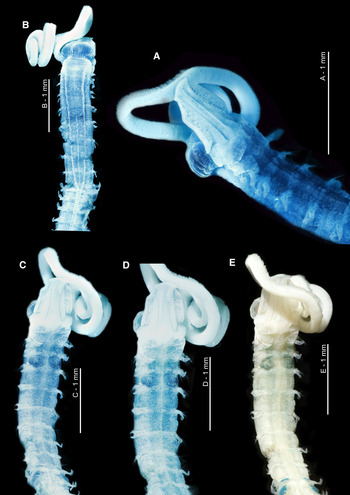
Magelona cf. cincta Ehlers, Reference Ehlers1908 (NMW.Z.2015.012.0004): (A) anterior region, showing thoracic pigment band; (B–E) anterior region (dorsal view, stained with methyl green); (F) anterior region (ventral view, stained with methyl green).

MATERIAL EXAMINED
Chabahar Bay, South-eastern Iran – Konarak Stone Piers (25.346465°N 60.426847°E), very fine sand, 6 m (NMW.Z.2015.012.0004; 1 af), collected by ED, 06/03/2014.
DESCRIPTION
A moderately stout specimen; thoracic width similar to abdomen. Specimen dimensions: prostomium 0.5 mm long, 0.75 mm wide; thorax (including prostomium) 3.2 mm long, 0.8 mm at maximum width (around chaetiger 6–7, omitting parapodia); abdomen 0.8 mm wide; total length 6.0 mm for ~17 chaetigers. Median to posterior thoracic chaetigers characteristically rounded and bulbous laterally.
Prostomium wider than long (0.67 L: W ratio), triangular; anterior margin smooth with rudimentary horns (Figures 8A & D–E). Two longitudinal dorsal muscular (?) ridges, diverging into the prostomial corners, indistinct prostomial markings either side. Proboscis partially everted, oval; palps not retained.
Achaetous region behind prostomium, roughly twice the size of chaetiger 1. Notopodia of chaetigers 1–8 similar low triangular notopodial prechaetal ridges confluent with slender triangular postchaetal lamellae with pointed tips. Postchaetal lamellae decreasing in size along thorax, although those of chaetigers 7 and 8 appearing slightly longer than on preceding chaetigers. No superior processes (DML) observed. Neuropodial ventral lobes (VNL) initially somewhat distally expanded with pointed tips, directly underneath chaetae and scoop-like. Lamellae slender triangular decreasing in size from chaetigers 1–6; but increasing to chaetiger 6–8, becoming postchaetal by chaetiger 7.
Chaetiger 9: lamellae similar in both rami, low pre- and postchaetal ridges, terminating in lateral triangular lobes. All thoracic chaetae simple bilimbate capillaries, those of chaetigers 7 and 8 longer than on preceding chaetigers; bundles splayed, particularly in the latter chaetiger (Figures 8A, B). Chaetae of chaetiger 9 shorter, but not otherwise modified.
Abdominal chaetigers with pointed, sinuous leaf-shaped lateral lamellae, of about equal size in both rami; not basally constricted and with no obvious postchaetal expansions. No dorsal and ventral processes (DML and VML) observed on abdominal chaetigers. Abdominal chaetae tridentate hooded hooks, of a similar size, main fangs vis-à-vis. Secondary teeth above main fang, fairly small. Approximately 10–12 hooks per ramus in anterior abdomen, in roughly two equal groups. Hooks arising from definite ridge. No pouches observed, specimen posteriorly incomplete.
COLOUR
Preserved specimen cream-white in alcohol with a reddish/brown pigment band present between chaetigers 5–8, somewhat faded (Figure 8A). No distinct staining pattern observed with methyl green, stain present over entire specimen. White speckled areas present dorsally between chaetigers 1–4 (Figures 8B, C) and present as a ventral band between chaetigers 2–4. Additional conspicuous speckled areas abdominally as interparapodial patches and along the mid ventral line from chaetiger 8 (Figure 8F). After dissipation, some stain persists as light green speckled areas over the dorsal surface, particularly around the notopodia of chaetigers 1–4. Staining is heaviest around the latter chaetiger, almost connecting as a light dorsal band. Ventrally a light band persists between chaetigers 3 and 4.
HABITAT
Known from a variety of finer sediments, ranging from mud to muddy sand and sandy mud, often in sediments with a shelly component. Depth ranging from 6–60 m. No evidence of a tube observed on specimen examined here, although previously reported for the holotype (Mortimer & Mackie, Reference Mortimer, Mackie, Maciolek and Blake2009).
DISTRIBUTION
Chabahar Bay, Gulf of Oman (present study), Iran, Qatar (Mortimer et al., Reference Mortimer, Cassà, Martin and Gil2012), Hong Kong (Mortimer & Mackie, Reference Mortimer, Mackie, Maciolek and Blake2009).
REMARKS
This specimen conforms well to the M. cf. cincta specimens previously observed from the Persian Gulf by Mortimer et al. (Reference Mortimer, Cassà, Martin and Gil2012) and with Hong Kong M. cf. cincta specimens as described by Mortimer & Mackie (Reference Mortimer, Mackie, Maciolek and Blake2009). We believe they represent the same species, although this specimen is somewhat larger than previously observed specimens, but smaller than the type specimen from Algoa Bay, South Africa. The aforementioned specimens were shown to differ from the type material in possessing less distally expanded neuropodial lobes on anterior thoracic chaetigers. The neuropodial lamellae of specimens observed here are less distally expanded than the type material, being more akin to that seen previously in Persian Gulf and Hong Kong material. This suggests that the distal expansion of these chaetigers may not be related to size and may therefore may represent a new species. However, in the absence of better material from the type locality of comparable size this cannot be verified.
Magelona symmetrica Mortimer & Mackie, Reference Mortimer and Mackie2006
(Figure 9)
Magelona symmetrica Mortimer & Mackie, Reference Mortimer and Mackie2006
Magelona symmetrica – Mortimer et al. (Reference Mortimer, Cassà, Martin and Gil2012)
Magelona symmetrica Mortimer & Mackie, Reference Mortimer and Mackie2006 (NMW.Z.2015.012.0005): (A) anterior region (dorsal view); (B) anterior region (ventral view); (C) anterior region (dorsal view); (D) anterior region, showing prostomium (dorsal view); (E) anterior region (ventral view). (C–E) stained with methyl green.

MATERIAL EXAMINED
Chabahar Bay, South-eastern Iran – Shahid Beheshti docks (25.312932°N 60.603720°E), very fine sand, 8 m (NMW.Z.2015.012.0005; 1 af), collected by ED, 20/09/2013.
DESCRIPTION
A stout species (Figure 9); thorax and abdomen approximately of equal width, widest around chaetiger 5, slight constriction at chaetiger 9 (parapodia in a furrow between chaetigers, particularly those of the neuropodia), but otherwise no great distinction between the two body regions. Dimensions: prostomium 0.35 mm long, 0.4 mm wide; thorax 1.35 mm long (including prostomium), 0.55 mm at maximum width; abdomen 0.5 mm wide; total length 4.25 mm for ~21 chaetigers.
Prostomium wider than long (Figure 9D), tip slightly curled underneath (L: W ratio 0.88); subtrapezoidal; anterior margin smooth and straight, prostomial horns absent. Two pairs of longitudinal dorsal ridges; inner pair abutting for majority of length, anteriorly divergent. Outer pair difficult to discern, abutting inners. Proboscis not everted. Left-hand palp attached, arising ventrolaterally from base of prostomium, short, reaching ~chaetiger 20 (~3.8 mm long). Relatively thick, although may be distally incomplete, medial region, somewhat thinner, suggesting it is regenerating. Non-papillated region reaching to chaetigers ~4−5 (0.55 mm). Palps with two rows of papillae either side of ventral groove proximally, with one to two either side medially and at distal tip. Papillae cirriform.
Achaetous region behind prostomium ~ twice the size of chaetiger 1. Chaetigers 1−8 similar; parapodia biramous; low triangular notopodial prechaetal ridges, confluent with slender triangular postchaetal lamellae, tips of which are pointed. No prechaetal superior processes (DML) observed. Neuropodial lamellae slender triangular with low prechaetal ridges; initially ventral in position (underneath chaetal bundles), becoming entirely postchaetal from chaetiger 6.
Parapodia of chaetiger 9: extremely difficult to observe, due to being interposed in deep furrow between surrounding chaetigers (Figure 9C). All thoracic chaetae simple bilimbate capillaries.
Abdominal chaetigers with sharply pointed triangular lateral lamellae, of about equal size in both rami, not basally constricted. Lateral lamellae do not extend postchaetally, hooks arising from definite ridge. No dorsal or ventral (DML and VML) processes observed on abdominal chaetigers.
Abdominal chaetae few, all tridentate hooded hooks of similar size, in two groups, main fangs vis-à-vis. Approximately 4–7 hooks per ramus in anterior abdomen, group at inner margins of chaetal rows generally with more chaetae, sometimes ~ twice the number of hooks. No abdominal lateral pouches observed on abdominal chaetigers, specimen posteriorly incomplete. Evidence of a tube on abdominal chaetigers (often seen with magelonid species bearing thoracic pigmentation), present as a thin interior tube layer, sticking extremely well to body surface, making abdominal chaetigers difficult to discern.
COLOUR
No live material observed, preserved specimen white in alcohol (Figure 9A–B). No pigmentation in posterior thorax observed, as seen in some previously described Persian Gulf material of the same species (Mortimer et al., Reference Mortimer, Cassà, Martin and Gil2012). Glandular areas present as abdominal interparapodial patches. No distinct methyl green staining pattern seen, stain present over all of the body. White speckled areas noticeable, dorsally next to parapodia (Figure 9C–D), whilst ventrally white speckles strongest between chaetigers 4–5 and along the mid-ventral line and interparapodially in the abdomen.
HABITAT
This species has been recorded from a variety of sandy sediments, ranging from very fine sand/muddy sand to coarse sand, with some shelly and coral sediment components at certain stations. Depth ranges between 8–58 m.
REMARKS
This specimen conforms well with the type specimen of the species, and also to the material from the Persian Gulf as described by Mortimer et al. (Reference Mortimer, Cassà, Martin and Gil2012). The only perceived difference between this specimen and that observed previously from the region was the lack of reddish pigment in the posterior thorax. However, this was a character that was variable between specimens, relatively pale and sporadic, even in newly collected material. Additionally, thoracic pigmentation can fade with alcohol preservation to varying degrees. As with some of the Persian material previously observed, no ventral processes were observed on the neuropodia of chaetiger 9. These were extremely small on the holotype and not always present on different sides of the same chaetiger in other material. Mortimer et al. (Reference Mortimer, Cassà, Martin and Gil2012) postulated that their presence and/or conspicuousness might be related to size of specimen and that observed here is smaller than the type. Observation of the neuropodia of this chaetiger is often more difficult due to it being in a furrow between chaetigers at this constricted part of the body.
DISTRIBUTION
Chabahar Bay, Gulf of Oman (present study), Iran, Qatar (Mortimer et al., Reference Mortimer, Cassà, Martin and Gil2012), Seychelles (Mortimer & Mackie, Reference Mortimer and Mackie2006).
DISCUSSION
53 magelonid specimens were identified during this survey of the polychaete fauna of Chabahar Bay, comprising ~3% of the total polychaete fauna. Within this material four magelonid species were identified: M. fauchaldi sp. nov. (M. cf. agoensis as described by Mortimer et al., Reference Mortimer, Cassà, Martin and Gil2012), M. symmetrica, M. cf. cincta as previously described by Mortimer & Mackie (Reference Mortimer, Mackie, Maciolek and Blake2009) and Mortimer et al. (Reference Mortimer, Cassà, Martin and Gil2012), and M. crenulifons. A fifth species, which is likely to represent a new species was also present, and will be described in a forthcoming paper once more material is available. This species shares many similarities with M. cf. cincta, but differs in possessing more highly developed prostomial horns and no pigmentation in the posterior thorax. The diversity of magelonid species in Chabahar Bay was shown to decrease following the monsoon season (between June and August). This was previously assumed to be caused by wave action and changes in environmental conditions, as has been reported for soft-bottom communities from Mumbai, India (Mathew & Govindan, Reference Mathew and Govindan1995). However, recent analysis would suggest that the reduction in diversity is linked to changes in salinity and percentage of silt-clay following the monsoon. This trend in decreasing diversity was also mirrored in other polychaete families observed.
Of the 11 magelonid species known to occur in the seas surrounding the Arabian Peninsula, as reported by Mortimer (Reference Mortimer2010) and Mortimer et al. (Reference Mortimer, Cassà, Martin and Gil2012) only four were present in Chabahar Bay samples. Species absent from the material studied were: M. cornuta, M. pulchella, M. obockensis, M. montera, M. conversa, M. cf. falcifera and M. sinbadi. Although, M. cornuta may have been expected to be a constituent of Chabahar Bay fauna, since its type locality is just west of the study area, in clay sediments and shallow water (12 m), it was additionally absent in material from the Gulf of Oman examined by Mortimer & Mackie (Reference Mortimer, Mackie, Maciolek and Blake2009). Magelona montera has at present only been recorded from the Northern Red Sea (collected intertidally) and it is unknown whether the distribution of this species stretches to the Gulf of Oman. However, M. obockensis originally described from the Red Sea is also known to occur in the Persian Gulf (record based on type specimen of Magelona heteropoda Mohammad, Reference Mohammad1973 from Kuwait now synonymized with M. obockensis). However, all records of this species come from the intertidal zone in sand sediments. Magelona cf. falcifera was the most abundant species in sublittoral samples taken in the Persian Gulf (Mortimer et al., Reference Mortimer, Cassà, Martin and Gil2012). However, the aforementioned paper suggested that M. cf. falcifera showed a preference for slightly more sandy sediments (sand content around 85% or higher, often being found in sediments with a shelly content). Whilst the sediments of Chabahar Bay range from muddy sediments to sands, the localities under investigation here were typically muddy, with an average silt content of 26.88%. This may explain the absence of M. cf. falcifera in samples. Magelona conversa only occurred in relatively low numbers within the Persian Gulf (Mortimer et al., Reference Mortimer, Cassà, Martin and Gil2012) in coarse sands, and in muds and sands with a coarse shelly component (depths of between 9 and 15 m). This preference for coarser sediments was also observed for the type specimens (coarse sands and gravels, albeit at slightly greater depths, 26–42 m, see Mortimer & Mackie, Reference Mortimer, Mackie, Sigvaldadóttir, Mackie, Helgason, Reish, Svavarsson, Steingrímsson and Gudmundsson2003: 166) and may explain its absence in the very fine sand samples reviewed here. The type specimen of M. sinbadi, originally described from the Persian Gulf, may also have a preference for sediments with a shelly component (shelly muddy sand at 20 m). However, further records of this species are needed before habitat preference can be assumed. Whilst sediment granulometry may be a contributing factor in explaining presence/absence of species, it is interesting to note that whilst M. cf. falcifera and M. symmetrica showed similar sediment preferences for more sandy sediments within the Persian Gulf, the former species was absent from samples studied here but the latter was present. Magelona pulchella is at present only known from the type specimen and as discussed above, its validity unknown due to its closeness to M. crenulifrons.
Mortimer et al. (Reference Mortimer, Cassà, Martin and Gil2012) postulated that the Strait of Hormuz may act as a biological barrier between the Gulf of Oman and the Persian Gulf, keeping certain species isolated to some degree within the Gulf. This may be a contributing factor in differences observed in species between Chabahar Bay and the Persian Gulf. However, it is important to note that several species are distributed either side of the Strait.
ACKNOWLEDGEMENTS
The authors would like to acknowledge James Turner (NMW) for his support with the imaging equipment utilized in this study. We would like to additionally thank Emma Sherlock (Natural History Museum, London) for her help with the loan of the holotype of M. pulchella.