INTRODUCTION
Estuaries and coasts are continuously disturbed by both natural and anthropogenic activities. Harbours located in estuaries are in particular often subjected to various forms of anthropogenic pressure. These include sewage or municipal runoff, terrestrial runoff during monsoons, and port-related activities such as dredging, oil spillage, petroleum effluents, out-fall of variety of cargo handled by the port, all of which disturb the port environment. Visakhapatnam is a major harbour in the north-east of Andhra Pradesh, on the east coast of India (17°41′N 83°18′E). The macrobenthic community of Visakhapatnam Harbour was previously studied about two decades ago to understand the impact of pollution in the harbour area (Ganapati, Reference Ganapati1969; Ganapati & Raman, Reference Ganapati and Raman1979; Raman & Ganapati, Reference Raman and Ganapati1983; Raman, Reference Raman1995). The present investigation was carried under a port biological baseline survey as part of a ballast water management programme.
Visakhapatnam Harbour is known to be highly polluted due to discharge of industrial effluents and domestic sewage (Ganapati & Raman, Reference Ganapati and Raman1973; Raman, Reference Raman1995). The land-locked situation (where there is a narrow entrance channel which forms the main outlet for the harbour waters into the Bay of Bengal) of the harbour and the limitations of natural flushing processes have largely contributed to exposure of flora and fauna to environmental pollution stress from effluents of a variety of industrial installations which have sprung up in the environs of the harbour in recent years (Ganapati & Raman Reference Ganapati and Raman1973, Reference Ganapati and Raman1979; Sarma et al., Reference Sarma, Raju and Bose Babu1982; Raman & Ganapati, Reference Raman, Ganapati, Thompson, Sarojini and Nagbhushanam1986a, Reference Raman and Ganapatib; Rathod et al., Reference Rathod, Bhat, Sudhakar, Sarma and Parulekar1995; Kalavati et al., Reference Kalavati, Raman, Vaidehi and Barati1997; Tripathy et al., Reference Tripathy, Kusuma Kumari, Sarma and Ramana Murthy2005). The harbour also receives most of the city's untreated domestic effluent which is considerable owing to a rapidly growing urban population (Raman, Reference Raman1995). The earlier studies have pointed out higher pollution in the inner harbour compared with the outer harbour. An observation carried out between 1985–87 indicated that the nitrite levels were 0–0.7 mg l−1; nitrate at 0.6–6.16 mg l−1; phosphate at 0–8.07 mg l−1; and silicate levels were 0.16–3.2 mg l−1. Thus it is important to evaluate the present conditions of the port environment by comparing the nutrient levels which were reported earlier and their influence on the population of macrobenthos. There is also considerable freshwater runoff into the harbour through a monsoon-fed stream known as ‘Mehadrigedda’ with annual mean discharge of approx. 2.1 m3 s−1 (Raman & Ganapati, Reference Raman and Ganapati1983).
Macrobenthic polychaetes inhabit the sediment surface and are dependent upon the benthic sediment characteristics and also on the near-bottom water quality. Some polychaetes (e.g. Capitella capitata, Nereis glandicincta, Diopatra neapolitana, Nepthys oligobranchia) live in conditions of extremely high levels of organic content and also low levels of dissolved oxygen. They have been considered as indicators of organic pollution. Since there is a gap of nearly two decades on the data available on the macrobenthos population with respect to continuous industrial growth, increase in the port-related activities and also after the construction of the outer harbour which was completed in 1975, only one report on the ecology of the macrobenthos from this region is available (Bismillah, Reference Bismillah1986). Increasing pollution and sluggish circulation will lead to increase in nutrient accumulation and regeneration and this might favour some of the pollution-tolerant polychaete species and needs to be studied in detail. In this study we investigated the distribution of macrobenthos in the harbour along with the quality of the environment in terms of physicochemical parameters and nutrients, which will also aid in commenting on the health of the harbour. Since the inner harbour experiences more pollution and less flushing compared with the outer harbour, it is important to conduct the study to identify spatial and temporal variation in the macrobenthic population. Efforts were also made to find out the relation between sediment characteristics and macrobenthic community in and around the harbour. The study during different seasons will provide information on how different seasons affect the environment and in turn the macrobenthic population in Visakhapatnam Harbour, especially during non-monsoon months when the salinity will be higher and thus more euryhaline forms can proliferate. However, the onset of the monsoon with an increase in the fresh water input into the harbour might result in a drastic change in salinity (as low as 4.6 psu) (Raman & Ganapati, Reference Raman and Ganapati1983) and other abiotic factors (dissolved oxygen and nutrients). The land runoff fills the harbour area with organic material which can enhance the organic carbon levels. This can lead to an accumulation of toxic material which can change or reduce the sediment quality and macrobenthic abundance. There is inadequate tidal flushing and stagnant conditions prevail in Visakhapatnam Harbour (Sarma et al., Reference Sarma, Raju and Bose Babu1982; Raman, Reference Raman1995) and the inner harbour only gets flushed out due to land runoff during the monsoon. In the present study we would like to put forward the following objectives: (a) to evaluate the spatio-temporal variation in the macrobenthic population and (b) the spatio-temporal variation in the levels of nutrients and other abiotic parameters, (c) the implication of environmental parameters (water parameters and sediment characteristics) on the mecrobenthic population and (d) to provide a comparative account of the macrobenthic population with respect to earlier reports in Visakhapatnam Harbour.
MATERIALS AND METHODS
Description of the study area
The harbour area extends 4 km from the north-western arm of the inner harbour to the outer area of the harbour (RamaRaju et al., Reference RamaRaju, Sarma, Raju and SubbaRao1990). The inner harbour (subsequently abbreviated as IH) area is a land-locked area which consists of a naturally protected entrance channel, turning basin and three navigable arms (northern, western and north-western arm). In contrast, the outer harbour (subsequently abbreviated as OH) area has access to the open sea (Bay of Bengal) through the entrance channel and has a protected basin with two breakwaters. There are 18 and 6 berths in the IH and OH area respectively, each with two moorings, indicating the amount of cargo handled in the inner harbour is greater. The climate in Visakhapatnam is governed by its location in the tropics which is mainly affected by a seasonal monsoon (south-west during June to September and north-east, October to December). Visakhapatnam receives around 1000 mm of rainfall on average annually, out of which south-west accounts for 70% and the remaining by the north-east monsoon with a few showers during the rest of the year. Wave height is also highest during the south-west monsoon compared with other seasons (Suresh et al., Reference Suresh, Patnaik, Ramesh and Misra2012). Such a difference in the pattern of monsoon will have an impact on the seawater characteristics and terrestrial runoff into the harbour.
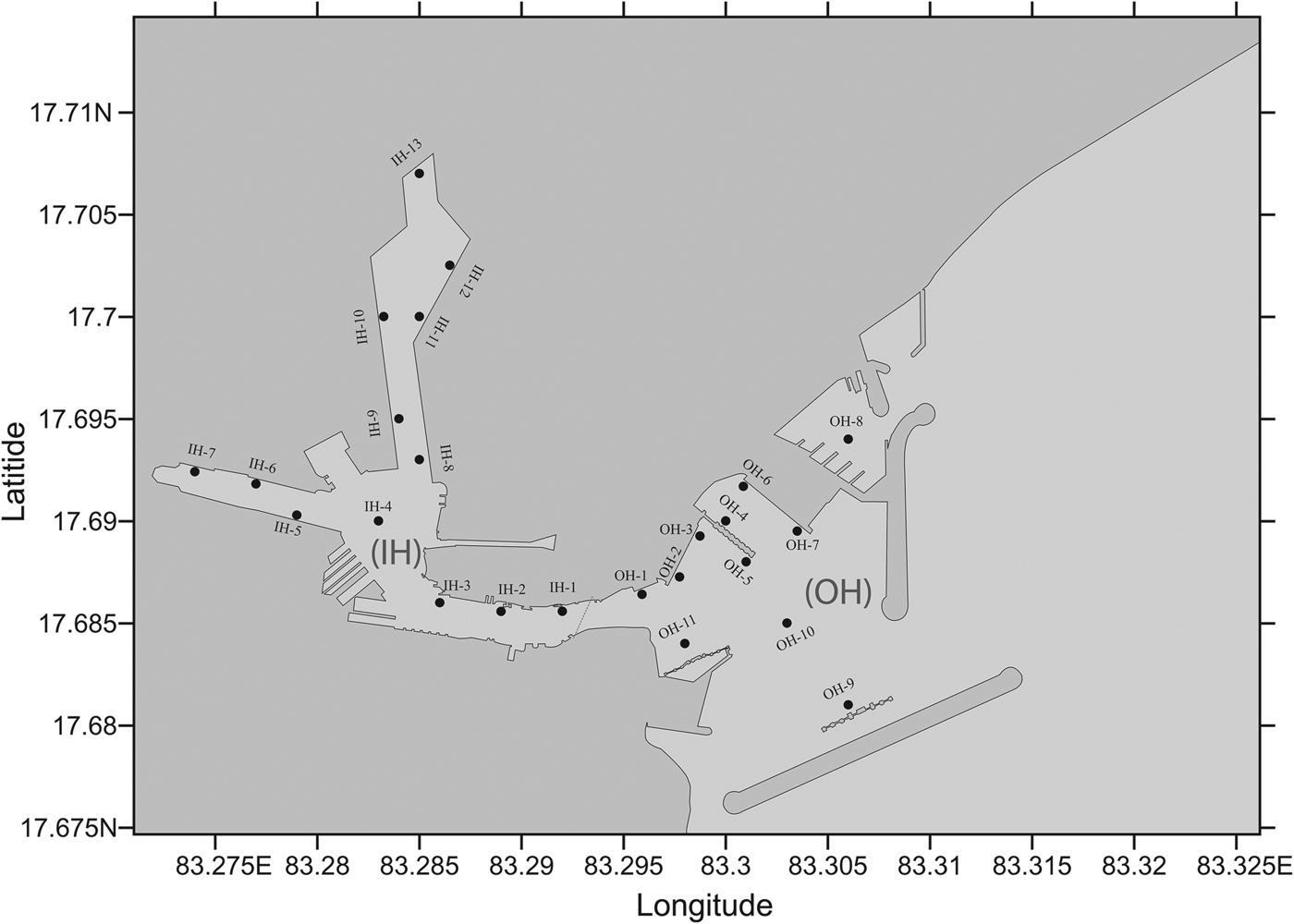
A total of 24 sampling stations were selected in and around Visakhapatnam Harbour (Figure 1). Thirteen stations were selected in the inner harbour namely DC-Jetty (IH-1), Boat basin berth-3 (IH-2), Port dry dock (IH-3), Turning basin (IH-4), Hindustan shipyard (IH-5), Oil refinery berth (IH-6), Fertilizer wharf (IH-7), East quay berth-1 (IH-8), West quay berth-1(IH-9), West quay berth-4 (IH-10), East quay berth-5 (IH-11), East quay berth-7 (IH-12), East quay berth-9 (IH-13) and 11 stations were selected in the outer harbour namely Dredger berth (OH-1), General cargo berth-S (OH-2), General cargo berth-N (OH-3), Ore berth-1 (OH-4), Ore berth-2 (OH-5), Container berth-1 (OH-6), Container berth-2 (OH-7), Fishery jetty (OH-8), Oil berth (OH-9), Turning circle (OH-10) and LPG berth (OH-11) (Figure 1). Sampling was carried out during January 2007 (First post monsoon) and December 2007 (Second post monsoon; north-east monsoon, November–December 2007), April 2008 (Pre-monsoon) and August 2008 (south-west monsoon), representing four different seasons. Near-bottom water samples were collected using a Niskin water sampler. Water samples were analysed for salinity, dissolved oxygen (DO), temperature and nutrients (nitrite, nitrate, phosphate and silicate) following the methods described by Parsons et al. (Reference Parsons, Maita and Lalli1984). The samples for seawater analysis were collected in triplicate. Sediment samples were collected from an average depth of 8–10 m using a van Veen grab (0.04 m2). At each station three grab samples were taken (N = 3). These samples were washed separately through a 500 µm nylon mesh at sea and then transferred to polythene bags and preserved in 5% formaldehyde in seawater containing rose bengal stain. In the laboratory sediment samples were sieved through a 500 µm metal sieve and all macrobenthic fauna were preserved in plastic vials containing 5% formaldehyde solution for further microscopic analysis. Polychaetes were identified to the highest taxonomic resolution (genus or species) possible with the help of available identification keys (Day, Reference Day1967; Gosner, Reference Gosner1971). The polychates recorded were provided with the following species codes: Nephtys dibranchis, NepD; Nephtys capensis, NepC; Flabelligera sp., FlabS; Nephtys polybranchia, NepP; Orbinella sp., OrbS; Nephtys sp., NepS; Nereis sp., NerS; Diopatra neopolitana, DioN; Hesione sp., HesS; Diopatra sp., DioS; Syllis sp., SylS; Cossura coasta, CosC; Sabella sp., SabS; Cossura sp., CosS; Aricidea sp., AriS; Prionospio pinnata, PriP; Ampharete sp., AmpS; Prionospio cirrifera, PriCfr; Chone sp., ChoS; Prionospio cirrobranchiata, PriCbr; Leocrates sp.(Hesionidae), LeoS; Prionospio sp., PriS; Phyllodoce sp., PhyS; Ancistrosyllis costricta, AnsC; Paraonis sp., ParS; Ancistrosyllis sp., AnsS; Sternaspis scutata, SterS; Cirratulus chrysoderama, CirChr; Amphiglena mediterranea, AmplM; Cirratulus concinnus, CirCon; Boccardia sp., BocS; Cirratulus cirratus, CirCir; Dorvillea sp., DorS; Cirratulus filiformis, CirF; Serpula sp., SerS; Cirratulus sp., CirS; Maldane sp., MalS; Capitella capitata, CapC; Levensenia sp., LevS; Capitella sp., CapS; Heteromastus filiformis, HetF; Heteromastus sp., HetS; Mediomastus capensis, MedC; Mediomastus sp., MedS; Magelona rosea, MagR; Magelona cincta, MagC; Magelona sp., MagS; Glycera alba, GlyA; Glycera sp., GlyS; Poecilochaetus serpen, PoeSr; Poecilochaetus sp., PoeS; Glycinde capensis, GlyC; Scoloplos chevalieri, ScoC; Scoloplos sp., ScoS; Polydora sp., PolS; Onuphis eremita, OnuE; Onuphis sp., OnuS; Pisione oerstedi, PisO; Euclymene sp., EuclS; Pseudoeurythoe sp., PseuS. Other macro-fauna (non-polychaete) belonging to crustaceans, molluscs, echinoderms, oligochaetes, nemerteans, sipunculans and fish larvae were identified to the group level. Numerical abundance of each species was recorded and expressed as number of species per square metre (no. m−2). Organic carbon (OC) and percentage composition of sediment (sand, silt and clay) were determined by standard titration methods and pipette analysis respectively (Wakeel & Riley, Reference Wakeel and Riley1956; Buchanan, Reference Buchanan, Holme and McIntyre1984). Organic carbon was expressed as percentage of sediment dry weight.
Map showing sampling stations in and around Visakhapatnam Harbour.

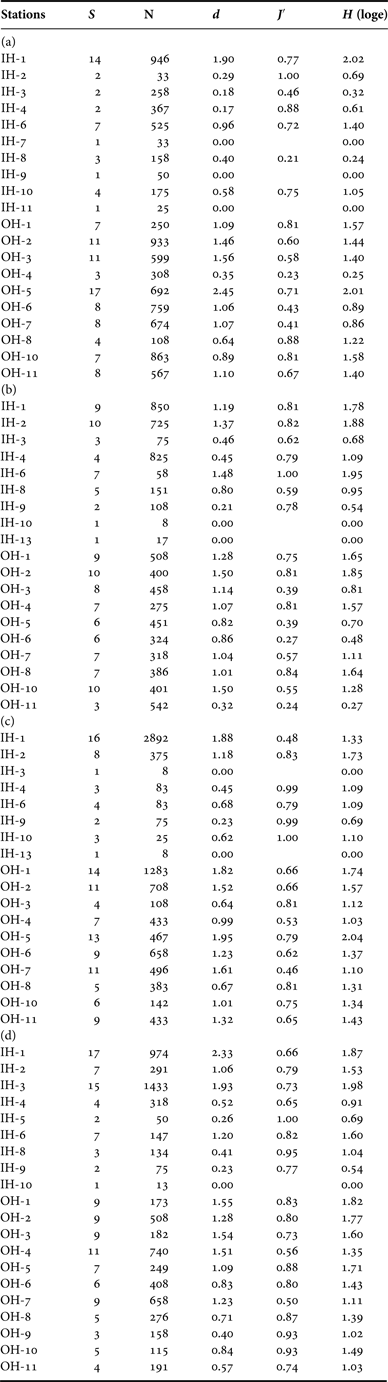
Macrobenthic fauna, especially polychaetes, reflect the ecological and environmental status and this was assessed in terms of number of individuals or specimens (N), number of species (S), total abundance (A), Margalef species richness (d), Pielou's eveness (J′) and Shannon index (H′) using log2 scale at each station (Clarke & Gorley, Reference Clarke and Gorley2001) (Table 1). Bray–Curtis similarity for species diversity for macrobenthic polychaetes was determined using PRIMER-v5 (Clarke & Gorley, 2011). Seasonal variation in the total macrobenthic community, polychaetes and other invertebrate taxa is presented using SURFER-6 (developed by Golden Software Inc., USA). Canonical correspondence analysis (CCA) was performed to evaluate the relationship between environmental variables and macrobenthic polychaetes as well as other taxonomic groups (ter Braak, Reference ter Braak, Jongman, ter Braak and Van Tongeren1995) using the Multi-Variate Statistical Package version 3.1 (Kovach, Reference Kovach1998).
Number of species (S), Number of specimens (N), Margalef species richness (d), Pielou's evenness (J′), Shannon index (H), of macrobenthic polychaetes during (a) post monsoon-I, (b) post monsoon-II, (c) Pre-monsoon and (d) Monsoon seasons in Visakhapatnam Harbour.
RESULTS
Sediment characteristics
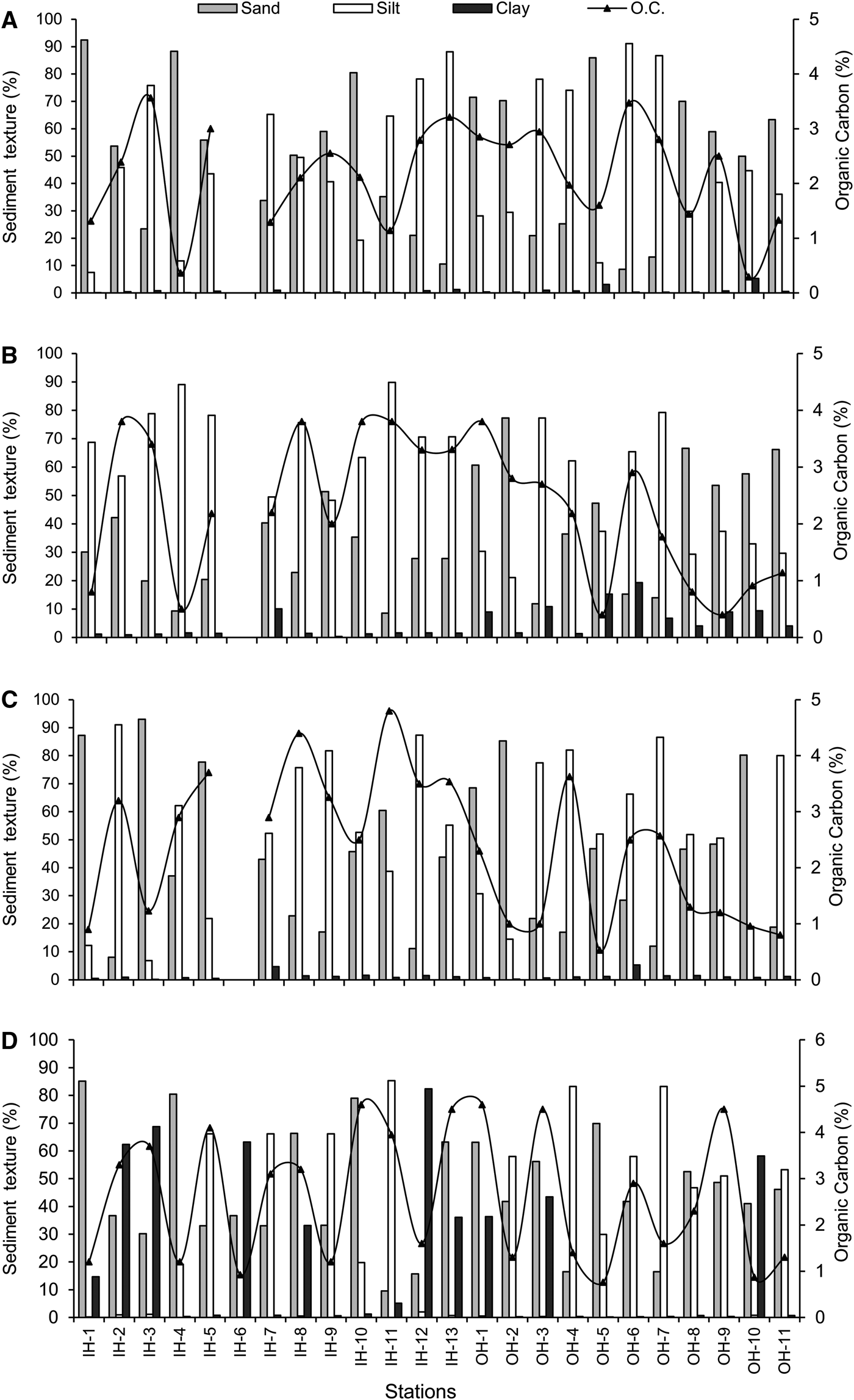
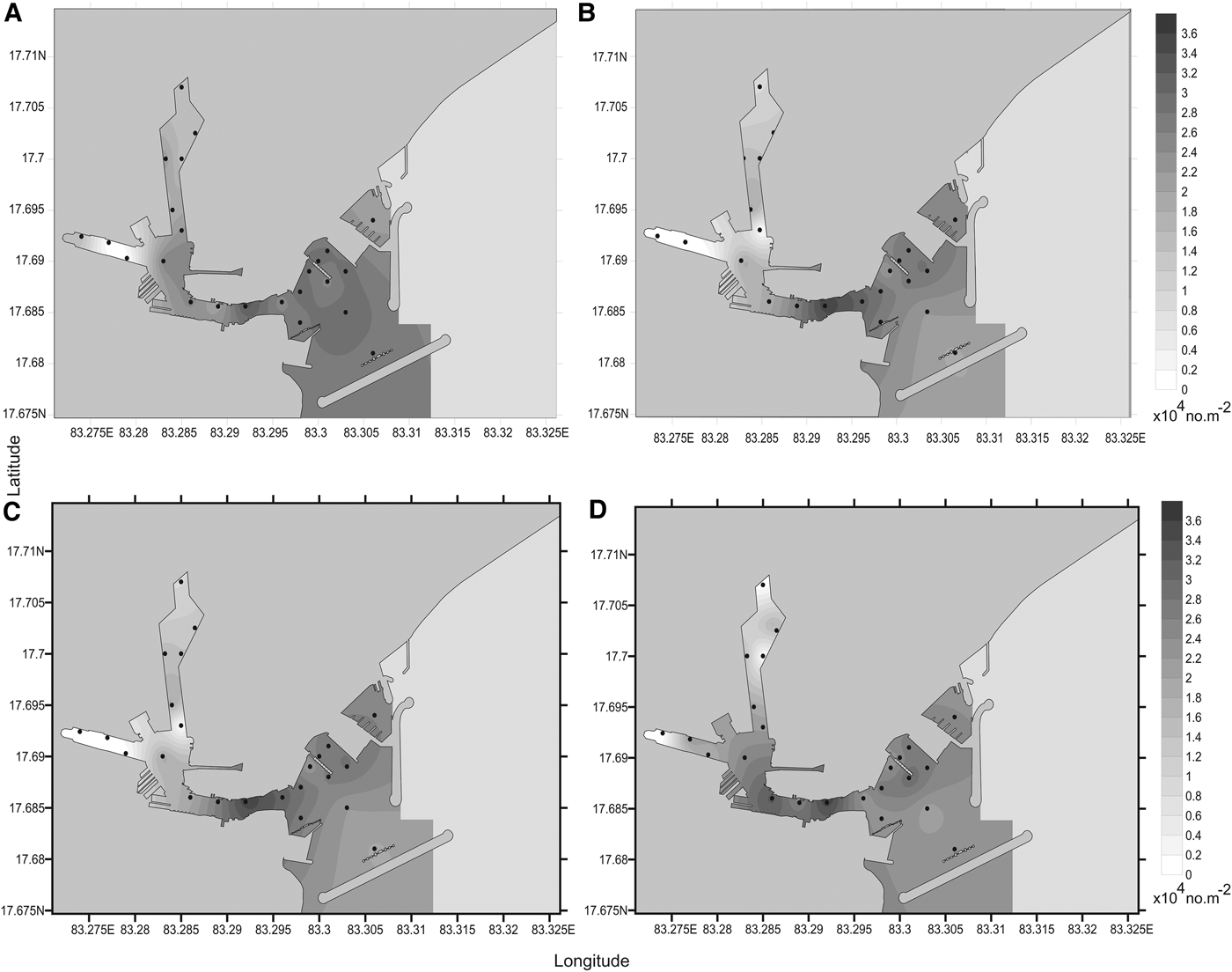
It was observed that in all four seasons (first post monsoon, second post monsoon, pre-monsoon and monsoon), sediments were mainly of four types, viz. sand, silt, clay and mixed (constituting almost equal proportions of sand, silt and clay) (Figures 2A–D). IH was dominated by sand and OH was dominated by silt during first post monsoon season (Figure 2A), whereas during second post monsoon season silt was higher at IH (Figure 2B). However, pre-monsoon season was distinguished by silt and sand dominating at both inner and outer harbours (Figure 2C). Mixed type of sediment was observed during monsoon season at IH wherein sand dominated at four stations and in OH sand and silt dominated the sediment (Figure 2D).
Sediment texture and organic carbon (percentage) at the sampling stations in and around Visakhapatnam Harbour during different seasons: (A) Post-monsoon I, (B) Post-monsoon II, (C) Pre-monsoon, (D) Monsoon.
Sediment organic carbon ranged from 0.36 to 3.56% in IH, while at OH it ranged between 0.29–3.47% during first post monsoon (Figure 2A). During second post monsoon organic carbon ranged from 0.5 to 3.8% in IH and at OH it ranged from 0.4 to 3.8% (Figure 2B). During pre-monsoon season, organic carbon was high at IH when compared with OH which indicated a large variation (0.53% at Ore berth-2, OH5 to 3.6% at Ore berth-1, OH-4) (Figure 2C). Monsoon season showed higher organic carbon (0.92–4.6% in IH and 0.7–4.6% in OH) when compared with other seasons (Figure 2D).
Hydrological parameters
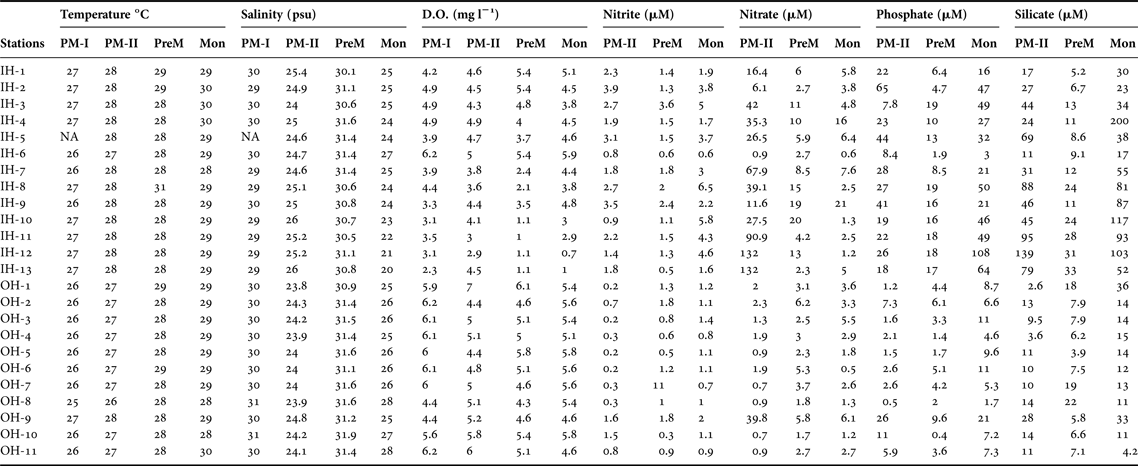
Temperatures were high during the monsoon and ranged between 28 and 29.8°C. They were lowest during post monsoon (25.3–28.0°C). During the pre-monsoon season temperatures ranged from 27.6 to 28.7°C (Table 2). Salinity was high during pre-monsoon (ranging from 30.1 to 31.9 psu) but minimum salinity occurred during the monsoon (ranging from 20.2 to 28.2 psu). First post monsoon showed higher salinity (29.0 to 31.1 psu) compared with second post monsoon season (23.8–26 psu) (Table 2). Dissolved oxygen (DO) showed very high inter-seasonal variations. During first post monsoon season DO ranged from 2.3 to 6.2 mg l−l and during second post monsoon season it was 2.9–6.0 mg l−l. However, during pre-monsoon and monsoon the DO ranged from 1 to 6.1 mg l−l and 0.7–5.9 mg l−l respectively, indicating the lower levels to be hypoxic (Table 2).
Hydrological parameters (Temperature, Salinity, Dissolved oxygen) and nutrients (nitrite, nitrate, phosphate and silicate) at different sampling stations during four seasons. PM-I; Post monsoon I, PM-II; Post monsoon II, PreM – Pre-monsoon, Mon – Monsoon.
Nutrients
During pre-monsoon season nitrite concentration was low (1.8 µm) in OH compared with IH (Table 2). There was a large difference in the nitrate values in IH (6.1–132.0 µm) compared with OH (0.7–39.8 µm) during post monsoon II (north-east monsoon). Pre-monsoon was similar where nitrate concentration was also high in IH. During monsoon maximum nitrate concentration in IH was 21.0 µm and in OH it was 6.1 µm. Concentration of phosphate and silicate was high in IH compared with OH throughout the study (Table 2).
Macrobenthic community
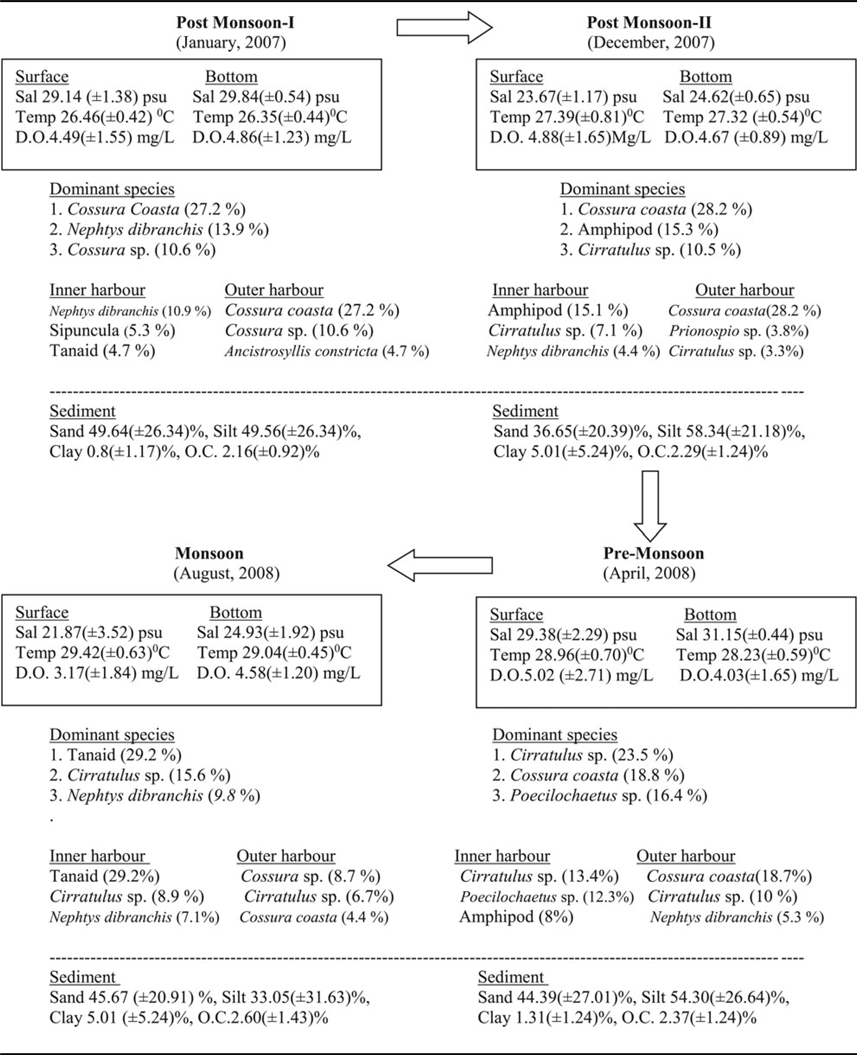
Figure 3(A–D) depicts the abundance of macrobenthos at IH and OH during different seasons. The macrobenthic fauna comprised of polychaetes, crustaceans, molluscs, oligochaetes, sipunculans (peanut worms) and nemerteans (ribbon worms). Among these groups polychaetes were the most common during all the seasons. Of a total of 84 macrobenthic forms 60 were polychaetes. Polychaetes were most abundant during all the seasons except monsoon, and their contribution was more than 20% to the total macrobenthic abundance. During monsoon season tanaids were the most dominant group that contributed 29% to the total macrobenthic abundance (Table 3).
Total macrobenthic abundance at the sampling stations in and around Visakhapatnam Harbour during different seasons: (A) Post-monsoon I, (B) Post-monsoon II, (C) Pre-monsoon, (D) Monsoon.
Schematic presentation of the variations in physical parameters, sediment characteristics and dominant macrobenthos reported in the Visakhapatnam port during different seasons. Percentage values in parentheses in front of the macrobenthos indicate their contribution to total macrobenthic abundance.
Sal, salinity; Temp, temperature; D.O., dissolved oxygen, O.C., organic carbon.
Seasonal variation in the abundance of polychaetes
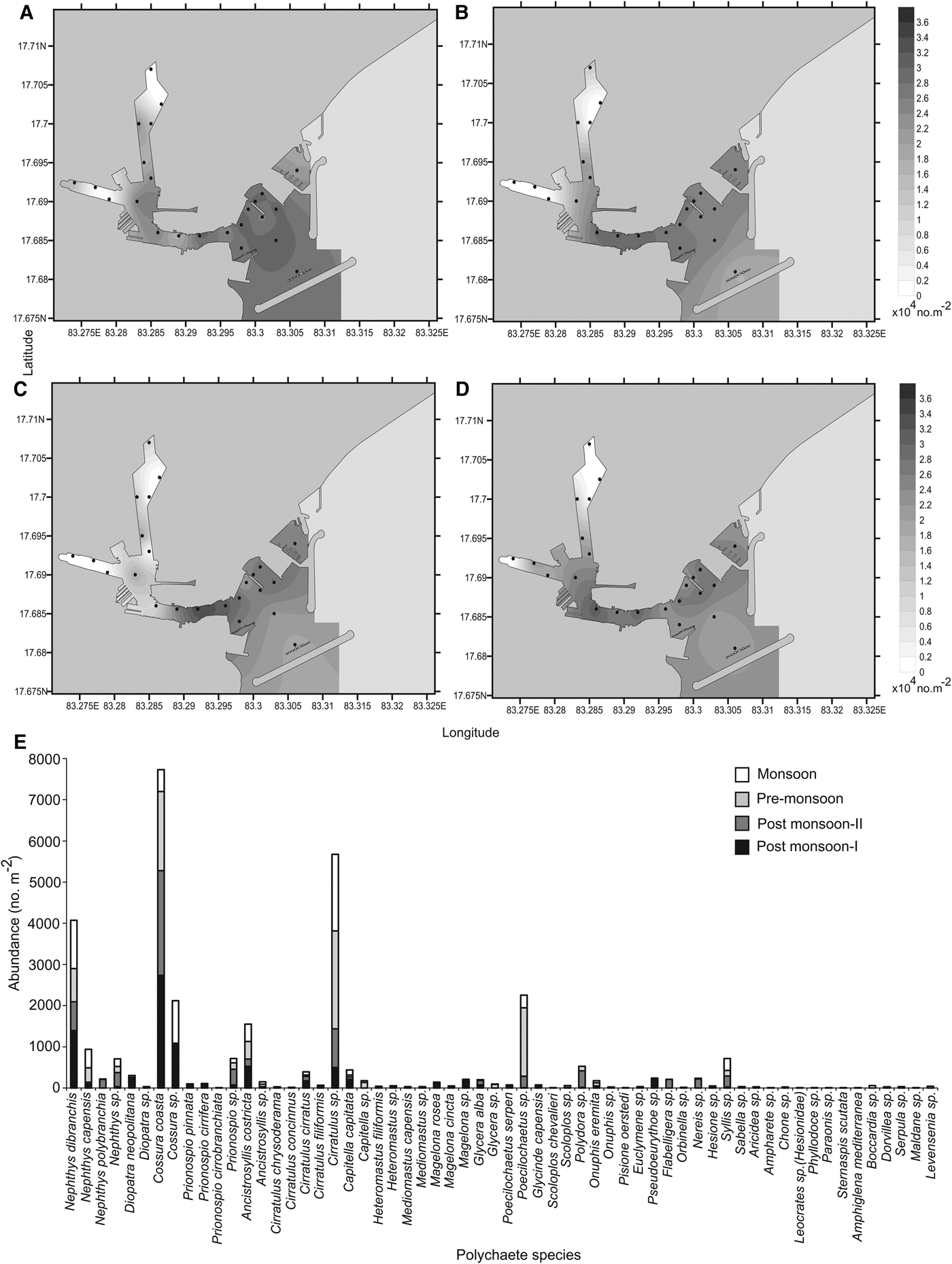
The cossurid polychaete, Cossura coasta was dominant during first and second post monsoon contributing 27 and 28% of total macrobenthic abundance (Table 3; Figure 4A, B & E). However, its dominance was restricted only to the OH as in IH, Nephtys dibranchis (11%) was the dominant species during first post monsoon and amphipods were dominant (15%) during second post monsoon season (Table 3; Figure 4A, B). During pre-monsoon IH was dominated by Cirratulus sp., which contributed 13% to the total macrobenthic abundance. However OH during this season was dominated by Cossura coasta (19%) (Figure 4C). During monsoons tanaids dominated the macrobenthic abundance contributing 29% to the total, and they were confined only to IH (Figure 4D). It was noted that Cossura coasta, Cirratulus sp. and Nephtys dibranchis are the polychaete species which contributed considerably to the total macrobenthic abundance (Figure 4E). In general, polychaetes were dominant during all the seasons except monsoon (Table 3). A significant (one way ANOVA P ≤ 0.02) difference in the abundance of macrobenthic polychates was observed with respect to seasons.
Total polychaete abundance in different sampling stations in and around Visakhapatnam Harbour during different seasons: (A) Post-monsoon I, (B) Post-monsoon II, (C) Pre-monsoon, (D) Monsoon, (E) abundance of different polychaete species during different seasons.
Seasonal variation in the abundance of macrobenthos belonging to other groups
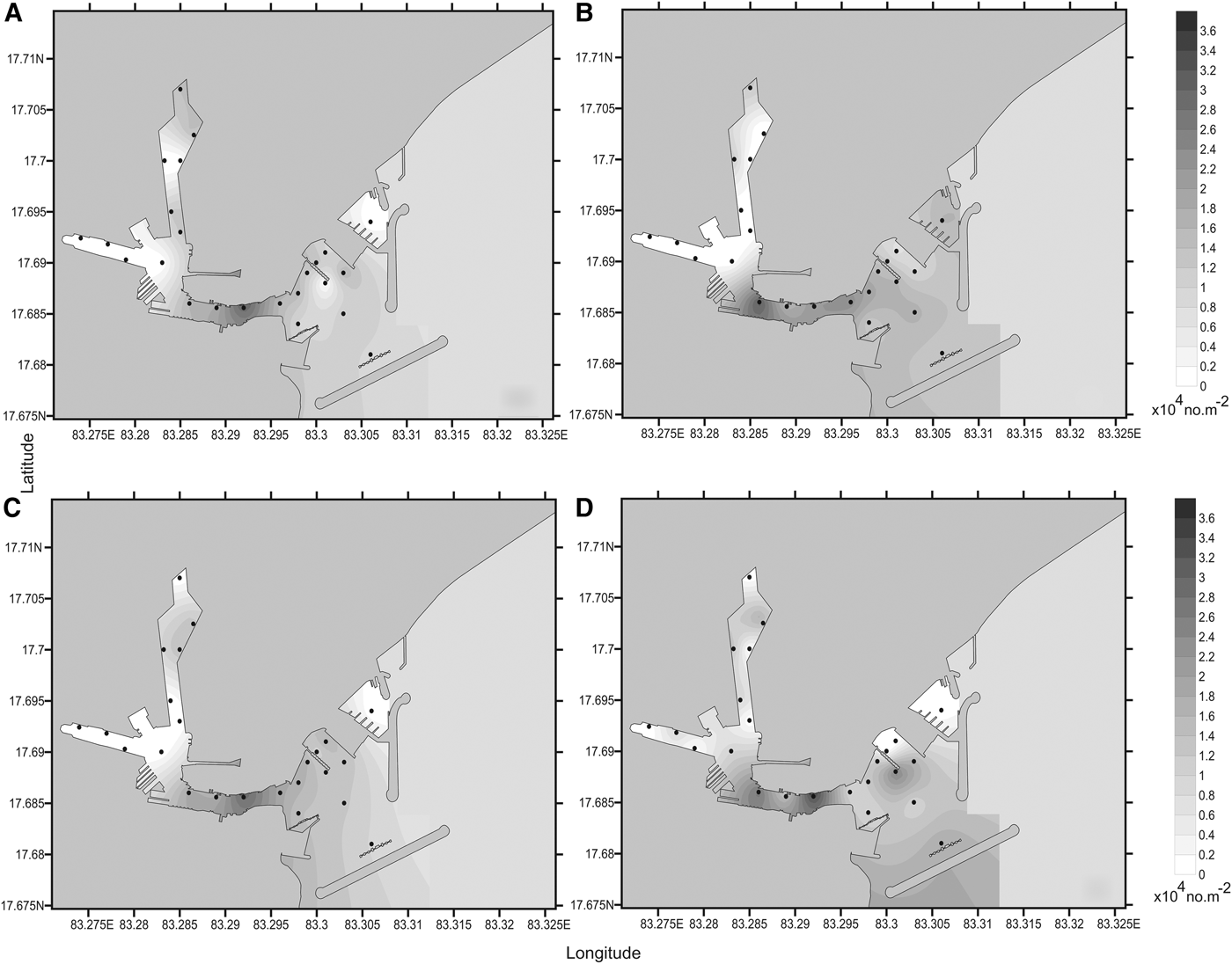
Macrobenthos belonging to crustaceans, molluscs, oligochaetes, sipunculans (peanut worms) and nemerteans (ribbon worms) were recorded during all the seasons, but their contribution to the total macrobenthic abundance varied with the seasons (Table 3; Figure 5A–D). Amphipods (second post-monsoon– 15%, pre-monsoon – 8%), tanaids (monsoon – 29%), and sipunculans (first post monsoon– 5%) are major contributors among the other groups to the total macrobenthos (Table 3). In general, crustaceans were abundant and commonly encountered in IH during all the seasons except first post monsoon, when sipunculans showed dominance over the crustaceans (Table 3). However, in OH crustaceans were dominant only during second post monsoon and pre-monsoon seasons and the other two seasons were dominated by nemerteans followed by bivalves (first post monsoon). Oligochaetes were dominant during monsoon season. Crustaceans were dominant among other invertebrate macrobenthic taxa, mainly comprising tanaids, amphipods, ostracods, isopods, decapods, lucifer larvae and copepods (Figure 5A–D).
Total abundance of other macrobenthic (non-polychaete) groups in different stations in and around Visakhapatnam Harbour during different seasons: (A) Post-monsoon I, (B) Post-monsoon II, (C) Pre-monsoon, (D) Monsoon.
Species diversity index for polychaetes
Species diversity index at all the stations was estimated based on Margalef species richness (d), Shannon-Weiner index (H′) and evenness (J′). The maximum numbers of species were encountered during first post-monsoon and monsoon season (S = 17 at both these seasons) (Table 1a and d). The correspondence values of the Shannon–Weiner index (H′) were also high during these seasons (2.45 and 2.33 during first post-monsoon and monsoon season, respectively). During second post monsoon season, species diversity was low compared with the other three seasons (Table 1b). In pre-monsoon season 16 species were observed (Table 1c).
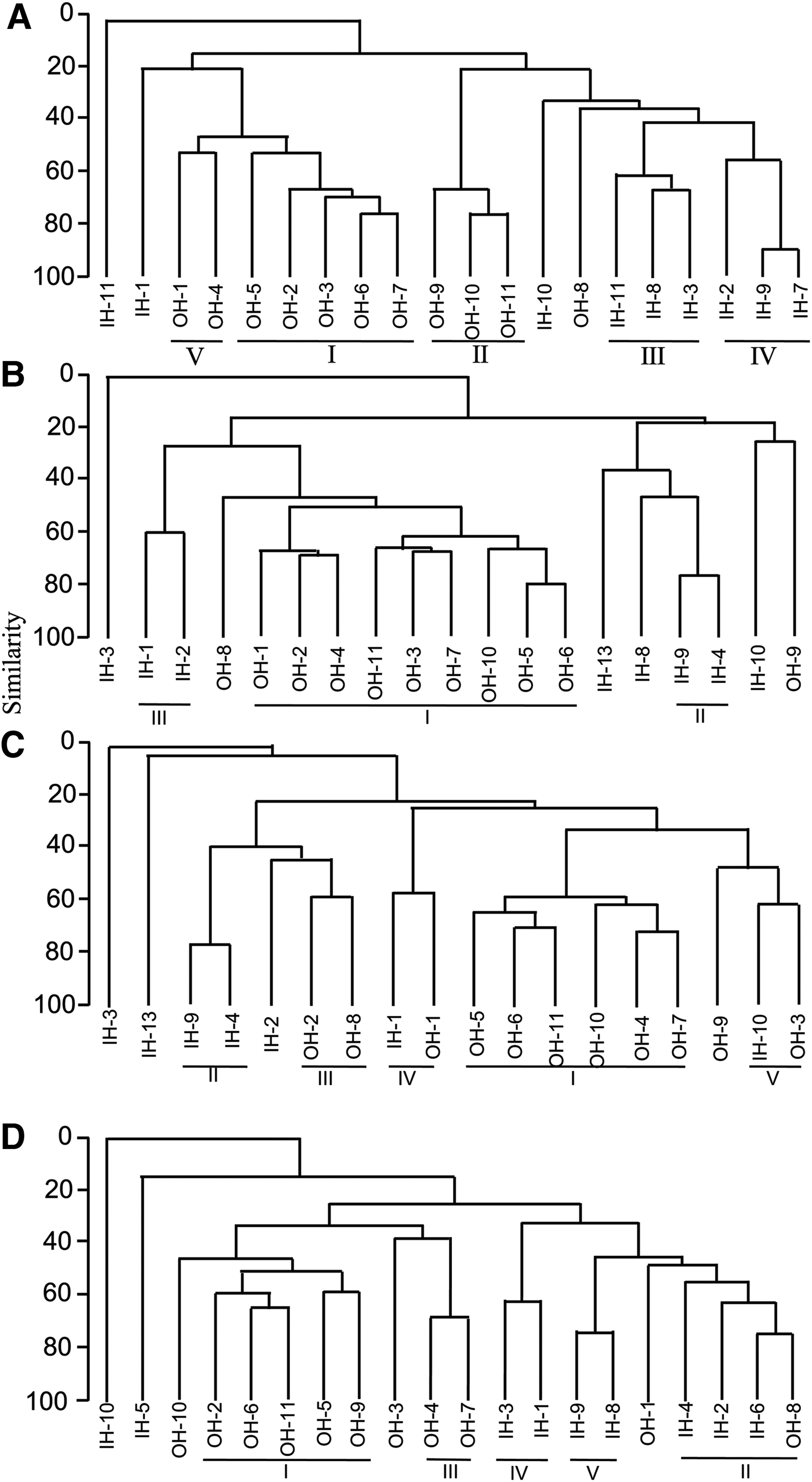
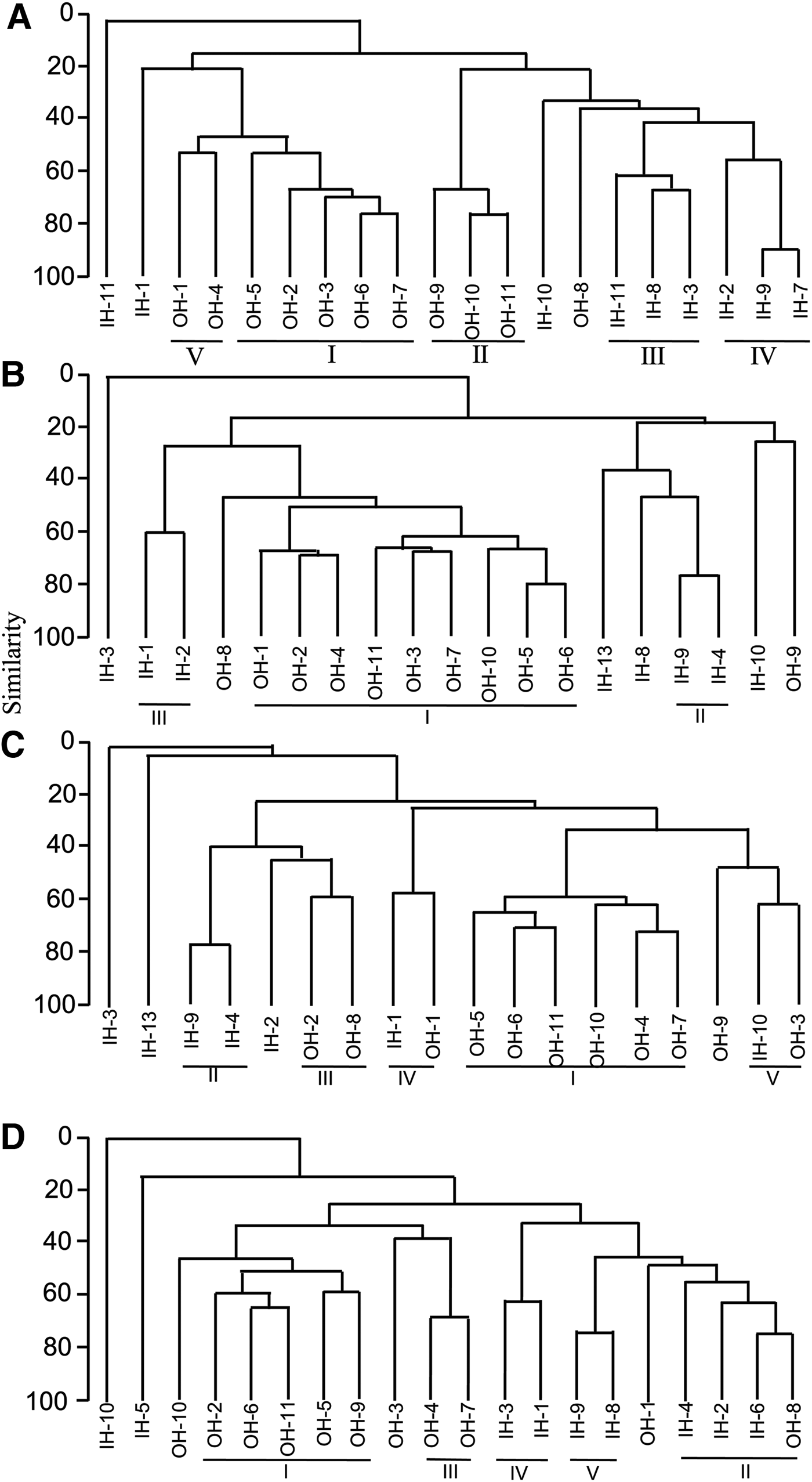
Bray–Curtis similarity index was applied for grouping the stations according to polychaete abundance. At 50% similarity level, five groups were revealed during first post monsoon season (Figure 6A). The stations in the first group had high DO levels and the second group stations had high DO and low organic carbon (<3%). In the third and fourth group stations, the polychaete, Nephtys dibranchis was the dominant and most commonly represented species and these stations had low DO. Fifth group stations had low organic carbon (<3%). Second post monsoon season revealed three groups and six dissimilar stations. Nine stations were grouped together which had low organic carbon and Cossura coasta as the dominant species, whereas the second group represented two stations with low DO and organic carbon. Stations with higher abundance of Cirratulus sp. were in the third group which were associated with silty substratum and low DO (Figure 6B). During pre-monsoon, stations with low organic carbon and high DO formed the first group. Stations with silty substratum (>62.2%) and low DO were in the second (IH9 and IH4) and stations with moderate silt were in the third group (OH2 and OH8) respectively. Fourth group stations had sandy substratum and high DO and the fifth group had low organic carbon (<3%) (Figure 6C). During monsoon, stations were grouped according to sediment characteristics and environmental parameters, organic carbon being the factor for grouping of stations. Occurrence and abundance of Nephtys dibranchis, Cossura sp., and Cirratulus sp. also affected the grouping of stations (Figure 6D).
Dendrogram for hierarchical clustering of macrobenthic polychaetes with Bray–Curtis similarity indices during different seasons: (A) Post-monsoon I, (B) Post-monsoon II, (C) Pre-monsoon, (D) Monsoon.
Canonical correspondence analysis (CCA) for macrobenthic polychaetes and environmental variables
In the CCA biplot for polychaetes four axes represented 89 and 95% relationship between polychaetes and environmental variables during first and second post monsoon season respectively (Figure 7A, B). Organic carbon, salinity, sand and clay were the variables which affected polychaete abundance during first post monsoon and salinity, clay, OC and DO were the influencing parameters during second post monsoon season.
Canonical correspondence analysis showing polychaete abundance and their relationship to environmental variables during different seasons: (A) Post-monsoon I, (B) Post-monsoon II, (C) Pre-monsoon, (D) Monsoon.
During pre-monsoon 95% relationship was observed between polychaetes and environmental variables (Figure 7C). Sediment characteristics (sand, silt and clay), salinity and DO influenced macrobenthic polychaete abundance during this season. In the monsoon season 93% relationship was observed between polychaetes and environmental variables mainly DO, salinity and sediment characteristics (sand, silt and OC) (Figure 7D). It was observed that preference of different species towards a particular parameter differed with the season (Figure 7A–D), as species in different groups are influenced by certain environmental parameters or sediment characteristics. Species located near the centre of the ordination diagram indicate that these polychaetes are not influenced by any particular environmental variable (Figure 7A–D).
Canonical correspondence analysis (CCA) for non-polychaete groups and environmental variables
In the CCA biplot for non-polychaete macrobenthic groups, 96% relationship was observed between abundance of other macrobenthic groups and environmental variables during first post monsoon (Figure 8A), and it was 78% during second post monsoon (Figure 8B). DO, salinity, sand and OC were the important environmental variables influencing their abundance. Fish and oligochaetes preferred a higher percentage of OC and low percentage of sand whereas sipunculans preferred higher percentage of sand and lower OC (Figure 8A). Crustaceans preferred high OC whereas sipunculans preferred low OC (Figure 8B). During pre-monsoon, 79% relationship was observed between abundance and environmental variables (Figure 8C). OC, DO and salinity were the important environmental variables influencing abundance of other groups. During this season crustaceans also preferred higher OC. During monsoon the relationship between macrobenthos abundance and environmental variables was 91% (Figure 8D). Sediment characteristics (clay and silt) were the important environmental variables influencing abundance. In general, crustaceans preferred higher values of OC and clay and lower values of DO and salinity.
Canonical correspondence analysis showing macrobenthic other groups abundance and their relationship to environmental variables during different seasons: (A) Post-monsoon I, (B) Post-monsoon II, (C) Pre-monsoon, (D) Monsoon.
DISCUSSION
The present study was carried out in and around Visakhapatnam Harbour selecting 24 stations which were topographically divided into two major areas – the Inner and the Outer Harbour. The seasonal variation in the abundance of macrobenthos in the harbour area is reported and discussed in relation to the influence of sediment characteristics and near-bottom hydrological parameters.
Raman & Ganapati (Reference Raman, Ganapati, Thompson, Sarojini and Nagbhushanam1986a, Reference Raman and Ganapatib) conducted faunal studies in Visakhapatnam Harbour in 1976 and reported that polychaetes were the most diverse organisms in the macrobenthic community. In the present study 84 macrobenthic forms were reported, out of which 60 were polychaetes and 24 forms belonged to other groups (non-polychaete). An earlier study of Visakhapatnam Harbour reported 38 polychaete species in the northern arm in 1975 (Sarma & Ganapati, Reference Sarma and Ganapati1975), and a year later the number of polychaetes reported was reduced to 12 species (Raman & Ganapati, Reference Raman, Ganapati, Thompson, Sarojini and Nagbhushanam1986a, Reference Raman and Ganapatib). Raman (Reference Raman1995) later reported higher abundance of opportunistic species in Visakhapatnam Harbour including Capitella capitata and Nereis glandicincta. However, he reported 12 species when he carried out the study in 1976. The disappearance of species reported earlier was considered to be due to an increase in the pollution during the intervening years (Raman, Reference Raman1995). This indicates the number of polychaete species increased in the present study (38 in 1975 to 60 in 2008) by about 150% when compared with earlier studies (1975–76) in Visakhapatnam Harbour. Abundance of macrobenthic polychaetes, Cossura coasta, Nephtys dibranchis, Cirratulus sp., Cossura sp., Prionospio sp., Poecilochaetus sp., Ancistrosyllis constricta was high during this study. Among other macrobenthic groups, crustaceans (tanaids and amphipods) and sipunculans were the most abundant. Hence a possible reason for an increase in the number of polychaete species is the increase in the nutrient concentration, and also that the species which inhabited the semi-polluted conditions have been replaced by pollution-tolerant species or opportunistic species. The IH, which is relatively more polluted than OH showed considerably higher nutrient concentrations due to untreated domestic sewage discharge and low circulation of water with the open sea has also promoted the rich biotic communities. The polychaete species abundance differed in the inner and outer harbour areas.
Inner harbour (IH)
In IH, Cirratulus sp., Nephtys dibranchis and Poecilochaetus sp. were abundant followed by sipunculans (peanut worm) and tanaids (Table 3) which are carnivorous and prefer fine sediment, indicating fine sediment could sustain the carnivorous benthic organisms. Similar observations were made by Jayaraj et al. (Reference Jayaraj, Jocob and Kumar2008a), in a tropical continental margin along the west coast of India, where the sediment was sandy silt. Sipunculans, which showed dominance in IH, can live under normal oceanic salinity (lower limit 18–26 psu) and are tolerant to increases up to 35 psu. They are also capable of surviving on the sparse organic matter available on the upper layer of sediments (Murina, Reference Murina1984). Raman & Ganapati (Reference Raman, Ganapati, Thompson, Sarojini and Nagbhushanam1986a, Reference Raman and Ganapatib) reported that members of the Cossuridae were more conspicuous in the transition zone (semi-polluted) between the IH and open sea. Amphipods were abundant in IH with silty substratum which may be preferred by amphipods that inhabit mud or detritus and this might also enable these organisms to feed on the organic matter present within the fine sediment. Generally, the deposit feeder Cirratulus sp. was abundant followed by Cossura coasta during pre-monsoon season when the percentage of silt was high. From the properties of sediment dynamics it has been suggested that a high silt-clay fraction in sediment contains more food particles (Sanders, Reference Sanders1958, Reference Sanders1960; Sanders et al., Reference Sanders, Goudsmit and Hampson1962; Jayaraj et al., Reference Jayaraj, Sheeba, Raichandran, Arun, Praseeda, Nisha and Rasheed2008b), and this may be the reason for the occurrence of more deposit feeders in high silt conditions. Generally, tanaid (crustacean) numbers were higher during the monsoon season followed by polychaetes, Cirratulus sp. and Nephtys dibranchis in IH. Crustaceans which also contributed to the overall macrobenthic abundance were commonly encountered in IH during all seasons except first post monsoon season, where sipunculans showed dominance over the crustaceans. CCA biplot for other macrobenthos and environmental variables supported the observation that sipunculans preferred higher percentage of sand and lower percentage of OC during first post monsoon season. During first post monsoon season, Nephtys dibranchis was abundant in IH (sand + silt). The high OC at Port dry dock (IH-3) and low OC at Turning basin (IH-4) in IH showed low species diversity and it can be concluded that both higher and lower organic carbon affects species diversity. Harkantra (Reference Harkantra1982) and Harkantra & Parulekar (Reference Harkantra and Parulekar1987) stated that ample or median ranges of organic carbon content support a rich faunal density, however, low and high values of organic content show poor fauna. In IH, Port dry dock (IH-3) and Turning basin (IH-4) were silty and sandy respectively. Silt content or increased percentage of fine sediment may help in retaining organic matter and this may be the reason why Port dry dock (IH-3) and Container berth-1 (OH-6) showed higher values of organic carbon which supported abundance of Cossura coasta.
During second post monsoon season, amphipods (crustaceans) which are mostly referred to as carnivores were abundant in IH followed by the polychaete Cirratulus sp. Organic carbon was also high at most of the IH stations with silty substratum and higher abundance of deposit feeders Cirratulus sp. and Poecilochaetus sp. which is considered an indicator of healthy bottom conditions. Dean (Reference Dean2008) made a similar observation where he found polychaete Poecilochaetus serpen common in non-polluted areas of Barcelona.
Nutrients showed an unusual trend in concentrations at IH and OH. During the entire season nitrate, nitrite, silicate and phosphate values were high in IH when compared with OH, possibly due to the release of domestic sewage along with industrial wastes into the IH area. The nutrients in seawater will influence the phytoplankton community and abundance and this in turn will affect the benthic organisms which feed on phytoplankton. Mathew & Govindan (Reference Mathew and Govindan1995) observed high concentrations of nitrite in the inner creek of Mumbai and suggested such conditions are unhealthy for benthic communities. Ganapati & Raman (Reference Ganapati and Raman1973) also reported the presence of heavy metallic ions, such as copper, iron and fluorides, phosphorus and oil from the industrial effluents into Visakhapatnam Harbour. This may be one of the reasons for low macrobenthic polychaete abundance in IH compared with OH.
Outer Harbour (OH)
In OH, Cossura coasta was abundant followed by Ancistrosyllis constricta. Cossura coasta was the dominant species during the second post monsoon in OH (silty sand). It is reported that species belonging to Nephtys and Cossura occur in sandy and silty habitats, respectively (Flint & Rabalais, Reference Flint and Rabalais1980; Jayaraj et al., Reference Jayaraj, Jocob and Kumar2008a). During monsoon the sediment texture was mixed type (more or less equal proportion of sand, silt and clay) and tanaids were abundant, indicating that tanaids are not substratum-specific unlike amphipods. In OH crustaceans showed dominance only during second post monsoon and pre-monsoon seasons which is supported by CCA biplot results indicating preference of crustaceans to high percentage of OC during these seasons.
Sediment parameters such as grain size, organic content and food availability are among the important factors which have been related to benthic community structure (Sanders, Reference Sanders1958; Kari, Reference Kari2002). Abundance of Cossura coasta at Container berth-1 (OH-6) in OH indicated it as an organically polluted area. Polychaetes such as Cossura coasta, Cirratulus sp. and Prionospio sp. (deposit feeders) and Nephtys dibranchis (a carnivore) were abundant in OH suggesting different forms of polychaetes can reside there, indicating its semi-polluted conditions.
Comparative account on IH and OH with respect to macrobenthos species diversity
The OH showed higher species diversity compared with IH. Higher silt and sand composition was observed during pre-monsoon in both IH and OH. Cossura coasta and Cirratulus sp. were abundant in OH. Mixed type sediment texture (sand, silt and clay) was observed during monsoon season in both IH and OH with wide-ranging organic carbon. During this season tanaids contributed nearly 30% to the total macrobenthos in IH, whereas in OH their contribution was negligible.
Temperature was higher by 2 − 3°C during pre-monsoon and monsoon seasons compared with post monsoon during which a high abundance of Cirratulus sp. was observed. Mistri et al. (Reference Mistri, Fano, Ghion and Rossi2002) reported species tolerant to broad ranges of environmental variables such as temperature and salinity can persist well in benthic habitats. Jayaraj et al. (Reference Jayaraj, Jayalakshmi and Saraladevi2007) in his study in the northwest Indian shelf stated that, silt, temperature, dissolved oxygen, sand, temperature-depth and temperature-DO were the most significant factors in predicting the density of polychaetes.
Nephtys dibranchis, a typical euryhaline form and also a stenohaline form such as Cossura coasta were the two most abundant polychaete species present at higher salinity ranges from 29.2 to 32 psu. When the salinity was low (23.8–26 psu) during second post monsoon, stenohaline forms such as Cossura coasta, Cirratulus sp. and amphipods were abundant. Thus Cossura coasta can tolerate a wide range in salinity and can be termed as euryhaline, possibly having adapted to such conditions over the years in this habitat. This indicates that salinity at the bentho-pelagic region plays an important role in the distribution and abundance of macrobenthos. Similar observations were made by Raman & Ganapati (Reference Raman and Ganapati1983), that in OH the stenohaline cossurid, Cossura coasta, and cirratulid, Cirratulus sp. were found in large numbers. During low saline conditions in monsoon because a considerable amount of fresh water enters the harbour through a monsoon fed-stream (RamaRaju et al., Reference RamaRaju, Sarma, Raju and SubbaRao1990), euryhaline tanaids were the most abundant macrobenthos.
It has been suggested that higher organic carbon can cause a decline in species diversity, abundance and biomass, possibly due to oxygen depletion and build-up of toxic by-products such as ammonia and sulphide (Jørgensen, Reference Jørgensen1977; Revsbech & Jørgensen, Reference Revsbech and Jørgensen1986; Snelgrove & Butman, Reference Snelgrove and Butman1994; Hyland et al., Reference Hyland, Balthis, Karakassis, Magni, Petrov, Shine, Vestergaard and Warwick2005) and also low oxygen or hypoxic conditions are important limiting factors in species distribution (Rainer & Fitzhardinge, Reference Rainer and Fitzhardinge1981). DO levels below 2.5 mg l−l are not considered as hypoxic, however during first post monsoon season, in station East quay berth-9 (IH-13), DO was low (2.3 mg l−l), and organic carbon was >3% and this may be the reason for the absence of polychaetes at this station. The inner harbour stations, IH-5 (Hindustan Shipyard), IH-7 (Fertilizer Wharf) and IH-12 (East Quay Berth) had low polychaete abundance. Stations IH-5 and IH-7 receive a large amount of industrial effluents and IH-7 is a fertilizer wharf which can have fertilizers inoculating the water and in sediment during cargo loading and unloading which will add to the increase in the concentration of inorganic nitrogen and phosphorus. This might also have implications for IH-5 which is near to IH-7. Station IH-12 had high organic carbon and low DO and this station is situated at the inlet of untreated domestic sewage. IH-12 also has a higher clay content compared with other stations in the inner harbour, and this might have an adverse impact on the feeding ecology of organisms and thereby reduce their survival and abundance. Overall IH has higher concentrations of nitrite, nitrate and phosphate indicating eutrophic conditions compared with OH. A similar situation was found at East quay berth-7 (IH-12) during second post monsoon. Decreasing concentration of oxygen diminishes both species richness and diversity and the species composition is largely determined by the tolerance to oxygen deficiency (Johansson, Reference Johansson1997; Flemer et al., Reference Flemer, Kruczynski, Ruth and Bundrick1999; Wu, Reference Wu2002). Reduced oxygen content of the water might have led to adverse biological effects on the soft bottom macrobenthic communities (Saiz-Salinas, Reference Saiz-Salinas1997). The CCA results also indicated that salinity, DO and sediment characteristics are the most influential factors for macrobenthic polychaete abundance, however this varied with the season.
In some stations (IH-10, IH-11, IH-12 and IH-13) dissolved oxygen was 1 mg l−1 and the corresponding organic carbon values were high, which supports the reason for the reduced number of polychaetes. Sanders (Reference Sanders1968) predicted low diversity in shallow areas due to the depletion of oxygen by high organic matter. Harkantra et al. (Reference Harkantra, Rodrigues and Parulekar1982) reported a lower abundance of benthic polychaetes in areas where organic matter was more than 3% indicating their avoidance to high organic matter. The CCA biplot for polychaetes during pre-monsoon season also supported this phenomenon indicating polychaetes preferred higher values of salinity and lower values of OC.
The species diversity also varied with seasons and with respect to their occurrence in IH and OH. Sandy substratum supported high species diversity, richness and evenness during first post monsoon season. Coarse sediment and medium-sized grains support rich benthic fauna (Rodrigues et al., Reference Rodrigues, Harkantra and Parulekar1982; Ingole et al., Reference Ingole, Rodrigues and Ansari2002) and such faunal-sediment relationships have also been reported earlier (Sanders, Reference Sanders1958; Sanders et al., Reference Sanders, Goudsmit and Hampson1962). Sukumaran & Devi (Reference Sukumaran and Devi2009) while working in Mumbai port indicated that a Shannon diversity index of 2 and above can be considered indicative of a fairly healthy benthic ecosystem. In the present study Shannon diversity index values showed fairly good benthic environment at stations which had high species diversity. Among all the seasons second post monsoon season showed low species diversity. Salinity during this season was low and might be a reason for depletion of species diversity. During pre-monsoon higher species diversity was observed which was supported by sandy substratum and high salinity, temperature and DO. During monsoon, sandy substratum and optimum dissolved oxygen supported high species diversity.
The polychaete Cossura coasta was the most abundant species, was followed by Ancistrosyllis constricta, in the stations which are more or less sandy and silty with moderate organic carbon during the first post-monsoon season, suggesting Cossura coasta may not be a substratum-specific species and can also withstand diverse environmental conditions such as high organic matter and low DO. Other species belonging to Cossuridae (Cossura sp.) were also common and abundant species during first and second post-monsoon seasons with considerable contribution to the total abundance during pre-monsoon season. Nephtys dibranchis was abundant at stations which were more or less sandy. Nephtys dibranchis prefered mostly sandy substratum because of larger interstitial spaces (Jayaraj et al., Reference Jayaraj, Sheeba, Raichandran, Arun, Praseeda, Nisha and Rasheed2008b). Hoey et al. (Reference Hoey, Degraer and Vincx2004) also reported the presence of Nephtys dibranchis in the medium-grained sediment during pre-monsoon with Nephtys cirrosa community in the Belgian shelf. During second post monsoon Cossura coasta, Cirratulus sp. and Nepthis dibranchis were also common polychaetes. Ciratulus sp. was dominant in the stations with a silty substratum. During pre-monsoon Cossura coasta is common in both IH and OH, but dominant only in OH (Table 3). These stations were mostly silty with sand also contributing to some extent with uneven organic carbon and DO, indicating this species can withstand varying DO. Raman & Ganapati (Reference Raman and Ganapati1983) also reported Cossura coasta species in the sandy-clay substratum with wide range of DO.
Cirratulus sp. and Cossura coasta were the common and dominant species in the stations with sandy-silt substratum and moderate OC (<3%). Musale & Desai (Reference Musale and Desai2010) observed higher abundance of polychaetes along the west coast of India in sandy substratum and they opined that this may be due to preference for greater interstitial space. However, Jayaraj et al. (Reference Jayaraj, Jayalakshmi and Saraladevi2007) observed that polychaete species of family Cirratulidae and Cossuridae has the ability to survive in adverse conditions suggesting that these two polychaetes are cosmopolitan and can survive in both healthy and unhealthy benthic conditions. During monsoon season DO ranged from 0.7 to 5.9 mg l−1, where Cossura coasta, Cirratulus sp. and Ancistrosyllis constricta were common. The pollution-resistant polychaete, Cirratulus sp., was abundant at the stations with clayey and sandy substratum and high organic carbon. Polychaetes such as Dorvillea sp., Cirratulus sp., Serpula sp., Nereis sp., Cossura coasta, Ancistrosyllis sp. and Prinospio sp. were also reported, however their abundance was low. The environmental parameters and sediment characteristics play an important role in the distribution and abundance of polychaetes, and the distribution and abundance varied in the inner and outer harbour areas as the inner harbour is more polluted and this was also indicated by the presence of pollution indicator species.
It can be concluded that the number of polychaetes in terms of species diversity inhabiting the Visakhapatnam Harbour has increased over the last 20 years. As mentioned earlier higher organic carbon and lower oxygen concentrations cause a decline in the species diversity. Most of the polychaetes reported in the present study were observed in the stations which had varying levels of DO concentration and low organic carbon levels. The outer section of the harbour which is semi-polluted compared with the inner harbour had higher species diversity. This indicates that over the years forms which can tolerate varying levels of these environmental conditions must have prevailed. The larval forms of the benthic organisms are pelagic and can disperse through natural physical processes, mainly currents, and can travel long distances. This plausible reason cannot be ruled out while explaining the increased species diversity. Additionally, bioinvasion of these organisms from other parts of the world and ports within India might bring some polychaete larvae which can survive and proliferate in a port environment as Visakhapatnam Harbour receives ships' ballast water from almost all parts of the world and from all the ports within India. However, this needs further validation.
ACKNOWLEDGEMENTS
We are grateful to the Director, CSIR-National Institute of Oceanography, Goa for his support and encouragement. This work was carried out as a part of the Ballast Water Management Programme, India, funded by the Directorate General of Shipping, Government of India. This is a NIO contribution 5656.