Illite–smectite and illite comprise a unique clay mineral group that undergoes gradual evolution over the course of diagenesis, and subsequently anchimetamorphism and epimetamorphism. This evolution can be quantified, which enables the evaluation of the grade of diagenesis/metamorphism, but it can also be dated using K–Ar and Ar–Ar methods taking advantage of the potassium content of illite and the resistance of illite to alteration over the course of uplift and weathering. Moreover, this mineral group is very common on the Earth’s surface, accounting for 15–30% of the mass of sedimentary rocks (Garrels & Mackenzie, Reference Garrels and Mackenzie1971; Warr, Reference Warr2022; discussion in Środoń, Reference Środoń2025). These characteristics make illite–smectite and illite minerals powerful tools for studying diagenetic and metamorphic processes in the ∼70–350°C temperature range, as well as the tectonic histories of orogens (e.g. Hoffman & Hower, Reference Hoffman and Hower1979; Hunziker et al., Reference Hunziker, Frey, Clauer, Dallmeyer, Friedrichsen and Flehmig1986; Środoń, Reference Środoń, Rocha, Terroso and Quintela2007).
Below the temperature of total Ar resetting of illite (∼250°C; Hunziker et al., Reference Hunziker, Frey, Clauer, Dallmeyer, Friedrichsen and Flehmig1986), the K–Ar and Ar–Ar methods date the period of maximum palaeotemperatures (fast burial), or, in case of a very slow burial, they produce mixed ages, corresponding to such long period of illitization, from ∼70°C to the maximum paleotemperatures, if several submicron-size fractions are dated (Środoń et al., Reference Środoń, Clauer and Eberl2002). At these low temperatures, contamination by detrital (recycled) illite is a significant analytical problem and has to be overcome as much as possible. At higher metamorphic grades, the period of cooling to the temperature of total Ar resetting of illite can be dated. In such a situation, detrital illite does not pose a problem, as it also is isotopically reset, but potassium minerals with higher temperatures of total Ar resetting (micas) have to be avoided.
In this contribution, illite was used to evaluate the degree and timing of diagenetic/metamorphic alteration of the sedimentary rocks building the Serra de Tramuntana mountain range of Mallorca. The majority of the Tramuntana rocks are carbonates, but authigenic illites were found in the course of this study in the siliciclastic rocks, including volcanics, known from the Buntsandstein and Keuper series (Navidad & Alvaro, Reference Navidad and Alvaro1985; Enrique, Reference Enrique1986, Reference Enrique2012, Reference Enrique2016; Fornós & Gelabert, Reference Fornós and Gelabert1995). To the knowledge of the present authors, such studies have not been conducted so far in Serra de Tramuntana. Mallorca is considered most often as the north-eastern termination of the Betic Cordillera, but this tectonic position has been disputed (Bourrouilh, Reference Bourrouilh2016). It was hoped that studying Mallorca’s diagenesis/metamorphism could help to resolve this controversy.
Study area
Mallorca, the largest of the Balearic Islands (i.e. the emerged part of the Balearic Promontory), consists of three parallel mountain ranges trending north-east to south-west and the Tertiary basins between them. The Balearic Promontory is interpreted as the offshore prolongation of the Betic Cordillera in Spain and is surrounded by the Valencia Trough to the north-west, the Algerian Basin to the south and the Liguro-Provençal Basin to the north-east. The geological structure of Mallorca is interpreted as the result of a three-stage process of evolution: (1) an extensional Mesozoic pre-orogenic stage; (2) a contractional Oligo-Miocene orogenic stage; and (3) a Late Miocene to Recent post-orogenic stage (Sàbat et al., Reference Sàbat, Gelabert, Rodríguez-Perea and Giménez2011).
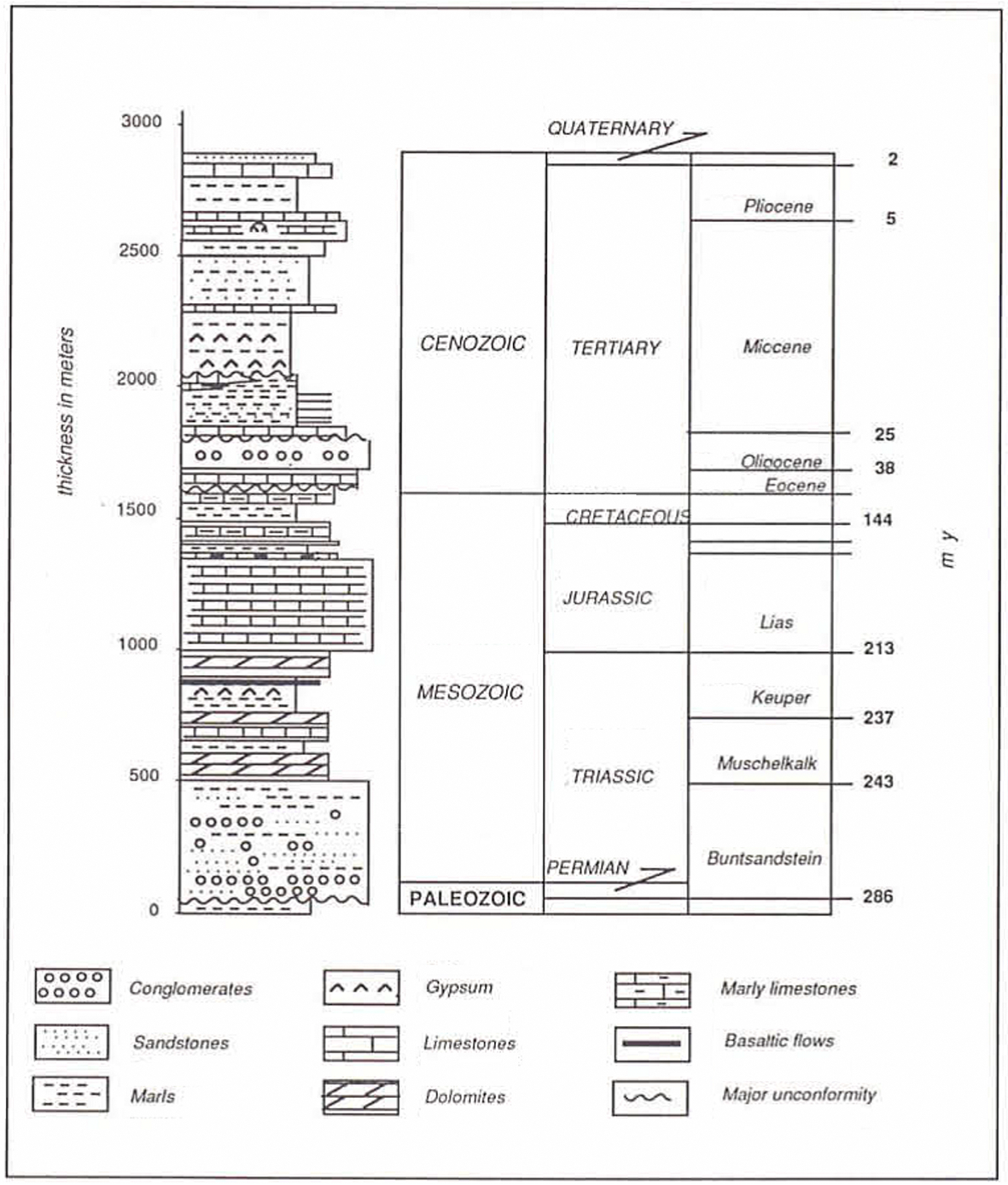
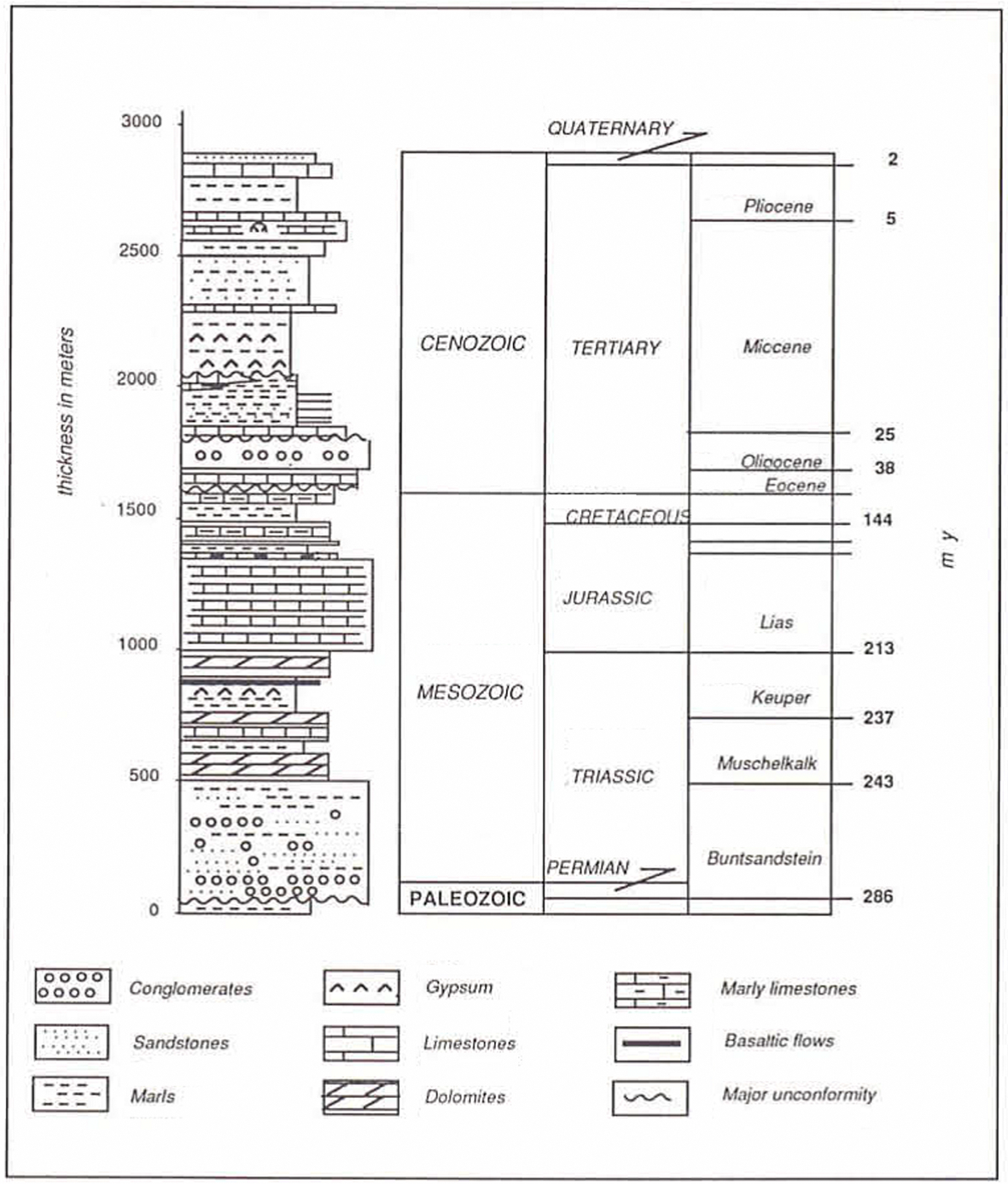
Serra de Tramuntana is located in the north-western part of Mallorca. Similarly to the entire Betic thrust and fold belt, it was formed during the Alpine orogeny, from the Oligocene, when the thrusting from south-east to north-west of the undeformed sedimentary column had started, to the Late Miocene, when the present-day tectonic structure was formed (cf. Sàbat et al., Reference Sàbat, Gelabert, Rodríguez-Perea and Giménez2011, their fig. 18). The mountains are composed of a series of thrust sheets involving a post-Variscan sedimentary column, starting from Permian red shales and conglomerates (Fig. 1). The Triassic is represented by typical Germanic facies: red sandstones and mudstones (Buntsandstein), dolomites and limestones (Muschelkalk) and marls plus evaporates (Keuper). Late Triassic and Jurassic rocks are platform limestones and dolomites, which dominate the mountain ridges of Serra de Tramuntana. Lower Cretaceous rocks are marls and limestones, representing a deeper-sea environment. The total thickness of the Mesozoic sedimentary column reaches 1600 m (Fig. 1). A stratigraphic gap (∼30 Ma) follows, representing the Late Cretaceous and Early Eocene. Sedimentation resumed in the Middle Eocene as freshwater limestones, followed by alluvial conglomerates, marine sandstones and turbidites, interpreted as synorogenic deposits. Post-orogenic, flat-lying Late Miocene and Pliocene shallow marine carbonates complete the sedimentary column (Ramos-Guerrero et al., Reference Ramos-Guerrero, Rodriguez-Perea, Sàbat and Serra-Kiel1989; Sàbat et al., Reference Sàbat, Gelabert, Rodríguez-Perea and Giménez2011). The total thickness of the Cenozoic sedimentary column reaches 1300 m (Fig. 1).
Synthetic lithostratigraphic column of Mallorca (after Fornós & Gelabert, Reference Fornós and Gelabert1995).
The volcanic rocks, which are potentially suitable for the present study (possible content of authigenic illite uncontaminated by detrital illite), are known from two Triassic formations: Buntsandstein and Keuper, thus ranging in age from the Early Triassic (<250 Ma) to the Late Triassic/Norian (>210 Ma). The volcanics are picritic and olivine submarine basalts and teschenite flows, sills, dikes, volcaniclastics and pyroclastics (highly spilitized) that were emplaced in an intracontinental extensional regime (Navidad & Alvaro, Reference Navidad and Alvaro1985; Enrique, Reference Enrique1986, Reference Enrique2012, Reference Enrique2016; Fornós & Gelabert, Reference Fornós and Gelabert1995). Chlorite, albite, serpentine, iron oxides and hydroxides, calcite, chalcedony and illite were observed as the alteration minerals in the outcrops located exclusively in Serra de Tramuntana, mostly at the seashore (Enrique, Reference Enrique1986, Reference Enrique2016).
Materials and methods
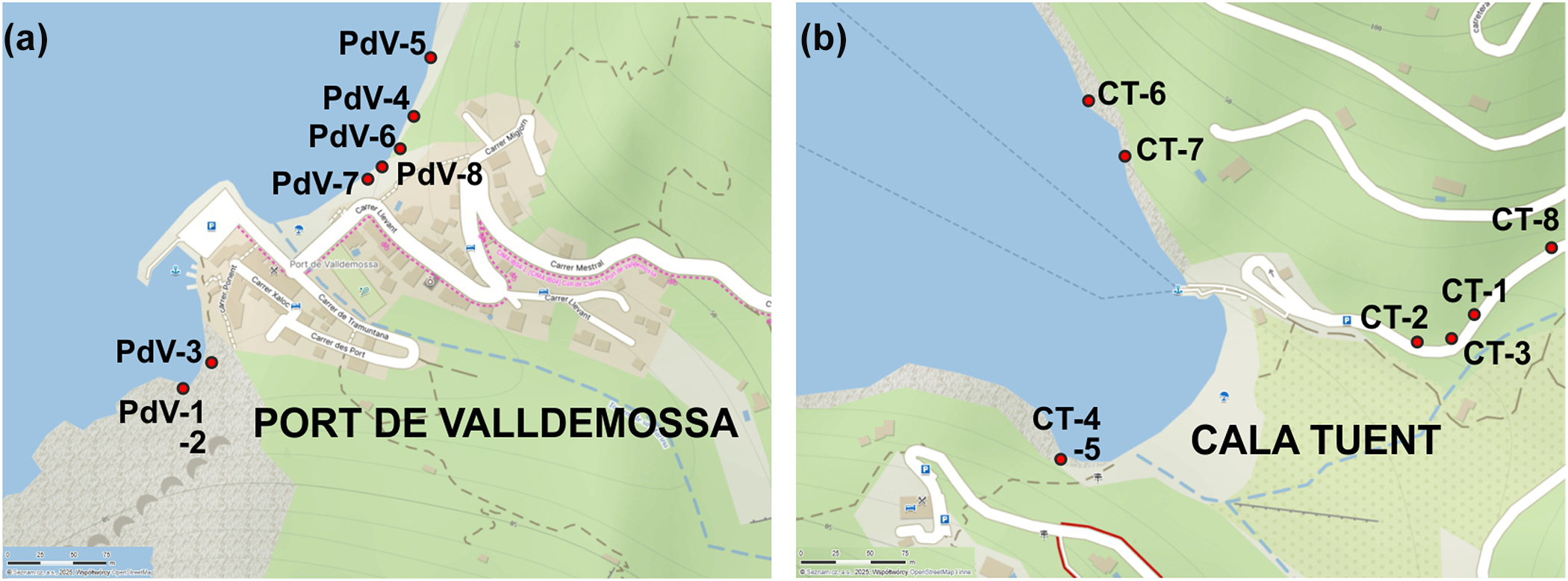
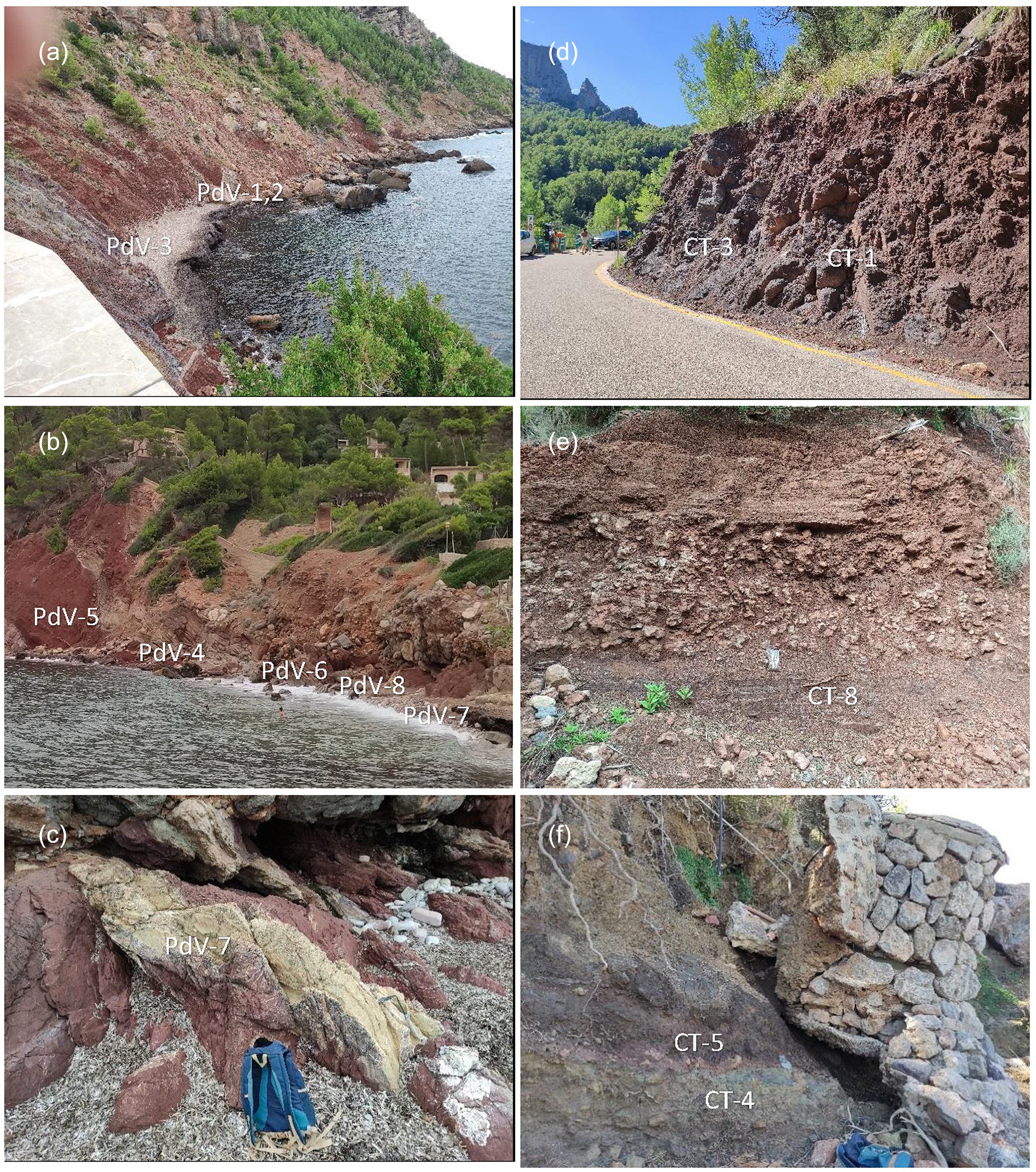
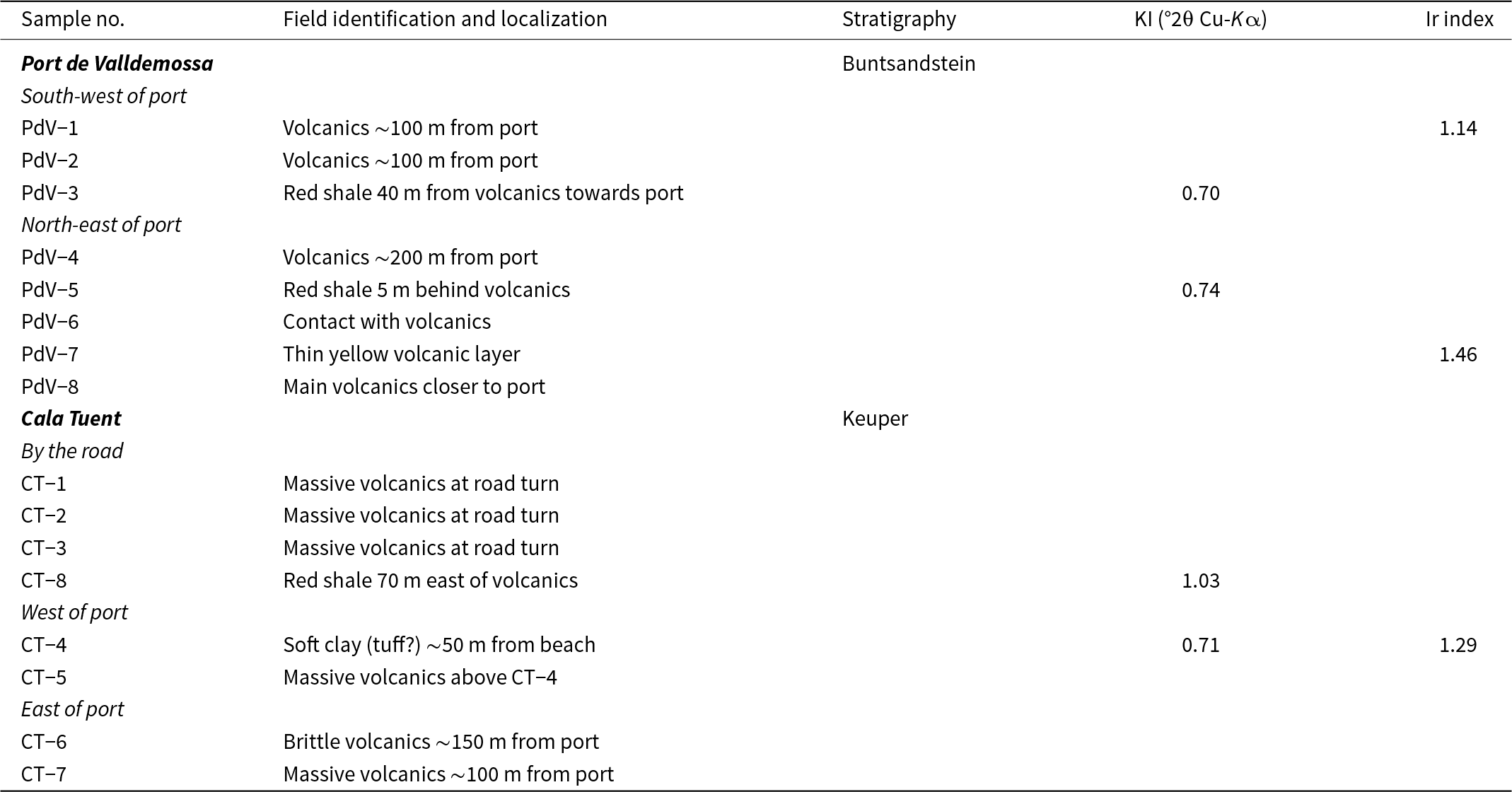
Enrique (Reference Enrique1986) presented detailed descriptions and maps of five locations with outcrops of the Triassic volcanic rocks. For the purposes of this study, two locations (Port de Valldemossa and Cala Tuent) were selected as being the most promising because of their high degree of alteration observed by Enrique (Reference Enrique1986), including the illitic alteration in Port de Valldemossa. Six samples identified macroscopically as volcanics and two identified as red shales were collected in Port de Valldemossa, to both the south-west and north-east of the port (Fig. 2a & Table 1). In Cala Tuent, three volcanic samples and one red shale were collected from the vertical outcrop by the road, and two volcanic samples were collected from each side of the beach (Fig. 2b & Table 1). Figure 3 presents photographs of most of the sample locations.
Locations of all samples on topographic maps (mapy.com) of (a) Port de Valldemossa and (b) Cala Tuent.

Localization of most samples (their macroscopic identification is given in Table 1) in photographs: (a) south-west shore of Port de Valldemossa; (b) north-east shore of Port de Valldemossa; (c) detailed localization of sample PdV-7; (d) road cut at Cala Tuent; (e) detailed localization of sample CT-8 in the road cut at Cala Tuent; (f) detailed localization of samples CT-4 and CT-5 west of the Cala Tuent beach.

Localization, field identification and stratigraphic position of all collected samples, as well as the KI and Ir index of Środoń (Reference Środoń1984) of selected samples.

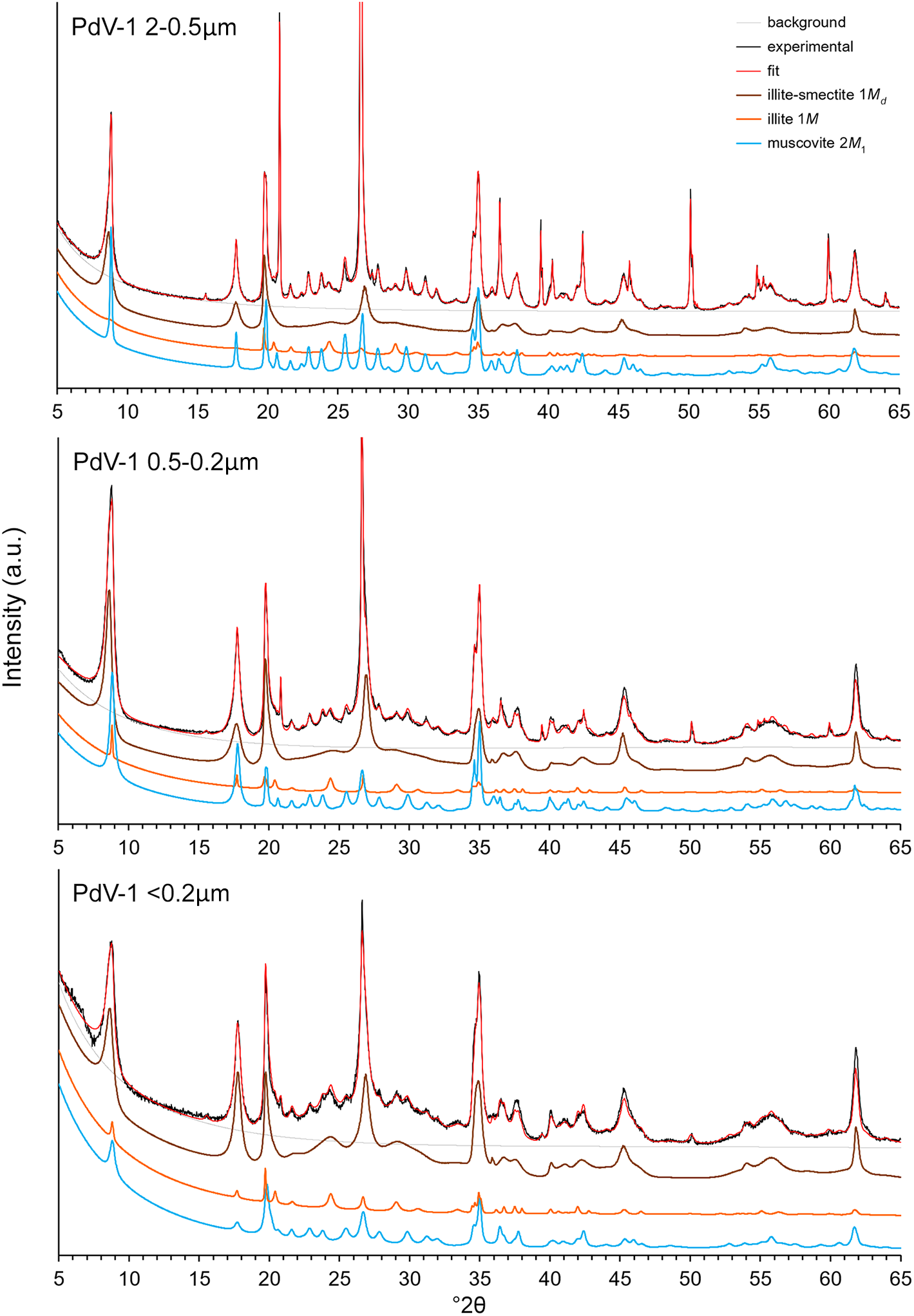
All of the collected samples were studied using X-ray diffraction (XRD) as bulk rocks in order to determine the presence and quantity of illite. Four samples regarded as containing abundant volcanic components and with the highest contents of illite were separated into >2, 2–0.5, 0.5–0.2 and <0.2 μm size fractions using the procedure of Jackson (Reference Jackson1975; details in Środoń & Jewuła, Reference Środoń and Jewuła2025) to characterize the illite in detail. As the amounts of the <0.2 μm fraction were insufficient, oriented preparations of the 0.5–0.2 μm fractions were instead X-rayed in both the air-dried and the glycolated state. All fractions were also X-rayed as random powders to identify and quantify the polytypes. The quantitative mineralogical analyses were carried out using Profex/BGMN software, utilizing Rietveld refinement. During refinement, muscovite 2M 1, illite 1M and illite–smectite 1Md were optimized, including preferred orientation, to achieve the best correspondence between the experimental and calculated diffractograms. In the models of muscovite 2M 1 and illite 1M, anisotropic broadening of the reflections was considered, with separately optimized parameters for the 00l and hkl reflections. The structure of illite–smectite 1Md was taken from Ufer et al. (Reference Ufer, Kleeberg, Bergmann and Dohrmann2012), in which the hkl and 00l reflections were calculated separately. The structure for the 00l reflection assumed R1 mixed-layer ordering with the percentage of illite above 90% and swelling interlayers containing two and one layers of water. Higher Reichweite values were not considered due to very-high-quality fit achieved with the R1 model.
Additionally, the <2 μm fractions were separated from three shale samples and clay sample CT-4 using the procedure of Jackson (Reference Jackson1975) and final Ca exchange to measure the full width at half-maximum (FWHM) of the 001 illite reflection, recorded using the following conditions: incident slit 0.5°, receiving slit 10 mm and scanning rate 0.3° min–1. FWHM was standardized into the Kubler index (KI; Kübler, Reference Kübler1968) following Warr & Ferreiro-Mählmann (Reference Warr and Ferreiro-Mählmann2015) by means of the experimental regression based on the Warr (Reference Warr2018) standards used in the clay laboratory of the Institute of Geological Sciences, Polish Academy of Sciences (PAS) in Kraków (Equation 1):
 \begin{equation}\mathrm{KI} = 1.167 \times \mathrm{FWHM} - 0.057\end{equation}
The separated clay fractions of four samples were dated using the K–Ar technique of the clay laboratory of the Institute of Geological Sciences, PAS in Kraków (details of the technique available in Środoń et al., Reference Środoń, Williams, Szczerba, Zaitseva, Bojanowski and Marciniak-Maliszewska2023). These four samples were also observed in polished thin sections under a Nikon Eclipse LV100POL polarizing microscope to aid in the interpretation of the XRD and K–Ar data. The illite age analysis was conducted using sample PdV-1, with uncertainties in the extrapolated ages estimated using the Monte Carlo method (10 000 iterations), taking into account the 2σ confidence intervals for the age and the percentage of detrital potassium. Illites in one sample (PdV-7) were analysed chemically using a Cameca SX-100 electron probe microanalyser equipped with wavelength-dispersive X-ray spectrometers at the Faculty of Geology, University of Warsaw. The sample (polished thin section) was coated with a 20 nm carbon layer prior to analysis. The acceleration voltage was 15 kV, the beam current was 8 nA and the beam diameter was 3 μm. The following diffracting crystals and X-ray lines (in parentheses) were used: PC0 (F-Kα and Na-Kα), TAP (Mg-Kα, Si-Kα and Al-Kα), LPET (K-Kα, Ca-Kα, Cl-Lα and Ba-Kα) and LIF (Fe-Kα, Mn-Kα, V-Lα and Ti-Lα). The following standard substances were used: albite for Na, MgO for Mg, diopside for Si and Ca, BaSO4 for Ba, Fe2O3 for Fe, rhodonite for Mn, orthoclase for Al and K, V2O5 for V, topaz-F for F, tugtupite for Cl, LaPO4 for P and TiO2 for Ti.
Results
Bulk-rock XRD data
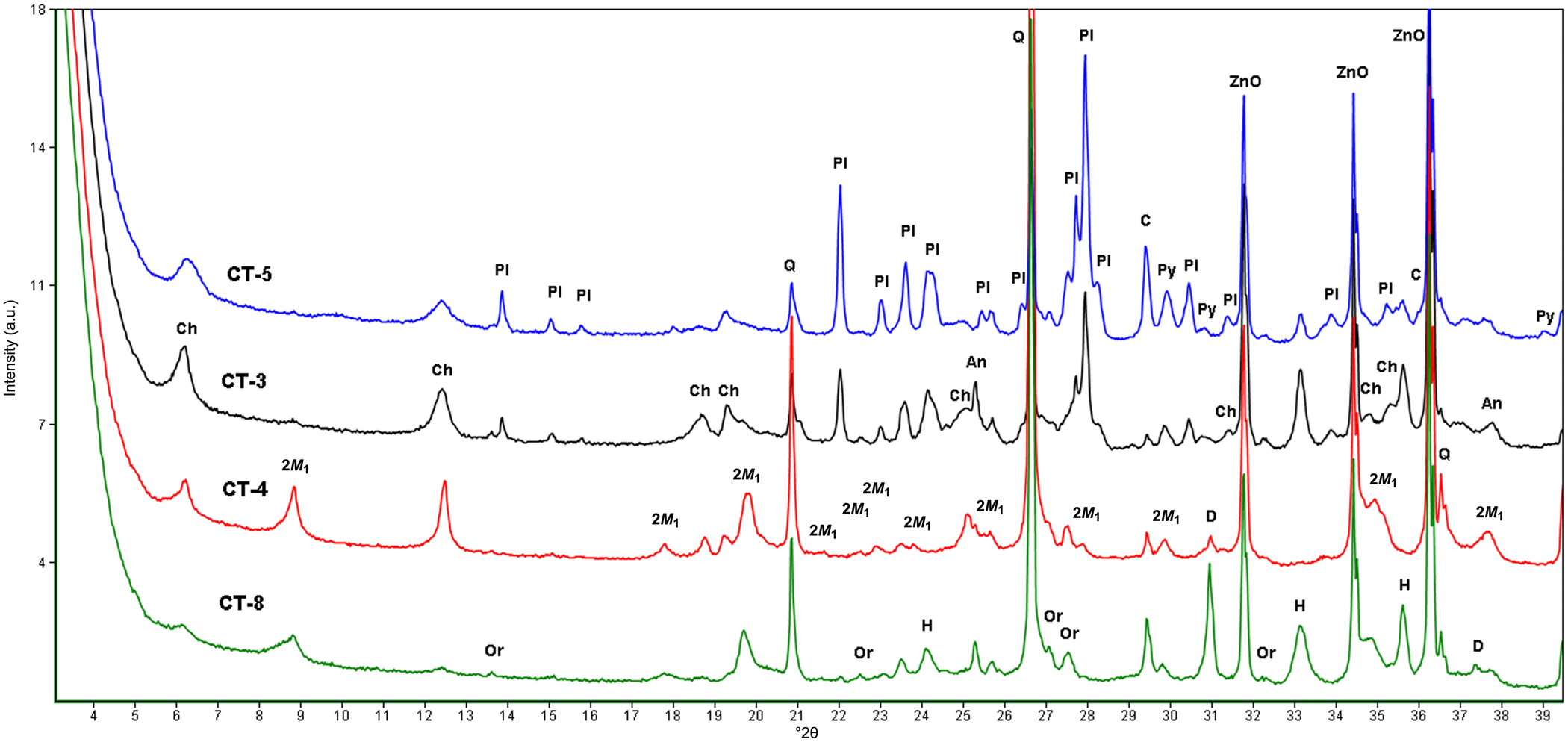
The characteristic XRD traces of the Cala Tuent bulk-rock samples are shown in Fig. 4. Most samples represent the compositional range between CT-5 (relatively fresh basalt rock rich in plagioclase and pyroxene, with some quartz, orthoclase, hematite, calcite and chlorite, sometimes mixed-layered) and CT-3 (strongly altered basalt with plenty of chlorite and hematite, some anatase, orthoclase, calcite, quartz and plagioclase and traces of illite). Two samples (red shale CT-8 and soft clay CT-4) are different (Fig. 4), as they also contain chlorite, orthoclase, carbonates and hematite in the red shale but no plagioclase, the percentages of quartz are much higher and there is plenty of illite. The CT-4 sample was selected for K–Ar dating and more detailed mineralogical study.
Representative bulk rock random XRD traces of the Cala Tuent samples. 2M 1 = 2M 1 illite/mica; An = anatase; B = barite; D = dolomite; Dw = dawsonite; H = hematite; Q = quartz; Rt = rutile; Sp = sphalerite (?); Tr = tridimite; ZnO = internal standard.

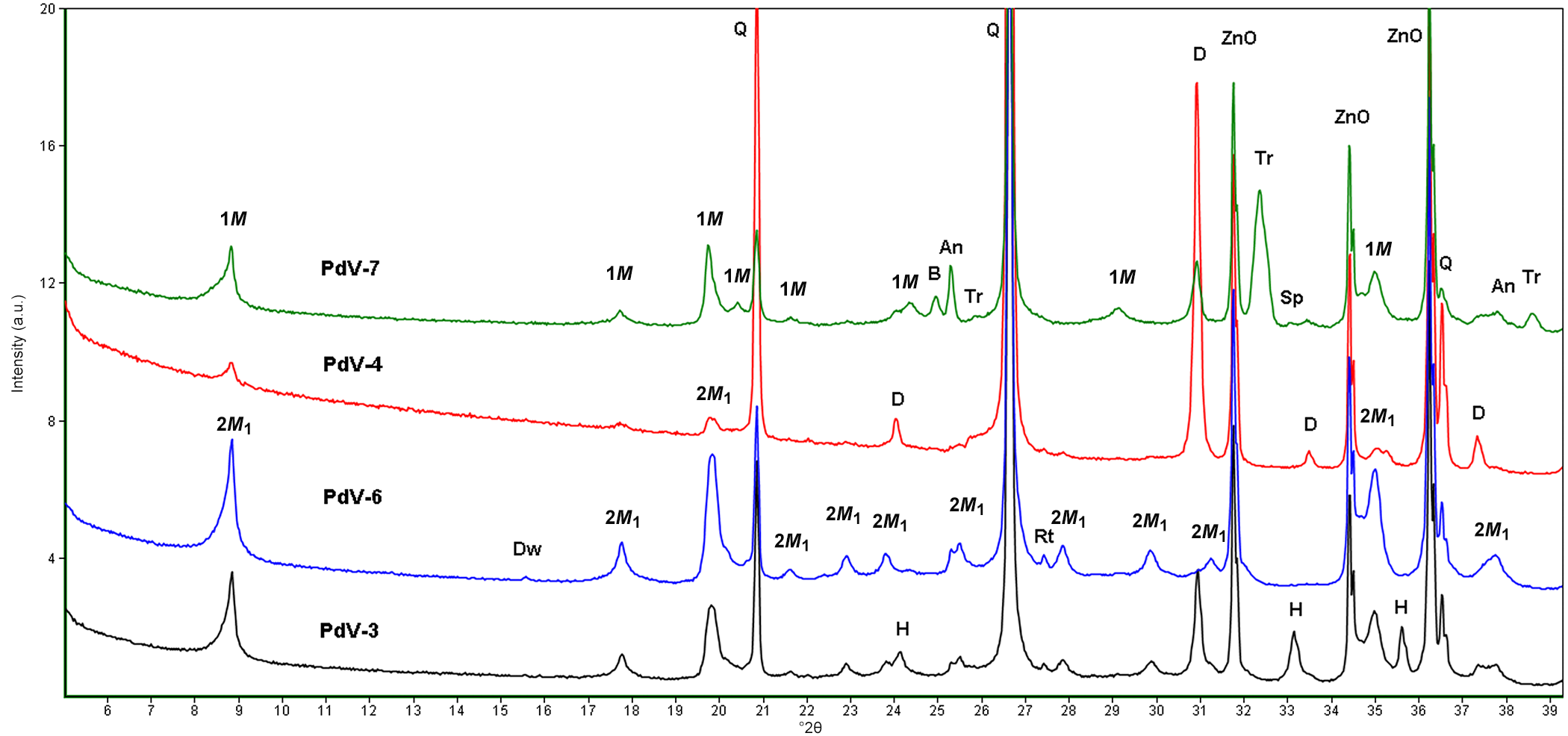
Most of the Port de Vallemossa rock samples, identified macroscopically as hard volcanic intrusions, have a mineral composition ranging from PdV-4 to PdV-6 (Fig. 5) and typically contain abundant quartz and 2M 1 illite/mica, along with variable amounts of dolomite and calcite, small amounts of 1M illite, anatase and rutile and trace amount of dawsonite. The red shale samples have a similar mineral composition and an additional abundance of hematite (PdV-3 shown in Fig. 5). The hard yellow PdV-7 rock (Fig. 3c), also identified macroscopically as a volcanic tuff/intrusion, has a very different composition, indicative of a volcanic origin, with less quartz, abundant mixed-layer 1M illite, tridimite-2OH and dolomite and small amounts of barite, anatase and probably sphalerite (Fig. 5). The PdV-1, PdV-6 and PdV-7 samples were selected for K–Ar dating and more detailed mineralogical study.
Representative bulk rock random XRD traces of the Port de Valldemossa samples. 1M = 1M illite; 2M 1 = 2M 1 illite/mica; An = anatase; C = calcite; Ch = chlorite; D = dolomite; H = hematite; Or = orthoclase; Pl = plagioclase; Py = pyroxene; Q = quartz; ZnO = internal standard.

Clay fraction XRD data
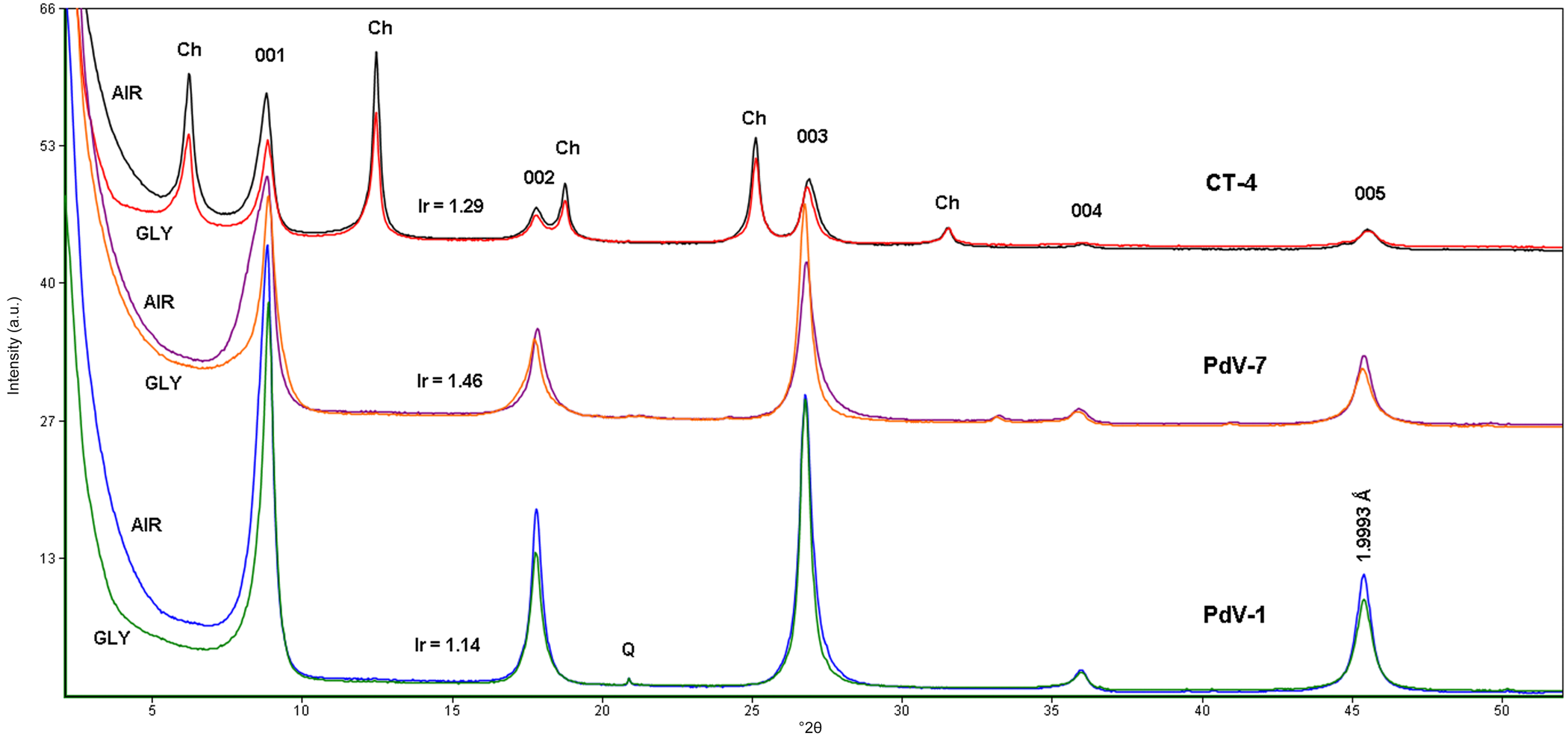
Representative XRD traces of oriented 0.5–0.2 μm fractions, both air-dried and glycolated, are presented in Fig. 6. Illites in all samples display characteristic indications of traces of swelling: the 001 reflection after glycolation is narrower and displaced towards higher angles, whereas the 002 and 003 reflections and displaced towards lower angles (if swelling is sufficiently strong; i.e. in PdV-7). The intensity ratio of 001/003 reflections decreases after glycolation, producing an Ir index >1 (Ir = (001/002air)/(001/003gly) = 1.0 for non-swelling illite; Środoń, Reference Środoń1984). The 005 reflection is not split, which is indicative of the percentage of swelling layers being below 10% (Środoń et al., Reference Środoń, Zeelmaekers and Derkowski2009), and is highest in PdV-7 (Ir index = 1.46). The d 005 of 1.999 Ǻ indicates K-illite without detectable Na or NH4 substitutions. The XRD traces of PdV-6 (not shown in Fig. 6) are very similar to those of PdV-1. The KI measurements on the <2 μm fractions gave diagenetic values of 0.70–1.03°2θ Cu-Kα, and these are reported in Table 1.
XRD traces of oriented air-dried (AIR) and glycolated (GLY) 2–0.5 μm fractions of samples selected for K–Ar dating. Illite reflections are marked with their 00l indices. Ch = chlorite; Ir = degree of the swelling index of Środoń (Reference Środoń1984); Q = quartz.

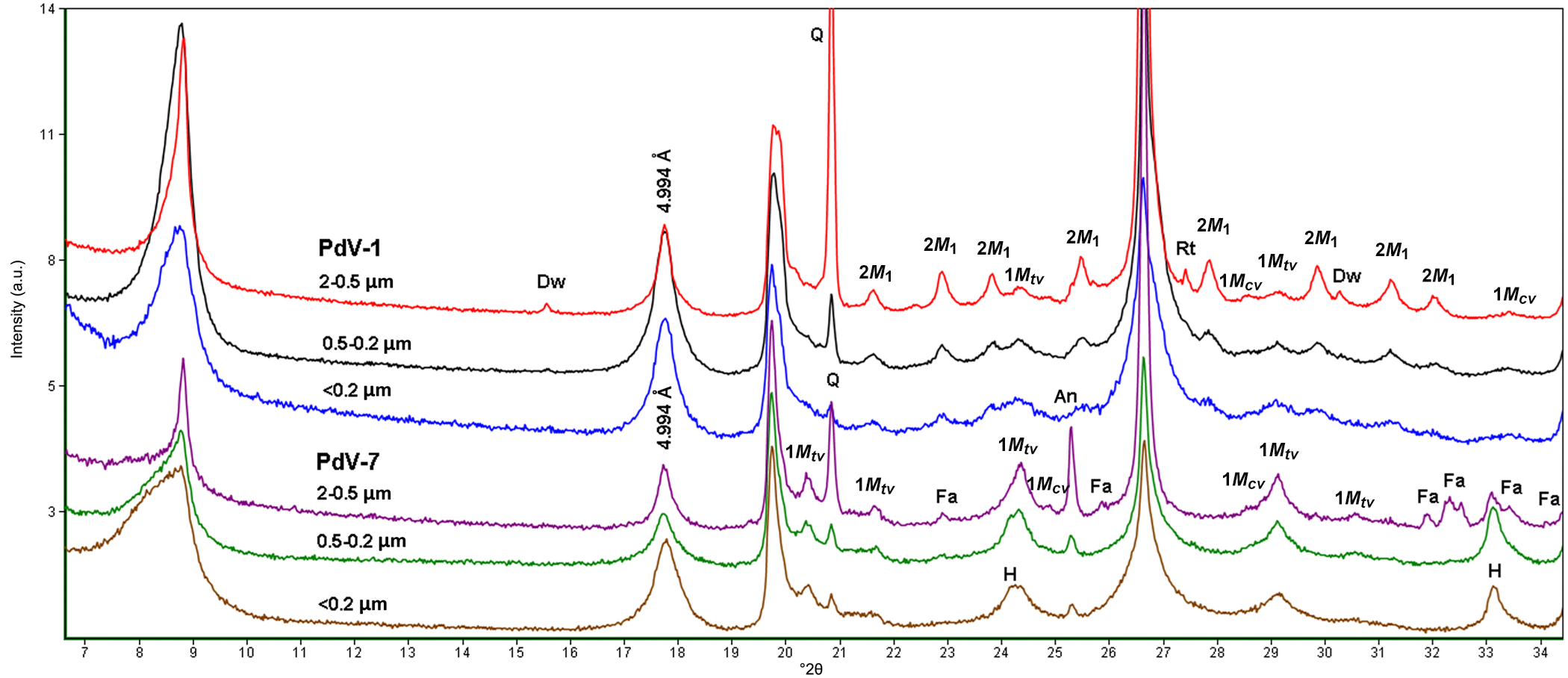
All random XRD traces of the clay-size fractions display characteristic variation with respect to grain size (Fig. 7 & Table 2): in coarser fractions there is more 2M 1 illite and quartz, and the illite reflections are narrower. All samples except PdV-7 contain mixtures of 2M 1 and 1M illite polytypes. Both 1M tv and 1M cv varieties are detectable. The 1M/2M 1 ratio decreases in coarser fractions, which is evident from the relative peak intensities and was confirmed by the polytype quantification (Fig. 8 & Table 2). In the PdV samples, d 060 is close to 1.500 A (Table 3), indicative of an aluminous composition. In the CT-4 sample, the 060 reflection of illite overlaps with a strong chlorite reflection. In PdV-7, only the 1M illite polytype is present. 1M tv is dominant, but 1M cv can also be detected. The 001 region of PdV-7 demonstrates that illite in this sample is composed of a coarse, non-expandable variety, which dominates in the 2–0.5 μm fraction, and an expandable variety, which is abundant in the <0.2 μm fraction.
XRD traces of random fractions of two samples selected for K–Ar dating, illustrating differences in illite polytype composition and relative concentrations of illite and illite–smectite in fractions of sample PdV-7, visible in 001 region. An = anatase; Dw = dawsonite; Fa = fluoroapatite, H = hematite; Q = quartz; Rt = rutile.

Results of illite polytype quantification from XRD traces of three random fractions of sample PdV-1.

Results of quantitative mineralogical analyses of the clay fractions of sample PdV-1, including illite polytype quantification.

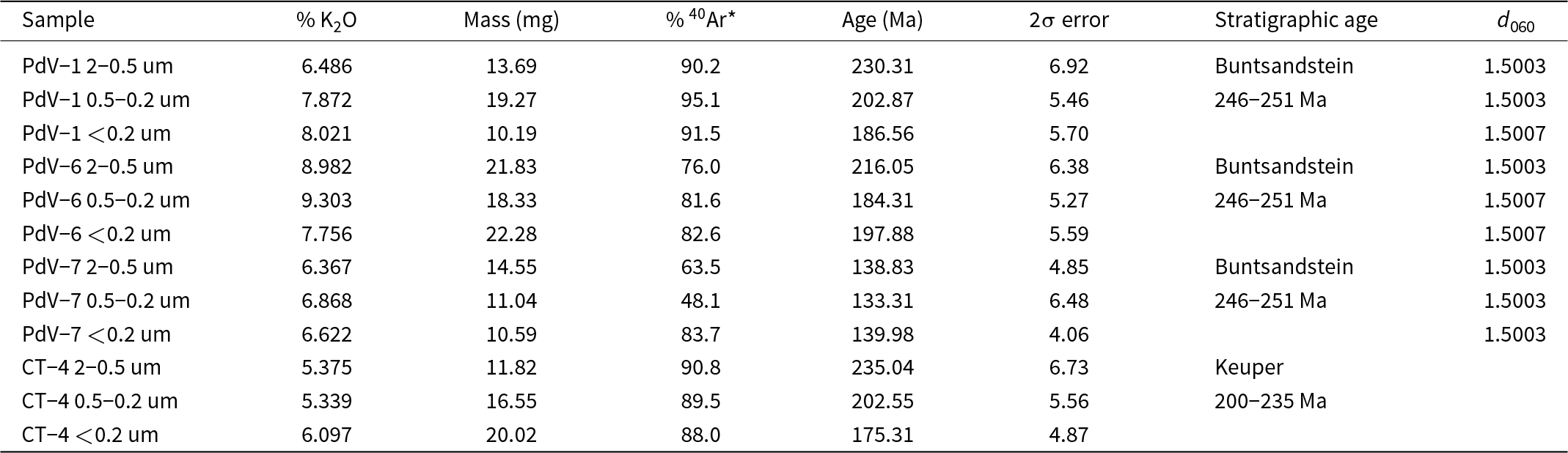
K–Ar data for illite in the clay fractions, stratigraphic positions of the samples and d 060 of illite in these fractions.

Petrographic observations
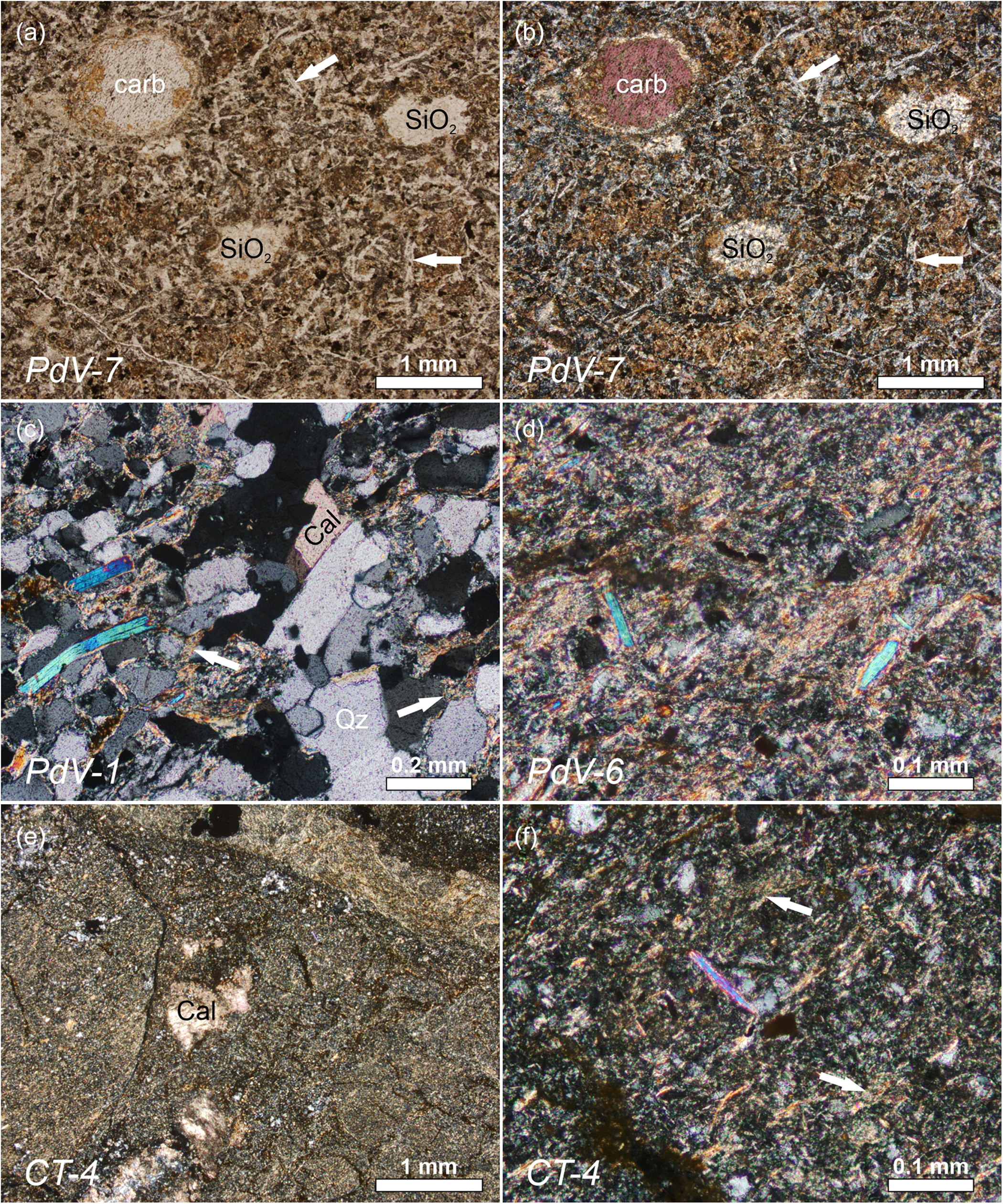
The four samples selected for K–Ar dating were also investigated using a polarizing microscope. The detrital material was not observed only in one of these samples (PdV-7), which is a highly altered rock composed mostly of fine-crystalline illite (Fig. 9a,b). The rock fabric, although obliterated by this secondary illite to some extent, has what resembles a diabasic texture, suggesting a (sub)volcanic origin. This sample was also analysed using the electron probe microanalyser, which enabled the mineral identification of some components. Illite occurs as pseudomorphs probably replacing lath-shaped feldspars and platy biotite, and as a matrix between these pseudomorphs. A TiO2 mineral (anatase according to XRD; Fig. 5) was detected in the rock matrix. Numerous oval structures (< 1.5 mm in diameter), most probably amygdoidal vesicles filled with authigenic minerals, are dispersed pervasively in the rock. They contain carbonates (calcite, Fe-dolomite/ankerite, siderite and magnesite), fibrous-radial silica (tridimite according to XRD; Fig. 5) and barite. The rock appears to be stained with a ferruginous material.
Plane polarized light (PPL) and cross-polarized light (XPL) microphotographs of samples selected for K–Ar dating. (a) PPL and (b) XPL paired images of sample PdV-7, a deeply altered subvolcanic rock with diabasic texture. Note the oval structures filled with carbonates (carb) and tridimite (SiO2). Arrows indicate examples of lath-shaped former feldspars currently replaced by illite. (c) XPL image of sample PdV-1, a metapsamite with authigenic calcite (Cal) and two populations of colourless mica: coarse detrital grains and fine-crystalline masses filling intergranular porosity (indicated with arrows) can be observed. (d) XPL image of sample PdV-6, a metapelite with two populations of colourless mica: coarse detrital grains and fine-crystalline masses can be observed. (e) XPL image of sample CT-4, a tuffite with a brecciated texture and with authigenic calcite (Cal). (f) Higher-magnification XPL image of sample CT-4 showing two populations of colourless mica: coarse detrital grains and fine-crystalline masses (indicated with arrows) can be observed.

PdV-1 and PdV-6 are metasedimentary rocks: metapsamite and metapelite, respectively. PdV-1 (Fig. 9c) is weakly laminated, with framework grains dominated by quartz and relatively coarse-grained, colourless detrital mica, with individual zircon, rutile, tourmaline and opaque grains. The intergranular spaces are filled with fine-grained, colourless illite and authigenic calcite. PdV-6 (Fig. 9d) is massive and is also dominated by quartz, colourless mica (coarse flakes) and illite (fine -grained flakes in pore spaces).
CT-4 is an altered tuffite with a brecciated texture (Fig. 9e,f). The main components are fine-grained quartz and fine, colourless mica – most probably illite based on the XRD data. Individual outsized mica flakes represent the detrital material. Authigenic silica and carbonates occur in isolated domains.
K–Ar dating of the clay fractions
All fractions of the Port de Valldemossa samples gave K–Ar ages younger than the Triassic stratigraphic age (Table 3). The PdV-1 ages decrease gradually with clay fraction size from 230 to 186 Ma. The PdV-6 sample gave the oldest age of the coarsest fraction (216 Ma), while youngest age (184 Ma) was assigned to in the middle fraction. The K–Ar ages of the PdV-7 fractions are equal within the experimental error limits (133–140 Ma). The K–Ar ages of the Cala Tuent sample (CT-4) decrease with grain size from 235 Ma (equal to or slightly older than the stratigraphic age) to 175 Ma.
Chemical analyses of the PdV-7 illite
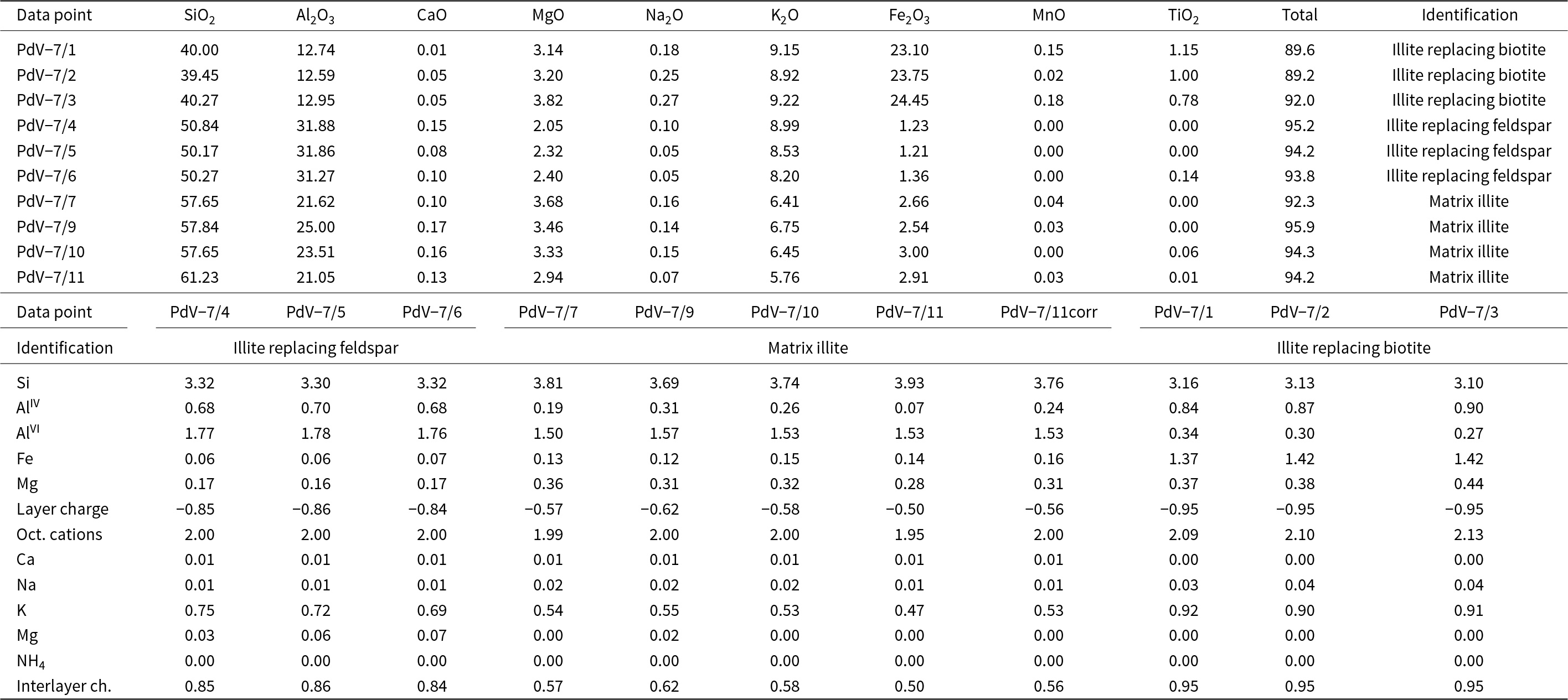
Petrographic observations identified in three morphological varieties of illite in the PdV-7 sample: illitic matrix and illite pseudomorphs after feldspar and after biotite (Fig. 9a,b). Their microprobe analyses are presented in Table 4, along with their calculated structural formulae. Ti was not included in the formulae calculation, as abundant anatase was detected in this sample (Figs 5 & 7), and Fe was regarded as trivalent. The PdV-7/11 analysis gave too low octahedral cations (significantly below 2/O10(OH)2), which was corrected by assuming quartz contamination and decreasing SiO2 to 52%. All analyses of altered biotite have octahedral cations above 2.00, indicating some remnants of the trioctahedral structure, but only trivalent iron. Based on these analyses, the mineral replacing feldspar can be classified as illite, the matrix mineral as mixed-layer illite–smectite and the mineral replacing biotite as close to ferromuscovite (ferrimuscovite; i.e. an intermediate between muscovite and celadonite; Rieder et al., Reference Rieder, Cavazzini, D’yakonov, Frank-Kamenetskii, Gottardi and Guggenheim1999).
Electron probe microanalyser chemical analyses of the different types of illite in sample PdV-7 (in wt.%), along with structural fromulae calculated from these analyses (for PdV-7/11 also corrected for the admixture of quartz).

ch. = charge; Oct. = octahedral.
Interpretation
Diagenetic/metamorphic grade
The traces of swelling detected in all illites, indicative of <10% swelling layers, identify our samples as representing maximum palaeotemperatures of higher than 180°C (Środoń, Reference Środoń, Rocha, Terroso and Quintela2007) but much lower than 250–275°C (i.e. the temperature range in which illite swelling disappears; McDowell & Elders, Reference McDowell and Elders1980; Akker et al., Reference Akker, Berger, Zwingmann, Todd, Schrank and Jones2021). Ir index values indicate diagenesis/anchizone boundary temperatures (Bozkaya et al., Reference Bozkaya, Bozkaya, Uysal and Banks2016, Reference Bozkaya, Günal-Türkmenoğlu, Göoncüoğlu and Okuyucu2021). This is consistent with the lack of 2M 1 illite in sample PdV-7, which does not contain the detrital components: the temperatures were too low for the crystallization of authigenic 2M 1 illite, which appears at temperatures close to the onset of anchizone (∼200°C; Frey & Robinson, Reference Frey and Robinson1999, their fig. 2.1). The KI values, which were measured for shales and a tuff (Table 1), are above 0.52°2θ Cu-Kα (i.e. above the standardized diagenesis/anchizone boundary value; Warr & Ferreiro-Mählmann, Reference Warr and Ferreiro-Mählmann2015). Therefore, they indicate deep diagenetic conditions below 200°C.
The presented maximum palaeotemperature evaluation is based on the published datasets measured for shales and bentonites. Commonly, bentonites produce slightly lower estimates of the maximum palaeotemperatures than the surrounding shales (e.g. Šucha et al., Reference Šucha, Kraus, Gerthofferova, Petes and Serekova1993). This is interpreted as an indication of a deficit of potassium in bentonites, which has to be imported from shales, as is best evidenced by rare cases of the zonation of illitization in bentonites (Środoń, Reference Środoń1976; Altaner et al., Reference Altaner, Hower, Whitney and Aronson1984), but also in palaeosols (Liivamägi et al., Reference Liivamägi, Środoń, Bojanowski, Stanek and Roberts2021). The thick detrital illite in shales may also contribute to this effect. This effect is visible in our dataset, but it is very small: sample PdV-7 (the volcanic rock) has slightly more expandability (Fig. 6) and a higher Ir index (Table 1) than the sedimentary samples (volcanoclastics). Within sample PdV-7 we can also observe variation in expandability, as evidenced by variable interlayer cation contents (Table 4): from 0.56–0.62/O10(OH)2 in the illitic matrix to 0.84–0.86/O10(OH)2 in the illitic pseudomorphs after K-feldspar. These values correspond to ∼16 to <5% S (Środoń et al., Reference Środoń, Zeelmaekers and Derkowski2009a). Our data document that, in such a temperature range (∼180–200°C), illite chemistry is controlled by the chemistry of the precursor material, but the availability of potassium in these rocks is of secondary importance when evaluating maximum palaeotemperatures.
Age of the authigenic illite
Three samples containing mixtures of illite polytypes provided the oldest K–Ar dates for the coarsest fractions, with the highest contents being 2M 1 illite/mica. Such a relationship and the lack of 2M 1 illite/mica in sample PdV-7 indicate that the 2M 1 polytype is a detrital mica (Środoń et al., Reference Środoń, Clauer and Eberl2002). This conclusion is consistent with the petrographic observations, which document abundant detrital mica and quartz in all samples containing the 2M 1 polytype (Fig. 9c–f). Thus, the dates of such samples are mixed ages between the age of detrital 2M 1 mica and the age of authigenic 1M/1Md illite. These data allow us to conclude that the illite authigenesis took place after the youngest date of these samples (<175 Ma).
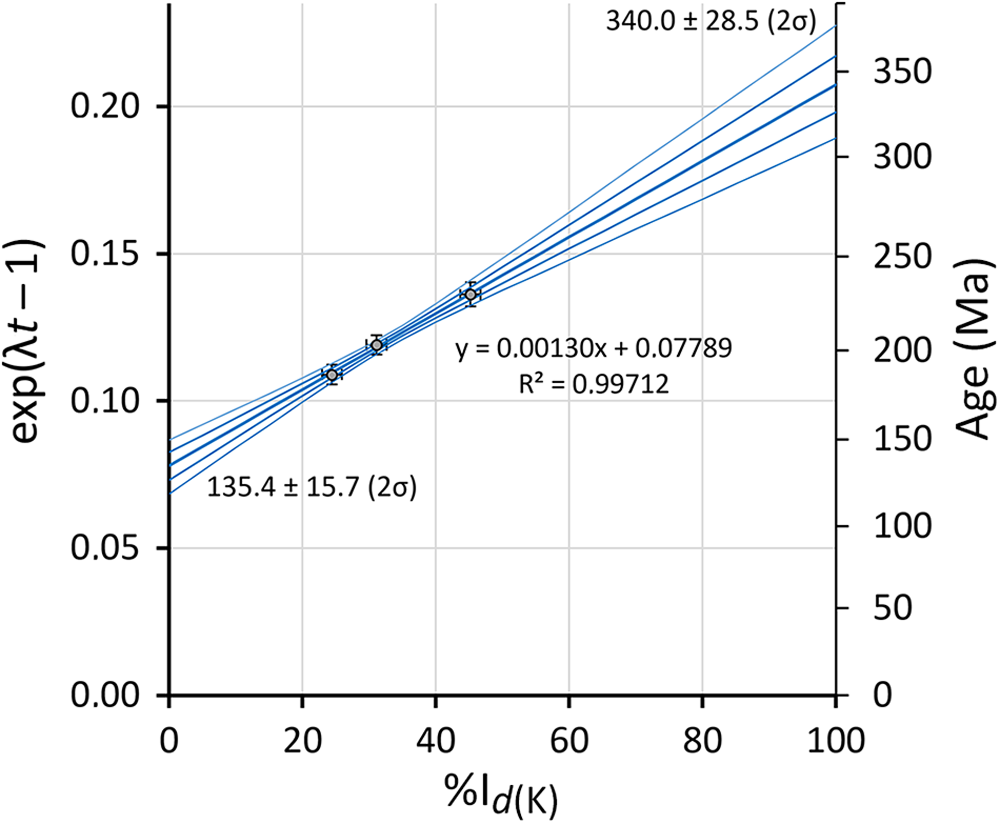
Petrographic observations indicate that sample PdV-7 represents deeply altered (sub)volcanic rock without detrital contamination. The ages of all three fractions of sample PdV-7 are within the analytical error, and the lack of detectable 2M 1 contamination allows us to conclude that the authigenic illite in these rocks crystallized between 140 and 133 Ma (i.e. during the Early Cretaceous and before the Barremian). The sequence of ages (oldest in the finest fraction and intermediate in the coarsest fraction, which typically contains aggregates and not individual crystals, which dominate in finer fractions) probably reflects a duration of several million years of illite crystallization and growth (the finest crystals are the first to form: Środoń et al., Reference Środoń, Clauer and Eberl2002). Such an estimation of the age of authigenic illite is confirmed by plotting the exp(λt – 1) curve and K–Ar ages of the size fractions of sample PdV-1 (Fig. 10) against the percentage of detrital K (%Id (K); see definition in Szczerba & Środoń, Reference Szczerba and Środoń2009). The plot is linear, and it extrapolates to ∼135.4 ± 15.7 (2σ) Ma for 0% 2M 1 (only 1M + 1Md present) and to ∼340.0 ± 28.5 (2σ) Ma (Variscan metamorphism) for 100% 2M 1. The closest known major source of the Variscan metamorphic rocks is the Betic Cordillera (Martín-Algarra et al., Reference Martín-Algarra, García-Casco, Gómez-Pugnaire, Jabaloy-Sánchez, Laborda-López, López Sánchez-Vizcaíno, Quesada and Oliveira2019), but even in Serra de Tramuntana small outcrops of the metamorphosed Carboniferous sediments are present (Fornós & Gelabert, Reference Fornós and Gelabert1995).
K–Ar ages and exp(λt – 1) vs K percentage in the 2M 1 polytype (%Id (K) – according to the equation in Szczerba & Środoń, Reference Szczerba and Środoń2009). %Id (K) values were calculated from the percentages of K in the end-member phases estimated from the extrapolation of K percentages to 0% and 100% of the 2M 1 polytype. The results are 7.8% and 6.8% for 2M 1 and 1Md + 1M, respectively. Confidence bands were calculated using the Monte Carlo method. Error bars correspond to 2σ, assuming ±1.5% uncertainity in the detrital potassium estimate.

Origin of the authigenic Early Cretaceous illite
Our data indicate that in the Triassic rocks of Serra de Tramuntana, both volcanic (PdV-7) and volcano-sedimentary (PdV-1), the authigenic illite crystallized in the Lower Cretaceous, and thus ∼100 Ma after deposition, at temperatures close to but below the diagenesis/anchimetamorphism boundary (180–200°C). The illitization process is therefore unrelated to the contact metamorphism or alteration of hot volcanics by post-magmatic fluids or seawater (spilitization). Tectonic models assume that the Triassic to Lower Cretaceous rocks of Mallorca were essentially flat-lying until the Late Oligocene, when thrusting and folding started, which were responsible for the present-day tectonic structure (Gelabert et al., Reference Gelabert, Sàbat, Hardy and Rodríguez-Perea2004, their fig. 9; Sábat et al., Reference Sàbat, Gelabert, Rodríguez-Perea and Giménez2011, their fig. 18). Thus, illitization cannot be explained by tectonic burial. Pre-tectonic sedimentary burial diagenesis in a common geothermal regime can also be excluded, as the maximum thickness of the entire Triassic to Lower Cretaceous sedimentary section does not exceed 1500 m (Fig. 1). Therefore, burial under common geothermal gradient conditions (20–40°C km–1) could provoke, at most, only the incipient illitization of smectite.
At the time of illite crystallization, the Lower Cretaceous sediments of Mallorca indicate deep-sea conditions. The area was uplifted and eroded in the Upper Cretaceous, and this radical change from extensional to contractional regime (Moragues et al., Reference Moragues, Ruano, Azañón, Garrido, Hidas and Booth Rea2021), which is known to have occurred in the much broader surrounding area, is interpreted as the onset of the convergence between Africa and Europe (Ramos-Guerrero et al., Reference Ramos-Guerrero, Rodriguez-Perea, Sàbat and Serra-Kiel1989; Schettino & Turco, Reference Schettino and Turco2011). Assuming that all of these tectonic models are correct, the only feasible scenario explaining the detected level of illitization is a very high geothermal gradient related to thinning of the crust at the end of the Cretaceous extensional phase, one that is even more extreme than what is known today from the Pannonian Basin (∼80°C km–1; Lenkey et al., Reference Lenkey, Dövényi, Horváth and Cloetingh2002), and possibly accompanying hydrothermal activity. An analogous shallow burial Mesozoic thermal event, produced by rifting and lithospheric thinning, is known to have occurred in Europe between the Paris Basin, the North Sea and the Upper Silesia Coal Basin. This was originally postulated by Bonhomme (Reference Bonhomme1982), and it was subsequently confirmed by numerous studies (cf. references and discussion in Środoń et al., Reference Środoń, Zeelmaekers and Derkowski2009b).
Thee Lower Cretaceous age of illitization implies that the Alpine thrusting and folding in Serra de Tramuntana affected rocks that were already strongly altered, and that the Alpine-phase maximum palaeotemperatures in Serra de Tramuntana were below 200°C, as the Cretaceous characteristics of illite have not changed. This conclusion applies to the entirety of Mallorca, as our samples were collected from the bottom of the nappe stack (Gelabert et al., Reference Gelabert, Sàbat, Hardy and Rodríguez-Perea2004, their fig. 9; Sábat et al., Reference Sàbat, Gelabert, Rodríguez-Perea and Giménez2011, their fig. 18).
Implications for the tectonic history of Mallorca
The Balearic Islands are considered to be the emerged parts of the Balearic Promontory (i.e. the offshore prolongation of the External Zones of the Betic Cordillera in Spain; e.g. Vergés et al., Reference Vergés, Kullberg, Casas-Sainz, de Vicente, Duarte, Fernàndez, Quesada and Oliveira2019, their fig. 1.3). Diagenetic/metamorphic events affecting the Triassic rocks of the Betic Cordillera have been extensively studied only in the Internal Zone (summaries in Garrido et al., Reference Garrido, Acosta-Vigil, Barich, Hidas, Quesada and Oliveira2019; Nieto et al., Reference Nieto, Abad, Velilla, Quesada and Oliveira2019). The level of alteration of the Triassic rocks of the Maláguide and Alpujárride complexes range from late diagenesis to epimetamorphism. The pyrophyllite, paragonite and chloritoid detected in some of these rocks (Ruiz Cruz et al., Reference Ruiz Cruz, Sanz de Galdeano and Lázaro2005) indicate anchizonal/epizonal temperatures. All available radiometric dates of these metamorphosed sediments and the K–Ar dates of the Triassic basic intrusions (Puga & Torres-Roldán, Reference Puga and Torres-Roldán1989) indicate the Alpine age of these alterations, which is supported by the subsidence analysis (Perri et al., Reference Perri, Critelli, Martín-Algarra, Martín-Martín, Perrone, Mongelli and Zattin2013).
Published information on the level of diagenesis/metamorphism of the External Zone sedimentary rocks (mostly marls) is lacking. The External Zone sediments host abundant mafic tectonic blocs (called ‘ophites’), intrusions and pillow lavas, ranging in age from the Late Triassic to the Early Cretaceous. Their secondary mineral composition (prehnite, pumpellyite, actinolite, chlorite, illite, zeolites) indicates low-grade metamorphism (Puga et al., Reference Puga, Van de Fliert, Torres-Roldán and Sanz de Galdeano1988; Morata et al., Reference Morata, Puga, Demant and Aguirre1997). The whole-rock K–Ar ages, mostly being younger than the stratigraphic ages, support massive alteration of the igneous rocks and range down to 48 Ma (Puga et al., Reference Puga, Van de Fliert, Torres-Roldán and Sanz de Galdeano1988), indicating, at least locally, an effect of the Alpine metamorphism, which has not been detected in Mallorca. It remains to be investigated whether this Alpine metamorphism overprinted the Early Cretaceous alteration of the External Zone rocks, analogous to the alteration detected in Mallorca.
According to Bourrouilh (Reference Bourrouilh2016), ‘the history of the Balearic archipelago seems to be closer to the tectonic opening of the Gulf of Valencia and to the Corsica-Sardinia rotation, and thus to the tectonic history of the Western Mediterranean Sea, than to the tectonics of the Betic Cordillera’. Zircon fission track analyses from the Variscan basement of Corsica yield ages between 144.6 ± 10.0 and 159.2 ± 9.8 Ma. These ages are interpreted as a record of a thermal event related to the Jurassic opening of the Ligurian-Piedmont Ocean (Danišík, Reference Danišík2005); thus, perhaps they document an earlier phase of the same event as our K–Ar dates from Mallorca. According to Dercourt et al. (Reference Dercourt, Zonenshain, Ricou, Kazmin, Le Pichon and Knipper1986), this Jurassic–Cretaceous extension, involving Africa and Europe, produced a continuous oceanic corridor from the Gulf of Mexico to Tibet.
Conclusions
(1) Only one sample among 15 collected turned out to be a volcanic rock without detrital contamination.
(2) This sample, containing only 1M + 1Md illite polytypes, gave the K–Ar ages of three clay fractions as being from 133 to 140 Ma (i.e. identical within the experimental error), and these can be interpreted as the age of illitization (Valanginian).
(3) Samples contaminated with the 2M 1 detrital polytype gave K–Ar ages that decreased with grain fraction from 235 Ma (approximately stratigraphic age) to 175 Ma (interpreted as mixed detrital/authigenic ages).
(4) Polytype extrapolations to 0% of 2M 1 confirm that the 1M + 1Md illite polytypes are of Early Cretaceous age (135 Ma) and that the 2M 1 polytype is a detrital component of Variscan age (∼340 Ma).
(5) The mineralogical characteristics of the illite, including KI measured on Ca-exchanged <2 µm fractions of shale samples, identify the maximum palaeotemperatures experienced by the Triassic rocks at the bottom of the Serra de Tramuntana nappe stack as close to but below the diagenesis/anchizone boundary (180–200°C).
(6) Such palaeotemperatures were attained by tectonically undeformed Triassic sedimentary rocks under no more than 1500 m of overburden; thus, they are interpreted as reflecting an extreme geothermal gradient at the end of the Mesozoic extension of the area.
(7) These non-reset Cretaceous ages and illite characteristics identify the Cenozoic tectonic burial temperatures in Mallorca as lower than ∼200°C.
(8) Illites crystallized at the estimated palaeotemperatures preserve chemical variation, reflecting their origins from different parent materials.
Acknowledgements
Fernando Nieto and Laurence Warr reviewed our paper very thoroughly, offering many valuable and inspiring suggestions.
Financial support
MS acknowledges financial support from the NCN (Polish National Science Centre): OPUS 2020/37/B/ST10/01697 for the K–Ar measurements.
Competing interests
The authors declare none.