Introduction
Guillermo Velarde has been professor chair of Nuclear Physics, general of division of the Aeronautical Engineering Corps of the Spanish Air Force, and founder of the Instituto de Fusión Nuclear (IFN) of the Universidad Politécnica de Madrid (UPM) in 1981.
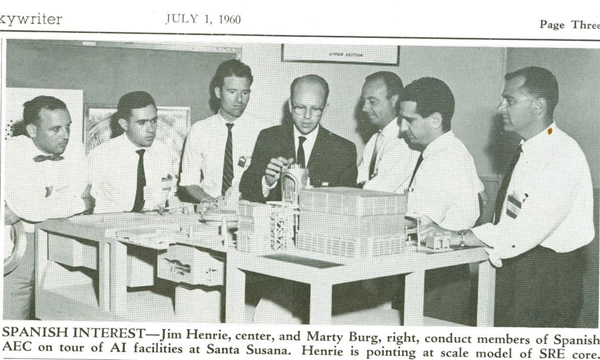
He started working in 1956 in the Theoretical Physics Section of the Spanish Atomic Energy Commission (Junta de Energía Nuclear, JEN). Few months later he was sent to the United States to study nuclear physics and reactor theory at Pennsylvania State University and Argonne National Laboratory. Afterward, he was sent to Atomics International of California to work in a project for the design of a heavy water reactor (Fig. 1).
In Atomics International. Second on the right, Guillermo Velarde (1960).

When he returned to the JEN in the fall 1963, he began research in the field of transport theory, slowing down, and thermalization of neutrons. In 1966 he was appointed professor and in 1973 promoted to the Chair of Nuclear Physics at the Universidad Politécnica de Madrid, teaching the area of quantum mechanics.
Simultaneously to this academic activity, professor Velarde continued his work as researcher of the JEN where he was appointed director of Advanced Technology in 1974. This direction included the following divisions: Electronics, Engineering, In-Service Reactor Theory and Calculations, and Nuclear Fusion.
Beginnings of ICF research
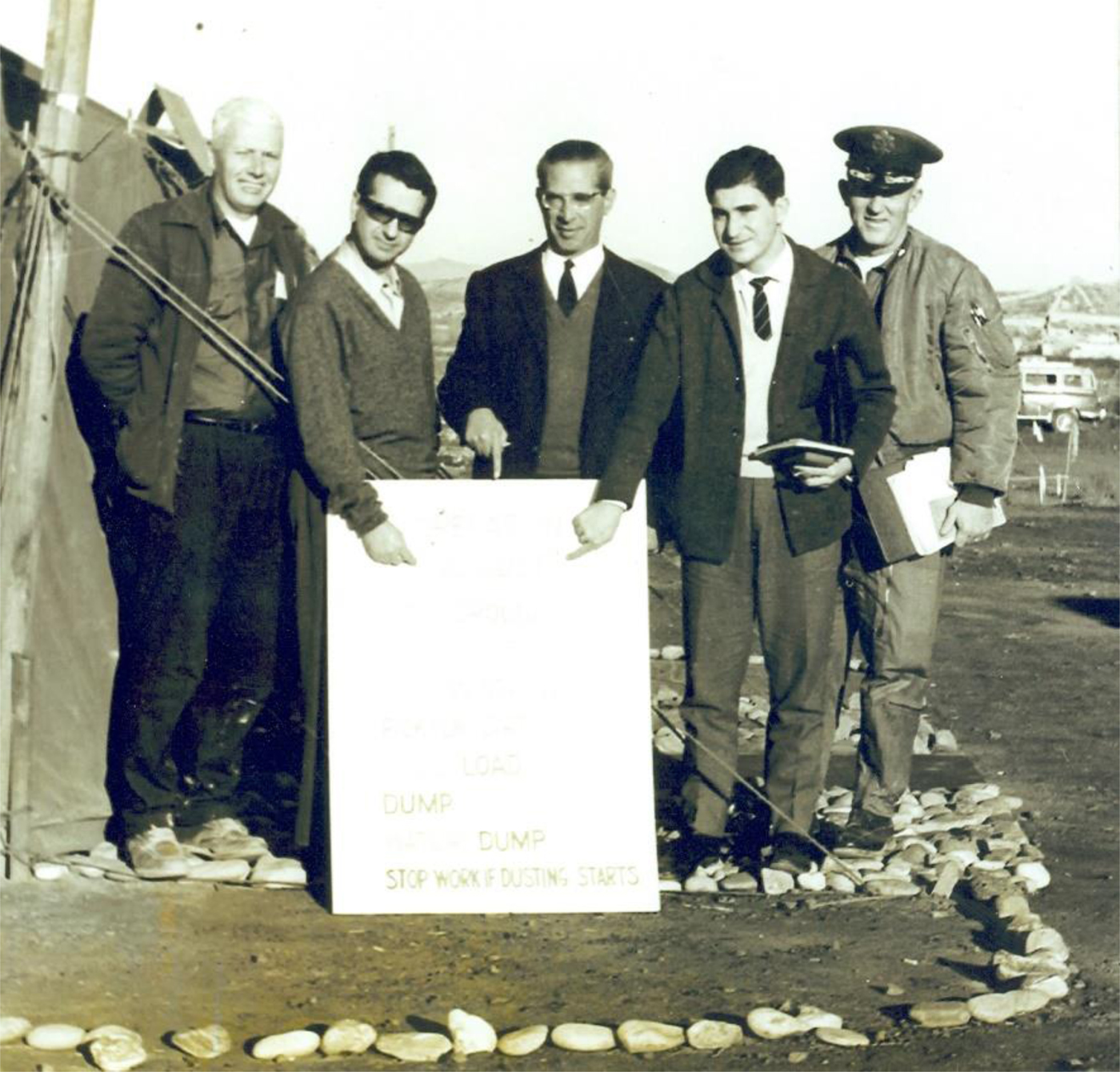
Professor Velarde started his research in inertial confinement fusion (ICF) late in 1965 as a result of two different events with related effects. The first was in 1965 when he was invited by Professor Linhart (who was specially invited as key speaker to ECLIM in Madrid) to take part in the ICF-related experiments that he was carrying out at the ENEA in Frascati (Italy). The second event was the accident of Palomares on 17 January 1966. That day at 10:22 hours a B-52G bomber of the United States Air Force's Strategic Air Command loaded with four nuclear fusion bombs with several megatons collided with a KC-135 tanker during air refueling in the vertical of Palomares, a small fishing town in the municipality of Cuevas de Almanzora, Southeast of Spain, on the Mediterranean Sea. The four deactivated bombs were automatically ejected with their respective parachutes. One fell into the sea and another on the land and both were intactly retrieved, but the parachutes of the other two bombs went on fire when they hit the ground and the chemical explosive lenses deflagrated and produced a plutonium oxide aerosol. The JEN authorities sent professor Velarde to Palomares to analyze the accident (Fig. 2).
Palomares: Operation No Dust. Photo: from right to left: American colonel; Rodrigo Peñalosa, Santiago Noreña, Guillermo Velarde (1966).

In 1972 papers published by J. Nuckolls and like-minded scientists; Keith Brueckner and S. Jorna (1974) encouraged him to restart the ICF work that he had to give up in 1966. During that period he was selecting from the students of his courses on Reactor Physics at the JEN and on Quantum Mechanics in the Industrial Engineering College those that finally formed his closest team along his life: J.M. Aragonés, C. Ahnert, J.M. Martínez-Val, E. Mínguez, and J.M. Perlado. They developed NORCLA code, the first non-classified coupled code which linked time-dependent hydrodynamics for high-density plasmas with a newly developed atomic physics package for light and heavy materials and realistic neutron gamma transport during burning phase with adequate energy source from fusion and fission materials. Two modules composed NORCLA: NORMA (for hydrodynamics) and CLARA (for fusion-fission sources and neutron-gamma transport).
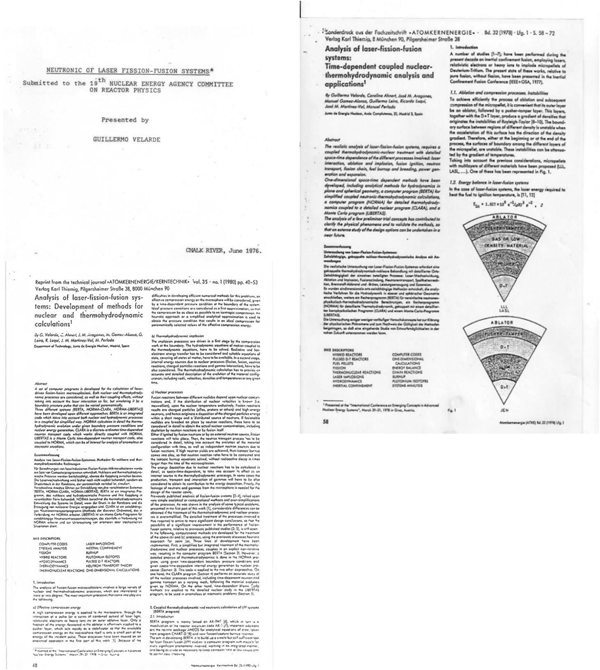
In 1976 professor Velarde submitted to the 19th Nuclear Energy Agency Committee on Reactor Physics held at Chalk River (Canada) the paper Neutronic of Laser Fission-Fusion System in which the first calculations with NORMA and CLARA modules were postulated. NORMA in its first version considered one-dimensional time dependent evolution of fluids/plasmas (ions, electrons, radiation) under flexible boundary pressure conditions, formed by laser–matter interaction (Fig. 3).
Research works presented at Chalk River (1976) and publications in Atomkernergie (1978) and Atomkernenergy/Kerntechnik (1980).

The CLARA module included a detailed one-dimensional and time-dependent treatment of the neutron-gamma real transport by using SN (not diffusion equations). Curiously, papers late in the 90s and recently still were not including this detailed transport that certainly has a key importance; very simple diffusion models are still used for neutrons, or even unrealistic fractions of leaking, and local deposition for charged particles. A modification of this NORCLA code was also considered by coupling the NORMA module with a Monte Carlo time-depending system (TIMOC-ESP) including also burnup equations for fusion and fission (Velarde, Reference Velarde, Velarde and Carpintero-Santamaría2007).
In 1978 professor Velarde and his group presented the paper Analysis of laser-fission-fusion systems: Time-dependent coupled nuclear-thermo hydrodynamic analysis and applications at the International Conference on Emerging Nuclear Energy Systems (ICENES 78) held in Graz (Austria). In June 1980 they presented a paper studying the performance of the ICF targets under laser or ion beams, with the target composed of an inner core of DT and outer shell with tampers of plutonium, uranium, and/or lead. From then on our research work was focused on further development on the calculating methods (effects of pressure, temperature and density on the ionization degree) and new EOS and opacities (group led by professor Mínguez), transport and energy deposition by ions, electrons and alpha particles and applications to new configurations of targets (group led by professor Martínez-Val) and new work assessing effects of particle emissions (Fig. 3) (Velarde, Reference Velarde, Velarde and Carpintero-Santamaría2007).
It was first time in the open literature that the role of neutron energy deposition inside the fuel was accurately analyzed and it had large international repercussions. We received several requests of main laboratories in laser matter research, some of them in ICF, such as Los Alamos Scientific Laboratory; The All Union Research Institute for Physical Technical and Radio-technical Measurement (VNIIFTRI) (Russia); Israel Atomic Energy Comission; Comisión Nacional de Energía Atomica (Bariloche, Argentina); Kernforschungzentrum (Karlsruhe, Germany); Österreichisches Forschungzentrum Seibersdoff (Wien, Austria); National Center for Radiation (Cairo, Egypt); Gessellschaft für Kernforschung mbH (Germany); Çekmece Nuclear Research and Training Center (Istanbul, Turkey); McMaster University (Ontario, Canada); Bhabha Atomic Research Center (Bombay, India); Queen Mary College, University of London (UK); Laboratoire de Génie Eléctrique (France); Swiss Federal Institute for Reactor Research (Würelingen, Switzerland); Institute of Laser Engineering (Osaka, Japan); Hungarian Academy of Sciences (Hungary); Institut für Theoretische Physik der Univerität (Graz, Austria); Technical University of Prague (Czechoslovakia), etc.
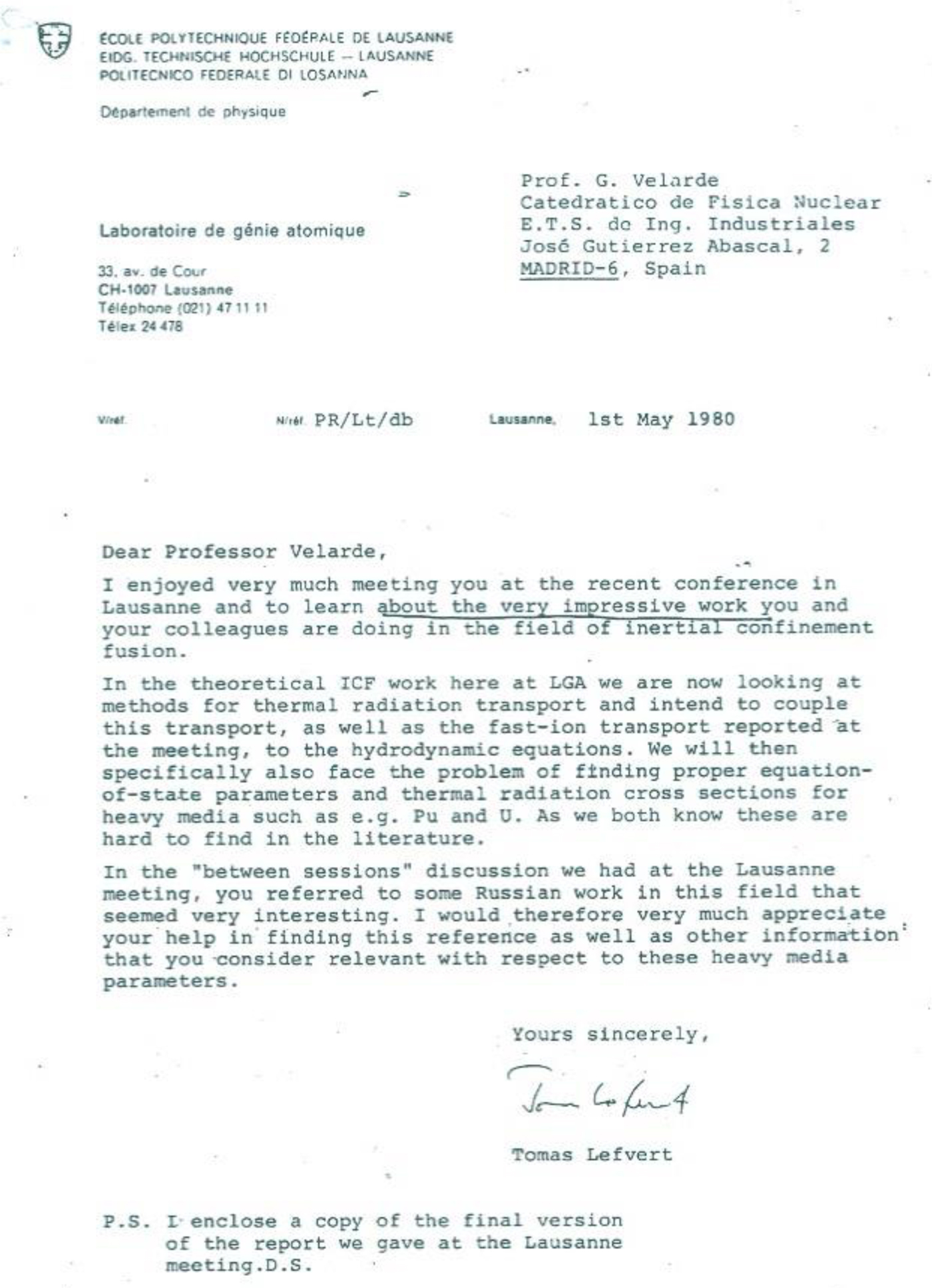
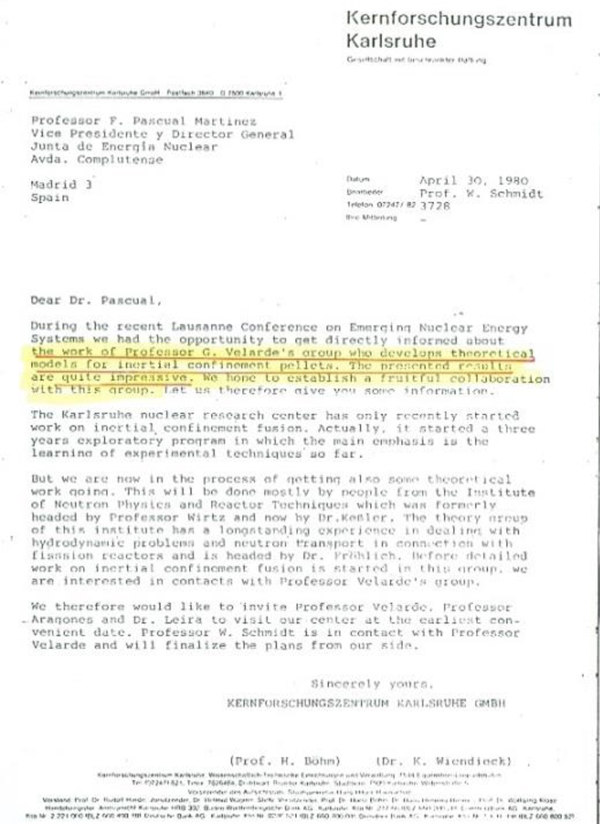
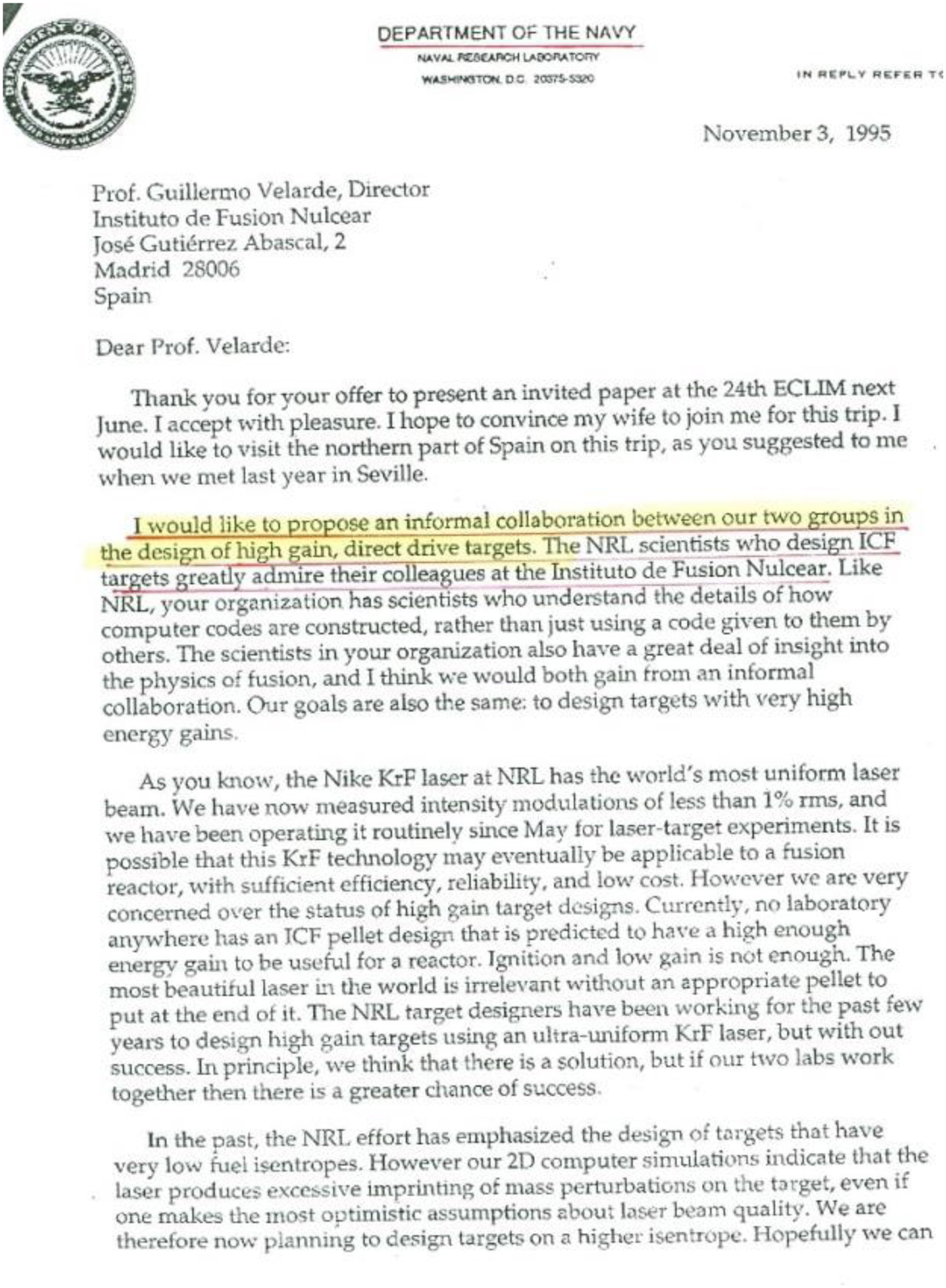
We received as well several requests of collaboration and appreciation for our work from different scientific research centers (Figs 4–6).
Letter from the Ecole Polytechnique Fédérale de Lausanne addressed to professor Velarde and talking about “the very impressive works” (1980).

Letter from Kernsforschungzentrum Karlsruhe. “The work of Professor Velarde's group […] The presented results are quite impressive. We hope to establish a fruitful collaboration with this group” (1980).

Letter from US Department of the Navy “The NRL scientists who design ICF targets greatly admire their colleagues at the Instituto de Fusión Nuclear” (1995).

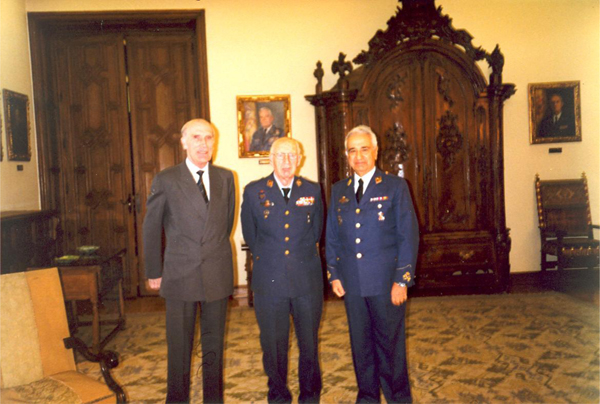
In 1981 with the valuable help of the vice president of the Government, captain general Manuel Gutiérrez Mellado and Joint Chief of Staff, general or Air Ignacio Alfaro, professor Velarde founded the Instituto de Fusión Nuclear (IFN) (Fig. 7).
General and professor Guillermo Velarde with Joint Chiefs of Staff, general of Air Ignacio Alfaro Arregui and Navy admiral general Angel Liberal Lucini.

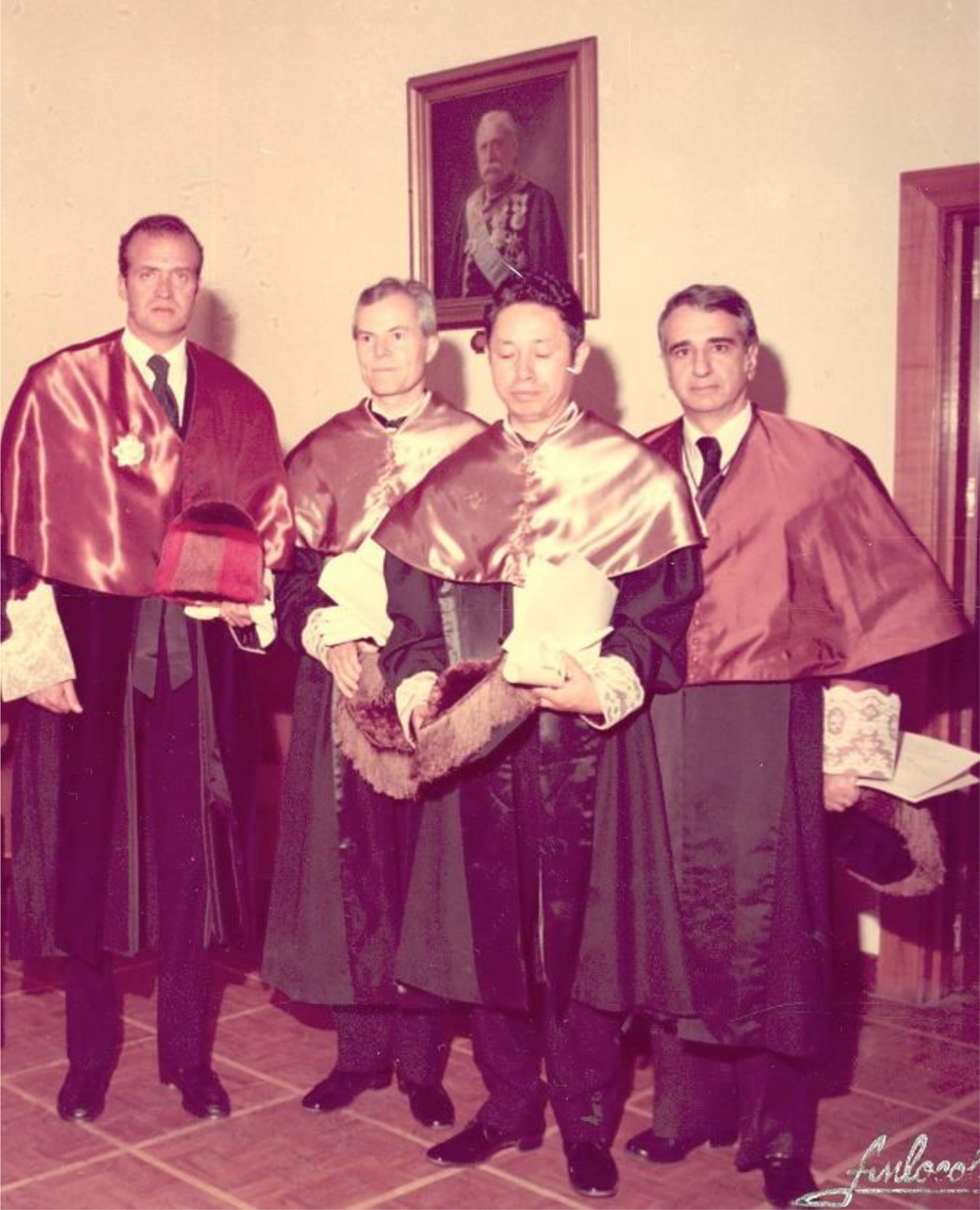
We welcomed great names from the world of science including five Nobel Prizes: Rudolph Mossbauer, Leo Esaki, Nicolai Basov, Carlo Rubbia, and Jack Steinberger, together with Edward Teller and other very relevant scientists from main research centers around the world. Professor Velarde was godfather of ceremony of Doctor Honoris Causa by the UPM of Nobel Prizes Esaki, Basov, and Rubbia (Figs 8, 9 and 15).
H.M. the King Juan Carlos I and Nobel Prizes Rudolph Mössbauer and Leo Esaki. On the right professor Velarde, godfather of Leo Esaki (Madrid, 1976).

As a natural growing of a seed already started in the JEN, from the first moment of the Institute, professor Velarde was very much conscious to promote and establish a program of research (group led by professor Perlado) related to the physics basis allowing to understand and properly design the technology of the ICF reactors, developing the tools and performing first calculations of many key parameters; something that was recognized more than a decade ago in the book Energy from Inertial Fusion (IAEA see later), and today it is still a major challenge in Inertial Fusion Energy (IFE). A first collaboration at that time was established with KfK Karlsruhe (Germany) under the development of HIBALL reactor (Nuclear Engineering and Design, Vol. 73, 1982); results were published finally in 1985 (G. Velarde et al., Fusion Science and Technology, Vol. 8, July 1985). It is remarkable that the competence of the Instituto brought close to sign then, together with the University of Wisconsin led by professor Kulcisnki and professor Kessler leading KFK Karlsruhe, a new project named IBER (Ion Beam Engineering Reactor) to explore possibilities of ion beams in IFE that unfortunately could not be finally carried out.
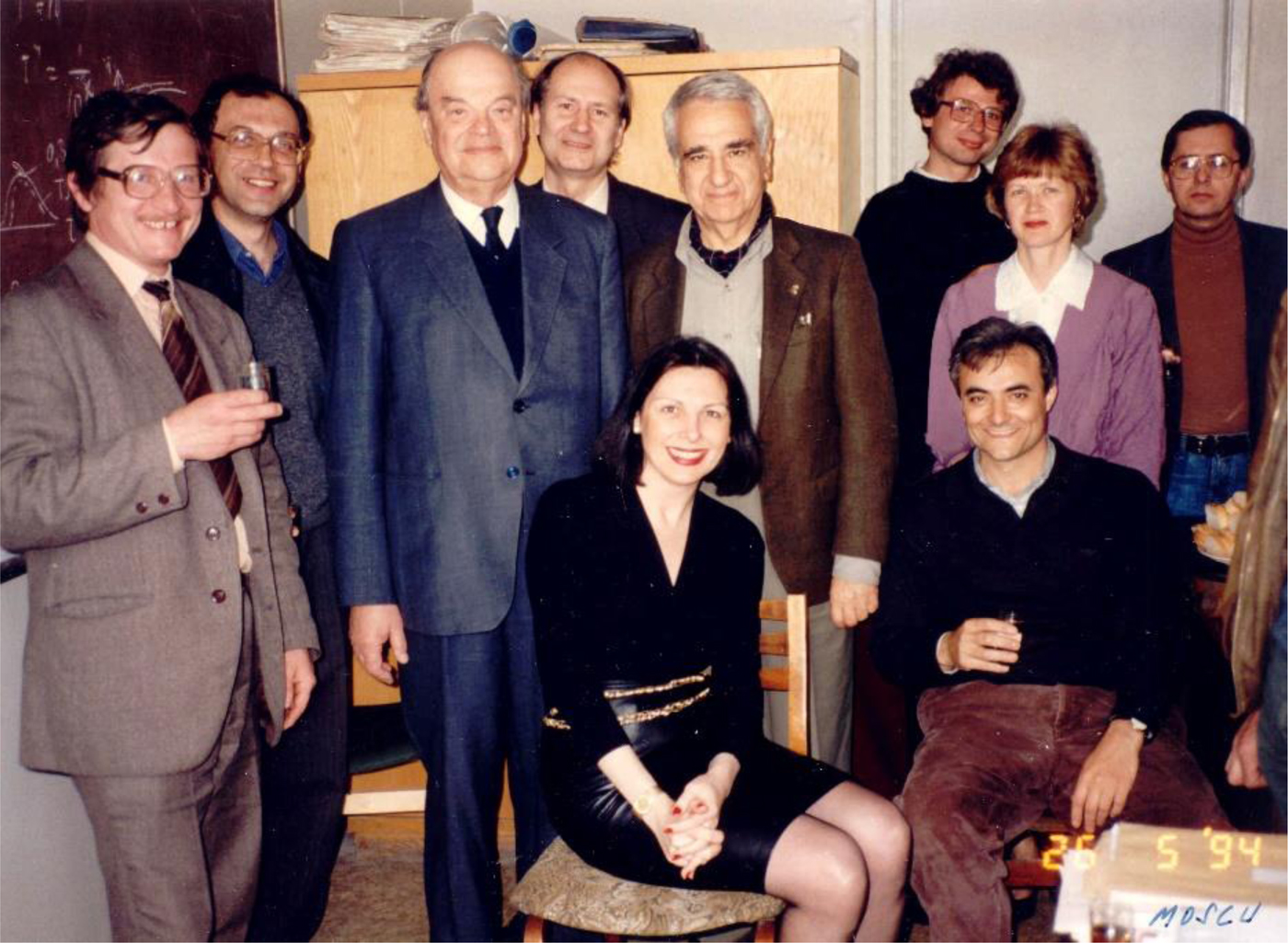
From those great times, early 80s, starting the new adventure of launching the first research institute at the Universidad Politécnica de Madrid, all of us always will remember the really demanding periodical meetings of review of work under professor Velarde's direction who gave an unforgettable example of personal discipline and love for strictness. This includes, in a more funny way, the mandatory classes of Russian language to enhance our collaboration with academician Basov and our Lebedev colleagues, so helpful when professors Mínguez and Perlado went to stay in Moscow in a very cold winter as early as 1984.
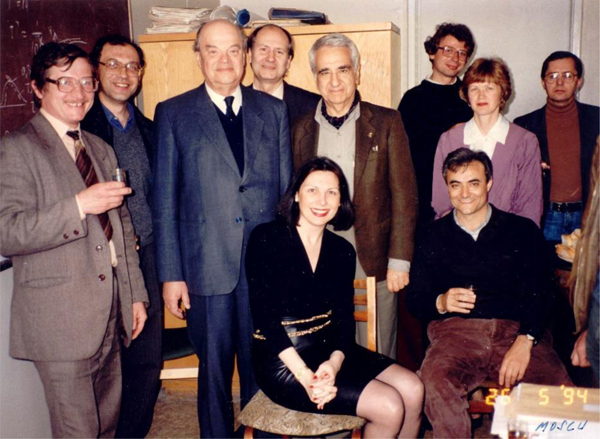
Nobel Prize Nicolai G. Basov, professor Velarde and members of the Institute Lebedev of Moscow and Instituto de Fusión Nuclear. Sitting down, the authors of this paper (Moscow, 1994).
We carried out scientific collaboration with National Laboratories of the Alamos, Lawrence Livermore and Naval Research of the United States, and the Institute Lebedev of the Soviet Union. By the end of the decade of 1990s, the IFN had become an international reference center in nuclear confinement nuclear fusion research, together with UK, France, Germany, and Italy. We signed several collaboration agreements with official institutions like Euratom-Joint Research Center of the European Union and the International Organization of Atomic Energy (IAEA), and research centers from France, Switzerland, Germany, etc. In the late decade of the 90s, we had received the visit of 150 scientists from all around the world (Fig. 10).
Professor Edward Teller, professor Velarde and the members of the Instituto de Fusión Nuclear at the Industrial Engineering College (Madrid, 1989).
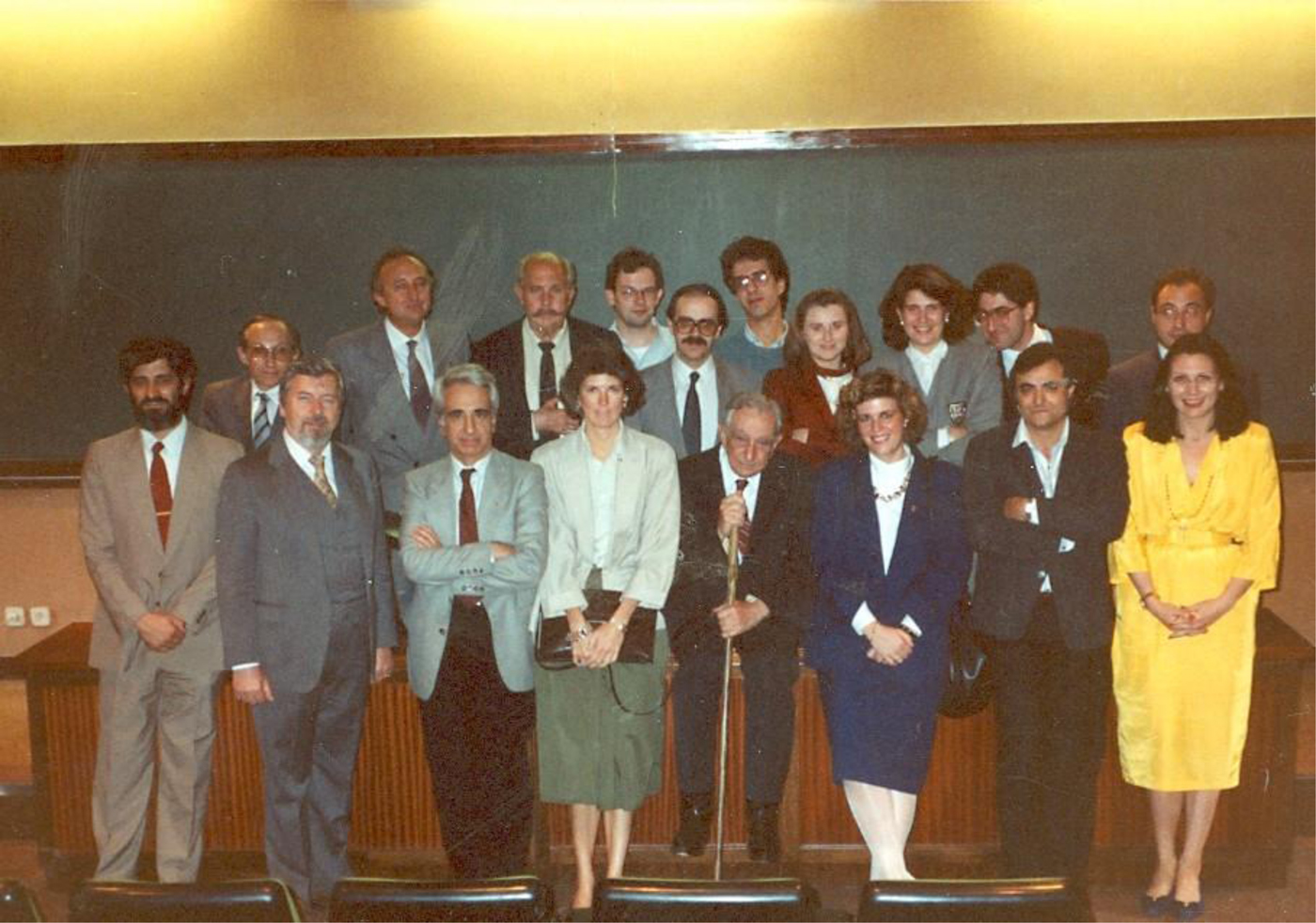
Professor Velarde played a fundamental role in the fusion by inertial confinement research for the production of electrical energy in the programs of European Union institutions. On 26 June 1990, he was convened by the European Parliament in Luxembourg to study the feasibility of introducing this research at the community level. The result was the creation by the European Commission within different European Union (EU) Framework Programs of a Consultative Committee Euratom-Fusion and the ICF Programs Keep in Touch, whose scientific committee chose him as president from 1998 to 2006.
In 2011 the Armed Forces honored Guillermo Velarde with the Award of Marquis Santa Cruz de Marcenado, the most prestigious recognition in the Spanish Armed Forces. The communication of this award came as a complete surprise while he was attending the ICENES 2011 held in San Francisco. Our colleagues of the IFN told the ICENES organizers this recognition and it was a very touching moment when the numerous attendees to the official banquet warmly applauded professor Velarde and he kindly asked us to make a toast for Spain.
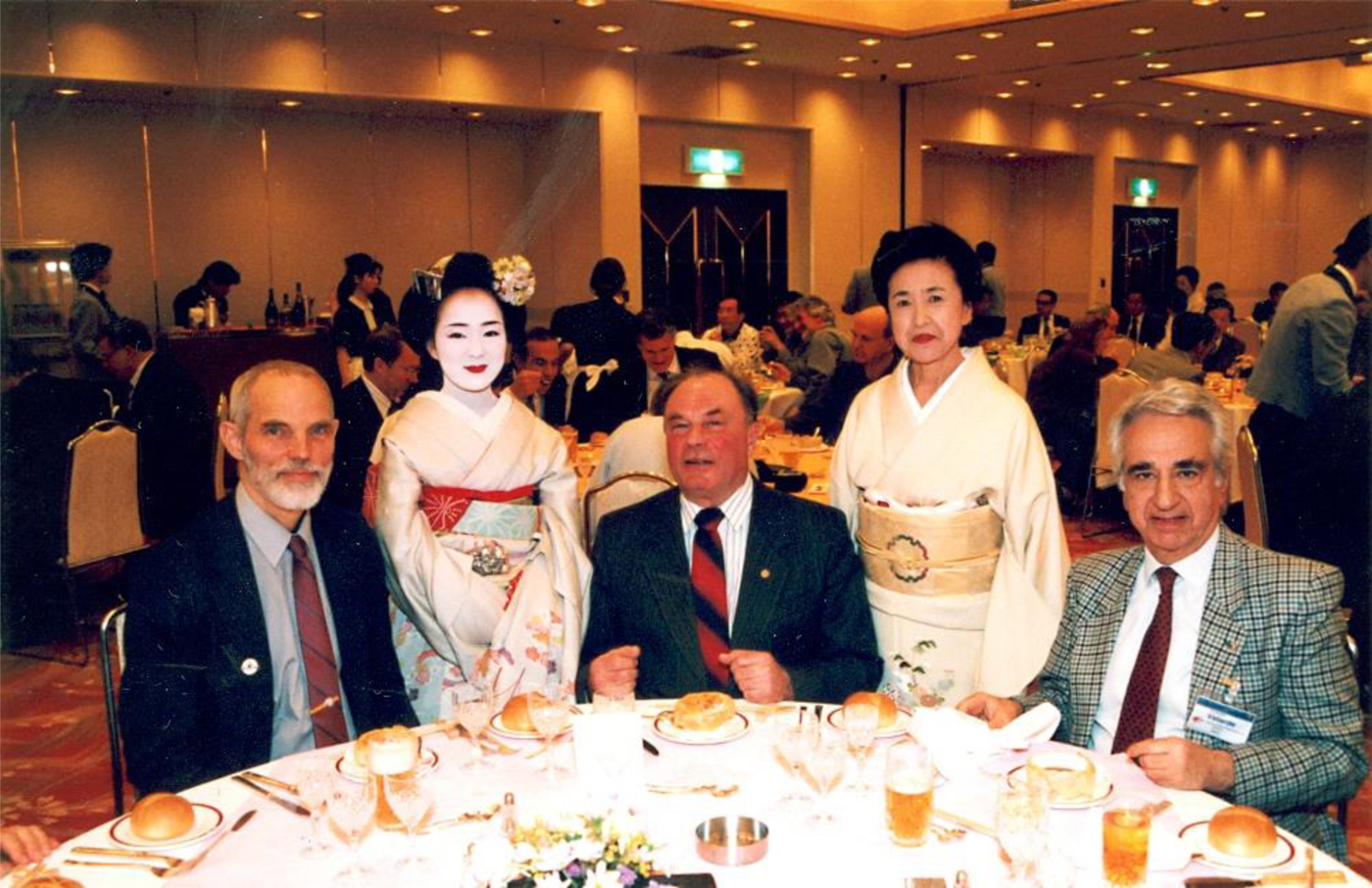
From left to right: Thomas J. Dolan (Head, IAEA, Physics Division; Gennadii Kirillov (Armazas 16) and Guilermo Velarde (IFN) (Osaka, Japan 1997).

Controlled thermonuclear fusion for peaceful uses
On 19–20 November 1985 the Geneva Summit was held for the reduction of nuclear weapons. Presidents Ronald Reagan and Mikhail Gorbachev talked for the first time in the Cold War period about controlled thermonuclear fusion for peaceful purposes. As the joint statement said:
“The two leaders emphasized the potential importance of the work aimed at utilizing controlled thermonuclear fusion for peaceful purposes and, in this connection, advocated the widest practicable development of international cooperation in obtaining this source of energy, which is essentially inexhaustible, for the benefit for all mankind. And as a potential way of dealing with the energy needs of the world of the future, we have also advocated international cooperation to explore the feasibility of developing fusion energy”.(Joint Soviet-United States Statement on the Summit Meeting in Geneva November, 21, 1985. http://www.presidency.ucsb.edu/ws/?pid=38086).
This summit opened the door, at least theoretically, to an open international collaboration. Professor Velarde was an actual leader in promoting international collaboration in Inertial Fusion Research. The future of this international scientific collaboration took a name: THE MADRID MANIFESTO signed during the celebration of the 19th European Conference on Laser Interaction with the Matter, held in Madrid on 3–8 October 1988 (ECLIM 88).
IFE international scientific collaboration was a sensitive task and it had to be done in a respectful way to the existing classification policies. He helped to find an equilibrium line between both trends, particularly in the conferences he organized in Madrid, 4th International Conference on Emerging Nuclear Systems (ICENES) in 1986; 19th ECLIM in 1988; 24th ECLIM in 1996, and 29th ECLIM in 2006 with the participation of hundreds of scientists from all around the world.
International repercussion of 19th ECLIM
As it is known, the European Conferences on Laser Interaction with Matter (ECLIM) started in 1966 and have been successfully held along 35 conferences. Their aim is to stimulate fundamental and applied research in lasers and their interaction with matter where science knew no boundaries.
19th ECLIM was held in Madrid, organized by the Instituto de Fusión Nuclear on 3–9 October and chaired by its then director, professor Guillermo Velarde. ECLIM 88 was a turning point in ICF research. The work already performed by different laboratories in Europe, Japan, and around the world had reached a level such that, without explicitly expressing it, the collective consensus wanted a change in the existing close policies in many ICF areas in the large laboratories in the USA, Russia, France, and the UK.
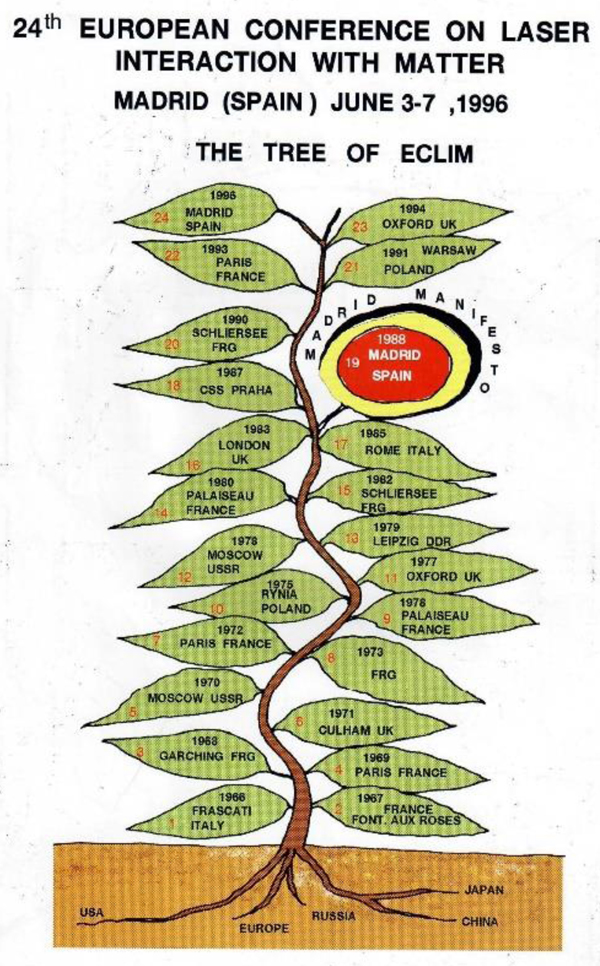
The ECLIM tree.

ECLIM conferences composed of a big tree full of branches of new advanced research and technological concepts (Fig. 12). During that decade of the 80s nuclear fusion experiments in the United States spurred different points among American scientists:
“Secret Advance in Nuclear Fusion Spurs a Dispute Among Scientists. In top-secrets experiments, Federal researchers have achieved one of the nation's most costly and elusive scientific goals: to ignite a nuclear fusion reaction in tiny pellets of hydrogen, producing powerful bursts of energy. […] The results have triggered a bitter dispute over how the field of small-scale fusion should progress. […] Advocates say the technique, if perfected, could be used by the 1990's study nuclear physics, to develop antimissile weapons and, perhaps in the next century, to generate cheap, almost limitless electrical power” (Broad, Reference Broad1988).
Taking into consideration the above situation and the frame opened in the Geneva Summit in 1985, several discussions were held during the ECLIM 88 held along five intense days with the participation of the most outstanding scientists on IFE. Dr. Sheldon L. Kahalas, director of Inertial Fusion Division of the Office of Weapons Research, Development and Testing Defence Programs also participated with the paper “Directions of the U.S., Inertial Fusion Program” (Fig. 13).
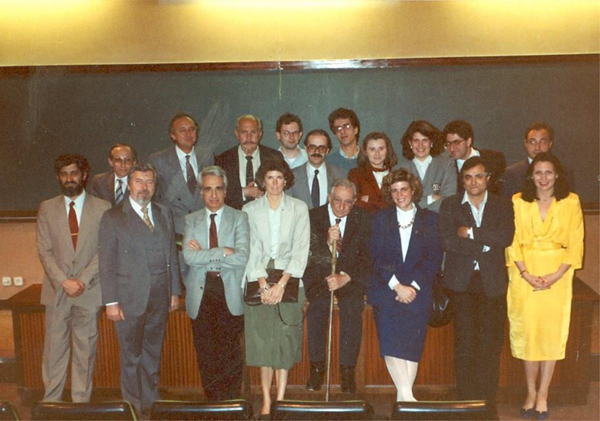
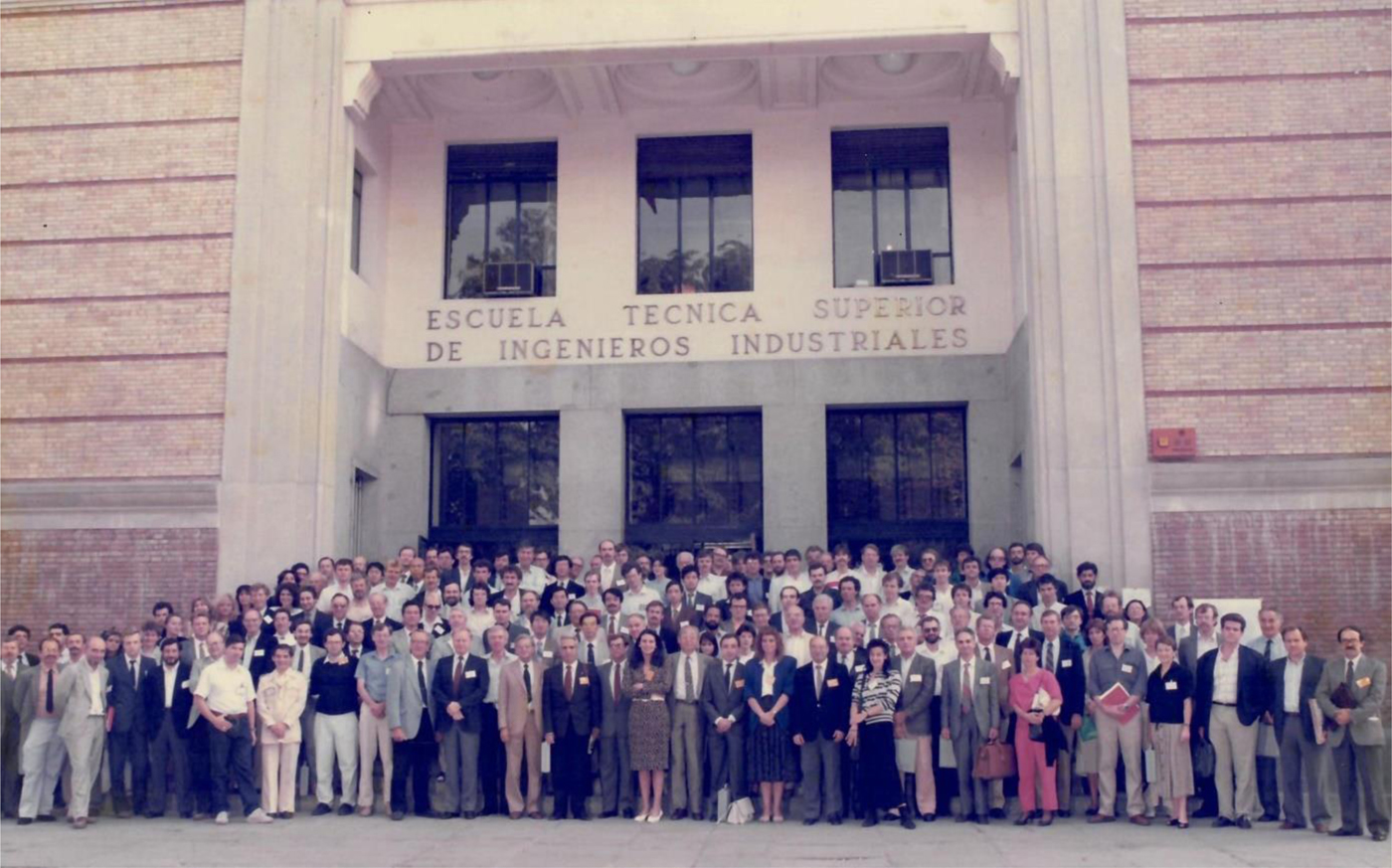
Participants at 19th ECLIM, Madrid, 3–9 October 1988.

We published the book Laser Interaction with the Matter:
“About 170 scientists from Europe, United States of America, Japan, Canada, Israel, Australia, China and South Africa, participated in the Conference, with about 160 papers […] The Conference has been mainly characterized by the high scientific level of the presented papers. Experimental results have shown values of 20 to 40 g cm3 in DT cryogenic spherical targets direct-driven illuminates, which represents the highest ones at present time. Also, recent experiments of indirect-drive give us the availability to perform high power pulse-shaped experiments needed for high density explosions. Theoretical developments have permitted to extrapolate results obtained up to now with those needed for a high gain laser fusion” (Velarde, Mínguez and Perlado, Reference Velarde, Mínguez and Perlado1988).
Due to the auspicious scientific atmosphere during the ECLIM 88 celebration, three proposals were adopted:
• To write a letter to be signed by the participants of the ECLIM to have an open international collaboration in ICF.
• To found the International Society for Inertial Nuclear Fusion.
• To train students in our universities by means of special courses and doctorate studies in ICF.
Madrid Manifesto. A paradigm of scientific responsibility
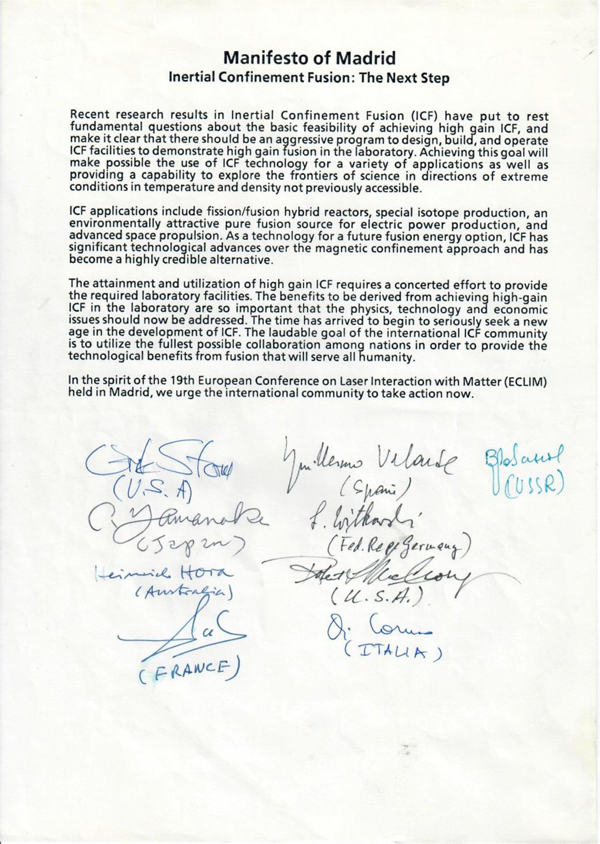
During the conference doctor Erik Storm from Lawrence Livermore National Laboratory (LLNL) suggested Guillermo Velarde to write a letter to be signed by the participants of the ECLIM in order to have an open international collaboration in ICF. Professor Velarde proposed to draw up a manifesto instead of a letter due to the historical connotations of the word. Professors Chiyoé Yamanaka, Vladislav Rozanov, and Heinrich Hora joined the proposal and collaborated in which was called Madrid Manifesto that was signed by over 130 scientists. During the sessions was put into account that the latest experiments (Nova, Omega, Gekko XII, and especially Centurion/Halite) have put into rest fundamental questions about the feasibility of ICF urging the international community to take urgently action (Fig. 14).
However things were not so easy. American scientists working in national laboratories were not allowed to sign it because an international collaboration was by that time against the American policy.
First page of Madrid Manifesto that was signed by 130 scientists more.

Professor Edward Teller, a pioneer in the application of ICF for the production of electrical energy believed that science should be international. He considered the Madrid Manifesto as big step in the ICF's declassification works.
The Madrid Manifesto is a paradigm of scientific responsibility. It shows how methods developed for weapons production with deep changes can be used for peaceful purposes such as the production of electricity from nuclear fusion.
The US government realized the importance of an international collaboration in order to open scientific frontiers for ICF civil research. In 1990, Admiral James D. Watkins, Secretary of Energy, addressed on 1 October 1990 the following speech:
“I firmly believe that continued progress on the frontiers of knowledge will require an even greater degree of international research cooperation […] Within the National Energy Strategy, fusion energy is one of several energy supply options that looks attractive in the long term. […] I will recommend to the President, as part of the National Energy Strategy and the FY 1992 budget, a new and comprehensive fusion energy program for achieving commercial fusion energy over the next half century” (Watkins, Reference Watkins1990).
ICF declassification initiative by the US Department of Energy
On 7 December 1993 Secretary of Energy Hazel R. O'Leary launched a big initiative to disclose classified information on ICF for the first time. Part of this information included key information about fusion energy, as potential energy source for the 21st century. Secretary O'Leary divided her initiative into four parts:
(1) To reduce the number of classified documents related to environmental, health and safety issues. (2) To establish declassification priorities. (3) To review all existing classification policies including the Atomic Energy Act. (4) To establish an interagency coordinating process to release shared information (DOE News, 1993).
Before releasing this declassification of information, the US Government took into account issues such as the benefits that this declassification could bring to American scientists. Among other benefits, they would be able to publish more papers and in that way participate more actively in the fusion scientific international community as well as to have an open dialog with foreign scientists. Another important point was the fact that the release of former secret information on inertial fusion could encourage other countries to declassify in the same way.
Some of the questions emerged in the United States previous to the declassification of the ICF information were the following: (1) advantages to the USA: their scientists could freely exchange more ICF information and help in the advancement of the programs. (2) Support for this classification: very broad. Recommended by the National Academy of Sciences, the Fusion Policy Advisory Committee, and also by directors of three relevant national laboratories involved in weapons research. (3) Total ICF declassification: no. Some ICF information will remain classified due to proliferation concerns. ICF declassified information will not be of value of emerging proliferants.
Finally the DOE stated: “The free Exchange of ICF information will help all parties, including the US. […] this interaction will aid in the ultimate goal of the inertial confinement fusion program – a comparatively clean and plentiful source of energy” (DOE Facts, 1993).
The Department of Energy declassified, among others, the following ICF issues: (1) laboratory for ICF targets. (2) Energy applications of ICF. (3) Calculations, modeling and experimental data on hydrodynamic instabilities. (4) ICF equipment fabrication techniques.
In 1992 the Herald International Tribune and the New York Times published the news on US declassification Government. The Herald International Tribune said: The U.S. government, which battled for decades to keep the workings of the hydrogen bomb secret, is beginning to declassify some of the most sensitive aspects of its design and to let American scientists publish them in scientific literature. The reason for this reversal is not internal policy, the end of the Cold War or the collapse of the Soviet Union as a military threat. Rather it is foreign competition. Scientists in Japan, Germany, Spain and Italy, striving to harness the power of tiny, repeated hydrogen-bomb-like blasts for the generation of electrical energy have openly published the “secrets” (Broad, Reference Broad1992).
Foundation of the International Society of Inertial Fusion Energy
The second proposal of ECLIM 88 was to found the international Society for Inertial Nuclear Fusion. It was done on the following executive summary:
“The analysis of recent research results in Inertial Fusion Energy (IFE) shows that IFE can be the basis for inexhaustible, pure, safe and cheap energy source. The key process is the laser irradiation of a special target that leads to compression and heating of thermonuclear fuel and initiates highly effective thermonuclear reactions. The released energy, with account of its conversion into electricity and other processes, would be sufficient to provide the benefits that will serve an energy consumer. The IFE process is of a pulsed nature and can be made controllable and safe.”
As a consequence of the scientific discussions during the last years (1988–1991) the world scientific community has come to a conclusion that the processes taking place in the targets have been experimentally studied sufficiently well and the predicted energy yield is of no doubt.
The utilization of a laser driver is another aspect of this approach. There are several perspective versions of such a driver, which seem to meet the necessary requirements. But a lot of engineering has to be done to make such a driver which could provide conditions for a multiple reproduction of energy pulses (108 pulses) the efficiency of 5–10% and a suitable cost.
The third aspect of the problem is connected with a reactor. The existing schemes of a reactor would guarantee reliability, safety and clean ecology of a novel energy source.
Suppose our estimates are correct. Then necessity of construction of an experimental reactor becomes urgent. The reactor could serve as a means for testing, on a full scale, of physical, engineering, technical and technological characteristics, the cost of energy, as well as commercial aspects. We know that this is a large-scale, multi-step and very costly task, which can hardly be realized in frame of national programs.
We believe that it is necessary to set up an International European Centre that could solve all these problems, using the experience of international cooperation in nuclear physics and tokamak research. World political situation and a consideration reduction of arms would promote realization of this project.
Holding an International Conference, like the first Genève Conference on Atomic and Nuclear Energetics could become the first step on this way. The conference should provide the forum for the discussion of scientific and technological state-of-art, the problem of ecology; safety and economy (taking into account energy consumptions in different regions) with the participation of not only the scientists, but statemen, the administration and members of various public organizations. The conference decisions approved by the state authorities would give an impetus to the realization of this project” (Instituto de Fusión Nuclear “Guillermo Velarde” Files).
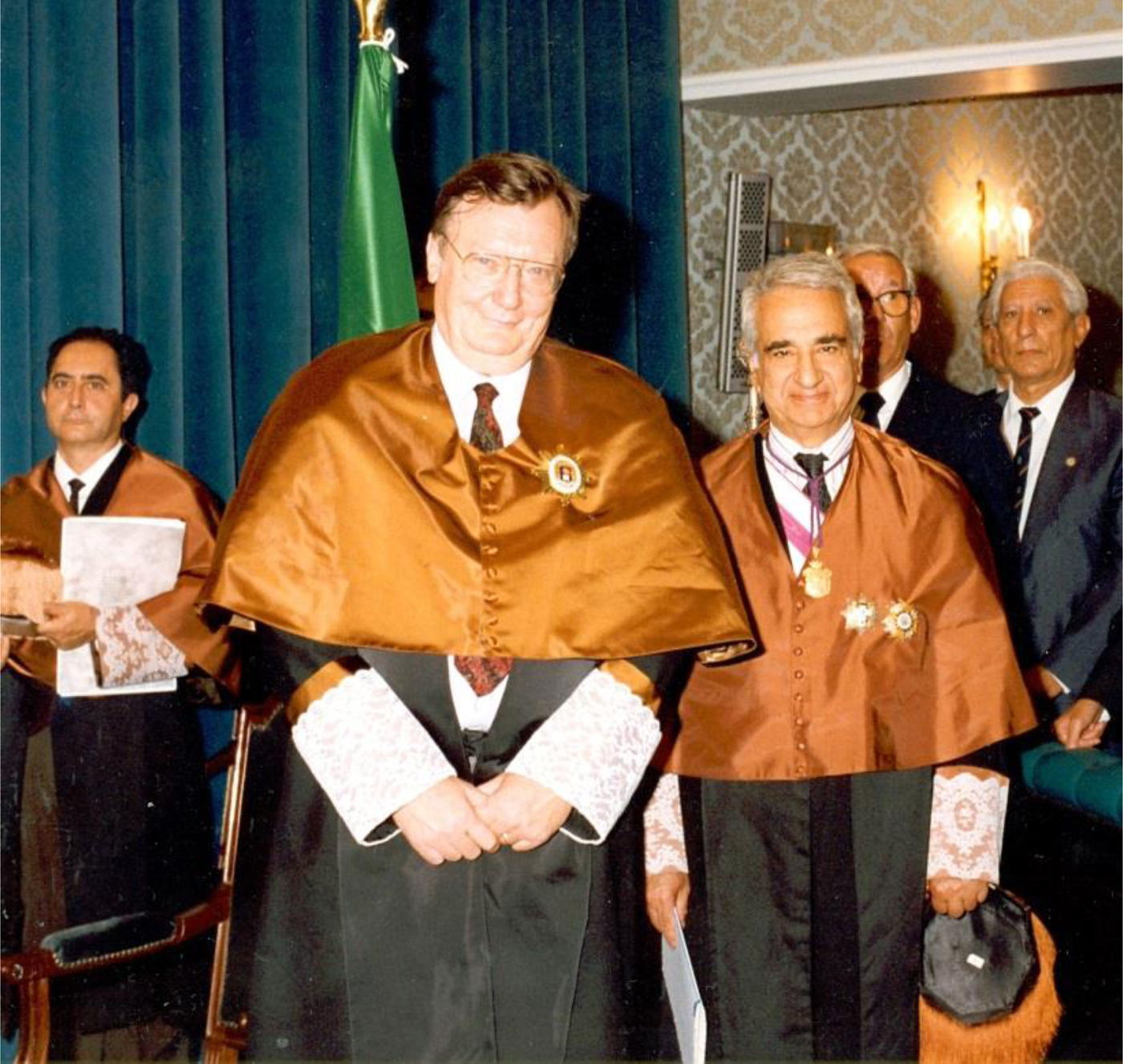
Nobel Prize Carlo Rubbia and professor Guillermo Velarde during the appointment as Doctor Honoris Causa of professor Rubbia by the UPM (Madrid, 1992).

The board of directors of the International Society of Inertial Fusion Energy was made up of the following scientists: professors John Nuckolls, director of LLNL; Nicolai Basov (Nobel Prize), director of Lebedev Physical Institute; Robert Dautray, haut commissaire of the French Atomic Energy Commission; Chiyoé Yamanaka, director of the Institute of Laser Engineering, Guillermo Velarde, director of the Institute of Nuclear Fusion, and Heinrich Hora from New South Wales University. Guillermo Velarde was elected as founder-president of this Society.
The Society had the full support and approval from the UNESCO, whose President welcomed in Paris Nobel Prize Nicolai Basov and professor Velarde to discuss its development.
Professor Velarde wrote also Nobel Prize Carlo Rubbia inviting him to join the Society. Professor Rubbia kindly answered him that he found the question to be of great interest.
In a certain moment, however, Professor Velarde was suggested to dissolve the society due to the possibility that scientists from countries under suspicion of not complying with the NPT could become members. Although this Society had a limited public life, it was effective as a high-level link between different research communities of different countries and boosted the exchange of scientific information so creating a more fertile environment for ICF research.
Three outstanding books in inertial confinement nuclear fusion
Key initiative of Professor Velarde was the understanding of the necessity to teach the new generations of young students and professional in physics and engineering the immense amount of new science supporting the idea of Energy from Inertial Fusion. A consequence of that is the leading promotion and care of these three books.
Nuclear Fusion by Inertial Confinement: A Comprehensive Treatise
Following directive from ECLIM 88 to train students in our universities by means of special courses and doctorate studies in ICF gave way to the publication of the book Nuclear Fusion by Inertial Confinement: A Comprehensive Treatise edited by G. Velarde, J.M. Martínez-Val, and Yigal Ronen with the collaboration of several outstanding scientists in ICF.
The summary of the book published on 15 December 1992 reports:
“Nuclear Fusion by Inertial Confinement provides a comprehensive analysis of directly driven inertial confinement fusion. All important aspects of the process are covered, including scientific considerations that support the concept, lasers and particle beams as drivers, target fabrication, analytical and numerical calculations, and materials and engineering considerations. Authors from Australia, Germany, Italy, Japan, Russia, Spain, and the U.S. have contributed to the volume, making it an internationally significant work for all scientists working in the Inertial Confinement Fusion (ICF) field, as well as for graduate students in engineering and physics with interest in ICF”. (Velarde, Martínez-Val and Ronen (eds) Reference Velarde, Martínez-Val and Ronen1992)
However, the task of publishing this book was not easy. American scientists working in national laboratories were discouraged from contributing to the book because the book was considered by the U.S. Government as encouraging international cooperation and the US inertial fusion program had nuclear proliferation potential. Therefore, they could not participate in the book in the several chapters devoted to indirect-driven targets (hohlraum), which were classified in the USA. In a meeting in Washington with the members of the DOE, professors Velarde and Martínez-Val were told that if they did not include anything related to indirect driven targets, which was in fact a third of the book, the US DOE would allow the American scientists of the national laboratories to collaborate in it.
The book was published finally by CRC Press of Florida and in the preface the editors said:
“This book is restricted to direct-drive because indirect drive involves several sensitive topics which are classified in some countries and are not frequently treated in the open bibliography. Moreover, not all the authors involved in the book could accept the inclusion of this subject in our pages, and we did not wish to induce a schism in our scientific community”. (Velarde, Martínez-Val and Ronen (eds), Reference Velarde, Martínez-Val and Ronen1992)
Energy from Inertial Fusion
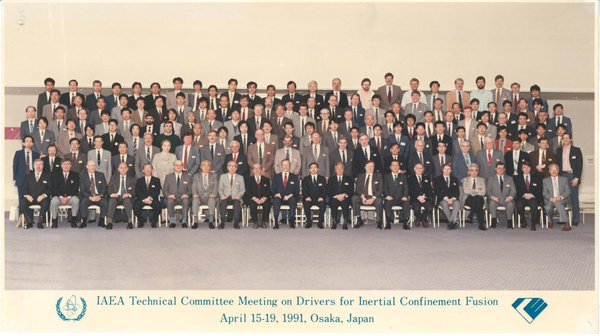
A key collaboration that professor Velarde always considered critical on-line with Japanese, American, Russian, and other colleagues was the use of the large potential of the International Atomic Energy Agency (IAEA) as a mirror of sunny importance for international collaboration (Figs 11 and 16). That task was never easy and even today is sometimes a fight inside IAEA. In 1991 the IAEA organized an Advisory Group on Inertial Fusion made of five representatives: W.J. Hogan (Chairman) from Lawrence Livermore National Laboratory; J. Coutant, Commission d'Enérgie Atomique (CEA), Centre d’Études de Limeil Valenton, Villeneuve-Saint Georges (France); S. Nakai from Institute for Laser Technology at Osaka University (Osaka, Japan); V.B. Rozanov from P.N. Lebedev Physical Institute (Moscow, Russian Federation), and G. Velarde from Instituto de Fusión Nuclear (UPM, Madrid, Spain), with addition as technical consultant of José Manuel Perlado from Instituto de Fusión Nuclear (UPM, Madrid, Spain) for Technology Physics.
Historical picture in the IAEA Meeting in Osaka (1991). Sitting on the first row Nobel Prizes Nicolai G. Basov and Carlo Rubbia.

As a fruitful consequence of the above, in 1995 the book Energy from Inertial Fusion Energy was written with an international cooperation under the guidance of the Advisory Group. In this book indirect-driven targets were included for the first time allowing the collaboration of American scientists, but also all the areas never put together related to the different components of a potential IFE Reactor or Experimental System, including lasers, materials, safety, and economics. For many years to now this book has been used as textbook in universities and research centers to explain the basis of ICF and its application to energy.
In the foreword to the book, director general of IAEA Hans Blix, states that
“Recently, many restrictions have been lifted and it is possible to notice a significant grow of international co-operation in this area […]The continuation of international co-operation in two possible approaches to nuclear fusion – MCF and ICF – is of major importance to any breakthrough in the utilization of this potentially unlimited source of energy”. (IAEA, STI/PUB/944, 1995)
In the preface written by N.G. Basov from P.N. Lebedev Institute/Academy of Sciences (Russian Federation), J.H. Nuckolls (Lawrence Livermore National Laboratory, USA), R. Dautray (Academy of Science, France), and C. Yamanaka (Institute of Laser Engineering, Japan) they remark:
“By the mid-1980s the combination of high energy laser facilities, diagnostic capabilities and theoretical knowledge, in particular the understanding of relevant scaling laws, was sufficient to allow a series of definitive and crucial tests of our understanding of the physics of inertial fusion”; however, they also pointed that “But we must emphasize the fact that the technological development of inertial fusion as an energy option has not been pursued with the same vigour as the scientific development. Much work remains to be accomplished and many significant technological challenges overcome before the scientific feasibility can be converted into a demonstration of the technical, industrial and economic feasibility of an inertial fusion energy power plant”.
Some of historical facts after this book has been a reality that encouraged all of us to progress in this line of research in world's benefit, but also after more than two decades the remarks related to the technological developments are still in a good grade waiting for a full understanding of physics principles in which they are supported.
Inertial Confinement Nuclear Fusion: A Historical Approach by Its Pioneers
The project of publication of this book was initially started by Nobel Prize Nicolai G. Basov and professor Guillermo Velarde. Both discussed the possibility of publishing a book on the history of ICF to be written by its pioneers. They thought that only the Pioneers could focus it on a realistic and truthful manner. Years passed and unfortunately on 1 July 2001, Academician Basov passed away and this idea was forgotten. In June 2002 professors Rozanov and Guskov encouraged Velarde and Carpintero-Santamaría to carry out this project.
We sent several letters to the Pioneers from different countries: USA, Japan, Russia, Europe, Israel, and Australia. Their response was positive and we started a task that soon proved to be hard and at times really discouraging. However, both professors Velarde and Carpintero-Santamaría did not give up. The help of professors Carmela Strangio and Angelo Caruso was invaluable for the publication of the book in Foxwell and Davies. Professor Carpintero-Santamaría will never forget her stay in Napoli with Carmela and Angelo when she went to deliver the manuscript to doctor Giampaolo Fiorino, managing director of Foxwell and Davies. Both Pioneers in IFE, Carmela and Angelo, very sadly passed away a few years ago also leaving behind a great vacuum in the scientific community.
To establish a temporal historical base, the only condition to contribute to this book was that every Pioneer should present a photocopy of the first page of his first paper on ICF. We decided to leave the chapters in the form that they were prepared by the Pioneers. This freedom allowed the authors to focus on their personal history according to their different personalities. The result is an independent personal account. Unfortunately, it was time to close the deadlines and the chapter of academician Robert Dautray, former Haut-Commissaire of the CEA and close friend of Guillermo Velarde during 40 years was not received. The book is a posthumus tribute to Nicolai Basov and Edward Teller, two outstanding pioneers and unforgettable friends.
We had the collaboration of the following scientists, according to the order of their chapters: John Nuckolls; Ray Kidder; John Holzrichter; Keith Brueckner; Gerold Yonas; Keith Boyer; Robert McCrory; Stephen Bodner; Guillermo Velarde; Michael Key; Rudolph Bock; Klaus Witte; Angelo Caruso; Shalom Eliezer; Nikolay Kovalskiy and M.J. Pergament; Igor Krasyuk; Vladislav Rozanov and Sergey Guskov; Gennadii Kirillov; R.I. Il'kaev, and Vladislav N. Mokhov; Evgeny Avrorin; Chiyoé Yamanaka; Sadao Nakai; Heinrich Hora.
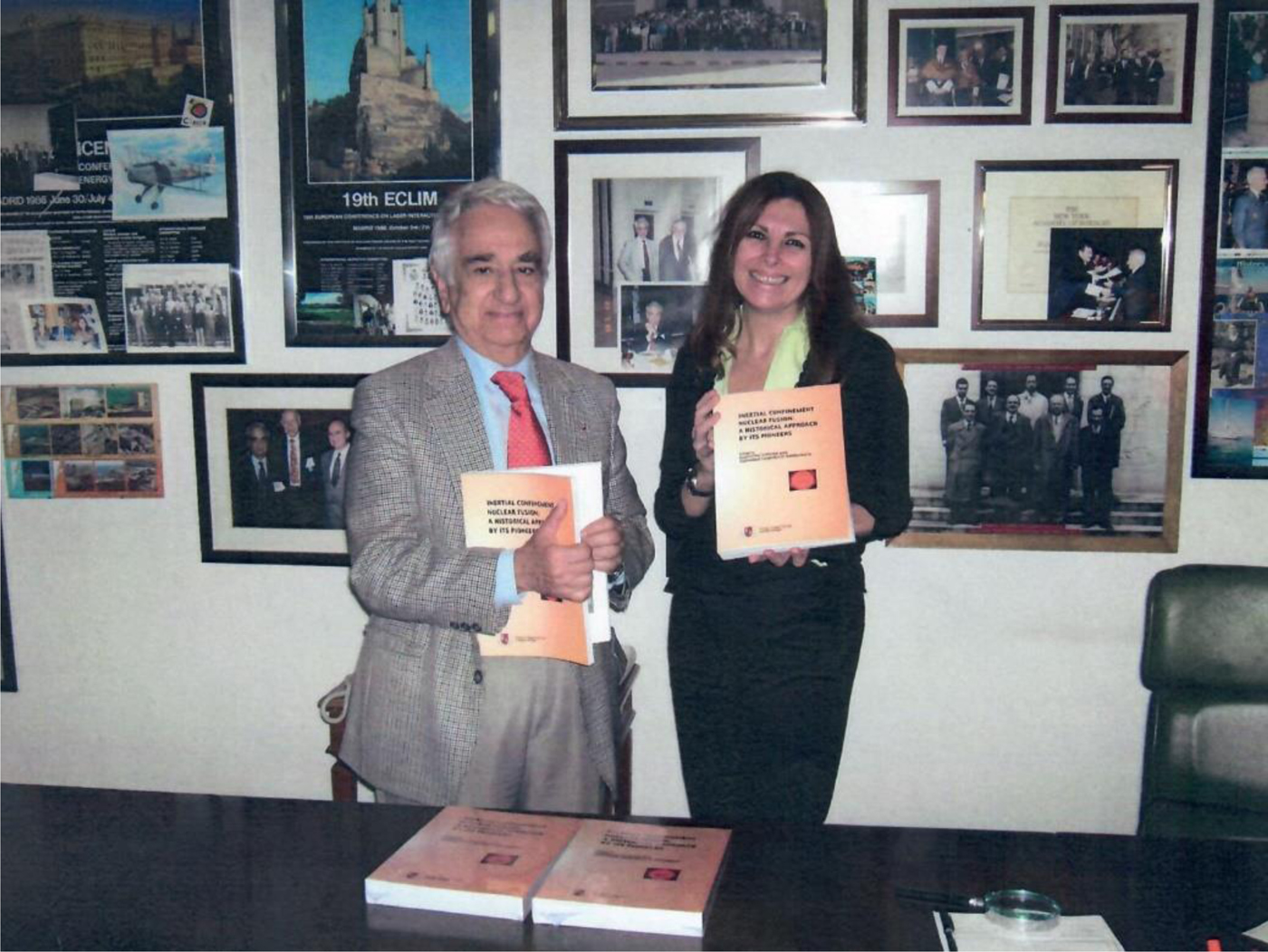
Professor Guillermo Velarde wrote chapter 9 “Inertial Confinement Fusion Research in Spain: from a Difficult Beginning to a Hopeful Future”. The chapter gives a deep and personal account of IFE research and the foundation of the Instituto de Fusión Nuclear (Fig. 17).
Guillermo Velarde and Natividad Carpintero-Santamaría with the first copies of the book Inertial Confinement Nuclear Fusion: A Historical Approach by Its Pioneers (2007).

On 30 July 2007, Guillermo Velarde sent a message to all the authors of the book with Fig. 17:
“At last, and after almost four years of efforts, we can announce you that our suffered book “Inertial Confinement Fusion: A Historical Approach by Its Pioneers” is already a reality. We are sending you this picture. […] On the other hand, I think that all of us have fulfilled a worthwhile task. I hope that our book will be useful. Our gratitude and warm regards to all of you” (Instituto de Fusión Nuclear “Guillermo Velarde” files).
In the Framework Program for Research and Innovation Horizon 2020, the book is found among the Recommended Readings of EUROfusion Enabling Research activity: Toward Inertial Fusion Energy.
ECLIM 88 was an unforgettable conference for all of us. Among several other anecdotes of this conference, we could tell that when Natividad Carpintero-Santamaría was presenting the program, she said: “For the official dinner we would kindly ask you to dress formal attired”. Some scientists replied “What do you mean by formal attired?” She said “A tie”. And nice laughs were heard in the Auditorium.
In memoriam
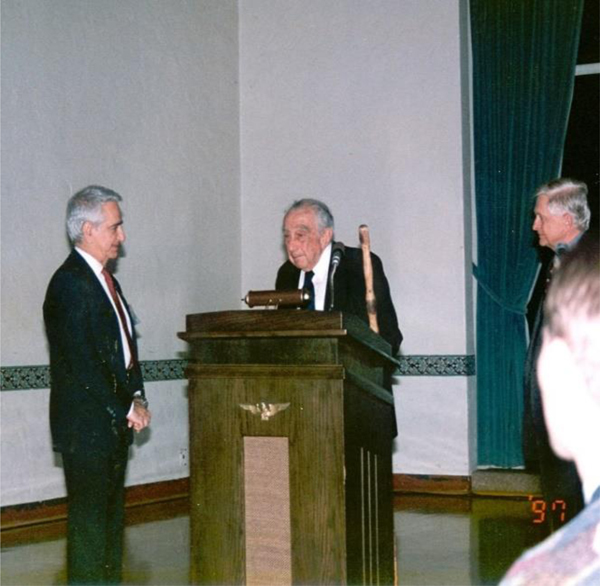
In 1997 Professor Velarde was awarded the Edward Teller Medal for Inertial Fusion Science in recognition of outstanding contributions to inertial fusion science and applications. The Edward Teller Award recognizes pioneering research and leadership in the use of laser and ion-particle beams to produce unique high-temperature and high-density matter for scientific research and for controlled thermonuclear fusion. During the Award Ceremony, Professor Teller praised him in the following terms (Fig. 18):
“We must recognize what is around us and understand the possibility of putting it to use, which is something that is of benefit to everybody and should be done by the community without hesitation and with practically no secrecy. Sir, you have perhaps done more than anyone in ICF to promote this most important direction” (Hora and Miller, Reference Hora and Miller2005).
Ceremony of Edward Teller's Medal. On the right side John Nuckolls (San Francisco, USA, 1997).

In 1998 he received the Archie Harms Award for his work on Emerging Nuclear Energy Systems in a ceremony held in Jerusalem. He also received nine national awards along his life.
Professor Velarde's work was important to identify futuristic scenarios of target performance. His calculations were relevant to show that very high-energy gain could be achieved provided almost uniform spherical compressions that could be done with different approaches of 1 mg targets of deuterium tritium (Laser and Particle Beams, paper in Vol. 4, pp. 349–393, 1986). One of the most important aspects of those calculations was to demonstrate that the yield of inertial micro explosions with high gain could be limited to acceptable values for futuristic reactors. The integral approach of ICF research that he led in the Instituto taking into account the many different areas in target physics and laser–matter interaction, but also simultaneously with same relevance the physics of materials, safety and reactor physics, is of critical importance for IFE development.
His academic work in the Universidad Politécnica de Madrid has left as a legacy a school based on values such as the love of responsible work, companionship, loyalty, and friendship, of which he has always set an example to us with humility and honesty until the late days of his life. It is worth noting that he was the director and co-director of 61 research projects, he gave more than 300 lectures in 18 countries and published 325 scientific papers. He was also academician at the European Academy of Sciences, which has more than 50 Nobel Laureates among its members. The bibliographical catalog of the National Library of Spain has twelve titles, including books and works written by him such as Quantum Mechanics (McGraw Hill (2002), pp. 654) and his latest work “The Islero Project. When Spain was able to develop nuclear weapons” (Editorial Guadalmazán (2016), pp. 378)
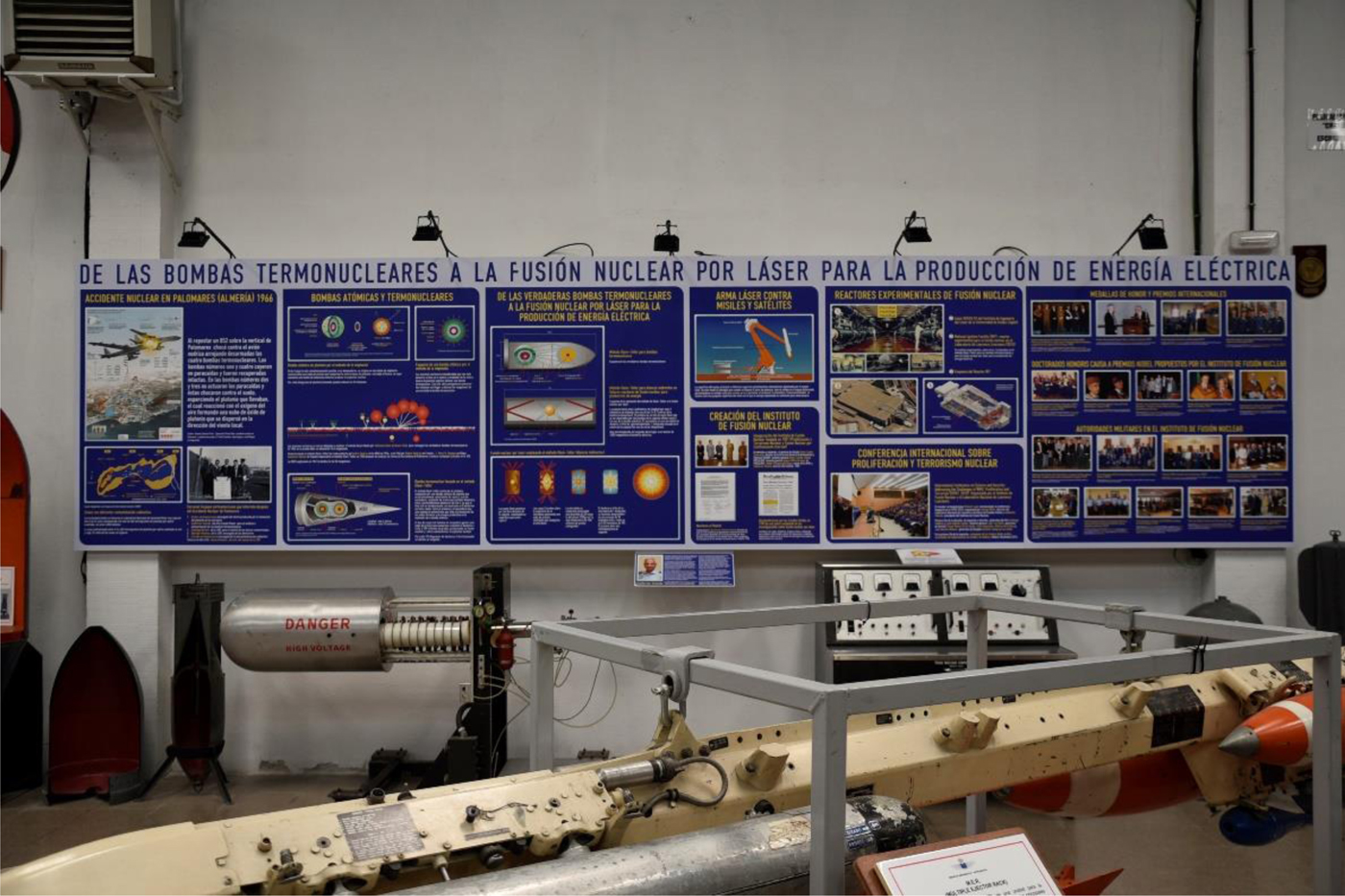
In 2013, the Historical and Cultural Service of the Air Force (SHYCEA) honored him with a Panel “From the thermonuclear bombs to nuclear fusion energy by laser for the production of electric energy” in the Museum of Aeronautics and Astronautics of Spain (Fig. 19).
Panel in honor of Guillermo Velarde at the Museum of Aeronautics and Astronautics (2013).

In 2018, by unanimous request of all the members of the IFN, the Governing Board of the UPM approved the proposal to change the name of Instituto de Fusión Nuclear by Instituto de Fusión Nuclear “Guillermo Velarde” (IFN GV).
Professor, general of the Air Force and scientist Guillermo Velarde's inspiration and leadership in science contributed to make this world safer and secure place and for us, his disciples and colleagues, an irreplaceable personality in our lives.
Thank you professor Velarde.
Rest in peace.
Acknowledgments
The authors wish to express their gratitude to Professor Dieter Hoffmann for his kind invitation to write this historical paper and make know to scientific community some human and personal aspects of what it was a great time in nuclear science for future generations.