During the last few decades, the life expectancy of children with CHD has increased enormously, because of ongoing improvements in diagnostic techniques and medical and surgical treatment. Nowadays, about 90% of children born with CHD reach adulthood, although lifelong specialist medical care is often required.Reference Opic, Roos-Hesselink and Cuypers 1 Research has indicated that these children show significantly more behavioural, emotional, and neuropsychological problems compared with healthy peers.Reference Karsdorp, Everaerd, Kindt and Mulder 2 – Reference Marino, Lipkin and Newburger 5
Parenting a child with CHD
For parents, uncertainty about the child’s survival is associated with increased parental stress. Feeding problems and weight gain issues can lead to parental anxiety, frustration, exhaustion, sleep deprivation, worries, and embarrassment.Reference Lawoko and Soares 6 – Reference Hartman and Medoff-Cooper 8 Especially mothers of children with severe CHD are at risk for symptoms of anxiety and depression, which may harm the responsiveness of the mother towards the child.Reference Bellinger and Newsburger 4 , Reference Solberg, Dale, Holmstrom, Eskedal, Landolt and Vollrath 9 Parents may have substantial knowledge gaps regarding the nature of the heart defect. They often struggle to set limits to their child and are at risk for an overprotective parenting style. These factors may negatively impact the parent–child relationship, making it hard for parents, patients, and their families to cope with a chronic disease.Reference Solberg, Dale, Holmstrom, Eskedal, Landolt and Vollrath 9 – Reference Menahem, Poulakis and Prior 12 Nevertheless, studies have shown that at least 1 year after cardiac surgery,Reference Menahem, Poulakis and Prior 10 , Reference Utens, Versluis-Den Bieman, Witsenburg, Bogers, Hess and Verhulst 11 parental distress is reduced to at least normal levels, and at long-term (>7 years of follow-up) parental mental health is even better compared with normative data.Reference Spijkerboer, Helbing, Bogers, Van Domburg, Verhulst and Utens 3
Growing up with CHD
Several authors have reported favourable outcomes as to emotional functioning or quality of life in children with CHD.Reference Menahem, Poulakis and Prior 12 – Reference Dulfer, Bossers and Utens 14 Despite this, a meta-analysisReference Karsdorp, Everaerd, Kindt and Mulder 2 and several studiesReference Spijkerboer, Utens, Bogers, Verhulst and Helbing 15 , Reference Spijkerboer, Utens, De Koning, Bogers, Helbing and Verhulst 16 have shown that, overall, children with CHD are at elevated risk for emotional/behavioural problems, irrespective of the type or the severity of the cardiac diagnosis.
Children with CHD may show several problems during different developmental phases. Newborns with CHD may suffer from limited energy and feeding difficulties, which can negatively affect the parent–child attachment relationship.Reference Hartman and Medoff-Cooper 8 , Reference Solberg, Dale, Holmstrom, Eskedal, Landolt and Vollrath 9 , Reference Bright, Franich-Ray and Anderson 17 In toddlerhood, delayed language and/or motor development, separation anxiety, and feeding and sleeping difficulties can be manifest.Reference Marino, Lipkin and Newburger 5 , Reference Garson and Baer 18 , Reference Limbers, Emery and Uzark 19 At school age, children with CHD are at increased risk for speech and language problems and impairments in visual spatial skills, executive functions including attention and impulsivity, and fine and gross motor skills.Reference Karsdorp, Everaerd, Kindt and Mulder 2 , Reference Marino, Lipkin and Newburger 5 , Reference Miatton, De Wolf, Francois, Thiery and Vingerhoets 20 Moreover, reduced quality of life, an increased risk for internalising pathology, anxiety, depression, and somatisation, and deficits in social cognition have been described.Reference Bellinger and Newsburger 4 , Reference Garson and Baer 18 , Reference Miatton, De Wolf, Francois, Thiery and Vingerhoets 20 Adolescents tend to be at risk for developing internalising and externalising problems and may suffer from cognitive difficulties.Reference Karsdorp, Everaerd, Kindt and Mulder 2 In addition, in adolescence, struggling with medical adherence is common and risk factors may develop, including physical inactivity, unhealthy diet, substance abuse such as alcohol, cigarettes, and drugs, poor oral hygiene (endocarditis), and risky sexual behaviour, including irresponsible use of contraception.Reference Dulfer, Duppen and Blom 21 Furthermore, the transition process from paediatric to adult cardiology care is often not well planned or well executed, thus causing extra emotional and sometimes financial stress. Literature shows that patients quite often are lost to follow-up.Reference Sable, Foster and Uzark 22 – Reference Golfenshtein, Srulovici and Medoff-Cooper 24
In summary, despite some studies with favourable emotional outcomes, overall, psychosocial adjustment remains a significant source of concern. Therefore, it is of utmost importance for both parents and patients to learn how to successfully cope with the stressful situations of cardiac surgery or catheter interventions.Reference Golfenshtein, Srulovici and Medoff-Cooper 24 LeRoy et alReference LeRoy, Elixson and O’Brien 25 stressed the importance of psychosocial support systems in preparing children for invasive cardiac procedures.
Present study
Up until now, research has focussed mainly on psychosocial problems in children with CHD and their parents, but has largely neglected the need for and implementation of specialised psychosocial care from the parents’ and patients’ perspectives. The present study’s aim was to fill this gap in knowledge by systematically investigating the need for psychosocial care, not only reported by parents of children with CHD (0–18 years) but also by the children themselves (8–18 years), in the week before cardiac surgery or a catheter intervention. From clinical experience, it is known that the period before an invasive procedure in children with CHD is experienced as very stressful by parents and/or children. Therefore, we expected that the need for specialised care would be experienced specifically in this period.
Parents were asked to report the need for psychosocial care for their children as well as for themselves; children were asked to report their own need for psychosocial care. Psychosocial care was defined as a session(s) with a professional health-care provider such as a psychologist, social worker, or health-care specialist about topics related to the CHD of the child. In addition, parents and patients were asked from whom – that is, which health-care professional – they would like to receive help and in what format. If parents or patients reported a need for psychosocial care, they were referred to health-care professionals in our hospital, or if necessary elsewhere. By reviewing the literature, we expected different needs for psychosocial care when comparing different age groups.
As previous research showed no consistent relationship between severity of the cardiac defect and behavioural/emotional problems or quality of life,Reference Spijkerboer, Utens, De Koning, Bogers, Helbing and Verhulst 16 we expected that the need for psychosocial care would not be related to the severity of the heart defect.Reference Karsdorp, Everaerd, Kindt and Mulder 2 , Reference Spijkerboer, Helbing, Bogers, Van Domburg, Verhulst and Utens 3
Methods
Inclusion
All consecutive patients, aged 0–18 years at the time of inclusion, who were scheduled to undergo cardiac surgery or a catheter intervention in our hospital between March, 2012 and July, 2013, and their parents were eligible for participation. For patients with Down syndrome and/or a mental impairment –functioning on a cognitive level below 8 years of age – only the parent questionnaires were sent and included.
Exclusion
Exclusion criteria were as follows: (a) patients admitted to the neonatal ICU, (b) patients with cardiac failure signed up for heart transplantation, (c) patients with multiple – complex, non-cardiac – medical problems, and (d) parents/patients not able to read/write Dutch.
Assessment
Data regarding age, gender, cardiac diagnosis, and type of intervention were retrieved by medical file search and double-checked by a senior researcher (W.H.). Diagnostic groups were classified as follows: (1) simple left-to-right shunts including patent arterial duct, atrial septal defect, ventricular septal defect, and atrioventricular sepal defect; (2) simple left- or right-sided obstructive pathology including aortic or pulmonary stenosis; (3) simple cyanotic pathology including transposition of the great arteries and tetralogy of Fallot; (4) complex obstructive pathology; (5) complex cyanotic pathology; (6) cardiac dysrhythmia; and (7) other cardiac defects.
Assessment procedure
The Medical Ethical Board of the Erasmus MC approved the study design. All parents and patients signed informed consent; thereafter, a semi-structured interview with parents was performed by phone by a psychologist or psychology master’s student, and parents and patients received access to a web-based questionnaire in a password-protected and secured online area. In case families did not have access to the internet, a paper version of the questionnaire was mailed. Anonymity of all participants was guaranteed. In case of non-completion of the questionnaire, a written reminder was sent once.
Instruments
Parents received an online disease-specific questionnaire; children above 8 years of age received an online parallel age-specific version (8–12 and 13–18 years). As no disease-specific validated Dutch questionnaire covered this study’s topics, a questionnaire – parent and child version – was specifically designed. An expert psychologist (EU) selected the items based on international literatureReference Karsdorp, Everaerd, Kindt and Mulder 2 , Reference Lesch, Specht, Lux, Frey, Utens and Bauer 26 and on previous cohort studies by and clinical experience of the research team.Reference Utens, Versluis-Den Bieman, Witsenburg, Bogers, Hess and Verhulst 11 , Reference Dulfer, Duppen and Blom 21 , Reference Dulfer, Helbing and Utens 27 – Reference Opic 30 Consensus regarding items was reached between two psychologists, two paediatric cardiologists, and thereafter piloted by two board members of the Dutch patient organisation. After piloting and feedback, items were adjusted and finalised for the present questionnaire.
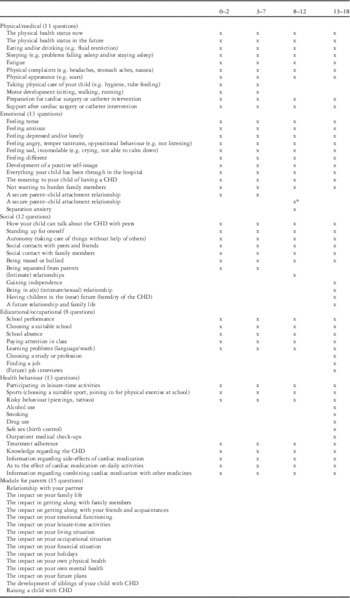
The questionnaire assessed whether parents and/or patients would like to receive psychosocial care for their child in relation to the congenital heart defect on a five-point scale – no need, little need, some need, much need, urgent need – regarding the following domains: physical/medical (11 questions), emotional (13 questions), social (12 questions), educational/occupational (eight questions), and healthy behaviour (13 questions; see Appendix 1). In a separate module, parents were asked to indicate their own need for psychosocial care regarding issues related to the CHD of their child (15 questions).
Furthermore, patients and their parents were asked (a) from whom and (b) in what format they would like to receive psychosocial care. In a separate module, biographical information was asked for, covering topics such as the child’s age, gender, nationality, religion, and socio-economic status of the family.
Quality of life was assessed using the Linear Analogue Scale, with scores ranging from 0 (worst imaginable health state) to 100 (best imaginable health state). Parents rated Quality of life for their children and for themselves.Reference Moons, Van Deyk and De Bleser 31 For rating Quality of life by patients themselves, the scale was adjusted to a 10-point scale, ranging from 0 to 10.
Socio-economical status was assessed by categorising the highest parental occupational (or educational) level into three groups – low, medium, high – based on the Dutch national classification register 32 and resulted in the following numbers: 10.3% low, 43.9% medium, 45.8% high, and 3.7%, and as such do not represent a normal distribution.
Statistical analyses
Descriptive analyses – frequencies and percentages – were calculated to measure possible differences between responders and non-responders. Scores on the questionnaires were dichotomised into no need versus a need (indicated by scores 2–5).
Continuous variables were compared by Student’s t-test and categorical variables by χ2 tests and if necessary by Fisher’s exact test. The significance level was set at p=0.05. SPSS for Windows (computer programme) version 21 was used.
Results
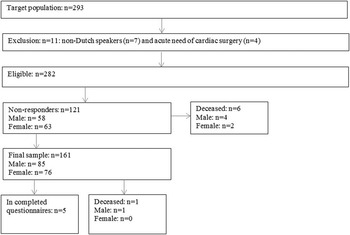
Patient sample (see Fig 1: patient flowchart)
The target population consisted of 293 patients. Among them, 11 were excluded, as seven were unable to read Dutch and four could not be enrolled due to logistical difficulties. The remaining 282 eligible patients (male: n=143, 50.7%) were categorised into four age groups: (1) 0–2 years: n=148 (52.5%), (2) 3–7 years: n=48 (17.0%), (3) 8–12 years: n=38 (13.5%), and (4) 13–18 years: n=48 (17.0%).
Patient flowchart.

The final sample of responding parents consisted of a total of 161 parents, including five not fully completed questionnaires and one questionnaire concerning a parent report of a child who died several weeks after surgery.
Of the non-responding parents group (n=121), six children died during or after the cardiac procedure.
From the 161 participating families, 29 patients underwent a cardiac procedure twice during the period of data gathering; 13 of these families responded, and only their first set of data was included in the analyses.
The final sample of children (8–18 years) consisted of 38 children (male: n=17, 44.7%) spread over two age groups: (1) 8–12 years: n=17 (44.7%) and (2) 13–18 years: n=21 (55.3%). Among all, four children underwent an invasive procedure, and thus were included twice; only the data for their first inclusion are included in data gathering.
Comparing responders versus non-responders
Parents
No differences were found between responding (n=161) and non-responding (n=121) parents regarding age at cardiac procedure, gender, and cardiac diagnosis. A difference was found with regard to cardiac procedure: non-responders more often fell in the surgery group (66.9%) and responders more often fell in the catheter intervention group (45.3%).
Children
No differences were found between responding (n=38) and non-responding (n=45) children with regard to age at cardiac procedure, type of procedure, and cardiac diagnosis; a trend was found for non-responders being boys (42.2%) and responders being girls (55.3%) more often.
Parent reports
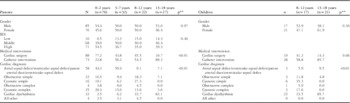
Most patients fell in the age group 0–2 years (47%), see Table 1. Within the parent sample, no significant differences were found between age groups with regard to the distribution of child gender and socio-economic status (see Table 1). Younger children (0–2 years) underwent cardiac surgery more often (77.3%) compared with older children (13–18 years) who more often underwent a catheter intervention (89.3%); older children (13–18 years) were diagnosed with a cardiac dysrhythmia (82.1%) more often compared with all other age groups.
Biographical and medical characteristics of responders for specific age groups (%)Footnote *.

* Percentages (%) of column totals adding up to 100% are presented
** p indicates whether the difference between age groups with regard to gender, SES, medical intervention, and cardiac diagnosis is significant, p<0.05
Parents’ reports on the need for psychosocial care for their children across different age groups
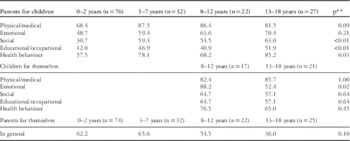
Across age groups, parents reported a need (score >2, for 57.5–87.5% of parents) for psychosocial care regarding their children on the physical/medical, emotional, and health behaviour domains, see Table 2.
The reported need for psychosocial care per domain within a specific age group as reported by parents and children (%)Footnote *.

* Presented data indicate the percentage (%) of parents and children reporting a need for psychosocial care on a specific domain for each corresponding age group. For example, on the domain physical/medical for the age group 0–2 years, 68.4% of parents express a need for psychosocial care, in contrast to 100−68.4%=31.6% reporting no need for psychosocial care. Row and column percentages as presented do not add up to 100%
** p indicates whether a difference between age groups within a specific domain is present
Parents of children aged 3–18 years reported a significantly higher need for psychosocial care compared with parents of children aged 0–2. On the social domain, the highest need was expressed by parents of adolescents (63.0%). This was also the case for the educational/occupational domain, with parents of adolescents reporting the highest need (51.9%).
Compared with other age groups, a relatively high need for psychosocial care regarding health behaviour was reported by parents for their children in the age groups 3–7 years (78.1%) and 13–18 years (85.2%).
Parents’ reports on need for psychosocial care for their children across different cardiac diagnosis groups
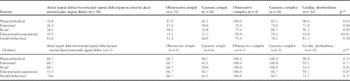
Across cardiac diagnostic groups, >45% of parents reported a need for psychosocial care on the physical/medical, emotional, and health behaviour domains, see Table 3.
The reported need for psychosocial care per domain within a specific cardiac diagnosis group as reported by parents and children (%)Footnote *.

* Presented data indicate the percentage (%) of parents and children reporting a need for psychosocial care on a specific domain for each cardiac diagnostic group. For example, on the domain physical/medical for the cardiac diagnostic group atrial septal defect/ventricular septal defect/patent arterial duct/aventricular septal defect, 76.8% of parents express a need for psychosocial care, in contrast to 100−76.8%=23.2% reporting no need for psychosocial care. Row and column percentages as presented do not add up to 100%
** p indicates whether a difference between cardiac diagnostic group with regard to a specific domain is present
From whom parents would like psychosocial care for their children?
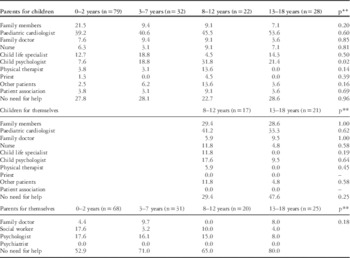
Across age groups, parents preferred to receive psychosocial care from paediatric cardiologists (range: 39.2–53.6%), child psychologists (range: 7.6–31.8%), and child life specialists (range: 4.5–18.8%). About a quarter of all parents reported no need for psychosocial care, see Table 4.
Preference of parents and children expressing from whom they would like to receive psychosocial care (%) within a specific age groupFootnote *.

* Presented data indicate the percentage (%) of parents and children reporting a preference to receive psychosocial care from a specific health-care professional for each corresponding age group. For example: for receiving psychosocial care from family members in the age group 0–2 years, 21.5% reported a preference to receive this care from family members, in contrast to 100−21.5%=78.5% reporting no preference to receive this kind of care. Row and column percentages as presented do not add up to 100%
** p indicates whether a difference between age groups with regard to a preference for a specific health-care professional is present
In what format parents would like psychosocial care for their children?
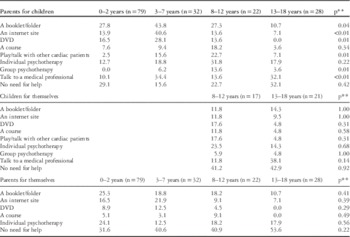
The highest need for psychosocial care was reported by parents of children aged 3–7 years (see Table 5). Remarkably, the highest need reported by parents of 8–12-year-old children was reported for individual psychotherapy (31.8%). Compared with other age groups, parents of children aged 8–12 years showed a significantly higher need for their children to play with/talk to other cardiac patients in both a therapeutic (13.6%) and a non-therapeutic (22.7%) setting. Interestingly, parents of children aged 3–7 years (34.4%) and 13–18 years (32.1%) reported a significantly higher need of psychosocial care for their children provided by a medical professional (doctor/nurse) when compared with the other age groups.
Preference of parents and children expressing in what kind of format they would like to receive psychosocial care (%) within a specific age groupFootnote *.

* Presented data indicate the percentage (%) of parents and children reporting a preference to receive psychosocial care in a certain format for each corresponding age group. For example, for the format “a booklet/folder” in the age group 0–2 years, 27.8% of the parents report a preference to receive psychosocial care in this format, in contrast to 100−27.8%=72.2% reporting no preference to receive care in this format. Row and column percentages as presented do not add up to 100%
** p indicates whether a difference between age groups with regard to a preference for a specific format for psychosocial care is present
Quality of life
Quality of life as reported by parents for their children on the linear analogue scale resulted in a score of 87.3 on average with a median of 90 (n=143, missing: n=18, range 6–100).
Quality of life as reported by parents for themselves on the linear analogue scale resulted in a score of 89.45 on average with a median of 90 (n=149, missing: n=12, range 1–100).
Parents’ reports on need for psychosocial care for themselves
A trend (p=0.10) was found, indicating that parents with young and school-aged children reported a higher need for psychosocial care for themselves compared with parents of adolescents (see Table 2).
Children’s reports
A significant difference was found for cardiac diagnosis: more 13–18-year-olds were diagnosed with a cardiac dysrhythmia (85.7%) in relation to their younger counterparts who were diagnosed within all other cardiac diagnostic categories more often.
Children’s self-reports on the need for psychosocial care
Overall, >50% of participating children reported a need for psychosocial care on each domain, see Table 2. The only significant difference between age groups was found on the emotional domain, showing a higher need for psychosocial care in children aged 8–12 years than for those aged 13–18 years.
Children’s self-reports on the need for psychosocial care for different cardiac diagnostic groups
No significant differences were found in need for psychosocial care across different cardiac diagnostic groups, see Table 3.
From whom children would like psychosocial care?
Children and adolescents reported as preference from whom they wanted psychosocial care: (1) the paediatric cardiologist, (2) family members, and (3) a child psychologist. More than 25% of children and adolescents reported no need for psychosocial care, see Table 4.
In what kind of format children would like psychosocial care?
No significant difference between age groups was found with regard to the preferred format for psychosocial care, see Table 5. Most preferred formats reported by children (8–12 years) were individual psychotherapy, playing/talking to other cardiac patients in a non-therapeutic setting, and a DVD. For adolescents (13–18 years), the most preferred formats were talking to a medical professional, individual psychotherapy, and a booklet/folder.
Quality of life
On average, patients rated their own quality of life with a score of 8.2 (n=38; no missing). The median was 8.0 within a range of 5–10.
Actual delivered care
This study into the needs for psychosocial care for parents (n=161) and children (n=38) in the week before surgery or a catheter intervention resulted in the following extra amount of referrals, in addition to care-as-usual, over a 17-month period: 81 to child-care specialists, 14 to the social workers, and 28 to the child psychologist; 80 extra information folders were sent and 38 parents and patients received extra advice to contact the doctor on the day of hospital admittance to receive information about specific medical questions.
Discussion
The aim of this study was to investigate the psychosocial needs of both parents of children with CHD (0–18 years) and the patients themselves (8–18 years) in the week before cardiac surgery or a catheter intervention.
Need for psychosocial care as reported by parents for their children
Results show that parents reported a substantial need for psychosocial care for their child on all domains – physical/medical, emotional, social, educational/occupational, and health behaviour – and age groups, on top of what has been provided before admittance for invasive procedures of their child. Parents of children aged 3–18 years reported a significantly higher need for psychosocial care for their child than parents of younger children. The needs reported by parents for their children were especially high in adolescence for the social, educational/occupational, and health behaviour domains. This is not surprising as in adolescence contact with peers becomes increasingly important for social and emotional well-being, decisions about a (future) education and/or job have to be made, and exposure to all kinds of experimental behaviour – for example, smoking, alcohol, drugs, sex, etc. – increases.Reference Dulfer, Duppen and Blom 21
As to the different cardiac diagnostic groups, no significant differences were found with regard to their need for psychosocial care. This is in line with previous findings, reflecting no consistent relationship between cardiac diagnosis and emotional/behavioural problems in children with CHD.Reference Karsdorp, Everaerd, Kindt and Mulder 2 , Reference Spijkerboer, Helbing, Bogers, Van Domburg, Verhulst and Utens 3
Parents report that they preferably receive care for their children from the paediatric cardiologist, child psychologist, or a child life specialist, with a preference in the format of a booklet/folder, internet site, or DVD. Remarkably, the highest need reported by parents, for their children aged 8–12 years, was reported for individual psychotherapy. Our results are in line with Kendall et al,Reference Kendall, Sloper, Lewin and Parsons 33 who pointed out a general need for psychosocial support, including both physical and psychosocial rehabilitation based on a systematic and individual assessment of needs. Specifically, a need for (1) information about the condition and lifestyle issues, (2) better communication between child, parent, health-care professional, and school, (3) follow-up consultation on a regular basis, (4) access to simple/understandable information, both verbal and written, were mentioned to improve the knowledge, confidence, and learning to take responsibility by the youngster. Kendall’s article illustrated the need for psycho-education in particular, whereas our study shows a clear need for more intensive support – that is, individual psychotherapy. Such psychotherapy offers the opportunity to work through hospital experiences, gain insight, and learn to cope with adjustment problems.
Need for psychosocial care as reported by children for themselves
More than 50% of all patients reported a need for psychosocial care for themselves on all domains – physical/medical, emotional, social, educational/occupational, and health behaviour. In line with Lesch et al,Reference Lesch, Specht, Lux, Frey, Utens and Bauer 26 >80% of children and adolescents reported a need for psychosocial care on the physical/medical domain. Lesch et alReference Lesch, Specht, Lux, Frey, Utens and Bauer 26 also showed that substantial knowledge gaps exist, especially in adolescents, whereby both insufficient understanding and a poor ability to define the heart defect were present. Previously, Kendall et alReference Kendall, Sloper, Lewin and Parsons 34 found a need for more support and understanding from others – for example, peers and teachers – especially concerning physical activities and health-related communication – for example, talk and explain specifically what you can or cannot do.
Our results show no significant differences between cardiac diagnostic groups with regard to the need for psychosocial care on any domain. About 50% of patients across all diagnostic groups reported a need for psychosocial care on nearly every domain. This finding confirms previous results of Karsdorp et alReference Karsdorp, Everaerd, Kindt and Mulder 2 and Spijkerboer et al,Reference Spijkerboer, Helbing, Bogers, Van Domburg, Verhulst and Utens 3 revealing no consistent relationship between severity of the cardiac defect and behavioural/emotional problems.
Our results clearly confirm the plea of Lesch et alReference Lesch, Specht, Lux, Frey, Utens and Bauer 26 and Kendall et alReference Kendall, Sloper, Lewin and Parsons 34 for early psychosocial interventions in childhood for both parents and children, to help them manage and take responsibility as soon as possible. With respect to designing such interventions, they emphasised the importance of the role of doctors and the internet in providing adequate information.Reference Lesch, Specht, Lux, Frey, Utens and Bauer 26 In addition, Kendall et alReference Kendall, Sloper, Lewin and Parsons 34 proposed face-to-face contact and contact by telephone and e-mail as formats to provide information. Our study underlines a need for a more intensive format of delivering psychosocial care, which goes beyond psycho-education. In our study, both children and adolescents showed a preference for receiving psychosocial care from the paediatric cardiologist, family members, and child psychologist. The preferred formats as reported by children were individual psychotherapy, contact with other cardiac patients in a (non-)therapeutic setting, and a DVD, whereas adolescents tend to prefer talking to a medical professional (nurse/doctor), individual psychotherapy, and a booklet/folder. This study is the first, to the best of our knowledge, to show such an explicit wish for individual psychotherapeutic sessions as expressed by both parents and children themselves.
Need for psychosocial care as reported by parents for themselves
Parents reported an increased need for psychosocial care for themselves when their children were aged 0–12 years. Topics on which parents reported a need for psychosocial care for themselves not only included emotional well-being but also child-rearing practices, financial and occupational issues, social support, and leisure-time activities. The relevance of these topics has also been stressed in several previous studies.Reference Lawoko and Soares 6 , Reference Dulfer, Duppen and Blom 21
Although the process of emotional adaptation and working through is tough and takes time, several studies have shown that in the long term and with the medical course of the child being stable, parents showed an even better mental health status, with less distress, somatic symptoms, anxiety problems, sleeping problems, and depression symptoms, than the normative reference group.Reference Utens, Versluis-Den Bieman, Witsenburg, Bogers, Hess and Verhulst 11 , Reference Spijkerboer, Utens, Bogers, Helbing and Verhulst 29
Limitations
This was a single-centre study. A substantial part of the eligible patients did not respond to the questionnaire. The amount of time needed to complete the questionnaire was short, but parents received the definitive message that surgery/catheter intervention would be performed “only” a week beforehand. Therefore, the parents were asked to complete questionnaires during a very busy and stressful week, in which they had to arrange many things. Considering what parents mentioned when they were also invited by phone to participate, we are of the opinion that time pressure influenced non-response. Therefore, we think non-response does not directly reflect the lack of need for psychosocial care. Moreover, responders and non-responders did not differ on background characteristics. To what extent the selection bias might have influenced our results is unknown.
Clinical implications
The need for psychosocial care for both parents and children has been proven evident for all age groups and cardiac diagnosis groups. Psychosocial interventions in addition to care-as-usual need to be developed and tailored to the individual needs of patients and their families. Future research should be directed to develop evidence-based psychosocial interventions to provide parents and children with well-established psychosocial care.
Acknowledgements
Special thanks to Stichting Hartekind’s financial support to perform this project and provide actual psychosocial care. Special thanks to Eugène van Galen and Mark Evers (members of the Kinderhartenraad Sophia Children’s Hospital) for their contribution in developing the questionnaire, Marit Timmers for data gathering, and colleagues for implementing the psychosocial care needed.
Financial Support
Stichting Hartekind, Fonds Nuts Ohra, and Stichting Achmea Gezondheid financially supported this research.
Conflicts of Interest
None.
Ethical Standards
The authors assert that all procedures contributing to this work comply with the ethical standards of the relevant national guidelines on human experimentation and with the Helsinki Declaration of 1975, as revised in 2008, and has been approved by the institutional committees of the Medical Ethical Board of the Erasmus MC.
Appendix 1. Domains and questions