INTRODUCTION
In 2013, a forgotten Cézanne watercolor resurfaced at the National Gallery of Canada after languishing in the museum for more than half a century, tucked away and unfamiliar to virtually all museum staff. At the time of its rediscovery, a local newspaper revealed that the watercolor, Trees, had been held by the National Gallery since 1940 and was never formally acquired by the museum, which begged the question: if the National Gallery did not own the watercolor, who did?Footnote 1 And why was it taking the museum so long to solve the mystery?
The quandary may be traced to an extraordinary story that began during the Second World War. In 1940, the British Admiralty intercepted a passenger ship sailing from Lisbon to New York and escorted it to Bermuda, where customs officers seized several hundred artworks by Impressionist and modern masters. The trove, most of which had belonged to the renowned art dealer Ambroise Vollard, was packed into four crates and shipped to New York aboard the SS Excalibur by the French art dealer Martin Fabiani. British intelligence suspected Fabiani of sending the collection to neutral America to sell on the New York art market for the economic benefit of German-occupied France, and captured the collection as a prize of war. All four crates were sent on by British authorities from Bermuda to Ottawa, Canada, for wartime safekeeping. The National Gallery of Canada stored the collection from 1940 to 1949, when British courts ordered the collection’s joint release to Fabiani and to Vollard’s sisters; the Cézanne watercolor was inadvertently left behind in the melee of papers strewn about when the collection was divided among the parties. Thus concluded, for a time at least, a notable and intriguing chapter in the collection’s saga.
Many provenance researchers and historians are familiar with a version of this story that is both incomplete and often characterized incorrectly as an incident of Nazi-era spoliation. In this paper, I contest the standard version of this account by charting the voyage of the Vollard-Fabiani collection from 1940 to 1949 through a close examination of official correspondence and court records from the U.K., Bermuda, and Canada. The evidence reveals a nuanced story long overshadowed by the startling upheaval of the European art world under German occupation. It refutes the notion that the Bermuda affair belongs to the narrative of World War II-era spoliation and argues that the collection was neither associated with looting, nor was it intended for currency conversion as was originally suspected. Fabiani was certainly a scoundrel who participated actively and willingly in the Nazi spoliation of art in France; nevertheless, his unscrupulous wartime activities stand apart from the 1940 seizure of his collection in Bermuda. By simple chronology, Fabiani could not have sent the collection to Bermuda by order of the Nazis. To wit, Great Britain never pressed ahead to legally acquire the collection as it often did with enemy property, and Fabiani’s legal ownership of the collection continued uninterrupted until its distribution in 1949.
These findings enhance the existing scholarship on the fate of Europe’s displaced cultural patrimony in the context of World War II. Moreover, they highlight the often morally ambiguous nature of ownership histories and underscore the need for objectivity in provenance research. This story also illustrates the difficulty of determining the legal ownership of objects many decades after the original dispersal of a collection, a dilemma made all too real by the current limbo of the Cézanne watercolor from the Vollard-Fabiani collection.Footnote 2
Like most war stories, nothing about this one is simple or clear-cut. In fact, there is hardly an unequivocal moment. Many sources provide incomplete, ambiguous, or conflicting information that together paint an impression of truth. A great deal of data has been lost or remains hidden, not least of which are the true details of Fabiani’s shady life and business dealings. My interpretation of events relies on hundreds of firsthand reports, many of which are unquestionably biased or misremembered and some of which appear to lean closer to truth. This is the gray pool into which provenance researchers wade each day in the face of demands for clear resolutions, and this story is especially murky.
A comprehensive examination of the execution of Ambroise Vollard’s will, the complex dispersal of his considerable estate, and legal claims on the collection made by Vollard’s family, the city of Paris, and other parties are outside the scope of this essay, as are authoritative analyses of British prize law and enemy property policy. These subjects are introduced briefly to provide necessary context.Footnote 3
THE ART DEALER AND HIS PROTÉGÉ
The Vollard-Fabiani collection was drawn from the thousands of works of art in the possession of Ambroise Vollard, a self-made art dealer born in 1867 on the small French island of Réunion in the Indian Ocean, about 500 nautical miles east of Madagascar. Vollard dealt in works by contemporary European artists who were then often unknown or undervalued but whom we now consider to be the most eminent of the late nineteenth and early twentieth centuries, including Renoir, Degas, Picasso, Gauguin, and Rouault (Figure 1). He had an excellent eye for talent paired with a clever business model, which led him to identify promising artists, purchase their work in bulk, and stage solo exhibitions in his Paris gallery. Throughout his career, Vollard maintained strong personal and professional relationships with his artists and saw his reputation grow alongside theirs. Among his most notable successes was his connection to Paul Cézanne, who was living as something of a recluse in Aix-en-Provence when Vollard “rediscovered” and arranged to represent him. A voracious collector, Vollard occasionally acquired the entire contents of struggling artists’ ateliers, stored them for a time, and then sold them for maximum profit as the artists’ stars rose—in large part due to Vollard’s own marketing savvy.Footnote 4
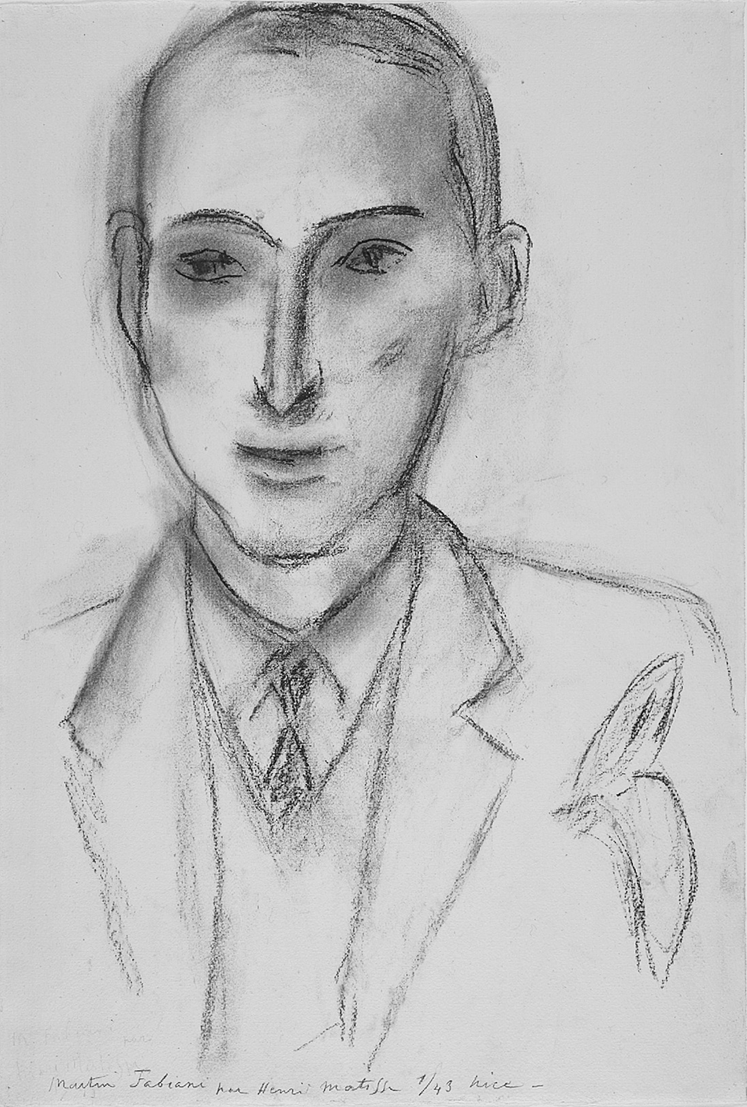
Henri Matisse, Portrait of Martin Fabiani, c. 1942. Charcoal drawing. 54.93 x 36.83 cm. Los Angeles County Museum of Art. © 2015 Succession H. Matisse / Artists Rights Society (ARS), New York.

Like Vollard, Martin Fabiani hailed from a French island outpost. Born in Corsica in 1899, Fabiani moved to Paris as a young adult to pursue a legal education but quickly abandoned his studies in favor of a more bohemian lifestyle.Footnote 5 In a fanciful autobiography published in the 1970s, Fabiani cheekily traced his lineage to an ancient Roman general who repelled the Carthaginian conqueror Hannibal, to a founder of Corsica, and to a Corsican count; the last of these associations compelled Fabiani to consider himself likewise an aristocrat, “un peu,” and he cavalierly admitted to living beyond his means throughout his life.Footnote 6 Fabiani allegedly became acquainted with Vollard when Fabiani’s lawyer brother represented Vollard in a lawsuit against the German art dealer Paul Cassirer; this account was later corroborated by Vollard’s brother Lucien.Footnote 7 According to Fabiani, Vollard began consigning artworks to his young friend when Fabiani expressed interest in the trade. The number of consignments grew as the friendship progressed. Fabiani sold the paintings independently and remitted the agreed-upon price to Vollard, pocketing any profits or taking payment in kind to build up his own art dealing business. Vollard made no mention of Fabiani in his 1936 memoirs, Recollections of a Picture Dealer, and Fabiani’s claims have not been substantiated.Footnote 8 Frustratingly little is known about Fabiani’s business dealings prior to World War II.
The relationship ended abruptly when Vollard was killed in a car crash on 22 July 1939 amid circumstances that have been reported as suspicious. The dizzying extent of his stock became evident when his premises were examined: artworks overflowed the many rooms and closets in his Paris townhouse and gallery. It was estimated that he had somewhere between five thousand and ten thousand artworks in his possession.Footnote 9 Vollard’s brother and executor, Lucien, a curious character later described as perpetually insolvent and possibly a drug addict,Footnote 10 hired Fabiani to act as expert appraiser for the collection on behalf of the Vollard family. The collection was divided between two groups of heirs, the Vollard family and the dealer’s long-time significant other, Madeleine de Galéa and her son Robert. (The Galéas inherited two-thirds of the collection.Footnote 11) Soon after, Lucien sold more than six hundred artworks from the Vollard family’s portion of the inheritance to Fabiani, despite lacking any authorization to liquidate the family’s share without their express approval.Footnote 12 A number of other legal formalities were evidently overlooked in Lucien’s hasty execution of Vollard’s will, triggering decades of complex postwar litigation.Footnote 13
Vollard’s death just two months before the outbreak of World War II spared him from witnessing the cataclysmic effects of Nazi policies on the cultural landscape of Europe. By the time German forces marched into Paris on 14 June 1940, French authorities had arranged for the most important objects from the capital’s major public collections to be packed and transported south to the Loire Valley, triaged in the Château de Chambord, and then diverted to a number of regional châteaux for safekeeping during the period of hostilities.Footnote 14 Fearing for the value of their inventories as much as for their safety, a number of French art dealers sent their stock by the crate to colleagues in sister art capitals such as London and New York, where sales were likely to remain more stable in the short term and the economic impact of war would be less debilitating to the French dealers. This was the route chosen by Fabiani for his share of Ambroise Vollard’s former stock, which he had obtained from Lucien.
THE JOURNEY
By his own account, Fabiani left Paris with his wife around 31 May 1940, two weeks ahead of the arrival of the German army, stopping at the seaside city of Arcachon, near Bordeaux, two days later with his stock from the former Vollard collection (and five additional objects obtained from other sources) squeezed into twelve boxes in his car. He obtained authorization from the ill-fated Reynaud government to depart France on 17 June, and French customs officials stamped the artworks at the border before allowing the Fabianis to cross into Spain. They proceeded to Portugal, likely arriving in Lisbon before the French–German armistice of 24 June.Footnote 15
Fabiani’s plans for the alarmingly crowded art collection in his automobile, which he transferred at some point to four crates, were evidently connected to the Bignou Gallery in New York. The Bignou Gallery was owned by Étienne Bignou—the French art dealer and co-expert appraiser of the Galéa share of the Ambroise Vollard collection—and directed by Swiss dealer Georges Keller with Duncan MacDonald from the British dealer Alex Reid & Lefèvre. Fabiani addressed all four crates to the Bignou Gallery, consigning his artworks to it (and possibly to Alex Reid & Lefèvre) in a profit-sharing arrangement.Footnote 16
Sadly, Fabiani’s published recollections of his time in Portugal shed little light on this valuable shipment, but they hint at his willingness to employ whatever means at his disposal to get his way in any given situation. He secured a British certificate of origin for the artworks from the British consul general in Lisbon on 20 September on grounds that the goods were acquired in and departed from France before the armistice and therefore had no connection to Germany—all of which was, in fact, true. The four wooden crates housing the collection weighed in at 301 kilograms and were valued at $10,000.Footnote 17 They were loaded onto the SS Excalibur, the American-operated luxury liner and cargo ship that had carried the Duke of Windsor and Wallace Simpson from Lisbon to Bermuda just a month earlier, and left for New York on 25 September.
Why British intelligence immediately zeroed in on Fabiani’s cargo on board the Excalibur on this fateful trip, and how an official certificate of origin issued by the British consul came to be doubted, is unclear. It is possible that the intrigue was connected to the extensive and well-documented espionage and bribery that took place in neutral Portugal, especially in the port city of Lisbon, during World War II.Footnote 18 The extremely secure placement of the four crates on board the ship, discussed later, may very well have raised eyebrows. What is clear is that British authorities came to believe that Fabiani’s crates contained a stolen art collection; that the collection was under Germany’s control; that Fabiani was an agent for Nazi Germany; and that he intended to sell the art for foreign currency to help fund the German war effort.Footnote 19 In the same vein, the British procurator general determined that the artworks were “of a sort regarded by Germans as un-Nazi” and likely destined for the lucrative American market “with the connivance of the German authorities.”Footnote 20 The alarm was raised, and the resulting call to action swift.
Just two days after the Excalibur departed Portugal, the British Minister to Portugal tipped off the Ministry of Economic Warfare (MEW) that the British Consul in Lisbon had mistakenly issued Fabiani a British certificate of origin for the pictures and that the ship was carrying more than five hundred valuable artworks of French origin (by now considered “enemy origin” due to the German Occupation).Footnote 21 The Enemy Exports Committee (EEC) promptly authorized the MEW to seize the Vollard–Fabiani collection, and the MEW issued a seizure order for Fabiani’s crates from the SS Excalibur in accordance with the Reprisals Order in Council of 1939. Intended to govern exports to enemy territories, this law sought to punish Germany for unrestricted mine warfare and other questionable acts of war. It was effectively a blockade to prevent war materials from reaching belligerent nations, but was also used to block the flow of enemy assets. Valuable items that could be sold for currency, like art, required a certificate of origin to be exempt from seizure. Under the Reprisals Order, British authorities were entitled to confiscate Fabiani’s collection as a prize of war—it was owned by an “enemy” citizen and destined for a gallery controlled by another “enemy” citizen—only if Fabiani left France with his paintings after Germany occupied Paris. That Fabiani exited France two weeks before the Occupation— a fact corroborated by French and Spanish customs stamps on Fabiani’s list of items being exported from France—was either unknown or ignored by the MEW and the EEC.Footnote 22
Four days after the order, the Excalibur was intercepted by the British warship HMS Belfast mid-Atlantic, and escorted to the port at Hamilton, Bermuda, for a contraband search by customs officials.Footnote 23 Contraband Control and Censorship security officer (and MI6 secret agent) H. Montgomery Hyde met the ship in the company of Bermuda’s chief customs officer and the Bermudan consul general, whose presence was required because there were allegedly several million dollars in gold bullion held in the ship’s strong room.Footnote 24 Upon boarding the ship, British and Bermudan officials were informed by the Excalibur’s uncooperative captain that the door to the strong room, which held the offending crates, was both locked and welded shut. Not without humor, Hyde later recalled the retrieval of the collection from the hold:
“Excuse me a moment, Sir,” I said, and spoke to the senior contraband officer who had also come aboard. I requested him to send a signal to the Royal Navy Dockyard on the south side of the Sound and ask for an expert shipwright-welder to be dispatched to the Excalibur as quickly as possible. About a quarter of an hour later the welder . . . arrived in a lighter with his oxyacetylene burning gear and welding equipment, accompanied by the dockyard foreman. The Captain and the rest of us stood outside the strong-room as the welder prepared to begin his work, with a preliminary caution, “Stand well back, gentlemen, please!”Footnote 25
Fabiani’s crates were removed from the hold and lowered over the side of the ship onto the deck of a small customs boat pulled alongside the Excalibur, to be put into safe storage in Hamilton. Bermuda’s attorney general instituted an action for condemnation of the artworks as a prize of war one week later, then issued a summons for Fabiani to appear before the Supreme Court of Bermuda, causing an alarmed Keller at the Bignou Gallery in New York to telegram Fabiani hastily: “it is most necessary for you to appear bermudapersonally since you are sole owner of paintings.”Footnote 26 No doubt alarmed by the seizure, Fabiani appointed a Bermuda lawyer to file an appearance in his stead.
From the moment the Vollard-Fabiani collection alighted in Bermuda, local authorities expressed concern for the artworks’ condition. The shipmaster supplied no inventory of the crates’ contents, and so the authorities relied on the $10,000 valuation of the collection on the ship’s manifest. The governor of Bermuda opted to leave the containers (which he initially presumed were airtight) unopened until he was instructed explicitly to open them, “as Bermuda climate is extremely bad for Pictures.”Footnote 27 The crates remained sealed on 30 October, when the attorney general filed an affidavit asserting that any unpacking of crates in Bermuda could, “in view of climatic conditions, affect [the artworks’] condition and value.”Footnote 28 Whether motivated by genuine uneasiness for the safety of the collection or simply wishing to cede responsibility for the case to London courts, Bermuda’s attorney general asked the Supreme Court of Bermuda to move the legal proceedings for the Fabiani affair to the Probate, Divorce and Admiralty Division of the High Court in London under the Prize Courts Act, to which the court agreed despite protests from Fabiani’s legal team.Footnote 29
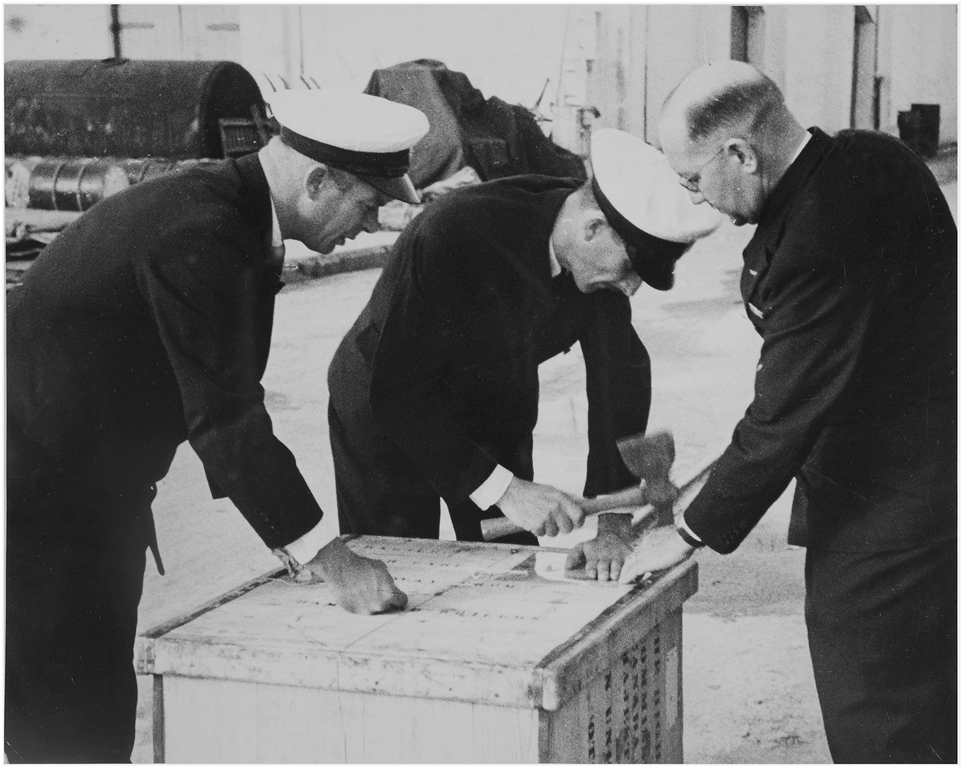
At the same time, the governor of Bermuda telegrammed British officials with the urgent news that the crates were not climate controlled, as previously believed, declaring that “it has therefore become imperative to remove them from Bermuda as soon as possible… I propose to send them by the first boat (sailing on the 7th) to Canada for storage there.”Footnote 30 The idea of sending the Vollard-Fabiani collection to Canada was not new: it had been raised as early as 9 October, six days after the Excalibur arrived in Hamilton Harbor, in a meeting of the Enemy Exports Committee in which members considered the possibility of arranging for a warship to escort the collection to England or, alternately, sending it to Canada, the latter being a decidedly less dangerous wartime voyage.Footnote 31 On 7 November, the Exchequer Court of Canada was appointed to take custody of the four Fabiani crates for the purpose of warehousing.Footnote 32 The length of the custodianship was never specified, but it is unlikely anyone suspected the collection would come to reside at the National Gallery of Canada for more than eight years. The valuable cargo left Bermuda on 11 November 1940 on the SS Lady Romney and arrived in Montreal ten days later; from there it traveled by land to the National Gallery on McLeod Street in Ottawa, at the present site of the Canadian Museum of Nature (Figure 2).
Customs officials prepare one of Fabiani’s confiscated crates for shipment from Bermuda to the National Gallery of Canada for safekeeping, 1940.
Somewhere between Lisbon and Ottawa, though the crates were never opened and no one but Fabiani had an inventory of their contents, the international press got wind of the seizure and published a variety of facts and rumors about it. On 10 October, for example, an Ottawa Journal article announced that $500,000 worth of French art had been seized in Bermuda and was “reported unofficially to have been removed from Paris museums.”Footnote 33 Some headlines were cloaked in the bellicose language of war, such as a headline from Melbourne’s daily newspaper The Argus, which announced, “Britain Seizes Pictures. German Move Fails.”Footnote 34 The Bignou Gallery’s Duncan MacDonald issued a statement aimed at tempering the sensational headlines on behalf of his colleague, Fabiani: “There has been a misapprehension somewhere. Mr. Fabiani, a Frenchman, escaped with the pictures before the Germans entered France. He has no connections with the Germans.”Footnote 35 The statement had no apparent effect.Footnote 36
CANADIAN CUSTODIANSHIP
The 3 December intake record from the National Gallery described the delivery as “4 cases—said to contain pictures and books to be stored in a safe and proper place in the national gallery of canada.”Footnote 37 The crates were placed temporarily in storage, and a question mark was inscribed in the “condition” field on the intake form, suggesting that the crates were not opened immediately on arrival.
The National Gallery took an inventory of the Vollard-Fabiani collection—the first since the SS Excalibur had left Lisbon in September—over three days in December 1940, in the presence of the registrar of the Exchequer Court of Canada, whose presence was required as a legal formality. The concise twenty-eight-page inventory comprised of tables of four columns with headers for inventory numbers, medium, location of the artist’s signature, and attribution. (Some pages contained a fifth header for descriptions of subjects.) Most entries were given scant notations: “(NUMBER) PH 1352, (MEDIUM) oil on canvas, (SIGNED) LL,Footnote 38 (ARTIST) Renoir.” Some received slightly more detailed treatment: “(NUMBER) (blank), (MEDIUM) oil on canvas, (DESCRIPTION) seated woman, blue period, scraped left edge, (SIGNED) (blank), (ARTIST) Picasso.”Footnote 39 The National Gallery documented the subject of most of the paintings but few of the drawings, and objects in poor condition in any media were noted. In all, the prize collection contained more than six hundred paintings and works on paper, including watercolors, gouaches, chalk and charcoal drawings, and a limited edition book by Rouault. Just the summary of the inventory gives a sense of the stature of the trove:
Box I & II: Oils by Degas, Cézanne, Rouault, Renoir, Picasso, Gauguin, Manet, Boudin, Bonnard, Vuillard, Utrillo, etc.
Box III: Drawings and water colours by Cézanne, Renoir, Guys, Rouault, and Picasso.
Box IV: Special edition of Rouault’s “Cirque de l’étoile filante” published by Vollard, together with the 65 original drawings for the above.Footnote 40
Soon after the inventory was taken, museum staff drew up a separate, general condition report for the collection. The drawings were described as being “carefully wrapped in tissue paper and an outer covering of wrapping paper and placed in the box one on top of the other,” and the oil paintings “had apparently been removed from their frames and detached from the key stretchers. In the majority of cases these pictures had been relined.”Footnote 41 Harry Orr McCurry, director of the National Gallery of Canada, informed British authorities that the pictures could be kept safely in their crates for a period of six to eight months but advised that the chalk and charcoal drawings should be rehoused in appropriate folders if the collection was to be held by the museum longer than anticipated.
By 1942, it became apparent that the initial six-to-eight-month estimate had been exceedingly conservative, and the subject of preventative conservation was raised. Without opening the crates, the workshop superintendent reported that “the water colours and pencil drawings are perfectly safe under the present conditions.”Footnote 42 By the National Gallery of Canada’s assessment, however, the charcoal and chalk drawings were in danger of being crushed or turning to powder, and the dry pigment of the frameless oil paintings stacked atop one another in the crates risked crackling further under the weight of other paintings.Footnote 43 The National Gallery obtained permission from the Office of the High Commissioner for the United Kingdom in Ottawa to open the crates and to reassess the condition of the collection on 2 March 1943, for the first time in over two years. The superintendent concluded that the condition of the pictures remained stable and that it was unlikely the artworks would suffer further damage if maintained in storage at the National Gallery.Footnote 44 When asked about the advisability of verifying the crates again in autumn 1944, McCurry reported that the pictures did not require special attention at that time. There is no evidence to indicate that the collection was examined or indeed that the crates were reopened at any other time during the war.
From very early into the National Gallery’s term as custodian of the collection, arts officials around the world sought to arrange loans from the collection for their institutions. As early as 28 October 1940, the acting director of the South African National Gallery in Cape Town asked whether the collection could be diverted from Bermuda for a traveling exhibition in South Africa.Footnote 45 In November 1940, the editor of a Sydney newspaper approached the U.K. high commissioner for Australia to inquire about the possibility of Fabiani’s pictures being sent to Australia for an exhibition to aid the Red Cross.Footnote 46 Closer to the collection’s new temporary home, the curator of the Art Gallery of Toronto (today the Art Gallery of Ontario) asked the National Gallery whether the French pictures were for sale.Footnote 47 The president of the Art Association of Montreal likewise tried his luck: “I understand that the French Government would be perfectly willing to allow us to exhibit the pictures seized at Bermuda,” he wrote to McCurry. “Can you enlighten me on this point we are so anxious to have them if at all feasible.”Footnote 48
The Canadian press joined the chorus of requests for the exhibition of the collection. While McCurry considered showing some of the artworks at the National Gallery, he never sincerely entertained requests to lend the collection.Footnote 49 British authorities, who still lacked legal grounds to take full ownership of the collection, refused sporadic requests from McCurry to exhibit the artworks in Ottawa. Among the reasons provided against the display of the collection were the threat of damaging Canada’s shaky relationship with occupied France, the possibility of artworks being sabotaged by anti-German activists, and the inconvenience of seeking permission from the collection’s legal owner, Fabiani, to exhibit the works.Footnote 50 As was customary with seizures under prize law, the collection was not insured, and liability concerns prevailed. McCurry’s wish to display the prize would not be realized until 1950, and the collection thus remained hidden away at the National Gallery well beyond the end of the war.
POSTWAR RECLAMATION
Why did the National Gallery retain the Vollard-Fabiani collection in custody until 1949 when British authorities had almost five years—between 1940 and 1945—to establish that the collection was not and had never been under German control, and another four years postwar to relinquish possession to the collection’s owner, Fabiani? In short, the release order was delayed by two factors: the postwar reckoning that took place across Europe, where investigations were under way to ferret out Nazi collaborators and punish wartime profiteers, and competing claims to the Vollard-Fabiani collection in France.
Naturally, Fabiani had difficulty reclaiming his collection in Canada after the war. Although in 1940 he was merely (and wrongly) suspected of collaborating with the Nazis, by June 1945 Fabiani was an established collaborator. Less than two months after the end of hostilities in Europe, the procurator general for the United Kingdom advised the Dominion Office, “We shall want to know a great deal more about Mr. Fabiani before we hand the pictures over to him” and warned that the burden of storing the collection could remain with Canada for some time.Footnote 51
In contrast to his prewar activities, Fabiani’s wartime reputation is well established. For Fabiani’s risible version of events, we have only to turn to his memoir. There, he claims, he returned from Portugal to occupied Paris in 1940 and fortuitously encountered a frantic (conveniently unnamed) Jewish art dealer with whom he struck up a bargain.Footnote 52 The art dealer, Fabiani reported, fairly begged him to recover the dealer’s German-confiscated gallery and to maintain the shop while the dealer waited out the war in America, after which the dealer would return to Paris and regain possession of the gallery from the helpful Fabiani. What could Fabiani do but come to the aid of his desperate colleague? Fabiani later claimed he dutifully returned the premises to their rightful owner after the liberation, at which time Fabiani moved to a posher location on the Champs-Élysées.Footnote 53 At no time during the occupation, he insisted, did he deal in stolen paintings.Footnote 54
Allied military records paint a very different portrait of Fabiani under the occupation. In fact, he was believed to be “among the most important persons connected with the removal of works of art from France and Germany.”Footnote 55 The Schenker Reports, a collection of records seized from the Schenker Transport Company (an enterprise used to transport Nazi-confiscated artworks to Germany during the occupation), listed Fabiani in a number of transactions involving spoliated art. Among others, the Schenker Reports name him in the sale of unspecified Corot and Sisley landscapes to the Folkwang Museum in Essen and another Sisley landscape to the Kunsthalle in Karlsruhe. To the Kaiser Wilhelm Museum in Krefeld, Fabiani sold unidentified paintings by Courbet, Delacroix, Gérard, and Moreau; a sculpture by Maillol; and a pastel by Renoir for the tidy sum of 4.285 million francs.Footnote 56 He was also suspected of selling art to Hitler’s architect and confidant Albert Speer, and to Hildebrandt Gurlitt, one of the most notorious Nazi dealers in spoliated art and father of the now-infamous Cornelius Gurlitt whose collection of more than thirteen hundred artworks was seized in Munich in 2013.Footnote 57
Fabiani was the subject of a lengthy entry in the American Office of Strategic Services’ “Final Report of the Art Looting Investigation Unit,” the list of red-flag names of persons involved in trading spoliated art. The Art Looting Investigation Unit (ALIU) described Fabiani as a “Corsican adventurer, gigolo, and race track tout” and an “arch-collaborationist of the Paris dealer milieu” who “received looted objects from the ERR [Einsatzstab Reichsleiter Rosenberg] by undetermined means.”Footnote 58 His colleague Étienne Bignou, to whose New York Gallery the ill-fated 1940 shipment was destined, also appeared on the ALIU list. The American National Archives and Records Administration’s Ardelia Hall Collection, which contains extensive documentation relating to art spoliation during World War II, maintains several notecards and briefs about Fabiani. The London-based Commission for the Protection and Restitution of Cultural Material also compiled a lengthy profile of Fabiani, describing him as a friend of Bruno Lohse, the notorious German art dealer who helped Hermann Göring amass his collection, and as a supplier to Maria Dietrich, Hitler’s personal art dealer.Footnote 59
There are many other accounts of Fabiani’s shady wartime dealings. Lynn Nicholas reports that when the art dealer Edmond Rosenberg accused Fabiani of being in possession of artworks stolen from Rosenberg during the war, “Fabiani gave back twenty-four pictures without protest and at the same time tried to interest Rosenberg in some sort of deal related to the Vollard pictures which still languished in Canada.”Footnote 60 In “A List of French Art Dealers Known to or Believed to Have Traded with the Enemy during the German Occupation of France,” British investigators reported that Fabiani was believed to have participated in offering an undisclosed painting by Goya to the Louvre in 1944 for 6 million francs; when the Louvre declined, he sold it to the Nazis for 5.2 million francs instead.Footnote 61
The long list of misdeeds does not end there. Fabiani was also accused of participating in the liquidation of the Wertheimer collection, owned by the majority shareholding family of the famed Parfums Chanel brand. Fleeing Paris in 1940, the Wertheimers left their significant art collection in trust to an agent who, oblivious to the collection’s true value and misled by Fabiani, sold the collection to Fabiani for a fraction of its worth. Fabiani then sold the collection for a large profit.Footnote 62 According to the French journalist Hector Feliciano, Fabiani even ensnared an unsuspecting Picasso in the scheme:
While visiting Picasso’s studio on the Quai des Grands Augustins, Fabiani offered to sell him a work by Henri Rousseau. Picasso demanded that Fabiani provide him with a certificate guaranteeing there was nothing illegal about the sale. He carefully kept this guarantee. After the war, he learned, completely by chance, that the painting had been part of the confiscated collection belonging to Pierre Wertheimer.Footnote 63
On 30 September 1945, Fabiani was indicted by the French state for embezzlement of the Wertheimer Collection, dealing in stolen property, and economic collaboration with Germany. He was one of the few French art dealers to be brought to account for his wartime activity. (Members of the Paris-based Association of Art Dealers quietly agreed among themselves not to supply authorities with evidence of collaboration with Nazis to avoid discrediting their trade and harming postwar commerce, a collusion that frustrated the efforts of postwar investigators.) He was fined more than 1.45 million francs for his role in the Wertheimer affair, though there is no evidence he ever paid the fine, and some or all charges of collaboration were mysteriously and conveniently dropped in 1946. In this regard, the U.S. Department of State was concerned with Fabiani’s friendship with Achille Perretti, the assistant director of the French national security agency, a relationship that may have brought about Fabiani’s release.Footnote 64 It is clear that Fabiani’s assets were frozen sometime in 1945 or 1946—a customary penalty for Nazi collaborators—and that the freeze was lifted on 23 September 1947.Footnote 65
Each of these instances make plain that Fabiani was no innocent victim of the German occupation. His shady wartime dealings were neither isolated nor victimless; he was fully entangled in the trade in stolen art and keen to turn a profit from Nazi clients as well as French citizens and institutions indiscriminately. The legal and ethical uncertainties of wartime established fertile grounds for someone so well disposed to telling half-truths and skirting rules, and he eagerly seized every opportunity to enrich himself, often at the expense of others. Though it certainly harmed Fabiani’s bottom line for a time, the British Admiralty’s seizure of the Vollard-Fabiani collection merely reduced his wartime profits. The evidence is clear on this count: Fabiani’s acquisition of part of Vollard’s stock, and his shipment of that stock to New York, predated the Nazi occupation of Paris and Fabiani’s involvement with spoliated art. The Bermuda affair belongs to the complex tissue of Fabiani’s dealing activities into which are woven a great many unsavory collaborationist transactions; this was simply not one of them.
COMPETING CLAIMS
Rightly or wrongly liberated of criminal charges in France, and predictably untroubled by conscience, Fabiani appeared at the National Gallery in autumn 1947 to claim his property. Lacking the authority to release the collection, McCurry denied Fabiani’s request and advised him to apply for relief from the Canadian Custodian of Alien Property in Ottawa.Footnote 66 This second request, filed in February 1948 by an official of the French embassy in Ottawa on Fabiani’s behalf, was similarly misdirected, and the custodian’s office pointed Fabiani toward the British Admiralty.Footnote 67 Fabiani filed a third claim with in the High Court of Justice—Probate, Divorce and Admiralty on 6 May 1948.Footnote 68
As Fabiani worked his way through labyrinthine reclamation procedures, Lucien Vollard and his sisters, Jeanne and Léontine, contested Fabiani’s claim to the Ottawa collection in lengthy proceedings in the Paris courts from 1947 to 1949. The peculiar (and possibly impaired) Lucien accused Fabiani of committing fraud in the 1940 transaction in which Fabiani acquired more than six hundred artworks from Lucien, but failed to produce adequate evidence to the court. He abandoned his claim on 28 May 1947.Footnote 69 In separate claims in French courts, Jeanne and Léontine asserted that the Ottawa collection was their rightful inheritance, the possession of which Lucien had deprived them through his unauthorized deal with Fabiani. The sisters reached a settlement with Fabiani and Lucien in March 1949 in France, and the parties arranged for the U.K. High Court to formalize the agreement.Footnote 70 Satisfied that all legal questions as to the collection’s ownership were resolved, the High Court ordered the release of the Vollard-Fabiani collection into the joint custody of Fabiani and the Vollard sisters on 29 April 1949, with three parts going to Fabiani and one part going to the Vollard sisters.Footnote 71 The exact content of each part was to be determined by dividing the collection into lots of equal value, then drawing lots in accordance with a private agreement between the parties.Footnote 72
RESTITUTION
Anticipating the long-awaited release of the collection and free at last to entertain hopes of exhibiting some of the artworks to the Canadian public, Director McCurry of the National Gallery of Canada began making preparations to show and/or purchase a selection of the art that had sat in its holding room for so long. “It is just possible we might be able to buy something out of the collection at a reasonable price,” he wrote optimistically to a colleague in Montreal. “It all makes quite a romantic story and should result in some good publicity for the National Gallery when we can announce it.”Footnote 73
Fabiani and Édouard Jonas, the Vollard sisters’ representative, arrived at the National Gallery to divide the collection on 30 May 1949. The meeting was presumably rather awkward: Jonas, a French Jew and art dealer, had himself been the victim of Nazi spoliation on Göring’s orders and was involved in postwar restitution claims of his own.Footnote 74 Complications arising from Fabiani’s criminal background inevitably marred even this episode. The Canadian ambassador in Paris initially denied Fabiani an entry visa to Canada, and McCurry, likely keen to put an end to the whole business, intervened on the basis that Fabiani’s stay in Canada “would be a short one . . . [so] the danger of his corrupting the Canadian populace would appear to be small.”Footnote 75 Fabiani was soon granted a visa, but only for a matter of hours. National Gallery staff prepared a room in which to divide the collection in the presence of a representative of the Exchequer Court of Canada, once more a legal formality. An anonymous internal report later described the process of apportionment:
The allocation of the numerous works, including hundreds of small items by such artists as Cézanne, Renoir, and Picasso, was made by first dividing them into manageable lots of twenty or so and then by casting lots for four divisions of each group. In a few hours many hundreds of thousands of dollars’ worth of art was stripped of thin paper wrappings, the paper being piled high in different parts of the room used for the purpose. Fabiani bundled his treasures into a taxi and left the same day for Europe by way of Montreal.Footnote 76
Sadly, no inventory or other record of the distribution of artworks was made that day.
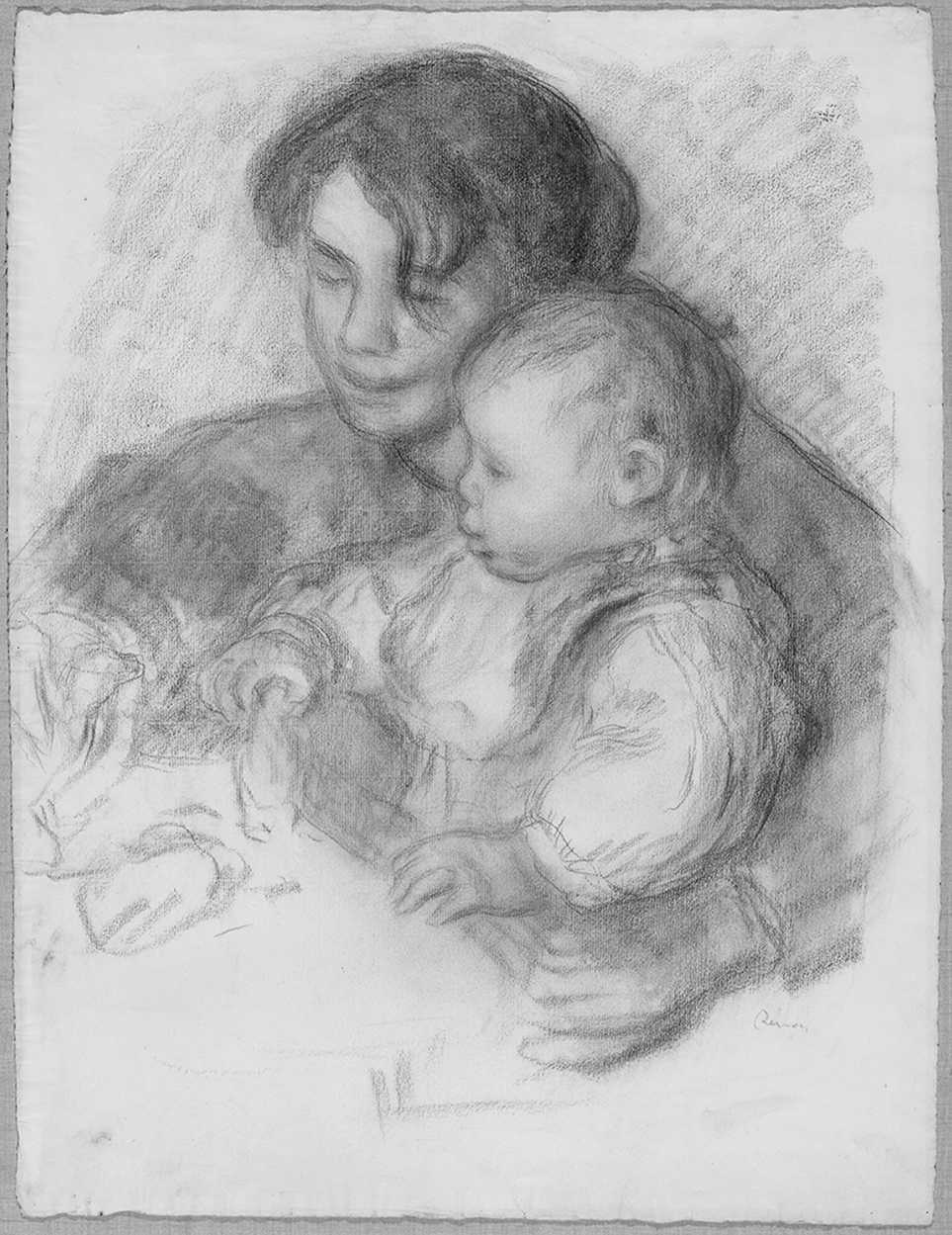
Fabiani and Jonas agreed in writing to lend no fewer than fifty artworks to the National Gallery for exhibition by autumn, affording them time to re-stretch and frame selected works. In 1950, the National Gallery indeed hosted the exhibition Paintings from the Vollard Collection, which then traveled to Montreal, Toronto, and Winnipeg, and featured artworks by Cézanne, Degas, Rouault, Gauguin, Renoir, and Picasso. But in fact they were lent exclusively by the Vollard sisters.Footnote 77 Predictably, Fabiani failed to deliver on his signed promise to loan artworks for the exhibition. McCurry did not take well to Fabiani’s snub: when asked later about the legal ownership of the Vollard-Fabiani collection by his counterpart from the Toledo Museum of Art, McCurry responded, “Confidentially, I do not believe that the ownership is completely in the clear or that anyone would be entirely safe doing business with Fabiani especially.”Footnote 78 Nevertheless, in 1956 the National Gallery’s board of trustees agreed to accept Fabiani’s offer of a gift of the drawing Gabrielle and Jean by Renoir (Figure 3).Footnote 79 The museum had no apparent further contact with Fabiani. The National Gallery’s chapter in this long and convoluted saga appeared, by all accounts, to be finally over.
Auguste Renoir, Gabrielle and Jean, c. 1895. Black chalk on laid paper. 62 x 47.2 cm. National Gallery of Canada.
CONCLUSION
The Vollard-Fabiani collection’s peripatetic history may be added to the growing list of examples showing how the wartime dispersal and subsequent restitution of art collections is often morally equivocal. On one hand, Fabiani’s extensive record of collaboration supports charges of active participation in the Nazi spoliation of art in France; on the other, his unscrupulous wartime activities stand apart from the 1940 seizure of his collection in Bermuda. The British Admiralty’s confiscation of the Vollard-Fabiani collection on purported grounds of currency conversion under the Reprisals Order in Council was baseless; chronologically, the collection could not have fallen under the control of the Nazi regime before Fabiani left France in 1940. Moreover, the collection’s owner was, strictly speaking at least, a refugee from invading Nazi forces. Although these findings in no way excuse Fabiani’s criminal wartime behavior, they nevertheless support the exclusion of this episode from the annals of Nazi-era spoliation.
The 2013 “rediscovery” of the Cézanne watercolor at the National Gallery of Canada revealed another delicate and complex wrinkle to this story. Records from the National Gallery’s institutional archives suggest that museum officials were likely aware of the orphaned picture since the day after the physical division of the collection in 1949, and at least since 1954, when inquiries about missing Cézanne pictures were made by Vollard family representative Édouard Jonas. It is not clear, however, whether Jonas inquired after the actual watercolor that is currently orphaned at the National Gallery or if his correspondence concerned different pictures. Jonas’s widow took up the pursuit of a missing Cézanne in 1965, and notes by museum staff dating from 1974 and 1978 reference the uncertain ownership of Cézanne’s Trees.
The commonplace subject-matter of the orphaned watercolor has doubtless frustrated the National Gallery’s efforts to identify its owner. The National Gallery’s 1940 inventory of the Vollard-Fabiani collection listed no titles or subjects for watercolors, and an inventory produced by Fabiani during a 1941 attempt to reclaim the collection from the MEW listed thirteen watercolors by Cézanne titled Arbres (in addition to one Les arbres). Because no inventory or photography was undertaken during the 1949 distribution of the collection, the National Gallery had little information to go on. In 1966, the National Gallery’s acting director, William S. A. Dale, referred the case to the Department of Justice Canada, noting that the matter had been “raised by two claimants at intervals since 1954 but has always been deferred by the Trustees of the National Gallery.”Footnote 80 Justice Canada was unable to assist the museum, pointing to the lack of any concrete evidence to identify the picture’s owner, and the National Gallery set the matter aside once more. It appears that museum staff have conducted further provenance research in recent decades, but no restitution has taken place.
In an unfortunate illustration of the dictum that no good deed goes unpunished, the National Gallery today faces the trying task of wading through several decades of correspondence, stock books, court records, and other documents to correctly identify the true 1949 owner of Cézanne’s Trees, as well as the additional challenge of identifying that owner’s current legal heirs through genealogical research, an exercise that poses its own challenges. The presence of this watercolor, which the museum stored willingly and without charge, in service to the war effort, and never exhibited, has also placed the National Gallery in the thorny position of acknowledging its inability—at least so far—to finally wind up the Vollard-Fabiani collection’s long journey— regrettably, a not uncommon outcome in World War II–era provenance research.
ACKNOWLEDGEMENTS:
I wish to thank Janet M. Brooke, collections history specialist and former Director, Agnes Etherington Art Center, for her generous assistance and guidance in the preparation of this paper. I am indebted to Michael Pantazzi, former Curator of European Art, National Gallery of Canada, who provided valuable information and analysis. Philip Dombowsky, Archivist, National Gallery of Canada, and Andrew Baylay, Records Officer, Bermuda Archives, responded kindly to my many requests for documents and information, and I am very grateful for their diligence.