Introduction
Titanium and its alloys have an extensive application area in the industry, particularly in aerospace and medical sectors due to their special mechanical properties (Kahles et al., Reference Kahles, Field, Eylon and Froes1985). Yang and Liu (Reference Yang and Liu1999) indicate that the machinability of titanium and its alloys are low caused by fast tool wear, high thermal damage, low surface finish, or part accuracy. The authors claimed seven problems such as high strength of the material at high temperatures, low thermal conductivity, high chemical reaction desire with almost all tool materials, low modulus of elasticity, too long and thin chip formations during the cutting process and finally ignition risk. Due to the mentioned problems in conventional machining of Ti–6Al–4V, different methods have been applied in order to improve the machinability of titanium alloys.
Using metal working fluids in machining is an important factor to facilitate the cutting process of difficult-to-cut materials. However, conventional metal working fluids applications do not pose satisfactory results in machining of these alloys; therefore, alternative lubrication methods are developed such as minimum quantity lubrication (MQL). MQL technique uses minor quantity of oil or lubricant and mixes it with compressed air to generate a mist or aerosol. The particles in aerosol provide lubrication in contact zone besides, compressed air helps to dissipate the generated heat during the machining (Debnath et al., Reference Debnath, Reddy and Yi2014). In this way, Ezugwu et al. (Reference Ezugwu, Bonney and Yamane2003) used carbide, CBN and PCD tools to machine titanium alloys and enhanced machinability of difficult-to-cut materials with metal working fluids. The authors also find out that the effect of these fluids is limited due to formed film boiling. They reported that they achieved much better results with the MQL method despite using much less fluid in grinding, turning, and milling operations. Another advantage of MQL is its environmental friendliness. Since MQL uses much less fluid in comparison with other lubricating methods, it can be also considered as an environmental friendly alternative for lubrication techniques. Debnath et al. (Reference Debnath, Reddy and Yi2014) researched various alternative lubrication methods for green manufacturing processes and studied the impact of these methods on human health and environment. They studied various lubrication methods including MQL. Results showed that if the usage of cutting fluid is inevitable the best method to minimize impacts on human health and environment is MQL (Debnath et al., Reference Debnath, Reddy and Yi2014).
UAM is another recent advanced method for machining of difficult-to-cut materials. Additionally, UAM is a hybrid machining method in which high frequency (17–40 kHz) and low amplitude (5–20 μm) vibrations are applied on workpiece or cutting tool. Brehl and Dow (Reference Brehl and Dow2008) showed that vibration-assisted machining (VAM) has several advantages over traditional machining processes in machining of materials with low machinability, such as reduced tool forces, increased tool life, better surface roughness and accuracy, and finally, separated chip forms. Ultrasonic vibrations, in fact, prevent the continuous contact between workpiece and cutting tool. This intermittent contact form results in reduced friction between contact surfaces of cutting tool and workpiece and consequently decreases the temperature in cutting zone. The reduced temperature enhances tool life due to the lower tool wear, less cutting forces, and improved surface quality. Machining process of titanium alloys using these technologies requires expensive tools and time-consuming experiments; therefore, the application of artificial intelligence (AI) methods to prognosticate the effects of various parameters on cutting processes of these materials could be an alternative method.
Artificial neural networks (ANNs) are data-driven and analytical black-box models which resemble a real biological nervous system (Turhan et al., Reference Turhan, Kazanasmaz, Uygun, Ekmen and Akkurt2014). ANNs are used to find the connection between input and output signals. The input signals are continuous variables which are modified by weights and biases. Thus, the computation of the output is different depending on the interconnected processing elements. Consequently, the output layer represents output responses to a given input layer, afterwards, the model aims to minimize the errors during the iteration process by adjusting the weights and biases. The importance of the ANN is being capable of capturing nonlinear relationships among the parameters (Turhan et al., Reference Turhan, Kazanasmaz and Akkurt2017). Also, according to Wong and Hamouda (Reference Wong and Hamouda2003), ANN models give better prediction compared to regression methods. Moreover, ANN offers a high-speed prediction with high accuracy. On the other hand, since ANN tools are black-box models, the model cannot be interrupted and modified during the operation processes. Furthermore, comparing with regression methods, ANN models require larger data sets in order to get more reliable results (Turhan et al., Reference Turhan, Kazanasmaz, Uygun, Ekmen and Akkurt2014).
Literature review
There are numerous researches on applications of MQL, UAM, and ANNs in machining processes, and here in this section of the paper, a brief literature review of these studies is given. According to Tschätsch and Reichelt (Reference Tschätsch, Reichelt and Tschatsch2009), oil consumption in the MQL varies between 2 and 500 mL/h which is very small compared to conventional metal working fluids where the typical consumption rate is nearly 1200 L/h. Tai et al. (Reference Tai, Stephenson, Furness and Shih2014) also verify that applying the MQL method in the automotive industry has numerous benefits including reducing cost and energy while enhances environmental and safety conditions. The air pressure changes from 2 to 8 bars and the selection of the other parameters are determined by the type of machining processes, tool, and workpiece materials. The advantages of the MQL have been proven in many studies, for instance, Liu et al. (Reference Liu, Cai, Chen and An2011) examined the variation of cutting forces and temperature according to the MQL parameters in the milling of Ti–6Al–4V material and reported that the most effective spraying pressure and spray angle are found as 6 bars and 135°, respectively. According to Cai et al. (Reference Cai, Liu, Chen and An2012), the cutting force and surface roughness can be reduced if proper MQL conditions are selected in the milling process of Ti–6Al–4V. It has been proved that the use of MQL increases the cutting performance of Ti–6Al–4V not only in milling processes but also in turning, drilling, and grinding processes. Sadeghi et al. (Reference Sadeghi, Haddad, Tawakoli and Emami2008) revealed that using the MQL with quantity of 60 mL/h and pressure of 4 bars are the most suitable conditions which improve the cutting performance of Titanium by reducing the cutting forces. Zeilmann and Weingaertner (Reference Zeilmann and Weingaertner2006) studied the drilling of Ti–6Al–4V with the MQL and concluded that the application of internal MQL is reduced the tool temperature up to 50% and the smaller feed forces are measured compared to external MQL application. Chetan et al. (Reference Chetan, Ghosh and Rao2016) investigated the usage of the MQL in turning processes for Ti–6Al–4V. According to their study, the MQL reduced the tool wear, built-up edge formation, and chip thickness compared to dry cutting conditions. The other important finding in this research is that the MQL with nanofluid applications is much effective than the oil-based MQL.
Another technique that research focused on is UAM. Nath and Rahman (Reference Nath and Rahman2008) claimed that frequency, amplitude, and cutting speed affect the tool, workpiece contact ratio. These consequently effect the cutting mechanism by decreasing cutting forces, tool wear and enhancing the surface quality in the UAM. Zarchi et al. (Reference Abootorabi Zarchi, Razfar and Abdullah2012) investigated the effect of cutting speed and vibrations amplitude on cutting forces in the UAM. Their research shows that increasing the cutting speed decreases the intermittent contact between tool and workpiece; therefore, the difference between measured cutting forces in the UAM and conventional machining processes is eliminated. However, by increasing the vibration amplitude in the UAM cutting force decreases in comparison with conventional machining. Tao et al. (Reference Tao, Ma, Shen and Zhang2016) also developed a model to study the effect of ultrasonic vibration on cutting forces. The authors showed that the ultrasonic vibration has either less effect on cutting forces in low feed rates or even increase the cutting forces in some cases. However in high feed rates, especially when vibrations with large amplitudes are exerted, cutting forces remain the same and then, start to decrease in comparison with conventional machining processes. Li and Wang (Reference Li and Wang2013) studied the effects of ultrasonic vibrations on tool life, surface roughness, and burr formation in micro-milling operations. According to their research results, applying ultrasonic vibrations on micro-milling tools improves tool life by lowering tool wear and also enhances surface quality. They also found out that using of MQL technique improves tool life and surface quality even further in micro-milling operations. Previous studies have shown that the UAM method improves the cutting performance of Ti–6Al–4V material. For instance, Ni et al. (Reference Ni, Zhu, Liu and Yang2018) examined the UAM of Ti–6Al–4V alloy and observed a reduction in cutting force component Fx up to 37.24% and Fy up to 46.30% compared to the conventional milling. Most recently, Lu et al. (Reference Lu, Zhang, Zhang and Peng2020) studied the high-speed ultrasonic vibration cutting of Ti–6Al–4V, and they concluded that in the case of selecting proper cutting conditions, tool life and surface roughness values are improved and the cutting temperature and forces are decreased. According to Maurotto et al. (Reference Maurotto, Muhammad, Roy and Silberschmidt2013), by applying ultrasonic vibrations in turning of Ti–6Al–4V, cutting forces are reduced by an average of 70% and surface roughness is improved compared to the conventional turning. Pujana et al. (Reference Pujana, Rivero, Celaya and López de Lacalle2009) reported that the feed forces are reduced from 10% to 20% in the ultrasonic-assisted drilling compared to the conventional drilling of Ti–6Al–4V material. Shabgard and Alenabi (Reference Shabgard and Alenabi2015) revealed that ultrasonic-assisted electrical discharge machining (EDM) of Ti–6Al–4V material showed an increase in material removal rate and a decrease in the tool wear ratio compared to conventional electrical discharge machining.
ANNs have also been successfully applied in the field of machining applications. One of the earliest researches claims that ANN model requires less number of interrelated parameters in comparison with analytical methods; nevertheless, this model predicts cutting forces better than the analytical solutions (Szecsi, Reference Szecsi1999). Another study in this field is predictive cutting force modeling for flat-end milling by Tandon and El-Mounayri (Reference Tandon and El-Mounayri2001). According to their study, the difference between ANN model output and real cutting forces from the experiments is found as mean square error (MSE) of 5%. Sharma et al. (Reference Sharma, Dhiman, Sehgal and Sharma2008) developed an ANN model for predicting surface roughness and cutting forces in hard turning with an overall accuracy of 76.4%. Zerti et al. (Reference Zerti, Yallese, Zerti, Nouioua and Khettabi2019) compared the difference between response surface methodology (RSM) and ANN results. According to these results, the ANN model predicted surface roughness and cutting forces with an accuracy of 99.9%, while an RSM model gives only 87.31% accuracy for surface roughness and 98.03% for cutting force values. Radhakrishnan and Nandan (Reference Radhakrishnan and Nandan2005) conducted a research on comparison of regression method and ANN to predict cutting force in milling processes. The study showed that the accuracy of the ANN model for cutting forces is 5% better than regression method. Kalla et al. (Reference Kalla, Sheikh-Ahmad and Twomey2010) utilized specific cutting energy for finding cutting forces of helical end milling of carbon fiber-reinforced polymers (CFRP) with the ANN approach. The authors indicated that the ANN model accurately predicts cutting forces in this way. Ezugwu et al. (Reference Ezugwu, Fadare, Bonney, Da Silva and Sales2005) developed an ANN model by combining Levenberg–Marquardt algorithm and Bayesian regularization methods in order to study the machining of Inconel 718, which is a very commonly used super-alloy. This combination is found as the best prediction approach to prognosticate the process outputs (e.g., cutting forces, surface roughness, etc.) with an accuracy of 99.76%. Özel and Karpat (Reference Özel and Karpat2005) estimated the cutting tool flank wear and surface roughness over the machining time with a high accuracy by using Bayesian regularization with Levenberg–Marquardt training algorithm. Karabulut (Reference Karabulut2015) studied the optimization of cutting forces and surface roughness of AA7039/Al2O3 metal matrix composites in milling processes by using the ANN model. Results show that the ANN model is very successful for surface roughness and cutting force predictions with accuracies of 97.75% and 93.34%, respectively. Fredj and Amamou (Reference Fredj and Amamou2006) used the ANN models in order to find the most optimized design of experiment for an accurate prediction of the ground surface roughness. Since the developed ANN model shows high prediction capability, the number of experiments, time and cost can be reduced. Das et al. (Reference Das, Roy, Rai and Saha2016) examined the milling of different composite materials by developing feed-forward back-propagation type ANN to predict cutting forces, surface roughness. The authors claim that the accuracy is up to 99% for both of the output parameters. The ANN models are also used to find tool wear predictions as well. In this case, D'Addona et al. (Reference D'Addona, Segreto, Simeone and Teti2011) studied the tool wear prediction of Inconel 718 super-alloy and the authors used the feed-forward back-propagation ANN model for industrial applications and achieved results with a root mean square error (RMSE) rates below 0.038. Quintana et al. (Reference Quintana, Garcia-Romeu and Ciurana2009) constructed an ANN-based surface roughness monitoring application in ball-end milling operation and achieved MSE of 0.00027 and 99% prediction success rate for training samples. Markopoulos et al. (Reference Markopoulos, Manolakos and Vaxevanidis2008) reported that the surface roughness of various steel types after processing with the EDM method was estimated by ANN with a coefficient correlation (R) of 0.904 by using feed-forward back-propagation algorithm. Another study is conducted by Rao et al. (Reference Rao, Rangajanardhaa, Rao and Rao2009) which is on the EDM process of different materials. The authors used the combination of the ANN model and Generic Algorithm (GA) to predict the surface roughness values and the results give better accuracy compared to the ANN model and GA separately. ANN with GA can optimize the number of hidden layers, neurons, and network weights; therefore, the MSE during training of the model (Kramar et al., Reference Kramar, Cica, Sredanovic and Kopac2015). Pourmostaghimi et al. (Reference Pourmostaghimi, Zadshakoyan and Badamchizadeh2020) developed an intelligent methodology for estimating the machining parameters in the turning process of AISI D2 by using the ANN method and their results showed that machining time can be predicted with a higher accuracy.
As seen in the literature, UAM and MQL techniques have been successfully applied with many advantages, but the applications in which these two techniques are used together are insufficient. At the same time, ANN can contribute to production efficiency by making successful predictions during machining processes. In order to study the effects of combined UAM and MQL methods on hard-to-cut materials in a time and cost-efficient manner application of ANN methods can be useful. To this aim, in this study, the authors intend to predict the cutting forces by the ANN and compare the results with real experimental results to reduce the number of required experiments, thus decrease the cost and required operation time and necessity for further expensive experiments.
Materials and methods
A total number of 120 cutting force data is chosen for experiments and ANN methods. The experiments are conducted in Metal Forming Excellence Center of Atilim University, Ankara-Turkiye.
Experiments
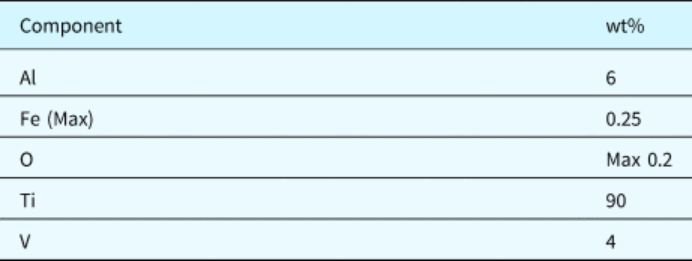
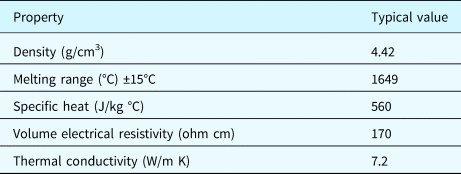
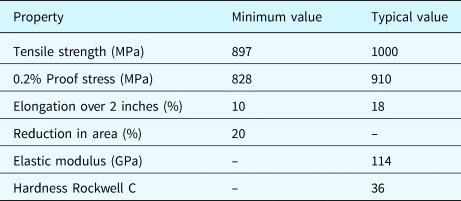
Ti–6Al–4V Grade 5, which is an alpha-beta titanium alloy, is used as raw material for workpiece in these experiments. Chemical, physical, and mechanical properties of the workpiece are given in Tables 1–3, respectively. Three samples with 90 mm × 55 mm × 15 mm dimensions are prepared for experiments with 0.3 mm depth of cut, and one sample with  $80\,{\rm mm} \times 60\,{\rm mm } \times 70\,{\rm mm}$ dimensions is prepared for 3 mm depth of cut experiments.
Chemical composition of Ti–6Al–4V (Boyer et al., Reference Boyer, Welsch and Collings1994)

Physical properties of Ti–6Al–4V (Boyer et al., Reference Boyer, Welsch and Collings1994)

Mechanical properties of Ti–6Al–4V (Boyer et al., Reference Boyer, Welsch and Collings1994)

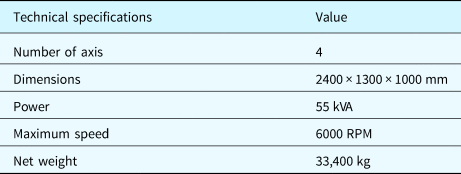
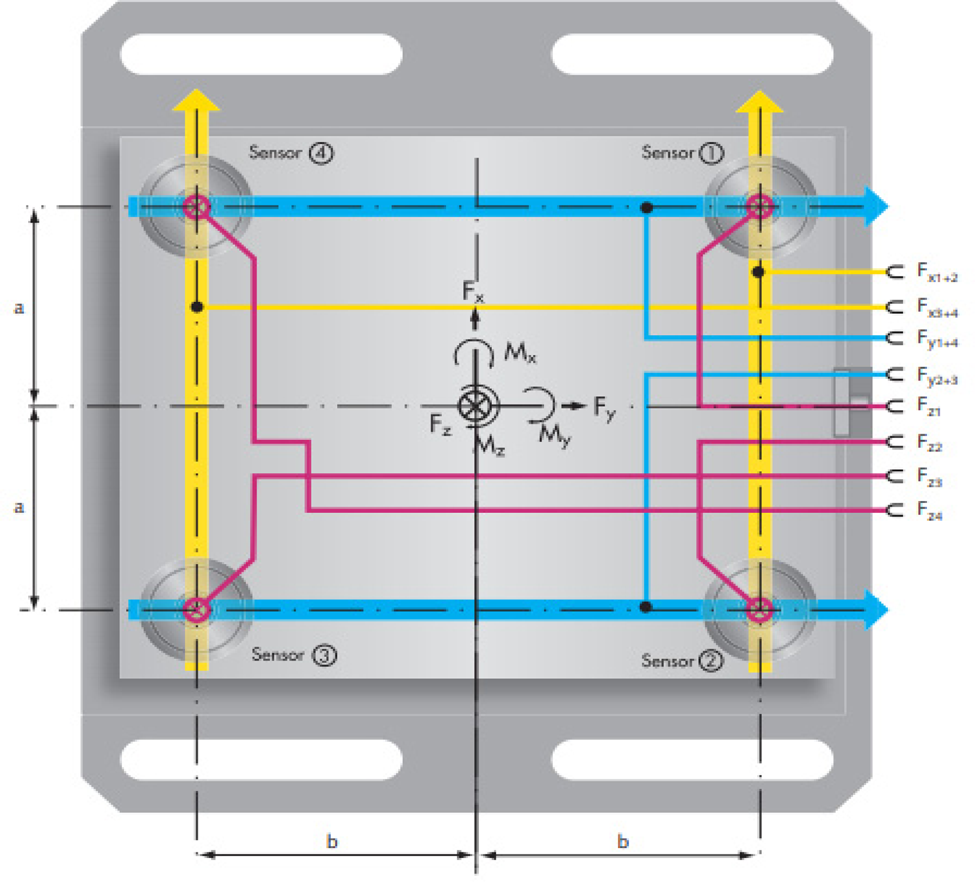
The experiments are conducted on a 4-axis VTEC brand CNC milling machine. The properties of the CNC milling machine are given in Table 4. Kistler 9265B dynamometer is used in order to measure the cutting forces during the milling operations. It is worth to note that the Kistler dynamometer is fixed on the VTEC CNC milling machine table. Workpieces are located on the dynamometer. The cutting force data are obtained from the dynamometer during the cutting operations simultaneously. The data are first transferred to the charge amplifier, then processed to a Data Acquisition (DAQ) system and finally transmitted to a workstation computer. DynoWare software is used to control the data flow and allowing data to be received and stopped at any time. Sensor placements and Fx, Fy, Fz directions can be seen in Figure 1.
Technical details of CNC machine used in experiments

Sensor Placement of the Kistler dynamometer.

Calculation of the three forces Fx, Fy, Fz from the dynamometer:
 $$F_x = F_{x_{1 + 2}} + F_{x_{3 + 4}}$$
 $$F_y = F_{y_{1 + 4}} + F_{y_{2 + 3}}$$
 $$F_z = F_{z_1} + F_{z_2} + F_{z_3} + F_{z_4}$$
Finally, the resultant cutting forces F R are calculated in Eq. (4) (Altintas, Reference Altintas2012):
 $$F_R = \sqrt {F_{\rm x} + F_y + F_z} $$
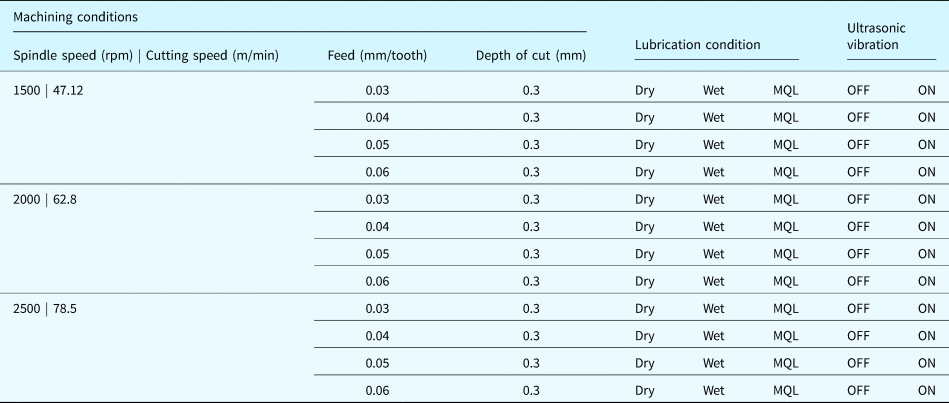
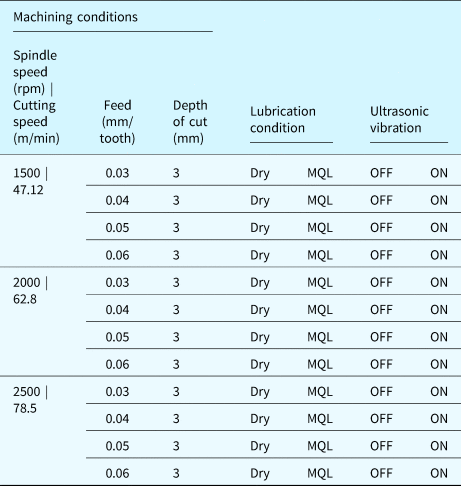
In the study, the chosen cutting tool to machine the workpieces is STOCK® brand 64551 end mills, which has as a 10 mm diameter, helix angle of 35°, and four cutting edges. This solid carbide-based cutting tool is coated with TiAlN. Based on the design of experiment which is shown in Tables 7 and 8, the ultrasonic vibration and lubrication conditions are changed in each nine experiment; therefore, fresh and new cutting tools are used for each separate experiment in order to get reliable results from each experiment and prevent the effect of any experiment on the others.
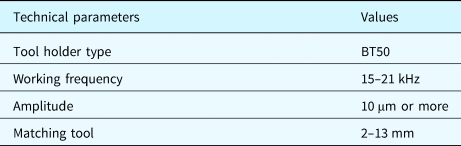
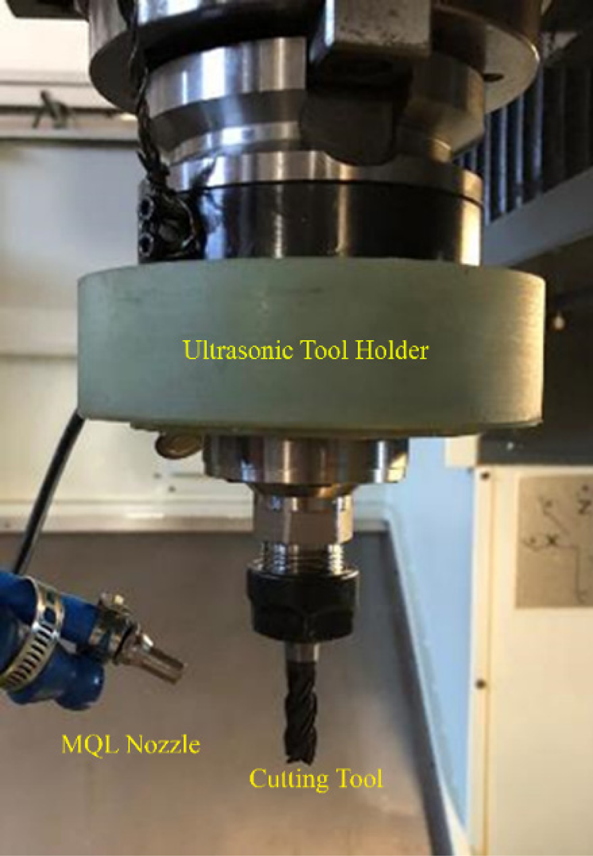
For providing ultrasonic vibrations to the cutting tool, an ultrasonic tool holder is needed to be mounted directly on the CNC milling machine spindle. This tool holder and vibration generator are Altrasonic® brand. The frequency values are set to 19 kHz. Technical specifications of the ultrasonic tool holder are given in Table 5 and can be seen in Figure 2.
Technical parameters of the ultrasonic tool holder

Ultrasonic tool holder used in experiments.

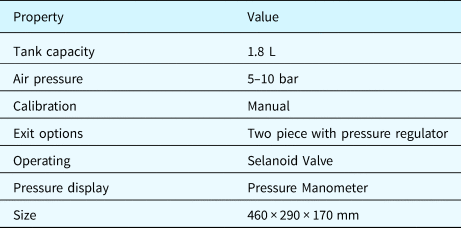
In this study, MQL technique is also used via Bielomatik® brand, B1-210 model MQL device. Technical details are given in Table 6.
Technical details of MQL device

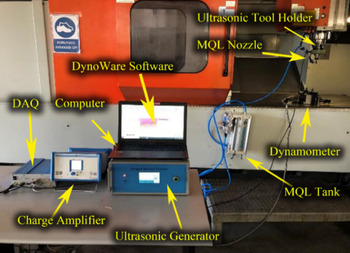
MQL cutting fluid is Samnos ZM-22W which consists of hydrous polyalkylene-glycol-solution. Diameter of the nozzle is 5 mm, which has an angle of 30° with the horizontal axis and is 50 mm away from the cutting zone. Samnos ZM-22W cutting fluid is selected since ester-based oil is very useful with high lubricity and good hydrolytic stability (Debnath et al., Reference Debnath, Reddy and Yi2014). In wet conditions, 3 bars pressure is applied while Generax 327 LF is used. This cutting fluid is a vegetable based and easily mixable with water for general machining operations with a mixing ratio of 5.5%. Figure 3 shows the general experimental setup used in the study.
Experimental setup of UAM and MQL.

In all 120 experiments, selected cutting speeds and feed rates are the recommended values given by cutting tool manufacturer for milling the titanium alloy materials. An example of data sets is given in Tables 7 and 8.
Design of experiments for 0.3 mm depth of cut

Design of experiments for 3 mm depth of cut

Model construction
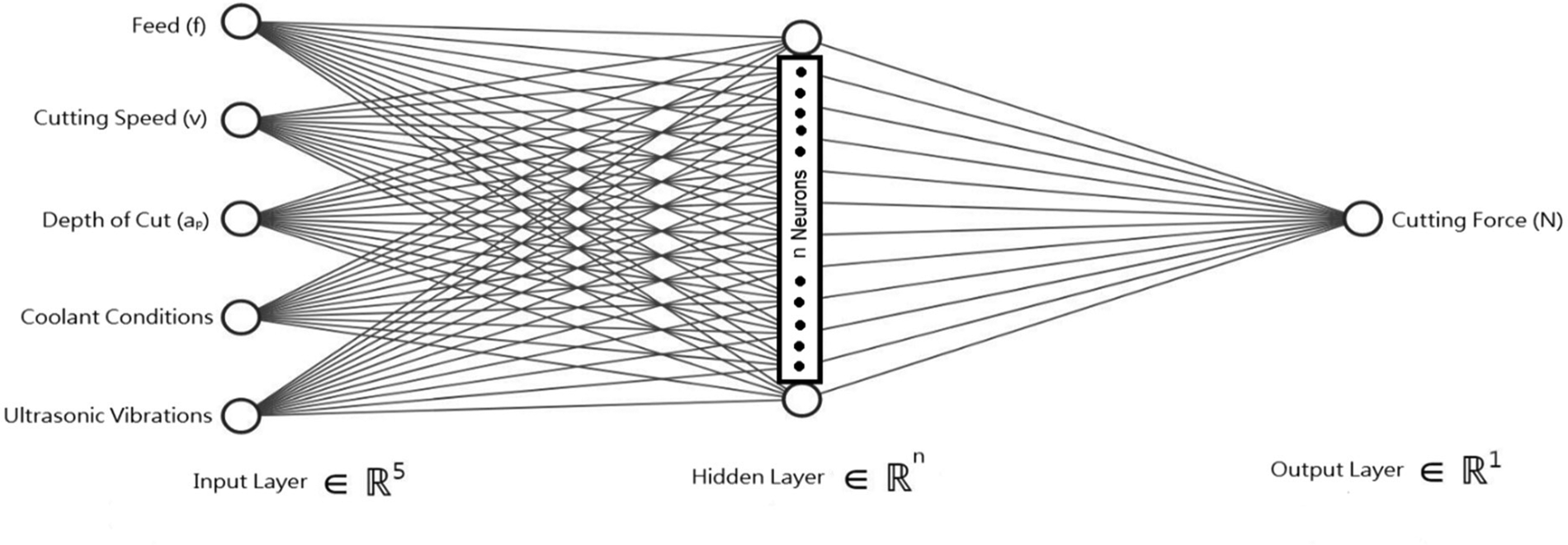
Single, two, and three hidden layered ANN models of the experiments are developed with five input parameters, namely feed, cutting speed, depth of cut, lubrication conditions, and ultrasonic vibrations, while the output parameter is chosen as cutting force (Fig. 4).
ANN structure of the study.

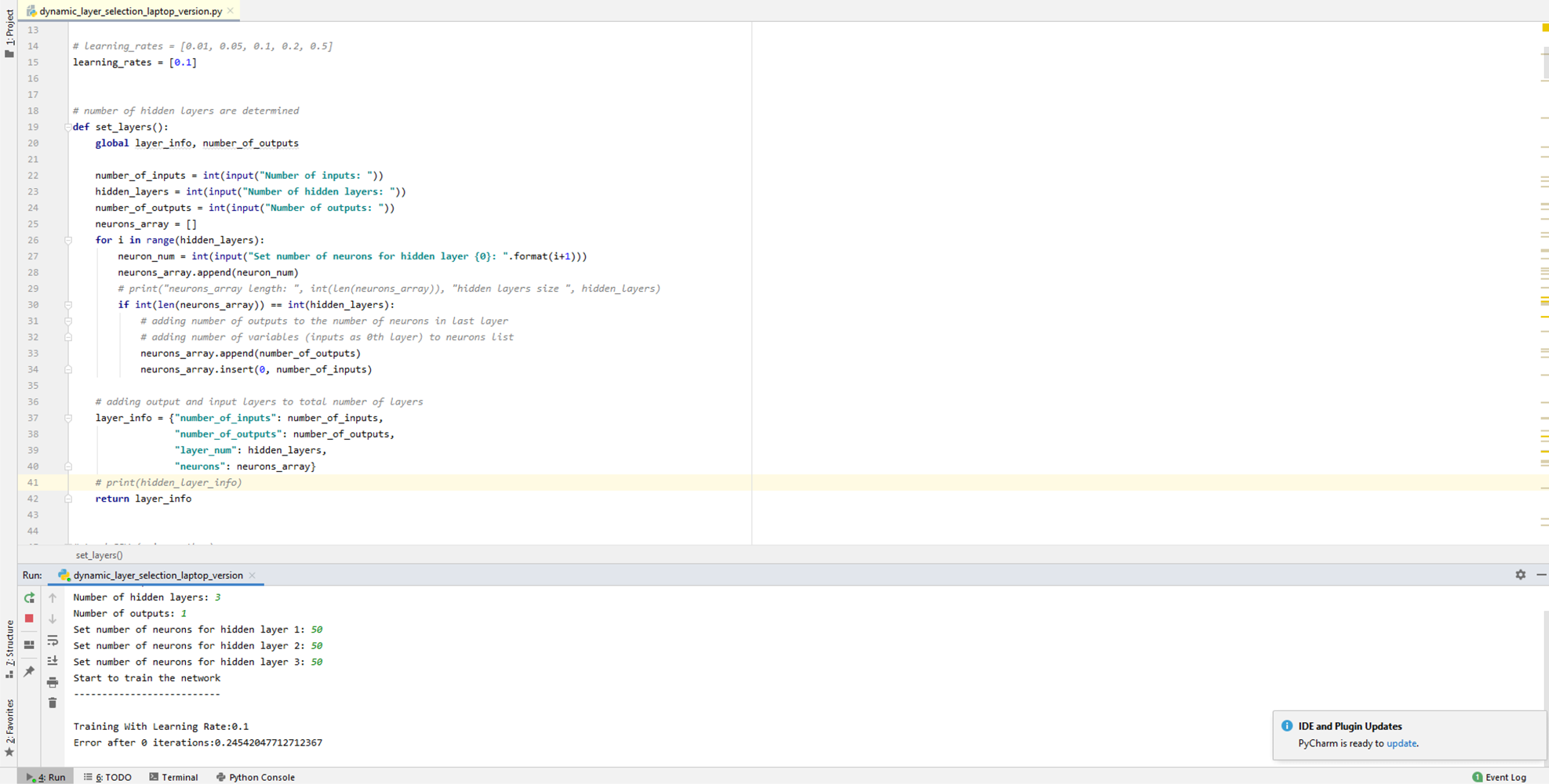
The ANN model is coded from scratch using Python language. The main reason to develop a source code in Python rather than using commercial tool boxes is the intention of the authors to have a full control on model parameters, algorithmic calculations and be able to re-configure the code wherever it is required. Figure 5 shows a part of the sample code used in the study.
Developed code used in the study.

The input and output data are compiled from the experiment results with a total number of 120 data. Sigmoid transfer function is used in hidden and output layers. A widely used learning algorithm Levenberg–Marquardt (LM), a variation of feed-forward back-propagation, is selected with different constant learning rates. Network weights are modified with the help of LM algorithm in order to minimize error between the desired and the actual outputs of the model. It is worth to note that the construction of the ANN model includes five main stages:
1. Selection of the input and the output data from the experiments.
2. Normalization of the total data.
3. Adjusting network weights and training of the normalized data using LM learning algorithm.
4. Testing the goodness of fit of the ANN model.
5. Comparing the model output with the target output with the help of statistical criteria.
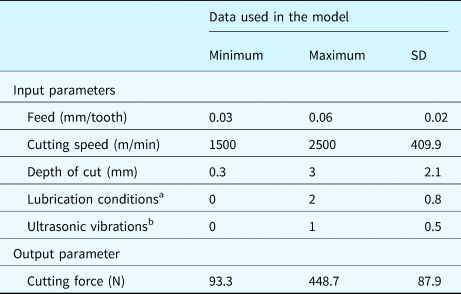
As a first stage, the total data are split into two sets, 75% and 25% of the total data for training and testing period, respectively. The maximum and minimum values of the model parameters are given in Table 9. It is worth to point out that ultrasonic vibrations and lubrication conditions are integer data types in the model.
Model parameters used in the study

a 0 = dry, 1 = wet, and 2 = MQL.
b 0 means no ultrasonic, while 1 is ultrasonic.
Data normalization helps to transpose model parameters into the data range of sigmoid transfer function. To this aim, as a second step, the data are normalized by using Eq. (5) (Turhan et al., Reference Turhan, Kazanasmaz and Akkurt2017):
 $$x_i = 0.1 + 0.8\;\displaystyle{{x_i-x_{{\rm mi}{\rm n}_i}} \over {x_{{\rm ma}{\rm x}_i}-x_{{\rm mi}{\rm n}_i}}}$$
Here, x i represents data in the ith node, while  $x_{{\rm mi}{\rm n}_{\rm i}}$ and
 $x_{{\rm ma}{\rm x}_i}$ are the minimum and maximum values of all vectors. In the training period, the model takes only 75% of the total data and the adequate network weights are calculated with the help of iterations until the error function reaches minimum. Likewise, the model uses adjusted weights in the testing period to predict cutting forces. Finally, the performance of the model is evaluated by multiple correlation coefficient (R 2) and mean absolute percentage error (MAPE) and mean squared errors (MSE) which are given in Eqs (6)–(8), respectively (Lewis, Reference Lewis1982).
 $$R^2 = 1-\left({\displaystyle{{\mathop \sum \nolimits_i {\vert {t_i-o_i} \vert }^2} \over {\mathop \sum \nolimits_i {\lpar {o_i} \rpar }^2}}} \right)$$
 $${\rm MAPE} = \displaystyle{{100} \over p}\mathop \sum \limits_i \left\vert {\displaystyle{{t_i-o_i} \over {o_i}}} \right\vert $$
 $${\rm MSE} = \displaystyle{1 \over p}\sum \vert {t_i-o_i} \vert ^2$$
where t i is the target, o i specifies the output, and p represents the number of input–output pairs of ith data. Note that calculated MAPE, i.e., MAPE ≤ 10% means high prediction accuracy, 10% ≤ MAPE ≤ 20% good prediction; 20% ≤ MAPE ≤ 50% reasonable prediction, and MAPE ≥ 50% inaccurate forecasting (Yadav and Chandel, Reference Yadav and Chandel2014). Furthermore, R 2 is expected to be close to 1 for a good prediction (Lewis, Reference Lewis1982).
The further information on model parameters is given below.
-
Feed (f) (mm/tooth): The distance that cutting tool paves per unit revolution along the workpiece. This movement of the tool produces a chip, which moves up the face of the tool. Since in milling processes, tools mostly have multiple cutting edges, the amount of feed per tooth is calculated by the total amount of feed divided by the number of cutting edges; therefore, the unit is given as mm/tooth-rev. Generally, the cutting forces increase with increasing feed (Kalpakjian and Schmid, Reference Kalpakjian and Schmit2009).
-
Cutting Speed (v) (m/min): The primary motion which provides the major relative motion between cutting tool and workpiece to perform the machining process. Rotating cutting tool in the milling process provides this cutting speed in milling operations. Depending on the cutting speed, how much material passes over the cutting tool also changes. As a result, the condition of the cutting tool will change, so the cutting forces will also be affected (Groover, Reference Groover2019).
-
Depth of cut (ap) (mm): In milling operations, there are two types of depth of cut: Radial Depth of Cut (ae) and Axial Depth of Cut (ap). In the milling process, ae is called the radial distance that tool engages with workpiece, while ap is the amount of axial distance that the tool goes into workpiece along its centerline. Since in this study, the milling operation is a slot milling, ae is always constant and equal to diameter of cutting tool which is 10 mm and the varying depth of cut parameter is ap. Depending on this depth, the amount of material that will change directly affects the cutting forces (Altintas, Reference Altintas2012).
-
Lubrication Conditions: The presence of metal working fluid affects the events between the workpiece and the cutting tool during cutting. Metal working fluids are used to reduce the effect of high temperatures in the cutting zone on the machining quality. It also aims to reduce the friction between the cutting tool and the workpiece, which is one of the reasons for these high temperatures. These variables, which affect the cutting zone between the cutting tool and the workpiece, have a large impact on the cutting forces, as they directly affect the tool life and tool quality during machining (Sun et al., Reference Sun, Wong, Rahman, Wang, Neo, Tan and Onozuka2006).
-
Ultrasonic Vibrations: The vibrations given to the cutting tool at high frequency (19 kHz) and low amplitude (6 μm) cause the cutting tool to separate from the workpiece 19,000 times per second and reunite. This feature, which is not available in conventional milling, has different effects on cutting forces under different cutting conditions (Ni et al., Reference Ni, Zhu, Liu and Yang2018).
-
Cutting Force (N): Cutting forces are one of the most important outputs to measure the quality and stability of machining. Cutting forces can help to calculate the power required to machine the workpiece, give an idea of machinability of the materials, measuring the frictional forces on the material and finding ideal parameters on machining the material. Cutting forces also help to understand the vibration during the process (Altintas, Reference Altintas2012).
Results and discussion
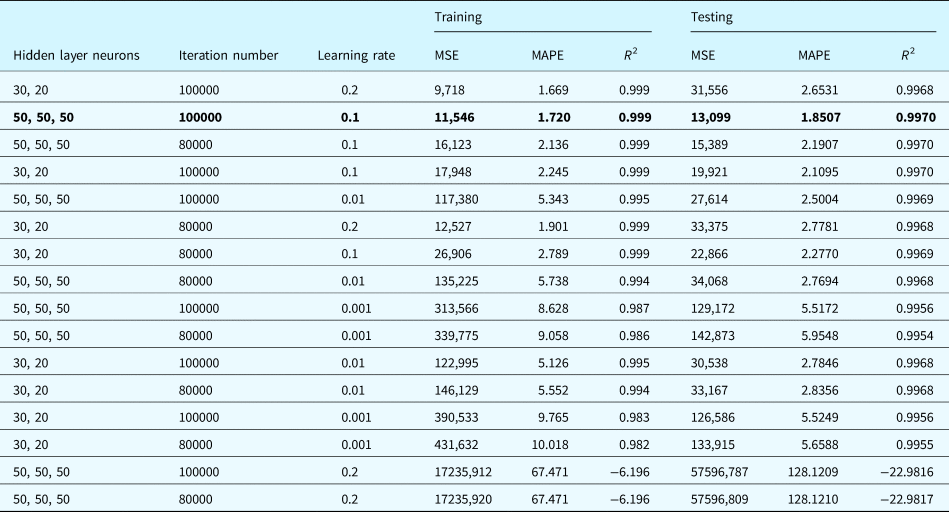
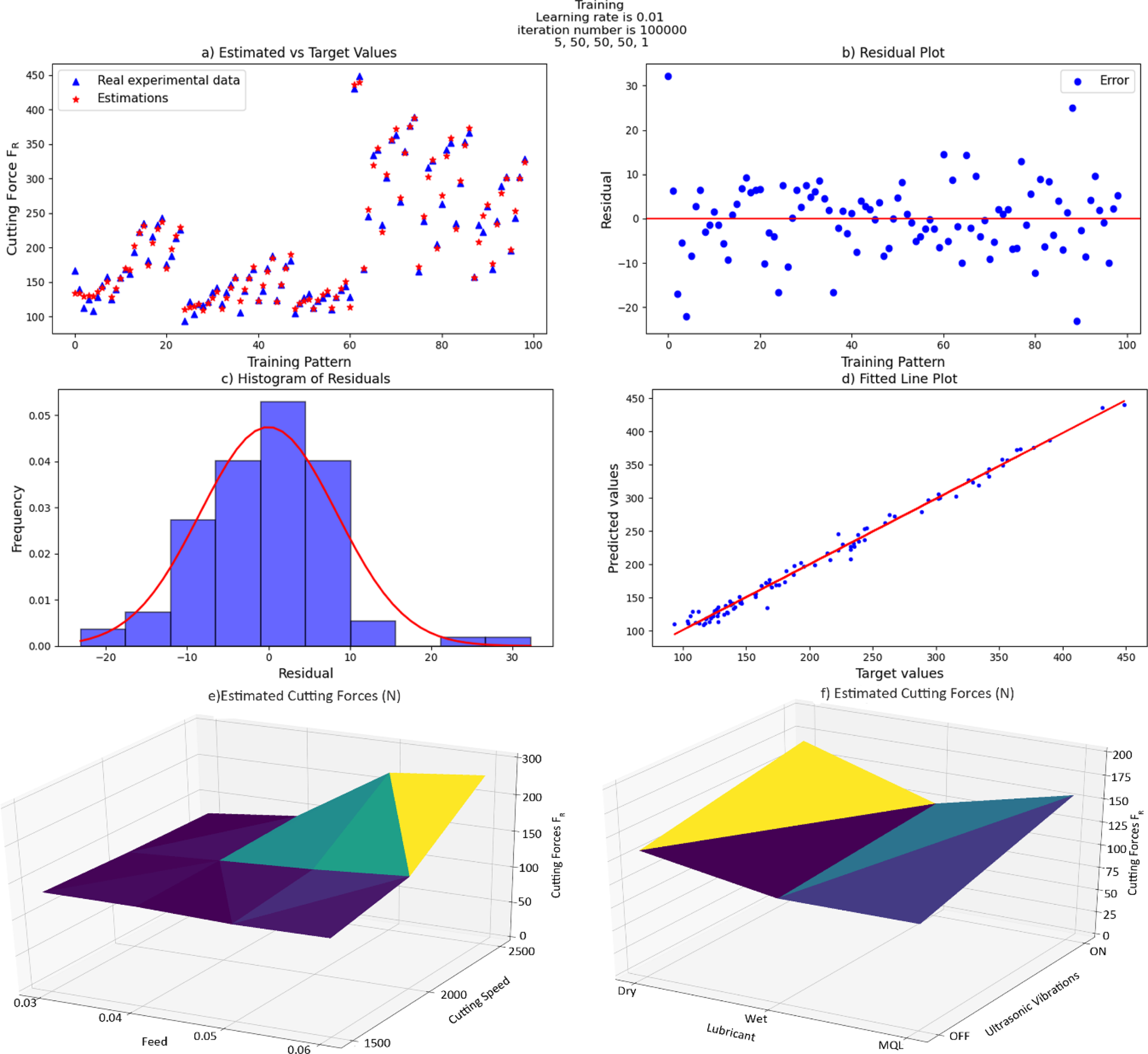
An ANN model of the cutting forces is developed for five input parameters which are feed, cutting speed and depth of cut, lubrication conditions, and ultrasonic vibrations. The adequate number of layers and neurons is found by 100.000 iterations. In addition, a three hidden layered model, each of layers with 50 neurons is selected as optimal neuron and hidden layer number for the model. In the training process, the optimum learning rate is found as 0.1. The optimum number of layers, hidden neurons, learning rate, and iteration number are obtained by several trials, in which part of them are shown in Table 10, in order to get closest R 2 value to 1 and minimize the error (MSE and MAPE). The training data consist of 100 experimental results of the cutting forces, while the remaining is used for testing. Figure 6a compares the experimental and ANN model of cutting forces. The figure clearly represents that the training of the ANN model is successfully obtained because of the model results mostly fit with experimental data with the highest R 2 of 0.9996 and the lowest MSE and MAPE of 11.55 and 1.72%, respectively. Figure 6b shows the linearity of the residuals for the cutting forces. A normal distribution of the residual in the figure indicates the normality of the errors in the model. In addition, a symmetric bell-shaped histogram graph of residuals shows the distribution of residuals is around 0 (Fig. 6c). This result illustrates that the normality distribution of the residuals indicates that the model training is successfully accomplished. Finally, it is worth to note that the predicted and experimental results of the cutting forces have a close match with each other as shown in Figure 6d.
Statistical data obtained using different structures for the study

Training results.

Figure 6e,f shows the 3D surface map of the estimated cutting forces in the training phase. It is clearly seen that the results are matched with real expectation values. According to Figure 6e, the highest cutting forces are found at highest cutting speed and feed conditions, the result is compatible with the literature (Altintas, Reference Altintas2012). Figure 6f shows that cutting forces of combined application of MQL and UAM varies as expected which is envisioned as claimed by previous researches (Brehl and Dow, Reference Brehl and Dow2008).
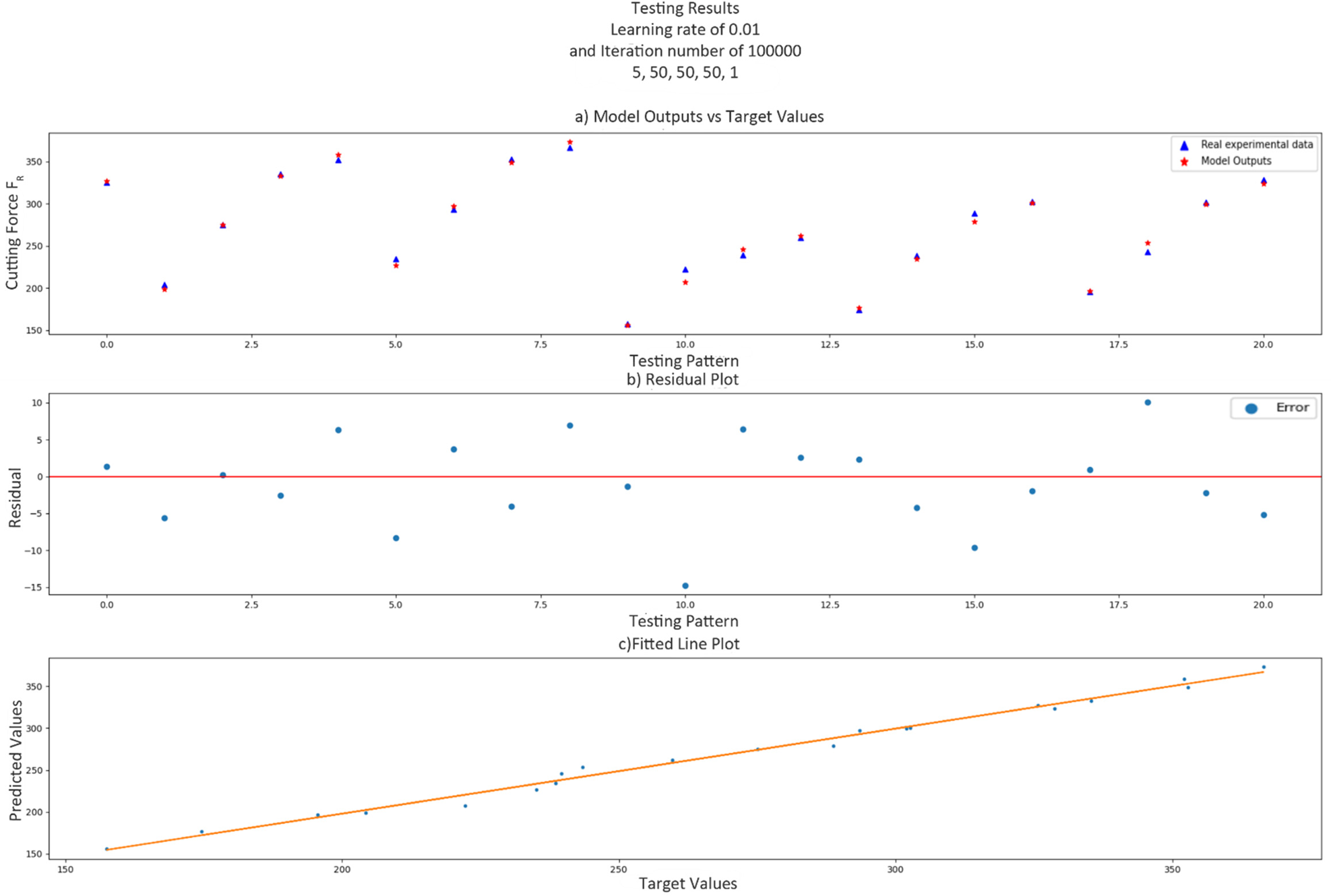
The trained ANN model is tested with remaining 20 data sets of experimental cutting forces. Figure 7a,b exhibits that the model successfully predicts the cutting forces with an R 2 value of 0.9970, MSE and MAPE values of 13.1 and 1.85%, respectively.
Testing results.

In ANN models, overfitting has occurred if the model depicts low bias but high variance due to the excessively accurate and complicated model. Overfitting results with very small training errors, while the model returns higher testing errors. To avoid overfitting problem, the optimum size of the model structure and algorithms are obtained during the construction process. In this study, although the model suffers from quiet insignificant overfitting, this problem of the developed ANN model is negligible (Table 10).
Besides, a number of ANN structures with various numbers of neurons, hidden layers and iteration numbers is tested in order to find the optimal performance values of the cutting forces. Table 10 shows the results of the ANN model with a combination of these parameters. It is worth to remind that the best result is highlighted with bold characters.
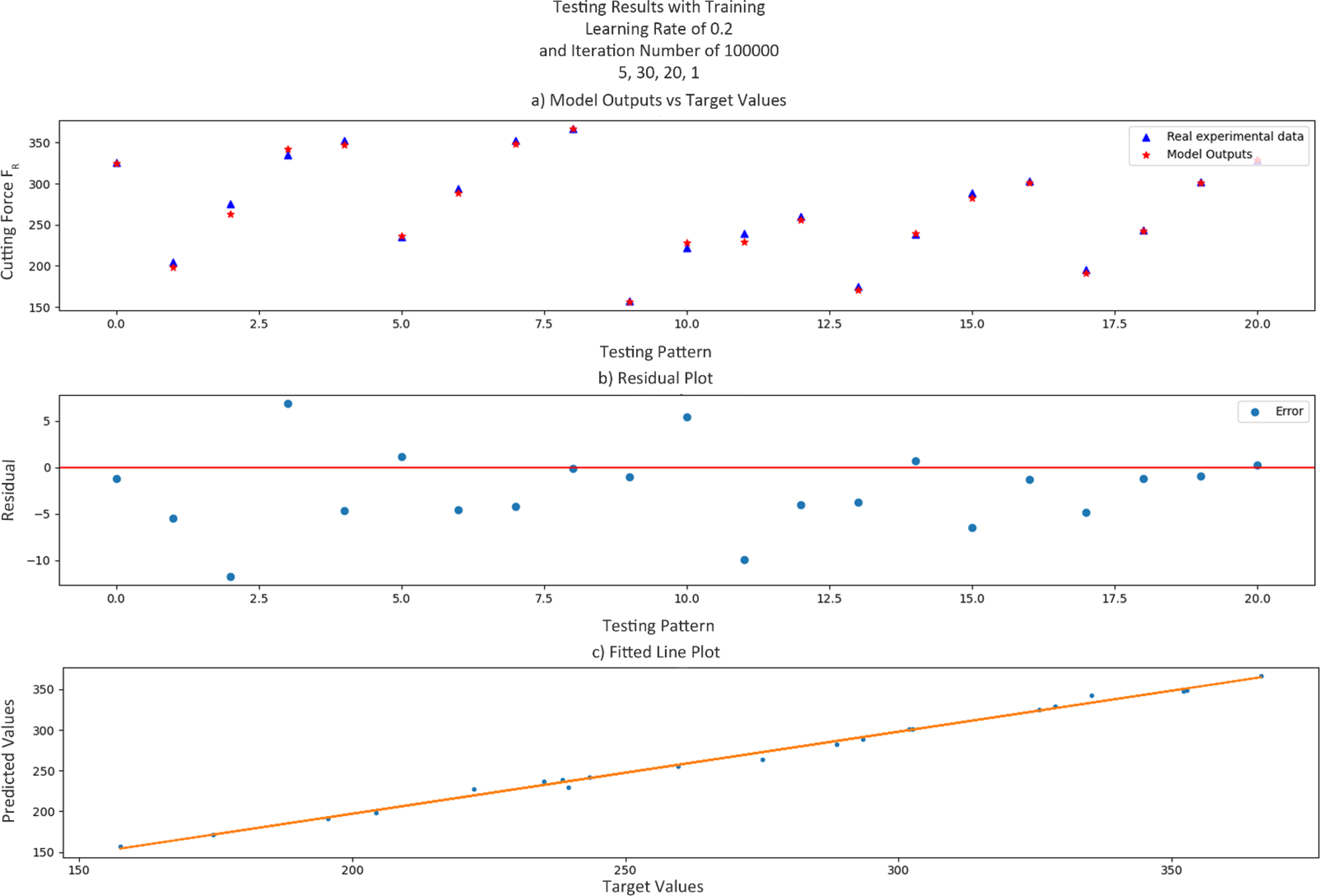
Some significant comments can be drawn in this section. The best result in these simulations isobtained by using a learning rate of 0.1 and iteration number of 100000. When the modeling of the cutting force is taken into account, the higher learning rates result in over/under estimations in the model. For example, as shown in Table 10 estimations with a learning rate of 0.2 gives higher R 2 value compared to the optimal model (which learning rate is equal to 0.1). However, the results from graphs clearly demonstrate that the results are quite underestimated (Fig. 8). The reason of this underestimation could be the uncertainties from the experimental data and the structure of the ANN model. The uncertainties on experimental data can be easily detected by Monte Carlo Analysis (Rugen and Callahan, Reference Rugen and Callahan1996); however, uncertainties on the structure of the ANN model are minimized through trial and error procedures during the validation process. For instance, smaller learning rates slow down the converging process of the ANN model, and consequently, higher iteration numbers will be required. On the other hand, larger learning rates expedite the converging process; however, multiplication of larger learning rate to smaller error values since uncertainties increase the error values even further and this results in over/under estimations in model outputs. Considering these facts, the trial and error process is carried out with multiple learning rates, layer and iteration numbers as the results are illustrated in Figure 8 and Table 10.
Under estimation problem in the model with learning rate = 0.2.

On the other hand, high iteration numbers can be preferred even if optimization is required. However, in the case of a model with high iteration numbers, the structure may need a higher number of calculations and obviously this will be time-consuming. Changing neurons and hidden layer numbers may improve the precision of simulations, but the training stage can be computationally heavy and again it will be much time-consuming. Regarding the developed ANN model, the acceptable performances are quite limited; therefore, the optimum parameters should be considered in constructing the structure.
Conclusions
The purpose of this study is to estimate cutting forces in ultrasonic-assisted milling processes of hard-to-cut materials with the help of the MQL method by developing an ANN model which is written in Python language by the authors. The input data of the model are chosen as feed, cutting speed, depth of cut, lubrication conditions, and ultrasonic vibrations, while cutting force is the output of the model. The ANN model extracts 100 experimental cutting force data for training, while the rest test the model. The best result is obtained with learning rate of 0.1, iteration number of 100000. LM learning algorithm and three hidden layers each of them containing 50 neurons. The achieved results show that the cutting force is successfully predicted with an R 2 value of 99.7%. MAPE and MSE values of 1.851 and 13.1, respectively.
The hybrid manufacturing processes such as UAM are mostly developed to process new and advanced engineering materials which have low machinability properties; therefore, machining of these materials require expensive tools and tedious processing time. These necessities make experiments difficult and too expensive to perform. Additionally, the lack of experts also leads to gain unsatisfactory and unreliable results. Thus, developing an alternative method such as ANN to prognosticate experimental outputs without the limitations mentioned above seems inevitable. The suggested ANN model can be considered as this alternative to the experiments with the advantage of being cost and time effective, simplicity and less experiment requirements. Furthermore, this model can detect the experimental errors, which may cause faulty calculations based on miscalculated cutting forces, such as energy requirements for cutting, chatter, surface integrity, residual stress predictions, and so on. This model may also enhance the design of experiments for the next extended studies on ultrasonic-assisted milling by studying the outcoming results of the model.
The ANN model is developed using Python from scratch. However, there exist machine learning libraries in Python like Scikit-Learn. The future study will include comparison of the results with outcomes by using the aforementioned libraries in Python and other commercial ANN tool boxes.
Finally, this study exhibits that the ANN model can predict cutting force, with using only 120 data sets. Further studies will include the increased number of data set, different materials, cutting conditions, and also other advanced manufacturing methods. By including these parameters, the accuracy of the model can be increased.
Acknowledgments
This research was funded by Atilim University under the Academic Research Projects program (Project No.: ATÜ-BAD-1819-02). The authors would like to thank Alp Aviation Company for their support and contributions to this research. All supports are gratefully acknowledged.
Ramazan Hakkı Namlu is a research assistant and PhD student at Atılım University. He received his BSc from Çukurova University, Mechanical Engineering Department and MSc from Atılım University, Manufacturing Engineering Department. His research interests are non-conventional machining processes, artificial intelligence applications in manufacturing processes.
Cihan Turhan is an assistant professor at Atılım University, Energy Systems Engineering Department. He received his PhD from İzmir Institute of Technology. His main research areas are building energy efficiency and artificial intelligence in buildings.
Bahram Lotfi Sadigh is an assistant professor at Atılım University, Manufacturing Engineering Department. He graduated from Middle East Technical University with a PhD degree. His research areas include smart manufacturing, agent-based systems, and virtual enterprises.
Sadık Engin Kılıç is a full professor at Atılım University, Manufacturing Engineering Department. He is also chair of Manufacturing Engineering and Mechanical Engineering Departments. He received a PhD degree from the University of Manchester Institute of Science and Technology. Prof. Kılıç is also an emeritus professor from Middle East Technical University, Mechanical Engineering Department. His research areas are machine tools, manufacturing processes, and metal cutting.