INTRODUCTION
Animals exhibit daily variations in behaviour and physiological processes (Naylor, Reference Naylor2005). In many species of cetaceans, behaviours and activities are also organized on a daily timescale (Klinowska, Reference Klinowska1986). Previous studies show daily variations in the frequency of aerial events of dolphins, a behaviour which may be related to being alert (Norris & Dohl, Reference Norris and Dohl1980; Norris et al., Reference Norris, Würsig, Wells, Würsig, Brownlee, Johnson and Solow1985, Reference Norris, Würsig, Wells, Norris, Würsig, Wells and Würsig1994; Lammers, Reference Lammers2004; Danil et al., Reference Danil, Maldini and Marten2005; Courbis & Timmel, Reference Courbis and Timmel2009; Silva & Silva-Jr, Reference Silva and Silva-Jr2009; Silva-Jr, Reference Silva-Jr2010).
Aerial events such as leaping and slapping the water surface with body parts are common in many cetacean species. The spinner dolphin, Stenella longirostris (Gray, 1828), is known for its remarkable leaping ability (Fish et al., Reference Fish, Nicastro and Weihs2006). The species occurs in tropical and subtropical waters worldwide (Perrin & Gilpatrick, Reference Perrin, Gilpatrick, Ridgway and Harrison1994). In Hawaii, Norris & Dohl (Reference Norris and Dohl1980) describe seven patterns of aerial events exhibited by the species, including leaps, slapping the water with body parts, nose-out and spins. In Fernando de Noronha Archipelago, spinner dolphins were first recorded in 1556, and have been studied for more than 25 years (Silva-Jr, Reference Silva-Jr2010). Aerial events in the Brazilian archipelago can be related to activity intensity, overall alert state, moving and school cohesion (Silva-Jr, Reference Silva-Jr2010).
Spinner dolphins of the Kealake'akua Bay, Hawaii, exhibit daily variations in their aerial events as well as seasonal variations in the time they enter and leave the bay, diving interval, aerial events (Würsig et al., Reference Würsig, Wells, Norris, Würsig, Norris, Würsig, Wells and Würsig1994), pod size and time spent in the bay (Norris et al., Reference Norris, Würsig, Wells, Norris, Würsig, Wells and Würsig1994). In Fernando de Noronha, Silva & Silva-Jr (Reference Silva and Silva-Jr2009) also described daily and seasonal fluctuations in pod size, and reproductive and aerial events.
Many studies describe the relationship between behaviour and seasonality of odontocetes (Würsig & Würsig, Reference Würsig and Würsig1979; Silva-Jr, Reference Silva-Jr1996; Guilherme-Silveira & Silva, Reference Guilherme-Silveira and Silva2007; Silva & Silva-Jr, Reference Silva and Silva-Jr2009). Yet, most of the existing literature focuses on feeding events, space use and pod size rather than aerial events. Given the importance of aerial events as indicators of behavioural patterns and eventual changes, we present this long-term study, which characterizes the variations in the frequency of aerial events of spinner dolphins in the Marine National Park of Fernando de Noronha, Brazil.
MATERIALS AND METHODS
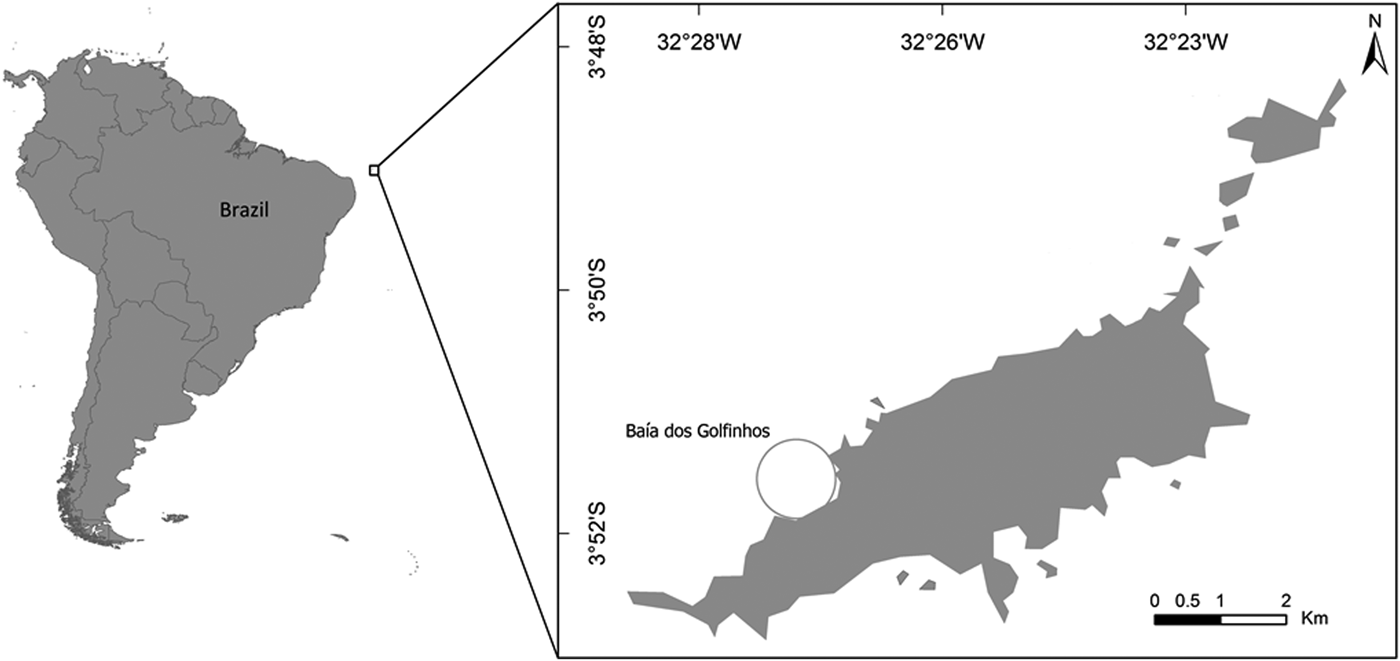
The area of study, Baía dos Golfinhos, is characterized by steep slopes, without rivers or streams reaching the inlet. The bay is surrounded by cliffs and beaches covered by rolled pebbles; and the low nutrient input makes its waters the calmest, clearest and deepest in the area (Almeida, Reference Almeida1958). At the same time, the bay viewpoint is one of the most accessible sites in the Fernando de Noronha Archipelago (Figure 1), and an ideal spot for studying spinner dolphins in the bay.
Map of Fernando de Noronha Archipelago, and Baía dos Golfinhos, where aerial events were recorded.

Data on the aerial events of the dolphins were collected from January 2006 to December 2010 by the Spinner Dolphin Project (Projeto Golfinho Rotador, PGR). We used a standard sampling protocol, which allowed analysis of the aerial events of all the individuals in the bay (Martin & Bateson, Reference Martin and Bateson1993). Sampling occurred every day from Monday to Saturday, from dawn to dusk. Two-minute observations were performed every 15 min. During those 2 min, the observers recorded all aerial events displayed by adults and calves as well as the number of dolphins present in the bay at that specific time.
As described by Silva-Jr (Reference Silva-Jr1996), observers use binoculars and mechanical counters to keep a constant record of the groups entering and leaving the bay. The dolphins move in groups, typically forming a line no wider than 20 metres. According to Norris & Dohl (Reference Norris and Dohl1980), they can breathe up to three times while running this distance, spending more time with their head above the surface than underwater. The width of the visual field (20 m) offered by the binoculars, allows observers to count individuals as they come to the surface to breathe. Observers focus on the first dolphin of the group and then record the passage of all the individuals in the group.
The dataset analysed did not show normal distribution and was therefore analysed by non-parametric procedures, using PASW Statistics 18 (Field, Reference Field2009). We used a Spearman's correlation test to evaluate the relationship between the number of dolphins in the bay and the total number of aerial events displayed at a specific time. From there we calculated the aerial event rate (AER), which is the ratio between aerial events and the number of dolphins in the bay multiplied by 100. The AER gives us, in that sense, an estimate of the number of aerial events displayed by each dolphin in the bay.
Data were categorized into dry season (August to January) and rainy season (February to July). Without discriminating between adults and calves, we grouped data by hour, in order to identify the time fluctuations of aerial events throughout the day and within each season. For the rainy season, data obtained for the first and last hours of observations (from 5:00 a.m. to 5:59 a.m. and 5:00 p.m. to 5:59 p.m.) were excluded because of their small sample size (N < 10).
The Kruskal–Wallis test was used to check differences in aerial events between different times of day. The Mann–Whitney U test was applied to detect seasonal differences, with alpha level set at 0.05. Also, the Mann–Whitney U test with Bonferroni correction was used for pairwise comparisons of the aerial events at different times of the day, considering an alpha level of 0.0006.
RESULTS
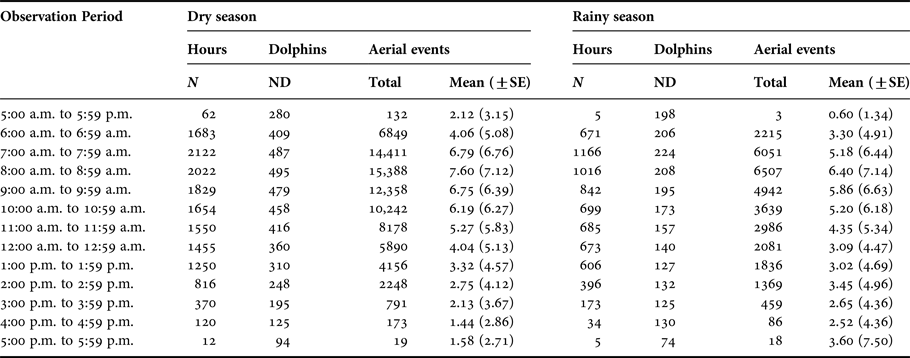
We analysed a total of 1431 days of observations at Baía dos Golfinhos, comprising 13,203 h and 45 min of data collection. Spinner dolphins were present in the bay 41.5% of that time. Altogether, a total of 21,916 two-minute intervals and 113,027 aerial events were recorded (Table 1).
Sampling effort and aerial events recorded in the dry and rainy season according to the observation period.

N, number of intervals; ND, mean of the number of dolphins; SE, standard error.
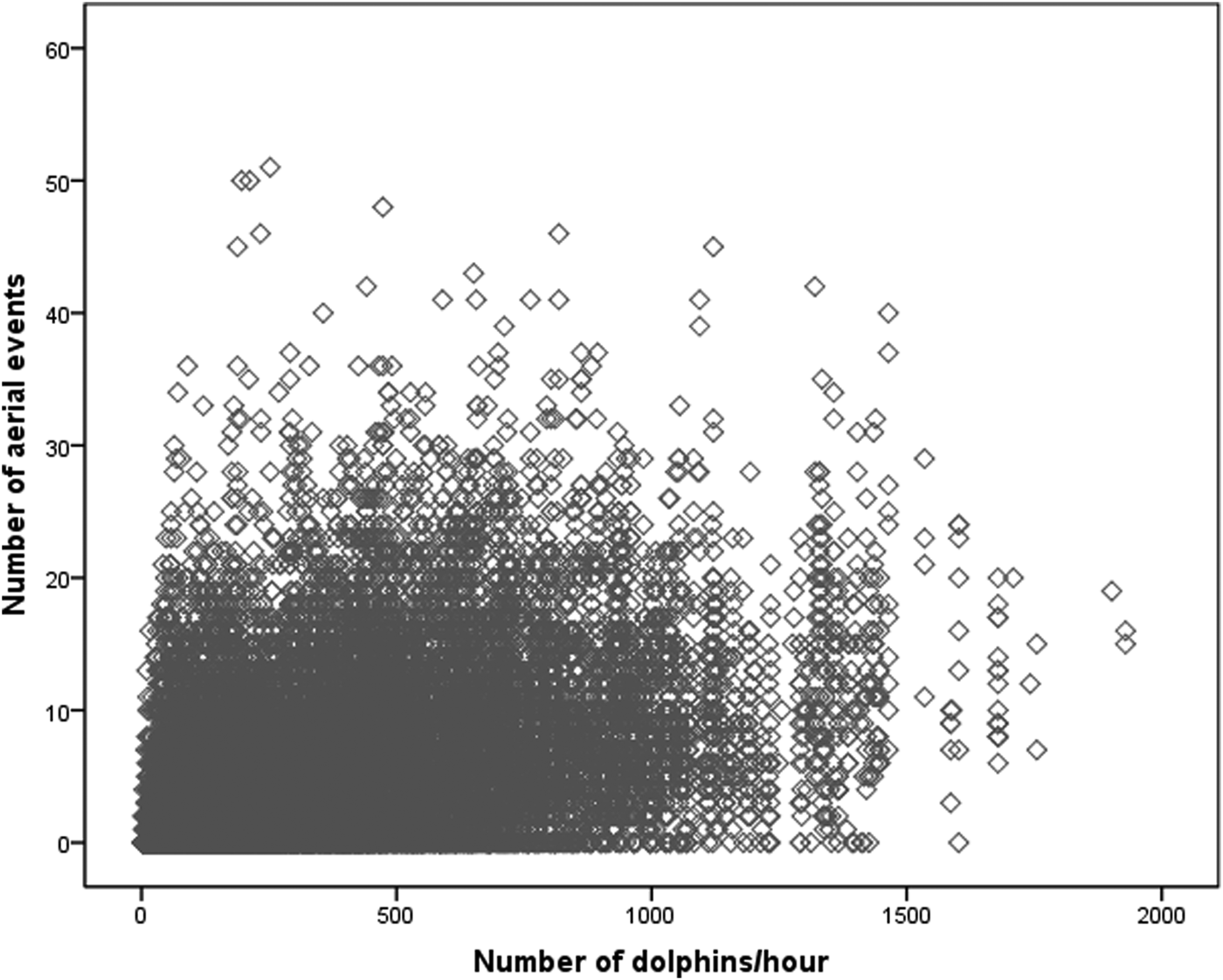
The number of dolphins in the bay was positively correlated with the number of aerial events observed (r s = 0.529, P (one-tailed) < 0.01) (Figure 2). The AER, the number of aerial events displayed by each dolphin in the bay at a specific time, was used in the other analysis of time fluctuation.
Relation between the number of aerial events and the number of dolphins in the Baía dos Golfinhos at a given time (number of dolphins/hour).

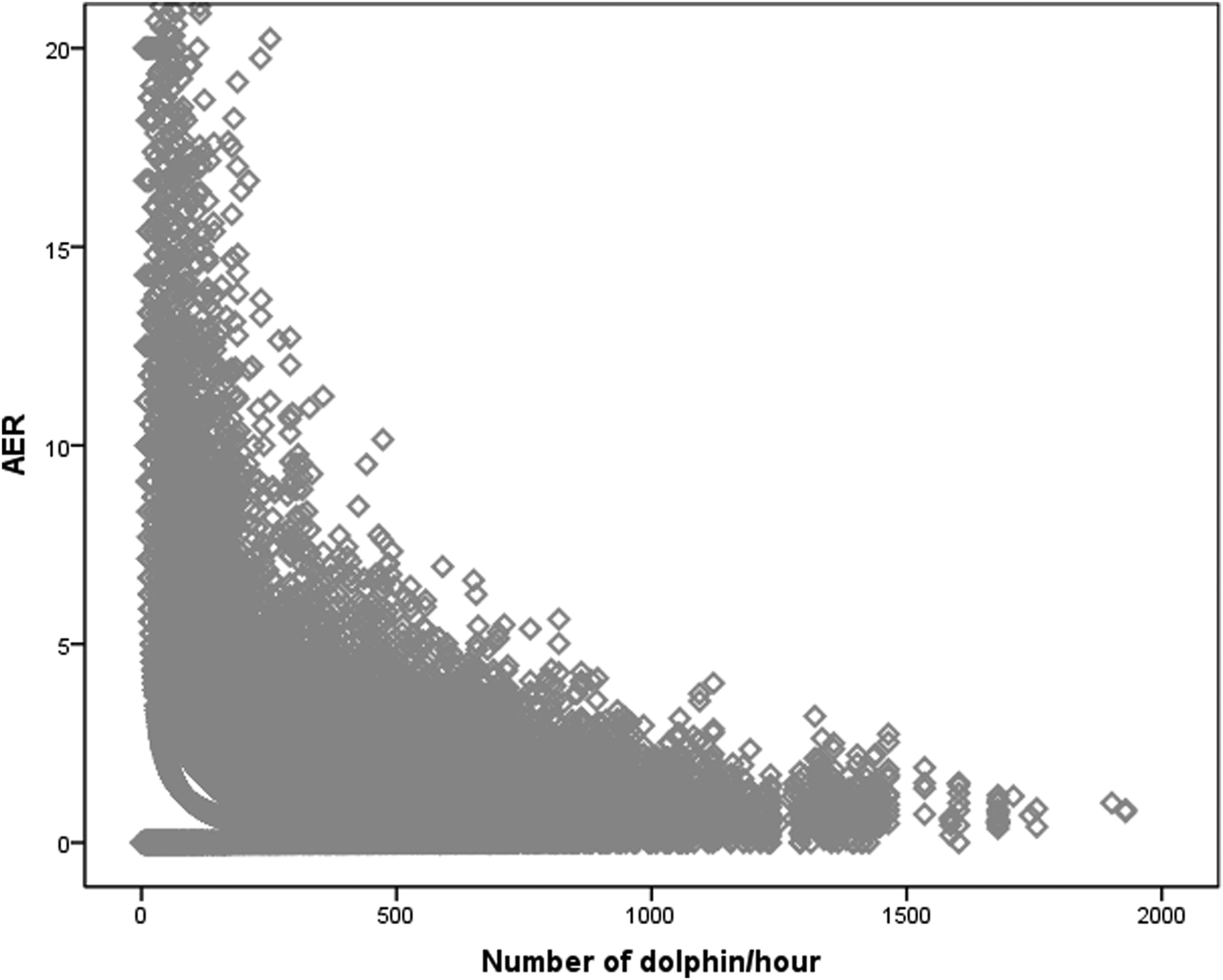
Spearman's correlation test indicated a negative correlation between AER and the number of dolphins in the bay (r s = 0.064, P (one-tailed) < 0.01) (Figure 3).
Correlation between AER (ratio between the aerial events and the number of dolphins in the bay multiplied by 100) and the number of dolphins in the Baía dos Golfinhos at a determinate time (number of dolphins/hour).

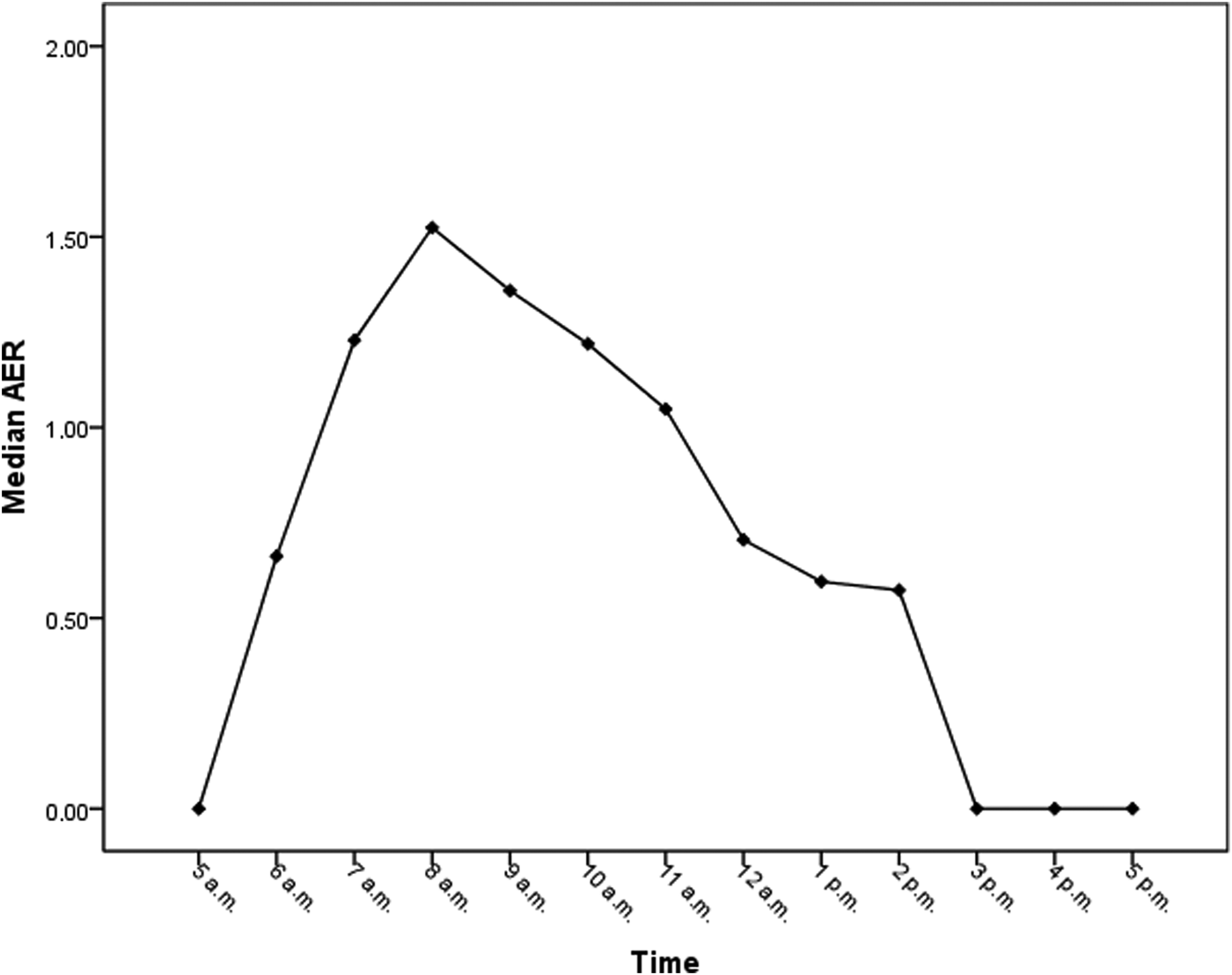
The AER was significantly different (H(12) = 859.39, P < 0.01) throughout the day, indicating the existence of daily fluctuations (Figure 4). Pairwise comparison showed that the highest rate of aerial events per dolphin was recorded from 8:00 a.m. to 8:59 a.m. (Mann–Whitney U test, P < 0.0001).
Distribution of median in the AER of dolphins over time inside the Baía dos Golfinhos.

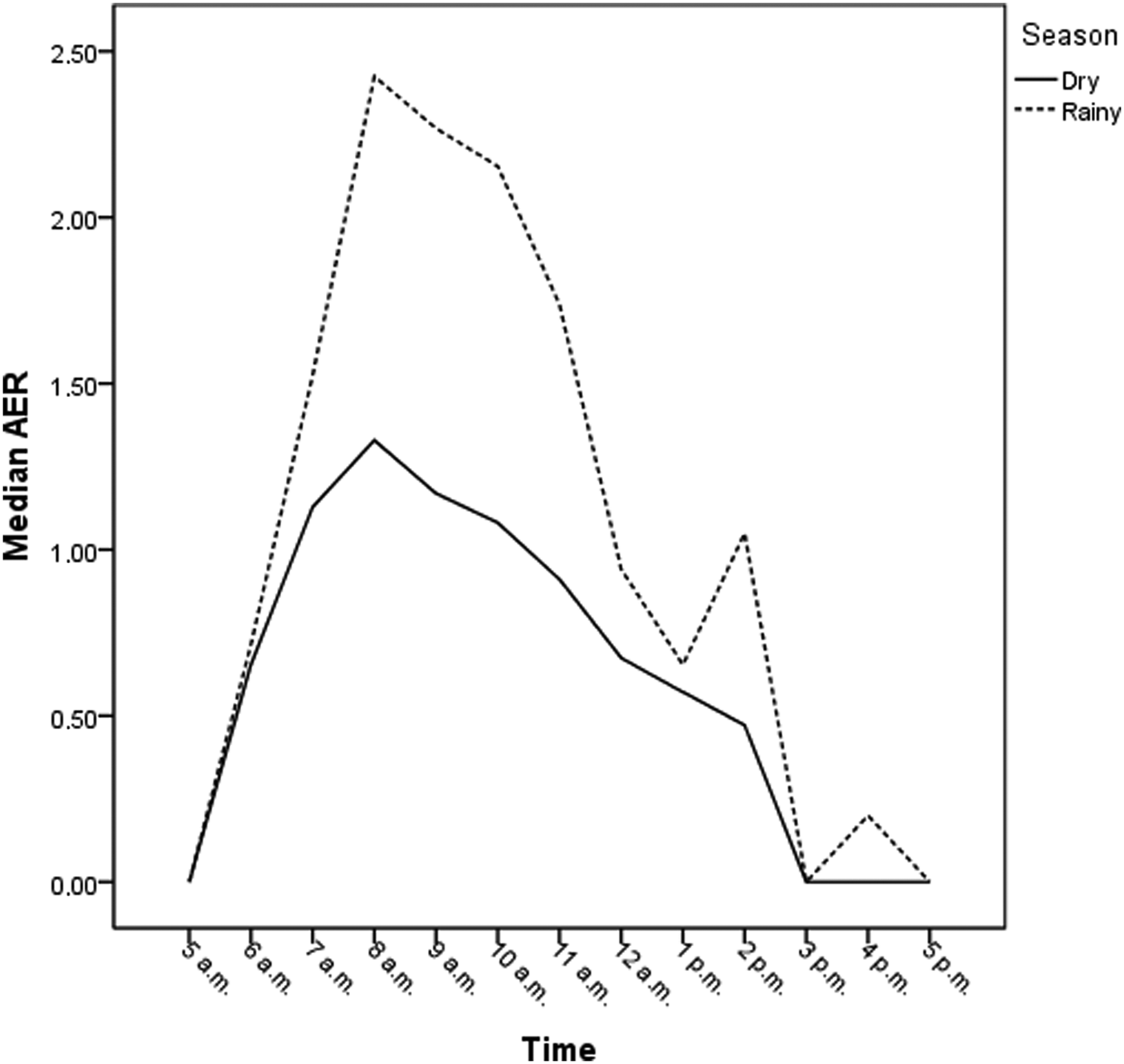
Although the overall sampling period was longer during the dry season, the AER, was higher in the rainy season (Mann–Whitney U test, U = 4.44 × 10⁸, Z = −17.69, P (two-tailed) < 0.001). The AER showed daily fluctuations in both seasons throughout the experiment (Dry: H(12) = 636.44, P < 0.001; Rainy: H(10) = 243.16, P < 0.001) (Figure 5).
Distribution of median in the AER of dolphins over time inside the Baía dos Golfinhos over dry and rainy seasons.

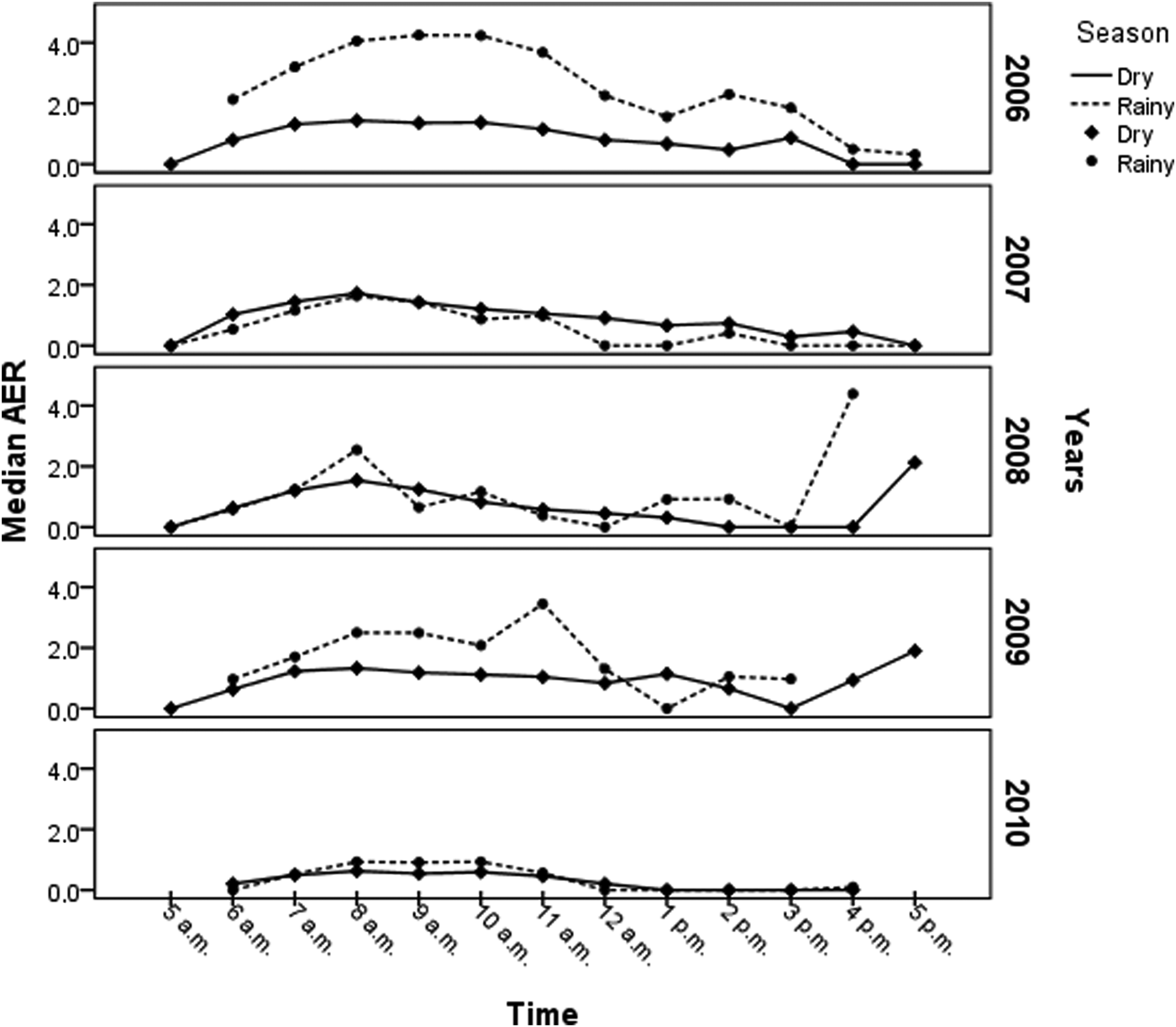
When analysed year by year, we observed a significant difference in daily fluctuations in dry and rainy seasons, except for 2010 (2006 – Mann–Whitney U test, U = 26.2 × 10⁸, Z = −26.63, P (two-tailed) < 0.001/Dry: H(12) = 247.39, P < 0.001; Rainy: H(11) = 116.53, P < 0.001; 2007 – Mann–Whitney U test, U = 37.1 × 10⁸, Z = −3.79, P (two-tailed) < 0.001/Dry: H(12) = 235.31, P < 0.001; Rainy: H(12) = 65.79, P < 0.001; 2008 – Mann–Whitney U test, U = 93.2 × 10⁸, Z = −3.38; P (two-tailed) < 0.001/Dry: H(12) = 155.08, P < 0.001; Rainy: H(12) = 37.01, P < 0.001; 2009 – Mann–Whitney U test, U = 90.4 × 10⁸, Z = −7.66, P (two-tailed) < 0.001/Dry: H(12) = 83.57, P < 0.001; Rainy: H(9) = 29.16, P < 0.001; 2010 – Mann–Whitney U test, U = 10.2 × 10⁸, Z = −0.46, P (two-tailed) > 0.001). In 2006, the higher AER was observed from 8 a.m. to 10:59 a.m. in the dry season and from 9 a.m. to 9:59 a.m. in the rainy season. In 2007 and 2008 the higher AER were recorded from 8 a.m. to 8:59 a.m. for both seasons; and for 2009 higher AER were recorded from 8 a.m. to 8:59 a.m. in the dry season and from 11 a.m. to 11:59 a.m. in the rainy season (Figure 6).
Distribution of median in the AER of dolphins over time in the dry and rainy seasons in the years 2006, 2007, 2008, 2009 and 2010.

DISCUSSION
Corroborating earlier studies on spinner dolphins (Norris & Dohl, Reference Norris and Dohl1980; Silva-Jr, Reference Silva-Jr1996) and other cetaceans (Waters & Whitehead, Reference Waters and Whitehead1990; Weinrich et al., Reference Weinrich, Belt and Morin2001), our study found a positive relationship between the number of aerial events and the number of dolphins. According to Norris (Reference Norris1991), aerial events can be displayed to set the spatial position of individuals within the group. In that sense, the larger the group, the more information exchange is needed to organize it.
Our study also shows that the relative frequency of aerial events performed by each animal decreased when the number of dolphins in the bay increased. This may reflect a dilution effect or indicate the importance of other factors in determining the frequency of aerial events. For example, when occupying the same area, smaller groups may need a higher aerial events rate to maintain communication and cohesion since they tend to be more dispersed than larger groups.
Time fluctuations in the frequency of aerial events have been observed for different cetaceans. Studies report that aerial events are related to foraging in common bottle-nose dolphins (Würsig & Würsig, Reference Würsig and Würsig1979) and socialization in sperm whale (Waters & Whitehead, Reference Waters and Whitehead1990), and in both cases, they are more frequent in the afternoon. Also, studies with the Indo-Pacific bottlenose dolphins, in nature and captivity, also show a peak in social interaction in the morning and another peak in the late afternoon, with the highest frequency of leaps, associated to feeding and reproduction, recorded from 8:00 a.m. to 9:00 p.m. (Saayman et al., Reference Saayman, Tayler and Bower1973).
According to Norris & Dohl (Reference Norris and Dohl1980), the frequency of aerial displays is mostly correlated with the pod's activity level, which can be an indication of its state of alertness. Earlier studies on spinner dolphins describe time fluctuations in their excitement level (expressed by frequency of aerial events). The aerial events of Hawaiian spinner dolphins are concentrated in the morning and late afternoon. Norris & Dohl (Reference Norris and Dohl1980) observed two peaks of aerial events, from 8:00 a.m. to 9:00 a.m. and from 2:00 p.m. to 3:00 p.m, while Danil et al. (Reference Danil, Maldini and Marten2005) found a peak in the late afternoon (after 4:00 p.m.), when the pod was returning to the open sea.
In a previous study in Fernando de Noronha, Silva-Jr (Reference Silva-Jr1996) described six periods of increases and decreases in the frequency of aerial events. The highest activity was observed in the period he called ‘organization’, which lasted from 6:30 a.m. to 10:29 a.m.; the second period of higher activity, called ‘reorganization’, lasted from 1:00 p.m. to 1:29 p.m. In this study, we found only a single period of high activity, which would correspond to the ‘organization’ period as described by Silva-Jr (Reference Silva-Jr1996), in which dolphins enter the bay and organize into subgroups with different behavioural profiles (resting, maternal care and reproduction).
The reorganization period, described by Silva-Jr (Reference Silva-Jr1996), was not observed in the present study. The absence of this period suggests behavioural changes in the spinner dolphin population of Fernando de Noronha. Since 2003, these dolphins have in fact decreased their residence time in the inlet (Silva-Jr, Reference Silva-Jr2010), thereby shortening resting time in the Baía dos Golfinhos. The behavioural changes observed in the present study can thus result from the shorter residence time in the Baía dos Golfinhos. With reduction in resting time, we assume that the dolphins may have eliminated some of the behavioural periods described by Silva-Jr (Reference Silva-Jr1996). Changes in aerial behaviours of spinner dolphins throughout time were also observed in the Hawaiian population. In both archipelagos, the increase in anthropogenic action, watercraft usage and scuba diving in nearby areas is likely to affect dolphins’ behaviours, as shown in other studies (Courbis & Timmel, Reference Courbis and Timmel2009).
Regarding the aerial events of the spinner dolphins in the Baía dos Golfinhos, the peak was similar between the seasons, occurring 2 h after the dolphins had entered the bay. In both dry and rainy seasons, Silva & Silva-Jr (Reference Silva and Silva-Jr2009) observed a peak in the aerial activity of spinner dolphins nearly 2 h after they entered the bay. In the dry season, a second peak between 2:00 p.m. and 3:00 p.m. was observed, and occurred before the dolphins left the bay. The authors associate these peaks to reproductive behaviour as they also correspond to copulation peaks. The period of reduced aerial events, in turn, may be related to resting. As mentioned before, the slight peak of aerial events detected by Silva & Silva-Jr (Reference Silva and Silva-Jr2009) in the afternoon was not observed in the present study, probably because of the changes observed in the occupation of Baía dos Golfinhos.
Corroborating with Silva & Silva-Jr (Reference Silva and Silva-Jr2009) the frequency of aerial events of spinner dolphins in Baía dos Golfinhos was higher in the rainy season despite the decreased number of individuals in the bay. The higher rainfall rates may explain this finding, given that, although rainfall does not drain directly into the bay, the turbulence it causes increases turbidity in the waters used for resting (Costa, Reference Costa2011). As a result, dolphins increase the use of aerial patterns as acoustic markers of position, grouping and direction. Nevertheless, more specific studies are needed to better understand the functions of aerial activity in that context.
In marine mammals, aerial events are among the most difficult behaviours to study, especially in natural environments (Lusseau, Reference Lusseau2006). Baía dos Golfinhos, in the Marine National Park of Fernando de Noronha, is one of the most suitable sites to study the behaviour of spinner dolphins. It presents a unique opportunity to advance our understanding of the behaviours of marine cetaceans. The study of the aerial activity of spinner dolphins allows the detection of time fluctuations and frequency of specific behaviours, as well as changes throughout the years. It provides essential information for the protection of the species and its presence in the bay.
The dolphins are a major attraction in Fernando de Noronha, and one of the many reasons for tourists to visit the archipelago. A study by Silva-Jr (Reference Silva-Jr2010) showed that the dolphins contribute to at least 5% of tourism revenue. Since the dolphins are easily observed from the viewpoint, where data are collected, identifying the periods of high activity is important to inform visitors and assure their satisfaction. In Fernando de Noronha, the promotion of a land-based tourism is a protective measure because, in contrast to nautical tourism, it does not have a negative impact on spinner dolphins.
ACKNOWLEDGEMENTS
We thank ICMBio that through PARNAMAR-FN and APA-FN allowed data collection at Baía dos Golfinhos. We also thank Universidade Federal do Rio Grande do Norte for institutional support. Finally, we are grateful to Luciana Leite and Ben Phalan for the English revisions in this manuscript.
FINANCIAL SUPPORT
This work was supported by Centro Golfinho Rotador, Petrobras and Conselho Nacional de Desenvolvimento Científico e Tecnológico (CNPq).