



World Englishes on the Web: The Nigerian Diaspora in the USA is an illuminating and enriching text, and the first major monograph that explores the multilingual resources that Nigerians living in the United States of America utilise in interacting on a Nigerian web forum. The book comprises nine chapters which comprehensively address various topics from the sociolinguistics of the Nigerian diaspora to theoretical issues in the age of globalisation. It considers multilingual resources, such as African American Vernacular English (AAVE), Nigerian Pidgin (NigP), Nigerian English (NigE), and ethnic Nigerian languages, which are used by U.S.-Nigerians on one of Nigerian's most visited web forums, Nairaland.
Chapter 1 introduces readers to the aim of the project, which is to examine linguistic features, identity, and authenticity in multilingual utterances produced by Nigerians living in the U.S. The chapter identifies concepts such as globalisation, computer-mediated communication (CMC), and repertoire which play major roles in the kind of analysis performed in the work. The author reports that Nigerians constitute the largest number of African immigrants in the U.S., thus highlighting the importance of studying their linguistic and socio-cultural attributes. The chapter also presents different objectives that arise out of the overarching aim and the contributions of the study to linguistic, political, cultural, and media research; it then summarises the remaining chapters in the book.
Chapter 2 deals with the sociolinguistics of the Nigerian diaspora; it provides a concise summary of the demographics of Nigeria, which cover the history, population, as well as the cultural and multilingual nature of the country. The chapter provides a comprehensive overview of English in Nigeria, the role of Nigerian Pidgin, and the linguistic repertoire of many educated Nigerians who are multilinguals – learning an indigenous Nigerian language as a first language, English as a second language in a school environment, and NigP in informal inter-ethnic encounters. The chapter also examines the status of Nigerians in the U.S., and the competition of various language resources available to U.S.-Nigerians, including American English (AmE), AAVE, NigP, NigE, and ethnic Nigerian languages.
In Chapter 3, Honkanen explores different concepts such as resources, repertoires, and authenticity in the age of globalisation, from a sociolinguistics of globalisation approach. She critically examines terms such as linguistic crossing, and (digital ethnolinguistic) repertoire, which operates at the individual level, and at the macro level of a community of practice and/or cultural group. She opts for ‘resources’ rather than ‘languages’ and ‘varieties’ in explaining the language practices of diasporic Nigerians. The chapter also examines how the different levels of authenticity might play out in the language resources of diasporic Nigerians, and how the concept of authentic cultural membership is reflected in the language resources of U.S.-Nigerians in terms of nationality (e.g. Nigerian, U.S.-Nigerian), ethnicity (e.g. Igbo, African American), and race (e.g. black, white). The author adopts ‘a more flexible, nuanced, and forgiving model of authenticity’ in examining the digital utterances of diasporic Nigerians, who are aspiring to a Nigerian identity through relevant features such as ‘food items, music, customs, values, linguistic resources, or any other practices or objects seen as associated with Nigeria’ (p. 45).
Chapter 4 presents the data and method used in the project, including an examination of the history, membership, and (non-)linguistic resources on Nairaland, the Nigerian web forum from which the data were extracted, and its status as a virtual community of practice. The chapter briefly explains the ‘World languages – digital languages project’, which includes a ‘compilation of a large multilingual corpus from web forums based in Jamaica, Cameroon, Congo, Nigeria, and several Spanish-speaking countries in South America’ (p. 54), from which the Nairaland 2 corpus was extracted for the study. The author explains the Net Corpora Administration Tool, a corpus tool used in ‘searching through the web forum data, visualising results, and adding meta-data to users and posts’ (p. 56). The author then describes the selection of a core sub-corpus of 50 U.S.-Nigerians who produce 17.8 million tokens, accounting for 2.1% of all tokens in the corpus. She also introduces and evaluates the Corpus of Global Web-based English, which complements her analyses of the Nairaland 2 corpus, and whose strength lies in its allowance of cross-national comparisons. Moreover, the chapter presents the corpus linguistics method which the author combines with ethnographically-informed qualitative discourse analysis of CMC. Lastly, the chapter examines the legal and ethical issues surrounding the collection and utilisation of the data.
Chapter 5 focuses on African Americans and their vernacular English, and critically evaluates the relationship between them and U.S.-Nigerians. The chapter explores negative and positive attitudes of Nigerians living in the U.S. and in Nigeria towards African Americans and AAVE, a variety which plays a huge role in popular culture (e.g. in rap music), and which is used in constructing identities for African Americans, with evidence from utterances in the Nairaland 2 corpus. In this chapter, Honkanen also describes the distinctive non-standardised features of AAVE (e.g. habitual or iterative invariant be and ain't for did not and do not), and non-distinctive non-standardised features of AAVE (e.g. absence of progressive auxiliary be and was for were). This chapter is a good introduction for researchers who are interested in studying AAVE.
Chapter 6, the longest chapter in the book, addresses the use of AAVE resources in diasporic Nigerian repertoires on Nairaland. The chapter first describes different user types of AAVE found in the sub-corpus of the 50 U.S.-Nigerians, and labels them as consistent expert, inconsistent expert, occasional user, minimal user, and non-user. The chapter then examines AAVE features in the data, which reveal conflicting authenticities and identities, based on the utterances of some U.S.-Nigerians, and reactions from both U.S.-Nigerians and Nigerians living in Nigeria. Honkanen also examines styleshifting into AAVE due to the culture of rap music on the forum, accommodation to interlocutors who also use AAVE, and fictional narratives in the forum. Honkanen equally shows how AAVE resources, NigP, NigE, and ethnic Nigerian languages are sometimes mixed in the utterances of U.S.-Nigerians. The author then fully investigates AAVE verbal markers (e.g. perfect done and futurate I'ma); orthographic (e.g. sista and thang) and lexical (e.g. nigga and homie) AAVE features; practices of minimal usage (e.g. echoing and distancing); and highly popular features (e.g. ain't and y'all) in U.S.-Nigerians’ utterances in the sub-corpus. She also explores metalanguage relating to the use of some of these AAVE features, and the overall negative attitudes of Nigerians to the variety.
In Chapter 7, Honkanen investigates Nigerian linguistic resources in the repertoires of U.S.-Nigerians. These include the employment of NigP resources (e.g. copula dey and na, and lexemes such as wetin [what] and pikin [child]), which are used to authenticate a Nigerian identity. She also examines metalanguage relating to the use of ethnic Nigerian languages and explores utterances in these languages, which are acceptable, if they are translated. Some of the resources include kinship terms such as nwanne (‘a child of the mother’, which can be extended to non-family members), and cultural items such as buba (‘a traditional Yoruba blouse’). The author also investigates NigE resources which cover morphosyntactic features (e.g. non-standardised count mass nouns, such as stuffs, and the use of double determiners, such as this their tribal welfare); lexical and stylistic features (e.g. toast for woo, and neologisms, such as haterication and e-favours); and spelling and orthographic features, which sometimes arise due to some Nigerians’ pronunciation of some words, such as gerrout for get out and warra for water (examples of flapping due to AmE influence). Lastly, the author considers abbreviations which are divided into interpersonal abbreviations, such as LOL (laughing out loud) and OMG (oh my god); Nairaland/CMC related ones, such as NL (Nairaland), and OP (the original poster); and Nigeria-related abbreviations, such as PH (Port Harcourt), and JAMB (Joint Admissions Matriculation Board).
In Chapter 8, Honkanen discusses her findings, where she provides plausible reasons for some of the practices of U.S.-Nigerians, with support from previous studies, and the implications of these for diasporic (intra-)Nigerian communication. For example, she notes that the adoption of many AAVE address terms by U.S.-Nigerians may be explained by the ‘apparent prevalence’ of these features in Nigerian communication (p. 278). Furthermore, she suggests that the negative attitudes towards AAVE may be due to the standard language ideology and existing negative stereotypes of African Americans in the U.S. Thus, while AAVE is seen as ‘the linguistic equivalent of denying one's Nigerianness’ (p. 291), NigP and ethnic Nigerian languages are linguistic moves that authenticate the U.S.-Nigerian's identity as a Nigerian. The author also opines that ‘NigE seems to be the expected and most accepted type of English in the forum, which raises questions about ‘Nigerians’ perceptions and awareness of the specific features’ of the NigE variety (p. 295). Chapter 9 is the conclusion of the study where Honkanen summarises the entire work and discusses some limitations of the study, such as those of the Net Corpora Administration Tool, and how these can be addressed. She equally points to areas of future research, such as the spread of AAVE and AmE resources to Nigeria, and the emergence of orthographic norms in CMC for non-standardised languages.
The strengths of the monograph do not only lie in the appropriateness of the concepts and theories adopted and adapted for the study, but also in the use of copious naturally occurring texts on which the findings are based, as well as the digital ethnolinguistic approach which assists the author in properly interpreting the linguistic practices of the interactants. However, there are a few controversial issues in the book, such as the labelling of some pragmatic markers and interjections (e.g. oo, abi, haba) as NigP discourse-pragmatic features. These features may be better described as bilingual (or multilingual) discourse-pragmatic features (see Matras, Reference Matras2000), since most of them are borrowed from ethnic Nigerian languages and may appear in NigE (see Jowitt, Reference Jowitt2019; Unuabonah & Oladipupo, Reference Unuabonah and Oladipupo2018), NigP or AAVE, as evident in the monograph. The three items, which might be called NigP discourse-pragmatic features, are abeg, sef, and na wa which is a shortened form of na wahala (‘that is trouble’) that combines the NigP emphatic focus introducer na with the shortened form of wahala (see Unuabonah, Reference Unuabonah2020; Unuabonah, Oyebola & Gut, Reference Unuabonah, Oyebola and Gut2021). Patapata is also not a NigP intensifier, but a Yoruba intensifier. Moreover, the language of origin of o/oo/ooo is not only Yoruba, as o is a common feature in numerous indigenous West African languages, such as those found in Nigeria and Ghana (see Amuzu, Kuwornu & Opoku–Fofie, Reference Amuzu, Kuwornu and Opoku–Fofie2018).
Notwithstanding these extremely few cases, Honkanen's monograph is a well researched text that depicts the language practices of diasporic Nigerians in a Nigerian web forum, and which opens up further discussions for AAVE and AmE resources in NigE as well as orthographic and multilingual practices in CMC. Indeed, it is a very useful text for both new and advanced scholars in identity construction, corpus linguistics, Pidgins and Creoles, World Englishes, and sociolinguistics in general.
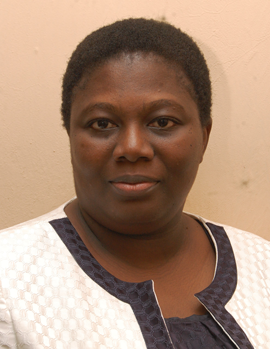 FOLUKE OLAYINKA UNUABONAH obtained her PhD from the University of Ibadan, Nigeria, and lectures at the Department of English, Redeemer's University, Nigeria. Her areas of research include (multimodal) discourse analysis, and (corpus) pragmatics. She has published articles in different journals such as Text & Talk, Discourse & Society, English World-Wide, World Englishes, Journal of Pragmatics, and Corpus Pragmatics. Together with colleagues, she is compiling a historical corpus of English in Nigeria. Email: unuabonahf@run.edu.ng


