Introduction
Palmer amaranth is native to the Americas (Sauer Reference Sauer1957) and is one of the most troublesome and economically damaging weeds throughout the southern United States (Ward et al. Reference Ward, Webster and Steckel2013). Palmer amaranth is dioecious (i.e., male and female flowers are found on separate plants) and is regarded as a difficult-to-control species because of its ability to produce copious amounts of seeds, extended seedling emergence period, rapid growth potential, water use efficiency, and ability to survive under adverse environmental conditions (Jha et al. Reference Jha, Norsworthy, Malik, Bangarwa and Oliveira2006; Ward et al. Reference Ward, Webster and Steckel2013). These characteristics enable Palmer amaranth to effectively compete with crops for nutrients, water, light, and space, causing significant yield losses in crops such as cotton (Gossypium hirsutum L.), corn (Zea mays L.), grain sorghum [Sorghum bicolor (L.) Moench], and soybean [Glycine max (L.) Merr.] (Bensch et al. Reference Bensch, Horak and Peterson2003; Fast et al. Reference Fast, Murdock, Farris, Willis and Murray2009; Massinga et al. Reference Massinga, Currie, Horak and Boyer2001; Moore et al. Reference Moore, Murray and Westerman2004).
Herbicides have been heavily relied upon for controlling Palmer amaranth; this species appears to be a high-risk species for evolution of herbicide resistance. In the southern United States, Palmer amaranth resistance to glyphosate (an inhibitor of 5-enolpyruvylshikimate-3-phosphate synthase [EPSPS]) and acetolactate synthase (ALS)-inhibiting herbicides is widespread (Culpepper et al. Reference Culpepper, Grey, Vencill, Kichler, Webster, Brown, York, Davis and Hanna2006; Sosnoskie et al. Reference Sosnoskie, Kichler, Wallace and Culpepper2011; Wise et al. Reference Wise, Grey, Prostko, Vencill and Webster2009). The first case of ALS inhibitor–resistant Palmer amaranth was reported in Kansas in 1993 (Horak and Peterson Reference Horak and Peterson1995) and resistance was documented throughout the southern United States within a few years after the first report (Heap Reference Heap2019). However, the commercialization of glyphosate-resistant crop technology provided growers with an alternative herbicide option to effectively control ALS inhibitor–resistant Palmer amaranth. Subsequently, intensive use of glyphosate for controlling Palmer amaranth has led to the evolution of glyphosate resistance in this weed species. In 2005, the first case of glyphosate-resistant Palmer amaranth was confirmed in Georgia (Culpepper et al. Reference Culpepper, Grey, Vencill, Kichler, Webster, Brown, York, Davis and Hanna2006). Over the past decade, glyphosate-resistant Palmer amaranth has been observed throughout the southern United States and beyond. Currently, glyphosate-resistant Palmer amaranth has been reported in 28 US states (Heap Reference Heap2019).
The practice of repeatedly using a single herbicide with a specific site of action (SOA) and shifting to an alternative herbicide SOA only after the evolution of resistance has perpetuated the problem by favoring the evolution of multiple-herbicide resistance in weeds. For example, the first Palmer amaranth population with multiple resistance to glyphosate and pyrithiobac-sodium (an ALS inhibitor) was documented in 2006 (Sosnoskie et al. Reference Sosnoskie, Kichler, Wallace and Culpepper2011). A Palmer amaranth population with multiple resistance to other important herbicides with unique SOAs such as photosystem II (PSII) inhibitors (e.g., triazines) and hydroxyphenylpyruvate dioxygenase (HPPD) inhibitors (e.g., mesotrione, tembotrione) has been documented in Nebraska (Jhala et al. Reference Jhala, Sandell, Rana, Kruger and Knezevic2014). More recently, Palmer amaranth with multiple resistance to ALS-, EPSPS-, and protoporphyrinogen oxidase (PPO)-inhibitor herbicides has been confirmed in the Mississippi Delta region (Salas et al. Reference Salas, Burgos, Tranel, Singh, Glasgow, Scott and Nichols2016; Varanasi et al. Reference Varanasi, Brabham, Norsworthy, Nie, Young, Houston, Barber and Scott2018).
The evolution of resistance to more than one herbicide SOA is of great concern, because it limits the herbicide options available for effective weed control. As of now, multiple resistance in Palmer amaranth has been documented for five SOAs. A population from Arkansas was found to be resistant to inhibitors of ALS, PPO, EPSPS, microtubules, and long chain fatty acids (Heap Reference Heap2019). Kumar et al. (Reference Kumar, Liu, Boyer and Stahlman2019) also reported multiple resistance to five SOAs (ALS, PSII, EPSPS, HPPD, and synthetic auxin) in a Palmer amaranth population from Kansas. Crops with engineered resistance to auxin herbicides such as 2,4-D and dicamba are currently under commercial cultivation and are viewed as effective tools for managing multiple herbicide–resistant Palmer amaranth. However, a lack of diversity in weed management could lead to evolution of resistance to these herbicides as well (Tehranchian et al. Reference Tehranchian, Norsworthy, Powles, Bararpour, Bagavathiannan, Barber and Scott2017).
The relative importance of independent evolution of resistance versus spread of resistance across landscapes is unknown. However, a study conducted by Bagavathiannan and Norsworthy (Reference Bagavathiannan and Norsworthy2016) revealed that multiple resistance to ALS inhibitors and glyphosate is widespread in roadside Palmer amaranth populations in the Mississippi Delta region, suggesting the role of propagule movement through agricultural activities in the spread of herbicide resistance. Regardless of the source of resistance, knowledge of the current status and distribution of herbicide resistance across agricultural regions will be invaluable in developing and implementing effective resistance management practices.
In Texas row-crop production, growers have been reporting frequently Palmer amaranth control failures with certain herbicides. As of now, two cases of herbicide-resistant Palmer amaranth (resistance to atrazine in 1993 and glyphosate in 2011) have been documented in Texas (Heap Reference Heap2019). Anecdotal observations suggest that herbicide resistance could be more widely present in this species across the state (Cline Reference Cline2013; McGinty et al. Reference McGinty, Baumann and Dotray2015). However, to date, no systematic survey has been carried out in Texas to document the prevalence of herbicide resistance in Palmer amaranth. The objective of this study was to survey the level of sensitivity of Palmer amaranth populations in Texas to important herbicides used in row-crop production systems in the state.
Materials and methods
Field survey
Field surveys were conducted during 2014 to 2016 (late summer to early fall each year) to collect Palmer amaranth seed throughout important row-crop producing regions in Texas for resistance evaluation. The surveys were focused on six distinct cropping regions: High Plains (from south of Lubbock to the Oklahoma panhandle in the north), Rio Grande Valley (far south of Texas, bordering Mexico), Lower Gulf Coast (areas surrounding Corpus Christi to San Antonio in the north), Upper Gulf Coast (from Houston to Victoria in the west and to Columbus in the north), Central Texas (areas from San Antonio to Uvalde in the west and to Austin in the north), and Blacklands (from Temple to Tyler) (Figure 1).
Subregions of Texas where the survey for Palmer amaranth was conducted for this study.

The surveys were conducted following a semistratified methodology previously optimized and used by Bagavathiannan and Norsworthy (Reference Bagavathiannan and Norsworthy2016). The survey sites were randomly selected on a Google® map using the ITN Converter software (version 1.88; Benichou Software) without prior knowledge of the survey sites. In each subregion, approximately 50 random sites were marked. This software allows for adequate sampling distribution across a landscape. The files were exported to a portable global positioning system device (TomTom International, TomTom International BV, Amsterdam, DK, NL) that facilitated navigation to predetermined survey sites. If Palmer amaranth was not present at the predetermined survey site, the first population found along the route to the next survey site was collected. The survey specifically targeted uncontrolled Palmer amaranth in row-crop fields (i.e., cotton, corn, grain sorghum, and soybean) before harvest. At each site, mature inflorescences were harvested from approximately 15 random female Palmer amaranth plants, bagged, and dried in a hot-air oven at 50 C for 72 h. Inflorescences were mechanically thrashed and cleaned, and seeds were stored in glass vials at room temperature before use in herbicide assays. A total of 220 samples were collected, of which 176 were selected for additional evaluations based on seed availability and percent germination.
Herbicide assays
Herbicide assays were conducted at the Norman Borlaug Center for Southern Crop Improvement Greenhouse Research Facility at Texas A&M University, College Station, TX. The greenhouse was maintained at a 30/26 C day/night temperature regime and 14-hr photoperiod. Populations were evaluated for their response to six different herbicides (each pertaining to a unique SOA) that commonly have been used in the state or are expected to be used widely in the near future: glyphosate (POST), atrazine (PRE/POST), pyrithiobac (POST), tembotrione (PRE/POST), fomesafen (PRE/POST), and dicamba (POST). Glyphosate has been widely used in glyphosate-resistant (Roundup Ready®) crops such as cotton, corn, and soybean throughout the state. Atrazine (a PSII inhibitor) historically has been an important herbicide in weed management programs of corn and grain sorghum. Tembotrione is labeled for use in corn and its use is expected to increase with the anticipated commercialization of lines of cotton and soybean tolerant to HPPD-inhibitor herbicide. Fomesafen (a PPO inhibitor) is used in cotton (PRE) and soybean (POST). Dicamba (a synthetic auxin) traditionally has been used in burndown applications before crop planting. Its use has been increasing with the cultivation of dicamba-tolerant (Roundup Ready® Xtend) cotton and soybean.
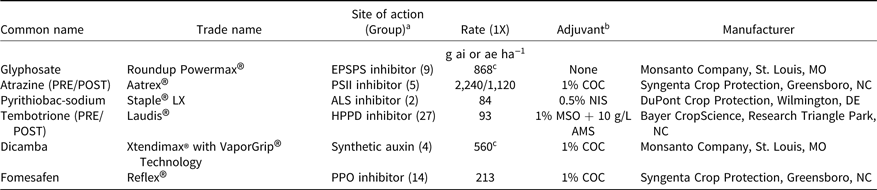
The herbicides were applied according to rates specified on the label (Table 1). All herbicides were first applied POST, but Palmer amaranth populations that showed resistance to POST applications of atrazine, tembotrione, or fomesafen were subjected to subsequent PRE evaluations. Seedlings were established in plastic growth trays with two replications and two experimental runs for each treatment. For POST assays, the trays were filled with potting soil mix (LC1 Sunshine professional mix). Palmer amaranth seeds were broadcast planted in each tray and thinned at the one-leaf stage to approximately 30 seedlings in 25 × 25 cm trays (run 1) and 15 seedlings in 13 × 13 cm trays (run 2). A known susceptible standard (confirmed previously and stored at room temperature) as well as a nontreated check were included for comparison for all herbicide treatments. The PRE herbicide evaluations were conducted using the growth trays (run 1: 30 seeds in 25 × 25 cm trays; run 2: 20 seeds in 13 × 13 cm trays) filled with natural field soil (Weswood clay loam; 30% sand, 40% silt, 30% clay, 1.3% organic matter). For all PRE evaluations, nontreated controls were maintained for each of the populations tested.
Details of the herbicides used in the evaluations.

a Abbreviations: ALS, acetolactate synthase; AMS, ammonium sulphate; COC, crop oil concentrate; EPSPS, 5-enolpyruvylshikimate-3-phosphate synthase; HPPD, 4-hydroxyphenylpyruvate dioxygenase; MSO, methylated seed oil; NIS, nonionic surfactant; PPO, protoporphyrinogen oxidase; PSII, photosystem II.
b No adjuvant was used for PRE treatment.
c Values represent acid equivalency.
Herbicide applications were made using a spray chamber mounted with a TeeJet® XR8002 nozzle calibrated to deliver 140 L ha−1 of the spray liquid. The POST herbicides were applied at the two- to three-leaf seedling stage, whereas the PRE applications were made immediately after planting. After the PRE treatment, the pots were immediately sprinkled with water to activate the herbicide. Thereafter, soil was kept moist and plants were watered every two to three days. Evaluations were conducted 21 d after herbicide treatment (DAT) for PRE and POST applications. Injury ratings were conducted on a scale of 0% to 100% in comparison with nontreated control, where 0% represented no visible injury and 100% indicated plant death. In addition, survival frequency was recorded as the number of seedlings that survived the herbicide application out of the total number of seedlings treated at 21 DAT.
Dose-response assays
A dose-response assay was conducted on a highly resistant and most-sensitive population for each herbicide, selected on the basis of herbicide screening results. The herbicide doses used on the susceptible standards were 1/16X, 1/8X, 1/4X, 1/2X, 1X, and 2X rates according to the label (Table 1). For the putative resistant populations, the herbicides were applied at 1/2X, 1X, 2X, 4X, 8X, 16X, and 32X rates. Each treatment included three replications and two experimental runs; each replication consisted of six seedlings established in a six-cell growth tray (POST) or a 13 cm × 13 cm flat (PRE) planted with 15 seeds. The trays were filled with potting soil media (POST treatments) or in herbicide-free field soil, as described previously in Materials and Methods (PRE treatments). Herbicide applications were made at the two- to three-leaf seedling stage (POST) or immediately after planting (PRE), as described in the preceding paragraph.
Visual observations were recorded at 21 DAT. For POST dose-response assays, percent survival was recorded as the number of surviving seedlings out of the total number treated at 21 DAT. Plants with less than 90% injury were considered survivors. For PRE assays, percent survival was scored as the number of surviving seedlings in the treated trays compared with the nontreated control maintained for each population.
Statistical analyses
Spatial distribution of Palmer amaranth sensitivity to various herbicides across Texas was mapped using ArcGIS (version 10.5; ESRI, Redlands, CA). Kernel density analysis was used to illustrate the distribution densities of Palmer amaranth across different regions of Texas. Interpolation analysis using the inverse-distance weighting technique was implemented to illustrate the distribution of Palmer amaranth sensitivity to herbicides across a spatial scale. The stretching technique was used with minimum and maximum ranges of injury and survival rate. Spatial analysis was performed for the 176 sites where the populations used in herbicide evaluations were obtained. In case of a population not evaluated for any herbicide or that had missing data, software default settings treated that population as susceptible for the corresponding herbicide and indicated it with green. Two different spatial maps were generated for each herbicide to illustrate (1) the level of resistance or sensitivity based on injury, and (2) the frequency of survivors in a given population to show the stage of advancement of resistance.
Palmer amaranth populations were evaluated for sensitivity to the labelled field rate (1X) of the aforementioned herbicides, and rated as resistant (≤49% injury), less sensitive (50% to 89% injury), or susceptible (90% to 100% injury). Percent plant survival was regressed against herbicide dose using a three-parameter logistic regression equation (Equation 1), which provided the best fit to the data:
 $${\rm{Y}} = {{\rm{c}} \over {[1 + {{\rm{e}}^{\{ - {\rm{a(x}} - {\rm{b)}}\} }}]}}$$
where Y is the survival rate, a is the growth rate, b is the inflection point, c is the asymptote, and x is the herbicide dose.
Regression analyses curves were developed using SigmaPlot software (version 14; Systat Software, San Jose, CA). The LD50 was estimated from the regression equations. The resistance ratio was calculated as the LD50 value of the resistant population divided by the LD50 of the susceptible standard.
Results and discussion
Regional distribution of Palmer amaranth
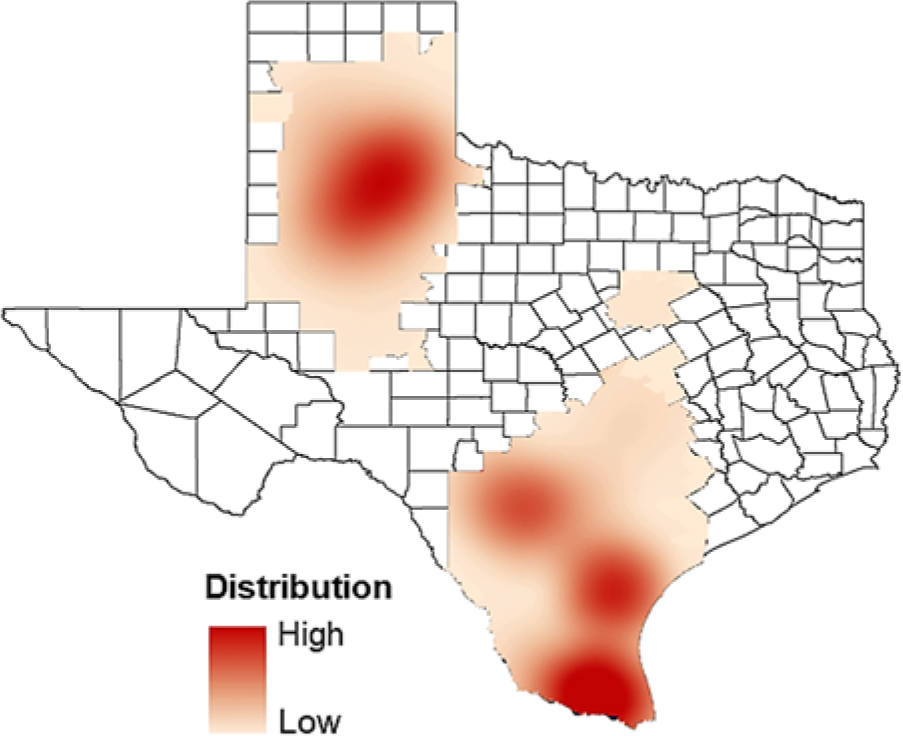
Palmer amaranth infestations were the greatest in the High Plains, followed by Rio Grande Valley, Lower Gulf Coast, and Central Texas regions (particularly in areas west of San Antonio), whereas very little Palmer amaranth infestation was observed in the Blacklands region and none in the Upper Gulf Coast (Figure 2). Palmer amaranth infestations were common in the major cotton-, corn-, and grain sorghum–producing regions of Texas that are relatively drier (i.e., 38 to 96 cm annual rainfall) compared with the more wet environments (i.e., 107 to 127 cm) in the Upper Gulf Coast and Blacklands regions (Supplementary Figure 1). Therefore, additional discussion on herbicide screenings is based on the response of populations surveyed only in five regions, because the Upper Gulf Coast region was excluded from the spatial maps and data analysis.
Distribution gradient of Palmer amaranth across different regions of Texas. Dark red represents areas with high infestation of Palmer amaranth; lighter color represents areas with low distribution of Palmer amaranth.

Response to glyphosate
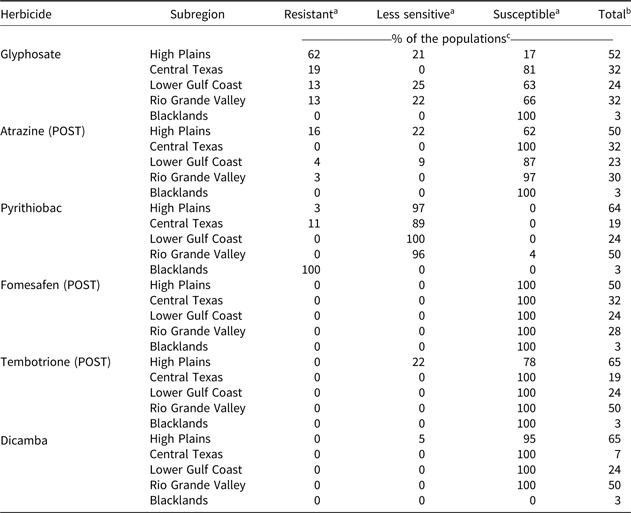
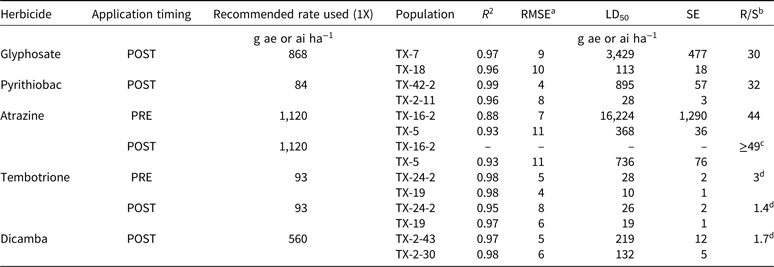
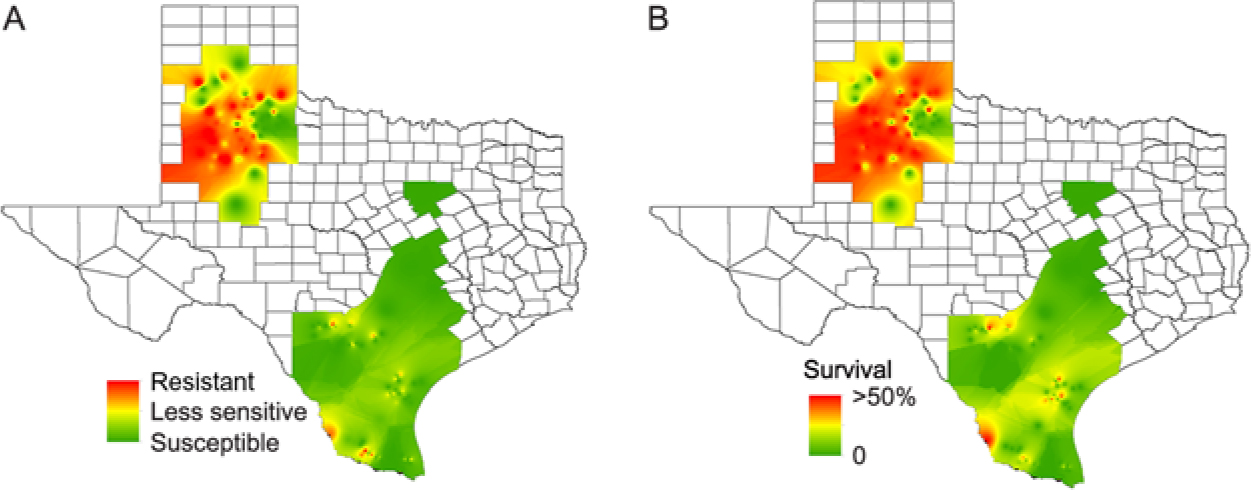
Of the 143 Palmer amaranth populations evaluated for glyphosate, 32% of the samples were resistant and 19% were less sensitive (Figure 3 a and b; Table 2). The Texas High Plains region had the greatest number of populations that were resistant or less sensitive to glyphosate compared with other regions. Of all Palmer amaranth populations evaluated from the High Plains region, 62% were resistant to glyphosate, followed by 19% in Central Texas, and 13% each in Rio Grande Valley and Lower Gulf Coast regions (Table 2). Dose-response assay carried out on one of the resistant populations (TX-7) revealed 30-fold resistance to glyphosate in this population compared with the susceptible standard (TX-18) (Figure 4 a; Table 3). The LD50 values of the glyphosate-resistant and susceptible populations were 3,429 and 113 g ae ha−1, respectively (Figure 4 a; Table 3).
Herbicide resistance profile in Palmer amaranth samples evaluated from across four different subregions of Texas at recommended field-use rate.

a Resistance profiling was conducted based on injury data. Resistant: 0% to 49% injury; less sensitive: 50% to 89% injury; susceptible: 90% to 100% injury. Palmer amaranth seedlings were treated at the two- to three-leaf stage (10-cm height).
b Total number of populations evaluated for each herbicide in each region. Total populations tested for herbicides: glyphosate, n = 143; atrazine, n = 138; pyrithiobac, n = 160; tembotrione, n = 161; fomesafen, n = 137; dicamba, n = 149.
c Population percentages were rounded to the nearest whole number.
LD50 values and resistance ratios for selected resistant or least sensitive Palmer amaranth populations sampled across Texas.

a Abbreviations: –, no data; RMSE, root mean square error; R/S, resistance ratio.
b R/S was calculated based on the LD50 value of the resistant or least sensitive (for dicamba and tembotrione) population relative to the susceptible standard.
c A regression equation could not be developed for this atrazine-resistant population because 50% mortality could not be achieved even at the highest rate tested (32X).
d LD50 ratios were developed on the least sensitive populations that survived dicamba or tembotrione applied POST. Tembotrione completely controlled TX-24-2 when applied PRE.
Regional-scale distribution of Palmer amaranth response to glyphosate based on (A) injury and (B) frequency of survivors. Resistance levels: resistant, 0% to 49% injury; less sensitive, 50% to 89% injury; and susceptible: 90% to 100% injury. Frequency of survivors indicates the stage of advancement of resistance in a given production field. For instance, 50% survivors indicates that approximately half of the individuals in the population are already resistant and that resistance is highly noticeable in the field.

Dose-response analysis of resistant/less sensitive (i.e., pertains to tembotrione and dicamba) and susceptible Palmer amaranth populations for (A) glyphosate, (B) pyrithiobac, (C) atrazine PRE, (D) atrazine POST, (E) tembotrione POST, and (F) dicamba POST. Dashed line represents corresponding LD50 values for the populations.

The frequency of seedling survival (i.e., the proportion of surviving individuals out of the total number of individuals treated, which indicates the stage of advancement of resistance) to glyphosate followed a trend consistent with the level of sensitivity or resistance in the tested populations. The Palmer amaranth populations collected from the Texas High Plains region had the greatest number of survivors within each population, followed by Rio Grande Valley and Lower Gulf Coast regions (Figure 3 b). In early stages of evolution, resistance may not be noticed by growers, because the resistant individuals were present at low frequencies and survivors may have been inferred as weed escapes caused by application and/or environmental factors. Growers typically start noticing resistance when the proportion of survivors is substantial (i.e., approximately >20%).
Glyphosate resistance is already in the advanced stages of evolution in most Palmer amaranth populations in the Texas High Plains, indicating that growers have continued to use glyphosate alone in high frequencies without recognizing the issue soon enough and not following diverse measures to control weeds. The Texas High Plains region is characterized by intensive cultivation of glyphosate-resistant cotton and corn, often with limited or no crop and/or herbicide diversity. In some pockets of this region, especially in the southern parts, monocropping with glyphosate-resistant cotton is common. These practices likely have led to frequent applications of glyphosate and high selection pressure for the evolution of resistance to this herbicide. Frequent use of glyphosate in glyphosate-resistant crops has influenced the evolution of glyphosate-resistant weeds elsewhere (Culpepper et al. Reference Culpepper, Grey, Vencill, Kichler, Webster, Brown, York, Davis and Hanna2006; Norsworthy et al. Reference Norsworthy, Griffith, Scott, Smith and Oliver2008; Steckel et al. Reference Steckel, Main, Ellis and Mueller2008). In the Central Texas and Lower Gulf Coast regions, glyphosate resistance is in the early stages of evolution, based on seedling survival frequency. With adequate measures, farmers in these regions can address glyphosate resistance before it becomes widespread.
Response to pyrithiobac
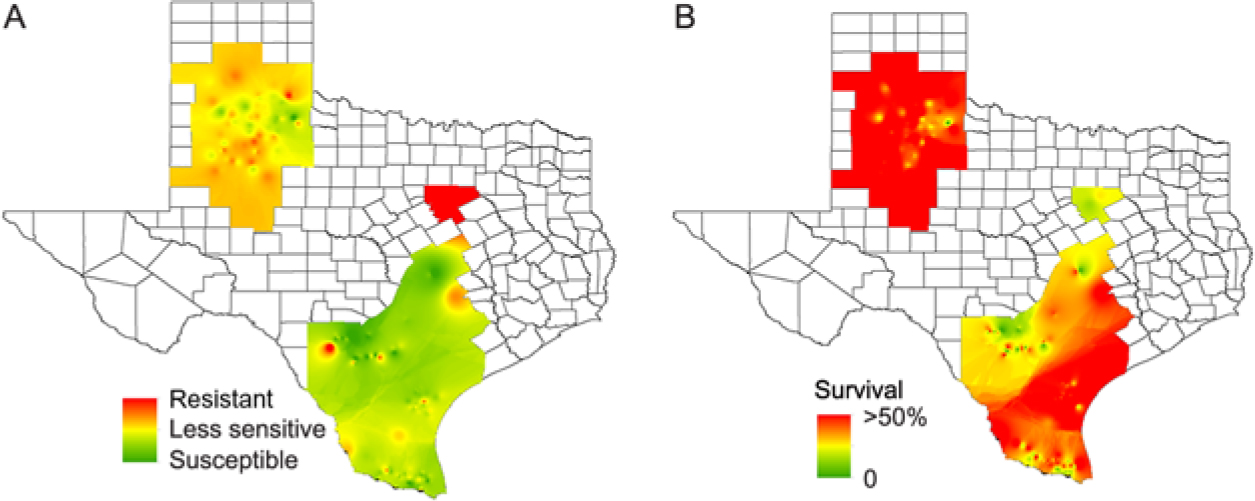
Of the 160 Palmer amaranth populations tested, most (>90%) were confirmed to be resistant or less sensitive to pyrithiobac (POST applications) (Figure 5 a; Table 2) and were widespread in all regions of Texas. The High Plains region had approximately 3% and 97% of Palmer amaranth populations categorized as resistant and less sensitive, respectively (Table 2). Most of these less-sensitive populations had 50% to 75% injury across replications. In the Central Texas region, 11% of the Palmer amaranth populations were resistant and 89% exhibited less sensitivity to pyrithiobac. In the Rio Grande Valley region, 96% of the populations were less sensitive, whereas all populations that originated from the Lower Gulf Coast region were in the less-sensitive category (Table 2). All of the three populations found in the Blacklands region had few survivors (14% to 27%) and were resistant to pyrithiobac (Figure 5 a and b). The highest frequency of survivors were observed in the High Plains, followed by Lower Gulf Coast and Rio Grande Valley (Figure 5 b). The LD50 values of the resistant population (TX-42-2) revealed 32-fold resistance to pyrithiobac compared with the susceptible standard (TX-2-11) (Figure 4 b; Table 3).
Regional-scale distribution of Palmer amaranth sensitivity to pyrithiobac (POST) based on (A) injury and (B) frequency of survivors. Resistance levels: resistant, 0% to 49% injury; less sensitive, 50% to 89% injury; and susceptible: 90% to 100% injury. Frequency of survival indicates the stage of advancement of resistance in a given production field. For instance, 50% survival indicates that about half of the individuals in the population are already resistant and that resistance is highly noticeable in the field.

The ALS-inhibitor herbicides have been used extensively owing to their broad-spectrum weed control, soil residual activity, and less mammalian toxicity (Mazur and Falco Reference Mazur and Falco1989; Tranel and Wright Reference Tranel and Wright2002); however, due to frequent use and intensive selection pressure, weed resistance evolved within 5 years of commercialization. The first ALS inhibitor–resistant Palmer amaranth was reported in 1993 in Kansas (Horak and Peterson Reference Horak and Peterson1995). Currently, ALS-inhibitor resistance is widespread in Palmer amaranth populations throughout the southern US (Norsworthy et al. Reference Norsworthy, Griffith, Scott, Smith and Oliver2008; Singh et al. Reference Singh, Singh, Salas, Lawton-Rauh, Bagavathiannan and Burgos2019). Moreover, Bagavathiannan and Norsworthy (Reference Bagavathiannan and Norsworthy2016) reported ALS-inhibitor resistance in nearly 90% of the roadside Palmer amaranth populations in the Mississippi Delta region, suggesting the prevalence of resistance in the region. In Texas, this is the first report of widespread resistance to pyrithiobac in Palmer amaranth populations, to our knowledge. Pyrithiobac has long been used as an important herbicide in Texas cotton for controlling Palmer amaranth and several other weeds. Results from this study corroborate field control failures of Palmer amaranth frequently reported by stakeholders with this herbicide.
Response to atrazine
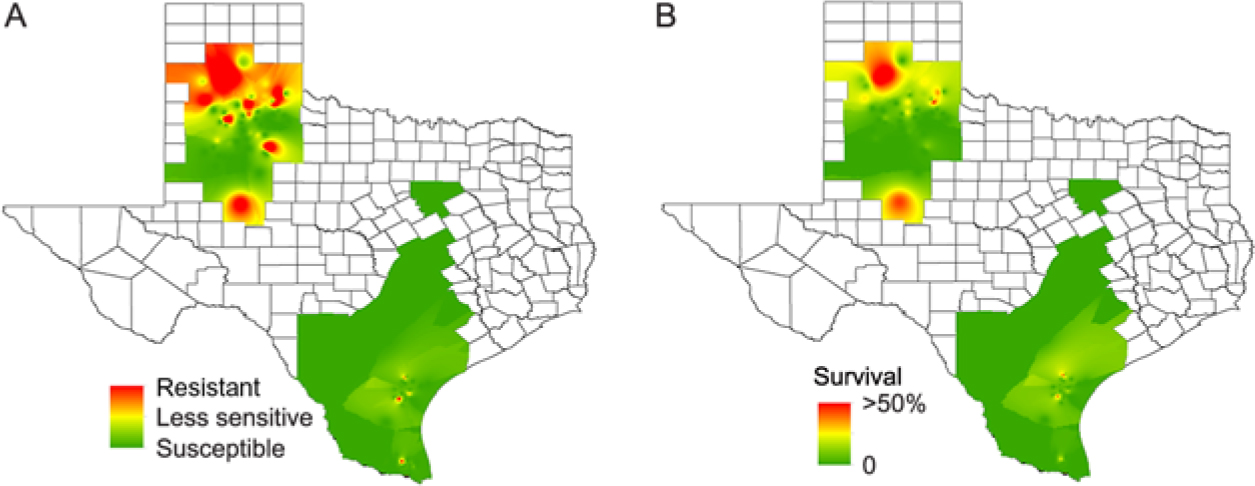
Palmer amaranth resistance to atrazine (POST applications) was confirmed in 17% of the 138 populations tested, with approximately 7% of the populations showing high resistance and 10% showing less sensitivity to this herbicide (Table 2). Atrazine resistance was particularly prevalent in the Texas High Plains (Figure 6 a), with approximately 16% and 22% of the populations from this region classified as resistant and less sensitive, respectively (Table 2). Approximately 4% and 3% of the Palmer amaranth populations collected from the Lower Gulf Coast and Rio Grande Valley regions, respectively, were resistant to atrazine, whereas no resistance was detected among the populations collected from the Central Texas region. A dose-response assay (POST) conducted on a resistant population (TX-16-2) showed 49-fold or higher resistance to atrazine compared with a susceptible standard (TX-5), based on the LD50 value of the susceptible population and the greatest dose tested for the resistant population (Figure 4 d; Table 3). The TX-16-2 atrazine-resistant population could not be controlled with 32X the recommended field rate, which was the highest dose tested in this study.
Regional-scale distribution of Palmer amaranth sensitivity to atrazine (POST) based on (A) injury and (B) frequency of survivors. Resistance levels: resistant, 0% to 49% injury; less sensitive, 50% to 89% injury; and susceptible: 90% to 100% injury. Frequency of survival indicates the stage of advancement of resistance in a given production field. For instance, 50% survival indicates that about half of the individuals in the population are already resistant and that resistance is highly noticeable in the field.

Resistance to atrazine is in its advanced stages of evolution (>50% seedling survival) in the High Plains, especially in the Upper High Plains region (Figure 6 b), compared with the other areas. In this region, corn and grain sorghum are widely grown (Supplementary Figure 1), where atrazine historically has been an important herbicide. Multiple resistance to glyphosate and atrazine (POST) was also common in Palmer amaranth collected in the Texas High Plains, with approximately 33% of the tested populations from this region showing resistance or less sensitivity to both these herbicides. A subset of the Palmer amaranth populations that exhibited resistance to POST atrazine applications was tested for sensitivity to atrazine PRE. Results showed that approximately 90% of the atrazine (POST)-resistant populations from the High Plains and Lower Gulf Coast regions also were resistant to PRE applications (data not shown). A dose-response assay (PRE) conducted on a resistant population (TX-16-2) indicated 44-fold resistance to atrazine compared with a susceptible standard (TX-5), based on the LD50 values (Figure 4 c; Table 3).
Response to tembotrione
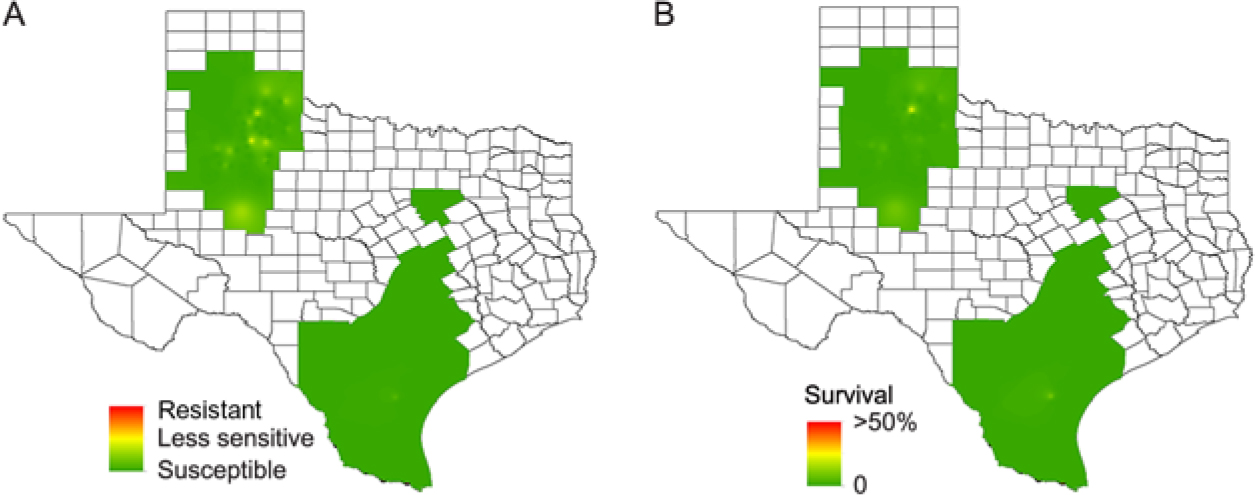
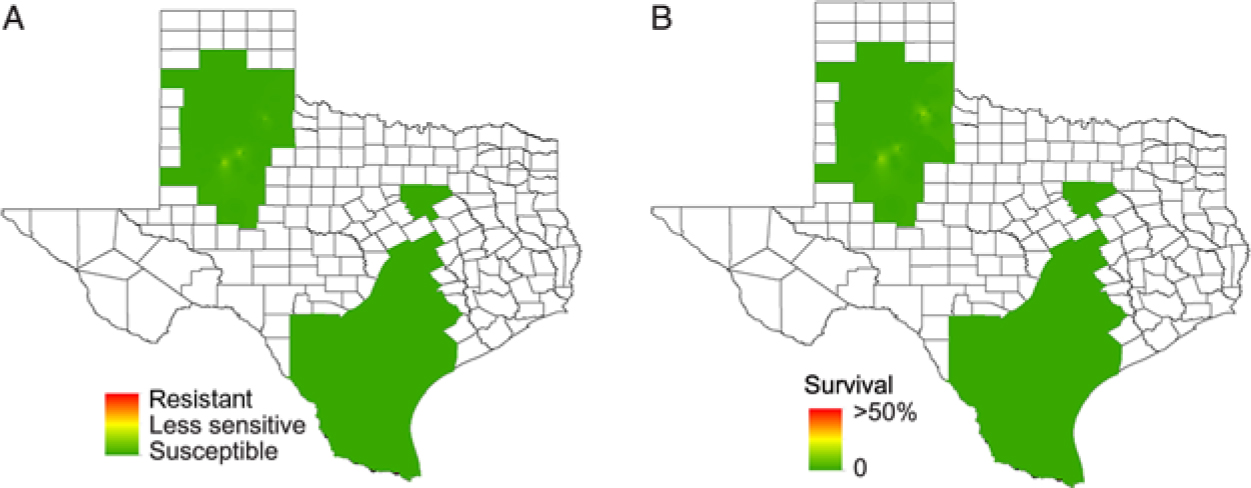
None of the tested populations showed resistance to tembotrione; however, regional-scale variability in sensitivity to tembotrione was observed in the Palmer amaranth populations (Figure 7 a and b; Table 2). Approximately 22% of the tested populations from the High Plains region showed reduced sensitivity to tembotrione at the recommended field rate (Table 2). Among these, two populations (TX-24-2, TX-42-2) had considerably high frequency (approximately 10% to 15%) of survivors, whereas the rest had very few survivors (approximately 1% to 5%). Dose response of TX-24-2 to tembotrione (POST) showed survival at the 1X rate but complete mortality was observed at the 2X and higher rates (Figure 4 e). The LD50 ratios showed that TX-24-2 was 1.4-fold less sensitive to tembotrione POST compared with the susceptible standard (Table 3). A dose-response assay for tembotrione PRE on TX-24-2 revealed 3-fold less sensitivity in this population compared with the susceptible population, based on LD50 values. However, complete control was observed at the 1X rate applied PRE (Table 3).
Regional-scale distribution of Palmer amaranth sensitivity to tembotrione based on (A) injury and (B) frequency of survivors. Resistance levels: resistant, 0% to 49% injury; less sensitive, 50% to 89% injury; and susceptible: 90% to 100% injury. Frequency of survival indicates the stage of advancement of resistance in a given production field. For instance, 50% survival indicates that about half of the individuals in the population are already resistant and that resistance is highly noticeable in the field.

Approximately 14% of the populations from the High Plains region with resistance or reduced sensitivity to atrazine also showed reduced sensitivity to tembotrione. Rapid metabolic degradation is an important mechanism of crop selectivity to HPPD-inhibitor herbicides, such as tembotrione (Schulte and Kocher Reference Schulte and Kocher2009), as well as the PSII inhibitor atrazine (Shimabukuro Reference Shimabukuro1967). In a waterhemp [A. tuberculatus (Moq.) J.D. Sauer] population documented in Illinois that was HPPD-inhibitor (mesotrione) and atrazine resistant (i.e., multiply resistant), Ma et al. (Reference Ma, Kaundan, Tranel, Riggins, McGinness, Hager, Hawkes, McIndoe and Riechers2013) found that rapid metabolism through distinct detoxification mechanisms was responsible for resistance to both herbicides. The occurrence of reduced sensitivity to tembotrione in several populations with preexisting resistance to atrazine in the Texas High Plains may be attributed to common evolutionary forces associated with management patterns in specific fields, but whether common physiological or molecular mechanisms are involved that could predispose atrazine-resistant populations with reduced sensitivity to tembotrione needs to be investigated further.
Weed escapes resulting from sublethal herbicide applications can accumulate minor resistance alleles through outcrossing and gradually increase the level of resistance (i.e., polygenic resistance) in subsequent generations (Busi et al. Reference Busi, Neve and Powles2013; Gressel Reference Gressel1995; Neve and Powles Reference Neve and Powles2005). The prevalence of reduced sensitivity to tembotrione suggests the potential risks associated with reduced-rate applications of this herbicide. In addition to intentionally reducing application rates, low-dose scenarios may occur due to suboptimal application conditions (e.g., lack of an adjuvant), inefficient equipment and calibration, and poor environmental conditions. Thus, it is imperative to pay close attention to the factors affecting herbicide efficacy and minimize the risk for the evolution of tembotrione resistance in Palmer amaranth through recurrent selection.
Response to fomesafen
None of the tested Palmer amaranth populations showed any resistance to the field rate (1X) of fomesafen (Table 2). The PPO-inhibitor herbicides have been used historically in cotton (PRE) and soybean (POST) production in Texas. Considering the prevalence of Palmer amaranth in the majority of cotton production areas in the state, it is likely that they have been exposed to PPO-inhibitor herbicides used in cotton fields. Recently, PPO-inhibitor herbicide resistance has been widely reported in Palmer amaranth populations in Arkansas, Illinois, and Tennessee (Heap Reference Heap2019; Salas et al. Reference Salas, Burgos, Tranel, Singh, Glasgow, Scott and Nichols2016; Varanasi et al. Reference Varanasi, Brabham, Norsworthy, Nie, Young, Houston, Barber and Scott2018). This possibly has resulted from heavy reliance on PPO-inhibitor herbicides for controlling multiple ALS inhibitor– and glyphosate-resistant Palmer amaranth populations in the Mississippi Delta region. The absence of resistance to PPO-inhibitor herbicides in our screening can be explained by relatively lower selection pressure with the use of fomesafen as a PRE herbicide in cotton (i.e., more weed sensitivity) and the typical use of other POST herbicides in a program containing PRE applications of fomesafen. Results indicate that PPO-inhibitor resistance is not currently a concern on a regional scale in Texas, but it is imperative that growers continue to preserve the utility of this herbicide SOA through implementation of proactive resistance management strategies.
Response to dicamba
Following reports of glyphosate-resistant Palmer amaranth, management programs in the southern United States have actively used dicamba for spring burndown applications (Norsworthy et al. Reference Norsworthy, Smith, Scott and Gbur2007). The frequency of use of dicamba on Palmer amaranth has been increasing with the cultivation of dicamba-resistant crops. In the current survey conducted in Texas, 48 of the 149 tested populations (32%) had survivors (approximately 1% to 2% survivors) when half the recommended application rate (0.5X = 284 g ae ha−1) of dicamba was used in an initial screening (data not shown). The injury levels of the survivors ranged from 75% to 89%. Three Palmer amaranth populations (TX43-2, TX16-2, and TX38-2) out of the 149 tested populations had survivors at the 1X (560 g ae ha−1) dicamba application rate at 21 DAT (Figure 8; Table 2). Two of these surviving populations (TX43-2 and TX16-2) recovered from injury and progressed to reproduction. All plants in these populations died at the 2X rate of dicamba (1,120 g ae ha−1) (Figure 4 f). The LD50 values showed that TX43-2 was 1.7-fold less sensitive to dicamba compared with the susceptible standard (Table 3).
Regional-scale distribution of Palmer amaranth sensitivity to dicamba based on (A) injury and (B) frequency of survivors. Resistance levels: resistant, 0% to 49% injury; less sensitive, 50% to 89% injury; and susceptible: 90% to 100% injury. Frequency of survival indicates the stage of advancement of resistance in a given production field. For instance, 50% survival indicates that about half of the individuals in the population are already resistant and that resistance is highly noticeable in the field.

Results illustrate the differential response to dicamba of some Palmer amaranth populations in Texas. Dicamba resistance in Palmer amaranth has not been documented in the field to date in the United States, to our knowledge. Documented field resistance to synthetic auxin herbicides is among the lowest in comparison with other herbicide SOAs (Heap Reference Heap2019). This could be attributed to the complex SOA of synthetic auxins, presence of rare alleles endowing resistance in nature, and potential fitness penalties associated with resistance (Jugulam et al. Reference Jugulam, Hall, Johnson, Kelley and Riechers2011). Nevertheless, at least 39 weed species have evolved resistance to auxinic herbicides worldwide (Heap Reference Heap2019). The first case of synthetic auxin herbicide resistance in Palmer amaranth was reported in Kansas, with a 3.2-fold resistance to 2,4-D (Kumar et al. Reference Kumar, Liu, Boyer and Stahlman2019), but auxin resistance has been observed more commonly in waterhemp, a species similar to Palmer amaranth in its biology. In a waterhemp population in Nebraska, Bernards et al. (Reference Bernards, Crespo, Kruger, Gaussoin and Tranel2012) reported at least 10-fold less sensitivity to 2,4-D (a synthetic auxin herbicide). This waterhemp population also exhibited reduced sensitivity to dicamba. More recently, Shergill et al. (Reference Shergill, Barlow, Bish and Bradley2018) confirmed 2,4-D resistance in a waterhemp population in Missouri that was already resistant to glyphosate, chlorimuron (an ALS inhibitor), atrazine, mesotrione, and fomesafen.
The overall sensitivity to dicamba of the populations tested in our study show the excellent value of this herbicide for managing Palmer amaranth. However, these survivors, though at low frequencies, can perpetuate and increase the risk of resistance through recurrent selection if additional measures to prevent seed production are not implemented. Tehranchian et al. (Reference Tehranchian, Norsworthy, Powles, Bararpour, Bagavathiannan, Barber and Scott2017) have shown in greenhouse conditions that recurrent selection under sublethal doses can reduce the sensitivity of Palmer amaranth to this herbicide. It is critical that dicamba is used as a component of a robust weed management program to ensure the sustainability of this herbicide.
Multiple resistance
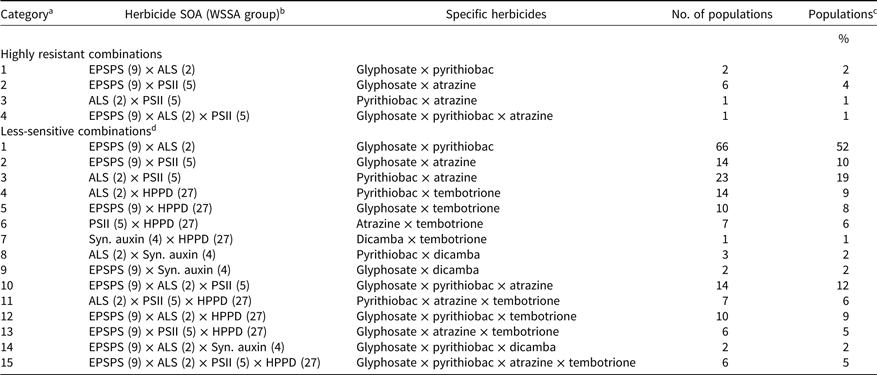
Multiple resistance to two or more herbicide SOAs has been observed in Palmer amaranth populations sampled across Texas. Approximately 52% of the populations exhibited resistance or reduced sensitivity to EPSPS- and ALS-inhibiting herbicides (Table 4). Resistance to these herbicide groups is prevalent in Texas, especially in the High Plains region. Similar cases of multiple resistance in Palmer amaranth to glyphosate and ALS inhibitors also have been documented in other states, such as Georgia (Sosnoskie et al. Reference Sosnoskie, Kichler, Wallace and Culpepper2011) and Mississippi (Nandula et al. Reference Nandula, Reddy, Koger, Poston, Rimando, Duke, Bond and Ribeiro2012). Furthermore, 10% of Palmer amaranth populations tested, exhibited resistance to both glyphosate and atrazine in the current study (Table 4); 13 of these 14 populations were from the High Plains. Multiple resistance in Palmer amaranth to glyphosate and the PSII inhibitors atrazine or bromoxynil were also documented in Nebraska (Chahal et al. Reference Chahal, Varanasi, Jugulam and Jhala2017).
Multiple-herbicide resistance or reduced sensitivity in Palmer amaranth populations surveyed across Texas.

a Highly resistant combinations: injury ≤49%; less-sensitive combinations: injury ≤89%.
b Abbreviations: ALS, acetolactate synthase; EPSPS, 5-enolpyruvylshikimate-3-phosphtae synthase; HPPD, 4-hydroxyphenylpyruvate dioxygenase; PSII, photosystem II; SOA, site of action; Syn, synthetic.
c Percentage of resistant or less-sensitive populations is based on total populations tested for respective multiple herbicide SOA combination. Percentage was rounded to nearest whole number.
d Populations with less sensitivity involving tembotrione (HPPD inhibitor) and/or dicamba (synthetic auxin).
Fourteen Palmer amaranth populations tested in this study were resistant or less sensitive to at least three herbicide SOAs (EPSPS, ALS, and PSII) (Table 4). One of these populations was highly resistant to herbicides of these SOAs. Previously, there were only two reported cases of three-way multiple resistance in Palmer amaranth in the United States (Heap Reference Heap2019): resistance to ALS, PSII, and HPPD inhibitors in Kansas, and to EPSPS, ALS, and PSII inhibitors in Georgia. Similarly, 18 populations in the current study showed three-way multiple resistance or less sensitivity to either combination of EPSPS, ALS, PSII, and HPPD inhibitors. The use of auxinic herbicides, such as dicamba, is valuable in effective control of this species, but growers should be proactive in protecting the utility of this and other weed management technologies currently being used. In this study, two populations resistant to EPSPS and ALS inhibitors also have shown less sensitivity to dicamba. Approximately 5% of the tested populations showed four-way multiple resistance to EPSPS, ALS, PSII, and HPPD inhibitors (Table 4). The extent of multiple resistance in the current study indicates growers may have to use integrated weed management strategies instead of relying solely on herbicides to resolve complex resistance issues.
Findings from this study illustrate the current baseline response of Palmer amaranth to various important herbicides across different regions in Texas. In particular, the Texas High Plains region has more resistant weed populations, with multiple resistance to glyphosate and atrazine being prevalent. This trend could be attributed to intensive farming and a general lack of weed management diversity used for controlling Palmer amaranth in this region. In other regions, resistance is in the early stages of evolution for various herbicides, as evidenced by the relatively low frequencies of survivors in the tested populations at recommended field-use rates. It is critical that growers in these regions act quickly and ensure the continued utility of these herbicides through implementation of best management practices as outlined by Norsworthy et al. (Reference Norsworthy, Ward, Shaw, Llewellyn, Nichols, Webster, Bradley, Frisvold, Powles and Burgos2012). The upcoming auxin- and HPPD-resistant crop technologies will help manage existing resistance issues in this species, but a lack of diversity in management can lead to weed resistance to these technologies as well. Additional research and extension efforts are necessary in promoting adoption of best management practices among stakeholders.
Supplementary material
To view supplementary material for this article, please visit https://doi.org/10.1017/wet.2019.14
Author ORCIDs
Muthukumar Bagavathiannan https://orcid.org/0000-0002-1107-7148; Vijay Singh, https://orcid.org/0000-0001-9746-7923
Acknowledgments
The authors acknowledge Rand Merchant for assisting with sample collections in the Texas High Plains, Seth Abugho for helping with greenhouse assays, and Miles Mikeska for assisting with initial spatial analysis. Financial support was provided in part by the Texas Cotton Support Committee/Cotton Incorporated, Texas Corn Producers Board, Monsanto, and Bayer CropScience. No conflicts of interest have been declared.