INTRODUCTION
Although wheat is recognized as being the most popular cultivated cereal in recent years, there has been a steady increase worldwide in triticale production since the mid-1980s (Salmon et al. Reference Salmon, Mergoum, Gómez-MacPherson, Mergoum and Gómez-Macpherson2004). Triticale is grown in many countries of the world, but the major producers are in Europe, especially Central and Eastern Europe. Triticale plays a similar role to wheat in the crop rotation but displays some agronomic advantages. Modern triticale varieties are on a par with the best common wheat cultivars in terms of their yield potential under favourable conditions and are often more productive than most wheat cultivars when planted on less fertile and marginal soil types (Ammar et al. Reference Ammar, Mergoum, Rajaram, Mergoum and Gómez-Macpherson2004). Triticale is able to resist unfavourable biotic and abiotic stress conditions and produce high yields. In areas where abiotic stresses, such as drought, extreme temperatures or poor chemical conditions are prevalent, triticale has been shown consistently to be very competitive compared with other cultivated cereal crops (Salmon et al. Reference Salmon, Mergoum, Gómez-MacPherson, Mergoum and Gómez-Macpherson2004; Martinek et al. Reference Martinek, Vinterova, Buresova and Vyhnanek2008).
A crop grown after a different species (i.e. in rotation) generally produces higher yields than one grown after the same species (i.e. in monoculture) (Lal Reference Lal1997). Continuous cropping impairs many physical, biological and chemical properties in the soil (Krupinsky et al. Reference Krupinsky, Bailey, McMullen, Gossen and Turkingtond2002; Govaerts et al. Reference Govaerts, Mezzalama, Sayre, Crossa, Nicol and Deckers2006). Monoculture, and particularly cereal monoculture, cause undesirable changes in the physical properties of the soil. Structural degradation alters the pore space distribution and functionality of the soil, thus affecting soil water distribution and biological activity (Hassink et al. Reference Hassink, Bouwman, Zwart, Bloem and Brussaard1993; Chan & Heenan Reference Chan and Heenan1996). However, Miglierina et al. (Reference Miglierina, Iglesias, Landriscini, Galantini and Rosell2000) showed that although differences exist between monoculture and rotations in terms of differential porosity and available water capacity, the bulk density does not differ. The influence of crop rotation and tillage management on the chemical properties of soil, such as organic matter and nitrogen (N) content, has been investigated extensively throughout the word (Miglierina et al. Reference Miglierina, Iglesias, Landriscini, Galantini and Rosell2000; Ścigalska & Łabuz Reference Ścigalska and Łabuz2011). Cereals grown in monoculture are also limited by increased incidence of disease, weeds, rhizosphere micro-organisms and herbicide residues (Cook Reference Cook2003; Angus et al. Reference Angus, Peoples, Kirkegaard, Ryan, Ohlander and Unkovich2008). Other factors involved may be that non-cereal crops in a rotation stimulate the mineralization of N in the soil. Many of the factors mentioned above initially result in the impairment of the root system and subsequent decline in yield (Ryan et al. Reference Ryan, Kirkegaard and Angus2006; Angus et al. Reference Angus, Kirkegaard, Peoples, Ryan, Ohlander, Hufton and Luckett2011). Root characteristics are used widely in research on plant reactions in the course of adaptation to stress conditions (Kage et al. Reference Kage, Kochler and Stützel2004; Vysotskaya Reference Vysotskaya2005; Alameda et al. Reference Alameda, Anten and Villar2012). However, changes in above-ground growth or yields do not necessarily lead to changes in appearance of the root system (Taylor & Brar Reference Taylor and Brar1991; Kopeć & Głąb Reference Kopeć and Głąb2002). Environmental conditions also play a significant role in the regulation of root and shoot biomass production and on root: shoot ratio (RSR) (Głąb & Kacorzyk Reference Głąb and Kacorzyk2011; Paula & Pausas Reference Paula and Pausas2011).
Thus far, the impact of crop rotation on root morphology has not been well recognized for all cereals, focusing only on major crops such as wheat and maize (Holanda et al. Reference Holanda, Mengel, Paula, Carvaho and Bertoni1998; Chen & Weil Reference Chen and Weil2010). In addition, little information is available in the literature relating to the triticale rooting system. In the present study, the long-term effect of triticale cultivated using the Norfolk crop rotation (NCR) was assessed and compared with a monoculture rotation (MCR) on plant root and shoot production in the 8th and 9th years of a long-term experiment. The objective was to evaluate the biomass production of triticale including root distribution, with special focus on the morphometric parameters of the root system such as root length, root diameter and derived variables.
MATERIALS AND METHODS
Experimental design
The field trial was located at the experimental station in Mydlniki, Department of Agrotechnology and Agricultural Ecology, University of Agriculture in Krakow, Poland (50°04′N, 19°51′E, 270 m a.s.l.). The experiment was laid out as a split-plot design with four replications to test the effects of the main-plot treatment of crop rotation, i.e. the NCR, and a triticale MCR and the sub-plot treatment of the triticale form, i.e. spring triticale (ST) and winter triticale (WT). The crop rotations were established in 2002 and the varieties of triticale used were ‘Dublet’ for ST and ‘Woltario’ for WT. The crop rotations tested were:
• Norfolk crop rotation with the following crop sequence: sugar beet (Beta vulgaris L.), ST (×Triticosecale Wittm.), faba bean (Vicia faba L.) and WT
• Monoculture using a sequence of two crops: WT and ST.
Each crop was grown each year so the field experiment consisted of 16 plots. The area of the individual plots totalled 12 m2 (2×6 m). The soil was conventionally tilled using an inversion mouldboard plough. Triticale (both spring and winter) and sugar beet were fertilized with 80 kg N/ha, 120 kg P2O5/ha and 100 kg K2O/ha. Faba bean was treated with pre-sowing fertilization of 30 kg N/ha, 120 kg P2O5/ha and 100 kg K2O/ha. Sugar beet also received cattle manure at a rate of 30 t/ha (141 kg N/ha, 142 kg P2O5/ha and 194 kg K2O/ha). Manure was applied in March and was incorporated by ploughing before the seedbed was prepared. Triticale harvest occurred on 4 August 2009 and 10 August 2010. At harvest time, straw and total grain weight was determined from the whole plot. The harvest index (HI) was calculated as the ratio of grain yield (expressed as 0 mg/g moisture content) to wheat above-ground dry matter.
Soil and climate
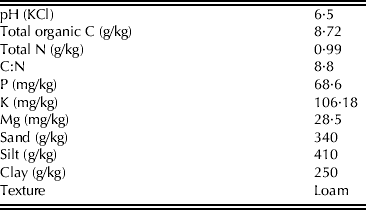
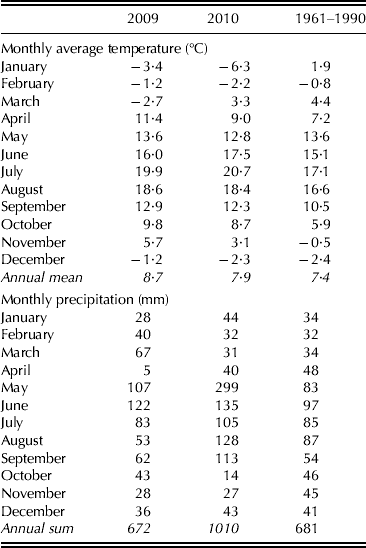
The soil type in the experimental field was the loam Mollic Fluvisol (IUSS Working Group WRB 2007), developed from loess. Table 1 reports some of the soil characteristics based on samples collected in 2002, before the start of the trial. The climate of the experimental site, situated in the south of Poland near Krakow, is temperate. The average annual temperature during the study period was 8·3 °C and the average annual precipitation was 841 mm (Table 2).
Soil characteristics of Mollic Fluvisol from the trial location (0–20 cm layer)

Average monthly temperature and total precipitation at the experimental site during the period 2009–2010 plus the long-term averages 1961–90

Sampling and analysis of roots
Roots in the experimental plots were sampled in August 2009 and August 2010 using the soil-core method (Bohm Reference Bohm1979); the core diameter was 80 mm. Samples were taken in three replications per plot, to a depth of 30 cm and were divided into six layers: 0–5, 5–10, 10–15, 15–20, 20–25 and 25–30 cm. Roots were washed using a hydropneumatic elutriation system (Smucker et al. Reference Smucker, McBurney and Srivastava1982) to remove mineral particles from the samples. Before scanning, any organic contamination was removed manually. Digital images were obtained with an Epson Perfection 4870 Photo scanner (Seiko Epson Corp., Japan) and saved in tiff format with a resolution of 600 dpi. The images were analysed using the image analysis software APHELION (ADCIS S.A. and Amerinex Applied Imaging, Herouville Saint-Clair, France) and the root characteristics were then calculated. The procedure of image analyses described by Bauhus & Messier (Reference Bauhus and Messier1999) was used and comprises four main steps: filtering, segmentation, preparing root skeleton and morphometric measurements. The measured root length was divided into eight diameter classes: <0·02, 0·02–0·05, 0·05–0·1, 0·1–0·2, 0·2–0·5, 0·5–1·0, 1·0–2·0 and >2·0 mm.
The following calculations were then made. Root length density (RLD) was calculated by dividing the total root length by the volume of the soil sample. Specific root length (SRL) was calculated by dividing total root length by root dry weight. Mean root diameter (MRD) was calculated as the weighted mean of root length for particular diameter classes. Root surface area (RSA) was calculated as the product of root length and circumference using measured diameters. After scanning, roots were dried at a temperature of 70 °C in order to determine the root dry matter (RDM) content. Based on the RDM and the above-ground dry matter the RSR was then determined.
Soil physical and chemical analysis
Soil samples for chemical and physical analysis were collected from the 0 to 30 cm soil layer before harvest in August 2009 and August 2010. Bulk density was measured by taking soil samples using a metal cylinder with a volume of 100 cm3 (50·2 mm diameter and 50·5 mm high) in six replications for every plot. The samples were weighed and dried until they reached a constant weight. Total porosity was calculated from the soil particle density and dry bulk density of the samples, while the soil particle density was determined using the pycnometer method (Blake & Hartge Reference Blake, Hartge and Klute1986). The mean value of particle density was 2·65 t/m3 in the 0–30 cm soil layer.
Soil organic carbon (SOC) was determined after wet mineralization in potassium dichromate (VI) using Tiurin's method (Tiessen & Moir Reference Tiessen, Moir and Carter1993), and total N was determined – after nitrate reduction to ammonia using a mixture of metallic zinc and iron (9:1) and sample mineralization in concentrated sulphuric acid (VI) using the Kjeldahl method (Bremner Reference Bremner1960).
Statistics
The effects of cultivating spring and WT in two crop rotations were analysed using analysis of variance (ANOVA). Analysis of variance and the differences of the means were tested using STATISTICA 9·0 software (StatSoft Inc.). The separation of means was performed using Duncan's test at P<0·05.
RESULTS
Effect of crop rotation on soil parameters
The mean bulk density of the investigated soil was 1·53 t/m3 and the mean value for total soil porosity was 0·421 m3/m3 (Table 3). These two basic physical parameters were not significantly different between ST v. WT or monoculture v. crop rotation.
Basic soil physical properties, organic carbon (SOC) and total nitrogen content in soil under spring triticale (ST) and winter triticale (WT) in the Norfolk crop rotation (NCR) and monoculture rotation (MCR) production system. Mean values of the 0–30 cm soil layer. Results are the averages of two years, 2009–2010
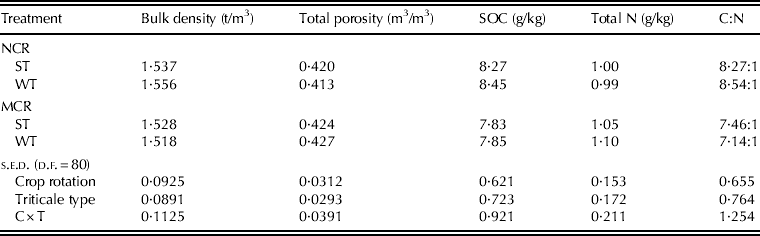
The content of total N in the soil was not affected by experimental factors and it had an average value of 1·04 g/kg. Despite the lack of differences in N content in the soil the SOC was significantly (P<0·05) reduced in the MCR (7·83 g/kg) in relation to NCR (8·36 g/kg). No interaction between crop rotation and the spring or winter form of triticale was observed. As a result of changes in SOC the C:N was also reduced in the MCR (7·29 v. 8·40) when compared with the NCR.
Root characteristics
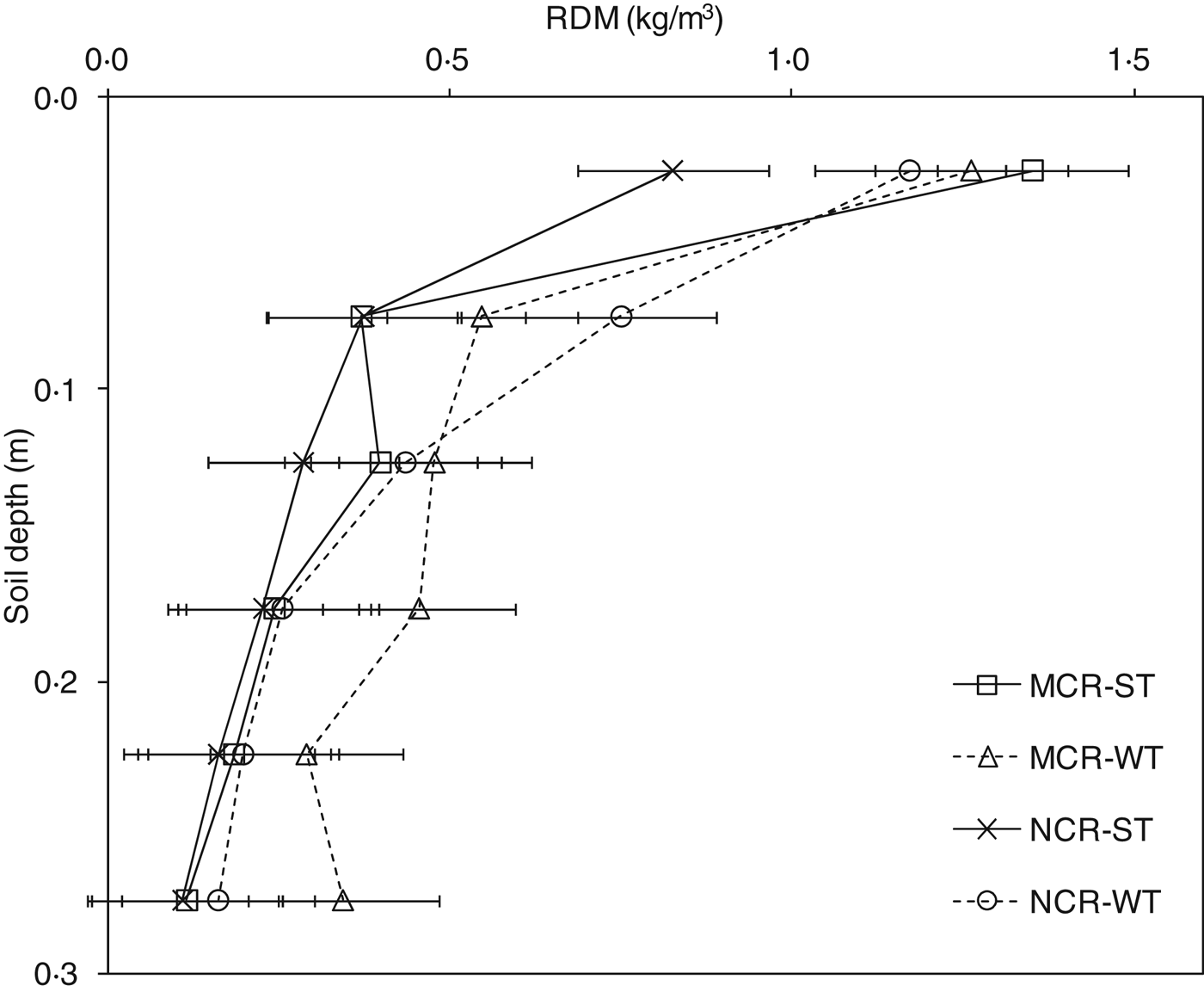
The treatments used changed the distribution of roots and their morphometric parameters significantly (P<0·05). The highest root biomass (c. 0·42 of the total RDM) was found in the topmost 0–5 cm soil layer, with 0·19, 0·14, 0·11, 0·08 and 0·07 being found in the 5–10, 10–15, 15–20, 20–25 and 25–30 cm layers, respectively (Fig. 1). The only difference in RDM was observed between ST in NCR, namely (0·338 kg/m3) and WT in MCR (0·545 g/cm3).
Effect of crop rotation (NCR: Norfolk crop rotation; MCR: monoculture rotation) and triticale type, i.e. spring triticale (ST) and winter triticale (WT) on root dry matter (RDM) at six soil depths. Horizontal bars represent the standard errors. Results are the averages of 2 years, 2009–2010.
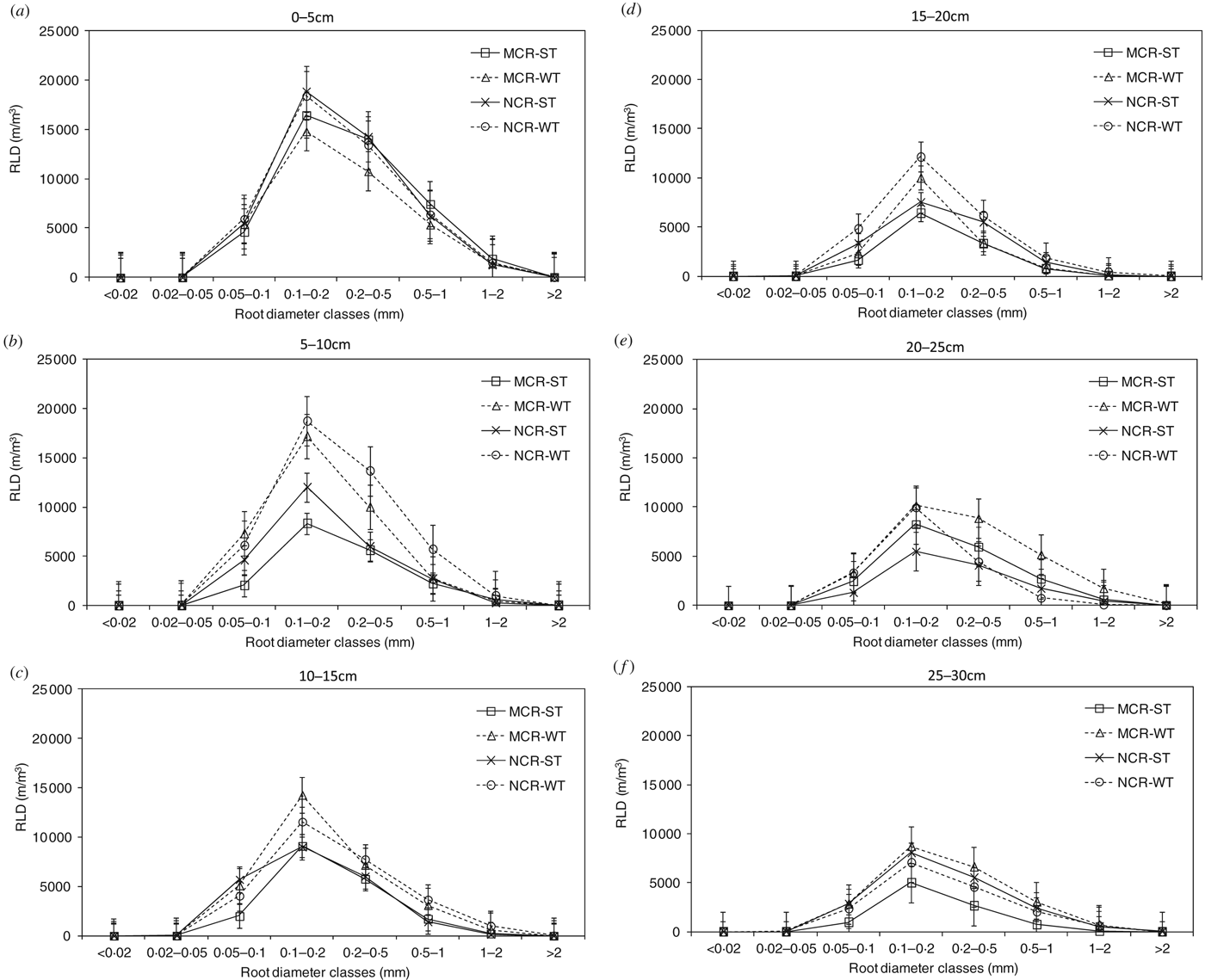
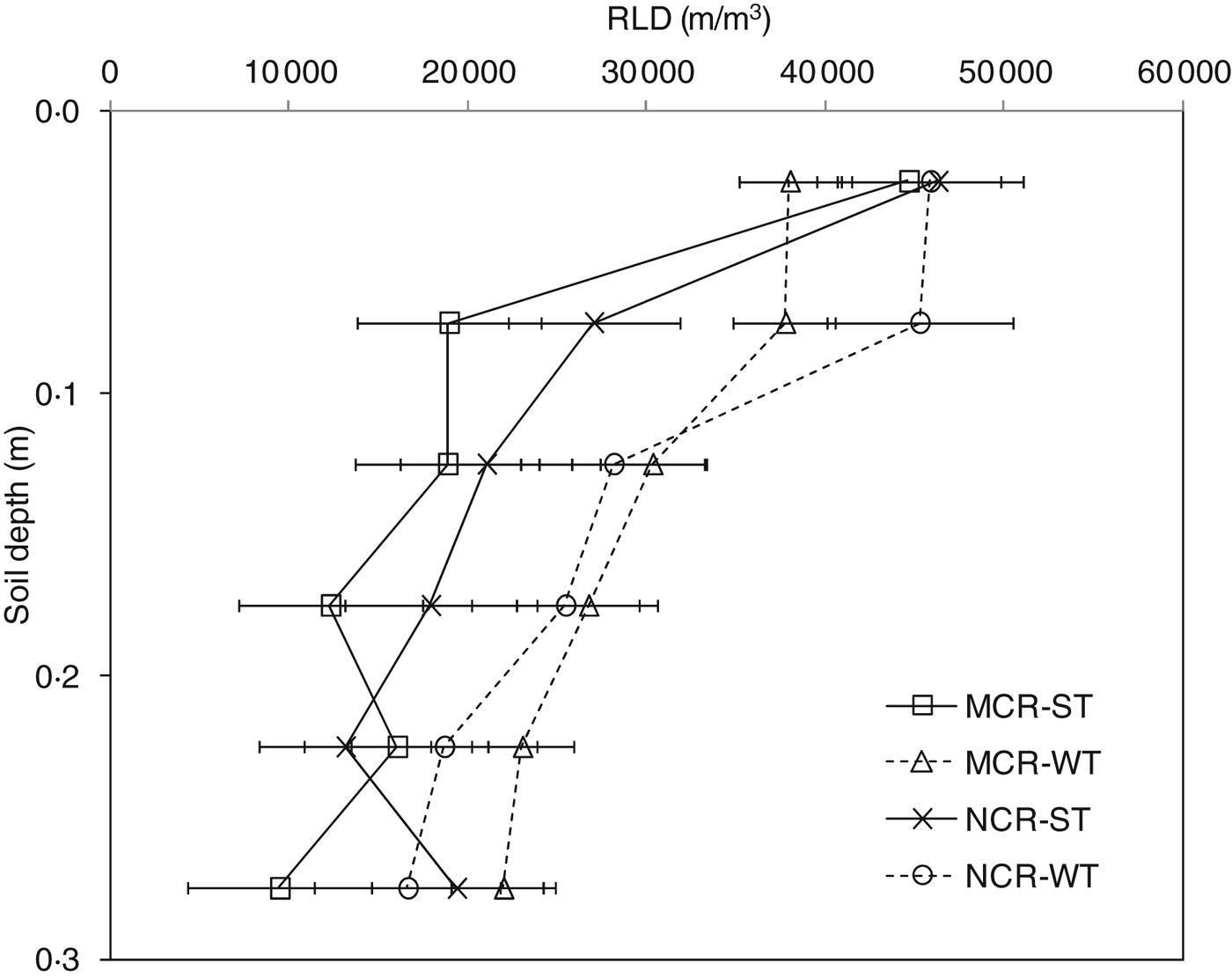
The RLD of triticale reached a mean value of 26 231 m/m3 for the whole 0–30 cm soil layer (Table 4). The most frequent root fraction had a diameter of 0·1–0·2 mm (Fig. 2). The highest proportion (0·28) of the RLD was noticed in the 0–5 cm layer and was slightly reduced in the lower depths with levels of 0·21, 0·17, 0·11, 0·13 and 0·10 in the lower soil layers (Fig. 3). Spring triticale in the NCR was characterized by the lowest root length of 21 897 m/m3. The higher values of RLD were observed for WT in both crop rotations tested, i.e. NCR and MCR and this effect was observed in the 5–20 cm soil depth. Root length distribution, and in particular root diameter classes, is shown in Fig. 2. The differences in RLD values between ST and WT described above were particularly related to changes in RLD values in the root diameter classes of 0·1–0·5 mm in the 5–10 cm layer and 0·1–0·2 mm in the 10–20 cm soil layer. At a depth below 20 cm there were no differences between any of the treatments examined.
Effect of crop rotation (NCR: Norfolk crop rotation; MCR: monoculture rotation) and triticale type, i.e. spring (ST) and winter triticale (WT) on root length density (RLD) at six soil depths for different root diameter classes. Vertical bars represent the standard errors (s.e.). Results are the averages of 2 years, 2009–2010.
Effect of crop rotation (NCR: Norfolk crop rotation; MCR: monoculture rotation) and triticale type, i.e. spring triticale (ST) and winter triticale (WT) on root length density (RLD) at six soil depths. Horizontal bars represent the standard errors (s.e.). Results are the averages of 2 years, 2009–2010.
Morphological parameters of triticale roots: root length density (RLD), specific root length (SRL), mean root diameter (MRD) and root surface area (RSA). Mean values of six soil layers from a depth of 0–30 cm. Data represent spring triticale (ST) and winter triticale (WT) in the Norfolk crop rotation (NCR) and monoculture rotation (MCR) production systems. Results are the averages of 2 years, 2009–2010
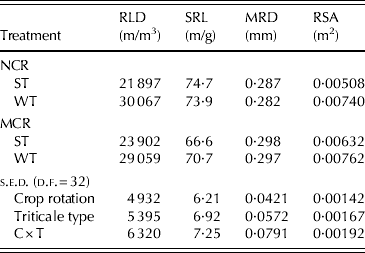
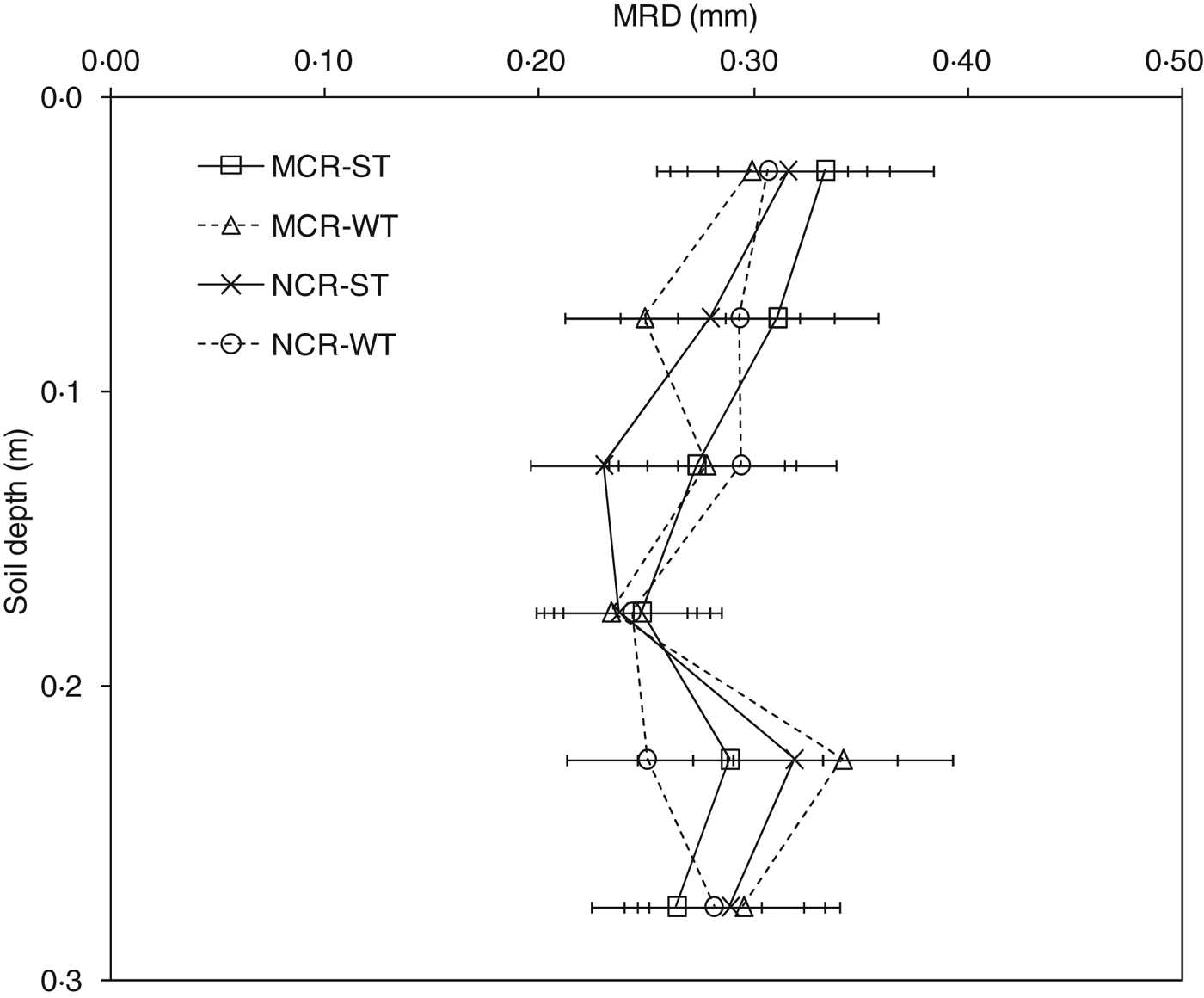
The mean value of MRD for triticale was c. 0·28 mm (Table 4) and was not influenced by soil depth (Fig. 4). The MRD was also not affected by any of the treatments examined.
Effect of crop rotation (NCR: Norfolk crop rotation; MCR: monoculture rotation) and triticale type, i.e. spring triticale (ST) and winter triticale (WT)) on mean root diameter (MRD) at six soil depths. Horizontal bars represent the standard errors (s.e.). Results are the averages of 2 years, 2009–2010.
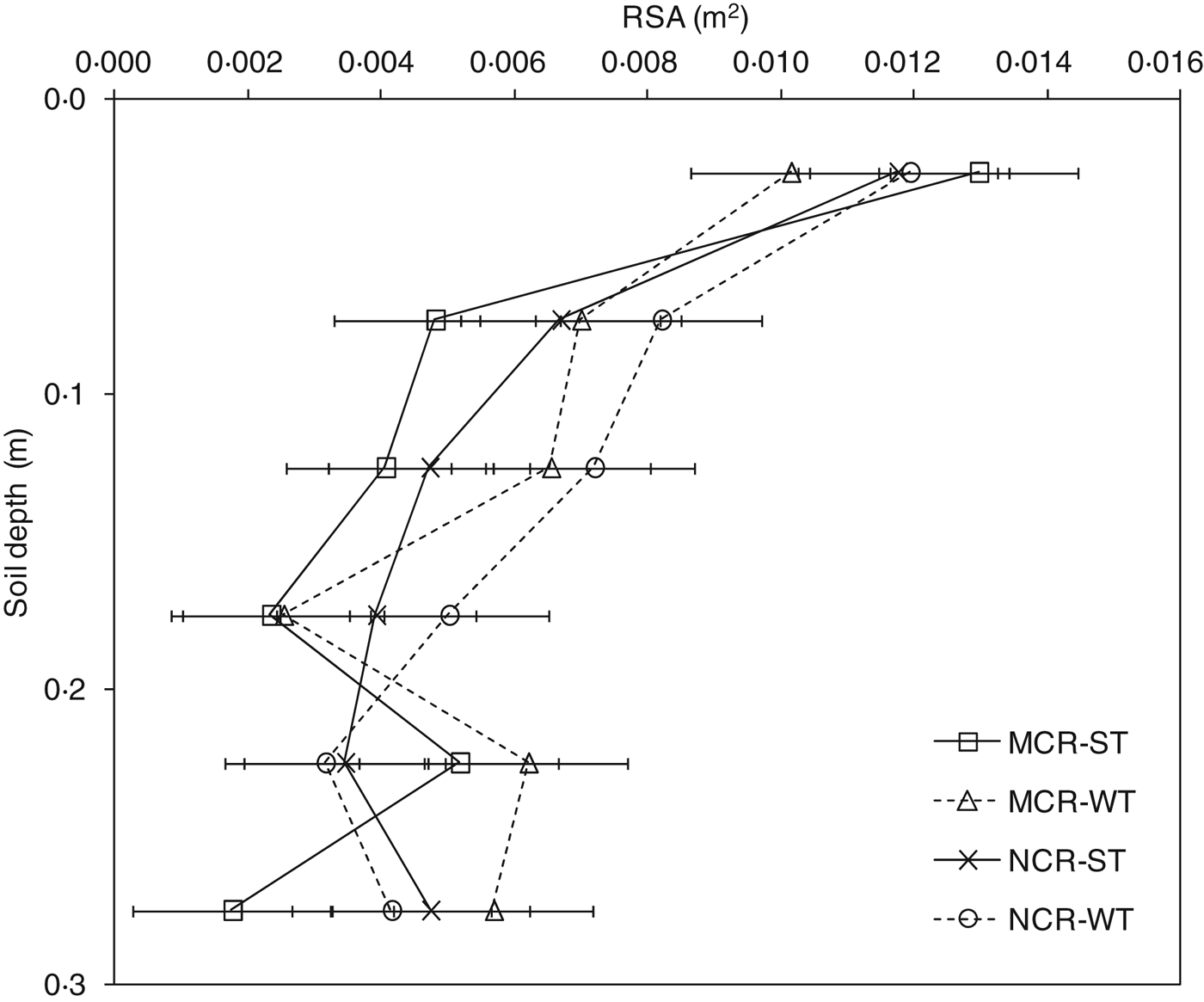
The RSA is a derivative of the RLD and MRD and in the present trial showed an affinity to the RLD parameter (Fig. 5) and also had the lowest value for the NCR-ST treatment (0·00508 m2). The RSA decreased with soil depth.
Effect of crop rotation (NCR: Norfolk crop rotation; MCR: monoculture rotation) and triticale type, i.e. spring triticale (ST) and winter triticale (WT)) on root surface area (RSA) at six soil depths. Horizontal bars represent the standard errors (s.e.). Results are the averages of 2 years, 2009–2010.
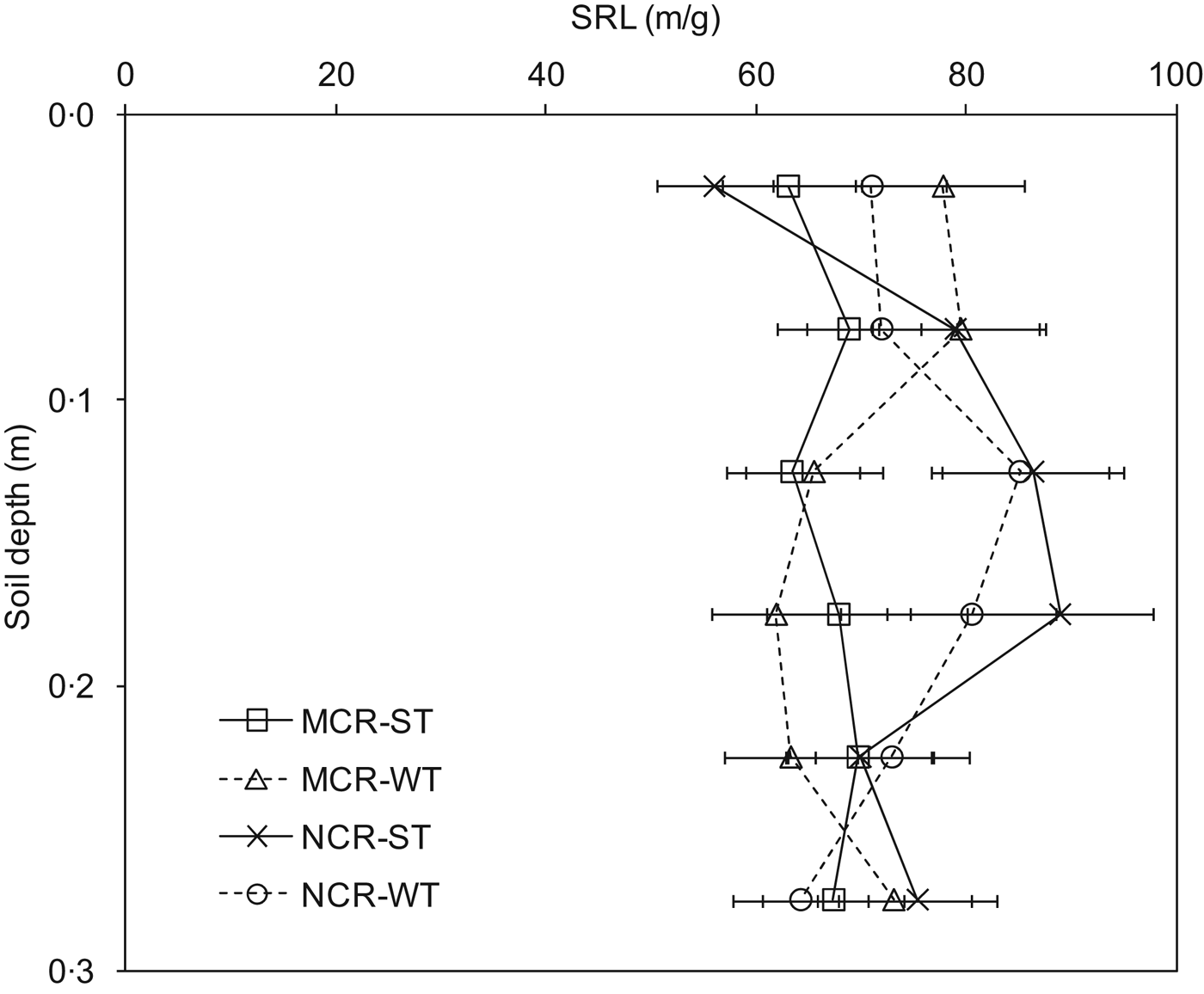
The relationship between RDM and length density was described by the SRL. The mean value of the SRL was 71·8 m/g and it did not change significantly with soil depth (Fig. 6). The treatments applied affected the SRL. The highest root length attributed to root mass was recorded in the NCR-ST treatment, although this was observed only in the 10–20 cm soil depth. The SRL values were of similar level for the WT in both crop rotations.
Effect of crop rotation (NCR: Norfolk crop rotation; MCR: monoculture rotation) and triticale type, i.e. spring triticale (ST) and winter triticale (WT)) on specific root length (SRL) at six soil depths. Horizontal bars represent the standard errors (s.e.). Results are the averages of 2 years, 2009–2010.
DM production
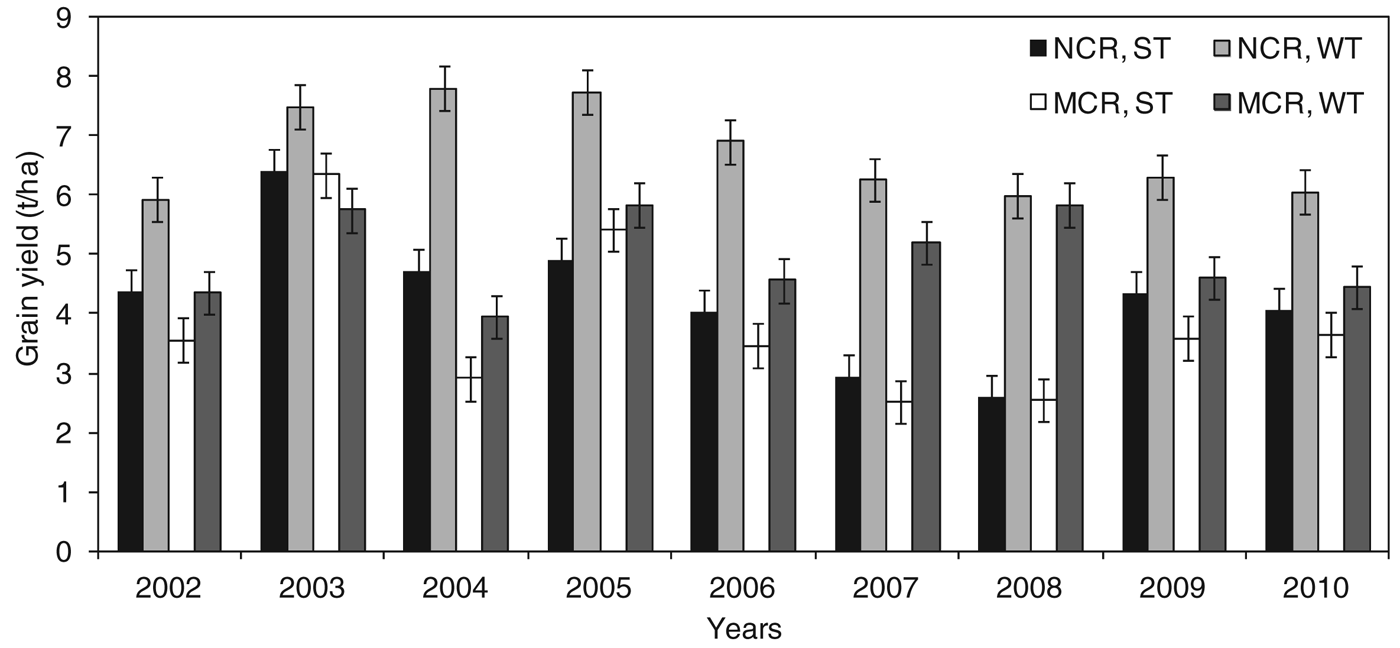
The mean grain yield of triticale obtained during the whole trial period 2002–2010 was 4·93 t/ha and varied from 2·52 to 7·79 t/ha, depending on the year and the treatments applied. The highest grain yield was obtained from the NCR rotation with WT (Fig. 7), i.e. an average of 6·72 t/ha, while the lowest grain yield (3·78 t/ha) was observed for the ST cultivated using the monoculture system. In both rotations, NCR and MCR, the grain yields of ST were lower than WT. Crop rotation affected grain production significantly (P<0·05) and the NCR system generally resulted in yields c. 20% higher than the monoculture system.
Effect of crop rotation (NCR: Norfolk crop rotation; MCR: monoculture rotation) and triticale type, i.e. spring triticale (ST) and winter triticale (WT)) on grain yields. Horizontal bars represent the standard errors (s.e.). Data were obtained from Ścigalska and Łabuz (Reference Ścigalska and Łabuz2008).
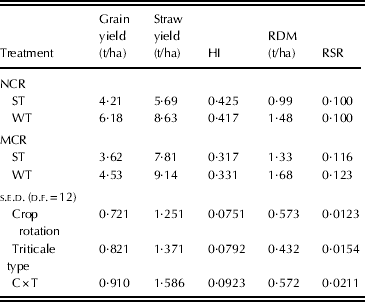
This relationship was also visible in 2009 and 2010 where more detailed analyses of biomass production were conducted (Table 5). When the straw was considered, it was observed that ST generated lower straw yields (6·75 t/ha on average) in relation to WT (8·88 t/ha). The system of crop rotation also affected straw production significantly (P<0·05). For the NCR, straw yield (7·16 t/ha) was lower in comparison with the MCR (8·47 t/ha). The mean HI for triticale was 0·373 and a significantly (P<0·05) lower value was obtained for MCR (0·324), compared with NCR (0·421). The HI for the two forms of triticale tested (ST and WT) did not differ significantly (P<0·05).
Grain and straw yields, root dry matter (RDM), harvest index (HI) and root:shoot ratio (RSR) for spring triticale (ST) and winter triticale (WT) in the Norfolk crop rotation (NCR) and monoculture rotation (MCR) production system. Results are the averages of 2 years, 2009–2010

The RSR was 0·11 with no significant (P<0·05) difference between the two triticale types. However, the RSR for the NCR rotation was 0·100, on average, whereas for the MCR this was c. 20% higher, reaching a value of 0·120.
DISCUSSION
In the 0–30 cm soil layer, the most significant differences in the RLD occurred mainly down to a depth of 20 cm. This is in agreement with Pietola & Alakukku (Reference Pietola and Alakukku2005) who stated that up to 80% of cereal root mass is located in the top 0–20 cm of the soil profile. The value of triticale root length obtained in the current experiment was a little higher than that reported for wheat by Aggarwal et al. (Reference Aggarwal, Choudhary, Singh and Chakraborty2006). The results for the root morphometric parameters of triticale show that ST and WT differed in their root morphology. Generally, ST had a smaller root system compared with the winter form, as indicated by root biomass and root length parameters. Similar differences between spring and winter forms for wheat have been reported previously by Thorup-Kristensen et al. (Reference Thorup-Kristensen, Cortasa and Loges2009).
Holanda et al. (Reference Holanda, Mengel, Paula, Carvaho and Bertoni1998) based on an investigation with maize monoculture v. maize/soybean rotation, stated that monocultures create unfavourable conditions for root growth. Rasse & Smucker (Reference Rasse and Smucker1998) found that maize grown after alfalfa achieved a higher number of roots in the subsoil than maize after maize. Similar results were obtained by Chen & Weil (Reference Chen and Weil2011) for different break crops in a maize rotation system and ascribed this effect to break crop root channels, rather than mulch or organic matter influences. However, the results of the present study showed that triticale produced more root biomass in the MCR than in the NCR. It could be expected that higher root biomass in an MCR would result in increasing the SOC content (Bolinder et al. Reference Bolinder, Angers and Dubuc1997; Pietola & Alakukku Reference Pietola and Alakukku2005; Subedi et al. Reference Subedi, Ma and Liang2006). However, the results of the present study did not confirm this hypothesis. The greater intensive impact was due to the presence of non-cereal crops in the NCR rotation rather than the root biomass production of triticale. Crop rotations have shown positive effects in enhancing SOC, especially in crop rotations that include a leguminous species such as faba bean (Ashraf et al. Reference Ashraf, Mahmood, Azam and Qureshi2004; Lopez-Bellido et al. Reference Lopez-Bellido, Fontan, Lopez-Bellido and Lopez-Bellido2010). Faba bean can improve the economic value of a following crop by enhancing the yield and/or increasing concentrations of inorganic N in the soil profile and the protein content of the grain in subsequent crops (Lopez-Bellido et al. Reference Lopez-Bellido, Fuentes, Castillo and Lopez-Garrido1998). Furthermore, a range of potential non-N benefits have been shown to occur due to the presence of legumes in a crop rotation, including improvements in soil structure and water infiltration (Rochester et al. Reference Rochester, Peoples, Hulugalle, Gault and Constable2001; McCallum et al. Reference McCallum, Kirkegaard, Green, Cresswell, Davies, Angus and Peoples2004), enhanced nutrient availability (Nuruzzaman et al. Reference Nuruzzaman, Lambers, Bolland and Veneklaas2005; Peoples et al. Reference Peoples, McLennan and Brockwell2008), and the breaking of cereal disease and pest cycles (Stevenson & van Kessel Reference Stevenson and Van Kessel1996; Jensen et al. Reference Jensen, Peoples and Hauggaard-Nielsen2010). Wright & Hons (Reference Wright and Hons2005) also reported that there was greater soil C storage in surface soils under crop rotations than under monocultures. Furthermore, the cultivation of sugar beet in the Norfolk rotation was connected with organic fertilization which would have resulted in increased organic matter content in the soil as also shown by Yan & Gong (Reference Yan and Gong2010). The organic amendments used in the present study and the increased N residues from legume crops would increase the content of organic and mineral N (ammonium-N and nitrate-N) in the top soil layer.
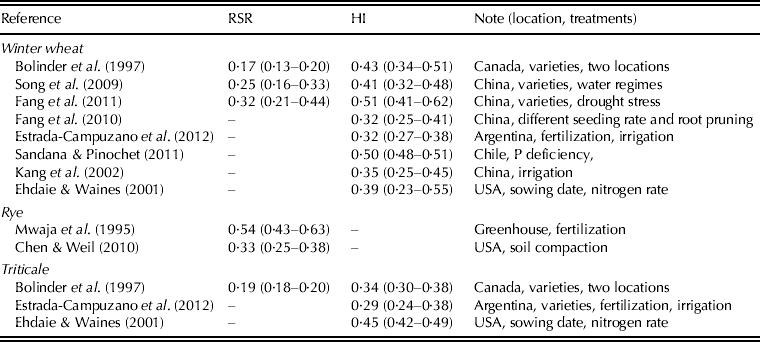
The calculated RSR parameter for triticale varieties used in the present study was a little lower than that reported in other trials with triticale (Table 6). When compared with winter wheat or rye, triticale is usually characterized by a lower RSR (Mwaja et al. Reference Mwaja, Masiunas and Weston1995; Bolinder et al. Reference Bolinder, Angers and Dubuc1997; Fang et al. Reference Fang, Liu, Xu and Li2011). Based on this juxtaposition, presented in Table 6, it can be concluded that the root system of triticale can be assessed as more efficient. More above-ground biomass per unit of root biomass was produced in the current study when compared with other cereals (Table 6). However, the RSR for winter wheat shows a wide range (0·13–0·44) due to location, soil and climate conditions and treatments applied. Some of this variation may also be explained by the sampling strategy and root separation methods used (Bolinder et al. Reference Bolinder, Angers and Dubuc1997). In the present investigation, the spring or winter form of triticale did not result in changes to the RSR, whereas the RSR was clearly affected by the crop rotation system: MCR resulted in an increase in the RSR. According to the optimal partitioning theory, plants allocate their biomass to the organ that has the most limited resource (Bonifas et al. Reference Bonifas, Walters, Cassman and Lindquist2005; McCarthy & Enquist Reference McCarthy and Enquist2007). The expression of such an optimization is the change in allocation between the biomass of shoots and roots in response to nutrient availability. When water supply or nutrient availability increases, plants allocate less mass to their roots because less effort is required to acquire these resources (Ågren & Franklin Reference Ågren and Franklin2003; Bonifas et al. Reference Bonifas, Walters, Cassman and Lindquist2005).
Mean root:shoot ratio (RSR) and harvest index (HI) values from the literature (minimum and maximum values are presented in brackets)
The mean value of HI, which describes the relationship between grain and straw biomass, was at a similar level to that obtained for wheat (Table 6). If compared with the RSR parameter, HI can be described as more stable with changes in a narrow range for both winter wheat and triticale. In the present study, HI was significantly higher in the NCR rotation than the MCR but was not affected by the form of triticale (ST or WT). According to Thorsted et al. (Reference Thorsted, Olesen and Weiner2006) and Kemanian et al. (Reference Kemanian, Stöckle, Huggins and Viega2007), lower HI can be an indicator of a reduced assimilation during the grain filling period and can be attributed to plant environmental stress. In the current experiment, the only change in soil properties recorded was SOC content. Fueki et al. (Reference Fueki, Sato and Nakatsu2010) stated that an increase in the SOC value may cause a higher N mineral content in soil which can be reflected later in plant biomass production. However, the total soil N content found in the present study did not confirm this hypothesis. Therefore, further and more detailed investigations of soil N dynamics for crop rotations with triticale are needed.
Root biomass and morphology were more affected by triticale type than crop rotation. The above-ground biomass production was modified by both experimental factors, i.e. triticale type and rotation system, which also led to changes in RSR and HI. Both parameters were affected significantly by crop rotation used. The differences between MCR and NCR in above-ground biomass could also be due to limitation in the SOC and C:N ratio. Miglierina et al. (Reference Miglierina, Iglesias, Landriscini, Galantini and Rosell2000) also reported increased SOC in wheat rotations including legumes, in comparison with wheat monoculture. The soil physical parameters were not changed by the NRC or MCR and are therefore unlikely to have a significant effect on triticale yield. Some researchers have previously reported that cereal monoculture influenced soil physical properties such as bulk density and soil porosity (Chan & Heenan Reference Chan and Heenan1996). However, the present results did not confirm these results.
CONCLUSION
The crop rotation used in the present study impacted on the productivity of triticale (with increased grain and straw yield) in relation to the monoculture crop rotation. Triticale production was also strongly dependent on the type grown, i.e. spring v. winter. The results showed that the ST was characterized by a lower above-ground productivity and a lower RDM and RLD. These root differences were noticeable only in the 5–20 cm soil layer and in particular related to changes in the root diameter class of 0·1–0·5 mm, the most frequent diameter fraction. Crop rotation and monoculture systems did not modify root productivity and soil characteristics. The RSR was, however, affected strongly by cultivation system that reflects the impact of environment conditions on plant development and is a measure of plant response to stress. The RSR results indicated that MCR created less favourable conditions for triticale cultivation than the NCR.