


Introduction
Mood and sleep are recognized to have a bidirectional relationship (Alvaro et al., Reference Alvaro, Roberts and Harris2013; Kahn et al., Reference Kahn, Sheppes and Sadeh2013), and this is particularly evident in the mental health difficulty bipolar disorder (BD) (Abreu and Braganca, Reference Abreu and Braganca2015; Plante and Winkelman, Reference Plante and Winkelman2008). BD is a mood disorder characterized by at least one episode of elevated or irritable mood and/or episodes of depressed mood. Changes to sleeping patterns are reported as a possible symptom during both depressed mood states and elevated mood states (Ritter et al., Reference Ritter, Hofler, Wittchen, Lieb, Bauer, Pfennig and Beesdo-Baum2015; Rosa et al., Reference Rosa, Comes, Torrent, Sole, Reinares, Pachiarotti and Vieta2013). During depression a person might experience difficulties with falling and staying asleep (insomnia), or the person might sleep more than usual (hypersomnia). During elevated or irritable mood, a person might experience feeling rested after only 3 hours of sleep, referred to as reduced need for sleep (American Psychiatric Association, 2013).
These clinically significant changes in sleeping patterns are not only a symptom during low or elevated mood, but are also known to occur before a mood episode happens (Correll et al., Reference Correll, Penzner, Lencz, Auther, Smith, Malhotra and Cornblatt2007; Gruber et al., Reference Gruber, Miklowitz, Harvey, Frank, Kupfer, Thase and Ketter2011) and between mood episodes (Rosa et al., Reference Rosa, Comes, Torrent, Sole, Reinares, Pachiarotti and Vieta2013). It has also been shown to be a risk factor for BD (Ritter et al., Reference Ritter, Hofler, Wittchen, Lieb, Bauer, Pfennig and Beesdo-Baum2015), as evidenced in research that has looked at familial risk groups (Duffy et al., Reference Duffy, Alda, Hajek, Sherry and Grof2010; Ng et al., Reference Ng, Chung, Ho, Yeung, Yung and Lam2015; Ritter et al., Reference Ritter, Hofler, Wittchen, Lieb, Bauer, Pfennig and Beesdo-Baum2015), groups who score high on measures that indicate a tendency toward high mood (Ankers and Jones, Reference Ankers and Jones2009; Ng et al., Reference Ng, Chung, Ho, Yeung, Yung and Lam2015) and those who meet bipolar at-risk criteria (Castro et al., Reference Castro, Zanini, Goncalves, Coelho, Bressan, Bittencourt and Tufik2015).
Both sleep and mood-related difficulties are known to have significant negative impacts on a person’s quality of life (Roth and Ancoli-Israel, Reference Roth and Ancoli-Israel1999). The impact is also felt on society due to occupational and health-related costs for the person (Altshuler et al., Reference Altshuler, Post, Black, Keck, Nolen, Frye and Mintz2006; Boland et al., Reference Boland, Stange, Molz Adams, LaBelle, Ong, Hamilton and Alloy2015; Murray and Lopez, Reference Murray and Lopez1997), such as taking extended time off from work (Das Gupta and Guest, Reference Das Gupta and Guest2002). For these reasons, it is important that research is done in order to better understand and inform intervention options. Due to the increasing recognition that sleep and mood are bidirectional, as discussed above, it is important that interventions incorporate support for both difficulties. Pharmacological approaches are a common intervention for supporting those with BD and sleep disturbances. However, it is important to consider psychological interventions as this would enable more treatment choice and is in line with current NICE guidelines [National Institute for Health and Care Excellence (NICE), 2014]. Additionally, psychological interventions have a range of positive advantages over pharmacological approaches. Harvey et al. (Reference Harvey, Kaplan and Soehner2015a) explain the disadvantages of medication include adverse drug interactions with mood-stabilizing medication, the risk of daytime residual effects, and possible dependence on or abuse of the medication (Levin and Hennessy, Reference Levin and Hennessy2004). It should be noted that psychological interventions can have unintended side-effects due to factors such as clients’ expectations to being met and limits in therapist competence (Curran et al., Reference Curran, Parry, Hardy, Darling, Mason and Chambers2019). In order to improve potential adverse effects of psychological intervention, robust research needs to be conducted and disseminated.
A psychological intervention that incorporates sleep support in the field of BD is the behavioural psychotherapy intervention ‘Interpersonal and Social Rhythm Therapy’. This therapy focuses on the importance of maintaining a regular social rhythm (Frank et al., Reference Frank, Swartz and Kupfer2000). Although this intervention has shown reduced recurrence of mood episodes when delivered following a mood episode (Frank et al., Reference Frank, Kupfer, Thase, Mallinger, Swartz, Fagiolini and Monk2005), it emphasizes a biological approach that mood difficulties are due to circadian rhythm irregularities. However, sleep disturbances are not explained by biological processes alone. For this reason, it is important that a psychological intervention is informed by an approach that considers the common biological and cognitive behavioural processes (Harvey et al., Reference Harvey, Watkins, Mansell and Shafran2004). Cognitive sleep research has primarily focused on the sleep disturbance insomnia, and has identified cognitive processes that maintain this disturbance. This is detailed in the ‘Cognitive Model of Insomnia’ and includes negative cognitive beliefs a person endorses about difficulties with sleeping (Harvey, Reference Harvey2002). Identifying these cognitive beliefs informs cognitive therapy (CT) intervention, which then targets these beliefs (Edinger and Wohlgemuth, Reference Edinger and Wohlgemuth2001). CT has been shown to be a useful intervention for people with insomnia (Morin et al., Reference Morin, Vallieres and Ivers2007). Additionally, CT for insomnia has been shown to have positive outcomes on both mood and sleep for people with a diagnosis of depression (Manber et al., Reference Manber, Edinger, Gress, San Pedro-Salcedo, Kuo and Kalista2008) and BD (Harvey et al., Reference Harvey, Kaplan and Soehner2015a).
In order to identify these cognitive processes, a sleep cognition measure is required. A recently conducted scoping review aiming to identify the range of sleep cognition measures for sleep duration disturbances highlighted that there is currently no available measure developed specifically for use with hypersomnia or reduced need for sleep (L. Pearson, W. Mansell, E. Turner and S. Parker, 2018, unpublished manuscript: ‘Beyond insomnia: a scoping review of self-report sleep cognition questionnaires for sleep duration disturbances’). The review instead highlighted that sleep cognitions in insomnia have been widely researched. However, the cognitive processes proposed to maintain insomnia might not account for these other sleep disturbances. There is a need for a cognitive model that accounts for the range of sleep disturbances and can guide CT intervention for people with fluctuating sleep duration disturbances. Without an available cognitive model in the sleep literature, the area of BD research is a useful guide, as BD is a psychiatric disorder that accounts for mood and sleep fluctuations.
Healy and Williams (Reference Healy and Williams1989) first proposed that circadian rhythm disruption, such as sleep disturbances caused by stressors, in conjunction with cognitive distortions play a significant role in BD vulnerability. Jones (Reference Jones2001) further explained this relationship by proposing a model guided by Power and Dalgleish (Reference Power and Dalgleish1997) and Jones (Reference Jones1979), which explains that it is one’s internal attribution of circadian change that facilitates and maintains BD symptoms. Building on these theoretical models in BD, the Integrative Cognitive Model (ICM) (Mansell et al., Reference Mansell, Morrison, Reid, Lowens and Tai2007) explains that multiple, extreme positive and negative appraisals about mood play an important role in driving mood up into an elevated state and down into a negative state. For example, heightened mood could be appraised positively as a sign of great success or negatively such as an impending breakdown (Dodd et al., Reference Dodd, Mansell, Bentall and Tai2011). These appraisals contribute to the person engaging in either ascent (Mansell and Lam, Reference Mansell and Lam2003) or descent behaviours in order to control their internal state, causing mood to fluctuate as different appraisals enter the person’s awareness (Mansell, Reference Mansell2006). In a recent systematic review of 31 studies, multiple lines of evidence have suggested that these extreme appraisals are associated with mood difficulties across the BD spectrum in both clinical and non-clinical groups (Kelly et al., Reference Kelly, Dodd and Mansell2017). It is this conflict of multiple, extreme appraisals that could also play a role in the changes in sleep disruption across the shifting mood states. For example, a person might be driven to reduce sleep to a few hours per night when in an activated mood state, so they can ‘do as much as possible’ following a period in which they were low in mood and perhaps sleeping much more. However, they may also appraise sleeping much less per night as a risk for relapsing into mania and being admitted into hospital. Therefore, periods of only a few hours’ sleep to make up for lost time may be followed by several days of sleeping much longer than usual in an attempt to stave off a mood episode.
Building on the previous research in the insomnia literature, the aim of this Delphi study was to explore and identify expert consensus on the range of positive and negative appraisals a person might endorse about their sleep in the context of the different sleep disturbances experienced in BD, in line with the theoretical ICM. These appraisals can then inform the development of a measure that will offer a unique and novel identification of cognitions that may be maintaining a more complex range of sleep changes and disturbances found across the BD spectrum. This potential measure has the opportunity for providing a more comprehensive identification of sleep-related cognitions that can better inform and suit the needs of a person engaging in CT for sleep and mood difficulties. This study complements parallel work streams in a research programme for psychometrically testing this sleep cognition measure, reviewing it with service users, and incorporating it into studies to test the role of sleep within the ICM framework.
Method
Delphi method
The Delphi method is an anonymous consensus method that sets out to determine how much experts (those who are highly knowledgeable about the domain of interest; Boateng et al., Reference Boateng, Neilands, Frongillo, Melgar-Quinonez and Young2018) agree on a particular topic or issue. As explained by Hasson et al. (Reference Hasson, Keeney and McKenna2000) and Jones and Hunter (Reference Jones and Hunter1995), this method follows a series of rounds in which the identified experts contribute independent suggestions and recommendations on the topic or issue. These suggestions and recommendations are then developed into relevant headings or statements, which the experts are then invited to rank their level of agreement with. Additional rounds are completed to ensure that consensus is reached by the entire participant group. For these additional rounds, information from the previous round is supplied, such as the rate of agreement among the group. This allows the individual participant an opportunity to change their ranking based on the information of how the group ranked the statement. For the purposes of this study, the authors followed the approach used by Law and Morrison (Reference Law and Morrison2014) and Morrison and Barratt (Reference Morrison and Barratt2010) in which Round 1 is a preliminary phase for a smaller group of experts who are invited to help refine the statements for consensus with a larger participant group in later rounds. Conducting this study with experts who have a range of both clinical and research experience working with those who have BD enables a wide range of experiences to be taken into account with this clinical group. In addition, the use of experts and the Delphi methodology are recommended in the development and evaluation of scales (Boateng et al., Reference Boateng, Neilands, Frongillo, Melgar-Quinonez and Young2018).
Participants
For the development and refinement of statements in Round 1, published academics and/or research and training professionals were recruited who had been identified in the literature as having made a significant contribution to the understanding of BD and in some instances also in the field of sleep research and/or in the ICM. Each potential participant was sent an invitation email introducing the team conducting this study and a brief introduction about the study and what it involved. A secure online link for SelectSurvey was included in the email for the participant to take part anonymously in the study. The online link included the participant information sheet and statements for the participant to provide feedback along with the opportunity for suggesting new statements.
For the remaining rounds in consensus rating, the panel of experts was widened to include more participants who had worked clinically with people who experienced mood and sleep difficulties. The inclusion criteria for these additional rounds were:
Minimum training level of either qualified occupational therapist, qualified social worker, research assistant, grade 6 nurse, CBT therapist, trainee clinical psychologist, or junior doctor.
At least 1 year of experience working with people who experience significant low and elevated mood difficulties (e.g. bipolar disorder or bipolar at risk) AND who have reported sleep difficulties (e.g. initiating, maintaining, or not needing sleep).
For these rounds, the same experts invited for Round 1 were also invited to take part. Additionally, the invitation asked the participant to inform colleagues who might be suitable to take part based on the inclusion criteria. Participants were also invited who worked in mental health services across the northwest of England, where the authors of this study have close links with relevant services. Only the participants who took part in Round 2 were invited to take part in the final Round 3. All participants completed the study through the SelectSurvey platform anonymously. A separate SelectSurvey link was available for the participant to leave their email address for being invited to the additional rounds. This meant the data provided by the participants was anonymous to the researcher. Participants were given 4 weeks to complete each round, and were sent reminder emails when 2 and 1 week(s) remained. It was made clear that at any time an invitee or participant wanted to withdraw from taking part, they could request to be removed from the email invitation list.
Procedure
Before Round 1, an initial group of statements representing extreme positive and negative appraisals were developed by the research team based on the theory of the ICM. This was completed by reviewing the literature and commonly used self-report measures for sleep disruptive cognitions, including the Dysfunctional Beliefs and Attitudes about Sleep Scale (Morin et al., Reference Morin, Stone, Trinkle, Mercer and Remsberg1993). Additionally, one of the authors (L.P.) reviewed an online BD Forum (www.psychforums.com) in September 2016 for themes about sleep from a service user perspective that were reported in the messages on the forum. This is a widely used psychology and mental health forum with over 100,000 members, and enables discussion about personal experiences on a wide range of mental health topics. In the BD forum, the keywords ‘sleep’, ‘insomnia’ and ‘hypersomnia’ were used in the search bar to locate relevant postings for review that dated back to 2005. The themes obtained included difficulties around falling asleep and impact on mood, sleep as an avoidance of emotions, lack of sleep allowing motivation and creativity, and the positive impact of sleep on mood and stability.
In line with the theory of the ICM, the authors wrote the statements as accounting for the following four domains: positive appraisals of sleeping less than usual, positive appraisals of sleeping more than usual, negative appraisals of sleeping less than usual, and negative appraisals of sleeping more than usual. The research team agreed the statements should reflect extreme positive and negative appraisals of sleep, whilst also accounting for the change in sleep duration that is represented by the sleep disturbances that are characteristic of BD, e.g. reduced need for sleep or insomnia is sleeping less than usual, whilst hypersomnia is sleeping more than usual. The result was 31 statements that were developed by the research team as a starting point for Round 1.
Round 1
The participants for Round 1 were instructed to review the developed statements and rate how essential the statement was for inclusion on the new self-report measure. This was completed using a 5-point scale (1 = essential, 2 = important, 3 = do not know/depends, 4 = unimportant, 5 = should not be included). The participants were also invited to provide feedback on each of the statements with reasons for their choice of rating and any additional comments such as word changes. Finally, there was an option at the end for the participant to provide additional comments, statements or other suggestions for the measure based on their clinical and research expertise.
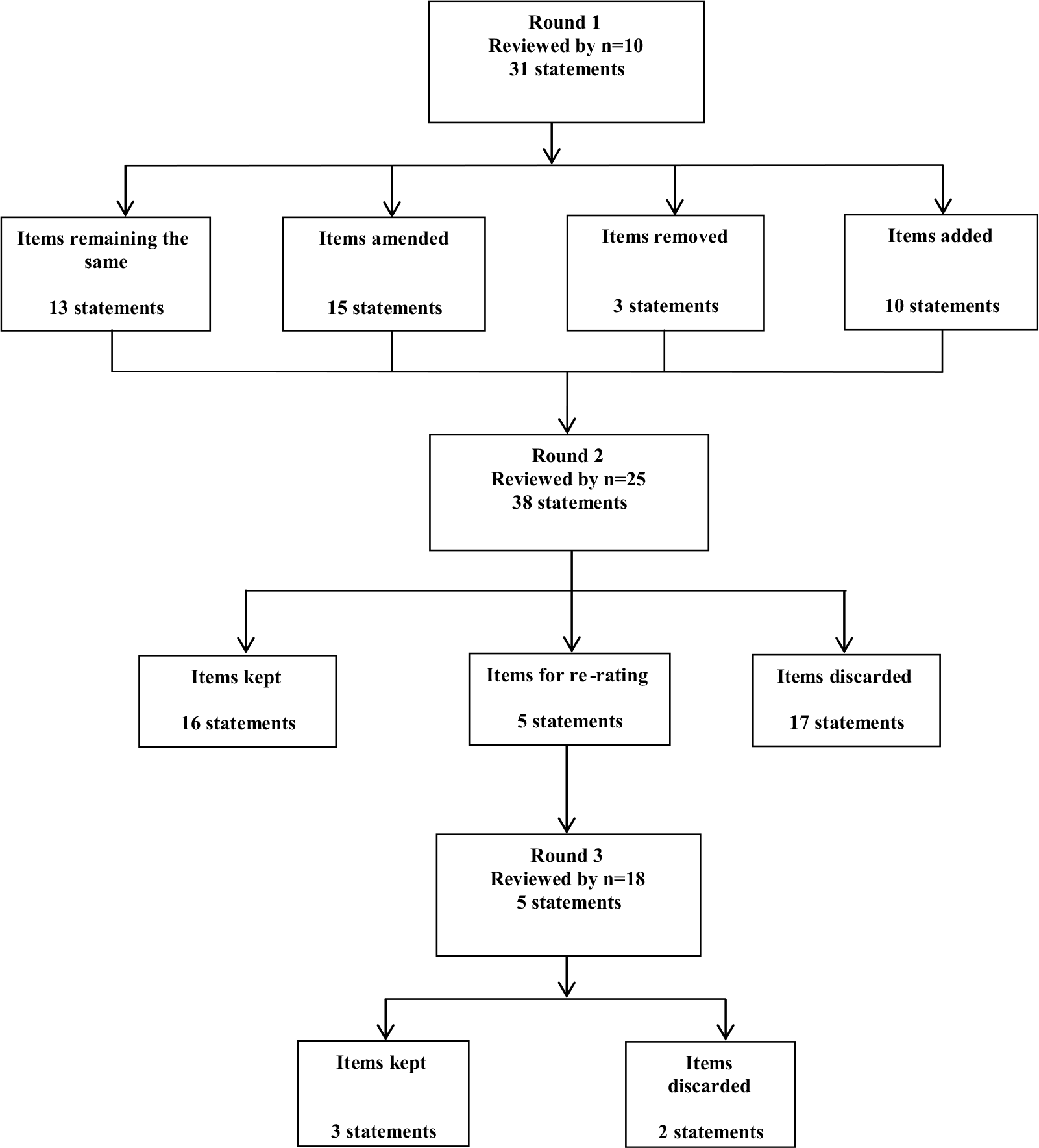
The authors reviewed the consensus rating and feedback and suggestions from Round 1, and amended the statements accordingly. Statements that received a high consensus rating of being either essential or important with minimal feedback or comments were kept the same. Statements that had received a low consensus rating and had significant comments or suggestions were replaced with amended versions. Comments and suggestions for new statements that were not on the original list were discussed in the research team and written by the authors as new statements. This resulted in 13 statements remaining the same, 15 statements amended, three statements removed, and 10 new statements added.
Round 2
The revised list of 38 statements was then put out for Round 2 with the wider group of participants for consensus rating only. Following the method employed by Langlands et al. (Reference Langlands, Jorm, Kelly and Kitchener2008), Law and Morrison (Reference Law and Morrison2014) and Morrison and Barratt (Reference Morrison and Barratt2010), the following cut-off points were used by the research team to determine items for inclusion, exclusion and re-rating:
Statements rated by 80% or more of the participants as essential or important will be included in the self-report measure.
Statements rated by 70–79% of the participants as essential or important will be re-rated in a further round for a further consensus check.
Any statements that did not meet at least 70% rating of essential or important will be excluded.
The participants were asked to read each statement and rate how relevant the statement was for being included in a sleep measure for use with those who have mood swings. The participants rated each statement using the same 5-point scale used in Round 1. This resulted in the inclusion of 16 items, 17 items discarded, and five items for re-rating.
Round 3
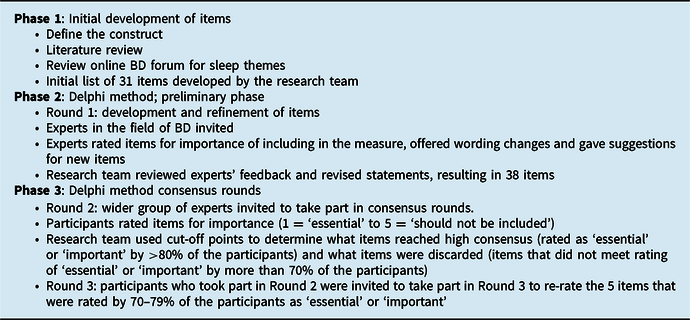
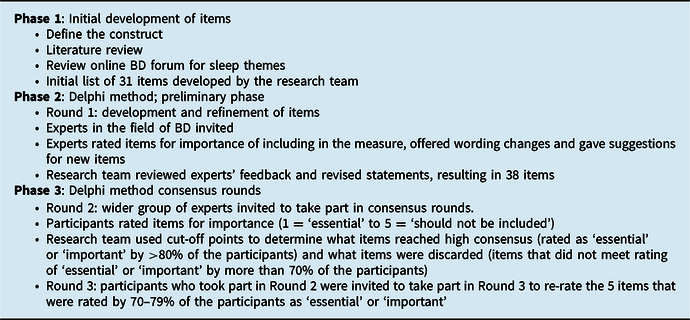
In Round 3, the participants from Round 2 who had left their contact details for taking part in additional rounds were invited to take part anonymously via an online link with SelectSurvey. Participants were asked to re-rate only those items that 70–79% of respondents had rated as essential or important during Round 2 (n = 5). To help inform the participants’ decision for re-rating, the percentage from Round 2 was included with each of the statements. It was explained that any statements from this round that met 79% or less consensus for essential or important would be discarded. Of these five statements, three were retained and two were discarded. Table 1 outlines the phases of this Delphi study.
Delphi study outline
Results
Demographics
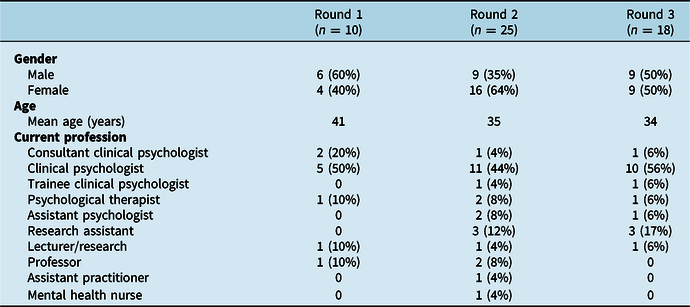
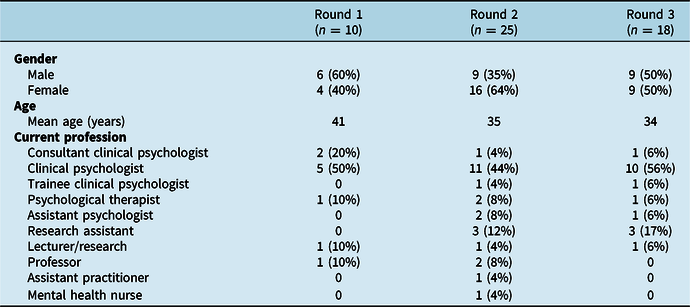
For Round 1, the research team invited 24 experts identified in the literature, 12 of whom responded to take part (50% response rate). However, there were 10 participants who completed the round in full and so only their responses were used for analysis. For Round 2, 25 participants took part and for Round 3, 18 of the 25 participants took part (72% response rate). Table 2 provides an overview of the demographic information for all three rounds. Participants reported their current professional role but also shared what previous relevant career history they had with BD and this included having been a researcher, an assistant psychologist, or having worked in different clinical settings.
Participant characteristics
Ratings of importance results
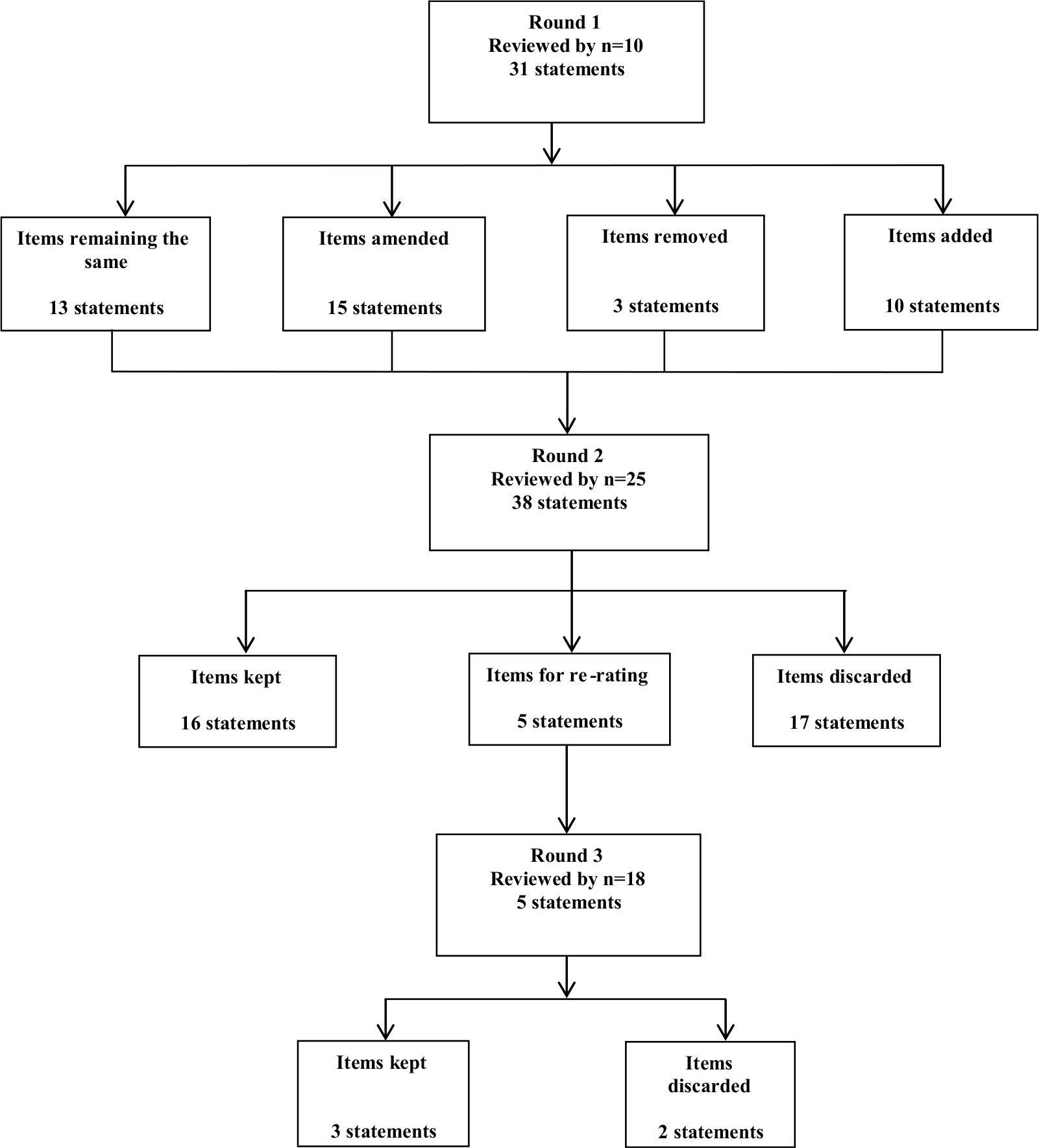
A total of 19 statements were retained in the final statement list after being rated as important or essential by >80% of participants. Figure 1 summarizes the number of items included, re-rated and excluded at each round of the study.
Number of items included, re-rated and excluded at each round of the study.
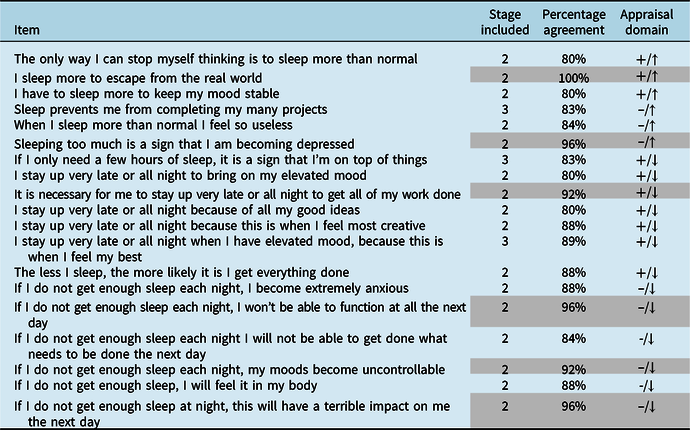
The final 19 statements are shown in Table 3. The two statements that did not meet at least 70% for a further re-rating both reached only 67% consensus for essential or important by the participant group. The three statements that were included each reached above 80% consensus. For this reason, a further round of re-rating was not required. Also depicted in Table 3 are the statements included by each round, the percentage of agreement, and the domain the statement assesses for: positive appraisals of sleeping more than usual (n = 3), negative appraisals of sleeping more than usual (n = 3), positive appraisals of sleeping less than usual (n = 7), and negative appraisals of sleeping less than usual (n = 6).
High consensus items
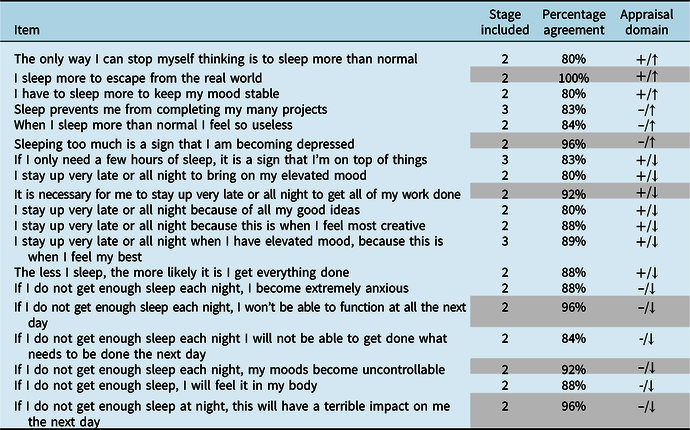
There were six items that reached extremely high consensus in Round 2 (>90%). These statements have been highlighted in grey in Table 3 and are from the following domains: positive appraisals of sleeping more than usual (n = 1), negative appraisals of sleeping more than usual (n = 1), positive appraisals of sleeping less than usual (n = 1), and negative appraisals of sleeping less than usual (n = 3).
Discussion
The aim of this Delphi study was to explore and identify expert consensus on positive and negative sleep appraisals using the ICM as the theoretical framework for development of items. The results suggest that professionals working in the field of BD recognize that those who have sleep and mood difficulties endorse a range of extreme sleep appraisals. A total of 38 statements were developed and rated, resulting in high consensus for half of the statements. These final 19 statements all represent the range of extreme positive and negative appraisals of sleep that are in line with the theory of the ICM the authors had set out to investigate. This range covers four domains: positive appraisals of sleeping less than usual, positive appraisals of sleeping more than usual, negative appraisals of sleeping less than usual, and negative appraisals of sleeping more than usual.
With the focus in the literature and past research on cognitions about sleep having been focused on negative beliefs regarding insomnia (e.g. CT for insomnia), it is of particular interest that the domain that reached the most number (n = 7) of high consensus for statements was the domain assessing for positive appraisals of sleeping less than usual. This domain represents sleep appraisals in the context of reduced need for sleep. As highlighted by the recent scoping review conducted (L. Pearson, W. Mansell, E. Turner and S. Parker, 2018, unpublished manuscript: ‘Beyond insomnia: a scoping review of self-report sleep cognition questionnaires for sleep duration disturbances’), there have not been measures developed that assess for this domain. However, this Delphi study has shown that experts and clinicians in the field of BD recognize this to be at least as important compared with the more widely recognized and researched negative appraisals of sleeping less than usual (e.g. insomnia).
Clinical implications
The extreme sleep appraisals identified in this Delphi study can inform the development of a new sleep cognition measure that will offer a unique and novel identification of sleep cognitions that may be maintaining a more complex range of sleep changes and disturbances found across the BD spectrum. This potential measure has the opportunity for providing a more comprehensive assessment that can better inform and suit the needs of a person with BD engaging in CT for sleep disturbances.
Strengths and limitations
This study had several strengths. First, the strength of a Delphi consensus method enables decision making to be shared amongst a group of equally level participants anonymously (Jones and Hunter, Reference Jones and Hunter1995). This prevents the risk of anyone dominating the consensus process, as everyone independently provides their response in the rounds (Keeney et al., Reference Keeney, Hasson and McKenna2006; Rowe and Wright, Reference Rowe and Wright2001). Specific to this study, the recommendations and the consensus of the experts went beyond what has been reported in the literature regarding the additional domains of positive and negative sleep appraisals in the context of sleeping more or less than usual. Second, the response rate for Round 3 was 72%, which meets the recommended rate of at least 70% (Hasson et al., Reference Hasson, Keeney and McKenna2000). Third, service user input was included to help identify the range of positive and negative sleep appraisals people with BD might endorse. This was completed through reviewing postings on an online forum. Forums have been reported to provide a comfortable space for people to anonymously discuss personal issues (Campbell et al., Reference Campbell, Meier, Carr, Enga, James, Reedy and Zheng2001) whilst also enabling participants to join in the discussions at their convenience (Hsiung, Reference Hsiung2000). It could be argued that this allows a person to give an honest explanation of their difficulties at times when they are experiencing symptoms. Fourth, the appraisals identified and explored in this study were derived using the ICM as the theoretical framework. These appraisals will inform the development of a sleep cognition measure which will be assessed on content validity. Content validity is the degree to which the measure adequately reflects the construct in question. Assessment of construct validity for a measure includes rating if the measure’s origin of construct was defined by a theoretical model (Terwee et al., Reference Terwee, Prinsen, Chiarotto, Westerman, Patrick, Alonso and Mokkink2018), which this study has clearly stated.
There are several limitations to this study. First, it is increasingly recognized that service users should be involved in questionnaire development in order to truly capture their perspectives and to ensure the questionnaire is understandable (Terwee et al., Reference Terwee, Prinsen, Chiarotto, Westerman, Patrick, Alonso and Mokkink2018). Although the research team utilized an online BD forum for sleep themes, it is unknown what number of service users had a clinical history of elevated or depressed mood across the BD spectrum. To ensure the measure is understandable and relevant for those who experience sleep fluctuations common across the BD spectrum, a service user review will be conducted. This will be an opportunity for service users to rate the measure for content validity and compare it with a commonly used, validated measure of insomnia-specific cognitions. Additionally, future research could include qualitative interviews with those who have BD in order to further develop and refine the statements. A second limitation was that the response rate was less than 70% for Round 1 (when 24 people had been invited) and thus did not meet the recommended 70% rate (Hasson et al., Reference Hasson, Keeney and McKenna2000). Second, there were relatively low numbers of participants taking part in each round. One reason for this may be because invitations to take part in the study were mainly conducted by email, whereas previous research has found that conducting the first round in person has led to a higher response rate in subsequent rounds (McKenna, Reference McKenna1994). Additionally, because there were low numbers of experts taking part in the study it may be that the range of appraisals has not been fully identified. However, there was consensus for all four domains this study set out to explore, which does give validity to the range having been represented.
Conclusion
To the authors’ knowledge, this is the first study to have sought the expert opinion and consensus on extreme positive and negative sleep appraisals in the context of low and high mood states. A high level of consensus was reached for a range of sleep appraisals that cover each of the four domains this study set out to explore and identify. These findings confirm shared agreement amongst professionals in the field of BD that extreme positive and negative sleep appraisals are important to understand and identify across the range of mood states. The statements reviewed in this study will be used to inform the development of a sleep cognition measure that will be tested for use with CT addressing fluctuating sleep disturbances experienced across the BD spectrum.
Acknowledgements
The authors would like to thank all the participants for their time and contributions to this research.
Financial support
This research received no specific grant from any funding agency, commercial or not-for-profit sectors.
Conflicts of interest
The authors declare no conflicts of interest with respect to this publication.
This research received no specific grant from any funding agency, commercial or not-for-profit sectors.
Ethics statement
The authors have abided by the Ethical Principles of Psychologists and Code of Conduct as set out by the APA. When consulted, the university research ethics committee did not require ethical approval as this study only asked professionals non-sensitive questions deemed strictly within their professional competence. Additionally, personal identifiable data was not collected from the participants.



Comments
No Comments have been published for this article.