




No CrossRef data available.
Article contents
Coronary stenting for a muscular bridge in a patient with hypertrophic obstructive cardiomyopathy
Published online by Cambridge University Press: 24 May 2005
Abstract
A young woman with hypertrophic cardiomyopathy presented with intractable chest pain due to a myocardial bridge over the left anterior descending artery, producing severe compression during systole. Percutaneous intracoronary stenting was performed. The patient, however, developed severe and diffuse restenosis within 30 days of the procedure. Myotomy may provide a more effective treatment option for such patients with symptomatic myocardial bridging.
Information
- Type
- Brief Report
- Information
- Copyright
- © 2003 Cambridge University Press
Muscular bridges in patients with hypertrophic cardiomyopathy have been associated with chest pain, perfusion defects on thallium-201 scintilography, ventricular arrhythmias and sudden death.1–3 There is limited experience with intra-coronary stenting for this indication. We report a case of a young female with intractable chest pain who rapidly developed severe and diffuse restenosis following stenting of a muscular bridge of the left anterior descending artery.
Case report
A 27-year-old woman presented with severe and intractable chest pain. She was known to have hypertrophic obstructive cardiomyopathy, having originally been referred for screening echocardiography at the age of 13 years as her father and two brothers also had hypertrophic cardiomyopathy. One brother died suddenly. Serial echocardiography at the ages of 13 and 16 revealed the ventricular septum to be at the upper limits of normal, at 10 mm thickness. She subsequently represented at the age of 25 with symptoms of exertional dyspnoea and chest discomfort. From the age of 26, she developed infrequent episodes of atrial fibrillation that were well controlled with sotalol. Her symptoms of chest pain and dyspnoea, unrelated to atrial fibrillation, were initially infrequent but progressed to severe angina at rest over a three-week period.
Repeat echocardiography then showed asymmetric septal hypertrophy, with a septal thickness of 16 mm. There was no resting outflow tract gradient. Left ventricular function was normal. There was no evidence of systolic anterior motion of the mitral valve. A dobutamine stress echocardiography study was performed, provoking a peak gradient of 34 mm of mercury. Coronary angiography revealed evidence of an isolated myocardial bridge in the middle of the left anterior descending artery that caused near complete compression of the artery in systole (Fig. 1). There was no evidence of atherosclerotic coronary arterial disease. Thallium-201 scintigraphy was performed following an infusion of dipyridamole and 2 min of low-level treadmill exercise. This demonstrated a reversible perfusion abnormality of a moderate size in the distal anterior wall and apex.

Figure 1. A muscular bridge in the mid left anterior descending artery shows no compression of the vessel in diastole (a). In systole there is severe compression of the vessel lumen (b).
Medical therapy was initially commenced with beta blockade. When this failed to control the symptoms, a calcium channel blocker, diltiazem, was added. Dual chamber pacing was performed and this resulted in only a temporary alleviation of symptoms for a period of 3 to 4 weeks. The patient continued to experience daily rest pain requiring narcotic analgesia. Percutaneous angioplasty with deployment of an intracoronary stent was performed without residual stenosis (Fig. 2a). A 3.0 × 23 mm Duet® stent (Guidant) was deployed at 14 atmospheres without residual stenosis. The patient was initially free of pain until 36 days after the initial procedure, when symptoms recurred. Repeat angiography revealed severe restenosis of 90% throughout the length of the stent (Fig. 2b). Intravascular ultrasound showed the mechanism of restenosis to be severe intimal hyperplasia within a well-deployed stent. Repeat angioplasty was performed with deployment of two further stents, both being 3.0 × 15 mm Mini Crown® (Cordis), since a sub-optimal result had been achieved by plain balloon angioplasty. Within a month, the patient experienced recurrence of her symptoms. Sestamibi scintigraphy was repeated, following infusion of dipyrimadole and 4 min of low level treadmill exercise. This showed a fixed perfusion abnormality of the distal anterior wall and apex with a small area of induced impaired coronary flow reserve. The distal vessel was considered unsuitable for bypass grafting. The patient was reluctant to consider a further percutaneous procedure.

Figure 2. Following coronary stenting there is no evidence of systolic compression of the vessel (a). At follow up angiography there is severe restenosis (b).
Discussion
Intracoronary stenting for symptomatic muscular bridging has been reported in a relatively small series of patients, and has not been described, as far as we are aware, in a patient with hypertrophic cardiomyopathy.1–6 The treatment of symptomatic myocardial bridges with stenting has been associated with good initial angiographic results, and relief of angina with normalization of abnormal coronary flow reserve.1–6 In-stent restenosis has been reported as a frequent long-term sequel.2
Haager et al.2 published the largest series consisting of 11 cases of stent implantation in patients with objective evidence of coronary ischaemia due muscular bridging. In their series, restenosis occurred in almost half the patients.2 Our experience confirms that restenosis may be higher than anticipated in patients without the usual risk factors. In most of these cases, there was no significant plaque burden detected in the stented vessels, and the patients were not diabetic.7 Our patient was not a smoker. One factor favouring neointimal hyperplasia is the relatively long length of the stented segments, as the myocardial bridging often extends over a significant length of the artery. It has been postulated that the recurrent external compression of the stent by the muscular bridge may result in increased shear stress that could induce more aggressive intimal proliferation.2, 3
Surgical myotomy is a more invasive therapy, but may provide better results, particularly where the bridging is occurring over a long segment of the vessel. When performed on a beating heart “off-pump”, it may be a particularly attractive option due the reduced morbidity of the procedure.8 The use of drug-eluting stents may become the preferred percutaneous approach, as neointimal hyperplasia is significantly reduced.9 The use of these newer devices has not yet been reported in this setting. Alternatively brachytherapy may be considered for those patients who develop restenosis. The long-term result in young patients however, is unknown.10
References
Yetman AT, McCrindle BW, MacDonald C, Freedom RM, Gow R. Myocardial bridging in children with hypertrophic cardiomyopathy – a risk factor for sudden death. N Engl J Med 1998; 339: 1201–1209.Google Scholar
Haager PK, Schwarz ER, vom Dahl J, Klues HG, Reffelmann T, Hanrath P. Long term angiographic and clinical follow up in patients with stent implantation for symptomatic myocardial bridging. Heart 2000; 84: 403–408.Google Scholar
Prendergast BD, Kerr F, Starkey IR. Normalisation of abnormal coronary fractional flow reserve associated with myocardial bridging using an intracoronary stent. Heart 2000; 83: 705–707.Google Scholar
Bayes A, Marti V, Auge JM. Coronary stenting for symptomatic myocardial bridging. Heart 1998; 80: 102–103.Google Scholar
Klues HG, Schwarz ER, vom Dahl J, et al. Disturbed intracoronary hemodynamics in myocardial bridging: early normalization by intracoronary stent placement. Circulation 1997; 96: 2905–2913.Google Scholar
Smith SC, Taber MT, Robiolio PA, Lasala JM. Acute myocardial infarction caused by a myocardial bridge treated with intracoronary stenting. Cathet Cardiovasc Diagn 1997; 42: 209–212.Google Scholar
Hoffmann R, Mintz GS, Dussaillant GR, et al. Patterns and mechanisms of in-stent restenosis. A serial intravascular ultrasound study. Circulation 1996; 94: 1247–1254.Google Scholar
Katznelson Y, Petchenko P, Knobel B, Cohen AJ, Kishon Y, Schachner A. Myocardial bridging: surgical technique and operative results. Mil Med 1996; 161: 248–250.Google Scholar
Serruys PW, Degertekin M, Tanabe K, et al. Intravascular ultrasound findings in the multicenter, randomized, double-blind RAVEL (Randomized study with the sirolimus-eluting Velocity balloon-expandable stent in the treatment of patients with de novo native coronary artery Lesions) trial. Circulation 2002; 106: 798–803.Google Scholar
Grise MA, Massullo V, Jani S, et al. Five-year clinical follow-up after intracoronary radiation: results of a randomized clinical trial. Circulation 2002; 105: 2737–2740.Google Scholar
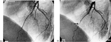
A muscular bridge in the mid left anterior descending artery shows no compression of the vessel in diastole (a). In systole there is severe compression of the vessel lumen (b).
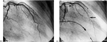
Following coronary stenting there is no evidence of systolic compression of the vessel (a). At follow up angiography there is severe restenosis (b).
 You have
Access
- 9
- Cited by