


1 Introduction
Vaccination is one of the most effective tools to not only protect individuals from contracting a disease but also prevent disease epidemics in communities. Improving vaccination rates, therefore, has been an important public health goal in numerous countries around the world. An obvious barrier to the uptake of vaccination is the costs that those who wish to get vaccinated have to bear. Studies on Japan (Ohkusa, Reference Ohkusa2005; Kondo et al., Reference Kane, Johnson, Town and Butler2009), the United States (Ohmit et al., Reference Ohmit, Furumoto–Dawson, Monto and Fasano1995; Rodewald et al., Reference Rodewald, Szilagyi, Holl, Shone, Zwanziger and Raubertas1997; Yoo et al., Reference Yoo, Berry, Kasajima and Szilagyi2010), and other countries (Nexoe et al., Reference Nexoe, Kragstrup and Ronne1997) show that a reduction in vaccination costs is associated with an increase in voluntary vaccination rates. However, the impact that cost reductions have on disease incidence has not been examined intensively. That is, even though it has been shown that a reduction in payments for vaccination has a positive impact on vaccination uptake, how this affects disease prevalence remains unclear. This is because, in the case of influenza activity, the relationship between vaccination rates and vaccination effects may be non-linear as a result of various externalities of vaccination (Boulier et al., Reference Boulier, Datta and Goldfarb2007; Ibuka et al., Reference Ibuka and Bessho2012). Against this background, the purpose of the present study is to use municipal-level data for Japan to examine how reductions in out-of-pocket payments through subsidies for vaccination affects regional-level health outcomes, again measured in terms of influenza activity.
Consistent with the standard economic theory, previous studies show empirically that health care utilization is price sensitive, decreasing with out-of-pocket payments incurred by patients, according to a vast collection of studies in the United States (Manning et al., Reference Manning, Newhouse, Duan and Keeler1987; Wong et al., Reference Wong, Andersen, Sherbourne, Hays and Shapiro2001; Gruber, Reference Gruber2006), Europe (Bolin et al., Reference Bolin, Lindgren, Lindgren and Lundborg2009), and Japan (Shigeoka, Reference Shigeoka2014). If we focus on preventive care, Kane et al. (Reference Jordan, Connock, Albon, Fry–Smith, Olowokure, Hawker and Burls2004) show that economic incentives work 73% of the time, based on a review of randomized controlled trials to examine the effect of such incentives. Furthermore, the study shows that the impact of out-of-pocket payments on health care utilization differs in the type of preventive care. For example, some studies demonstrate the negative impact of out-of-pocket payments on utilization of preventive services on counselling, mammograms, or Pap smear tests (Solanki and Schauffler, Reference Solanki and Schauffler1999; Trivedi et al., Reference Trivedi, Rakowski and Ayanian2008) whereas the results are mixed for blood pressure (Solanki and Schauffler, Reference Solanki and Schauffler1999). Overall, financial incentives for preventive care function well for activities with a ‘distinct, well-defined’ goal, such as vaccination (Kane et al., Reference Jordan, Connock, Albon, Fry–Smith, Olowokure, Hawker and Burls2004). In addition, the impact of out-of-pocket payments may vary with the type of intervention. Stone et al. (Reference Stone, Morton, Hulscher, Maglione, Roth, Grimshow, Mittman, Rubenstein, Rubenstein and Shekelle2002) find that providing financial incentives to individuals is the second most effective intervention to encourage preventive care activities, following organizational change interventions on the supply side, such as the usage of separate clinics devoted to prevention or designation of non-physician staff for specific prevention activities.
In contrast to the impact of out-of-pocket payments on utilization, there is limited literature on the assessment of the effects of financial incentives on health. Many interventions not only have immediate health effects but also provide long-term health gains, and thus, a proper assessment requires measuring all the accumulated health effects over the years. It is often important to take into account the long-term effects on health outcomes.Footnote 1 Focusing on influenza vaccination provides a framework that allows us to examine the effects of financial assistance on health outcomes without having to worry about long-term issues. This is because health effects appear in the relatively short term, that is, less than one year, and do not accumulate over the years.
Under the current health care system in Japan, influenza vaccination costs receive financial support from multiple sources, depending on an individual’s age, health status, and type of insurer. For those aged 65 years or more, as well as high-risk individuals aged 60–64 years, municipal governments reimburse influenza vaccination costs. For low-risk individuals between 60 and 64 years and all those less than 60 years, there are two types of subsidy schemes. First, some employment-based health insurance providers cover part of the cost of vaccination for the insured and their dependents. Employment-based health insurance is a mandatory part of Japan’s statutory insurance system, in which individuals do not have choices on insurers. Second, as of the beginning of 2010, ~11% of municipalities in Japan were implementing programmes to subsidize influenza vaccination costs full or in part for specific groups within that same low-risk population. In this study, we focus on the latter subsidy programmes by the public sector among low-risk individuals, exploiting the regional variation in the availability of the vaccination subsidies for the low-risk population to analyse how the subsidy programme affected influenza activity in the region.
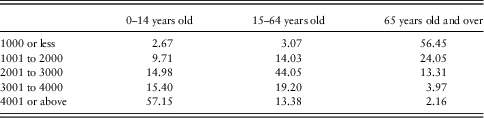
As Section 2 describes in detail, there is variation in the subsidy amount for influenza vaccination among the high-risk population. However, our focus is on the low-risk group as the distribution of out-of-pocket payments for influenza vaccination presents greater variation among low-risk individuals than among high-risk individuals, reflecting the different subsidy schemes for high- and low-risk individuals under current immunization policies. Based on Ohkusa (Reference Ohkusa2011), the only source available on the variation of out-of-pocket payments for influenza vaccination, the distribution of such expenses is shown in Table 1. Note that the distribution is based on those in the survey who decided to receive – and hence (partly) pay for – vaccination. Therefore, it excludes those who chose not to be vaccinated because of the costs of vaccination and other reasons, and consequently, does not reflect the actual cost of vaccination that the overall population faces. The average out-of-pocket expenditure for adults (those aged 14–64 years) was ¥3200 (US$40), that for older people was ¥1400 (US$18), and that for children and adolescents was ¥5600 (US$70). The variance was smaller for older people than adults, children or adolescents, and more than 80% of older people paid less than ¥2000 (US$25).
Distribution of out-of-pocket expenses for influenza vaccination (in Japanese yen) among those who received vaccination by age group

Note: Figures show the percentage of respondents in each age group. Children and adolescents are those aged 0–14 years old, adults are those aged 15–64, and the elderly are those aged 65 and over.
Source: Ohkusa (2011).
In addition, we examine the impact of subsidies for low-risk individuals as they are considered an important target for such programmes. Under the current national immunization programme of Japan, the programme targets for influenza vaccination are only high-risk individuals (i.e. the elderly and those with chronic conditions). However, influenza epidemiology highlights the fact that children play an important role in influenza transmission (Monto et al., Reference Monto, Davenport, Napier and Francis1970), and vaccinating children has been shown to be an effective way of controlling influenza epidemics (Reichert et al., Reference Reichert, Sugaya, Fedson, Glezen, Simonsen and Tashiro2001; Jordan et al., 2006; Loeb et al., Reference Kuwabara and Ching2010). Our study aims to explore how the impact of subsidies for the low-risk group, including children, affects control of influenza epidemics.
Using survey data on the subsidy programme for influenza vaccination, we analyse how reductions in out-of-pocket payments through a subsidy programme for influenza vaccination affected community influenza activity, controlling for observable and unobservable characteristics of municipalities. We find that the availability of subsidies reduced the number of weeks with a high influenza alert in a region by 20%.
The remainder of the paper is organized as follows. Section 2 describes the institutional background to our analysis of influenza vaccination in Japan. Then, Section 3 outlines our empirical approach and describes our data sources, construction of variables, and empirical specification. Section 4 presents the results while Section 5 discusses them and concludes.
2 Institutional background
2.1. Vaccination systems
Japan’s vaccination systems, as determined by the Preventive Vaccination Law, consist of two parts: routine and voluntary vaccination (Kuwabara and Ching, Reference Kondo, Hoshi and Okubo2014). Routine vaccination includes mainly childhood diseases, such as measles and rubella, and voluntary vaccination includes such diseases as hepatitis A, hepatitis B and rotavirus. The central government determines the list of routine and voluntary vaccinations and occasionally revises the lists as considered necessary.Footnote 2 The main difference between the two groups in terms of financing is in who bears the costs of vaccination. Public authorities are responsible for the costs of routine vaccination, and thus, routine vaccination is subsidized by the government. Subsidies cover all the costs for childhood vaccination and children are able to receive full subsidies for vaccination as long as they are vaccinated following a determined vaccination schedule.
For voluntary vaccination, the government is not responsible for financial support and those who are vaccinated bear the costs. The influenza vaccination is unique in the sense that it is classified as either routine or voluntary depending on the risk status of individuals. Specifically, for those considered high risk (i.e. those aged 65 years or more and those aged 60–64 years with chorionic conditions), influenza vaccination is routine. For the rest of the population (low-risk population), it is voluntary. In addition, the full costs of influenza vaccination are not necessarily subsidized by public authorities, unlike many other routine vaccinations, even those for high-risk individuals. Rather, the subsidy amount is determined by the municipality, and hence, varies with residential location of individuals.
Influenza vaccination is required annually, and vaccination is provided at a health care provider. Those who wish to be vaccinated visit a health care provider. If they visit an office in their municipality of residence, they typically pay a cash amount to the provider that reflects and subtracts the subsidy amount. If individuals go to a clinic outside of their municipality of residence, or if there is any other reason that they are unable to receive subsidies at the time of payment, they receive the subsidies later as a reimbursement from the municipality after paying the full vaccination costs to the provider.
2.2. History of influenza vaccination policiesFootnote 3
Next, we briefly consider the background to influenza vaccination measures in Japan. In 1976, influenza was identified as one of the diseases targeted by the Preventive Vaccination Law and mass vaccination of schoolchildren started. However, the government stopped this programme in 1994 because of growing scepticism regarding the effectiveness of influenza vaccination and concerns about adverse reactions to the vaccine. By the late 1990s, the threat of an influenza pandemic and other emerging infectious diseases had increased greatly over time; the pendulum swung back again owing to the interventions by the Committee for Influenza Pandemic Preparedness in the Ministry of Health and Welfare and a change in public attitude, as reflected in the mass media (Hirota and Kaji, Reference Hirota and Kaji2008).
The current policy started in 2001 when the Preventive Vaccination Law was amended once again to include influenza in the list of routine vaccination for high-risk individuals. The Law identifies two high-risk groups for which vaccination is recommended: 65 years old or more, and individuals with chronic conditions aged 60–64 years.
Figure 1 shows the seasonal influenza vaccine dose distribution in Japan from 1985 to 2010. The use of vaccines dropped sharply until 1994 but has increased again since then. Because the Preventive Vaccination Law identifies older people as a group for whom vaccination is recommended, the vaccination rate among the elderly in Japan increased notably from 1999 to 2004, and reached 50% in 2009. Even at this level, however, the rate remains below the Organisation for Economic Co-operation and Development average.
Seasonal influenza vaccine dose distribution in Japan: 1985–2010. Source: Ministry of Health, Labour and Welfare, ‘The number of influenza vaccine doses produced and used.’ Data for unused vaccination doses before 1999 are not available.

2.3. Japanese health care system and the role of municipalities
Universal health insurance, which started in 1961, covers only the medical costs for treatment and does not cover preventive care, such as screening for cancers or vaccination. Instead, public authorities provide financial assistance for basic preventive care.Footnote 4
In Japan, local government is divided into two tiers: prefectural governments (second tier) and municipal governments (first tier). Japan has 47 prefectures in total and each prefecture consists of a number of municipalities (cities, towns and villages), resulting in more than 1700 municipalities across Japan (Ministry of Internal Affairs and Communications, 2014).Footnote 5
Prefectural governments play a primary role both in organizing public health policies as well as in financing and providing a wide array of public health services, including sanitation, environmental and health care issues. However, under the current Preventive Vaccination Law, municipalities, the first tier of local government in Japan, are responsible for both the financing and provision of routine vaccination.Footnote 6 For example, as part of the administrative work related to the provision of routine vaccination for childhood diseases, municipalities annually track which residents are scheduled for routine vaccination, send out notifications of their scheduled vaccinations, and keep records of whether they are vaccinated.
2.4. Influenza vaccination among high-risk individuals
Like for other routine vaccination, municipalities subsidize the cost of influenza vaccination for target groups as per the Preventive Vaccination Law. However, budgets for such subsidies vary across municipalities, and thus, the subsidy amount varies across municipalities. To gain insight on how subsidy amounts differ across municipalities, we provide the following statistics of subsidies for influenza vaccination for high-risk individuals. According to a survey of municipalities conducted in 2010 by the Ministry of Health, Labour and Welfare, 68 of 1774 municipalities (3.9%) covered the full cost of vaccination for the target groups. About one-third of 1774 municipalities paid ¥3000–3999 (US$38–50) toward the cost of vaccination, one third ¥2000–2999 (US$25–38), and one third ¥1000–1999 (US$13–25). Further, 32 municipalities (1.8%) covered less than ¥1000. In addition, the cost of vaccinations is determined based on agreements between municipal governments and community medical associations (Hirota and Kaji, Reference Hirota and Kaji2008), and hence, the actual cost per vaccination before the subsidies were applied differs across municipalities. Thus, the out-of-pocket expenses for vaccination vary, even among individuals in the high-risk group, for whom influenza vaccination is set as routine and depends on where they reside.
2.5. Influenza vaccination for low-risk individuals
For other individuals who we analyse in this study, that is, those identified as low risk, there is no uniform rule on the price or subsidies by the central government. As influenza vaccination for low risk individuals is listed as voluntary, municipalities are not responsible for the cost of vaccination. In addition, the universal health system does not cover the cost of vaccination, although some employment-based health insurers voluntarily provide reimbursement.Footnote 7 Thus, those who wish to be vaccinated have to pay out-of-pocket. Nevertheless, in 2010, 11% of municipalities provided subsidies for influenza vaccination, even for this group of the population. The subsidy amount depends on the policy of each municipality. As a result, there is considerable regional variation across municipalities in the extent of subsidies for individuals from the low-risk group, ranging from ¥0 to ¥4000 (=US$50). In addition, the specific segments of the low-risk population entitled to subsidies differ across municipalities. Thus, although, as Shibuya et al. (Reference Shibuya, Hashimoto, Ikegami, Nishi, Tanimoto, Miyata, Takemi and Reich2011: 73) highlight, in principle ‘Japan’s health policy is decided uniformly by the central government and with little discretion from the local governments’, there is regional variation in terms of subsidies, and hence, out-of-pocket expenses for influenza vaccination varies among the low-risk individuals.
Unfortunately, data on vaccination prices or the amounts individuals paid for influenza vaccination are not readily available. For voluntary vaccination, there are no rules or regulations for prices, which vary by health care provider. To provide an idea of the cost of influenza vaccination in Japan, Kuwabara and Ching (Reference Kondo, Hoshi and Okubo2014) provide a reference price of ¥2500 (US$31) per dose.
3 Empirical approach
Our empirical analysis attempts to examine the impact of reductions in out-of-pocket payments due to subsidy availability, which varies among municipalities, on community-wide health outcomes, rather than on health outcomes of those vaccinated. Thus, the analysis is conducted using regional-level data. Specifically, we use either municipal-level or health centre-level data, depending on data availability. We perform regression analyses based on panel data, in which the dependent variable is a health outcome measured by the duration of influenza epidemics and the main independent variable is a dummy variable to show provision of subsidies, controlling for demographic and economic conditions of each municipality. We use pooled ordinary least squares (OLS), fixed effect, and random effect models for our panel data set.
3.1. Data
This section presents the different variables we employ in our empirical analysis, their data sources and construction, and the way we merged our data.
3.1.1. Vaccination subsidies
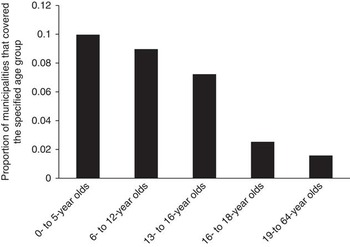
We start our discussion of variables used for the analysis by considering the intervention variable. To assess the impact of subsidies, we use a binary variable to indicate the availability of vaccination subsidies as the intervention variable (Yes=1). We use data from the ‘Survey on Subsidy Provision for Voluntary Vaccination’ conducted by the Center for Vaccination Research in January 2010.Footnote 8 The centre sent the survey questionnaire to all 1784 municipalities in Japan at that time and received responses from 1731 municipalities (a response rate of 97.1%). The survey aims to identify municipalities that provided vaccination subsidies for seasonal influenza for low-risk individuals (i.e. those under 60 years of age and low-risk individuals between 60 and 64 years). In addition, it aims to obtain information on the segment of the population eligible for vaccination subsidies in terms of individuals’ age and economic status, on the costs covered by the programme, on the number of doses covered, and on which year the programme started. As Figure 2 shows, roughly 10% of municipalities provided subsidies for children aged 0–5 years but the percentage gradually shrinks for older age groups.
Subsidy target population by age group (2010). Source: Centre for Vaccination Research, ‘Survey on Subsidy Provision for Voluntary Vaccination’. Each bar indicates the proportion of municipalities that provide subsidies for a specific age group.

One of the questions the survey asked municipalities is in which year the subsidy programme started. The responses indicate that in 2005, only 3% of the municipalities provided the subsidies but this share increased to 8% in 2008 and 11% in 2011. Using the variation in the percentage share over time, we create a three-year panel covering the 2005/2006, 2008/2009, and 2010/2011 influenza seasons. Notice that the survey includes the information on subsidy amount only in 2010, and thus, in our panel data analysis, we cannot evaluate the impact as the response to the subsidy amount. The survey was conducted at the end of 2009 and municipalities’ responses reflect the situation in the 2009/2010 season. It would have been ideal to conduct the analysis for that year; however, we exclude the 2009/2010 season because it was probably affected by H1N1 pandemic in 2009 and so, we choose the two closest seasons for our evaluation, namely, 2008/2009 and 2010/2011. It is important to note that in this process, information is waived on subsidy provision, resulting in two potential errors in measurement. First, municipalities that provided subsidies in the 2005/2006 (or 2008/2009) season but not in the survey year are not counted as subsidy-providing municipalities. Second, if municipalities started the subsidy programme after the survey year but before the 2010/2011 season, they are excluded from the list of municipalities with a subsidy programme in the 2010/2011 season.
3.1.2. Measures of influenza activity
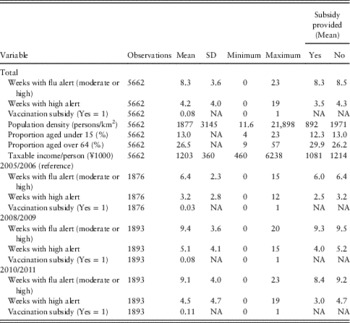
To measure the community-wide health outcome of payment reductions, we use influenza activity as the dependent variable in our analysis. Information on influenza activity is obtained from the National Institute of Infectious Disease, which has established an influenza alert system and makes information on influenza activity available online.Footnote 9 The system provides weekly information on the influenza activity level measured at 556 health centres in Japan. Health centres in Japan provide various health services related to infectious diseases and mental health diseases in the community. These services include not only health check-ups, or counselling regarding health conditions to community residents, but also technical assistance in health activities to the municipal government such as infectious disease surveillance. In addition, health centres play an important role in maintaining environmental sanitation and food safety and in reviewing clinical safety in the community, by providing monitoring and inspection services to various related institutions. They do not provide medical treatment care to patients. A health centre covers one or more municipality and the health centre district is determined by the boundaries of municipalities. That is, on average, one health centre covers 3.2 municipalities (=1784/556). The influenza activity level registered at each health centre is classified into one of three levels of alert: no alert, moderate alert and high alert. The level of alert is based on the number of influenza patients per sentinel clinic or hospital reported during the preceding week through the weekly sentinel surveillance system at each health centre. In each health centre district, the sentinel clinics or hospitals are selected randomly so that the number of sentinels could reflect the population size of the health centre.Footnote 10 Clinical diagnoses are usually tested by influenza rapid tests. A moderate alert is declared when the number of patients per sentinel exceeds 10, while a high alert is declared when this number exceeds 30 (Murakami et al., Reference Murakami, Hashimoto, Taniguchi, Osaka, Fuchigami and Nagai2004). A high alert continues as long as the number of patients per sentinel remains at 10 or higher in subsequent weeks.Footnote 11 For our analysis, we use two measures of influenza activity: the total number of weeks with a high alert and the total number of weeks with either a high or moderate alert between the 45th week of the year (the beginning of November) and the 22nd week of the next year (the end of May).Footnote 12 On average, a moderate alert and a high alert are shown for 8.3 weeks and 4.2 weeks, respectively, in the 30-week period we consider (Table 2). In all three years of our analysis, the number of weeks with both a high and a moderate alert are greater in municipalities without a subsidy programme, as the last two columns of Table 2 show. We study how this would change after controlling for observed and unobserved heterogeneities of municipalities.
Descriptive statistics

3.1.3. Control variables
In order to isolate the effects of vaccination subsidies as much as possible, we employ socio-demographic and economic control variables taken from the Statistical Observations of Shi, Ku, Machi, Mura, available online by the Statistics Bureau (2014). These include population density, the proportion aged less than 15 years, the proportion aged 65 years and more, and per capita taxable income.Footnote 13 The reason for including the proportion of those aged 65 years and more is that this population group is covered by the mandatory vaccination reimbursement programme. The population aged less than 15 years is included to take account of both the epidemiology of influenza, that is, the fact that transmission is age dependent, and regional demographic differences. This is because our preliminary analysis indicates that there is an association between municipalities’ demographic structure and the use of vaccination subsidies. In addition, we include prefectural dummies in our regressions for two reasons. First, although municipalities are in charge of educational activities for influenza prevention, prefectures often provide advice to municipalities and supervise their activities. Thus, while no data on the degree of such activities are available at the municipality level, prefectural dummies partially capture the effects of activities. The second reason is to control for regional variations in weather and temperature, which likely affect influenza activity. Finally, we include year dummies to control for year-specific effects.
There are non-negligible differences in some characteristics between municipalities with and without vaccination subsidies (Table 2). In particular, the means of the population density and per capita taxable income are lower in municipalities that provide subsidies. When municipalities with subsidies are highly concentrated in regions with low population densities (or per capita taxable income), instead of being randomly distributed, the subsidy dummy can reflect the difference in the population density (or per capita taxable income) instead of the real effects of subsidies. In our sample, the proportion of municipalities with subsidies is 23% for the bottom 10% of population density, whereas the corresponding figure is 6% for the remaining 90%, indicating that subsidies are provided in areas with lowest population densities. By contrast, as for per capita taxable income, the proportion of municipalities with subsidies is 13% for the bottom 10% of the distribution and 7% for the remaining 90%. This suggests that the availability of subsidies is concentrated in municipalities with lower population density but the degree of concentration is not as large with respect to per capita taxable income. Thus, in Subsection 4.3, we examine how the non-random distribution of subsidy availability across municipalities with different population density affects the result. We do so by conducting subsample analyses in which the subsamples are defined based on the percentiles of population densities.
3.1.4. Data merging process
Finally, in order to construct our data set, we merge the data from the various data sources based on a common delineation of municipalities. The data set on influenza alert covers October–May in the following year. On the other hand, the subsidy amount is collected based on the fiscal year April–March of the following year, and the information collected on the subsidies should reflect the information before the influenza season starts each year. Thus, merging two data sets of the availability of subsidies, for example, in 2010 with the total number of weeks with influenza alert in the 2010/2011 influenza season is appropriate. As the data of the Statistics Bureau have been organized on the basis of the delineation of municipalities since 31 March 2010, we use this as our starting point and adjust the other data sources accordingly. For some ordinance-designated cities, we break down municipalities at the health centre level because these health centres have multiple branch offices for which influenza alert information is available.Footnote 14 Our final data set consists of 1896 areas.
3.2. Econometric specification
Using the data set constructed in the manner described above, we empirically examine the impact of the vaccination subsidies on influenza activity. To do so, we employ three standard specifications to conduct our panel data analysis: pooled OLS regression, fixed effect estimation, and random effect estimation. The panel data analysis allows us to control for all time – invariant unobserved effects that are specific to municipalities. Such effects include the average number of influenza patients per sentinel clinic or hospital, or general population health status in a municipality, both of which are potentially different across municipalities and affect the estimation results if not controlled.
Before we present the results, however, it would be useful to address briefly a potential source of endogeneity in the relationship between subsidy provision and influenza activity. That is, at least theoretically, it is conceivable that individuals might move to certain municipalities because they provide subsidies for vaccination. Thus, to examine whether migration may have affected our results, we calculate the mean rate of population change between 2003 and 2008 for the 47 prefectures for children less than 10 years, the main target group of vaccination subsidies. We find that for children aged zero to four years, the mean rate of population change was only 0.63%, while for children aged five to nine it was slightly higher, but still relatively low at 3.92%. These figures suggest that migration during the period we focus on was minimal and it is unlikely to affect our results qualitatively.
4 Results
4.1. The effect of vaccination subsidies on influenza activity
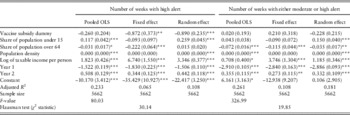
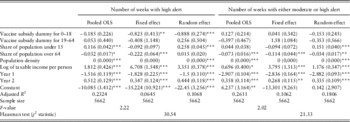
Let us now consider the results of our regression analysis. We start with the results for the three-year panel in Table 3. When the number of weeks with a high alert is used as the dependent variable, we find that the coefficient on the variable of interest, the vaccination subsidy dummy, is negative and significant in the fixed and random effect specifications, although it is insignificant in the pooled OLS estimation. Using an F-test, we can reject pooled OLS estimation in favour of the fixed effects specification, which suggests that unobserved heterogeneity in municipality characteristics affected the estimation results. In addition, we test the fixed effect specification against the random effect specification using a Hausman test. Doing so, we reject the random effect specification in favour of the fixed effect specification, indicating that unobserved municipality-specific factors were correlated with the independent variables. The magnitude of the reduction in the length of time with a high alert was 0.87 weeks, which corresponds to 21% of the total number of weeks with a high alert.
Effect of influenza vaccination subsidies out-of-pocket payments on influenza activity, three-year panel

Notes: OLS=ordinary least squares.
Standard errors are in parentheses. Prefecture dummies are included as control variables in the OLS estimations.
*, ** and *** indicate statistical significance at the 10, 5 and 1% level, respectively.
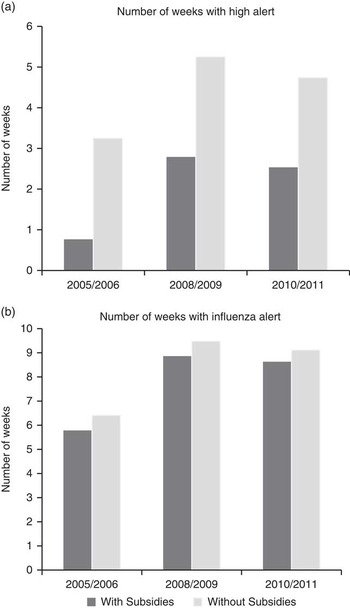
Interestingly, no similar correlation is observed when the number of weeks with any type of influenza alert (i.e. moderate or high) is used as the outcome measure. This suggests that the subsidies successfully controlled severe epidemics, but did not change the total duration of influenza epidemics. This is visually confirmed in Figure 3, which presents the predicted numbers of weeks with high alert as well as with any influenza alert by influenza season.Footnote 15
Predicted number of weeks with influenza alert using the regression models by the availability of vaccination subsidies. Note: The values show the predicted mean number of weeks with (a) high alert and (b) any alert (moderate or high) generated by the fixed effect estimation in each influenza season.

We examine if the impact of the subsidies differs with the target population for the subsidies by including two separate binaries to indicate the provision of subsidies for those aged 0–18 years and those aged 19–64 years, assuming that the age for subsidy eligibility did not change during the study period (see Appendix). The results of fixed-effect as well as random-effect estimation show a significant negative impact of the subsidies for those aged under 19 years but not for those aged 19–64 years, indicating that the impact of subsidies on the health outcome is driven by the subsidies for children and adolescents (Table A1).
Next, we examine the coefficients on the control variables. We find that, with the exception of the income variable, which is positively associated with influenza activity, the results for the other control variables vary depending on the estimation method. For instance, in the fixed effect specifications, the coefficient on the share of those aged more than 64 years is negative and significant, as one would expect. By contrast, the positive effect observed in the pooled OLS and random effect estimations for the share of those aged less than 15 years disappears in the fixed effect model, that is, once unobserved heterogeneity is controlled for. The latter indicates that the level of influenza activity in a region was not affected by the share of those aged under 15 years, but that there were other variations in the demographic structure between municipalities with and without vaccination subsidies picked up in the OLS estimation.
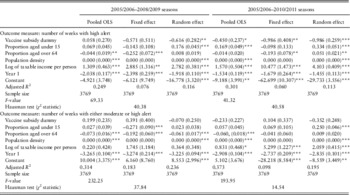
Finally, we investigate whether the impact of vaccinations differed over time. To this end, we conduct separate two-year panel data analyses for the 2008/2009 and the 2010/2011 seasons, with the 2005/2006 season used as the reference season. The results in Table 4 show a clear contrast between the two years. Whereas in the 2010/2011 season, like the overall results reported in Table 3, the vaccination subsidies was negatively associated with the number of weeks with a high alert, no significant effect can be observed for the 2008/2009 season.
Effect of influenza vaccination subsidies on influenza activity, two-year panel

Notes: OLS=ordinary least squares.
Standard errors are in parentheses. Prefecture dummies are included as control variables in the OLS estimations.
*, ** and *** indicate statistical significance at the 10, 5 and 1% level, respectively.
4.2. Robustness checks for the 2010/2011 season
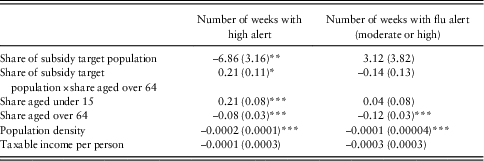
The results in Table 4 show that in the 2010/2011 season, the vaccination subsidies significantly reduced the number of weeks with a high alert. However, as the subsidies do not cover the entire population under 65 years and eligibility in most municipalities is limited to a subpopulation, one may wonder to what extent the effects depend on how large a share of the population is covered by the subsidies. Therefore, to consider the variation across municipalities in the target population for vaccination subsidies, we conduct a linear regression using the share of the population eligible for vaccination subsidies as the main independent variable instead of the binary variable. The reason we do not use panel data analysis in this case is that information on eligibility for the subsidies is available only for the survey year (2010) and there is no variation in our data across the three years in terms of eligibility for the subsidies. In addition to the variables employed in the abovementioned panel analyses, we include an interaction term between the proportion of those more than 64 years of age and the eligible population share as we expect that the effect of the subsidies could vary with the proportion of those more than 64 years.Footnote 16 That is, if a greater share of individuals is already covered by the subsidies for high-risk individuals in a municipality, the benefit from the additional subsidies for the low-risk population may be smaller because of the externality gained from higher vaccination coverage in a municipality brought about by the larger share of the high-risk population. The purpose of the analysis is to confirm that the effect of the subsidies is related to subsidy eligibility. Thus, we do not consider the other season, that is, 2008/2009, for which no statistically significant effect of the subsidies is found.
The results of this regression are shown in Table 5 and, regarding the impact of the subsidies on influenza activity, are, indeed, qualitatively the same as those in Table 4. That is, the subsidies reduced the number of weeks with a high alert but had no effect on the number of weeks of either a moderate or high alert. In addition, we find that the interaction term has a positive coefficient, indicating that the impact of the subsidies declined along with a larger share of elderly individuals in the population.
Effect of influenza vaccination subsidies on influenza activity using the share of the subsidy target population, 2010/2011 influenza season, OLS results

Notes: Standard errors are in parentheses. Prefecture dummies are included as control variables in all estimations.
*, ** and *** indicate statistical significance at the 10, 5 and 1% level, respectively.
4.3. Subsample analyses for different ranges of population density
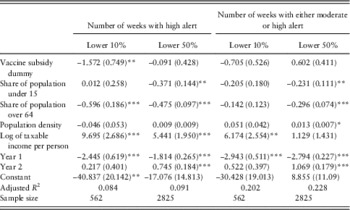
As we see in Subsection 3.1, the municipalities with subsidies are highly concentrated in the municipalities with low population densities, in particular, in the lowest 10%. To examine how the non-random distribution affects our results for the impact of vaccination subsidies on influenza activity, we conduct subsample analyses. Table 6 shows the fixed effect estimation results that are supported by statistical tests among the three specifications using observations located in the lowest 10 and 50% of population densities. For the number of weeks with high alert, the magnitude of the impact of vaccination subsidies on influenza vaccination and the statistical significance of the coefficient estimates differ in the analyses in different ranges, although the qualitative direction of the impact is the same as our main analysis, and are negative. The effect is the largest for the lowest 10%, of which 23% comprised municipalities with subsidies available. The difference in the impact across the subsample analyses with the two ranges could stem from both the difference in the proportion of the municipalities in which subsidies are available (the proportion decreases as the population density increases), and variation of the impact itself. The impact on the other outcome measure is not found to be statistically significant, which is consistent with the result of the main analysis.
Effect of influenza vaccination subsidies on influenza activity, subsample analyses by population density, fixed effect estimation results

Notes: Standard errors are in parentheses. Prefecture dummies are included as control variables in all estimations.
*, ** and *** indicate statistical significance at the 10, 5 and 1% level, respectively.
4.4. Subsample analysis by population size
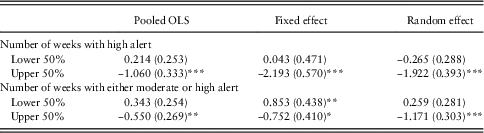
Kondo et al. (Reference Kane, Johnson, Town and Butler2009) find that there was a difference in the response in vaccination rate to vaccination subsidies between urban and rural areas, and that price elasticity for vaccination was almost zero in urban areas. Motivated by their findings, we conduct a subsample analysis by population size to explore whether there is a difference in the impact of payment reductions on the number of influenza alerts between urban and rural areas. Specifically, we divide the whole sample into two subsamples based on population size and conduct the same analysis as we do for Table 3. Table 7 shows the results from OLS, fixed-effect, and random-effect estimations in the upper and lower 50%.
Effect of influenza vaccination subsidies on influenza activity, subsample analyses by population size, OLS, fixed effect, and random effect estimation results

Notes: OLS=ordinary least squares.
Standard errors are in parentheses. The figures show coefficient estimates of a binary to show the availability of subsidies. The same control variables as Table 3 are included in all estimations. The sample was divided by population size.
*, ** and *** indicate statistical significance at the 10, 5 and 1% level, respectively.
First, we find that the impact is greater in the urban areas with larger population size, and this is consistent across the three regression models. Second, unlike the main analysis in Subsection 4.1, the impact in the urban areas is statistically significant for the regression with the number of influenza alerts including moderate and high as the outcome variable.
5 Discussion
To our best knowledge, apart from the present study, Ohkusa (Reference Ohkusa2005) is the only other study on vaccination subsidies that examines the impact of cost reductions on health outcomes with a limited sample size. We find that reductions in out-of-pocket payment through subsidies for influenza vaccination are negatively associated with the number of weeks with a high alert for influenza epidemics in the region. Our results are qualitatively consistent with Ohkusa (Reference Ohkusa2005), who found the out-of-pocket payment was negatively related to influenza and pneumonia mortality via increased vaccination coverage. He examined the impact of subsidy amount among high-risk individuals using data from Tokyo and 12 large cities in Japan. Our result confirms the effect of cost reductions through subsidies for different population, that is, low-risk individuals, on a different health measure and extends the results to the whole of Japan using data on more than 1700 municipalities.
Our study evaluates the effect of subsidies for low-risk population including children, who are not targets of the current national immunization programme. It is essential to understand the impact of subsidies on health outcomes for further discussion of effective immunization policies in Japan and this study provides evidence about the role of subsidies specifically for the low-risk population. At the same time, we cannot come to any conclusion about the target of vaccination subsidies in terms of age within the low-risk population. While our results show a statistically significant impact only for those under 19 years of age, this does not necessarily indicate that subsidies for this age group should be more effective than those for other age groups. In the given data set, all the municipalities in which vaccination subsidies were available for those aged 19–64 years also provided subsidies for those aged 0–19 years. Thus, the non-significant impact of subsidies for the adults simply implies that there were no additional impacts of subsidies for adults. To make a comparison in relation to the impact of subsidies targeted at different age groups, it is necessary to have a random assignment of subsidies with respect to target age as research design.
In this study, we find a positive correlation between subsidies and health outcome. Given the controls in regressions in both observable and unobservable factors that could affect the relationship between the two, the correlation implies improved health outcome due to subsidies, which likely occurred as a result of the expansion in vaccination rates caused by a reduction in out-of-pocket payments due to the subsidy programme. Consistent with this, we find a robust result even when the proportion of subsidy target is the explanatory variable instead of a binary to show subsidy provision. Previous studies also have shown that cost reduction has a positive effect in preventive health care utilization. In particular, economic incentives have been found to be effective in the short run for simple preventive care that has distinct, well-defined goals, such as vaccination (Kane et al., Reference Jordan, Connock, Albon, Fry–Smith, Olowokure, Hawker and Burls2004).Footnote 17 In addition, two previous studies about Japan have found a positive impact, at least partially, on vaccination uptake among older people (Ohkusa, Reference Ohkusa2005; Kondo et al., Reference Kane, Johnson, Town and Butler2009; Ibuka and Bessho, Reference Loeb, Russell, Moss, Fonseca, Fox, Earn, Aoki, Horsman, Van Caeseele, Chokani, Vooght, Babiuk, Webby and Walter2015), which supports the mechanism of the impact.
At the same time, it is important to note that our analysis per se does not limit other possibilities for improved health outcomes. For example, the effect of the reductions in vaccination costs may have been reinforced if it were conducted together with other public health measures, such as vaccination campaigns or educational activities for prevention of influenza infections. The effect is partly controlled for by prefecture dummies, as prefectural authorities are primarily responsible for public health activities at the regional level. In addition, payment reductions may have increased demand for vaccination among groups not eligible for subsidies and this may have contributed to reducing influenza activities. For example, some individuals may have been vaccinated when visiting a clinic accompanying a person who is the subsidy target. If this effect played an important role, then providing financial assistance to a broader range of the population may provide less incremental improvements in health outcomes.
The positive correlation we find is modest from three perspectives. First, influenza vaccination subsidies were associated with only the number of weeks with a high alert but not the total number of weeks with an influenza alert (moderate or high). Given the significant impact on the number of weeks with a high alert, this result leaves two possibilities with regard to moderate alerts: (a) the number of weeks with a moderate alert may have increased as the number of weeks with a high alert decreased. That is, a high alert may have shifted to a moderate alert; (b) the number of weeks with a moderate alert did not decrease by the same extent as the number of weeks with a high alert.
Second, the correlation is rather modest in that its magnitude varied in the two years on which our evaluation was based. Although the coefficient estimate of the subsidy programme in the 2010/2011 season was significant and robust, the corresponding estimate in the 2008/2009 season was not. A possible reason is that the latter correlation may be underestimated owing to lack of information on the availability of the subsidies. In addition, there may be a difference in the match between a vaccine and the circulating influenza virus, and thus, the efficacy of the vaccine itself may have varied between the two years. Specifically, there are two possible reasons. First, the difference may be due to the way that our panel data are constructed, namely, that they are based on a survey examining whether municipalities provided vaccination subsidies in 2010. If municipalities provided vaccination subsidies in the 2008/2009 season but stopped before the survey was conducted, such municipalities are not counted as municipalities providing subsidies, so that the coefficient may have been underestimated. Second, there can be a difference in the efficacy of vaccination owing to the mismatch between vaccine strains and circulating strains.
Third, there is a difference in the magnitude of the coefficient estimate of the subsidy programme by population size. Specifically, a greater impact of cost reductions on influenza activity is found in urban area than in rural areas determined by population size, which is contradictory to Kondo et al. (Reference Kane, Johnson, Town and Butler2009), who found a greater effect on vaccination uptake in rural areas. We are not able to identify the reason for the inconsistent results between the two studies. However, it is possible that the difference could partly come from differences in the study settings. For example, the study target population differs between the two studies. Kondo et al. (Reference Kane, Johnson, Town and Butler2009) evaluate the impact of subsidies on older people while ours does so among low-risk individuals. In addition, Kondo et al. (Reference Kane, Johnson, Town and Butler2009) use data of 196 municipalities whereas the current study uses data of more than 1700 municipalities. The selection of municipalities may affect the results although their recruitment of study participants is based on random sampling.
Given our results, there are three potential directions for the extension of our study to produce clear policy implications. First, it is important to examine the impact of out-of-pocket payments on vaccination rates to confirm the mechanism of our finding. Currently, data on vaccination rates at the municipal level for the entire country is available only for high-risk individuals who are the targets of the national immunization programme (i.e. ‘routine’ vaccines), and not for low-risk individuals. An analysis of the response to the costs of vaccination using individual-level data may be helpful to understand the mechanism of our results. Such data collection on vaccination rates is crucial to understand the exact mechanism of our results.
Second, we need to understand the source of variations for subsidies across municipalities in Japan. In the substantial body of literature on the impact of out-of-pocket payments on health care utilization, the central argument has been the role of such payments as a tool to prevent ex-post moral hazard of the insured (World Health Organization, 2002). Compared to health insurance, out-of-pocket expenses for vaccination are less likely to be justified in terms of moral hazard prevention as each individual requires only a limited number of doses per vaccine, and thus out-of-pocket expenses are less likely to lead to unnecessary use. Thus, the variations in out-of-pocket expenses are more likely to arise from the consideration of finance conditions, that is, the budgets of municipal governments. To argue further how to expand subsidy programmes at the municipal level, it is important to determine the barriers to the provision of subsidies by each municipality. To this end, it is essential to explore the source of variations across municipalities’ vaccination subsidy programmes and to identify the determinants of resource allocation to such programmes.
Third, cost-effectiveness analysis of a programme to provide financial assistance should be undertaken for further policy discussion. The current form of vaccination policies for influenza started in 2001 and influenza vaccination is listed as routine only for older people. Hence, financial support by the government is guaranteed only for this population. The purpose of the current policy for subsiding influenza vaccination emphasizes more the reduction of the risk of infections for individuals (Ministry of Health, Labour, and Welfare, 2013). Our results on the duration of influenza epidemics indicate that the provision of subsidies for low-risk individuals may be effective to control influenza epidemics by reducing transmission. An examination of the cost-effectiveness of such programmes may be the next step before the policy reconsiders the list of routine vaccination together with validation of its effectiveness. It is well known that immunization is, in general, a cost-effective medical intervention (Russell, Reference Russell2007) but it is essential to examine carefully the cost-effectiveness of each programme for a specific target group, such as low-risk individuals.
Unlike in the United States and other developed countries, low-risk individuals in Japan still bear a large share of the costs of influenza vaccination, unless their particular municipality has a subsidy programme for this population group. As the Institute of Medicine (Reference Ibuka, Paltiel and Galvani2004) in the United States suggests, reducing vaccination costs may not substantially affect individuals’ behaviour when vaccination costs are already low. In Japan, however, reported out-of-pocket expenditure for influenza vaccination is, in fact, quite high, in some cases exceeding ¥10,000 (US$125) for children and adults under the age of 65 years (Ohkusa, Reference Ohkusa2011). Under these circumstances, reducing out-of-pocket expenses could play an important role in controlling influenza activity.
Finally, we point out some limitations of this study. First, due to a lack of data, we were unable to examine the effect of vaccination costs on vaccination rates, and thus, the exact responsiveness of vaccination rates to vaccination costs is unknown. Previous studies have shown that there is regional variation in the response to price changes among older people in Japan (Kondo et al., Reference Kane, Johnson, Town and Butler2009), and the variation in responsiveness may mediate the relationship between the availability of a subsidy and the realized outcome, if the same holds for low-risk individuals. Second, our study did not explicitly decompose the effect of the subsidies and other regional-level health programmes that potentially influence influenza activity, as mentioned above. Third, our analysis did not consider the effects of reimbursement provided by health insurers. If regional variation exists in the reimbursement provision by health insurers, this could mean that the analysis potentially suffers from omitted variable bias. However, the fixed effect estimation could control for a part of the effect, so long as the reimbursement provision by insurers did not shift parallel to the subsidy programme by the local government. Fourth, our analysis based on regional-level data may ignore the effect of commuting between the boundaries of health centre districts. Finally, our analysis is subject to measurement errors. The key explanatory variable was created from information on subsidy provision in 2010 and the year when each subsidy programme started. If municipalities provided vaccination subsidies in the 2008/2009 season but stopped before the survey was conducted in 2010, such municipalities were not counted among the municipalities providing subsidies. However, this could lead to only downward bias in the estimate of the coefficient, implying that our results represent the most conservative case.
Despite these limitations, our study using data from all Japan’s municipalities showed that municipalities that implemented consumer subsidy programmes experienced shorter periods of high influenza activities. Japan’s current influenza vaccination policies, in which the availability of subsidies for the low-risk group and the amount of subsidies for the high-risk group are determined by residential location, could lead to potential health disparities across geographic regions. Japan’s universal health coverage guarantees equal access to medical care for treatment, and it may also be important to consider equity in access to preventive care, particularly if access to preventive care has a direct impact on the health of the population. Our results indicate the importance of financial assistance in terms of equity in the access to health care and, as an effective tool for public health goals.
Acknowledgements
The authors are indebted to two anonymous reviewers, Yasushi Ohkusa, Tamie Sugawara, Audrey Laporte, Rei Goto, Naomi Miyazato, as well as participants of the workshop at the Institute of Population and Social Security Policy of the Canadian Health Economists’ Study Group meeting, of the 2012 Japanese Economic Association Meeting, of the 2012 European Economic Association meeting, and of the 2012 Asia-Pacific Economic Association Annual Conference for invaluable comments and suggestions on an earlier version of this paper. They gratefully acknowledge financial support in the form of a Grant-in-Aid for Scientific Research (C) (#22530304) and a Grant-in-Aid for Research Activity Start-up (#23830025) by the Japan Society for the Promotion of Science.
Appendix
Effect of influenza vaccination subsidies on influenza activity by subsidy-eligible age, three-year panel