By the early 1960s, gas stations had become part of Italy's landscape and of Italians' everyday lives. Built according to modern architectural standards, gas stations provided customers with more than just the possibility of refilling their tanks. Thanks to a functional division of spaces, they allowed drivers to access a range of services, such as washing or repairing their car in a garage, stopping at a bar or restaurant for a snack or a meal, and buying a range of car products. With the spread of mass motorization, oil companies promoted a new kind of worker, one that could mediate between the realms of production and consumption and sell a new commodity, gasoline, in an efficient and standardized way.
Between the second half of the 1940s and the late 1960s, the role that gas station attendants should have in a rapidly expanding consumer economy such as the Italian one became the object of increased debate among oil companies, gas station attendants, trade associations, and consumers. This article analyzes the ways in which two of the main oil companies selling gasoline in postwar Italy, Esso Standard Italiana, the Italian affiliate of Standard Oil (New Jersey), and the state-owned firm Azienda Generale Italiana Petroli (Italian General Oil Company, Agip), redefined the job of gas station attendants. It looks in turn at how attendants challenged the two companies' efforts to standardize and rationalize their services. While scholars have devoted some attention to the forms of labor that have accompanied the spread of mass consumption, most of them have focused on saleswomen in department stores. The ways in which a highly masculinized form of consumption such as mass motorization redefined salesmen's class and gender identity has been largely overlooked.Footnote 2
Esso and Agip introduced new ways of thinking about salesmen's work. They viewed that of the gas station attendant as a male job, one that combined technical expertise and specialized knowledge over gas pumps, cars, and car products with the ability to market products by relying on appearance and good manners. By doing so, they advanced a new definition of masculinity and class, based on the idea that gas station attendants should distance themselves from the forms of manual labor and male working-class identity that were associated with mechanical work. Oil companies encouraged gas station attendants to pursue their desire for upward mobility and argued that they should acquire a series of characteristics that in Italy had been associated with a female sales force since the mid-1920s, such as an awareness of the importance of pleasing customers and dressing properly.Footnote 3
US scientific management and marketing played a crucial role in spreading new ideas about the kinds of work that would make gasoline consumption possible. In the context of a growing presence of US oil companies in Western Europe and the Mediterranean, Esso transferred to Italy a series of American definitions of salesmanship, which influenced the ways in which Agip marketed and distributed its gasoline. The two companies pursued the idea that mass distribution and marketing would be successful only if they were accompanied by standardized forms of selling. As such, they instructed gas station attendants on how to sell gasoline scientifically and efficiently, by dividing their tasks into various parts, developing their personality and appealing to their clients.
While Esso and Agip advanced similar interpretations of gas station work, they also differed in significant ways. Whereas Esso viewed its gas station attendants as part of an international male workforce distributing the benefits of mass consumption across the world, Agip linked the creation of a new sales force to notions of national prestige and Italian modernization. It defined its gas station attendants as “soldiers” fighting for the nation's independence from foreign oil companies and critiqued a form of masculinity based on appearance and conspicuous consumption. In both cases, the definitions of gas station work Esso and Agip advanced challenged attendants' sense of autonomy and male authority. While their emphasis on standardization contributed to the deskilling of their jobs, the forms of corporate paternalism they pursued clashed with gas station attendants' ambiguous class position. Despite the fact that Esso and Agip treated them as company employees, gas station attendants were franchisers. As such, they perceived themselves more as small businessmen than as corporate salesmen.
American influences, however, were not only transatlantic. During the 1960s, Agip organized a series of training courses for gas station attendants from North Africa and sub-Saharan Africa, as part of its development projects aimed at creating closer links with oil-producing countries. It exported Americanized business practices to the developing world, by drawing on US experts and publications. As in the case of Italy, masculinity played a crucial role in shaping relations between Agip and oil-producing countries by representing North African and sub-Saharan Africans as men needing the forms of technical assistance and training provided by Italian men in order to modernize. While most studies of Americanization have focused on bilateral relations between the United States and other countries, this article highlights the ways in which a recipient of American aid, such as Italy, transformed US business ideas in order to pursue its own interests. It sheds new light on the unintended consequences and far reach of US policies.
While Esso and Agip recognized and encouraged their desire for upward mobility, gas station managers (gestori) resisted the forms of corporate paternalism and the process of proletarization that accompanied the rationalization of their work.They thus defended their male sense of autonomy and independence and their right to provide for their families. Gas stations were often run as small family businesses and were based on a clear hierarchy between male gestori, their family members, and their employees (addetti or pompisti). While gestori organized around trade associations, they excluded their employees and kept them in a weak economic and social position characterized by precarious working conditions and low salaries. In the case of Agip, the gestore's authority revolved around his position as head of the family, more than as employer. Indeed, Agip encouraged the establishment of family-run gas stations, in order to create a more stable workforce. Wives and sometimes daughters thus helped gestori perform the standard service. They kept gas stations clean and proper and by the late 1950s had their own Agip uniforms.
Oil Companies in Italy
Standard Oil (New Jersey) had established an Italian affiliate in 1891, the Società Italo-Americana pel Petrolio (Italian-American Oil Company, Siap), which in 1950 changed its name to Esso Standard Italiana.Footnote 4 While its main aim was to sell oil and gasoline on the Italian market, Esso also acquired part ownership of a refinery, the Raffineria Triestina Olii Minerali, and of an extraction company, the Società Petrolifera Italiana. During the 1920s and 1930s, Standard Oil was one of the first companies, along with Ford and Goodyear, to use an American advertising agency, H.K. McCann, to sell its products across Europe.Footnote 5 In 1923, it adopted the unified brand name “Esso” and in 1933 the “Esso Oval,” in order to introduce, “a brand name which could be pronounced in most languages of the world,” and a trademark that could be “recognizable to the motorist in Arabic as in English.”Footnote 6 Esso adopted the marketing strategies of its parent company but assigned advertising to prominent Italian artists and graphic designers, such as Dario Bernazzoli. Esso was also the first oil company in Italy to install gasoline pumps in the 1920s, which were often imported from the United States.Footnote 7
In the interwar period, Esso's presence on the Italian market was constantly challenged by Agip. Founded in 1926 by the Fascist regime, Agip sought to eliminate Italy's dependence on coal from Great Britain and Germany and oil from the Western Hemisphere. In the late 1920s, it bought a large share of two Romanian companies, Prahova and Petrolul Bucaresti, and acquired the Società Nazionale Olii Minerali, which distributed Russian oil on the Italian market. It also searched for oil in the Italian colonies and in Albania, an Italian protectorate since 1919.Footnote 8Agip's nationalism shaped the company's marketing strategies: it sold gasoline under the Fascist names Littoria and Victoria, and its ads adopted the language of Futurism to link gasoline with ideas of national strength, speed, and modernity. By the mid-1930s, Agip associated its products with Italian imperialism. Its ads defined Agip as a company that “had fueled imperial conquest” and a symbol of Fascism's ability to resurrect the Roman Empire.Footnote 9
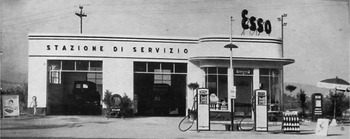
The competition and conflict between Esso and Agip continued after the Second World War. As the main US oil companies established their control over Middle-Eastern oil resources and Western European markets, Esso bought a share in the Italian company Stanic, which controlled two of the country's main refineries in Bari and Leghorn and adopted American marketing and distribution techniques. Esso transferred to Italy the idea that motorization should be accompanied by a transformation of the spaces of consumption and the services associated with it. While the architecture and layout of Esso's gas stations could vary, all were supposed to be organized rationally, functionally and, most importantly, uniformly. Selling gasoline was to become an efficient service, taking place in functional spaces where, next to a gasoline pump, customers could find a salesroom or display window, a garage, a series of accessories for their cars, a café, and, sometimes, a restaurant. Esso thus imported the typical American gas station, which increasingly replaced the so-called curbside station. By 1949, it had built over two hundred gas stations across Italy.Footnote 10
In the two decades after 1945, Esso's efforts to establish its presence in Italy clashed with Agip's determination to nationalize Italians around shared consumer ideas and practices. Agip's activities were part of a larger political project, promoted by sectors of the Italian ruling Christian Democratic Party (DC). The so-called “sinistra DC” (left-wing DC) advanced the idea that the state should play an important role in promoting economic growth through state planning. Thanks to the support of the Minister of Finance Ezio Vanoni, in 1953 the Italian Parliament voted to create the Ente Nazionale Idrocarburi (National Hydrocarbon Agency, Eni), a public agency devoted to developing Italy's energy resources, which incorporated Agip as its commercial branch.Footnote 11
Esso gas station. From: Il Rivenditore Esso, June 1953.

Under the direction of Enrico Mattei, Eni made increasing the levels of Italian consumption one of its main objectives.Footnote 12 It promoted the building of a national autostrada (freeway) and the spread of mass motorization, and presented its activities as a sign of the state's ability to provide for its citizens and a symbol of national strength and independence. Eni's interpretation of consumption was particularly clear in the company's logo, the image of a black six-legged dog on a yellow background, which was accompanied by the slogan “Supercortemaggiore. La potente benzina italiana” (“Supercortemaggiore. The powerful Italian gasoline”).Footnote 13
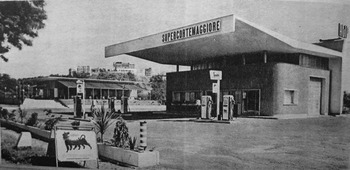
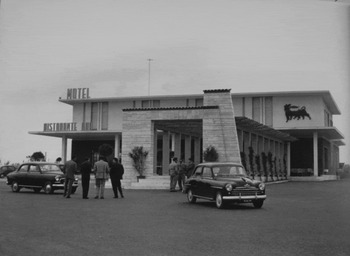
In 1954, Eni commissioned architect Mario Bacciocchi to design Agip gas stations according to modern and functional principles. The company was largely inspired by American ideas about the importance of gas stations. Indeed, as a company employee stated, the idea of improving Agip's services “was a personal idea of Engineer Mattei, who had widely traveled abroad and had seen huge gas stations in America, he was enthusiastic about them and brought that American model to Italy.”Footnote 14 Bacciocchi's standard gas station, known as “the dinosaur,” from the roof's prolonged shape, filled Italy's roads and became a symbol of a specifically Italian modernity, simple and functional, yet elegant. Agip wanted its gas stations to be not only efficient, but also distinguished in their design. To this end, Bacciocchi planned a series of motels, to be built next to Agip's gas stations, which were equipped with furniture and objects drawn by some of the most important Italian designers.Footnote 15
Eni's logo. From: eni archives

The Company's Face
In Esso's view, the transformation of its gas stations went hand-in-hand with that of its workers. The company recognized how useless its marketing and advertising strategies would be if clients “did not find that considerate and careful service that they rightly expect.”Footnote 16 It thus highlighted the importance salespersons had in assuring the company's success; they were, as Esso's sales director Gustavo Adolfo Comba put it, the company's “face.”Footnote 17 In order to provide its services, Esso developed a complex hierarchical system, which incorporated every single gas station attendant into a larger whole. Representatives of Standard Oil (New Jersey) interacted with members of the Italian affiliate only at the highest levels, in order to decide which marketing strategies to carry out. Gas stations were organized under the Gas Stations and Kiosks Section, which divided the Italian territory into areas controlled by Area Heads and were assigned in franchise agreements.Footnote 18
Agip gas station. From: Il Gatto Selvatico, June 1956, eni archives

Agip Motel, Modena, 1957. From: eni archives

Esso's interpretation of gas station attendants as crucial mediators between the realms of production and consumption acquired a particular meaning in postwar Italy, where until the mid-1960s only a small percentage of the population owned a scooter or a car. In 1956, for example, Italy had one car for every 47.4 people, compared to 1 to 3 in the United States, 1 to 11.8 in France and 1 to 20.7 in West Germany. After 1945, most Italians substituted Vespas and Lambrettas for their bicycles. Car ownership among the lower middle-classes and, increasingly, the working classes became possible only after Fiat started producing the 600 and 500 in the late 1950s. In this context, gas station attendants played an important role in winning customers' loyalty at the local level and encouraging the consumption of new products and services tied to mass motorization.Footnote 19
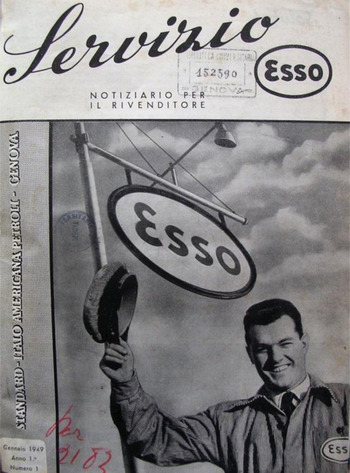
Esso transferred to Italy ideas about modern salesmanship that it had first introduced in the United States. It used scientific management in order to rationalize gas station attendants' work and drew on the growing fields of marketing and motivation research to shape salesmen's personality and appeal to consumers' psychological needs. Gas station attendants were to acquire specialized forms of knowledge, which they could use in the various areas of their workplace. To impart this, Esso distributed booklets, like the Manual of the Esso Salesman and Gas Station, and a monthly journal, Servizio Esso (Esso Service), which in 1953 changed its name to Il Rivenditore Esso (The Esso Salesman)
Esso paid particular attention to training its gas station attendants and making sure they felt part of the company. It organized a series of courses aimed at showing new products and services and illustrating “the new principles upon which Esso would like its Salesmen to draw during their services.”Footnote 20 The first classes were held in October 1948, and by 1950 Esso had instituted a vocational school, the Gas Station School of Milan, which became Esso's main school for gas station attendants. The courses, which lasted two weeks, were divided into theoretical and practical classes. Whereas the former taught gas station attendants about Esso's activities in Italy and the world, and provided information about the main oil products sold by the company, the latter focused on the services gas station attendants should give to their clients. They taught trainees how to sell a range of products and repair and wash cars. By the end of their course, as Servizio Esso put it, gas station attendants “know how to sell, know what to sell, know how to deal with customers, know how to carry out all the services and, most importantly, they know how to work with a sense of ‘service' enthusiastically and using the ‘Esso Service’ style.”Footnote 21 The experience of the Gas Station School of Milan was so successful that in 1956 Esso opened another school in Rome.Footnote 22
Cover of Servizio Esso, January 1949

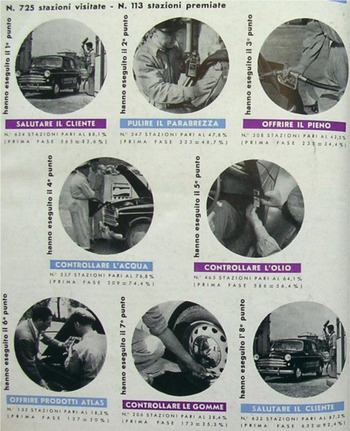
Esso's emphasis on standardization contributed to the deskilling of gas station attendants' work. Until the early 1950s, gasoline was often sold in tanks at general stores or at service stations associated with a garage. Salespeople could thus decide autonomously how to market their products and offer their services. Through its courses and journals, Esso undermined gas station attendants' independence by defining them as part of the larger corporation. Furthermore, it disciplined and controlled their work. It was not sufficient for gas station attendants to know how to fill their clients' tanks; they were required to learn how gas pumps worked, what the names of their various parts were, and how they should use the growing number of Esso car products. Drawing on the principles of scientific management, Esso broke down the “Esso Service” into eight different tasks: greeting the client, cleaning the windshield wiper, filling up the tank, checking the oil, checking the water in the radiator, taking the money, checking the air in the tires, saying good-bye. Each task was always to be carried out in the same way, although not impersonally, and each was assigned the utmost importance and described in great detail. The goal was to save time and avoid carrying out useless movements.Footnote 23
Eight steps of the Esso service. From: Il Rivenditore, November 1950.

Esso's courses and journals placed particular emphasis on gas station attendants' ability to sell their products and viewed selling as a science, albeit one in which computability and predictability combined with the more elusive and subjective qualities of employees' sympathy and personality. Esso assumed that consumers had a higher chance of becoming clients if they were offered not only the best products, but also a rapid, competent, and complete service. What really defined Esso gas station attendants as efficient salesmen was, in the eyes of the company, their ability to appeal to consumers and “aim at [their] heart,” as A.M. Scrocca, head of Esso's advertising and marketing department, put it in 1950.Footnote 24 Manners and cleanliness thus became the object of increased scrutiny. While the company instructed gas station attendants on how to wear their uniform and keep it clean, it also devoted a great deal of attention to their appearance. Not only were they to shave every day and keep their hands and faces clean, but they were also to practice—sometimes in front of a mirror—smiling sincerely and being kind to customers.Footnote 25
From the late 1940s on, Esso increasingly defined gas station work as a male job. While many gas stations continued to be run as family businesses and thus to include wives and daughters, along with brothers, nephews, and brothers-in-law, gas station management was only assigned to men, and Esso training was only offered to them. Until the second half of the 1960s, drivers were mostly men, and the gas station attendants (benzinai), who repaired and serviced their cars, thus needed to show their expertise over machines and bond with their mostly male clients over the inner workings of motors, the qualities of new products, and the appeal of new cars. At the same time, Esso advanced a new definition of masculinity, tied to modern mass consumption, for gas station attendants had to perform services that were coded as “feminine,” such as fulfilling their clients' desires and emphasizing their own appearance. The combination of these different traits was particularly evident in Esso's description of gas stations as “homes.” Gas stations were supposed to be spaces of leisure and comfort, where consumers' desires and needs could be taken care of, and they were to be kept as clean as a modern home, “full of all those small things that are welcoming for a special guest: a flower on the windowsill, a new curtain,” especially when they had female clients.Footnote 26 As modern salesmen, gas station attendants' work was defined by social interactions with clients and revolved around an acceptance of corporate paternalism on the one hand, and a submission to consumers' desires on the other.Footnote 27
While all gas station work was rationalized, Esso drew a clear separation between managers (gestori) and employees (addetti or pompisti). For managers, the acquisition of all the traits of the perfect gas station attendant was closely linked with the attainment of male forms of authority and lower middle-class status. Managers were to oversee their employees and control the efficiency of their gas station. At the same time, they were to perform clerical tasks like keeping track of their clients' addresses and requests, having their books in order, and arranging the shop window. Esso emphasized that by organizing their work rationally and efficiently, managers could become “masters of their trade.”Footnote 28 While Esso undermined their autonomy, it also made sure that gas station attendants associated their work with ideas of upward mobility.Footnote 29
Employees were assigned the more mechanical and manual tasks, such as carrying out the eight steps of the “Esso Service” and working in the garage repairing or cleaning customers' cars. While they were not required to master the skills associated with salesmanship, they were expected to present themselves to customers wearing a clean and proper uniform and behaving politely. They were thus supposed to hide their working-class status, particularly the fact that they were manual laborers. As one employee put it, “I realize that during the day I often work as a laborer, sometimes as a technician, and sometimes as a salesman.”Footnote 30 In order to assure their efficiency, managers constantly monitored employees, punishing or rewarding them at will.Footnote 31
A Vanguard Battalion
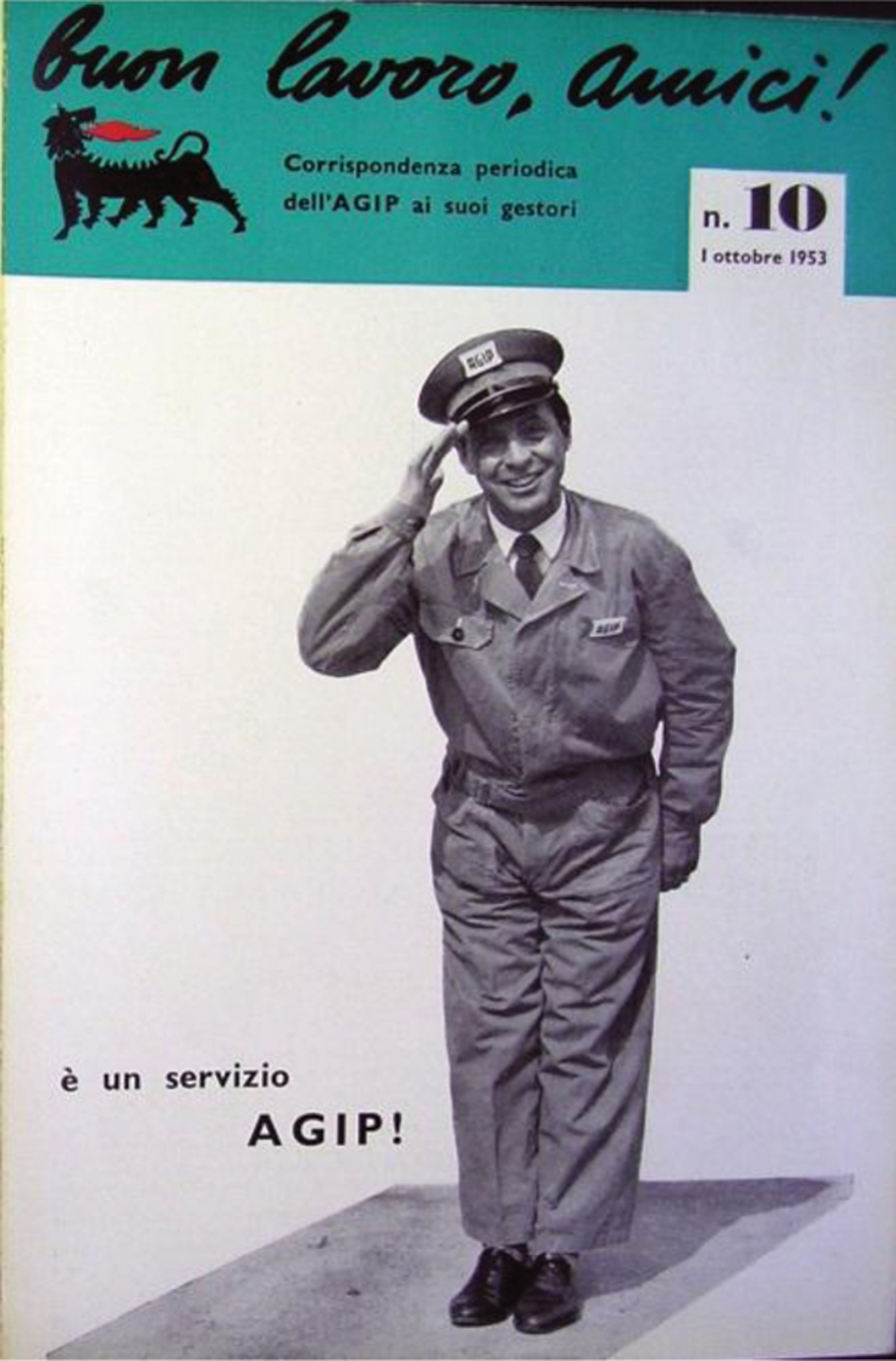
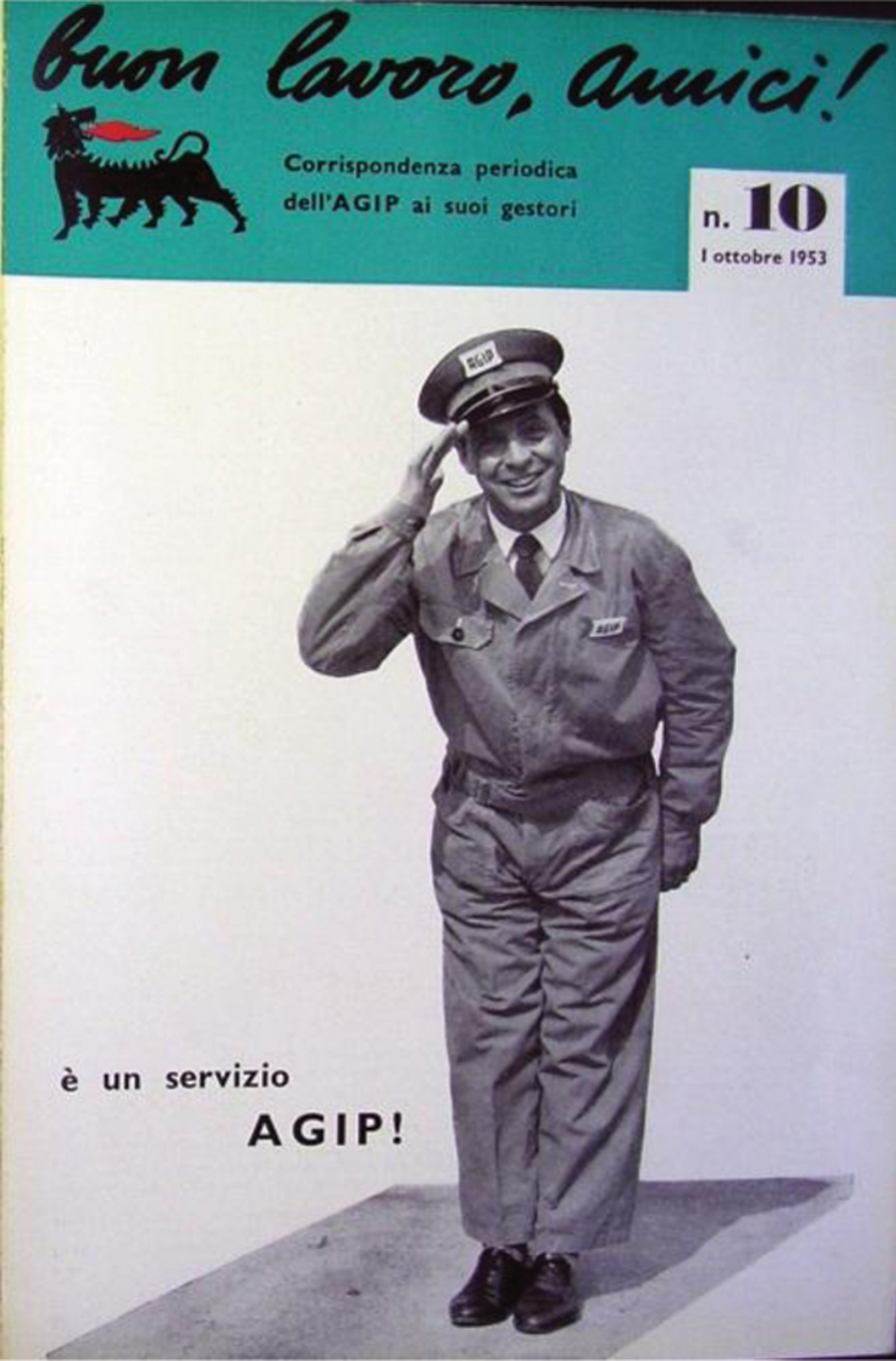
In the first half of the 1950s, Agip faced the challenge of transforming its old gestori into modern gas station attendants who would be “the link between the company and the public,” and take the “responsibility of maintaining Agip's prestige high.”Footnote 32 Starting in 1953, Agip organized a series of courses and meetings, during which gas station attendants learned the skills necessary to operate a gas pump, perform a standard “Agip Service,” and sell the company's products. Like Esso, it created a school for gas station attendants in Milan, and distributed a biweekly (then monthly) journal, Buon lavoro, amici! (Work Well, Friends!), which presented new products, encouraged gas station attendants to employ standardized marketing techniques and services, and updated them on the building of new gas stations and other company activities. Agip assigned its gas station attendants such a relevant role that Eni's president, Enrico Mattei, defined them as a “vanguard battalion.”Footnote 33
Agip's view of gas station attendants was strongly influenced by American ideas about distribution, marketing, and salesmanship. While Buon lavoro, amici! constantly published articles and excerpts from French and American sales magazines, such as Sales Management, Journal de la Publicité, and Vendre, Agip sent representatives to conferences on salesmanship. In 1956, they attended the First International Congress on Distribution, organized by Milan's Club dei Dirigenti Vendite (Club of Sales Managers) under the auspices of the American National Sales Executive, whose main theme was “Efficiency in Distribution, a Tool of World Prosperity.” The congress emphasized the importance of training salesmen to understand consumers' needs and desires by gaining access to their psychology. It stressed that “it is not sufficient to produce, it is necessary to know how to sell and, most importantly, to convince customers to buy.”Footnote 34
Front cover of Buon lavoro, amici!, February 1953.
American influences were particularly clear in the courses Agip organized for its sales department's employees. In the mid-1950s, Eni assigned a US consulting company, Booz Allen & Hamilton (BAH) the task of reorganizing the company. BAH devoted particular attention to training Eni's cadres through the Istituto Direzionale e Tecnico (Directional and Technical Institute, Idet), which was run entirely by American consultants and professors. Many of the professors who taught the sales course worked for the Istituto Postuniversitario per lo Studio dell'Organizzazione Aziendale (Graduate Institute for the Study of Business Organization, Ipsoa) in Milan, which was largely inspired by US business schools and received funding from the Ford Foundation. Besides taking marketing classes, Eni employees learned how to organize Agip's gas stations and to select, train, and control their managers.Footnote 35
Agip defined its gas station attendants in ways similar to Esso. Like Esso's attendants, Agip's were supposed to organize their gas stations rationally, serve their customers efficiently, and combine technical skills with the ability to appeal to their clients' desires and fantasies. However, there were clear differences between the two companies. While Agip encouraged gas station attendants to be clean and proper, it also stigmatized Americanized and glamorous forms of masculinity by emphasizing the fact that “people have a tendency to judge individuals for how they appear rather than for what they are and are worth.”Agip called on gas station attendants to “dress in a serious, decent way…[in order to] distinguish [themselves].”Footnote 36
The interpretation Agip offered of its gas station attendants resonated with a wider discussion about the consequences that Americanized forms of mass consumption might have on Italian men. Throughout the 1950s and 1960s, Italian magazines carried articles on Italian men's loss of authority and the “feminization” of Italian youth. They linked the transformation of Italian gender and family relations to the spread of American consumer culture, lamenting that “the US has flooded Europe not only with dry soup, canned goods and useless things that have been returned to the sender: but also, and most importantly, with a concentrated gynocracy.”Footnote 37
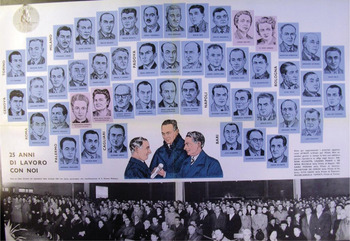
In this context, Agip linked salesmanship with nationalism, defining its gas station attendants as “soldiers” fighting a battle against foreign—specifically American—interference. It even modeled their clothes on American military uniforms. In a 1954 speech to a group of gas stations' managers, Mattei emphasized the role gas station attendants could play in achieving the “country's highest good,” and encouraged the managers to be proud of “this industrious, impressive reality—which you are a part of.”Footnote 38 In contrast to Esso, Agip viewed its gas stations not only as part of its distribution system, but also as part of the company. Despite the fact that wives and daughters were actively involved in running gas stations, Agip only focused on its male gestori and encouraged a sense of brotherhood among them by organizing homosocial activities, such as corporate meetings celebrating gas station attendants' service and visits to Eni's industrial plants and its company town, Metanopoli, a symbol of Eni's success in spurring Italy's economic growth and spreading mass consumption. In these cases, the presence of a small minority of women among the participants (Picture 8) only reinforced the idea that the job of the gas station attendant was a male one.
A meeting of Agip gas station attendants. From: Buon lavoro, amici!, June 1957.

The language used by Eni and Agip and the activities it organized for their gas station attendants combined postwar US ideas about mass distribution and salesmanship with more traditional forms of Italian corporatism. Indeed, during the 1920s and 1930s Italian firms as well as the Fascist regime had looked at American Fordism and Taylorism as a source of inspiration not only to organize production but also to discipline workers' leisure time. They had set up dopolavoros (workers' clubs) in order to organize workers around shared leisure activities. As a company founded by Fascism, Agip continued to pursue the idea that its employees, as well as its salesmen, should be actively incorporated into the company and think of themselves as representatives of the Italian nation as well as of Agip.Footnote 39
Developing an Efficient Sales Force in the Third World
During the 1950s and 1960s, Agip constantly updated its gas station attendants about the development projects its parent company Eni carried out in oil-producing countries. Buon lavoro, amici! published articles about the company's exploration and extraction activities in North Africa and the MiddleEast, and in 1959 it devoted one of its covers to Shah Reza Pahlavi's visit to Italy, which celebrated the signing of an agreement between Eni and the National Iranian Oil Company (Nioc). Agip wanted gas station attendants to see themselves as part of a process of modernization and development that went beyond Italy's borders.Footnote 40
Between the mid-1950s and the mid-1960s, Eni established an autonomous position in the Third World by offering oil producers wider control over their energy resources. According to what came to be known as the “Mattei formula,” Eni recognized oil-producing states as partners in the exploration, production, and distribution of natural gas and oil, through the creation of mixed companies. While Eni was responsible for searching for hydrocarbons, oil producers worked side by side with the Italian company in developing their energy resources by participating in the companies' management, having workers trained by Eni in Italy, and receiving a share of the profits.Footnote 41
Eni used the language of developmentalism to present its activities as a sign of Italy's willingness to help oil-producing countries modernize.Footnote 42 As a representative of a country that had lost its colonies after the Second World War, Eni openly supported anticolonial leaders and newly independent states. Besides extracting oil and natural gas and building refineries, starting in the late 1950s Eni began building a network of gas stations and motels in North Africa and sub-Saharan Africa, where Agip gasoline could be sold. It exported the gas pumps Eni's affiliate Nuovo Pignone produced in Italy and built hundreds of gas stations according to the same architectural principles used in Italy. By 1968, the Italian company had established over one thousand gas stations in different African countries, especially in Libya and Morocco.Footnote 43
In order to manage its African gas stations, Agip divided the continent into four large areas: North Africa and the Mediterranean, Central, West, and East Africa, which were placed under the direction of four different offices. The company created a rigid hierarchical system between Italian managers and technicians and African employees. An entirely Italian staff set up an affiliate, and, after three years, it started hiring a growing number of African employees. Agip often drew on the many Italians who lived in Africa, hiring them to work temporarily for its affiliates. Once it started including Africans among its staff, it made sure that Italians continued to control the highest jobs as directors and administrators.Footnote 44
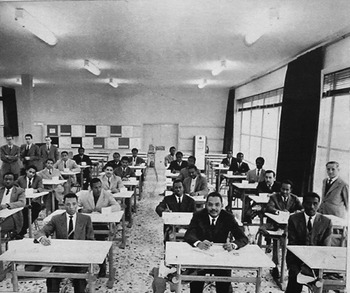
Starting in 1959, Agip organized a series of courses aimed at creating a modern sales force for its African affiliates. It trained Africans to be sales directors of its affiliates and organized their marketing activities, gas stations, and an army of efficient attendants. Coming from countries as diverse as Morocco, Ghana, Sudan, Ethiopia, and Tunisia, trainees were provided with a plane ticket, room, and board to attend the Directional and Technical Institute in Metanopoli, Eni's company town, where they learned the principles of marketing and distribution, as well as management and labor relations. The courses focused on Agip's and Eni's history and structure and gave trainees technical notions concerning oil products and motors.Footnote 45
The training Agip provided to its African employees devoted particular attention to “techniques and ways of selling.” Participants were instructed on how to train workers and were required to take some of the same courses as Italian gas station attendants. They thus learned how to operate a gas station and how to perform the standard “Agip service,” through a series of practical tests held at the Vocational School for Gas Station Attendants. Furthermore, they received a booklet titled Vendere con successo (Selling with Success), which contained a detailed description “of the ways in which to carry out perfect Agip service.”Footnote 46
Agip considered these trainees to be crucial links between the Italian company and African gas station attendants and consumers, and wanted them to be able to organize similar schools in their countries. Through these courses, Agip transferred to North Africa and sub-Saharan Africa a series of Americanized ideas about marketing and distribution. As was the case with the courses Agip ran in Italy, those involving African trainees were taught by instructors who worked for or had been trained at the Graduate Institute for the Study of Business Organization, Ipsoa, which, as previously mentioned, imported to Italy a series of American ideas about marketing, scientific management, and salesmanship, particularly the notion that gasoline should be sold “by mastering technical knowledge confidently, and anticipating [clients'] requests promptly.”Footnote 47
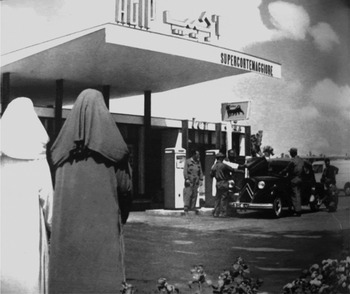
Agip transferred to Africa the idea that technical expertise, personality, and appearance could become signs of a standardized corporate masculinity and link together Italy and the Third World around ideas of technical cooperation and increased levels of consumption. Gender played an important role in shaping relations between Agip and oil-producing countries. The Italian company drew on a colonial imagery to feminize decolonizing countries and highlight their need for Italian economic assistance. However, rather than representing them as sensual or weak women waiting to be conquered by Italian men, as had been the case during colonialism, Agip used the language of developmentalism to characterize women as symbols of “tradition” and “backwardness.” As can be seen in Picture 9, women's marginal position assured viewers that they would be rapidly replaced by a modernity incarnated in Agip gas stations and their male attendants. At the same time, Agip established a clear hierarchy between Italian and African men, positing the latter as underdeveloped subjects needing to be modernized.Footnote 48
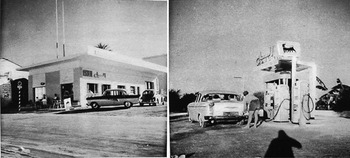
Agip gas station in Casablanca, 1960s. From: eni archives.

Trainees from the Third World in San Donato Milanese. From: Il Gatto Selvatico, February 1961. eni archives.

For African trainees, Agip's courses were a way of establishing their position in a company whose prestige in North Africa and sub-Saharan Africa was on the rise. They were often members of an educated middle-class and had worked or studied in France, Great Britain, and the United States. Sometimes they had previously worked in their countries' ministries and banks, as was the case with a group of Sudanese trainees who attended Eni's courses in 1960 and had been employed by Kartoum's Credit Lyonnais and the Agriculture Bank of Sudan. Most often, trainees had some experience in the advertising and publishing world or had worked for other oil companies in their communication departments. Lokko Charles Othniel from Ghana, for instance, had worked for Texaco's sales department, while Bennani Mehdi, from Morocco, had obtained a diploma in radio and television from Syracuse University and had then worked as a journalist for a Moroccan radio station.Footnote 49
Agip tried to transform its North African and sub-Saharan African gas stations into places where customers could not only refill their tanks but also receive a standard service. The results, however, were very uneven. While in some cases gas station attendants wore a proper uniform, kept their service stations clean, and displayed their products in a windowsill, in other cases they defied Agip's rules, allowing women without uniforms to refill their clients' tanks. Sometimes Italians managed Agip's North African gas stations, especially in Libya, where a vast Italian community continued to live until Muammar Gaddafi's rise to power in 1969. In these cases, Agip assumed an openly racist attitude, highlighting the continuities between Agip's presence in North Africa and sub-Saharan Africa in the postwar period and its activities in the Italian colonies during the late 1920s and 1930s. In one instance, Agip's Libyan affiliate, Asseil, assigned one of its gas stations to an Italian family from Parma in the Emilia-Romagna region, who had stayed in Italy's former colony after the war and had a young son who spoke Italian as well as Arabic. In describing the boy, Eni's corporate journal drew on a colonial imaginary to highlight the difference and separation between Italians and Arabs:
I noticed in particular the somatic traits of Asseil's young man who, despite his ability to speak Arabic, had the typical features of Northern Italians…His physical aspect raised a series of doubts and led me to ask: “Are you Italian?” From the kiosk a familiar voice and accent replied [using a Northern Italian accent]: “That's my son—and he added—he speaks Arabic better than an Arab, he knows how to speak Italian…but he doesn't know a word of Parmisan.Footnote 50
While the article emphasized the superiority of the Italian race, it unwittingly raised the issue of the presence in Libya of mixed-blood children and young adults. Arab women, and their relationships with Italian men, remained entirely absent from the picture, reinforcing the idea that Agip's presence in Libya should confirm Italian men's sense of superiority and authority over Arabs. The company could even accept the fact that its gas station attendants were hardly standardized, clean, and proper, as the fact that they were Italian assured them a fixed clientele.
Asseil gas station in Libya. From: Il Gatto Selvatico, August 1961. eni archives.

Defending Gas Station Attendants' Rights
In Italy, Esso's and Agip's efforts to standardize gas station attendants' services did not easily translate into the creation of an army of efficient salesmen. Rather, both companies encountered numerous problems in trying to get managers and employees to perform the seven or eight steps of their service correctly, let alone organize the entire gas station in a rational and functional way. For Esso, part of the reason was that the company did not own its gas stations and thus exercised less control over its workers. While it could encourage them to adopt and carry out a uniform “Esso Service,” it could not fire managers or break their contract without at the same time losing control over a gas station. Agip, on the other hand, had much wider control over its distribution system, as it owned more than ninety percent of its gas stations, which were franchised to managers.Footnote 51
The labor relations oil companies established with gas station managers were quite new in postwar Italy. Until the mid-1960s, small shopkeepers continued to dominate the Italian economy, as consumer goods were sold in small and medium-sized stores. Mass distribution and efficient salesmanship were mostly confined to department stores in major cities.Footnote 52 The opening of the first supermarkets in the 1950s, which was carried out by a US company, the International Basic Economy Corporation (Ibec), founded in 1948 by Nelson A. Rockefeller, was met with fierce resistance on the part of Italian shopkeepers. In Milan and in Florence, storeowners organized shutdowns and strikes to prevent Ibec from receiving the licenses needed to open their supermarkets.Footnote 53
Esso and Agip were among the few companies in postwar Italy to sign franchising contracts with the managers of their gas stations, thereby introducing a form of mass distribution that was typical of the US economy into a context dominated by well-organized and policized commercianti (shopkeepers).Footnote 54 Shopkeepers had played a crucial role in supporting the Fascist regime, and they consolidated their power after the Second World War. In 1946 they established a national trade association, Confcommercio (The General Federation of Italian Merchants and Shopkeepers), while the different categories of shopkeepers created their own organizations at the local level. During the 1950s and 1960s, they gained the support of the Christian Democratic Party (DC), which considered them to be crucial in maintaining social and political stability.Footnote 55
Gas station managers challenged oil companies' efforts to rationalize and standardize their work. They were especially concerned with their autonomy as small businessmen. As mentioned, while Esso's gestori owned their own businesses, those working for Agip leased an existing gas station from the company. In order to sign a contract, they were supposed to have a small amount of capital and prove they were financially stable and could afford the expenses tied to the management of a gas station. Yet, both Esso and Agip treated gas station managers as company employees. They required them to follow the companies' marketing strategies and only sell Esso or Agip products, and they constantly inspected their gas stations. If attendants did not meet corporate standards for service, gestori received a notice and, in the worst cases, lost their contract.Footnote 56
Gestori occupied an ambiguous and shifting class position. They presented and perceived themselves as small businessmen rather than employees and defined themselves as imprenditori (entrepreneurs) or commercianti (shopkeepers). However, their backgrounds and class position were far from homogenous. In some cases, they had previously worked as truck drivers or had a garage and wanted to expand their activities by selling gasoline. In other cases, they came from peasant families and sold a piece of land in order to buy a gas station or manage one. Most often, they considered being a gestore a way of becoming small businessmen, thus achieving a higher class status and a male sense of autonomy and authority, which was most clearly expressed in small family businesses. As such, they viewed oil companies' efforts to standardize and control their jobs and workplaces as a challenge to their desire for upward mobility.Footnote 57
The main issues gas station managers organized around were opening hours and gasoline prices. Until the early 1960s, gas station attendants had no say on their working hours. They had to stay open up to twenty-four hours a day, Sundays included, and had no right to vacations. Furthermore, while managers were required to pay for all the expenses tied to their gas stations, oil companies received a considerable share of the earnings from gasoline sales. As one gestore put it, “I can assure you that my job is not comfortable and that I earn just enough to support my family very modestly…our job has practically no fixed opening hours and forces us to work outside for many hours at a time, when it is very cold, and when it is very hot.”Footnote 58
Managers often lamented that their earnings were too low for them to live on, let alone hire an employee, and pointed out that only if oil companies addressed “gas station attendants' economic issues, could there be an improvement in the services provided to car drivers.”Footnote 59Gestori relied heavily on their families to carry out part of their work. In smaller gas stations, wives and sometimes daughters usually helped them, whereas in medium-sized ones sons, nephews and brothers-in-law did. Compared to Esso, Agip openly supported the creation of small family businesses, where wives and daughters worked side-by-side with male gestori, as it considered them to be more stable than the ones with employees. Given their economic hardships, managers usually hired only a few employees (a maximum of four per gas station) and on a temporary basis.Footnote 60
In order to challenge oil companies' policies, in 1958 gas station managers formed their first national trade association, the Federazione Italiana dei Gestori Impianti Stradali (Italian Federation of Gas Station Managers, Figisc), which was affiliated with Confcommercio. In 1963, they founded the Federazione Autonoma Italiana Benzinai (Independent Italian Federation of Gas Station Attendants, Faib), whose creation was spurred by a small group of gestori from Tuscany and Emilia-Romagna. Their main aim was to redefine gas station managers' contracts with oil companies. Faib demanded that managers could not be fired, unless for just cause or for legal reasons, that their earnings on gasoline sales should increase by at least ten percent, that they should have the possibility of selling other products besides the ones provided by oil companies, and that oil companies participate in maintaining gas stations' equipment. Furthermore, Faib demanded the right for every gas station attendant to be represented by attendants' trade associations.Footnote 61
One of the first and most important results of Faib's activities was the signing of a new contract between gestori and oil companies in 1963. After gas stations remained closed for several days, preventing truck and car drivers from refilling their tanks, government representatives organized a meeting between Faib and oil companies. The two parties reached an agreement, according to which managers' contracts “would not require gas station attendants to pay…for the use of the buildings or for the equipment…and the profits would increase…by 6%.” Furthermore, gestori earned the right to close their gas stations for up to two weeks per year, while opening hours were reduced from six in the morning to ten at night, Mondays to Saturdays, and half a day on Sundays. The agreement also included the possibility for managers' relatives to inherit the franchising contract in case of a gestore's death.Footnote 62
In order to undermine their opposition, Agip usually signed contracts with gestori who were politically conservative. In one case Agip decided to renew a manager's contract only after having confirmed that he was a member of the DC and did not have any ties to the Communist Party. Furthermore, gas station managers were usually recommended by members of the DC or had a personal relationship with Mattei, and many of them lost their jobs as a result of their activity in a trade association. As a lawyer defending a manager whose contract had been broken put it, “by eliminating [Mr. Alfredo] Broglia the manager…the trade unionist is eliminated as well.”Footnote 63
While managers were able to secure some rights through their activism in trade associations, their employees remained in a much weaker economic and social position. Their specific experiences remain largely absent from historical sources, as their jobs were often precarious and temporary. Indeed, working as an addetto was considered to be “a makeshift situation,” a job to be accepted in moments of need or as one's first employment. Relations between gestori and addetti were often tense, as managers sought to control their employees' performance, while employees had no right to decide about their working hours or conditions. Gestori often argued that having other family members work for them increased their gas station's efficiency and productivity. In cases where managers emphasized the good relationship they had with addetti, they described themselves as “fathers” rather than as employers. They thus pointed out how far the organization of their gas stations was from the ideas of standardized salesmanship envisioned by American and Italian experts of marketing and scientific management.Footnote 64
By setting up their own trade associations and organizing strikes, gestori challenged oil companies' efforts to standardize their services. In advancing their demands, they used the categories of class and gender to oppose corporate forms of paternalism. They did not focus on the ways in which the importance assigned to appearance and service redefined their male authority, as male department store employees had done at the turn of the century.Footnote 65 Rather, they emphasized the loss of male autonomy and the process of proletarization tied to being part of a corporation. In order to defend their rights as independent shopkeepers and heads of small family businesses, gestori pursued their own forms of paternalism, toward their wives and daughters as well as their employees. By doing so, they undermined the possibility of forming stronger coalitions across class and gender lines.
Conclusion
From the late 1940s to the late 1960s, the spread of mass motorization in Italy was accompanied by a rapid growth of gasoline consumption. The main oil companies selling their products on the Italian market, Esso and Agip, insisted that gasoline should be marketed in new ways. It should be sold in spaces specifically devoted to a new category of consumers—drivers, who could not only refill their tanks, but also access a range of services tied to their cars' needs and to their desires. Oil companies built gas stations according to modern and functional architectural principles and tried to create a new category of worker—the gas station attendant.
The importance Esso and Agip assigned to gas station attendants was strongly influenced by American ideas of marketing and scientific management. The two companies emphasized the importance of selling gasoline in an efficient and standardized way, rationalizing their daily tasks and appealing to their customers' desires by acquiring technical forms of knowledge over cars and car products and developing their personality. They thus advanced new definitions of masculinity and class, which challenged the idea that gas station attendants were manual laborers and emphasized the importance of acquiring characteristics that were associated with a female sales force, such as responding to their clients' needs and treating their gas stations as domestic spaces. While Esso and Agip formally encouraged gas station attendants' desire for upward mobility, by defining them as clerical workers and small businessmen, the forms of discipline, corporate paternalism and rationalization they introduced contributed to the deskilling of gas station work. Oil companies thereby challenged gas station attendants' sense of autonomy and male authority as small businessmen.
Oil companies' efforts to create a modern sales force were largely unsuccessful in postwar Italy. Rather than being company employees, Esso's and Agip's gas station managers were franchisers. They had often become gestori in order to achieve a higher status and perceived themselves as small businessmen and entrepreneurs rather than employees. From the late 1950s on, gas station managers organized around trade associations to defend their rights as shopkeepers and small businessmen. In a context in which shopkeepers exercised considerable economic, social, and political power, gestori were able to undermine Esso's and Agip's corporate strategies and continue to run their gas stations as family businesses, grounded in the authority of the male manager over his relatives as well as his employees.
Oil companies' redefinition of gas station attendants' work was not restricted to Italy or to relations between Italy and the United States, but extended to the Third World. By setting up an international network of gas stations in North Africa and sub-Saharan Africa, Agip exported to oil-producing countries some of the same ideas about rational and efficient salesmanship that it had introduced in postwar Italy. As such, Agip served as an important vehicle for the transfer of Americanized forms of marketing and distribution, and definitions of salesmanship, to countries whose economies required growing levels of gasoline consumption. In the context of decolonization and developmentalism, gender played an important role in shaping relations between Italy and the Third World. While Agip characterized the dichotomy between tradition and modernity as an opposition between women and men, it also posited North African and sub-Saharan African men as subjects needing Italian men's economic assistance.