Introduction
The archaeological remains excavated at Abu Salabikh, Al-Qadisiyah Governorate, Iraq, span most of the 4th and early 3rd millennia BC. This long sequence of occupation offers a great opportunity to study and refine the absolute chronology for this foundational period, including the Uruk, Jemdet Nasr, and Early Dynastic (ED) archaeological cultures.
Radiocarbon dating has been a part of the archaeological research at Abu Salabikh since the very beginning of the excavations, producing a body of legacy data of varying quality. More recent palaeobotanical studies on the site provided considerable quantities of charred plant material suitable for radiocarbon dating. The long history of occupation on the site and the availability of datable material make Abu Salabikh a prime candidate for a chronological project incorporating stratigraphic, typological, and radiocarbon techniques. The project described in this article targeted three specific chronological issues:
1) The date and nature of the Uruk-ED transition on the site.
2) The age of the 6H House, expected to be ED IIIa in date and thus contemporary with the Area E and A contexts containing the Fara-style tablets.
3) The age of the “Ash Tip” layers in Area E containing material believed to be late ED IIIb in date (Green Reference Green1993).
Background
The central part of the Tell Abu Salabikh site is composed of four tells, situated on two banks of an ancient river canal. The site was originally excavated in the 1960's by an American team under the supervision of V. Crawford and D. Hansen. The excavations were then renewed in 1975 by a British team led by J.N. Postgate. The ancient name of the site is still unknown, with Eresh, Kesh, and Gishgi being the main candidates (Biggs Reference Biggs1966: 74 fn. 12; Biggs Reference Biggs1974: 24; Cohen Reference Cohen1976; Postgate & Moorey Reference Postgate and Moorey1975).
The two smaller mounds on the western side were occupied since at least Uruk times. In the lowest level (Level III) of the soundings 2G36/46 and 3G81 on the West Mound, the presence of bevelled-rim bowls points to an Uruk-period occupation. The Uruk buildings were levelled and the area was covered by a layer of clear sand prior to the construction of the Level II buildings. Though no polychrome-painted pottery of the typically Jemdet Nasr type was found on the site, the intermediate strata between the Uruk and ED levels contained red-painted sherds (Postgate and Moon Reference Postgate and Moon1982: 119–121).
The north-eastern tell, also known as Main Mound, was encircled by a city wall (Matthews and Postgate Reference Matthews and Postgate1987: 109; Postgate Reference Postgate1990: 96). The three main areas of interest on the Main Mound were, from north to south, Area A, the 6H house, and Area E. The pottery from stratified sequences shows an assortment of types such as conical bowls and spouted jars undergoing a gradual evolution of shapes and sizes characteristic for the post-Jemdet Nasr periods (Postgate and Moorey Reference Postgate and Moorey1975: 140–141; Postgate Reference Postgate1977: 282–295; Moon Reference Moon1987). The main feature of Area A was a large building complex, the role of which is still uncertain. The large wall encircling it and the military nature of the copper objects included in the graves sunk into the building may suggest that this building was a communal one, perhaps an early palace (Abdi Reference Abdi, Miller and Abdi2003). Further south, to the north of Area A, in grid square 6H, a large ED house was excavated. This house was assigned to the youngest phase of ED settlement in this area of the site, namely ED IIIa (Matthews and Postgate Reference Matthews and Postgate1987), and showed two main phases of construction activities, IC and IB. Several graves were sunk into the floor of the house, the youngest of them from level IA (Matthews and Postgate Reference Matthews and Postgate1987: 92; Postgate Reference Postgate1990: 99). Most of these graves have been disturbed in antiquity, showing signs of looting (Matthews and Postgate Reference Matthews and Postgate1987: 98). The fills of the graves and pits in this building included a few administrative and lexical texts. The presence of these text fragments in the 6H82 house was interpreted as evidence for the administration being diffused among several households and institutions, similarly to Fara. The variable functions of the different “administrative capillaries” may also be seen in the apparent lack of sealings in 6H82, as opposed to the Area A Complex (Matthews and Postgate Reference Matthews and Postgate1987: 101), and especially the Ash-Tip.
Domestic structures were also found in Area 4I/5I, located in the trough between Areas E and A. The presence of solid-footed goblets suggests an ED I/II dating (Postgate and Moon Reference Postgate and Moon1982: 123). The early date of these contexts is also evident in the architecture of the 5I buildings, where the walls are thin and their layout irregular (Crawford Reference Crawford1983: 32).
Area E of the Main Mound is arguably the most significant part of the site. It is dominated by the large Central Complex: a series of adjoining rooms, including the Burned Buildings and the Southern Unit, not to be confused with the “South Building” in Area A (Postgate Reference Postgate1977). The complex was separated by a main street from domestic buildings referred to as “Eastern Houses” to the northeast (Postgate Reference Postgate1977: 279). The role of the Southern Unit and the Central Complex in general is difficult to discern. The large size of the building and the presence of a plastered floor in the courtyard (= Room 44) may indicate a temple, however the lack of altars, shrines, or cellae makes it impossible to confirm this theory (Biggs Reference Biggs1974: 11). The largest room of the complex (Room 39) was originally taken to be a cella, but it lacked the usual furnishings, such as niches for statues and altars (Biggs Reference Biggs1974: 6). The main period of occupation and use of the Southern Unit, Phase IC, was followed by infilling, with graves and pits cut from level IA.
It is in those pits sunk into the Southern Unit that the vast majority of the ca. 500 Abu Salabikh tablets were found. Postgate and Krebernik (Reference Postgate and Krebernik2009: 3) believe, however, that this was not the primary context of these texts which should rather be seen as contemporary with the IC phase. The only well stratified tablets were the ones found on the floor of the “Room 44” courtyard and Room 48, contemporary with the IC buildings (Biggs Reference Biggs1974: 6; Postgate and Krebernik Reference Postgate and Krebernik2009: 3–4). The majority of the Abu Salabikh texts are considered roughly contemporary with the Fara tablets, based on a similar palaeography and a shared body of literary and lexical texts (Biggs Reference Biggs1966; Biggs Reference Biggs1974: 24). Unlike the Fara archives, however, the Abu Salabikh texts are composed mostly of a wide variety of literary sources. The Abu Salabikh texts were assessed to be slightly later than the bulk of the Fara texts due to their lexicography, onomastics, and palaeography (Biggs Reference Biggs1974: 27; Biggs Reference Biggs and Cagni1981: 122–123; Picchioni Reference Picchioni and Cagni1981: 116; Visicato Reference Visicato2000: 14).
That the Southern Unit was in some ways related to the cultic and/or administrative centre of the site seems very probable, given the presence of the so-called “Ash Tip” to the immediate southeast of the Central Complex. The “Ash Tip” was a refuse fill containing large quantities of burnt botanical material, as well as multiple sealings - it is therefore thought to have accumulated during the operation of a nearby administrative unit, most probably related to a temple estate (Postgate Reference Postgate1977: 279). The formation of the “Ash Tip” was divided into three phases, though most of the material was recovered from the two later levels, II and III. One sealing from Phase II was identified as “ED II” in style, however the remainder of the available information does not corroborate such an early dating. The style of most of the seal impressions would place the deposition event early in the ED IIIb (Green Reference Green1993: 30). Furthermore, the “Ash Tip” was stratigraphically later than the neighbouring ED III buildings, with its Phase I overlying Level II structures (Green Reference Green1993: 156). Concluding, despite some potential older inclusions, the “Ash Tip” should probably date to the ED IIIb period, postdating the main occupation of the Southern Unit.
Methodology
The first step in this study was to perform a literature review and collect all the available radiocarbon measurements in order to assess them critically in regards to their reliability and context information. Subsequently, new samples were selected and dated using modern pre-treatment and measurement techniques (Bronk Ramsey et al. Reference Bronk Ramsey, Higham and Leach2004; Brock et al. Reference Brock, Higham, Ditchfield and Bronk Ramsey2010). All the new samples were selected from short-lived plant material (cereal seeds) in order to ensure that the dates are not affected by the inbuilt age problem inherent in wood. The palaeobotanical material used in this study was derived from flotation of soil samples performed over several seasons of excavations at Abu Salabikh. Due to the relatively poor preservation of the seeds, bulk samples of 3–10 seeds had to be analysed.
Old and new dates are listed in the following sections, together with the relevant information on their archaeological context, source material, and a brief discussion of their overall reliability. The dates are reported in their uncalibrated format (BP, “before present”, i.e. before 1950 AD). It is important to note that uncalibrated dates are not accurate chronological determinations themselves, but rather isotope ratio measurements which should then be calibrated. Calibration was performed using OxCal v.4.3 software (Bronk Ramsey Reference Bronk Ramsey2009a) and the IntCal20 calibration curve (Reimer et al. Reference Reimer, Austin, Bard, Bayliss, Blackwell and Bronk Ramsey2020). The Results section gives the calibrated dates (BC) of the samples in their unmodelled format, i.e. as derived purely from the radiocarbon measurement, without any additional implicit information.
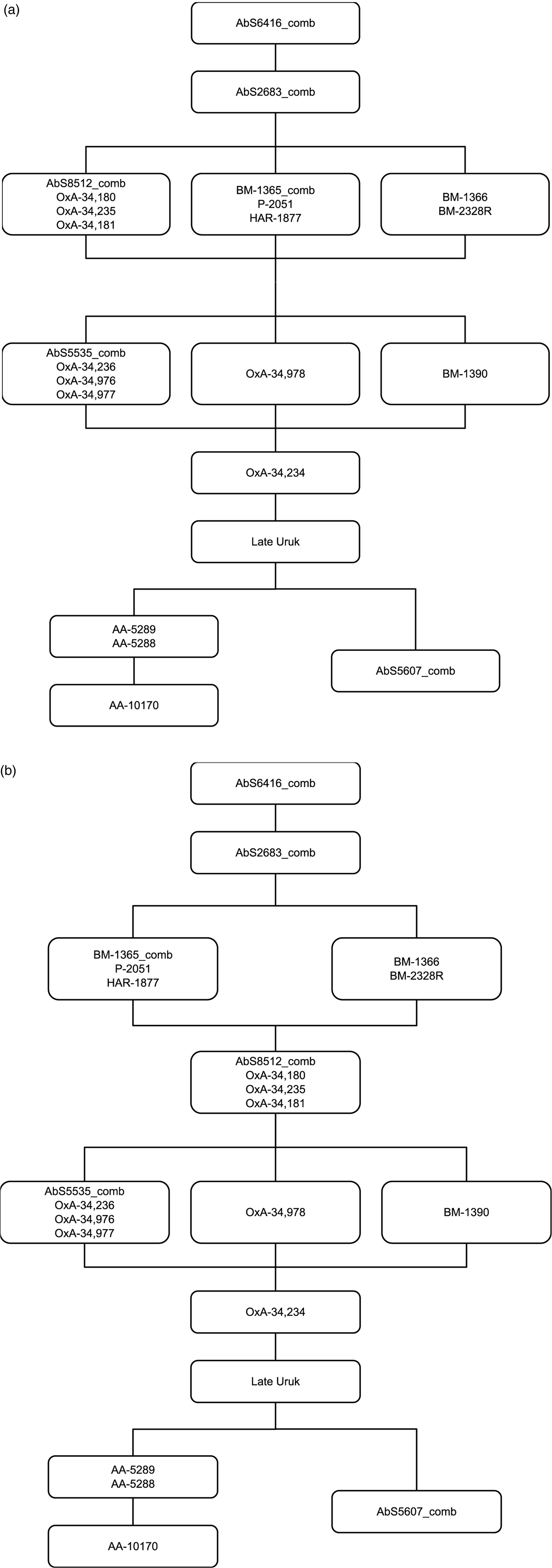
Stratigraphic and typological information was then used to construct Bayesian models (Buck et al. Reference Buck, Litton and Smith1992; Bronk Ramsey Reference Bronk Ramsey1995; Bronk Ramsey Reference Bronk Ramsey2009a). Bayesian modelling allows the use of additional information regarding the stratigraphy of the site and the typology of the associated archaeological material to produce constraints on the radiocarbon dates, thereby reducing their uncertainties. In this study, the stratigraphic information of the sample-bearing contexts was expressed as a sequence of consecutive phases. The contexts from Areas A and E, as well as the 6H house were all dated to the ED II – ED IIIa periods on the basis of the associated ceramics and palaeography, however there was no direct stratigraphic relationship between them. Therefore, two separate models were developed. Model 1 assumed contemporaneity of the three contexts designated as ED IIIa. Model 2 on the other hand had the 6H dates placed in their own phase, designated as ED II, which preceded the A and E samples. Their schematic representations are shown in Fig. 4.
Due to the paucity of what could be considered typical ED II material in stratified contexts with datable materials, as well as the controversial nature of ED II as unit of Southern Mesopotamian periodisation, many of the samples were assigned to the ED I/II phase, here understood as the period between Jemdet Nasr and ED IIIa.
Previously published Abu Salabikh dates (uncalibrated)
Middle Uruk
• AA-10170: 4760 +/− 50 BP: charcoal; a selection of dates from Abu Salabikh was derived from contexts associated with Middle Uruk pottery: large quantities of bevelled-rim bowls, straight spout and nose-lugged jars, open bowls with round and flat rims. The dates are described in greater detail in Wright and Rupley Reference Wright, Rupley and Rothman2001: 86.
• AA-10169: 5005 +/− 60 BP: charcoal; See AA-10170. AA-10169 and AA-10168 are clearly older than the remainder of the Middle Uruk dates and do not conform to the relative sequence of the samples. They were therefore removed from the analysis as outliers.
• AA-5289: 4785 +/− 65 BP: charcoal; See AA-10170.
• AA-5288: 4790 +/− 60 BP: charcoal; See AA-10170.
• AA-10168: 4900 +/− 50 BP: charcoal; See AA-10170 and AA-10169.
Main Mound, Area E
• BM-1365A: 3938 +/− 54 BP: wood; Main Mound, Area E, Southern Unit, Room 39; Floor IC; 6G64:655. The Floor IC of the large Room 39 was contemporary with the findspot of the courtyard (Room 44) tablets (IAS 1; 3; 4; 18; 19; 391). Therefore, this date has the closest archaeological connection with the early Fara-style texts from the site, traditionally taken to be ED IIIa in date.
• BM-1365B: 3963 +/− 57 BP: wood; Main Mound, Area E, Southern Unit, Room 39; Floor IC; 6G64:655. See BM-1365A.
• BM-1365C: 3826 +/− 47 BP: wood; Main Mound, Area E, Southern Unit, Room 39; Floor IC; 6G64:655. See BM-1365A.
• BM-1365D: 3916 +/− 50 BP: wood; Main Mound, Area E, Southern Unit, Room 39; Floor IC; 6G64:655. See BM-1365A.
• HAR-1877: 3830 +/− 70: This unpublished date, mentioned in Burleigh and Matthews (Reference Burleigh and Matthews1982) was taken on a separate sample from the same context as BM-1365A-D.
• P-2050: 4850 +/− 50 BP: charcoal; Main Mound, Area E, fill above Floor 3; Level IB; 4 additional samples from the ED IIIa contexts in Area E were published by Fishman et al. (Reference Fishman, Forbes and Lawn1977). The publication claims that they were associated with the earliest stratified cuneiform texts (listed as IB, now thought to come from IC, see BM-1365). It is evident that out of these 4 samples, only P-2051 provides a credible time estimate, with the remainder dating to Middle and Late Uruk (>500 years older than BM-1365). Moreover, this group of measurements is internally inconsistent, with two samples from the same context (P-2050 and -2053) being vastly different. It is unclear whether this difference is due to context mis-association or inbuilt age. Regardless, P-2051 was the only one of the four samples used in this analysis.
• P-2051: 4100 +/− 60 BP: charcoal; Main Mound, Area E, burning level; Level I; See P-2050.
• P-2052: 4330 +/− 60 BP: charcoal; Main Mound, Area E, fill; Level I; See P-2050. See P-2050.
• P-2053: 4390 +/− 60 BP: charcoal; Main Mound, Area E, fill above Floor 3; Level IB; See P-2050.
Main Mound, Area A
• BM-1366: 3869 +/− 56 BP: charred wood; Main Mound, Area A; South Building, Rooms 1 and 2; Floor II; 5I10:184; This roof beam was found on the floor, with the associated material described in Postgate and Moorey (Reference Postgate and Moorey1975: 137–139) and Postgate (Reference Postgate1977: 271–276). The archaeological dating of this building is uncertain, with the most likely guess being “ED II” or early ED IIIa. The date is visibly younger than BM-1365. It is possible that the excessively young date was a result of sample contamination reported for some other Abu Salabikh samples (Tite et al. Reference Tite, Bowman, Ambers and Matthews1987, Bowman et al. Reference Bowman, Ambers and Leese1990).
• BM-2328R: 4010 +/− 130 BP: charcoal; Main Mound, Area A, Room 28 (corridor); According to the publication (Postgate Reference Postgate1984: 98–100), the sample came from above an “ED II” pottery assemblage, characterised especially by hollow fruit stands. There is a possibility of the building still being used in the ED III period given the rich cache of copper finds. The date is a re-calculated estimate of a measurement affected by laboratory contamination, hence the large measurement error (Tite et al. Reference Tite, Bowman, Ambers and Matthews1987, Bowman et al. Reference Bowman, Ambers and Leese1990). The date is most likely to represent the lower boundary of the ED III period at Abu Salabikh and thus be contemporary with BM-1366.
• BM-1390: 4267 +/− 85 BP: charred twigs; Main Mound, Area A, South Building, sounding underneath Floor II in Room 4; 5I 21:360(1157); This sample's context and place in the stratigraphy of the site (Postgate Reference Postgate1977: 278) would suggest that it should predate BM-1366 and BM-2328R, as indeed it does. Given that the sample was collected from a layer of charred twigs, presumably the remains of a mud-thatch roof, the reading should be unaffected by inbuilt age associated with charred material from long-lived samples.
New dates for Abu Salabikh:
Main Mound
• OxA-33,151: 3899 +/− 32 BP: barley seeds (Hordeum sp.); 6G76; Unit 6416; Main Mound, Area E, “Ash Tip” Phase III; This sample of 3 seeds was divided into two subsamples of 1 and 2 seeds. These seeds were collected in the uppermost level of the “Ash Tip”. Given its stratigraphic position, the sample should postdate Unit 2683.
• OxA-33,152: 3947 +/− 33 BP: barley seeds (Hordeum sp.); 6G76; Unit 6416; Main Mound, Area E, “Ash Tip” Phase III; See OxA-33,151.
• OxA-33,153: 3949 +/− 35 BP: barley seeds (Hordeum sp.); 6G67; Unit 2683; Main Mound, Area E, “Ash Tip” Phase II; See OxA-33,321.
• OxA-33,321: 3931 +/− 33 BP: barley seeds (Hordeum sp.); 6G67; Unit 2683; Main Mound, Area E, “Ash Tip” Phase II; This sample of 4 seeds was collected from the lower (II) of the two ED III deposition levels of the “Ash Tip”. It was divided into two subsamples of 2 seeds each in order to test the homogeneity of the deposit. Though there is little associated material which would allow us to date this layer, its stratigraphic position suggests an ED IIIb date.
6H House
• OxA-34,180: 4015 +/− 36 BP: barley seeds (Hordeum sp.); 6H82:1027; Unit 8614; Main Mound, 6H House, Room 65 fire installation; The sample was collected from the main inner courtyard of the building. It was found with multiple fish bones, suggesting a specialised fish drying/cooking activity. Like the remainder of the 6H samples, this one can be treated as ED IIIa in date.
• OxA-34,181: 4024 +/− 34 BP: barley seeds (Hordeum sp.); 6H82:1024; Unit 8670; Main Mound, 6H House, Room 67, Level IC occupation floor; A sample collected from the stratified ashy floor deposit in Room 67. It is likely to be contemporary with Unit 8667.
• OxA-34,235: 4080 +/− 40 BP: barley seeds (Hordeum sp.); 6H82:1039; Unit 8667; Main Mound, 6H House, Fire Installation 86/11; A sample was taken from one of the two hearths found in the NW corner of Room 67, adjacent to the western wall of the courtyard.
• OxA-34,583: 4113 +/− 32 BP: barley seeds (Hordeum sp.); 6H72:62; Unit 8512; Main Mound, 6H House, Room 58, Level IC occupation floor; The large residential quarter of 5 G and 6H was described in Postgate (Reference Postgate1984) and Matthews and Postgate (Reference Matthews and Postgate1987). Two separate construction events were identified in Levels IC and IB. Multiple graves were sunk from the overlying level IA. Since IB walls were found on the surface, only the lower level, IC, had its structural remains preserved well enough to allow identification. The sample came from the floor of Room 58, adjacent to the house's main courtyard (Room 65). ED IIIa is the most likely date for the construction and use of the building.
• OxA-34,589: 4098 +/− 29 BP: barley seeds (Hordeum sp.); 6H72:62; Unit 8512; Main Mound, 6H House, Room 58, Level IC occupation floor; See OxA-34,583.
West Mound
• OxA-34,975: 4255 +/− 35 BP: barley seeds (Hordeum sp.); 3G60:75; Unit 5942; West Mound, F.I. 81/25; The context was described as an oval pit (0.55 m), most likely used to fire pottery given the large amounts of clinker (Postgate and Moon Reference Postgate and Moon1982: 105). The pottery found within the pit was not informative in terms of the context's relative age. F.I. 81/25 was assigned an Uruk date due to the presence of Uruk sherds found within the kiln. The presence of rectangular, as opposed to plano-convex, bricks further corroborates an Uruk dating. An ED date for the context cannot, however, be discounted.
• OxA-34,234: 4524 +/− 38 BP: barley seeds (Hordeum sp.); 3G81:93; Unit 5602; West Mound, floor; The sample came from a layer sealed by an ED I wall, containing fragments of bevelled-rim and conical bowls. Although the context contained no painted pottery usually associated with the Jemdet Nasr period, it has been suggested (Postgate and Moon Reference Postgate and Moon1982: 109, 123) that the context might in fact be contemporary with the Eana III levels at Uruk given its assemblage of non-painted Late/Terminal Uruk pottery and its place in the stratigraphy. For the purpose of this analysis, the sample will be treated as representative of the Jemdet Nasr period.
• OxA-34,408: 4777 +/− 36 BP: barley seeds (Hordeum sp.); 3G81:146; Unit 5607; West Mound; Fire Installation 81/29; Uruk levels were found immediately below structural ruins built of plano-convex bricks (Postgate and Moon Reference Postgate and Moon1982: 103–105). The sounding produced relatively few ceramic finds which would allow for a more precise dating, with the exception of an Uruk bowl (Postgate and Moon Reference Postgate and Moon1982: 122). Regardless, the context's stratigraphic position makes it safe to treat the sample as a representative of the Late Uruk period.
• OxA-34,500: 4842 +/− 32 BP: barley seeds (Hordeum sp.); 3G81:146; Unit 5607; West Mound, Fire Installation 81/29; See OxA-34,408.
• OxA-34,236: 4325 +/− 40 BP: barley seeds (Hordeum sp.); 2G36:102; Unit 5412; West Mound, floor layer; This sample was recovered from a floor layer in Level II, overlying the sherd layer. It is likely to be contemporary with Unit 5443.
• OxA-34,977: 4236 +/− 30 BP: barley seeds (Hordeum sp.); 2G36:212; Unit 5431; West Mound; blue-gray floor with ED I/II ceramics sealed by an ED wall; The context of this sample, similar to that of OxA-34,236, can undoubtedly be placed in the ED I/II phase due to the associated ceramics and place in the stratigraphy.
• OxA-34,582: 4433 +/− 30 BP: barley seeds (Hordeum sp.); 2G36:174; Unit 5443; West Mound, Fire Installation 81/30; The fire installation was located in the 2G36/46 sounding of the West Mound (Postgate and Moon Reference Postgate and Moon1982: 106–108). The sounding revealed three main phases of activity. Level I and the much better-preserved Level II can be dated to the ED I/II period with high probability, based on pottery. Both contained mainly residential units with enclosures. These were constructed on top of the Level III Uruk-period buildings following their levelling and infilling with layers of sand and potsherds. The sample should therefore be a good representative of the oldest stages of ED I/II at the site.
• OxA-34,588: 4488 +/− 32 BP: barley seeds (Hordeum sp.); 2G36:174; Unit 5443; West Mound, 5I, Fire Installation 81/30; See OxA-34,582.
• OxA-34,407: 4197 +/− 34 BP: barley seeds (Hordeum sp.); 2G46:140; Unit 5535; West Mound; Potentially a domestic fire installation; According to the available archaeological information, this sample was recovered from the potsherd-filled layer separating Level III (Uruk) from Level II (ED I). Due to the possibility of a short hiatus between the final Uruk (Jemdet Nasr) and ED periods, OxA-34,407 and OxA-34,499 would date to either the end of the former or the very beginning of the latter. Given the absolute date, it seems more probable the context dates to ED I.
• OxA-34,499: 4283 +/− 31 BP: barley seeds (Hordeum sp.); 2G46:140; Unit 5535; West Mound; Potentially a domestic fire installation; See OxA-34,407.
• OxA-34,976: 4121 +/− 31 BP: barley seeds (Hordeum sp.); 2G46:62; Unit 5535; West Mound; This sample shared its context with OxA-34,407 and OxA-34,499.
5I Fire Installations
• OxA-34,581: 4727 +/− 30 BP: barley seeds (Hordeum sp.); 5IS:224; Unit 5381; Main Mound, 5I, Fire Installation 81/7; A bulk sample of 6 seeds, divided into two 3-seed subsamples, recovered from the fire installation in 5IS. The installations were associated with a typical ED I/II ceramic type, the solid-footed goblet (Crawford Reference Crawford1983: 32–33).
• OxA-34,587: 4797 +/− 29 BP: barley seeds (Hordeum sp.); 5IS:224; Unit 5381b; Main Mound, 5I, Fire Installation 81/7; See OxA-34,581.
• OxA-34,978: 4158 +/− 31 BP: barley seeds (Hordeum sp.); 5I78:81; Unit 7228; 5I, Wall B phase; ash line; The stratigraphic feature from which this sample was extracted was identified as contemporary with Wall B, an architectural feature dated to the ED I/II period.
Results
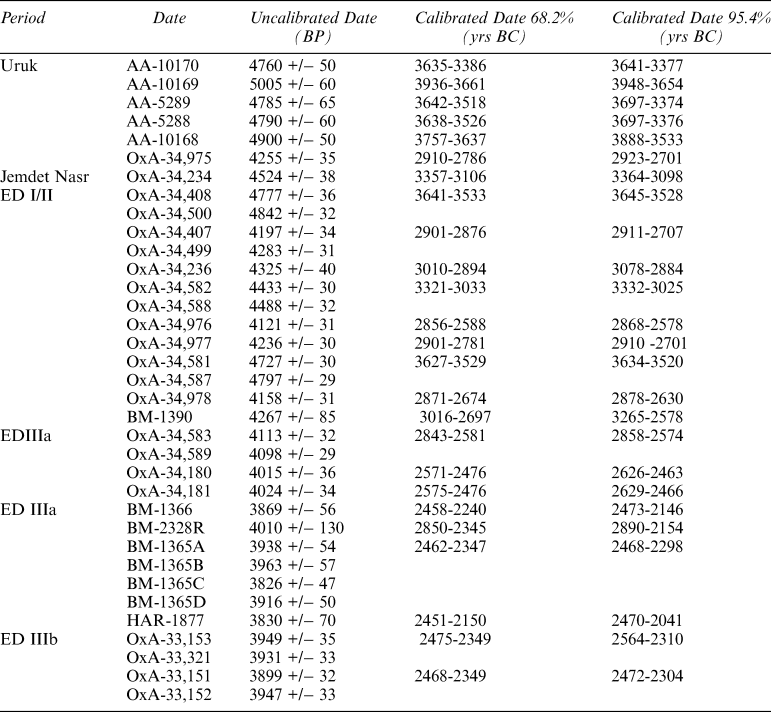
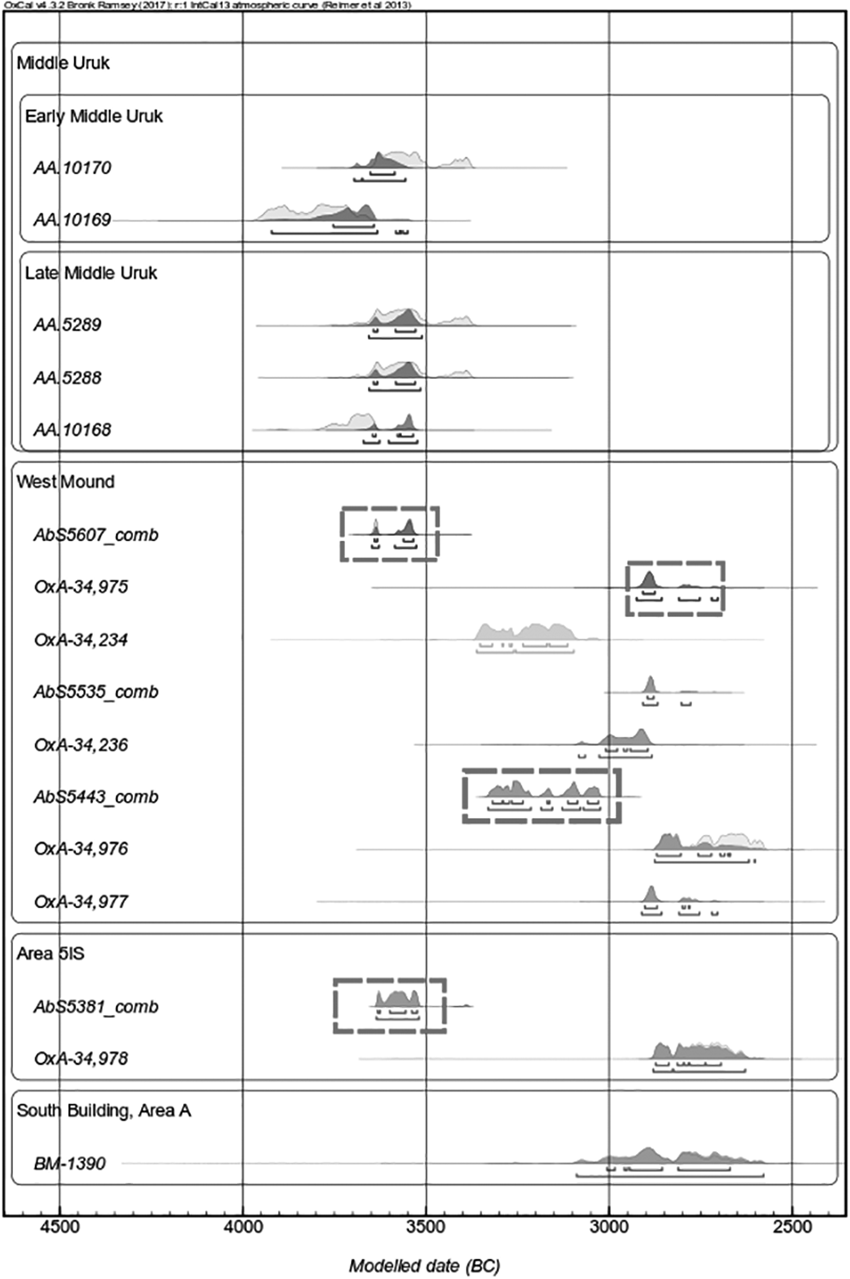
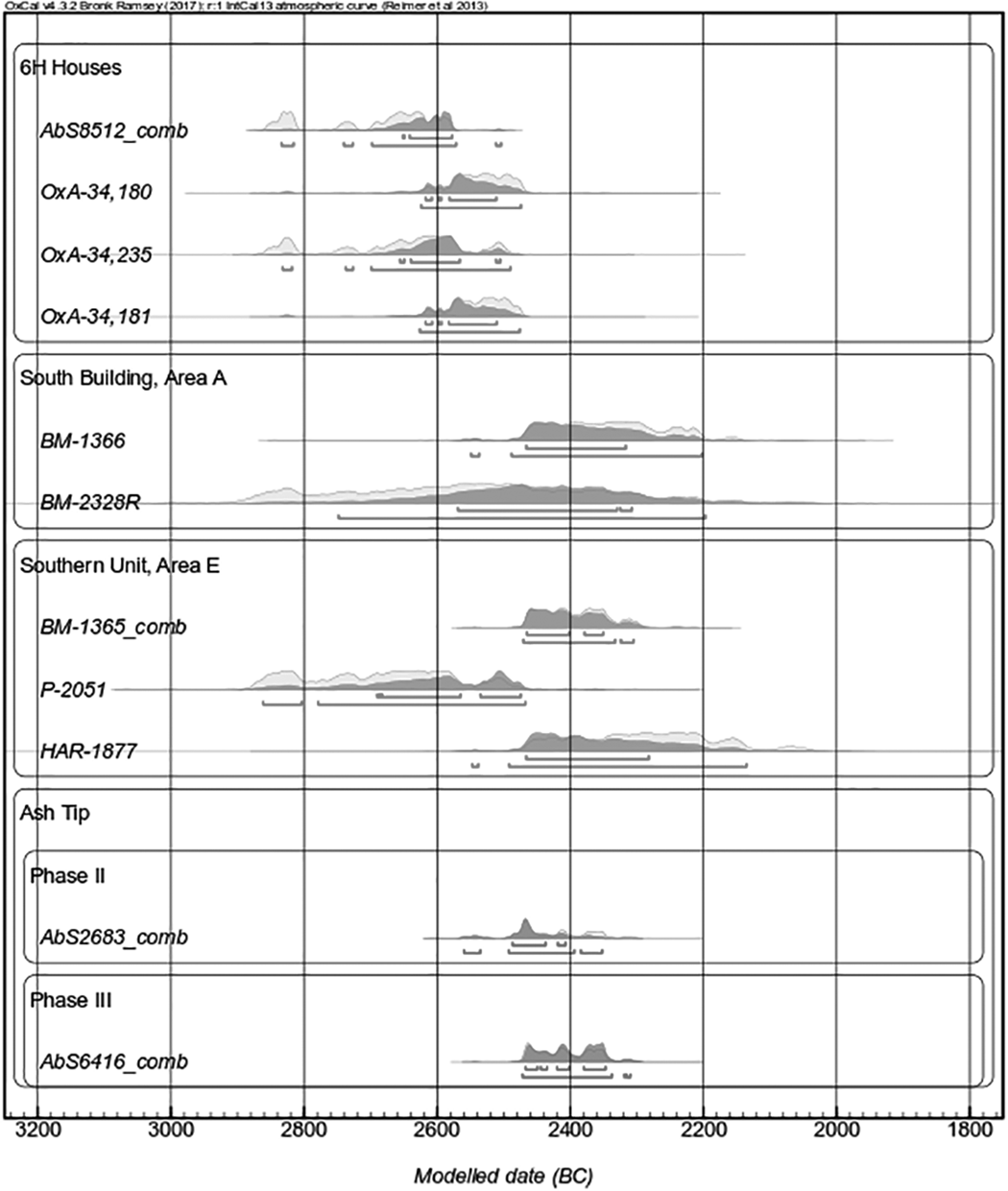
The calibrated, unmodelled dates are given in Table 1. Figures 2 and 3 are graphic representations of the dates for early (Uruk-EDI/II) and later (EDIIIa-EDIIIb) periods respectively. A cursory glance at the results in Fig. 2 clearly shows that four of the dates do not correspond with their stratigraphic position. Considering that three of the four mentioned were tested twice and produced consistent results, laboratory contamination or sample mixing are very unlikely. The only regularity which emerges is that all four of the samples collected from Uruk or ED I/II fire installations produced aberrant results. The context disturbance associated with the construction of these installations must have been significant given the surprising results. OxA-34,408 and OxA-34,500 (Unit 5607) appear to be contemporary with the Middle Uruk dates, and the same can be said of OxA-34,581 and OxA-34,587 (Unit 5381). OxA-34,582 and OxA-34,588 (Unit 5443), despite being associated with ED I/II architecture, appear to be contemporary with the Terminal Uruk/Jemdet Nasr sample OxA-34,234. On the other hand, OxA-34,975 is younger than expected, placing it alongside Early Dynastic material. In general, dates being younger than expected may be indicative of laboratory contamination resulting from inclusion of modern material. A shift toward older dates, in this situation, is likely to mean context disturbance or the context being older than may appear from the archaeological research.
Calibrated radiocarbon dates from Abu Salabikh. Samples with anomalous readings have been shaded in grey. Please refer to the main text for more detailed discussion of these contexts.

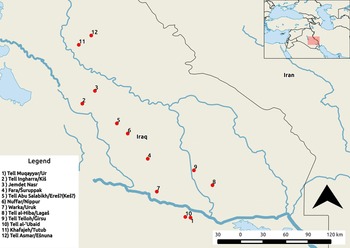
Map showing the location of significant Mesopotamian sites during the 4th–3rd millennia BC.

Abu Salabikh radiocarbon dates from earlier periods. Samples collected from fire installations are marked with boxes.

Abu Salabikh radiocarbon dates from later periods.

Schematic representation of the Bayesian sequences built for the master sequence at Abu Salabikh: (a) Model 1; (b) Model 2. The schematic follows the Harris matrix (Harris Reference Harris1979) principles of expressing chronological relationships: items are a priori assumed to have preceded those above them. An item sharing a horizontal level with another item reflects no prior belief regarding their relative place in the sequence (i.e. it could be contemporary, later, or earlier than the other items on the level).

OxA-34,234 does seem to corroborate the interpretation of the sample's context as Jemdet Nasr. As far as the later dates are concerned, the results for 6H are remarkably consistent, pointing to a date between ca. 2650 and 2500 BC. Similarly, the age of the “Ash Tip” samples postdates 2500 BC as expected. Difficulties arise when one tries to compare the 6H dates with those from Areas A and E due to the large uncertainties of the latter. It is, however, noteworthy how the dates BM-1365 and BM-1366 are noticeably later than those produced during this study. This is particularly surprising given that both of the BM-dates were derived from wood which could have been affected by the inbuilt age problem. Therefore, the samples should be contemporary with or older than their respective contexts. One can interpret this observation in two ways. It is possible that the two younger wood fragments were affected by the laboratory contamination reported for other British Museum samples. Alternatively, should one accept the younger ages, the obvious conclusion would be to state that the 6H house predates the Area A and E contexts.
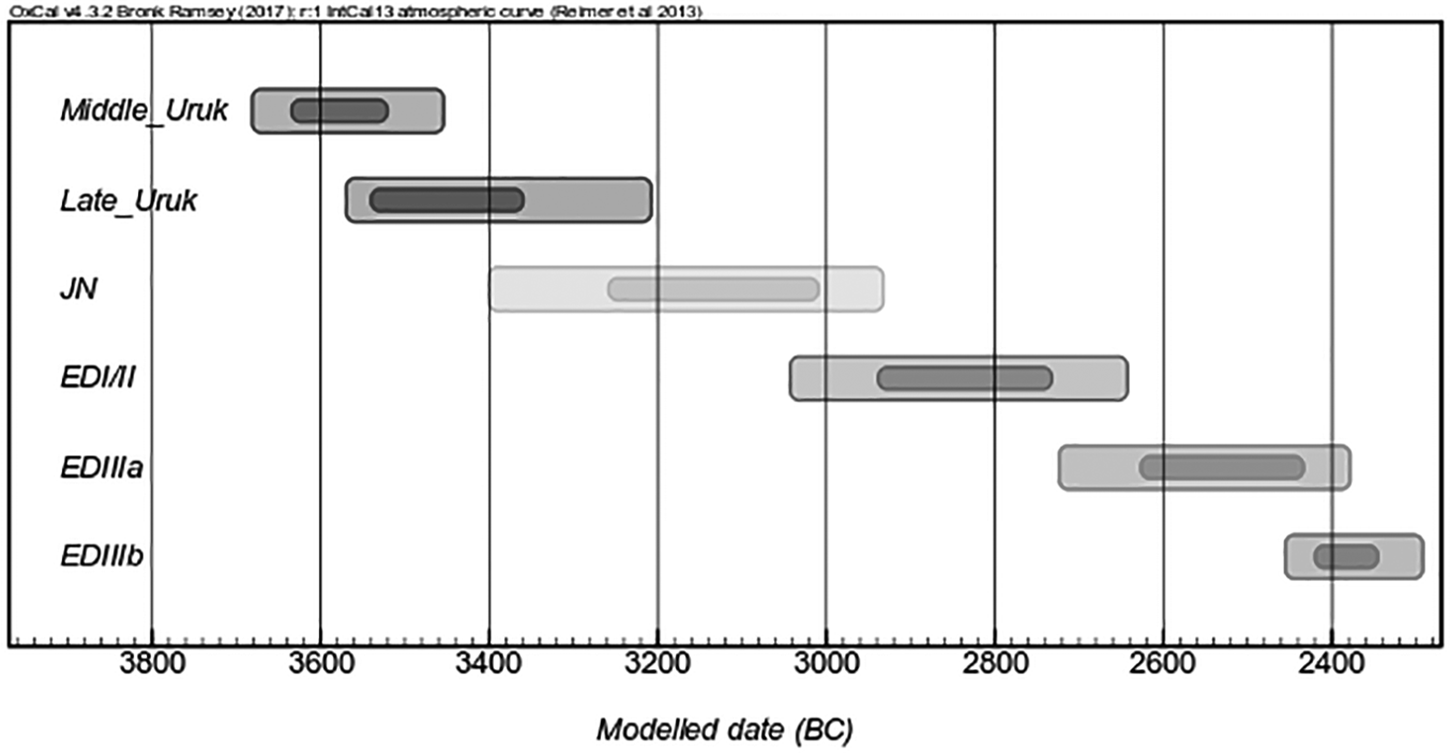
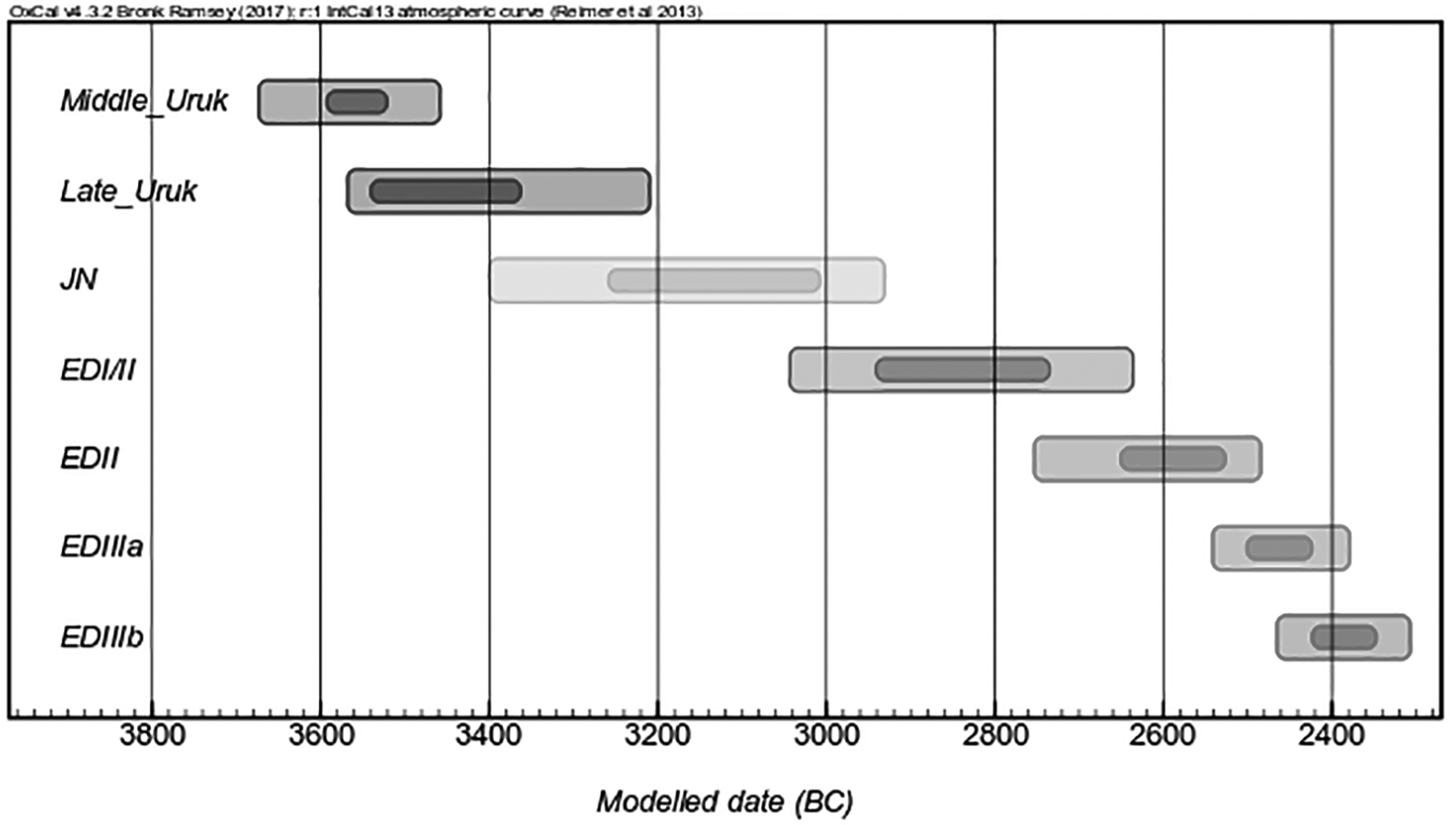
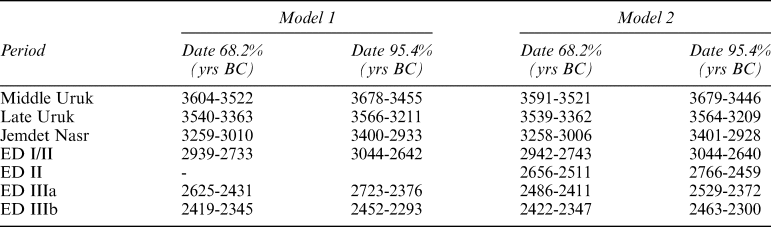
As explained in the Methodology section, two separate Bayesian models were constructed for the samples. The results are presented in Figures 5 and 6, as well as Table 2. Both models were consistent with the dates (Amodel>60%), with three dates (AA-10168; AA-10169; BM-1366) falling below the accepted agreement index (Bronk Ramsey Reference Bronk Ramsey2009b). Table 2 clearly demonstrates that the results for both models were very similar, indicating that the date estimates were not heavily affected by the choice of the modelling technique, and can thus be viewed as robust. Model 1, being the one containing fewer implicit assumptions about the stratigraphic relations among the dates, is therefore likely to provide the most reliable absolute chronology for the site.
Date estimates for the Abu Salabikh master sequence (Model 1).

Date estimates for the Abu Salabikh master sequence (Model 2).

Averaged radiocarbon dates of consecutive archaeological phases at Abu Salabikh.

Discussion
The samples coming from the fire installations which produced anomalous readings pose a considerable issue. Tannurs are usually a good source of radiocarbon material due to the large quantities of carbonised short-lived plant matter and the fact that the material deposited in them can usually be safely considered contemporaneous with the use of said tannurs. Nevertheless, the repeated sampling of material and careful re-examination of the archaeological record (Postgate, personal communication) provided no obvious explanation for the offsets. The young age of OxA-34,975 can potentially be explained by seeds from the upper levels falling down the Uruk-period kiln shaft. It is much harder to offer an archaeological explanation for the excessively old ages for the rest of the remaining samples, other than potential re-excavation and infilling in antiquity.
Regardless, several pertinent observations can be made. Firstly, the dates from the West Mound cluster in and around Middle Uruk (OxA-34,408; OxA-34,500) and Jemdet Nasr periods (OxA-34,234), which corroborates the view of Pollock (Reference Pollock, Dittmann and Selz2015: 273), who argues that occupation focused on the Uruk and Northwest Mounds during the Late Uruk period, while the West Mound settlement contracted.
Similarly to other sites from Southern Mesopotamia, there seem to be few if any radiocarbon samples dating to ca. 3000 BC, with the Jemdet Nasr spanning ca. 3300-3100 BC and the first Early Dynastic contexts appearing around 2900-2800 BC (Wencel Reference Wencel2018). This may suggest a breakdown in occupation followed by a brief Jemdet Nasr/ED hiatus in occupation ca. 3000 BC, potentially also seen in the “flood level” attested at Fara (Martin Reference Martin, van Donzel, Donceel-Voûte, Kampman and Mellink1975: 174; Reference Martin1988: 22).
The date of the 6H house can be securely placed in the 2650-2500 BC time bracket. The absolute date of the ED IIIa contexts from Areas E and A, and thus the Fara-style texts from Abu Salabikh, is less precise, but seems to be slightly younger than that of the 6H house. One may hazard a suggestion that the ED IIIa texts from Abu Salabikh represent a later stage in the development of the ED Sumerian literature dating from the later phases of the period. Indeed, the palaeography of the Abu Salabikh texts seems to be later than their closest parallels from Fara (Postgate and Krebernik Reference Postgate and Krebernik2009). Alternatively, the 6H house represent an earlier, perhaps an “ED II”, period, as suggested by H. Martin (in preparation) on the basis of ceramic and glyptic material.
Both Phase II and Phase III of the “Ash Tip” date to ED IIIb, which corresponds well with the associated glyptic material. The radiocarbon dates suggest that the deposition of the “Ash Tip” material most likely occurred over a relatively short period of time. Considering that the “Ash Tip” deposits are quite thick, this demonstrates the dangers of assessing the duration of a period on the basis of its thickness. The rate of deposit accumulation will vary greatly depending on the intensity of activities in the area.
Conclusions
This chronological project leaves several crucial questions unanswered. Most importantly, we still know little about the dates of the Late Uruk occupation of Abu Salabikh. Similarly, the exact timing and nature of Uruk-ED transition on the site remains ambiguous, as is the case on many other Mesopotamian sites. Nevertheless, the results provide a robust chronological framework for the periodisation in the region.
It may also serve as an instructive example of both the strengths and limitations of absolute dating techniques. The approach presented here demonstrated how radiocarbon dating may help to date contexts deprived of diagnostic types of material culture, and to link the observed developments with other sites. At the same time, every radiocarbon date remains dependent on its context and sampling strategy. It is therefore important to refrain from making conclusions on the basis of individual measurements, and instead to consider them in the context of other dates, as well as the site's stratigraphy and typology.
Acknowledgements
I would like to thank the Thorne Thyssen Scholarship and the Natural Environment Research Council for funding this research project. I am also extremely grateful to Prof. M. Charles, Prof. J.N. Postgate, and Prof. J. Dahl for their help with interpreting the archaeological material, and to Prof. C. Bronk Ramsey and Prof. M. Dee for their supervision of the radiocarbon dating process.