




The principles underlying the accurate determination of energy and specific nutrient requirements are the same in humans as in other animal species. However, the economic drive to optimise level and efficiency of production in domestic livestock has meant that, in general, the definition of nutrient requirements of livestock has been more accurate and complete than that of humans. For example, Baker(Reference Baker1) reviewed criteria necessary to establish dietary requirements of animals for essential nutrients in terms of age, weight, sex, body composition, physiological state (e.g. pregnancy, lactation), as well as highlighting the importance of accurate diet description and appropriate statistical analysis of animal responses. In contrast, human dietary requirements are usually expressed as Recommended Dietary Allowances that are designed to meet the nutrient needs of 97–98% of healthy individuals but do not account for individual differences in metabolism or body composition, chronic illnesses, activity levels or food source(Reference Beaton2).
The Nutrition Society of Australia (NSA) celebrated its founding in 1975 at its Annual Scientific Meeting held on the Gold Coast in December 2025. The Society held its first annual scientific conference in 1976, at which one of us was a speaker(Reference Black3). At the that meeting Adrian Egan provided an overview of the scope and focus of Australian animal nutrition research(Reference Egan4). During the succeeding 50 years many contributions have been made to animal nutrition in Australia including the biennial conference Recent Advances in Animal Nutrition – Australia(Reference Nolan5) and a series of books on feeding standards for Australian livestock, for pigs(6), poultry(7) and ruminants(8,9) . Authoritative books on sheep nutrition(Reference Freer and Dove10) and wool growth(Reference Black and Reis11) have been published. In this review the contributions of animal nutrition to the broader understanding of the science of nutrition are highlighted with an emphasis on research undertaken by Australian scientists. Coverage is confined to selected topics that should be of interest to human nutritionists as well as those whose primary interest is in the nutrition of livestock and other non-human animal species.
Determination of nutrient requirements in humans and livestock
Experiments with non-human animals have been crucial for determining and quantifying nutrient requirements and identifying the impacts of nutrient deficiencies for humans(Reference Baker12). Experiments with humans that require treatments to be detrimental to their wellbeing are viewed as ethically unacceptable. Nevertheless, there is a long history of people undertaking research on themselves with various outcomes including the death of William Stark in the late 1770s from scurvy, while others became unconscious or temporarily paralysed through nutrient deficiencies(Reference Widdowson13).
Although animal ethics regulations have strengthened over the years, it has been possible to use many animal species to design experiments, rigorously test hypotheses and conduct experiments under controlled conditions. These studies have examined the impacts of individual nutrients, interactions among nutrients, interactions between nutrients and the genetic capacity of the animal to digest and metabolise them and interactions with climate and disease. Animal research has been crucial for identifying and defining requirements and toxicities of vitamins, macrominerals, trace elements and amino acids, as well as protein-energy relationships, the methionine cycle and factors influencing digestion and bioavailability of nutrients(Reference Baker12). Animal studies also have addressed the impacts of prenatal nutrition on diverse aspects of postnatal development of the offspring, including obesity(Reference Chalvon-Demersay, Blachier and Tomé14) and neuropsychiatric disorders(Reference DeCapo, Thompson and Dunn15). Outcomes from many of these experiments have direct application to practical human nutrition, including dietary recommendations. However, the slower relative growth rate of humans compared with many of the animal species used in nutrition experiments needs to be considered when extrapolating results from some animal experiments to human nutrition applications(Reference Black3).
Energy requirements
The methodological gold standard for determination of energy expenditure and requirements is calorimetry, as first used by Lavoisier and Laplace(Reference Lavoisier and Laplace16) to measure heat production in guinea pigs, and later, human subjects. During the ensuing 2½ centuries this technology has been widely used to study energy metabolism in livestock and, more sporadically, humans, with progressive engineering refinements, especially in indirect (respiration) calorimetry(Reference McLean and Tobin17). Rates of net energy deposition or loss in livestock were measured directly by comparative slaughter approaches which were not possible in human studies. In recent decades this impediment has been partly overcome by using indirect methods based on stable isotope dilution to estimate body composition in humans, following development and application of these techniques in livestock species, initially employing the radioactive isotope, tritium. The latter method was pioneered in ruminants by an Australian animal scientist, Bill Panaretto(Reference Panaretto18). Together with indirect calorimetry, it was extensively applied by his CSIRO colleagues, Norman Graham and Tom Searle, to determine developmental changes in energy exchanges and body composition in sheep(Reference Graham and Searle19,Reference Searle, Graham and O’Callaghan20) .
Energy-protein interactions
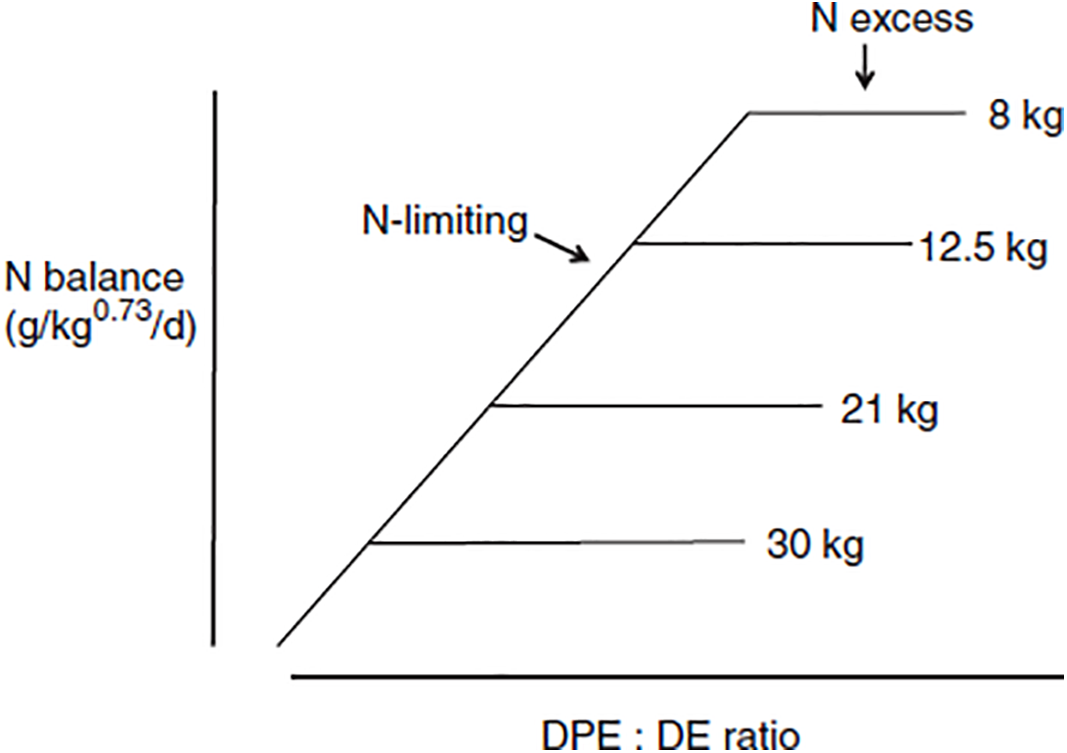
Responses of nitrogen (N) balance to various combinations of digestible energy and digestible protein were used to determine optimal protein requirements at different stages of growth in functionally non-ruminant lambs(Reference Black and Griffiths21,Reference Black, Pearce and Tribe22) . This seminal Australian work clearly demonstrated that for animals of any particular live weight, N requirement is linearly related to energy intake, as illustrated in Fig. 1. This finding was confirmed in a comprehensive series of studies on baby, growing and finishing pigs which also demonstrated the effects of sex, genotype and treatment with growth promotants in this species(Reference Campbell23,Reference Dunshea, King and Campbell24) . Again, such studies are ethically not possible in humans but also inappropriate because maximising growth rate is not a desirable objective in human juvenile development.
Relationship between nitrogen balance and the digestible protein energy: digestible energy (DPE: DE) ratio for lambs receiving their entire diet by abomasal infusion. Adapted from Black et al.(Reference Black, Pearce and Tribe22). Nitrogen balance is a measure of net protein deposition, which increases with energy available for metabolism until the genetic capacity to deposit protein is reached. Once the potential rate of protein deposition is achieved, additional energy consumed is primarily deposited as fat. Lighter lambs deposit more protein relative to fat than heavier lambs and consequently have a higher rate of protein deposition per metabolic weight than heavier lambs. The protein to energy ratio required for lambs is at least twice as great as for children of similar weight because of the faster rate of protein deposition and higher rate of body protein turnover(Reference Black3).

Amino acid requirements
Dietary requirements of the 9–11 essential (indispensable) amino acids (EAA) have been most rigorously investigated and accurately defined in pigs(Reference van Milgen and Dourmad25) and poultry(Reference Baker12). The approaches used in these studies are theoretically applicable to humans but impracticable because of their reliance on invasive surgical techniques (e.g. intestinal fistulation to measure ileal digestibility) and employment of long-term dose-response experiments. However, the omnivorous, monogastric pig has been represented as an excellent model for generating data needed to define human amino acid (AA) requirements(Reference Stein26).
In ruminant livestock, establishment of dietary requirements is complicated by the ability of ruminal microbes to synthesise EAA as well as nonessential amino acids (NEAA) from various sources of dietary N, carbohydrates and sulphur and the difficulty of measuring these processes(Reference Oddy and Neutze27). In high-producing animals, microbial synthesis of amino acids and protein is inadequate to satisfy requirements for tissue growth and milk synthesis so that requirements for and sources of dietary N are defined in terms of rumen-degradable and rumen-undegradable sources, as well as specific limiting AA e.g. methionine(Reference Schwab and Broderick28).
Mineral and vitamin requirements
The so-called micronutrients regarded as essential in the human diet include 13 vitamins, classified as fat- or water-soluble organic compounds, and at least 16 minerals, classified somewhat arbitrarily as macrominerals or trace elements according to the magnitude of requirement. To illustrate the central theme of this review, discussion of the micronutrients will be limited to two examples where Australian livestock nutritionists have made important research contributions that are relevant to human nutrition.
Vitamin A deficiency, characterised by vision loss, skin disease, infertility and juvenile growth retardation, remains a widespread nutritional problem in humans, especially in societies with inadequate access to animal-sourced foods and fresh fruit and vegetables(Reference Wiseman, Bar-El Dadon and Reifen29). The nutritional significance of the two dietary forms of vitamin A, active retinol found mostly in animal products, and provitamin carotenoids, especially β-carotene, found in green leafy vegetables and yellow, orange and red fruits and vegetables, has been studied extensively since the 1930s. This included applied research by Australian scientists to devise practical strategies to prevent or resolve clinical deficiencies in ruminants maintained on dry feed for long periods during drought- or lot-feeding(Reference Underwood and Conachie30–Reference Snook32). In addition to identifying factors affecting forage content of β-carotene, these studies considered the capacity of cattle and sheep to delay the onset of clinical deficiency by prior hepatic storage of retinol when dietary intake of β-carotene was adequate. The ability of obligate herbivores to fully meet vitamin A requirements by consumption and conversion of the provitamin precursor to active retinol is consistent with current understanding of the dietary requirements of human vegans.
Of the 21 trace elements found in human tissues, eight (iron, iodine, copper, zinc, selenium, chromium, molybdenum and cobalt) have been defined as nutritionally essential. However, of these, widespread symptoms of deficiency have been demonstrated only for iron and iodine. A further five (manganese, silicon, nickel, boron and vanadium) are presently considered to be probably essential while the remaining eight elements (fluorine, lead, cadmium, mercury, arsenic, aluminium, lithium and tin) are classified as potentially toxic(Reference Mehri33).
Cobalt is not required by animal tissues but is essential for the synthesis and activity of vitamin B12 (cobalamin) by some bacteria and archaea that are widespread in the environment, including the gut microflora of higher animals(Reference Genchi, Lauria and Catalano34). Vitamin B12 is required for protein and nucleic acid synthesis, erythrocyte production and normal neural functions. Its classical deficiency syndrome in humans is pernicious anaemia due to an autoimmune condition that reduces activity of a gastric binding protein, intrinsic factor, that is necessary for intestinal transport of ingested cobalamin(Reference Vaqar and Shackelford35). Two decades before the unequivocal demonstration of cobalt’s essential role in the structure of vitamin B12 by Hodgkin et al.(Reference Hodgkin, Kamper and Mackay36), two groups of Australian scientists respectively led by Eric Underwood in Western Australia and Hedley Marston in South Australia, independently discovered and almost simultaneously reported that dietary deficiency of cobalt was responsible for a devastating wasting disease in ruminant animals grazing pastures in coastal regions of their states(Reference Underwood and Filmer37–Reference Marston39). This finding was to have important practical implications for cattle and sheep production in Australia and many other parts of the world(Reference Underwood and Suttle40).
Unfortunately, despite the willingness of Underwood to defer publication of his and Filmer’s results until after the Adelaide group published theirs, Marston refused to acknowledge publicly that Underwood and Filmer were co-discoverers of the essentiality of cobalt in ruminants(Reference McDonald41). This led to the long-term estrangement of two of Australia’s most illustrious animal nutritionists, each of whom would be elected as a Fellow of the Royal Society. Ian McDonald(Reference McDonald41), who was a member of the Adelaide team at the time, further contended that Marston appropriated responsibility for the cobalt discovery from junior colleagues who he excluded from further involvement in the work. Nevertheless, his bête noir, Eric Underwood, was gracious in acknowledging his rival’s contributions(Reference Underwood42). These included later co-discovery with American researchers that the clinical signs of cobalt deficiency in sheep could be remedied by injection with vitamin B12 (Reference Smith, Koch and Turk43,Reference Marston and Smith44) . Another important contribution was definition of the biochemical role of the coenzyme 5’ deoxyadenosyl cobalamin, derived from vitamin B12 (cobalamin), in the hepatic metabolism of propionate to glucose in sheep(Reference Smith and Marston45). This showed that the poor growth of animals suffering from the wasting disease ultimately was caused by severe glucose deficiency. It also explained why the syndrome affected ruminants, but not simple-stomached animals fed the same cobalt-deficient pastures, in terms of the importance of propionate as a glucogenic precursor in ruminants that are dependent on hepatic gluconeogenesis for most of their glucose supply.
It should be noted that Eric Underwood, a key protagonist in the cobalt story, became an internationally famous leader of research on mineral nutrition in livestock. He authored several highly influential books and major reviews including the classic ‘Trace elements in human and animal nutrition’, originally published in 1956(Reference Underwood46) and extended to a posthumous 5th edition(Reference Mertz47). He was deeply interested in fostering links between human and livestock nutritionists and at the time of his death in 1980 was President of NSA. Ian McDonald had preceded him in that role.
Fermentative digestion
All animal species have microbiota throughout their gastro-intestinal tract and fermentation by the microbiota plays an important role in health, welfare and productivity. However, the impact of fermentation depends on the location of the major concentrations of the microbiota within the gastro-intestinal tract. As discussed in this section, the major site of microbial concentration in relation to gastric digestion defines the differences in feeding strategies and nutrition for ruminants and non-ruminants.
Ruminants
The history regarding the role of fermentation in ruminant species has been well documented in previous reviews(Reference Annison and Bryden48,Reference Lindsay49) . In short, typical feedstuffs, either forage-based and cellulose-rich or grain-based and starch-rich, undergo extensive pre-gastric anaerobic fermentation by bacteria, protozoa and fungi in the reticulo-rumen and omasum. The end products resulting from fermentation are short-chain, volatile fatty acids (VFA), methane and CO2, various water-soluble vitamins and newly synthesised microorganisms which then undergo post-ruminal digestion by the host animal. The VFA, either metabolised by the tissues of the gut or absorbed into the portal vein, make a substantial (70–80%) contribution to the overall energy balance of the animal. The VFA and microbial protein usually are adequate to satisfy the necessary energy and N requirements of the host animal except in rapidly growing ruminants and high yielding dairy animals(Reference Schwab and Broderick28,50) .
The consequences of extensive pre-gastric fermentation are considerable. When diets are designed for ruminants, the general principle is ‘you are feeding the microbes’, at least for macronutrients. There are also significant consequences for patterns of postabsorptive tissue metabolism as reviewed by Annison and Bryden(Reference Annison and Bryden51). A key feature of carbohydrate metabolism in grazing or forage-fed ruminants is that little or no glucose typically is absorbed and instead gluconeogenesis is active in both fed and fasted states(Reference Lindsay49,Reference Lindsay52) . The primary glucogenic substrate in fed ruminants is the VFA propionate derived from ruminal fermentation of dietary carbohydrate, which is almost completely extracted by the liver. The VFA acetate is a key oxidative fuel for most extrahepatic tissues (except the brain and conceptus) and is also the primary source of carbon(Reference Prior53) and about 50% of the reducing power via cytosolic nicotinamide adenine dinucleotide phosphate isocitrate dehydrogenase(Reference Bauman, Brown and David54) for de novo lipogenesis in adipose tissue and the mammary gland, thus helping to spare glucose. The third major VFA, butyrate, is metabolised by the rumen wall to D-3-hydroxybutyrate which is then delivered to the extrahepatic tissues to be used as an oxidative fuel. Butyrate is also trophic for the rumen mucosa(Reference Tamate, McGilliard and Jacobson55), in line with the later discovery of its similar role in the human colon(Reference Hodgkinson, El Abbar and Dobranowski56).
Present understanding of the complex nature of microbial fermentation in the rumen is based on the foundation built by pioneering Australian animal nutritionists such as Reg Moir, Ian McDonald, Jim Hogan and Bob Weston. Moir, from the University of Western Australia, was an internationally eminent researcher on multiple aspects of rumen microbiology, digestion and metabolism(Reference Moir and Code57). The breadth of his interests, achievements and influence on students and colleagues is illustrated by the published contents of a symposium held in his honour in 1984(Reference Baker, Gawthorne and Mackintosh58). McDonald built on his PhD studies at Cambridge with Sir Joseph Barcroft and Professor AC Chibnall to elucidate key principles of the ruminal degradation of dietary nitrogen sources and the nutritional importance of microbial protein(Reference McDonald59). His CSIRO protégés, Hogan and Weston, collaborated in career-long studies that quantified most important aspects of the dynamics of ruminal digestion in sheep (e.g.(Reference Hogan and Weston60)). These pioneering studies have been central to our understanding of ruminant nutrition and have led the way in unravelling the role of the gut microflora in other species including man. More recently the work of these famous scientists has been extended by the emergence of microbial metagenomics as a powerful tool for assessing the complexity of gut microbial ecosystems with Australian researchers once again prominent(Reference Morrison, Pope and Denman61). Important applications include identification and manipulation of ruminal methanogenic organisms to reduce emissions of the potent greenhouse gas, methane(Reference Denman, Fernandez and Shinkai62). Subsequent Australian research on methane mitigation strategies has been reviewed recently(Reference Black, Davison and Box63).
The ability of ruminants, via pre-gastric fermentation and microbial protein synthesis, to convert otherwise unusable dietary ingredients into digestible energy and protein for production of meat, milk and fibre has been an important influence on human evolution(Reference Mann64) and remains a key advantage of grazing livestock.
Non-ruminants
Fermentation in non-ruminant farm and companion animals has been less studied than in ruminants for obvious reasons. In these species (pigs, chickens, horses, dogs), as in humans, most nutritional needs are met directly from the diet via digestion of feedstuffs and absorption of nutrients in the upper alimentary tract. Energy typically is supplied in the form of starch, sugars or lipids. Dietary protein determines the balance of AA for tissue use. This might imply a lack of need for fermentative digestion. However, the role of non-digestible fermentable and non-fermentable ‘residue’ passing to the large intestine has become well recognised in animal and human nutrition. For example, the energy derived from cereal diets in chickens and pigs is influenced substantially by the fibres within the grains and in the diet(Reference Black, Ratanpaul, Williams and Gonzalez-Ortiz65). The pioneering work of Denis Burkitt(Reference Burkitt, Walker and Painter66) on stool consistency and volume led to elucidation of the role of dietary fibre in combatting diseases such as constipation, diverticulitis, colon cancer and type 2 diabetes with the overwhelming conclusion that dietary fibre is highly beneficial for human health.
The colon of the omnivorous pig has a considerable capacity to ferment some non-starch polysaccharides, especially in the adult, meaning some fermentable fibre ingredients can be fed depending on the cost. For example, sugar beet pulp, containing high levels of pectin, can support growth as an energy source in pigs due to the resulting production and absorption of VFA in the hind gut(Reference Pluske, Kim, McDonald, Wiseman and Varley67). Fermentable fibre also has been observed to reduce behavioural and constipation problems associated with restricted feeding to manage excessive live weight gain in pregnant sows and weight gain in broiler breeder hens. Apart from stimulating nutritional satiety, dietary fibre can promote specific behavioural needs related to natural feeding habits such as rooting and chewing in pigs and food pecking in chickens(Reference De Leeuw, Bolhuis and Bosch68).
Importantly for human nutrition, a pig model has been used by Australian researchers to help establish resistant starch as a critical dietary component for gut health. Resistant starch, particularly when combined with dietary non-starch polysaccharides, increases butyrate, reduces ammonia and delivers benefits to the distal colon, where it is most protective against cancer(Reference Topping, Gooden and Brown69–Reference Belobrajdic, Bird and Conlon72). Similarly, the pig has been used in understanding the role of fermentable oligosaccharides, disaccharides, monosaccharides and polyols as compounds that trigger irritable bowel symptoms in susceptible people(Reference Muir, Yao and Gibson73). This research has impacted both human and animal dietary recommendations worldwide(Reference Topping and Clifton74–Reference Pham, Joglekar and Wong76).
On the downside, increasing dietary fibre can be viewed as anti-nutritional in farm and companion omnivores. Feeds high in soluble non-starch polysaccharides and oligosaccharides in pigs(Reference Kim, Pluske and Mullan77) and especially broiler chickens(Reference Angkanaporn, Choct and Bryden78,Reference Choct, Hughes and Trimble79) can reduce the efficiency of digestion and absorption in the small intestine. There is also evidence for an association between highly digestible diets low in soluble non-starch polysaccharides and resistant starch to reduce the expression of swine dysentery in pigs(Reference Pluske, Kim, McDonald, Wiseman and Varley67). In dogs, the inclusion of dietary soluble non-starch polysaccharides increased the volume and water content of faeces to unacceptable levels with the effects being reduced using an enzyme mixture containing xylanase, ß-glucanase and amylase(Reference Twomey, Pluske and Rowe80).
Horses, being non-ruminant obligate herbivores, are a special case as hindgut fermenters with considerable cellulolytic capacity in the colon and caecum. However, when consuming large quantities of starch they can be prone to laminitis. This is due to undigested starch undergoing rapid fermentation to lactic acid in the large intestine, thereby inducing acidosis that results in a chain of inflammatory effects and damage to the lamellae of the hoof. Inhibition of the bacteria responsible for the formation of lactic acid has been shown to protect horses against laminitis in these scenarios(Reference Rowe, Lees and Pethick81).
In practice, fermentable fibre is often fed to a maximum level in non-ruminant farm and companion animals, depending on physiological state, or negated via compounds such as dietary enzymes (e.g. xylanase, ß-glucanase and amylase). This represents a clear difference between human and animal nutrition and is in part driven by higher feed intakes, especially in farm animals, to sustain production in the form of rapid growth.
Protein and nitrogen digestion
Following gastric digestion, the fate of protein and AA in the digestive tract is similar in both non-ruminants and ruminants(Reference Lewis, Hill, Rook and Thomas82). Much is known about the digestion of protein and the subsequent absorption of di- and tri- peptides and AA(Reference Gilbert, Wong and Webb83). Moreover, the distribution of AA to different organs and tissues is achieved by similar mechanisms(Reference Vernon, Peaker, Rook and Thomas84) and the relative requirement for EAA appears to be similar across species(Reference Gilbert, Wong and Webb83). However, the requirements differ depending on age, genotype, production outcome (growth, eggs, milk and wool) and environmental conditions(Reference Wu, Bazer and Dai85–Reference D’Mello87). It is therefore imperative that these different requirements are matched with the AA available to the animal which is determined by the concentrations of essential EAA entering the small intestine(Reference Boisen, Hvelplund and Weisbjerg88). However, determination of this pool of AA requires very different approaches for non-ruminants and ruminants.
Non-ruminants
Diet formulation for non-ruminants has been greatly assisted by the refinement of the ‘ideal protein’ concept. Although the concept is not new (see (Reference Mitchell89)), it was not until the 1980s that it became widely applied in diet formulation for pigs(Reference van Milgen and Dourmad25,Reference Fuller, McWilliam and Wang90,Reference Wang and Fuller91) and poultry(Reference Baker and Han92). The ideal protein originally was defined as one that provides the exact balance of EAA needed to meet tissue requirements for optimum performance(Reference Boisen, Hvelplund and Weisbjerg88), thereby optimising efficiency of dietary protein use to meet AA requirements and reducing environmental pollution by excretion of excess N. The ideal protein concept is built on the principle that EAA are required and supplied in the diet in specific proportions to each other with no amino acid in deficiency or excess(Reference Baker and Han92,Reference Baker93) . The EAA are supplied in specific ratios to lysine for the reasons reviewed by Boisen et al. (Reference Boisen, Hvelplund and Weisbjerg88) and Baker(Reference Baker93), including it is typically the first limiting EAA in many commercial pig and poultry diets. Therefore, to formulate a diet only the requirement for lysine is required and the requirements for the other EAA are calculated from the ratio. In addition, all diets require sufficient non-essential amino acids (NEAA) or N for the synthesis of NEAA. However, NEAA are synthesised from EAA, and in some circumstances this process may not be sufficient to meet the animal’s requirements as all AA must be present in the cell for protein synthesis, thus indicating the “essentiality” of the NEAA(Reference Hou and Wu94). This emphasises the need to include dietary N in the ideal protein definition of Boisen et al.(Reference Lewis, Hill, Rook and Thomas82) as “the perfect ratio among individual EAA and NEAA required for optimal performance”.
The ideal protein concept advanced feed formulation efficiency by enabling rapid identification of the optimum nutritional density of the diet (or least-cost per balanced energy unit) using parametric analysis in which energy density is varied but the balance of the total diet is maintained by linking lysine to energy and secondary EAA to lysine in the ideal protein ratio and by ensuring that there is an adequate pool of NEAA(Reference Edwards95). Dietary AA supply could be balanced with the strategic use of crystalline AA that became commercially available during the 1980s and 1990s. However, to fully capture the advantages of the ideal protein concept for feed formulation the difficulties of relating the EAA composition of a feed ingredient with their availabilities (defined as that proportion of the dietary amino acid that is in a form suitable for digestion, absorption and utilisation) had to be overcome.
There was much interest in Australia in developing reliable AA availability data for pigs(Reference Batterham96) and poultry(Reference Ravindran and Bryden97). One obvious factor that influences AA availability is the extent to which an AA is absorbed. Measurement of digestion and absorption of AA appears to be the most practical way of determining the potential availability of AA. This can be accomplished by measuring the difference in AA content of the ingested meal and the AA content of undigested residue(Reference Bryden, Siriwan and Annison98). Measuring digestibility as an estimate of availability is often criticised because of microbial AA synthesis in the gut and the entry of endogenous protein into the gut. The influence of microbial metabolism can be minimised by measuring digestibility in the ileum and the ileal site for digestibility measurement was adopted in Australian pig and poultry studies(Reference Bryden, Siriwan and Annison99–Reference Bryden and Li102). Amino acid digestibility data sets determined with meat chickens for Australian feedstuffs have been published(Reference Ravindran, Hew and Ravindran103,Reference Bryden, Li and Ravindran104) .
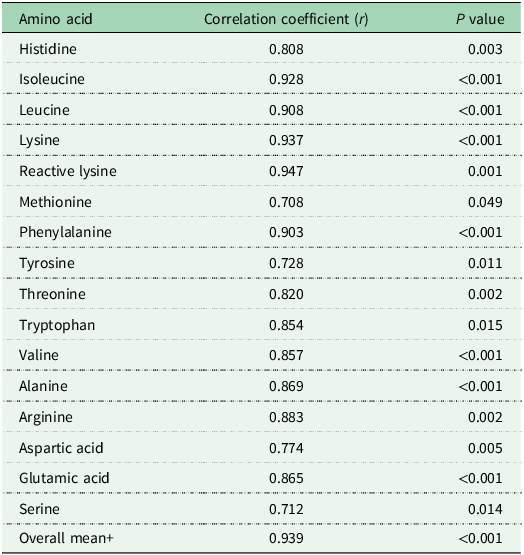
Various approaches for measuring endogenous AA have been examined but none proved entirely satisfactory(Reference Taverner, Hume and Farrell105–Reference Ravindran, Hew and Ravindran107). Studies were expanded to examine the guanidination of lysine to homoarginine and using homoarginine as a marker of endogenous secretion(Reference Siriwan, Bryden and Annison108). This technique can be used in pigs and poultry(Reference Bryden, Angkanaporn, Ravindran, Nunes, Portugal and Costa109). It has been applied to quantify the effect of non-starch polysaccharides on endogenous AA secretions in meat chickens(Reference Angkanaporn, Choct and Bryden78) and developed as a method for measuring lysine availability(Reference Rutherfurd and Moughan110). There has been much debate about applying endogenous correction values to AA digestibility data regarding definition, determination and application(Reference Lemme, Ravindran and Bryden111,Reference Stein, Seve and Fuller112) . It is now generally agreed that AA digestibility values should be corrected for basal endogenous losses and the resulting standardised values used in feed formulation. Paul Moughan and his group from New Zealand have done much work with pigs to validate this methodology and to establish the relevance of pig data to human AA availability(Reference Moughan113–Reference Hodgkinson, Stroebinger and van der Wielen116) as exemplified in Table 1 where the correlation coefficients between human and pig digestibility values are high and statistically significant for all amino acids(Reference Hodgkinson, Stroebinger and van der Wielen116). The success of this approach has informed the adoption of the digestible indispensable amino acid score in human nutrition(Reference Moughan and Lim117,Reference Matthews, Arentson-Lantz and Moughan118) .
Correlation coefficients for true ileal amino acid digestibility values determined in adult humans versus growing pigs for 10 foods* of differing digestibility. The correlation coefficients between human and pig digestibility values are high and statistically significant for all amino acids demonstrating the suitability of the pig model (adapted from Hodgkinson et al.(Reference Hodgkinson, Stroebinger and van der Wielen116))

Table 1. Long description
A table comparing correlation coefficients and P values for amino acid digestibility in humans and pigs. The table has 19 rows and 3 columns. The columns are labeled Amino acid, Correlation coefficient (r), and P value. Each row lists an amino acid, its correlation coefficient, and the corresponding P value. Notable amino acids include Histidine with a correlation coefficient of 0.808 and a P value of 0.003, Isoleucine with a correlation coefficient of 0.928 and a P value of less than 0.001, and Lysine with a correlation coefficient of 0.937 and a P value of less than 0.001. The overall mean correlation coefficient is 0.939 with a P value of less than 0.001.
*Protein sources included black beans, bread, casein, collagen, hydrolysed casein, mixed diet, pigeon peas, wheat bran, whey protein isolate, and zein.
+Overall mean = mean of all amino acids (reactive lysine is included but lysine is not included in this average).
Ruminants
In contrast to non-ruminants, protein entering the small intestine of ruminants is a mixture of microbial protein, undegraded dietary protein and endogenous protein and this complicates any consideration of the AA requirements of ruminants. Unravelling N metabolism in the rumen and predicting or determining the AA composition of digesta that enters the small intestine has been a major research priority for ruminant scientists(Reference Annison and Bryden48). The seminal research that occurred in the middle of last century and underpins our current understanding N metabolism in the rumen has been reviewed by Chalmers and Synge(Reference Chalmers and Synge119), Annison and Lewis(Reference Annison and Lewis120), Phillipson(Reference Phillipson, Munro and Allison, editors121) and McDonald(Reference McDonald59). As occurs with dietary carbohydrates (see previous section), proteins entering the rumen are rapidly degraded by the rumen microbiota (proteolysis followed by decarboxylation and/or deamination), and the resulting products, predominantly keto acids (or amino acid carbon skeletons) and ammonia along with peptides, AA and non-protein nitrogen, are used for the synthesis of microbial protein (see (Reference Annison and Bryden48,Reference Nolan, Dobos, Dijkstra, Forbes and France122) ). Excess ammonia is absorbed through the rumen wall and circulating ammonia is converted to urea in the liver and excreted in urine or returned to the rumen in saliva(Reference Nolan and Leng123). This “recycling” of ammonia was first suggested by McDonald(Reference McDonald124) and is an evolutionary aspect of ruminant nutrition that permits the conservation of dietary N and its availability as a substrate for the synthesis of microbial protein(Reference Moir and Code57,Reference Hume, Warner, Ruckebusch and Thivend125) .
The extent of the microbial breakdown of feed protein is largely a function of solubility in rumen fluid and rate of digesta passage(Reference Sutherland, Sutherland, McWilliam and Leng126); these are difficult parameters to determine. Solubility can be determined in sacco (Reference Ørskov and McDonald127) and markers can be used to estimate digesta passage rates (see (Reference Faichney, McDonald and Warner128,Reference Faichney, Dijkstra, Forbes and France129) ). A detailed critique of the methods used to study ruminant N metabolism has been provided by Hristov et al. (Reference Hristov, Bannink and Crompton130). The efficiency of microbial protein synthesis is determined by the energy made available from rumen fermentation of organic matter and the amounts of NPN and protein residues present in the rumen(Reference Nolan, Dobos, Dijkstra, Forbes and France122). Nitrogen metabolism in the rumen is very dynamic with protein degradation and synthesis occurring simultaneously and our understanding of this process has been greatly assisted by using isotopes, especially 15N-isotope dilution methodology as it also has with whole-body N metabolism (see (Reference Nolan, McDonald and Warner131,Reference Nolan and Leng132) ).
Diets contain variable amounts of ruminally degradable crude protein and the portion of dietary protein that passes intact through the rumen is referred to as either ‘escape protein’, ‘bypass protein’ or ‘undegraded dietary protein’. Microbial protein and undegraded dietary protein pass from the rumen through the omasum and abomasum to the small intestine where digestion and absorption can occur depending on availability. The composition of the protein arriving in the small intestine was largely composed of microbial protein in sheep consuming grass-based diets at maintenance levels(Reference Siddons, Nolan and Beever133) but the contribution of undegraded dietary protein was substantially increased when dietary supplements such as fishmeal or peanut meal were fed(Reference Mercer, Allen and Miller134). As noted earlier, the need for such supplementation as protected dietary protein or crystalline AA becomes critical to meeting the AA needs for rapid muscle growth or high levels of milk production(Reference Schwab and Broderick28). Wool growth also responds to dietary supplementation of sheep with protected sulphur AA or proteins rich in these acids e.g. casein(Reference Black and Reis11). Likewise, grazing ruminants are often subject to gastrointestinal parasites infections and dietary supplementation with N enhances resistance and resilience of livestock to the induced protein deficiency that accompanies parasitism(Reference MacRae135–Reference Coop, Sykes, Freer and Dove137).
The importance of quantification in nutrition
Feed accounts for up to 70% of the cost of animal production and improvements in the efficiency of feed use by production animals can have a substantial impact on the profitability of an animal enterprise. Advances in animal nutrition have been largely facilitated by developments in the accurate quantitation of digestive and metabolic processes. Statistical analysis of empirical data continues to be an important approach for understanding quantitatively individual interactions between an animal, its diet and/or the environment to improve animal and human nutrition. Dynamic mathematical models complement this approach and facilitate the integration of existing data, delineation of the underlying complexities of metabolism and expose knowledge gaps that require further research.
In vivo experimental approaches
In 1992, a Festschrift was held to honour the ground-breaking contributions to nutritional science of Frank Annison and Derek Lindsay. Appropriately, the theme of the event was quantitative animal nutrition and metabolism to which the two honourees had devoted most of their careers and which Lindsay(Reference Lindsay138) directly addressed in his conference presentation entitled ‘Making the sums add up: the importance of quantification in nutrition’. This seminal review began with the historical background to his and Frank’s decision to employ isotope dilution to determine whole-body flux rates and metabolic fates of organic macronutrients in sheep. In addition to highlighting the value of the data generated, Lindsay included an honest discussion of technical limitations and uncertainties of the methodology. Among the many papers yielded by this pioneering work, that by Annison et al.(Reference Annison, Brown and Leng139) on metabolism of glucose and fatty acids in fed and starved sheep stands out as a landmark example. The value of using isotope dilution was greatly amplified by the addition of arterio-venous difference and blood flow techniques to quantify the partitioning and metabolism of specific nutrients in the whole animal and in organs and tissues(Reference Annison140) including the testis(Reference Annison, Scott and Waites141), brain(Reference Lindsay and Setchell142), pregnant uterus and skeletal muscle at rest and during exercise(Reference Pethick, Lindsay and Barker143,Reference Pethick144) . Other groups adopted these approaches to quantify glucose metabolism of liver, gut and kidneys in sheep (e.g.(Reference Bergman, Brockman and Kaufman145)) and fetal and placental metabolism of glucose in pregnant ewes (e.g.(Reference Leury, Bird and Chandler146)).
While the sheep has been a favoured species of choice for most of these quantitative studies, the same approaches have been used in other livestock species. For example, the goat has been used extensively to study mammary metabolism(Reference Linzell, Larson and Smith147,Reference Oddy, Lindsay and Fleet148) and tissues studied in cattle include liver and gut(Reference Reynolds, Huntington and Tyrrell149), conceptus(Reference Ferrell and Reynolds150), mammary gland(Reference Bickerstaffe, Annison and Linzell151) and skeletal muscle(Reference Boisclair, Bauman and Bell152). In the non-ruminant pig, similar studies include whole-body and tissue metabolism of glucose in the mammary gland(Reference Linzell, Mepham and Annison153) adipose tissue(Reference Dunshea, Harris and Bauman154), skeletal muscle(Reference Wray-Cahen, Bell and Boyd155) and digestive tract(Reference Rerat156). Skeletal metabolism has also been investigated in horses(Reference Pethick, Rose and Bryden157). The invasive nature of these investigations in livestock species has precluded their direct application in human subjects. However, a classic example of the relevance of such studies to human nutrition is the illustrious career of Peter Hartmann whose international expertise in human lactation biology (see(Reference McClellan, Miller and Hartmann158–Reference Geddes, Gridneva and Perrella159) clearly derived from his early experience in research on cattle(Reference Hartmann160) and pigs(Reference Hartmann, Whitely and Willcox161). Peter was President of NSA (1992–1996) and was responsible for introduction of the NSA logo.
The data produced in the above as well as more recent studies have greatly increased our understanding of metabolic processes and their regulation at the organismal level in multiple livestock species. It also has provided the information needed to develop integrative computer simulation models as discussed below.
Computer simulation modelling
Through well-designed and rigorously conducted research with animals it is possible to understand quantitatively the metabolic and physiological impacts of individual nutrients or nutrient interactions under specific environmental conditions. Prior to the 1970s, recommendations for nutrient requirements were ‘static’ for animals in one physiological state and one environment at one specific instance in time. The human mind appears to be incapable of integrating over time a wide range of nutrient interactions and especially understanding the consequences of the interacting systems in different environments. Animal scientists recognised this problem and, with the advent of computers from the early 1970s, some started integrating individual components of animal systems into whole-animal computer simulation models(Reference Black162).
Development of computerised mathematical models enabled researchers to demonstrate quantitatively how well a specific segment of a biological system was understood and to identify areas requiring additional research. The models also integrated disparate segments of knowledge into an entire system to assist decision making for prioritising new research activities or for direct application. Australian scientists were at the forefront of developing computer simulation models for predicting the consequences of nutritional manipulation in livestock. These models were applied to components of the system such as the rumen of sheep(Reference Black163) or to the whole animal(Reference Black164–Reference Black, Campbell and Williams166) as depicted in Fig. 2. The whole-animal models predicted from the amount of specific feed ingredients consumed for an animal of specific genetic potential and body weight, the energy substrates and AA absorbed and metabolised. The models then partitioned the nutrients between body functions to predict energy lost to maintenance and body temperature control, the deposition of protein and fat in growing animals, the fetus in pregnant animals, milk yield and composition in lactating animals and wool growth in sheep. Each calculation is for one unit of time, with the components of the model updated after each unit of time. This unit of time is called the iteration interval and is commonly a unit of one minute in biochemical metabolic models and a unit of one day for whole-animal models.
The components of the sheep computer simulation model developed by Graham et al.(Reference Graham, Black and Faichney165) to predict the utilisation of energy and nitrogen by sheep and the implications for all forms of productivity. By the early 1970s there was sufficient understanding of the biochemistry and physiology of sheep to predict accurately the performance of animals in situations well outside the environments in which the original experiments were conducted. Similar simulation models were not developed for humans until the 2010s.

Fig. 2. Long description
A flowchart illustrating the energy and nitrogen utilization in sheep for productivity prediction. The flowchart starts with the intake of dry feed and milk, influenced by factors such as body weight, age, and stage of lactation. The intake of dry feed and milk leads to metabolizable energy and absorbed amino acid nitrogen. These components are further divided into maintenance energy, production energy, and excreta energy and nitrogen. The maintenance energy is influenced by basal metabolism, work, conceptus weight, heat increment of feed, and cold stress. The production energy is divided into milk production, wool growth, body protein gain or loss, and body fat gain or loss. The flowchart also includes decision points for energy deficit and nitrogen balance, leading to total gain or loss of energy.
These models had important practical applications. For example, the sheep simulation model(Reference Graham, Black and Faichney165) predicted that lambs grazing irrigated summer pastures at Leeton, NSW, were deficient in absorption of AA. The predictions were confirmed in a grazing experiment where either casein or glucose was infused into the rumen of lambs grazing the pastures(Reference Black, Dawe and Colebrook167). Another model of the milk fed lamb(Reference Black164) was used to provide a logical explanation of apparently conflicting research results where raising feed intake could increase, decrease or have no effect on the weight of fat in animals compared at a similar weight.
Computer simulation models like the animal nutrient models outlined above have been developed for human nutrition, but mainly since the year 2000(Reference Hall168) Earlier mathematical models for human nutrition tended to be simple static equations, similar to the situation in animal nutrition applications prior to the 1970s(Reference Black162). Recently, more complex models for human nutrition application have evaluated the impacts of policies and dietary strategies on nutrient intake(Reference Grieger, Johnson and Wycherley169) or on obesity(Reference Levy, Mabry and Wang170). Thus, development of such mechanistic models of human nutrition has followed examples established by animal scientists many decades prior.
Ongoing importance of animal nutrition
During the 30 years after NSA was founded in 1975, animal nutritionists played a significant role in scientific contributions to, and other activities, including leadership, of the Society. However, as in peer societies in the UK and USA, this involvement has decreased substantially in recent decades, no doubt due to the rise in public health nutrition and the growing opportunity for animal scientists to participate in other specialist meetings. This is regrettable because it has reduced opportunities for communications on topics of mutual scientific interest between human and animal nutritionists. Also, it has diminished an important conduit between agriculture and human health at a time when there is a clear need for dialogue on matters of concern regarding sources and nutritional value of animal-derived foods in relation to human nutrition and health.
This is a complex issue requiring nuanced input from all aspects of the food system and is not amenable to simple solutions as are often proposed(Reference Bryden171-Reference Leroy, Beal and Dunshea174). There needs to be agreement on locally relevant indicators of environmental impact(Reference Mayberry, Dominik and Lemon175) and an appreciation of the need for quantitative data and the application of concepts like nutrient availability, as described above, when comparing the merits of different food commodities, diets and production systems. Although difficult, it should be possible to derive the appropriate dietary balance for animal-derived foods in sustainable diets for different communities globally(Reference Pethick, Bryden and Mann176–Reference Nordhagen178).
Animal nutrition will continue to provide the scientific basis for feeding animals and insights for those involved in human nutrition. Future animal nutritional research will address issues relating to identifying barriers to effective digestion and utilisation of nutrients and approaches to improve feed utilisation. This will require nutrition scientists to increasingly combine their expertise with those specialising in other biological sciences, including molecular biology, microbiology and immunology. These endeavours will be driven, not only by the need to maximise biological and economic performance of farm animals, but also by societal issues (environment, welfare, traceability and use of genetically modified feed ingredients) and the sustainability of animal agriculture in the production of nutritious human food.
Acknowledgements
The NSA has had a prominent role in fostering Australian nutrition science and it has been a privilege to have served the Society in national executive roles (WLB, DWP, FRD, JLB) and been awarded Honorary Fellowships by the Society (WLB, DWP, FRD, AWB, JLB).
Author contributions
All authors contributed to the concept, drafting and critical revision of the manuscript.
Financial support
This research received no specific grant from any funding agency, commercial or not-for-profit organisations.
Competing interests
All authors report no conflict of interest.


 Open access

