Introduction
The differentiation between a ‘non-organic’ depressive episode and an organic depressive disorder on the basis of clinical grounds might be challenging. The diagnostic criteria for depressive episodes and organic affective disorders are purely clinically according to the International Classification of Diseases (ICD)-10 Classification of Mental and Behavioural Disorders (1). Overdetection and underdetection are important factors in establishing the appropriate diagnosis and management of clinical depression (Reference Tyrer2). In this report, we present the obstacles in establishing the correct diagnosis and also evolve steps to reduce possible errors in the differential diagnosis of depressive disorders.
Case presentation
A 54-year-old woman working in a cash custodian presented in our emergency department with fatigue, loss of interests, persistent low mood, poor appetite and problems of concentration for nearly every day within the last 6 weeks. Past medical history included coronary heart disease and possible somatoform disorder 3 years ago. The latter diagnosis was based on fluctuating muscle weakness and problems of concentrations after thorough exclusion of a somatic disorder including muscle biopsy. Current medication consisted of bisoprolol, acetyl salicylic acid and escitalopram. Recent psychosocial stress factors comprised the separation from her partner 4 months ago and the loss of her job 1 month ago. She had two children, with the son staying in her close neighbourhood and the daughter living far away.
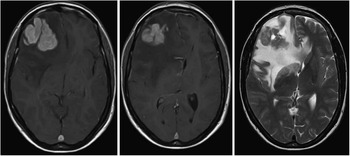
On admission, neurological examination revealed no focal deficits and physical examination was unremarkable. Psychiatric exploration yielded full orientation, no cognitive deficits, no delusions or thought disturbance, but low mood and low energy without suicidal thoughts. Laboratory results, chest X-ray, abdominal ultrasound and electrocardiogram were all within normal limits. Psychiatric consultation confirmed the provisional diagnosis of a severe depressive disorder, and thus ambulant psychiatric therapy was considered. Before discharge, however, her son reported weird actions of his mother. First example: his mother had prepared breakfast for herself and her daughter and waited for her daughter for several hours, although the daughter resided several hundred kilometres away and was not visiting her mother. Second example: while driving the car, the mother crossed several times into the opposite lane or drove straightforward on curvy roads. In order to exclude a somatic disorder, the patient was admitted. Brain magnetic resonance imaging yielded a single, large contrast-enhancing intracerebal lesion with massive perifocal oedema in the right frontal lobe (Fig. 1). Neurosurgical resection revealed a highly malignant diffuse large B-cell lymphoma. Further oncological work-up excluded any extracerebral manifestation. Combined chemotherapy with rituximab, methotrexate, cytarabine and thiotepa was followed by autologous stem cell transplantation. Follow-up after 1 year showed no relapse. The depressive symptoms dissolved shortly after operation and did not return even without anti-depressive medication.
Brain magnetic resonance imaging (MRI) on admission showing a single large contrast-enhancing intracerebal lesion (left, middle) with massive perifocal oedema (right) in the right frontal lobe.

Discussion
Worldwide, depression is a seriously disabling public health problem of very high prevalence (Reference Kessler, Berglund and Demler3). Major depressive disorder has a 12-month prevalence of 6.6% and a lifetime prevalence of 16.2%, is twice as common in women as in men and causes considerable impairment (Reference Kupfer, Frank and Phillips4). Overdetection and underdetection are important factors that should be considered to ensure the appropriate diagnosis and management of clinical depression (Reference Tyrer2).
The diagnostic criteria for depressive episodes (F32) according to the ICD-10 Classification of Mental and Behavioural Disorders is purely clinically based on an agreed list of three key symptoms and seven associated depressive symptoms (1). However, the category F06 includes miscellaneous conditions causally related to brain dysfunction because of primary cerebral disease. The decision to classify a clinical syndrome is supported by (a) the evidence of cerebral disease, (b) a temporal relationship (weeks or a few months) between the development of the underlying disease and the onset of the mental syndrome, (c) recovery from the mental disorder following removal or improvement of the underlying presumed cause and (d) the absence of evidence to suggest an alternative cause of the mental syndrome (such as a strong family history or precipitating stress) (1).
As shown in our case report, a differentiation between a severe depressive episode (F32.2) and an organic depressive disorder (F06.32) in the clinical setting might be challenging. Our patient presented all typical symptoms of a depressive episode and she had no focal neurological deficit. Only the subsequent report of her son questioned our provisional diagnosis of a ‘simple’ severe depressive episode. Even the presence of a temporal link between her psychosocial stress factors (separation of partner, loss of job) argues more against an organic depressive disorder as here the absence of these factors is required.
Therefore, neuroimaging may help arrive at the correct diagnosis in a patient presenting with psychiatric symptoms, as sometimes patients with organic brain lesions in neurologically silent brain areas might present only with psychiatric symptoms (Reference Masdeu5). Neuroimaging is routinely used in the workup of patients with psychotic disorders because lesions of the frontal or temporal lobes, most often tumours, can present with psychosis (Reference Bunevicius, Deltuva, Deltuviene, Tamasauskas and Bunevicius6). Often, brain tumours can be neurologically silent for a sufficient period of time and manifest as psychiatric disorders. Therefore, neuroimaging studies are essential when atypical changes in mental status or neurologic symptoms and signs develop (Reference Bunevicius, Deltuva, Deltuviene, Tamasauskas and Bunevicius6). In addition, current guidelines also state that organic causes, especially pathologies of the brain, have to be excluded in the first manifestation of unipolar depression (7). There are only a few reports on depression as the primary symptom of intracerebral pathology. For example, in one case, a 65-year-old man was referred for psychiatric assessment of a depressive illness associated with intermittent vomiting. No organic disorder was identifiable after the initial clinical examination and extensive investigations. A primary lymphoma involving the limbic system was eventually detected on repeat computed tomography scan (Reference Fisher and Harper8).
Establishing the correct diagnosis gains more importance, as primary central nervous system lymphoma is a rare and aggressive lymphoma with a molecular biology and genetic profile that appears to be distinct from other types of diffuse large B-cell lymphoma. The median survival with new therapeutic strategies has significantly improved after high-dose methotrexate-based combination chemotherapy and more advanced treatment including rituximab and stem cell transplantation (Reference Gallop-Evans9).
The neuroanatomical background of major depressive disorders comprises dysfunctional frontal neural systems including those that support emotion processing, reward seeking and regulate emotion (Reference Kupfer, Frank and Phillips4). A meta-analysis of several neuroimaging studies of major depressive disorder identified two neural networks that are of importance to the illness and involve frontal structures (amygdala and medial prefrontal cortex, dorsolateral prefrontal cortex) (Reference Fitzgerald, Laird, Maller and Daskalakis10).
In conclusion, the differentiation between a ‘non-organic’ depressive episode and an organic depressive disorder on the basis of clinical grounds might be challenging (Table 1). Steps to reduce possible errors comprise a comprehensive medical history including from a third party and neuroimaging, especially in first or atypical manifestation of depressive disorders as recommended in latest guidelines (7).
Groups of organic diseases leading to depressive episodes without or only with slight neurological symptoms at disease onset

CSF, cerebrospinal fluid; CT, computer tomography; MRI, magnetic resonance imaging.
Acknowledgement
The authors thank Dr Viermetz for the MRI images.
Ethical Consideration
Patient gave informed consent.
Conflicts of Interest
None.