

Readiness for change (or treatment readiness) is a core concept of many contemporary offender rehabilitation programs. It is the foundation of other programs aimed at reducing or eliminating troubling or risky behaviours in young people and adults, such as smoking, drug use, and weight gain (see e.g., Gideon, Reference Gideon2010; Tanielian et al., Reference Tanielian, Jaycox, Paddock, Chandra, Meredith and Burnam2009).
Achieving behaviour change is a complicated process because change is complex, dynamic, nonlinear, and not entirely predictable. Because readiness for change and successful program outcomes are dependent on other concepts, such as motivation, self-efficacy, problem-solving, and goal-directedness, many researchers have been drawn to transtheoretical models. Arguably, the first such model was developed by Prochaska and DiClemente (Reference Prochaska and DiClemente1982) and focused on processes that individuals use independently to change their troubling behaviours. The Prochaska and DiClemente model has been applied to a wide range of health-related and addictive behaviours (Prochaska, Norcross, Fowler, Follick, & Abrams, Reference Prochaska, Norcross, Fowler, Follick and Abrams1992) including exercise (Marcus, Selby, Niaura, & Rossi, Reference Marcus, Selby, Niaura and Rossi1992), eating disorders (Rieger, Touyz, & Beumont, Reference Rieger, Touyz and Beumont2002), drug and alcohol use (Brown, Melchior, Panter, Slaughter, & Huba, Reference Brown, Melchior, Panter, Slaughter and Huba2000), mental health (McConnaughy, DiClemente, Prochaska, & Velicer, Reference McConnaughy, DiClemente, Prochaska and Velicer1989), domestic violence (Begun, Shelley, Strodthoff, & Short, Reference Begun, Shelley, Strodthoff and Short2001), organisational change (Prochaska, Reference Prochaska, Snyder and Ingram2000), psychotherapy (Petrocelli, Reference Petrocelli2002), and offender rehabilitation (Williamson, Day, Howells, Bubner, & Jauncey, Reference Williamson, Day, Howells, Bubner and Jauncey2003).
Prochaska and DiClemente's (Reference Prochaska and DiClemente1982) model comprised four stages: precontemplation, contemplation, action, and maintenance. An intrinsic component of the stage construct is its developmental and recursive nature, which typically involves between three and seven cycles before long-term maintenance of the desired change is achieved (Begun et al., Reference Begun, Shelley, Strodthoff and Short2001; Prochaska, DiClemente, & Norcross, Reference Prochaska, DiClemente and Norcross1992). Periodic interruptions can affect progress when program participants return to previous stages before moving forward again. Relapse is not seen as failure but a predictable pattern in the change process. This allows any relapse to be reframed, viewed as a learning opportunity, and made available for refining future change and maintenance.
Other researchers have examined the context in which change occurs. For example, Burrowes and Needs (Reference Burrowes and Needs2009) conceived a Context of Change model that involves the individual's internal context, catalysts for change, and the environment in which change is to occur. The internal context includes expectations, self-perceptions, attachments, coping styles, and demographic factors, such as age, sex, cultural background, education, and income. These factors alone or in combination affect motivation and readiness for change. Change catalysts (the second factor) provide momentum for change and include cultural events, relationships, and engagement with components of a behaviour change program or process. Burrowes and Needs argued that a number of catalysts are likely to contribute to change events, such as components of a rehabilitation program that promote engagement, the delivery of the program that focus on goals that are relevant to the individual, and the competence and personal qualities of the therapist.
The environment of change is the third factor. This includes social and cultural environments, politics, and economics that effect change processes, such as unsupportive staff, family, and friends who might ambush change. For example, rehabilitation programs conducted in prisons can be affected by overcrowding, bullying by other inmates, and staff shortages. Burrowes and Needs (Reference Burrowes and Needs2009) argued that it is important to assess both the real and perceived impact of each factor alone and in combination.
Most models of behaviour change recognise barriers that can limit the effectiveness of behaviour change programs. Burrowes and Needs (Reference Burrowes and Needs2009), for example, identified 10 perceived obstructions: the importance of change in comparison to conflicting goals; need for change; personal responsibility for change; cost benefits of change; sense of urgency to change; personal ability to change; personal ability to maintain change; costs associated with the means to change; the suitability and efficacy of the means to change; and the practical realities of change including limitations imposed by transport, health, time, and finances. Chambers, Eccleston, Day, Ward, and Howells (Reference Chambers, Eccleston, Day, Ward and Howells2008) also referred to a less specific set of obstructions that include self-centred attitude, thoughts, and beliefs that included perceptions about the ownership of responsibility for the problems being experienced. While differences in focus exist, there is general agreement among researchers that effective program implementation requires the removal of barriers that are common in all behavioural domains.
Generating and maintaining participants’ motivation, and developing social and problem-solving skills and self-efficacy are features common to most interventions. The use of games and simulations, activities that focus on goal-identification, problem-solving, and the exploration and development of personal strengths are key inclusions. In one intervention that emphasised these change-promoting components, Czuchry, Sia, and Dansereau (Reference Czuchry, Sia and Dansereau2006) reported higher levels of treatment readiness, engagement, and post-treatment success in participants who experienced an enhanced program (containing the aforementioned components) when compared with others who received a standard treatment (involving counselling group experiences, work-related and transitional activities).
While much of the research on readiness for change and change outcomes has dealt with adult populations, youths have not been completely overlooked. A recent study by Slesnick et al. (Reference Slesnick, Bartle-Haring, Erdem, Budde, Letcher, Bantchevska and Patton2009) focused on runaway adolescents who engaged in high levels of substance abuse. Slesnick et al. drew attention to both internal and external influences that affected program success. For example, they reported low participant motivation to alter life patterns and behaviours, although young people who were heavy substance users were more likely to modify their behaviours than those who were light substance users. Unfavourable family dynamics were linked to program effectiveness as were external pressures from family members and the courts, both tending to influence engagement and program success unfavourably.
The significance of self-perceptions has been raised by a number of authors studying young people's behaviour (see e.g., Carroll, Houghton, Durkin, & Hattie, Reference Carroll, Houghton, Durkin and Hattie2009; Lopez & Emmer, Reference Lopez and Emmer2002). In the context of readiness for change, Lopez and Emmer suggested that adolescent males who have engaged in violent crime hold views about their manliness (i.e., their idealised masculine role) that are sustained more successfully through violent acts than through conventional, socially acceptable practices (e.g., contributing positively to one's family). Beliefs such as this can have a deleterious effect on treatment outcomes because the minimisation of harm to others and the perceived loss of personal power over others are regarded as emasculating. Lopez and Emmer argued that successful treatment requires consideration of ways in which young people can demonstrate and experience their manliness in socially appropriate ways.
Chambers et al. (Reference Chambers, Eccleston, Day, Ward and Howells2008) also discussed the loss of personal power or status in their consideration of treatment readiness. They concurred with Lopez and Emmer (Reference Lopez and Emmer2002) that the perception of freedom to act in certain ways or to hold certain beliefs can limit treatment success. When actions are prohibited or beliefs challenged, individuals enter a motivational state that seeks to re-establish pre-existing dispositions, and these in turn stand in opposition to treatment goals. This can lead to high drop-out or no-show rates, resistance to therapy and program objectives, and the perception of a coercive intent on the part of the therapist and program.
For adults and teenagers, motivation is arguably the most important internal factor in successful program outcomes. Intrinsic motivation facilitates the change process and promotes goal-directed behaviour (Chambers et al., Reference Chambers, Eccleston, Day, Ward and Howells2008). Gideon (Reference Gideon2010) stated that true motivation is characterised by compliance with treatment program requirements. He argued that an essential element in motivation is the recognition that a problem exists, and this is the link to treatment readiness. Human behaviours are not necessarily intrinsically motivated, demanding that any therapeutic environment must stimulate motivation. His comments were presented within the context of substance abuse with a key indicator of motivation as the desire to change one's life.
Gaining employment can be an important goal for adults and young people who are motivated to change their life patterns, although there are critical environmental factors that affect success. Gideon (Reference Gideon2010) reported that finding employment was one of the key objectives of participants in his study (recovering addicts and ex-prisoners) and that comments related to finding employment and applying for jobs accounted for about 26% of the content of interviews conducted. He reported that those who rehabilitated their lives were not overly particular about the jobs they could get, but highly motivated to find legitimate employment.
Employment plays a major role in most people's lives. It provides a purpose in life and financial security that underpins social and recreational endeavours. For young people, having a job brings status and recognition that one is participating in the adult world and making it ‘on my own’. Similar comments accounted for another 38.5% of Gideon's (Reference Gideon2010) interview content. Such changes in one's life align with barriers identified by Burrowes and Needs (Reference Burrowes and Needs2008), specifically about achieving changes in the short term and maintaining changes over time; often difficult to sustain without a regular income.
Achieving and maintaining positive program outcomes are important because they relate directly to self-efficacy. Self-efficacy encapsulates aspects of treatment readiness and provides recognition that an individual has not only learned from their experience but also has gained mastery over significant aspects of their life.
Readiness for change measures have been used for some time although they are not consistently employed as indicators of progress during the course of treatment or rehabilitation. While a strong relationship has been found between readiness for change and treatment outcomes (see e.g., Joe, Simpson, & Broome, Reference Joe, Simpson and Broome1998), there are inconsistencies in the literature. Czurchry et al. (Reference Czuchry, Sia and Dansereau2006), for example, used two measures of client self-evaluation and reported that probationers in their study lost some of their original readiness (or motivation) for treatment over the course of their program. In a more recent study, Day et al. (Reference Day, Howells, Casey, Ward, Chambers and Birgden2009) also reported the use of self-report measures in the treatment context of correctional institutions. They found that scores derived from their Violence Treatment Readiness Questionnaire pre and post a relapse prevention program were more strongly associated with treatment engagement and treatment satisfaction than data generated from a semistructured interview. They reported that treatment readiness increased over the duration of the treatment program, and those participants with high readiness for treatment demonstrated positive changes in attitudes, motivation, offending beliefs, and self-efficacy.
The project reported in this article draws together the issues outlined above within the context of a treatment program for young people who were at risk of involvement with the juvenile justice system. The focus of this article is not group data, but the outcomes achieved by six young people aged 13 to 17 years in Mindfields®, a 6-week program that aims to provide culturally responsive interventions to promote safety and eliminate harm among youths. Facilitators invite young people involved in the program to reflect on their current situation and make positive changes in their lives. At its core, Mindfields® addresses self-regulation with supported guidance and involves establishing and striving to achieve weekly self-set goals.
Herein, we draw attention to the importance of readiness for change and aspects of the Burrowes and Needs (Reference Burrowes and Needs2009) change model. We have collected qualitative data from the program facilitators and quantitative data from the Mindfields® Assessment Battery (MAB; Carroll, Hemingway, Ashman, & Bower, Reference Carroll, Hemingway, Ashman and Bower2011). These data allow for an exploration of potential influences on readiness for change and program success. They have been integrated in six case studies to address the following questions:
• To what extent does readiness for change influence individuals’ responses to the Mindfields® program?
• Are there factors external to the individual that affect achieving and maintaining short-term program successes?
• To what extent does goal-achievement lead to the perception of self-efficacy and personal control over one's behaviour?
Method
Participants
Inclusion criteria for participation in the program consisted of the following: 12 to 18 years of age; willingness to engage in the program to change their current life path (identified through prescreening interviews); and a history of challenging and risky behaviour (identified through school and other records). Exclusion criteria were kept to a minimum; namely, a history of severe antisocial behaviour (e.g., no serious crimes against persons or sexual assault convictions) and/or intellectual disability.
Purposive sampling was involved and this limited the number of young people qualifying for involvement in the project. That is, all adolescents were referred by a guidance officer, teacher, or youth worker at the time of participation from a range of educational settings, including alternative education and youth justice centres in metropolitan Brisbane, Australia. One participant lived in a rural community.
Thirty-eight young people began the program. Fourteen did not complete all six sessions for a range of reasons. Of those who did, three were chosen because a satisfactory quantum of qualitative data existed, and each showed improvements on at least four of the six MAB tests (the changers). Three were also chosen because a satisfactory quantum of qualitative data existed, but they showed no improvement on any of the MAB tests, or on one only (the nonchangers). A brief description of the six participants is provided below. Names have been changed to preserve anonymity.
The Changers
Mary was aged 15 years at the time of the study. She lived in a nuclear family with her mother, father, one brother, and two sisters in a lower socio-economic suburb. Her interests included football and cars. She had no past or present mental health issues and no history of trauma, but had used cannabis weekly and alcohol monthly. She had committed her first offence at the age of 15 years, which involved shoplifting. She had not been in detention but had some cautioning and conferencing. She had no literacy difficulties, but did have numeracy difficulties, having only completed school to Year 7. She has average IQ, displays good common sense, and is very streetwise.
Brian was 15 years old at the time of the study. He is from a single-parent family (with his mother) in a lower socio-economic suburb and has a child protection history. He has a diagnosis of attention deficit hyperactivity disorder, substance-related disorders, and had a suicide risk assessment. He had used alcohol and solvents on a monthly basis, and marijuana on a daily basis. He committed his first offence (property-related) at age 12 years. He had spent no time in detention, but had been on community-based orders. He had literacy difficulties.
Stephen was 13 years old when the study began. He had lived in several foster family homes for much of his life. He had interests in football and Scouts. He reported no mental health issues and no history of drug taking. He had experienced several traumas, including the death of a close family member and separation from his family, has a child protection history and child protection order. Stephen committed his first offence (public nuisance) at age 12 years. He had never been in detention and had no cautioning or conferencing. He reported no literacy or numeracy difficulties and completed school to Year 9. At the commencement of the study, Stephen attended an alternative education program on a part-time basis. He was streetwise, had average IQ, and displayed good common sense.
The Non-Changers
Callum was aged 17 years at the commencement of the study. For the previous 3 years he had lived with his grandmother in a lower socio-economic suburb. His interests were music and sport. He had a diagnosis of schizophrenia and psychosis and a history of drug use, predominantly alcohol and cannabis. He had no history of offending behaviour. Callum had no school-related difficulties and was completing Year 11 at the time of the study. He had good common sense and was very streetwise.
Jacob was 17 years old at the time of the study. He lived in a regional town in central Queensland. His interests were primarily motorbikes and cars. He had no mental health or trauma history. He used drugs on a regular basis, reporting weekly usage of alcohol. He committed his first offences at age 16 years, involving motor vehicles and offences against property. His offending had always been in a social context with peers. He had spent no time in detention but had been on community-based orders and was on probation at the time of the study. He had no literacy or numeracy difficulties and completed school to Year 9. He had average IQ, displayed good common sense, and was streetwise.
Ryan was aged 14 years when the study began. He lived in a single parent family with his foster mother and older sister in a lower socio-economic suburb. His interests were animals and cooking. He had no mental health issues, but had experienced the death of a close family member and was subject to a child protection order. He had no history of drug use. He committed his first offence against property and people at age 14 years. He had not appeared in court over these offences, had spent no time in detention, and had not been involved in any cautioning, conferencing, or community-based orders. He had no literacy or numeracy difficulties and completed school to Year 9. He had average IQ, good common sense, but was not very streetwise.
Intervention
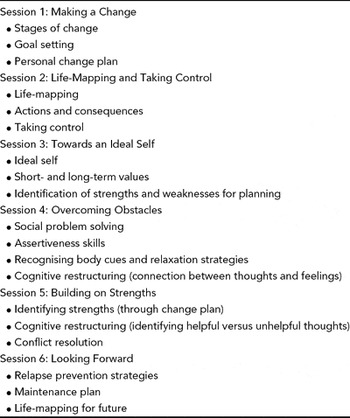
Mindfields® is based on several theoretical and empirical foundations (Bandura, Reference Bandura and Bandura1986; Cloward & Ohlin, Reference Cloward and Ohlin1960; Gottfredson & Hirschi, Reference Gottfredson and Hirschi1990; Moffitt, Reference Moffitt1993; Zimmerman, Reference Zimmerman, Boekaerts, Pintrich and Zeidner2000). The program has six treatment sessions presented over 6 weeks, with administration of pre- and post-intervention testing using the MAB. Each session is 2 hours, using a one-on-one approach: one participant, one facilitator (see Table 1).
Brief Outline of Each Session of the Mindfields Program

The skill development component is supported through interactive DVDs in which a number of nationally known sportspeople, musicians, and local identities discuss hardships they have experienced and offer insightful encouragement to participants. In addition to the skill components, half of each session focuses on the young person's self-set goals. During Session 1, and with guidance from facilitators, participants nominate a positive, realistic, personal, relevant, and operationally defined goal that could be achieved over 6 weeks and toward which they could work during and between sessions (e.g., Brian wanted to start a Technical and Further Education course in motor mechanics). If the young person's self-set goal is unattainable in 6 weeks, then smaller goals are identified that will lead to achievement of the larger goal. Each participant receives a journal in which they write notes from sessions, complete exercises, insert handouts, and record any other information important to them during the program. At the end of each session, participants are rewarded for efforts and reinforced for appropriate participation by way of a certificate of achievement.
Mindfields® Facilitators
A facilitator worked with each participant in all six sessions. Facilitators were professional staff from educational settings, such as guidance officers, teachers, and youth workers. Selection criteria for facilitators were: professional qualification in working with young people (e.g., degree in education, social sciences, human services, social work, psychology, guidance counselling); relevant case management experience in implementing interventions in a related field; experience in working with young people with challenging and risky behaviour; ability to build rapport with young people; basic understanding of adolescent development; basic information technology literacy; and basic administrative skills, including record keeping and report writing.
Facilitators attended a 2-day training workshop conducted by the research team. On Day 1, background information was given about the program, the Mindfields® model, overview of the Mindfields® manual, discussion about key people involved, a review of the assessment process (participant profile, interview, and MAB), and an identification number for data coding. Day 2 involved a step-by-step explanation and review of each session, with facilitators completing examples of activities and using the interactive DVDs, and a review of data collection and evaluation procedures.
Pre- and Post-Intervention Measures
The Mindfields®Assessment Battery is an interactive, computerised comic book that uses graphics, voiceovers, and acted videotaped scenarios to promote engagement. It accommodates low literacy levels and overcomes difficulties associated with traditional paper-and-pencil tests (e.g., interest level) that can disadvantage youths from low socio-economic and Indigenous backgrounds. Indigenous young people recorded approximately 60% of the voiceovers to ensure consistency with cultural identity of Indigenous youths. Four measures of self-regulation were included, namely, goal setting, social competence, self-regulation, and life satisfaction. A brief measure of delinquent activity is included to provide a snapshot of the frequency of involvement in delinquent behaviour. The Changing My Life Scale is also included to describe the participant's readiness for change.
Goal Setting (Carroll, Durkin, Hattie, & Houghton, Reference Carroll, Durkin, Hattie and Houghton1997). This measure was based on research that investigated the goal orientations of three groups of adolescents (delinquent, at-risk, and not-at-risk). The first section requires the participant to type in any goals they may have. Goals nominated by participants are categorised into corresponding goal categories including: educational, career, interpersonal, delinquency, freedom-autonomy, self-presentation, physical, and reputation. The participants rank their goals in order of importance. Section 2 introduces three questions about their most important goal: ‘How long do you think it will take you to achieve this goal?’ ‘How much control do you have in achieving this goal?’ and ‘How likely do you think it is that your goal will come true?’ Section 3 consists of nine statements about their commitment to achieving their most important goal. Responses are recorded on a 4-point Likert-type scale ranging from 1 = strongly disagree to 4 = strongly agree; for example, ‘I really want to get this goal.’ The goal commitment score is the sum of the nine items with appropriate reverse scoring for six items. The higher the score, the greater is the goal commitment. Carroll et al. (Reference Carroll, Hemingway, Ashman and Bower2011) reported Cronbach's alpha as α = .81.
Adolescent Problem Inventory — Modified. This measure is an adaptation of the Kuperminc, Allen, and Arthur (Reference Kuperminc, Allen and Arthur1996) instrument. It consists of six hypothetical situations about conflicts with peers, parents, and teachers, and situations in which adolescents might be tempted to engage in acts of delinquency. These include being asked to deliver drugs and receive drugs and money in return, and giving advice to a female friend (with strict parents) who has discovered she is pregnant. Participants respond verbally as if they are talking directly to the person in the situation. Facilitators code the responses of the participants on a 4-point scale from very competent or very effective to very incompetent or very ineffective. Maximally competent responses are those that would most likely resolve the conflict and reduce the likelihood of its recurrence. Total scores were calculated by summing ratings across all items with higher scores reflecting greater competency in social skills. Previous research has found an internal consistency of α = .79 for males, and α = .85 for females, and adequate concurrent validity (r = .93; Leadbeater, Hellner, Allen, & Aber, Reference Leadbeater, Hellner, Allen and Aber1989).
Short-Form Self-Regulation Questionnaire (SSRQ). This is a 31-item instrument based upon the self-regulation questionnaire (SRQ) developed by Carey, Neal, and Collins (Reference Carey, Neal and Collins2004). It is designed to measure the generalised ability to regulate behaviour in the short term to achieve desired outcomes in the future. Participants indicate their choice on a 4-point scale ranging from 1 = strongly disagree to 4 = strongly agree. Item examples are ‘I put off making decisions’ and ‘I learn from my mistakes’. A total score is calculated by summing responses to all items, with higher scores indicating greater self-regulation. The SSRQ correlated highly with the original 63-item SRQ r = .96, and showed good internal consistency (α = .92) and convergent and discriminant validity (Neal & Carey, Reference Neal and Carey2005).
Life Satisfaction Scale for Problem Youth. (LSSPY; Donohue et al., Reference Donohue, Teichner, Azrin, Weintraub, Crum, Murphy and Clayton Silver2003) assesses adolescents’ self-reported satisfaction in key areas of their lives. Thirteen items measure adolescents general life satisfaction and happiness using a 10-point scale from 1 = unhappy to 10 = happy; namely, friendships, family, school, employment/work, fun activities, appearance, sex life/dating, use of drugs, use of alcohol, money/material possessions, transportation, control over one's own life, and overall life satisfaction. There are three subscales: social satisfaction, satisfaction with external obligations, and substance use satisfaction. Scores for each subscale are calculated by averaging items, with item 13 indicating overall life satisfaction; high scores on each of the subscales indicate satisfaction. The LSSPY has good internal consistency α = .74 and criterion-related validity (Donohue et al., Reference Donohue, Teichner, Azrin, Weintraub, Crum, Murphy and Clayton Silver2003).
The Modified-Adapted Self-Report Delinquency Scale. (mod-ASRDS; Carroll, Durkin, Houghton, & Hattie, Reference Carroll, Durkin, Houghton and Hattie1996) is a 12-item short form of the Adapted Self-Report Delinquency Scale. The mod-ASRDS was constructed by including the three highest loading items for each of four factors (school misdemeanours, soft drug use, stealing offences, and property abuse) that represent the more common adolescent offences found in a sample of 1,250 young Australians aged 12 to 17 years (Carroll et al., Reference Carroll, Durkin, Houghton and Hattie1996). Item examples are: ‘Have you in the past month, stolen money of $10 or more in one go?’ and ‘Have you in the past month, deliberately hurt or beat up someone?’ Participants respond according to a 4-point Likert-type scale: never, hardly ever, sometimes, and often. Scores for all items on the mod-ASRDS are summed (maximum = 48), with a high score being indicative of a young person engaging in delinquent behaviours. Carroll et al. (Reference Carroll, Durkin, Houghton and Hattie1996) found the factorial structure and reliabilities to be robust, with the majority of factors exceeding alpha values of .70. Recent reliability analysis of the mod-ASRDS revealed good alpha levels (α = .81 to .85; Law, 2007). Internal consistency reported by Carroll et al. (Reference Carroll, Hemingway, Ashman and Bower2011) was α = .92.
The Changing My Life Scale. (CMLS) is a 28-item questionnaire by Carroll, Ashman, Bower, and Hemingway (Reference Carroll, Ashman, Bower and Hemingway2005) dealing with respondents’ readiness to change their life course. Responses are recorded using a 4-point Likert-type scale ranging from 1 = strongly disagree to 4 = strongly agree, with high scores indicating readiness for change. Carroll et al. (Reference Carroll, Hemingway, Ashman and Bower2011) reported Cronbach's alpha coefficients as follows: self-satisfaction, α = .73; intentionality, α = .83; need for assistance, α = .63, and self-assurance, α = .74.
Qualitative Data
At the end of each session, the facilitator made notes on the participant's demeanour during the session and also his/her involvement in the program activities. Notations were made about the young person's response to the session, including cooperation, motivation, readiness to changes, goal-setting and attainment, self-control, and problem-solving. Comments were also made about the young person's achievements during the previous week, any obstacles that were encountered, how they were resolved or overcome, and the extent to which the young person benefitted from the session.
Procedure
Consent to participate was given by the young people and their parents or guardians. Facilitators collected consent forms on their first site visit and coordinated day and time preferences for subsequent sessions. Facilitators managed the coordination of the program (pre-intervention assessment session of approximately 30 minutes, six program sessions, and post-intervention assessment). MAB data were saved digitally. All information pertaining to participants were de-identified, collated by the research team, and entered into an SPSS database. Following the post-intervention assessment, all site-specific personnel, facilitators, support people, participants and members of the research team participated in a morning tea to acknowledge and congratulate the young people's efforts in developing new self-regulatory life skills through the program.
Results
Positive Changes for Participants During the Intervention
Mary
Mary started the program in a very positive way. She expressed a desire for change in her life and was clearly interested in finding ways of achieving this end. She engaged actively and was keen to begin the goal-setting process. Mary was ideally qualified for the program due to her high level of readiness for change. She quickly identified her primary goal, obtaining a job in one of the major supermarket chains. She seemed to be very excited about her goal and declared her commitment to persist as she was concerned that continuing along her current life path would eventually lead to involvement in the criminal justice system and, possibly, jail.
Mary's engagement across the sessions remained high. She cooperated well with the facilitator and was motivated to try all of the activities although some were more keenly explored than others. She did not persist long with the life mapping exercise on Day 1, finding it difficult to identify the significant events in her past and the effect that they had had on her later beliefs and actions. By the end of the second session, and with the facilitator's assistance, Mary completed an online application for part-time employment with a supermarket chain. Achieving this gave her considerable satisfaction and increased her motivation and sense of control over her life.
During the third week there were high and low periods. Mary attended a job interview at a fast-food outlet and began a structured work placement at a supermarket. A complication came as a result of boredom with the supermarket job. She decided to leave before finishing time one afternoon and concocted a story that she had to visit her grandmother in hospital. She left 3 hours early. Someone learned that she had lied and reported this to the manager. When she learned about the discovery, she planned another fabrication to cover up the initial lie in the event that she was questioned.
Mary and the facilitator devoted much of the next session to her dilemma and worked through a number of ways of dealing with the likelihood that she would be challenged. At the end of the session, she agreed that ‘honesty is the best policy’ and committed to admitting the deception. Mary also came to understand the wisdom of working diligently to obtain positive reports from work experience that might put her in a good position for permanent employment. This session proved to be a turning point. It provided Mary with a real problem-solving event and the discussion allowed her to understand the need for careful analysis of a situation, consideration of options, the likelihood of success, and the consequences of ill-considered choices. The problem-solving discussion also highlighted the need for measured reactions as Mary had a history of using aggression to resolve conflicts and situations in which she felt threatened.
The fourth week saw Mary achieve her primary goal: a position at a supermarket in the bakery department. She completed a number of shifts and was rewarded with her first pay. The facilitator provided considerable encouragement and reinforced the need to survive her probation period at the supermarket. This session included a reiteration of the problem-solving process and the need to persist through each step.
In the fifth session, Mary appeared tired and this was reflected in a drop in her enthusiasm for the various activities introduced by the facilitator, although she still responded positively throughout the session. She especially enjoyed the assertiveness activity and another that focused on budgeting, something to which she had never given any thought. She needed encouragement with budgeting as she rarely had much money to spend. When she did, she generally bought non-essentials almost as soon as she received money. After talking about her future she realised that she needed to work on saving for the future and spending money only on essential purchases.
While Mary was less enthusiastic during this session than before, she was still motivated to consider long-term goals and establishing herself in stable employment. She expressed considerable pleasure at having achieved her goal, and was proud that she had persisted with the program. She was a little vague about the future and had not given thought to a plan about a future career, and was not sure where she might seek help once the program finished. At the end of the session, Mary reflected on her performance over the six sessions and identified the positive changes that she had made. She attributed these to her commitment to change her life and the skills and strategies she had learned. She appreciated the need for goal-setting, working on achieving one objective at a time, the importance of honesty and hard work, and resisting the impulse to be aggressive when people acted in certain negative ways toward her.
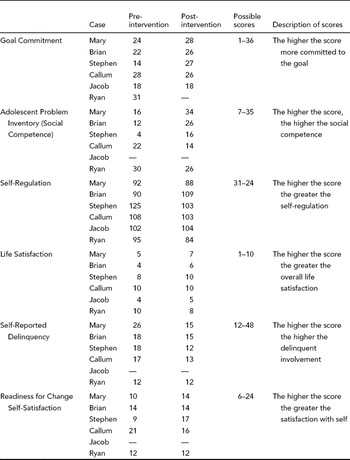
As can be seen in Table 2, Mary increased scores on goal commitment, life satisfaction in friendships, family, school employment, appearance, and things done for fun. There were also gains on the Changing My Life Scale, self-assurance, and social competence. Her self-reported delinquency scores also decreased.
Pre- and Post- Intervention Scores on the Mindfields Assessment Battery

Brian
Brian did not begin the program in a very positive way. He was reluctant to engage with the facilitator at the start, but became more talkative as the first sessions progressed. This session involved completing the MAB, and Brian's interest in computers encouraged him to participate. Overall, however, he seemed disinterested and not very cooperative during the sessions. He did not see a reason to change his life or participate in goal-setting activities. He wasn't able to identify any goals on which he might work. This seemed to Brian to be a fruitless activity.
His attitude changed in the second session. He appeared to be more motivated than in the first session, especially when he and the facilitator began to discuss goals, goal-setting, and how he could work towards achieving goals. Brian's interest in motor vehicles led him to consider a career as a mechanic, which he thought would help him to improve his literacy and numeracy. His goal to become a mechanic was broken into a number of steps that would allow him to learn more about that trade. He agreed that gaining work experience would help, and together with the facilitator drew up a plan involving short- and long-term goals to achieve this end. Brian suggested a homework task that would involve approaching a mechanical workshop to see if he could gain work experience. This led to a part-time job and the realisation of his first step in the process. Literacy and numeracy became an issue as his income meant that he would have to learn about budgeting and self-control.
Brian's motivation increased with each week. He became very willing to engage with the program activities and spoke readily about his identification with characters in the role-playing exercises who had to deal with conflict and risky situations. These sessions highlighted Brian's increasing awareness of goal-setting and the means of achieving goals in career and personal situations.
About midway through the program, attention was given to ways in which goals can be deconstructed into readily achievable stages. This led to a discussion about how adults locate work and the exploration of job-search potential. Brian's mother was following the program and had been very supportive throughout. She reported that Brian had made significant changes and was feeling very positive about the results.
By the end of the program, Brian's demeanour and behaviour had improved markedly when compared to the early sessions. He engaged willingly, was motivated by his successes, and was gaining confidence and self-efficacy. At the end of the program, Brian reported much greater awareness of the consequences of his actions and could see the value of learning from his mistakes and from unexpected events. He could follow through on plans, was persistent, and recognised the importance of setting goals. He reported much greater control over his life than before, was earning money through his part-time job, and was keen to start an apprenticeship. Curiously, the apprenticeship he ultimately negotiated was not in mechanics but at a printing business.
Overall, the program had a significant impact in Brian's life. He reported that he had no inclination to engage in any criminal activities and his life of crime was over. He still had some limited contact with his previous peer group, but was now very much aware of their negative influence and dedicated to ensuring that the successes he had experienced during the program would not be placed in jeopardy by succumbing to their influence. Brian's case worker reported that there had been a major turnaround in Brian's life. He also saw the benefits of his increased contact and involvement with Brian.
Brian's postintervention results on the MAB (Table 2) showed positive changes on goal commitment, social competence, and life satisfaction, with improvements in employment, money and material possessions, availability of transportation, and amount of control over what happens in life. There were also improvements in self-regulation and readiness for change, particularly in intentionality and need for assistance. There were decreases in self-reported delinquency.
Stephen
Stephen began the program in a very constructive way. He was cooperative, appeared motivated, and expressed a readiness to change the way in which his life was progressing. This led to discussions about goals, although he was not especially articulate in expressing the way he might achieve them. His primary objective was to move from part-time to full-time attendance at the alternative school and then full-time at a regular secondary school.
A range of foster placements had disrupted Stephen's early life. He had a history of aggression toward others and difficulty controlling his temper, especially when teased by peers. His homework objective for the first week was to think about the consequences of his behaviour and ignore those who teased him.
His second and third sessions were characterised by a marked negative reaction to the program. His first week had been especially stressful due to difficulties he experienced in his foster placement, at school, and with his peers. Therefore, he presented with very low motivation to work on the tasks with the facilitator, was uncooperative, moody, and hostile. He worked half-heartedly on the activities and was reluctant to talk about his intention to drop out of school.
Toward the end of the third session his mood improved and he again established direction about full-time school and was positive about goal-setting. He recognised that many of the frustrations he experienced were related to the dysfunctional way in which he responded to peer teasing. By the end of the third session, Stephen had regained some of the motivation and readiness for a change in his life that he expressed in the first session.
Session 4 marked the turning point in Stephen's program. The session started well and he expressed an interest in gaining control of his actions. He was impressed by the video presentation of a student who spoke on camera about how he had learned from his mistakes. These led him to express his fear that he had little control over his life, had been very unsuccessful at school, and could not see a way forward. The facilitator concentrated on building Stephen's confidence. He reported that Stephen's teacher had been very positive about his attitude and willingness in the classroom although Stephen recognised (again) that he did not cope well with the school environment and the teasing he received. Despite the emotions he revealed, he maintained his interest in overcoming these obstacles and attending school full time.
The final two sessions were very positive. The alternative school administration decided to allow him to attend full time. Their confidence in Stephen paid off handsomely. He had learned a number of self-control strategies that allowed him to ignore students who teased him in the fifth session, and was very responsive to learning ways in which he could evaluate the consequences of his behaviour. In both the fifth and sixth sessions he was very cooperative, highly motivated, and focused on goal-setting and goal-attainment.
The final session drew together the various aspects of the program. Stephen realised that the achievement of his goal to remain in school full time depended upon the skills he had learned during the program and by remaining focused on the goal. He expressed pleasure in what he had achieved, especially in solving problems associated with his social interactions with others. He stated that he was more confident than at the start of the program about facing new problems, and recognised the importance of gaining help from others in the changing life process. Importantly, he said that he had learned much and that his life will be better as a result of his new knowledge and skills.
Overall, Stephen's program had been very beneficial. He recognised the importance of self-control, containing his impulsivity, establishing achievable goals, determining how he could remain focused on the goals, and ways of systematically and persistently working toward their achievement.
Stephen's pre- and post-intervention results reported in Table 2 show positive changes on goal commitment, social competence, and readiness for change, with improvements in self-satisfaction and self-assurance. There were also positive changes in self-reported delinquency and life satisfaction, with improvements in school, money and material possessions, and appearance.
Neutral or Negative Changes During the Intervention
The foregoing descriptions show positive changes to three young people as a result of the Mindfields® program. Other participants also demonstrated positive changes in a number of areas including goal commitment, self-reported delinquency, life satisfaction, and on the Changing My Life Scale. These were not universally consistent across participants and this might have been at least in part due to the number of sessions they attended.
Several participants showed few, if any, positive changes on the pencil-and-paper instruments. We have selected three who reflect diversity in their reactions to, and behaviours during, the six sessions.
Callum
The facilitator reported that Callum's first session was characterised by moderate to high levels of cooperation and motivation, and an apparent readiness to change. As Callum had a history of difficulty maintaining self-control, social competence, and goal-setting, his chosen target goal related to controlling his temper.
Throughout the following five sessions, Callum and his facilitator worked consistently on anger management and strategies for diffusing elevated anger, such as using “Stop Think Do” strategies, removing himself from critical situations that would typically lead to aggression, modulating his voice when he began to feel angry, and the use of an Antecedent-Behaviour-Consequence (ABC) model (see Sukhodolsky, Kassinove, & Gorman, Reference Sukhodolsky, Kassinove and Gorman2004).
Callum's reactions to the sessions became increasingly positive. He experienced success in using the anger management strategies introduced during the sessions, such as walking away when someone begins to annoy him, and isolating himself to a quiet area. However, he continued to report difficulties dealing positively or neutrally with peers who sought to aggravate and taunt him. While Callum participated positively throughout the program and while his facilitator could see changes in his behaviour, Callum was subject to a considerable degree of stress at school, and this appears to have sabotaged his self-control efforts.
A significant number of Callum's responses to the various pencil-and-paper tests showed a decline, or no change, from the pre- to post-program testing. While his pre- and post-intervention goal remained the same — ‘to get his Year 12 certificate’ — he also identified anger management as a difficulty on which he wanted to work. Despite this, there was a decrease in goal commitment and also social competence scores as shown in Table 2. No changes were noted in life satisfaction, self-regulation, or readiness for change.
Jacob
Jacob began his first session in a very positive way. He was highly cooperative, motivated to participate in the program, and anticipated positive outcomes in terms of his readiness to change and willingness to work toward his target goal, which was gaining an apprenticeship. He remained cooperative and positive in his approach throughout the program, although his facilitator noticed that his efforts toward achieving his goal gradually declined over the following 5 weeks.
Jacob discovered that the prospect of gaining an apprenticeship was not good and amended his goal to finding a job in the hope that an apprenticeship would become available once he had some industry experience. With the facilitator's help, Jacob developed a resumé and delivered copies to a number of prospective employers, although none of his approaches proved successful, at least not during the course of the Mindfields® program. While these setbacks might have reduced Jacob's enthusiasm, he worked persistently with the facilitator, and in the last session he and his facilitator prepared and ran a mock employment interview to give Jacob experience in dealing with questions and presenting himself in the best possible way to a potential employer.
Although Jacob did not achieve his goal during the program, he developed several useful skills, including preparing and revising his resumé, and an interview strategy and skills. His attitude toward the program and his participation enabled him to realise his own potential and improve his self-confidence and determination.
Jacob's pre- and post-intervention results on the MAB in Table 2 showed some modest changes, such as increased life satisfaction, with improvements in recreation and leisure, his appearance, and the amount of control he has over what happens in life. There were also decreases in use of drugs and alcohol. There were no changes in goal commitment, impulsivity or self-regulation.
Ryan
Ryan began the program with little enthusiasm. He was very disruptive, uncooperative, and found it difficult to concentrate and maintain interest in the various session activities. He struggled to generate a plan for changing his life even when the facilitator gave him considerable support and prompting. Ryan eventually expressed interest in working with animals and this became his target goal for the program.
Over the course of the program, Ryan appeared to lack any incentive or willingness to change his current life pattern. His approach to the homework exercises that involved work experience at an animal refuge centre reflected his general lack of commitment to gain experience or even make useful contacts that might lead to casual employment. He attended the animal refuge on one occasion and took photographs of his favourite animals, but reported very low motivation and ‘forgot’ to talk to the supervisor about attending extra volunteer hours, a strategy that he and his facilitator had decided would be a good one to confirm his commitment as a volunteer.
Ryan's cooperation, motivation, and mood during the sessions fluctuated greatly. For example, during the second session he was very cooperative and appeared engaged. He interacted with the computer-based activities enthusiastically, but during the following session stated that he found the program extremely boring and was reluctant to participate, even in activities that he had enjoyed the previous week. Ryan experienced difficulties with many of the concepts presented during sessions. He found it difficult, for example, to think and express ideas about himself and his aspirations, and was extremely reluctant to respond to questions and prompting, especially about his past. Ryan was also very resistant to any activity that involved writing, drawing, or answering questions, stating that he hated such activities. This meant that he would not engage in any activity that involved worksheets or keeping a journal that might allow him to reflect on the program and what he was learning.
While Ryan's experiences with Mindfields® was arguably one of the least productive of the group, he made some progress after much prompting and guidance by his facilitator. For example, he had some contact with animals at the refuge, did an internet search for volunteer positions at animal shelters, and increased his awareness of available work. Ryan also gained some knowledge about how to manage his low motivation, and he and his facilitator spent some time discussing ways in which he might evaluate the cost and benefits of different courses of action when his plans were not leading to successful outcomes. He also increased his awareness of the importance of actions and consequences and put these in the context of past behaviour and its consequences.
Ryan's pre- and post-intervention scores showed that his life satisfaction had decreased, with decreases in friendships, employment, recreation and leisure, money and material possessions, and control over his life. There was no change in his MAB scores on impulsivity, self-regulation, and social competence. His scores on the Changing My Life Scale also declined on the intentionality and self-assurance sub-scales, with self-satisfaction and need for assistance remaining the same.
Discussion
This study raises a number of issues about the complexity of the support needed to assist young people to reorient their life paths, establish relevant goals, and develop and implement strategies to achieve their objectives. While researchers such as Prochaska and DiClemente (Reference Prochaska and DiClemente1982) and Burrowes and Needs (Reference Burrowes and Needs2009) have described models outlining the key factors affecting life changes, the practicalities of motivating young people to address life-changing actions and strategies remains a significant practical hurdle. It has been argued that readiness for change is a prerequisite to positive programmatic success; however, our study suggests that this might not be the most significant factor in achieving life change, at least if the prediction is based upon test scores such as those used in the present study.
In this study we looked for links between readiness for change and potentially related concepts measured by the MAB. Although we divided the participants into two groups (those who improved their scores on MAB measures and those who did not), perusal of Table 2 would suggest that there appears to be limited predictive value in pre-intervention scores of the six participants. In other words, the scores of the three participants who achieved their goals give little, if any, indication of the potential success of their involvement in the Mindfields® when compared to those whose lives remained unaffected by the intervention. Hence, based on the four readiness-for-change measures in the MAB, the answer to our first research question would appear to be: ‘Very little.’
To answer our second question we draw on the qualitative data provided via the facilitators’ diaries. While we accept that Mary, Brian, and Stephen made gains on several of the MAB measures pre- and post-intervention, it is the qualitative data that provides clues to their successes. All of these three young people appeared motivated to change their life direction, willing to engage in the program activities, and take steps toward achieving their goals. All were rewarded by fortuitous circumstances that sharpened their focus on goals.
Mary found a part-time job and gained first-hand work experience plus a salutary lesson in work ethics and honesty. If she had not gained employment early in her program, the outcome of her experience might have been quite different. Brian was not especially motivated at the commencement of his program, but this changed significantly once his attention focused on his part-time job in a motor workshop. Stephen was very positive from the start and ready for change. His break came when he was allowed to attend his alternative school full time, which was the precursor to attendance at a mainstream school.
In contrast, Callum and Jacob did not get the breaks similar to those from which Mary, Brian, and Stephen benefitted. Both identified and developed life skills, but they did not achieve encouragement from an early accomplishment. It is important to note that Callum's and Jacob's scores on Goal Commitment, Social Competence, Impulsivity, Self-Regulation, and Life Satisfaction were not inconsistent with those of Mary, Brian, and Stephen. What appears to set Callum and Jacob apart is the lack of a concrete, practical outcome that would demonstrate self-efficacy. Callum's program focused on anger management, but did not include a future-oriented career goal (Callam was 17 years old). Jacob (also 17 years) wanted an apprenticeship as a mechanic, but despite his commitment, did not achieve this goal during the course of the program.
Ryan's circumstances were quite different to those of his program peers. He demonstrated only modest motivation to change the course of his life and, as a result, did not appear to work toward those changes. It is curious that Ryan's initial scores on goal commitment, social competence, life satisfaction, and intentionality and need for assistance in regard to readiness to change were at the top end of the distribution of scores for the cohort, and his impulsivity and self-reported delinquency score were at the bottom of the score range. Ryan's limited program outcomes appear to be affected by his lack of commitment to pursue his goal (i.e., working with animals), perhaps not completely unreasonable for a 14-year-old.
The results of the study would give some weight to the proposal presented by Prochaska ans DiClemente (Reference Prochaska and DiClemente1982) and Begun et al. (Reference Begun, Shelley, Strodthoff and Short2001) that a change to one's life circumstances may not be readily achievable in the short term, despite a young person's readiness to change. It may be that the need for three to seven change cycles before long-term maintenance of the desired change is achieved allows time for the realisation of very short-term goals. This then may provide a transition into the next phase of the young person's life and the motivation to continue their striving for personal growth (Prochaska et al., Reference Prochaska, DiClemente and Norcross1992). This might suggest then, the need for additional sessions within the Mindfields® program to allow for further opportunities for young people to experience success of their short-term goals.
The third research question referred to the extent that goal achievement leads to a sense of self-efficacy and personal control over one's behaviour. Mary, Brian, and Stephen appear to have had their motivation reinforced by their early achievements. This is reflected in their postintervention scores on Goal Commitment, Social Competence, and in particular, Life Satisfaction. In contrast, Callum, Jacob, and Ryan's scores of these (or indeed, other measures) varied minimally from their pre-intervention scores.
We accept that the data we have presented here is based upon a very small cohort and, as such, we are suggesting potential relationships between the data and the conceptual bases of the research only. Career (or work-related) goals have been proposed as significant motivators for adults in rehabilitation situations, and for Mary, Brian, and Callum this was a target goal. The qualitative data provided by the facilitators drew attention to the sense of responsibility expressed by Mary, Brian, and Callum for their life choices and their recognition that their successes came from their own efforts. This is consistent with Bandura's (Reference Bandura1997) view that the best way to gain self-efficacy is through performance attainment; that is, by learning through personal experience and mastery. Chambers et al. (Reference Chambers, Eccleston, Day, Ward and Howells2008) reinforced this view when they argued that while many young offenders are willing to participate in treatment programs, to change their behaviour and modify their thoughts and actions there are cognitive impediments (such as low self-efficacy) that can limit their ability to engage in treatment and have a successful outcome.
In conclusion, the study reported above provides some thoughts for ways in which treatment programs might be developed for young people at risk of delinquency. The need for young people to recognise the importance of persistence toward life goals, and to persevere until they achieve success appears to be an important component. While programs such as Mindfields® have come some distance toward supporting young people's readiness for changes, the crucial factor in achieving success may be the young person's willingness to accept ownership for their life changes and to persist in the face of adversity. Having a ‘win’ also appears to be significant in establishing the young person's self-efficacy, and it may be necessary for change facilitators to reinforce the need for persistence when goals are not readily or easily achieved.