Introduction
Giardia intestinalis (syn. G. duodenalis) is a flagellated protozoan parasite that colonizes the small intestine of humans and different types of animals, including domestic livestock, rodents, pet animals such as dogs and cats, as well as many sylvan mammals. In humans, Giardia is a major contributor to diarrhoeal disease (giardiasis). The reported prevalence of giardiasis varies worldwide (reviewed in Feng and Xiao, Reference Feng and Xiao2011; Fletcher et al. Reference Fletcher, Stark, Harkness and Ellis2012; Rogawski et al. Reference Rogawski, Bartelt, Platts-Mills, Seidman, Samie, Havt, Babji, Trigoso, Qureshi, Shakoor, Haque, Mduma, Bajracharya, Abdul Gaffar, Lima, Kang, Kosek, Ahmed, Svensen, Mason, Bhutta, Lang, Gottlieb, Guerrant, Houpt and Bessong2017), moreover giardiasis was included in the WHO Neglected Diseases Initiative in 2004 (Savioli et al. Reference Savioli, Smith and Thompson2006). However, in the most prevalent countries, mandatory reporting systems do not exist and/or diarrhoea is often not considered as a disease. Additionally, more than 50% of cases proceed asymptomatically meaning that many giardiasis carriers remain unrecognized.
The parasite is transmitted through environmentally resistant cysts that are infective immediately at the time of excretion in feces (Huang and White, Reference Huang and White2006). Person-to-person, zoonotic, waterborne or foodborne transmissions can occur through ingestion of the cysts after direct or indirect contact with cyst-positive feces (Yoder et al. Reference Yoder, Harral and Beach2010). Clinical manifestations of symptomatic giardiasis include greasy stools, bloating, diarrhoea, abdominal cramps, weight loss and anorexia. Illness can last several months if untreated and can be characterized by continued exacerbations of diarrhoeal symptoms (Gardner and Hill, Reference Gardner and Hill2001). However, the majority of cases are asymptomatic or minimally symptomatic (Gardner and Hill, Reference Gardner and Hill2001; Bertrand et al. Reference Bertrand, Albertini and Schwartzbrod2005; Waldram et al. Reference Waldram, Vivancos, Hartley and Lamden2017). Confirmed giardiasis cases are treated with one of several anti-giardial drugs, of which 5-nitro-heterocyclic compounds, in particular metronidazole (MTZ), have represented the frontline treatment for the last 40 years (Ansell et al. Reference Ansell, McConville, Ma'ayeh, Dagley, Gasser, Svärd and Jex2015). Treatment failures linked to clinical resistance occur in up to 20% of cases and have been reported with all of the common anti-Giardia agents including MTZ, nitazoxanide, quinacrine, furazolidone and albendazole (reviewed in Gardner and Hill, Reference Gardner and Hill2001; Leitsch, Reference Leitsch2015). The most frequent therapeutic strategy in these cases is to treat the patients with longer, repeated courses and/or higher doses of the primary drug (Mørch et al. Reference Mørch, Hanevik, Robertson, Strand and Langeland2008; Yadav et al. Reference Yadav, Tak, Mirdha and Makharia2014). The second approach is combination therapy, which utilizes the synergistic effect of drugs, and differences in resistance mechanisms are expected. On the other hand, some combinations could also lead to antagonism, higher rate of adverse effects, enhanced toxicity and significant additional costs (Escobedo et al. Reference Escobedo, Lalle, Hrastnik, Rodríguez-Morales, Castro-Sánchez, Cimerman, Almirall and Jones2016).
Giardia intestinalis is divided into eight morphologically indistinguishable but genetically distinct groups called assemblages (A to H) that differ from each other at host range. In the majority of cases, human giardiasis is caused by assemblages A and B, but the same assemblages are also found in various mammals, indicating a potential for zoonotic transmission. In contrast, assemblages C to H are considered specific to animal hosts; assemblages C and D are adapted to canids, assemblage E to hoofed livestock, assemblage F to cats, assemblage G to rats (Cacciò and Ryan, Reference Cacciò and Ryan2008) and assemblage H was identified in marine mammals, namely, pinnipeds (Lasek-Nesselquist et al. Reference Lasek-Nesselquist, Welch and Sogin2010; Delport et al. Reference Delport, Asher, Beaumont, Webster, Harcourt and Power2014). Molecular genetic analyses have shown that assemblages A and B are further divided into sub-assemblages AI, AII, AIII, BIII and BIV (Sprong et al. Reference Sprong, Cacciò and Van der Giessen2009) representing clusters of genetically close, but not identical, isolates within each assemblage (Ryan and Cacciò, Reference Ryan and Cacciò2013). The intra-assemblage (within an assemblage) levels of genetic variation are determined based on PCR-sequence analysis of conserved genetic loci. Originally, the majority of molecular epidemiological studies were based on the analysis of a single locus, which has since been considered to be inadequate, and because of this, parasite genotypes are currently distinguished by multilocus genotyping (MLG) tools (Cacciò et al. Reference Cacciò, Beck, Lalle, Marinculic and Pozio2008). For this purpose, β-giardin (bg), glutamate dehydrogenase (gdh) and triose phosphate isomerase (tpi) genes are used. These main genetic markers used for common genotyping and subtyping of G. intestinalis isolates have a high, though variable degree of genetic polymorphism (Wielinga and Thompson, Reference Wielinga and Thompson2007).
Biological and/or epidemiological differences between and within the two major human-pathogenic assemblages A and B are still unclear. For instance, contradictory results have been published regarding geographical distribution and virulence of the assemblages (Haque et al. Reference Haque, Roy, Kabir, Stroup, Mondal and Houpt2005; Lebbad et al. Reference Lebbad, Petersson, Karlsson, Botero-Kleiven, Andersson, Svenungsson and Svärd2011; Minetti et al. Reference Minetti, Lamden, Durband, Cheesbrough, Fox and Wastling2015a; de Quadros et al. Reference de Quadros, Weiss, Marques and Miletti2016; Hussein et al. Reference Hussein, Zaki, Ahmed, Almatary, Nemr and Hussein2016; Faria et al. Reference Faria, Zanini, Dias, da Silva and do Céu Sousa2017). Some studies have addressed possible association between assemblage occurrences and the age or gender of patients, clinical manifestation or drug sensitivity (Read et al. Reference Read, Walters, Robertson and hompson2002; Gelanew et al. Reference Gelanew, Lalle, Hailu, Pozio and Cacciò2007; Sahagun et al. Reference Sahagun, Clavel, Goni, Seral, Llorente, Castillo, Capilla, Arias and Gomez-Lus2008; Mahdy et al. Reference Mahdy, Surin, Wan, Mohd-Adnan, Hesham Al-Mekhlafi and Lim2009; Bonhomme et al. Reference Bonhomme, Le Goff, Lemée, Gargala, Ballet and Favennec2011). However, more data are needed to come to conclusive results. In the Czech Republic, a Central European country with ten million inhabitants, approximately 100–200 giardiasis cases were reported per year during last 10 years according to the National Reference Laboratory for Intestinal Parasitic Infections (http://www.zuusti.cz/narodni-referencni-laborator-pro-diagnostiku-strevnich-parazitoz/ in Czech). To date, no genetic information is available on causative agents of human giardiasis in the Czech Republic. Therefore, the aim of this study was to define the genetic background of G. intestinalis isolates originating from giardiasis cases by using established molecular tools (MLG), and to assess if there is any relationship between the assemblage and clinical data.
Material and methods
Origin of the isolates
Isolates of G. intestinalis of human origin were collected during the period between 1989 and 2016. The isolates were derived from cysts purified from stool samples. Cysts were excysted according to the protocol by Bingham et al. (Reference Bingham, Jarroll, Meyer, Radulescu, Jakubowski and Hoff1979), and trophozoites were cultured in TYI-S-33 medium supplemented with bovine bile and antibiotics. Shortly after propagation in vitro, each isolate was cryopreserved in liquid nitrogen and stored thereafter until it was used for genotyping. Before genotyping, the isolates were thawed, inoculated into the cultivation medium and cultured to obtain monolayers of cells that were used for DNA extraction. Four isolates (AP-15, VZ-15, DM-16 and LK-16) were not cryopreserved and DNA was extracted from cultured trophozoites shortly after excystation. Epidemiological data (origin of infection, clinical signs and clinical resistance) were available for those isolates (mostly in Tolarová, Reference Tolarová1992). Our Biobank currently contains 47 human clinical isolates from 44 people (samples from three patients were isolated from two different stool samples, i.e. two independent infections). The patients include four foreign and 40 Czech citizens of which 32 visited at least one country of Asia, Africa or South America. All the procedures in the study involving human material and data were performed in accordance with World Medical Association's Declaration of Helsinki – Ethical Principles for Medical Research Involving Human Subjects (WMA, 2013).
Giardia MLG
All of the G. intestinalis sequences were obtained from direct sequencing of PCR products amplified from genomic DNA, which was extracted from in vitro cultures of trophozoites by DNeasy Blood & Tissue Kit (Qiagen, Germany). Briefly, cultures were chilled on ice, cells were resuspended and subsequently centrifuged (1620 × g/4 °C/10 min). Supernatant was discarded and the pellet of approximately 1 × 10⁶ cells was washed with cold phosphate-buffered saline (PBS) and centrifuged again. The final washed pellet was resuspended in 200 µL PBS and processed according to the manufacturer's instruction of the isolation kit. Each clinical isolate was characterized using three of the most commonly employed genetic markers, which correspond to portions of the β-giardin (bg), glutamate dehydrogenase (gdh) and triose-phosphate isomerase (tpi) genes. For the bg gene, the 511 bp fragment was amplified with the BGf 5′-GAACGAACGAGATCGAGGTCCG-3′ and BGr 5′-CTCGACGAGCTTCGTGTT-3′ primers (Lalle et al. Reference Lalle, Pozio, Capelli, Bruschi, Crotti and Cacciò2005). For the amplification of the 778 bp fragment of the gdh gene, the primers GDH1 5′-ATCTTCGAGAGGATGCTTGAG-3′ and GDH4 5′-AGTACGCGACGCTGGGATACT-3′ (Homan et al. Reference Homan, Gilsing, Bentala, Limper and Van Knapen1998) were used. The 605 bp fragment corresponding to tpi gene was amplified using the AL3543 5′-AAATIATGCCTGCTCGTCG-3′ and AL3546 5′-CAAACCTTITCCGCAAACC-3′ primers (Sulaiman et al. Reference Sulaiman, Fayer, Bern, Gilman, Trout, Schantz, Das, Lal and Xiao2003).
All PCR reactions included an initial denaturation step at 94 °C for 5 min, followed by 35 cycles, each including denaturation at 94 °C for 30 s, annealing for 30 s (bg and gdh genes at 55 °C and tpi gene at 50 °C), extension at 72 °C for 1 min and final extension at 72 °C for 7 min. All PCR reactions were prepared in a final volume of 25 µL containing 0.5 units of Taq DNA polymerase (recombinant), 1× Taq Buffer [containing (NH4)2SO4], 2 mm MgCl2 (Thermo Scientific™, Lithuania), 200 µ m of each 2′-deoxynucleoside 5′-triphosphates (dNTP Mix, PCR Grade) (Qiagen, Germany), 0.25 µ m of each primer, nuclease-free water and 1 µL of genomic DNA.
All successful amplification was verified by running 5 µL of PCR products onto a 1.0% agarose gel stained with Gel Red™ Nucleic Acid Gel Stain 10 000× in water (Biotium, CA, USA). All PCR products were purified using the Gel/PCR DNA Fragments Extraction Kit (Geneaid, Taiwan) and sent to the DNA Sequencing Laboratory in the core facilities of Faculty of Science, Charles University in Prague with the respective forward primers. Chromatograms were analysed, and sequences were edited by the sequence analysis software Geneious (Version 10.2.3, Biomatters Ltd, New Zealand). Sequences were aligned to the reference sequences (Cacciò et al. Reference Cacciò, Beck, Lalle, Marinculic and Pozio2008; Feng and Xiao, Reference Feng and Xiao2011) to determine the Giardia genotypes according to the introduced terminology (Cacciò et al. Reference Cacciò, Beck, Lalle, Marinculic and Pozio2008; Faria et al. Reference Faria, Zanini, Dias, da Silva and do Céu Sousa2017). Sequences representing different or potentially new genotypes were subsequently deposited in the GenBank database under Accession Nos. (MG324286–MG324289 and MG558336–MG55847).
Results
A total of 47 human isolates of G. intestinalis were successfully propagated in vitro and genotyped. PCR analyses yielded the expected amplicons for bg, tpi and gdh genes in all isolates, and sequence analysis showed assemblages A and B in 41 (87.2%) and six (12.8%) isolates, respectively. There was no evidence of mixed assemblage infections.
MLG of isolates representing assemblage A
Two of the 41 assemblage A samples were genotyped as sub-assemblage AI and 39 as sub-assemblage AII. Both sub-assemblage AI isolates were identical to subtype A1 at bg, gdh and tpi loci (X85958, AY178735, L02120), whereas there were sequence differences (specified below) among the 39 sub-assemblage AII isolates at the bg and gdh loci. At the tpi locus, no evidence of heterogeneous positions among assemblage A isolates was identified, and all sub-assemblage AII isolates were identical to subtype A2 (U57897).
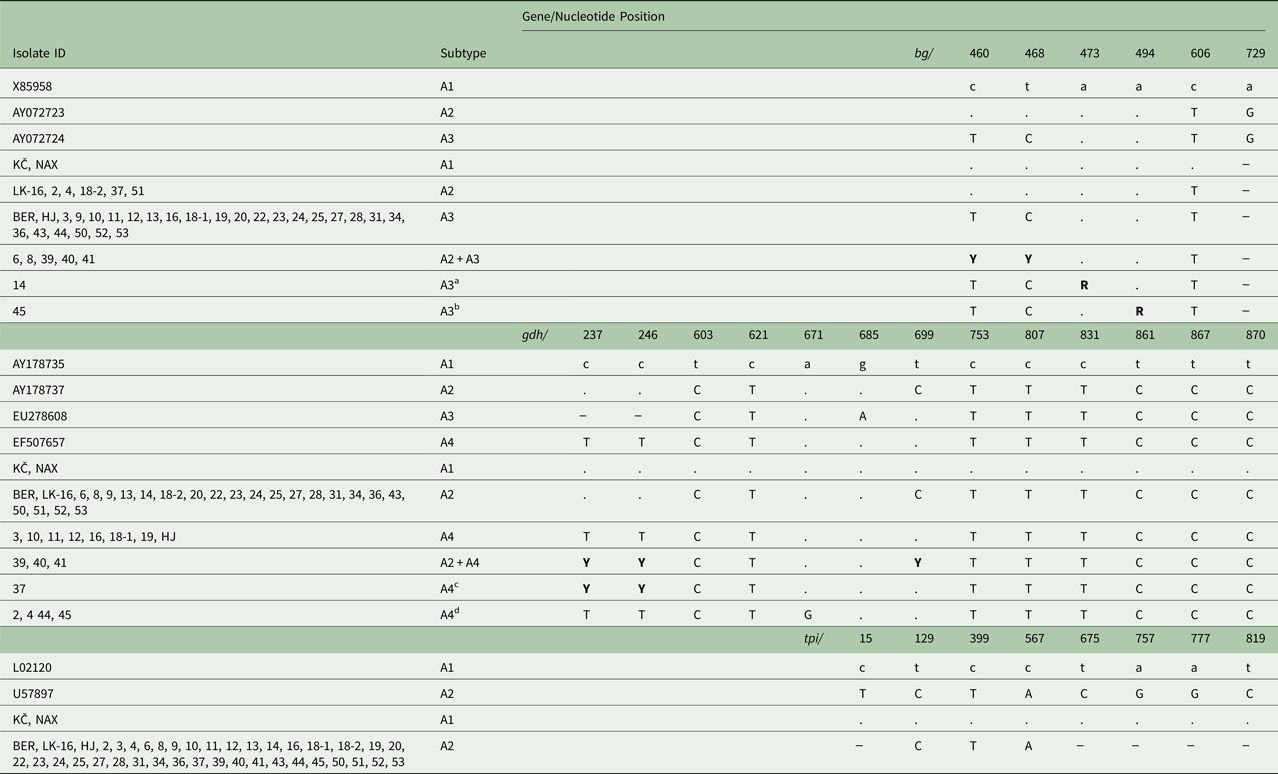
Sequencing of sub-assemblage AII isolates at the bg locus revealed six isolates with subtype A2 (AY072723) and 28 isolates with subtype A3 (AY072724), of which one had overlapping nucleotides at position 473 (G473A) and one at position 494 (G494A). Five isolates had mixed templates of subtypes A2 and A3 (C460T and C468T). Among the same isolates sequenced at the gdh locus, 23 isolates were identical to the subtype A2 (AY178737), whereas 13 isolates matched the previously described sub-assemblage AII reference subtype A4 (EF507657). Out of these, four isolates showed a novel substitution at position 671 (EF507657c.671A>G), and one had overlapping nucleotides at positions 237 (C237T) and 246 (C246T) compared with subtype A4. Three isolates had mixed templates of subtypes A2 and A4 (C237T, C246T and C699T). All the single nucleotide polymorphisms (SNPs) and heterozygous positions in assemblage A isolates are detailed and summarized in Table 1.
SNPs and heterozygous positions in the bg, gdh and tpi genes among Giardia intestinalis assemblage A human isolates

Nucleotide substitutions (capital letters) are numbered from ATG codon of each gene, dots indicate identity to the AI reference sequence (GenBank Accession Nos: bg X85958; gdh AY178735 and tpi L02120), heterozygous positions are in bold and indicated by standard IUPAC codes.
a G/A at position 473 (MG324287).
b G/A at position 494 (MG324286).
c C/T at position 237 and 246 compared to A4 (MG324288).
d g.671 A > G compared to A4 (MG324289).
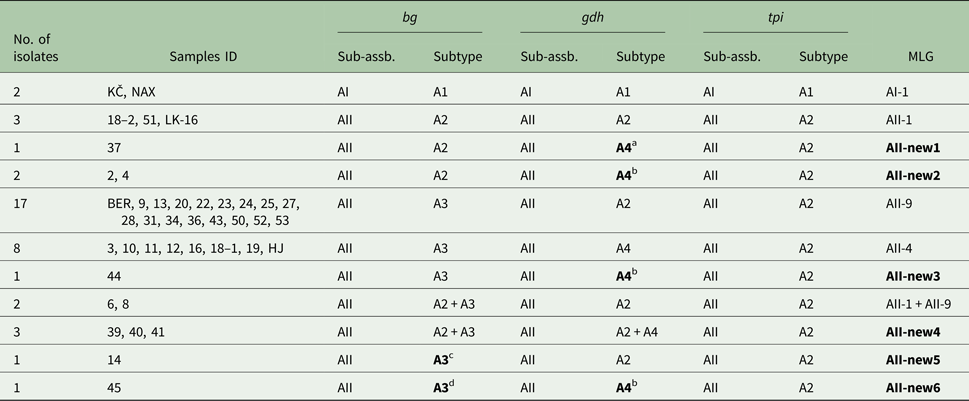
When analysing MLGs of the 41 assemblage A isolates, we identified a total of 11 different MLGs: one (MLG AI-1) in sub-assemblage AI and ten in sub-assemblage AII (see Table 2). Three previously described MLGs, AII-1, AII-4 and AII-9 (Cacciò et al. Reference Cacciò, Beck, Lalle, Marinculic and Pozio2008; Faria et al. Reference Faria, Zanini, Dias, da Silva and do Céu Sousa2017), were found in three, eight and 17 isolates, respectively. Also seven potentially new or mixed MLGs were identified. Two samples showed a potential mix of MLGs AII-1 and AII-9, whereas the other six groups of MLGs were not clearly identifiable and are as follows: (a) one sample denoted as AII-new1 showed A2 subtype of bg and tpi genes, and A4 subtype of gdh gene with two overlapping nucleotides (C237T and C246T; GenBank Accession No. MG324288); (b) two samples (AII-new2) had the same subtypes of bg and tpi genes as described previously in AII-new1, but the gdh gene showed a novel substitution at position 671 compared with A4 subtype (EF507657c.671A>G; GenBank Accession No. MG324289); (c) AII-new3 sample had a combination of A3 subtype of bg gene, A2 subtype of tpi gene and A4 subtype of gdh gene with the same nucleotide substitution as described in AII-new2; (d) three samples (MLG AII-new4) had combined subtypes A2 and A3 of bg gene, combined subtypes A2 and A4 of gdh gene and subtype A2 of tpi gene. This profile could indicate potential combination of MLGs AII-1, AII-4, AII-8 and/or AII-9 or a completely new MLG; (e) AII-new5 had a combination of A2 subtype of gdh and tpi genes, and A3 subtype of bg gene with overlapping nucleotides at position 473 (G473A; GenBank Accession No. MG324287); (f) AII-new6 had a combination of A3 subtype of bg gene with overlapping nucleotides at position 494 (G494A; GenBank Accession No. MG324286), A4 subtype of gdh gene with nucleotide substitution (EF507657c.671A>G) as described previously in AII-new2 and AII-3, and A2 subtype of tpi gene. For the purpose of clarity, these MLGs are listed in Table 2.
Characterization of 41 assemblage A isolates
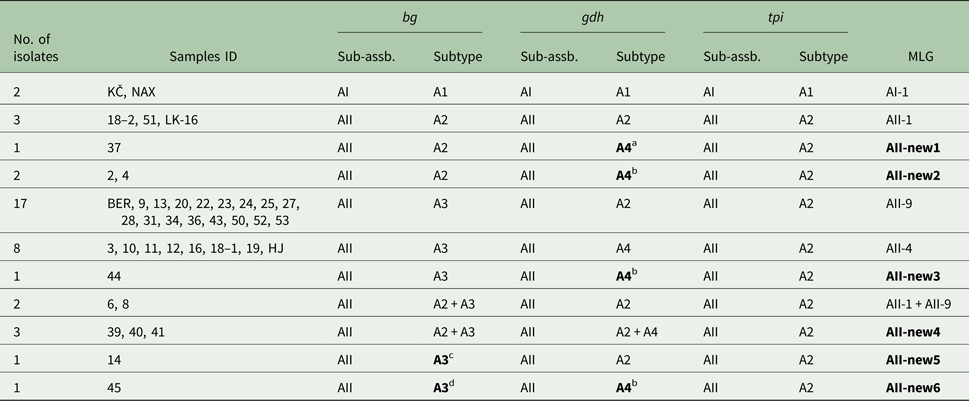
a C/T at positions 237 and 246 compared with A4 (MG324288).
b g.671 A > G compared with A4 (MG324289).
c G/A at position 473 (MG324287).
d G/A at position 494 (MG324286).
MLG of isolates representing assemblage B
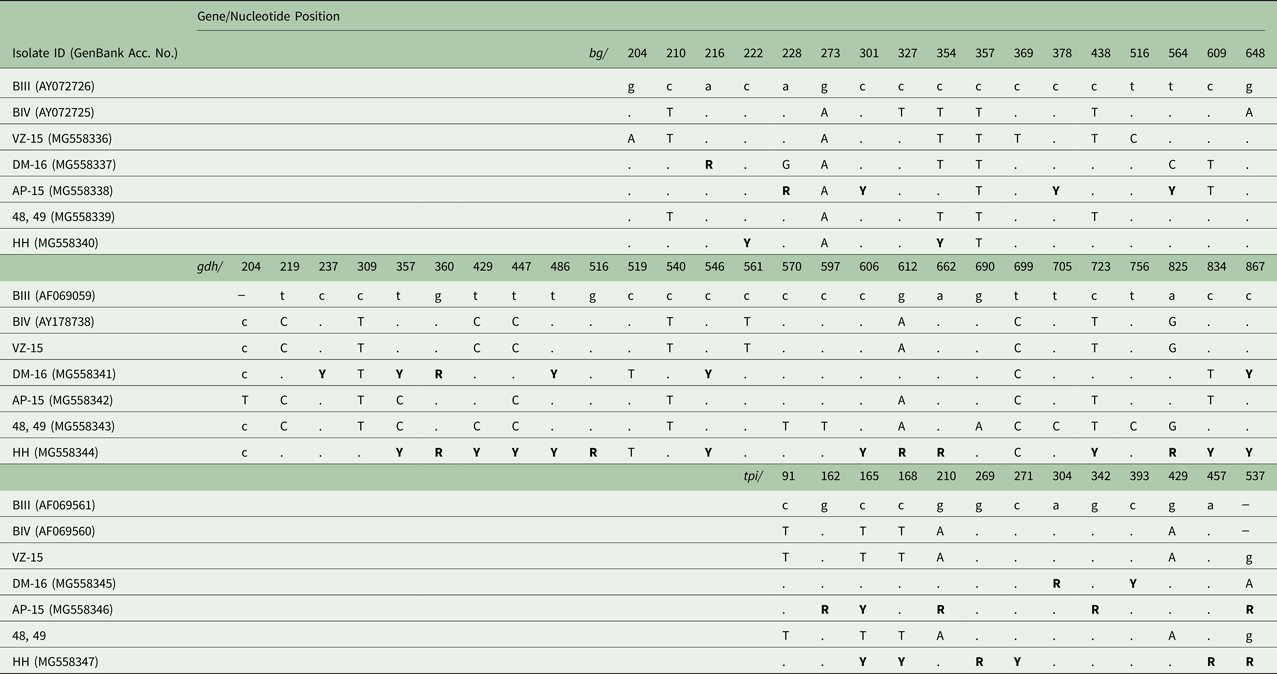
A total of six human isolates were classified as assemblage B. Almost all sequences of these isolates could not be unequivocally assigned to the sub-assemblages and subtypes, because of the variable levels of intra-isolate sequence heterogeneity or the numerous SNPs, which also prevented the unambiguous identification of MLGs (see Table 3). These sequences were deposited in the GenBank database under Accession Nos. MG558336–MG558347. Excepting three isolates, the sequence analysis revealed many heterogeneous positions within each gene fragment characterized by the presence of two overlapping nucleotide peaks at some positions. Homozygous samples without SNPs at least in one gene (mainly in tpi) were classified as sub-assemblage BIV. The aforementioned remaining three samples (presumably sub-assemblage BIII) were displayed by high intra-isolate sequence heterogeneity. The number of these positions varied among genes (the highest for the gdh gene compared with the tpi and bg genes) and some of them were also found at positions that are polymorphic among different genotypes.
SNPs and heterozygous positions in the bg, gdh and tpi genes among Giardia intestinalis assemblage B human isolates
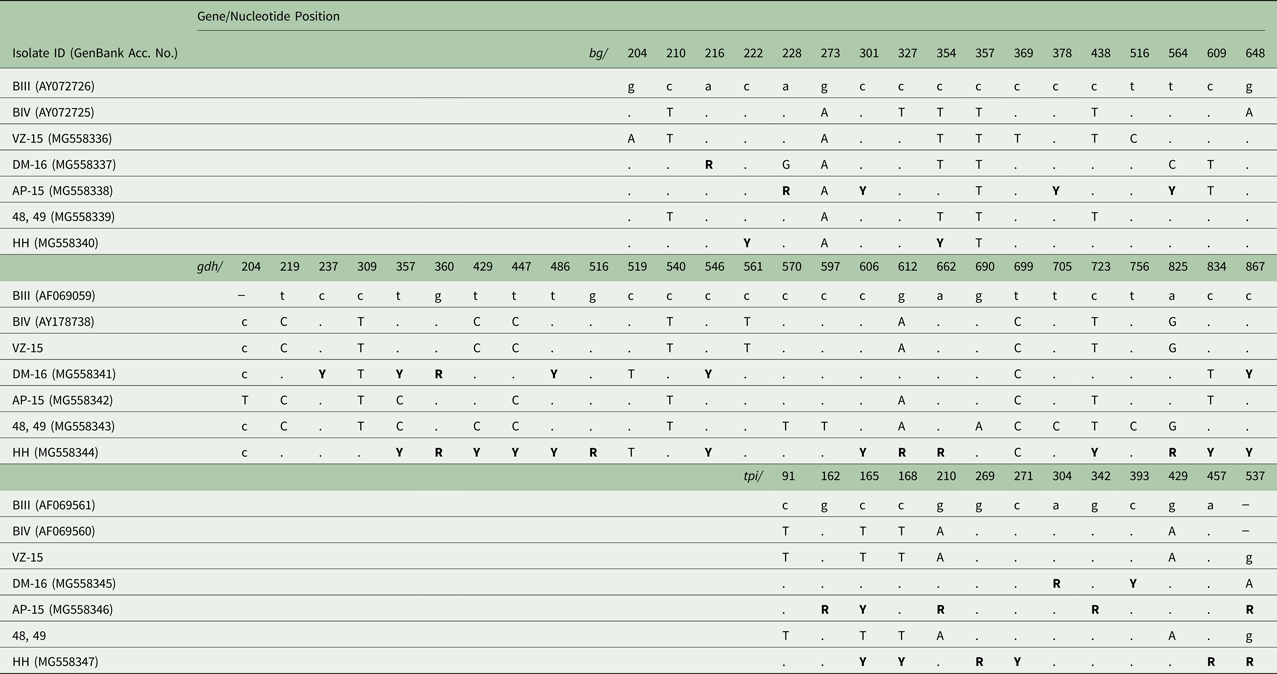
Nucleotide substitutions (capital letters) are numbered from ATG codon of each gene, dots indicate identity to the BIII reference sequence (GenBank Accession Nos: bg AY072726; gdh AF069059 and tpi AF069561), heterozygous positions are in bold and indicated by standard IUPAC codes.
Patient data in relation to sub-assemblages
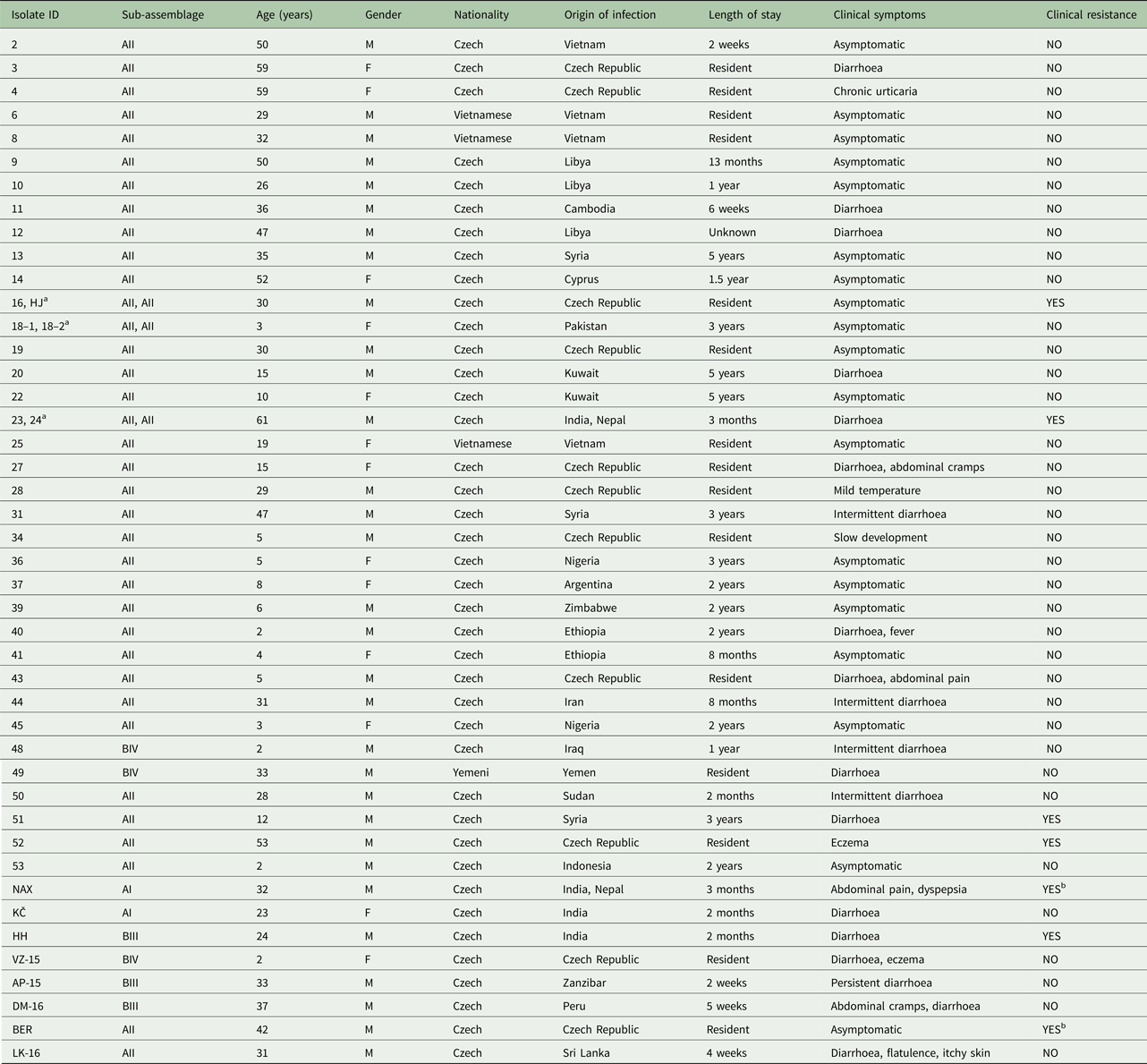
The age of the 44 patients infected with G. intestinalis ranged from 2 to 61 years [2‒10 years (n = 13), 11‒20 years (n = 4), 21‒30 years (n = 8) and >30 years (n = 19); median 26.3, mean 29]; 31 were males and 13 females. The distribution of Giardia sub-assemblages in relation to gender among the 44 patients whose 47 isolates (see Table 4, index 1) were successfully genotyped was as follows: among the females, one was infected with sub-assemblage AI (7.7%; 1/13), 11 with sub-assemblage AII (84.6%; 11/13) and one with sub-assemblage BIV (7.7%; 1/13); among the males, one had sub-assemblage AI (3.2%; 1/31), 25 sub-assemblage AII (80.6%; 25/31), three sub-assemblage BIII (9.7%; 3/31) and two sub-assemblage BIV (6.5%; 2/31). All patients were Czech citizens with the exception of three Vietnamese and one Yemeni. All Vietnamese had sub-assemblage AII, while Yemeni had the sub-assemblage BIV. Representation of sub-assemblages in Czech citizens varied.
Patient data in relation to sub-assemblages
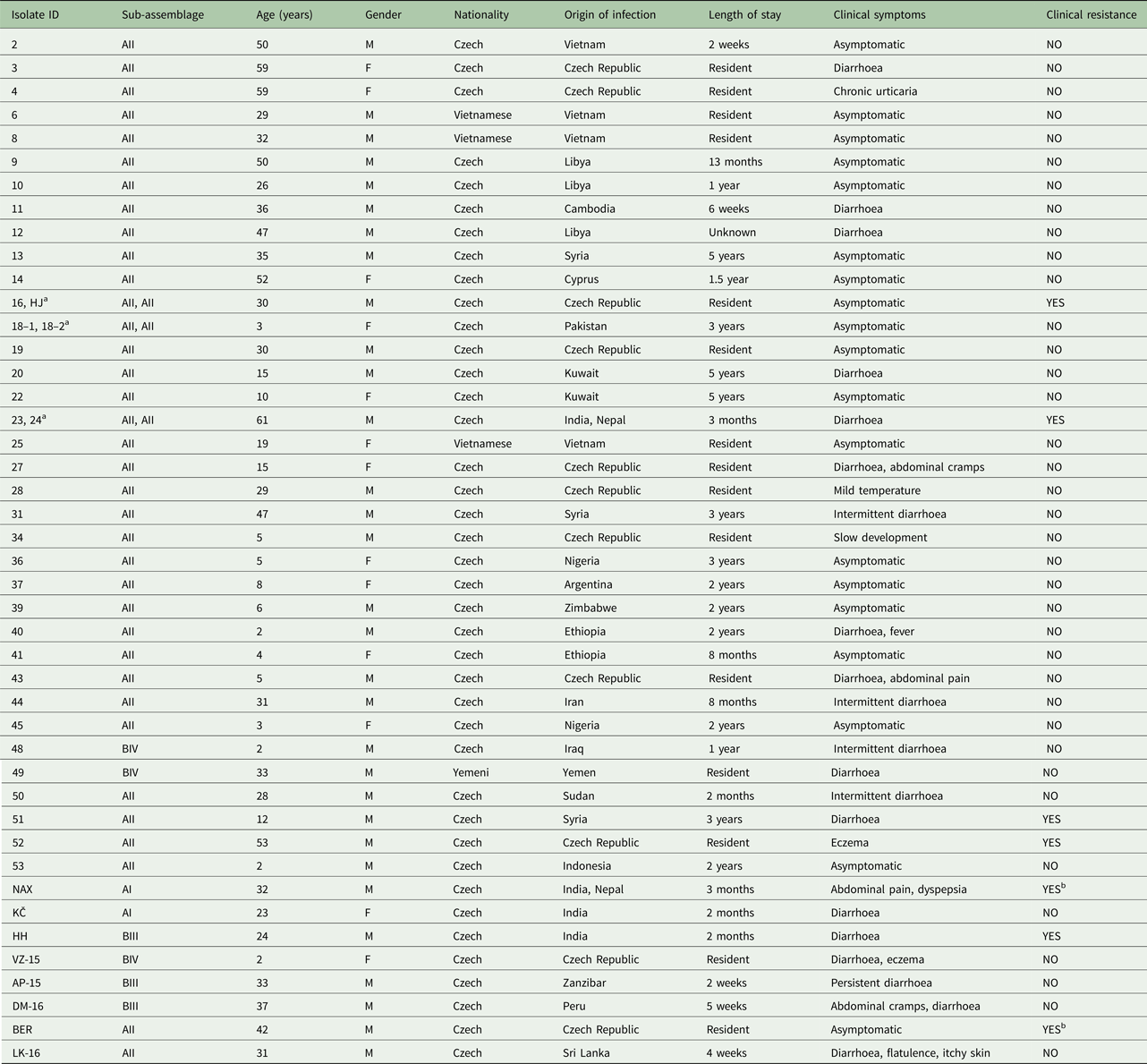
a Isolated from two different stool samples of the same patient.
b Multi-drug-resistant giardiasis.
Additionally, Table 4 shows the distribution of sub-assemblages in relation to the country of infection origin. Eight symptomatic and three asymptomatic patients did not report any travel outside the Czech Republic and thus were considered to present autochthonous giardiasis caused by sub-assemblage AII. Sub-assemblage AII was also found in a patient who was infected in Cyprus. The majority of the patients (72.72%; 33/44) were infected outside Europe, 45.45% in Asia, 22.72% in Africa and 4.55% in South America. Among the infections originating in Asia, sub-assemblage AII (15 cases) predominated, two cases of Giardia infection were caused by sub-assemblage AI, one by sub-assemblage BIII and two by sub-assemblage BIV. Sub-assemblage AII also prevailed in isolates of Giardia originating from giardiasis cases acquired in Africa (nine isolates); one case was infection by sub-assemblage BIII. Infections from South America included one by sub-assemblage AII and one by sub-assemblage BIII.
Out of 44 patients, 19 were asymptomatic (43.2%, all sub-assemblage AII) and 25 symptomatic (56.8%). Diarrhoea in one case and abdominal pain with dyspepsia in the second case were characteristic for patients infected by sub-assemblage AI. Symptomatic infection by sub-assemblage AII resulted in a range of symptoms and different combinations (see Table 4). Symptoms of three sub-assemblage BIII infections included diarrhoea or persistent diarrhoea and diarrhoea with abdominal cramps. Patients infected by sub-assemblage BIV had diarrhoea with eczema or diarrhoea only.
Out of 47 Giardia isolates, nine originated from giardiasis cases clinically resistant to MTZ treatment (19.15%). One of them belonged to sub-assemblage AI (MLG AI-1), seven to sub-assemblage AII (1 MLG AII-1, 2 MLG AII-4 and 4 MLG AII-9) and one to sub-assemblage BIII. The sub-assemblage AI isolate (NAX) and one isolate from the sub-assemblage AII (BER) came from a multi-drug-resistant giardiasis case (see Table 4, index 2).
Discussion
To the best of our knowledge, this is the first study characterising human isolates of G. intestinalis originating from giardiasis cases, either autochthonous or imported to the Czech Republic, at the molecular level. We also tried to compare genotyping results with clinical data including clinical response to MTZ treatment.
As the first step, we defined genotypes of Giardia isolates from our Biobank. For this purpose, we used MLGs based on the three genetic markers (bg, gdh and tpi). Sequence analysis confirmed the presence of assemblage A in 41 isolates with eleven different assemblage A MLGs or their potential mixes (one in sub-assemblage AI and ten in sub-assemblage AII). The greatest number of the isolates belonged to MLG AII-9 (n = 17) proposed recently by Faria et al. (Reference Faria, Zanini, Dias, da Silva and do Céu Sousa2017). However, the same profile A3/A2/A2 (bg/tpi/gdh) was denoted by Šoba et al. (Reference Šoba, Islamović, Skvarč and Cacciò2015) as MLG AII-2, which is not in agreement with previous studies (Cacciò et al. Reference Cacciò, Beck, Lalle, Marinculic and Pozio2008; Feng and Xiao, Reference Feng and Xiao2011) where MLG AII-2 has profile A3/A2/A3 (bg/tpi/gdh). The second largest number of our Giardia isolates belonged to MLG AII-4 (n = 8) also previously described (Cacciò et al. Reference Cacciò, Beck, Lalle, Marinculic and Pozio2008; Feng and Xiao, Reference Feng and Xiao2011; Šoba et al. Reference Šoba, Islamović, Skvarč and Cacciò2015; Faria et al. Reference Faria, Zanini, Dias, da Silva and do Céu Sousa2017). The other nine assemblage A MLGs were represented by one to three isolates. The known MLG AII-1 was also previously identified in Italy, Sweden, North West England, Slovenia and Brazil (Cacciò et al. Reference Cacciò, Beck, Lalle, Marinculic and Pozio2008; Lebbad et al. Reference Lebbad, Petersson, Karlsson, Botero-Kleiven, Andersson, Svenungsson and Svärd2011; Ankarklev et al. Reference Ankarklev, Franzén, Peirasmaki, Jerlström-Hultqvist, Lebbad, Andersson, Andersson and Svärd2015; Minetti et al. Reference Minetti, Lamden, Durband, Cheesbrough, Fox and Wastling2015a; Šoba et al. Reference Šoba, Islamović, Skvarč and Cacciò2015; Faria et al. Reference Faria, Zanini, Dias, da Silva and do Céu Sousa2017). Although this genotype was also confirmed in a cat (Cacciò et al. Reference Cacciò, Beck, Lalle, Marinculic and Pozio2008) and in five dairy cattle (Wang et al. Reference Wang, Zhao, Chen, Jian, Zhang, Feng, Wang, Zhu, Dong, Hua, Wang and Zhang2014), there are still insufficient data for it to be considered as an important zoonotic multilocus genotype.
Further, in nine isolates, namely, 2, 4, 14, 37, 39, 40, 41, 44 and 45, we identified six new variants of MLGs (AII-new1‒6). The sequence analysis revealed that some positions within bg or both bg and gdh gene fragments were heterogeneous, being characterized by the presence of two overlapping nucleotide peaks at these specific positions, i.e. mixed or heterogeneous templates. Specifically, isolates 39, 40 and 41 (MLG AII-new4) showed mixed templates in bg (A2 + A3) and gdh (A2 + A4) genes. The similar situation occurred in isolates 6 and 8, which has the same mixed templates (A2 + A3) in bg gene only. These mixed templates for bg have been observed previously (Lebbad et al. Reference Lebbad, Petersson, Karlsson, Botero-Kleiven, Andersson, Svenungsson and Svärd2011; Minetti et al. Reference Minetti, Lamden, Durband, Cheesbrough, Fox and Wastling2015a; Faria et al. Reference Faria, Zanini, Dias, da Silva and do Céu Sousa2017). According to Cacciò and Ryan (Reference Cacciò and Ryan2008), there are two principal mechanisms that can explain the occurrence of the mixed templates. It can be attributed to the presence of different alleles in the nuclei of single cysts [allelic sequence heterozygosity (ASH)] or to the presence of genetically different cysts in ‘true’ mixed infections. It should be noted that most of the genotyping analyses are based on DNA isolated from Giardia cysts, in contrast to our study where trophozoites were used for DNA extractions. The number of heterogeneous positions appears to be more frequent when performing analysis on samples from endemic areas (Cacciò et al. Reference Cacciò, Beck, Lalle, Marinculic and Pozio2008; Lebbad et al. Reference Lebbad, Petersson, Karlsson, Botero-Kleiven, Andersson, Svenungsson and Svärd2011), which is likely due to an increased rate of infection, and supports the theory of mixed infections. These mixed infections are known to occur both at the inter-assemblage and at the intra-assemblage levels (e.g. A + B, AI + AII) (Cacciò and Ryan, Reference Cacciò and Ryan2008). The key to determining the origin of double peaks in chromatograms of PCR product sequences is to do the experiment with a single cyst, or a clone derived from a single cell (Andersson, Reference Andersson2012). However, as demonstrated by Ankarklev et al. (Reference Ankarklev, Svärd and Lebbad2012) who genotyped single cysts and single trophozoites from clinical samples of assemblage B, both situations occur even in the parasite population that infects a single individual. The lowest level of ASH (0.0023%) was recorded in the assemblage E isolate P15 (Jerlström-Hultqvist et al. Reference Jerlström-Hultqvist, Franzén, Ankarklev, Xu, Nohýnková, Andersson, Svärd and Andersson2010). The levels of ASH in assemblage A differ significantly: 0.25‒0.35% in the sub-assemblage AII isolates AS98 and AS175 (Ankarklev et al. Reference Ankarklev, Franzén, Peirasmaki, Jerlström-Hultqvist, Lebbad, Andersson, Andersson and Svärd2015), 0.037% in DH isolate (Adam et al. Reference Adam, Dahlstrom, Martens, Bruno, Barbian, Ricklefs, Hernandez, Narla, Patel, Porcella and Nash2013) and <0.01% in the sub-assemblage AI isolate WB (Morrison et al. Reference Morrison, McArthur, Gillin, Aley, Adam, Olsen, Best, Cande, Chen, Cipriano, Davids, Dawson, Elmendorf, Hehl, Holder, Huse, Kim, Lasek-Nesselquist, Manning, Nigam, Nixon, Palm, Passamaneck, Prabhu, Reich, Reiner, Samuelson, Svard and Sogin2007). Analysis of the assemblage B genome (isolate GS) showed the most extensive ASH (0.53 and 0.425%) within the genome (Franzèn et al. Reference Franzèn, Jerlström-Hultqvist, Castro, Sherwood, Ankarklev, Reiner, Palm, Andersson, Andersson and Svärd2009; Adam et al. Reference Adam, Dahlstrom, Martens, Bruno, Barbian, Ricklefs, Hernandez, Narla, Patel, Porcella and Nash2013). Reasons for these large differences in ASH between assemblages are unknown, but may be due to differences in DNA repair and/or sexual-like recombination (Ortega-Pierres et al. Reference Ortega-Pierres, Jex, Ansell and Svärd2017).
Our study confirmed assemblage B in six isolates, but the frequent occurrence of overlapping nucleotides in one, two or all three examined genes limited the value of MLGs in this assemblage. In general, genotyping of assemblage B causes a significant problem in the Giardia community. These substitution patterns are recorded due to the ‘real’ mixed (sub-) assemblage infection, ASH or potentially a mixture of these two factors (Cacciò et al. Reference Cacciò, Beck, Lalle, Marinculic and Pozio2008; Franzèn et al. Reference Franzèn, Jerlström-Hultqvist, Castro, Sherwood, Ankarklev, Reiner, Palm, Andersson, Andersson and Svärd2009; Lebbad et al. Reference Lebbad, Petersson, Karlsson, Botero-Kleiven, Andersson, Svenungsson and Svärd2011; Wielinga et al. Reference Wielinga, Ryan, Andrew Thompson and Monis2011; Ankarklev et al. Reference Ankarklev, Svärd and Lebbad2012; Faria et al. Reference Faria, Zanini, Dias, da Silva and do Céu Sousa2017). Only three isolates (VZ-15, 48 and 49) exhibited sequences without heterogeneous positions in all three genes. Nevertheless, all these isolates showed a number of SNPs at the bg locus and samples 48 and 49 also at the gdh locus. An exact match with the reference gene was obtained at the tpi locus only. These three homozygous samples were classified as sub-assemblage BIV. The remaining three samples (HH, DM-16 and AP-15) did not have good concordance to the sub-assemblages BIII or BIV, especially at the bg and gdh loci. The classification of these isolates into sub-assemblages was greatly affected by the numerous overlaps or SNPs occurring at the specific nucleotide positions that can supposedly distinguish between these subgroups. According to the tpi locus, it was most likely sub-assemblage BIII. Because of the above-mentioned various uncertainties in assemblage B, these samples will be examined in more detail in a further study.
In the first part of our study, we wanted to determine the most accurate genotype of all samples from our Biobank, but due to the impossibility of determining the exact MLGs in all isolates, associations between genotype and disease features were subsequently evaluated at the level of sub-assemblages only.
Our 47 isolates were obtained from 44 patients aged between 2 and 61 years. The group with the highest prevalence of infection were patients aged >30 years (43.2%). This could be related to the greater travel opportunities of adults. However, the second most infected group were patients aged ⩽10 years (29.5%), in which ten of 13 children were infected abroad. Painter et al. (Reference Painter, Gargano, Collier and Yoder2015) states that giardiasis was reported most frequently in children aged 1–4 years, followed by those aged 5–9 years and adults aged 45–49 years. Yang et al. (Reference Yang, Lee, Ng and Ryan2010) reported the highest prevalence (56.5%) among children aged <5 years with the predominance of assemblage B. In our isolates of all age groups up to 30 years, only sub-assemblage AII was recorded. On the other hand, in the age group over 30 years, all sub-assemblages (AI, AII, BIII, as well as BIV) were represented.
Gender representation (females:males) in our sample collection was in the proportion of approximately 1:3. Sub-assemblage AII prevailed in both sexes, but sub-assemblage BIII was reported in males only. Nevertheless, according to these results alone, it cannot be claimed that the sub-assemblage BIII is linked only to the male gender. Our results also show the distribution of sub-assemblages in relation to the country of infection origin. Eleven patients did not report any travel outside the Czech Republic, and thus we can consider these sub-assemblage AII infections as autochthonous. The other patients were infected mainly in Asia and Africa, where sub-assemblage AII was also the most prevalent. Sub-assemblage AI and BIV infections were obtained only in Asian countries, but the infections caused by sub-assemblage BIII were obtained in Asia, Africa as well as in South America. Thus, we can state that assemblage A dominated in infections acquired in the Czech Republic as well as in those originating from most other parts of the world. However, the distribution of assemblages A and B in humans varies among studies, the assemblage B seems to be slightly more common in both developing and developed countries than assemblage A (Yang et al. Reference Yang, Lee, Ng and Ryan2010; Feng and Xiao, Reference Feng and Xiao2011; Mukherjee et al. Reference Mukherjee, Karmakar, Raj and Ganguly2013; Durigan et al. Reference Durigan, Abreu, Zucchi, Franco and de Souza2014; Minetti et al. Reference Minetti, Lamden, Durband, Cheesbrough, Fox and Wastling2015a; Prystajecky et al. Reference Prystajecky, Tsui, Hsiao, Uyaguari-Diaz, Ho, Tang and Isaac-Renton2015; Ramírez et al. Reference Ramírez, Heredia, Hernández, León, Moncada, Reyes, Pinilla and Lopez2015; Forsell et al. Reference Forsell, Granlund, Samuelsson, Koskiniemi, Edebro and Evengård2016). On the other hand, there are some recent studies that have instead shown a predominance of assemblage A (Coronato Nunes et al. Reference Coronato Nunes, Pavan, Jaeger, Monteiro, Xavier, Monteiro, Xavier, Monteiro, Bóia and Carvalho-Costa2016; Hatam-Nahavandi et al. Reference Hatam-Nahavandi, Mohebali, Mahvi, Keshavarz, Mirjalali, Rezaei, Meamar and Rezaeian2016; Lee et al. Reference Lee, Cadogan, Eytle, Copeland, Walochnik and Lindo2017), which are in agreement with our results.
Infection caused by Giardia can result in symptoms in some individuals but can lead to an asymptomatic state in others. Clinical manifestations following infection occur after an incubation period of 1–2 weeks, and range from mild intestinal problems to complex symptoms that may last up to several weeks or even months without proper treatment (Farthing, Reference Farthing1996). Symptomatic cases are usually accompanied with acute or chronic diarrhoea, dehydration, abdominal pain, nausea, vomiting and weight loss (Robertson et al. Reference Robertson, Hanevik, Escobedo, Morch and Langeland2010). A number of investigations have tried to establish an association between the presence of symptoms and the G. intestinalis genotype. However, the results from these studies have been controversial. Some authors correlate symptoms with assemblage A (Sahagun et al. Reference Sahagun, Clavel, Goni, Seral, Llorente, Castillo, Capilla, Arias and Gomez-Lus2008; Breathnach et al. Reference Breathnach, McHugh and Butcher2010; Pestechian et al. Reference Pestechian, Rasekh, Rostami-nejad and Yousofi2014; Anuar et al. Reference Anuar, Moktar, Salleh and Al-Mekhlafi2015), others with assemblage B (Gelanew et al. Reference Gelanew, Lalle, Hailu, Pozio and Cacciò2007; Mahdy et al. Reference Mahdy, Surin, Wan, Mohd-Adnan, Hesham Al-Mekhlafi and Lim2009; Lebbad et al. Reference Lebbad, Petersson, Karlsson, Botero-Kleiven, Andersson, Svenungsson and Svärd2011; Puebla et al. Reference Puebla, Núñez, Fernández, Fraga, Rivero, Millán, Valdés and Silva2014; Minetti et al. Reference Minetti, Lamden, Durband, Cheesbrough, Platt, Charlett, O'Brien, Fox and Wastling2015b), while others did not find any association (Kohli et al. Reference Kohli, Bushen, Pinkerton, Houpt, Newman, Sears, Lima and Guerrant2008; Pelayo et al. Reference Pelayo, Nuñez, Rojas, Furuseth Hansen, Gjerde, Wilke, Mulder and Robertson2008; Rafiei et al. Reference Rafiei, Roointan, Samarbafzadeh, Shayesteh, Shamsizadeh and Pourmahdi Borujeni2013; Šoba et al. Reference Šoba, Islamović, Skvarč and Cacciò2015; Faria et al. Reference Faria, Zanini, Dias, da Silva and do Céu Sousa2017). Our data confirmed 19 asymptomatic (sub-assemblage AII) and 25 symptomatic (sub-assemblage AI, AII, BIII, as well as BIV) cases with variable symptoms and their different combinations. It also should be noted that sub-assemblages AI, BIII and BIV had smaller representation (two, three and three isolates, respectively) among our samples compared with sub-assemblage AII (39 isolates). According to our results, we have determined that there is no clear-cut case of one assemblage or sub-assemblage being asymptomatic and the other symptomatic.
It has been reported that therapeutic failure in giardiasis is occurring more and more frequently in developed countries but most of the cases seem to be imported (Muñoz Gutiérrez et al. Reference Muñoz Gutiérrez, Aldasoro, Requena, Comin, Pinazo, Bardají, Oliveira, Valls and Gascon2013; Nabarro et al. Reference Nabarro, Lever, Armstrong and Chiodini2015). In the Czech Republic, e.g. the majority of clinically resistant cases diagnosed during the period 2004–2014 at the National Reference Laboratory for Tropical Parasitic Infections originated from the Indian Subcontinent (Stejskal et al. Reference Stejskal, Trojánek and Nohýnkova2015). True reasons of clinical resistance are unknown. Paradoxically, the majority of Giardia isolates, i.e. trophozoites originating from cysts excreted by patients with clinically resistant giardiasis, are sensitive to MTZ in anaerobic tests in vitro although with distinct levels of sensitivity (Nohýnková, unpublished results). Treatment of G. intestinalis infection currently relies on a small number of drug classes. Nitroheterocyclics, in particular MTZ, have represented the frontline treatment for the last few decades. Although MTZ is the most commonly used drug to cure giardiasis, treatment fails in approximately 20% cases with recurrence up to 90% suggesting resistance of the parasite to the drug (Upcroft and Upcroft, Reference Upcroft and Upcroft2001). Studies from the past decade suggest that there might be a multilateral mechanism of MTZ resistance in Giardia (Leitsch, Reference Leitsch2015). Bonhomme et al. (Reference Bonhomme, Le Goff, Lemée, Gargala, Ballet and Favennec2011) investigated genotype patterns and associations with clinical symptoms and in vivo MTZ resistance. The study however, failed to show an association, likely due to the low number of tested samples. In our study, there were nine Giardia isolates originating from clinically MTZ-resistant giardiasis cases with different genotypes from both assemblages A and B. Within the assemblage A, the clinically MTZ-resistant as well as multi-drug-resistant isolates were found in both AI and AII sub-assemblages. However, we are aware that we do not have a sufficient number of clinically resistant isolates, and therefore we cannot unequivocally confirm the conclusion that the genotype does not play a role in the development of clinical resistance.
Acknowledgements
We would like to thank all who contributed to sample collection, as well as Dr Petra Matoušková (Faculty of Pharmacy, Charles University) for her advice in sequence processing.
Financial support
This study was supported by the Czech Health Research Council (Grant No. 15-33369A).