INTRODUCTION
The deadliest human parasite in the world, Plasmodium falciparum, and the most prevalent parasites, worms, have been evolving in the same populations for thousands of years. This statistical regularity should therefore significantly influence the immunogenetic make-up of the affected populations. In this perspective, a number of observational studies were conducted in Thailand. I will relate the findings of these studies, compare their results with those observed elsewhere, list the various hypotheses put forward, discuss their strengths and weaknesses, and finally attempt to draw a few general conclusions.
STUDIES IN THAILAND
Malaria presentation and worms
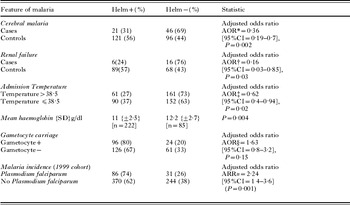
Malaria has many facets. Several different aspects of malaria have been studied in relation to worm infections. The frequency of pathology and its features such as fever, anaemia, disease severity and parasitological parameters (gametocyte carriage and mixed plasmodial infections) were studied separately (Table 1). All of them seemed to be impacted by worms. Here is how.
Some observed associations between worms and malaria in Thailand

* Adjusted for age, BMI, MCV, duration of symptoms by logistic regression. Stratifying the worm burden shows a significant positive trend for odds.
† Adjusted for age, ethnicity, symptoms duration, parasitaemia, schizont counts and body mass index by logistic regression.
‡ Adjusted for parasitaemia, symptoms duration before admission by logistic regression.
§ Adjusted for haemoglobin concentration, symptom duration, and splenomegaly by logistic regression. Before adding haemoglobin concentrations, helminth infections were significantly associated with gametocyte carriage: adjusted odds ratio=2·36, 95% CI=1·34·3, P=0·006.
# Adjusted for age, sex, infection with P. vivax, and presence of protozoa in the stool by logistic regression.
Cerebral malaria
Studies conducted at the hospital for tropical diseases in Bangkok compared consecutive cases of cerebral malaria (Glasgow coma score <11) with patients with hyperparasitaemic falciparum malaria without any defining criteria for severe malaria. After adjusting for socioeconomic and nutritional confounders, helminths were associated with a ≈70% dose-dependent protection from cerebral malaria (Nacher et al. Reference Nacher, Gay, Singhasivanon, Krudsood, Treeprasertsuk, Mazier, Vouldoukis and Looareesuwan2000, Reference Nacher, Singhasivanon, Traore, Vannaphan, Gay, Chindanond, Franetich, Mazier and Looareesuwan2002a). There was a convergence of arguments suggesting the activation of the FCεRII, (CD23) nitric oxide (NO) pathway by IgE complexes reduced sequestration of parasitized red blood cells (Nacher et al. Reference Nacher, Singhasivanon, Traore, Vannaphan, Gay, Chindanond, Franetich, Mazier and Looareesuwan2002a). The arguments considered were as follows: helminth-infected controls had significantly higher reactive nitrogen intermediates (RNI) concentrations (end products of nitric oxide) and a lower proportion of circulating schizonts than controls without helminths. Cerebral malaria cases with helminths had, in contrast, a greater proportion of circulating schizonts than those without helminths, suggesting that they resisted longer and required a greater parasite biomass to develop the symptoms of cerebral malaria. RNI concentrations were positively correlated with the total IgE concentrations and negatively correlated with the soluble form of CD23. Finally the proportion of circulating schizonts was negatively correlated with RNI concentrations. Although observational studies cannot prove causation, there are criteria that suggest it: the pre-existence of worms to malaria, the linear trend of the protection, comparable studies in humans and animals are arguments that favour a causal link. The presence of an in vitro model subsequently confirming that stimulation of CD23 in human lung endothelial cells led to NO release and reduced ICAM-1 expression and cytoadherence of parasitized red blood cells strengthened the biological plausibility of the underlying mechanism (Pino et al. Reference Pino, Vouldoukis, Dugas, Conti, Nitcheu, Traore, Danis, Dugas and Mazier2003).
Renal failure
The comparison of malaria-associated renal failure (creatinine>3 mg/dL) with patients with hyperparasitaemic falciparum malaria without any defining criteria for severe malaria showed that helminths were also associated with an 84% protection from acute renal failure, possibly through reduced sequestration in the liver and the kidney (Nacher et al. Reference Nacher, Singhasivanon, Silamchamroon, Treeprasertsuk, Vannaphan, Traore, Gay and Looareesuwan2001a, Reference Nacher, Treeprasertsuk, Singhasivanon, Silamchomroon, Vannaphan, Gay, Looareesuwan and Wilaraitanab).
Fever
Helminth-infected patients with mild falciparum malaria had lower mean admission temperatures than patients without helminths. This was notably the case for hookworms, possibly because of the impact of lower iron reserves on thermogenesis, and of a lower pool of reticulocytes slowing down parasite multiplication (Nacher et al. Reference Nacher, Singhasivanon, Traore, Dejvorakul, Phumratanaprapin, Looareesuwan and Gay2001c).
Anaemia
After adjustments for fever duration, helminth-infected patients with mild falciparum malaria had lower mean haemoglobin concentrations and reticulocyte counts than patients without helminths on admission (Nacher et al. Reference Nacher, Singhasivanon, Gay, Phumratanaprapin, Silachomroon and Looareesuwan2001d). Given that severe anaemia is rare in Thailand, it was not possible to determine if helminth-infections were associated with severe anaemia or not.
Gametocytes
Gametocytes were more frequently observed in blood smears on admission and subsequently in helminth-infected patients with mild falciparum malaria relative to those without helminths (Nacher et al. Reference Nacher, Singhasivanon, Silachamroon, Treeprasertsuk, Krudsood, Gay and Looareesuwan2001e). There was a linear trend between the odds of observing gametocytes and the worm burden. The increased gametocyte carriage in helminth-infected patients seemed to be in relation with the lower haemoglobin concentration in these patients because, after adjusting for haemoglobin concentration, the difference was no longer significant (Price et al. Reference Price, Nosten, Simpson, Luxemburger, Phaipun, ter Kuile, van Vugt, Chongsuphajaisiddhi and White1999, Nacher et al. Reference Nacher, Singhasivanon, Silachamroon, Treeprasertsuk, Tosukhowong, Vannaphan, Gay, Mazier and Looareesuwan2002b).
Mixed plasmodial infections
Synchronous and successive mixed falciparum-vivax infections were more frequent in Ascaris-infected patients (Nacher et al. Reference Nacher, Singhasivanon, Gay, Silachomroon, Phumratanaprapin and Looareesuwan2001f). This increased coexistence of different plasmodial species could be explained by a reduction of the non-specific immune response, a reduction of the antisporozoite response in Ascaris-infected patients or an increased activation of hypnozoites. A small study on the Thai-Myanmar border suggested that the multiplicity of infection of falciparum malaria cases was higher in Trichuris-infected patients (Chaorattanakawee et al. Reference Chaorattanakawee, Natalang, Hananantachai, Nacher, Brockman, Nosten, Looareesuwan and Patarapotikul2003). These observations of more frequent mixed plasmodial species or clones in helminth-infected patients lead to the question of an increase of malaria incidence.
Malaria incidence
A cohort of people on the Thai-Myanmar border showed that helminth-infected patients had a two-fold increase of falciparum (but not vivax) malaria incidence (fever+malaria parasites on the blood smear) (Nacher et al. Reference Nacher, Singhasivanon, Yimsamran, Manibunyong, Thanyavanich, Wuthisen and Looareesuwan2002c). This observation could have resulted from a reduction of the immune response against pre-erythrocytic stages and/or a greater attractiveness of the helminth-infected host for mosquitoes.
The calculation of impact measures based on the measures of association observed in Thailand shows that, when worm infection prevalence varies between 50 and 90%, a two-fold increase in malaria incidence in helminth-infected patients means that 33 to 47% of all malaria cases in the total population would be attributable to worms. This calculation is obtained by the following formula P×(RR−1)/(1+P×(RR−1)), where P is the proportion of exposed persons in the population and RR is the relative risk.
The magnitude of the public health impact of worms on malaria may thus be tremendous but the measures of association must be validated in other settings in order to generalize the above calculation. Although, the above results from Thailand raise several important questions on the interactions between worms and malaria, they do have limitations. Efforts to reduce bias and confounding were made (narrow definition of cases, selection of controls to minimize recruitment bias, adjustments for nutritional status, ethnicity, gender, and evolution duration of the symptoms), but may not have been sufficient. Since the studies concerned adults, and there was no longitudinal follow up in all but one study (and this for only a year), it is difficult to extrapolate the real life repeated interactions between these parasites in a host from birth to adulthood. Finally, the sample sizes might not have been sufficient to detail the respective impact of different worms.
The immunological hypothesis regarding the proximate mechanism of protection from severe malaria was initially based on the TH2 immunological bias and notably the induction of IgE caused by helminths. For this reason, and because the number of different worms fragmented the analysis (i.e. the renal failure study there were only 22 cases, which made the study of each worm difficult), helminths were pooled together in most studies. It was observed that protection against cerebral malaria increased with the worm burden and the number of worm species. When re-analyzing the same data and inputting all the different helminths in the logistic regression model, Ascaris came out as the only species associated with protection AOR=0·15, 95% CI=(0·03–0·7). Other helminth species seemed less frequently observed among cerebral malaria cases but this was not statistically significant in the multivariate model. Ascaris is a particularly potent inducer of IgE, which may well make it more protective than other worms for which greater sample sizes may be required for an effect to be detected. However, it is possible that the association with helminths in general reflects the influence of a single helminth species which is diluted by other helminth species.
With regards to the incidence of malaria, it is notable that most patients in our cohort of villagers on the Thai Burmese border (57%) were infected by hookworms and that there was a linear trend between hookworm egg count and falciparum malaria incidence. No other worm was statistically associated with increased incidence, but the proportion of patients infected by them was much lower than for hookworm (Ascaris 6%, Trichuris 15%, Strongyloides 1·5%). There was a linear trend between the number of different parasites and falciparum malaria incidence but this was not significant (P=0·07).
There may thus be a continuum in the interaction between worms and malaria, with varying degrees of immunomodulation and iron deficiency that may affect the outcome of the interaction. In order to study the different impact of different helminth species and to study the influence of the worm burden, large sample sizes are important to see clearly if the nuances between them are significant. If they are of significance, then we should not pool all worms together, if they are not then we can continue to do so.
Connecting the dots
Overall, the different results from the studies in Thailand suggest a scenario where repeated interaction between worms and malaria in humans has led to an evolutionarily stable strategy with worms protecting their hosts – thus themselves – from severe malaria, increasing their reproductive potential and that of malaria. Although, worms may aggravate malarial anaemia and increase malaria incidence, this could also maintain a chronic and non sterilizing stimulation of malaria immunity, which could be beneficial for worms in the long run.
MAJOR FINDINGS IN HUMANS
Clinical and immunological aspects
Can the results from Thailand be extrapolated elsewhere? An increasing number of studies focusing on different worms, with different designs and in different epidemiological contexts has been published. Worms are sometimes considered as single species, at other times they are pooled together which also complicates comparisons between studies. Overall, there are numerous discrepancies between these different studies on worms and malaria. As in Thailand, some studies from Africa have observed that P. falciparum malaria incidence (incident malaria defined as parasitaemia above a specific age-dependent threshold+fever) seems to be higher in subjects with intestinal helminths (Spiegel et al. Reference Spiegel, Tall, Raphenon, Trape and Druilhe2003) and Schistosoma mansoni (Sokhna et al. Reference Sokhna, Le Hesran, Mbaye, Akiana, Camara, Diop, Ly and Druilhe2004). However, 2 other studies have found the opposite for Ascaris lumbricoides (Murray et al. Reference Murray, Murray, Murray and Murray1977) and Schistosoma haematobium (Lyke et al. Reference Lyke, Dicko, Dabo, Sangare, Kone, Coulibaly, Guindo, Traore, Daou, Diarra, Sztein, Plowe and Doumbo2005) and one found no association at all between intestinal helminths and malaria (Shapiro et al. Reference Shapiro, Tukahebwa, Kasten, Clarke, Magnussen, Olsen, Kabatereine, Ndyomugyenyi and Brooker2005).
Apart from arguments for activation of the CD23/NO pathway in patients with intestinal helminths (Nacher et al. Reference Nacher, Singhasivanon, Traore, Vannaphan, Gay, Chindanond, Franetich, Mazier and Looareesuwan2002a), immunological studies in humans have suggested that IL-6 and IL-10 levels were blunted by Schistosoma haematobium infection (Lyke et al. Reference Lyke, Dabo, Sangare, Arama, Daou, Diarra, Plowe, Doumbo and Sztein2006), children with schistosomiasis had higher concentrations of pro-inflammatory cytokines than those without schistosomiasis. In contrast, adults with schistosomiasis had a higher IL-10//TNFα ratio and higher TGFβ concentrations than uninfected persons (Diallo et al. Reference Diallo, Remoue, Schacht, Charrier, Dompnier, Pillet, Garraud, N'diaye, Capron, Capron and Riveau2004). Finally, immunoglobulin isotypes were biased towards non-cytophilic types in Schistosoma-infected patients with falciparum malaria (Mutapi et al., Reference Mutapi, Roussilhon, Mduluza and Druilhe2007).
Differences of malaria transmission and immunity, variation in the prevalence of iron and other nutritional deficiencies in helminth-infected patients, different immunological effects of different worms, and the looming possibility that helminth-infected patients treated themselves with anthelmintics (often easily available) without the knowledge of the investigators could explain these discrepancies. The question therefore remains open. As more studies are being completed more consistent trends should appear.
Malaria fever (Nacher et al. Reference Nacher, Singhasivanon, Gay, Phumratanaprapin, Silachomroon and Looareesuwan2001d) or parasitaemia (Briand et al. Reference Briand, Watier, Le Hesran, Garcia and Cot2005; Brutus et al. Reference Brutus, Watier, Briand, Hanitrasoamampionona, Razanatsoarilala and Cot2006) seems lower in helminth-infected patients than in those that are not infected by helminths. The observation that fever is lower in helminth-infected patients with malaria, notably, for hookworm, can be juxtaposed with the finding that, in Anjouan (Murray et al. Reference Murray, Murray, Murray and Murray1978b), treatment of helminths was followed by a rapid increase (within days) of the incidence of clinical malaria (vivax and falciparum) suggesting that anthelmintics unmasked latent infections. At the end of this spectrum, helminths, most notably Ascaris, were associated with protection from cerebral malaria and acute renal failure. Contrary to what was observed in Thailand, a study observed increased ‘severity’ in Ascaris-infected children (Le Hesran et al. Reference Le Hesran, Akiana, Ndiaye, Dia, Senghor and Konate2004), but the definition of severity in that study was broad and questionable (i.e. vomiting, which can be caused by Ascaris), the diagnosis was not made by a physician (40% of those diagnosed as having ‘severe malaria’ ended up not having malaria at all but had a high prevalence of Ascaris), and controls did not share the same experience as the cases (they did not have malaria and were chosen at a different season than the cases). Although all studies on worms and malaria in humans do have caveats, these methodological issues and the finding of others (Murray et al. Reference Murray, Murray, Murray and Murray1977; Brutus et al. Reference Brutus, Watier, Briand, Hanitrasoamampionona, Razanatsoarilala and Cot2006, Reference Brutus, Watier, Hanitrasoamampionona, Razanatsoarilala and Cot2007) thus suggest that the conclusions of this study should be confirmed.
The multiplication of large-scale studies with strict definition criteria controlling for all potential biases and confounders will be essential to clarify these confusing contradictions regarding malaria incidence and severity. The present question is whether there is confusion because we are all just ‘blind men feeling different parts of the elephant’ or because some of us are blindly feeling something that is not part of the elephant.
Observations of unknown importance
A number of findings from Thailand are still of unknown importance. First, they need to be confirmed in other settings with larger studies. Secondly, their clinical or biological significance is less straightforward than incidence or severity. However, if confirmed, they could well have a great importance in connecting the dots.
Helminth infections also seem to be related to more frequent co-infections between P. falciparum and P. vivax (Nacher et al. Reference Nacher, Singhasivanon, Gay, Silachomroon, Phumratanaprapin and Looareesuwan2001f) and maybe more multiclonal infections (Chaorattanakawee et al. Reference Chaorattanakawee, Natalang, Hananantachai, Nacher, Brockman, Nosten, Looareesuwan and Patarapotikul2003). Whether these observations have an impact on the evolution of virulence or on the speed of acquisition of premunition needs to be investigated.
Helminth-infected patients have lower haemoglobin concentrations during falciparum malaria and seem to be more likely to have gametocytes. This observation would be of great potential evolutionary significance but needs to be confirmed. It aligns itself with the observation that patients with gametocytes increase host attractivity for the vector (Lacroix et al. Reference Lacroix, Mukabana, Gouagna and Koella2005), and that, in murine models, helminths increased malaria transmission to the host (Noland et al. Reference Noland, Graczyk, Fried and Kumar2007).
Finally, the inverse correlation between temperature and the number of fertilized Ascaris eggs during vivax malaria raises more specifically the question of the reproductive benefit of worms in reducing malaria symptoms, which may disrupt Ascaris reproduction (Nacher et al. Reference Nacher, Singhasivanon, Krudsood, Phumratanaprapin, Tangpukdee, Carme and Looareesuwan2005). It needs however to be confirmed after adjusting for the worm burden.
Hypothetical mechanisms: complementarity or antagonism?
Severe malaria
Different authors have focused on different but mutually compatible aspects of the immune response. The overall TH2/TH1 balance and the homeostatic role of interleukin 10 and TGFβ as modulators of the immune response (Nacher, Reference Nacher2004; Hartgers and Yazdanbakhsh, Reference Hartgers and Yazdanbakhsh2006), and the role of the CD23/NO pathway in reducing sequestration (Nacher et al. Reference Nacher, Gay, Singhasivanon, Krudsood, Treeprasertsuk, Mazier, Vouldoukis and Looareesuwan2000) are discussed as possible mechanisms of protection against severe malaria. Recently, malaria-specific IgE has been shown to be associated with protection for severe disease, and could be an extension of the above mechanisms (Duarte et al. Reference Duarte, Deshpande, Guiyedi, Mécheri, Fesel, Cazenave, Mishra, Kombila and Pied2007). The lower temperatures in helminth-infected patients with malaria may result from iron deficiency and its consequences on thermoregulation and red blood cell regeneration (Nacher et al. Reference Nacher, Singhasivanon, Gay, Phumratanaprapin, Silachomroon and Looareesuwan2001d). Febrile temperatures have been shown to increase PfEMP-1 trafficking and cytoadherence (Udomsangpetch et al. Reference Udomsangpetch, Pipitaporn, Silamut, Pinches, Kyes, Looareesuwan, Newbold and White2002), therefore lower temperatures in helminth-infected patients may also contribute to reduce PfEMP-1 expression. Lower temperatures in helminth-infected patients may also be a mechanism behind the increased ‘incidence’ of clinical malaria observed in Anjouan in the days following the de-worming of patients (Murray et al. Reference Murray, Murray, Murray and Murray1978b) or, on the contrary, the longer time to first clinical episode in children infected with Schistosoma haematobium (Lyke et al. Reference Lyke, Dicko, Dabo, Sangare, Kone, Coulibaly, Guindo, Traore, Daou, Diarra, Sztein, Plowe and Doumbo2005).
Incidence
When it comes to the increase in malaria incidence there are 3 mutually compatible explanations that have been put forward, each of which has significantly different implications. Two are immunological, and one entomological. The immunological ones imply that immunity against pre-erythrocytic forms is decreased in helminth-infected patients. The explanations are either that the TH2 bias reduces immunity against liver stages, notably via the reduction of IFN γ (Nacher et al. Reference Nacher, Singhasivanon, Yimsamran, Manibunyong, Thanyavanich, Wuthisen and Looareesuwan2002c), or that helminths lead to a delay in the switch towards cytophilic isotypes IgG1 and IgG3 responsible for protective immunity (Druilhe, Tall and Sokhna, Reference Druilhe, Tall and Sokhna2005). The first hypothesis is that the helminth-mediated TH2 bias reduces immunity against the liver stages but increases protection from severe complications due to sequestration of the blood stages. The second hypothesis implies that incidence is higher because the acquisition of protective immunity is slower in helminth-infected patients despite having more malaria attacks. It also implies that worms worsen malaria and are a risk for severe malaria (Druilhe, Tall and Sokhna, Reference Druilhe, Tall and Sokhna2005). Schistosomiasis does seem to bias the response towards non-cytophilic IgG2, IgG4 (Mutapi et al. Reference Mutapi, Roussilhon, Mduluza and Druilhe2007), but this does not seem to be the case for Ascaris which notably increases IgG1 and IgG3 (McSharry et al. Reference McSharry, Xia, Holland and Kenned1999).
Although purely immunological hypotheses seem sufficient to explain increased incidence, other mechanisms may be at play. The entomological hypothesis to explain increased incidence implies that co-infections with worms and malaria lead to increased attractiveness of the host for the vector, perhaps by favouring anaemia thus leading to a higher risk of being bitten by an infective mosquito (Nacher, Reference Nacher2005). A testable prediction is that worms causing anaemia should most concerned (hookworms, Trichuris, Schistosoma). Interestingly, in Africa, the geographical congruence of P. falciparum and helminths is greatest for hookworm (Mwangi, Bethony and Brooker, Reference Mwangi, Bethony and Brooker2006). Increased vector attraction should be coupled with the complementary hypothesis that enhanced gametocytogenesis in helminth-infected patients with mild anaemia should facilitate the perpetuation of the malaria cycle and with the recent observation in a murine model that helminths increased malaria transmission (Noland et al. Reference Noland, Graczyk, Fried and Kumar2007). Although it has been dismissed (Druilhe, Reference Druilhe2006), adding a second proximate mechanism, anaemia, to immunomodulation, leads to the operationally important implication that modulation of malaria by worms occurs at the individual and the population levels. Occam's razor calls for parsimony, and indeed explanations should be as simple as possible, but no simpler. Multiparasitism is anything but simple.
There are other mechanisms that have been put forward to explain the interactions between worms and malaria such as cross antigens between Schistosoma and malaria (SmLRR) recognised by IgG3 (Helmby, Reference Helmby2007), nutritional differences and iron deficiency (Murray et al. Reference Murray, Murray, Murray and Murray1977, Reference Murray, Murray, Murray and Murray1978a). Future studies must therefore integrate all the pathophysiological hypotheses that have been put forward and test them in order to clarify the problem. Some of these hypotheses will be refuted while others will remain, but it seems unlikely that a single ‘magic bullet’ immunological effector can explain the complexity of the observations. The immunomodulation of the host by helminths probably affects multiple stages of the immune response during malaria. The search for proximate causes unfortunately tends to overshadow the understanding of ultimate causes. The latter can guide fruitful research questions that may not be easily conceived from clinical or immunological standpoints. From a dynamic perspective, evolutionary theory and game theory may give useful insights into the bigger picture. The most evolutionarily stable strategy would seem to be the one where worms protect their host rather than kill it, a modified version of the emergence of cooperation during the ‘iterated prisoner's dilemma’ (Maynard Smith, Reference Maynard1982). In the same perspective, if adaptive genes were selected and spread in the gene pool of each protagonist of this trio (host, helminths and malaria), the search for survival differences should be expanded to the search for reproductive differences. Hence, a number of plausible reproductive aspects (such as host attractiveness for the vectors, worm reproduction and most importantly for humans, pregnancy outcome) should be explored.
The way forward
There are so many potential variations around the theme of worms and malaria that the question still seems ‘messy’ and hard to frame. Indeed, from an extreme point of view, there are different plasmodia and different helminths, each comes in various quantities with different but overlapping influences on immunity, a great number of potential biases, confounders or effect modifiers – all these ramifications potentially combine into a complex array of possibilities. Therefore, it would seem that simplifying the problem might help to clarify it. A number of animal models has shown contradictory results regarding the beneficial or detrimental outcome of the interaction (Hartgers and Yazdanbakhsh, Reference Hartgers and Yazdanbakhsh2006). However, animal models in this case do not take into account the ecology and evolutionary history of pathogens, the latter the single most important force influencing the outcome of the interaction. Their results are thus interesting but difficult to apply to humans (“mice lie and monkeys do not always tell the truth”). Mathematical models of the dynamics of repeated interactions are of interest but they must be based on sound premises. Given the divergence of observations, a first step would be to conduct further studies to determine whether worms increase or decrease incidence and whether they protect or not from different presentations of severe malaria. If it is really both ways, then we must know why. From the epidemiological perspective, given the large number of potential biases and confounders (socio-economic and geographical factors, the issues of iron deficiency and malnutrition, unreported consumption of anthelmintics, spatial overlap between soil-transmitted helminths and vector breeding site) observational studies should be complemented by large experimental studies. The natural history of this interaction should be studied longitudinally and spatially. Caution should be used if the diagnostic criteria of malaria use a pyrogenic threshold because this may introduce a bias due to lower temperatures in some helminth-infected patients. Finally, different forms of disease severity should be explored with strict definition criteria. Until we know more, caution seems necessary in vertical programmes until we rule out the theoretical risk of increasing severe malaria.
Although the subject of the interaction between worms and malaria has recently gathered interest, there are still no large-scale studies in humans to deal with the potential loose ends mentioned above. This is a sad fact given the potential importance of the problem. Helminths may well be a key missing variable to understand a number of facts about malaria and the failures malaria vaccines (Nacher, Reference Nacher2001).