




No CrossRef data available.
Political Preference Formation: Competition, Deliberation, and the (Ir)relevance of Framing Effects
Published online by Cambridge University Press: 01 November 2004
Abstract
One of the most contested questions in the social sciences is whether people behave rationally. A large body of work assumes that individuals do in fact make rational economic, political, and social decisions. Yet hundreds of experiments suggest that this is not the case. Framing effects constitute one of the most stunning and influential demonstrations of irrationality. The effects not only challenge the foundational assumptions of much of the social sciences (e.g., the existence of coherent preferences or stable attitudes), but also lead many scholars to adopt alternative approaches (e.g., prospect theory). Surprisingly, virtually no work has sought to specify the political conditions under which framing effects occur. I fill this gap by offering a theory and experimental test. I show how contextual forces (e.g., elite competition, deliberation) and individual attributes (e.g., expertise) affect the success of framing. The results provide insight into when rationality assumptions apply and, also, have broad implications for political psychology and experimental methods.
Information
- Type
- ARTICLES
- Information
- Copyright
- © 2004 by the American Political Science Association
Are people rational? This question attracts more attention and engenders more controversy than perhaps any other in the social sciences— and for good reason. Rationality assumptions not only serve as the foundation for many analyses of economic, political, and social behavior but also form the basis for most conceptions of democratic responsiveness and competitive markets. Despite widespread application, however, a mass of empirical evidence suggests that people do not act rationally.
Framing effects constitute one of the most stunning and influential demonstrations of irrationality (Tversky and Kahneman 1987). A framing effect occurs when different, but logically equivalent, words or phrases cause individuals to alter their preferences. For example, people reject a policy program when told that it will result in 5% unemployment but prefer it when told that it will result in 95% employment. Framing effects violate a basic tenet of rational choice theory that individuals' preferences do not change from alternative ways of eliciting the same preference (e.g., preferences should not depend on whether the programs are described in terms of unemployment or employment).
Building on hundreds of framing effect experiments, many social scientists opt for models of decision-making that incorporate framing effects and reject rationality assumptions (e.g., prospect theory; see Tversky and Kahneman 1979). Examples within political science include studies of voting and public opinion, campaigns, policy-making, foreign-policy decision-making, coalition bargaining, judicial decision-making, and a variety of other topics (see Levy 2003). Framing effects also call into question normative models of democratic governance based on the idea that citizens maintain stable and invariant preferences (Bartels 2003).
It is surprising that, despite these broad implications, virtually no work has sought to explore the political conditions under which framing effects occur. In this paper, I specify and test these conditions. I explore how contextual forces—including elite competition and interpersonal discussions—and individual attributes condition framing effects. This is particularly important since understanding when framing effects occur will provide insight into when rationality assumptions apply, as opposed to alternative positive and normative approaches. By investigating the significance of contextual forces, the study also offers novel lessons for political psychology and experimental methods, which have both tended to focus on individual-level variables rather than situational factors.
FRAMING EFFECTS AND THEIR IMPLICATIONS
Scholars from multiple disciplines employ the term “framing effect” to refer to distinct phenomena (Druckman 2001b, 226–231). I focus on one of the better-known social science usages where, as mentioned, an effect occurs when different, but logically equivalent, phrases cause individuals to alter their preferences (Tversky and Kahneman 1981, 1987). This typically involves casting the same information in either a positive or a negative light (Levin, Schneider, and Gaeth 1998, 150); for example, in their widely cited disease experiment (to which I will return), Tversky and Kahneman (1981, 1987) asked one group of respondents to respond to problem 1:
Imagine that the U.S. is preparing for the outbreak of an unusual Asian disease, which is expected to kill 600 people. Two alternative programs to combat the disease have been proposed. Assume that the exact scientific estimates of the consequences of the programs are as follows:
If Program A is adopted, 200 people will be saved.
If Program B is adopted, there is a 1/3 probability that 600 people will be saved, and a 2/3 probability that no people will be saved.
Which of the two programs would you favor?
If Program A is adopted, 400 people will die.
If Program B is adopted, there is a 1/3 probability that nobody will die, and a 2/3 probability that 600 people will die.
Other work examines analogous framing effects that do not involve risk attitudes (see Levin, Schneider, and Gaeth 1998 for general discussion). For example, Quattrone and Tversky (1988, 727) presented some respondents with the following problem:
Political decision-making often involves a considerable number of trade-offs. A program that benefits one segment of the population may work to the disadvantage of another segment. Policies designed to lead to higher rates of employment frequently have an adverse effect on inflation. Imagine you were faced with the decision of adopting one of two economic policies.
If program J is adopted, 90% of the work force would be employed, while the rate of inflation would be 12%. If program K is adopted, 95% of the work force would be employed, while the rate of inflation would be 17%. The following table summarizes the alternative policies and their likely consequences:

Imagine you were faced with the decision of adopting program J or program K. Which would you select—program J or program K?
… If program J is adopted, 10% of the work force would be unemployed, while the rate of inflation would be 12%. If program K is adopted, 5% of the work force would be unemployed, while the rate of inflation would be 17%. The following table summarizes the alternative policies and their likely consequences:

Equivalency Frames versus Issue Frames
These types of equivalency (or valence) framing effects differ from value or issue framing effects, as studied in the political communication literature (see Druckman [2001b], who refers to value or issue frames as “emphasis” frames). Issue framing effects refer to situations where, by emphasizing a subset of potentially relevant considerations, a speaker leads individuals to focus on these considerations when constructing their opinions. For example, describing a hate group in terms of free speech as opposed to public safety causes people to base their rally opinions on free speech instead of public safety considerations. Both types of framing effects cause individuals to focus on certain characterizations of an issue or problem instead of others; however, issue framing effects do not involve logically equivalent ways of making the same statement. Rather, issue frames focus on qualitatively different yet potentially relevant considerations (e.g., free speech or public safety). As I will discuss, this is critically important, as the two types of framing effects have different implications, appear to occur via distinct psychological processes, and have varied moderators. In this sense, it is somewhat misleading that these two processes share the “framing” label; as Fagley and Miller (1997, 357) explain, “The diversity of framing definitions, operationalizations, and dependent variables is such that the various ‘framing effects’…constitute different phenomena” (see Druckman 2001b, Kühberger 1998, Levin, Schneider, and Gaeth 1998, 151, and Sniderman and Theriault 2004 for similar assessments).
Evidence of Framing Effects
Evidence of (equivalency) framing effects appears, at first glance, overwhelming. Hundreds of experiments, most of which follow the design of the aforementioned problems, suggest highly robust and relevant effects. Researchers have documented the effects over a vast array of domains (e.g., bargaining, financial, gambling, health, legal, political) using student, nonstudent, and so-called expert samples (e.g., physicians, judges, mathematicians) (e.g., Kühberger, Schulte-Mecklenbeck, and Perner 1999 and Levin, Schneider, and Gaeth 1998). Summarizing the conventional wisdom, Levy (2002, 273) states,
The evidence is quite robust. Findings … have been confirmed with subjects of considerable expertise in probability and statistics, including medical professionals, and it has been supported by empirical studies of investment and insurance behavior …. The same patterns have been confirmed by experimental economists who were determined to (and expecting to) demonstrate that the findings were artifacts of flawed experimental designs …
Implications
Many social scientists, particularly rational choice theorists, begin with the premise that individuals maintain preferences on which they base their decisions (e.g., voting, participation, foreign policy, investment, bargaining) (see Levy 2003 for a review; on the broad application of rational choice models, see, e.g., Cox 1999 and Lau 2003). A preference is “a comparative evaluation of (i.e., a ranking over) a set of objects” (Druckman and Lupia 2000, 2)—as when an individual prefers policy A to policy B—such that the ranking is invariant to alternative but logically equivalent ways of eliciting the same preference (Tversky and Kahneman 1987, 69). Framing effects, by definition, violate the invariance assumption since preferences depend on the frame employed during elicitation, thereby rendering standard conceptions of (rational) preferences meaningless. The incoherence of preferences due to framing effects also challenges most liberal democratic theories that “assume as a matter of course that citizens do, in fact, have definite [invariant] preferences, and the primary problem of democracy is to assure that a government will respond appropriately to those preferences” (Bartels 2003, 50; also see Entman 1993).2
Following prior work, I assume that responses to the framing effect problems reflect individuals' preferences, thereby putting aside questions of measurement error (see, e.g., King et al. 2004).
Notably, in contrast to equivalency framing effects, issue framing effects do not challenge preference invariance. Druckman (2001b, 235) explains that issue frames
do not violate preference invariance. People might shift, for example, from supporting a hate group's right to rally to opposing it because they come to believe that public safety concerns trump free speech. In this case, people's preferences do not change because a single piece of information is described positive or negatively (or in otherwise equivalent terms), but rather because a substantively different consideration is brought to bear on the issue at hand….
See Sher and McKenzie (2003) for a more general discussion of what it takes to be “equivalent.”
Of course, many scholars do not employ the preference construct. For example, social and political psychologists instead focus on attitudes. An attitude is “a person's general evaluation of an object” (O'Keefe 1990, 18), such as when an individual favors or disfavors policy A, regardless of what he or she thinks of policy B. While attitudes need not be invariant (Kahneman, Ritov, and Schkade 1999), they typically are seen as stable constructs that do not change due to slight alterations in elicitation, as occurs with framing effects (e.g., Wilson and Hodges 1992, 38, and Zaller 1992).
Pervasive framing thus means that the constructs on which people base their economic, political, and social actions are not what they have typically been presumed. Rather, the psychological basis of behavior is more volatile and less consistent (Bartels 2003; Kahneman, Ritov, and Schkade 1999). This calls into question a vast amount of research, as well as standard models of democratic responsiveness, and suggests an alternative approach that avoids employing the constructs of preferences and stable attitudes (e.g., Kuklinski and Jerit 2001, 344). On the other hand, if framing effects are not so widespread, then the traditional constructs may be suitable for positive, normative, and public policy analyses. Clearly, understanding framing effects has grave consequences.
QUESTIONING THE ROBUSTNESS OF FRAMING EFFECTS IN POLITICAL SETTINGS
While many political scientists view framing effect results as sufficient to abandon traditional assumptions about coherent preferences and/or stable attitudes (e.g., Bartels 2003 and Zaller 1992), others discount the effects, arguing that the experiments are not relevant because they do not account for aspects of politics such as elite competition (e.g., Riker 1995 and Wittman 1995, 41–44). Unfortunately, these two groups of scholars rarely engage one another and tend to rely on conjectures rather than empirical evidence about politics and framing effects (however, see Boettcher 1995; also see Russell and Thaler 1991 for a similar portrait of economists). I next offer and test a psychological theory that specifies when framing effects will occur. The results constitute some of the first evidence that directly addresses the political relevance of framing effects.
The Psychology of Framing Effects
The obvious starting point to build a theory of framing effects is Tversky and Kahneman's (1979) prospect theory. Their theory, however, provides little insight into the processes and conditions under which the effects might occur (Jou, Shanteau, and Harris 1996, 2). Prospect theory explains risk attitudes given a particular frame—risk aversion in a gains frame and risk-seeking in a losses frame, as in the disease problem—but it does not clarify why and when the frame exerts power over decision-making. Jou, Shanteau, and Harris (1996, 9) fill this gap by showing that equivalency “framing is a form of manipulating the salience or accessibility of different aspects of information.” The frame induces individuals to think in terms of losses or gains by making the given domain accessible in their memory, which, in turn, drives their risk attitudes (also see Kahneman 2000, xv). Accessibility involves “passive, unconscious processes that occur automatically and are uncontrolled” (Higgins and King 1981, 74).
This explains framing that involves risk attitudes; however, starting with prospect theory makes little sense for framing that does not involve risk attitudes, such as the aforementioned employment problem (Levin, Schneider, and Gaeth 1998, 166). Levin, Schneider, and Gaeth (1998, 164–66), nonetheless, explain that these types of framing effects occur through a similar accessibility process where “the positive labeling of an attribute leads to … favorable associations in memory, [and] negative labeling of the same attribute … evokes unfavorable associations,” and this in turn shapes overall evaluations. For example, in the employment problem, the term “unemployment” makes unfavorable associations relatively more accessible, and this shapes preferences.
I now turn to work on accessibility that specifies conditions under which the processes occur (e.g., Fazio and Olson 2003). I build on four lessons. First, by highlighting negative or positive information, the frame leads individuals to subconsciously focus on that information (e.g., lives lost or lives saved, unemployment or employment) and this leads to the given (negative or positive) evaluation/preference. Second, under certain conditions, individuals do not assimilate the accessible information (i.e., do not focus on the negative or positive information); it is these conditions that will moderate and possibly eliminate a frame's impact. Third, one moderator lies with the individual. Accessibility research shows that individuals who possess the motivation to think more deliberatively about the problem at hand will be more likely to engage in conscious processing (e.g., Fazio 1995 and Thompson et al. 1994, 475). If they complement this motivation with the ability to envision and consider alternative frames, then they will consciously account for positive and negative frames, and this will temper the impact of the initial frame (of relevance is work on rational or systematic decision-making; see, e.g., Larrick, Nisbett, and Morgan 1993). This is consistent with substantial research that shows how motivation and ability combine to shape performance and decision-making (e.g., Kuklinski et al. 2001 and Payne, Bettman, and Johnson 1993).
Fourth, context also can interrupt accessibility assimilation—if alternative information such as the other frame is provided in the context, then individuals can use it and will be less influenced by the initially accessible frame (e.g., Jou, Shanteau, and Harris 1996, 8). In this case, the context stimulates individuals to engage in more conscious, flexible, and deliberate processing (e.g., Lombardi, Higgins, and Bargh 1987, 426, and Martin and Achee 1992) such that they can use the alternative information/frame to limit the impact of the initial frame. In sum, individual-level and contextual influences moderate accessibility processes by leading individuals to resist the impact of the initial frame, envision alternative frames, and, as a result, avoid being driven by a particular frame.
This portrait differs from the process that appears to underlie issue framing effects. Nelson, Clawson, and Oxley (1997) find that accessibility does not mediate issue framing; rather, individuals deliberately think about the relative importance of the different considerations (e.g., public safety or free speech) suggested by the frame (also see Nelson, Oxley, and Clawson 1997). While this type of weighting may resemble what occurs when individual or contextual forces interrupt the accessibility process, the implications are much different. With issue frames, conscious weighting of alternative considerations, including those suggested by a frame, can still sensibly lead one to endorse one of those considerations, such as public safety or free speech (i.e., issue framing effects can still occur). In contrast, deliberate weighting and endorsement of a given consideration makes little sense for successful equivalency framing effects since it suggests, for example, that people deliberately decide if 90% employment is preferable to 10% unemployment (i.e., equivalency framing effects would not occur).
Predictions
I use my psychological theory of equivalency framing to derive predictions about when framing effects will occur. I begin with context by considering two common political environments that shape citizens' opinions: (1) elite competition and rhetoric (e.g., Kinder 1998), and (2) interpersonal conversations or deliberation (e.g., Mendelberg 2002). In terms of the former, elites have strong incentives to reframe issues that do not support their perspectives, resulting in a process of framing and counter-framing (e.g., Riker 1995, 33, and Sniderman and Theriault 2004). Counter-framing, where the alternative frame is offered, provides the reformulation, thereby potentially eliminating the aforementioned subconscious assimilation process; that is, it prompts deliberate processing and provides alternative ways of seeing the problem. I predict that individuals exposed to counter-framing will be less susceptible to framing effects (from the initial frame) than those not exposed to counter-framing, all else constant. (I focus on relative comparisons with a control group but will also examine the elimination of the framing effect.) Virtually all prior equivalency framing experiments preclude counter-framing by offering participants only a single frame (however see Sniderman and Theriault's 2004 pioneering work on issue framing). As Riker (1995, 34) explains, “Such dueling is almost universal in the real world but unknown in the laboratory.”
Interpersonal communication also could moderate framing effects, in a similar way as counter-framing, when participants engage in conversations that introduce alternative frames (e.g., Morrow 1994, 48, and Wittman 1995, 43). I expect that this will occur when the discussion group is heterogeneous, including participants initially exposed to different frames, as this will likely lead to the introduction of alternative perspectives (Druckman and Nelson 2003; Visser and Mirabile 2003). I thus predict that individuals who engage in conversations with a heterogeneous group will be less susceptible to framing effects than those who do not engage in conversations, all else constant.4
This is consistent with the finding that heterogeneous groups cause a depolarization of preferences such that initial preferences disappear as individuals' preferences move toward one another (Mendelberg 2002, 159).
I also investigate the impact of homogeneous discussion groups, which include only those exposed to the same frames. On one hand, homogeneous discussions will be less likely to lead to the introduction of alternative frames and, thus, will not have the same moderating impact as heterogeneous discussions. In fact, discussions among like-minded people might reiterate the frames, resulting in an exaggerated effect (see Mendelberg 2002, 159). On the other hand, homogeneous discussions tend to stimulate individuals to provide justifications for their preferences (e.g., Mendelberg 2002, 153), and prior work suggests that the thought generated from justifying one's preferences can limit framing effects (e.g., in some sense, it produces expertise; e.g., Sieck and Yates 1997). The question is whether more deliberate processing absent explicit reformulation is sufficient. I thus do not have clear expectations about the impact of the homogeneous groups.
When it comes to individual-level variables, the two key constructs have clear empirical analogues. For motivation to think deliberatively, Cacioppo and Petty's (1982) need for cognition (NC) measure gauges an individual's “tendency to engage in and enjoy thought… [such that high NC individuals are] more likely to process information in a careful, elaborate fashion…” (Smith and Levin 1996, 284). For ability to visualize alternative frames, Larrick, Nisbett, and Morgan (1993) show that individuals with training in economics and related areas engage in more normatively rational decision-making and exhibit increased familiarity with expected utility, which is the underlying structure of many framing problems. I combine NC with training to differentiate “experts” with high NC and high training from “nonexperts.” I predict that, in contexts where framing effects occur, experts will be less susceptible to framing effects than nonexperts, all else constant. This prediction does not apply to counter-framing or heterogeneous discussion contexts, where there will be either no effects to moderate or such small effects that there will not be sufficient variance.5
Expertise constitutes a distinct construct from age, student status, and profession (e.g., a financial planner, a physician). Thus, it is not surprising that, despite claims to the contrary (e.g., Bartels 2003 and Thaler 1991, 158), prior work shows that the latter variables do not moderate framing effects. Also, this operationalization of expertise is distinct from, but related to, general political knowledge (details are available from the author).
It is worth noting that other work has explored the moderating effects of counter-framing, discussion groups, and expertise on issue framing. I will later compare and contrast that work to my results on equivalency framing.
EXPERIMENT
Participants, Design, and Procedure
To test the expectations, I implemented an experiment. A total of 580 individuals participated in the experiment in exchange for a cash payment and a snack. I recruited participants from a large, public university and the surrounding urban community by taking out newspaper advertisements, advertising in classes, sending e-mails, posting flyers, and contacting local community organizations. I invited participants to take part in a preference formation study at the university's Political Psychology Laboratory. While students constituted a majority of the sample, a substantial numbers of nonstudents also participated (approximately 28%).6
The average age was about 27. Other sample statistics include the following: 51% females, 87% Caucasian, 13% political science majors (of the students), 50% self-identified Democrats, and 24% self-identified Republicans. There also was reasonable variance on political variables such as trust in government and political interest. Additional details about the sample and the analyses presented below are available from the author.
Each participant responded to four randomly ordered framing problems and a background questionnaire. Like other studies that include multiple problems (e.g., Fagley and Miller 1997 and Jou, Shanteau, and Harris 1996), I instructed participants to treat each problem independently and imagine that they were being confronted with each scenario. To ensure robustness, I selected four widely cited problems that vary across domains and type of framing effect (see Frisch 1993, 419, and Levin et al. 2002 on using multiple problems). Each problem can be framed in either a negative or a positive light.
Specifically, I used two framing problems that involve risk attitudes: (1) a problem that focuses on how to invest a community grant (Tversky and Kahneman 1987, 74–75)7
I use a variation of Tversky and Kahneman's (1987, 74–75) investment problem.
I also used two framing problems that do not involve risk attitudes: (3) the aforementioned employment problem (Quattrone and Tversky 1988, 727–28) and (4) a problem focusing on programs to combat youth crime (728–29). The specific crime problem is also available from the author; in short, it asks respondents to choose between two programs that distribute varying amounts of money to combat youth crime in two communities. One frame describes the communities in terms of the percentage of youth with no criminal records (positive), while the other reports the percentage with criminal records (negative).
For all four problems, participants expressed a preference for one of two alternatives. A framing effect occurs when, compared to individuals who receive a positive frame, individuals who receive a negative frame are significantly more likely to express a “negative preference” (on a particular problem or across problems), that is, a preference for the alternative predicted by the negative frame (see Druckman 2001a). For example, in the original disease experiment, Tversky and Kahneman (1981, 453) found that those who received the negative (dying) frame were significantly more likely to express a negative preference for the risk-seeking program B (78%; n = 155) than those who received the positive (saved) frame (28%; n = 152; for a two-tailed difference of proportions test, z = 8.78, p [les ] .01). This difference in the percentages is called a preference shift (e.g., a 50% preference shift). For the employment problem, program K constitutes the negative preference; the other two problems also have clear predictions of negative preferences (available from the author). Prior research on all four problems shows significant framing effects; the question is whether the effects withstand variations in context and expertise.
I randomly assigned each participant to one of eight conditions that varied the frame—positive or negative—and the context—control, counter-framing, homogeneous group, or heterogeneous group. As in prior work, participants assigned to a positive framing condition received all problems using positive frames, while those in a negative framing condition received all problems with negative frames (Fagley and Miller 1997). Participants dealt with one problem at a time and expressed a preference for each problem by checking an alternative on a separate page that followed the particular problem. For each problem, participants also recorded how confident they were that their “choice is the best possible choice.” I will later discuss my motivation for including the latter measure.
Participants assigned to the control group simply answered the problems and background questionnaire. Participants assigned to the counter-framing condition received—for each problem—not only the original problem but also a reframing of the problem that uses the opposite frame (e.g., for participants in the positive frame condition, the reframing always uses the negative frame; notice that the framing condition refers exclusively to the initial frame received). In addition to recasting the problem in terms of the alternative frame, the counter-frames, to some extent, draw out the connection between frames (e.g., for the employment problem, it states that 90% employment implies 10% unemployment) (see Jou, Shanteau, and Harris 1996 on motivation for this approach). The reframing occurs prior to the participants being asked to formally express their preference. The specific counter-framing problems are available from the author.8
I also assigned a small number of participants to other conditions that mimicked the counter-framing conditions, except that instead of providing the alternative frames, the initial frames were reiterated. That the results from these conditions are generally consistent with the control group and not the counter-framing conditions is evidence that it was the content of the counter-framing conditions that mattered and not simply the length.
Participants assigned to one of the group conditions received the original problems only, after which they engaged in a conversation with three other participants who received the problems in the same order (a few groups included two or four other participants, but these differences proved insignificant). Participants were told that the other members of the group faced the same situation and that they should not share their questionnaires. Moreover, I instructed them to read the problem and then have each person in the group speak about the problem, in whatever order they would like. A participant could pass on speaking. They next had five minutes of open discussion during which time they could discuss anything. After the discussion, participants expressed their preference for the particular problem. I emphasized that they should report their individual preference, not the group's sentiment, and also reiterated that their questionnaires and preferences were private.9
I structured the discussions in this way because it ensured manageably sized groups that potentially had a mix of opinions. Also, allowing each participant an opportunity to speak followed by open discussion balances realistic discussion settings with characteristics of deliberative settings (e.g., Mendelberg 2002).
In the homogeneous group conditions, all participants received the same positive or negative frame. In the heterogeneous group conditions, two participants received each respective frame. While it may be the case that individual participants were not affected by the initial frame they received, I can confidently say that the heterogeneous groups will, on average, contain a greater mix of opinions than the homogeneous groups and thus be more likely to include a counter-framing scenario.10
Finding significant effects in the control condition would confirm this; that is, that the initial frames do, on average, shape participants' preferences (see Druckman and Nelson 2003, 733).
In all conditions, once participants finished the four problems, they completed a questionnaire that asked a variety of demographic, social, and political questions. This included a two item NC measure, also used by Bizer et al. (2000), where higher scores indicate greater NC. It also asked participants to report the number of economics and statistics courses they had taken (Larrick, Nisbett, and Morgan 1993). The specific measures are available from the author. I classified participants as experts if they were above the median for both NC and the number of classes, since I expect a moderating effect only for individuals who possess both motivation and ability (e.g., Payne, Bettman, and Johnson 1993, 112).11
Thus, I classified a participant as a nonexpert if he or she was below the median on either NC or training (or below the median on both). I use median splits to minimize measurement error. Despite fairly reliable alpha scores, I expect that the measures (especially NC) contain error such that slight changes on the respective scales may not accurately capture real differences. In contrast, a median split allows me to focus on what are more likely to be qualitatively distinct groups (e.g., Druckman and Nelson 2003, 739, and Smith and Levin 1996).
In the analyses that follow, I also control for whether or not the participant is an adult. Prior work finds robust effects across students and nonstudents (i.e., adults; see Kühberger 1998, 36); however, a common criticism of experiments is that they include only student samples (Sears 1986). Here, I can directly assess whether being an adult mattered.12
Sears (1986, 521) explains that the potential problem with using students concerns their stage of development rather than their student status per se. Thus, rather than focus on school enrollment, I classify anyone over the age of 23 as an adult and anyone 23 years old or younger as a nonadult. Results are robust to using a strict student variable or other nearby age cutoffs.
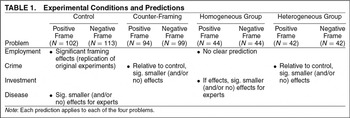
In Table 1, I summarize the experimental conditions (and number of participants), problems, and predictions. The column heads list the eight randomly assigned conditions. The first column includes the four problems to which participants responded in a random order. The predictions, which account for expertise in the control and homogeneous groups, are invariant across problems. In addition to examining whether the alternative contexts moderate the effects relative to the control group, I also will see if they eliminate the framing effects.

Framing Results
There are two ways in which I could present the results: I could present the results for each problem separately or I could merge the four problems together. It turns out that the general message is the same using either approach (or any other approach). Thus, for simplicity, I combine the responses to the four problems. Problem specific results, along with some tangentially relevant analyses, are available from the author.
For each participant, I add up the number of negative preferences expressed—that is, the number of preferences (zero through four) that were consistent with what would be expected if they had been given a negative frame (e.g., program B for the disease problem, program K for the employment problem; of course the results are identical if I instead add up positive preferences). An overall framing effect occurs if those who received the negative frames express significantly more negative preferences than those who received the positive frames (see, e.g., Fagley and Miller 1997 and Jou, Shanteau, and Harris 1996).
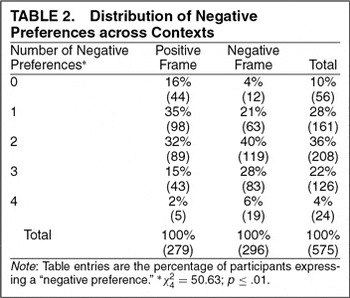
In Table 2, I report the distribution of negative preferences broken down by frame received, but not by contextual condition. Only 14% of respondents exhibited all negative or all positive preferences. More importantly, the table reveals an overall framing effect with twice as many negatively framed, as opposed to positively framed, participants opting for a majority (three or four) of negative preferences (34% versus 17%; χ24 = 50.63, p [les ] .01).

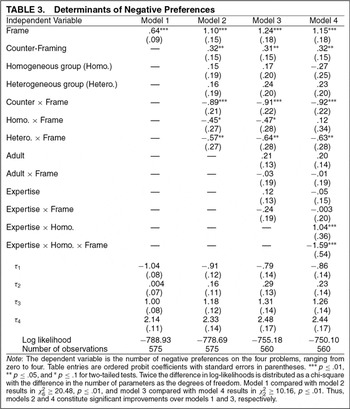
To examine the robustness of the effects across conditions, I run a series of ordered probit regressions with the number of negative preferences as the dependent variable. I present the results in Table 3.13
A version of Table 2 that presents negative preferences separately for each condition mimics the ordered probit results. Also, the results are the same when using alternative models, such as event count models. Five participants failed to express preferences on all of the problems and thus are excluded from the framing analyses.

The results strongly support my hypotheses. Specifically, the significant negative interactions between counter-framing and frame and between heterogeneous group and frame suggest that the framing effects are significantly smaller in these contexts than in the control group. Also, the significant negative interaction between homogeneous group and frame implies that the group does in fact moderate the effect, although the interaction is only marginally significant (p [les ] .1 for a two-tailed test).14
The significant main effect for counter-framing suggests that counter-framing caused respondents to express more negative preferences, regardless of the frame received.
I do this using Clarify (Tomz, Wittenberg, and King 1999) based on model 2. I do not plot standard deviations because Clarify provides probabilities for each dependent variable value (zero through four), and I sum the probabilities for three and four. The results are consistent using different breakdowns.

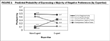
Predicted Probability of Expressing a Majority of Negative Preferences (by Condition)
Figure 1 shows a substantial and statistically significant framing effect for the control group, with those receiving the negative frame having a .47 predicted probability of expressing a majority of negative preferences, compared to just .12 for those receiving the positive frame. This finding reflects significant framing effects on all four of the individual problems in the control group (details available from the author). In contrast, the counter-framing condition eliminates the framing effect, revealing a nonsignificant .07 shift between frames; none of the four individual problems exhibit a significant effect.16
Using Clarify, I find that none of the probabilities for the five values of the dependent variables are significantly different (at the .05 level) across frames. I also find that the counter-framing framing effect is significantly relatively smaller than the control group's effect (using a difference of differences of proportions test).
For both group conditions, four of the five predicted probabilities for the five dependent variable values are significantly different across frames. I also find that for both groups, the framing effects are significantly relatively smaller than the control group's effect (at least at the .1 level).
In model 3, I add main and interactive variables for adult status and expertise.18
The number of observations drops slightly because some participants did not respond to the need for cognition questions.
Recall that I also expected expertise to moderate framing effects in the homogeneous group, where the effects are relatively smaller but still significant. I investigate this possibility with model 4, where I add a three-way interaction among expertise, homogeneous group, and frame. The highly significant negative coefficient suggests that in the homogeneous groups, framing effects are significantly greater for the nonexperts. Also, the two-way homogeneous–frame interaction is no longer significant.
In Figure 2, I plot the predicted probabilities of expressing a majority of negative preferences, by frame, for experts and nonexperts in the control and homogeneous discussion conditions.19
I exclude the adult variable for the regression on which the graph is based; however, the results are robust to including it and setting it at any of a variety of values.
The results are robust to including a variety of other controls including the order in which respondents received the problems; also no other interactions are significant (e.g., between other conditions and expertise).

Predicted Probability of Expressing a Majority of Negative Preferences (by Expertise)
In sum, in sharp contrast to widespread claims, framing effects are not robust across political contexts. Both counter-framing and heterogeneous discussions minimize framing effects, and in the former case, the effects are eliminated. Homogeneous discussions also reduce and eliminate the effects for experts, showing that individual level moderators depend on context (i.e., individual variables do not moderate the effects in the control group).
Reframing
According to my theory, counter-framing and heterogeneous discussions limit framing effects by prompting deliberate processing and offering reformulations of the problems. An alternative possibility, however, is that the initial frame pushes individuals in one direction, but then, when exposed to the reformulation, these individuals mindlessly (via accessibility) move in the other direction, ending up in the middle. While this alternative scenario suggests that context can limit the impact of a given frame, resulting in the appearance of invariant preferences, it also indicates extreme susceptibility to frames. Individuals' preferences are driven by whichever frame is last or loudest (see Chong 1996, 222, for discussion). If this is the case, it undermines claims about the limits of framing and the existence of coherent preferences.21
I thank an anonymous reviewer for making this point.
To evaluate the alternative interpretation, I conducted another experiment using the employment problem. I randomly assigned 73 participants, who had not taken part in the other experiment, to either a negative frame or a positive frame condition (i.e., there are two conditions). In the negative (positive) frame condition, participants first received the problem using a negative (positive) frame along with the counter-framing reformulation, just as in the above counter-framing experimental condition.
Put another way, I assigned participants to one of two conditions that mimicked the counter-framing experiment. This time, however, I asked participants to form a preference for one of the programs, but I did not ask them to report it on the questionnaire. Rather, after they completed a lengthy unrelated questionnaire, I presented the negatively (positively) framed employment problem again, but this time asked participants to report their preference.22
I do not ask participants to state their initial preference since doing so could create a demand effect (see, e.g., Loke 1989).
My theory predicts the absence of framing effects on the follow-up since the original counter-framing should stimulate deliberate processing that would limit the impact of the follow-up frame. In contrast, the extreme susceptibility interpretation predicts a significant framing effect due to the reexposure, since recent and frequent exposure to the given frame will make it more accessible (see, e.g., Chong 1996, 222, and Zaller 1992, 84). For example, in the negative frame condition, a participant received the negative frame more frequently (i.e., first and third) and more recently (i.e., after completing the unrelated questionnaire) and, thus, might be influenced by it.
I find strong evidence in support of my theory. Fifty-four percent (n = 35) of the participants in the negative frame condition report a negative preference, while 53% (n = 38) do so in the positive frame condition (for a two-tailed difference of proportions test, z = .14, p [les ] .89). This difference is even smaller than in the original counter-framing conditions, where the analogous figures are 57% and 47% (the control group figures are 54% and 39%).23
I also assigned a small number of other participants to control conditions—the results of which resemble these figures (from the above control condition experiment).
Preference Confidence
Scholars who study preference formation often implicitly assume that individuals base their behaviors on those preferences (e.g., policy decisions, voting, participation). Yet, in many cases, preferences have no impact on actions (e.g., Sears, Huddy, and Jervis 2003, 11). Thus, understanding behavior requires studying not only preference formation, but also the forces that increase the likelihood of a preference–behavior connection. One of the most salient factors is the confidence that individuals have in their preferences; increased confidence causes individuals to take actions based on their preferences, to deepen their commitment to their preferences, to ignore and not pursue additional information, and to resist persuasion (e.g., Sieck and Yates 1997, 218, and Visser, Krosnick, and Simmons 2003, 135–36). Confidence is clearly consequential, and how framing affects confidence has gone unexplored.
I remedy this by exploring whether individuals who are susceptible to framing effects—and thus lack coherent preferences—express increased confidence in their judgments. I expect this could be the case because individuals susceptible to framing are less likely to recognize conflicting ways of thinking about the problem (e.g., in terms of losses or gains). As a result, they avoid conflicted impressions that often work to decrease confidence (Tetlock 1986). Overconfidence in incoherent preferences also would be consistent with a well-documented overconfidence bias (e.g., Kuklinski et al. 2000 and Payne, Bettman, and Johnson 1993, 209).
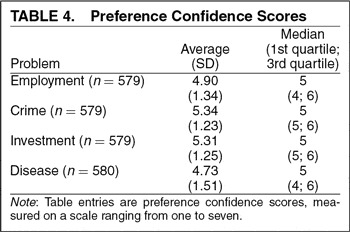
As mentioned, participants rated the confidence they had in each of their preferences on a seven-point scale ranging from a low score of “not confident at all” to “moderately confident” to a high score of “very confident.” I report the average and median confidence scores for each problem in Table 4.24
In these analyses, I exclude participants in the reframing experiment because I asked them to report their confidence after the initial counter-framing problem (even though they did not state their preference at this point) and then, again, after the reframing. This repeated expression of confidence makes them incomparable to the other participants.

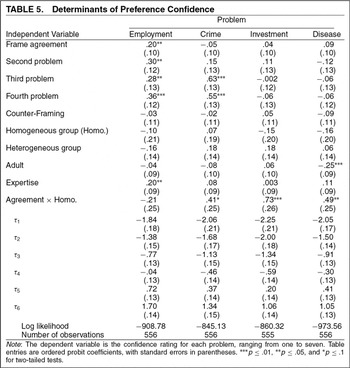
I include dummy variables that measure whether the participant (randomly) received the particular problem second, third, or fourth. Repetition, even absent actual increases in skill, can increase confidence (Oskamp 1965), and as a result, receiving a problem later in the order might enhance confidence. I also capture this by including the adult variable since it may relate to experience.
I include expertise, following prior work that shows that systematic information processing often produces increased confidence in judgments (e.g., Sieck and Yates 1997). Additionally, I include the experimental condition variables. Evidence suggests that discussion, particularly among homogeneous groups, stimulates confidence (e.g., Tindale, Sheffey, and Scott 1993 and Visser and Mirabile 2003); significant discussion condition effects also would be consistent with the argument that deliberation increases thoughtfulness and opinion justification, both of which can increase confidence (see Mendelberg 2002, 153). Finally, I add an interaction between frame agreement and homogeneous discussion group. I do so because framing effects occurred in this condition, and it also may be the case that agreeing with the frame along with supportive discussion could boost confidence (Visser and Mirabile 2003).25
I do not expect interactions with the other conditions since framing effects themselves are limited in those conditions, and thus, the frame agreement variable will be less salient. In other analyses, I find no significant results.
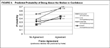
I present the results in Table 5; I analyze each problem separately to account for problem order and frame agreement. There is clear evidence that having a preference consistent with a framing effect bolsters an individual's confidence in that preference. In the case of the employment problem, this occurs as a main effect; for the other three problems, agreement complemented by homogeneous discussions causes participants to increase their confidence (and the effects are substantively significant). In Figure 3, I plot the probability of an individual expressing above-median confidence scores, for each problem, differentiating those whose preference agreed with the frame from those whose preference disagreed.26
I use Clarify, setting other variables at their means.
Examining the predicted probabilities for all seven values of the dependent variables, I find significant differences across values for the investment and disease problems and, marginally, for the crime problem.


Predicted Probability of Being Above the Median in Confidence
The results suggest that individuals who might base their preferences on frames—those who hold incoherent preferences—express increased confidence in those preferences. An added twist is that discussion sometimes works to generate overconfidence. The message for deliberative theorists is that homogeneous discussions act as a double-edged sword: They work to eliminate framing effects among experts; however, to the extent that the effects persist, they stimulate and reinforce an overconfidence in framed preferences (e.g., groupthink). Deliberation might lead to justification for preferences, but this is not a positive outcome if the preferences are baseless.
In other analyses, I find no interactive effects for expertise on confidence. Moreover, counter to my expectations, the results show that expertise directly influences confidence only for the employment problem, and adults move in the direction opposite to that predicted for the disease problem. Otherwise, I find that order matters in the expected direction, but only for the framing problems that do not involve risk attitudes. The experimental conditions have no direct effects on confidence; deliberation by itself is not sufficient to increase confidence, and counter-framing also has no effect.
In sum, the evidence points to a disturbing overconfidence bias (also see Kuklinski et al. 2000). Experts, who perhaps should have more confidence, are generally not more confident. On some problems, confidence grows from experience with prior problems, even though it is not clear that learning actually occurs (e.g., there is no feedback). And in certain contexts, particularly homogeneous deliberative situations, those who might be vulnerable to framing effects exhibit increased confidence. These individuals might be relatively committed to incoherent preferences. While framing appears much less relevant to political contexts than often presumed, when it does occur, it might be even more deleterious than previously thought. Moreover, since increased preference confidence tends to lead to preference stability, the results suggest that framing effects, once they occur, endure. This is the flip side to the reframing experiment, which shows that initial resistance to framing effects persists in the face of subsequent framing attempts.
CONCLUSION
Social scientists initially viewed framing effects as an intriguing empirical anomaly. While it was immediately evident that framing violates the first premises on which a considerable amount of social science is built (Russell and Thaler 1991), scholars did not readily abandon the fundamental concepts of preferences and stable attitudes. For example, in one of their initial articles, Tversky and Kahneman (1981, 457) acknowledge that the effects are “systematic, although by no means universal.” Over time, however, this sentiment changed such that nearly 20 years later, the authors describe framing as “ubiquitous” and “prevalent” (e.g., Kahneman and Tversky 2000). Many social scientists, including political scientists, have come to agree, and consequently, they have moved away from assuming that individuals maintain invariant preferences and/or stable attitudes (e.g., Zaller 1992). This has tremendous consequences not only for the study of economic, political, and social behavior, but also for theories of democratic responsiveness and market competition (Bartels 2003; Russell and Thaler 1991).
I argue that it is premature to abandon the concepts of preferences and attitudes and to accept the concomitant implications. My results show that framing effects depend in critical ways on context. As a result, framing effects appear to be neither robust nor particularly pervasive. Elite competition and heterogeneous discussions limit and often eliminate framing effects. Homogeneous discussions do the same among experts. These are meaningful contexts insofar as elite rhetoric and debate, and interpersonal conversations define many political environments. In fact, they presumably better mimic economic, political, and social situations than the traditional control group experiments (e.g., Kinder 1998, Mutz, Sniderman, and Brody 1996, and Riker 1995).
I conclude by discussing implications for rational choice, political psychology, and experimental methods. My results suggest that, under certain conditions, people maintain preferences that satisfy the rational choice assumption of invariance. This should not, however, be taken as an endorsement for the indiscriminate application of rational choice models. Rather, it accentuates the importance of undertaking empirical work that explores the robustness of rational choice assumptions in different contexts with various individuals. This would provide an assessment of which theories are appropriate in different situations and offer insight into the meaning of individuals' preferences under varying conditions.
Some rational choice scholars dismiss framing effects, citing a lack of experimental realism, inadequate participant incentives, or other fairly ad hoc reasons (e.g., Morrow 1994, 48, and Riker 1995). For example, Wittman (1995, 44) states, “The framing effect is unlikely to be so powerful in real life…. I have never run any of these experiments… subjects are fooled by frames only when they are inexperienced.” This is problematic not only because framing effects occur in certain contexts, but also because the effects can induce overconfidence in incoherent preferences. More generally, psychological work on decision-making has progressed to a point where deductive models of choice need not always rely on traditional rational choice assumptions, and this opens an opportunity for an enhanced theory of choice and strategy with stronger psychological foundations (e.g., Camerer 2003). Framing effects occur in certain contexts and should be taken seriously. My results show when rational choice assumptions may apply and when they may not; more work along these lines is needed so as to guide the application of rational choice models.
Just as rational choice approaches might benefit from a deeper appreciation of context, so would political psychological approaches. Extant framing effect results are not sufficient to dismiss preferences and stable attitudes, as many political psychologists have done (see Kuklinski and Jerit 2001, 344, for general discussion). More importantly, in recent years, political psychologists have focused on individual heterogeneity in reasoning, particularly sophistication; Sniderman, Brody, and Tetlock (1991, 8) refer to this as the heterogeneity hypothesis. While such individual heterogeneity matters, variations in context are of equal consequence. Lewin (1936) made this point over 60 years ago, but with a few recent exceptions (e.g., Kuklinski et al. 2001, Lau and Redlawsk 2001, and Sniderman, Hagendoorn, and Prior 2004), little attention has been given to contextual influences and their interaction with individual level variables (see Druckman and Lupia n.d. and Kuklinski 2002, 6, 8). This is particularly significant given the amount of political psychological research that uses data from the unique and typically constant context of conventional public opinion surveys. As Sniderman, Brody, and Tetlock (1991, 264–65) explain, “The conventional survey interview, though well equipped to assess variation among individuals, is poorly equipped to assess variation across situations.” The expertise results suggest that individual heterogeneity and contextual variations also interact with one another.
On a related point, my results—on equivalency framing effects—resemble work on issue framing effects insofar as counter-framing and heterogeneous discussion groups also moderate issue frames (Druckman and Nelson 2003; Sniderman and Theriault 2004).28
Druckman and Nelson (2003) find that individuals who are likely to have a prior opinion about an issue, as measured with the need-to-evaluate scale, are less likely to be influenced by issue frames. I find no moderating effect for the same need-to-evaluate measure; this is not surprising since participants are unlikely to possess prior opinions about the hypothetical problems. However, I find other evidence that prior opinions matter when it comes to equivalency framing, particularly with problems involving risk attitudes. Specifically, I measured participants' standing risk attitudes. I expect that, on the risky-choice problems (i.e., the disease and investment problems), more risk-neutral oriented participants will be more susceptible to framing effects since their prior risk attitudes are not strong in either direction and therefore are more open to risk manipulation. I find that this is the case for the disease problem; I do not find this for the investment problem, however. Details are available from the author. A related question in need of future work concerns the similarities and differences between equivalency framing problems that involve risk attitudes and those that do not (see, e.g., Levin, Schneider, and Gaeth 1998).
Experts may be more susceptible to issue frames because they possess the knowledge and ability to connect the considerations suggested by the frame to their opinions (Druckman and Nelson 2003, 731; Nelson, Oxley, and Clawson 1997). Put another way, in the case of issue framing, knowledge facilitates the use of the frames. In contrast, I argue and find some evidence that expertise limits the impact of equivalency frames. This is sensible insofar as, unlike issue framing effects, being affected by equivalency frames denotes irrational behavior; experts can combat this by overcoming the subconscious accessibility forces. If more conscious processes were at work with equivalency framing effects, I would expect smaller effects for all respondents.
A final implication concerns experimental design and inference. I argue that the widespread impact of framing effect results—despite the possibility that they are not particularly robust (also see Fagley and Miller 1997, 357)—reflects two inferential problems. First, scholars often focus on experiments with statistically significant framing effects (Kühberger, Schulte-Mecklenbeck, and Perner 1999, 223), and such experiments may be overrepresented in journals due to a publication bias toward positive findings. This can lead to a “file-drawer” problem such that skewed attention to positive findings results in an overestimation of an effect and its prevalence (Scargle 2000). Moreover, a lack of attention to negative findings inhibits an understanding of the determinants of framing effects.
The second inferential problem concerns external validity or the generalization of the results. The initial framing experiments involved testing alternative theories of choice (i.e., expected utility and prospect theory), and this minimized the salience of external validity concerns (Cook and Campbell 1979, 83). As the results gained notoriety, the effects and experiments became more applied to public policy and other areas (Kahneman 2000, xv). This enhanced the relevance of the work's external validity (Cook and Campbell 1979, 83), and, as discussed, confidence in the generalizability of the results stemmed from replications across domains with nonstudent subjects and so-called experts.
Experimental samples receive an inordinate amount of attention and criticism when it comes to the external validity of experiments in political science (e.g., Sears 1986), and many equate sample representativeness with external validity. Caporaso (1995, 460) explains that external validity is “often reduced to a sampling instability issue.” However, external validity involves much more than the sample—it also includes generalizing across settings, times, and stimuli (Cook and Campbell 1979, 71). When making assumptions about how people reason and when making inferences from empirical research, scholars need to carefully consider the context under study—perhaps, to an even greater extent than the population. In the case of framing, invariance in individuals' preferences depends on variations across settings.
I thank Casey Buboltz, Anna Buening, Christopher Chapp, Justin Holmes, Colleen Miller, Richard Norton, Michael Parkin, Elizabeth Sharrow, and Draeke Weseman for research assistance. I also thank Matthew Baum, Neal Beck, Jeffrey Cohen, Nicole Druckman, Jennifer Jerit, Jeffrey Koch, Dean Lacy, Jack Levy, Stephen Nicholson, Zoe Oxley, Samuel Popkin, Lee Sigelman, Paul Sniderman, Katherine Cramer Walsh, Jennifer Wolak, the anonymous reviewers, and seminar participants at Harvard University, the University of Chicago, the University of Minnesota, and the 2003 summer political methodology meetings for helpful advice. I acknowledge support from the Russell Sage Foundation's Small Grants Program in Behavioral Economics and the University of Minnesota McKnight Land-Grant Professorship.
References
Bartels Larry M..
2003.
“Democracy with Attitudes.”
In Electoral Democracy,
ed. Michael Bruce MacKuen and
George Rabinowitz.
Ann Arbor:
University of Michigan Press.
Bizer George Y.,
Jon A. Krosnick,
Richard E. Petty,
Derek D. Rucker, and
S. Christian Wheller.
2000.
“Need for Cognition and Need to Evaluate in the 1998 National Election Survey Pilot Study.”
National Election Studies Report.
Bless Herbert,
Tilmann Betsch, and
Axel Franzen.
1998.
“Framing the Framing Effect.”
European Journal of Social Psychology
28
(March/April):
287–
91.Google Scholar
Boettcher William A. III
1995.
“Context, Methods, Numbers, and Words.”
Journal of Conflict Resolution
39
(September):
561–
83.Google Scholar
Cacioppo John T., and
Richard E. Petty.
1982.
“The Need for Cognition.”
Journal of Personality and Social Psychology
42
(January):
116–
31.Google Scholar
Camerer Colin.
2003.
Behavioral Game Theory.
Princeton, NJ:
Princeton University Press.
Caporaso James A.
1995.
“Research Design, Falsification, and the Qualitative–Quantitative Divide.”
American Political Science Review
89
(June):
457–
60.Google Scholar
Chong Dennis.
1996.
“Creating Common Frames of Reference on Political Issues.”
In Political Persuasion and Attitude Change,
ed. Diana C. Mutz,
Paul M. Sniderman, and
Richard A. Brody.
Ann Arbor:
University of Michigan Press.
Cook Thomas D., and
Donald T. Campbell.
1979.
Quasi-Experimentation.
Boston:
Houghton Mifflin.
Cox Gary.
1999.
“The Empirical Content of Rational Choice Theory.”
Journal of Theoretical Politics
11
(April):
147–
69.Google Scholar
Druckman James N.
2001a.
“Evaluating Framing Effects.”
Journal of Economic Psychology
22
(February):
91–
101.Google Scholar
Druckman James N.
2001b.
“The Implications of Framing Effects for Citizen Competence.”
Political Behavior
23
(March):
225–
56.Google Scholar
Druckman James N.
2001c.
“Using Credible Advice to Overcome Framing Effects.”
Journal of Law, Economics, & Organization
17
(April):
62–
82.Google Scholar
Druckman James N., and
Arthur Lupia.
2000.
“Preference Formation.”
Annual Review of Political Science
3
(June):
1–
24.Google Scholar
Druckman James N., and
Arthur Lupia. N.d.
“Mind, Will, and Choice.”
In Oxford Handbook of Contextual Political Analysis,
ed. Robert E. Goodin and
Charles Tilly.
Oxford:
Oxford University Press. Forthcoming.
Druckman James N., and
Kjersten R. Nelson.
2003.
“Framing and Deliberation.”
American Journal of Political Science
47
(October):
728–
44.Google Scholar
Fagley N. S., and
Paul M. Miller.
1997.
“Framing Effects and Arenas of Choice.”
Organizational Behavior and Human Decision Processes
71
(September):
355–
73.Google Scholar
Fazio Russell H.
1995.
“Attitudes as Object-Evaluation Associations.”
In Attitude Strength,
ed. Richard E. Petty and
Jon A. Krosnick.
Mahwah, NJ:
Lawrence Erlbaum Associates.
Fazio Russell H., and
Michael A. Olson.
2003.
“Implicit Measures in Social Cognition Research.”
Annual Review of Psychology
54
(February):
297–
327.Google Scholar
Frisch Deborah.
1993.
“Reasons for Framing Effects.”
Organizational Behavior and Human Decision Processes
54
(September):
399–
429.Google Scholar
Higgins E. Tory, and
Gillian King.
1981.
“Social Constructs.”
In Personality, Cognition, and Social Interaction,
ed. Nancy Cantor and
John F. Kihlstrom.
Hillsdale, NJ:
Lawrence Erlbaum Associates.
Huckfeldt Robert, and
John Sprague.
1987.
“Networks in Context.”
American Political Science Review
81
(December):
1197–
1216.Google Scholar
Jou Jerwen,
James Shanteau, and
Richard Jackson Harris.
1996.
“An Information Processing View of Framing Effects.”
Memory & Cognition
24
(January):
1–
15.Google Scholar
Kahneman Daniel.
2000.
“Preface.”
In Choice, Values, and Frames,
ed. Daniel Kahneman and
Amos Tversky.
New York:
Cambridge University Press.
Kahneman Daniel,
Ilana Ritov, and
David Schkade.
1999.
“Economic Preferences or Attitude Expressions?”
Journal of Risk and Uncertainty
19
(December):
203–
35.Google Scholar
Kahneman Daniel, and
Amos Tversky eds.
2000.
Choice, Values, and Frames.
New York:
Cambridge University Press.
Kinder Donald R.
1998.
“Communication and Opinion.”
Annual Review of Political Science
1
(June):
167–
97.Google Scholar
King Gary,
Christopher J. L. Murray,
Joshua A. Salomon, and
Ajay Tandon.
2004.
“Enhancing the Validity and Cross-Cultural Comparability of Measurement in Survey Research.”
American Political Science Review
98
(February):
191–
207.Google Scholar
Kühberger Anton.
1998.
“The Influence of Framing on Risky Decisions.”
Organizational Behavior and Human Decision Processes
75
(July):
23–
55.Google Scholar
Kühberger Anton,
Michael Schulte-Mecklenbeck, and
Josef Perner.
1999.
“The Effects of Framing, Reflection, Probability, and Payoff on Risk Preference in Choice Tasks.”
Organizational Behavior and Human Decision Processes
78
(June):
204–
31.Google Scholar
Kuklinski James H.
2002.
“Introduction.”
In Thinking about Political Psychology,
ed. James H. Kuklinski.
New York:
Cambridge University Press.
Kuklinski James H., and
Jennifer Jerit.
2001.
“Commentary.”
In Citizens and Politics: Perspectives from Political Psychology,
ed. James H. Kuklinski.
New York:
Cambridge University Press.
Kuklinski James H.,
Paul J. Quirk,
Jennifer Jerit, and
Robert F. Rich.
2001.
“The Political Environment and Citizen Competence.”
American Journal of Political Science
45
(April):
410–
24.Google Scholar
Kuklinski James H.,
Paul J. Quirk,
Jennifer Jerit,
David Schwieder, and
Robert F. Rich.
2000.
“Misinformation and the Currency of Democratic Citizenship.”
Journal of Politics
62
(August):
790–
816.Google Scholar
Larrick Richard P.,
Richard E. Nisbett, and
James N. Morgan.
1993.
“Who Uses the Cost-Benefit Rules of Choice?”
Organizational Behavior and Human Decision Processes
56
(December):
331–
47.Google Scholar
Lau Richard R.
2003.
“Models of Decision-Making.”
In Political Psychology,
ed. David O. Sears,
Leonie Huddy, and
Robert Jervis.
Oxford:
Oxford University Press.
Lau Richard R., and
David P. Redlawsk.
2001.
“Advantages and Disadvantages of Cognitive Heuristics in Political Decision Making.”
American Journal of Political Science
45
(October):
951–
71.Google Scholar
Levin Irwin P.,
Gary J. Gaeth,
Judy Schreiber, and
Marco Lauriola.
2002.
“A New Look at Framing Effects.”
Organizational Behavior and Human Decision Processes
88
(May):
411–
29.Google Scholar
Levin Irwin P.,
Sandra L. Schneider, and
Gary J. Gaeth.
1998.
“All Frames Are Not Created Equal.”
Organizational Behavior and Human Decision Processes
76
(November):
149–
88.Google Scholar
Levy Jack S.
2002.
“Daniel Kahneman.”
PS: Political Science and Politics
35
(June):
271–
73.Google Scholar
Levy Jack S.
2003.
“Applications of Prospect Theory to Political Science.”
Synthese
135
(May):
215–
41.Google Scholar
Lewin Kurt.
1936.
Principles of Topological Psychology.
New York:
McGraw–Hill.
Loke Wing Hong.
1989.
“The Effects of Framing and Incomplete Information on Judgments.”
Journal of Economic Psychology
10
(November):
329–
41.Google Scholar
Lombardi Wendy J.,
E. Tory Higgins, and
John A. Bargh.
1987.
“The Role of Consciousness in Priming Effects on Categorization.”
Personality and Social Psychology Bulletin
13
(September):
411–
29.Google Scholar
Martin Leonard L., and
John W. Achee.
1992.
“Beyond Accessibility.”
In The Construction of Social Judgments, ed.
Leonard L. Martin and
Abraham Tesser.
Hillsdale, NJ:
Lawrence Erlbaum Associates.
Mendelberg Tali.
2002.
“The Deliberative Citizen.”
In Research in Micropolitics.
Vol. 6, ed. Michael X. Delli Carpini,
Leonie Huddy, and
Robert Y. Shapiro.
New York:
Elsevier Press.
Morrow James D.
1994.
Game Theory for Political Scientists.
Princeton, NJ:
Princeton University Press.
Mutz Diana C.,
Paul M. Sniderman, and
Richard A. Brody (eds.)
1996.
Political Persuasion and Attitude Change.
Ann Arbor:
University of Michigan Press.
Nelson Thomas E.,
Rosalee A. Clawson, and
Zoe M. Oxley.
1997.
“Media Framing of a Civil Liberties Conflict and Its Effect on Tolerance.”
American Political Science Review
91
(September):
567–
83.Google Scholar
Nelson Thomas E.,
Zoe M. Oxley, and
Rosalee A. Clawson.
1997.
“Toward A Psychology of Framing Effects.”
Political Behavior
19
(September):
221–
46.Google Scholar
O'Keefe Daniel J.
1990.
Persuasion.
Newbury Park, CA:
Sage.
Oskamp Stuart.
1965.
“Overconfidence in Case-Study Judgments.”
Journal of Consulting Psychology
29
(June):
261–
65.Google Scholar
Payne John W.,
James R. Bettman, and
Eric J. Johnson.
1993.
The Adaptive Decision Maker.
New York:
Cambridge University Press.
Quattrone George, and
Amos Tversky.
1988.
“Contrasting Rational and Psychological Analyses of Political Choice.”
American Political Science Review
82
(September):
719–
36.Google Scholar
Riker William H.
1995.
“The Political Psychology of Rational Choice Theory.”
Political Psychology
16
(March):
23–
44.Google Scholar
Russell Thomas, and
Richard H. Thaler.
1991.
“The Relevance of Quasi Rationality in Competitive Markets.”
In Quasi Rational Economics,
ed. Richard H. Thaler.
New York:
Russell Sage Foundation.
Scargle Jeffrey D.
2000.
“Publication Bias.”
Journal of Scientific Exploration
14
(Spring):
91–
106.Google Scholar
Sears David O.
1986.
“College Sophomores in the Laboratory.”
Journal of Personality and Social Psychology
51
(September):
515–
30.Google Scholar
Sears David O.,
Leonie Huddy, and
Robert Jervis.
2003.
“The Psychologies Underlying Political Psychology.”
In Political Psychology,
ed. David O. Sears,
Leonie Huddy, and
Robert Jervis.
Oxford:
Oxford University Press.
Sher Shlomi, and
Craig R. M. McKenzie.
2003.
“Information Leakage from Logically Equivalent Frames.”
Presented at the Biannual Conference on Subjective Probability, Utility, and Decision Making,
Zurich, Switzerland.
Sieck Winston, and
J. Frank Yates.
1997.
“Exposition Effects on Decision Making.”
Organizational Behavior and Human Decision Processes
70
(June):
207–
19.Google Scholar
Smith Stephen M., and
Irwin P. Levin.
1996.
“Need for Cognition and Choice Framing Effects.”
Journal of Behavioral Decision Making
9
(December):
283–
90.Google Scholar
Sniderman Paul M.,
Richard A. Brody, and
Philip E. Tetlock.
1991.
Reasoning and Choice.
Cambridge:
Cambridge University Press.
Sniderman Paul M.,
Louk Hagendoorn, and
Markus Prior.
2004.
“Predispositional Factors and Situational Triggers.”
American Political Science Review
98
(February):
35–
49.Google Scholar
Sniderman Paul M., and
Sean M. Theriault.
2004.
“The Structure of Political Argument and the Logic of Issue Framing.”
In Studies in Public Opinion,
ed. Willem E. Saris, and
Paul M. Sniderman.
Princeton, NJ:
Princeton University Press.
Tetlock Philip E.
1986.
“A Value Pluralism Model of Ideological Reasoning.”
Journal of Personality and Social Psychology
50
(April):
819–
27.Google Scholar
Thaler Richard H.
1991.
“The Psychology and Economics Conference Handbook.”
In Quasi Rational Economics,
ed. Richard H. Thaler.
New York:
Russell Sage Foundation.
Thompson Erik P.,
Robert J. Roman,
Gordon B. Moskowitz,
Shelly Chaiken, and
John Bargh.
1994.
“Accuracy Motivation Attenuates Covert Priming.”
Journal of Personality and Social Psychology
66
(March):
474–
89.Google Scholar
Tindale R. Scott,
Susan Sheffey, and
Leslie A. Scott.
1993.
“Framing and Group Decision-Making.”
Organizational Behavior and Human Decision Processes
55
(August):
470–
85.Google Scholar
Tomz Michael,
Jason Wittenberg, and
Gary King.
1999.
Clarify.
Version 1.2.1.
Cambridge, MA:
Harvard University.
Retrieved June 1. http://gking.harvard.edu/http://gking.harvard.edu.
Tversky Amos, and
Daniel Kahneman.
1979.
“Prospect Theory.”
Econometrica
47
(March):
263–
91.Google Scholar
Tversky Amos, and
Daniel Kahneman.
1981.
“The Framing of Decisions and the Psychology of Choice.”
Science
211
(January):
453–
58.Google Scholar
Tversky Amos, and
Daniel Kahneman.
1987.
“Rational Choice and the Framing of Decisions.”
In Rational Choice,
ed. Robin M. Hogarth and
Melvin W. Reder.
Chicago:
University of Chicago Press.
Visser Penny S.,
Jon A. Krosnick, and
Joseph P. Simmons.
2003.
“Distinguishing the Cognitive and Behavioral Consequences of Attitude Importance and Certainty.”
Journal of Experimental Social Psychology
39
(March):
118–
41.Google Scholar
Visser Penny S., and
Robert R. Mirabile.
2003.
“Attitudes in the Social Context.”
Unpublished manuscript.
University of Chicago.
Wilson Timothy D., and
Sara D. Hodges.
1992.
“Attitudes as Temporary Constructions.”
In The Construction of Social Judgments,
ed. Leonard L. Martin and
Abraham Tesser.
Hillsdale, NJ:
Lawrence Erlbaum Associates.
Wittman Donald.
1995.
The Myth of Democratic Failure.
Chicago:
University of Chicago Press.
Zaller John.
1992.
The Nature and Origins of Mass Opinion.
New York:
Cambridge University Press.
Experimental Conditions and Predictions
Distribution of Negative Preferences across Contexts
Determinants of Negative Preferences
Predicted Probability of Expressing a Majority of Negative Preferences (by Condition)
Predicted Probability of Expressing a Majority of Negative Preferences (by Expertise)
Preference Confidence Scores
Determinants of Preference Confidence
Predicted Probability of Being Above the Median in Confidence
 You have
Access
- 608
- Cited by
Comments
No Comments have been published for this article.