Historians of science and technology agree that nineteenth-century submarine telegraphic enterprises constitute powerful examples of alliances of electrical science and engineering, commercial risk-taking and entrepreneurial zeal.Footnote 1 In the wake of the expensive failures of the transatlantic telegraph cables of 1857–1858, a network of natural philosophers, electricians, entrepreneurs and others constructed a host of new cable designs, telegraphic instruments, electrical standards and other technical developments that underpinned the string of successful oceanic cables laid from the mid-1860s. By the 1890s, the cable industry had reached technical maturity and, according to Bernard Finn, developed a ‘culture of lassitude’ insofar as it was content to use tried and tested technologies rather than ‘promote meaningful change’.Footnote 2 The conservatism is suggested by the stability of cable designs, and by the failure of cable companies to exploit wireless and to pursue research and development on a scale comparable to that in large electrical manufacturers such as Bell and General Electric.Footnote 3
Several reasons for this trend have been suggested. First, from the 1870s until the 1920s, the industry was dominated by a handful of mainly British-based firms, including the operators, the Eastern Telegraph Company (ETC), and the manufacturers, the Telegraph Construction and Maintenance Company (TCMC). The near monopoly enjoyed by such firms made competing via new products and services unrealistic and significantly reduced the incentive to innovate.Footnote 4 Second, until the early 1920s, cable manufacturers were reluctant to explore radical new cable designs because existing types enjoyed typical life spans of several decades, and were costly to replace and adequately served the needs of cable operators. New cable designs represented a considerable commercial risk and threatened to render existing designs obsolete.Footnote 5 Third, commercial and government-run cable organizations were bound together by a web of financial agreements, international regulations, and other links that made it difficult for any one organization to make radical changes without disrupting these links.Footnote 6 The ‘lassitude’ of cable firms seems especially striking in comparison to newer branches of the emerging electrical communications industry. By the early twentieth century, wireless and telephony firms such as Bell and Western Electric were renowned for the scale and intensity of their industrial research and unsurprisingly would inspire some of the key contributions to the historiography of industrial research.Footnote 7
This paper suggests that attitudes to research and development (R & D) in the nineteenth- and early twentieth-century cable industry were more complex and less conservative than these interpretations claim. It focuses on the critical case of the ETC from its foundation, in 1872, to 1929, when it was merged with its great rival, the Marconi Wireless Telegraph Company, and a host of smaller commercial and state-controlled cable and wireless operators. Evaluating the ETC's R & D activities is problematic because, like so many British firms in the late nineteenth and early twentieth centuries, it was secretive about the matter.Footnote 8 However, analysis of its unpublished business records and other materials yields important new insights. As the following two sections show, its attitude towards research and development was far from conservative: from the 1870s onwards, it saw itself as an enterprise that actively encouraged and rewarded technical innovation, whether by giving external inventors the facilities for testing their apparatus and generous royalties, or by giving electrical staff financial assistance with patents and promotions for technical accomplishments. Contrary to Finn's claim that cable companies ‘failed to develop experimental laboratories, even after the turn of the century’, the ETC established a small research laboratory in 1903 where a handful of the company's leading electricians pursued research and technical development, often in collaboration with external academic physicists and electrical engineers.Footnote 9
The ETC's research capacity ultimately proved very effective in standardizing signalling practices adopted throughout the network, and developing instruments that would increase the speed and capacity of transmission and reduce the costs of manual working and of licensing external patents. Most of these technical developments built incrementally on previous designs but they were far from being meaningless. This paper shows that despite an initial surge in growth, the scale of R & D at the ETC remained very modest and by the 1920s looked small compared with that of its nearest competitor, the American-based Western Union, which was itself dwarfed by the scale of R & D at the largest American and German electrical manufacturers. While the ETC's senior figures met some of the demands of electrical staff for better research facilities, they seemed to believe that a modest internal research culture focused mainly on instrumental development was sufficient to meet ongoing demands for a fast, accurate and cost-effective service.
This paper addresses two related issues in the historiography of industrial R & D. The first concerns the definitions of industrial research. Fox and Guagnini and others have established that in the decades around 1900 this activity could legitimately be called scientific, insofar as it involved experimentation, mathematical analysis and the construction of general principles and laws, but a great deal of it focused on ‘routine’ and typically unspectacular industry-based tasks such as instrumental testing, incremental technical development, patent protection, standardization and quality control.Footnote 10 These tasks were arguably more representative of industrial research than of the development of radical new products and processes. Historians have also established that personnel and sites of industrial research were more diverse than earlier studies of industrial R & D suggested: it was pursued by personnel whose technical expertise derived mainly from long experience of industrial processes as well as by academically trained scientists, and took place in workshops, factories and other ‘non-scientific’ sites as well as in centralized laboratories.Footnote 11 Sensitivity to the heterogeneity of industrial research makes the situation at the ETC rosier than historians have assumed and highly instructive. Research in this firm was mainly conducted by electrical staff who had trained within the firm, but some tasks were delegated to outside scientific advisers with academic qualifications. Much of this activity was concentrated in the central research laboratory, but this should not detract from the important investigations that took place in remote cable ships and cable stations.
The second issue is the scale of British industrial R & D. Studies by Edgerton and Horrocks and others have demonstrated that before 1945, and even before 1914, this quantity was larger than historians have claimed.Footnote 12 This challenged an older argument that Britain's economic decline relative to Germany and the United States after 1870 owed much to the failure of British business to invest in R & D and to adopt the organizational structures of the research-intensive American firms that were the subject of much-debated analyses by Alfred Chandler Jr and his school.Footnote 13 British industrial R & D was certainly larger than this literature suggested, but it was still smaller than that in the United States by 1914.Footnote 14 The following analysis does not alter current understanding of the overall scale of British industrial R & D before 1945 but it does contribute to a growing literature which highlights the different scales and forms that it could take and argues that the model of R & D established in large American and German manufacturing firms on which Chandlerian analysis was based was not necessarily appropriate to all firms, in all sectors and in all countries.Footnote 15 As a firm that did no manufacturing, and whose chief goals included providing a fast, reliable and profit-making communication service and both maintaining and expanding an expensive global network of cables, we need to be alive to the possibility that its idea of an effective scale, focus and organization of research may have been very different from that at manufacturing firms like Western Electric with which it was sometimes contrasted.Footnote 16
The Eastern Telegraph Company and sources of innovation
The Eastern Telegraph Company's dominance of the nineteenth- and early twentieth-century submarine telegraph cable business is well known.Footnote 17 This British-based company was established in 1872 from the amalgamation of four smaller cable firms founded to operate a chain of strategically and commercially important submarine cables connecting Britain to India via the Mediterranean. As the provider of one of the fastest communication channels to the East, the ETC secured business from its wealthy clientele in the worlds of commerce, finance and politics and used much of its healthy profit for expansion. By 1892 it had become financially linked to, and the dominant member of, a large consortium of cable operating companies called the Eastern and Associated Telegraph Companies (or ‘Eastern group’), which operated approximately 113,000 kilometres of cable connecting the group's headquarters in central London to cable stations all over the globe, including Africa, Australia, the Far East, and South America. This represented nearly 46 per cent of the total length of the world's cables and by the turn of the twentieth century made the ETC one of the ten richest non-manufacturing companies in Britain.Footnote 18 Even by 1923, when the Eastern group was starting to face serious competition from rival cable operators and radio, it operated over 235,000 kilometres of cable, which represented a smaller but still sizeable global share of nearly 40 per cent.
Like all nineteenth-century commercial operators of inland and submarine telegraph cables, the ETC saw its main purpose as providing a rapid and reliable service to customers and healthy dividends to shareholders, and generating capital for expansion.Footnote 19 To maintain and improve the speed and accuracy of telegrams, the ETC relied heavily on the technical expertise of its own ‘electrical’ and ‘mechanical’ staff and of electrical engineers and physicists outside the firm. Almost all company electricians were employed to test and maintain the cables, telegraphic signalling and receiving instruments, batteries and other equipment whose faults cost the firm valuable line time. Until the early 1900s, outside inventors were generally seen as the principal source of major technical innovations, especially if these promised to increase the accuracy and speed of transmission, which were typically seen as ways of raising capacity and revenue.Footnote 20 This latter strategy was embodied in the twenty-one patent licensing agreements that the ETC signed between 1872 and 1929, some of which referred to such widely used instruments as William Thomson's siphon recorder of 1870 (which produced a permanent record of the faint signals emerging from long submarine cables), Alexander Muirhead's duplex apparatus of 1876 (enabling simultaneous transmission and reception), and Sidney Brown's ‘drum’ relay of 1899 (which considerably improved the speed and accuracy with which received signals were automatically passed on to recording instruments or to another cable).Footnote 21
The annual royalties for these inventions, and therefore the cost of spreading the risk of technological development to outside experts, often reached several thousand pounds, and it was an expense that the ETC would eventually try to reduce by appealing to the expertise of its own staff.Footnote 22 This latter strategy was certainly considered more appropriate to the question of telegraphic instruments than to the design of the cable itself because the ETC and its founder–chairman John Pender had close connections with the TCMC, who were its chief contractors for making and laying cables and whose engineers were treated as the principal sources of change in cable design. For example, an 1886 cable contract that the ETC signed with TCMC specified the use of a low inductive form of gutta percha insulation developed by the leading TCMC electrician Willoughby Smith.Footnote 23 Forty years later, the ETC's largest associate, the Eastern Extension Telegraph Company, exploited the TCMC's ‘inductively loaded’ form of cable, in which the central copper conductor was surrounded by an nickel–iron alloy tape.Footnote 24 First successfully used in short telephone lines, inductive loading enabled faster signalling by reducing two of the most notorious problems in telegraphic and telephonic transmission: the reduction in the definition and strength of signals caused by the enormous electrostatic capacity of the cables.
The ETC saw itself as an organization that rewarded inventors with generous royalties and actively encouraged technical innovation. When, in 1878, the German-English electrical engineer William Siemens publicly attacked Pender's monopolistic cable business for quashing the ‘ingenuity and enterprise of the telegraph engineer’, Pender retorted that the firm ‘encourages all inventors’ and gave ‘fullest consideration’ to ‘scientific men’ who ‘bring us any improvement which will supersede the existing instruments’ or ‘produce a cable of quality and strength’.Footnote 25 Its patent licensing agreements reflected a policy of ‘open competition’ because they gave the firm the right to suspend payments to existing patentees if their inventions were superseded and to continue if the original patentees produced an even better alternative.Footnote 26 Siemens's response is unknown but not all of those outside electrical engineers and physicists who engaged with the company shared his anxieties. Indeed, they often publicly thanked the ETC for providing the crucial resources – notably a large cable network and electrical staff – for investigative and development work. In 1910, for example, trial runs of the ‘drum’ relay at the ETC's principal British station at Porthcurno, far west Cornwall, provided an appreciative Sidney Brown with the opportunity to identify and correct an otherwise fatal wandering of the zero line of positive and negative signals received by the relay. A decade later, electrical engineer Douglas Gall was grateful to the ETC for the facilities needed to make a systematic study of the impedance of submarine cables.Footnote 27
The ETC's patent licensing agreements might suggest that, like the Western Union Telegraph Company at the end of the nineteenth century, it adopted what Israel calls a ‘passive approach’ to innovation insofar as it merely waited for external inventors to make ‘technical improvements’ rather than actively direct such processes.Footnote 28 But Israel points out that from the late 1860s Western Union's electrical staff not only took an active role in investigating and assessing these ‘improvements’ prior to adoption but ‘increasingly made important inventions of their own’.Footnote 29 For reasons of commercial secrecy or even lack of interest on the part of journal editors, a great deal of the inventive and research activity of ETC staff was never published.Footnote 30 However, for all their limitations as historical sources, published patents do suggest that Israel's description characterizes the electrical staff in the ETC.
By 1900 the ETC's electrical staff numbered over a hundred, most of whom had acquired their technical expertise via the firm's internal programme of training telegraphic operators and electricians and subsequent postings to overseas cable stations and ships.Footnote 31 Between 1872 and 1929 many of them had secured full protection on approximately ninety patent specifications.Footnote 32 Most of these patented inventions were electrical, mechanical or electromechanical devices relating to the way signals were transmitted, received, shaped, amplified and recorded, although a handful of devices produced in the 1920s exploited the relatively new technology of thermionic valves. Similar to the patents licensed from external inventors, these generally addressed the question of increasing the accuracy and speed of transmission, and of reducing the reliance on typically costly and often inaccurate manual working.
A significant but unsurprising number of internal patents focused on two of the most pressing issues in late nineteenth-century cable telegraphy: relaying and duplex balancing. The engineer and writer on telegraphy Charles Bright spoke for many in the cable industry when, in 1898, he observed, ‘With a view to effecting automatic, instead of manual, translation between lengths of submarine line, the cable relay may be said to have been the dream of the cable manager for years, and one that has occupied the minds of many an electrician’.Footnote 33 Typically, relays were electromechanical devices that, in response to an electrical signal, switched a local circuit having the power to actuate a device for passing on or registering the signal. They occupied the minds of so many cable managers because the electrical impulses arriving in distant cable stations were often too faint to cause a sufficient or reliable electrical contact in relays.Footnote 34
Duplex balancing proved no less of a headache to cable managers. One of the most widely used forms of duplex telegraphy in the cable service exploited a Wheatstone bridge circuit, in which two arms were the cable and an ‘artificial line’, which comprised an array of resistances and condensers chosen to mimic the electrical properties of the real cable as accurately as possible. If the arms of the bridge were properly balanced, signals could be simultaneously sent and received. However, the balance was easily disturbed (for example, by the effects of temperature on the cable or the use of sensitive instruments) and manual rebalancing was frequently necessary.Footnote 35 As late as 1922 Walter Judd, who served as electrician-in-chief to the ETC and Eastern group between 1905 and 1919, could lament that duplex balancing remained a task involving electricians’ ‘personal skill, intuition and experience’ and spent much of his career encouraging his staff to pursue technical alternatives to this ‘trial-and-error’ approach.Footnote 36
Many of the ETC's patents represented merely incremental improvements to such widely used instruments as Thomson's siphon recorder, but others constituted more significant steps. Outstanding examples of these latter achievements are the devices patented in the 1920s relating to signal regeneration. These represented both one of the most important outcomes of the ETC's internal research capacity and, by enabling signals to be passed from one cable to another without manual reshaping, its quest to increase transmission speed and accuracy and reduce staff costs. The basic mechanism for automatically reforming or regenerating signals that had become attenuated and distorted by passage through long submarine cables had its origins in the multiplex system of telegraphy developed by the French telegraph engineer Emile Baudot in the last decades of the nineteenth century. A key feature of the Baudot system was that a receiving instrument broke up an incoming distorted signal, selected its central and least-distorted portion and passed on a relatively undistorted signal to another cable or recording apparatus. The effectiveness of the system depended critically on synchronization of the speed and phase of rotating electromechanical distributors in the transmitting and receiving instruments and this was originally achieved using a correcting signal sent from the transmitting instrument.Footnote 37 In the early 1900s, the Baudot system was exploited and developed by operators such as the British Post Office, the Western Union and the ETC, but for many electricians the original synchronization method could not satisfactorily handle the highly distorted signals of long submarine cables and its correcting signal used valuable line time. In the mid-1920s the inventions that Harry Higgitt, William Jacob and other ETC electricians devised to solve these problems were hailed for their accuracy and stability: these included devices that used electric clocks, vibrating reed switches and phonic wheels to precisely control the speed of the distributors in the transmitting and receiving instruments, and used normal rather than additional signals to ensure synchrony between the distributors.Footnote 38 None of these devices changed cable telegraphy as profoundly as the siphon recorder or duplex, but, as we shall see, their impact on the ETC's business was significant.
The ETC's policy on the patents, insofar as it was stated, would have given staff an incentive to improve existing or to develop new inventions. As a co-applicant on most patents associated with staff, the firm evidently gave financial and legal help towards securing patents in exchange for part ownership of the invention protected. This had become a formal policy by 1909, when the ETC's Board of Directors agreed to ‘provisionally protect each idea or method that appears to be promising enough to warrant the expense’ and to consider full protection in the light of further ‘experience’ of the invention.Footnote 39 Fifteen years later, a related, but more direct, incentive to in-house inventing activity appeared in the form of a ‘Suggestions and Inventions Committee’, which was partly established to find technical ways of reducing operating costs at a time when the firm's revenue had been severely reduced by the post-war global economic slump.Footnote 40 For inventions deemed ‘novel and worth patenting’, the Committee gave financial and legal assistance towards securing full patent protection as well as cash prizes. Many of the inventions submitted between 1924 and 1927, which included improvements to automatic transmitters and relays, were patented, constructed and rolled out for service.Footnote 41
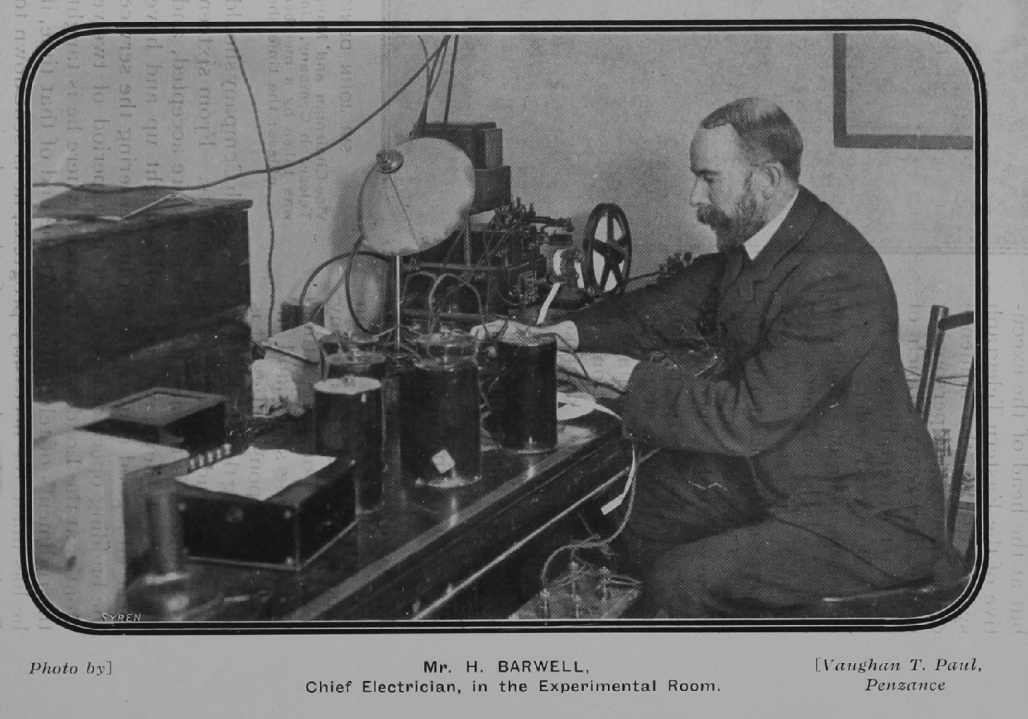
The ETC's culture of rewarding in-house technical innovation existed long before the 1920s and often referred to work arising from routine instrumental testing and maintenance work. For example, in 1900, Charles Schaefer, an ETC electrician serving aboard the cable ship Amber, enjoyed a similar career boost in recognition of his published papers describing new methods of determining the position of cable faults, which embodied empirical laws relating the resistance of an area of cable conductor exposed to sea water and the strength of the passing current.Footnote 42 Schaefer was certainly not the last electrician to be promoted or recognized by the ETC for contributions to methods of electrical measurement and fault detection, and other issues which the firm judged to be useful to its service and allowed to be published because it evidently saw any technique that would expedite repairs as beneficial to the cable business as a whole.Footnote 43 Neither is he the only electrician whose career challenges narrow conceptions of the locations and subject matters of industrial research and development in the early 1900s. As we shall see below, many of the ETC's ‘research’ staff divided their time between the central research laboratory and remote cable stations, where their duties included the standardization of cable signalling techniques, the investigation of new instruments from outside inventors, and the development of new apparatus (Figure 1).
Horace Barwell, chief electrician at the Porthcurno cable station, in the ‘experimental room’ at the station. Barwell was one of many ETC electricians who published original electrical researches undertaken in remote cable stations and cable-laying ships. From ‘A nerve centre of Empire’, Syren and Shipping, 4 January 1911, p. 4. Image courtesy of Porthcurno Telegraph Museum.

The laboratory and Oliver Lodge
In 1907 William Henry Preece, the retired engineer-in-chief to the British Post Office, observed in a paper read to the British Association for the Advancement of Science,
It speaks well for the technical spirit of the age that splendidly equipped experimental laboratories have been established in London at the General Post Office, National Telephone Company's central station, the Eastern Telegraph Company's headquarters, Electra House, and in New York and Boston, in America, by the American Bell Telephone Companies. Very satisfactory advances have been made in Great Britain, and excellent reports of progress have been published by the Institution of Electrical Engineers in London.Footnote 44
While historical analysis of industrial research has paid close attention to the laboratories at the Post Office, National Telephone Company and Bell, nothing comparable exists for the Eastern Telegraph Company's equivalent space.Footnote 45 In the early 1900s, however, Preece was not alone in thinking that this laboratory exuded a progressive ‘technical spirit’. One who shared this view was the eminent British physicist and principal of Birmingham University, Oliver Lodge, who attended Preece's address. Lodge was generally impressed by the space and from 1903 agreed to act as an outside adviser to the Eastern group and oversee much of the research conducted in the new laboratory on new methods of cable signalling and cable design.Footnote 46 The establishment of the Electra House laboratory and the recruitment of Lodge represented a significant change in the ETC's attitude towards centralized research and the role of outside electrical experts.
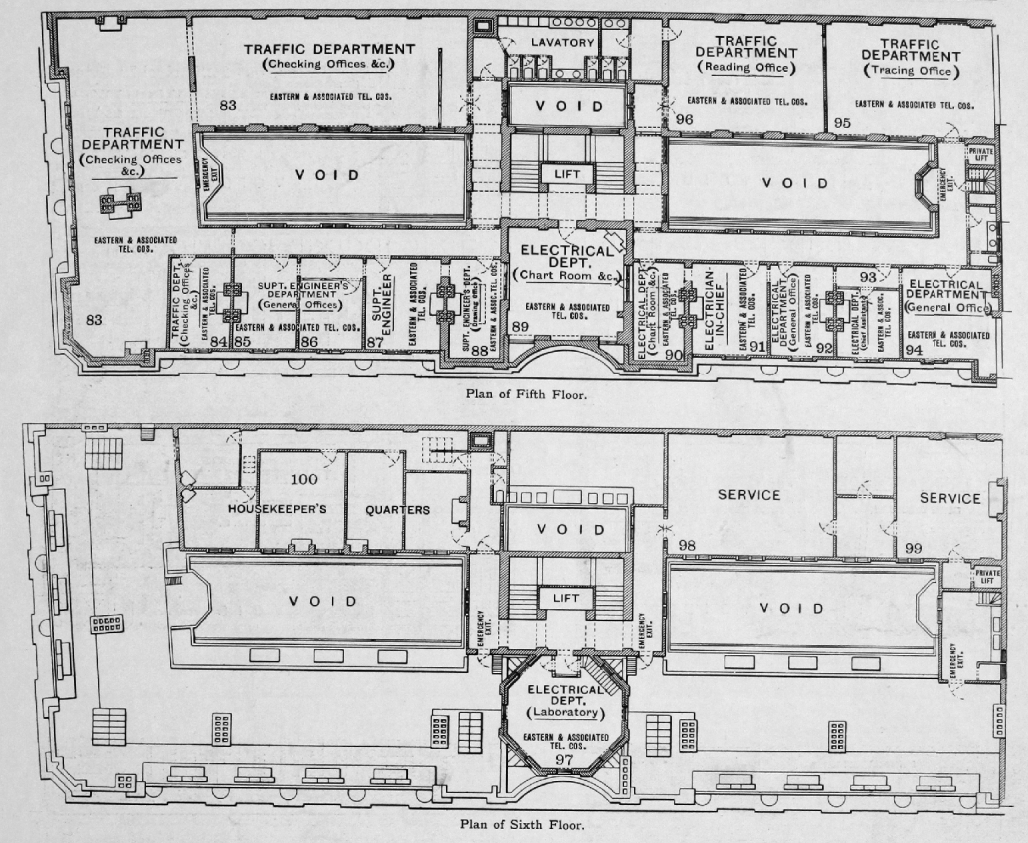
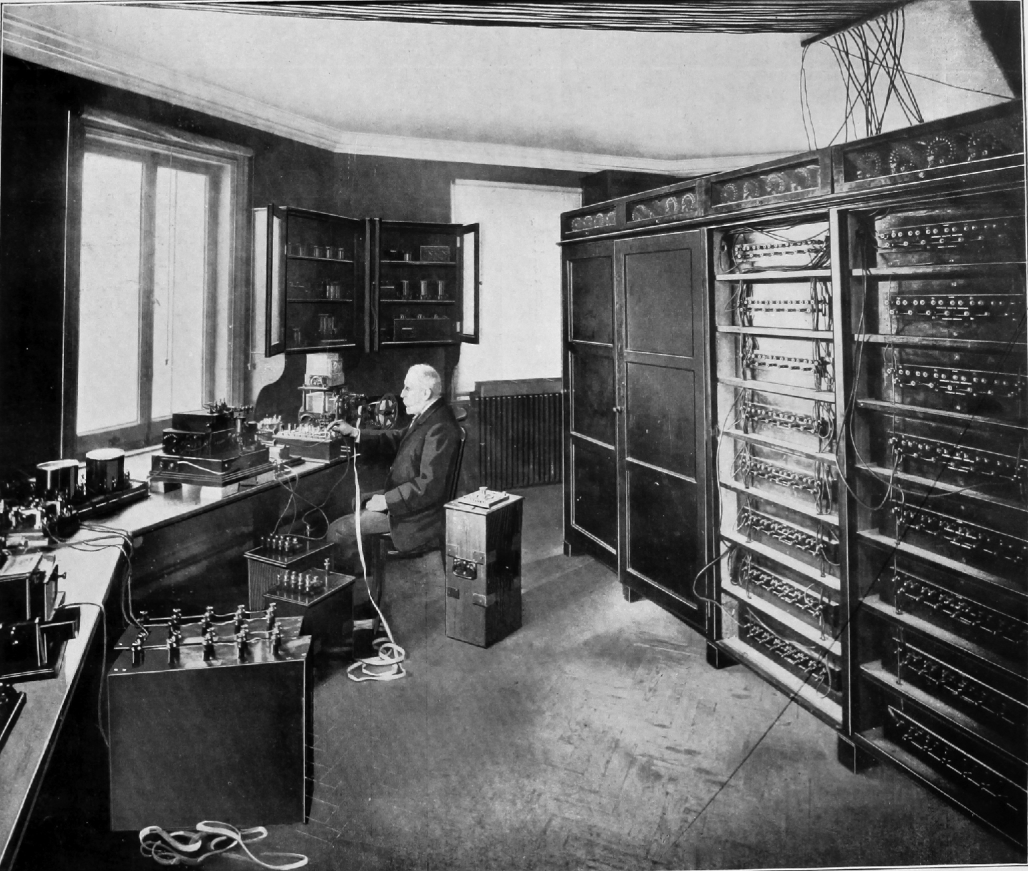
When the Electra House laboratory was founded in 1902 workspaces of this kind were increasingly common features of commercial and government organizations in industrialized countries, and reflected a wider shift towards more organized research and development activities.Footnote 47 By this time centralized laboratories were well established in the electrical industry, including several in firms involved in the manufacture of telegraphic instruments and cables, such as Siemens and Halske, TCMC, and Western Electric, while the ETC's great American rival, Western Union, had only recently turned the ‘repair shop’ in its New York headquarters into a large laboratory.Footnote 48 The Electra House laboratory was principally the outcome of the request of the electrician-in-chief, Henry Saunders, who in May 1902 persuaded the ETC's Board of Directors to pay for a room ‘fitted up with necessary apparatus and appliances for electrical experiments and the testing of new methods and inventions’.Footnote 49 The laboratory, installed in Electra House's imposing cupola, also functioned as a workshop and first occupants included Saunders and two of the most skilled electricians in the service – Charles Schaefer and Julian Elton Young – who formed the core of a new ‘Investigation Branch’ of the ETC's Electrical Department.Footnote 50 As a space initially established for testing rather than the development of new products, the Electra House laboratory was far from untypical of many industrial laboratories in this period. As several historians have pointed out, even General Electric's celebrated research laboratory began life as space focusing on putatively ‘routine’ tasks such as standardization, testing and increasing the reliability of existing products (Figures 2 and 3).Footnote 51
Plan view of two floors of Electra House in 1902. The laboratory was initially located in the octagonal room in the roof, then, around 1905, relocated downstairs to rooms 95–96 originally occupied by the Traffic Department. From Anon., ‘Electra House: the new home of the Eastern and Associated Telegraph Companies’, Builder's Journal and Architectural Record, 20 August 1902, pp. 1–13, 8. Image courtesy of Porthcurno Telegraph Museum.
There are several reasons why the ETC's Board of Directors would have looked on Saunders's request so favourably. First, they clearly understood that more space and resources, as well as a dedicated electrical staff, were needed to test new apparatus for coping with what the ETC's chairman, John Wolfe-Barry, saw as the firm's ‘ever-growing volume of work’.Footnote 52 These tests almost certainly included those involved in an expensive patent licensing agreement of 1901 which referred to Sidney Brown's drum relay and other instruments that the ETC envisioned as important solutions to its traffic problems.Footnote 53 A second, but less significant, reason was wireless telegraphy. Shareholders in the ETC and most cable companies were unsurprisingly nervous when, in December 1901, Guglielmo Marconi and his collaborators transmitted wireless telegraphic signals across the Atlantic ocean and created a form of rapid, long-distance communication that seriously threatened the hegemony of cables. Wolfe-Barry, however, reassured wealthy subscribers that wireless did not threaten their investments because, for the foreseeable future, cable telegraphy was likely to outperform it in terms of the speed and accuracy of transmission, secrecy and freedom from atmospheric electricity.Footnote 54 Despite this complacent public face, the ETC took wireless seriously enough to initiate experimental tests of different wireless systems and to exploit it for improving communication between cable ships and the shore and to feed additional traffic into cables.Footnote 55 A third, but far more significant, reason was an altogether closer and more tangible threat. This was the completion, in October 1902, of the trans-Pacific cable which was financed and run by the Australian, British, Canadian and New Zealand governments. Designed to strengthen Britain's telegraphic ties with its colonies and offer a cheaper and faster alternative to the ETC's notoriously expensive telegrams, the Pacific cable had such an adverse effect on the ETC's Anglo-Australasian traffic that the firm lowered its rates and by 1904 an anxious Wolfe-Barry was telling worried ETC shareholders that the firm was ‘continuing its old policy of constantly endeavouring to improve the speed and accuracy of their service by the application of the latest forms of apparatus’.Footnote 56 For this strategy to be effective, the ETC needed a dedicated space and resources.
Wolfe-Barry's attitude towards research and technical development was, I suggest, much more positive than we might suppose from his rather cavalier dismissal of the threat of that technological newcomer, wireless. A distinguished civil engineer who served as chairman until 1917, Wolfe-Barry brought a technical understanding to this powerful position that his two predecessors, John Pender and William Montagu Hay (the 10th Marquess of Tweeddale) lacked.Footnote 57 While in 1878 Pender doubted that ‘scientific men’ had the capacity to work outside their laboratories and engage with commercial issues, in early 1903 Wolfe-Barry insisted that one of the ways that Britain could regain the industrial lead it had lost to the United States and Germany was to have ‘the man of science installed in his laboratory in most important manufactories’.Footnote 58 By the time Wolfe-Barry uttered these words he was already discussing the possibility of having a ‘man of science’ closely involved in the work of his own laboratory at Electra House. Indeed, by July 1903, he delighted ETC shareholders by announcing that Oliver Lodge, whom he already knew through a mutual association with the National Physical Laboratory, had agreed to act as a consulting scientific adviser to the Eastern group as a whole. This was an implicit recognition that the ETC electrical staff could no longer keep the firm at the ‘forefront of scientific developments in cable and cable instruments’ without the help of an academically trained physicist or electrical engineer.Footnote 59
Lodge's role as scientific consultant to the Eastern group might seem strange given that in the 1880s and 1890s he had exasperated many ‘practical’ electricians employed by cable firms by defending the argument of his friend and fellow Maxwellian physicist Oliver Heaviside that self-inductance was beneficial to telegraphic and telephonic transmission and that Maxwellian theory was at least as important as practical experience in solving electrical puzzles.Footnote 60 However, Lodge was evidently prepared to work with electricians and other ‘practical’ men on commercial schemes where he stood to gain financially from sharing his electrical knowledge. This is suggested by the fact that he was one of a growing number of academic physicists who acted as scientific advisers to firms in the electrical industry, and in the 1890s he became involved with two Eastern group companies who exploited the syntonic form of wireless telegraphy that he and Alexander Muirhead promoted through a business syndicate.Footnote 61 He was also prepared to present the ETC with a formal assessment of the wireless ‘threat’, and it was his reassuring verdict to which Wolfe-Barry had appealed in his speech to nervous ETC shareholders in early 1902.Footnote 62
Lodge was certainly more tolerant of electricians and cable companies than was Heaviside, who, in late 1902, declined Wolfe-Barry's invitation to help the ETC improve the speed and efficiency of its network by application of his theory of ‘distortionless’ cables.Footnote 63 Published in the late 1880s, Heaviside's theory predicted that telegraphic signals would be transmitted without distortion and with reduced attenuation if the ratio of cable inductance (L) to resistance (R) matched that of electrostatic capacity (S) to leakage conductance (K). In long submarine cables, however, S/K was much larger than L/R owing to high S (caused by cable sheathing and sea water) and very low K (because of the high quality of insulation around the conductor). Making L/R = S/K meant either decreasing R (which usually meant using higher-quality and more expensive copper for the conductor) and/or ‘loading’ it with additional L. Wolfe-Barry would have known that by the early 1900s different schemes for inductively ‘loading’ overland and short submarine telephone lines had been successfully implemented, although its applicability to long submarine cables was uncertain.Footnote 64
Undoubtedly excited by the prospect of being paid to tackle this puzzle, Lodge wasted little time putting himself forward as a substitute for Heaviside. He had already begun cable telegraphy experiments in Birmingham but the ETC role would give him the money, equipment and staff needed to properly develop the work while fulfilling ‘pressing’ teaching and administrative responsibilities.Footnote 65 As far as Lodge was concerned the goal of increasing the speed and efficiency of signalling required systematic research into the methods of sending and receiving signals and into cable design. He was relatively confident about the first strand since he was already developing a sensitive microphonic device for amplifying received signals and exploring self-inductance at the sending end as a way of creating short, high-voltage pulses that would not suffer significant distortion on passage through a long cable. However, as he warned Wolfe-Barry in July 1903, redesigning cables was going to be the ‘most expensive and difficult part of the business’ given the cost of the artificial line and other apparatus, and uncertainties regarding the achievement of distortionless condition in real cables.Footnote 66
By the time Lodge expressed these hopes and anxieties he had already signed an agreement to act as ‘scientific adviser and investigator’ to the ETC and its associates for five years.Footnote 67 The position came with a substantial annual salary of £1,000 and additional yearly amounts for laboratory and other expenses. It entitled Lodge to use the Electra House laboratory's equipment and staff, although it expected him to use his own laboratory and staff at Birmingham and allowed him to have assistants pursue research at the London and Kent workshops of Alexander Muirhead, the eminent electrical engineer recognized and evidently ‘approved’ by the Eastern group.Footnote 68 Lodge was also expected to communicate his advice in written form to either Wolfe-Barry or an appropriate ETC official chosen by the company chairman. However, this advice and the results of research done by Lodge's assistants would also be summarized for the ETC's Board of Directors by the electrician-in-chief, who, as we shall see, often added his own commercial and technical assessment that weighed heavily with the board and shaped the course of Lodge's investigations.
Flexibility on research sites proved crucial since Lodge had decided by mid-1903 that it was easier for him to ‘conduct’ most of the research remotely, by communicating detailed instructions to his personal laboratory assistant Benjamin Davies, who would be temporarily located in Electra House and the Muirhead sites. Similar to the Electra House electricians with whom he would develop great camaraderie, Davies lacked a formal scientific education, but he had acquired considerable expertise in physics and electrical engineering since entering Lodge's service in 1882 and had proved himself a reliable extension of Lodge's experimental body in the 1890s when he worked at Muirhead's workshops on the Lodge–Muirhead wireless system.Footnote 69 Davies would prove an ideal bridge between the worlds of academic physics and commercial telegraphy. Owing to his educational background, he could introduce new approaches to electrical problems to Electra House staff without the intellectual hubris that seems to have been the source of doubts about a ‘cordial cooperation’ between Lodge and the company electricians.Footnote 70
The scale of R & D at the Eastern Telegraph Company
The Electra House laboratory and Lodge's advisory position represent obvious starting points in evaluating the scale of R & D at the ETC from the early 1900s to 1929. The original Electra House laboratory cost the ETC an undisclosed amount, but its relocations and expansions within the same premises, in 1905 and 1920, cost £400 and £10,000 respectively.Footnote 71 Between 1903 and 1908 Lodge cost the firm over £12,000, which included an additional £2,500 for apparatus used in loaded-cable experiments and £100 a year to allow Davies to live in London.Footnote 72 In addition to Lodge's costs, between 1907 and 1925 the Eastern group paid approximately £2,500 for five additional outside advisers – four electrical engineers and a chemist boasting academic qualifications – to carry out short-term investigations on wireless, loaded cables and other questions.Footnote 73
Salaries help establish a fuller picture of the ETC's provision for R & D. The main problem here is establishing a comprehensive list of ETC staff who did research, and what proportion of their salary can be regarded as R & D, but service records identify staff who, during part of their service career, worked in the Electra House laboratory and can therefore be assumed to have been paid to do research.Footnote 74 As we have seen, staff outside the central laboratory were also involved in research and so this is an underestimate of the salary contribution. Except for a drop during the First World War the number of core laboratory staff between 1902 and 1929 remained relatively level at approximately four, although they were occasionally joined by other ETC electricians and outside scientific advisers.Footnote 75 At various times the staff included Higgitt, Schaefer, Young, Kenneth Wood, William Jacob and Davies, who in 1908 left Lodge to work for the ETC full-time.Footnote 76 In the years when they worked in the laboratory their annual salaries rose from around £300 to £1000, which constitutes contributions to annual R & D spending of about £1,000 in the 1900s, £1,500 in the 1910s and £2,000 in the 1920s. Combining all this quantitative information, the ETC's average annual R & D spending was approximately £2,400 for the 1900s, £1,600 for the 1910s, and £3,000 for the 1920s. These represent much less than about 1 per cent of the total annual expenses of the ETC.Footnote 77
The significance of these estimates becomes clearer when comparing with R & D in other firms. Between 1900 and the 1929, the ETC's annual R & D expenditure was between roughly ten and a hundred times smaller than that of the largest British manufacturing firms.Footnote 78 Similar differences of scale emerge from comparisons between the ETC and leading American electrical manufacturers.Footnote 79 Even a smaller British manufacturer such as the Marconi Wireless Telegraph Company had a post-war annual R & D budget of around £40,000, which constituted over 15 per cent of its total expenses.Footnote 80 None of these comparisons, however, is fair given that the ETC was not a manufacturing firm. A better comparison is with the Western Union, which, like the ETC, focused on services, and whose R & D provision also challenges the idea of a conservative cable industry. In 1901 the major American telegraph firm had a single laboratory measuring five hundred square feet which six staff occupied, but by 1925, and mainly as a result of a short-lived takeover by American Telephone and Telegraph, it had laboratories occupying approximately 14,000 square feet and employing over twenty-five staff.Footnote 81 The Electra House laboratory compares well in the early years: between 1905 and 1920 it took up nearly 2,000 square feet and was occupied by about four core staff.Footnote 82 However, the subsequent expansion compares poorly since it involved only an additional room and no extra core staff. In many ways, this is consistent with Edgerton's finding that by the 1920s American firms outpaced British firms in terms of expenditure on, and size of, personnel and premises connected with R & D.Footnote 83
The Electra House laboratory in 1902. Here the electrician-in-chief, Henry Saunders, is seen testing the performance of a siphon recorder whose paper tape trails onto the floor. Behind him looms a large cabinet housing the ‘artificial line’. Anon., ‘Electra House: the new home of the Eastern and Associated Telegraph Companies’, Builder's Journal and Architectural Record, 20 August 1902, pp. 1–13, 10. Image courtesy of Porthcurno Telegraph Museum.
The comparison with Western Union is complicated by the fact that it was more diverse than the ETC. It operated both inland and submarine cables and accordingly focused much of its research on questions that were more important to inland than to submarine cable telegraphy, such as stock ticker services and telegraph poles.Footnote 84 Furthermore, it would not have made commercial sense for the ETC to follow the Western Union's example of devoting significant amounts of R & D to chemical, metallurgical and mechanical questions relating to cable manufacturing and laying when these were undertaken by the cable manufacturers with which it had close links (TCMC and Henley's) and which by the 1920s had large two-storey research laboratories.Footnote 85 Nevertheless, the foregoing quantitative analysis suggests that the ETC's provision for R & D may have had an impressive start (as Preece's remarks suggest) but by the interwar years was being seriously outpaced by that of an increasingly aggressive competitor. The next section explores the achievements of this modest-sized centre of industrial research and some of the main reasons why its growth seems to have been hampered.
Between ‘research’ and ‘routine’
In a draft obituary notice of his Electra House laboratory colleague Wilfrid Gaye, Benjamin Davies recalled in the late 1920s that the main duties of laboratory staff fell into three ‘distinct classes’: first, to ‘place all work as far as possible on a scientific basis’; second, to ‘systematise the cable system so that control from head office became definite’; and third, to ‘explore the ground for new methods of working’.Footnote 86 In his first three years as Lodge's representative, Davies focused mainly on the third class of work since this was the main requirement of the Birmingham professor's advisory position, but thereafter joined his ETC-trained colleagues in fulfilling all three classes, the first two of which focused heavily on instrumental testing and development.
Davies's first tasks involved exploring Lodge's suggestions regarding distortionless cables and new methods of sending and receiving signals. He and Young tackled the first issue mainly at the Electra House laboratory because this housed the enormous artificial line that was needed to simulate how the transmission qualities of real oceanic cables depended on the quantity and distribution of inductance and leakage conductance. The second issue, which was undertaken principally at Muirhead's London workshop, focused on Lodge's suggestions regarding improvements to the siphon recorder and the use of inductance coils and condensers to improve the definition and speed of transmitted signals.Footnote 87
Davies's painstaking measurements of the speed and attenuation of signals sent through different arrangements of the artificial line suggested that certain combinations of inductance and leakage conductance added to the line (in the form of induction coils and earthed resistors) significantly improved the speed and definition of transmission, but that this was going to be difficult to achieve on actual long cables owing principally to the difficulty of making them with iron or other inductive materials of sufficiently high magnetic permeability.Footnote 88 But in his reports to the ETC's Board of Directors in 1905, ETC chief electrician Walter Judd stressed that Davies's experiments had shown that improving cable performance would not require radical design changes: a cable with the thickest copper conductor feasible was faster, easier to construct and altogether cheaper than one with a thinner conductor uniformly shrouded by the highest-permeability iron used in commercial transformers.Footnote 89 As far as Judd was concerned, this appeared to ‘defer indefinitely’ the adoption of iron-coated cable conductors and evidently persuaded the ETC elite that Lodge and Davies could make better use of ETC money on other investigations.Footnote 90 Lodge agreed with Judd's argument, but he would have been frustrated that further investigations into distortionless cables using ETC resources and staff could not be commercially justified, even if they promised important scientific insights.Footnote 91
Despite being mothballed in late 1905, the research into distortionless cables helped the ETC electricians tackle the pressing question of how inductance could benefit cable telegraphy more generally. By the early 1900s, the ETC and other cable companies were exploiting Sidney Brown's ‘magnetic’ version of a Wheatstone bridge circuit for duplex telegraphy and his magnetic shunt used across a siphon recorder. Comprising arrangements of iron-cored inductance coils, these devices reduced the duration and strength of received signals but sharpened their definition, and made it possible for recorders and relays to handle higher rates of signalling.Footnote 92 Combining aspects of the distortionless cable work, reports of cable station staff using Brown's inventions, and other original research, Davies and Gaye established that a large amount of inductance at both the receiving and sending ends of a cable could significantly improve transmission speed and embodied this in a ‘service pamphlet’ of 1909 which included empirical formulae for helping all Eastern group electricians calculate the optimum value and form of inductance to be used.Footnote 93 Some of the procedures described in this publication were among the most widely adopted outputs of the Lodge–ETC collaboration and powerfully illustrate the extent to which the ETC saw standardization as a key constituent of research.Footnote 94
By the time Davies and Gaye's pamphlet was published, Davies had become a full-time member of the ETC, and while the firm still paid Lodge a consultancy salary, they seem to have been less interested in his advice than in exploiting Davies's electrical knowledge and skills in pressing commercial and technical challenges.Footnote 95 The most common were constructing new relays and amplifiers, and methods of duplex balancing; investigating the performance of in-house and external inventions; and troubleshooting technical problems reported by cable station superintendents.Footnote 96 Much of relay and amplifier work took place at Electra House and Porthcurno from around 1911 to the outbreak of the First World War and resulted in several new inventions from Davies and others. Most relays used for long submarine cables had used the positive and negative pulses of ‘cable code’ rather than the older dots and dashes of Morse code whose enormous loss of definition in transit rendered them useless for this kind of telegraphy. However, an invention that Davies and Judd patented in 1914 enabled signals to be sent in Morse code and received with a definition and accuracy better than that of cable code.Footnote 97 Installing this and other inventions proved to be laborious, frustrating and, for Davies, not of ‘high scientific interest’, but by the early years of the First World War the work had enabled the ETC to turn Porthcurno into a relay station with a reduced staff and, following the expiry of a 1901 agreement to use Brown's drum relay and other external patents, reduce its annual patent costs from around £1,000 to £70.Footnote 98
The First World War had a serious impact on research at the ETC. Some experimental work was undertaken but since the core laboratory staff spent much of the war in military research (such as Davies) or on active military service (such as Kenneth Wood), it proved virtually impossible to pursue the kind of collaborative work that had proved so effective before the war.Footnote 99 Even after the conflict, the ETC faced a series of commercial and organizational problems that were seen to be far more significant than a perceived lack of research capacity. Well into the early 1920s the priorities of the ETC remained focused on dealing with a huge increase in traffic which, since its start in the First World War, had boosted profits and further raised the commercial importance of maintaining existing and laying additional cables.Footnote 100 The task of maintaining a busier and larger network put a significant strain on the ETC's electrical department and forced laboratory staff to take on more routine work. For Davies and other laboratory staff, however, the ETC's priorities looked increasingly questionable. Working in a laboratory whose size and staff numbers were very small, and with ‘routine work’ relating to traffic absorbing the time he required for research, he expressed more widely shared misgivings about the organization of British industrial research and envied commercial and government organizations with the far larger facilities for R & D.Footnote 101 From late 1919 he complained bitterly to Lodge that he and other ETC electricians resented the ‘purely business side’ of the ETC, who were ‘absolutely blind to science’, who only grudgingly supported a new laboratory dedicated to ‘research’ rather than ‘routine’ matters, and who did not appreciate the potential benefits of research into still relatively unexplored areas such as inductively loaded oceanic cables.Footnote 102
Davies's bitterness was particularly acute in 1922 when he reached his ETC retirement age having only ‘half finished’ researches on loaded cables that, owing partly to the capacity of new thermionic valves to detect the kind of faint signals received from such cables, had been revived by Judd in 1918.Footnote 103 But Davies's belief that this personal failure owed much to the ETC's scientific ‘blindness’ and conservatism needs qualification. By 1922, and with the crucial backing of the ETC's chairman John Denison-Pender and managing director Henry Grant, the firm had spent £10,000 on a new laboratory which had been a hive of activity: it was here that Davies made significant progress on a form of loaded cable that bypassed the need for high-permeability iron and which was later tested on a small scale by TCMC and co-patented by the ETC; it was here that Higgitt, Wood and others continued developing the major components of the regenerator system; it was here that two new outside advisers, American electrical engineers Frederick Pernot and Lester Rich, refined their multichannel signalling apparatus whose patent license the ETC eventually purchased after the device was shown to double traffic-carrying capacity on an ETC cable; and it was here that work began on the use of thermionic valves in magnifiers and relays.Footnote 104 The scale of the ETC's post-war research into telegraphic apparatus may not have been comparable to that in Western Union, but it was certainly neither stagnant nor ineffective. Some industry insiders certainly agreed with Davies and thought it could be doing more, but had no doubt that it exuded a more ‘progressive’ attitude than ever before.Footnote 105
Davies's criticisms of the conservative attitude of cable manufacturers, as opposed to operators, were more widely shared, and had greater justification.Footnote 106 His frequent visits to the TCMC's works would have revealed that this leading manufacturer was doing some research on high-permeability iron alloys for use in loaded cables, but simply not on the scale of American firms such as Western Electric whose achievements both Davies and Lodge envied.Footnote 107 A powerful measure of the American lead came in 1923 when the TCMC agreed to build and lay, for Western Union, a cable whose copper conductor was wrapped in a tape made from Western Electric's high-permeability nickel–iron alloy, ‘permalloy’, patented in 1921. Laid between New York and the Azores in 1924, it could handle four times as much traffic as an ordinary cable. It was partly the success of this first loaded long submarine cable that inspired the TCMC to build, for the Pacific Cable Board and Eastern Extension company, long cables using its own ‘mumetal’ alloy which boasted a comparable increase in capacity. For Davies, these moves would have seemed too little too late and showed that it took a ‘serious rival’ to ‘jolt’ cable manufacturers ‘out of the rut’.Footnote 108
When these mumetal loaded cables were opened for business in 1926, the ETC entered one of the most difficult phases of its history. Between 1892 and 1923, its ownership of the global cable network had dropped from 20.6 per cent to 16.5 per cent, and with its associates its share had dropped from 63.1 per cent to 42.7 per cent.Footnote 109 The Eastern group had lost most of its share to commercial operators such as the Western Union and to British imperial, French and Japanese government operators. By late 1927, however, the Eastern group and many of its competitors were facing their most serious external threat to date: beam radio. Between October 1926 and August 1927 the British Post Office-run Imperial Wireless Chain came into operation, a service exploiting the Marconi Wireless Telegraph Company's new system of wireless telegraphy involving concentrated short-wave beams.Footnote 110 It boasted a longer range and lower running costs than traditional long-wave radio and enabled telegrams to be sent more quickly and cheaply than by cables. Senior ETC figures reiterated their old argument that communication by cable would long remain securer and less vulnerable to atmospheric electrical disturbances than wireless.Footnote 111 However, a combination of beam competition and an increasingly unstable global economy reduced the ETC's business for its telegrams and the firm could only continue paying healthy dividends and building up its reserve fund by cutting tariffs, selling cable ships, closing stations and making other severe reductions in working expenses.Footnote 112
It is possible to suggest that had the ETC invested more heavily in research into loaded cables and exerted more pressure on cable manufacturers to produce the new designs they would have had a global network that would have been more effective at competing with beam radio. In the mid- to late 1920s, however, a different technological response to competition had commercial and technical advantages to a firm laden with a vast, expensive and ageing chief asset and a small but effective culture of research and technical development. While loaded cables promised to increase capacity between four and five times, they were approximately 15 per cent more expensive to manufacture than ‘plain’ cables and could not realistically cope with duplex signalling.Footnote 113 The regeneration system, however, was considerably cheaper and easier to install than any cable and could handle duplex. By mid-1926 it had boosted capacity by approximately 30 per cent on some of the ETC's busiest lines, mainly by avoiding the errors and delays in manual working, and within two years had been installed on all the principle routes.Footnote 114
The positive effect of the regeneration system, reduction of tariffs and economies in working on the ETC's financial state was not enough, however, to dissuade senior figures in the ETC and its associates that, unless some kind of cooperative arrangement with the beam system could be negotiated, the businesses faced collapse. By 1929 a solution had been brokered by the British government, which wanted to protect a host of ailing cable companies – including the Eastern group and Pacific Cable Board, and their strategically critical networks – and wireless operators including the Post Office beam radio and the service division of Marconi Wireless. Analysis of the eventual solution, a company called Imperial and International Communications (I&IC) that merged all these cable and wireless firms, is beyond the scope of this paper, but the continued place of R & D in the reorganized business highlights an important aspect of the argument developed here.Footnote 115 Most of I&IC's wireless research was done at Marconi's large research laboratories in Chelmsford, but cable telegraphy research continued at the Electra House laboratory. This latter space proved remarkably resilient in the early 1930s, when the global economic slump had significantly reduced demand for cable and wireless communications and forced the I&IC to make drastic reductions in staff numbers and working expenses. In early 1933 a proposal to close the laboratory was rejected partly because it was still recognized as a small investment that could continue to deliver substantial financial returns in terms of cheaper and more accurate cable telegraphy.Footnote 116
Conclusion
In his study of industrial research in British railway firms during the 1920s and 1930s Divall concluded that this activity was modest and commercially effective, and done on a much larger scale and more effectively organized than historians have assumed. This does not, Divall warned, vanquish criticisms that British industry as a whole in this period significantly lagged behind the United States of America in terms of scale and organizational efficiency.Footnote 117 This paper draws similar conclusions about a business operating a far larger communication network. Its expenditure on research was tiny for a business of its size and the provision was small compared with that of its nearest competitor, the American-based Western Union, and yet its size and effectiveness were more significant than historians have assumed. As a firm whose chief goals were providing a rapid and reliable service, maintaining and growing its capital-intensive cable network, and creating profits for healthy dividend payments and reserve funds, it proved cost-effective for it to divide research and technical development unevenly between internal and external agencies. After 1900, and with the drive towards greater automation and smaller operating costs, there were relatively sound commercial arguments for a small amount of research into instrumental development, standardization of working practices and, to a lesser extent, cable design being done internally, and outsourcing some instrumental development and most of the work of cable design.
The case of the ETC suggests that caution is needed when characterizing the late nineteenth- and early twentieth-century cable industry as conservative. There were unquestionably many areas (notably cable design) where cable firms were reluctant to make significant changes, but also others, such as instrumental design, where the pace of development was a good deal faster, even if this did not produce radical changes. The ETC is also important because it represents a type of business so often overlooked in studies of industrial R & D. Historians agree that service-sector businesses played a crucial role in British economic growth, and the particular ways in which they organized R & D need to be part of a more nuanced understanding of British industrial R & D per se.Footnote 118 One of the most striking, but comparatively underexplored, features of R & D in firms operating communication services is the extent to which it was distributed across different organizations, principally as a way of reducing costs and risks. The success of late nineteenth- and early twentieth-century cable firms in Britain, America, Germany and other countries owed much to their capacity to form cartels, market-sharing agreements and other mutually profitable and usually transnational associations.Footnote 119 The extent to which these interconnections may have operated at the level of R & D is only just beginning to be understood. These interconnections have been seen as hampering research, but they may well have been more fruitful for this activity. For example, the ETC conducted important research into wireless telegraphy on behalf of the Danish-based Great Northern Telegraph Company and, with the TCMC, shared research staff and resources, and proposed starting a private research company, with the American-based cable operator All-America Cables.Footnote 120 How common and effective these collaborations were are questions that can be fruitfully investigated using the still relatively underexploited archives of the cable businesses, the private papers of cable men, and close readings of technical and financial periodicals. In any case, this material will prove essential in extending the approach made here to the plethora of nineteenth- and twentieth-century cable firms across the globe and developing a comparative and altogether more nuanced understanding of their attitudes towards and achievements in research and development.