Introduction
Indigenous chickens are the most common species of livestock domesticated by resource-limited rural communities of Southern Africa (Mtileni et al., Reference MTILENI, MUCHADEYI, MAIWASHE, PHITSANE, HALIMANI, CHIMONYO and DZAMA2009). Poor households with minimal labour resources traditionally rear chickens. Indigenous chickens are also known as rural, village, scavenging, traditional or family chickens, and have various names in local languages. In Southern Africa, indigenous chickens are reared under extensive or scavenging system and to a lesser extent in a semi-intensive system under subsistence farming, with few or no inputs for housing, feeding and health care (McAinsh et al., 2004; Muchadeyi et al., Reference MUCHADEYI, SIBANDA, KUSINA, KUSINA and MAKUZA2004; Mtileni et al., Reference MTILENI, MUCHADEYI, MAIWASHE, PHITSANE, HALIMANI, CHIMONYO and DZAMA2009). Despite these challenges, indigenous chickens contribute significantly to the livelihood of rural communities of Southern Africa. A series of surveys in Southern African countries indicates that indigenous chickens play important socio-economic roles amongst resource-limited rural communities. They can convert available feed resources around a house or village into highly nutritious, well appreciated products and functions. These include meat, eggs, feathers and poultry farmyard manure. A large proportion of animal protein consumed in rural areas of Southern Africa comes from indigenous chicken meat and eggs (Swatson, Reference SWATSON2003) and is considered to be the main source of income for the rural poor (Muchadeyi et al., Reference MUCHADEYI, WOLLNY, EDING, WEIGEND, MAKUZA and SIMIANER2007a). Chickens also have roles socio-culturally for social functions, hospitality and exchange of gifts to strengthen relationships (Aklilu et al., Reference AKLILU, UDO, ALMEKINDERS and VAN DER ZIJPP2008; Mapiye et al., Reference MAPIYE, MWALE, MUPANGWA, CHIMONYO, FOTI and MUTENJE2008; Mtileni et al., Reference MTILENI, MUCHADEYI, MAIWASHE, PHITSANE, HALIMANI, CHIMONYO and DZAMA2009).
General descriptions of freely ranging indigenous chickens have relied on the phenotypic characteristics of chickens (Swatson, Reference SWATSON2003). A more accurate approach to the characterisation of chickens makes use of genetic studies that make use of molecular markers. Recent findings on indigenous chickens using microsatellites confirmed genetic differences and contribution of targeted Southern African chicken populations to purebred commercial lines in Zimbabwe and Malawi chickens (Muchadeyi et al., Reference MUCHADEYI, EDING, WOLLNY, GROENEVELD, MAKUZA, SHAMSELDIN, SIMIANER and WEIGEND S.2007b) and in South African chickens (Mtileni et al., 2011). These differences further justify conservation efforts for these valuable genetic resources. Conservation of chicken genetic resources can be divided into two main objectives: those which have an immediate applicability plus future value and those that seek to conserve for the future (Barker, Reference BARKER2001; Lekule and Kyvsgaard, Reference LEKULE and KYVSGAARD2003; Oldenbroek, Reference OLDENBROEK2007). The erosion and loss of animal genetic resources would compromise the flexibility of future breeding measures (FAO, Reference FAO2007a). According to Hoffmann (Reference HOFFMANN2009), chicken genetic resources are considered to be the most endangered and under-conserved, with FAO estimated the risk status of the world's chicken breeds of about 33% considered endangered to critical breeds and another 40% with unknown risk status (FAO, Reference FAO2007b). The Southern African experience is the frizzled, naked-neck, dwarf and silky genes reported to be in serious danger of extinction (Moreki, Reference MOREKI2003). These highly valuable genetic resources should be conserved for their adaptive features, traits of scientific and economic interest, cultural-historical values, strong links to regional traditions, and their ability to generate income for rural poor communities.
The Fowls for Africa project of the Agricultural Research Council at Irene and Cedara are two government efforts to conserve the indigenous chicken genetic resources in South Africa (ARC, Reference ARC2006). There is, however, limited information on the genetic diversity of indigenous chicken genetic resources kept by rural communities of Southern Africa (Muchadeyi et al., Reference MUCHADEYI, EDING, WOLLNY, GROENEVELD, MAKUZA, SHAMSELDIN, SIMIANER and WEIGEND S.2007b; Mtileni et al., 2011). This information is crucial for proper planning of conservation activities and in establishing a niche market for utilisation of indigenous chicken genetic resources. Therefore, the objective of this review is to collate current information on the conservation status of indigenous chickens with the view of highlighting opportunities for sustainable utilisation and conservation of these genetic resources in Southern Africa.
Cultural or historical value of indigenous chickens
Crawford (Reference CRAWFORD1990) provided historical records indicating that the initial domestication of fowl in Southern African countries was primarily for cultural and religious purposes. Fowls were kept for feathers, white and black magic and cock fighting (Crawford, Reference CRAWFORD1990). In many parts of Southern Africa, indigenous chickens have roles in traditional ceremonies such as marriage feasts, weddings and funerals (Mapiye et al., Reference MAPIYE, MWALE, MUPANGWA, CHIMONYO, FOTI and MUTENJE2008). The gift of a chicken is often a way of welcoming high status visitors or honouring affines and kin. Birds are frequently sacrificed, and, in some cultures, the entrails of dead birds are consulted as oracles (Mtileni et al., Reference MTILENI, MUCHADEYI, MAIWASHE, PHITSANE, HALIMANI, CHIMONYO and DZAMA2009). Indigenous chickens are used to strengthen relationships with in-laws and to maintain family contacts by entrusting them to other family members (Muchadeyi et al., Reference MUCHADEYI, SIBANDA, KUSINA, KUSINA and MAKUZA2004) and they are used as token of appreciation for service rendered (Kusina and Kusina, Reference KUSINA and KUSINA1999). For these reasons, Whyte (Reference WHYTE2002) notes that poultry are not simply birds, they are a social and cultural practice. Village chicken feathers are used to make special clothes such as skirts, hats and pillows for traditional healers for their day-to-day use and for spirit mediums to wear during traditional ceremonies (Mapiye et al., Reference MAPIYE, MWALE, MUPANGWA, CHIMONYO, FOTI and MUTENJE2008).
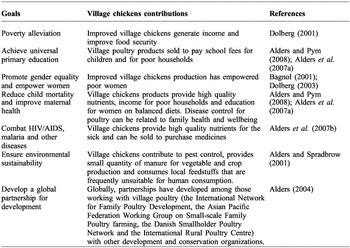
The role of indigenous chickens as a potential tool to escape extreme poverty as described in Table 1 has frequently been claimed (Dolberg, Reference DOLBERG2001; Dossa et al., Reference DOSSA, BIRNER and WOLLNY2003; Kristjanson et al., Reference KRISTJANSON, KRISHNA, RADENY and NINDO2004; Holmann et al., Reference HOLMANN, RIVAS, URBINA, RIVERA, GIRALDO, GUZMAN, MARTINEZ, MEDINA and RAMIREZ2005). Their outputs such as meat and eggs serve as a good source of protein for both rural and semi urban people of South Africa (Swatson, Reference SWATSON2003; Mtileni et al., Reference MTILENI, MUCHADEYI, MAIWASHE, PHITSANE, HALIMANI, CHIMONYO and DZAMA2009) and serve as a source of income (Muchadeyi et al., Reference MUCHADEYI, WOLLNY, EDING, WEIGEND, MAKUZA and SIMIANER2007a). Similar trends have been reported in Mozambique, where 95% of the chickens consumed in rural and peri-urban areas come from the indigenous poultry sector. In Zambia and Tanzania, approximately all of the household protein supply in rural areas arises from the consumption of indigenous chickens (Kaumbata, Reference KAUMBATA2009). Their products are preferred by the majority of smallholder farmers because of the pigmentation, taste, leanness and suitability for special dishes (Horst, Reference HORST1989; Aberra, Reference ABERRA2000; Mtileni et al., Reference MTILENI, MUCHADEYI, MAIWASHE, PHITSANE, HALIMANI, CHIMONYO and DZAMA2009). Indigenous chickens can also be sold or bartered to meet family needs such as medicines, medical costs, school fees and village taxes. In this way, they act as a ready source of cash for maintaining rural livelihoods, meeting emergencies and purchasing small household requirements. Indigenous chickens provide manure for vegetable gardens (Mtileni et al., Reference MTILENI, MUCHADEYI, MAIWASHE, PHITSANE, HALIMANI, CHIMONYO and DZAMA2009) and perform valuable sanitary functions by consuming kitchen waste and controlling insect pests in gardens (Muchadeyi et al., Reference MUCHADEYI, WOLLNY, EDING, WEIGEND, MAKUZA and SIMIANER2007a). Cocks are also used as ‘alarm clocks’ in rural communities (Kusina and Kusina, Reference KUSINA and KUSINA1999).
Village chickens contribution to the livelihood of rural communities of Southern Africa.

Ownership patterns and gender participation
Knowing who is responsible for raising indigenous chickens is of utmost importance when planning to improve production. The analysis of gender relations is of major significance for any type of intervention amongst resource-limited rural communities of Southern Africa (Table 2). The general understanding of gender relations and their inference for indigenous chicken production are essential to promote appropriate interventions. The different household members can have different interests in indigenous chicken production, with each species kept in the household level playing a specific role and often owned and cared for by different individuals of the family member (Bagnol, Reference BAGNOL2009). Indigenous chickens are generally owned and managed by women and children, and are often an essential part of households headed by women and have been seen as particularly significant for women's self-reliance (Table 2). For example, in Zimbabwe, 95% of the households who keep chickens entirely belong to women (Kusina and Kusina, Reference KUSINA and KUSINA1999; Maphosa et al., Reference MAPHOSA, KUSINA, KUSINA, MAKUZA and SIBANDA2004). Women dominate most of the activities around village chicken production; feeding, watering, cleaning, selling of chickens and eggs (Kusina et al., Reference KUSINA, KUSINA and MHLANGA2001; Mapiye and Sibanda, Reference MAPIYE and SIBANDA2005). Majority of women look after the birds where chickens and eggs are often their main source of income (Muchadeyi et al., Reference MUCHADEYI, SIBANDA, KUSINA, KUSINA and MAKUZA2004).
Women are responsible for most of the decision-making on chicken production even in those households headed by men (Kusina et al., Reference KUSINA, KUSINA and MHLANGA2001), but in some communities decisions are made jointly by males and females (Muchadeyi et al., Reference MUCHADEYI, SIBANDA, KUSINA, KUSINA and MAKUZA2004). While women own indigenous chickens, men are more likely to own other kind of livestock, such as goats and cattle (Moreki et al., Reference MOREKI, DIKEME and POROGA2010). However, the type and range of animals owned by different households and by men and women within the households also vary according to their level of poverty (Bagnol, Reference BAGNOL2009). This situation has changed in developed countries because of scientific and technological innovations. In developing countries, the situation has not changed much. Surveys in Southern African countries demonstrated that women dominate most activities except for shelter construction and marketing (Muchadeyi et al., Reference MUCHADEYI, SIBANDA, KUSINA, KUSINA and MAKUZA2004; Mtileni et al., Reference MTILENI, MUCHADEYI, MAIWASHE, PHITSANE, HALIMANI, CHIMONYO and DZAMA2009; Moreki et al., Reference MOREKI, DIKEME and POROGA2010). In addition to shelter construction, men are also dominant in the treatment and slaughtering of chickens (Muchadeyi et al., Reference MUCHADEYI, SIBANDA, KUSINA, KUSINA and MAKUZA2004). Men tend to be involved in chicken production when the enterprise becomes larger and when production is commercial while women tend to be largely confined to production at the subsistence level (Mtileni et al., Reference MTILENI, MUCHADEYI, MAIWASHE, PHITSANE, HALIMANI, CHIMONYO and DZAMA2009; Moreki et al., Reference MOREKI, DIKEME and POROGA2010). Men participate more than women in most of the developmental meetings conducted by non-governmental and national organizations and this can be attributed to low literacy levels among many women and the many tasks women have to undertake at household level (Kitalyi, Reference KITALYI1998). Poor access to information and heavy workloads on women must be overcome if village chicken production is to directly benefit women.
Chicken ownership (% of households) by gender categories in three Southern African countries.

Indigenous chicken production systems
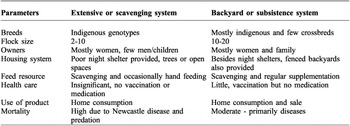
Indigenous chickens in Southern Africa are generally owned by individual households and are maintained under extensive or scavenging system with few or no inputs for housing, feeding and health care. This system mostly incorporates indigenous chicken genotypes, which are free to range or scavenge on neighbouring land to meet their nutritional requirements. Their feeds vary depending on the local scavengeable feed resource conditions. Housing for chickens may not always be provided and where it is available, usually local and substandard materials are used (Mtileni et al., Reference MTILENI, MUCHADEYI, MAIWASHE, PHITSANE, HALIMANI, CHIMONYO and DZAMA2009). There are no well defined health or vaccination programmes for indigenous chickens.
flock sizes
Flock sizes in the scavenging production system are highly variable. Various studies conducted in the smallholder communal areas showed average flock sizes of between 10 and 20 chickens (Lombrou, Reference LOMBROU1993; Pedersen, Reference PEDERSEN2002) with a range of 1-50 (Muchenje and Sibanda, Reference MUCHENJE and SIBANDA1997; Muchadeyi et al., Reference MUCHADEYI, SIBANDA, KUSINA, KUSINA and MAKUZA2004; Mtileni et al., Reference MTILENI, MUCHADEYI, MAIWASHE, PHITSANE, HALIMANI, CHIMONYO and DZAMA2009) (Table 3). The flocks are mainly composed of chicks (Maphosa et al., Reference MAPHOSA, KUSINA, KUSINA, MAKUZA and SIBANDA2004; Muchadeyi et al., Reference MUCHADEYI, SIBANDA, KUSINA, KUSINA and MAKUZA2004). Larger flock sizes are associated with a need for greater intensification in housing, feeding, disease control and marketing.
housing
Indigenous chicken housing in the smallholder sector is relatively similar across the Southern African regions. The common chicken housing structures in the extensive production systems are either constructed on the ground or raised. The traditional poultry houses studied in the smallholder sector of Zimbabwe revealed three housing types namely saddle-roofed houses, round thatched huts, boxes and basket types (Huchzermeyer, Reference HUCHZERMEYER1976). There are cases where chickens do not have separate houses and, instead, the chickens roost in the family house, kitchen or in tree branches (Kusina et al., Reference KUSINA, KUSINA and MHLANGA2001; Mtileni et al., Reference MTILENI, MUCHADEYI, MAIWASHE, PHITSANE, HALIMANI, CHIMONYO and DZAMA2009).
Characteristics of indigenous chicken production systems in Southern Africa.

feeding
The smallholder chicken production system makes use of predominantly scavenging feeding systems. To date in the scavenging feeding system there is however no reliable methods of estimating the feed resource quantitatively or qualitatively to facilitate estimation of input - output relationships. Roberts and Gunaratne (Reference ROBERTS and GUNARATNE1992) indicated that the low performance of the smallholder chicken production could be attributed much to the poor feed resource base, while Swatson (Reference SWATSON2003) suggested the use of unconventional feed resources such as termites, maggots and worms as one of the alternatives for increasing the scavenging feed resource base. Integrating poultry and cropping has also been suggested for increasing the scavenging feed resource smallholder chicken production (Baksh, Reference BAKSH1994).
health or vaccination programmes
Little knowledge on disease epidemiology, poor infrastructure and insufficient diagnostic facilities compounds the problem of diseases control in scavenging production systems. The introduction of new stock, flock contacts while scavenging, exchange of live birds and transmission from wild birds are all entities identified within and among the flocks that contributes in limiting the development of sound health programmes in smallholder chicken production (Kitalyi, Reference KITALYI1998). Farmers have little knowledge in controlling the most devastating infectious diseases such as Newcastle disease (Chabeuf, Reference CHABEUF1990; Yongolo, Reference YONGOLO1996). Various local concoctions are currently used by smallholder farmers but, so far little research has been done to assess the effectiveness of those local treatments. The use of Aloe sp. plant leaf extract as an example of a local therapy is widely used in Zimbabwe and Tanzania (Kitalyi, Reference KITALYI1998) and South Africa (Mtileni et al., Reference MTILENI, MUCHADEYI, MAIWASHE, PHITSANE, HALIMANI, CHIMONYO and DZAMA2009). The possibility of making use of ethno-veterinary practises in the control of poultry diseases and parasites should be explored. There is a movement of farmer associations and groups that seek to enhance plant-extract input supply and distribution in the rural areas. These advocates have received some support from government and non-governmental organizations. A good example is a Newcastle disease control program initiated in Mozambique, Tanzania and Malawi (Alders et al., Reference ALDERS, SPRADBROW and YOUNG2009). The impact of introducing ethno-veterinary practises will depend on stimulating farmers’ interest and buy-in, improving farmers’ access to information on the chicken disease situation and the implementation of adequate control measures.
marketing
Marketing and use of indigenous chicken products in this production system is poorly developed in Southern Africa. Majority of smallholder chicken producers depend on hawkers or middlemen who buy the indigenous chickens for urban markets, while the demand within this production area is still low. Promoting value added products in indigenous chicken production is still lacking. Thus, improving the marketing system coupled with introducing value added products like most other agricultural commodities could trigger increased indigenous chicken production, consumption and its contribution to socio-economic livelihoods of rural Southern Africa.
Constraints to indigenous chicken production
High mortality was reported as the major constraint identified by indigenous chicken farmers of Southern Africa (Muchadeyi et al., Reference MUCHADEYI, SIBANDA, KUSINA, KUSINA and MAKUZA2004; Abdelqader et al., Reference ABDELQADER, WOLLNY and GAULY2007). It is difficult to associate the high mortality with a single factor, as it is a combination of several factors. The main causes of mortality in chickens in order of importance were diseases (Newcastle disease), predation (eagles, snakes and wild cats), and hostile environment (cold stress) in the first days of life, poor housing and lack of technical support. Other constraints like feed, marketing, labour and land are of decreasing importance in that order.
diseases
Newcastle disease is the main production limitation for indigenous chicken production in developing countries of Southern Africa, causing about 50% - 100% losses every year in village flocks (Mavale, Reference MAVALE1995; Wethli, Reference WETHLI1995; Buza and Mwamhehe, Reference BUZA and MWAMHEHE2001; Alexander et al., Reference ALEXANDER, BELL and ALDERS2004). An explanation for the high mortality due to diseases in households that practiced extensive production system could be related to unrestricted contacts between flocks of different households and exchange of live birds in the form of breeding stock, sale, gifts and slaughter that fuels disease outbreaks (Kusina et al., Reference KUSINA, KUSINA and MHLANGA2001). In addition, the wealth status of the household is assumed to have an impact on flock management, feed availability and disease control strategies (Pedersen et al., Reference PEDERSEN, KRISTENSEN and MADSEN2002). Wealth, age and access to production resources are usually linked; for example, youth-headed households are often poorer and have less access to resources required to control diseases than adult-headed households (Aklilu et al., Reference AKLILU, UDO, ALMEKINDERS and VAN DER ZIJPP2008). Newcastle disease is likely to occur in chickens kept by poor and youth-headed households, implying that such households do not have money to purchase vaccines or resources to control the disease. To have a positive impact on household economies and gender equity, concerns for different gender groups have to be integrated in indigenous chicken developmental programmes. The observation that households that did not practice supplementary feeding were more likely to be affected by Newcastle disease could be partly explained by inadequate nutrition (Reta, Reference RETA2009). Under-nutrition leads to malnutrition and immuno-suppression, which in turn could contribute to disease occurrence and, consequently mortality in indigenous chickens (Spradbrow, Reference SPRADBROW1993). A supplementary feeding policy that identifies and utilises locally available feed resources to formulate balanced diets is, therefore, highly recommended, particularly in low rainfall areas. Research on locally available tannin-rich leguminous feeds, which improves growth, meat quality and fatty acid composition and reduce nematodes burdens in chickens, should be given high priority.
Disease control measures are seldom in place and high mortality rates are predominant in rural communities of Southern Africa (Matthewman, Reference MATTHEWMAN1977; Wilson et al., Reference WILSON, TRAORE, KUIT and SLINGERLAND1987; Permin et al., Reference PERMIN, PEDERSEN and RIISE2001). Considering the relatively high incidence of Newcastle disease in Southern Africa regions (Kusina et al., Reference KUSINA, KUSINA and MHLANGA2001; Mapiye and Sibanda, Reference MAPIYE and SIBANDA2005) and its trans-boundary nature, networking and regional support in planning and execution of appropriate preventive and control strategies against this viral disease could foster progress. For example, the Southern Africa Newcastle Disease Control Project (SANDCP), promoted local production, quality control of the I-2 thermotolerant Newcastle disease vaccine, its administration by community vaccinators and the establishment of effective cost-recovery mechanisms in Tanzania, Malawi and Mozambique. Studies to determine sero-prevalence, virus pathotypes, implications of the disease on the performance of indigenous chicken ecotypes and utility of thermostable vaccines are imperative. Since farmers indicated that they sometimes use traditional medicines such as the Aloe to control diseases (Mtileni et al., Reference MTILENI, MUCHADEYI, MAIWASHE, PHITSANE, HALIMANI, CHIMONYO and DZAMA2009), verifying the effectiveness of such herbals is, therefore, important. Extension and veterinary technical support should include the separation of unhealthy chickens and proper disposal of dead chickens, viscera and feathers that remain if the chickens are eaten. Training and use of para-veterinary medicines, preferably by women, to undertake vaccination at group level is advised.
predators
Predators such as snakes, rats, dogs, cats, foxes, raccoons and birds of prey has been reported as the second major cause of chickens mortality in rural areas, especially among young chickens, when there are no Newcastle disease outbreaks or other serious diseases (Branckaert and Gueye, Reference BRANCKAERT and GUEYE1999). Another group of predators such as baboons, monkeys, hawks, eagles and crows contribute to chicken losses (Kusina et al., Reference KUSINA, KUSINA and MHLANGA2001). Harun and Massango (Reference HARUN and MASSANGO2001) further reported significant chicken losses and reduction of village chicken production to predators such as dogs, rats, owls, eagles, hyenas, wild cats, squirrel and human thieves. According to Kusina et al. (Reference KUSINA, KUSINA and MHLANGA2001) predator attacks increases during the dry season when the vegetation cover declines. Shortage of natural food for baboons and other predators during the dry season force them to forage as close to the homesteads as possible. Farmers are often reluctant to invest any time to improve productivity as it is considered a waste of time in areas with a major loss of chickens caused by predation. In the rainy season, good vegetation cover provides some form of protection against airborne predators such as hawks and eagles that target young chickens. Another significant method to prevent these constraints could be to construct housing using locally available materials as some sort of housing to protect the chickens.
housing and parasites
Indigenous chickens are reported to possess some degree of natural immunity against common diseases and parasites (Gondwe and Wollny, Reference GONDWE and WOLLNY2007; Muchadeyi et al., Reference MUCHADEYI, WOLLNY, EDING, WEIGEND and SIMIANER2009). Mtileni et al. (Reference MTILENI, MUCHADEYI, MAIWASHE, PHITSANE, HALIMANI, CHIMONYO and DZAMA2009) reported that high probability of mortality observed in households that did not have proper shelter and vaccines were expected. Lack of proper housing allows free movement of birds and exacerbates spread of disease and parasites, and predisposes birds to predation (Kusina et al., Reference KUSINA, KUSINA and MHLANGA2001; Mapiye and Sibanda, Reference MAPIYE and SIBANDA2005; Muchadeyi et al., Reference MUCHADEYI, WOLLNY, EDING, WEIGEND, MAKUZA and SIMIANER2007a). For example, mass vaccination through drinking water is feasible when birds are confined but is not possible when no housing is provided (Reta, Reference RETA2009). Poor hygienic condition of housing, results in high infestation with external parasites. Reduction in growth of indigenous chickens is also associated with high infestation with a number of external parasites, fleas and mites and can be fatal for young chickens (Kusina et al., Reference KUSINA, KUSINA and MHLANGA2001). Some parasites suck blood causing irritation and anaemia, leading hens to abandon brooding resulting in poor hatchability and killing of chicks.
Kaiser (Reference KAISER1990) reported a considerable decline in external parasites (Argas persicus) and mortality from spirochetosis through improved construction of perches in a chicken house. Remarkably lower chick mortality of 19% was observed in Gambia through improved chicken housing, relative to that observed in Ethiopia (66%) and Tanzania (33%), where no improvements of chicken housing were made (Kitalyi, Reference KITALYI1998). Chicken housing and management could be improved through appropriate on-farm training of farmers to construct housing structure using locally available materials and manufacture small equipment, like feeders, drinkers and nests.
hostile environment
Other causes of mortality reported in smallholder chicken production are exposures to excessive heat and cold. Kusina et al. (Reference KUSINA, KUSINA and MHLANGA2001) reported that chicken mortality was mostly severe during the hot and cold, dry season due to cycling temperatures throughout the day, more especially during the first three weeks after hatching. In case of seasonal chicken losses through excessive heat and cold, proper management is very important such as the provision of water in combating effects of heat stress in chickens and protecting chick from cold weather during the first few weeks of life.
Diversity in Southern African indigenous chicken genetic resources
Genetic diversity is integral to human culture, history, environment, economy and, most importantly allows for future advances and improvement in response to changing human and animal production needs (Notter, Reference NOTTER1999; Hall, Reference HALL2004). Thousands of chicken breeds originated relatively from small genetic pools that have evolved over time to suit particular environments and farming systems. This is both the result of natural processes and of human needs for specialized breeds (Hall, Reference HALL2004; Thiyagasundaram, Reference THIYAGASUNDARAM2005) serving both as a production component and as a source for genetic improvement (Cassman et al., Reference CASSMAN, WOOD, CHOO, COOPER, DEVENDRA, DIXON, GASKELL, KHAN, LAL, LIPPER, PRETTY, PRIMAVERA, RAMANKUTTY, VIGLIZZO, WEIBE, KADUNGURE, KANBAR, KHAN, LEAKEY, PORTER, SEBASTIAN and THARME2005). As knowledge of genetics continues to increase a greater understanding of how this biodiversity evolved has been achieved (Hall, Reference HALL2004). Chicken biological diversity encompasses both phenotypic as well as genotypic variation. Biodiversity can be described at several levels, from phenotypic observations to molecular data.
phenotypic diversity
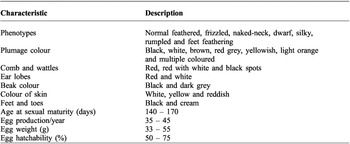
The improvement of domestic animals including chickens to meet human needs is dependent on variations within and between breeds. Such variation among individuals or groups of chickens gives room and opportunity for breeding and selection. General descriptions of freely ranging indigenous chickens have relied on the phenotypic characteristics as among the first to be used to determine the relationship between chicken breeds (Moiseyeva et al., Reference MOISEYEVA, SEMYENOVA, BANNIKOVA and FILIPPOVA1994; Romanov, Reference ROMANOV1994; Reference ROMANOV1999; Swatson, Reference SWATSON2003). Phenotypes including adult body weight, egg weight, reproduction performance and immune responses to various diseases are among the diversity of the local chickens reported so far (Gueye, 1998; Msoffe et al., Reference MSOFFE, MTAMBO, MINGA, YONGOLO, GWAKISA and OLSEN2001; Reference MSOFFE, MTAMBO, MINGA, OLSEN, JUUL-MADSEN, GWAKISA, MUTAYOBA and KATULE2004). Types and varieties of indigenous chickens are usually differentiated by body plumage colour and other external characteristics (Table 4). The seven common genotypes of chickens found in villages of Southern Africa include normal feathered, naked neck, frizzle, silky, dwarf, rumples and feet feathering (Table 4). Some, however, are reported to possess other characteristics that are of economic importance. These include genotypes that are adapted for hot climates. Examples are the genes for bare or featherless neck, dwarf body type and frizzled feathers. These heat tolerant genes are considered important in hot climates of Southern Africa and can be incorporated in breeding programmes. Egg production for naked neck and rumpled chickens as evident by smallholder farmers are said to be higher than that of other genotypes. Hatchability for naked neck chickens is also than that of rumples chickens. Because of lower hatchability rates, many rearers do not keep rumples chickens despite the fact that these chickens attain heavier body weights. This may result in these birds becoming extinct in future (Moreki, Reference MOREKI2003).
Phenotypic characteristics of indigenous chicken populations of Southern Africa.

genetic diversity
A combination of phenotypic (including classical morphometric) studies, biochemical (e.g. protein polymorphism, blood group) analysis and, more recently, molecular genetic studies using DNA information are the central sources of data on genetic relationships among varieties of breeds and strains (Rege and Gibson, Reference REGE and GIBSON2003). Genetic diversity within a given farm animal species refers to the variety of genetic variation evolved during domestication and is displayed by the existence of structural variation among genomes of individuals, families, strains and populations. In recent years, numerous studies in indigenous chicken demonstrated that DNA variability is a powerful source of information for examining diversity within and among individuals, families, and populations (van Marle-Koster and Nel, 2003; Muchadeyi et al., Reference MUCHADEYI, EDING, WOLLNY, GROENEVELD, MAKUZA, SHAMSELDIN, SIMIANER and WEIGEND S.2007b; van Marle-Koster et al., 2008; Hassen et al., Reference HASSEN, NESER, DE KOCK and VAN MARLE-KÖSTER2009; Mtileni et al., Reference MTILENI, MUCHADEYI, MAIWASHE, GROENEVELD, GROENEVELD, DZAMA and WEIGEND2011a). Considering genetic diversity in agricultural populations not only the capacity to evolve with the changing production environment (e.g. global warming, changes in disease pressure) but also the capacity to cope with changing market requirements (e.g. other composition of fatty acids in animal products) is of high relevance (Simianer, 2005a). As a result, genetic diversity is seen as an insurance against future changes (Smith, Reference SMITH1984).
The evaluation of genetic diversity within and between different chicken populations of Southern Africa, both indigenous and commercial has been undertaken by using several microsatellites (van Marle-Koster and Nel, 2003; Muchadeyi et al., Reference MUCHADEYI, EDING, WOLLNY, GROENEVELD, MAKUZA, SHAMSELDIN, SIMIANER and WEIGEND S.2007b; van Marle-Koster et al., 2008; Hassen et al., Reference HASSEN, NESER, DE KOCK and VAN MARLE-KÖSTER2009; Mtileni et al., Reference MTILENI, MUCHADEYI, MAIWASHE, GROENEVELD, GROENEVELD, DZAMA and WEIGEND2011a) and mitochondrial DNA (mtDNA) marker systems (Muchadeyi et al., Reference MUCHADEYI, EDING, SIMIANER, WOLLNY, GROENEVELD and WEIGEND2008; Mtileni et al., Reference MTILENI, MUCHADEYI, MAIWASHE, CHIMONYO, GROENEVELD, WEIGEND and DZAMA2011b). In recent analysis using microsatellites, Mtileni et al. (Reference MTILENI, MUCHADEYI, MAIWASHE, GROENEVELD, GROENEVELD, DZAMA and WEIGEND2011a) and Muchadeyi et al. (Reference MUCHADEYI, EDING, WOLLNY, GROENEVELD, MAKUZA, SHAMSELDIN, SIMIANER and WEIGEND S.2007b) demonstrated that indigenous chicken populations of Southern Africa showed a high genetic diversity and could not be subdivided into subpopulations (Table 5). This population showed almost all possible phenotypes of chickens found in villages of South Africa, Zimbabwe, Malawi and Sudan. mtDNA sequences has also been a useful tool for studying the evolution of closely related species and maternal origin. The chicken mtDNA sequence polymorphism has been used to examine genetic relationship within breeds, among breeds and also to address questions of chicken domestication (Liu et al., Reference LIU, WU, YAO, MIAO, LUIKART, BAIG, BEJA-PEREIRA, DING, PALANICHAMY and ZHANG2006; Oka et al., Reference OKA, INO, NOMURA, KAWASHIMA, KUWAYAMA, HANASA, AMANO, TAKADA, TAKAHATA, HAYASHI and AKISHINONOMIVA2007; Muchadeyi et al., Reference MUCHADEYI, EDING, SIMIANER, WOLLNY, GROENEVELD and WEIGEND2008; Adebambo et al., Reference ADEBAMBO, MOBEGI, MWACHARO, OLADEJO, ADEWALE, ILORI, MAKANJUOLA, AFOLAYAN, BJØRNSTAD, JIANLIN and HANOTTE2010; Berthouly-Salazar et al., Reference BERTHOULY-SALAZAR, ROGNON, NHU VAN, GÉLY, VU CHI, TIXIER-BOICHARD, BED'HOM, BRUNEAU, VERRIER, MAILLARD and MICHAUX2010; Revay et al., Reference REVAY, BODZSAR, MOBEGI, HANOTTE and HIDAS2010; Mtileni et al., Reference MTILENI, MUCHADEYI, MAIWASHE, CHIMONYO, GROENEVELD, WEIGEND and DZAMA2011b). mtDNA has strictly maternal inheritance, which means mtDNA haplotypes should be shared by all individuals within a maternal family line.
Mean number of alleles (MNA) per locus, expected (HE), observed (HO) heterozygosity, overall-population (FIT), between-populations (FST) and within-population (FIS) inbreeding coefficients of southern African chicken populations.

Source: Muchadeyi et al. (Reference MUCHADEYI, EDING, WOLLNY, GROENEVELD, MAKUZA, SHAMSELDIN, SIMIANER and WEIGEND S.2007b) and Mtileni et al. (2011)
Conservation of chicken genetic resources
Conservation of animal genetic resources engages many activities (strategies, management, planning, polices and actions) intended to ascertain that the diversity of farm animal genetic resources is maintained to contribute to current and future agricultural and food production (Rege and Gibson, Reference REGE and GIBSON2003). There are several obstacles and challenges associated to conservation of farm animal genetic resources (Mendelsohn, Reference MENDELSOHN2003). Conservation strategy must have clear objectives that are understandable by all stakeholders who will be the drivers for its implementation and eventual success. There are many conservation objectives that can be adapted to meet local conditions. This includes those which have an immediate applicability plus future value and those that seek to conserve for the future (Barker, Reference BARKER2001; Lekule and Kyvsgaard, Reference LEKULE and KYVSGAARD2003; Oldenbroek, Reference OLDENBROEK2007). The erosion and loss of animal genetic resources would compromise the flexibility of future breeding measures (FAO, Reference FAO2007a). Chicken genetic resources are considered to be the most endangered and under-conserved (Hoffmann, Reference HOFFMANN2009). This has been evident by the previous literature by FAO (Reference FAO2007b) that about 33% of the world's chicken breeds are considered endangered to critical breeds and another 40% with unknown risk status. A further need exists to guard against depleting diversity due to current breeding technologies, worldwide movement of germplasm, the proliferation of highly selected industrialized chicken breeds, and commercial stocks founded on a relatively small number of breeding individuals (NRC, Reference NRC1993).
Conservation of domestic animal genetic resources encompasses characterisation, identification, monitoring and utilisation to ensure management for best short term use and longer term readily available (Moyo, Reference MOYO1995). There is a need to conserve ‘adaptive’ traits as opposed to ‘commercial’ traits. The Southern African experience is the frizzled gene reported to be in serious danger of extinction, while the naked neck and dwarf genes also appeared to be endangered (Moreki, Reference MOREKI2003). These important genotypes should be further identified using molecular tools and be conserved for their adaptive traits and being able to produce under hot climates of Southern Africa. The conserved genetic resources will be future sources of unique genes and will be useful when environmental concerns necessitate change in production systems. The importance of conservation of chicken genetic resources has long been recognised in South Africa to prevent the extinction of local chicken breeds. A conservation programme of chicken genetic resources known as Fowls for Africa was initiated by the Animal Production Institute of the Agricultural Research Council in 1994. The four breeds that form part of the conservation flocks include the Venda, Naked Neck, Ovambo and Potchefstroom Koekoek. However, conservation decisions of South African chickens were made mainly based on population size information and population trends of the individual breeds. Other indicators affecting extinction probability and the contribution of the breeds to total genetic diversity have not been taken into account, and allocation of conservation funds might not ensure prevention of the loss of national chicken genetic resources in the long-term.
Indigenous chickens in most Southern African countries are not adequately characterised making it impossible to understand the existing diversity that could be of use for decision making on the development of rational conservation and utilisation strategies. It is necessary to create an inventory of indigenous chicken varieties and their characteristics as a first step in breed conservation and assessment for future breeding strategies (Solis et al., Reference SOLIS, JUGO, MÉRIAUX, IRIONDO, MAZÓN, AGUIRRE, VICARIO and ESTOMBA2005). Biotechnology techniques such as molecular markers could be used to characterise indigenous chickens (Muchadeyi et al., Reference MUCHADEYI, EDING, WOLLNY, GROENEVELD, MAKUZA, SHAMSELDIN, SIMIANER and WEIGEND S.2007b; van Marle-Koster et al., 2008; Hassen et al., Reference HASSEN, NESER, DE KOCK and VAN MARLE-KÖSTER2009; Mtileni et al., Reference MTILENI, MUCHADEYI, MAIWASHE, GROENEVELD, GROENEVELD, DZAMA and WEIGEND2011a; Mtileni et al., Reference MTILENI, MUCHADEYI, MAIWASHE, CHIMONYO, GROENEVELD, WEIGEND and DZAMA2011b). It should, however, be noted that several Southern African countries face challenges of lack of infrastructure for breeding purposes and have relatively small defined populations (Wollny, Reference WOLLNY1995a; Reference WOLLNY1995b). There is a need to establish laboratory space, relevant equipments and staff capability to carry out the research. A good example in Southern African countries is South Africa which has both the laboratories, techniques and personnel to carry out advanced molecular characterisation research due to a better economy compared to other Southern African countries. There is a need to consider characterisation of indigenous chicken breeds if genetic conservation for economic, scientific, cultural and social development and sustainability is to succeed (Wollny Reference WOLLNY1995b).
National initiatives and government policies on conservation of indigenous chickens
There are several threats to the production of indigenous chicken populations in Southern African countries. These include the replacement of local indigenous chicken populations with exotic chicken breeds. For example, The Black Australorp Village Poultry Improvement Programme initiated in 1969 in Malawi, where a total of 320,000 6-week-old growers of both sexes were sold to smallholder chicken farmers every year, but the results were not evaluated (Upindi, Reference UPINDI1990). The enforcement of an unbalanced admixture through uncontrolled crossbreeding resulted from policy initiatives or economic considerations (Safaloah, Reference SAFALOAH2001; Mendelsohn, Reference MENDELSOHN2003). These did not have clearly defined goals and execution strategies which led to unsupervised crossing of indigenous chickens with Black Australorps and consequently the nondescript breeds produced did not perform as expected (Safaloah, Reference SAFALOAH2001). Malawi, the only country to engage on unsupervised crossbreeding programmes in Southern Africa, has not benefited from the programme due to unclear, non-existent or ill-defined policies. Other Southern Africa countries, except South Africa, seem not to have coherent policies on conservation indigenous chicken population and incentive systems for the farmers that will be involved in those programmes. Some policies take no notice of conservation of indigenous chicken populations and undermine traditional production systems, while public agricultural institutions focus research and extension services on a narrow base that excludes local breeds (Halewood and Mugabe, Reference HALEWOOD and MUGABE2002). Interestingly, the African Union developed a Model Law to provide a legal framework for the conservation, evaluation and sustainable use of biological resources, and associated technologies and knowledge, but no country had adopted it according to latest reports (FAO, Reference FAO2007a). These practices have to change. The public sector is largely absent from the animal genetic resource conservation landscape, leaving all activities to commercial players whose main aim is profit (FAO, Reference FAO2007a). Strategic approaches for conservation, managing, and utilisation of chicken genetic resources at the national levels suited to different needs must be established and implemented in developing countries of Southern Africa.
Prioritising populations for conservation in Southern Africa
Informed decisions need to be taken when prioritising a particular population for conservation based on an inventory of the definite breeds carried out on a global scale through the World Watch List (FAO, Reference FAO2000) which include the specific population genetic diversity and their characteristics. Weitzman's (1992; 1993) diversity concept is widely used as a formal approach to rational decision making in livestock conservation. Weitzman's theory was applied in studies on various farm animal species, such as chicken (Pinent et al., Reference PINENT, SIMIANER and WEIGEND2005), pig (Laval et al., Reference LAVAL, IANNUCCELLI, LEGAULT, MILAN, GROENEN, GIUFFRA, ANDERSSON, NISSEN, JØRGENSEN, BEECKMANN, GELDERMANN, FOULLEY, CHEVALET and OLLIVIER2000; Fabuel et al., Reference FABUEL, BARRAGAN, SILIO, RODRIGUEZ and TORO2004), cattle (Thaon d'Arnoldi et al., Reference THAON D'ARNOLDI, FOULLEY and OLLIVIER1998; Cañón et al., Reference CAÑÓN, ALEXANDRINO, BESSA, CARLEOS, CARRETERO, DUNNER, FERRAN, GARCIA, JORDANA, LALOË, PEREIRA, SANCHEZ and MOAZAMI-GOUDARZI2001; Simianer, Reference SIMIANER2002; Reist-Marti et al., Reference REIST-MARTI, SIMIANER, GIBSON, HANOTTE and REGE2003, Simianer et al., Reference SIMIANER, MARTI, GIBSON, HANOTTE and REGE2003; Tapio et al., Reference TAPIO, MARZANOV, OZEROV, CINKULOV, GONZARENKO, KISELYOVA, MURAWSKI, VIINALASS and KANTANEN2006; Zerabruk et al., Reference ZERABRUK, BENNEWITZ, KANTANEN, OLSAKER and VANGEN2007; Zander et al., Reference ZANDER, DRUCKER, HOLM-MÜLLER and SIMIANER2009), horse (Thirstrup et al., Reference THIRSTRUP, PERTOLDI and LOESCHCKE2008) and dog (Leroy et al., Reference LEROY, VERRIER, MERIAUX and ROGNON2009). This approach suggests that the conservation potential is the single most informative criterion to rank breeds with respect to conservation priority. The conservation potential of a breed basically reflects the amount of expected diversity that can be conserved if a breed is made completely safe.
Simianer (Reference SIMIANER2002; Reference SIMIANER2005) and Piyasatian and Kinghorn (Reference PIYASATIAN and KINGHORN2003) further suggested combining the expected diversity with other criteria resulting in the expected total utility as a maximisation criterion. The suggested criteria may encompass the presence of special genetic traits such as disease tolerance, production and cultural or environment values of breeds, inter alia. The approach combines genetic diversity assessed at the molecular level and extinction probabilities estimated by socio-economic factors to derive conservation priorities of breeds based on their conservation potential. Using conservation potentials for prioritising breeds is very efficient in selection of breeds for conservation, when the objective of the conservation plan is to maximise the genetic diversity conserved (Reist-Marti et al., Reference REIST-MARTI, SIMIANER, GIBSON, HANOTTE and REGE2003; Simianer et al., Reference SIMIANER, MARTI, GIBSON, HANOTTE and REGE2003; Zerabruk et al., Reference ZERABRUK, BENNEWITZ, KANTANEN, OLSAKER and VANGEN2007). Individual genotypes therefore need to be identified once the aforementioned decisions are made to become part of the conservation scheme, where desirable genetic properties of the sample should: (i) represent the genetic portfolio of the population or breed, (ii) have a maximum effective population size and (iii) conserved special genetic traits.
Cost implications of conservation
Every sound conservation effort bears a cost which differs with perspective on the particular population or breed, countries, regions and production environments (Gandini and Oldenbroek, Reference OLDENBROEK2007). Although the conservation potential is considered as a good indicator for conservation decision, it does not give information on how to allocate the conservation budget to maximise the conserved diversity. It is necessary to assign appropriate shares of the conservation budget to the different breeds once the decision is made as to which population or breeds should be sampled. Several methods of estimating the likely cost of conservation efforts has been described elsewhere (Drucker et al., Reference DRUCKER, GÓMEZ and ANDERSON2001; Scarpa et al., Reference SCARPA, RUTO, KRISTJANSON, RADENY, DRUCKER and REGE2003; Pattison et al., Reference PATTISON, DRUCKER and ANDERSON2007; Zander et al., Reference ZANDER, DRUCKER, HOLM-MÜLLER and SIMIANER2009). Firstly the costs and effects for the different conservation schemes in terms of reduced extinction probability need to be established and known. The costs can typically be subdivided into variable costs, which depend on the number of chickens cryo-conserved sample and the fixed costs, which are necessary to establish the conservation scheme inter alia. In general terms, it is always possible to identify the optimum conservation scheme for a given investment level within breed when the cost functions for different conservation schemes in the same breed are known. This is demonstrated in Reist-Marti (Reference REIST-MARTI2004) where three out of four different conservation schemes were found to be preferable in at least one out of eight breeds chosen for conservation. If such a planning process is considered in conserving Southern African indigenous chickens, factors such as labour-intensive ex situ conservation schemes may be cheaper than cryo-conservation in some countries where the infrastructure for cryo-conservation is not available (Reist-Marti, Reference REIST-MARTI2004).
Opportunities for smallholder chicken research and development
Indigenous chicken are an important component of farming systems in smallholder farming areas. Research efforts in indigenous chicken should be targeted at aspects ranging from feeding, breeding, disease control and husbandry to obtain a better understanding of indigenous chicken production systems in relation to other crop-livestock systems and the changes in socio-economic conditions in smallholder set-ups. Biological factors are not the only factors considered by farmers when adopting technologies to suit their local farming circumstances. Instead, socio-economic factors are also important to the farmer and, therefore, should not be ignored. Both objectively measured variables and subjectively measured variables should be studied to produce more meaningful research results. Detailed studies of most of the issues raised above would contribute to improved poultry production and contribute towards improving family income and nutrition. Qualitative data can be gathered in a once off/single visit. Reliability of such data depends on the ability of farmers to recall past events. Smallholder farmers do not usually keep farm records, more reliable data are obtained through monitoring studies and discussions with farmers. By improving existing management, it is possible to increase indigenous chicken production in the smallholder sector. Benefits from genetic improvement can only accrue if existing management is improved.
The conservation of chicken genetic resources is essential in the light of the rapid loss of strains and breeds through dilution and breed replacement. All varieties of domestic species and species with potential for domestication are considered to be important candidates for conservation. Indigenous chicken populations with economic potential, scientific use and cultural or aesthetic interest are of particular importance but all indigenous chickens which are unique and endangered should be incorporated into conservation efforts. Molecular markers are an indispensable tool to understand the genetic structures of populations. For the sampling of germplasm to create an animal gene bank, they are necessary but in no way sufficient to make adequate decisions. In addition to diversity information derived from molecular data, there needs to be good, specific knowledge and understanding of breed characteristics and values, the risk status of breeds, availability and cost efficiency of possible conservation programmes, among others. It is therefore strongly recommended to concentrate co-ordinated genotyping efforts to fill in the still existing ‘white spots’ on the Southern African chicken genetic resources and to re-allocate funds to develop a better understanding of the other components of a rational decision-making process. All the different aspects of indigenous chicken covered in this review should be incorporated into a model together, rather than individually, in order to identify combinations that optimise smallholder chicken production and improve smallholder household's income and nutrition.
Conclusions
Smallholder chicken farmers definitely have opportunities to benefit from the existing poultry genetic resources. But this will only be possible if the conditions to which these chickens are subjected can be improved. A successful plan to improve upon indigenous chicken production amongst resource limited households will require a holistic approach. Relevant efforts in this respect must be made from a combination of measures in different areas. Stakeholders in this process will include the state, research community, development organisations, private sector and the smallholders themselves. Indigenous chicken genetic resources could be considered as national and global public goods and their utilisation be guided by national strategies. However, such national strategies should fully consider communities’ interests and economic needs as chicken production are the major means of livelihoods for smallholder farmers. Smallholders are more likely to profit from the existing poultry genetic resources if they co-operate in farmers’ organisations. This will allow them to have larger and more regular quantities of chickens for sale on the market while simultaneously improving product quality. Smallholder farmers will also have a better chance of becoming suppliers for expanding supermarkets and they will be in a better negotiating position, save costs, and reduce their risks. Developing farmers’ organisations is not always easy, as, among other things, it requires a great deal of commitment and the capacity to build consensus. Mutual learning, as well as attendance of training courses, can constitute important inputs that help smallholder farmers to improve chicken production.
If smallholders are to have opportunities to produce for the market, the infrastructure in rural areas will have to be improved. Good agricultural extension services and veterinary services will also be needed to increase indigenous chicken productivity. Economic development should not benefit only large-scale industrial operations. Smallholder chicken producers should also be able to participate in the market more easily – for example, through improved micro–credit conditions, particularly for women. Public–Private Partnerships can be singled out as a promising means for integrating smallholders into the market under fair conditions and for preparing them to deal with the demands of large wholesalers such as supermarkets. Different measures in the areas of research and extension could improve the low productivity of indigenous chicken situation. In order to be able to select and breed at all, data on performance must be systematically collected and evaluated. Breeding suitable pure or cross-bred birds will then be a source of better and more regular income for farmers. Another principal measure in indigenous chickens research should be targeted at aspects ranging from strengthening of local extension services, and emphasis put on vaccination of chicks, formulation of low-cost feed resources, and design of low-cost housing. A major strategy would be to empower the smallholder chicken owners through training and provision of a chicken farmers’ tailor-made credit facility, which is informed by data on the indigenous chicken production cycle and the major bottlenecks along it. Improved husbandry and breeding will allow farmers to fully exploit the genetic potential of the systematically bred animals, hence improve poultry production and contribute towards improving smallholder household's income and food security.