Introduction
Heat stress is a common problem in poultry production, particularly in tropical and subtropical regions, and causes major economic losses annually. The adverse effects of heat stress on the broiler growth rate, feed intake and feed efficiency are well documented (Daghir, Reference DAGHIR2008; Lara and Rostagno, Reference LARA and ROSTAGNO2013). Heat-stressed birds exhibit several physiological responses to maintain thermoregulation, thereby decreasing body temperature.
Research into the use of supplemental amino acids (AA) to reduce the crude protein (CP) content of diets for maintaining optimal performance has been the subject of extensive studies. This is of interest because reducing dietary protein can minimise the environmental pollution by decreasing nitrogen (N) excretion. Besides, reducing dietary CP has a particular advantage for producers in tropical regions. Given the fact that heat increment of CP is the highest, compared to fat and carbohydrates (Musharaf and Latshaw, Reference MUSHARAF and LATSHAW1999), it has been proposed that the adverse effects of heat stress on poultry performance can be alleviated by reducing CP (Waldroup, Reference WALDROUP1982; Zaman et al., Reference ZAMAN, MUSHTAQ, NAWAZ, MIRZA, MAHMOOD, AHMAD, BABAR and MUSHTAQ2008).
The effects and limits for reducing dietary CP through AA fortification on growth performance of broilers have been reviewed by Aftab et al. (Reference AFTAB, ASHRAF and JIANG2006), but no attention was given to the effects of reduced-CP diets on heat-stressed broilers. Using growth performance as the main criteria; this paper reviews the responses of broiler chickens to reduced-CP diets under heat stress conditions. Factors affecting the limit(s) for dietary CP reduction without compromising performance of broilers reared at high environmental temperatures are reviewed in this paper.
Protein and amino acids requirements of broiler chickens
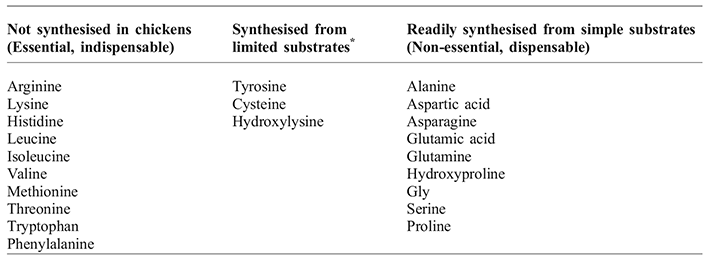
Amino acids, obtained from dietary protein sources, are used by poultry to meet a variety of functions and can be divided into two main categories. The AAs which cannot be synthesised are classified as essential amino acids (EAA), and those that can be synthesised in the body are classified as non-essential amino acids (NEAA; NRC, 1994). However, there are a few AAs which are not synthesised in the body fast enough to meet maximum growth requirements. Therefore, it is necessary that these AAs be supplied in the diet. The nutritional classification of amino acids for poultry is presented in Table 1.
Broiler chickens do not require an exact level of CP; rather, they require an exact and balanced quantity of EAA, and adequate protein, either in the form of ready to use NEAA or as N for NEAA synthesis (NRC, 1994). However, broiler requirements for AA is affected by many factors, including high ambient temperature, gender, age, strain, and some diet-related factors, such as metabolisable energy (ME), AA imbalance, the effects of vitamins and coccidiostats, and amino acids antagonistic relationships (D'Mello, Reference D'MELLO2003).
Nutritional classification of amino acids for poultry.

*Tyrosine is synthesised from phenylalanine, Cysteine from methionine, and hydroxylysine from lysine.
Source: Scott et al. (Reference SCOTT, NESHEIM and YOUNG1982)
Despite much research to investigate dietary protein requirements of birds kept under high ambient temperatures, very little, and often conflicting data, on amino acids requirements under such conditions are available. Some research has suggested unchanged lysine (Sinurat and Balnave, Reference SINURAT and BALNAVE1985; Mendes et al., Reference MENDES, WATKINS, ENGLAND, SALEH, WALDROUP and WALDROUP1997), threonine (Shan et al., Reference SHAN, STERLING, PESTI, BAKALLI, DRIVER and ATENCIO2002), and tryptophan (Ojano-Dirain and Waldroup, Reference OJANO-DIRAIN and WALDROUP2002; Shan et al., Reference SHAN, STERLING, PESTI, BAKALLI, DRIVER and ATENCIO2002) requirements at high temperatures. However, other research recommended higher lysine (Han and Baker, Reference HAN and BAKER1993; Ojano-Dirain and Waldroup, Reference OJANO-DIRAIN and WALDROUP2002) and methionine (Ojano-Dirain and Waldroup, Reference OJANO-DIRAIN and WALDROUP2002) requirements for heat-stressed birds. Conversely, some published data suggested decreased lysine (Waldroup, Reference WALDROUP1982; Corzo et al., Reference CORZO, MORAN and HOEHLER2003), methionine (Balnave and Oliva, Reference BALNAVE and OLIVA1990) and arginine (Chamruspollert et al., Reference CHAMRUSPOLLERT, PESTI and BAKALLI2004). These conflicting results could be attributed to the wide differences in the duration and severity of heat exposure among these studies.
In terms of gender, some studies have suggested that males require greater quantities of AA than females at a similar age. It has been indicated that lysine (Han and Baker, Reference HAN and BAKER1993; Reference HAN and BAKER1994; Dozier et al., Reference DOZIER, CORZO, KIDD and SCHILLING2008; Reference DOZIER, CORZO, KIDD, TILLMAN and BRANTON2009), methionine (Thomas et al., Reference THOMAS, ZUCKERMAN, FARRAN and TAMPLIN1986), threonine (Thomas et al., Reference THOMAS, FARRAN, TAMPLIN and ZUCKERMAN1987; Dozier et al., Reference DOZIER, MORAN and KIDD2001), arginine (Kessler and Thomas, Reference KESSLER and THOMAS1976), and tryptophan (Hunchar and Thomas, Reference HUNCHAR and THOMAS1976) requirements are higher for male broilers than for females. This was attributed to the higher protein and less fat deposition in male weight gain (Han and Baker, Reference HAN and BAKER1994).
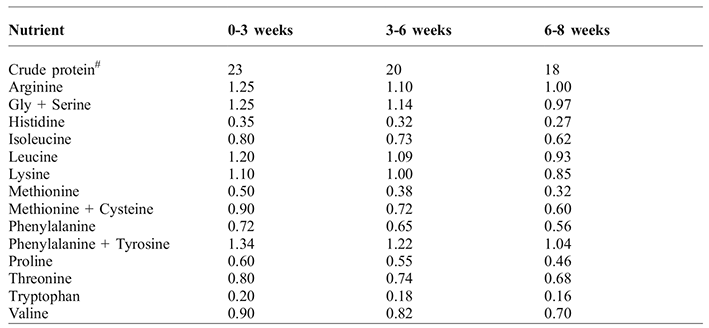
It has been consistently reported that dietary requirements for all AA and CP decrease with the age of the chicken (NRC, 1994). The NRC (1994) suggested AA requirements for three age periods 0-3 (starter), 3-6 (grower/finisher), and 6-8 (finisher) weeks of age (Table 2). However, most of the present commercial broiler chicken breeders, such as Cobb 500, Ross 308, Arbor Acres and Hubbard, suggest AA specifications for shorter age periods (e.g., d 0- 10, 11- 24, 25- 39, 40- 51, and > 52 d) for more AAs utilisation efficiency.
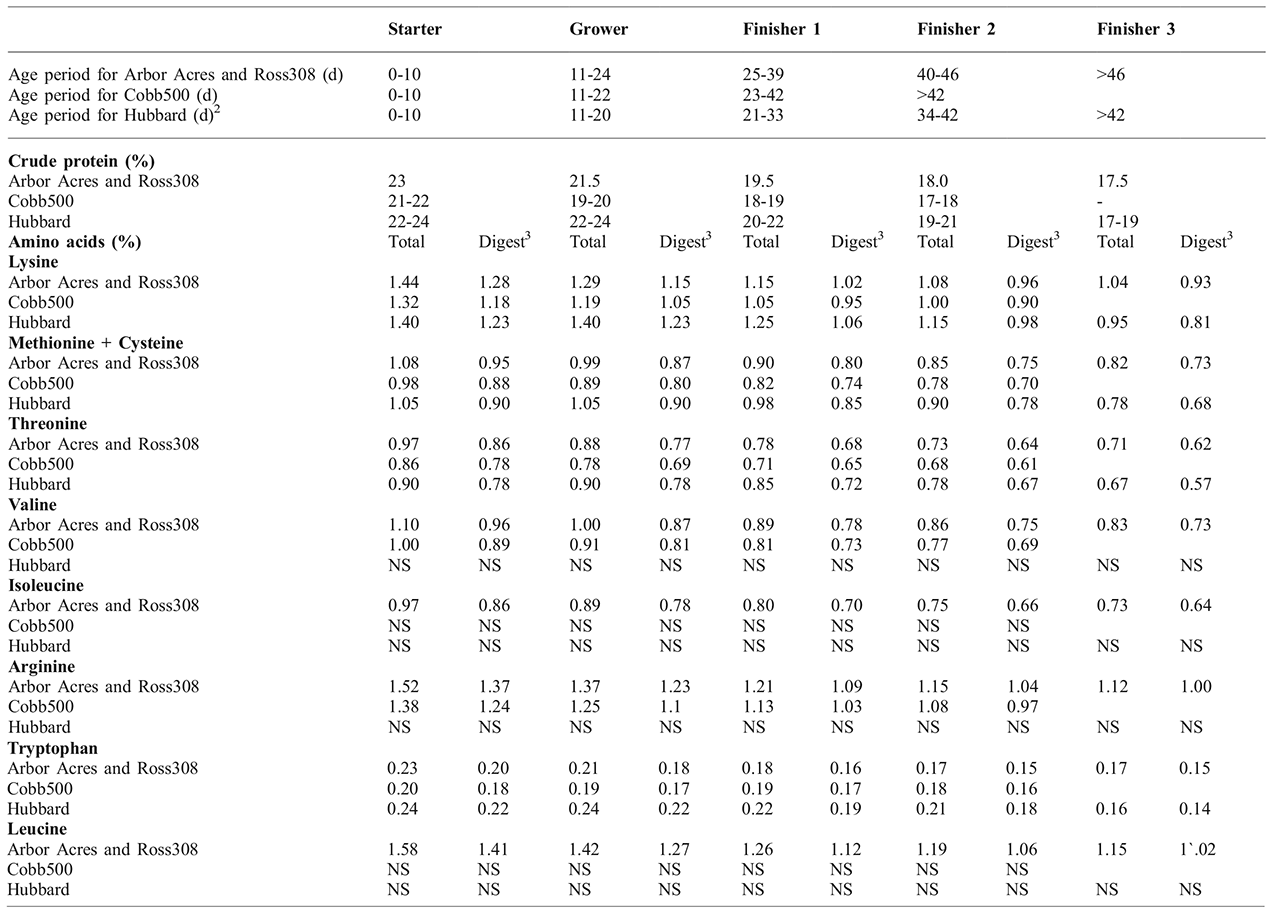
In terms of broiler strains, significant improvements in broiler performance and carcass composition have been achieved as a result of genetic selection, and CP and AA requirements of these new genotypes have changed accordingly. The AA requirements of today's broiler chickens are relatively higher than those suggested by the NRC (1994). By comparing the recommended AA specifications for today's broiler chicken strains, differences can be observed (Table 3). It is worth mentioning that suggested AA specifications for all strains are set to support an ideal amino acid profile, where the requirement of the main amino acids that may be limited in broiler feeds are calculated, and with lysine used as the reference AA to which ratios are set for the other AAs. Unlike NRC (1994), suggested ratios for the ideal AA profile of these broiler strains are based on digestible AA.
Protein and amino acids requirements of broilers (%).

# Broiler chickens do not have a requirement for crude protein per se. There should be sufficient crude protein to ensure an adequate nitrogen supply for the synthesis of non-essential amino acids, however. Suggested requirements for crude protein are typical of those derived with corn-soybean meal diets, and levels can be reduced when synthetic amino acids are used.
Source: NRC (1994)
Latest recommended crude protein and amino acids specifications for as-hatched Arbor Acres, Cobb500, Hubbard, and Ross308 broilers1

1Amino acids specifications in this table were obtained from the latest broiler nutrition specifications guides of Arbor Acres (2014), Cobb (2015), Hubbard (2014) and Ross (2014).
2The age periods 0-10, 11-20, 21-33, 34-42, and >42 d are considered as pre-starter, starter, grower, finisher, and withdrawal, respectively.
3Digest = digestible
NS = not specified
Protein requirements of broiler chickens under hot climate
Determining the protein requirements of broiler chickens at high ambient temperatures has been a field of research for many years. However, findings have been inconsistent and different recommendations have been made. The first was to increase dietary protein, to compensate for reduced protein intake as a consequence of decreased feed intake associated with heat stress (Temim et al., Reference TEMIM, CHAGNEAU, GUILLAUMIN, MICHEL, PERESSON, GERAERT and TESSERAUD1999; Reference TEMIM, CHAGNEAU, GUILLAUMIN, MICHEL, PERESSON and TESSERAUD2000; Gonzalez-Esquerra and Leeson, Reference GONZALEZ-ESQUERRA and LEESON2005). Temim et al. (Reference TEMIM, CHAGNEAU, GUILLAUMIN, MICHEL, PERESSON, GERAERT and TESSERAUD1999) reported significantly higher weight gain and better feed efficiency when heat-stressed broiler chickens were fed diets higher in CP (25% vs. 19.6%) from 4-6 weeks of age. Gonzalez-Esquerra and Leeson (Reference GONZALEZ-ESQUERRA and LEESON2005) reported improvements in broiler performance when high crude protein diets were fed from d 21 to 42 at 27.3°C and 31.4°C housing temperatures. Conversely, excess dietary protein reduced the growth rate of commercial, fast-growing broiler chickens raised at a constant 32°C from 4-8 weeks of age (Cahaner et al., Reference CAHANER, PINCHASOV, NIR and NITSAN1995). Cheng et al. (Reference CHENG, HAMRE and COON1997) noted adverse effects of high protein diets (22% or 24% CP) on growth performance in 3-6-week old heat-stressed broilers. Similarly, Cheng et al. (Reference CHENG, HAMRE and COON1999) found that increasing CP (22 vs. 20% CP) and AA (110%) concentrations to compensate for reduced feed intake when broilers were reared under constant (32.2°C) or cyclic (26.6°C for 16 h to 35°C 8 h) heat stress conditions, negatively affected growth performance. Suppressed growth performance when feeding excess dietary protein diets under heat stress conditions can be attributed to higher metabolic heat production because protein has the highest heat increment during metabolism or catabolism compared to other nutrients (Musharaf and Latshaw, Reference MUSHARAF and LATSHAW1999). Basically, any increase in dietary CP will be followed by an increase in nitrogen excretion, which is energetically expensive (Musharaf and Latshaw, Reference MUSHARAF and LATSHAW1999). Accordingly, the poorer performance seen when broilers were fed increased-CP diets under heat stress conditions could be explained by the higher heat production (associated with protein synthesis and from nitrogen excretion) as well as lower energetic efficiency.
Therefore, dietary CP reduction, while maintaining AA within the recommended requirements, has long been suggested as the best strategy (Waldroup, Reference WALDROUP1982; Austic, Reference AUSTIC1985; Teeter, Reference TEETER1994). Later, this approach was supported by the advantages of reducing feed cost and nitrogen excretion.
Effects of reduced-CP diets on the performance of broilers reared at elevated environmental temperatures
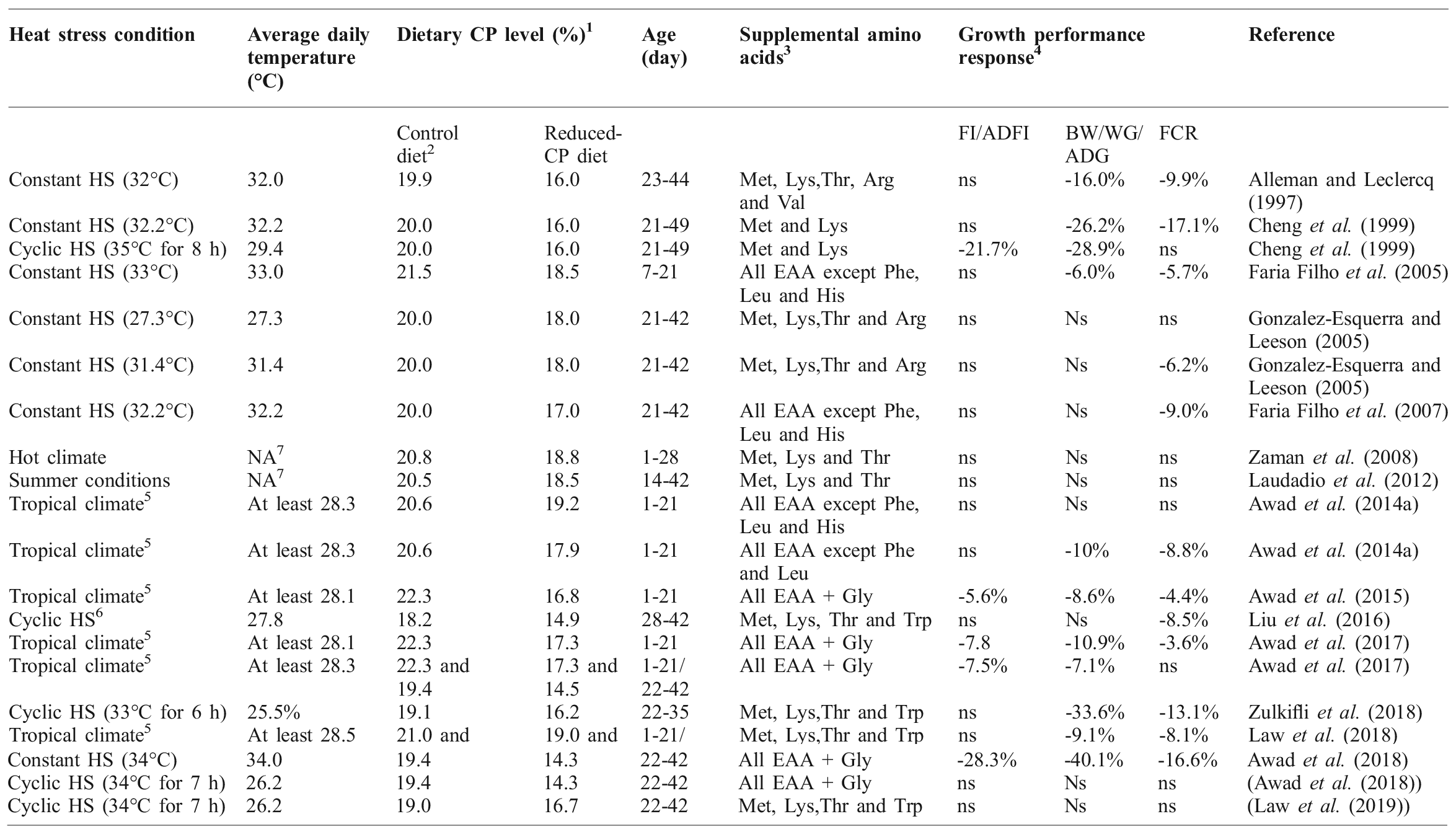
The availability of synthetic AA, accompanied by the establishment of the ideal protein concept (Baker, Reference BAKER1997), have contributed to a decrease in dietary CP in broiler diets. In general, there is consensus that synthetic AA in broiler diets can replace CP to a certain level, and any reduction beyond that level has been shown to adversely affect the growth performance of broiler chickens, even when the EAA requirements are met. However, there is considerable disagreement on the exact level of appropriate reduction. It is very difficult to cover all studies on broilers’ growth performance in response to feeding reduced-CP under heat stress in a review of studies. Hence, in this review, only selected studies have been reviewed and summarised in chronological order (Table 4).
Effects of reduced-protein diets on growth performance in broilers reared under various heat stress conditions.

HS, heat stress; CP, crude protein; EAA, essential amino acids; FI, feed intake; ADFI, average daily feed intake; BW, body weight; WG, weight gain; ADG, average daily gain; FCR, feed conversion ratio.
1 Values represent analysed dietary crude protein or calculated crude protein if the analysed values are not presented.
2 When the study investigated various CP levels with some higher than the recommended CP level for the particular age, a diet with CP level equal/close to recommended CP level was considered as the control diet.
3 Diets were fortified with the mentioned EAA to meet the requirements.
4 ‘‘ns’’ indicates non-significant difference between the control and reduced-CP diets; ‘‘+’’ sign indicates a significant positive response to reduced-CP diet compared to control diet;
‘‘-’’sign indicates a negative response to reduced-CP diet compared to control diet.
5 A natural (uncontrolled) hot and humid environment with maximum (at least 6 h per day) and minimum temperatures of 36°C and 26°C, respectively.
6 32°C for 4 h , 28°C for 16 h to 23°C for 4 h.
7 NA indicates the difficulty to estimate the average daily temperature from the details of the environmental condition provided by authors.
Early research to evaluate the influence of reduced-CP-diet on broiler performance under heat stress conditions was carried out by Alleman and Leclercq (Reference ALLEMAN and LECLERCQ1997). In their study, heat-stressed (32°C constant heat stress) broilers were fed a diet reduced by 4% CP (16% vs. 20% CP), fortified with methionine, lysine, threonine, valine and arginine in order to meet requirements from 23 to 44 d of age. The reduced-CP diet significantly increased FCR (2.413 vs. 2.194) and decreased body weight gain (939 vs. 1118 g) compared to the control group.
Two years later, Cheng et al. (Reference CHENG, HAMRE and COON1999) again applied a 4% reduction in dietary CP (16% vs. 20% CP) which negatively affected the performance of broilers under constant (32.2°C) and cyclic (26.6°C for 16 h to 35°C 8 h) heat stress conditions from 21 to 49 d of age. Under constant heat stress conditions, the reduced-CP diet resulted in significantly lower gain/feed ratio (0.315 vs. 0.380) and weight gain (1280 vs. 945 g) compared to the control group. Under the cyclic heat stress conditions, the reduced-CP diet significantly decreased feed intake (2368 vs. 3023 g/bird) and weight gain (1045 vs. 1071 g) compared to the control group.
Faria Filho et al. (Reference FARIA FILHO, ROSA, VIEIRA, MACARI and FURLAN2005) evaluated the performance of 7 to 21-d old broilers fed a 3% reduced CP diet (18.5 vs. 21.5% CP) fortified with all EAA except Phe, Leu and His, and maintained under constant heat stress conditions of 33°C. The birds fed the reduced-CP diet showed significantly higher FCR (1.48 vs. 1.40) and lower weight gain (623 vs. 663 g) compared to birds fed the 21.5% CP control diet.
At almost the same time, Gonzalez-Esquerra and Leeson (Reference GONZALEZ-ESQUERRA and LEESON2005) evaluated the effects of reducing dietary CP from 20 to 18% CP on the performance of broilers reared under acute (constant 27.3°C) or chronic (constant 31.4°C) heat stress conditions from 21 to 42 d of age. The authors reported no effect on body weight gain, feed intake or feed:gain ratio in birds reared at 27.3°C. However, the reduced-CP diet resulted in significantly higher feed:gain ratio (2.40 vs. 2.26) in broilers reared at 31.4°C.
A study by Faria Filho et al. (Reference FARIA FILHO, CAMPOS, ALFONSO-TORRES, VIEIRA, ROSA, VAZ, MACARI and FURLAN2007) evaluated the influence of a 3% reduction in dietary CP (from 20.0 to 17.0%) via supplementation with Met, Lys, Thr, Val, Arg, Trp and Ile in broilers kept under constant heat stress conditions (32.2°C) from 21 to 42 d of age. The reduction in CP negatively affected the growth performance of broilers by increasing the FCR by 9.0% (1.93 vs. 1.77).
Zaman et al. (Reference ZAMAN, MUSHTAQ, NAWAZ, MIRZA, MAHMOOD, AHMAD, BABAR and MUSHTAQ2008) conducted an experiment to evaluate the performance of broiler chickens reared in a hot climate and fed diets varying in CP (20.8 vs. 18.8% CP) and metabolisable energy from seven to 28 d of age. When the birds were fed the standard energy level (12.55 MJ/kg), a 2% reduction in CP did not affect weight gain, feed intake or feed:gain ratio of broiler chickens. Similarly, Laudadio et al. (Reference LAUDADIO, DAMBROSIO, NORMANNO, KHAN, NAZ, ROWGHANI and TUFARELLI2012) reported similar growth performance when broilers were fed a reduced-CP diet (2% reduction; from 20.5 to 18.5% CP) under summer environmental conditions from 14 to 42 d of age. In both the Zaman et al. (Reference ZAMAN, MUSHTAQ, NAWAZ, MIRZA, MAHMOOD, AHMAD, BABAR and MUSHTAQ2008) and Laudadio et al. (Reference LAUDADIO, DAMBROSIO, NORMANNO, KHAN, NAZ, ROWGHANI and TUFARELLI2012) studies, reduced-CP diets were fortified with the limiting amino acids Met, Lys and Thr to meet requirements.
Awad et al. (Reference AWAD, FADLULLAH, ZULKIFLI, SOLEIMANI and LOH2014a) used 1 to 21-d-old broiler chickens to investigate the effect of feeding different ideal EAA supplemented, reduced-CP diets (19.2 or 17.9% CP) under tropical climates, i.e. a hot and humid environment with maximum (at least 6 h per day) and minimum temperatures of 35°C and 26°C, respectively. Compared to a control group of broilers fed 20.6% CP, the reduction in CP by 1.4% did not affect performance of broilers. However, the reduction in CP by 2.7% resulted in significantly lower weight gain (707 vs. 778 g) and higher FCR (1.48 vs. 1.39) compared to the 20.6% CP group.
In a different study in a hot tropical environment maximum (for at least for 6 h per day) and with minimum temperatures of 34.5°C and 26°C, respectively, Awad et al. (Reference AWAD, ZULKIFLI, SOLEIMANI and LOH2015) evaluated the effect of 5.5% reduction in CP, from 22.3 to 16.8% C,P fortified with all EAA to meet their requirements plus the NEAA Gly, on the growth performance of broilers from 1 to 21 d of age. The authors found that feeding the Gly fortified, reduced-CP diet resulted in significantly lower feed intake (1119 vs. 1186 g/bird), poorer body weight (844 vs. 923 g) and higher FCR (1.41 vs. 1.35) compared to the 22.2% CP diet.
A study by Liu et al. (Reference LIU, FENG, CHAO, CHEN, WEI, WANG, SUN and ZHANG2016) examined the effect of a 3.3% reduction in CP (from 18.2 to 14.9% CP) supplemented with Met, Lys, Thr and Trp on the growth performance of broiler chickens reared under cyclic heat stress conditions (32°C for 4 h , 28°C for 16 h to 23°C for 4 h) from 28 to 42 d of age. The authors reported a that, when birds were fed the reduced-CP diet, FCR was significantly higher (2.30 vs. 2.12) compared to their counterparts fed the 18.2% CP diet.
Considering the previously available data, Awad et al. (Reference AWAD, ZULKIFLI, SOLEIMANI and ALJUOBORI2017) evaluated the effect of a 5% reduction in dietary CP in the starter (22.3 vs. 17.3% CP) and finisher (19.4 vs. 14.5% CP) diets with EAA fortification plus Gly on growth performance of male and female broiler chickens reared under a hot tropical environment (maximum and minimum temperatures of 35.7°C and 25.8°C, respectively). Regardless of gender, feeding the reduced-CP diet negatively affected growth performance during both the starter (d 1 to 21) and overall (d 1 to 42) periods. During the starter period, the reduced-CP diet resulted in significantly lower feed intake (1075 vs. 1166 g/bird) and weight gain (754 vs. 846 g) and higher FCR (1.43 vs. 1.38) compared to control group. During the overall period, the group fed reduced-CP diet showed significantly lower feed intake (3768 vs. 4073 g/bird) and weight gain (2091 vs. 2251 g) compared to the control group.
Recently, Zulkifli et al. (Reference ZULKIFLI, AKMAL, SOLEIMANI, HOSSAIN and AWAD2018) investigated the effect of reducing dietary CP from 19.1 to 16.2% CP (-2.9 %) with supplemental Met, Lys, Thr and Trp on growth performance of 22 to35 d old broiler chickens reared under cyclic heat stress conditions (33°C for 6 h to 23°C for 18 h). The reduced-CP diet adversely affected performance of broilers by significantly reducing weight gain (700 vs. 1055 g) and increasing FCR (2.03 vs. 1.79).
At the same time, Law et al. (Reference LAW, ZULKIFLI, SOLEIMANI, LIANG and AWAD2018) evaluated the influence of reducing dietary CP from 21.0 to 18.5% CP in the starter (d 1 to 21) diet and from 19.0 to 16.7% CP in the finisher (d 22 to 35) diet, with Met, Lys, Thr and Trp supplementation, with or without protease on growth performance of broiler chickens reared in a hot and humid tropical environment (at least 6 h of 36°C maximum temperature and 26°C minimum temperature). Birds fed the reduced-CP diet had significantly lower weight gain (1721 vs. 1894 g) and higher FCR (1.87 vs. 1.73) compared to their counterparts fed the control diet.
With this previous published data in mind, Awad et al. (Reference AWAD, IDRUS, SOLEIMANI FARJAM, BELLO and JAHROMI2018) evaluated the effect of a 5.1% reduction in CP (19.4 vs. 14.3%) with supplementation with all EAA to meet their requirements plus Gly, on the performance of broiler chickens raised under cyclic (34°C for 7 h to 23°C for 17 h) or constant (34°C) heat stress conditions. The reduced-CP diet had no effect on growth performance of broilers under cyclic heat stress conditions. However, under constant heat stress conditions, feeding the reduced-CP diet resulted in significantly lower feed intake (1547 vs. 2158 g/bird), lower weight gain (584 vs. 975 g) and higher FCR (2.65 vs. 2.21) in comparison with those fed the control diet.
More recently, Law et al. (Reference LAW, ZULKIFLI, SOLEIMANI, LIANG and AWAD2019) investigated the effects of protease supplementation in a 2.3% reduced-CP diet (19 vs. 16.7% CP), supplemented with Met, Lys, Thr and Trp on performance of broiler chickens reared under cyclic heat stress conditions (34°C for 7 h to 23°C for 17 h) from 22 to 42 d of age. Regardless of protease supplementation, feeding birds with the reduced-CP diet did not impede growth performance of broilers compared to birds fed the control diet.
Factors affecting the response of broiler chickens to reduced-CP diets under heat stress conditions
Based on the findings from the above studies, it is complicated to compare the data dealing with feeding reduced-CP diets at high environmental temperatures, because numerous factors may be involved. These include energy level (Zaman et al., Reference ZAMAN, MUSHTAQ, NAWAZ, MIRZA, MAHMOOD, AHMAD, BABAR and MUSHTAQ2008; Law et al., Reference LAW, ZULKIFLI, SOLEIMANI, LIANG and AWAD2019), the severity of heat exposure (Cheng et al., Reference CHENG, HAMRE and COON1999; Gonzalez-Esquerra and Leeson, Reference GONZALEZ-ESQUERRA and LEESON2005; Awad et al., Reference AWAD, IDRUS, SOLEIMANI FARJAM, BELLO and JAHROMI2018), supplemental EAA compositions (Balnave et al., Reference BALNAVE, HAYAT and BRAKE1999; Balnave and Barke, Reference BALNAVE and BARKE2002) and supplemental NEAA (Awad et al., Reference AWAD, ZULKIFLI, SOLEIMANI and LOH2014b). Other factors, such as protease supplementation (Law et al., Reference LAW, ZULKIFLI, SOLEIMANI, LIANG and AWAD2018; Reference LAW, ZULKIFLI, SOLEIMANI, LIANG and AWAD2019) and sex (Awad et al., Reference AWAD, ZULKIFLI, SOLEIMANI and ALJUOBORI2017) must be considered when investigating the effect of feeding reduced-CP diets at elevated environmental temperatures, making it difficult to define an exact point for dietary CP reduction under such conditions. Three factors (the severity of heat exposure, supplemental AA compositions and age) which appeared to play a major part in determining the level of CP reduction in broiler diets under heat stress conditions will be further discussed.
severity of heat exposure
In order to compare between the different environmental conditions of the selected studies, the average daily temperature of the different environments/heat challenge regimens were estimated (Table 4). The severity of heat stress conditions, in terms of intensity or duration of heat stress, seems to be the most influential factor on the response of heat-stressed broilers to reduced-CP diets. By comparing the effects of constant medium temperature (27.3°C) vs. constant high temperature (31.4°C) on the response of broilers fed a 2% reduced-CP diet, Gonzalez-Esquerra and Leeson (Reference GONZALEZ-ESQUERRA and LEESON2005) found no negative impact of feeding the reduced-CP diet on growth performance in broilers reared at 27.3°C. However, feeding broilers with the same reduced-CP diet at 31.4°C led to inferior performance by increasing FCR by 6.2% compared with that of the control group, a negative response mainly attributed to the higher heat stress intensity. Similarly, Awad et al. (Reference AWAD, IDRUS, SOLEIMANI FARJAM, BELLO and JAHROMI2018) compared the response of broilers being fed a Gly-fortified, 5.1% reduced protein diet under constant (34°C) and cyclic (average daily temperature of 26.2°C) heat stress conditions. The group of broilers fed the Gly-fortified reduced protein diet had similar feed intake, weight gain and FCR to those of the controls under the cyclic heat stress conditions. In contrast, feed intake, weight gain and FCR were negatively affected by 28.3, 40.1 and 16.6%, respectively when broilers were fed the Gly-fortified, reduced protein diet under constant heat stress conditions. By comparing the results of the above study under cyclic heat stress conditions with an earlier study from the same group, Awad et al. (Reference AWAD, ZULKIFLI, SOLEIMANI and ALJUOBORI2017) found that feeding broilers with a similar Gly-fortified reduced protein diet under hot and humid tropical climate conditions resulted in poorer performance compared to the control group. The discrepancy between these two studies could be attributed to the greater degree of heat that birds may have experienced (average daily temperature of 28.5°C) in the first study (Awad et al., Reference AWAD, ZULKIFLI, SOLEIMANI and ALJUOBORI2017) compared to the 26.2°C average daily temperature experienced by their counterparts under cyclic heat stress conditions in the second study (Awad et al., Reference AWAD, IDRUS, SOLEIMANI FARJAM, BELLO and JAHROMI2018).
Findings from two recent studies by Law et al. (Reference LAW, ZULKIFLI, SOLEIMANI, LIANG and AWAD2018) and Law et al. (Reference LAW, ZULKIFLI, SOLEIMANI, LIANG and AWAD2019) provided evidence that the response of heat-stressed broilers to reduced-CP diets mainly depends on the severity of heat exposure. While the change in CP from 19 to 16.7% had no negative effect on growth performance under cyclic heat stress (average daily temperature of 26.2°C) conditions (Law et al., Reference LAW, ZULKIFLI, SOLEIMANI, LIANG and AWAD2019), feeding a similarly reduced-CP diet negatively affected the weight gain and FCR of broilers in a hot and humid tropical environment, where the estimated average daily temperature was at least 28.5°C (Law et al., Reference LAW, ZULKIFLI, SOLEIMANI, LIANG and AWAD2018). Altogether, the findings of the aforementioned studies indicated that broilers may respond positively to feeding a reduced-CP diet when birds are exposed to average daily ambient temperature of ≤27.3°C. This may explain the discrepancy between the results of previous studies on the response of broiler chickens to reduced-CP diets under high environmental temperatures. It can further explain the reported improvement in broiler chickens’ performance when high crude protein diets were fed under chronic heat stress conditions (32°C), which led to a recommendation to increase dietary protein rather than feeding reduced-CP diets under such high environmental temperatures (Temim et al., Reference TEMIM, CHAGNEAU, GUILLAUMIN, MICHEL, PERESSON, GERAERT and TESSERAUD1999; Reference TEMIM, CHAGNEAU, GUILLAUMIN, MICHEL, PERESSON and TESSERAUD2000).
supplemental amino acid compositions
Supplemental amino acid composition seems to be a major defining factor for the margin for CP reduction in broiler diets. This can generally be categorised into two groups. First, studies that supplemented their reduced-CP diets only with EAA. From the selected studies, CP can be reduced up to 2.3% when EAA supplementation is used, without any adverse effect on the performance of broilers reared under acute heat stress conditions (Gonzalez-Esquerra and Leeson, Reference GONZALEZ-ESQUERRA and LEESON2005; Zaman et al., Reference ZAMAN, MUSHTAQ, NAWAZ, MIRZA, MAHMOOD, AHMAD, BABAR and MUSHTAQ2008; Laudadio et al., Reference LAUDADIO, DAMBROSIO, NORMANNO, KHAN, NAZ, ROWGHANI and TUFARELLI2012; Awad et al., Reference AWAD, FADLULLAH, ZULKIFLI, SOLEIMANI and LOH2014a; Law et al., Reference LAW, ZULKIFLI, SOLEIMANI, LIANG and AWAD2019), Any reduction beyond this level has been shown to adversely affect performance (Alleman and Leclercq, Reference ALLEMAN and LECLERCQ1997; Cheng et al., Reference CHENG, HAMRE and COON1999; Faria Filho et al., Reference FARIA FILHO, CAMPOS, ALFONSO-TORRES, VIEIRA, ROSA, VAZ, MACARI and FURLAN2007; Awad et al., Reference AWAD, FADLULLAH, ZULKIFLI, SOLEIMANI and LOH2014a; Liu et al., Reference LIU, FENG, CHAO, CHEN, WEI, WANG, SUN and ZHANG2016; Zulkifli et al., Reference ZULKIFLI, AKMAL, SOLEIMANI, HOSSAIN and AWAD2018), even when the requirements of all EAA are met (Awad et al., Reference AWAD, ZULKIFLI, SOLEIMANI and LOH2014b). Secondly, some studies supplemented their reduced-CP diets with EAA and NEAA. By fortification with Gly (NEAA) to achieve Gly + serine levels similar to standard protein diets, and supplementation with all EAA to meet their minimum requirements, Awad et al. (Reference AWAD, IDRUS, SOLEIMANI FARJAM, BELLO and JAHROMI2018) reported that CP could be reduced by 5.1% without affecting the growth performance of broilers subjected to cyclic heat stress conditions. Knowing the number of non-protein pathways that Gly participates in can further explain the reasons why it can potentially improve the performance of broilers (Akinde, Reference AKINDE2014b). Gly is important for methionine recycling and cysteine biosynthesis, creatine synthesis, threonine catabolism and uric acid synthesis (Akinde, Reference AKINDE2014a). Moreover, Gly represents the main part of the gut mucin glycoproteins (Moran, Reference MORAN2010). In a nutshell, Gly can promote the metabolic and nutritional efficiency of EAA as well as gut functionality and consequently growth performance. However, feeding such a fortified, reduced protein diet did not support growth equal to a standard protein diet in broilers kept under hot and humid tropical conditions (Awad et al., Reference AWAD, ZULKIFLI, SOLEIMANI and ALJUOBORI2017) and in birds exposed to 34°C constant heat stress (Awad et al., Reference AWAD, IDRUS, SOLEIMANI FARJAM, BELLO and JAHROMI2018) and these results could be attributed to the greater degree of heat that birds may have experienced.
age
Broilers are more suitable heat stress during later ages. Accordingly, most of the studies evaluating the response of broiler chickens to reduced-CP diets were conducted during the grower or finisher periods. However, it is well known that broilers require higher dietary CP during early life. Available trials which evaluated the response of heat-stressed broilers to feeding such reduced-CP diets during both early and late ages showed that heat-stressed broilers were more sensitive to reduced-CP diets during early life. By comparing two different studies from the same laboratory using 7 to 21 d old (Faria Filho et al., Reference FARIA FILHO, ROSA, VIEIRA, MACARI and FURLAN2005) or 21 to 42 d old heat stressed broilers (Faria Filho et al., Reference FARIA FILHO, CAMPOS, ALFONSO-TORRES, VIEIRA, ROSA, VAZ, MACARI and FURLAN2007), reducing dietary CP by 3% negatively affected the body weight gain of broilers during early age (Faria Filho et al., Reference FARIA FILHO, ROSA, VIEIRA, MACARI and FURLAN2005) without affecting the weight gain of their counterparts fed a 3% reduced-CP diet during the later age (Faria Filho et al., Reference FARIA FILHO, CAMPOS, ALFONSO-TORRES, VIEIRA, ROSA, VAZ, MACARI and FURLAN2007). In the study of Awad et al. (Reference AWAD, ZULKIFLI, SOLEIMANI and ALJUOBORI2017), feeding the Gly-fortified, reduced protein diet negatively affected the feed intake, weight gain and FCR by 7.8, 10.9 and 3.6%, respectively, from 1 to 21 d of age (starter phase). However, this effect was lesser in severity when considering the overall experimental period, as feed intake and weight gain were affected negatively by 7.5 and 7.1%, respectively, from 1 to 42 d of age, while FCR was not significantly affected in broiler chickens reared under a hot and humid tropical climate. These results suggested that broilers were more sensitive to feeding the reduced-CP diet during the starter phase compared to the finisher. This apparent lesser sensitivity of older heat-stressed broilers to feeding reduced-CP diets compared to their counterpart heat-stressed birds at an early age could be explained by the higher feed consumption of older broilers, which allows the birds to compensate during later ages.
Acknowledgments
This work was supported by the Malaysian Ministry of Higher Education [Long-term Research Grant Scheme].
Conclusions
The response of broilers to reduced-CP diets under heat stress conditions is affected by a number of factors. The severity of heat exposure plays a major role in determining the beneficial or detrimental effects of feeding reduced-CP diets on broiler chickens reared at high environmental temperatures. The reduced-CP diets seem to be beneficial when broilers are subjected to an average daily ambient temperature of ≤27.3°C. However, feeding reduced-CP diets seem to be detrimental to broilers reared under chronic heat stress conditions. Only a narrow margin of CP may be reduced through EAA supplementation, while dietary supplementation with Gly may allow for greater CP reduction without compromising the growth performance of broilers exposed to moderate heat stress. Despite the fact that older broilers are more susceptible to heat stress conditions, younger heat-stressed broilers seem to be more sensitive to CP reductions.