

%20--%3e%3c!DOCTYPE%20svg%20PUBLIC%20'-//W3C//DTD%20SVG%201.0//EN'%20'http://www.w3.org/TR/2001/REC-SVG-20010904/DTD/svg10.dtd'%3e%3csvg%20version='1.0'%20id='Layer_1'%20xmlns='http://www.w3.org/2000/svg'%20xmlns:xlink='http://www.w3.org/1999/xlink'%20x='0px'%20y='0px'%20width='64px'%20height='64px'%20viewBox='5.5%20-3.5%2064%2064'%20enable-background='new%205.5%20-3.5%2064%2064'%20xml:space='preserve'%3e%3cg%3e%3ccircle%20fill='%23FFFFFF'%20fill-opacity='0'%20cx='37.785'%20cy='28.501'%20r='28.836'/%3e%3cpath%20fill='%23595959'%20d='M37.441-3.5c8.951,0,16.572,3.125,22.857,9.372c3.008,3.009,5.295,6.448,6.857,10.314%20c1.561,3.867,2.344,7.971,2.344,12.314c0,4.381-0.773,8.486-2.314,12.313c-1.543,3.828-3.82,7.21-6.828,10.143%20c-3.123,3.085-6.666,5.448-10.629,7.086c-3.961,1.638-8.057,2.457-12.285,2.457s-8.276-0.808-12.143-2.429%20c-3.866-1.618-7.333-3.961-10.4-7.027c-3.067-3.066-5.4-6.524-7-10.372S5.5,32.767,5.5,28.5c0-4.229,0.809-8.295,2.428-12.2%20c1.619-3.905,3.972-7.4,7.057-10.486C21.08-0.394,28.565-3.5,37.441-3.5z%20M37.557,2.272c-7.314,0-13.467,2.553-18.458,7.657%20c-2.515,2.553-4.448,5.419-5.8,8.6c-1.354,3.181-2.029,6.505-2.029,9.972c0,3.429,0.675,6.734,2.029,9.913%20c1.353,3.183,3.285,6.021,5.8,8.516c2.514,2.496,5.351,4.399,8.515,5.715c3.161,1.314,6.476,1.971,9.943,1.971%20c3.428,0,6.75-0.665,9.973-1.999c3.219-1.335,6.121-3.257,8.713-5.771c4.99-4.876,7.484-10.99,7.484-18.344%20c0-3.543-0.648-6.895-1.943-10.057c-1.293-3.162-3.18-5.98-5.654-8.458C50.984,4.844,44.795,2.272,37.557,2.272z%20M37.156,23.187%20l-4.287,2.229c-0.458-0.951-1.019-1.619-1.685-2c-0.667-0.38-1.286-0.571-1.858-0.571c-2.856,0-4.286,1.885-4.286,5.657%20c0,1.714,0.362,3.084,1.085,4.113c0.724,1.029,1.791,1.544,3.201,1.544c1.867,0,3.181-0.915,3.944-2.743l3.942,2%20c-0.838,1.563-2,2.791-3.486,3.686c-1.484,0.896-3.123,1.343-4.914,1.343c-2.857,0-5.163-0.875-6.915-2.629%20c-1.752-1.752-2.628-4.19-2.628-7.313c0-3.048,0.886-5.466,2.657-7.257c1.771-1.79,4.009-2.686,6.715-2.686%20C32.604,18.558,35.441,20.101,37.156,23.187z%20M55.613,23.187l-4.229,2.229c-0.457-0.951-1.02-1.619-1.686-2%20c-0.668-0.38-1.307-0.571-1.914-0.571c-2.857,0-4.287,1.885-4.287,5.657c0,1.714,0.363,3.084,1.086,4.113%20c0.723,1.029,1.789,1.544,3.201,1.544c1.865,0,3.18-0.915,3.941-2.743l4,2c-0.875,1.563-2.057,2.791-3.541,3.686%20c-1.486,0.896-3.105,1.343-4.857,1.343c-2.896,0-5.209-0.875-6.941-2.629c-1.736-1.752-2.602-4.19-2.602-7.313%20c0-3.048,0.885-5.466,2.658-7.257c1.77-1.79,4.008-2.686,6.713-2.686C51.117,18.558,53.938,20.101,55.613,23.187z'/%3e%3c/g%3e%3c/svg%3e)
%20--%3e%3c!DOCTYPE%20svg%20PUBLIC%20'-//W3C//DTD%20SVG%201.0//EN'%20'http://www.w3.org/TR/2001/REC-SVG-20010904/DTD/svg10.dtd'%3e%3csvg%20version='1.0'%20id='Layer_1'%20xmlns='http://www.w3.org/2000/svg'%20xmlns:xlink='http://www.w3.org/1999/xlink'%20x='0px'%20y='0px'%20width='64px'%20height='64px'%20viewBox='5.5%20-3.5%2064%2064'%20enable-background='new%205.5%20-3.5%2064%2064'%20xml:space='preserve'%3e%3cg%3e%3ccircle%20fill='%23FFFFFF'%20fill-opacity='0'%20cx='37.637'%20cy='28.806'%20r='28.276'/%3e%3cg%3e%3cpath%20fill='%23595959'%20d='M37.443-3.5c8.988,0,16.57,3.085,22.742,9.257C66.393,11.967,69.5,19.548,69.5,28.5c0,8.991-3.049,16.476-9.145,22.456%20C53.879,57.319,46.242,60.5,37.443,60.5c-8.649,0-16.153-3.144-22.514-9.43C8.644,44.784,5.5,37.262,5.5,28.5%20c0-8.761,3.144-16.342,9.429-22.742C21.101-0.415,28.604-3.5,37.443-3.5z%20M37.557,2.272c-7.276,0-13.428,2.553-18.457,7.657%20c-5.22,5.334-7.829,11.525-7.829,18.572c0,7.086,2.59,13.22,7.77,18.398c5.181,5.182,11.352,7.771,18.514,7.771%20c7.123,0,13.334-2.607,18.629-7.828c5.029-4.838,7.543-10.952,7.543-18.343c0-7.276-2.553-13.465-7.656-18.571%20C50.967,4.824,44.795,2.272,37.557,2.272z%20M46.129,20.557v13.085h-3.656v15.542h-9.944V33.643h-3.656V20.557%20c0-0.572,0.2-1.057,0.599-1.457c0.401-0.399,0.887-0.6,1.457-0.6h13.144c0.533,0,1.01,0.2,1.428,0.6%20C45.918,19.5,46.129,19.986,46.129,20.557z%20M33.042,12.329c0-3.008,1.485-4.514,4.458-4.514s4.457,1.504,4.457,4.514%20c0,2.971-1.486,4.457-4.457,4.457S33.042,15.3,33.042,12.329z'/%3e%3c/g%3e%3c/g%3e%3c/svg%3e)
%20--%3e%3c!DOCTYPE%20svg%20PUBLIC%20'-//W3C//DTD%20SVG%201.0//EN'%20'http://www.w3.org/TR/2001/REC-SVG-20010904/DTD/svg10.dtd'%3e%3csvg%20version='1.0'%20id='Layer_1'%20xmlns='http://www.w3.org/2000/svg'%20xmlns:xlink='http://www.w3.org/1999/xlink'%20x='0px'%20y='0px'%20width='64px'%20height='64px'%20viewBox='5.5%20-3.5%2064%2064'%20enable-background='new%205.5%20-3.5%2064%2064'%20xml:space='preserve'%3e%3cg%3e%3ccircle%20fill='%23FFFFFF'%20fill-opacity='0'%20cx='36.924'%20cy='28.403'%20r='28.895'/%3e%3cpath%20fill='%23595959'%20d='M37.442-3.5c8.99,0,16.571,3.085,22.743,9.256C66.393,11.928,69.5,19.509,69.5,28.5c0,8.992-3.048,16.476-9.145,22.458%20C53.88,57.32,46.241,60.5,37.442,60.5c-8.686,0-16.19-3.162-22.513-9.485C8.644,44.728,5.5,37.225,5.5,28.5%20c0-8.762,3.144-16.343,9.429-22.743C21.1-0.414,28.604-3.5,37.442-3.5z%20M12.7,19.872c-0.952,2.628-1.429,5.505-1.429,8.629%20c0,7.086,2.59,13.22,7.77,18.4c5.219,5.144,11.391,7.715,18.514,7.715c7.201,0,13.409-2.608,18.63-7.829%20c1.867-1.79,3.332-3.657,4.398-5.602l-12.056-5.371c-0.421,2.02-1.439,3.667-3.057,4.942c-1.622,1.276-3.535,2.011-5.744,2.2%20v4.915h-3.714v-4.915c-3.543-0.036-6.782-1.312-9.714-3.827l4.4-4.457c2.094,1.942,4.476,2.913,7.143,2.913%20c1.104,0,2.048-0.246,2.83-0.743c0.78-0.494,1.172-1.312,1.172-2.457c0-0.801-0.287-1.448-0.858-1.943l-3.085-1.315l-3.771-1.715%20l-5.086-2.229L12.7,19.872z%20M37.557,2.214c-7.276,0-13.428,2.571-18.457,7.714c-1.258,1.258-2.439,2.686-3.543,4.287L27.786,19.7%20c0.533-1.676,1.542-3.019,3.029-4.028c1.484-1.009,3.218-1.571,5.2-1.686V9.071h3.715v4.915c2.934,0.153,5.6,1.143,8,2.971%20l-4.172,4.286c-1.793-1.257-3.619-1.885-5.486-1.885c-0.991,0-1.876,0.191-2.656,0.571c-0.781,0.381-1.172,1.029-1.172,1.943%20c0,0.267,0.095,0.533,0.285,0.8l4.057,1.83l2.8,1.257l5.144,2.285l16.397,7.314c0.535-2.248,0.801-4.533,0.801-6.857%20c0-7.353-2.552-13.543-7.656-18.573C51.005,4.785,44.831,2.214,37.557,2.214z'/%3e%3c/g%3e%3c/svg%3e)
What comprised Germany’s secularist culture and when did a recognizably socialist subculture emerge within it? To answer the first of these questions, this chapter reconstructs the culture of secularism by following the diversity of its organizations and institutions that had emerged by 1890 and exploring how they peddled their secularist worldview to audiences from various social milieus. It identifies the core principles of this worldview and examines how they were embodied in different ritual practices and taught in institutions. The picture that emerges is of a broad network of organizations, which despite their internal diversification were united by common aspirations and the circulation of shared texts and intellectuals.
In its second half, the chapter examines the effects of the political polarization of the 1880s, which was largely triggered by the growing power of the Social Democratic movement. Up until the mid-1880s, nearly all secularist organizations had been controlled by middle-class notables, most of whom held leadership positions in the parties of the “bourgeois” left. These ranged from the centrist National Liberal Party to the left-liberal Progressive Party, to the numerically marginal, but in the secularist scene very influential, radical Democratic parties. All of these parties, which I will refer to collectively as “liberal,” felt called out by the rising power of the Social Democratic Party, which challenged their control of those cultural and educational institutions developed, in part, to bring urban craftsmen and workers into their ambit. The resulting liberal–socialist antagonism split the secularist culture. The chapter examines which secularist organizations remained with liberal leadership and which fell to the socialists, and shows, for the first time in a comprehensive way, the formation of new secularist organizations with a clear socialist stamp. This was the birth of red secularism.
In order to grasp the circulation of secularist ideas and map out the different types of organizations in social space, the chapter focuses on a single city in a narrow time frame: Berlin of the late 1880s and early 1890s. This enables us to delve into the affected milieus and focus on micro-level interactions that demonstrate the effects of the polarization of the scene. It also allows us to open the aperture wide and place secularism in the dynamic markets of the new German capital, in which it had to compete.
Berlin was one of the fastest growing metropolises in the world. In 1890, the city authorities registered nearly 200,000 arrivals and 163,000 departures, meaning that around one fifth of Berlin’s population of 1,551,866 was on the move over a twelve-month period.Footnote 1 The majority of the migrants moved into the city’s growing working-class neighborhoods, laboring in the small handicrafts workshops or tailoring factories in the city center, or taking positions in the burgeoning metalworking, machine, chemical and electrical industries on the outskirts of the city. Although there were innumerable variations to the story, the process of urbanization took people from the towns of the Prussian hinterland, where social relations were generally shaped by deference and tradition, and transformed them into individuals who had to make sense of their new modern environment. This meant they became not only free economic agents, but free religious and political agents as well. New arrivals could select political opinions, including socialist ones, from a wide assortment of newspapers. The fact that left-liberal and socialist editors were regularly thrown in jail for violating press restrictions on politics, blasphemy and lèse-majesté was part of the game; it constrained but did not ultimately prevent the expression of radical opinions.
Parliamentary elections offered an increasingly free market of political affiliation. Already prior to German unification in 1871, universal male suffrage had been established for the Reichstag, which meant that all parties tried to appeal for the votes of newly arrived workers, craftsmen and petty entrepreneurs. Whereas conservative-confessional parties often predominated in their towns and villages of origin, in the growing working-class districts of Berlin, several parties vied for their loyalty. In the 1860s, the Progressive Party (Fortschrittspartei) had been able to draw most working-class voters to its cause, but the steady growth of the socialist movement delivered an upset in 1877, when socialists took two of six Berlin Reichstag seats from the liberals in by-elections. Similarly worried about the appeal of socialism, the Christian Social Party tried to offer a more populist, antisemitic and nationalist version of conservatism, but with only modest success. By 1890, the party enjoying the greatest success with Berlin’s working class was the Social Democratic Party. Because elections to city government were determined by the “three-class suffrage” that tied voting rights to income and property, liberals, backed by the middle classes and wealthy elites, still controlled city hall.
Migration created new conditions for religious cultures. The vast majority of new Berliners were nominally Protestant; however, the church had an enormous difficulty integrating them into the parishes, and by 1890 attendance in poorer neighborhoods was among the lowest in Germany. Social historians have described the “dechurching” and even “dechristianization” of German cities, particularly Protestant urban centers undergoing industrialization and commercialization, like Nuremberg and Berlin. There, the vast majority of Protestants continued to go to church for baptism, marriage and burial, but their participation in church life was otherwise largely passive, as indicated by their participation in the central ritual of most Christian churches, communion. Whereas 42.2 percent of all German Protestants and 68.5 percent of all Bavarian Protestants took communion at least once a year in 1890, only 21.1 percent of the Protestant inhabitants of Nuremberg did. Similarly, although 30.1 percent of all members of the Brandenburg church took communion in 1890, in Berlin the number was 14.6 percent.Footnote 2 In working-class districts the rates were lower still.
Disaffected working-class Protestants created a potential market for activists in the field of religion and competition between Christians and secularists for their attention was fierce. Yet, gathering the disaffected was not easy, as revealed by reports from two activists of incidents in their efforts to convert workers to their cause in the 1890s. By coincidence, both encounters took place in the Humboldt Grove, a city park in the working-class neighborhood of Wedding, in north Berlin. The first is from a “city missionary” from the Inner Mission of the Protestant Church, an association of conservative evangelicals who had since 1848 made it their mission to reconvert the working class and inoculate them against the allures of secularism, liberalism and socialism. City missionaries waited at the train station to intercept new arrivals and went door to door to enquire about church attendance in the newly built tenements, earning them the moniker “black police.” Yet, these missionaries had to contend with resistance, as one reported:
On a park bench in the Humboldt Grove sits an old woman. … but the old woman is ‘enlightened’ [aufgeklärt]. Years ago, she had stood in the Christian faith, … however, since she moved to her children in the metropolis, she thinks quite differently: ‘how the poor people out in the villages have to be humble and bow down when they are dependent on others! Here in Berlin, I have learned to open my mouth; here I have only to make a demand and the city is ‘obliged’ to take care of me. Thus, you see that Christianity just keeps people in ignorance.’Footnote 3
The church’s alliance with social hierarchy and state authority that had been an asset in rural society often became a liability in the city. The availability of anti-authoritarian discourses and relative freedom of choice meant that many migrants, including this “old woman,” could thumb their noses at demands made by the clergy. Yet, as ripe as many workers may have appeared for secularist critiques of religion, their inclusion in a recognizable culture of secularism was not a foregone conclusion, as attested by an anecdote from the pen of the writer Wilhelm Bölsche, who at the time was busy lecturing to working-class Berliners about the implications of natural-scientific discovery. In an article in the avant-garde literary journal Freie Bühne in 1890, the then twenty-nine-year-old Bölsche recounted how, on one May morning, he found himself in the Humboldt Grove, marveling at the “splendor of the green paradise around me.” The park’s careful arrangement of scientifically labeled plants reminded him of its namesake Alexander von Humboldt, the great Berlin naturalist whose Cosmos of 1845 had provided the template for all subsequent popular-scientific accounts of the monist worldview. “With my walking stick I had just scratched in the sand the Greek letters ‘cosmos,’” when the lunch whistle blew and crowds of workers streamed noisily into the park. “Now the strange marks stared up helplessly from the ground. There was a huge journey in the contrast. And I felt we had made despairingly little progress in shortening it.”Footnote 4 Although his reverie was disturbed by ignorant factory workers, it was precisely these workers that Bölsche saw as a great potential audience for a secularist culture. A few years later he told Germany’s most famous secularist scientist, the “German Darwin” Ernst Haeckel, that the working class represented “a huge mass of heads with the highest desire for knowledge and who offer the monist worldview an interior tabula rasa regarding the church.”Footnote 5
Secularism as a culture was shaped by the interactions of intellectuals, like Bölsche, who saw themselves as prophets or teachers of the new worldview, and their followers, very often urban middle- and lower-class individuals drawn to anticlericalism and monism. One form of this interaction was via popular publications, which was Bölsche’s preferred mode of engagement. As a member of Berlin’s naturalist literary scene, he propagated secularist ideas in journals and later became one of the bestselling popular-science authors in Germany. However, we gain a fuller picture of secularist culture if we look to the interactions that took place in organizations and institutions, where material practices and intellectual dogmas circulated, and where eruptive events and power struggles occurred. The aim of this chapter is not to recreate a total picture of all organizations that peddled secularist ideas, which would lead us, for example, into Bohemian literary circles or the Freie Volksbühne, a theater production company co-founded by Bölsche to produce the dramas of naturalist playwrights. Instead, I will focus on the two types that most systematically propagated monism. At the core of the secularist culture were those organizations that understood themselves to be concerned entirely with questions of scientific worldview and religion. These can be considered the “pure” secularist organizations. Then came the realm of popular science, which comprised organizations that incorporated secularist worldview within their adult educational programs that reached many thousands of Berliners annually.
The Organizations of “Pure” Secularism
There were essentially four variations of “pure” secularism in Wilhelmine Germany: Free Religion, Freethought, Ethical Culture and Monism. Uniting all of these was a core dedication to religious and confessional issues. To varying degrees, they understood themselves to be the next phase in the religious development of humanity, and, with the partial exception of Ethical Culture, they engaged in anticlerical agitation in the name of a new, scientific worldview. Each served a different clientele and had a different function, but they were interlinked through their members and all can be traced back in various ways to origins in rationalist dissent congregations that emerged within the Catholic, Protestant and Jewish communities in the years 1845 to 1848. After a decade of severe repression following the failed revolution of 1848, the dissenters consolidated in the League of Free Religious Congregations in 1859. In Berlin in 1890, the Free Religious Congregation (FRC) was the sole secularist organization of any size. There had been a Freethought Association “Lessing” founded in 1881, as part of the emerging international network of freethinkers launched in 1880 in Brussels. However, in 1886 it fell foul of the authorities and was declared a political organization, which meant that, among other restrictions, women could not attend meetings. Rather than carry on under such restrictions, “Lessing” disbanded.
Berlin’s Free Religious Congregation had begun as the Christian-Catholic Congregation, which had been called into life in 1845 by local Catholics, but which soon attracted many Protestant and a significant number of Jewish adherents. Its first leader was a renegade Catholic priest from Breslau, Robert Brauner, who came to embrace a pantheistic monism before his exile from Berlin in 1852 and early death in 1854. His later successor, G. S. Schaefer, a schoolteacher who served as the congregation’s chief preacher between 1870 and 1887, went a step further and openly embraced atheism and materialist monism. He even dispensed with the title “preacher” and called himself the congregation’s “speaker.”Footnote 6
Historical actors and later historians have been confused by the word “religion” in the name of the Free Religious movement and have often mistakenly concluded that it was more Christian than Freethought, which they have assumed to be more atheistic. This was not true of many of the larger Free Religious Congregations, particularly those with left-wing memberships, as was the case in Berlin. In fact, the Freethought Association “Lessing” was politically more conservative than the FRC. When “Lessing” disbanded in 1886, it was effectively absorbed by the Free Religious Congregation. Its chairman soon became the chairman of the FRC. The FRC became the main Freethought association for Berlin for the next two decades and remained the single largest corporate member of the German Freethought League. This was paralleled on the national level by the decision in 1901 of the umbrella organizations of Freethought and Free Religion to unite their leaderships in the person of Gustav Tschirn, the preacher of the large Breslau congregation.
Where Free Religion was more “religious” than Freethought was in its retention of church structures and functions. The central event of the FRC was the Sunday morning meeting, which was clearly modeled on a Christian service. On any given Sunday in 1890, some 100 to 300 persons found their way into the congregation’s hall in Rosenthaler Street in the central district of Spandauer Vorstadt to listen to the day’s lecture on topics ranging from cultural history to ethics or natural science. Not just this “sermon” but other ritual elements of Christian worship were used as platforms to proclaim the falsity of Christianity and the truth of immanent worldview and its implications for social relations. This began with the opening hymns. Sung to the melody of a familiar church tune, the lyrics often directly juxtaposed the darkness of the old teachings and the light of the new. For example, the Sunday meeting of April 13, 1890 began with 250 attendees singing the following:
Thankfully for the historian, this meeting, like most others in this period, was attended by a police officer in uniform, who took notes and was ready to interrupt the proceedings if the speaker strayed into political territory, or insulted the church or the Kaiser.Footnote 7 On that day the speaker was Heinrich Peus, a twenty-eight-year-old university student of working-class background, who lectured on “the influence of economic conditions on the independence of conviction.”Footnote 8 Although he was soon to become editor of a socialist newspaper in nearby Dessau, Peus’s philosophy was more Rousseauian than Marxist. Humans had a natural drive and capacity to know the world and themselves, he began, but they were everywhere hindered by authority and dogma: “Coercion [Gewalt] is the non-recognition of the nature of man; justice is, by contrast, the recognition of human nature.”Footnote 9 Although science was “never finished and required continual extension and correction,” it nonetheless provided a secure foundation for their worldview:
Let us thank happy fate that we were born in an age in which one recognizes the total lawfulness of all events in nature, in which … fear of arbitrarily operating, supernatural powers has disappeared, and in which one has ceased to beg for happiness … from a place that has no ear to hear, [and] instead wins it through joyfully creative, never doubting labor.Footnote 10
In Peus’s account, the “social question” appeared as a factor in the struggle between authority and self-knowledge. “The obstacle, which stands in the way of independent thought is political and social dependence, which in turn are based on economic dependence. If man was just a spirit, he would have no material needs” hence there would be no struggle between “power and freedom.” The solution was thus not necessarily social ownership of means of production, but rather economic independence.Footnote 11
Despite its opposition to Christianity, the Free Religious Congregation provided its adherents with services they would have been familiar with from their prior religious socialization. Not only did the Sunday meetings loosely follow the liturgical structure of a Protestant service, the congregation also maintained a number of social institutions, including a choir, a women’s association and discussion evenings. The Free Religious also performed rites de passage derived from Christian rituals. The one that raised the most commentary from the conservative press was the Jugendweihe (youth consecration), which had evolved out of Protestant and Catholic confirmation ceremonies. Like its Protestant analogue, the Free Religious Jugendweihe was timed to mark the end of primary education and the entrance of working-class children into the world of apprenticeships or work.
Press and police reports on the Jugendweihe of 1891 provide a glimpse at this central event in the calendar of the congregation. The congregation rented an auspicious locale, the Concert House, where a crowd of 2,500 attended the confirmation of 17 boys and 22 girls. Following songs by the congregation and the choir, Bruno Wille gave the keynote address on “Education to Freedom.” A close friend of Wilhelm Bölsche and key figure in the naturalist literary avant-garde that established a colony in suburban Friedrichshagen, Wille found employment as a popular speaker and Sunday school teacher at the FRC. In his speech, Wille contrasted the ethical instruction he had given the children with that doled out by the churches. Whereas he did not force children to accept any teaching that contradicted reason, the church violated the laws of human development by requiring that confirmands take a vow to uphold a static confession. Instead of the “ballast” of the “old dogmas of the ancient Hebrews,” he offered the children natural science and cultural history. He taught ethics through example and urged the parents in the audience to give up demands for blind obedience from their children, because this produced only dependence and alienation. Instead, if they acted as “advising comrades” through “love paired with reason,” they could “lead the children to freedom.”Footnote 12 Following this speech, a girl and a boy recited a poem of Wille’s and promised in the name of their co-confirmands to be true members of the congregation. Each child then received a “book,” which was a bound collection of secularist brochures with a fitting dedication. (See Figure 2.1.)

The Jugendweihe was readily accepted among Berlin socialists and grew in popularity following the ascension of socialists to the congregation’s leadership in the late 1880s. In April 1908 a reporter from Germany’s most important socialist paper Vorwärts described his alarm when he bumped into a fellow socialist with “a confirmation present and a top hat.” He was relieved to discover that they were on their way to the FRC Jugendweihe (and not to Christian confirmation). The reporter used this encounter to create the following juxtaposition: Whereas most working-class youths would arrive at socialism through the downward path of exploitation and the extinction of their dreams, the Jugendweihe represented an upward path of idealism that led the youth to “dedicate” their lives to “the struggle for the redemption and liberation of the proletariat.”Footnote 13 The popularity of the Jugendweihe as a socialist ritual grew during the Weimar Republic until it was banned by the National Socialists in 1933. After the war, the GDR resurrected and transformed the Jugendweihe, now divorced from its earlier associations with Free Religion, and made it the chief ceremony of the communist state. To this day, Jugendweihe remains the most popular cultural heritage of the GDR, with many thousands of children participating annually.Footnote 14
In 1847 the Prussian government had withdrawn from the congregation the right to perform marriages or baptism. However, it retained the right to burial. Its cemetery in the Pappel Allee had been on the outskirts of Berlin when it was donated to the congregation in 1846, but by 1890, the working-class district of Prenzlauer Berg had grown up around it. This refuge in the city was the congregation’s most prized asset and a thorn in the side of the state churches and the authorities. It was the site of repeated acts of dissent, from the posting of an atheist slogan on the cemetery gates to the public burial of prominent socialists. In August 1894, for example, some 2,000 persons attended the burial of a well-known SPD member. The police declared it a political “outdoor meeting” and levied a 50 mark fine against Ewald Vogtherr, a leading congregation member and socialist city councilor, for holding a graveside eulogy.Footnote 15 In 1909, the congregation erected a large meeting hall next to the cemetery, with the monistic motto on the wall: “The world governs itself according to eternal laws.”
The FRC also built a columbarium, and in 1891 1,000 people attended a ceremony at which the ashes of a woman cremated in Germany’s first crematorium in Gotha were deposited.Footnote 16 Cremation was an area where liberal, bourgeois activists pioneered what later became largely associated with working-class secularism. The cause had initially been championed in Berlin by the association “Urn,” whose membership included professionals and several future members of the German Ethical Culture Society.Footnote 17 When Urn failed to gain permission for a crematorium in Berlin in 1891, the FRC stepped in and its chairman Otto Friedrici repeatedly petitioned the City Council.Footnote 18 In 1898, Urn was allowed build a demonstration cremation oven and it invited leading public officials to witness the burning there of a pig carcass; however, it was not until 1908 that permission was finally granted to the association to construct a crematorium in Berlin.Footnote 19 The prominence of secularism in the modern cremation movement is not surprising.Footnote 20 Given that Christian parties opposed cremation as a violation of religious tradition, the anticlerical implications were a great enticement to secularists.Footnote 21 For the working-class members of the FRC, the cost factor was key. Burial was an expensive affair and cremation promised to be much cheaper. In 1905 a cremation cooperative was established by working-class freethinkers in Berlin, which eventually became interwar Germany’s largest Freethought association.
By 1890, the FRC had 1,747 dues-paying members, mostly members of what is called “the old middle classes” (Alte Mittelstand), i.e. merchants, master craftsmen and their apprentices, some of whom had formerly been Catholics or Jews, but most of whom came from a Protestant background. Like many urban civic associations, it had been controlled by a small group of notables, educated professionals or wealthy businessmen. In the case of the FRC, these men leaned towards the Democratic Party in the 1870s. However, in the 1880s, an increasing socialist presence emerged in the association, and, as we shall see, was able to overturn the leadership in 1886. The turn of the FRC in a more plebeian and radical direction had played a part in the demise of “Lessing” and it also soured relations with the upper-class elites, who founded the German Society for Ethical Culture in Berlin in 1892. In part as a reaction to the perceived threat of radical secularism, these elites explicitly proposed “ethics” against “monist worldview” as a scientific and harmonizing means of uniting Germans in a secular culture. Those intellectuals committed to the project of scientific worldview responded a decade later by forming explicitly monist associations, starting with the Giordano Bruno League in 1900 and culminating in the German Monist League in 1906.Footnote 22 Like the Society for Ethical Culture, these monist organizations largely excluded working-class members.
Secularism and Popular Science
The newsletters of the FRC from the late 1880s contain notices informing members that they could obtain special rates for courses at the Humboldt Academy, Germany’s leading adult education institution. And for discounted tickets to the Urania planetarium, the Aquarium, the Passage-Panopticon with its “flood panorama,” or to Castan’s Panopticon with its famous collection of wax figures, they were directed to three members, who also happened to be the congregation’s most prominent socialists.Footnote 23 In an era before moving pictures, these venues offered popular forms of visual entertainment, yet they also represented the city’s foremost institutions of popular-scientific education. The fact that they advertised in the FRC brochure was not a coincidence. It underlines the fact that popular science was, alongside Free Religion, the chief vector for the transmission of monist worldview into the Berlin population, in particular to the many intellectually ambitious adults with limited formal education, then flocking to the SPD. According to Bölsche, the Free Religious Congregations themselves had essentially transitioned into popular-scientific institutions, where they served as “new and promising bridges over the gap between research and the people.”Footnote 24
Thanks to historian Andreas Daum, we now understand the centrality of popular science to the history of German secularism and politics. He named proximity to liberalism, a penchant for worldview and distance from university research as the “birth defects” of popular science as it arose in the mid nineteenth century.Footnote 25 Yet, it is worth asking whether the intimate connection of worldview secularism was not so much a “defect” of popular science, as much more a quintessential motivation for engagement with it. In his classic study of popular science from 1935, the Polish philosopher of science Ludwik Fleck concluded that worldview is “[t]he pinnacle, the goal of popular knowledge.” He explained worldview as a by-product of the essential processes of science popularization – simplification, valuation and visualization – and claimed that it was key to the integral role played by popular science in the entire system of modern knowledge production. In generalizing academic knowledge into worldview and making it accessible to the public, popular science also fed back into the scientific community and shaped research agendas.Footnote 26 In the following section, we want to take Fleck’s lead and explore how simplification, valuation and visualization were intimately connected to the articulation of the naturalistic, monistic worldview that formed the core of secularist culture. We begin with classic works of popular-scientific literature before turning to the educational institutions in Berlin in the 1880s.
The literary contribution to the emergence of the monist worldview can be summed up in three books each published a decade apart. In his epoch-making book Cosmos of 1845, the naturalist Alexander von Humboldt stated that his aim was to provide readers a “general natural painting descending from the farthest nebulae and rotating double stars of the universe to the telluric phenomena of the geography of organisms (plants, animals and human races).”Footnote 27 Following Humboldt, popular scientists sought to capture all of nature in a single totalizing “physical description of the world,” for which Humboldt used the term “worldview.” Physician Ludwig Büchner took a further step in simplification and added valuation in 1856 with his Force and Matter. Written during the “materialism controversy” which scandalized the German public, Büchner’s title indicates the radical reduction of all phenomena to a single principle, namely matter in motion. Valuation came through his stark and radical opposition between this scientific principle and forms of “idealism” whether in philosophy, elite culture or, most importantly, Christianity. In 1866 Ernst Haeckel published his General Morphology, which introduced the term “monism” in its popular-scientific form. Like Humboldt, he sought a total depiction of the universe, and like Büchner he sought to reduce it to a single principle; in Haeckel’s case, totality and unity were provided by the theory of evolution promulgated by Darwin. He predicted that the “monistic worldview” of “the higher developed future … will amalgamate natural science and philosophy into a great unity of a single, all-encompassing science.”Footnote 28 Although his scientific explanations were mechanistic, Haeckel’s use of the term “monism” enabled him to claim the mantle of a long heretical, philosophical tradition in Western thought with roots going back to ancient philosophy, which posited an essential unity behind various dualisms. Baruch Spinoza proposed a single substance comprising thought and matter, which was echoed in Goethe’s bon mot “Material never without spirit, spirit never without matter” that Haeckel never tired of repeating. Haeckel’s twist was to ground the philosophical hypothesis of monistic unity in mechanistic scientific explanations. The result was a naturalistic monism.
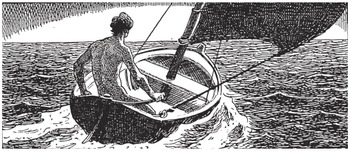
In 1899 Haeckel summarized all his innovations in worldview with his manifesto Die Welträtsel (The World Riddle), which according to political philosopher Hermann Lübbe was by far the most important popular-scientific book published in modern Germany.Footnote 29 Celebrated as “anti-pope” at the 1904 meeting of the International Congress of Freethinkers in Rome, Haeckel was the key intellectual figure in the history of popular monism. From the publication of his General Morphology until 1933, there were no more significant developments in secularist worldview. Certainly some variations in monism emerged, such as psychophysical parallelism, energetics and theosophically influenced nature mysticism; however, they either remained marginal or could be integrated into the framework provided by Haeckel. His form of naturalistic monism grounded in popular science was, as we shall see in Chapter 5, something to which people, including thousands of workers, could and did “convert.” It formed the basis of utopian cultural imaginings, such as that captured in the frontispiece The Man of the Future published by Wilhelm Bölsche during the First World War in Kosmos, Germany’s most widely read popular science book series (see Figure 2.2). It showed a naked man in a sailboat, heading towards the horizon. This symbolized the monist promise of the unity of knowledge, nature and self in the self-conscious human body. The glowing future was on the horizon of this world, not in the beyond.
To investigate the relationship of monism and popular science in Berlin around 1890, we turn now to three institutions, identified by Daum as national leaders in the field of popular science. Taking each in turn, I want to examine how they communicated worldview through scientific education, and how they were linked through personnel to “pure” secularist organizations, in particular, the local Free Religious Congregation.
The Society for the Promotion of Popular Education
One of the simplest forms of transmitting secularist ideas was the “itinerant speaker” (Wanderredner). In 1871, a group of liberals in the Rhineland had founded the Society for the Promotion of Popular Education (Gesellschaft zur Verbreitung von Volksbildung, or GVV) as a clearinghouse for such wandering speakers, who, for a fee, would lecture to member organizations. It later expanded its offerings to include mobile “people’s museums” and in 1906 “popular-scientific wandering libraries.” The GVV grew steadily from an initial membership of 158 participating organizations and 1,299 individual members in 1871 to 772 organizations and 4,339 individual members in 1878.Footnote 30
Soon after its foundation, the GVV came under the control of those members of the left-liberal Progressive Party most invested in worker education. Although the stated aim of the GVV to “raise the morality and education of the people” was not explicitly secularist, several of these men, including Hermann Schulze-Delitzsch, Franz Duncker, Max Hirsch and Rudolf Gneist, were public supporters or members of “pure” secularist organizations.Footnote 31 There were many Free Religionists and Freethinkers among the freelance intellectuals who advertised their wares in the GVV catalog. These travelling salesmen for Weltanschauung were driven to take to the road by a sense of missionary calling and a lack of a salaried position and they included Ludwig Büchner, who had lost his university position following his public role in the materialism controversy. Itinerant preaching had been a marked feature of Free Religion from the outset and at least four preachers worked via the GVV in 1889, including Titus Voelkel. Voelkel’s career exemplifies the precarious nature of secularist livelihood. Police surveillance shows that after being expelled from the Magdeburg congregation for his radical posturing in 1888, he sought refuge at the Berlin FRC, where he became a regular speaker and received a commission to write a catechism. However, to make ends meet, he traveled the country, lecturing at twenty-three different Free Religious Congregations in June and July 1889. The lecture titles he offered in the GVV catalog for the winter of 1889–90 illustrate the close connection between Free Religion, life reform, utopian community formation and radical democracy: “poisons of the soul (alcohol and nicotine), the forest, Shelley a pantheist poet, people’s baths, people’s homes (Volksheime), people’s cafes and club houses for the people.”Footnote 32 Among the twenty-six Berliners lecturing for the GVV at that time were four other regular speakers at the FRC. For a fee of 25–50 marks, subscribing organizations could engage Carl Pinn to lecture on the topics: “nationality, public opinion, suicide, hypnotism, women, Minnesang or the history of the press,” while Ewald Vogtherr’s offerings included “cultural history, popular philosophy, Ulrich von Hutten, the natural law of rise and decline [Werden und Vergehen], Faust, and the life goals of humanity.” This openness to Free Religion was not surprising given that the GVV’s chairman at the time, Dr. Paul Wislicenus, was the son of a Free Religious preacher and gave at least one speech in the Berlin FRC.Footnote 33
The Humboldt Academy: Purveyor of Scientific Worldview
The institutionalization of popular science in Berlin took a large step forward with the opening of the Humboldt Academy in 1879. Named after Alexander von Humboldt, the Academy was the first adult continuing education institution of note in Berlin and sparked the Volkshochschule (adult educational colleges) movement, which to this day supports branches in most cities and large towns across Germany. It was the initiative of Max Hirsch, who guided it through the first quarter century of its existence. In addition to founding and leading the liberal labor union movement – the Hirsch-Duncker’schen Workers Associations – Hirsch was an early member of the Freethought Association “Lessing” and the German Society for Ethical Culture. Although Hirsch did not speak at the Free Religious Congregation, several of his docents did.Footnote 34
Unlike the GVV, the Humboldt Academy offered its docents a professional position and stable income. With a salary of 300–400 marks per quarter for the most popular courses, Hirsch was able to attract a well-qualified staff, nearly all of whom were university educated.Footnote 35 Yet, analogous to the Humboldt Academy’s own physical location in halls rented from a grammar school next to the Friedrich Wilhelm University, most of these docents occupied culturally and economically precarious positions in the shadow of the professors. The Academy attracted young teachers, who held the coveted title “Dr. phil.” and were trying to make a living as “writers” (Schriftsteller). Among the 156 docents at the Humboldt Academy in 1896 were 48 Schriftsteller and 27 university-trained schoolteachers and directors. There were also 22 Privatdozenten, those untenured and underpaid university lecturers who, for reasons of overcrowding, lack of talent, or confessional or political discrimination, did not get “called” to vacant university chairs. The sociologist Georg Simmel, who taught courses at the Humboldt Academy in 1888, was a Jewish victim of such discrimination.Footnote 36 The prominence of Jewish Berliners like Hirsch among its directors and docents and its association with liberalism and secularism made the Humboldt Academy the target of antisemitic ridicule.Footnote 37
Hirsch had been one of Germany’s leading advocates of workers’ education in the 1860s and 1870s, but by the end of the century, he had shifted the target of his popular education efforts. The Humboldt Academy aimed to reach a new segment of the middle classes, who according to Hirsch were “largely of modern origin” and commanded “leading places in the sprawling economic system and administration.”Footnote 38 By 1902, the Humboldt Academy had an enrollment of 11,854 pupils, mostly comprised of white-collar workers and unemployed women, who attended classes in eight locations around the city.Footnote 39 Measured by the total number of listener hours, it was the most important popular-scientific institution in Berlin between 1879 and 1933.
In 1901, Hirsch still affirmed the same basic understanding of the relationship of science, worldview, personal ethics and class harmonization with which he entered into secularist circles in the 1860s. He described a dangerous age, in which only a freethinking, autonomous middle class armed with a solid scientific worldview could navigate through the Scylla and Charybdis posed by the rival authoritarian orders of confessional conservatism and base socialism:
First our time forms the great epoch, where independence of thought and action … can be accessed by all social classes and both sexes. This in no way means a negation of religious faith and the social order; however, both [of these] should no longer base themselves on external foreign authority, but rather on the personal conviction gained through independent investigation. For this one requires science and its noble goal: a historically constituted and logically consistent worldview and ethical system [Welt- und Lebensanschauung]. The deepest contradiction and greatest danger of our age, not just for the exterior integrity of states but for the highest moral and spiritual goods, lies in the disappearance of faith in authority and church-sanctioned morality, unless the common possession of science steps into their place.Footnote 40
Given the centrality of worldview to Hirsch’s project, it is not surprising that nine of the thirty evening courses offered in the autumn of 1891 fell within the general scope of worldview training.Footnote 41 These included courses in evolutionary natural history, psychology and hygiene. All three of these aspects were bundled in the course offerings of Dr. Maximilian Klein. His course on “The History of World Wisdom” surveyed the literature on psycho-physical parallelism, while “Paths to Human Knowledge” was a course in what might be called applied monism, in which Klein offered three ways of studying a person’s spirit through their body. Students would learn to read a person’s “physiognomy” in gestures, facial expressions and hands (chirology); they would interpret handwriting through “graphology”; and they would interpret an individual’s words and deeds through the identification of “class (Stand) peculiarities” and the “influence of ethnicity [Volksschlag], sex, age, health, diet.”Footnote 42 Klein arrived at the Academy in 1891 from Danzig and was its longest serving docent and repeatedly elected to its governing body. He survived the racial and political purge in 1933, and in 1941 he was still teaching courses in applied monism.Footnote 43
More Volkshochschulen with secularist participation appeared in Berlin after 1900. In January 1902 the Free Academy (Freie Hochschule) opened its door. Among its founders and first directors were Bruno Wille, Wilhelm Bölsche and Wilhelm Schwaner, a pioneer of völkisch thought whose journal Der Volkserzieher became the Freie Hochschule’s official organ. Whereas Hirsch’s organization kept a strict left-liberal profile, the Freie Hochschule’s docents were a hodgepodge of socialists (Heinrich Lux), former followers of Friedrich Naumann’s National Social movement (Adolf Damaschke, Max Maurenbrecher), Monists (Wolfgang Kirchbach, Magnus Hirschfeld, Walther Vielhaber) and völkisch thinkers (alongside Schwaner, also Heinrich Driesmann, Rudolf Steiner). After the First World War, the number of Volkshochschulen rose strongly and they became key battlegrounds between right and left monists.Footnote 44
Urania: The Aesthetics of Worldview
We have not yet dealt substantively with the “visualization” of worldview, which Fleck considered a key part of popularization. Since the early days of modern popular science, its leading practitioners had given great attention to the importance of aesthetics. Alexander von Humboldt likened his work to that of an artist, calling his Cosmos a “painting of nature.” Unlike the academic scientist who presented nature in component parts, a science popularizer had to use aesthetic means to enable the reader to apprehend it as a totality, a cosmos. Aesthetic considerations were paramount in the operations of the Urania planetarium, which opened its doors to the public in 1889. Spearheaded by Court Astronomer Wilhelm Foerster and financed on a subscription basis by some of Berlin’s wealthiest bankers and industrialists, Urania occupied a representative building adorned with busts of famous scientists.Footnote 45 Inside, visitors could participate in demonstration experiments in the professional observatory or laboratories, or they could attend performances in the “scientific theater.”
Politically and institutionally, the Urania was at a far remove from the Free Religious Congregation, and its founder, Wilhelm Foerster, soon went on to co-found the elitist German Society for Ethical Culture. Among Urania’s ten-member “scientific personnel” there was no room for the dilettantes of the FRC. The Urania nonetheless offered good worldview fare, albeit in a new form. Unlike the props used by most science popularizers, such as diagrams, fossils and bones, the “scientific theater” of the Urania was equipped with state-of-the-art stage technology, featuring multicolor electric lamps and a slide projector of 6,000 candle strength. This made possible a heightened experience of nature as an unfolding drama, narrated in the semi-darkness by a professional speaker. According to Director M. Wilhelm Meyer, the aim was to provide “a miniature picture of Nature” simple enough to be immediately grasped by a large crowd:
With the human eye the mind is also to be enthralled – to a degree unconsciously – by the richly colorful artistic renditions of beautiful and grand scenes of nature. One should enter our theater with the same expectations with which one enters any other theater, where we are presented with a drama that stimulates serious, deeper reflection. Here as there, one cannot demand too much mental work from the audience. Thoughts and developments must be easy to follow without prior knowledge, and – in the same measure as it engages human reason – the senses, aesthetic perceptions, the heart, in other words, the whole person must also be engaged.Footnote 46
Meyer saw in the unconscious, aesthetic apprehension of the totality more than a means for drawing the audience into an active, deeper engagement with natural science. The aesthetic and emotional identification of the audience with the Gesamtkunstwerk was precisely the worldview aim of the show. Meyer insisted that the relationship of reason (Verstand) to its object should not be “cold.” One of Urania’s “nature dramas” was entitled “The History of the Primeval World” and closed “[w]ith the soft tones of a distantly emanating music.” This off-stage music was “meant to signify how all the beauty and the poetry of immense creation … prepared over millions of years of struggle, first achieved their purpose when the sensate human soul was born, which for the first time proved receptive to such indefinable and yet infinitely inspiring impressions of poetry, music and the secret of rhythm and symmetry.”Footnote 47
Here Meyer made the aesthetic-scientific apprehension by his audience of the totality of the world and its history into the telos of the development of life on earth, i.e. the point at which nature achieved self-consciousness by gazing into the mirror provided by natural science and worldview theater. Writing a decade later, Bölsche underlined the empowering potential of this type of popular science, which had been made possible by the fusion of the cosmic view of Humboldt with the developmental narrative provided by Darwinian evolutionary theory:
Now on the basis of the idea of evolution arose the demand to give the listener a true share in the creation of the world, to place him at a vantage point, where by the power of imagination the whole world stands at his feet. He should enjoy the thrill of creativity, when, there in space, as in unthinkable eons past, the world material again gathers into a nebula, when the nebula divides into a milky way of millions of stars, where one such sun bore planets and on the cooled surface of one such planet – the earth – life formed, blossomed into the carboniferous forest, and swam by as the ichthyosaurus, until finally it gathered to the human brain and – between the ice-age glaciers and the mammoths – culture began, which ultimately ascended to Galileo and Newton, to Michelangelo and Goethe.Footnote 48
Meyer defended his “scientific theater” against the criticism voiced by “real” scientists that it spread “semi-education” [Halbbildung]. It was obvious, he stated, “how much one must stay on the superficial level, if one is to recall the entire history of the earth, building it up from the bottom to the top, in a timeframe of an hour and a half.” It might appear incorrect to “pedantic critics” that he added some false detail “in order to create a clearer picture,” but clarity, Meyer argued, was the chief concern. Uneducated listeners had to be caught with seamless narrative and total visual simulacra. Once captured, they could, “according to Darwinian principles, more easily work upwards from these embryonic stages of past knowledge that are suited to their mental needs.”Footnote 49 Here Haeckel’s famous phylogenetic principle is adopted as an analogy for the educational process. Just as the history of the entire development of the species (phylogeny) repeated in the gestational stages of the individual embryo (ontogeny), Meyer argued that the semi-educated audience member recapitulates the history of science in his or her movement from lower to higher knowledge. Furthermore, the nature drama repeats in the space of one and a half hours all of these linked genealogical accounts, producing not a second-rate copy of true knowledge, but a total representation of knowledge as worldview.Footnote 50 The person who has not experienced this, Meyer concluded, “is missing part of what makes us human.”
The Division of Secularism
To summarize our initial survey of the secularist culture of Berlin, we have found an extensive overlap between leading German institutions of popular science education and the “pure” secularist organizations of the country’s capital city, expressed through the circulation of intellectuals and monist ideas. Having established this unity of the secularist culture, we turn now to the effects upon it of the political struggles of the late 1880s. According to Andreas Daum, German popular science emerged in the post-1848 period closely tied to left-wing politics and Free Religion, but over the following decades became increasingly professionalized, depoliticized, commercialized and institutionalized. Daum acknowledged the emergence of an explicitly “socialist” or “proletarian” popular science, but he chalked it up to the pluralization of the field.Footnote 51 However, this development also needs to be understood as a result of the polarization of the field. In other words, the processes of professionalization, depoliticization and commercialization better describe the trajectory of its leading liberal voices, rather than the direction of popular science per se. The “bourgeois” institutions, such as the GVV, the Humboldt Academy and the Urania, did not monopolize the endeavor. The second half of this chapter examines the bifurcation of the secularist popular science scene into liberal and socialist wings. It does so in two steps, showing first how the tensions within the German left affected bourgeois popular science institutions and split the Free Religious Congregation. Then, it explores the institutions that emerged to the left of Free Religion and dispensed secularist Weltanschauung to meetings of trade unions, guilds, reading clubs and educational societies of the socialist milieu. In this way, the chapter demonstrates the emergence of a specifically socialist brand of secularism in the years around 1890.
Since the 1860s, popular science and naturalistic worldview had been hotly contested commodities in the growing struggle between urban liberal elites and Social Democratic upstarts. Left liberals had founded popular-scientific institutions as a means of building a new society based in science, secularism and liberal values. They agreed with Max Hirsch that introduction of universal male suffrage had made “the question of freedom into a question of the education of the masses.”Footnote 52 But education was also understood as a means to keep socialism at bay. Already in 1870, one of the founders of the GVV had expressed his fear that agitation on the “social question” could lead the “the dead masses” of uneducated Germans to become “tools in the hands of every conscienceless upstart.”Footnote 53 The explicit aim of the GVV was to “coordinate and professionalize” the spectrum of “non-socialist and non-confessional” educational associations.Footnote 54 Although decentralized, the GVV did periodically purge its ranks. In August 1891 the Central GVV explicitly asked its subscribers to strike eleven names from their list, including those of three FRC radicals: Bruno Wille, Ewald Vogtherr and Titus Voelkel.Footnote 55 One likely explanation of this exclusion was the public prominence of these men in recent radical socialist agitation, which will concern us in Chapter 3.
The same combination of idealism and tight political control was found at the Humboldt Academy. Max Hirsch was very proud of the democratic “self-administration” (Selbstverwaltung) of the docents but set clear political limits. One of his lecturers, the freigeistig Protestant theologian Theodor Kappstein, remembered: “Hirsch was – and that was not always good – the whole Humboldt Academy; political liberalism constrained him, social democracy was not permitted to penetrate the faculty; he jealously held watch towards right and left at the gates of the Humboldt House, with which he stood and fell.”Footnote 56 The Urania too bore the marks of the social divisions within the field of popular science. Founder Wilhelm Foerster recalled that he and his professorial colleagues felt they were not being heard amid the growing clamor of science popularizers in the 1880s. Urania, with all its technological attractions, was meant to give them the soapbox they needed to rise above the crowd and restore the leadership position that scientists like Alexander von Humboldt had enjoyed forty years earlier.Footnote 57
If the only effect of the widening gulf between socialism and liberalism was to encourage the professionalization of the major popular-scientific institutions of the city, then one might conclude that secularism simply followed the rightward drift of the main purveyors of worldview in the city. Yet, the efforts by liberals to monopolize the whole of the city’s secularist culture failed and instead split Berlin secularism. Whereas the GVV, Humboldt Academy and Urania stayed firmly in liberal hands, the Free Religious Congregation was cleaved in two, with the majority shifting into the socialist camp. This new “socialist” congregation formed the nucleus of a culture of “red” secularism in the city and led to the formation of new and explicitly socialist popular science institutions.
Developments in the Free Religious Congregation
As elsewhere in Germany, Free Religion played a crucial role in the formation of Social Democracy in Berlin in the early 1860s. Several of the earliest supporters of Ferdinand Lassalle and his ADAV were members of the Berlin congregation, such as shoemaker Theodor Metzner or cigar roller Friedrich Wilhelm Fritzsche. They had supported the formation of an autonomous socialist workers’ party in 1864, becoming leading functionaries in the ADAV, which challenged the much larger Workers’ Association (Arbeiterverein), which was under the control of the ruling left-liberal establishment of Berlin, the Progressive Party.Footnote 58 This early formation of socialist parties put the squeeze on Germany’s brand of radical republicanism, known since the revolution of 1848 as the Democratic movement (Demokratie). This was also the political current most closely identified with secularism. Despite the ongoing erosion of their political clout, a clique of Democrats maintained control of the board of the Berlin Free Religious Congregation from 1869 to 1886. During this time, chairman Ludwig May and speaker G. S. Schaefer managed to bridge the gap between the congregation’s left-liberal allies and its increasingly socialist membership. This role became difficult to play after 1878, when the Socialist Laws placed the congregation under intense police scrutiny and put pressure on the leadership to suppress its socialist members or risk closure. At the same time, however, socialism was gaining traction within the congregation. Secret police reports noted that Schaefer made repeated overtures to socialist members and even called himself a socialist. In 1880 he traveled to London, to try to enlist the aid of former Reichstag deputy for the SPD, Johann Most, who had been expelled from the party for not reining in his anticlericalism and radicalism in the face of the Socialist Laws. Schaefer unsuccessfully tried to convince Most to join him in launching a new Democratic party. Most was soon to move to New York, to become America’s most infamous anarchist and author of the antireligious tract The God Pestilence. Back in Berlin, Schaefer continued to agitate for socialists to join the Democratic Party, which he claimed was best suited to take up the battle against the party that wants to solve the social problem from the perspective of the “old belief,” a reference most likely to Court Preacher Adolf Stoecker’s new Christian Social movement.Footnote 59 Yet, despite clusters of support in Leipzig, Erfurt and Berlin, efforts to re-establish a Democratic People’s Party in Northern Germany failed to generate steam.Footnote 60
In 1885 Schaefer abandoned his efforts to bring socialists under Democratic leadership and started to publicly oppose the SPD and its economic determinism, which he called “socialism of the belly [Magensozialismus].” At the national congress of the Union of the Free Religious Congregations in 1885 Schaefer urged his colleagues to address the “social question,” and argued that “the worker can be won for us by a social-political reform movement according to Stöcker’s methods.” This call, apparently for a secularist populism based loosely on Christian Socialism, earned an angry response from the Social Democratic Reichstag deputy from Halberstadt August Heine, who shouted that the worker “will refuse!” Heine stated that his party was interested in Free Religion and that socialists “can get along quite well in the Union [of Free Religious Congregations]. But we don’t need to fear the efforts of Mr. Schaefer to pull our party comrades over to his side. Our party has shown that repeatedly in elections.”Footnote 61 In December 1885 Schaefer told a meeting of workers in Dresden that the only reason that “he was not a Social Democrat was that the party was not radical enough in the religious question.”Footnote 62
Schaefer’s change in tactics coincided with the emergence of a specifically socialist strain of secularism.Footnote 63 In 1882 the socialist Albert Dulk had founded a Freethought Congregation in Stuttgart, which was led after his death in 1884 by fellow socialist Jakob Stern. In May 1886, Stern urged the members of the national Freethought congress to move from liberal to social, or from “half” to “full” Freethought. At issue was not the secularist worldview: Stern, a former rabbi, remained one of Germany’s leading propagandists for the monist philosophy of Spinoza.Footnote 64 Rather it was the role of freedom in the movement. Just as liberals held that full economic and political freedom would lead to progress, bourgeois freethinkers erroneously believed that “if religious dogmas were eliminated, the golden age of humanity would dawn.” This sort of freedom just led to a “struggle for existence” in which the powerful would prevail and dominate the weak. Thus, whereas “half” freethinkers remained limited to “Humanitätsduselei” (foggy-headed humanitarianism), “full” freethinkers recognized that free thinking and humanity are first possible in “healthy social conditions,” and that “only socialism can provide the foundation on earth for a true culture,” comprised of “external material and internal ethical culture.”Footnote 65
Schaefer’s outspoken antisocialism of 1885 marked the end of the truce between the Democratic leadership and the socialist members of the FRC. At the annual election on January 25, 1886, a group declared that it was unhappy with “the dictatorial leadership of the previous board of directors” and presented its own slate of candidates. Most of these candidates were duly elected and the old board and its chairman were dismissed. Yet, the old board refused to step down and instead invalidated the election results because of the supposed participation of non-members. When a new election on February 2 produced the same result, the duly elected “socialist” majority relinquished some seats in the interest of compromise, including the chairmanship to apothecary Otto Friederici. Friederici had been a member of the town council for the left liberal party and was also the chairman of the Freethought Association “Lessing.”Footnote 66
After failed attempts to enlist police support to regain control of the congregation, former chairman Ludwig May simply refused to relinquish the congregation’s assets of 39,000 marks. In an attempt to broker a compromise, the Democratic newspaper editor and soon-to-be socialist Georg Ledebour, who had recently joined the FRC, proposed placing 30,000 marks into a pension fund for Schaefer. This proposal was opposed by the socialist leader Theodor Metzner and soundly defeated by a congregation vote, a clear sign that relations between Schaefer and the congregation had soured.Footnote 67 In a speech to the congregation on the “social question” in June 1886, Schaefer directly insulted socialists in a manner heard more often from the city’s left-liberal establishment: “A good socialist can be as stupid and lazy as he wants, the state will have to help him.”Footnote 68 While lashing out at Social Democracy, Schaefer also made increasingly inflammatory anticlerical statements in public, drawing the wrath of the police. In February 1887, he used a guest appearance at the “Lessing” Freethought Association to compare socialist economic utopianism with Christian faith in the beyond. This “political” speech led directly to that organization’s demise. The FRC finally dismissed Schaefer in April 1887, whereupon he took the helm of the Humanist Congregation (originally called the “Free Congregation”) that had been formed earlier in the year by fellow Democrats. Seeking to prevent a repeat of their recent ouster from the FRC, the founders gave the new association statutes that made it essentially impossible for the members of the congregation to overrule the board. This precaution proved unnecessary, as the Humanist Congregation never grew much beyond the 174 members it had in 1891.Footnote 69
The left-liberal Volks-Zeitung chalked up the “coup” inside the Berlin FRC to “a Social Democratic coterie” that wanted to get hold of the congregation’s substantial assets.Footnote 70 This jibed with the long-standing argument of the Berlin police that socialists were using Free Religion as a substitute for politics under the Socialist Laws. Yet, the demographic explanation of the socialist takeover is more likely correct, namely that the SPD electoral base was rapidly expanding into the social milieu that supported the FRC. This account is supported by the growth spurt that set in once the FRC shifted to a pro-socialist leadership. Membership rose from 1,077 dues-paying members in 1887 to 1,747 in 1890, 2,488 in 1894 and 4,311 in 1899. Generally only heads of households paid dues and were officially included in these statistics, which means that when family members were included, the number of “souls” in the congregation was estimated to be about three times as large.Footnote 71 While some Democrats and left liberals could not stomach this transition and left the congregation, including Georg Ledebour (who joined the SPD four years later), many of the aspiring younger leaders in the congregation recognized an opportunity and became socialists precisely at this time. For several newly minted socialists the congregation was the springboard that launched them into local politics, and soon several were elected to the City Council.
The transition of leadership also led to a reorganization of Sunday services. Rather than hiring a replacement for Schaefer, the congregation shifted to a system of rotating speakers. When one of the former Democratic notables of the FRC published a letter in the national Freethought journal Menschenthum in January 1888 describing Schaefer’s dismissal as a blow to the educational aims of Free Religion, the new board countered these charges in a flyer:
The past year has led us to the conviction that the honored author of the letter is in error, when he believes that there is no substitute for the rich knowledge of Mr. Schaefer. On the contrary, it seems to us that a man, who admits that he does not have the time to read Darwin in the original, cannot master the material as well as [the new lecturers, T. W.], who were not compelled to return to the school bank in [their] fortieth year, but rather can enlarge and extend their knowledge according to their own judgement.Footnote 72
Indeed, most of the new speakers had some university education under their belts, such as the young Heinrich Peus, whom we introduced earlier. The new system of rotating speakers lowered costs and probably increased the quality and entertainment value of popular-scientific instruction in the Sunday lectures, which was an important factor in the strong growth of the congregation.
With the change of leadership in 1886–87, the Free Religious Congregation moved from an institution that bridged the socialist–liberal divide to one that was more firmly identified with the rising socialist culture, although it remained nominally nonpartisan. Over the coming decades, participation in the FRC was the clearest marker of membership in the secularist-socialist culture of Berlin. However, it was not alone in constituting “red” secularism. The years 1887 to 1891 saw the establishment of a number of worker education institutions in Berlin that were explicitly aligned with socialism. To a degree not hitherto understood by historians, these institutions were more directly a product of the Free Religious Congregation than of the SPD.
Socialist Workers’ Education Associations
The best-known popular-scientific institution in the socialist milieu of Berlin was the Workers’ Education School (Arbeiterbildungsschule) founded in 1891. The historical literature has generally portrayed it as a brainchild of Wilhelm Liebknecht and hence the SPD.Footnote 73 Liebknecht gave the keynote address at the founding meeting on January 12, 1891 and had outlined a plan for the Workers’ Education School in a letter written to Ewald Vogtherr from London two weeks earlier:
Dear Comrade! After the practical education, which the Socialist Laws have given us, comes now the time for theoretical education. The workers must learn. And we thus consider it necessary that we create educational institutions … wherever it is possible.Footnote 74
Liebknecht urged Vogtherr to found a “workers’ education institution” or “workers’ university” in Berlin that would provide classes and train workers in public speaking and serve as an example for the rest of Germany. Liebknecht’s choice of Vogtherr was not arbitrary. Vogtherr already ran the largest popular science association within the socialist milieu, the Workers’ Education Society North (Arbeiterbildungsverein Nord). Thus, in essence, Liebknecht’s letter was a party commission to expand and institutionalize the existing activities of this group, which originated in the ambit of the Free Religious Congregation.
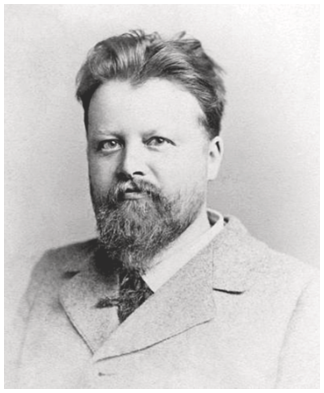
The Workers’ Education Society North Iad formed in January 1889 as a cooperative venture between socialist craftsmen and the new generation of speakers of the FRC, led by the tireless Bruno Wille (see Figure 2.3).Footnote 75 In his inaugural lecture given to a crowd of 200 in a pub in the Schönhauser Allee, Wille declared the secularist and socialist intentions of the association: “Through his education the worker will come to recognize his secularist [freigeistig] religion and materialistic history of nature and art, and the workers’ movement – which is a universal one – will achieve victory over darkness.”Footnote 76 The Society occasionally drew large crowds of 100 to 500, when leading Social Democratic city councilors and MPs spoke on topics ranging from colonial policy to legal issues to Thomas Malthus. However, on most weeks a smaller audience gathered, usually in Lehmann’s Salon, a pub in working-class Prenzlauer Berg, to listen to secularist takes on culture, history or popular science delivered by the same young intellectuals who were lecturing at the FRC. Thus, for example, they heard Bölsche lecture on “Art and People,” Peus on “The Utopia of Thomas More,” and Wille on “Darwinism and Socialism” (see the list of talks in the Appendix). At the end of each talk, a plate was passed to collect fees for the speakers or for labor union causes, a practice that was often “inhibited” by the observing police officers.

The Workers’ Education Society North also provided working-class secularist Theodor Metzner the opportunity to lecture publicly. This central figure of both the FRC and Berlin SPD didn’t have the educational credentials to lecture at the FRC, but he gave several talks at Nord, including one on January 5, 1891 to some fifty to sixty people on “The Religion of the Future.” Religion, he explained, was not dogmatic belief (Konfession), but rather one’s relation to nature. Just as Newton had earlier disproven the Christian geocentric understanding of the universe, Darwin and Marx revealed the “untenability of biblical creation and faith in life after death.” The result was an imperative to follow the “religion of science” and create happiness in the here-and-now (Diesseits). As the “pioneers of the new worldview” it was the obligation of the Social Democrats to take sides in the religious question. The observing police officer took some pleasure in emphasizing the errors of the uneducated participants in the ensuing discussion. Metzner had pronounced Newton as “Neffthong” and the pub owner had spoken of the “light miles” required to reach the star Sirius.Footnote 77 On April 28, 1891, the Society voted to dissolve itself and join the Workers’ Education School. This decision does not point to the end of this secularist project of working-class education, but rather its continuation in a larger form.Footnote 78 In describing the guiding ethos of the Workers’ Education School, historian Dieter Fricke characterized it as a center of revisionism. However, the revisionist teachers around 1900, who included Conrad Schmidt, Bruno Borchardt, Paul Kampffmeyer and Max Schippel, all had personal or organizational connections to the secularist scene, as did Protestant minister turned Free Religious preacher Max Maurenbrecher and theosophist Rudolf Steiner. FRC members Wilhelm Bölsche, Georg Ledebour, Carl Pinn, Emma Ihrer and Agnes Wabnitz were all early lecturers there. Even the leading figures of Urania, Wilhelm Foerster and Friedrich Archenhold, gave occasional lectures.Footnote 79
The Workers’ Education School had a strong start – 1,000 of the 6,000 persons present at the founding meeting signed up as pupils – and by 1892 it had opened up four branches around the city. But instruction was often interrupted due to the need to switch venues (mostly taverns and meeting halls) and attendance dropped in the following years. Following an 1897 reorganization that eliminated elementary courses in favor of a core of history, law, national economy, natural science and debating, attendance rose to 634 in 1898/99 and reached 2,647 in 1909/10.Footnote 80 In addition to its courses, the Workers’ Education School hosted large evening celebrations on the occasion of important political anniversaries, such as the barricade battles of March 1848. As in the Jugendweihe, these galas were imbued with secularist messages. The poems printed in the program flyers highlighted the struggle of the free spirit against the forces of oppression and generally appealed to the idealism of working-class men and women with intellectual aspirations.
The Ethical Society
The Workers’ Education Society North was not the only organization to spring from the “socialist” Free Religious Congregation. In 1888, an organization calling itself the Ethical Society split off from the congregation. This organization is not to be confused with the similarly named, but better known and more genteel German Society for Ethical Culture that was founded across town in 1892. Ethics was a popular term at that time in secularist circles because it conveyed the promise of a scientific system of morality based on reason rather than authority. The formation of the Ethical Society was triggered by the expulsion of the FRC’s youth teacher, Dr. Franz Huber, who was apparently as divisive as he was charismatic, because soon after its breakaway he caused the Ethical Society to split over his leadership. The larger half took the name Society for the Promotion of People’s Education in 1890 – again not to be confused with the older liberal association of the same name – while the slightly smaller group retained the name Ethical Society, until it decided to call itself “More Light” in 1896. Each organization had a fluctuating core of between 30 and 100 registered members, and each offered a weekly or biweekly series of popular lectures, often followed by a social dance.
Despite the acrimonious polemics between the Free Religious Congregation and these two Ethical Societies, they all drew from the same coterie of speakers. Like the Workers’ Education Society North, they provided the more proletarian members of the FRC, such as Metzner, Ottilie Baader, Agnes Wabnitz and Adolph Hoffmann, a stage on which they could shine as intellectuals in their own right (see Figure 2.4). The leadership of the ethical societies was decidedly more proletarian and politically radical than that of the FRC. Precisely why they remained separate, even after Dr. Huber was expelled in 1890, could not be discerned from the police records. However, they had slightly different profiles. The Society for the Promotion of People’s Education had a high percentage of women in its leadership, which was unusual for Berlin in those years. Four women were elected to the board in 1889 and at least two women chaired meetings of the Society the following year. What made the group still calling itself the Ethical Society noteworthy was its significant working-class Jewish membership.Footnote 81 One appeal of ethics was that it was felt by many Jews to be consistent with Judaism, such as Waldeck Manasse, who in his 1893 discourse at the Ethical Society on “Ethics and Freethought” identified the Talmud and the Buddha as positive proof of a natural striving of humanity towards reason and ethics that had been blocked by authoritarian religion. More importantly, perhaps, ethics offered secularist Jews an interreligious and postreligious stance that did not involve a denial of their Jewish confessional identity.Footnote 82
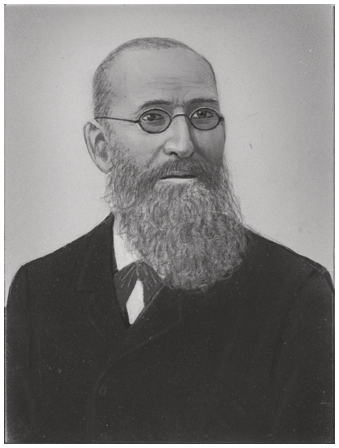

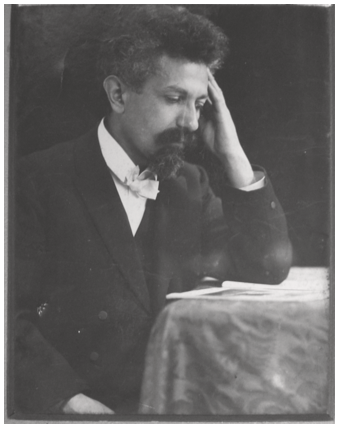

A more complete picture of the secularist culture of working-class Berlin around 1890 would require the investigation of the numerous craft associations of the city, where the socialist members of the FRC often lectured. Because such an investigation falls outside the scope of this chapter, one example provided by police observation files will have to suffice. Bruno Wille first came to police attention not for his activities in Free Religion, but for a lecture given in June 1888 at the Association of Cabinetmakers on “What is good? The natural foundations of morality in atheistic and socialist understanding.” He delivered the same speech the following month to the Association for the Protection of the Interests of the Shoemakers and the Trade Association of Gas, Water and Heating Pipelayers, and in October to the Typesetters’ Association. Police dissolved this and several of Wille’s subsequent talks to trade associations for transgressing limits on political and religious speech.Footnote 83
Conclusion
This chapter has established three aspects of the secularist culture in Berlin around 1890. First, it comprised a wide network of associations with interconnected leaderships and speakers, who propagated monist worldview and agitated for the social and political transformation of society in its name. At the core of this culture were “pure” secularist organizations, which clearly sustained an ambition to replace traditional religion. Around these were popular science institutions, which attracted a much wider following, but one whose exposure to secularist ideas was more irregular. Of the 200,000 visitors to the Urania in 1901/02, a minority may have encountered the monistic dramas in the scientific theater. Similarly, most courses taken by the 11,000 students enrolled in the Humboldt Academy did not have clear monistic content. Nonetheless, the personnel and leadership of these organizations were structurally connected to pure secularist organizations and monism was a key content.
Second, this broad secularist culture had become deeply divided by 1890 into liberal and socialist or “bourgeois” and “proletarian” camps. The emergence of socialism as a political culture acted very strongly upon the secularist culture, which liberal and democratic elites had dominated since its inception. Although they retained control of the largest popular science venues, they lost control of the FRC. Despite the emergence of a red secularism with clear political contours, however, people and ideas continued to circulate across the entire organizational landscape of secularism. Thus, when one of Germany’s most famous atheists, writer Hedwig Henrich-Wilhelmi, came to Berlin for a week in January 1892, the chairman of the FRC Otto Friederici arranged public lectures for her nearly every night of the week, which took her from socialist to liberal institutions. She opened her Berlin tour on Sunday with a speech at the socialist Ethical Society on “The human in the animal and the animal in the human.” The next three days she spoke in rented halls to mixed audiences on “Christianity in word and deed,” “Old and new superstition” and “Nature, duty, and the rights of women.” Thursday found her lecturing in the Handworkers’ Association, a bastion of left-liberal power, and on Sunday she spoke to the Free Religious Congregation on “Death and Fear of Death.” Thus, despite bitter political divisions, the secularist culture remained united in its common engagement with religion, worldview and science.
Third, this chapter has shown for the first time the existence of a clearly socialist secularist culture in Berlin, centered in the FRC, but with more radical offshoots, such as the Ethical Societies and Workers’ Education Association North.Footnote 84 This secularist-socialist culture was of concern to the police, which invested great energy in its surveillance. A final glimpse of this culture is provided by a covert police report from late December 1890 on the Christmas party of the Society for the Propagation of Popular Education in a pub in the Schönhauser Allee, which was around the corner from the FRC cemetery. Following some Free Religious songs at this family event, children, women and men wearing red ribbons and carnations stood up and declaimed a poem, which, according to the police report, contained a “misrepresentation of the clergy and the military.” Toasts were raised to Lassalle, Bebel and Liebknecht, and celebrants were encouraged to leave the church and join Free Religion. Each speech closed with a cheer for international Social Democracy. One woman urged others to join the women’s movement. At midnight the Christmas tree was plundered, and the “small cheap presents” brought along by the families were distributed. Dancing began at one and lasted till six in the morning. Although the celebrants had posted a sentry at the door to give advanced warning of the appearance of any police patrols, there was already an undercover officer inside. His report was later used by his superiors to declare the Society a political association and prevent women and children from attending future events.Footnote 85 The report reveals how the mingling of secularism and socialism gave meaning to people’s lives, enabling them to explain and confront authority and allowing them to make sense of nature and history. This mingling of secularism and socialism marked out the subculture that will concern us for the rest of this book.
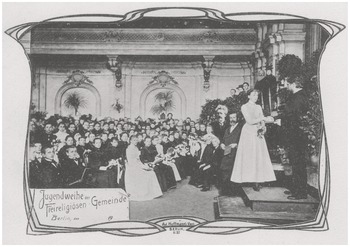
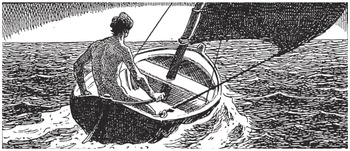
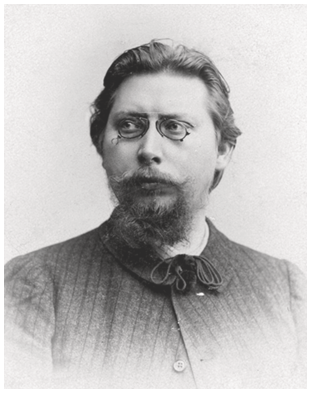
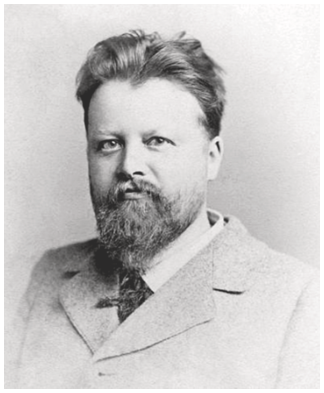
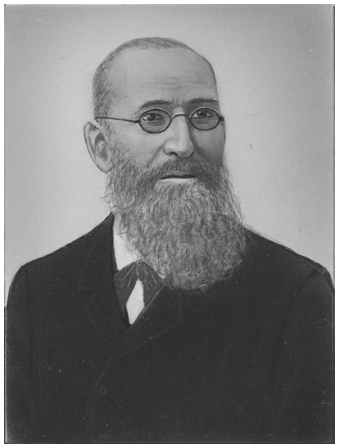
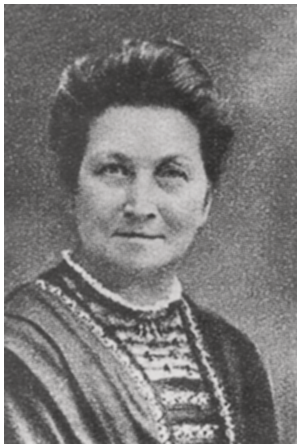
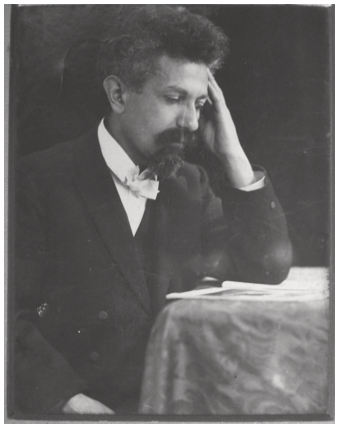
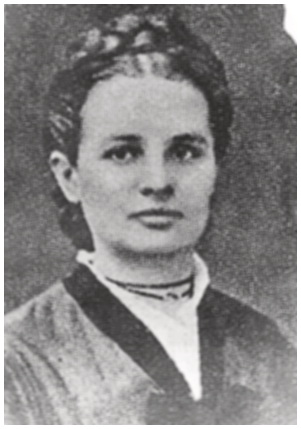

 Open access