Introduction
The past decade has recorded tremendous improvement in maternal and child health globally through improved reproductive health care (WHO et al., 2012). However, infertility has not garnered its deserved attention, either as a health problem or as the subject of research (Cui, Reference Cui2010). In 2010, while 2% of women aged 20–44 years worldwide were primary infertile, 10.5% were secondary infertile (Mascarenhas et al., Reference Mascarenhas, Flaxman, Boerma, Vanderpoel and Stevens2012). The overall estimated prevalence of primary infertility in India was estimated to be 3.9% in 1994–2000 (WHO, 2004).
The number of infertility cases has been rising rapidly in both developed and developing countries. However, the reasons for this vary. Previous studies have documented that lifestyle factors greatly influence overall health and well-being, including fertility (Sharma et al., Reference Sharma, Biedenharn, Fedor and Agarwal2013; Farhud, Reference Farhud2015). Over recent years, researchers have attempted to bring attention to the subject and have reported a prevalence of infertility in India of between 2% and 9% (Ganguly & Unisa, Reference Ganguly and Unisa2010; Unisa, Reference Unisa2010; Agrawal et al., Reference Agrawal, Agrawal and Unisa2012). Moreover, infertility has been linked to lifestyle changes, age, drug abuse, smoking, alcohol and nutrition, as well as environmental, occupational and behavioural factors (Sharma et al., Reference Sharma, Biedenharn, Fedor and Agarwal2013; Rajan, Reference Rajan2019). These lifestyle factors can result in lifestyle morbidities (diabetes, heart disease, hypertension, asthma, cancer, etc.), which can in turn lead to infertility. Infertility can be a result of inadequate reproductive health of either partner or deficiencies in critical biochemical substances (Lalani et al., Reference Lalani, Nizami, Hashmi, Saifuddin and Rehman2017).
Gender bias, family systems and the values and practices prevalent in cultures and societies have a tremendous impact on women’s diet and nutrition (Madjdian & Bras, Reference Madjdian and Bras2016). Globally, each culture has its own food traditions with regards to proportion size, content (nutritional value), duration of cooking and context, and the form of food is determined by social construction and social communication (Ramachandran, Reference Ramachandran, Guha-Khasnobis, Acharya and Davis2007; Delormier et al., Reference Delormier, Frohlich and Potvin2009; Wills et al., Reference Wills, Backett-Milburn, Roberts and Lawton2011). The consumption of food is influenced by many factors such as locality, climate, food availability and accessibility, as well as social factors such as class, caste, religion, culture, individual preferences and attitudes (Venkatesh et al., Reference Venkatesh, Sangeetha and Singh2016). An individual’s dietary diversity is determined not only by the socioeconomic characteristics of the household, but also largely by the historical consumption habits of the population, local practices and level of technology associated with food production, income/expenditure and agricultural biodiversity prevalent in the region (Gupta & Mishra, Reference Gupta and Mishra2014; Parappurathu et al., Reference Parappurathu, Kumar, Bantilan and Joshi2015). Especially in India, food has become a marker of religious and social identity with varying taboos and preferences. Religious beliefs, for instance, play a crucial role in consumption patterns, such as the preference for vegetarian food in certain social groups like Hindus and Jains in India (Gupta & Mishra, Reference Gupta and Mishra2014; Tamang, Reference Tamang2016). Further studies across Asian countries also show that level of income is an equally crucial determinant of food consumption patterns, with families in higher income groups consuming healthier diets inclusive of good quality fruit and vegetables, compared with their counterparts. Thus dietary customs and habits among Asian Indians vary depending on their region of origin in India, and also their cultural and religious beliefs (Sabate, 2004; Catherin et al., Reference Catherin, Rock, Roger, Ankita, Ashish, Delwin, Deeepthi and Goud2015; Fernandez et al., Reference Fernandez, Rolley, Rajaratnam, Everett and Davidson2015; Chakona & Shackleton, Reference Chakona and Shackleton2019).
Healthy diets are beneficial for reproduction among men and women of reproductive age (Sharma et al., Reference Sharma, Biedenharn, Fedor and Agarwal2013; Panth et al., Reference Panth, Gavarkovs, Tamez and Mattei2018). Nutrition affects not only ovulation and fertilization, but also implantation and the early development of the fetus (ESHRE Capri Workshop Group, Reference Capri Workshop Group2006). However, nowadays eating preferences have changed and people are not eating nutritious and wholesome food. Dependency on fast food and aerated drinks has increased, which is very harmful to health. Mandoura et al. (Reference Mandoura, Al-Raddadi, Abdulrashid, Shah and Kassar2017) reported an increase in the consumption of junk food with a global prevalence of around 70%. The frequency of junk food and fast food consumption increases with increasing age (Schmidt et al., Reference Schmidt, Affenito, Striegel-Moore, Khoury and Barton2005). Bauer et al. (Reference Bauer, Larson, Nelson, Story and Neumark-Sztainer2009) documented that the proportion of youths who ate fast food at least 3 times per week increased from 19% to 27% for females and from 24% to 30% for males during 1999 to 2004. An unhealthy diet is the root cause of various health problems and metabolic syndromes. Metabolic disorders can have an adverse effect on women’s reproduction and fertility. Some, such as diabetes, obesit, and hyperlipidaemia, can affect women’s fertility either directly or indirectly by interfering with ovarian function (Al Awlaqi et al., Reference Al Awlaqi, Alkhayat and Hammadeh2016). The frequent consumption of junk food and fast food contributes to an increased risk of many lifestyle diseases including cardiovascular disease and diabetes, and also obesity and many other chronic health conditions (Astrup et al., Reference Astrup, Dyerberg, Selleck and Stender2008). Studies have shown a strong correlation between dietary patterns and nutrient intake and reproductive outcomes for women (Astrup et al., Reference Astrup, Dyerberg, Selleck and Stender2008; Nalavade et al., Reference Nalavade, Shekar and Shah2016). An inadequate intake of protein, carbohydrates, dairy foods, iron, fatty acids and multivitamins is related to ovulation disorder, which is a cause of infertility (Chavarro et al., Reference Chavarro, Rich-Edwards, Rosner and Willett2007). Certain diets may increase the risk of infertility in women. These may be associated with the development of metabolic syndrome and various chronic morbidities (Lorzadeh et al., Reference Lorzadeh, Kazemirad and Kazemirad2020), which in turn may result in infertility. However, some chronic health conditions are associated with infertility irrespective of dietary factors. However, much less is known about the association of infertility related co-morbidities among women with the different causes of infertility.
Recently, researchers have speculated that infertility may be related to chronic conditions like pulmonary, cardiovascular, endocrinologic, malignant diseases and psychological issues (Gambineri et al., Reference Gambineri, Patton, Altieri, Pagotto and Pizzi2012; Eisenberg et al., Reference Eisenberg, Kim, Chen, Sundaram and Schisterman2014; Ventimiglia et al., Reference Ventimiglia, Capogrosso, Boeri, Serino and Colicchia2015; Hanson et al., Reference Hanson, Johnstone, Dorais, Silver and Peterson2017). Women with diabetes can have reproductive abnormalities such as irregular menstrual cycles and anovulation (Jonasson et al., Reference Jonasson, Brismar, Sparén, Lambe and Nyrén2007; Rajan, Reference Rajan2019). Also, imbalanced thyroid hormones impede fertility in various ways resulting in anovulatory cycles, luteal phase defect, high prolactin (PRL) levels and sex hormone imbalances (Verma et al., Reference Verma, Sood, Juneja and Kaur2012). Several studies have also documented an association between asthma and reduced fertility (Gade et al., Reference Gade, Thomsen, Lindenberg and Backer2014, Reference Gade, Thomsen, Lindenberg and Backer2016; Grzeskowiak et al., Reference Grzeskowiak, Smithers, Grieger, Bianco-Miotto and Leemaqz2018). Other than age and genetics, which are non-modifiable factors, there are some modifiable factors that affect reproductive health, including an unhealthy diet, obesity and blood glucose levels (Szaboova & Devendra, Reference Szaboova and Devendra2015, Cekici, Reference Cekici2018), and these could be changed through lifestyle modifications.
The literature does suggest that dietary patterns and co-morbidities could have an association with metabolism, which in turn is related to reproductive health and lifestyle diseases. However, the relationship between dietary patterns and morbidities has not yet been established in the context of primary infertility in Indian. Hence, this study aimed to examine the socioeconomic determinates of primary infertility among women in India and explore the association of primary infertility with dietary patterns and selected morbidities.
Methods
Data
The study used data from the 2015–16 National Family Health Survey (NFHS-4), the fourth in the NFHS series. This provides information on population, health and nutrition for India, its states and seven union territories. The survey was conducted under the stewardship of the Ministry of Health and Family Welfare (MoHFW), Government of India. The International Institute for Population Sciences (IIPS), Mumbai, managed the survey as the nodal agency for all of the surveys (IIPS & ICF, 2017).
The NFHS-4 is a stratified two-stage sample. The 2011 census served as the sampling frame for the selection of Primary Sampling Units (PSUs). The PSUs were villages in rural areas and Census Enumeration Blocks (CEBs) in urban areas. Within each rural stratum, villages were selected from the sampling frame with Probability Proportional to Size (PPS). The representative sample included 699,686 ever-married women aged 15–49 years and 112,122 men aged 15–54 years.
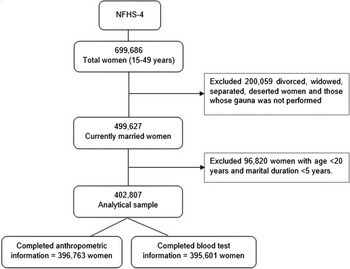
For the present study, 402,807 currently married women aged 20–49 years who had been married for five or more years were selected (Figure 1). Women below the age of 20 were excluded from the analysis to avoid the influence of adolescent sterility.
Flow chart showing selection of study sample, NFHS-4.

Variables
Dependent variable
The dependent variable was ‘primary infertility’. It is too complex to conceptualize infertility from a dataset where no direct question was asked about infertility (Ganguly & Unisa, Reference Ganguly and Unisa2010). Medically, infertility is the inability to conceive. However, in demographic terms, infertility is defined as the inability to conceive or carry a pregnancy to live birth. The WHO (2004) defines infertility as ‘the inability to conceive after 12 months of regular and unprotected intercourse’. Infertility can be primary or secondary. Those couples who have never been able to conceive are considered to be primary infertile. Secondary infertility refers to difficulty in conceiving after having conceived at least once before (either carried a pregnancy to term or had a miscarriage) (Olooto et al., Reference Olooto, Amballi and Banjo2012). However, demographic studies often use an exposure period of five years to define infertility (Rutstein & Shah, Reference Rutstein and Shah2004).
In the present study, women aged 20 years and above who were currently married for more than five years, currently not pregnant, never had a termination of pregnancy, never used contraceptives (previously and currently) and have no child ever born were considered having primary infertility.
Independent variables
The independent variables included in the analyses were dietary patterns and morbidities. Dietary patterns were determined by the respondent’s consumption of seven food items (milk or curd, pulses or beans, dark green leafy vegetables, fruit, eggs, fish, chicken or meat and aerated drinks), with frequency of consumption for each item categorized as ‘never’, ‘daily’ or ‘sometimes’.
Several health indicators were measured, namely blood pressure (BP), blood glucose and body mass index (BMI). Blood pressure was measured using an Omron Blood Pressure Monitor. Measurements were taken for each respondent three times at 5 minute intervals and the average used. Women whose average systolic blood pressure (SBP) was >140 mmHg and average diastolic blood pressure (DBP) was >90 mmHg were considered to have ‘high BP’. Blood glucose level was measured from a finger-stick blood specimen with a random glucose test using a Freestyle Optium H glucometer with glucose test strips. Women with a blood glucose level of >140 mg/dl were considered to have ‘high blood glucose’. For anthropometry, the weights and heights of respondents were measured using a SECA 874 digital scale and SECA 213 stadiometer, respectively. Respondent’s BMI was calculated as a ratio weight in kilograms to the square of their height in metres and classified into the following categories: underweight (<18.5 kg/m2), normal weight (18.5–24.9 kg/m2) and overweight/obese (≥25.0 kg/m2).
Diabetes, thyroid disorder and heart disease were self-reported by respondents. In the NFHS, respondents were asked whether they had diabetes or whether a doctor had ever given them medication to control blood glucose levels. Blood specimens were collected from the respondents in the NFHS-4 to test for anaemia. Those with haemoglobin levels below 10.0–11.9 g/dl were identified as having ‘mild anaemia’, those with 7.0–9.9 g/dl as having ‘moderate anaemia’ and those with <7 g/dl as having ‘severe anaemia’.
Other covariates included in the analysis were age (<35 and 35 years and above), age at marriage (<18 or 18 years and above), place of residence (urban/rural), caste (Scheduled Caste/Scheduled Tribe [SC/ST]/Other Backward Class [OBC] and other), religion (Hindu and other), education (none, primary, secondary and higher secondary or above) and wealth quintile (poorest, poor, middle, richer and richest).
Data analysis
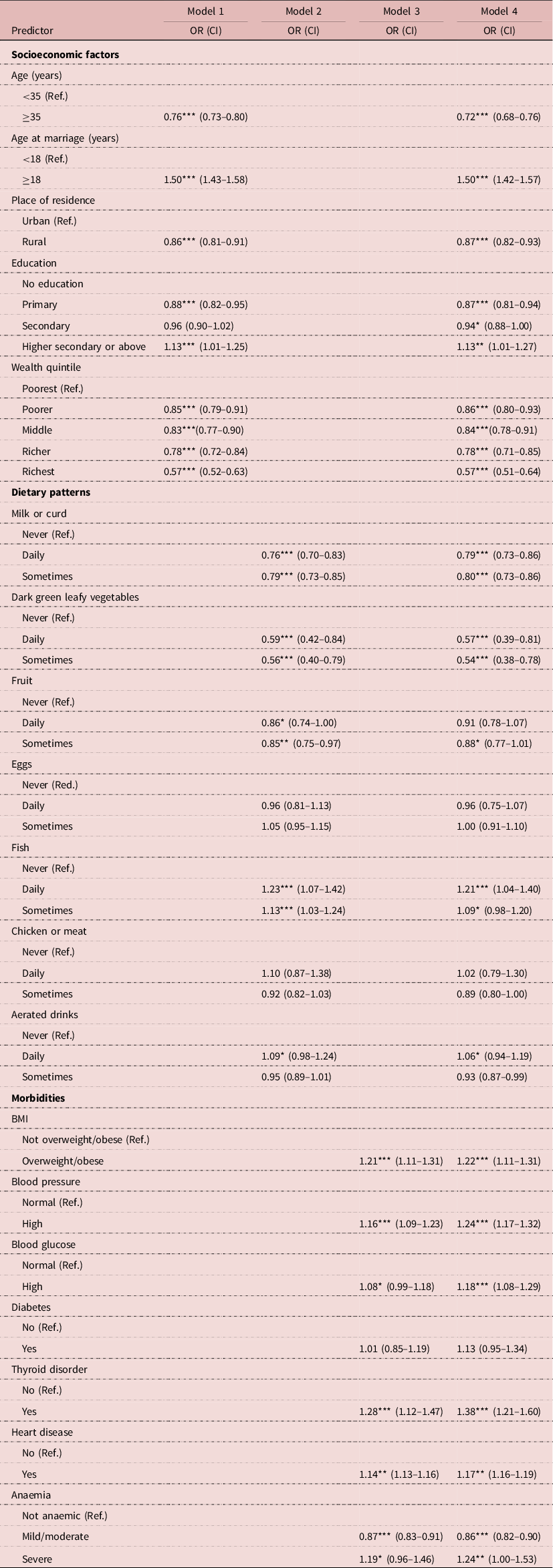
Bivariate and multivariate techniques were used to estimate the prevalence of primary infertility and its associations with selected variables, respectively. Chi-squared statistics were used to test the relationship between covariates and primary infertility. Since several of the socioeconomic characteristics, dietary patterns and morbidities were interrelated, multivariate logistic regression models were used to assess the influence of various factors on primary infertility, controlling for other predictors in the model (95% confidence interval). The multivariate model only included variables that showed a significant relation with primary infertility using the Chi-squared test. Model 1 assessed the association between primary infertility and socioeconomic variables. In Model 2, dietary factors were included. Model 3 addressed the morbidities. Finally, Model 4, assessed the combined influence of all variables on primary infertility. All the analyses were performed with appropriate sampling weights. Analyses were conducted using STATA Version 14.1.
Results
Primary infertility by socioeconomic factors
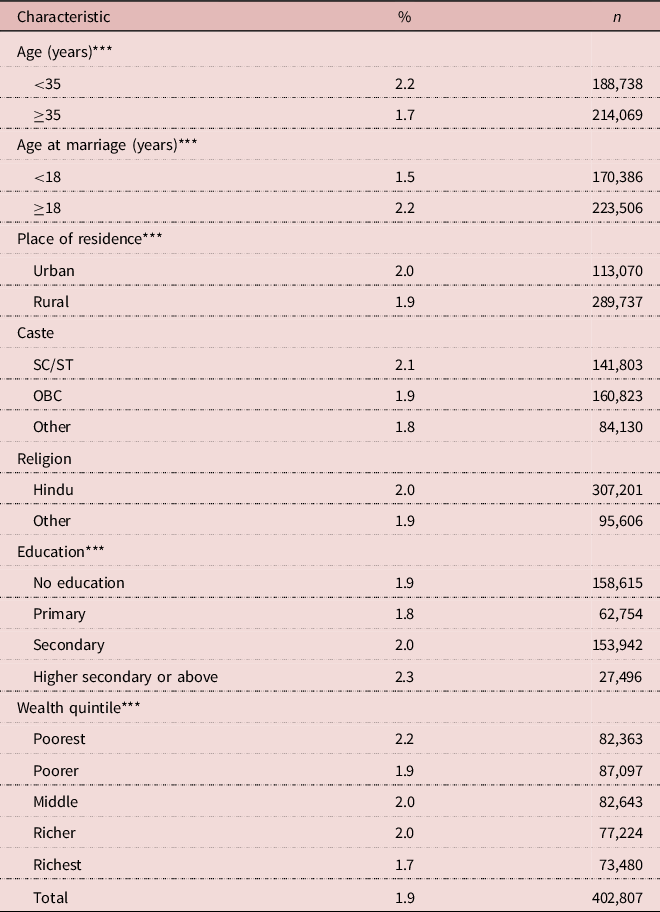
Table 1 presents the rates of primary infertility among the sample women by their socioeconomic characteristics. Overall, 1.9% of the sample had primary infertility. About 2.2% of women aged <35 years and 1.7% of those aged 35 and above had primary infertility. The rate of primary infertility was higher among women who married at age 18 or above than those who married below the age of 18. The prevalence of primary infertility was slightly higher in urban areas (2.0%) than those of rural areas (1.9%). Primary infertility was higher among women belonging to SC/ST (2.1%) and the Hindu religion (2.0%) than other castes and religions, respectively (1.8–1.9%). About 1.9% of illiterate women were infertile. As for respondent’s education level, the prevalence of primary infertility was highest in the higher secondary and above (2.3%) educational attainment group. A higher proportion of women from the poorest wealth quintile (2.2%) had primary infertility than women from other wealth quintiles.
Prevalence of primary infertility among currently married women aged 20–49 by the socioeconomic characteristics, NFHS-4, India

***p<0.001.
Primary infertility by dietary patterns
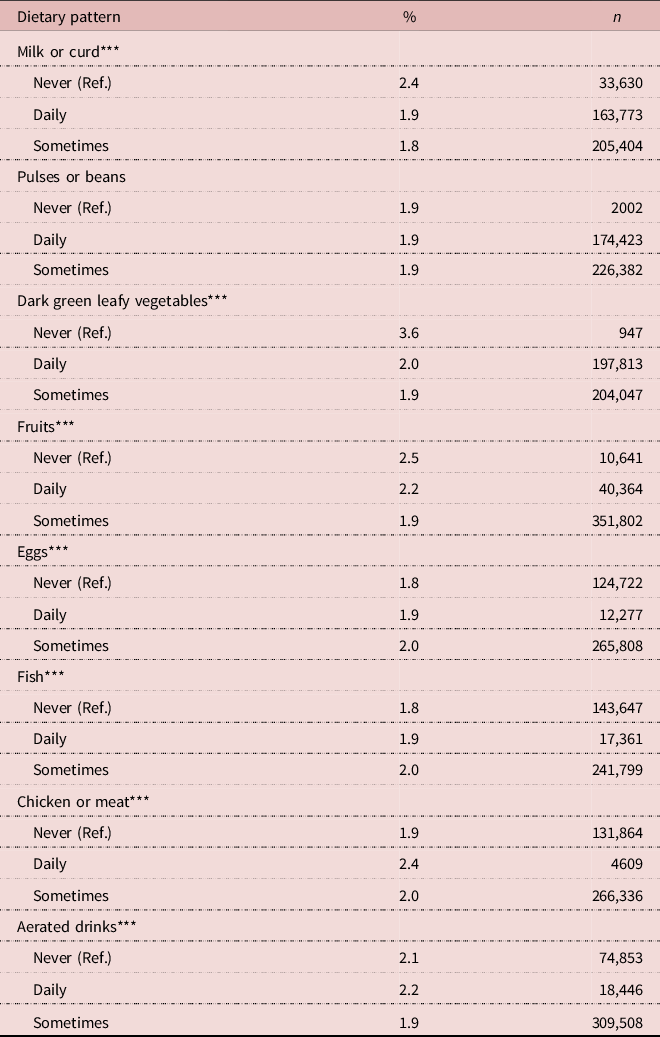
The prevalence of primary infertility was higher among women who never consumed milk or curd (2.4%) than among those who did consume these either sometimes or daily (1.8–1.9%) (Table 2). Compared with women who never consumed dark green leafy vegetables (3.6%), those who did consume these (~2.0%) had a lower prevalence of primary infertility. Primary infertility was more prevalent among the women who never ate fruit (2.5%) than those who consumed fruit either sometimes or daily (1.9–2.2%). Compared with women who never consumed fish, those who consumed fish had a higher prevalence of primary infertility (1.8% vs 1.9–2.0%). Primary infertility was more prevalent among women who consumed eggs, chicken and meat than among those who never consumed these foods (1.9–2.4% vs 1.8–1.9%). Women who drank aerated drinks daily had a higher rate of primary infertility than those who never consumed aerated drinks (2.2% vs 2.1%).
Prevalence of primary infertility among currently married women aged 20-49 years by dietary pattern

***p<0.001.
Primary infertility by morbidities
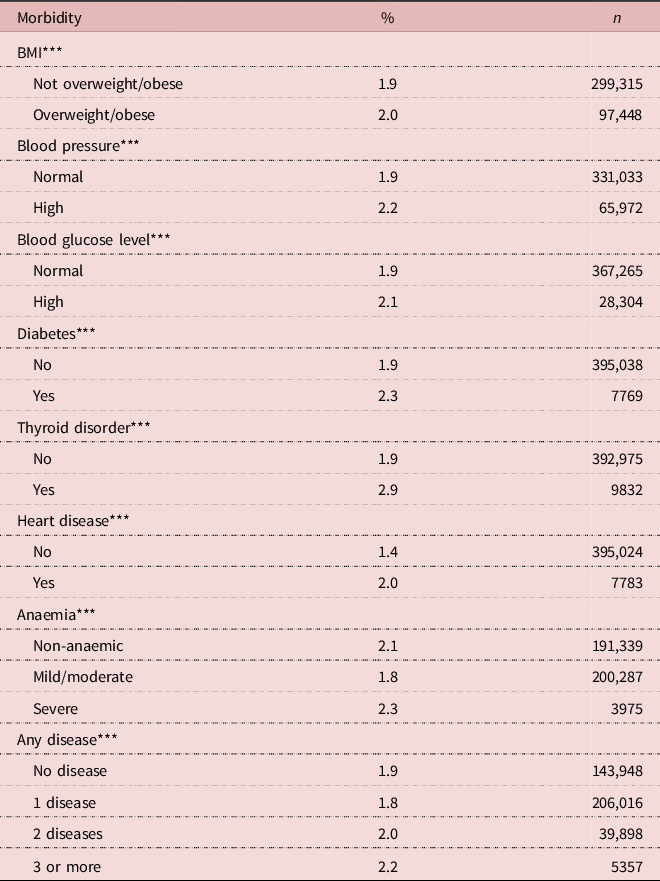
The prevalence of primary infertility was higher among women who were overweight/obese, had high BP and high blood glucose compared with their counterparts with lower BMI (2.0% vs 1.9%), normal BP (2.2% vs 1.9%) and normal blood glucose level (2.1% vs 1.9%) (Table 3). The prevalence of primary infertility was higher among diabetic women (2.3%) than among those who were not diabetic. Women with heart disorders had a higher prevalence of primary infertility than women without heart disorders (2.0% vs 1.4%). Non-anaemic women had a lower prevalence of primary infertility than women with severe anaemia (2.1% vs 2.3%). Women with three or more morbidities had a higher prevalence of primary infertility than women with no morbidities (2.2% vs 2.0%).
Prevalence of primary infertility among currently married women aged 20–49 years by selected morbidities

***p<0.001.
Associates of primary infertility among sample women
Table 4 presents the results of logistic regression analysis taking four models into consideration. Model 1 shows that among the considered socioeconomic variables, the odds of primary infertility were lower in older women (≥35 years) than among those below the age of 35 (OR = 0.76, CI 0.73–0.80). Compared with women who married before the age of 18, the odds of primary infertility were 1.5 times higher among those who married at age 18 or higher (CI 1.43–1.58). In rural areas, the odds of primary infertility among women were lower than in urban areas (OR = 0.86, CI 0.81–0.91). Compared with non-educated women, those with higher secondary or above education had a 1.13 times higher likelihood of primary infertility (CI 1.01–1.25). The odds of primary infertility reduced with progressing wealth quintile, being lowest among the richest (OR = 0.57, CI 0.52–0.63).
Results of logistic regression analysis of factors associated with primary infertility among currently married women aged 20–49 years

OR: Odds Ratio; CI: Confidence Interval; Ref., reference category.
*p<0.10; **p<0.05; ***p<0.001.
Model 2 indicates an association between dietary patterns and primary infertility. Women who consumed milk or curd (OR = 0.76, CI 0.70–0.83), dark green leafy vegetables (OR = 0.59, CI 0.42–0.84) and fruit (OR = 0.86, CI 0.74–1.00) daily had a lower likelihood of primary infertility than women who never consumed these food items. Women who consumed fish and aerated drinks daily had 1.23 (CI 1.07–1.42) and 1.09 (CI 0.98–1.24) times increased likelihood of primary infertility, respectively, than women who never consumed fish and aerated drinks. In Model 3, women with high blood sugar, high BP and high BMI levels had 1.08–1.21 times higher odds of primary infertility than women with normal levels of blood sugar (CI 0.99–1.31). Having heart disease, severe anaemia or thyroid disorder increased the likelihood of primary infertility among women by 1.14–1.28 times (CI 0.96–1.47) (Model 3). Compared with non-anaemic women, those with mild/moderate anaemia had lower odds of primary infertility (OR = 0.87, CI 0.83–0.91) (Table 4).
Finally, in Model 4 all variables were included to assess the adjusted linkages of various socioeconomic covariates, dietary patterns and morbidities on primary infertility. Even after adjusting for socioeconomic covariates, dietary patterns and morbidities had a significant association with the occurrence of primary infertility among the study women (Table 4). All variables remained significant in the adjusted model, but daily fruit consumption was no longer associated with the risk of primary infertility.
Discussion
This study assessed the determinants of primary infertility among currently married women of age 20-49 years with marital duration of at least five years. Furthermore, the association of primary infertility with dietary patterns and morbidities was assessed. Lastly, the linkages between various health conditions and primary infertility among women were explored. The study provides evidence that programmes changing nutrition and lifestyle factors can be beneficial in addressing primary infertility in women. Socioeconomic factors, dietary patterns and morbidities were all found to significantly influence primary infertility in women. The findings reveal a significant association between primary infertility and co-morbidities among women, with a higher risk among women with multiple morbidities.
The prevalence of primary infertility among currently married women in India in 2015–16 was 1.9%. It was highest among younger women, urban residents, educated women and Hindu women. Similar results were reported in studies using data from previous NFHS suveys (Ganguly & Unisa, Reference Ganguly and Unisa2010; Syamala, Reference Syamala2012) and round three of the District Level Household and Facility Survey India (DLHS-3) (IIPS, 2009). A study in India using DLHS-3 data found that about 80% of infertile women had undergone infertility treatment, and only half were treated by allopathic treatment. Also, 63% of rich women had received allopathic treatment, but only 34% of poor women had done so (Sarkar % Gupta, Reference Sarkar and Gupta2016). Unisa (Reference Unisa2010) found a 40% difference between the poorest and richest women and 23% difference between rural and urban women in seeking allopathic treatment for inferility, with the demand for infertility treatment varying by wealth quintile, education and place of residence.
One factor affecting demand for infertility services is that people may not be motivated to seek treatment if reproductive services are limited or unavailable (Boivin, Reference Boivin, Bunting, Collins and Nygren2007). Most infertile women seeking treatment for infertility in India are those other than Scheduled Castes and Scheduled Tribes (Sarkar & Gupta, Reference Sarkar and Gupta2016). Higher socioeconomic status is associated with greater use of infertility treatment in India (Baranwal & Chattopadhya, 2020). In line with other studies (Ganguly & Unisa, Reference Ganguly and Unisa2010; Syamala, Reference Syamala2012; Katole & Saoji, Reference Katole and Saoji2019; Moridi et al., Reference Moridi, Roozbeh, Yaghoobi, Soltani and Dashti2019), the present study established a significant association between primary infertility and various socioeconomic factors. Although education provides women with greater knowledge about, and access to, fertility treatment, the real question is whether educated women can afford modern treatment methods since these are often quite expensive. Unisa (Reference Unisa1999) documented that the high cost of treatment was the main detrimental factor for those who were not going for any treatment.
This study also assessed the relationship between dietary pattern and primary infertility. It was found that the prevalence of primary infertility was low among women who consumed dark green leafy vegetables, fruit and milk or curd; these food items were significantly related to reduced odds of primary infertility among women, regardless of the frequency of consumption. Other studies have posited similar findings. It has been reported that the consumption of plant-based diets like vegetables and fruit enhances the chances of natural conception and reduces time to pregnancy (Chavarro et al., Reference Chavarro, Rich-Edwards, Rosner and Willett2007; Nalavade et al., Reference Nalavade, Shekar and Shah2016; Grieger et al., Reference Grieger, Grzeskowiak, Bianco-Miotto, Jankovic-Karasoulos and Moran2018). A study investigating the association between the consumption of dairy products and fertility concluded that the daily consumption of milk lowers the risk of infertility among women (Greenlee et al., Reference Greenlee, Arbuckle and Chyou2003). This study found no association between the intake of pulses or beans and primary infertility among women. Chavarro et al. (Reference Chavarro, Rich-Edwards, Rosner and Willett2008) showed that the consumption of chicken and red meat was associated with a higher risk of infertility due to anovulation; however, the present study found no relationship between the intake of chicken or meat and infertility.
The study found that fish consumption was associated with increased odds of primary infertility among the women. A study done in Hong Kong suggested that fish-eaters may be at risk of mercury toxicity, and higher blood mercury concentration is associated with infertility (Choy et al., Reference Choy, Lam, Cheung, Briton-Jones and Cheung2002). Another study recommended that shellfish consumption reduce fecundability and is associated with longer time to pregnancy (Chevrier et al., Reference Chevrier, Warembourg, Gaudreau, Monfort and Le Blanc2013). Also, it was evident from the study by Buck et al. (Reference Buck, Vena, Schisterman, Dmochowski and Mendola2000) that the consumption of contaminated fish may reduce fecundability in women. Fish from waters with a high degree of environmental pollution, as well as those with a high degree of mercury, should generally be avoided as the effects of these environmental toxicants on fertility may outweigh the potential health benefits from the fish alone (Gaskins & Chavarro, Reference Gaskins and Chavarro2018). Seafood has many nutritional benefits but is also a potential health hazard due to water pollution (Vandermeersch et al, Reference Vandermeersch, Lourenço, Alvarez-Muñoz, Cunha, Diogène and Cano-Sancho2015).
Cekici (Reference Cekici2018) documented that women who consumed aerated drinks daily had a significantly higher risk of infertility. Previous studies have found that, for both the males and females, the intake of soda, sugar-sweetened beverages and energy drinks was associated with reduced fecundability (Imai et al., Reference Imai, Ichigo, Takagi, Matsunami and Suzuki2010; Hatch et al., Reference Hatch, Wise, Mikkelsen, Christensen and Riis2012, Reference Hatch, Wesselink, Hahn, Michiel and Mikkelsen2018). However, soft drink consumption was found to be associated with significantly higher inorganic phosphate and lower serum progesterone levels, which may be causes of infertility (Amadu et al., Reference Amadu, Kabir, Bolori, Ahmad and Yunusa2018). An experimental study of prolonged consumption of aerated drinks on mice found that high doses reduced ovarian weight, inhibited the thickness of the ovarian cortex and affected the growth of follicles and oocytes (Suocheng et al., Reference Suocheng, Huining, Haoqin, Luju and Zhu2016).
High BMI, high blood pressue and high blood glucose levels were significantly associated with primary infertility in the study sample. Studies have shown that women with high BMI are at increased risk of subfecundity (Dag & Dilbaz, Reference Dag and Dilbaz2015), take longer to conceive (Silvestris et al., Reference Silvestris, de Pergola, Rosania and Loverro2018) and are unquestionably at higher risk of infertility (Dag & Dilbaz, Reference Dag and Dilbaz2015; Silvestris et al., Reference Silvestris, de Pergola, Rosania and Loverro2018). Obesity is associated with menstrual irregularities, chronic anovulation, PCOS and infertility (Crosignani et al., Reference Crosignani, Colombo, Vegetti, Somigliana and Gessati2003). Also, elevated glucose levels interfere with conception and are associated with spontaneous abortions (Amaral et al., Reference Amaral, Oliveira and Ramalho-Santos2008). The present study documented that high blood pressure and primary infertility were significantly associated: women with high BP had a higher risk of primary infertility. However, Farland et al. (Reference Farland, Grodstein, Srouji, Forman and Rich-Edwards2015) found that infertile women were not at higher risk of hypertension.
The study findings indicated that the prevalence of primary infertility was higher among women who had morbidities. Previous studies have reported adverse effects of diabetes on the reproductive health of men and women (Agbaje et al., Reference Agbaje, Rogers, McVicar, McClure and Atkinson2007; Bener et al., Reference Bener, Al-Ansari, Zirie and Al-Hamaq2009; Livshits & Seidman, Reference Livshits and Seidman2009). However, this study did not establish any significant association between diabetes and primary infertility. The results showed that thyroid disorder significantly increased the risk of primary infertility. Other studies have also posited that thyroid dysfunction was more prevalent in infertile women (Biradar et al., Reference Biradar, Poornima, Sonagra and Jayaprakash Murthy2012; Sridevi & Sandhya, Reference Sridevi and Sandhya2015). Thyroid dysfunction leads to anovulatory cycles, luteal phase defects, high prolactin (PRL) levels and sex hormone imbalances, which affect fertility (Verma et al., Reference Verma, Sood, Juneja and Kaur2012). In a case study on infertile women, three out of five infertile women were found to be clinically anaemic (Singh et al., Reference Singh, Singh, Singh and Raghuvanshi2006). Anaemia is also a possible risk factor for women’s sub-fertility (Hussein et al., Reference Hussein, Abdelgadir and Mohammed2019). Additionally, a study done on female rats found that severe iron deficiency had a substantial effect on fertility (Li et al., Reference Li, Cao, Bai, Zhang and Wang2014). This study supports the finding that women with severe anaemia have a high prevalence of primary infertility. However, a peculiar finding of the present study was the lower likelihood of primary infertility among women with mild/moderate anaemia, as to the authors’ knowledge there is no published research justifying or supporting this in Indian context. Further analysis of this was beyond the scope of the dataset used in this study, but the relationship between anaemia and primary infertility would be an interesting topic for further work using different datasets.
The study underscores the importance of diet and the effect of some health conditions for primary infertility. However, it has its limitations. The main limitation is that infertility information was only available for females and no paternal information was available. Secondly, the analysis was based on indirect estimation of infertility since there no direct question about infertility was asked in survey. Also, only a limited range of foods was included in the analysis; for example, there was no information on vegetables except for dark green leafy vegetables. Finally, dietary intake and morbidities were self-reported and may have been suceptible to recall or reporting bias.
In conclusion, this study provides evidence that programmes changing nutrition and lifestyle factors could be beneficial in addressing primary infertility in women. Socioeconomic factors, dietary pattern and morbidities significantly influence primary infertility. A significant association was shown between primary infertility and co-morbidities among the survey women, showing a higher risk of infertility among women with multiple morbidities. The aetiological relationship between various diseases and infertility needs to be explored. A positive influence of dark leafy green vegetables, fruit and milk/curd was seen. However, further research is needed to understand the relationship between primary infertility and protein-rich food items such as pulses and beans, eggs, poultry and meat. A deeper understanding of the relationship between anameia in women and the risk of primary infertility will require further study.
Funding
This research received no specific grant from any funding agency, commercial entity or not-for-profit organization.
Conflicts of Interest
The authors have no conflicts of interest to declare.
Ethical Approval
The study used secondary data and did not require ethical approval. The data used in the study are available in the public domain and can be downloaded from https://dhsprogram.com/data/available-datasets.cfm. The was based on secondary data from the India NFHS-4, which obtained ethical clearance from Institutional Ethics Review Board of the nodal agency, IIPS. All the ethical approval was obtained from the International Institute for Population Science’s Ethical Review Board. The survey personnel obtained the informed consent, and there no identifiable information was available in the dataset, so no ethical approval or consent was required for this study.
Author Contributions
SU, KN and VC conceptualized and designed the study. KN and VC analysed the data. SU, KN, SP and VC drafted and revised the manuscript. SU and SP reviewed and supervised the study.